

Koutoubia Mosque – Marrakech’s Most Recognizable Landmark
This towering symbol of Marrakech has called the faithful to prayer for nearly 900 years.
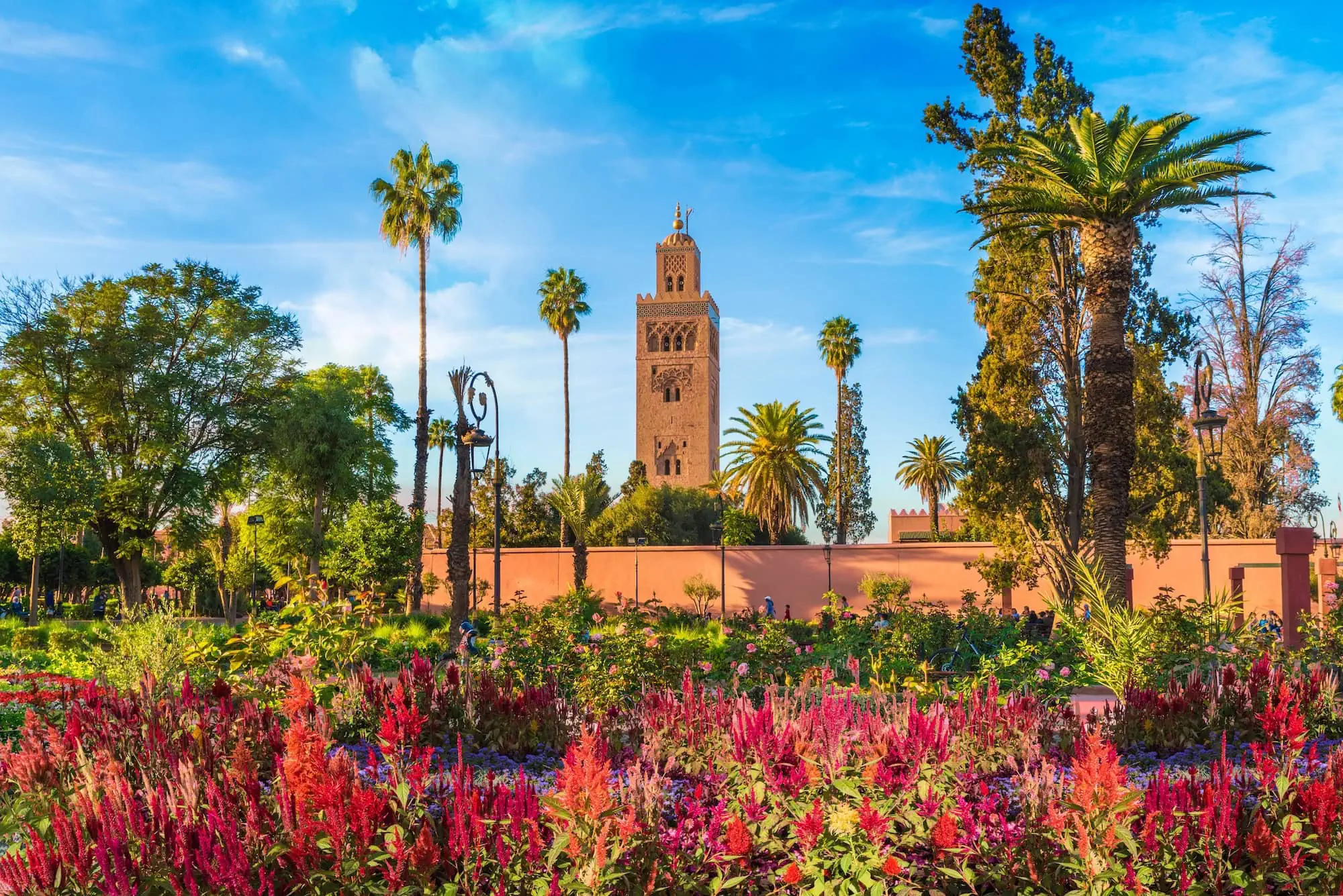
The Koutoubia Mosque stands as Morocco’s most iconic minaret and serves as the spiritual center of Marrakech’s medina. Built during the Almohad dynasty in the 12th century, this architectural landmark has influenced mosque design across North Africa and southern Spain.
Koutoubia Mosque can be included in our Egypt and Morocco Tours, where Morocco’s historic cities are combined with Egypt’s ancient wonders for a rich and immersive travel experience.
Its elegant proportions and detailed craftsmanship continue to inspire architects, while the call to prayer resonates across the city’s red walls each day. More than just a visual landmark, the mosque represents a key part of Marrakech’s identity and cultural heritage.
For travelers, understanding its history transforms a simple visit into a deeper cultural experience—revealing connections to other iconic structures such as those in Seville and Rabat.
The Almohad Legacy Behind Marrakech’s Crown Jewel
Abd al-Mu’min founded the original Koutoubia Mosque in 1147, but architectural perfection demanded a second attempt.
Why Two Mosques Stood Side by Side
The first mosque suffered from a crucial flaw – its qibla (prayer direction) pointed incorrectly toward Mecca. Rather than renovate, the Almohad rulers commissioned an entirely new structure around 1158. This attention to religious precision reflects the dynasty’s commitment to Islamic orthodoxy and architectural excellence.
The Almohad Caliphate’s Architectural Vision
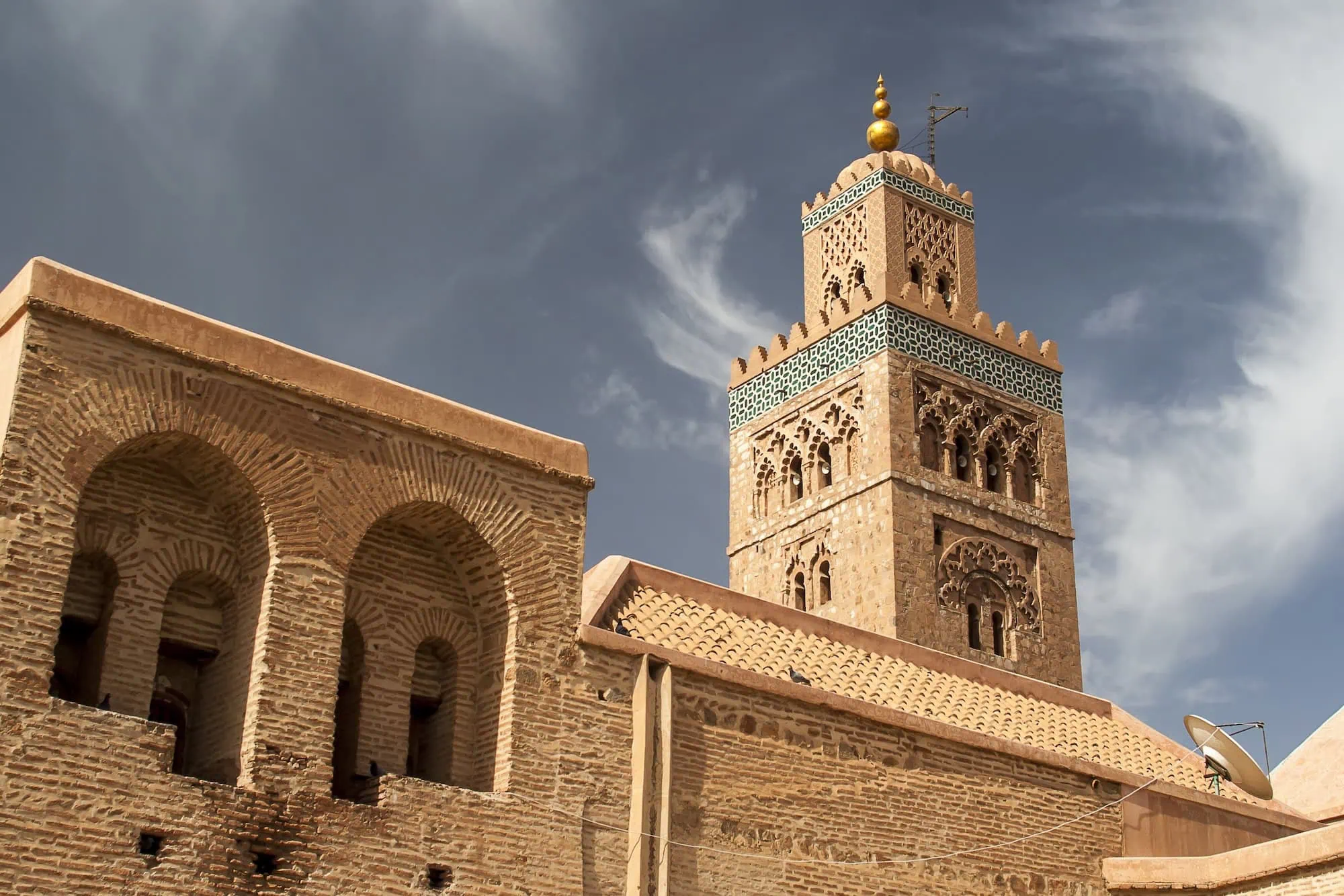
Under Ya’qub al-Mansur’s reign, Moorish architecture reached new heights of sophistication. The mosque’s design incorporated mathematical proportions, intricate muqarnas cupolas, and the distinctive sebka decoration that would become hallmarks of Maghrebi style. These elements created a template that influenced Islamic architecture for centuries.
From Ruins to Recognition
Today, visitors can still observe foundation ruins of the original mosque in the adjacent gardens. The 1755 Lisbon earthquake likely damaged some original structures, though the main prayer hall survived largely intact. These archaeological remains serve as tangible reminders of the mosque’s complex construction history.
Understanding the Architecture That Changed Islamic Design
The 77-meter minaret represents the pinnacle of Almohad architectural achievement, influencing monuments across two continents.
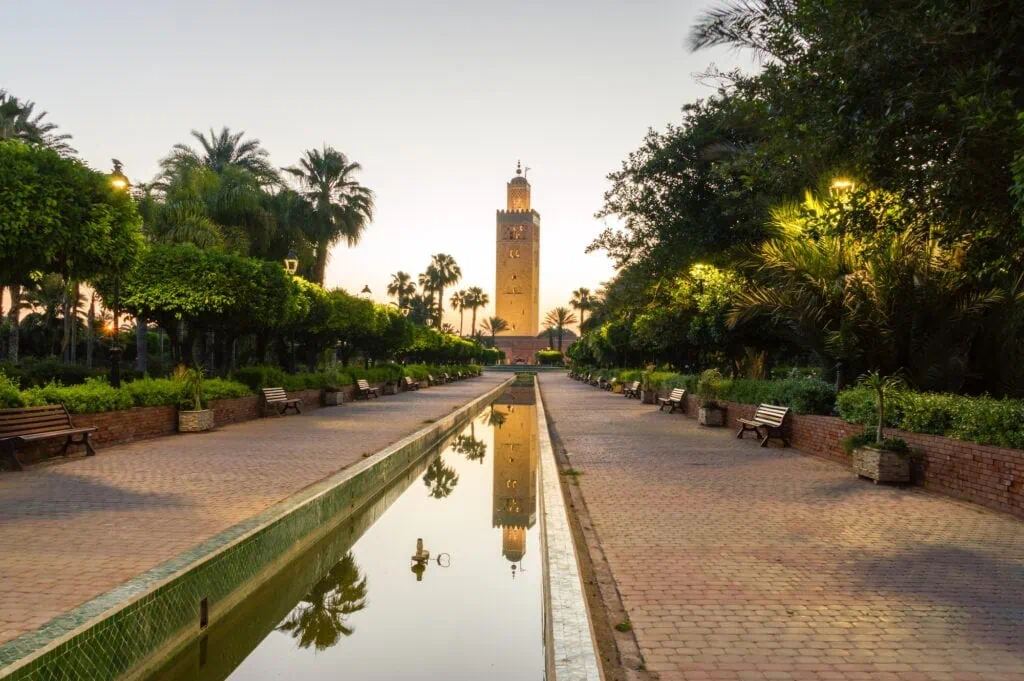
Standing in the Koutoubia Gardens, you immediately notice how the tower’s salmon-hued walls catch Marrakech’s golden light. The minaret’s square Amazigh design incorporates traditional Berber building techniques with sophisticated Islamic decorative arts. Each facade features different ornamental patterns, creating visual interest from every angle while maintaining perfect symmetry. The T-plan layout of the prayer hall accommodates thousands of worshippers, with horseshoe arches creating both structural support and spiritual atmosphere.
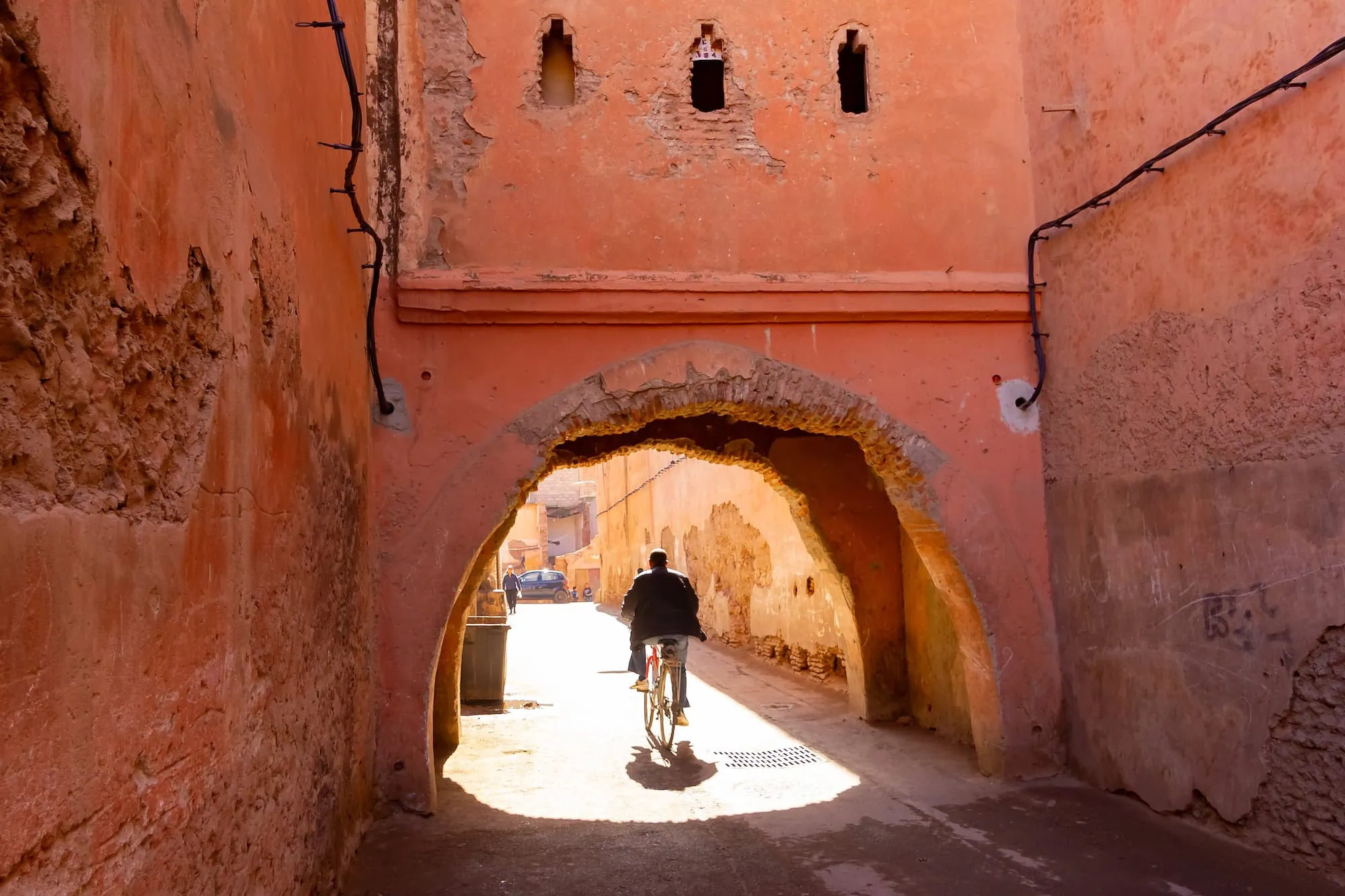
The mosque’s influence extended far beyond Morocco’s borders. Spanish architects used the Koutoubia as their direct model when constructing Seville’s Giralda tower, while the Hassan Tower in Rabat represents another interpretation of this groundbreaking design. This architectural DNA spread throughout the western Islamic world, establishing Marrakech as a center of artistic innovation.
Planning Your Visit to Morocco’s Most Photographed Monument
Location and Access in Marrakech’s Medina
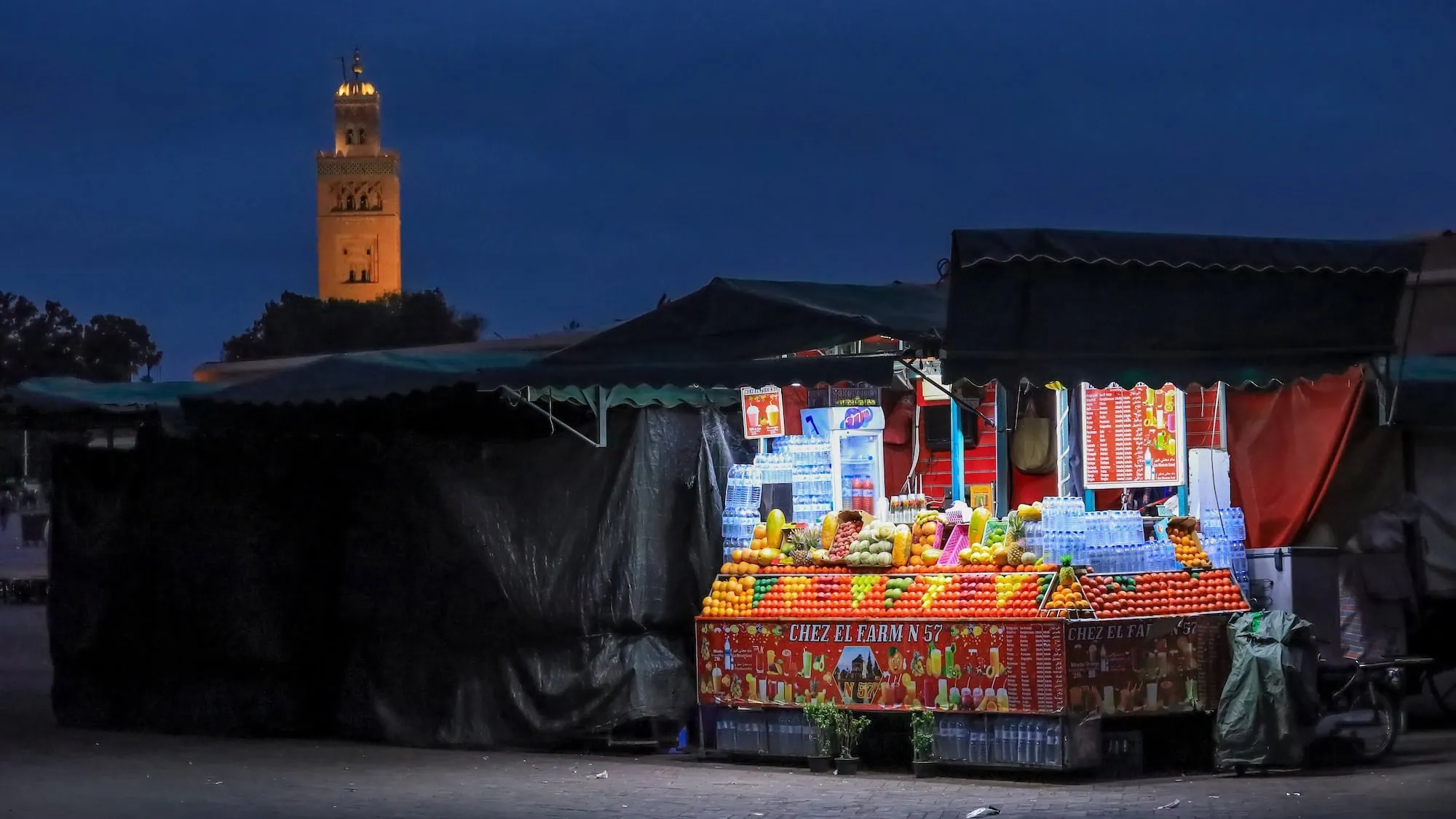
The mosque sits in the southwest quarter of Marrakech’s medina, just minutes from the famous Jemaa el-Fnaa square. Its towering presence makes navigation simple – you can spot the minaret from most locations within the old city walls. The surrounding Koutoubia Gardens provide the best vantage points for photography and peaceful reflection away from the medina’s bustling energy.
Entry Restrictions and Viewing Opportunities
Non-Muslim visitors cannot enter the prayer hall, but the mosque’s gardens offer excellent viewing opportunities throughout the day. The best photography occurs during golden hour, when warm light illuminates the minaret’s intricate stonework and creates dramatic shadows across the surrounding palms. We recommend visiting both at sunrise for soft morning light and sunset for the classic golden glow that makes Marrakech famous.
What to Expect During Your Visit
Plan to spend 1-2 hours exploring the gardens and surrounding area. The call to prayer occurs five times daily, creating particularly atmospheric moments for visitors. Street vendors around the perimeter sell postcards and small souvenirs, though prices improve with gentle negotiation. Nearby cafes provide refreshments and additional viewpoints of the mosque’s impressive facade.
The Stories and Legends That Define Koutoubia
Local folklore surrounds the mosque’s most distinctive features, particularly the golden orbs crowning its minaret.
The most enduring legend explains how four golden balls came to top the minaret. According to local tradition, the wife of Ya’qub al-Mansur broke her Ramadan fast early one day, prompting the caliph to melt down her jewelry as punishment for this religious transgression. He then fashioned the molten gold into decorative spheres for the mosque’s crown. While historians debate this story’s accuracy, the brass orbs require regular maintenance with mineral salt to preserve their gleaming appearance against Morocco’s intense sun.
Another fascinating aspect involves the mosque’s name origin. “Kutubiyyin” refers to the medieval booksellers who operated stalls around the mosque’s walls, creating an early center of learning in Marrakech. Historical records mention over 100 book vendors trading manuscripts on subjects ranging from Islamic jurisprudence to mathematics and astronomy. This scholarly tradition positioned the mosque as both spiritual and intellectual heart of the growing city.
Koutoubia’s Role in Modern Marrakech
Religious Life Continues
As Morocco’s largest active mosque outside Casablanca’s Hassan II, Koutoubia remains central to Marrakech’s religious calendar. The imam leads Friday prayers for thousands of faithful, while the minaret’s calls echo across the medina five times daily. Sunni Islamic traditions guide all religious observances, maintaining customs established during the Almohad period.
Urban Planning and Cultural Protection
Modern Marrakech building codes prohibit any structure from exceeding the mosque’s height, preserving its dominance over the city’s skyline. This regulation protects the historical character that attracts millions of annual visitors while respecting the monument’s religious significance. The surrounding gardens underwent restoration to provide better tourist facilities without compromising the mosque’s serene atmosphere.
Symbol of Moroccan Identity
The Koutoubia appears on Moroccan currency and serves as an instantly recognizable symbol of the kingdom’s Islamic heritage. International visitors often describe their first glimpse of the minaret as a defining moment in understanding Morocco’s cultural depth. This recognition extends globally, with the mosque featuring prominently in travel documentation and cultural exchanges between Morocco and other nations.
Frequently Asked Questions
Non-Muslims cannot enter the prayer hall, but the gardens and surrounding areas offer excellent viewing opportunities for all visitors.
Golden hour around sunrise and sunset provides the most dramatic lighting, though the mosque looks impressive throughout the day.
The mosque sits less than 5 minutes’ walk from the main square, making it easily accessible during medina exploration.
No fees apply for viewing the mosque from the gardens or walking around the exterior walls.
Five times daily at sunrise, midday, afternoon, sunset, and evening, with exact times varying by season.
The minaret serves active religious functions and remains restricted to mosque officials for safety and security reasons.
Modest dress is recommended when visiting the gardens, though formal requirements only apply to those entering the prayer hall.
Most visitors spend 1-2 hours exploring the gardens, taking photos, and learning about the mosque’s history.
The gardens feature paved pathways suitable for wheelchairs, though some areas may present minor challenges.
Jemaa el-Fnaa, the medina souks, and several traditional riads are all within walking distance.
We offer expert-guided tours that include the Koutoubia Mosque as part of comprehensive Marrakech experiences, providing historical context and cultural insights.
Basic facilities including restrooms and refreshment vendors operate around the mosque gardens throughout the day.
Design Your Custom Tour
Explore Egypt & Morocco your way by selecting only the attractions you want to visit