Two Weeks, Infinite Possibilities
14-Day Egypt Tours: Egypt and Beyond
Journey deeper with our 14-Day Egypt Tours, ideal for travellers who want to explore Egypt at a relaxed, enriching pace, or to pair it with a full second country such as Jordan, Greece, or Morocco. Rather than a fixed package, a 14-day tour is built around you: private Egyptologist guiding, seamless travel between regions, and a fully customizable itinerary shaped by the destinations and pace that matter most to you.
Why 14 Days in Egypt Means You Stop Choosing Between Depth and Breadth
Two weeks is enough for Egypt in full, or Egypt paired with a complete second country.
Fourteen days is the length at which you no longer have to choose. A shorter trip means deciding between seeing Egypt thoroughly and adding a second country. Two weeks lets you do either properly: Egypt in real depth, with time for the places shorter itineraries skip, or the complete Egypt highlights paired with a full second country such as Jordan, Greece, or Morocco, with neither half feeling rushed.
Because the possibilities at this length are so wide, a 14-day Egypt tour is best built from the ground up rather than chosen off a shelf. One traveller might spend the whole two weeks on Egypt alone, adding the Western Desert oases, a Lake Nasser cruise, and a proper Red Sea stay to the classic Cairo-Nile-Abu Simbel core. Another might split the time evenly between Egypt and Jordan, or Egypt and Greece.
With a private Egyptologist guide, a personal driver in each region, and an itinerary shaped entirely around your interests and pace, a 14-day tour is less a fixed route than a blank canvas. Browse our full range of Egypt tour packages for inspiration, or see how the longer cruises work on our luxury Egypt tours. The examples below show the range, but the trip we build for you is your own.
Table of Contents
Two Ways to Spend Two Weeks
Most 14-day Egypt tours fall into one of two shapes, and the right one depends entirely on what you want from the trip.
Egypt in Full
The first is Egypt alone, explored in real depth. Two weeks is more than the classic Cairo, Nile cruise, and Abu Simbel core needs, which frees you to add the places shorter itineraries leave out: the Western Desert oases, a Lake Nasser cruise sailing south to Abu Simbel itself, a proper three or four-day Red Sea stay, and a day or two in Alexandria on the Mediterranean. This is Egypt without compromise, every region given the time it deserves.
Egypt and a Second Country
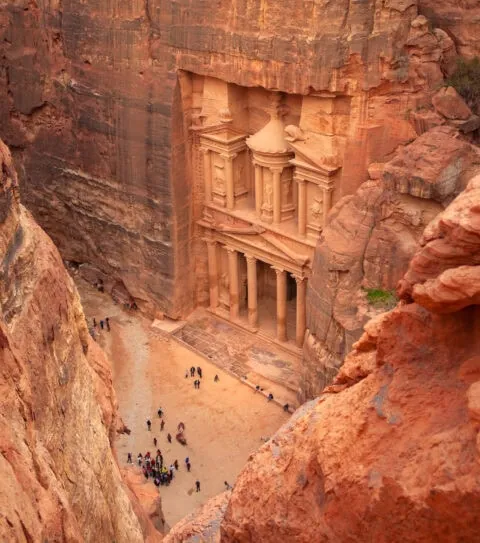
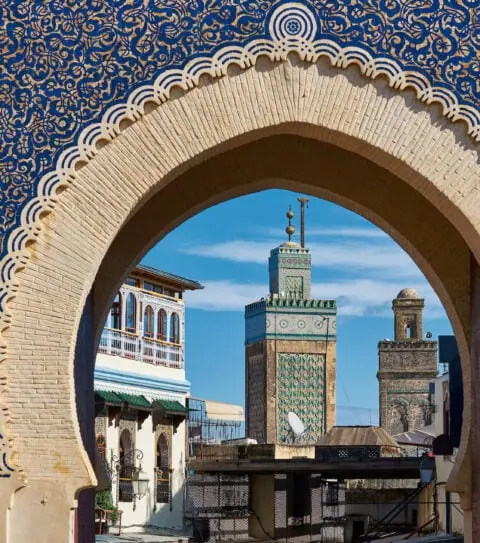
The second is Egypt paired with a complete second country. Fourteen days is enough to cover the Egypt highlights and add a full neighbour rather than a glimpse: Jordan, with Petra, Wadi Rum, and the Dead Sea; Greece, with Athens and the islands; or Morocco, with Marrakech and the imperial cities. Two of our three signature 14-day itineraries take this shape, and most travellers who choose two weeks have a second country in mind.

Whichever track you choose, the trip is built around you rather than fitted to a fixed route. The sections below show what each can include, and how to shape your own.
The Classic Egypt Core, Done Properly
Whichever track you choose, most 14-day tours are built around the same classic Egypt core, and two weeks lets you give each part of it the time it deserves rather than rushing through.
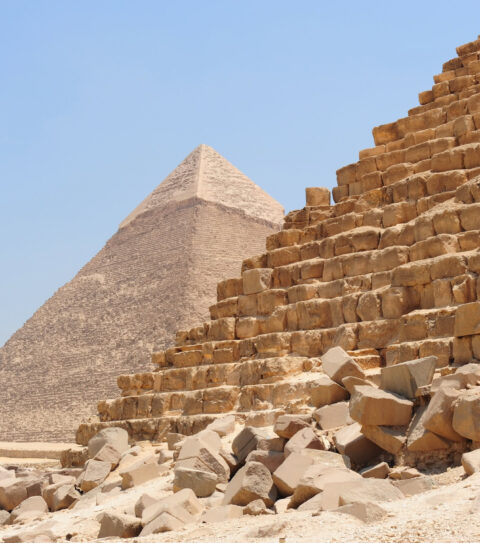
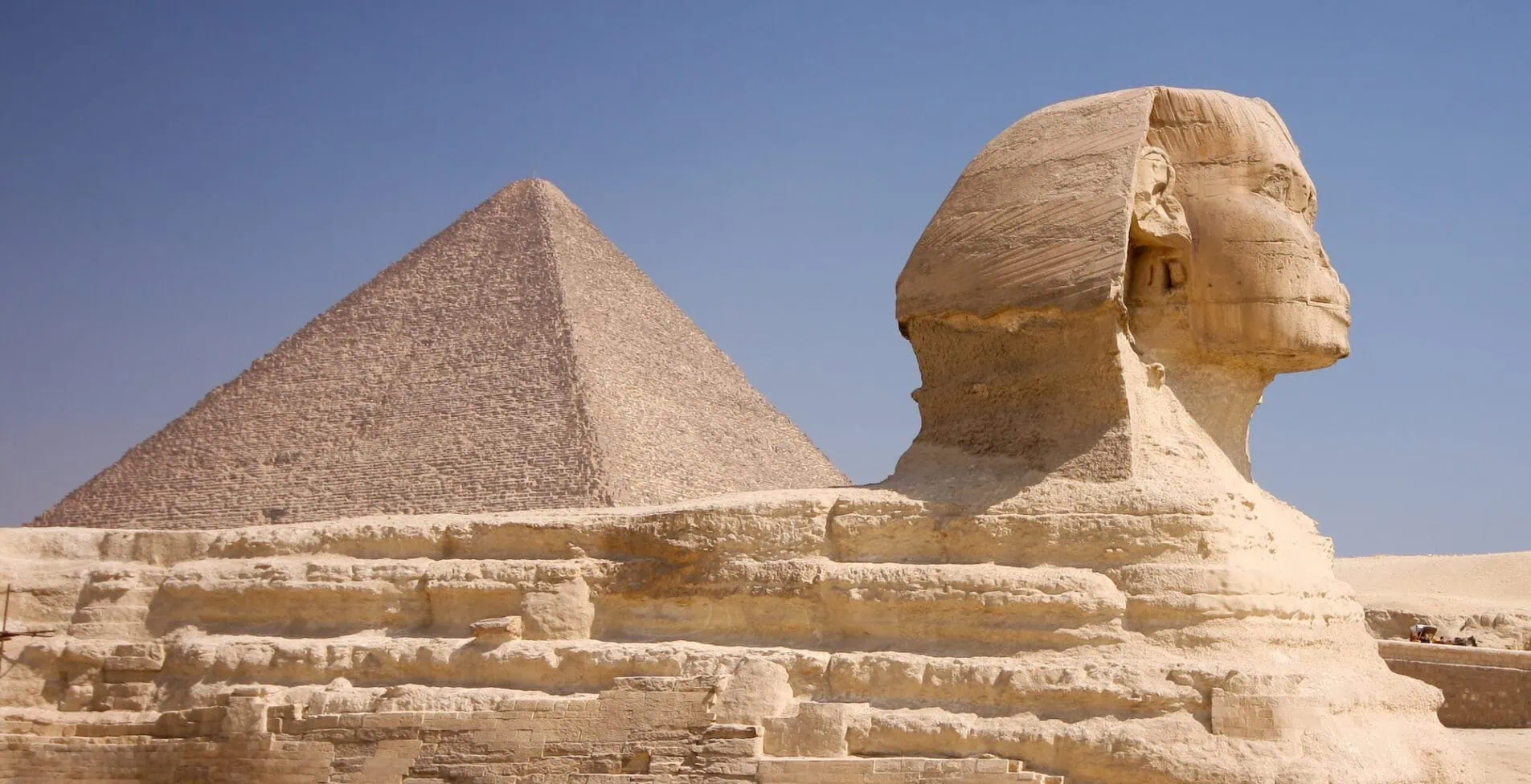
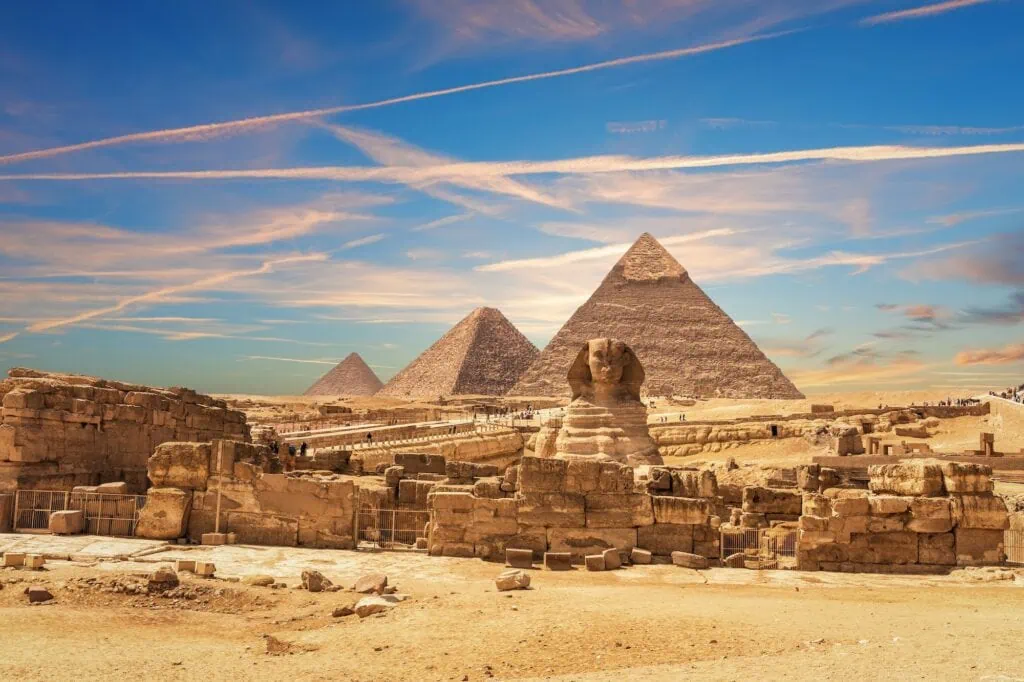
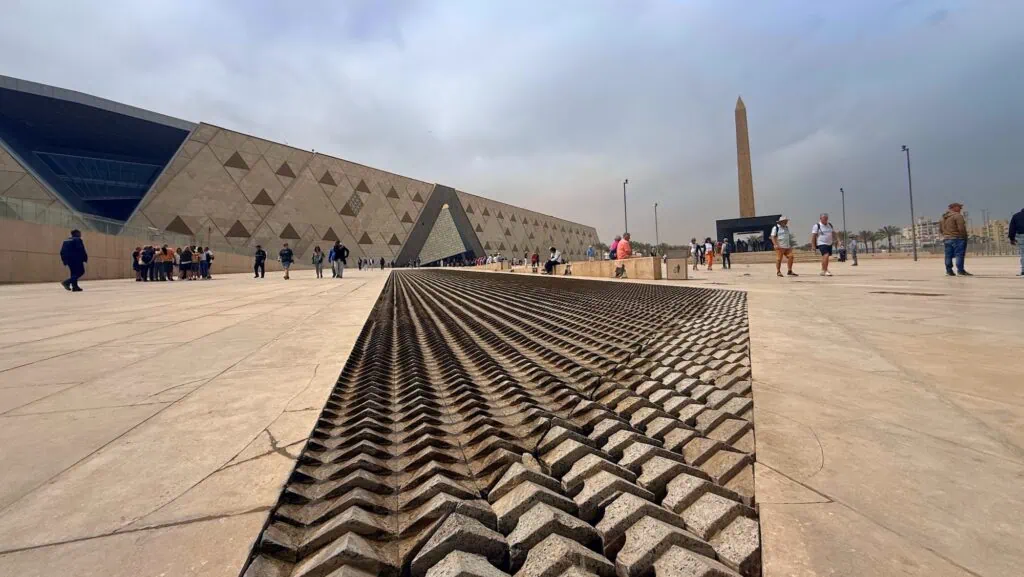
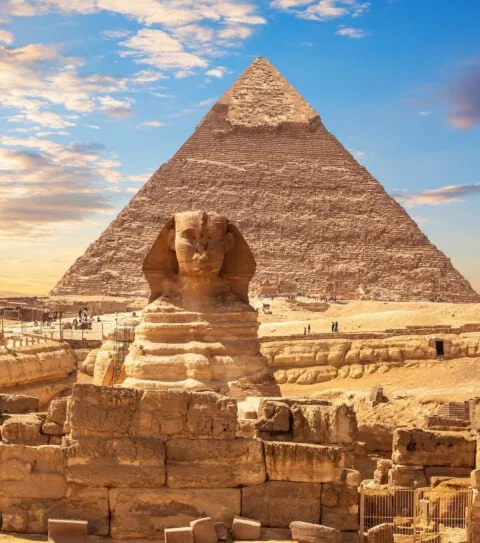
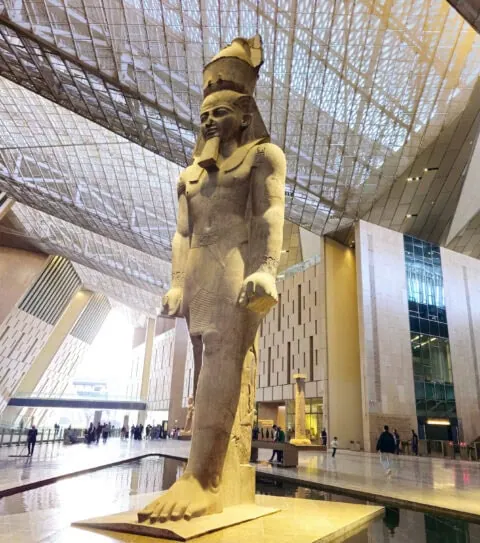
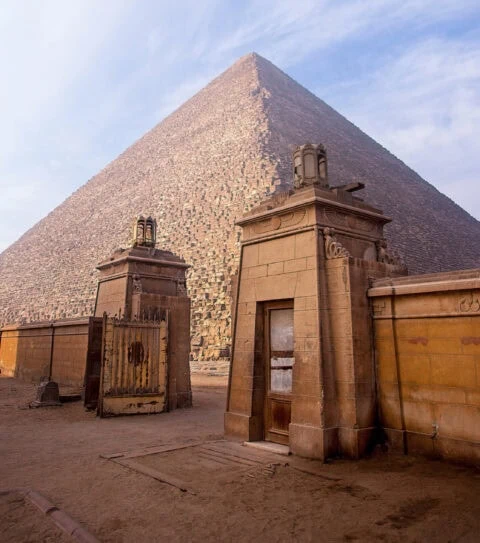
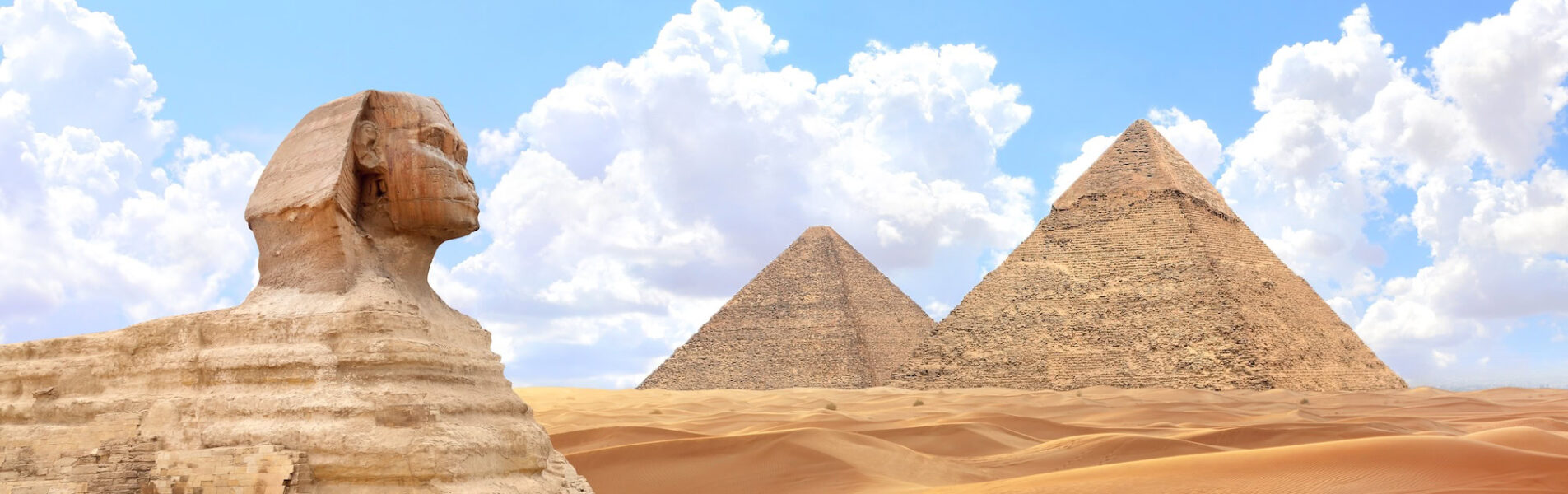
Cairo and the Giza plateau open the trip, with the Pyramids, the Great Sphinx carved from a single mass of bedrock, and the Grand Egyptian Museum at the foot of the plateau, now Egypt’s primary museum and home to the complete Tutankhamun collection. Islamic Cairo’s medieval streets and the Khan El Khalili bazaar, and the ancient churches of Coptic Cairo, fill out the capital.
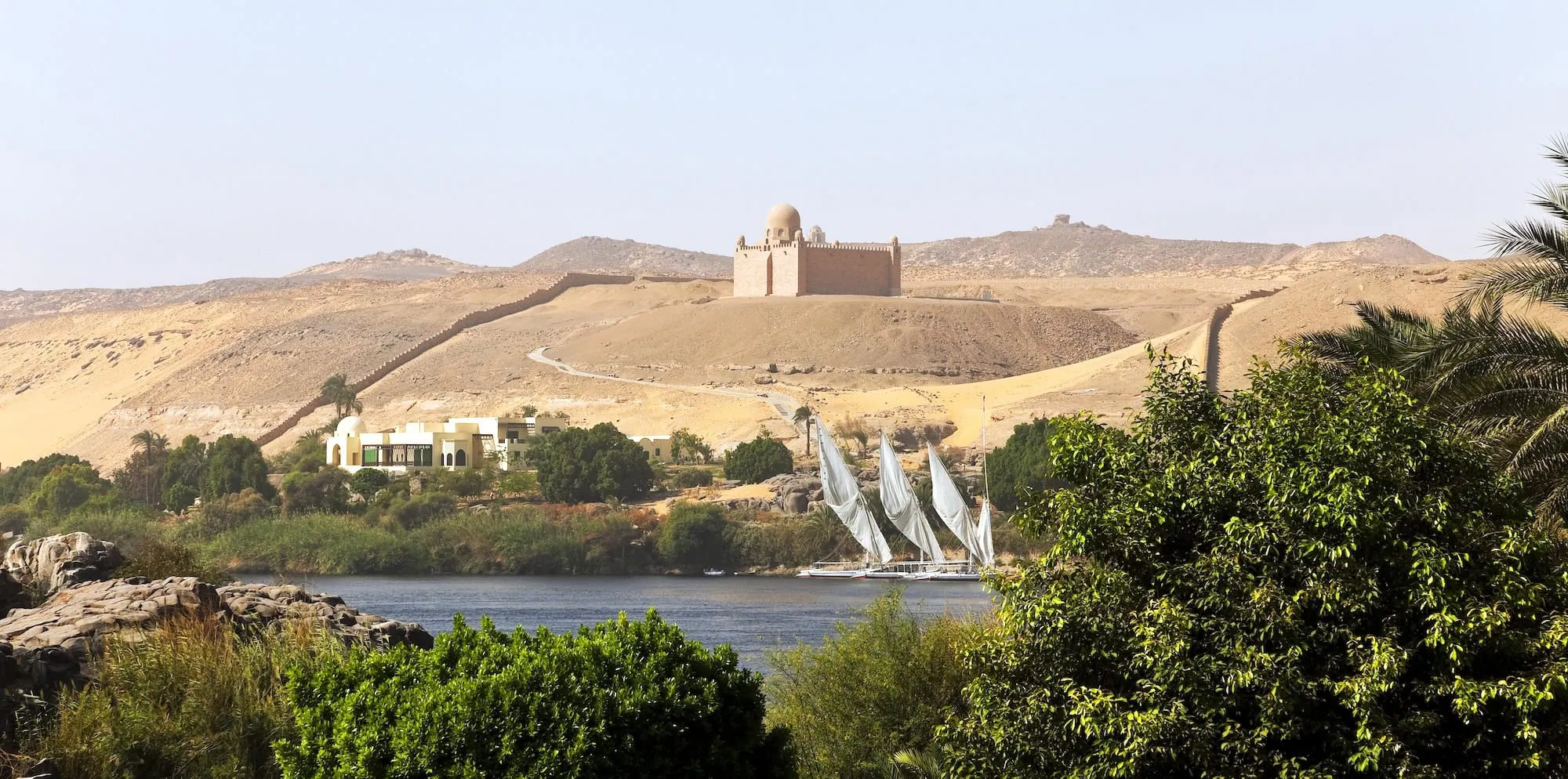
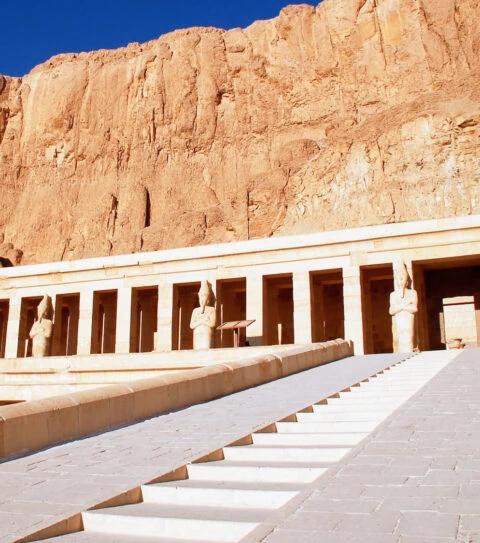
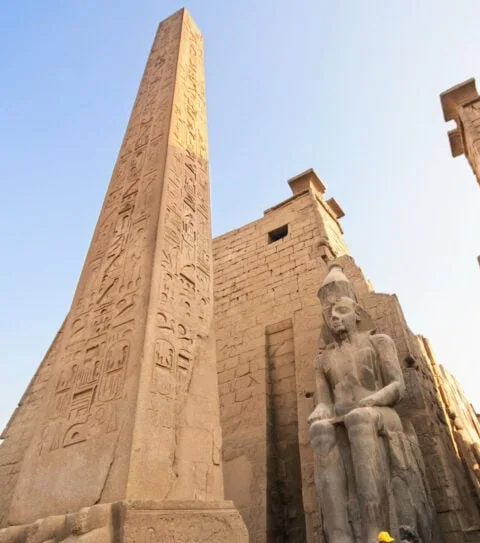
A short flight south reaches Luxor, the world’s greatest open-air museum, with Karnak and Luxor Temple on the east bank and the Valley of the Kings, Hatshepsut’s mortuary temple, and the Colossi of Memnon on the west. From Luxor, a 4-day Nile cruise sails to Aswan, calling at the temples of Edfu and Kom Ombo. Aswan brings Philae Temple, the High Dam, and a felucca sail around Elephantine Island, with Abu Simbel reached by a short flight south.
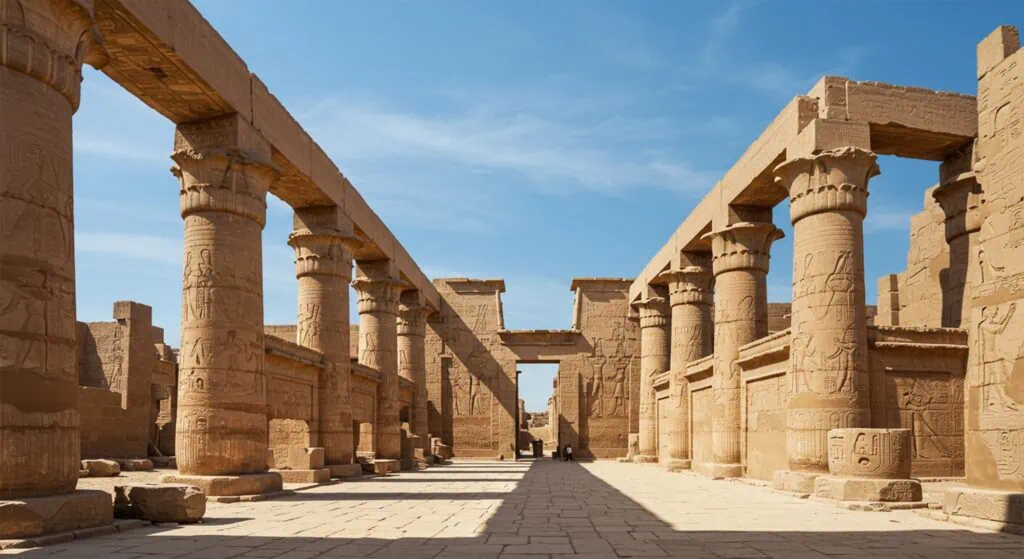
On a shorter trip, that core is the whole itinerary. On a 14-day tour, it is the foundation, leaving a week or so to go deeper in Egypt or to add a second country.
Going Deeper in Egypt
If you choose to spend all fourteen days in Egypt, the extra week beyond the classic core opens up experiences that shorter itineraries simply cannot fit.
The Western Desert Oases
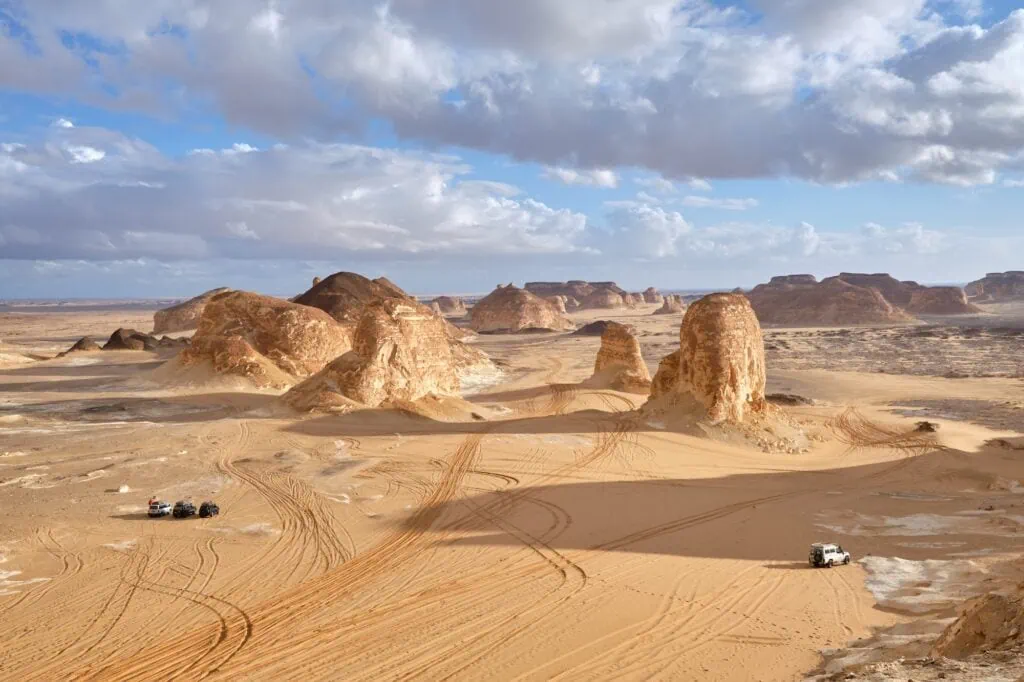
West of the Nile valley lies a different Egypt entirely: the oases of the Western Desert. Bahariya and the surreal rock formations of the White Desert, the hot springs and Roman ruins, and the vast dune seas reward travellers who want landscapes rather than monuments. A few days here is one of the most distinctive ways to use the extra time two weeks allows.
A Lake Nasser Cruise to Abu Simbel
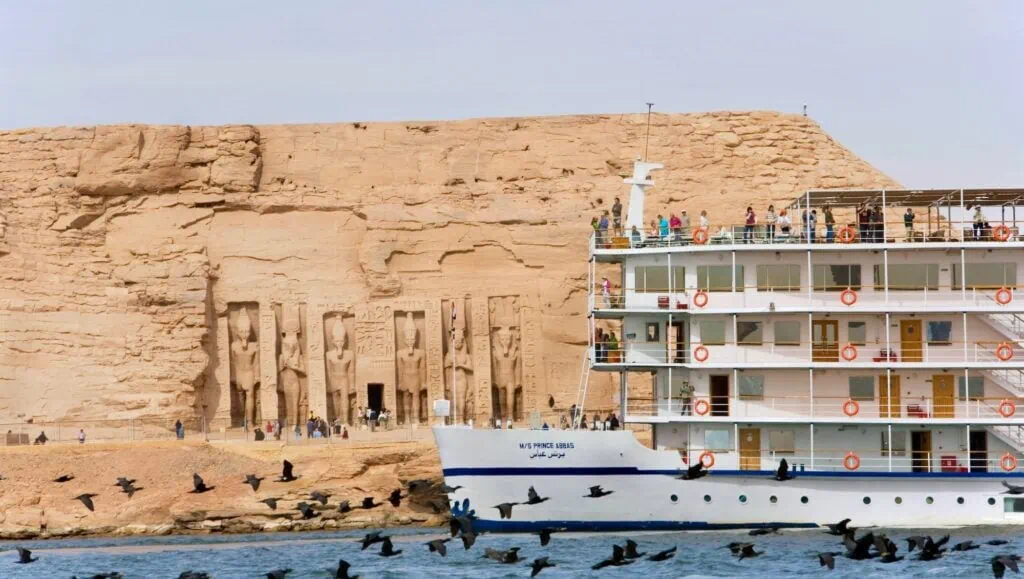
Beyond the standard Luxor-to-Aswan Nile cruise, fourteen days allows a second cruise on Lake Nasser, sailing south to Abu Simbel itself. It reaches monuments like Wadi El Seboua and Amada that almost no shorter itinerary includes, and brings you to Abu Simbel by water rather than on a day trip, one of the most memorable ways to arrive.
A Proper Red Sea Week
Egypt’s Red Sea coast is the perfect counterbalance to intensive cultural touring, and two weeks leaves room for a real stay rather than a single beach day. Hurghada, Marsa Alam, and Sharm El Sheikh are the three main resort areas: Hurghada is the most established and easiest to combine with a Nile itinerary, Marsa Alam to the south is the quietest with some of the finest reefs in the country, and Sharm El Sheikh sits across on the Sinai coast.
The water is exceptionally clear, with visibility often exceeding 30 metres, and stays a comfortable 22 to 28°C (72-82°F) year-round, ideal for snorkelling and diving among the reefs. Beach resorts offer private beaches, multiple pools, and spa facilities that make for genuine rest after the monuments, and our Cairo and Red Sea holiday itineraries are built around exactly this balance of discovery and downtime.
Professional dive centres run courses for beginners and guided excursions for experienced divers, with reefs home to over 200 coral species, 1,100 kinds of fish, sea turtles, and dolphins found in few other places on earth.

Egypt and Beyond: Multi-Country Two-Week Tours
For many travellers, two weeks is the chance to pair Egypt with a full second country, and this is where a 14-day tour comes into its own. After the Pyramids and the Nile temples, a neighbouring country adds a completely different second chapter, with enough time that neither half feels rushed. Two of our three signature 14-day itineraries take exactly this shape.
Egypt and Jordan
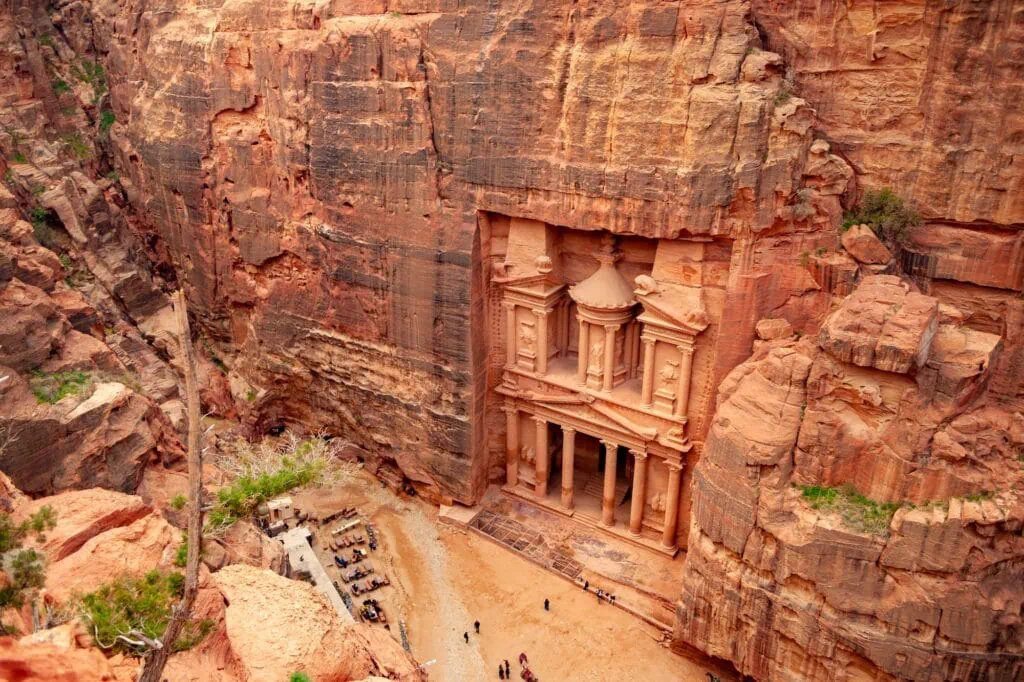
Jordan is the most popular pairing, and it blends seamlessly with Egypt. After the pyramids and Nile temples, Jordan brings Petra’s rose-red rock-cut city, the sweeping desert of Wadi Rum, and the float-without-effort waters of the Dead Sea. The two countries sit close together, the flights are short, and the combination feels like one journey in two acts. Our 14-Day Egypt and Jordan Combined tour is built around exactly this.
Egypt and Greece
Greece pairs the ancient Mediterranean with ancient Egypt: Athens and the Acropolis, the white-and-blue Greek islands, and the Aegean, followed by Cairo and a Nile cruise. It is a natural combination for travellers drawn to the classical world, linking two of its greatest civilizations in a single trip. Our 14-Day Egypt and Greece combined tour combines an islands-and-Athens break with Cairo and the Nile.

Egypt and Morocco, Türkiye, and Beyond
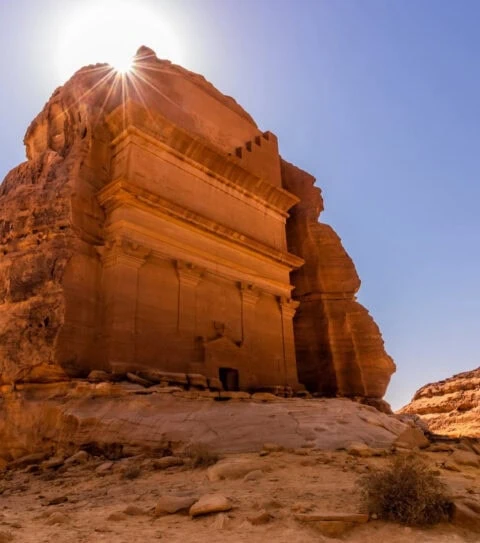
Beyond Jordan and Greece, we build tailor-made two-week combinations with Morocco, for Marrakech’s souks and the imperial cities; with Türkiye, for Istanbul’s skyline and Cappadocia; and with Saudi Arabia, for AlUla and its desert heritage. Each is fully private and shaped to your pace, with seamless flights between countries, hand-picked hotels, and local experts in every destination.
Browse all our multi-country options:
- Egypt and Turkey Tours
- Egypt and Jordan Tours
- Egypt and Greece Tours
- Egypt and Morocco Tours
- Egypt and Saudi Arabia Tours
Building Your Own 14-Day Egypt Tour
With so much possible in two weeks, a 14-day tour is best built from the ground up rather than chosen off a shelf. The three itineraries on this page show the range, from an all-out luxury Nile cruise to Egypt paired with Jordan or Greece, but they are starting points, not limits.
The process is simple. You tell your dedicated Travel Concierge which track appeals, Egypt in full or Egypt with a second country, along with your dates, your interests, and your preferred pace and hotel category. We send a first-draft itinerary within 1 to 12 hours, and then refine it together through the usual two to four rounds of revisions until it is exactly the trip you want.
Because every tour is fully private, every choice is yours: which regions, which cruise vessel, how many days by the sea, whether to add the Western Desert or a second country, and how hard or gently to pace each day. There is no commitment until you are completely satisfied with the plan.
Planning Your Egyptian Journey
Optimal Timing and Seasons
Egypt’s climate significantly affects travel comfort throughout the year. October through April provides the most pleasant conditions, with daytime temperatures between 20 and 25°C (68-77°F) and cool evenings perfect for outdoor dining and exploration.
Summer, from May through September, can be demanding, with temperatures regularly exceeding 35°C (95°F) and reaching 40°C (104°F) in Upper Egypt. The Red Sea coast stays more comfortable thanks to sea breezes, and on a private tour your guide times each day around the heat, with early starts and rest through the hottest hours.
Transportation and Logistics
Domestic flights connect major destinations efficiently, saving valuable time compared to overland travel. Cairo to Luxor flights take approximately 1.5 hours, while Cairo to Aswan requires about 1.5 hours. Modern vehicles with professional drivers handle road segments comfortably, providing air conditioning and opportunities to observe rural Egyptian life between major cities.
Overnight trains offer romantic travel experiences between Cairo and Aswan, though flight connections provide more schedule flexibility for complex itineraries. Many travelers enjoy the overnight train experience as part of their adventure, particularly the well-appointed sleeping cars that operate on this historic route.
Accommodation Standards and Options
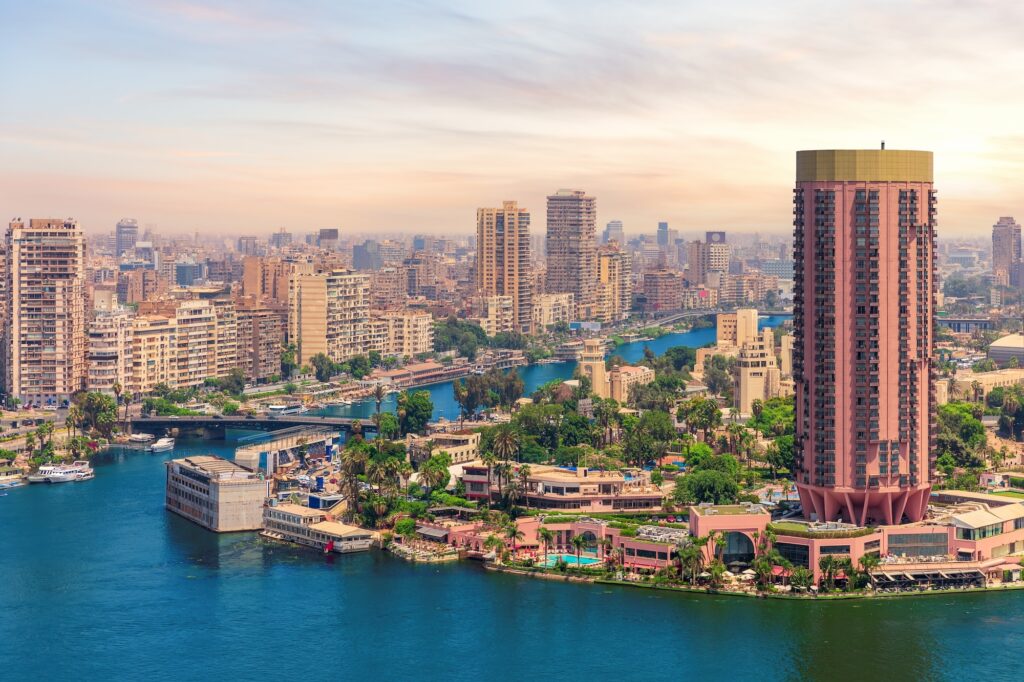
Luxury accommodations throughout Egypt meet international five-star standards while incorporating authentic Egyptian design elements and hospitality traditions. Historic hotels in Cairo, boutique properties in Aswan, and modern resorts along the Red Sea coast provide diverse lodging experiences that complement each destination’s unique character.
Many properties offer their own character beyond the room itself, from Nile-front terraces and historic architecture to spa facilities, adding to the experience of each destination.
Expert Tips for Maximizing Adventures
Early morning starts provide the best experiences at popular attractions before heat and crowds become overwhelming.
The Giza Pyramids complex opens at 8:00 am (08:00), making sunrise visits ideal for photography and comfortable exploration. Valley of the Kings tomb visits work best immediately upon opening, as afternoon temperatures inside confined spaces can become uncomfortable.
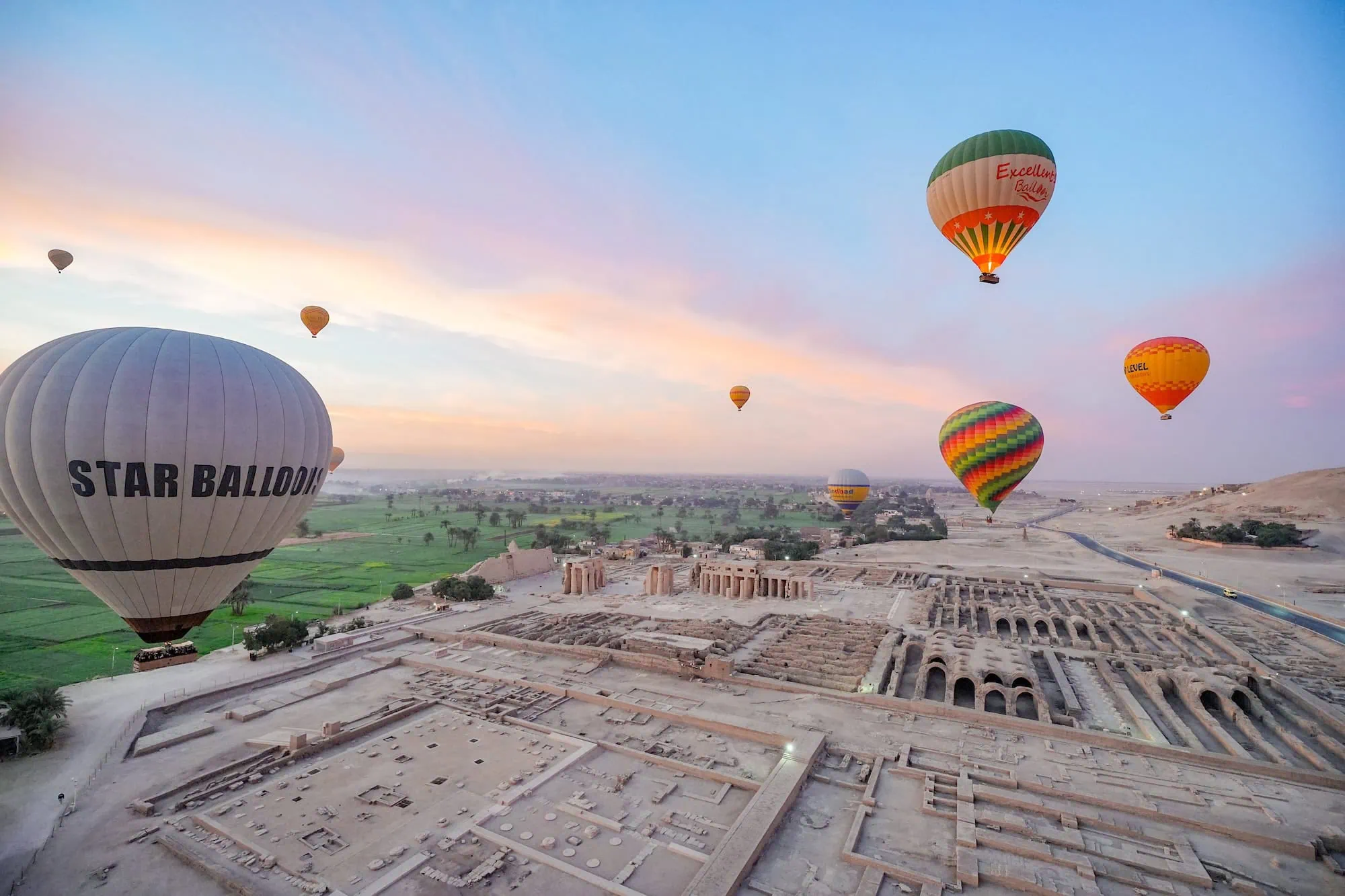
A sunrise hot air balloon flight over Luxor’s west bank is one of the most-requested optional add-ons, lifting you above the temples and tombs as the sun rises. Flights operate year-round but require advance reservation, particularly in peak season, and your Travel Concierge can build one into your itinerary.
Photography and Documentation
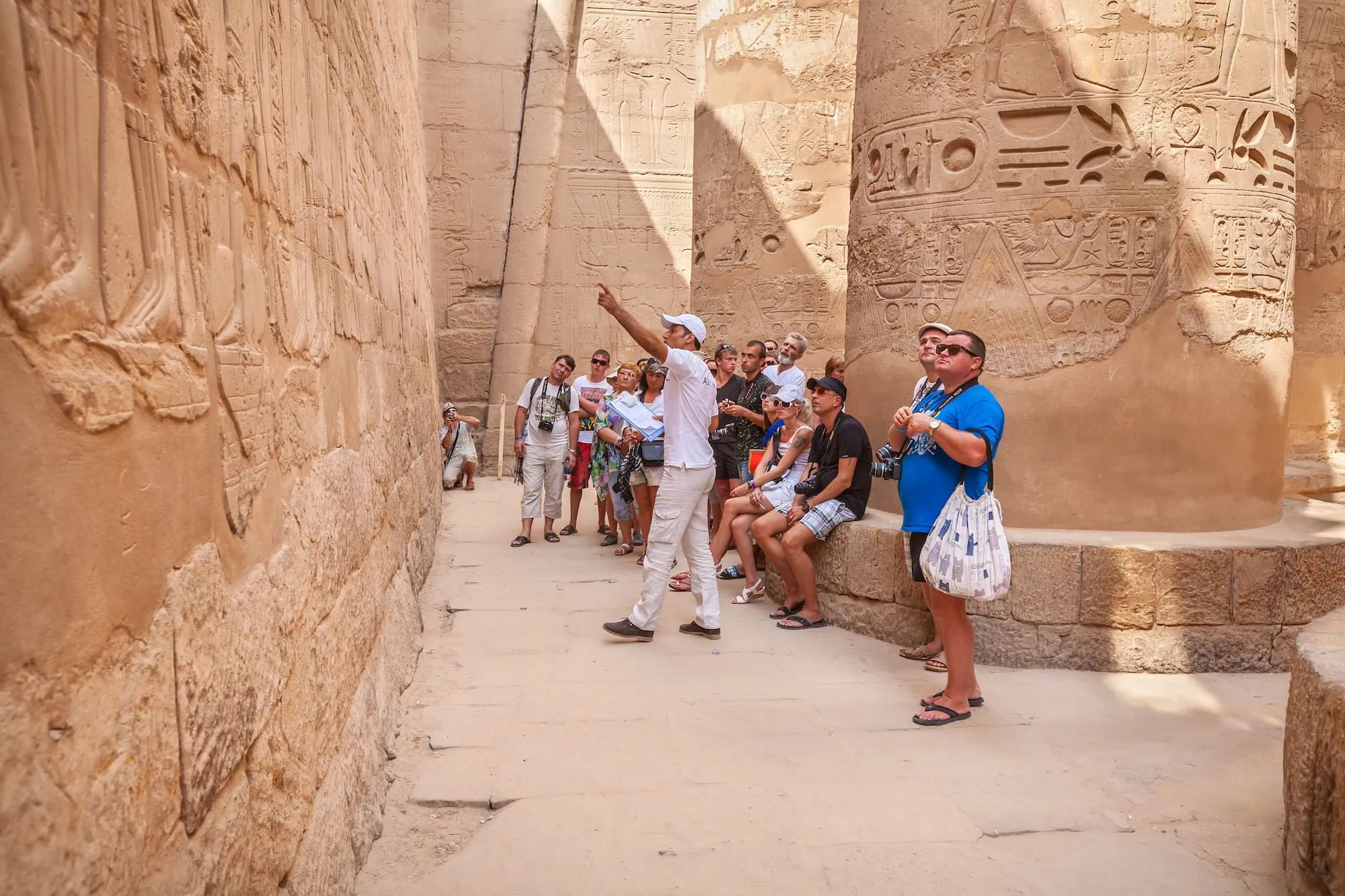
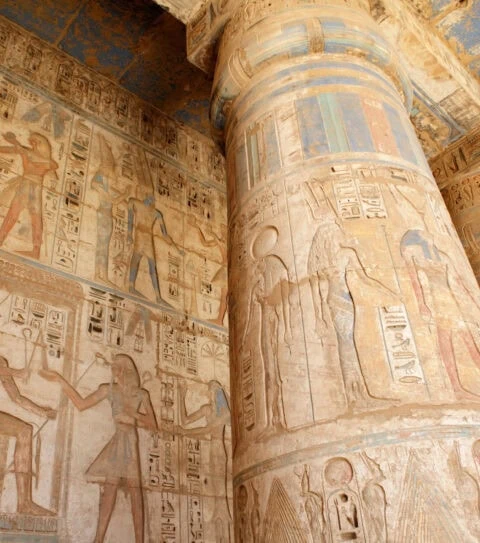
Egypt’s dramatic lighting conditions change throughout the day, creating varied photographic opportunities. Morning light enhances limestone pyramid surfaces, while afternoon shadows emphasize temple column details and hieroglyphic carvings. Golden hour photography at major sites produces stunning results, though popular locations can become crowded during these optimal times.
Professional cameras and lenses perform well in Egypt’s dry climate, though dust protection becomes essential during desert excursions. Memory cards and batteries drain quickly in high-temperature conditions, so carry extras for extended photography sessions.
Cultural Sensitivity and Dress Codes
Respectful attire ensures comfortable interactions and access to religious sites throughout Egypt. Conservative clothing covering shoulders and knees works for most locations, while mosques require additional considerations including head coverings for women and shoe removal for all visitors.
Many temples and museums prohibit flash photography to protect ancient artifacts and artwork from light damage. Tripods often require special permits, though handheld photography typically faces no restrictions in most tourist areas.
When 14 Days Isn’t the Right Fit
Fourteen days suits travellers who want Egypt in real depth, or Egypt paired with a full second country. If you want the complete classic Egypt with a single extra journey rather than two weeks, a 12-day Egypt tour covers Cairo, a full Nile cruise, and Abu Simbel plus one addition such as Lake Nasser or a Red Sea stay. The 10-day Egypt tour is the complete first visit at a tighter pace. If you want to give Egypt and a second country equal weight with even more room, a 15-day Egypt tour balances both in full. Your Travel Concierge can compare the options against your priorities.
Your 14-Day Egypt Tour, Designed Around You
Tell us your dates and what you most want to see, and we will design the itinerary around it.
Whether you want Egypt in full, with the Western Desert, a Lake Nasser cruise, and a Red Sea week added to the classics, or Egypt paired with Jordan, Greece, or another country, your dedicated Travel Concierge builds the trip around what matters to you. The private format means every choice is yours: the regions, the cruise, the second country, the hotels, the pace.
We will send your first-draft itinerary within 1 to 12 hours, and we will keep refining it together until you are certain it is the trip you want.
Frequently Asked Questions
Not at all. Egypt has far more than the classic two-week core of Cairo, the Nile cruise, and Abu Simbel, and fourteen days lets you go well beyond the highlights. The extra time opens up the Western Desert oases, a Lake Nasser cruise south to Abu Simbel, a proper Red Sea week, and a day or two in Alexandria on the Mediterranean.
For travellers who would rather see one country thoroughly than split their time, two weeks in Egypt alone is deeply rewarding. You see the famous sites without rushing, and you reach places most visitors never have time for. That said, many people who set aside two weeks choose to add a second country, which is the other natural way to use a 14-day Egypt tour.
Both are excellent, and the right choice depends on what you want. Spending all fourteen days in Egypt means real depth: the classic core plus the Western Desert, a Lake Nasser cruise, a Red Sea stay, and time to travel at a gentle pace.
Adding a second country means breadth. Fourteen days is enough to pair the complete Egypt highlights with a full neighbour such as Jordan, Greece, or Morocco, with neither half feeling rushed. This is how two of our three signature 14-day itineraries are built, and it suits travellers who want two distinct experiences in one trip.
Your Travel Concierge can lay both options out against your interests, and because every tour is private, you can even blend them, for example Egypt in some depth plus a shorter second-country add-on.
Jordan is the most popular pairing, sitting close to Egypt with short flights and a seamless fit: Petra, Wadi Rum, and the Dead Sea make a natural second chapter to the Pyramids and the Nile. Greece is the next most popular, linking ancient Egypt with the ancient Mediterranean through Athens and the Greek islands.
Beyond those two, we build tailor-made combinations with Morocco, for Marrakech and the imperial cities; with Türkiye, for Istanbul and Cappadocia; and with Saudi Arabia, for AlUla. Each is fully private, with the international flights and logistics handled for you and local Egyptologist-equivalent guides in every destination. Your Travel Concierge can advise on which pairing fits your interests and the time you have.
A typical Egypt-only 14-day itinerary opens with three days in Cairo for the Pyramids, the Grand Egyptian Museum, and Islamic and Coptic Cairo, then flies south to Luxor for a 4-day Nile cruise to Aswan, taking in Karnak, the Valley of the Kings, Edfu, Kom Ombo, Philae, and Abu Simbel. The remaining days go to the Western Desert, a Lake Nasser cruise, or a Red Sea stay.
A multi-country itinerary spends around seven or eight days on the Egypt highlights, then crosses to a second country such as Jordan or Greece for the rest of the two weeks.
Because every 14-day Egypt tour is private and built around you, there is no single fixed route. These are starting points your Travel Concierge shapes to your interests and pace.
The cost of a 14-day Egypt tour depends on which track you choose, your hotel and cruise category, the size of your party, and whether you add a second country. Because every Egypt Tours Plus tour is private and built around you, there is no fixed package price. A comfortable Egypt-only tour with a standard cruise sits at the more accessible end, while an all-out luxury Nile cruise, premium hotels, or a full second country raise the total.
Optional add-ons such as entering the Great Pyramid, special-access tombs, a Western Desert extension, or a sunrise balloon flight over Luxor are quoted separately. The most accurate way to get a figure is to tell your Travel Concierge your dates, party size, and priorities. You will receive a tailored quote, typically within 1 to 12 hours, with no obligation to book.
Yes, and two weeks is an ideal length for it. A Lake Nasser cruise is a separate journey from the standard Luxor-to-Aswan Nile cruise, sailing south from the Aswan High Dam across Lake Nasser to Abu Simbel itself.
Along the way it calls at monuments that almost no shorter itinerary reaches, including the temples of Wadi El Seboua, Amada, and Kasr Ibrim, several of them relocated like Abu Simbel to escape the rising lake. Arriving at Abu Simbel by water rather than on a flight from Aswan is one of the most memorable ways to experience it, and a 14-day Egypt tour has the time to include both the Nile cruise and the Lake Nasser cruise.
Yes. The Western Desert is one of the most distinctive ways to use the extra time two weeks allows, and it is rarely possible on shorter trips. West of the Nile valley lie the oases of Bahariya, the surreal chalk formations of the White Desert, hot springs, Roman ruins, and vast dune seas.
A few days here offers a completely different Egypt from the monuments, all empty horizons and silence rather than temples and crowds. It pairs especially well with the Egypt-in-full track, and your Travel Concierge can build it in alongside the classic core.
Yes. A tourist visa is required regardless of how long your stay is. Most travellers, including US, UK, EU, Canadian, Australian, and many Latin American nationals, can collect a 30-day tourist visa on arrival at Cairo International Airport for $25 USD in cash. An e-visa is also available in advance through the official Egyptian government portal.
Your passport should be valid for at least six months beyond your travel dates, with a blank page for the stamp. If your 14-day itinerary includes a second country such as Jordan, Greece, or Morocco, your Travel Concierge will advise on the separate entry requirements there, including the Jordan Pass for Jordan. Because requirements vary by nationality, your Concierge confirms the right options before you travel.
The most comfortable window runs from October through April, when daytime temperatures across Cairo, Luxor, and Aswan sit between 20 and 25°C and evenings are cool and pleasant. This is also the best period for the Nile cruise, a Lake Nasser cruise, and any Red Sea time, when both river and coast are at their finest.
December and January bring the best weather and the largest crowds. The shoulder months of October, November, March, and April offer an excellent balance of mild conditions and thinner queues. Summer, from May to September, regularly exceeds 35°C in Upper Egypt and can reach 40°C in Aswan, though the Red Sea coast stays more pleasant thanks to sea breezes. If your tour includes a second country, your Travel Concierge will factor its climate in too.
Pack lightweight, breathable clothing that covers shoulders and knees for temple and mosque visits, plus a few smarter outfits for the cruise evenings. A light jacket or shawl is useful for cool evenings and air-conditioned interiors, and comfortable walking shoes are essential for the archaeological sites.
If your itinerary includes the Red Sea, add swimwear, a beach cover-up, and reef-safe sunscreen. For the Western Desert, you will want layers, since desert nights are cold, and for a second country your Travel Concierge will note any specifics. A wide-brimmed hat, sunglasses, high-SPF sunscreen, a power bank, and a universal adapter for Egypt’s European-style two-pin sockets round out the essentials.
A 14-day Egypt tour involves moderate activity, typically a few kilometres of walking a day across sites with uneven, sandy, or stepped surfaces, plus some early starts. The cruise days, any Red Sea time, and the gentler pace two weeks allows make it less concentrated than a shorter, busier trip.
A few optional extras are more demanding. Entering the Great Pyramid means a stooped climb through low, steep passages and is not suited to anyone with claustrophobia or knee or back problems, and a second country such as Jordan adds its own walking, particularly at Petra. The private format lets you set the pace, rest when you like, and skip anything that does not suit you. If anyone in your party has mobility considerations, tell your Travel Concierge in advance.
Yes, comfortably. Egyptian cuisine naturally includes many vegetarian and vegan options, with dishes like koshari, ful medames, and grilled vegetables widely available. Gluten-free, halal, kosher, and other specific needs can also be accommodated at hotel restaurants, on the Nile and Lake Nasser cruises, and at Red Sea resorts.
If your trip includes a second country, those hotels and restaurants can be briefed too, and most international-standard properties handle dietary needs routinely. The earlier you let your Travel Concierge know about any restrictions or allergies, the easier it is to arrange across the whole two weeks.
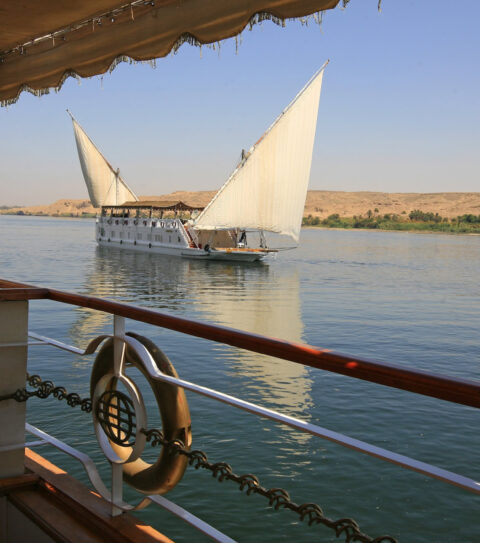
Very much so. Two weeks at an unhurried pace suits couples particularly well, with time for the romance of a Nile cruise, sunset feluccas in Aswan, and a Red Sea or beach finish. Many couples choose a luxury Nile cruise vessel or an intimate dahabiya, and add private touches such as a sunrise balloon flight over Luxor.
A multi-country pairing also works beautifully for a honeymoon, combining Egypt’s monuments with the beaches of Greece or the desert lodges of Jordan. Your Travel Concierge can build in the slower mornings, special dinners, and quiet moments that make a honeymoon feel different from a standard tour.
Completely. Customization is the whole point, and at two weeks there is more to customize than on any shorter trip. You choose the track, Egypt in full or Egypt with a second country, then the regions, the cruise vessel, how many days by the sea, whether to add the Western Desert or a Lake Nasser cruise, and the pace of each day.
The three itineraries on this page are starting points, not fixed routes. Your Travel Concierge builds the trip with you and refines it through the usual two to four rounds of revisions, balancing the days exactly as you wish. There is no commitment until you are 100% satisfied with the plan.
Design Your Custom Tour
Explore Egypt your way by selecting only the attractions you want to visit