Thoughtfully Designed Group Tours, or Custom Private Travel
Egypt Easter Tours
Our Egypt Easter Tours are professionally curated small group journeys, ideal for experiencing Cairo, Luxor, and the Nile during the popular Easter travel period. Travel alongside fellow explorers, be guided by certified Egyptologists, and rely on our award-winning service since 1955 — including 24/7 assistance before and during your trip.
For travelers seeking a more exclusive experience, we also offer the option to create a fully private Egypt tour from the ground up, tailored to your preferred dates, interests, and travel style.
Easter on the Nile: Spring Light, Holy Week, and Pharaonic Egypt
One of just two weeks a year when Egypt runs at genuine peak — and arguably the better one for sheer atmosphere, with Coptic Holy Week, spring light, and the river at its lushest.
Spring is the Nile at its greenest. By Easter, the floodplain is thick with new growth, the desert haze of high summer hasn’t started yet, and Coptic Cairo settles into its most important week of the year. It’s also the second of Egypt’s two peak travel windows. The first is Christmas. The second is now.
Our setup for Holy Week reflects what the season actually is: high demand, fixed school holiday windows, and a need for both flexibility and certainty depending on how you travel. We run a curated set of fixed-departure group tours alongside the option to design any of our standard itineraries as a fully private journey. Both run through Easter week, both travel with a private Egyptologist guide and personal driver, and both come backed by 70+ years of Egypt experience and 24/7 support throughout the trip.
Table of Contents
Two Ways to Travel With Us at Easter
You have two booking options for Easter, and the difference matters before planning starts.
Fixed-departure group tours
Around Holy Week we run a small set of group tours with set dates aligned to Easter Sunday. The itinerary is already built, dates are locked, and the group sizes stay small — well below standard coach-tour numbers. You travel alongside a handful of fellow guests, with an Egyptologist guide and a personal driver throughout. This is the path for travelers who want festive timing without the design legwork.
Fully private tours and Nile cruises
Everything else stays fully private, Easter week included. Any Egypt Tours Plus tour package can be booked as a private journey for your party alone — your dates, your pace, your hotels, your call. The same applies to Luxury Nile Cruises and Dahabiya Nile Cruises, both of which sail privately throughout the festive period and the surrounding weeks. The single catch is demand. The historic cabins go fast, sometimes six months out.
In short:
- Locked dates and a ready-made itinerary? Book a group departure.
- Custom dates, custom pace, custom inclusions? Build a private journey.
- Want to attend specific Holy Week services or be at sea on Easter Sunday? Private gives you the timing precision.
This split applies only at Easter and Christmas/New Year. The rest of the year, every tour we run is private by default.
Why Spring Is the Smart Time to Come (And the Hard Time to Plan)
October through April offers ideal weather conditions, with daytime temperatures of 20–25°C (68–77°F) and cool, comfortable evenings. Summer months can exceed 35°C (95°F), making early-morning starts essential, though our private tours adjust pacing accordingly.
Easter sits at the warm end of that window, and three things make it the right time to come.
The first is timing. Spring is one of the last comfortable windows before the desert heat starts climbing fast. By late May, Karnak, the Valley of the Kings, and Abu Simbel become punishing in midday sun. Easter still gives you the comfortable temperature band, with mornings cool enough for proper site time and evenings mild enough for outdoor dining.
The second is light. The desert haze of high summer hasn’t started yet, the spring greens of the Nile floodplain are at their strongest, and the limestone monuments hit differently in April light than in January’s flatter winter sun. Photographers know this.
The third is the cultural overlay. Coptic Holy Week brings Old Cairo’s churches alive with week-long observances that don’t happen at any other time of year. Whether you observe them religiously or just appreciate them culturally, they add a layer most Egypt itineraries miss.
Three things also make it the season that needs the most planning.
Hotels and cruises sell out three to six months ahead. The historic anchor properties (Old Cataract, Winter Palace, Mena House) and the best cruise cabins go first, and there’s almost no inventory inside four weeks of Easter Sunday. Pricing reflects that demand, which is true of every Egypt operator at this time of year. And the major sites are busier than autumn or January, though still less crowded than peak European destinations in the same week. We schedule early starts to stay ahead of the day’s biggest tour buses.
Coptic Holy Week and the Egyptian Christian Calendar
Egypt’s Coptic Orthodox Church is one of Christianity’s oldest, tracing its founding to St. Mark in the first century. Holy Week — Pascha, in Coptic — is the most significant week in the calendar, and Cairo is where it’s most visible.
Coptic Easter follows the Orthodox calendar, which means it usually lands one week after Western Easter, though every few years the dates align. Both observances draw international visitors, but the week-long Pascha programme is the more elaborate.
In 2027 the two calendars sit unusually far apart: Western Easter falls on March 28, Coptic Easter on May 2, five weeks later. If attending Coptic Holy Week services is a priority, plan around the May date; your Travel Concierge will confirm which departure fits.
Where to experience it:
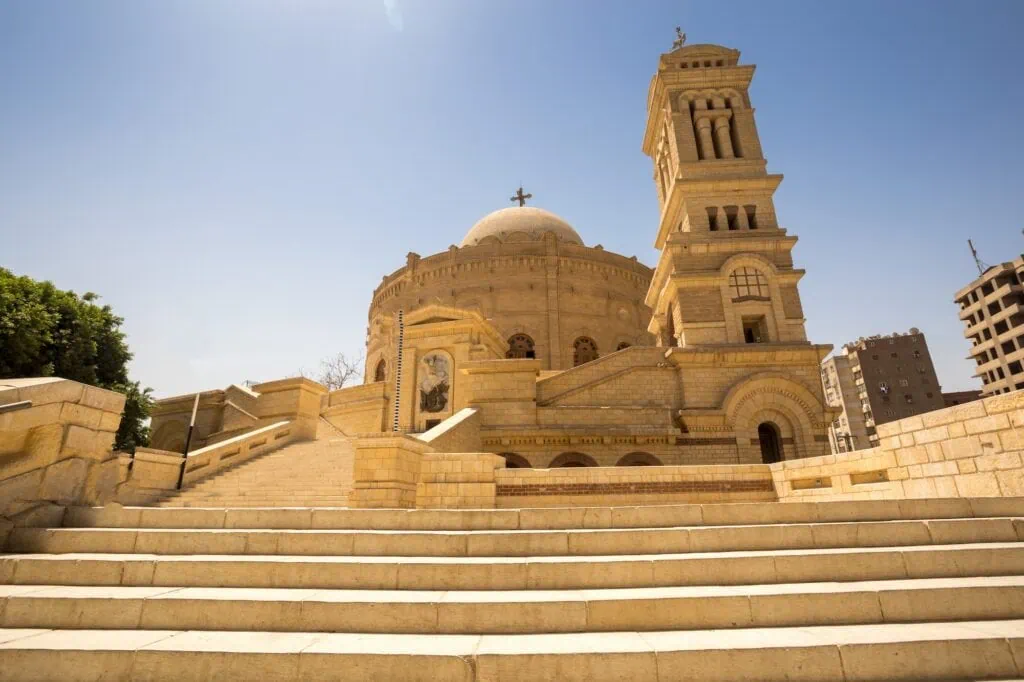
The Hanging Church (Al-Muallaqa), built atop the Roman gatehouses of the old Babylon Fortress, is the spiritual centre of Coptic Cairo. Holy Week services are open to respectful visitors. Modest dress, no flash photography during liturgy, and a willingness to stand for long stretches are the practical requirements.
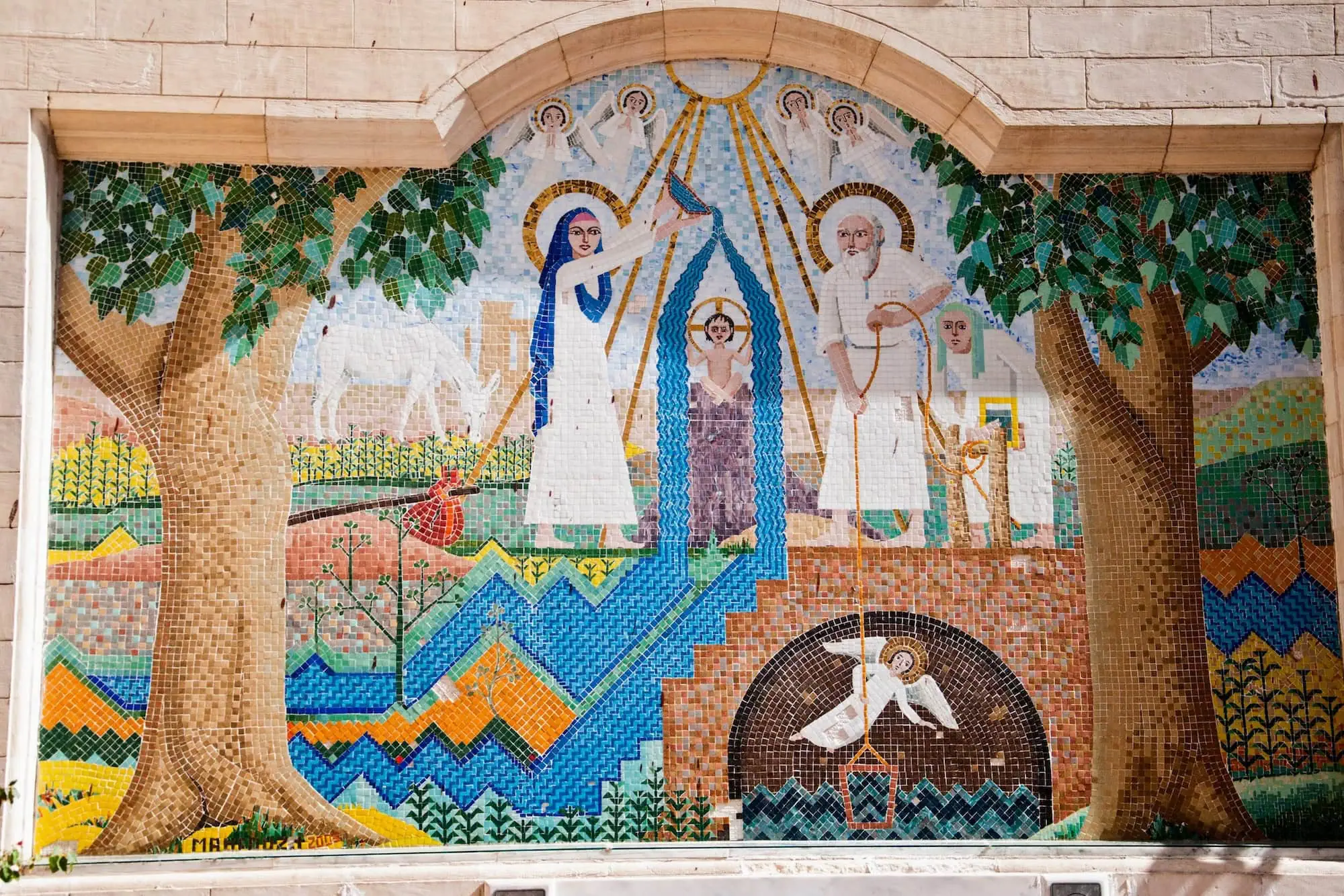
Saints Sergius and Bacchus (Abu Serga), where tradition holds the Holy Family rested during the Flight into Egypt, runs a more intimate programme on a smaller scale.
For travelers with serious interest, the desert monasteries are the deeper layer. Wadi Natrun, between Cairo and Alexandria, holds four working monasteries dating to the 4th century. St. Anthony’s and St. Paul’s in the Eastern Desert are older still, founded by the desert fathers who shaped early Christian monasticism. Day trips can be arranged from Cairo with advance notice — these aren’t standard tour-bus stops, and they require coordination with the monastic communities.
If your dates land in Coptic Holy Week and you want to attend services, build in extra Old Cairo time. Maundy Thursday and Holy Saturday evening into Easter Sunday morning are the most atmospheric.
Coptic Cairo isn’t a side-trip on an Easter itinerary, it’s part of the trip. We build at least half a day into Old Cairo for travelers visiting during Holy Week, and your Egyptologist guide will explain the architectural overlay where churches were built atop earlier pharaonic and Roman foundations.
Building an Easter Itinerary
A typical Easter trip with us runs 8 to 12 days. Long enough to do Cairo properly, sail the Nile, and add either Red Sea downtime or a multi-country pairing without cramming.
Cairo: 2 to 4 days
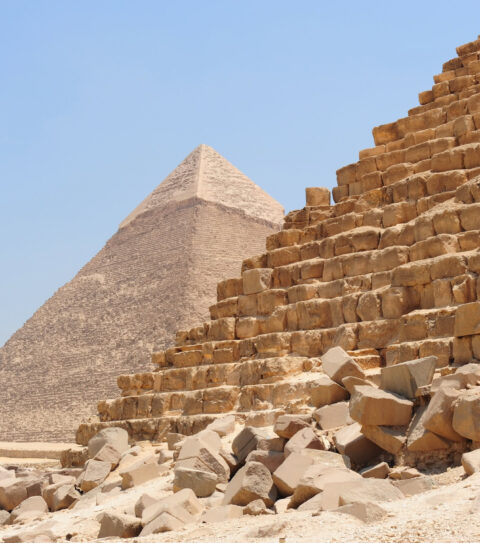
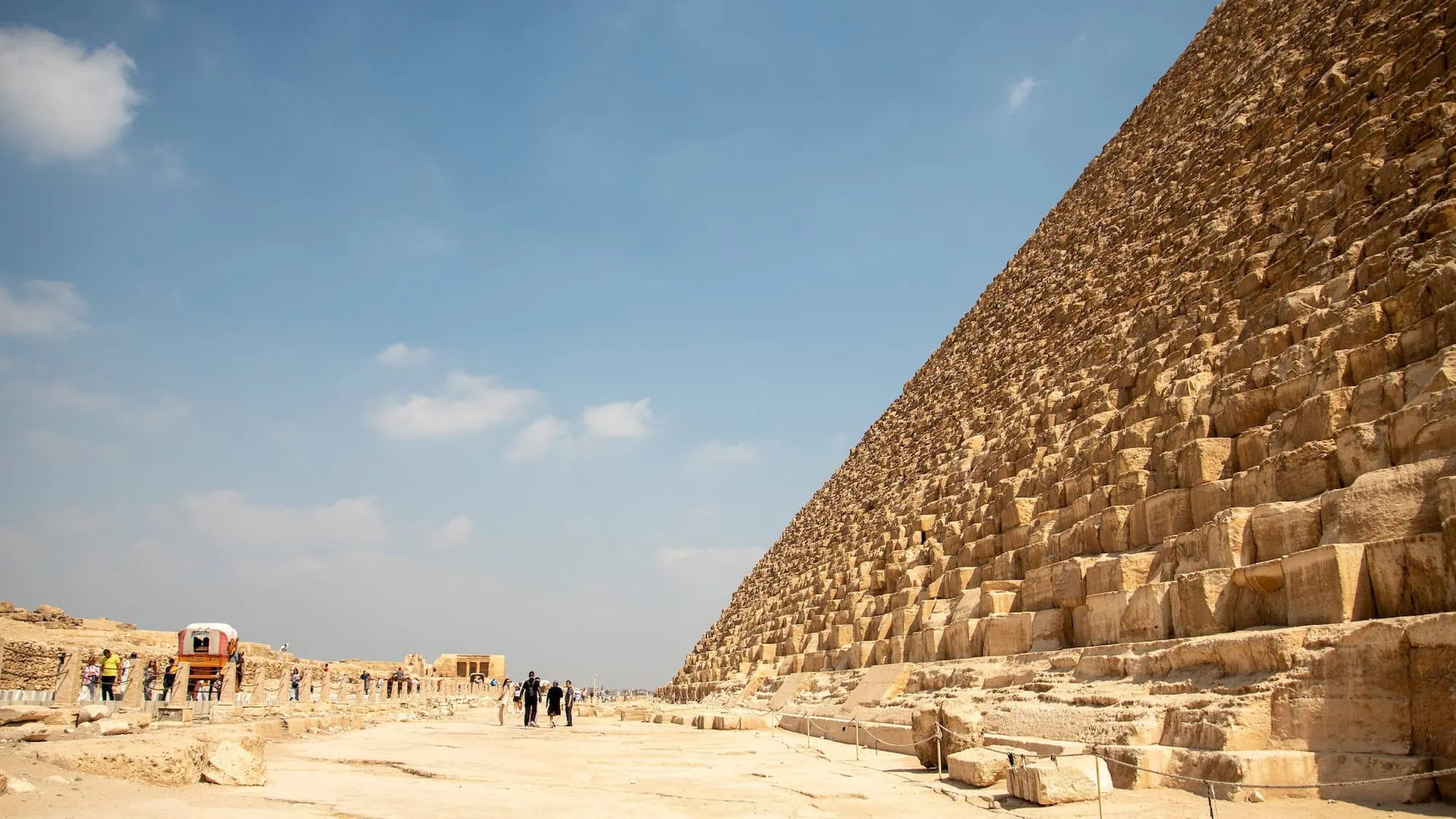
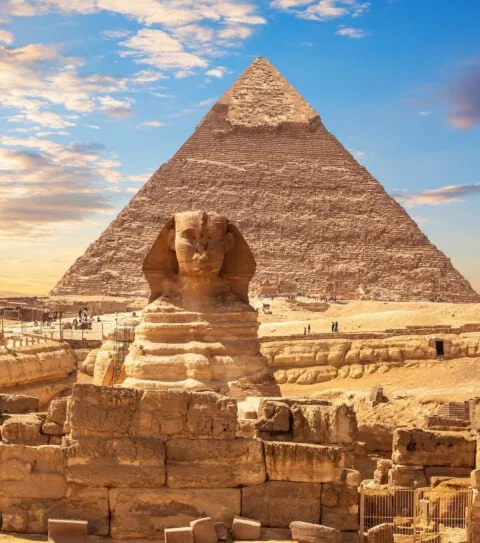
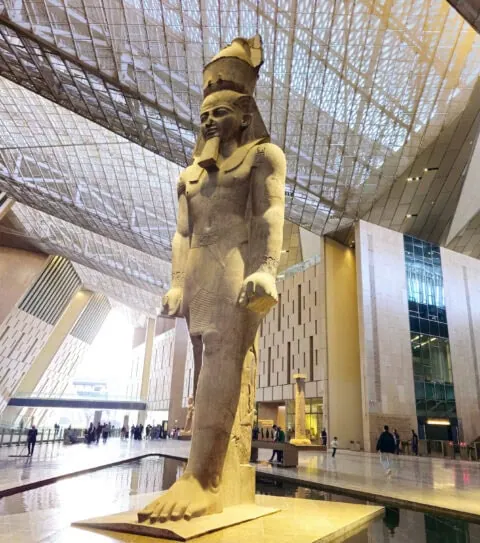
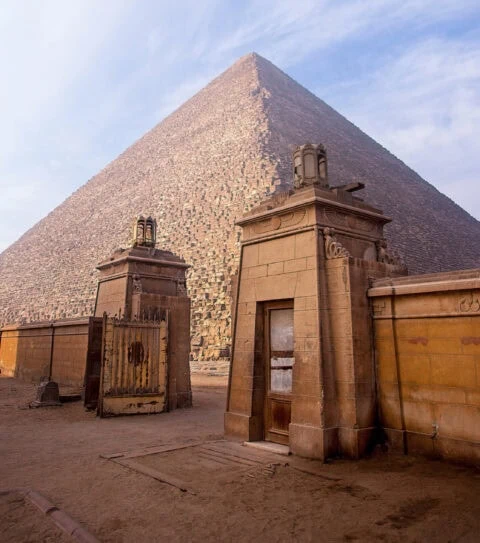
The Grand Egyptian Museum, fully open, has consolidated the world’s most comprehensive pharaonic collection in one building, including the entire Tutankhamun ensemble — golden mask, inner shrines, 5,000+ items, displayed together for the first time. Add the Pyramids of Giza and the Sphinx (the Great Pyramid is roughly 4,500 years old), Coptic Cairo for Holy Week, and Khan El Khalili bazaar.
A note on the Great Pyramid: interior access is a separate ticket with a daily quota. Worth requesting in advance if you want it built into the day.
If your trip aligns with Coptic Holy Week and you want to attend services, expect to spend more time in Old Cairo than a standard tourist itinerary would.
Nile cruise: 4 days / 3 nights (or longer)
The cruise is what most travelers remember most. Two products run through the Easter window:
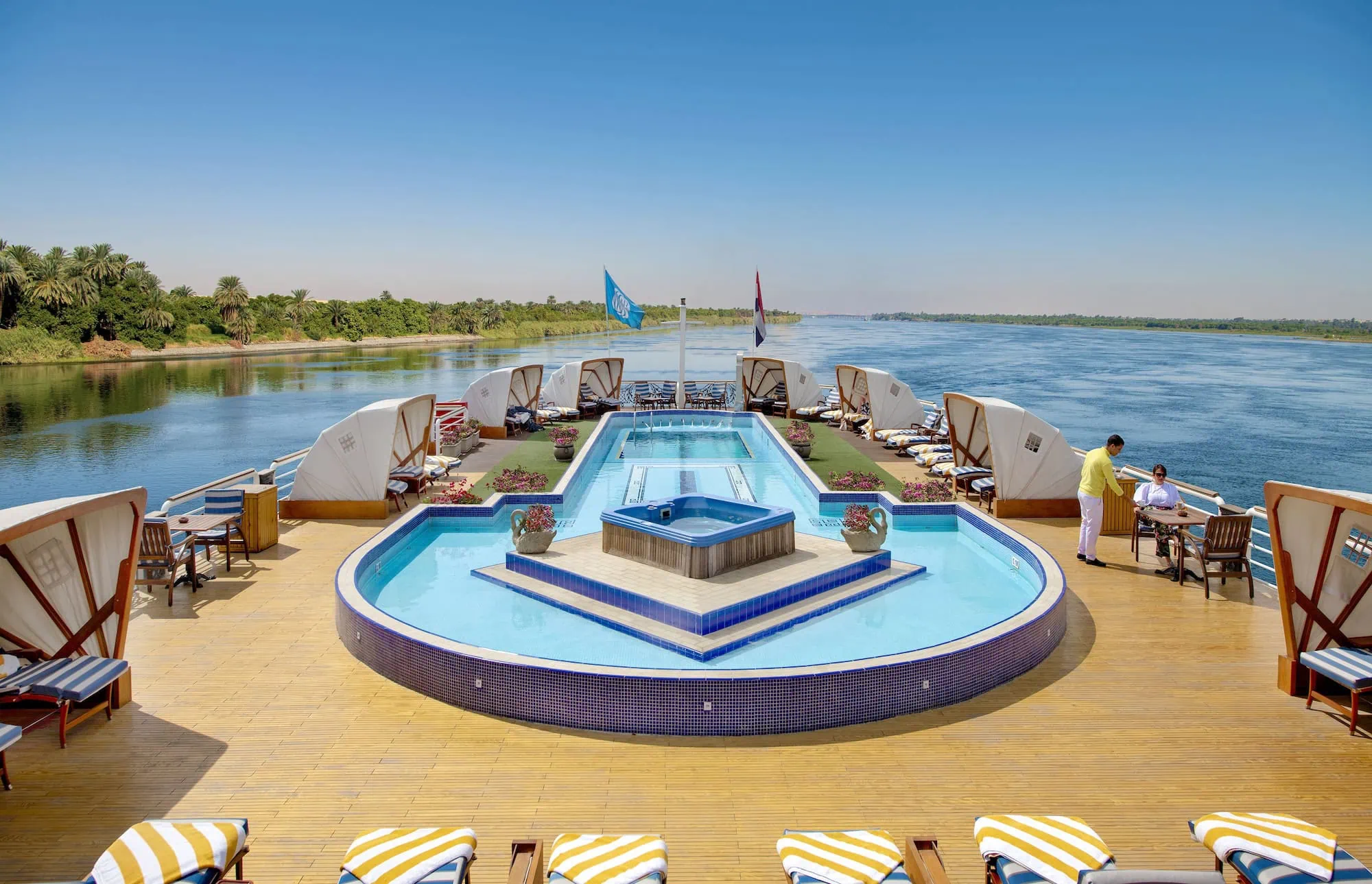
Luxury Nile Cruises carry 50 to 150 guests on refined 5-star vessels. Panoramic cabins, sun decks with pools, elegant dining, evening entertainment. Standard cruise length included in tour packages is 4 days / 3 nights. We also offer 5, 6, 7, and 8-day cruise options on select Luxury Nile Cruise vessels, plus Lake Nasser cruises as an extension to Abu Simbel.
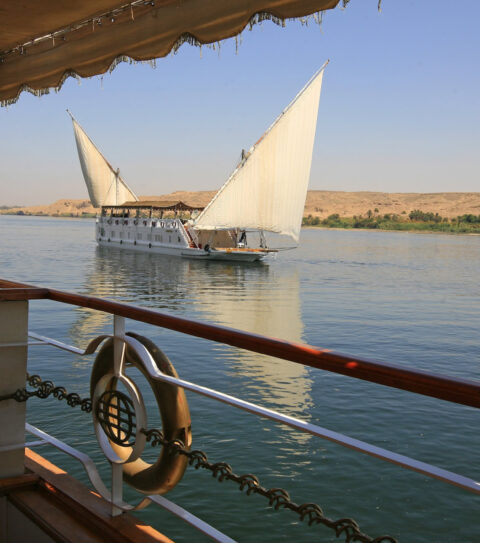
Dahabiya Nile Cruises are the smaller, slower alternative: traditional twin-mast sailing vessels carrying just 8 to 16 guests. Fresh local meals, no engine noise, access to quieter river stretches that the larger ships skip. Most dahabiyas sail between Luxor or Esna and Aswan, with uninterrupted sailing past Edfu, Kom Ombo, El-Kab, and Gebel el-Silsila. Easter is one of the better dahabiya windows of the year. Cool enough that the slow sailing feels like the right pace, and the spring riverbanks are at their most photogenic.

A note on shore excursions, since this is where some operators over-promise. On Luxury Nile Cruises, shore excursions run as small group experiences (around 12 guests per Egyptologist), shared with fellow ship passengers. Fully private excursions can be arranged on request at additional cost. On Dahabiyas, the boat itself is small enough that excursions feel essentially private. All your land-based touring in Cairo, Luxor, and Aswan city is fully private throughout: just your party, an Egyptologist, and a driver.
Optional add-ons
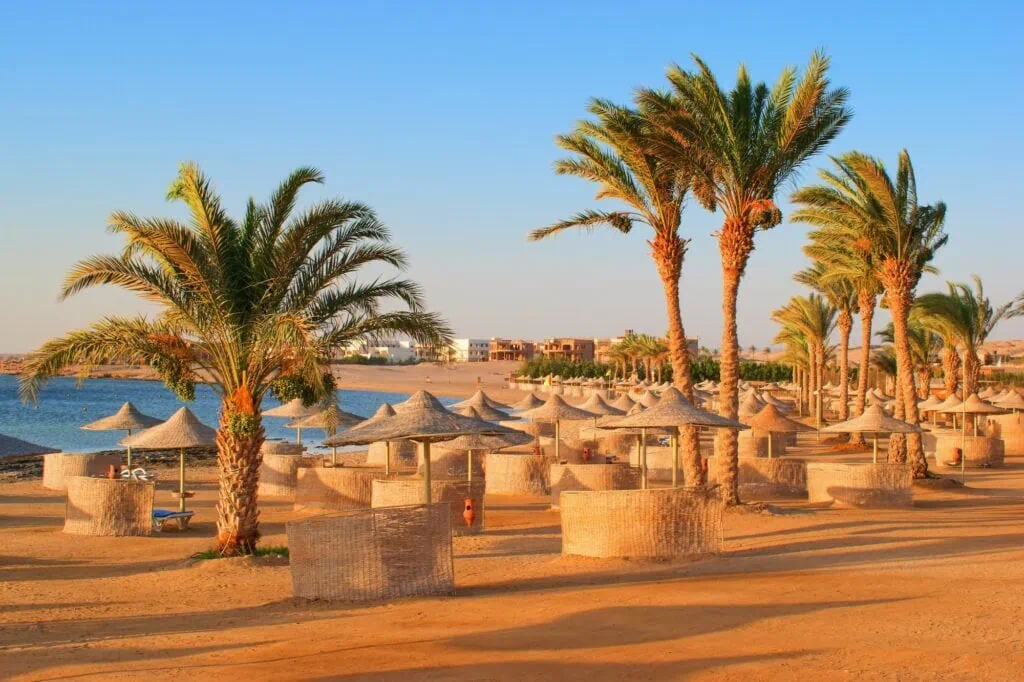
- Red Sea downtime at Hurghada, Marsa Alam, or Sharm El Sheikh, three to four days at the end. Sea temperatures are at their best by Easter, and visibility on the dive sites is at peak.
- Abu Simbel, either as a flight day from Aswan or as a Lake Nasser cruise extension.
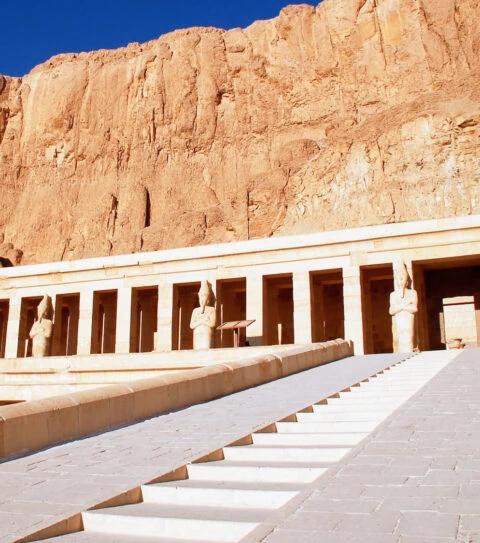
- A hot air balloon flight at sunrise over Luxor’s West Bank, with the Valley of the Kings, Hatshepsut’s temple, and the green floodplain spread out below. Easter dawn light is the strongest of the year for ballooning.
- A Coptic monastery day trip from Cairo (Wadi Natrun) or from the Red Sea coast (St. Anthony’s, St. Paul’s). For travelers with serious interest in the early Christian heritage of the country.
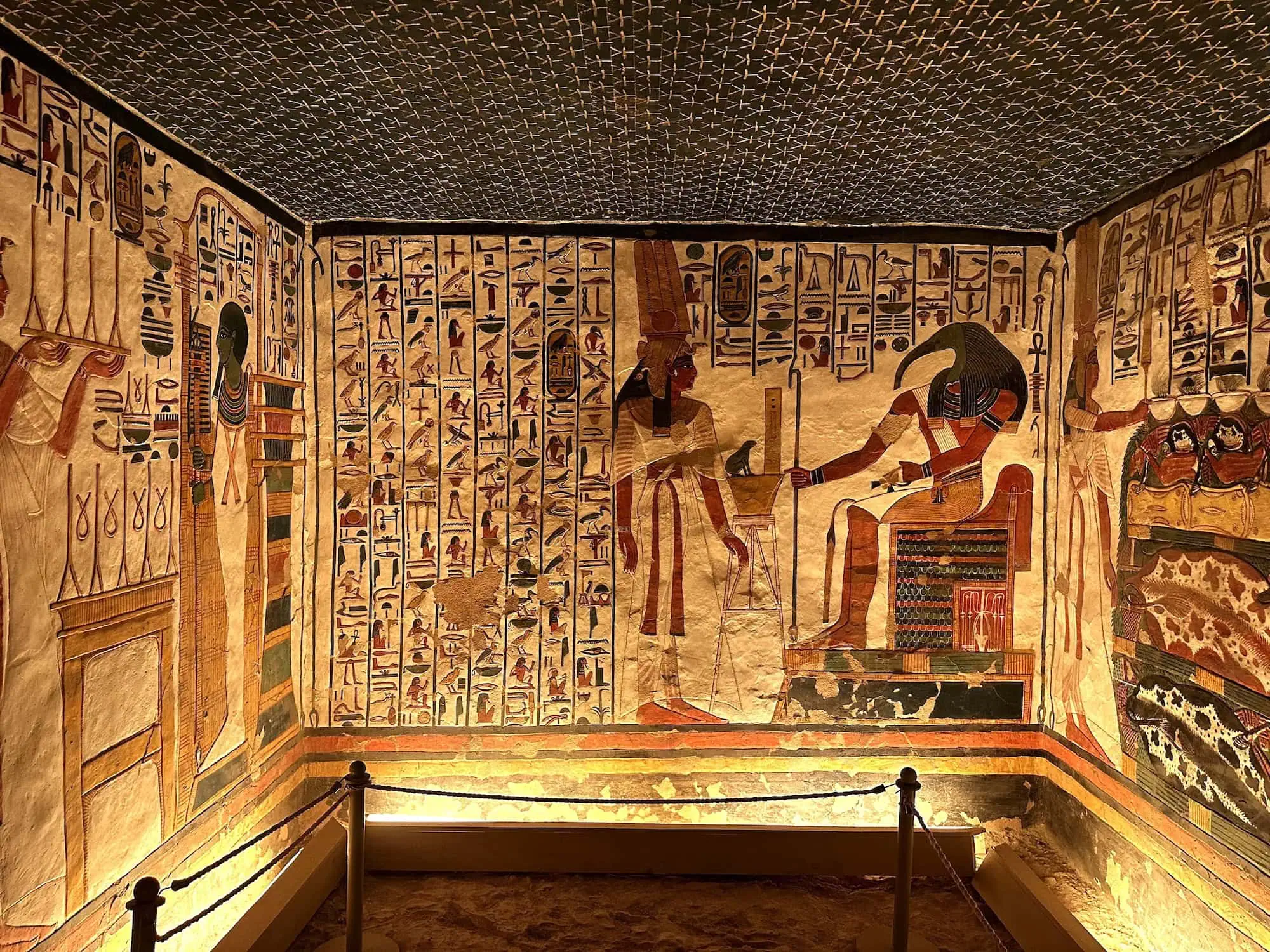
Special access add-ons: Tutankhamun’s tomb, Nefertari’s tomb, Seti I’s tomb — each a separate ticket with daily caps. After-hours photography permits at GEM. Each tour itinerary on the site lists what’s already included as standard. Anything beyond that is the optional layer on top, quoted as add-ons during planning.
Hotels During Easter Week
Each tour itinerary on the site lists the specific hotels included in that package. Those are our recommended starting points, picked for location, comfort, and consistency of service. Anything below is alternatives or upgrades you can request when you’re tuning the trip with your Travel Concierge.
Three historic properties define Easter on the Nile. They book up first, and they’re worth knowing about even if you end up choosing something else:
- Sofitel Legend Old Cataract in Aswan. Colonial-era, on the Nile, with views across to Elephantine Island. The terraced gardens are at their best in April.
- Sofitel Winter Palace in Luxor. Late 19th-century, set among extensive grounds that bloom for the season. Walking distance to Luxor Temple.
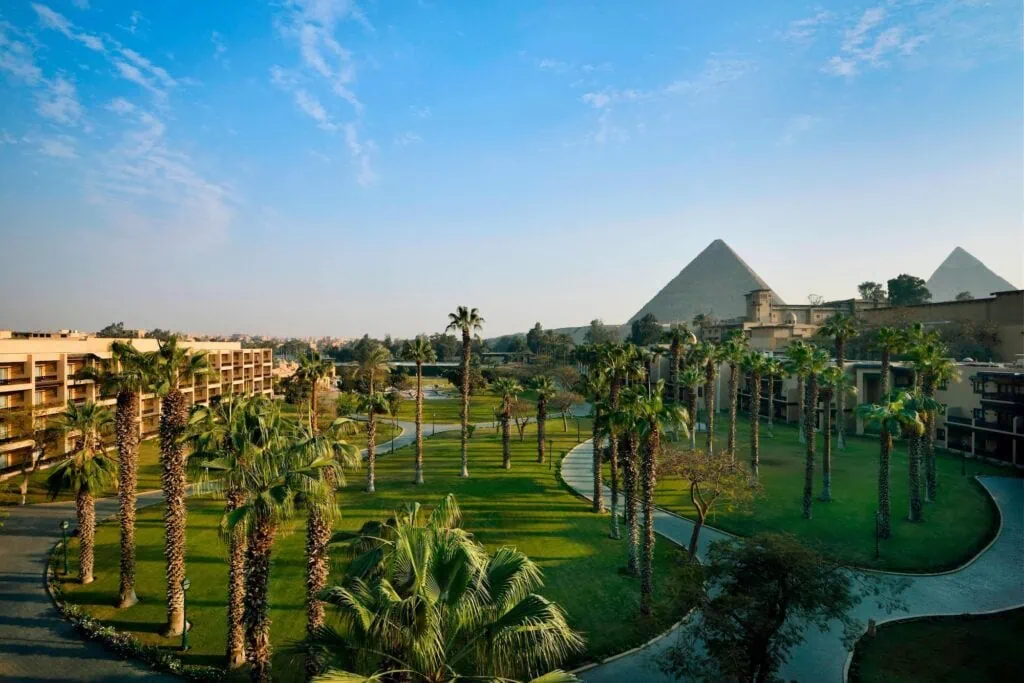
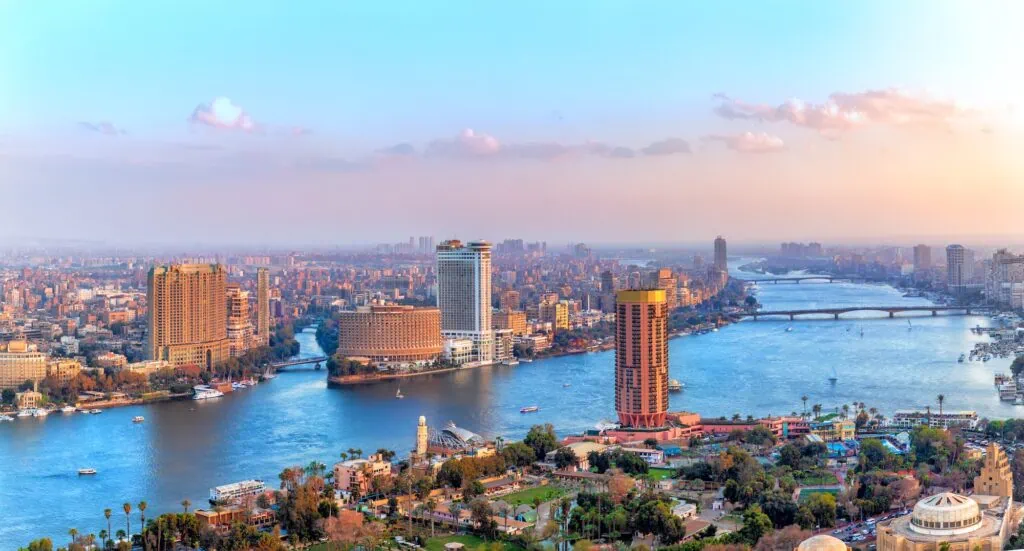
- Marriott Mena House in Giza. Pyramid views from the room balconies, on the plateau itself. The pool deck shot, with the Great Pyramid behind, is the one you’ve seen on every Egypt postcard.
Cairo’s modern luxury alternative runs to Four Seasons-tier downtown and Nile-side hotels. Cruise cabin upgrades from standard to suite are also worth flagging during planning if you want extra space for the festive week.
What to Pack
Spring layers are the right call. Days run 20–25°C, evenings stay in the 12–15°C range in Upper Egypt — comfortable rather than cold. Long sleeves work for sun cover (the desert sun is climbing fast by this point in the season) and for visiting churches and mosques. Comfortable walking shoes for temple flooring, sunglasses, and a light scarf or shawl that doubles for cooler evenings and head-covering at religious sites.
Visas and Practical Entry
Most travelers, including U.S., U.K., E.U., Canadian, Australian, and many Latin American nationalities, can obtain a 30-day tourist visa on arrival at Cairo Airport for $25 USD, or apply for an e-visa online before departure. Always verify current regulations for your specific nationality before travel, and our Travel Concierge can provide complete documentation guidance.
A dedicated representative meets you in the arrivals area at Cairo International Airport and guides you through immigration, baggage claim, and customs.
Whatever your language, you’ll be matched with an Egyptologist guide who speaks it — English, Italian, Spanish, Portuguese, German, French, and others available on request.
Pairing Egypt With Another Country
Two weeks or more is what a proper multi-country Easter trip needs. Spring is also peak in most of the surrounding region, so the weather lines up.
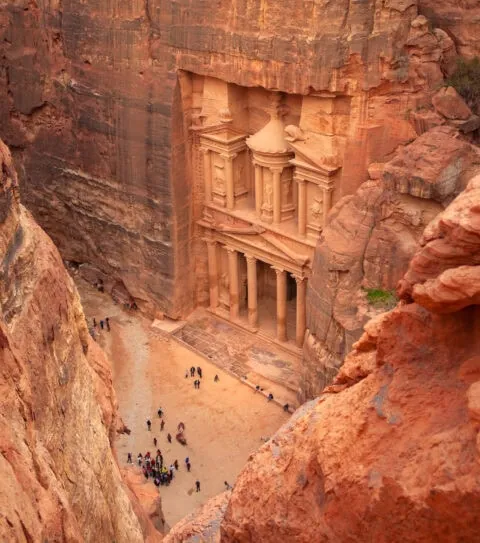
Egypt + Jordan. Jordan in April is the country’s golden window. Wildflowers across Wadi Rum, mild days, and Petra’s rose-red sandstone in the kindest light of the year.
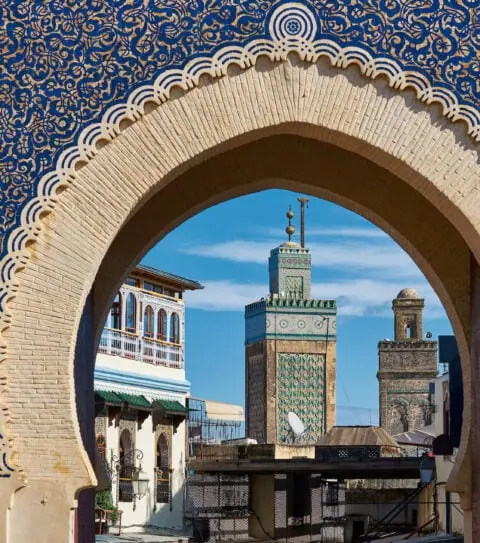
Egypt + Morocco. Marrakech riads, a Sahara overnight at Erg Chebbi, the blue lanes of Chefchaouen. April in Morocco is dry and comfortable — the sweet spot before the desert summer.
Egypt + Turkey. Istanbul in early April catches tulip season (the city’s signature spring spectacle) and sunrise ballooning over Cappadocia is at its most reliable.
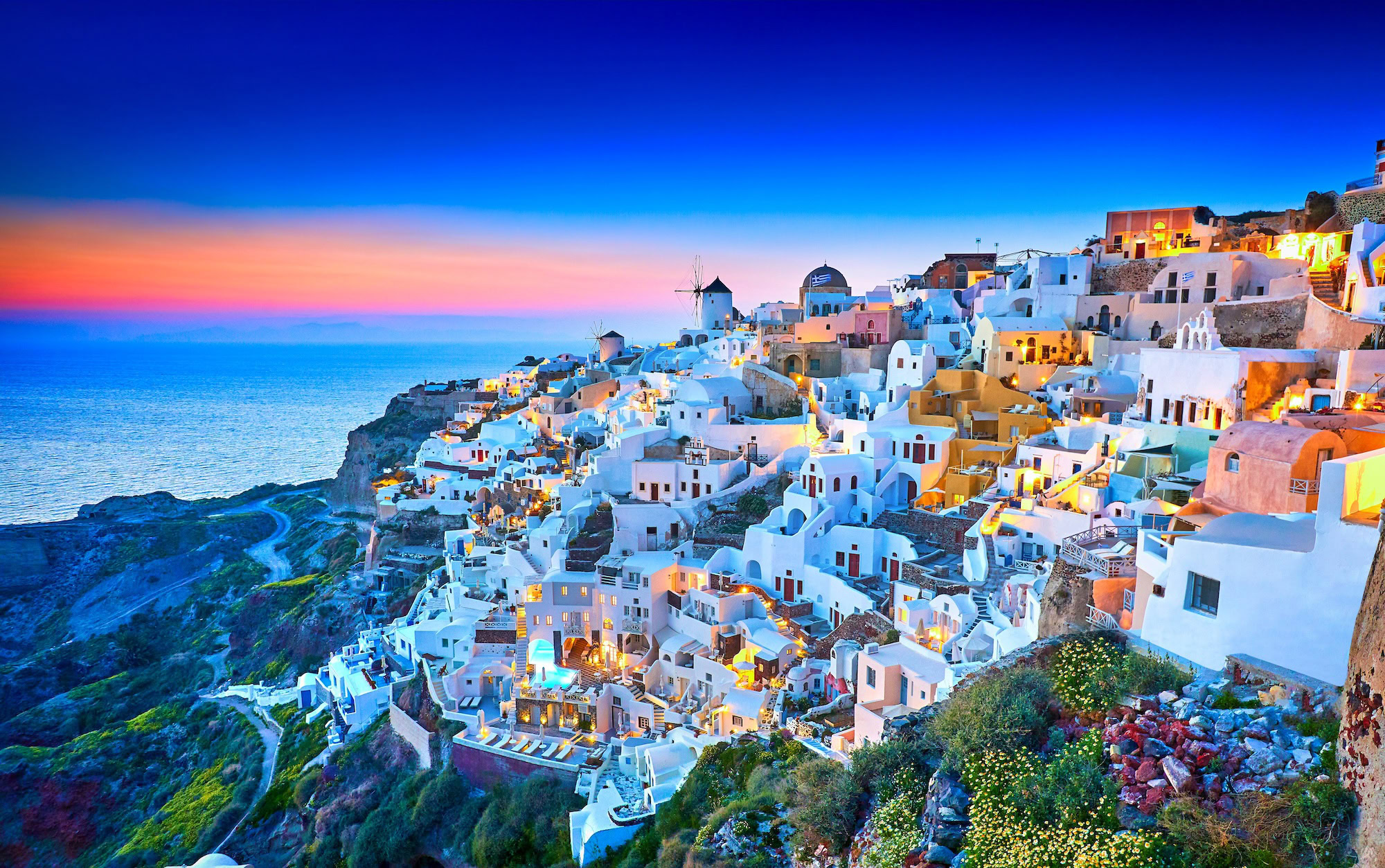
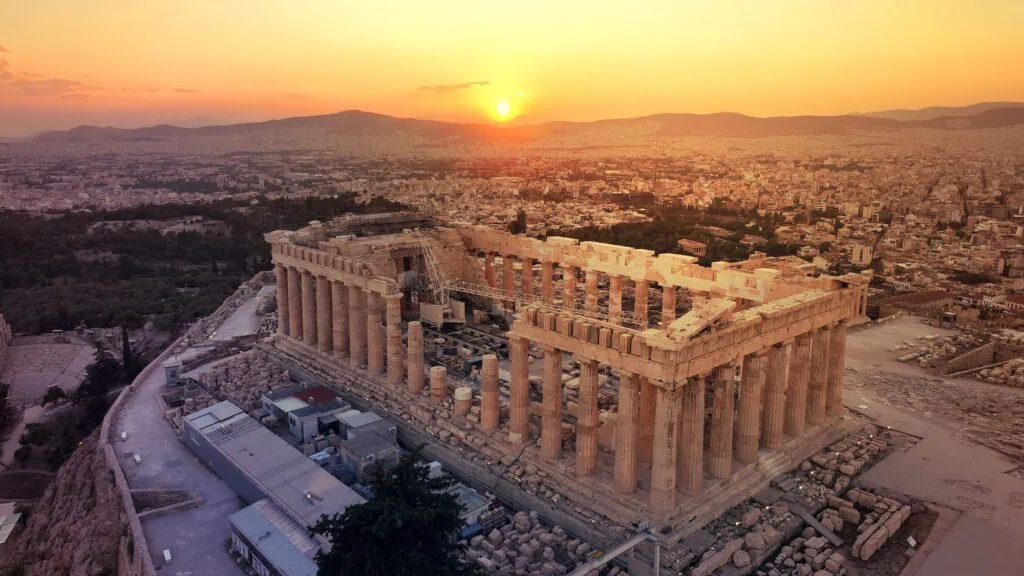
Egypt + Greece. Greek Easter typically lands the same weekend as Coptic Easter. Athens runs midnight Resurrection services on Holy Saturday with fireworks and candle processions. The islands are starting to wake up for the season but still quiet. A serious pairing for travelers with Orthodox interest on both sides of the Mediterranean.
Egypt + Dubai. Pyramid contrast trip. Dubai is still pleasant in April before the summer heat properly sets in.
Any of these can be layered into your Easter trip during planning. Mention the ones that interest you and your Travel Concierge will model the durations and price implications.
How the Planning Process Actually Works
Easter trips have a different planning rhythm than the rest of the year. School spring breaks vary by country and shift annually. Western and Coptic Easter dates don’t always line up. Some travelers want their itinerary anchored to specific Holy Week services; others want to be at sea on Easter Sunday and not think about it. We build the planning process around all of this.
Your Travel Concierge starts with one conversation: dates (and how flexible they are), who’s travelling, what you want included, pace, hotel category, and group versus private. The first draft itinerary lands in your inbox typically within 1 to 12 hours.
What follows is the back-and-forth, and it’s the part that matters most. We adjust dates if Western Easter and your school break don’t quite align, swap hotels, change cabin categories, layer in monastery day trips or Holy Week service stops, drop in or pull out Red Sea segments, and rework the trip until it sits right. Most travelers go through two to four rounds of revisions before booking, though some take significantly more until every detail is locked. There’s no pressure to commit at any stage. The itinerary is finalised only when you’re 100% satisfied and ready to confirm.
Ready to Plan Your Egypt Easter Tour?
Group departure or fully private journey, both run through Holy Week. Cairo and Coptic Cairo, the Nile under spring light, Abu Simbel at dawn, the Red Sea at perfect water temperature, monastery day trips, Easter Sunday at sea: all on the table.
Tell us your dates, who’s travelling, and what matters most, and your dedicated Travel Concierge will have a tailor-made Egypt Easter itinerary back in your inbox within 1 to 12 hours. We’ve been doing this since 1955, with TripAdvisor Travelers’ Choice 2020 through 2026 in our pocket.
Frequently Asked Questions
Plan three to six months ahead. Easter and Christmas are Egypt’s two highest-demand windows of the year, and the historic anchor hotels (Old Cataract, Winter Palace, Mena House) along with the best cruise cabins go first. Last-minute bookings inside four weeks are possible, but expect compromises on hotel and cruise availability.
Both. Around Holy Week, we run a small set of fixed-departure group tours with set dates and pre-built itineraries — small group sizes, Egyptologist guide, personal driver throughout. Outside those specific group departures, every Egypt Tours Plus tour and Nile cruise stays fully private, with your own dates, pace, hotels, and inclusions. Dahabiyas and Luxury Nile Cruises both run privately during the festive period as well, subject to advance booking.
Western Easter is a movable feast in late March or April. Coptic Easter usually lands one week later on the Orthodox calendar, though every few years the dates align. Both observances animate Old Cairo’s Coptic churches, but the week-long Coptic Holy Week is the more elaborate. We can build itineraries around either or both.
Spring temperatures, comfortable rather than cool. Days run 20 to 25°C (68 to 77°F) in most tourist areas, evenings drop to 12 to 15°C (54 to 59°F) in Upper Egypt. Rain is rare. The light is at its best of the year, and the desert heat hasn’t started building yet.
Easter falls inside Egypt’s peak pricing window, alongside Christmas. This is true of every operator, not just us. Pricing varies based on duration, hotel category, cruise type (luxury vs. dahabiya), cabin category, group versus private booking, and whether you add Red Sea or Abu Simbel. Your Travel Concierge will model concrete pricing scenarios in the first draft itinerary.
Eight to twelve days is the sweet spot. Cairo properly, a 4-day Nile cruise, and breathing room for the journey itself. Add three to four days if you want Red Sea downtime or a multi-country pairing.
Yes. Coptic churches in Old Cairo welcome respectful visitors throughout Holy Week, including the Hanging Church and Saints Sergius and Bacchus. Modest dress (covered shoulders and knees) is expected, and your guide will explain photography rules at each location. Maundy Thursday evening and Holy Saturday into Easter Sunday morning are the most atmospheric services.
Yes, with advance arrangement. Wadi Natrun (between Cairo and Alexandria), St. Anthony’s, and St. Paul’s (both in the Eastern Desert) accept respectful visitors year-round, but Holy Week visits need advance coordination with the monastic communities. Mention this during planning if it interests you.
Standard inclusions: accommodations, domestic flights where applicable, a 4-day Nile cruise (full board on the cruise), entrance fees to all standard sites, your private Egyptologist guide and personal driver throughout the land portion, airport transfers with VIP meet-and-greet, and 24/7 support.
Not included: international flights, tipping, and optional add-ons (special access tombs, balloon rides, Red Sea segments, monastery day trips, road convoy or flight to Abu Simbel beyond what your package specifies).
Each tour itinerary on the site lists the precise inclusions and exclusions for that specific package — those are the authoritative reference, and your Travel Concierge will confirm everything in your final itinerary.
Yes. We run multi-country itineraries to Jordan, Morocco, Turkey, Greece, and Dubai. Two weeks or more works best. Greek Easter often coincides with Coptic Easter, which makes the Egypt + Greece combination particularly strong for travelers with Orthodox interest. Mention what interests you and your Travel Concierge will model the options.
Whatever your language, you’ll be matched with an Egyptologist guide who speaks it — English, Italian, Spanish, Portuguese, German, French, and others available on request.
Tourist areas in Egypt (Cairo, Luxor, Aswan, Hurghada, Sharm El Sheikh, the Nile cruise route) are well-policed and have strong safety records. Our 24/7 worldwide customer service is on call throughout your trip, and your dedicated Travel Concierge stays your point of contact from booking through return home.
Egyptian cuisine has strong vegetarian roots — foul, koshari, vine leaves, baba ghanoush, dozens of vegetable dishes. Hotels and cruises accommodate vegetarian, vegan, gluten-free, halal, kosher, and most other dietary needs with advance notice. Worth knowing: the 55-day Coptic Lent (Great Lent) precedes Coptic Easter and is observed widely across the country. Many restaurants offer expanded vegan options during the period leading up to Holy Week, which is convenient for vegan travelers.
Yes. Easter timing often aligns with school spring breaks, which makes it one of the most popular family travel windows for Egypt. Our family-tuned itineraries pace visits for younger travelers — shorter morning site visits, downtime built into the cruise, and plenty of options at GEM (the Tutankhamun gallery is a strong hit with kids 6+).
Design Your Custom Tour
Explore Egypt your way by selecting only the attractions you want to visit