The cruise that sails the whole Nile
Long Nile Cruises from Cairo to Luxor and Aswan
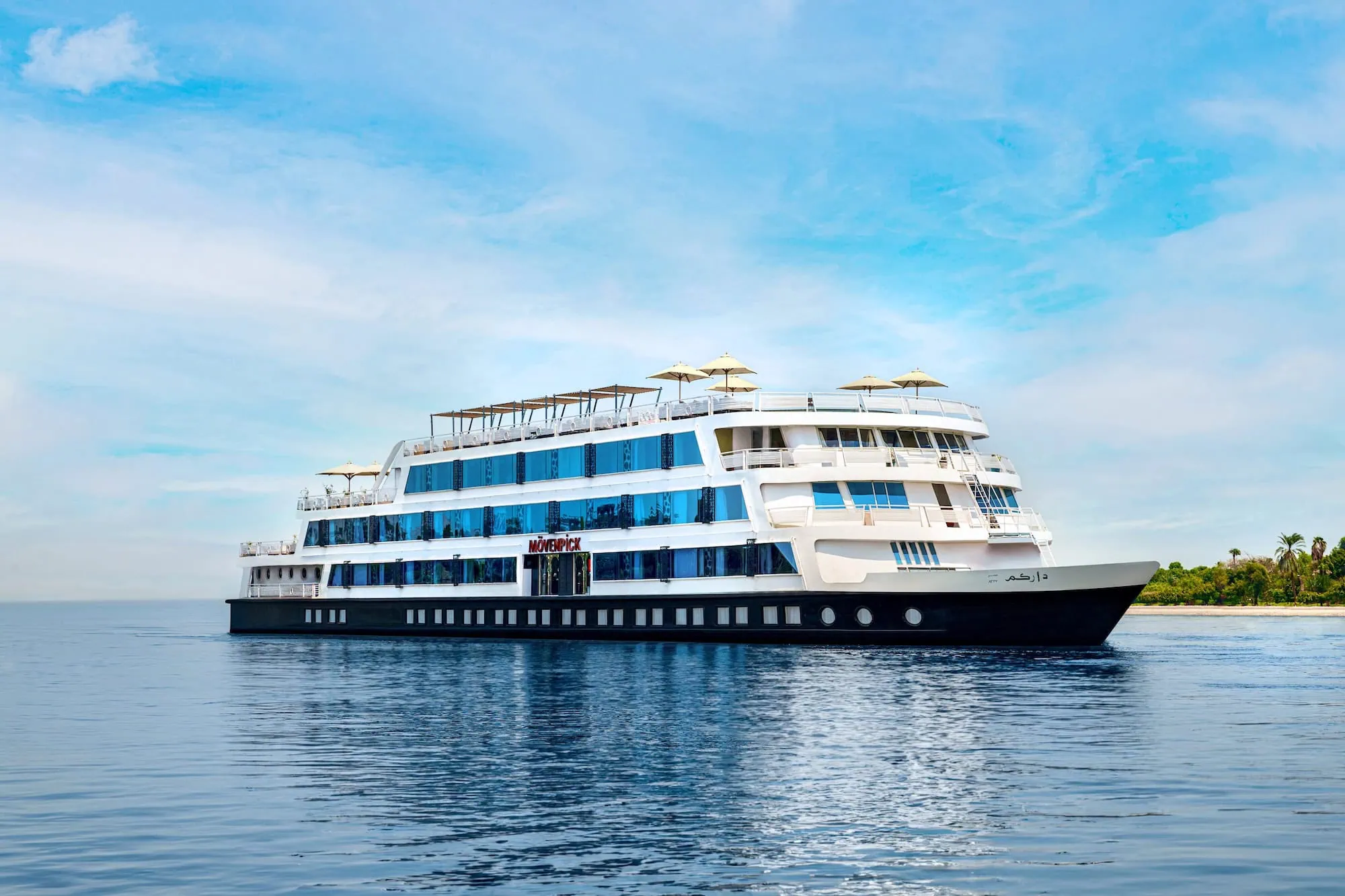
Most Nile cruises sail the short stretch between Luxor and Aswan. Our long Nile cruises sail the whole river. The Mövenpick MS Darakum is one of the very few vessels that can navigate the full Nile from Cairo to Aswan, reaching sites no shorter cruise can: Tell el-Amarna, Beni Hassan, Dendera, Abydos, and the Middle Egypt landscape between. Eleven to fifteen days on the water, in either direction, on fixed annual departure dates.
Your Guide to Long Nile Cruises
Everything you need to plan eleven to fifteen days on the full Nile, between Cairo and Aswan, on the Mövenpick MS Darakum — across four itinerary lengths.
A long Nile cruise is a different category of trip from anything else on egypttoursplus.com. It’s a single uninterrupted journey on the water, from the pyramids to Aswan, on the Mövenpick MS Darakum — one of the very few vessels still capable of navigating the full length of the river. The route passes through Middle Egypt’s rarely-visited tombs and temples, reaches sites no shorter cruise can include, and runs over 11, 13, 14, or 15 days depending on the itinerary. This guide covers what makes the trip distinct, what you’ll see along the way, what life onboard looks like, and how the fixed-departure logistics work.
Table of Contents
Why a Long Nile Cruise Is a Different Category of Trip
Most Nile cruises run between Luxor and Aswan, the short stretch where the river’s most famous temples sit close together. Three to seven nights cover that stretch comfortably. The standard cruise format exists because that’s where the easy sites are.
A long Nile cruise sails north of Luxor. That’s the whole difference, and it changes everything.
North of Luxor, the river enters Middle Egypt, a stretch most tourists never see. The road infrastructure is limited, the tour buses don’t come this far, and almost no cruise ships can navigate the locks and bridges between Luxor and Cairo. What sits along this part of the river is some of the most important and least visited archaeology in all of Egypt: Akhenaten’s heretic capital at Tell el-Amarna, the Middle Kingdom tombs at Beni Hassan, the precursor pyramids at Dahshur and Meidum that show how Egyptian pyramid-building actually developed, and the great temples at Dendera and Abydos.
The Mövenpick MS Darakum is one of the very few vessels that can sail this full route. Four itinerary lengths run on fixed annual departure dates — 11, 13, 14, and 15 days — between Cairo and Aswan in either direction, with shore excursions throughout. Departures book out months in advance.
Egypt Tours Plus has been booking Nile cruises since 1955. For travelers who already know they want more than a standard cruise, the long Nile cruise is the format that delivers the river the way it was traveled before the modern tourist infrastructure existed.
The Route, Explained
The long Nile cruise covers the full river between Cairo and Aswan, a distance of roughly 800 km. Compare that to the standard Luxor-Aswan cruise, which covers about 215 km. You’re sailing nearly four times the distance, which is why the trip takes 11 to 15 days rather than four to eight.
Southbound: Cairo to Aswan
The southbound route begins with embarkation in Cairo, includes the pyramid sites near Cairo (Giza, Dahshur, Meidum), and then sails south through Beni Suef, Minya, Asyut, Sohag, Qena, Luxor, and finally Aswan. Shore excursions along the way reach Tell el-Amarna, Beni Hassan, Tuna el-Gebel, Ashmunein, Abydos, Dendera, and all the standard Luxor and Aswan sites.
Northbound: Luxor to Cairo
The northbound route covers the same sites in reverse, finishing in Cairo with the pyramids and the Egyptian Museum or Grand Egyptian Museum as the closing days of the trip.
Why the Route Is Possible at All
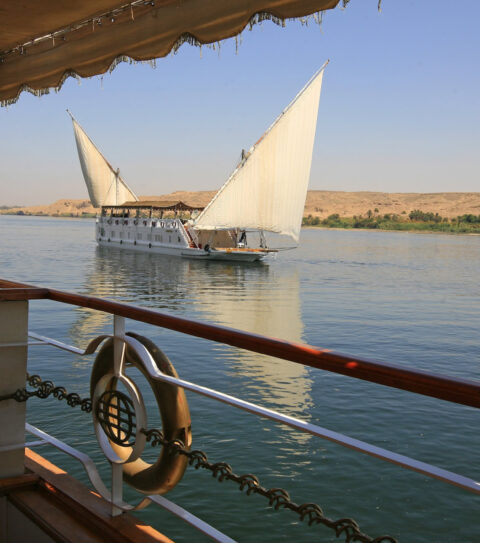
What makes the route possible is a combination of vessel size and capability. The MS Darakum is small enough to clear the locks at Esna, Asyut, and Abu Hamar, low enough to pass beneath the bridges at Sohag and Naga Hammadi, and deep-water capable for the full river. Most modern Nile cruise vessels can do neither the locks nor the bridges, which is why they stay between Luxor and Aswan.
What You See on a Long Nile Cruise
The site list is long because the route is long. Here’s the full picture.
In and near Cairo
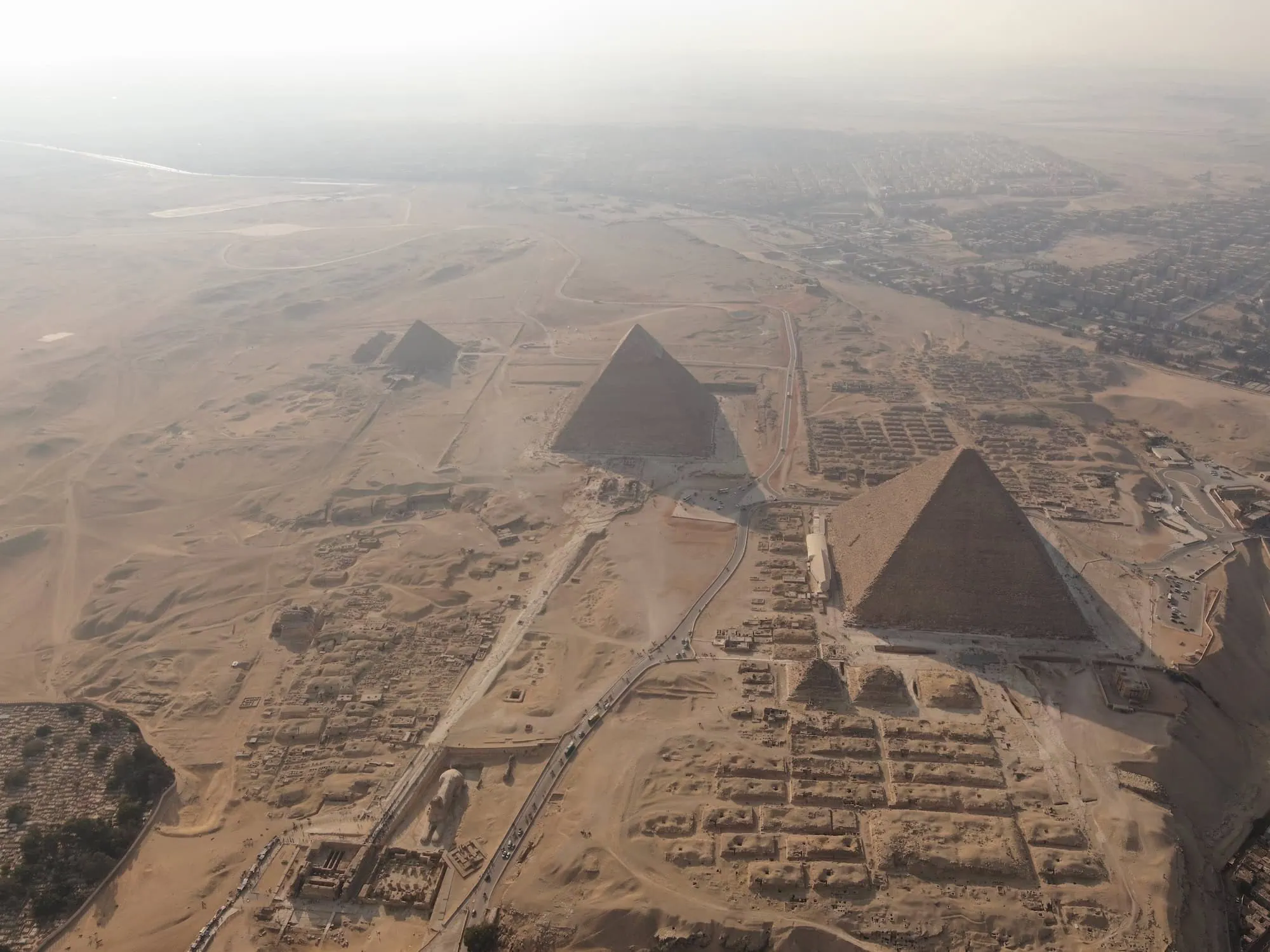
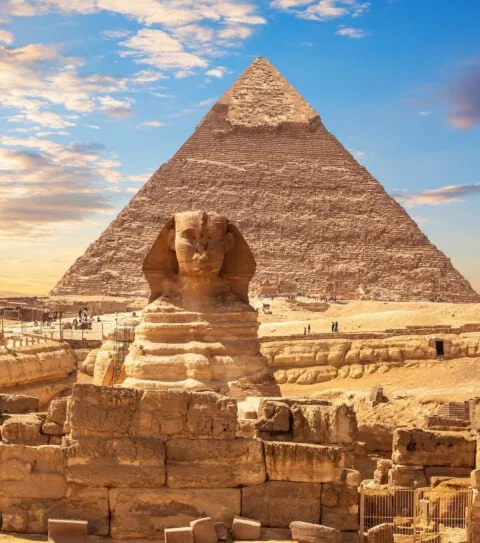
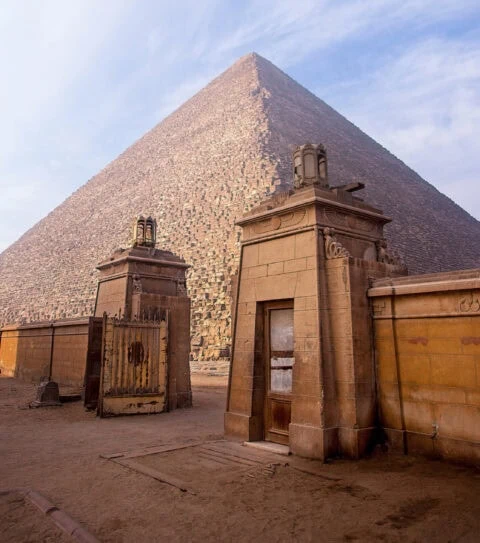
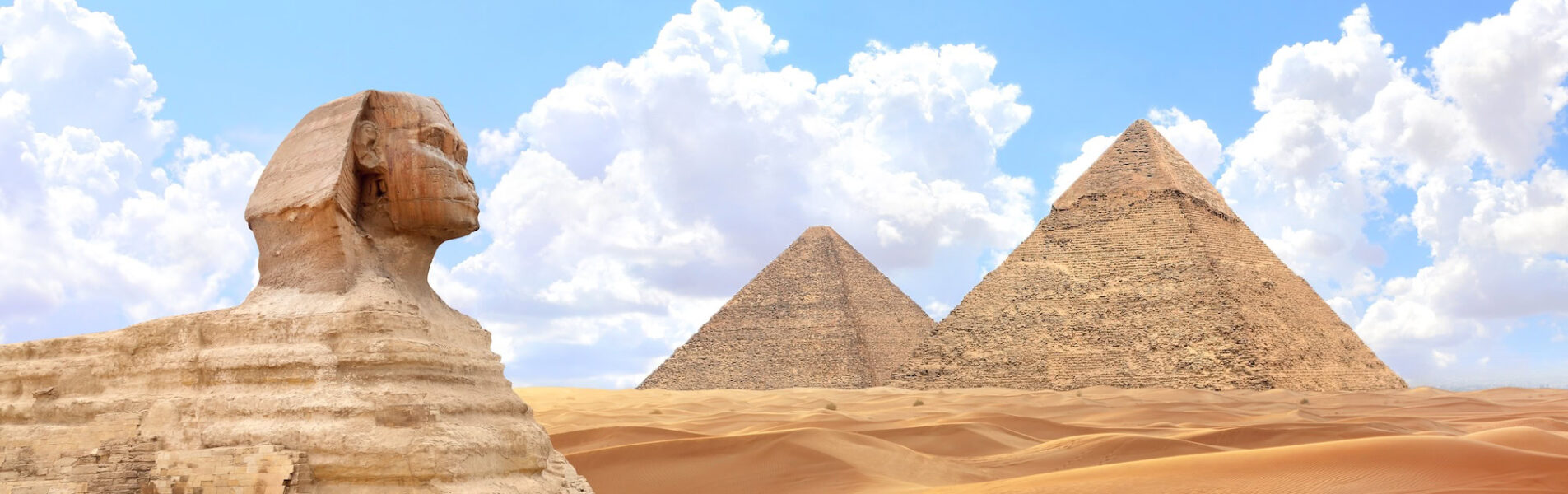
- The Pyramids of Giza and the Sphinx: the only surviving wonder of the ancient world, visited as part of the Cairo segment.
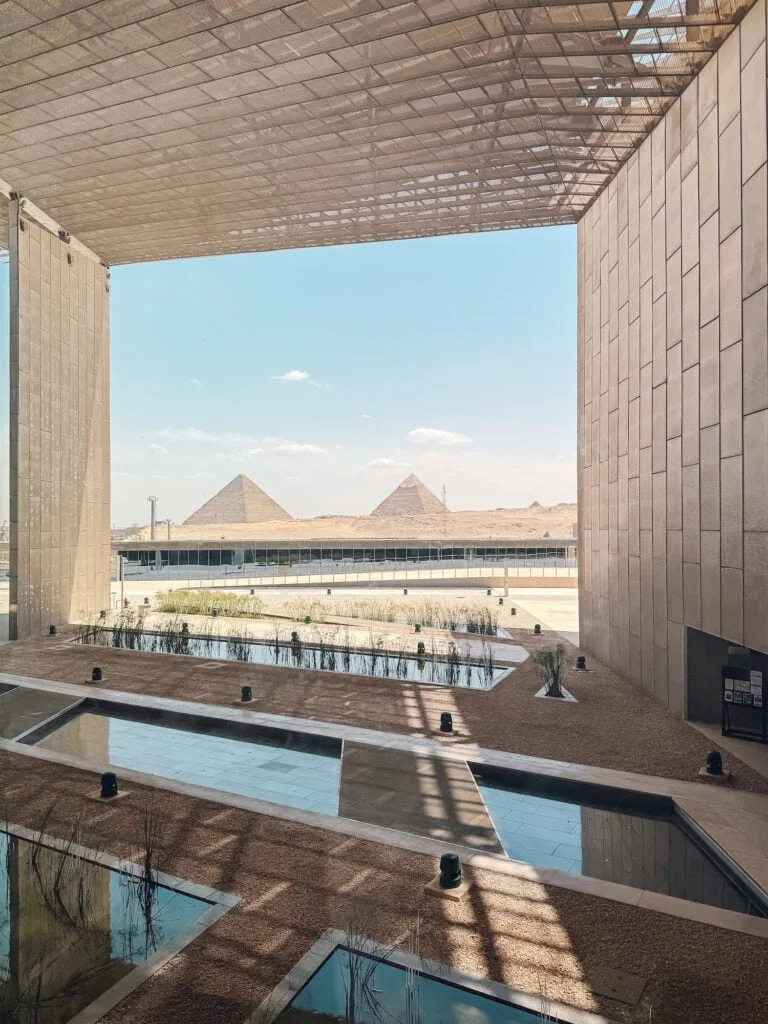
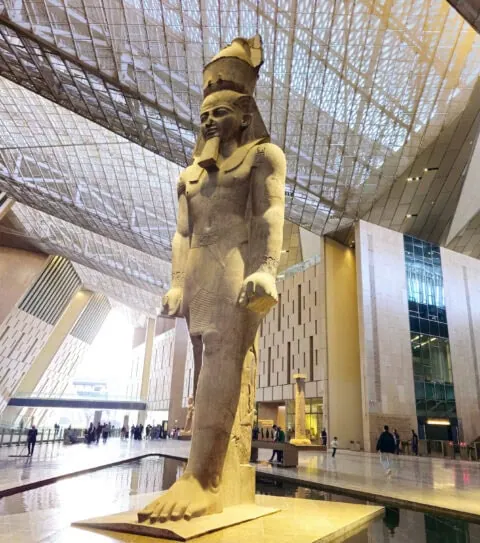
- The Grand Egyptian Museum: now fully open, housing the complete Tutankhamun collection of more than 5,000 items and the world’s most comprehensive pharaonic collection.
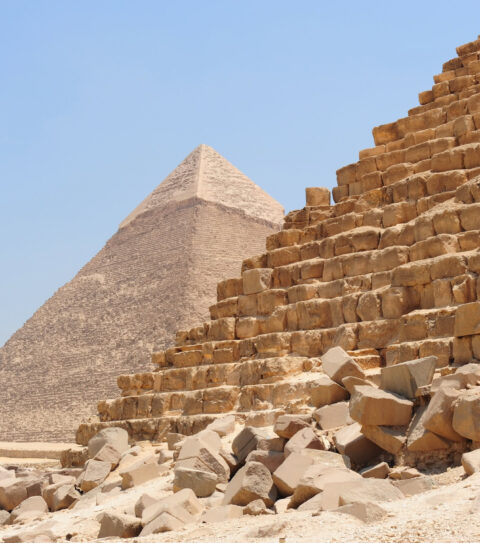
- The Dahshur Pyramids: the Bent Pyramid and the Red Pyramid, the first true smooth-sided pyramids ever built, predating Giza and showing how Egyptian pyramid engineering actually evolved.
- The Meidum Pyramid: an earlier attempt that partially collapsed, visible as the distinctive stepped core surrounded by its rubble field.
Middle Egypt — the stretch no other cruise can reach
- Tell el-Amarna: the heretic capital founded by Akhenaten around 1346 BCE, abandoned within a generation, with the Royal Tomb of Akhenaten and the noble tombs of Meryre, Pentu, Panehesy, and Ahmose carved into the cliffs of the surrounding valley.
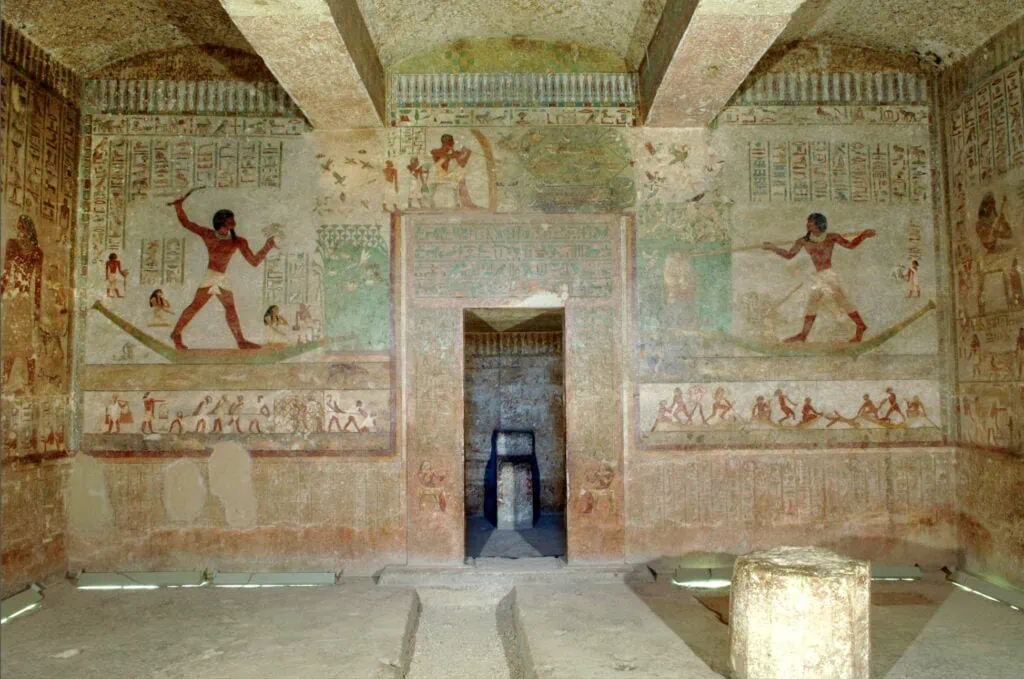
- Beni Hassan: the painted Middle Kingdom rock-cut tombs of provincial officials, with some of the finest surviving wall paintings of daily life in ancient Egypt. The tombs of Baqet III, Khety, Amenemhet, and Khnumhotep II are the highlights.
- Tuna el-Gebel: the necropolis of ancient Hermopolis, with the Tomb of Petosiris and the catacombs of sacred ibises and baboons.
- Ashmunein (ancient Hermopolis): the cult center of Thoth, the god of writing, with the remains of the Great Basilica and surviving columns and statuary.
Between Luxor and Cairo, on the river itself
- Abydos: the Great Temple of Seti I, one of Egypt’s most sacred sites, with the Abydos King List and some of the finest relief carving in the country.
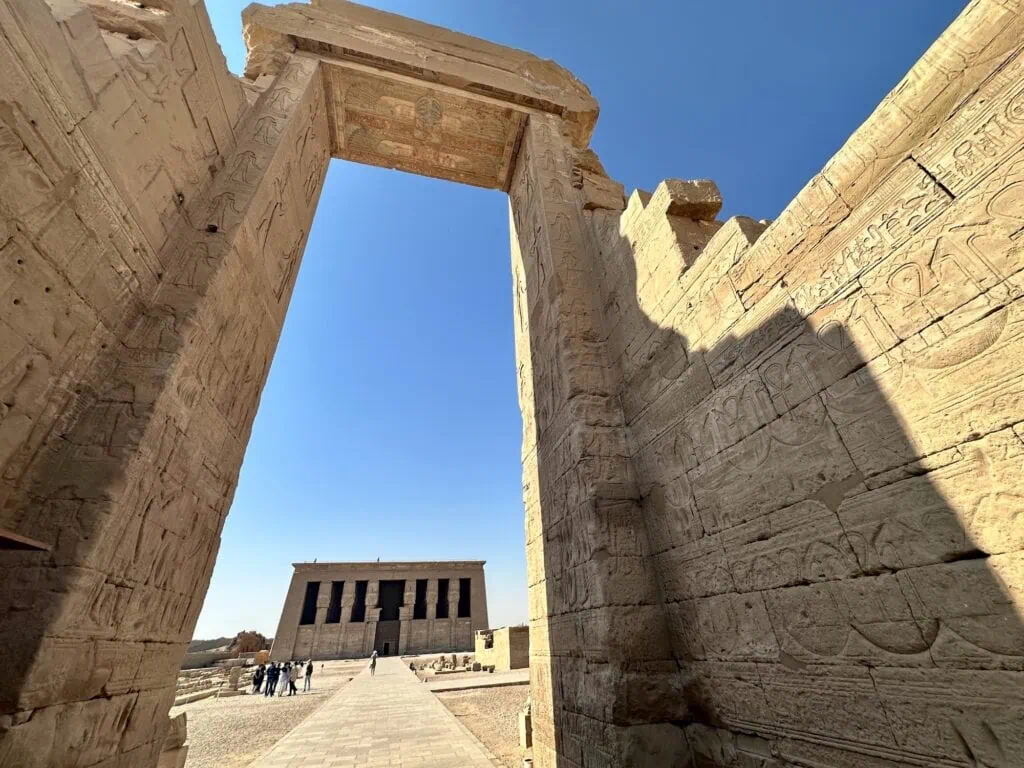
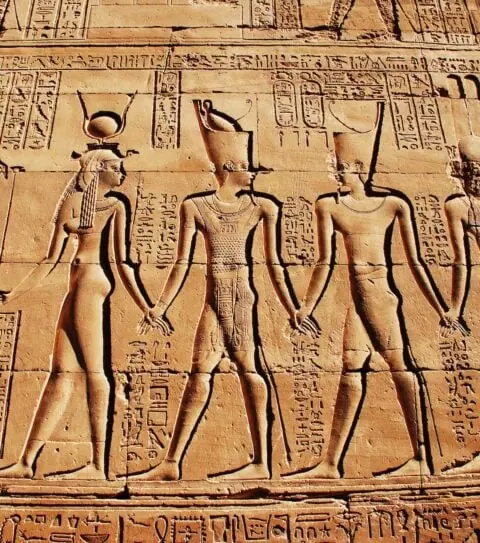
- Dendera: the Temple of Hathor, one of the best-preserved temple complexes in Egypt, famous for its astronomical ceiling and surviving paintwork.
In Luxor
- Karnak Temple: the largest ancient religious complex ever built, with the Great Hypostyle Hall and its 134 columns.
- Luxor Temple: linked to Karnak by the 2.7 km Avenue of Sphinxes.
- Valley of the Kings: the royal necropolis with more than 60 tombs, including those of Tutankhamun and Ramses VI.
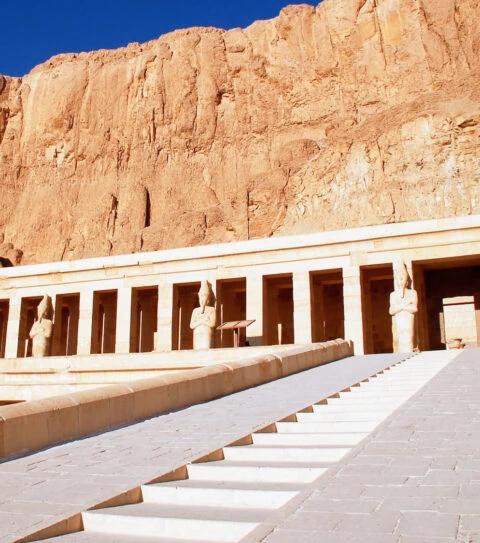
- Hatshepsut Temple (Deir el-Bahari): the three-terraced mortuary temple of Egypt’s only successful female pharaoh.
Between Luxor and Aswan
- Edfu Temple (Temple of Horus): the most completely preserved temple in Egypt.
- Kom Ombo Temple: the double temple dedicated to Sobek and Horus the Elder.
In Aswan
- Philae Temple: the Temple of Isis, relocated to Agilkia Island during the 1972-1980 UNESCO rescue operation.
- The High Dam: the modern engineering counterpoint, with a stop above Lake Nasser.
- The Nubian Museum: Nubian history and culture from prehistory to the present, often visited on the final day.
The standout difference from every other cruise on this site is the Middle Egypt section. Tell el-Amarna, Beni Hassan, Tuna el-Gebel, and Ashmunein aren’t reachable on any other format. They sit in a stretch of country that simply doesn’t have the road infrastructure or cruise infrastructure to support standard tourism, which is why these sites remain so well-preserved and so quiet.
Optional add-ons that pair well with a long Nile cruise: a hot-air balloon flight over Luxor’s West Bank at sunrise, and an Abu Simbel day excursion from Aswan on the southbound itineraries.
Middle Egypt, Explained
The Middle Egypt sites are the entire reason the long Nile cruise exists as a distinct product. They deserve a closer look.
Tell el-Amarna: Akhenaten’s Lost Capital
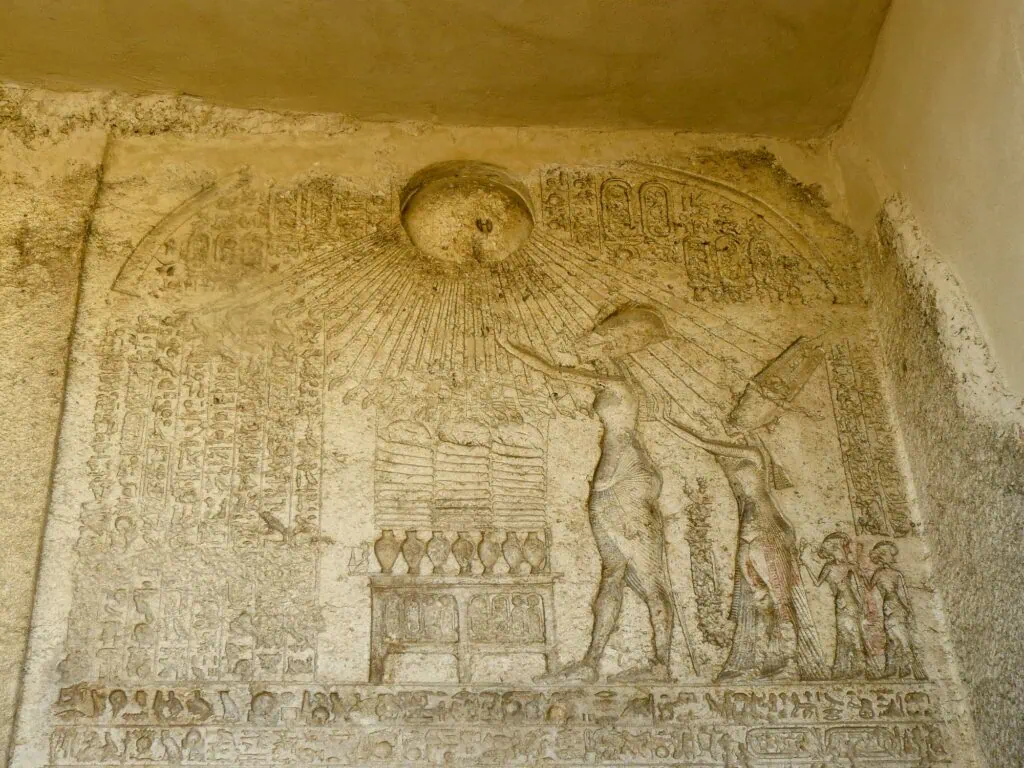
Tell el-Amarna is the most archaeologically significant of the lot. Around 1346 BCE, the pharaoh Akhenaten abandoned the traditional Egyptian capitals at Memphis and Thebes, abandoned the entire traditional religious system, and built a new capital here from scratch — a city dedicated to a single god, the sun disc Aten.
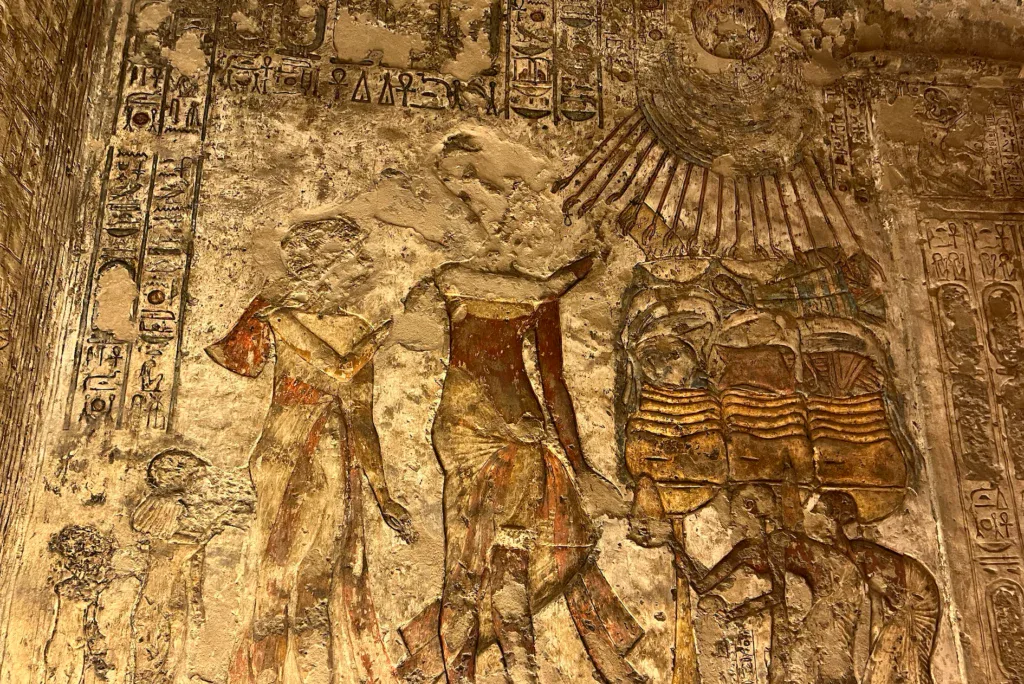
The city lasted barely twenty years. After Akhenaten’s death his son Tutankhamun restored the old religion, the new capital was abandoned, and the experiment was deliberately erased from the official record. What remains is the most coherent single-period archaeological site in all of Egypt: the royal tomb in the desert valley behind the city, the noble tombs cut into the surrounding cliffs, and the foundations of the great palaces and temples Akhenaten built. You walk through a city that was inhabited only between two specific decades in the fourteenth century BCE, then sealed by sand for three thousand years.
Beni Hassan: Middle Kingdom Wall Paintings
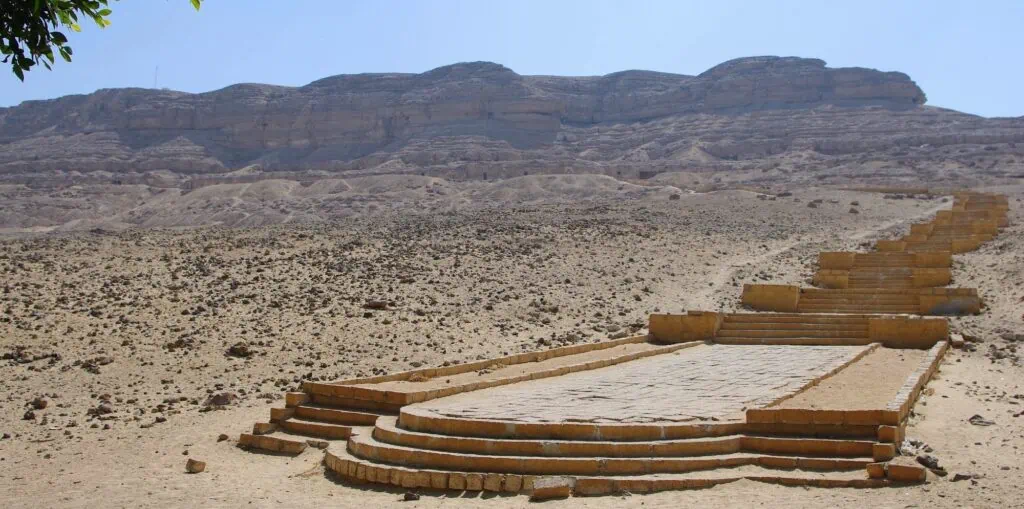
Beni Hassan is the great Middle Kingdom necropolis. The tombs of Baqet III, Khety, Amenemhet, and Khnumhotep II hold wall paintings of extraordinary clarity and detail, showing scenes of daily life — agriculture, hunting, wrestling matches, foreign visitors — that survive almost nowhere else in Egypt. The Beni Hassan tombs date from around 2000 BCE, several centuries before the better-known New Kingdom monuments at Luxor.
Tuna el-Gebel: The Necropolis of Thoth
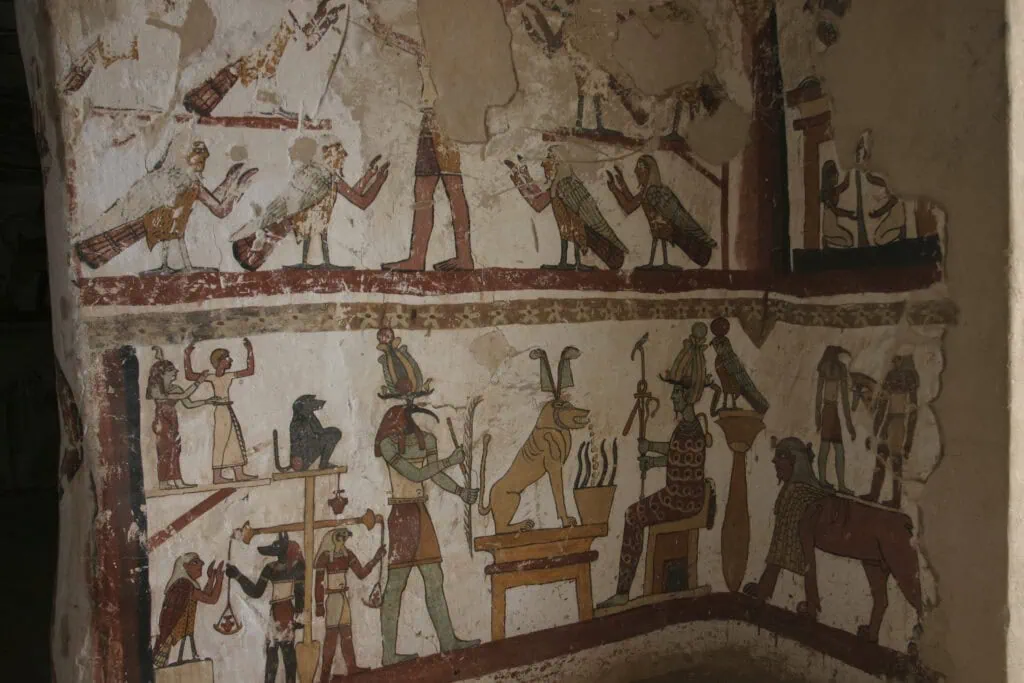
Tuna el-Gebel is the necropolis of ancient Hermopolis, the cult center of the god Thoth. The Tomb of Petosiris stands out — a Greek-period priest of Thoth whose tomb mixes Egyptian religious iconography with Greek artistic style in a way found almost nowhere else. The site also includes the catacombs where sacred ibises and baboons (animals associated with Thoth) were mummified and buried in their thousands.
Ashmunein: Ancient Hermopolis
Ashmunein is the surface remains of Hermopolis itself, the city that Tuna el-Gebel served. The site is most famous for two colossal baboon statues representing Thoth, the remains of the Great Basilica from the later Christian period, and the surviving columns of the temple complex.
These four sites together tell a story that the Luxor-Aswan section can’t. Luxor and Aswan are New Kingdom Egypt at its peak — the empire-builder pharaohs, the great religious establishment. Middle Egypt is older, stranger, and more varied: a heretic capital, Middle Kingdom provincial culture, Greek-Egyptian fusion under the Ptolemies, and the spread of Christianity in late antiquity. The full Nile cruise covers a much wider span of Egyptian history than the standard cruise does.
What You’re Actually Looking At: A Quick Architectural Primer
Egyptian temples follow a consistent design grammar across more than two thousand years. On a long Nile cruise you’ll see enough of them — from the Old Kingdom pyramid complexes at Dahshur and Giza to the Ptolemaic temples at Dendera and Edfu — for the pattern to become unmistakable.
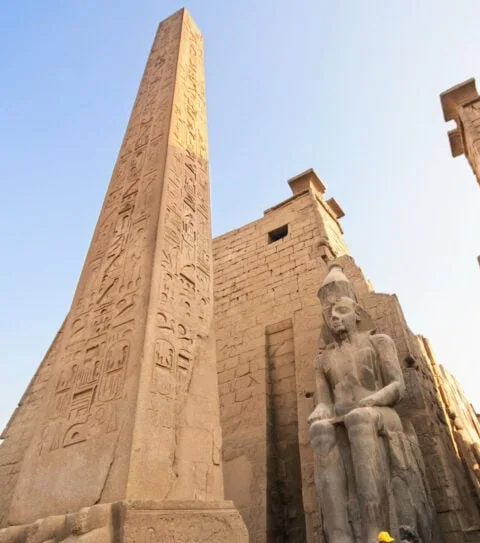
Pylons. The monumental gateway at the front of the temple, two sloping trapezoidal towers framing the entrance. They represented the horizon where the sun god rose.
Open courtyards. Behind the pylon sits a colonnaded courtyard open to the sky, the most public part of the temple.
Hypostyle halls. A roofed chamber crowded with massive columns, built to evoke the papyrus marsh of the Egyptian creation myth.
Inner sanctuaries. The deepest and smallest room, where the god’s cult statue was kept, accessible only to the high priest and the pharaoh.
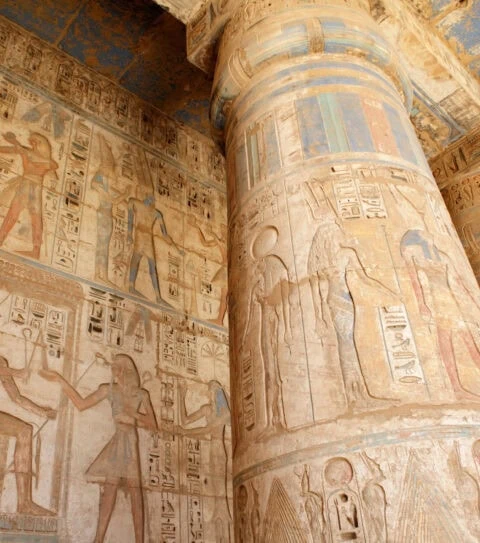
Hieroglyphics. Inscriptions cover nearly every surface, divided between religious texts, royal records, and administrative content.
The pyramid complexes at Dahshur and Meidum work differently. They’re funerary architecture rather than temple architecture, with a mortuary temple at the base, a causeway running east to the valley temple at the river’s edge, and the pyramid itself rising over the burial chamber. Watching this layout evolve from the bent and stepped early attempts at Meidum and Dahshur to the perfected smooth-sided form at Giza is one of the genuine pleasures of a long cruise: you see the architectural problem being solved in real time, across a few decades of fourth-dynasty construction history.
Sailing the Full Nile: Locks, Bridges, and the River Itself
A long Nile cruise involves real physical infrastructure most travelers never think about. The river between Cairo and Aswan is not one continuous easy waterway. It has locks, bridges, and varying depths, and these are the reason most cruise vessels can’t make this journey at all.
The Locks and Bridges That Limit Other Vessels
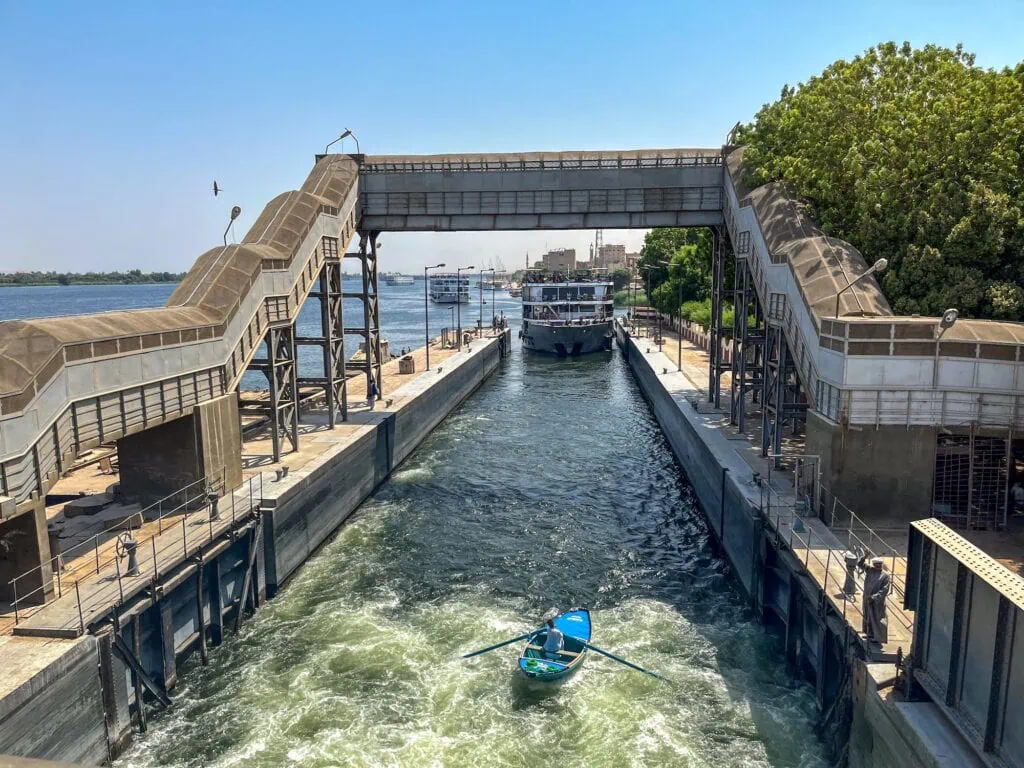
The Esna Lock, about 60 km south of Luxor, is the famous bottleneck. Smaller vessels (dahabiyas, the MS Darakum) can pass through. Most modern Nile cruise ships can also clear Esna, but the lock can have long waits during peak season. Esna is the southernmost point reachable by standard Luxor-bound cruise traffic.
The Asyut Lock sits much further north, and this is the one that excludes the modern cruise fleet. The geometry of the lock and the bridges nearby is too tight for the larger vessels. Watching the MS Darakum thread its way through Asyut is one of the small dramas of the cruise.
The Abu Hamar Lock lies between Asyut and Sohag and presents a similar constraint.
Beyond the locks, the Sohag and Naga Hammadi bridges sit low enough over the water that many vessels can’t pass beneath them. The MS Darakum’s profile is designed to clear them, but it’s a real engineering constraint that determines which ships can sail this stretch.
How the River Itself Changes
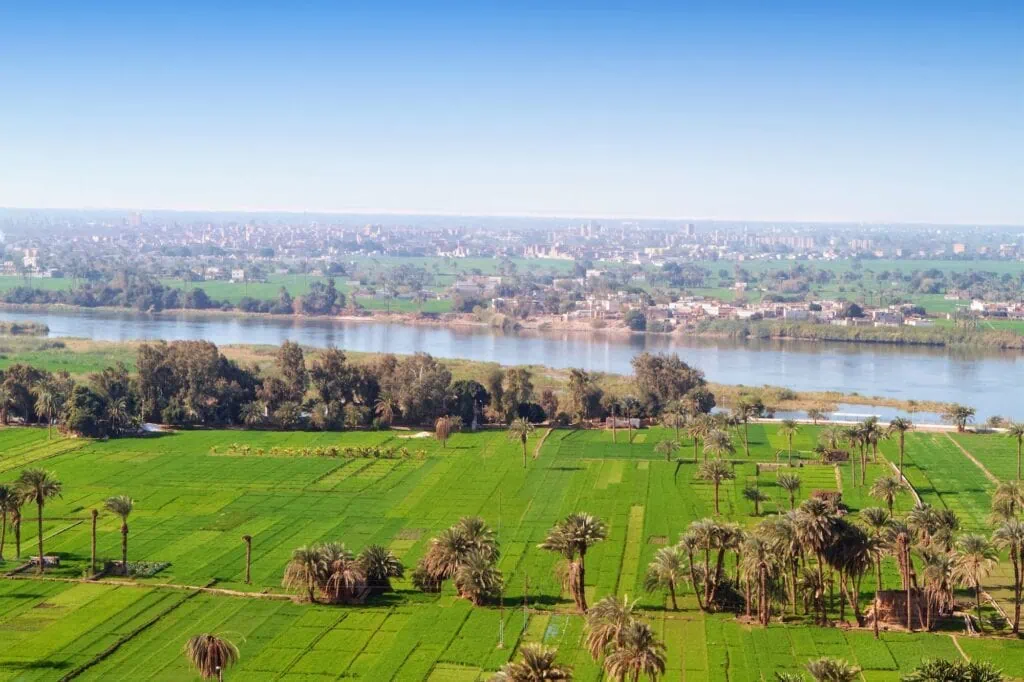
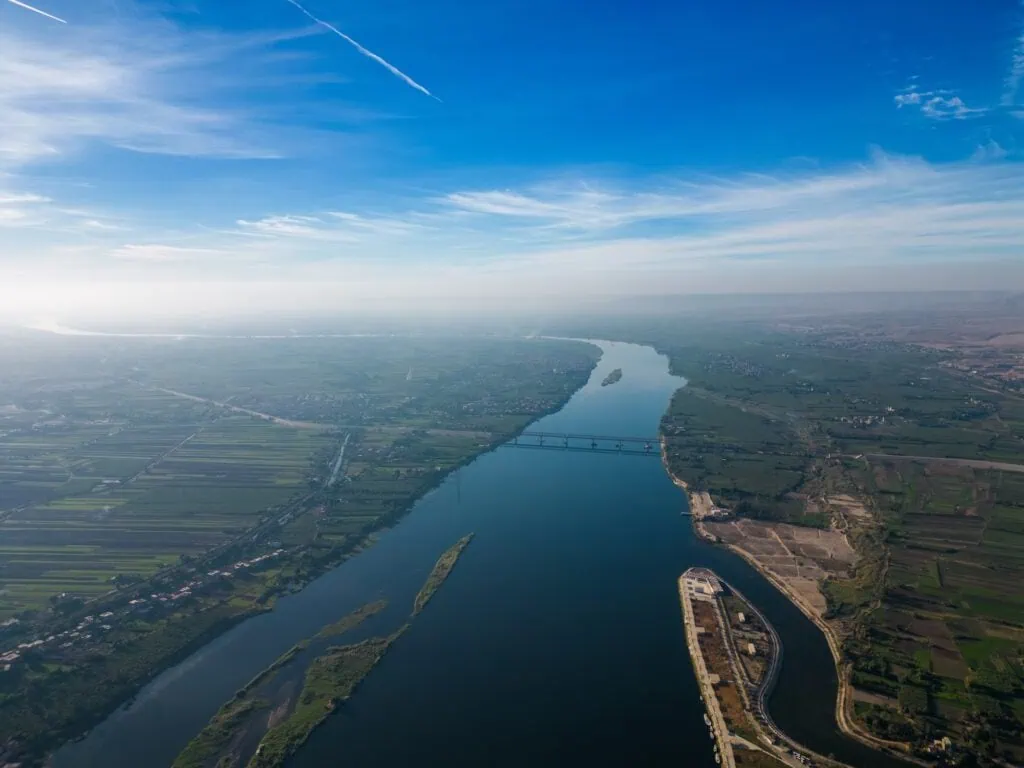
You’ll feel the river itself change as you move north. South of Luxor, the Nile flows through narrow desert margins with cliffs close to the water. North of Luxor, the flood plain widens, agricultural land extends for kilometers on both banks, and the towns and villages along the river feel less touristic and more like the everyday Egypt that millions of people actually live in. Watching the country drift past from the sun deck during sailing days is, for many guests, the most memorable part of the trip.
Cairo to Aswan, Luxor to Cairo: Choosing Your Direction
The four MS Darakum itineraries split between southbound and northbound. The sites covered are essentially identical in either direction — same temples, same tombs, same locks. What differs is the trip’s rhythm and how it bookends.
Southbound: Cairo to Aswan begins in Cairo, opens with the pyramid complexes (Giza, Dahshur, Meidum), and then sails progressively south through Middle Egypt, Luxor, and finally Aswan. The trip’s energy starts high (pyramids, the Grand Egyptian Museum) and builds toward Aswan’s gentler closing days.
Northbound: Luxor to Cairo begins with a flight to Luxor, opens with the Luxor sites, sails north through Middle Egypt, and ends with Cairo. The trip builds the other way: starting with Luxor’s dense temple concentration, working through Middle Egypt’s quieter sites, and closing with Cairo’s headline destinations.
Most travelers choose by what they want to see last. If you want the trip to end at the pyramids and the Grand Egyptian Museum, sail northbound. If you want the trip to end with the Philae sunset in Aswan, sail southbound. Both directions cover the same content.
The four itineraries run at different lengths: 11, 13, 14, and 15 days. The shorter itineraries are more compact and bookend the cruise with less land touring at the start or finish. The longer itineraries add more time in Cairo (pre- or post-embarkation), more time in Aswan, or both. The exact day breakdown for each length is on that itinerary’s individual page. Your Travel Concierge can talk you through the practical differences during planning.
Life Onboard the Mövenpick MS Darakum
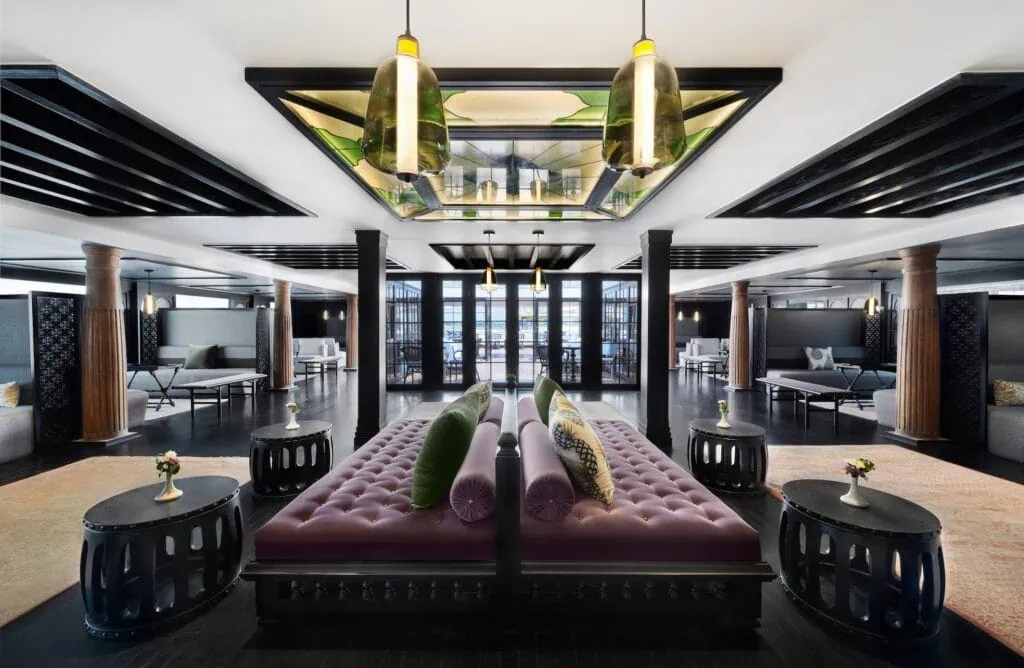
The Mövenpick MS Darakum is a luxury vessel built for long sailings. Over 11 to 15 days, the boat genuinely becomes home rather than transport, and the onboard experience is part of the product, not a backdrop to it.
The Vessel and the Cabins
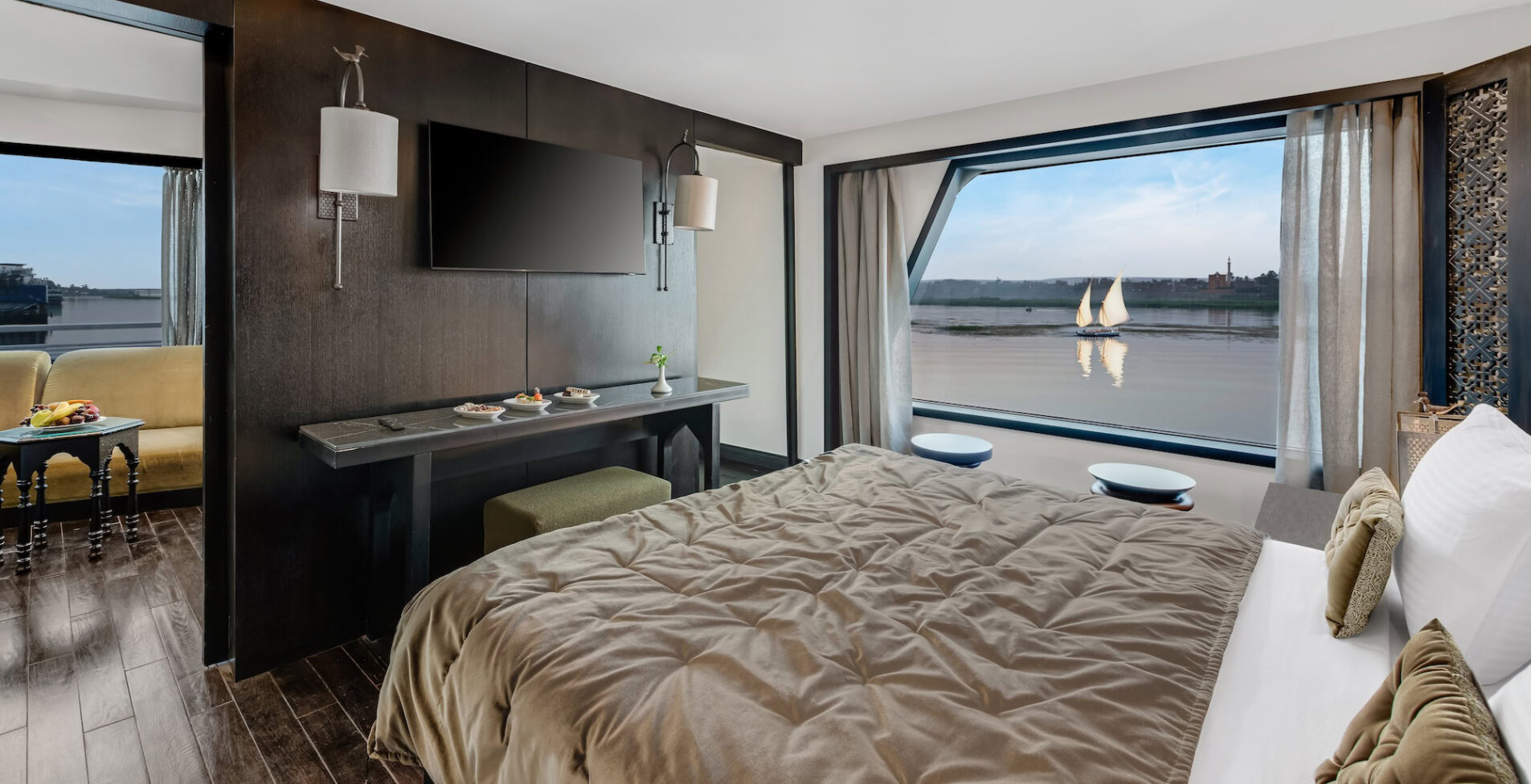
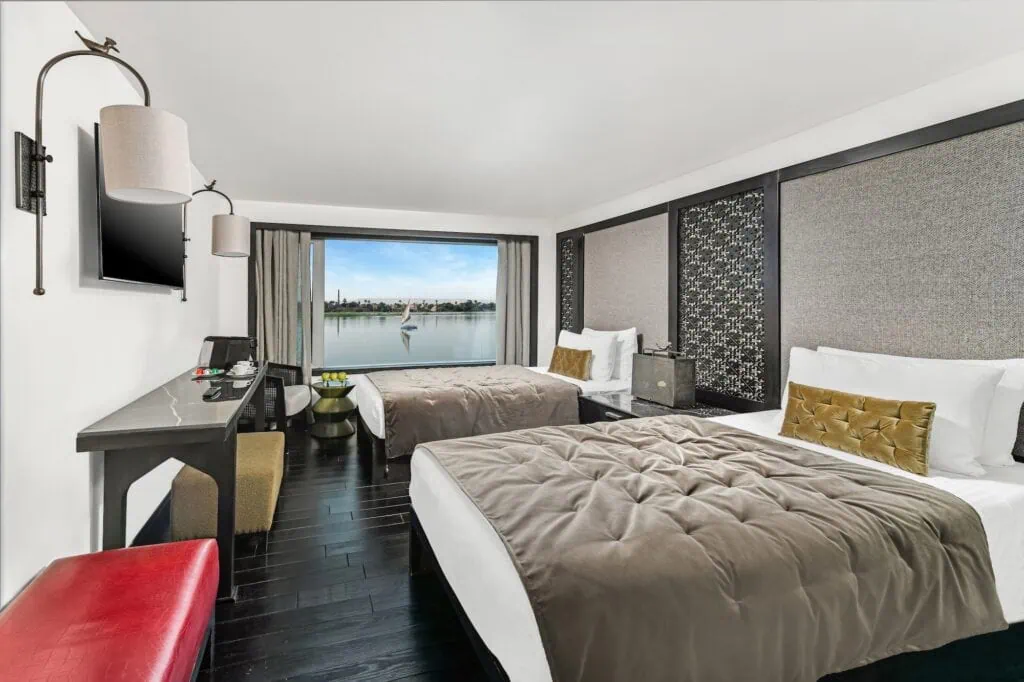
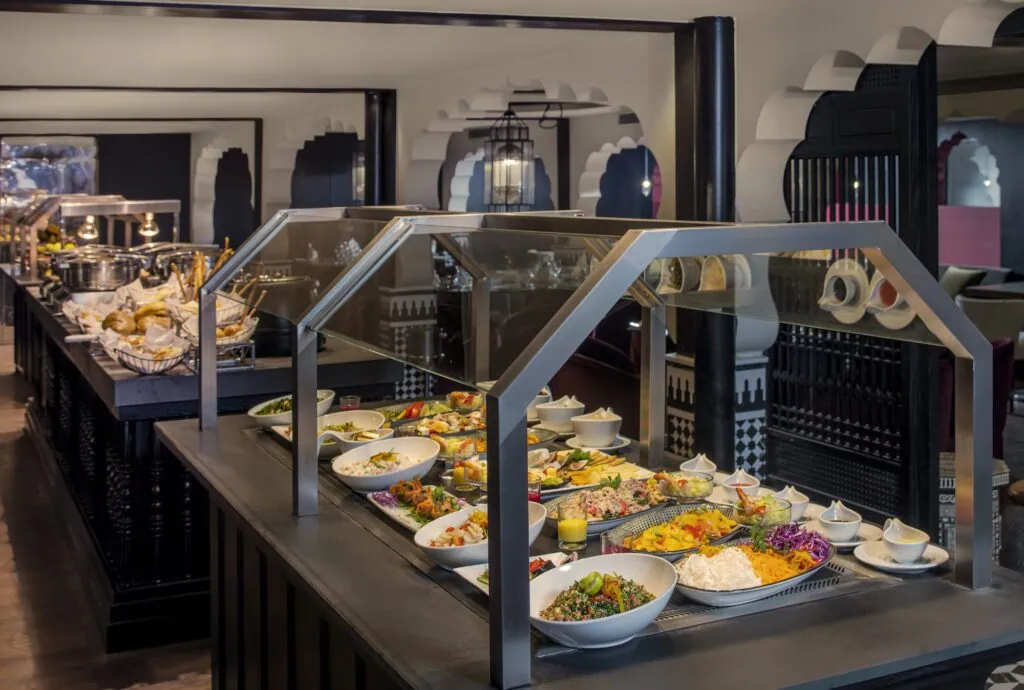
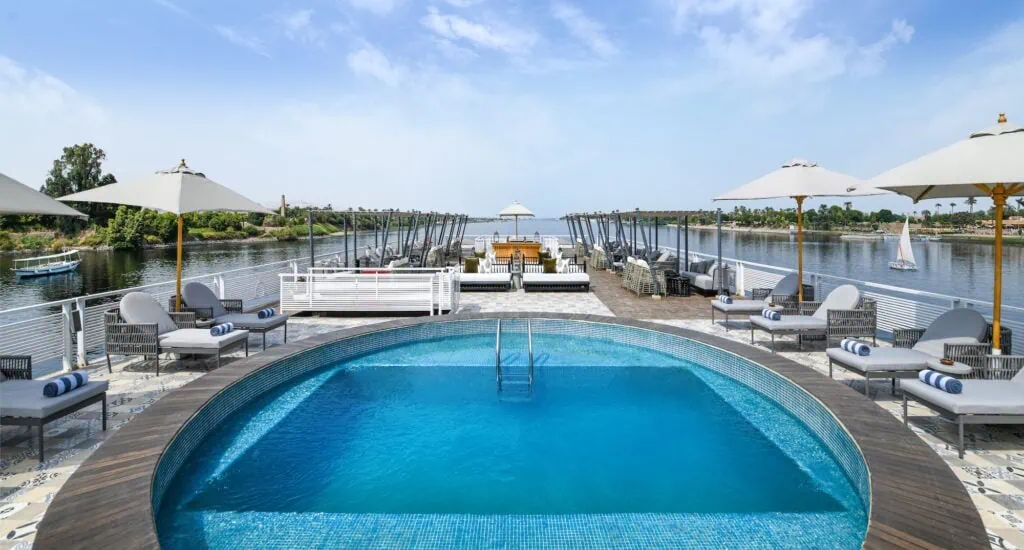
The vessel has full restaurant dining with international and Egyptian cuisine, a sun deck with a pool, a lounge, a bar, and the kind of public spaces that two weeks aboard gives you time to actually use. Cabins match a high-end land hotel: climate control, en-suite bathrooms, panoramic windows, and private balconies on the higher suite grades.
The Daily Rhythm
Days follow a varied rhythm that depends on whether you’re in port or sailing. Sailing days are slow: long breakfasts, lunch served onboard, the deck for the afternoon as the river drifts past. Port days are full: early breakfast, off the boat by 8 am for the day’s shore excursion, back in time for lunch, often a second excursion in the afternoon, dinner onboard.
Evenings Onboard
Evenings have their own pattern. Sit-down dinners, an Egyptian gala night, and entertainment that varies through the cruise — folkloric performances, a Galabiya party where guests dress in traditional Egyptian robes, a Belly Dance show, a Black and White Party, sometimes a contest party or treasure hunt during sailing days. The cruise director plans the evening program to fit the boat’s progress, and after a week or so most guests find the rhythm comfortable and look forward to it.
Service and the Floating Community
The Mövenpick service standard is consistent throughout. Staff-to-guest ratios are high, dietary requirements are handled without difficulty, and the boat’s small size compared to ocean cruise ships means the same crew members get to know guests by name within a few days. By the end of the cruise, the MS Darakum feels less like a hotel and more like a small floating community.
How the Small-Group Excursions Work
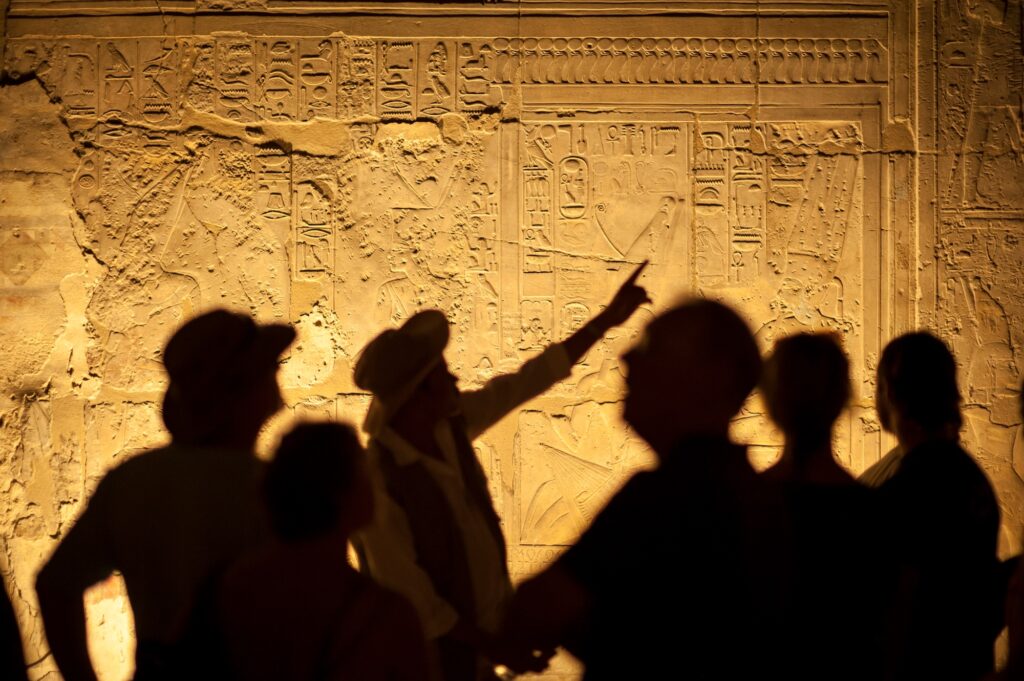
Every shore excursion on a long Nile cruise uses small groups with a licensed Egyptologist guide. Numbers are typically around twelve guests per guide on the standard tour categories, drawn from the boat rather than merged with outside groups.
On the Middle Egypt excursions specifically — Tell el-Amarna, Beni Hassan, Tuna el-Gebel — small group is not just a service feature but a practical necessity. These sites have minimal infrastructure: narrow paths, modest visitor facilities, and tomb interiors with restricted access. Large groups simply don’t function at these locations, which is part of why they remain so rarely visited.
Your Egyptologist guide stays with the boat for the duration of the cruise, which means the explanation builds depth across the days. By the time you reach Aswan on a southbound cruise, your guide has spent two weeks with the group and the context they’ve built — connecting Old Kingdom Dahshur to Middle Kingdom Beni Hassan to New Kingdom Luxor to Ptolemaic Dendera — adds up to a much richer understanding than any shorter cruise can offer.
Whatever your language, you’ll be matched with an Egyptologist guide who speaks it — English, Italian, Spanish, Portuguese, German, French, and others available on request. Fully private excursions can also be arranged on request, with the appropriate cost adjustment.
What’s Included
Standard inclusions on every long Nile cruise:
- Accommodation aboard the Mövenpick MS Darakum for 10, 12, 13, or 14 nights, depending on itinerary
- Full board: breakfast, lunch, and dinner onboard
- Meet-and-greet service by our representatives at the airport
- Full personal assistance from our team throughout the cruise
- All transfers in private air-conditioned vehicles
- All shore excursions listed in the itinerary, including the Middle Egypt sites
- All entrance fees to sites visited
- A licensed Egyptologist guide on every excursion
- Internal flight where the itinerary requires one (Cairo-Luxor on the northbound; Aswan-Cairo on the southbound)
Not included:
- International flights to and from Egypt
- Optional add-on activities (Luxor sunrise balloon flight, Abu Simbel day excursion)
- Personal expenses and gratuities for crew and guides
Pricing on long Nile cruises is confirmed by your Travel Concierge within 1 to 12 hours of your inquiry. Rates vary by cabin grade, season, and departure date. Because the MS Darakum runs only a small number of long-cruise departures per year, available dates are part of the quote, and earlier inquiry generally means better cabin choice.
When to Sail
The Mövenpick MS Darakum runs its long Nile cruises on fixed annual departure dates — a small number of sailings per year, scheduled well in advance. This is the most important logistical detail to know up front: you can’t book on an arbitrary date. The departure calendar is published months ahead, and the best cabins on the most popular dates book out a year or more in advance.
October through April delivers the most comfortable weather for the route. Daytime temperatures generally run between 20°C and 28°C (68–82°F), with the southern leg (Aswan) sitting a few degrees warmer than the northern leg (Cairo). Evenings stay cool enough for a light layer, especially in Middle Egypt where the desert climate cools sharply after sunset.
Within that high-season window, the Christmas and New Year departures carry the highest demand and book out earliest. Shoulder months like November and early March deliver similar weather at slightly better availability.
Summer sailings (May through September) are less common for the long-cruise format, partly because the heat in Middle Egypt during midday excursions is challenging, and partly because the schedule is built around the comfortable season.
Booking 6 to 12 months ahead is the practical norm for any specific sailing. The MS Darakum runs only a handful of long-cruise departures per year, and the supply is genuinely limited. Last-minute bookings are rare but occasionally possible if there’s a cabin cancellation.
Pack comfortable walking shoes for the temple sites, lightweight clothing covering shoulders and knees, sun protection at every level, and a light layer for cool evenings. Bottled drinking water is provided onboard.
Ready to Sail the Full Nile?
A long Nile cruise on the Mövenpick MS Darakum is the closest you can get today to the way the Nile was travelled before modern cruise infrastructure existed. Eleven to fifteen days on the river, Middle Egypt’s hidden archaeology, every major site between Cairo and Aswan, on a vessel that can sail the full length of the river. Four itinerary lengths, both directions, fixed annual departures.
Because the MS Darakum runs only a handful of long-cruise departures per year, available dates are limited and the schedule may not match every traveler’s window. When you fill in the planner, mention that you’re interested specifically in a long Nile cruise from Cairo, and your Travel Concierge will come back within 1 to 12 hours with the closest available departures. If the dates don’t work for your trip, the same concierge can suggest a standard Luxor-to-Aswan cruise paired with Cairo touring as an alternative that delivers most of the river experience on a flexible schedule.
Frequently Asked Questions
A standard Nile cruise covers the 215 km between Luxor and Aswan in three to seven nights. A long Nile cruise on the MS Darakum covers the full 800 km between Cairo and Aswan in 11 to 15 days. The difference is Middle Egypt: Tell el-Amarna, Beni Hassan, Tuna el-Gebel, the Dahshur and Meidum pyramids, and the great temples at Abydos and Dendera, all reached by water rather than long road trips from Luxor.
Three reasons: the locks at Asyut and Abu Hamar are too tight for most modern cruise vessels, the bridges at Sohag and Naga Hammadi sit too low over the water for many ships to clear, and the river depth varies along the Middle Egypt stretch. The MS Darakum is one of the very few vessels designed to handle all three constraints.
No. The MS Darakum runs a small number of long-cruise departures per year on fixed annual dates. The schedule is published months ahead, and popular dates book out a year or more in advance. Booking 6 to 12 months early is the practical norm.
The Middle Egypt sites involve more walking on uneven ground than the standard cruise temples. Tell el-Amarna in particular requires walking between the royal tomb and the noble tombs in desert terrain. There’s no strict fitness requirement, but proper closed walking shoes are essential, and travelers with significant mobility limitations should discuss specific sites with us during planning so we can adjust pacing or arrange alternatives where available.
All four itineraries cover the same core route and the same Middle Egypt sites. The differences are in how much land touring is bookended onto the cruise: the shorter itineraries (11 days) are more compact, with embarkation closer to the airport arrival; the longer itineraries (15 days) add more time in Cairo, Aswan, or both. The 13- and 14-day itineraries sit between those two poles. Your Travel Concierge can walk you through the day-by-day differences during planning, and the exact site list for each length is on that itinerary’s individual page.
Yes. The Mövenpick MS Darakum’s galley handles vegetarian, vegan, gluten-free, halal, kosher (with advance notice), and most allergy requirements. Flag your dietary needs at the booking stage and we confirm with the vessel before sailing.
Modest, lightweight clothing covering shoulders and knees works best at every temple site. Closed walking shoes are essential for the uneven ancient stone, particularly at the Middle Egypt sites. Evening dress onboard is smart-casual.
Abu Simbel is an optional add-on on the southbound (Cairo to Aswan) itinerary, usually arranged as a day excursion from Aswan by short flight. It’s less commonly added to the northbound itinerary because the cruise ends in Cairo rather than Aswan. Your Travel Concierge can build it in either way if you want to include it.
Internal flights between Cairo and Luxor or Aswan are included in the cruise fare on every itinerary that requires one. On southbound itineraries (Cairo to Aswan), you typically fly Aswan-Cairo at the end before flying home. On northbound itineraries (Luxor or Aswan to Cairo), you typically fly Cairo to your embarkation city at the start. The exact flight arrangements for any specific departure are part of the itinerary your Travel Concierge sends.
Lock and bridge maintenance is scheduled well in advance and built into the published departure calendar. If an unscheduled closure affects timing, the cruise operator adjusts the itinerary to keep all shore excursions intact, and our team coordinates any onward arrangements.
The cruise itself already includes Cairo on both itineraries. If you want to extend further — additional Cairo nights, a Red Sea stay, or a multi-country extension to Jordan, Greece, Turkey, or Morocco — your Travel Concierge can build it into the same booking.
Tipping is customary in Egypt but not included in the fare. As a practical guideline for a long cruise: $5-$8 per person per day for your Egyptologist guide, and roughly $12-$18 per person per day total for the cruise crew, collected at the end and distributed by the cruise director.
The main optional extras are the Luxor sunrise balloon flight (approximately $90-$130 per person) and, on southbound itineraries, the Abu Simbel day excursion ($180-$280 per person depending on whether you fly or drive). Most other shore excursions are included in the cruise fare.
Standard phone and camera photography is allowed at all the long Nile cruise temple stops and the Middle Egypt sites. Some sites charge a small extra fee for tripods or professional camera gear. Flash is generally prohibited inside tombs to preserve the wall paintings. Your Egyptologist guide flags any restrictions at each site.
Design Your Custom Tour
Explore Egypt your way by selecting only the attractions you want to visit