

Sacred lands and ancient legends, tailored your way
Egypt and Saudi Arabia Tours
With 70+ years of expertise, private guides, and your own personal driver, every detail is arranged for comfort and confidence. Our Egypt and Saudi Arabia Tours offer a lifetime journey through two extraordinary destinations, blending pharaonic wonders with the rich heritage of Arabia.
Egypt and Saudi Arabia Combined Tours: The Trip That Wasn’t Possible Five Years Ago
How Cairo, Luxor, the Nile, AlUla, Riyadh, and Jeddah fit into one itinerary now that Saudi Arabia has opened to international tourism.
Saudi Arabia opened to general international tourism in September 2019. Before then, secular travel into the Kingdom wasn’t really possible. The launch of the tourist eVisa, combined with the development of AlUla as a flagship cultural destination, turned a country off the international travel map into one of the most interesting additions you can make to an Egypt itinerary.
The trip pairs Egypt’s pharaonic arc — Cairo and the Pyramids, the Nile between Luxor and Aswan, optionally Abu Simbel — with Saudi Arabia’s centre of gravity at AlUla and the UNESCO-listed Nabataean city of Hegra. Riyadh and Jeddah fill out the Saudi side on either end. Direct daily flights link Cairo with Riyadh (around 2h 30m) and Jeddah (around 2h 15m).
We’ve been crafting Egypt journeys since 1955, with TripAdvisor Travelers’ Choice 2020 through 2026. Your Egypt and Saudi Arabia trip runs end-to-end through one Travel Concierge, from the Cairo arrival to the AlUla desert lodge to the return.
Table of Contents
Why Egypt and Saudi Arabia Pair So Well
Three reasons the pairing works as a single trip rather than two stitched-together vacations.
A short direct flight, not a transit project
Cairo–Riyadh and Cairo–Jeddah are 2 to 2.5 hours, scheduled multiple times daily on Saudia and EgyptAir. No European hub layover, no overnight transit.
From Riyadh or Jeddah, AlUla is a 1h 20m to 1h 40m domestic flight on Saudia or Flyadeal. The whole inter-country logistics fits into a single travel day.
Same travel window, same desert climate
Both countries run hot in summer and comfortable from October to April. AlUla sits at high desert altitude in northwestern Saudi Arabia: winter days hit 18–24°C / 64–75°F, nights drop close to 5°C / 41°F. Egypt’s south runs slightly milder in the same months.
The peak windows align almost perfectly, which means one set of trip dates works for both legs without compromising one half.
Two of the great rock-carved ancient civilisations, side by side
This is the deeper case for the pairing. Egypt’s pharaonic monuments at Giza, Luxor, and Abu Simbel are the standard reference for monumental ancient stoneworking. Hegra at AlUla is the same conversation — different civilisation, different desert, different millennium. The full historical case is laid out in the dedicated section below.
How We Build an Egypt + Saudi Arabia Trip
The standard combined itinerary runs 11 to 16 days. Anything under 10 cuts at least one country meaningfully short.
The day split
For a 14-day trip:
- 8 days in Egypt (Cairo, fly to Aswan or Luxor, 4-day Nile cruise, optionally Abu Simbel)
- 5 days in Saudi Arabia (1 day Riyadh + 3 days AlUla + 1 day Jeddah is the most-requested mix; some travellers swap Riyadh for an extra AlUla day)
- 1 inter-country travel day
For 11 days, we typically cut to 7 Egypt days + 3 Saudi (AlUla only) + 1 transit. For 16 days, we add Abu Simbel in Egypt and a fuller Riyadh-and-Jeddah programme in Saudi.
Order of travel
Egypt-first is the standard. Cairo and the Nile build the pharaonic context that gives Hegra its meaning when you encounter it later. Egypt-first also lines up well operationally: Cairo arrival, full Egypt programme, short flight onwards to Riyadh or Jeddah, finish in Saudi, return home from one of the two well-connected Saudi international hubs.
Saudi-first works if you’re tying Saudi to a Dubai or UAE leg before Egypt, or if you want Egypt as the closing leg of a longer Middle East trip.
Cruise or no cruise
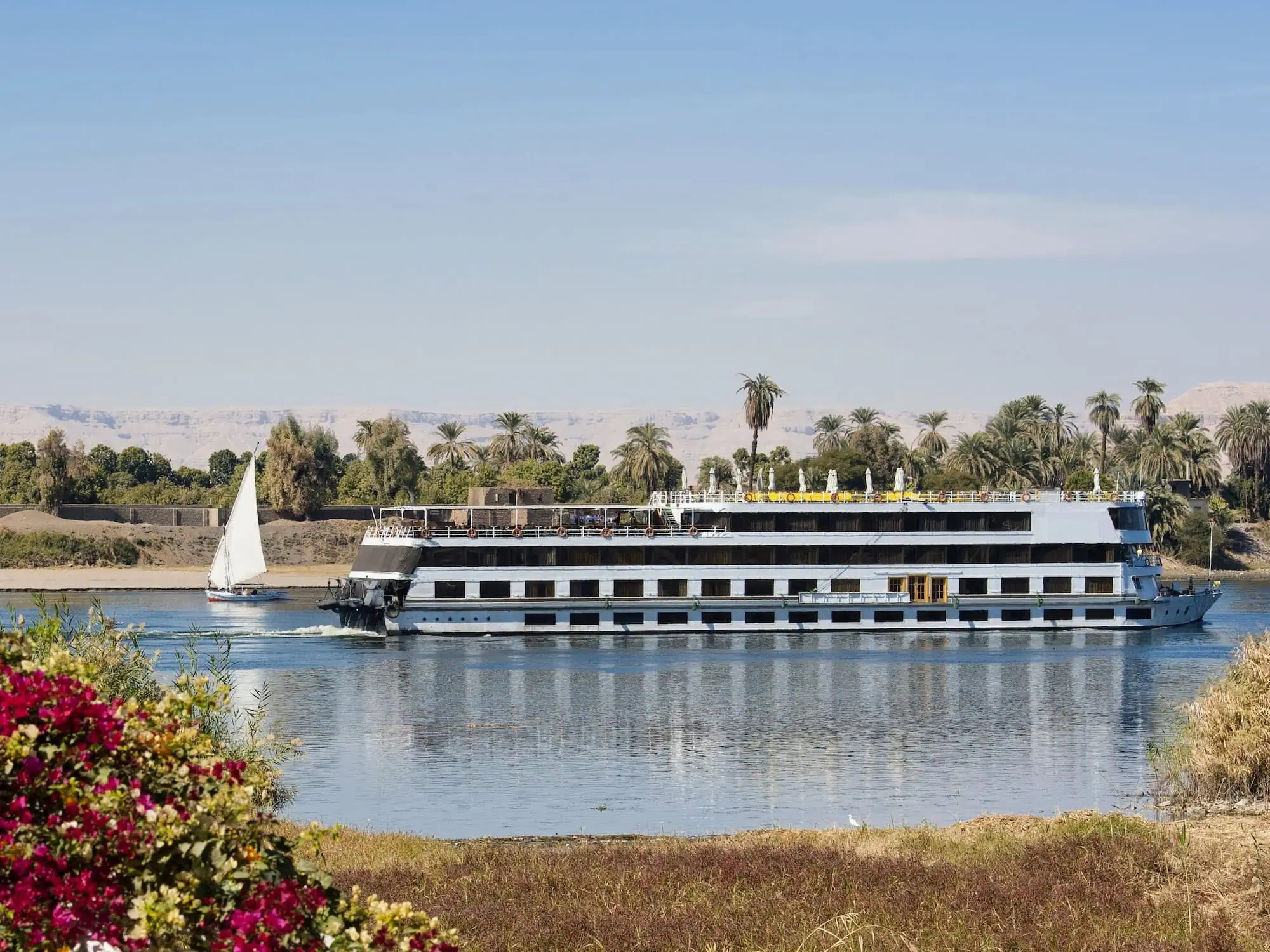
We strongly recommend keeping the Nile cruise in the Egypt segment. Without it you can still see Cairo and Luxor as land-based touring, but you lose Edfu, Kom Ombo, Philae, and the slow-paced river days that are most of what people remember from Egypt.
The standard cruise inclusion is a 4-day / 3-night Luxor–Aswan sailing on a Luxury Nile Cruise vessel. Longer 5-, 6-, 7-, and 8-night cruises are available. A 3- to 5-night Dahabiya (8–16 guests, traditional twin-mast sailing vessel) is the alternative if you prefer a smaller, quieter ship.
The Pharaonic–Nabataean Connection
The standard tourist understanding of “ancient Middle East” is roughly: pyramids in Egypt, Petra in Jordan, full stop. That picture is missing about half of the actual story.
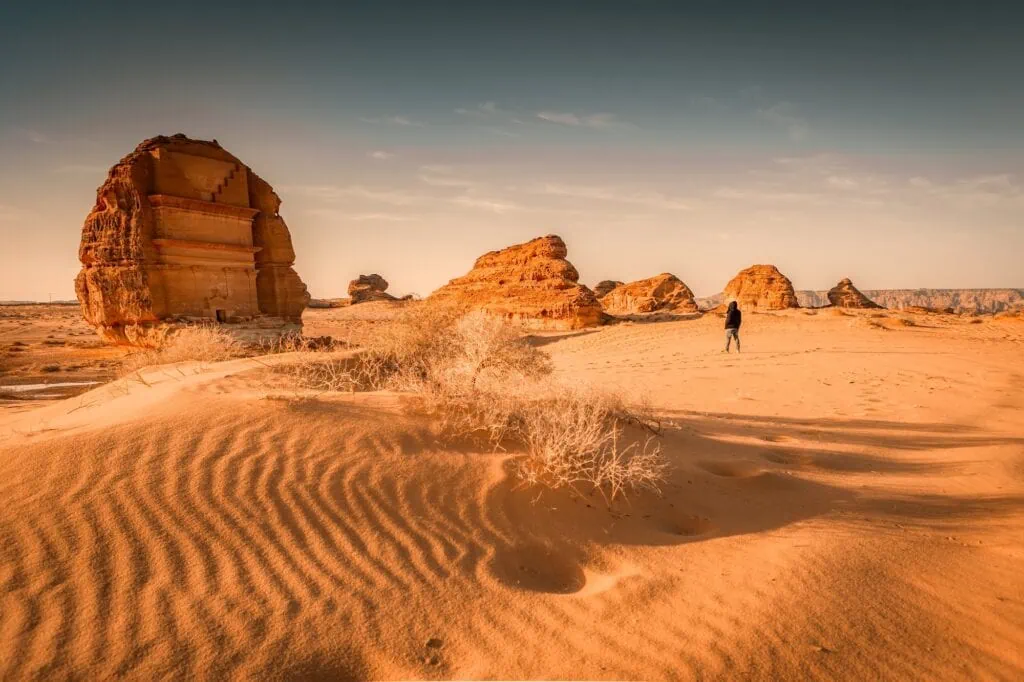
The Nabataeans (the people best known for Petra) ran a trading kingdom from northern Arabia up through Jordan and the southern Levant, from the 4th century BC to AD 106. Their capital was Petra. Their major southern city was Hegra, in what is now AlUla, Saudi Arabia.
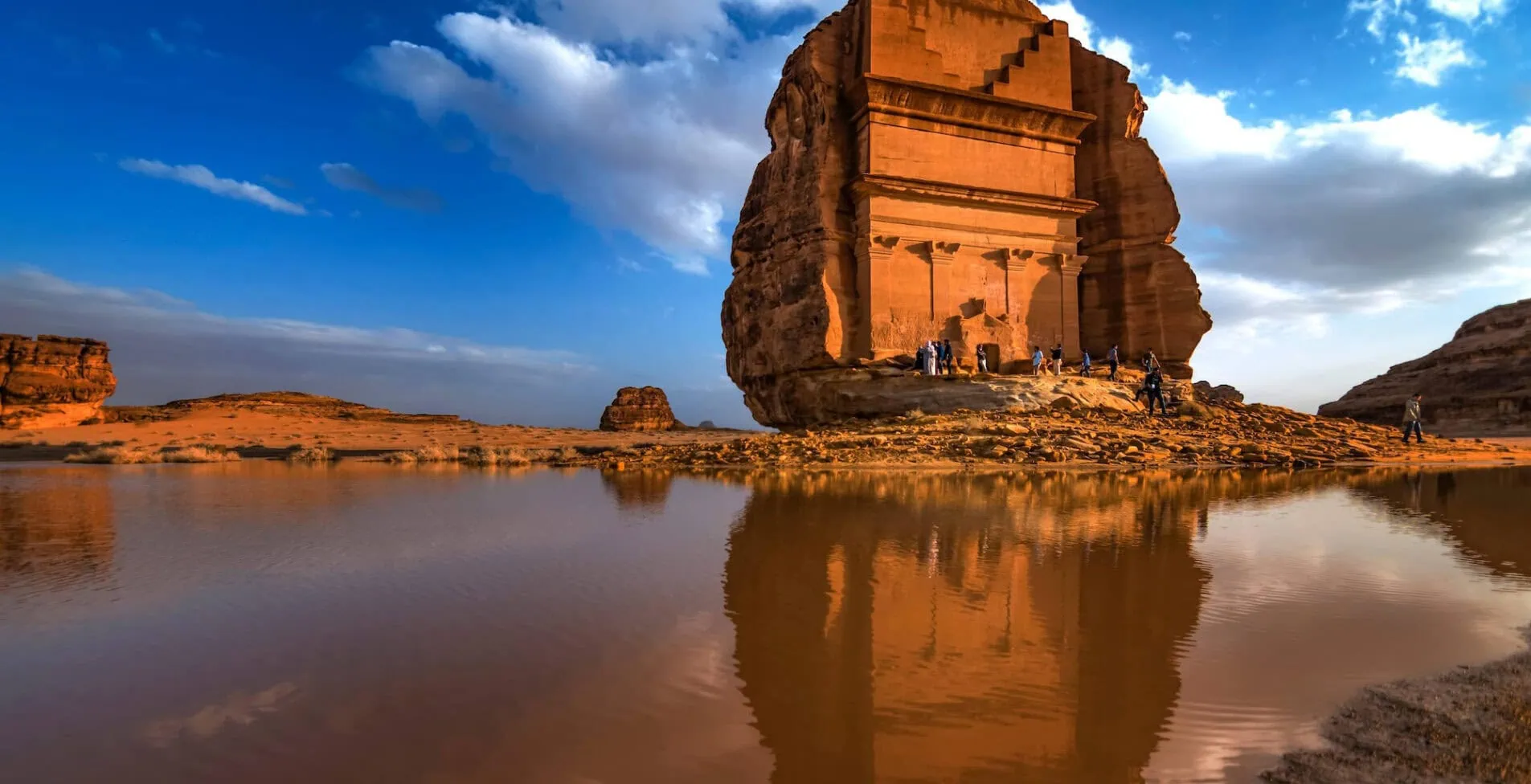
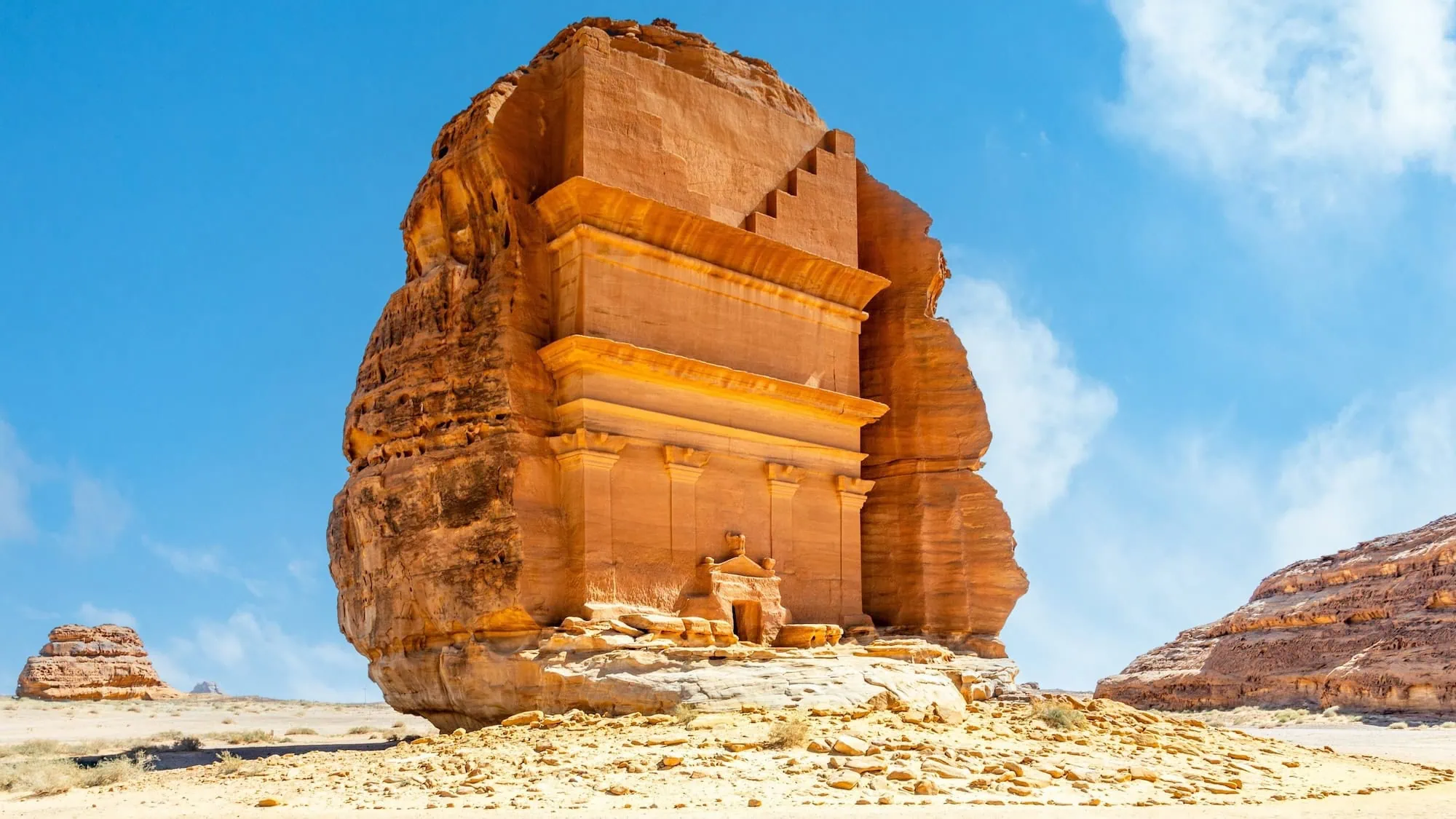
Hegra was inscribed as Saudi Arabia’s first UNESCO World Heritage Site in 2008. The site has 111 monumental rock-cut tombs in a sandstone landscape in northwestern Saudi Arabia. The architectural vocabulary is the same as Petra’s — same column orders, same pediment styles — because it was the same civilisation.
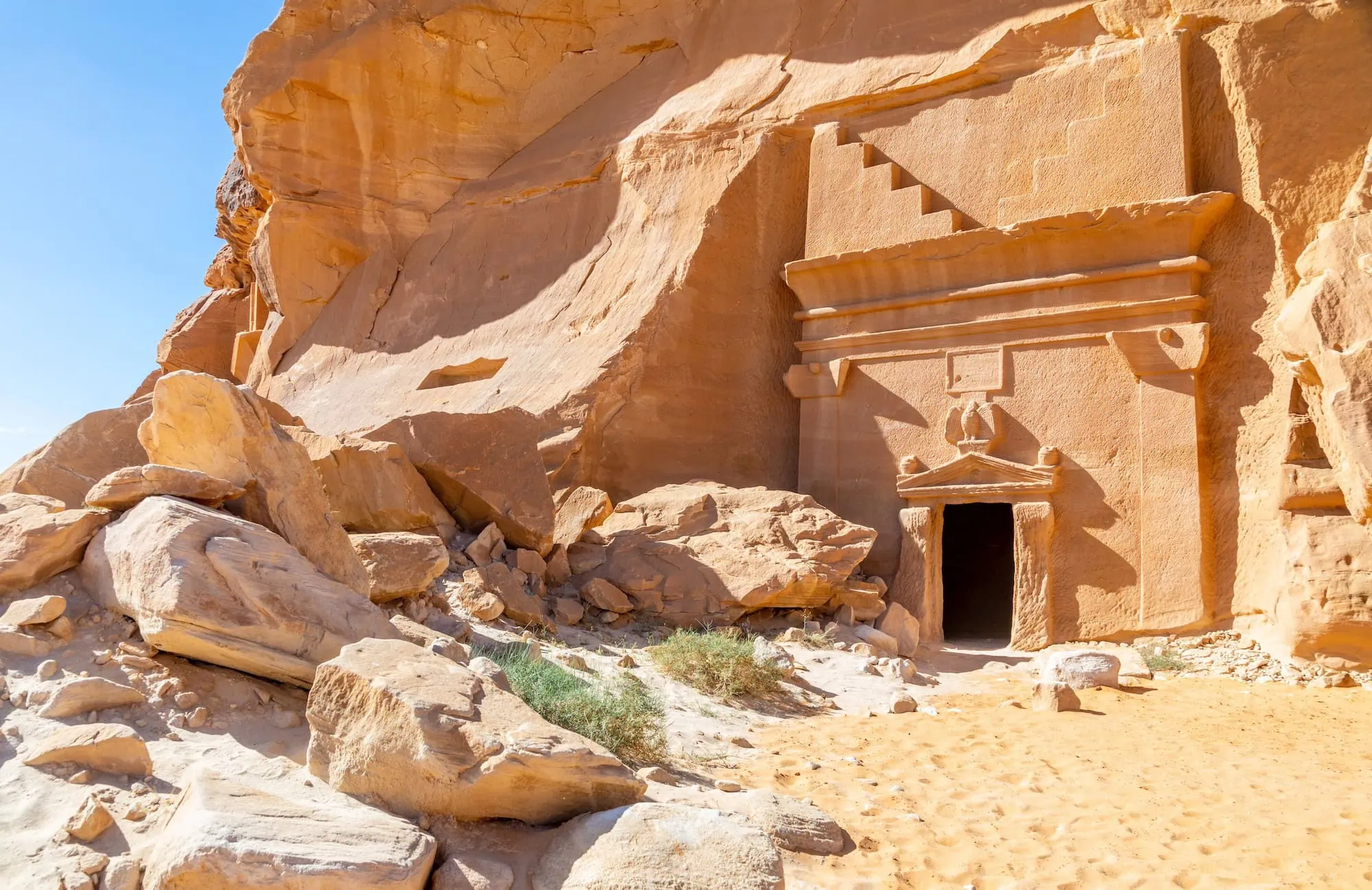
What’s different is scale and access. Hegra is quieter, less commercialised, and was closed to international tourism until 2019. It now operates as a controlled-access site, with timed entries and trained Saudi guides.
The deeper interest in pairing Hegra with Egypt is what the comparison reveals. Egyptian pharaonic monumentality is centralised, divine-king-state architecture, built by a single civilisation over 3,000 years on the same river. Nabataean monumentality at Hegra is the opposite: a trading-economy elite, peripheral to the great empires, expressing itself in carved rock-faces along a caravan route over four centuries.
Two completely different models of how an ancient society organises itself in stone, on the same trip.
The AlUla region around Hegra adds further layers. Dadan, just north of Hegra, was capital of the older Dadanite and Lihyanite kingdoms (roughly 7th century BC to 1st century BC). Jabal Ikmah, nearby, is an open-air library — hundreds of inscriptions in Aramaic, Dadanitic, Thamudic, and Nabataean script carved into the cliff faces.
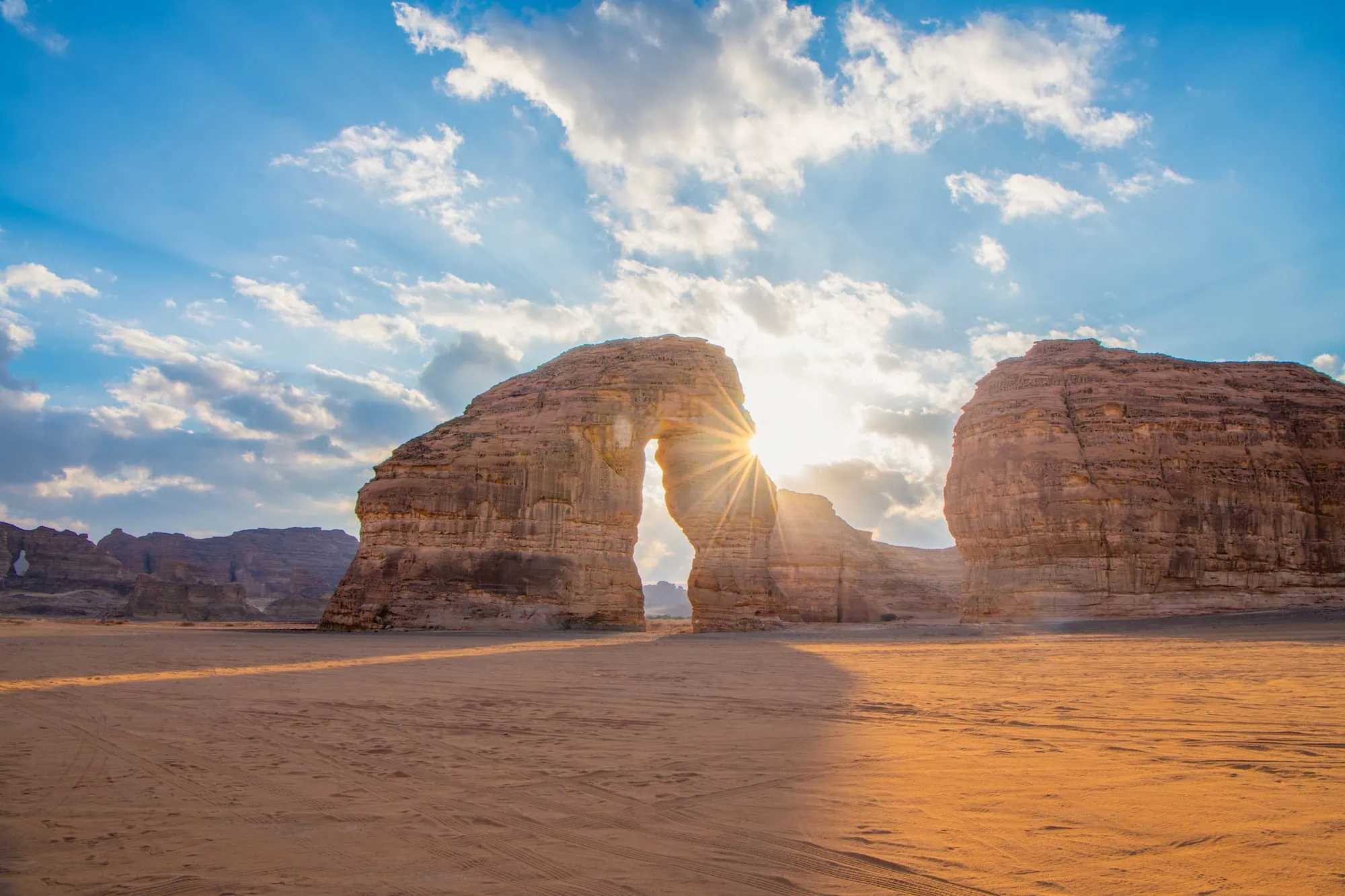
The Old Town of AlUla is a 12th-century mud-brick settlement that was inhabited until the 1980s and is now restored. Elephant Rock (Jabal AlFil) is the free-standing sandstone formation that has become AlUla’s signature image.
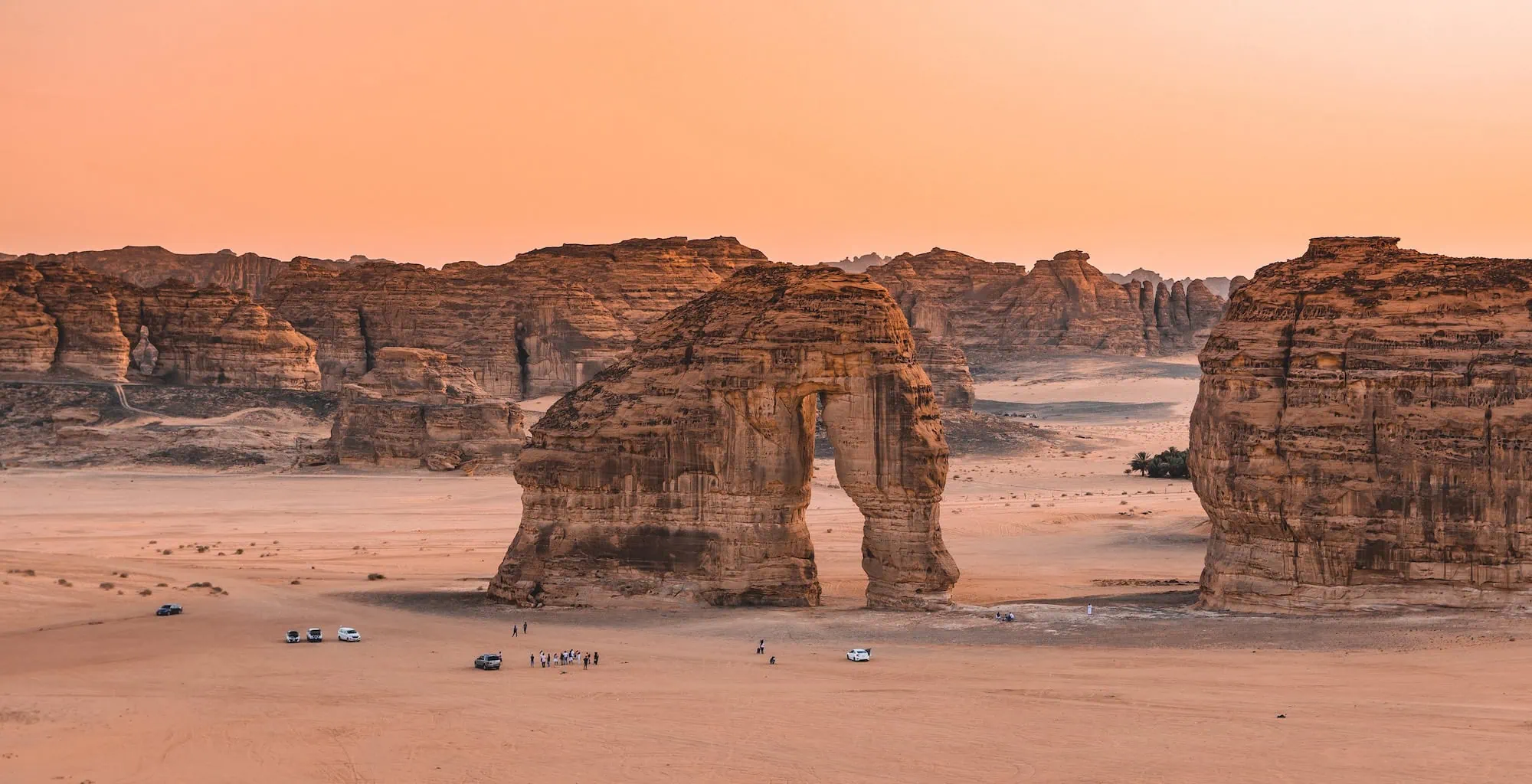
Winter at Tantora (typically December–February) and the AlUla Skies Festival (spring) run as seasonal cultural programming. The archaeological sites themselves are open year-round.
What Egypt Gives You
The Egypt segment anchors on three regions: Cairo and the Pyramids, the Nile valley, and Aswan / Abu Simbel.
Cairo and Giza
In Cairo, the Grand Egyptian Museum (GEM) opened fully in 2025 and is the primary museum stop. The full Tutankhamun collection (5,000+ items) is displayed together for the first time in history. The Khufu Solar Boat — relocated from its old standalone museum at the Pyramids — now sits in a dedicated GEM gallery.
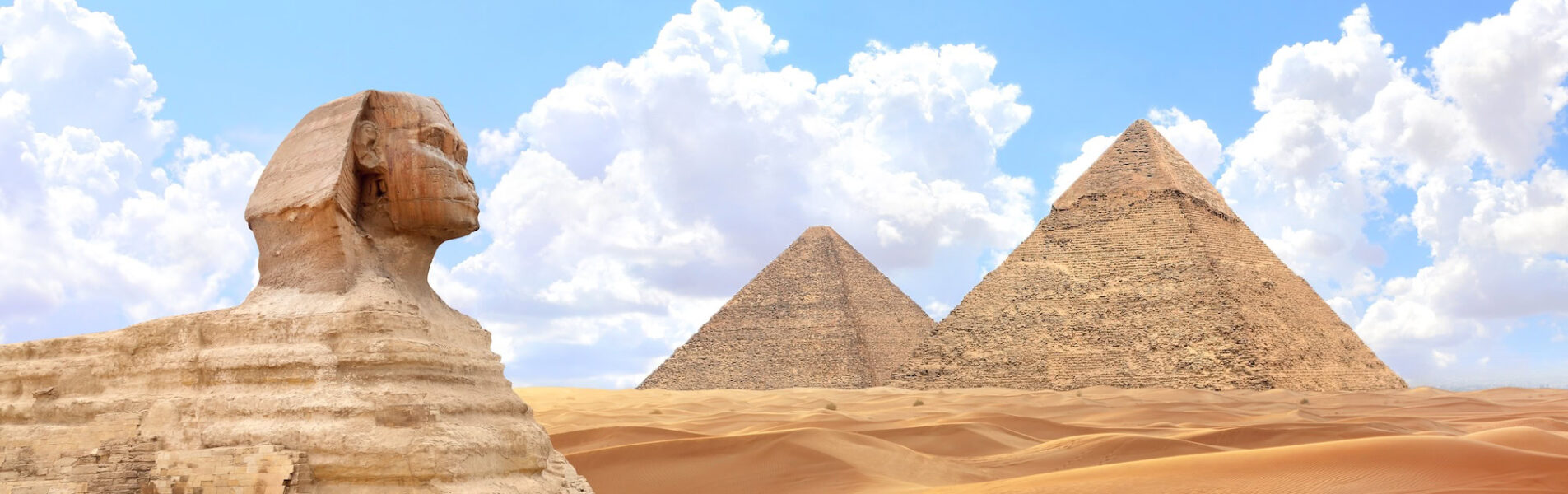
The Pyramids of Giza and the Sphinx are a short drive away on the same plateau. The older Step Pyramid at Saqqara and the Bent and Red Pyramids at Dahshur fold into a single day-trip extension.
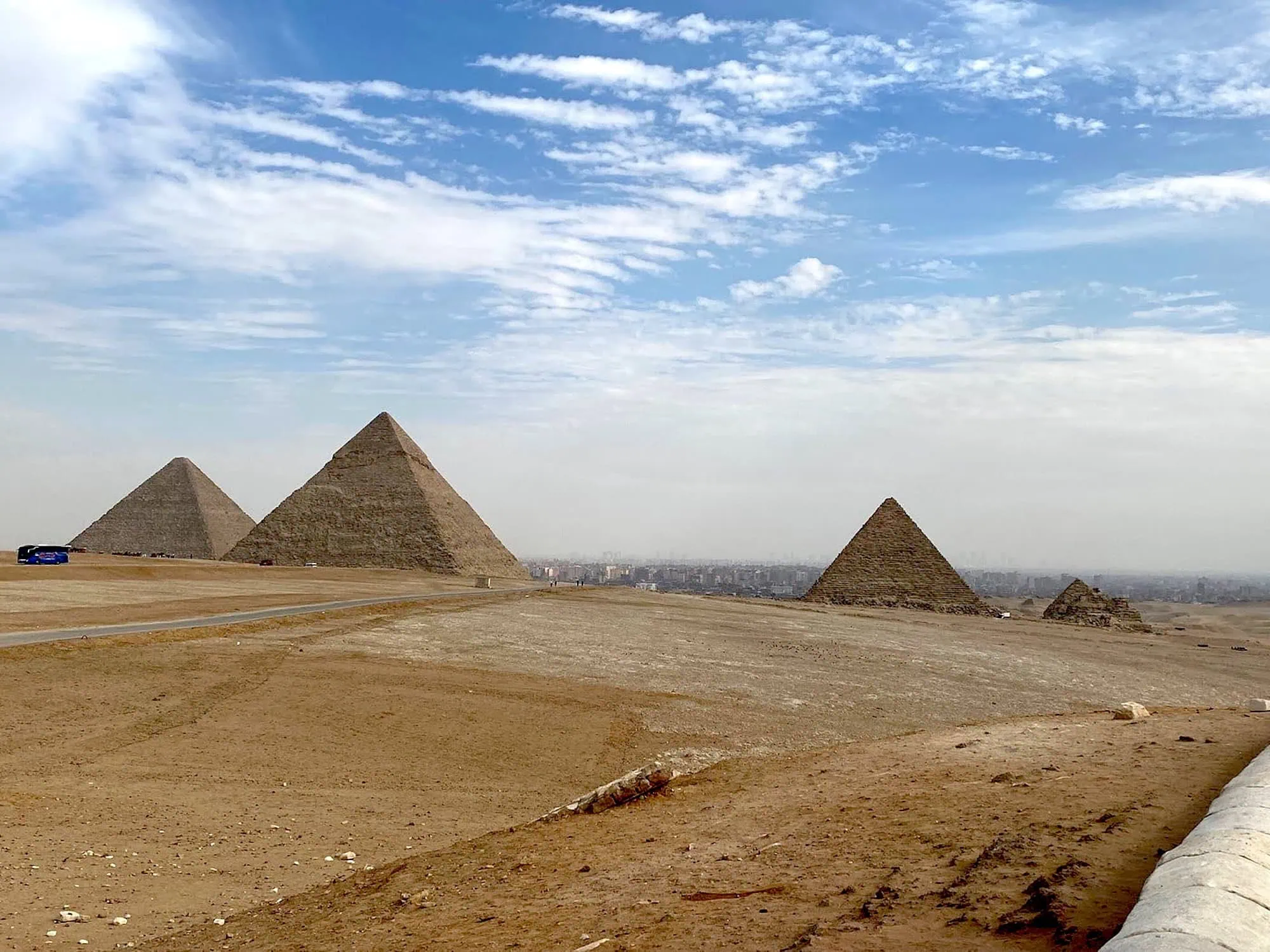
In medieval Cairo, the standard stops are Khan el-Khalili (founded 1382), Coptic Cairo with the Hanging Church (Al-Muallaqa), and the Citadel of Saladin with the Mosque of Muhammad Ali.
Luxor
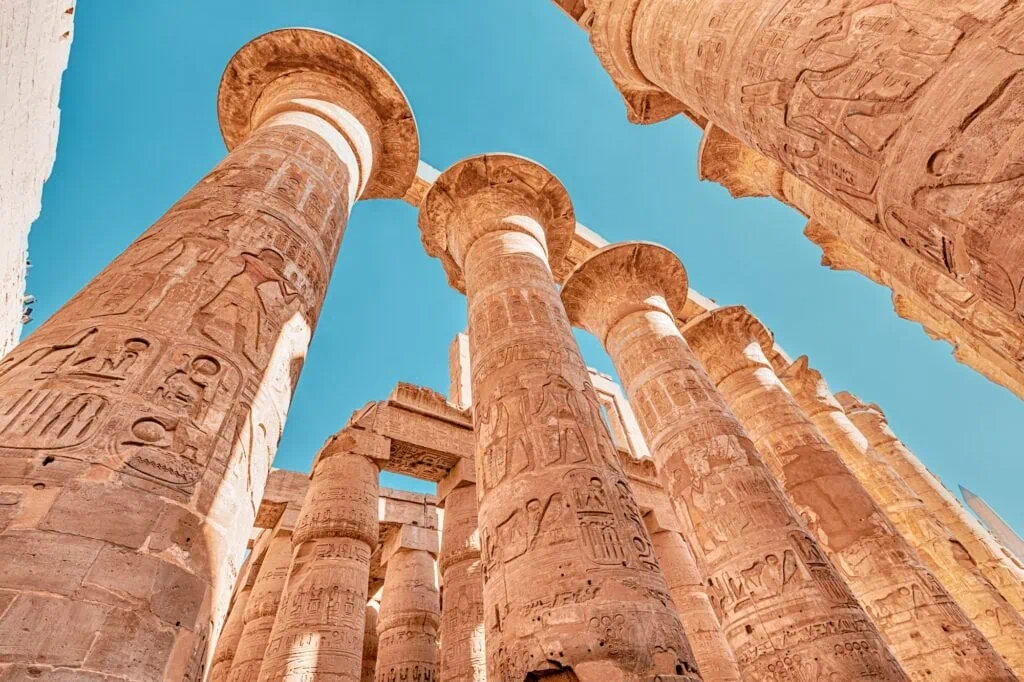
In Luxor, the Karnak temple complex includes the Hypostyle Hall with its 134 sandstone columns and the 2.7 km Avenue of Sphinxes (over 1,000 sphinxes line the route between Karnak and Luxor Temple). On the West Bank, Hatshepsut’s Mortuary Temple at Deir el-Bahari and the Valley of the Kings tombs are the headline visits.
Aswan and Abu Simbel
In Aswan, the Philae Temple complex (relocated to Agilkia Island in the 1970s after the Aswan High Dam was built) is the primary Ptolemaic-era stop.
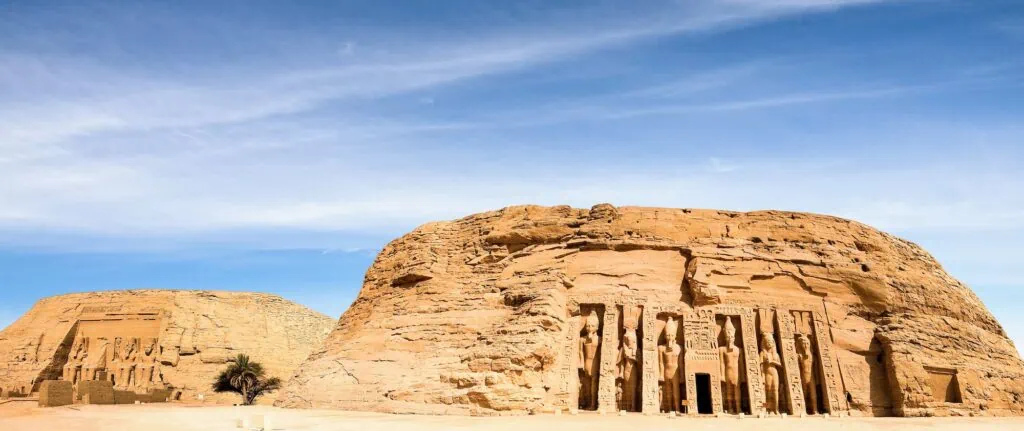
Abu Simbel, Ramses II’s relocated temple complex on Lake Nasser, is the headline optional add-on. We offer three ways to do it:
- 45-minute flight from Aswan and back (1 added day)
- Small-group road convoy from Aswan, 3 hours each way, pre-dawn departure (1 added day, the only Abu Simbel option that is not private)
- 3- to 4-night Lake Nasser cruise from Aswan, taking in relocated Nubian temples along the way (3–4 added days)
Land-based touring in Cairo, Luxor, and Aswan is fully private throughout: just your party plus your Egyptologist guide and personal driver.
What Saudi Arabia Gives You
The Saudi Arabia segment for non-Muslim international travellers anchors on three places: AlUla, Riyadh, and Jeddah. Mecca is closed to non-Muslims entirely, and the central Haram area of Medina (the Prophet’s Mosque and the surrounding sacred precinct) is closed to non-Muslims. The rest of Saudi tourism — including everything we book — is fully open.
AlUla
AlUla is the centre of gravity for any Egypt + Saudi trip. Three to four days here covers Hegra (the Nabataean rock-cut tombs), Dadan and Jabal Ikmah (older Dadanite and Lihyanite sites, with the open-air inscription library), the Old Town of AlUla (the restored 12th-century mud-brick settlement), and Elephant Rock.
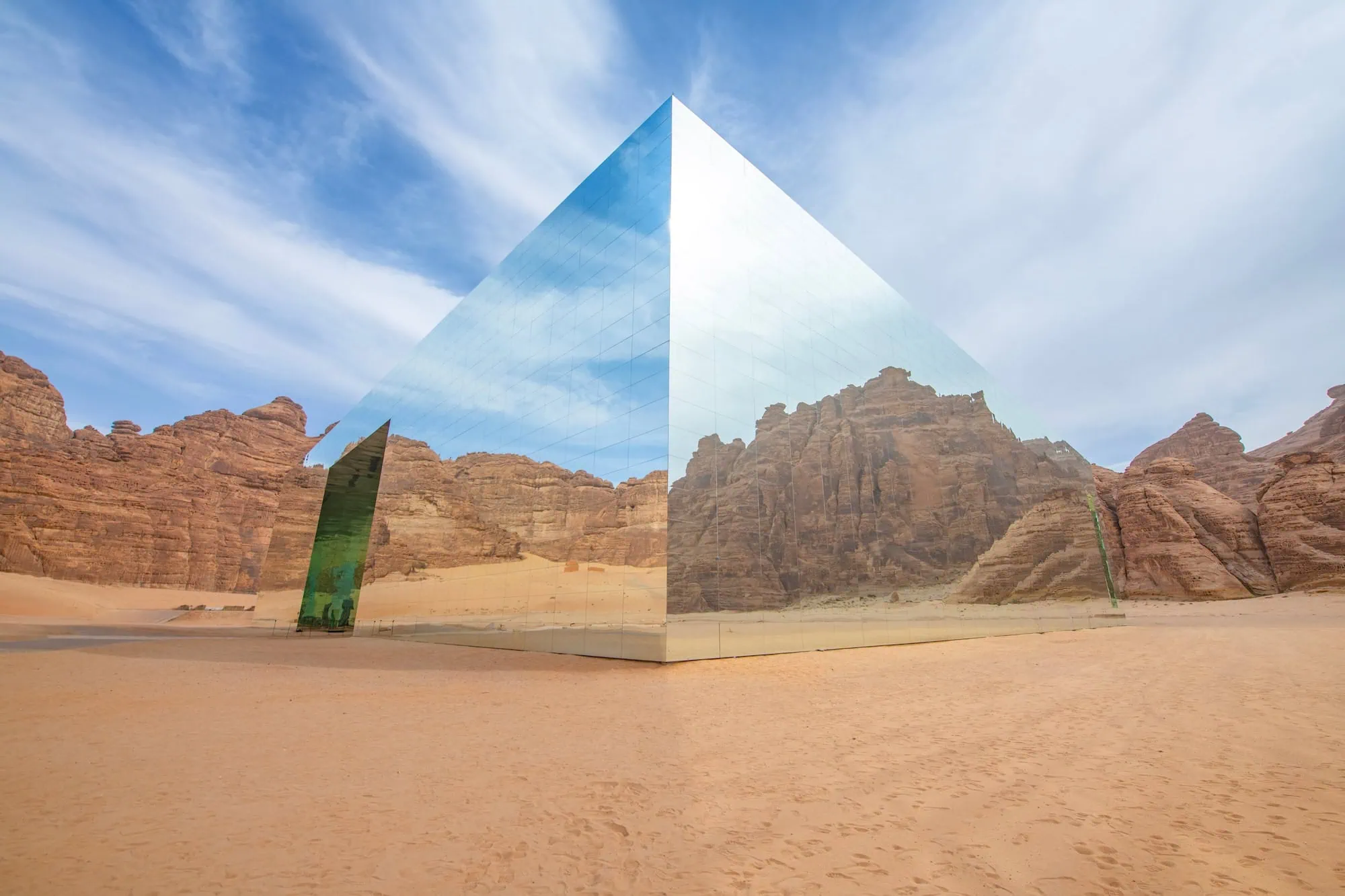
Add either the Hejaz Railway station or the Maraya concert hall (the world’s largest mirrored building, designed for AlUla’s annual cultural programme). AlUla is best at sunrise and sunset; afternoons are reserved for the lodges and the resort experience.
Riyadh
Riyadh runs as a 1- to 2-day stop. The Saudi National Museum gives the country’s full historical arc in one visit.
The At-Turaif district of Diriyah, a UNESCO World Heritage Site (inscribed 2010), is the original capital of the first Saudi state and the most important historical site in Saudi Arabia after Hegra. Masmak Fortress, in central Riyadh, is the 19th-century mud-brick fort tied to the founding of modern Saudi Arabia.
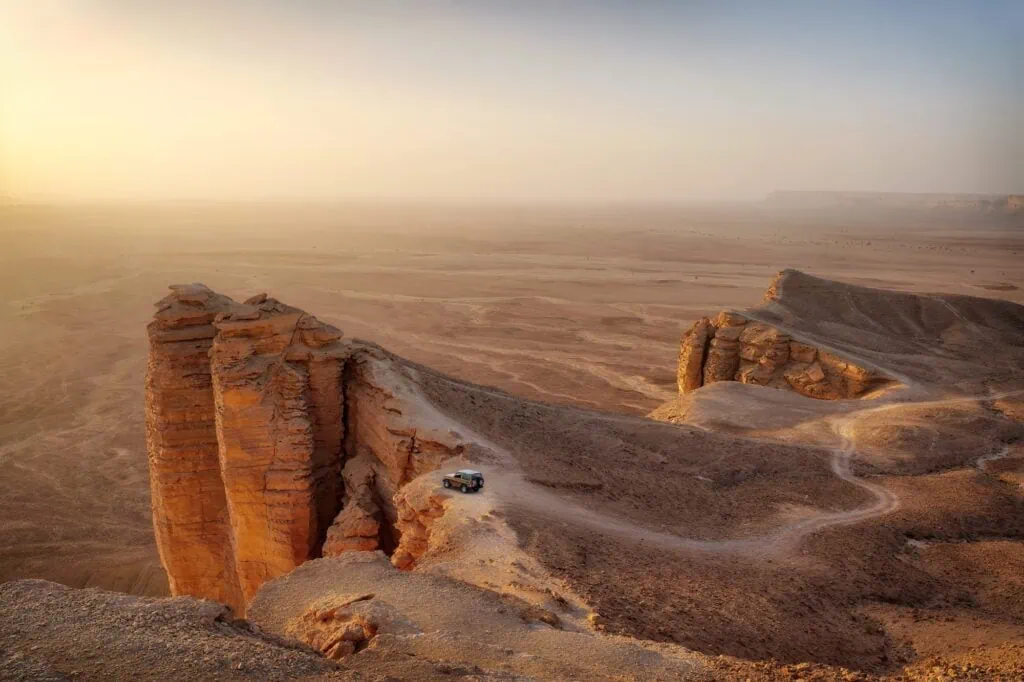
For something different, the Edge of the World (Jebel Fihrayn) is a dramatic 300-metre escarpment about 90 minutes from the city by 4WD.
Jeddah
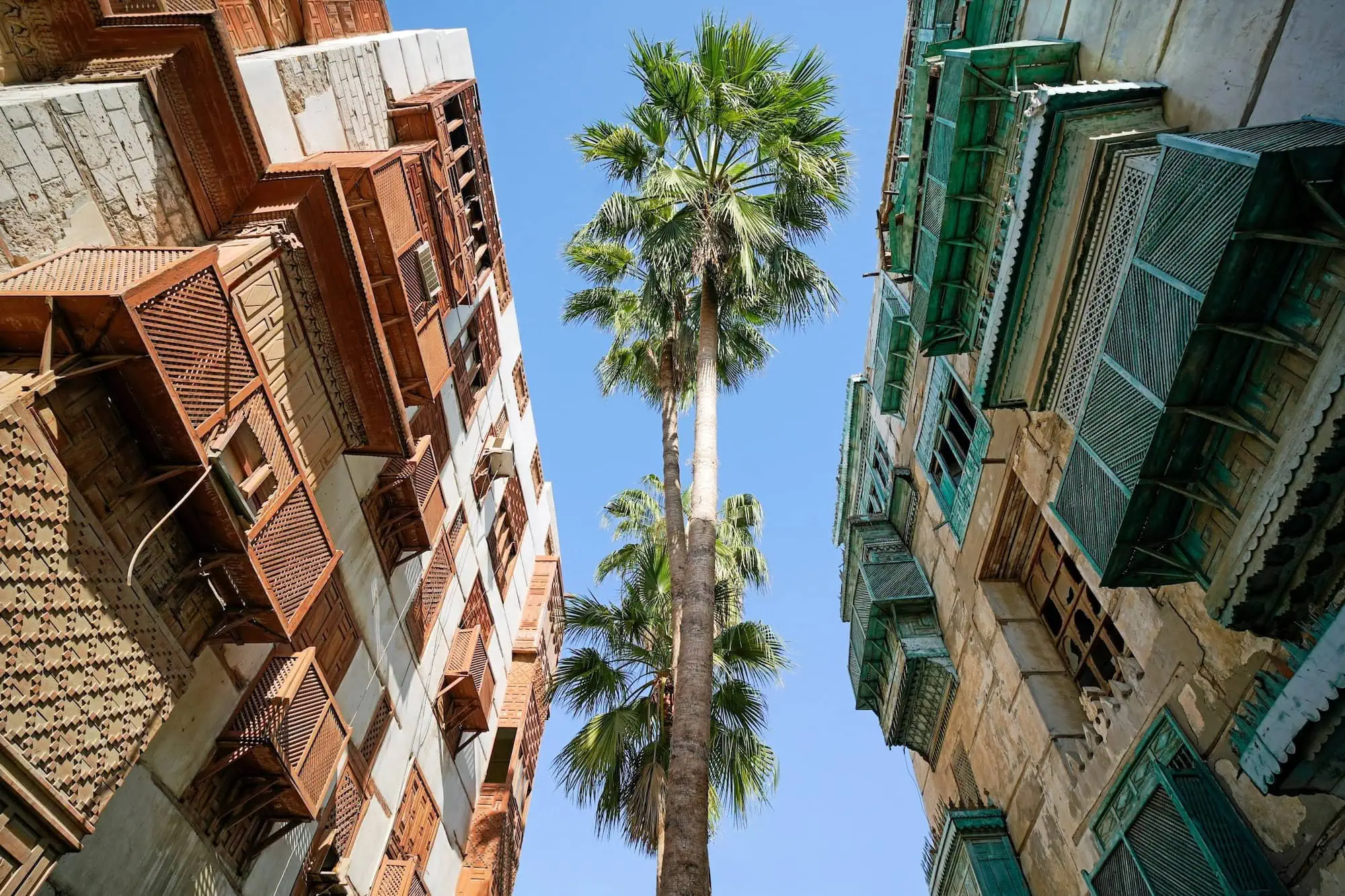
Jeddah runs as a 1- to 2-day stop, often as the departure point. Al-Balad, historic Jeddah, is a UNESCO site (inscribed 2014): a Red Sea coastal old town of coral-stone houses with the distinctive carved mashrabiya balconies, parts of it dating to the 7th century.
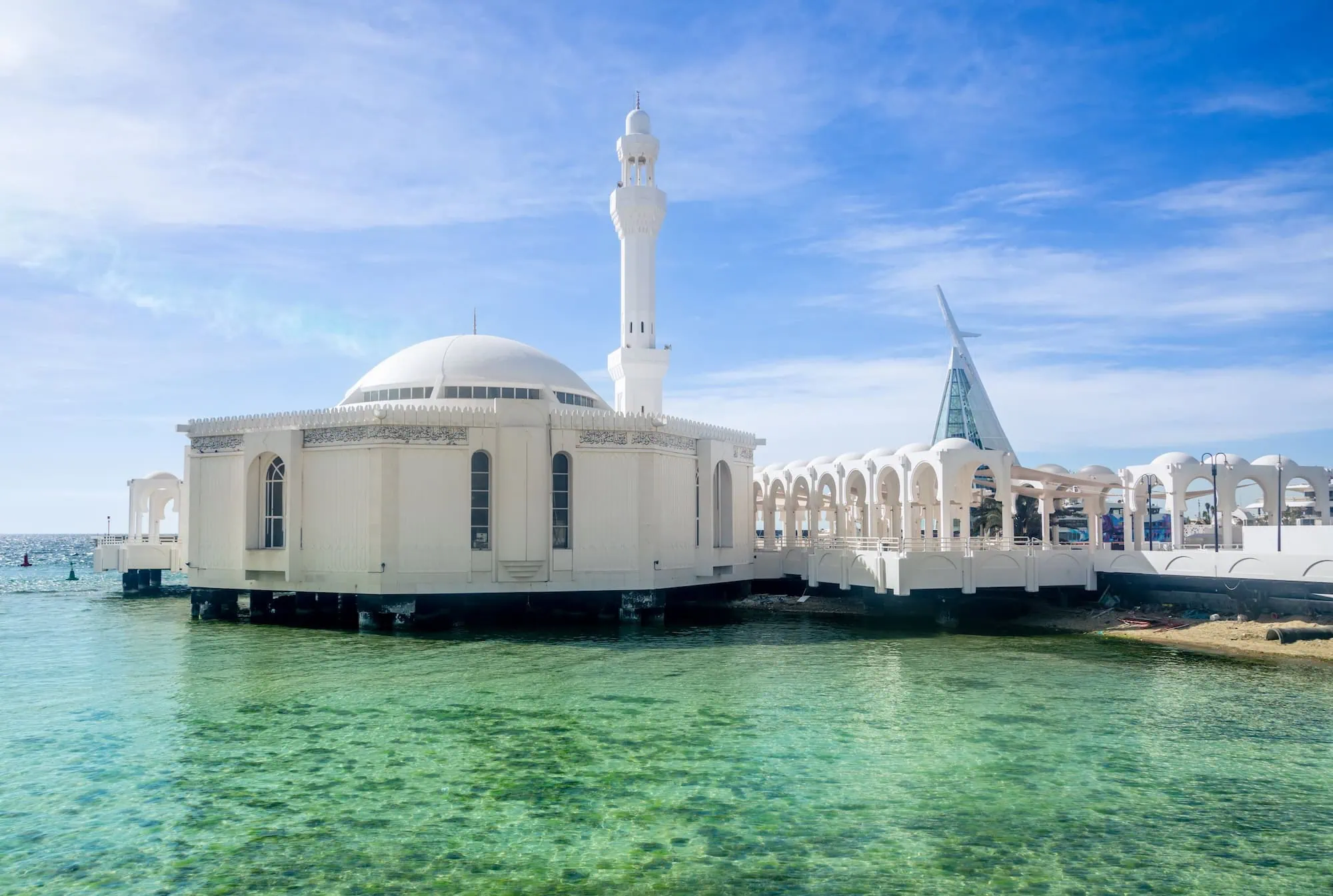
The Al Rahma Mosque (the Floating Mosque) on the Corniche is the standard postcard image. Jeddah’s Red Sea waterfront connects naturally to Egypt’s own Red Sea coast on the other side of the water.
All Saudi land-based touring is fully private throughout: your party, your Saudi-licensed guide, your driver.
Hotels Across Both Countries
Each tour itinerary on the site lists the specific hotels included in that package. Those are our recommended starting points, picked for location, comfort, and consistency of service. Anything below is alternatives or upgrades you can request when you’re tuning the trip with your Travel Concierge.
In Egypt, the historic anchor properties are worth knowing about even if you end up choosing something else: Marriott Mena House in Giza (pyramid views from the room balcony), Sofitel Winter Palace in Luxor (late-19th-century landmark, walking distance to Luxor Temple), and Sofitel Legend Old Cataract in Aswan (colonial-era property overlooking the Nile and Elephantine Island; this is the hotel where Agatha Christie stayed and which is widely associated with the inspiration for Death on the Nile). For modern Cairo luxury, Four Seasons-tier downtown and Nile-side hotels are the alternative.
In Saudi Arabia, the choices fall into clear categories.
In AlUla, you choose between flagship desert lodges (tented or villa-style suites set against the sandstone cliffs, the most-requested category), upper-mid resorts slightly outside the heritage core, and small boutique guesthouses inside the restored Old Town for travellers who want to sleep inside the heritage village rather than at a desert resort.
In Riyadh, the standard category is international five-star (the global hotel groups all operate here), with upper-mid options for travellers prioritising location over brand. Most stays here are short — one or two nights as a city stop.
In Jeddah, the same international five-star tier dominates the Corniche waterfront. For something more cultural, several boutique guesthouses inside Al-Balad are now operating after the recent UNESCO-driven restoration of the historic quarter.
Your Travel Concierge will recommend the specific properties that match your category, dates, and budget. Any of them can be swapped during the planning rounds.
Visas, Practicalities, and Money
Visas
Most travelers, including U.S., U.K., E.U., Canadian, Australian, and many Latin American nationalities, can obtain a 30-day Egypt tourist visa on arrival at Cairo Airport for $25 USD, or apply for an e-visa online before departure.
Saudi Arabia introduced the tourist eVisa in September 2019. It’s now available to passport holders from roughly 60 countries, including the U.S., U.K., all E.U. member states, Canada, Australia, Brazil, Mexico, Argentina, Chile, and many others.
The Saudi eVisa is multiple-entry, valid for one year from issue, with stays of up to 90 days per visit. Application is online, processing usually takes hours to a few days, and the current cost is around $80 USD (mandatory health insurance included). Visa-on-arrival is also available at major Saudi airports for the same nationalities, but the eVisa route is faster on the day of travel.
Guides
Whatever your language, you’ll be matched with an Egyptologist guide who speaks it — English, Italian, Spanish, Portuguese, German, French, and others available on request. The same applies on the Saudi side: your guides are Saudi-licensed, multilingual, and trained on AlUla, Diriyah, and the other heritage sites.
Nile Cruises
A note on cruise shore excursions. On Luxury Nile Cruises, shore excursions run as small group experiences (around 12 guests per Egyptologist), shared with fellow ship passengers. Fully private excursions can be arranged on request at additional cost. On Dahabiyas, the boat itself is small enough that excursions feel essentially private. All your land-based touring in Cairo, Luxor, Aswan, and across Saudi Arabia is fully private throughout: just your party plus your guide and driver.
Culture
A short note on conduct in Saudi Arabia. Dress is conservative — shoulders and knees covered for both men and women in public. Women are no longer required to wear an abaya or cover their hair, but loose clothing is the norm. Alcohol is prohibited country-wide.
Friday is the main rest day, and some sites adjust their hours around midday prayers. None of this affects your touring meaningfully — your Travel Concierge briefs you on the specifics before you arrive.
Money
On money, Egypt uses the Egyptian pound (EGP) and Saudi Arabia uses the Saudi riyal (SAR, pegged to the U.S. dollar at roughly 3.75 SAR = 1 USD). ATMs in Cairo, Luxor, Riyadh, Jeddah, and AlUla accept international Visa and Mastercard.
Cards are widely accepted in Saudi hotels, restaurants, and shops. Egypt is more cash-led for small purchases, tips, and souk transactions.
Best Time to Travel
The cross-country sweet spot is October through April. Both countries run from cool to comfortably warm in those months, with peak demand around Christmas and Easter.
October–November and March–April are the optimal shoulders. Egypt’s south (Aswan, Luxor) sits in the high 20s°C / low 80s°F; Cairo is mild; AlUla and Riyadh run in the mid-20s°C / mid-70s°F by day with cool nights. Jeddah stays slightly warmer year-round due to the Red Sea coast.
December–February is high season in both countries. Cairo runs in the high teens / low 60s°F with cold evenings. AlUla days are pleasant (18–22°C / 64–72°F) but nights drop close to 5°C / 41°F — pack layers for the desert lodges. Riyadh can briefly hit single digits at night.
Saudi Arabia’s biggest cultural programming (Winter at Tantora at AlUla, Riyadh Season) runs in this window, which is part of why December–February has become AlUla’s peak.
May–September is when both countries become difficult. Aswan, Luxor, and the Western Desert routinely exceed 40°C / 104°F. AlUla and Riyadh can hit 45°C / 113°F in July–August. Jeddah’s coastal humidity makes summer there feel even hotter than Riyadh’s dry heat.
We run summer trips, but we adjust the pace: earlier start times, longer mid-day pauses, shorter outdoor stretches.
Ramadan moves earlier each year by about 11 days. Touring runs normally during Ramadan, but restaurant hours, monument access, and the rhythm of daily life are different in both countries. Your Travel Concierge will flag if your dates overlap and adjust the itinerary accordingly.
Pairing With a Third Country
Egypt and Saudi Arabia fits naturally into a wider regional trip. Common third-country additions are:
Jordan is the most thematically obvious. Adding Petra and Wadi Rum lets you see both major Nabataean cities — Petra in Jordan and Hegra in Saudi — in one trip, which is the most complete Nabataean experience available anywhere. A Jordan extension typically adds 4–5 days.
Recommended Tour: 17-Day Egypt, Saudi Arabia and Jordan Tour
Dubai or the wider UAE as a modern-luxury counterpoint after Egypt’s and Saudi’s heritage focus. Usually 3–4 days, with easy connections via Riyadh or Jeddah.
Mention which countries interest you and your Travel Concierge will model durations and pricing across the options. Or skip ahead and build your own multi-country itinerary — choose your countries, dates, and pace, and we’ll send back a tailor-made quote within 1 to 12 hours.
How the Planning Process Actually Works
The complexity of an Egypt and Saudi Arabia tour sits in three places.
- 1. AlUla logistics: which lodge, how many nights, which sites in which order, sunrise vs sunset slot allocation.
- 2. Inter-country routing: Cairo–Riyadh vs Cairo–Jeddah, and where AlUla fits relative to whichever Saudi city you anchor on.
- 3. The Egypt segment depth: cruise length, Abu Simbel option, Cairo days.
None of those are hard on their own. They interact, and they resolve through conversation.
Your Travel Concierge builds a first-draft itinerary based on one conversation: your dates, who’s travelling, what you want included, pace preferences, hotel category, and how the time should split between Egypt and Saudi Arabia. The first draft typically lands in your inbox within 1 to 12 hours.
What follows is the back-and-forth, and it’s the part that matters most. We swap hotels, change cabin categories on the cruise, restructure AlUla days around your sunrise / sunset preferences, add or remove Riyadh, swap a Jeddah departure for a Riyadh one, push or pull Abu Simbel in or out, and tune the trip until every piece sits right.
Most travelers go through two to four rounds of revisions before booking, though some take more until every detail is locked. There’s no pressure to commit at any stage. The itinerary is finalised only when you’re 100% satisfied and ready to confirm.
Ready to Plan Your Egypt and Saudi Arabia Tour?
The Pyramids of Giza, the Grand Egyptian Museum, a Nile cruise between Luxor and Aswan, Hegra and the Nabataean rock-cut tombs of AlUla, Diriyah’s UNESCO old quarter in Riyadh, and Al-Balad’s coral-stone houses in Jeddah: the whole arc, one trip, planned end-to-end.
Tell us your dates, who’s travelling, and what matters most, and your dedicated Travel Concierge will have a tailor-made Egypt and Saudi Arabia itinerary back in your inbox within 1 to 12 hours.
We’ve been crafting Egypt journeys since 1955, with TripAdvisor Travelers’ Choice 2020 through 2026 in our pocket. Every Egypt and Saudi Arabia trip we run is built as one continuous experience: coordinated flights, coordinated transfers, one Travel Concierge from first email to return home, in both countries.
Frequently Asked Questions
11 to 16 days is the working range. Eleven is the floor, with AlUla as the only Saudi stop. Fourteen is the comfortable mid-point that fits Cairo, the Nile, AlUla, and one of Riyadh or Jeddah. Sixteen lets you add Abu Simbel in Egypt and a fuller Riyadh-and-Jeddah programme in Saudi.
Egypt-first is the standard. Cairo and the Nile build the pharaonic context that gives Hegra its meaning when you encounter it later, and Cairo is the easier long-haul arrival hub for most travellers.
Saudi-first works if you’re tying Saudi to a Dubai or UAE leg before Egypt, or if you want Egypt as the closing leg of a longer Middle East itinerary.
Saudia and EgyptAir operate multiple direct daily flights between Cairo and Riyadh (around 2 hours 30 minutes) and Cairo and Jeddah (around 2 hours 15 minutes). No European hub layover is required.
From Riyadh or Jeddah, AlUla is a 1h 20m to 1h 40m domestic flight on Saudia or Flyadeal.
Standard inclusions: domestic flights (within Egypt and Saudi Arabia), accommodations, full-board on the Nile cruise, entrance fees to standard sites including Hegra and Diriyah, your private guide and driver throughout the land portion in both countries, airport meet-and-greet, and 24/7 support.
Excluded: international flights to Cairo and and inter-country flights (between Egypt and Saudi Arabia), tipping, optional add-ons (interior pyramid access, Abu Simbel, AlUla helicopter scenic flights, Maraya event tickets), personal expenses, and travel insurance.
Each tour itinerary on the site lists the precise inclusions and exclusions for that specific package — those are the authoritative reference, and your Travel Concierge will confirm everything in your final itinerary.
All land-based touring in both Egypt and Saudi Arabia is fully private throughout. Your party, your guide, your driver.
The single exception is the cruise segment in Egypt. On Luxury Nile Cruises, shore excursions run as small-group experiences (around 12 guests per guide) shared with fellow ship passengers — that’s the structural reality of how cruise excursions work industry-wide. Fully private cruise excursions can be arranged on request at additional cost.
On Dahabiyas (8–16 guests aboard), the ship is small enough that excursions feel essentially private.
Yes, and we strongly recommend it. The standard inclusion is a 4-day / 3-night Luxor–Aswan sailing on a Luxury Nile Cruise vessel. Longer 5-, 6-, 7-, and 8-night cruises are available, and a 3- to 5-night Dahabiya is the alternative if you want a smaller, quieter ship.
Yes. We offer three options:
- 3- to 4-night Lake Nasser cruise from Aswan that takes in relocated Nubian temples along the way (adds 3–4 days)
- 45-minute flight from Aswan and back (adds 1 day)
- Small-group road convoy from Aswan, 3 hours each way, pre-dawn departure (the cost-effective option, the only Abu Simbel option that is not private, adds 1 day)
Yes. The most common additions are Jordan (Petra and Wadi Rum, the most thematically natural addition since it completes the Nabataean arc), Dubai or the UAE, Oman, and Bahrain. Three-country trips run 17 to 22 days. Mention which interest you and your Travel Concierge will model the durations.
October through April is the comfortable window across both countries. Cairo, Luxor, and Aswan run 20–25°C / 68–77°F by day in shoulder months, with cool evenings in Cairo December–February. AlUla and Riyadh run mid-20s°C / mid-70s°F by day in the same months, with desert nights dropping close to 5°C / 41°F at AlUla in midwinter.
Jeddah stays slightly warmer year-round. May–September brings 40–45°C+ across both countries’ interiors and we adjust the pace accordingly.
Whatever your language, you’ll be matched with an Egyptologist guide who speaks it — English, Italian, Spanish, Portuguese, German, French, and others available on request. The same applies on the Saudi side: your guides are Saudi-licensed, multilingual, and fluent in the language your trip is run in.
Yes, but neither is difficult. Egypt: a 30-day tourist visa on arrival at Cairo Airport for $25 USD, or an e-visa online before departure.
Saudi Arabia: a tourist eVisa (around $80 USD, multiple-entry, 1-year validity, 90 days per visit) applied for online before travel; visa-on-arrival is also available at major Saudi airports for the same nationalities. Both are open to U.S., U.K., E.U., Canadian, Australian, Brazilian, and many other Latin American passports.
Yes. Both Egypt and Saudi Arabia are stable, well-policed tourism destinations with established infrastructure for international travellers.
Saudi Arabia’s tourism programme is relatively new (the country only opened to general tourism in 2019), and the regions we operate in — AlUla, Riyadh, Jeddah — have been built out specifically with international visitors in mind.
Your Travel Concierge briefs you on local customs (dress, alcohol restrictions in Saudi, photography etiquette at religious sites in both countries), and your private guide is on-site to handle anything practical.
Yes. Vegetarian, vegan, gluten-free, halal, and most allergen-aware diets are straightforward in both countries, and we flag your needs to hotels, cruise kitchens, and restaurants in advance. Both Egyptian and Saudi cuisines have a strong vegetable, pulse, and rice base, so vegetarian travellers tend to eat very well.
Three things.
First, we’ve been crafting Egypt journeys since 1955, with TripAdvisor Travelers’ Choice 2020 through 2025 — seventy years of operational depth on the Egypt side, the longer of the two legs.
Second, your trip is planned and managed by one dedicated Travel Concierge end-to-end: same point of contact for the Cairo arrival, the inter-country flight, the AlUla lodge, and the return.
Third, every itinerary is 100% customisable, with the first draft back in your inbox within 1 to 12 hours and as many revision rounds as it takes before you’re 100% satisfied.
Yes. Hegra has been open to international tourism since 2019, with controlled access through the Royal Commission for AlUla. Visits are guided, with timed entries, and the site operates year-round.
The optimal months for visiting are October through April when daytime temperatures are comfortable. Summer visits are possible but require very early morning starts to avoid the heat.
The two are sister Nabataean sites, built by the same civilisation in the same architectural language. The differences are scale, atmosphere, and accessibility.
Petra has more set-piece monuments (the Treasury, the Monastery) and far more visitor traffic; the Siq approach is iconic. AlUla / Hegra has more spread-out tombs in a wider sandstone landscape, controlled-access timed entries that keep visitor density low, and a fuller surrounding cultural programme including Dadan, Jabal Ikmah, and the restored Old Town.
Travellers who’ve already been to Petra typically find Hegra a deeper, quieter complement. Travellers seeing both for the first time get the full Nabataean picture.
Design Your Custom Tour
Explore Egypt and Saudi Arabia Tours your way by selecting only the attractions you want to visit