


From ancient wonders to wild horizons
Egypt and Kenya Tours
Egypt and Kenya Tours blend the wonders of ancient Egypt with the excitement of East Africa’s iconic wildlife. With 70+ years of expertise, private guides, and your own personal driver, every detail is planned seamlessly for comfort and confidence. Enjoy fully customizable itineraries and 24/7 support for an effortlessly extraordinary journey.
5,000 Years of Human History Meets the Last Great Migration
Cairo to the Maasai Mara on a single, coordinated trip, built one conversation at a time.
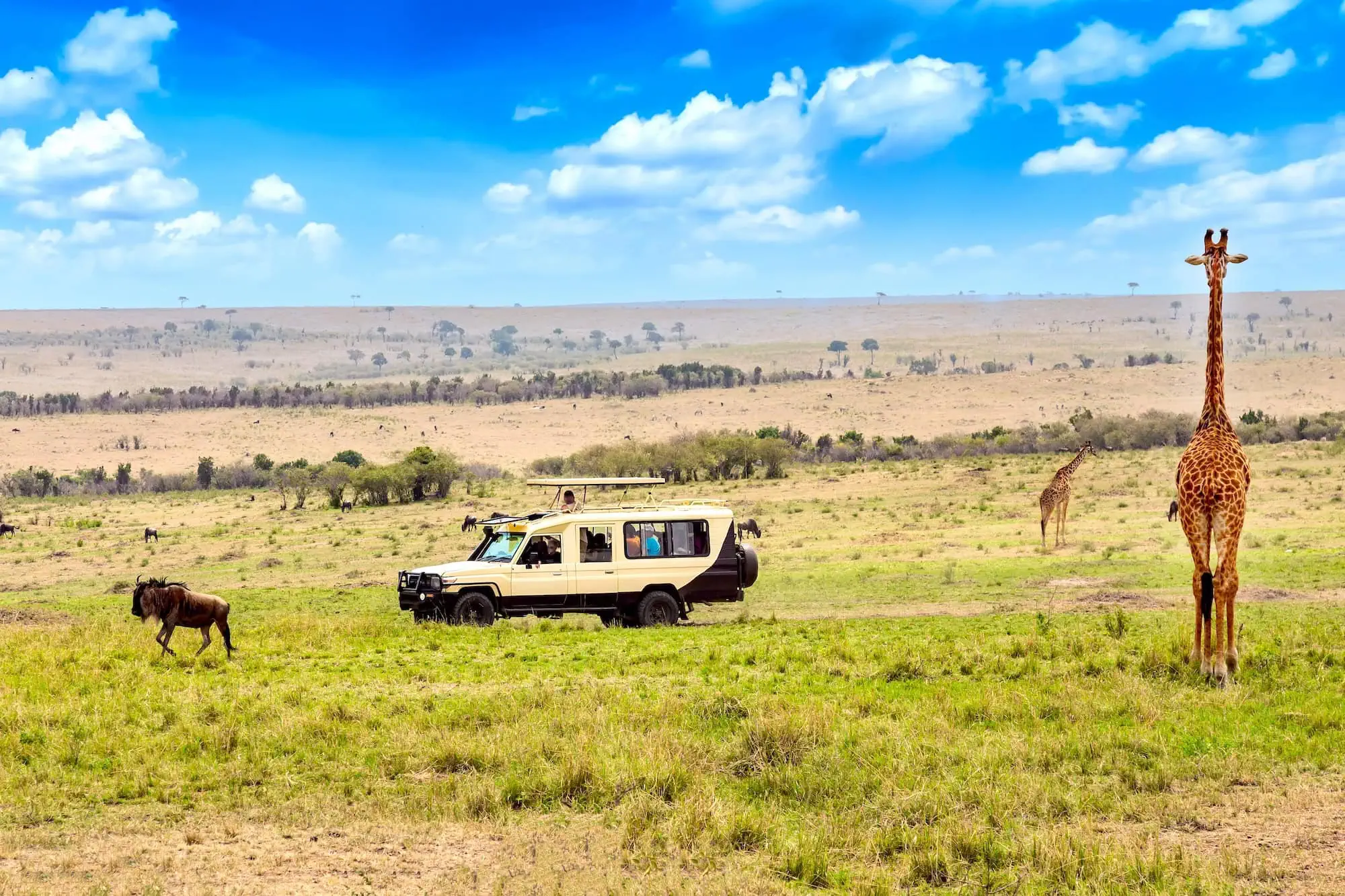
We’ve been crafting Egypt journeys since 1955, with TripAdvisor Travelers’ Choice in our pocket every year from 2020 through 2026. Every Egypt and Kenya trip we run is built as one continuous experience: coordinated flights, coordinated transfers, one Travel Concierge from first email to return home, in both countries.
The Pyramids of Giza and the Maasai Mara on the same itinerary is one of the most unusual pairings in long-haul travel, and it works because the two halves are doing genuinely different jobs.
Egypt gives you 5,000 years of dense, walkable human civilisation: the Great Pyramid at roughly 4,500 years old, the Grand Egyptian Museum with its 5,000-piece Tutankhamun collection displayed together for the first time in history, the 134 columns of the Karnak Hypostyle Hall, the Valley of the Kings, and the Nile linking it all. Kenya gives you the planet’s most concentrated big-mammal landscape and, between July and October, the Great Migration: roughly 1.5 million wildebeest plus several hundred thousand zebra and gazelle moving through the Mara River system, with predators in close pursuit. One trip, two completely different ways of looking at deep time.
Table of Contents
Why Egypt and Kenya Pair So Well
The geography actually connects them
The Nile rises in East Africa. Its longest tributary, the White Nile, flows from Lake Victoria, traverses Uganda and South Sudan, and only then reaches Egypt. When you stand on the banks at Aswan after standing on the Mara plateau a few days earlier, you’re looking at the same hydrological system that links the two destinations.
The travel seasons line up cleanly
Egypt’s comfortable touring window (October through April, with daytime temperatures of 20–25°C / 68–77°F) overlaps almost perfectly with Kenya’s two best wildlife-viewing windows: the long dry season (late June through October, peak migration months) and the short dry season (late December through March, calving season in the southern Mara).
The two halves complement rather than compete
Egypt is dense and intellectually demanding, with multiple sites per day, walking on uneven ground, and constant historical context. Kenya is open, slower-paced, and built around early-morning and late-afternoon game drives with downtime in between. Putting them in one trip means the safari acts as a natural decompression after the Cairo–Luxor–Aswan stretch, not a second sprint.
How We Build an Egypt and Kenya Trip
Typical Day Split
Most travelers spend 8 to 12 days in Egypt and 5 to 8 days in Kenya, totaling 13 to 21 days on the ground. Anything shorter than 13 days forces compromises that show: a single Egyptian city, a single safari camp, no time to absorb either side. Anything longer than 21 days usually means a third country has been added.
Order of Travel
We almost always sequence Egypt first, then Kenya. Three reasons. First, it lets you hit the temples and tombs while you’re freshest. Second, the Cairo–Nairobi flight (roughly 4 to 4.5 hours, operated daily by Kenya Airways, EgyptAir, and connection options on Ethiopian and Emirates) is shorter and easier than the reverse direction in most fare classes. Third, ending on safari means your last memory is a sundowner on the Mara, not a 5 a.m. transfer to Cairo airport after a long temple day.
Cruise or No Cruise on the Egypt Side
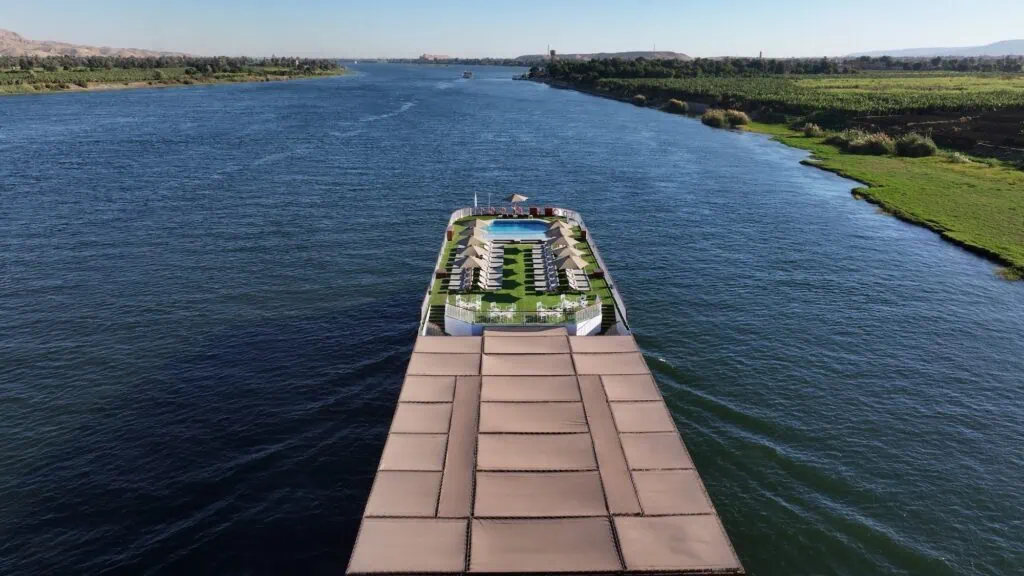
The Nile cruise is the most common decision point. We offer both Luxury Nile River Cruises (50 to 150 guests, refined 5-star vessels with sun-deck pools, sailing Luxor–Aswan or the reverse) and Dahabiya yachts (8 to 16 guests, traditional twin-mast sailing vessels accessing quieter river stretches that large ships can’t reach). Standard cruise lengths run 4, 5, 6, 7, or 8 days; the 4-day Luxor–Aswan cruise is the default inclusion in most Egypt and Kenya packages, with the longer options available on request.
Mara-Only or Mara Plus
The Maasai Mara alone delivers the headline experience. Adding Amboseli (elephants framed against Mount Kilimanjaro) or Lake Nakuru (flamingos and rhinos) gives ecological variety. Adding Ol Pejeta Conservancy in Laikipia gives access to Kenya’s largest black rhino population and the world’s last two northern white rhinos. We talk through which combination matches your dates, energy, and budget during the planning conversation.
Two Sides of Africa: The Pyramids and the Migration
This is the page’s core argument, and it’s worth taking seriously rather than treating as a marketing line. Egypt and Kenya represent two of the planet’s most important “cradles”: Egypt as the cradle of organised human civilisation in continuous unbroken record, Kenya (and the wider East African Rift) as the cradle of the human species itself and the cradle of the great mammalian fauna that still moves across its plains.
Egypt’s argument: 5,000 years of the human-built world
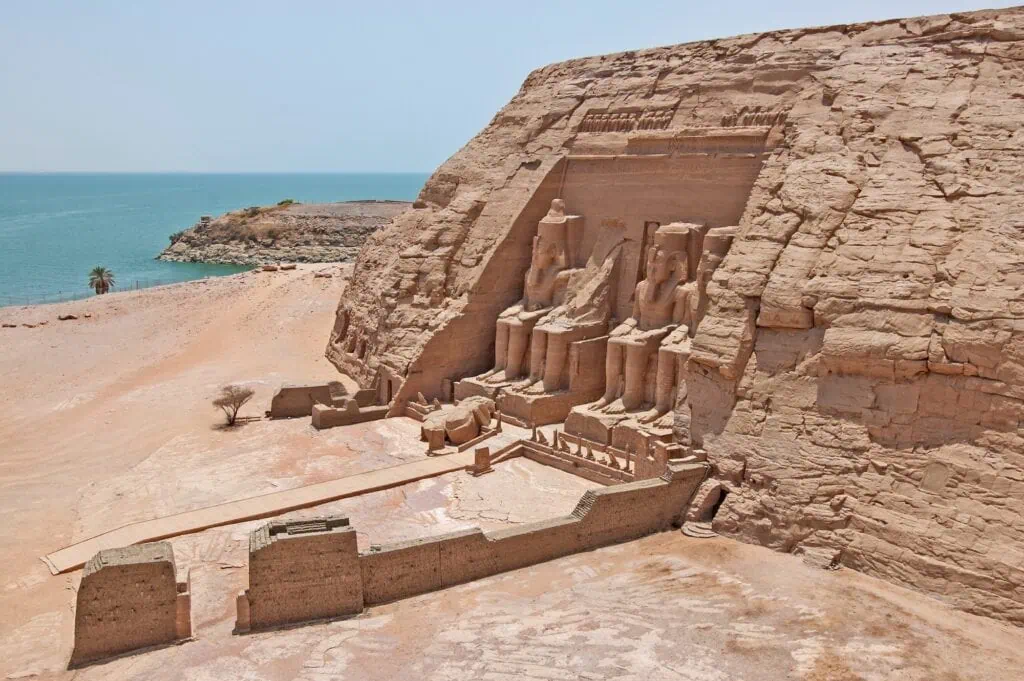
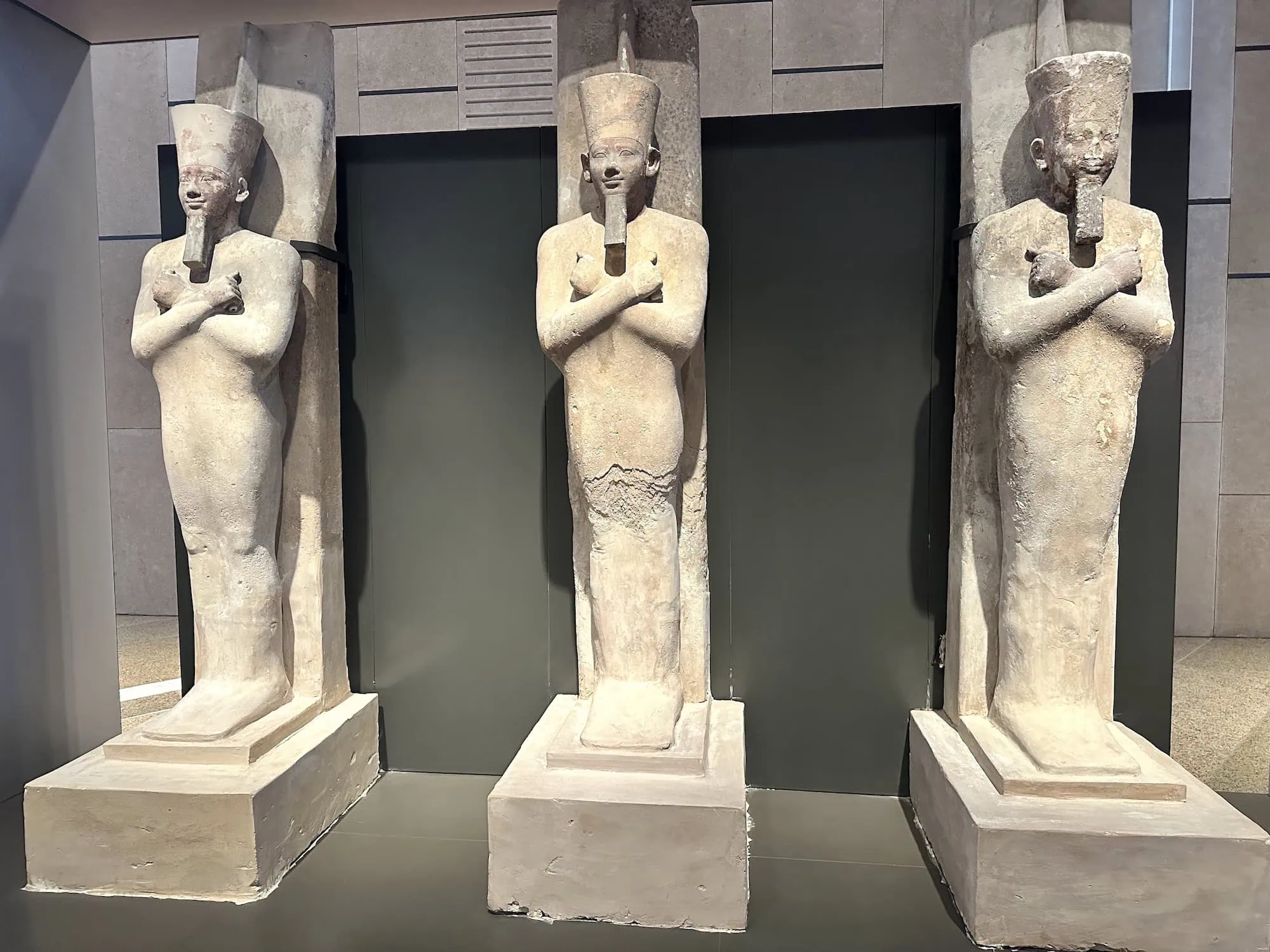
The pharaonic state is the longest continuous political and cultural record we have. From the Old Kingdom (Khufu’s Great Pyramid, around 2,560 BC) through the Middle Kingdom, the New Kingdom (Hatshepsut, Thutmose III, Akhenaten, Tutankhamun, Ramesses II), the Late Period, the Ptolemies, the Romans, the Coptic era, and the Islamic dynasties, Egypt offers a single physical landscape where you can walk through 4,500 years of monumental architecture in two weeks. The Grand Egyptian Museum (GEM) at Giza, the Karnak temple complex at Luxor, the Valley of the Kings, the temples of Edfu and Kom Ombo, the Philae temple at Aswan, the rock-cut Abu Simbel: each is a different chapter of the same long story.
Kenya’s argument: deep biological time, still running
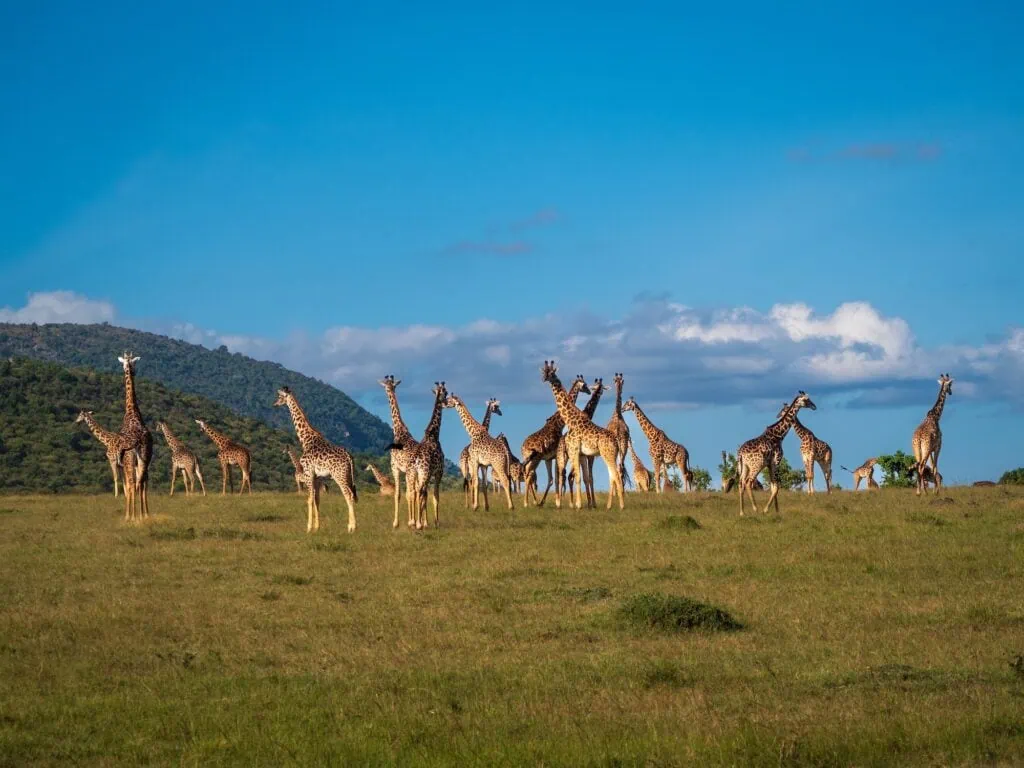
Olduvai Gorge, Koobi Fora, the Turkana Basin: East Africa is the region that produced the earliest known hominins. The Maasai Mara and the wider Serengeti–Mara ecosystem are the last large-scale stage on which the great mammalian migrations still happen at scale. Roughly 1.5 million wildebeest, 200,000 zebra, and 350,000+ Thomson’s gazelle move in an annual loop, hunted by lion prides, leopards, cheetahs, hyenas, and crocodiles at the river crossings. Egypt shows you what humans built. Kenya shows you what the world looked like before humans built anything.
The geographic thread
The Nile starts in Kenya’s neighbour Uganda, at Lake Victoria, which East African Rift geology helped create. The river you drift down at Aswan and the lake whose shore you can see from a Mara escarpment are part of the same continental water system. Travelers who notice this often describe the trip as feeling more coherent than expected, rather than two separate holidays bolted together.
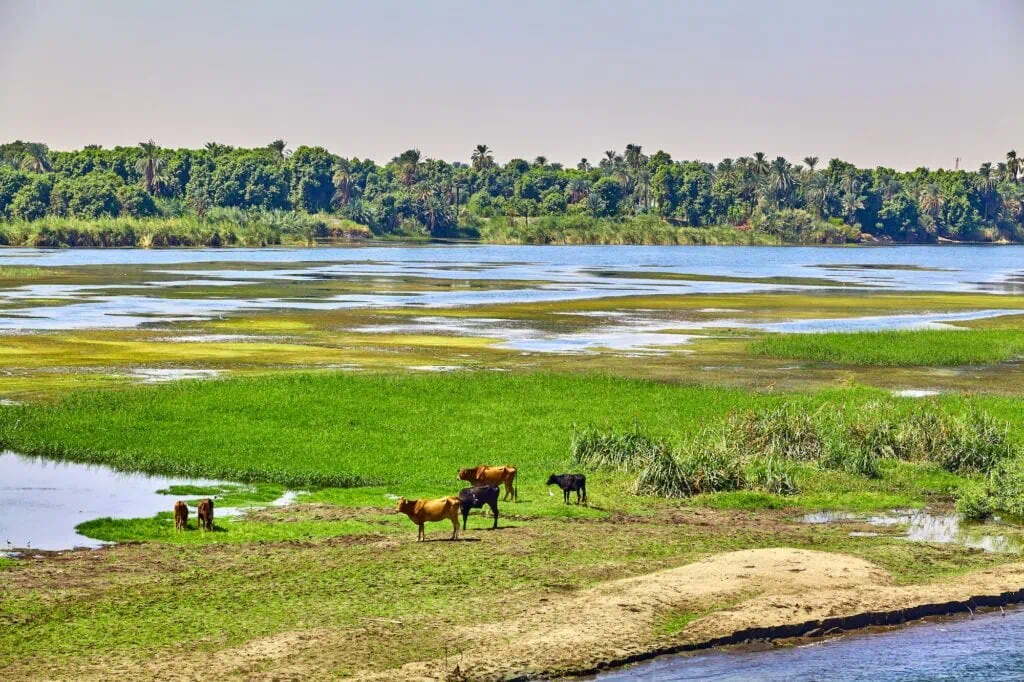
What Egypt Gives You
Cairo and Giza
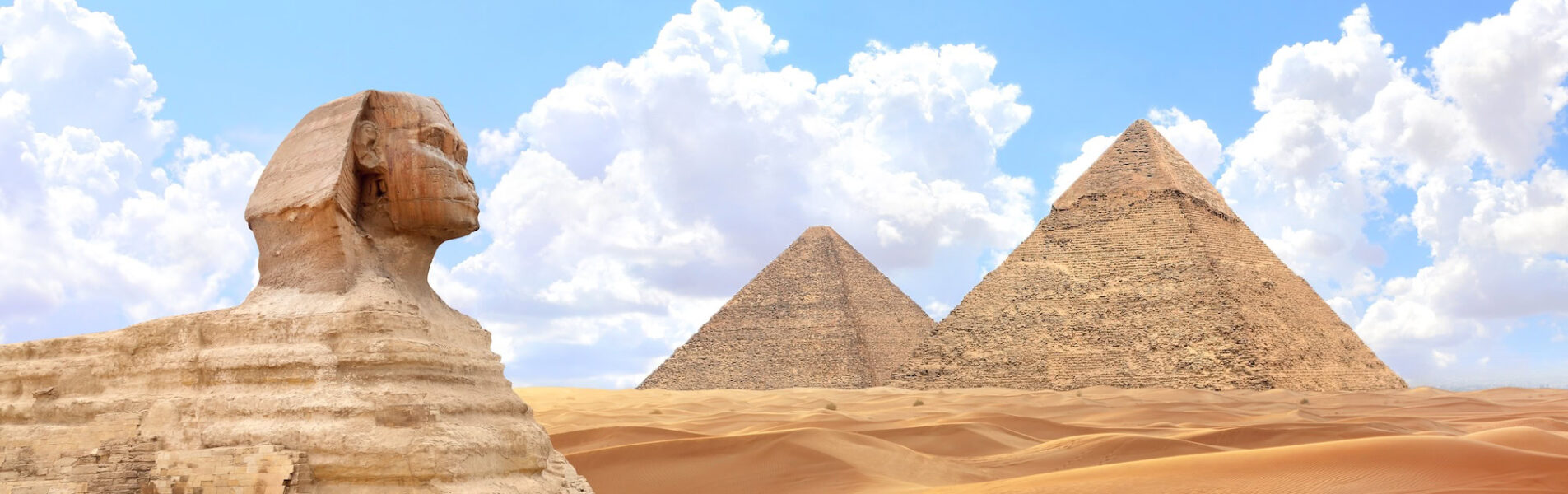
The Pyramids of Giza (Khufu, Khafre, Menkaure) and the Great Sphinx remain in their original 4,500-year-old setting. The Grand Egyptian Museum, fully open at the foot of the plateau, holds over 100,000 artifacts, with the complete Tutankhamun collection (over 5,000 pieces) displayed together for the first time. The Egyptian Museum at Tahrir Square is the complementary stop, and the National Museum of Egyptian Civilization (NMEC) holds the Royal Mummies Hall with 22 royal mummies. Coptic Cairo (the Hanging Church / Al-Muallaqa, Ben Ezra Synagogue, Saints Sergius and Bacchus), Islamic Cairo (the Citadel of Saladin and the Mosque of Muhammad Ali), and Khan El Khalili bazaar fill out the Cairo days.
Luxor
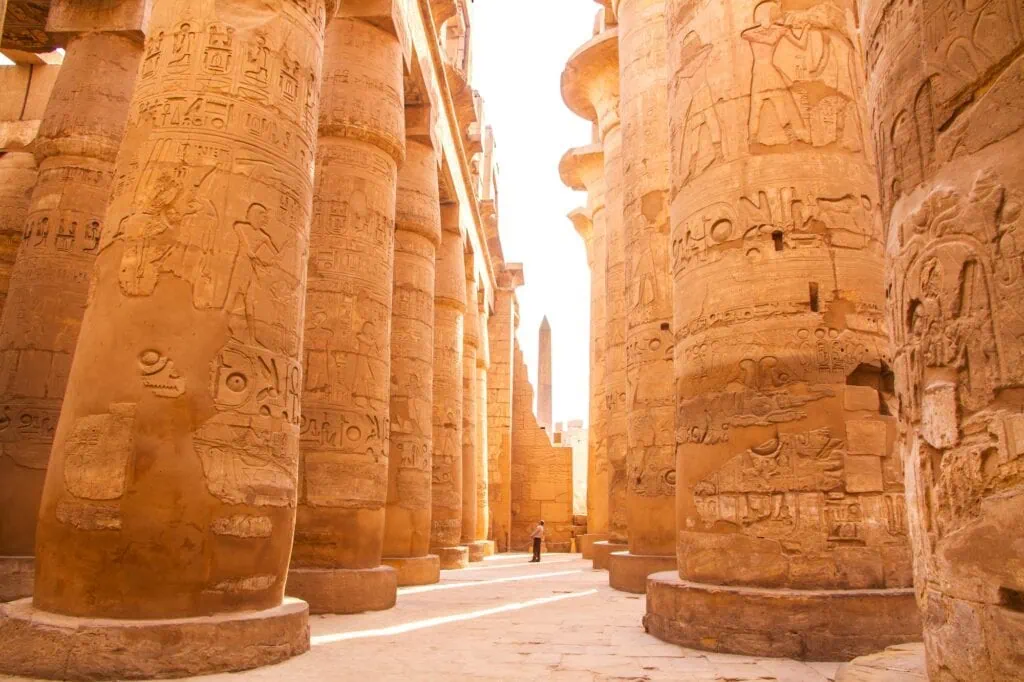
The Karnak Hypostyle Hall with its 134 columns, the Avenue of Sphinxes (2.7 km, with over 1,000 sphinxes recently restored end-to-end), Luxor Temple, the Valley of the Kings on the West Bank with rotating tomb access, Hatshepsut’s Mortuary Temple at Deir el-Bahari, the Colossi of Memnon, and the Ramesseum.
Aswan and Abu Simbel
Philae Temple on its island, the Unfinished Obelisk, the High Dam, and a felucca sail around Elephantine Island. Abu Simbel can be added three ways: a 45-minute flight from Aswan (private, adds 1 day), a small-group road convoy through the Western Desert (3-hour drive each way, departing pre-dawn, the cost-effective option, runs as small group not private, adds 1 day), or a 3- or 4-night Lake Nasser cruise from Aswan visiting the relocated Nubian temples en route (adds 3 to 4 days). The Lake Nasser option is the deepest, the road convoy is the cheapest, the flight is the fastest.
Nile Cruise
A note on cruise shore excursions, since this is where some operators over-promise. On Luxury Nile Cruises, shore excursions run as small group experiences (around 12 guests per Egyptologist), shared with fellow ship passengers. Fully private excursions can be arranged on request at additional cost. On Dahabiyas, the boat itself is small enough that excursions feel essentially private. All your land-based touring in Cairo, Luxor, Aswan, and across Kenya is fully private throughout: just your party plus your guide and driver.
What Kenya Gives You
The Maasai Mara National Reserve
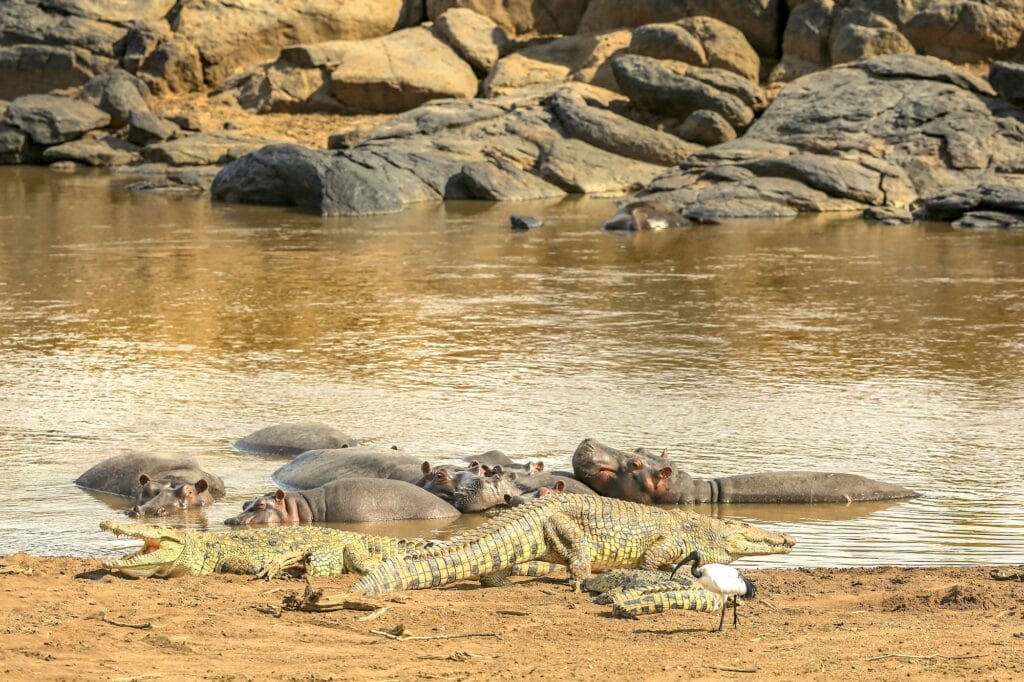
1,510 km² of open savanna in the south-west of Kenya, contiguous with Tanzania’s Serengeti National Park. Resident populations of all Big Five (lion, leopard, elephant, buffalo, rhino), large prides of lion, healthy cheetah numbers, and between July and October, the Great Migration river crossings at the Mara and Talek rivers. Game drives run morning and afternoon; full-day drives with a packed lunch are an option in the high-migration months.
Amboseli National Park
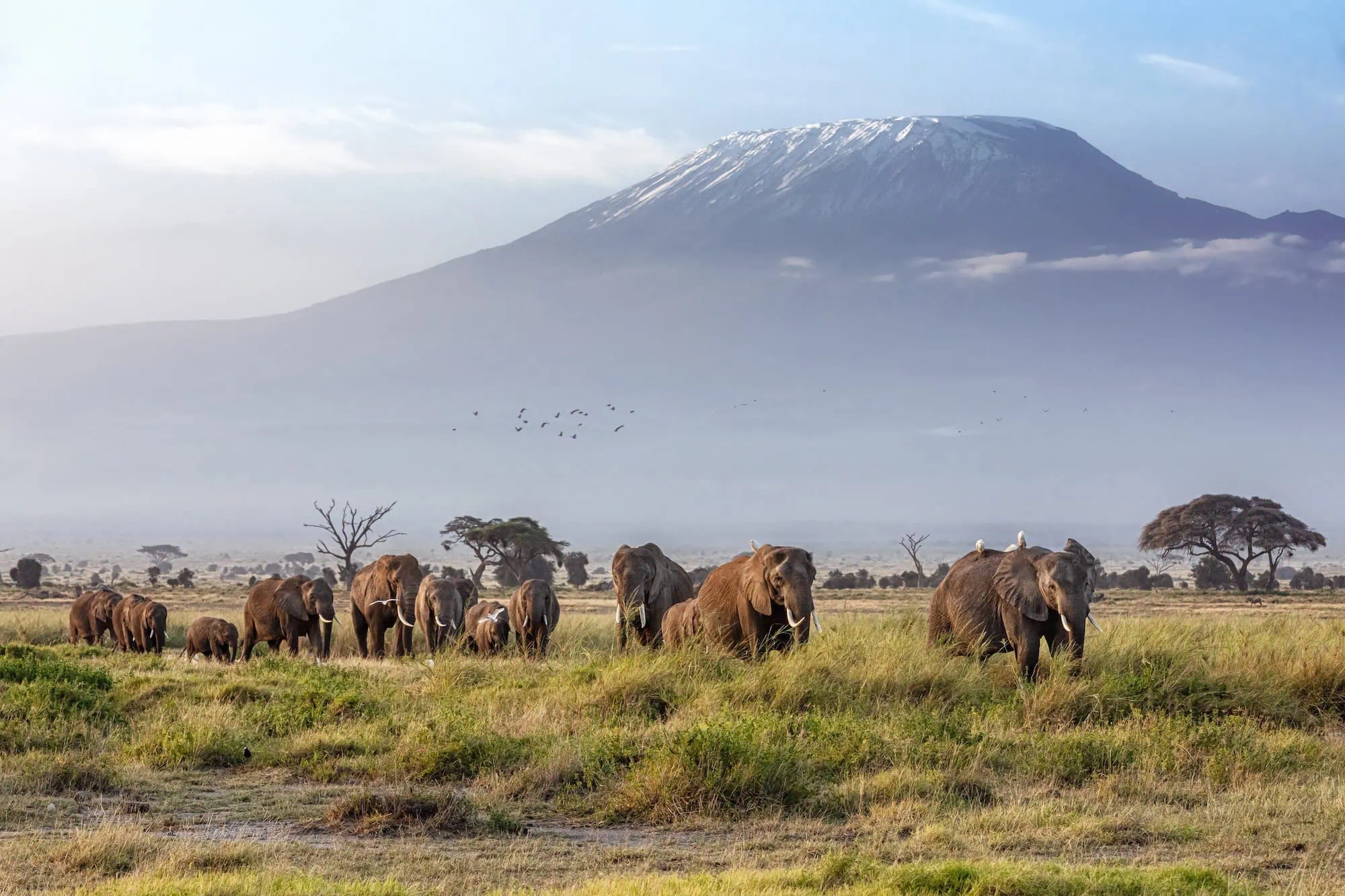
392 km² in the south, against the Tanzanian border. Around 1,600 elephants in the ecosystem, including some of the largest tuskers left in Africa. Mount Kilimanjaro at 5,895 m sits just over the border in Tanzania and provides the famous backdrop. Year-round swamps fed by Kilimanjaro snowmelt make wildlife viewing reliable in any season.
Lake Nakuru National Park
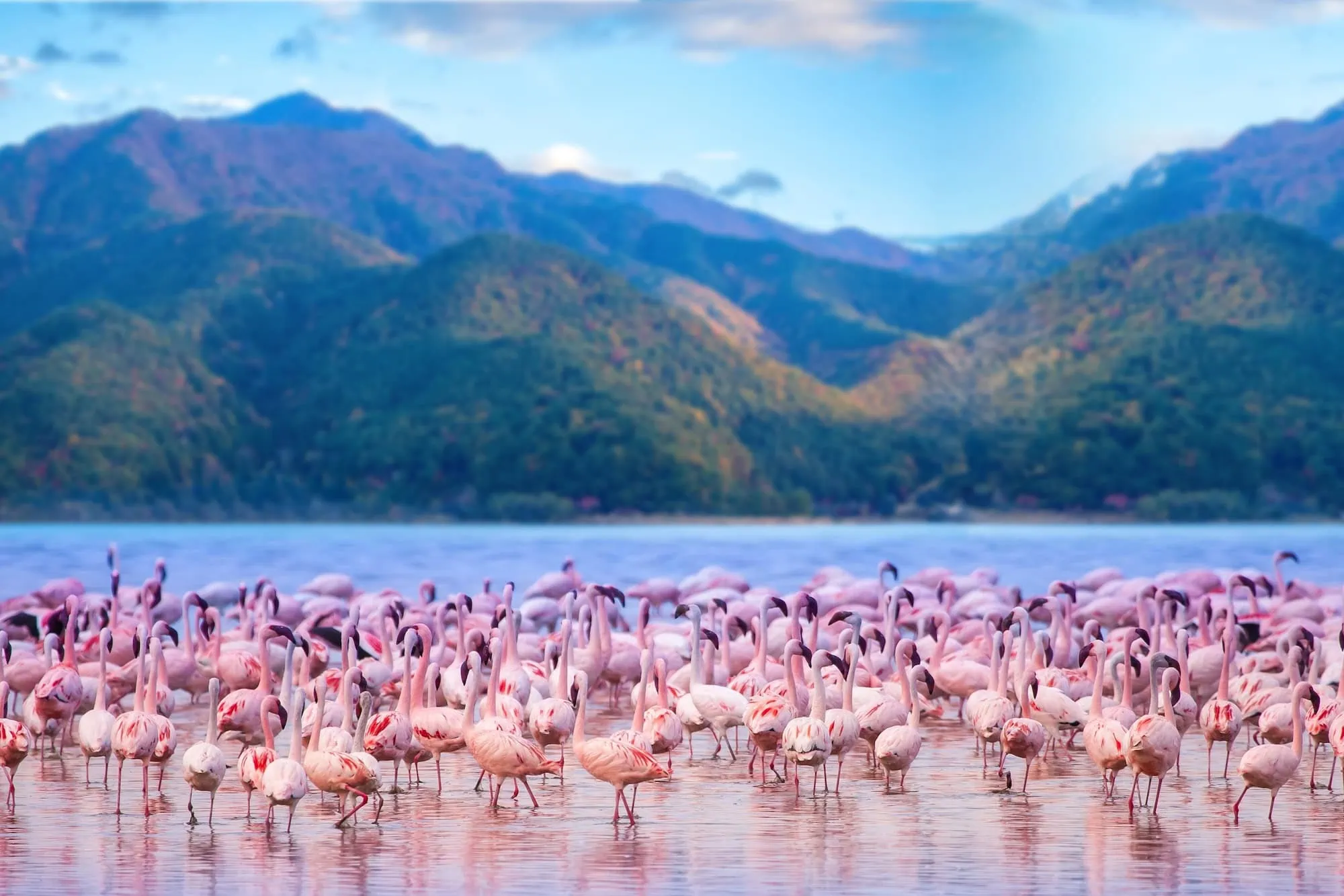
Alkaline Rift Valley lake. Flamingo numbers fluctuate dramatically with water levels, but the surrounding park holds white and black rhino, Rothschild’s giraffe, and large baboon troops in the acacia woodland.
Ol Pejeta Conservancy
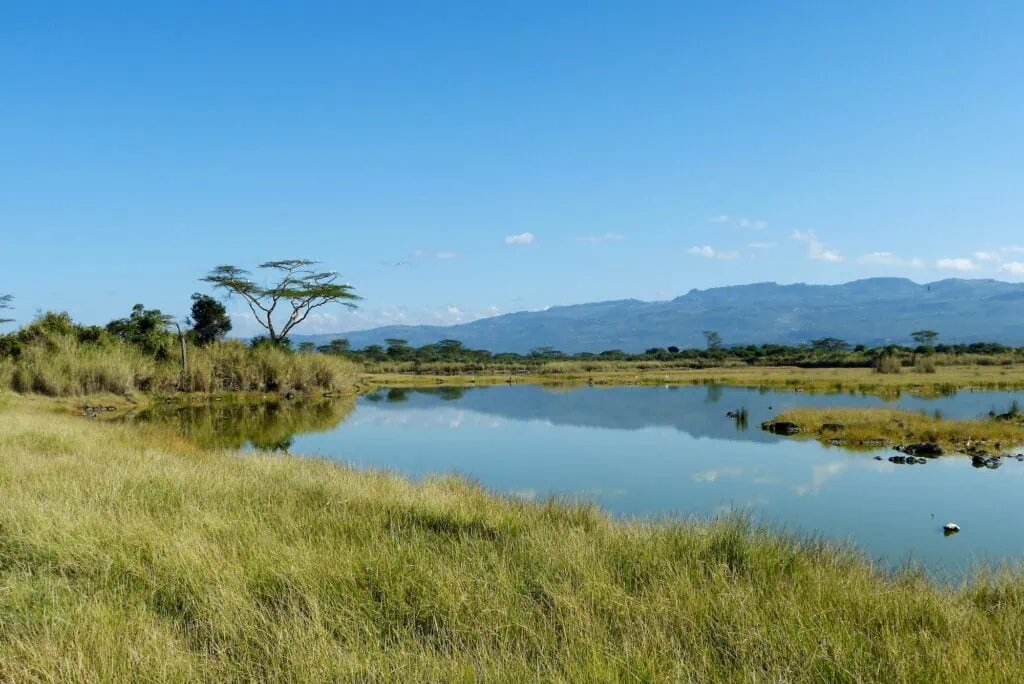
Private conservancy in Laikipia, north of Mount Kenya. Largest black rhino population in East Africa (around 165), the world’s last two northern white rhinos under 24-hour armed protection, chimpanzee sanctuary, and night game drives that show nocturnal behaviour you don’t see on standard morning game drives.
Nairobi Day-Stops
Sheldrick Wildlife Trust elephant orphanage (the original David Sheldrick project, public visiting hour 11 a.m. to noon), Karen Blixen Museum, Giraffe Centre, and the Nairobi National Park (the only national park inside a capital city, with rhino, lion, and buffalo against a city skyline).
Hotels Across Both Countries
Each tour itinerary on the site lists the specific hotels included in that package. Categories range from comfortable mid-tier safari camps to ultra-luxury suite-style tented camps with private plunge pools. We match the camp tier to the rest of the trip so the Egypt hotel category and the Kenya camp category sit at roughly the same level.
Visas, Practicalities, and Money
Egypt Entry
Most travelers, including U.S., U.K., E.U., Canadian, Australian, and many Latin American nationalities, can obtain a 30-day Egypt tourist visa on arrival at Cairo Airport for $25 USD, or apply for an e-visa online before departure.
Kenya entry
Kenya replaced its eVisa system with an Electronic Travel Authorization (eTA) in January 2024. Almost all foreign visitors now apply online before departure through the official Kenyan eTA portal, and approval is typically issued within 72 hours. We send the link, the document checklist, and instructions as part of every Egypt and Kenya itinerary.
Currency
Egypt uses the Egyptian Pound (EGP); ATMs are widely available in Cairo, Luxor, and Aswan, and U.S. dollars are accepted at most hotels and at the visa-on-arrival desk. Kenya uses the Kenyan Shilling (KES); ATMs are reliable in Nairobi and at major town centres, and U.S. dollars are accepted at most safari camps and lodges. Tipping for guides, drivers, and camp staff is customary in both countries; we provide tipping guidance in the pre-departure pack.
Guides
Whatever your language, you’ll be matched with an Egyptologist guide who speaks it — English, Italian, Spanish, Portuguese, German, French, and others available on request. On the Kenya side, our safari guides are KPSGA-certified (Kenya Professional Safari Guides Association) Silver- or Gold-level professionals.
Best Time to Travel
The cleanest window for the combined trip is late June through early October, which captures Kenya’s long dry season and the Great Migration’s river-crossing peak (typically July through September) while still giving you very tolerable Egypt weather, particularly at the front and back ends of the window. Daytime temperatures in Cairo and Luxor in late September and October sit in the comfortable 25–32°C (77–90°F) range; July and August are hotter, with Upper Egypt regularly above 35°C (95°F), so we adjust pacing with very early morning starts and longer lunch breaks.
The other strong window is late December through March, which gives you Egypt at its absolute best (cool, dry, peak touring conditions) and Kenya in its short dry season with the calving season in the southern Mara: thousands of wildebeest calves born within a few weeks, with predators concentrated to take advantage. This is a gentler, less dramatic safari window than migration season, and many travelers prefer it.
April, May, and November are shoulder months; both countries are perfectly travel-able, with the trade-offs being some rain risk in Kenya (April and November are the rainy seasons) and rising heat in Egypt (April and May).
How the Planning Process Actually Works
The Egypt and Kenya pairing has a specific set of friction points: matching your travel dates against the Great Migration window (which moves year to year with rainfall), choosing a safari camp tier that won’t feel mismatched against your Cairo hotel, deciding whether to fly between Nairobi and the camps (light aircraft is the standard option, with daily Wilson Airport departures) or drive (longer but lets you see the country), and the cruise-or-no-cruise question on the Egypt side. None of these are deal-breakers; they’re just the conversations we have early so the itinerary doesn’t need to be torn up later.
Your Travel Concierge builds a first-draft itinerary based on one conversation: your dates, who’s travelling, what you want included, pace preferences, hotel category, and how the time should split between Cairo–Luxor–Aswan and the Mara, Amboseli, and any other Kenyan parks. The first draft typically lands in your inbox within 1 to 12 hours.
What follows is the back-and-forth, and it’s the part that matters most. We swap hotels, change cabin categories on the cruise, move you between safari camps, add or pull out parks (Lake Nakuru, Ol Pejeta, a Nairobi day-stop), reroute Abu Simbel between flight, road convoy, and Lake Nasser cruise, and rework the trip until every piece sits right. Most travelers go through two to four rounds of revisions before booking, though some take significantly more until every detail is locked. There’s no pressure to commit at any stage. The itinerary is finalised only when you’re 100% satisfied and ready to confirm.
Frequently Asked Questions
Most travelers spend between 13 and 21 days. Below 13 days you start losing depth on one side or both. Above 21 days usually means a third country has been added. The most common sweet spot is 15 to 17 days, split roughly 9 to 11 days in Egypt (Cairo + Luxor + Aswan + cruise) and 6 to 8 days in Kenya (Maasai Mara plus Amboseli or Ol Pejeta).
Egypt first, then Kenya. The temples and tombs are walking-intensive and best done while you’re freshest; the safari acts as natural decompression at the back end of the trip. The Cairo–Nairobi flight is also slightly easier than the reverse in most fare classes.
Direct flights run between Cairo (CAI) and Nairobi (NBO) on Kenya Airways and EgyptAir, with flight time around 4 to 4.5 hours. One-stop options on Ethiopian Airlines (via Addis Ababa) and Emirates (via Dubai) are also reliable and sometimes preferable for schedule reasons. We book the Cairo–Nairobi leg as part of your itinerary.
A standard package includes accommodations across both countries, domestic and inter-country flights (Cairo to your Egypt cities, Cairo–Nairobi, and Nairobi to safari airstrips where applicable), Nile cruise on full board if a cruise is included, all entrance fees to standard sites, private Egyptologist guide and personal driver throughout the Egypt land portion, KPSGA-certified safari guides in Kenya, airport meet-and-greet, and 24/7 support.
International long-haul flights to Cairo or from Nairobi, tipping, optional add-ons (interior pyramid access, special-access tombs, balloon flight over Luxor or the Mara, Lake Nasser cruise, night game drives), personal expenses, and travel insurance are not included.
Each tour itinerary on the site lists the precise inclusions and exclusions for that specific package — those are the authoritative reference, and your Travel Concierge will confirm everything in your final itinerary.
All land-based touring in both countries is fully private: just your party, your guide, and your driver or safari vehicle. The one exception is shore excursions on Luxury Nile Cruises, which run as small group experiences (around 12 guests per Egyptologist) shared with fellow ship passengers. Fully private cruise excursions can be arranged on request at additional cost. Dahabiya excursions are small enough to feel essentially private.
Yes, and most travelers do. We offer Luxury Nile Cruises (50–150 guests, refined 5-star vessels, sun-deck pools, sailing Luxor–Aswan or reverse) and Dahabiyas (8–16 guests, traditional sailing vessels, quieter river stretches inaccessible to large ships). Cruise lengths run 4, 5, 6, 7, or 8 days; the 4-day Luxor–Aswan cruise is the default in most packages.
Yes, with three options. A 45-minute flight from Aswan (private, adds 1 day), a small-group road convoy from Aswan (3-hour drive each way through the Western Desert, departs pre-dawn, the cost-effective option, runs as small group not private, adds 1 day), or a 3- or 4-night Lake Nasser cruise from Aswan visiting the relocated Nubian temples en route (adds 3 to 4 days).
The migration herds typically arrive in the Mara from the Tanzanian Serengeti in late June or early July, peak in August and September with the dramatic Mara River crossings, and start moving south again in October. Exact timing shifts year to year with rainfall patterns. For the highest probability of catching a major river crossing, mid-July to mid-September is the strongest window. The southern Mara also sees a quieter calving season in late January through February.
Roughly 4 hours direct on Kenya Airways or EgyptAir. One-stop routings via Addis Ababa (Ethiopian) or Dubai (Emirates) add several hours but sometimes give better timing.
Yes. The most common additions are Tanzania (Serengeti and Ngorongoro, often with a Zanzibar beach close), Jordan (Petra), and Dubai as a return-leg stopover. For three- and four-country builds, Click the Design My Tour button at the top – it is the easiest starting point.
Egypt’s best window is October through April: 20–25°C (68–77°F) daytime, cool evenings. Summer (June through August) regularly exceeds 35°C (95°F) in Upper Egypt and we adjust with very early starts.
Kenya’s safari weather depends on which dry season: the long dry season runs late June through October (warm days around 25–28°C / 77–82°F, cool early mornings around 12–14°C / 54–57°F at altitude in the Mara), and the short dry season runs late December through March (warmer days, drier air). April–May and November are rainy seasons, generally still travel-able but with afternoon showers.
Yes.
Egypt: most travelers get a 30-day visa on arrival at Cairo for $25 USD, or apply for the e-visa in advance.
Kenya: an Electronic Travel Authorization (eTA) is required and must be applied for online before departure through the official Kenyan eTA portal, with approval typically within 72 hours. We share the links and document checklists for both.
Whatever your language, you’ll be matched with an Egyptologist guide who speaks it — English, Italian, Spanish, Portuguese, German, French, and others available on request. Kenya safari guides operate primarily in English, with French, Spanish, and Italian-speaking guides available on request with advance notice.
The standard tourist routes in both countries are well-trafficked and well-guided. We use private transport throughout, vetted accommodations, and local guides who know the on-the-ground conditions in real time. Our 24/7 support runs across both countries. Travel insurance with medical evacuation coverage is recommended, particularly for the safari portion.
Yes, across all hotels, cruise vessels, and safari camps. We confirm dietary requirements (vegetarian, vegan, gluten-free, halal, kosher, allergies) in writing before departure and pass them to every property in advance.
Three things in practice.
First, one Travel Concierge runs the trip end-to-end across both countries, so you have one inbox and one phone number from first email to return home.
Second, the Egypt half is delivered by a team that has been operating Egypt journeys since 1955, with TripAdvisor Travelers’ Choice 2020 through 2025 in our pocket.
Third, the trip is built one conversation at a time: a first draft within 1 to 12 hours, then 2 to 4 rounds of revisions until every piece sits right, with no pressure to commit at any stage.
Design Your Custom Tour
Explore Egypt and Kenya your way by selecting only the attractions you want to visit