

Saadian Tombs – Splendour Even In Death
The Saadian Tombs reveal six centuries of hidden royal secrets.
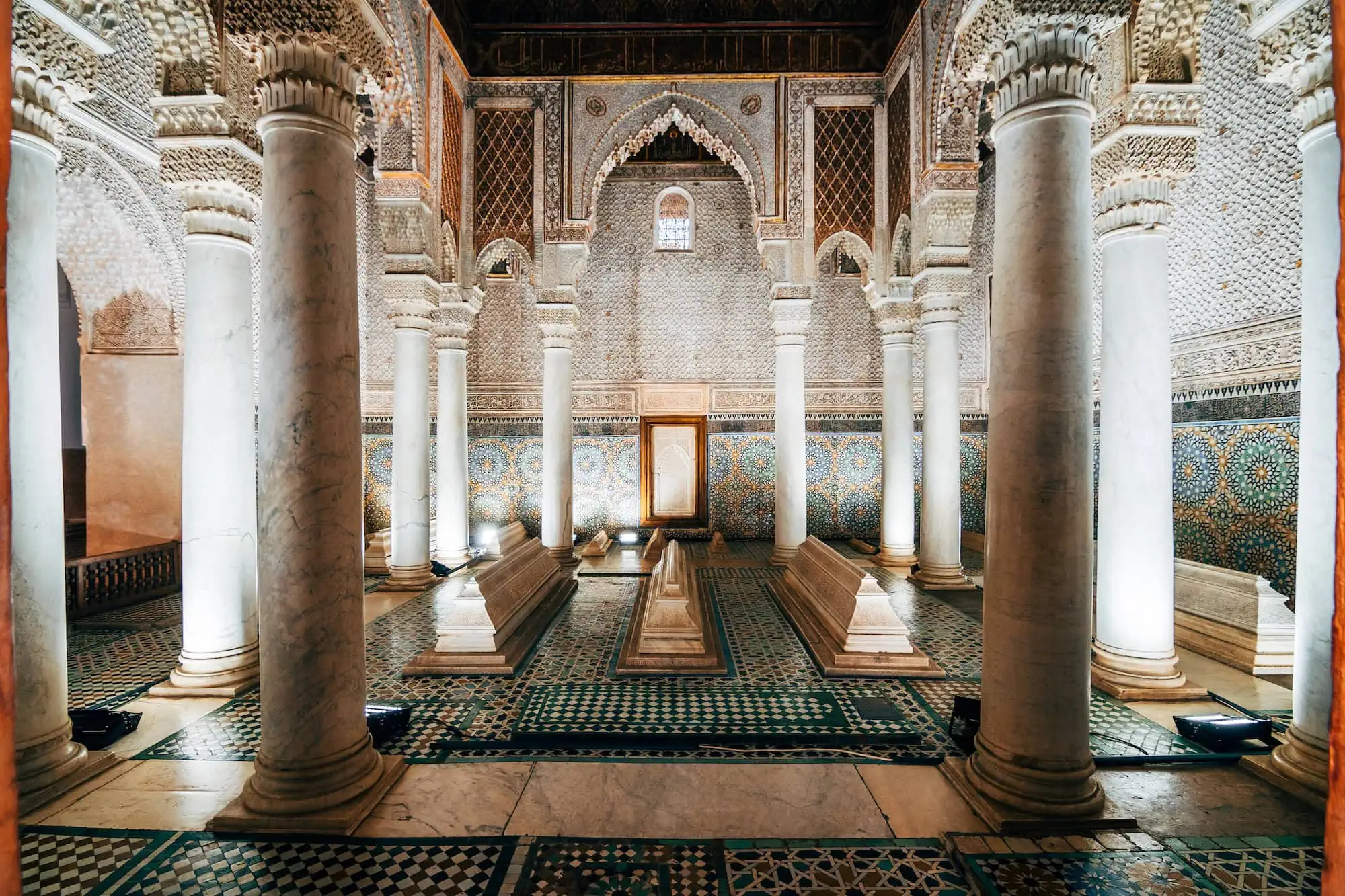
Discovered by chance in 1917, these remarkable mausolea stand as one of Morocco’s most significant archaeological discoveries from the French Protectorate era. They reflect the immense wealth and artistic refinement of the Saadian dynasty, particularly during the reign of Ahmad al-Mansur between 1578 and 1603.
The Saadian Tombs can be included in our Egypt and Morocco tour packages, where Morocco’s imperial heritage is combined with its cultural landmarks and Egypt’s ancient wonders for a rich and immersive travel experience.
As you pass through the narrow entrance corridor, the site opens into an extraordinary royal necropolis where Italian Carrara marble meets intricate Moorish stucco work. Detailed zellij tile patterns and refined craftsmanship create a setting that reflects both spiritual significance and royal prestige.
Located in Marrakech’s historic Kasbah district, the tombs offer insight into Islamic architectural traditions and Morocco’s complex dynastic history—making them an essential stop for anyone seeking a deeper understanding of the country’s past.
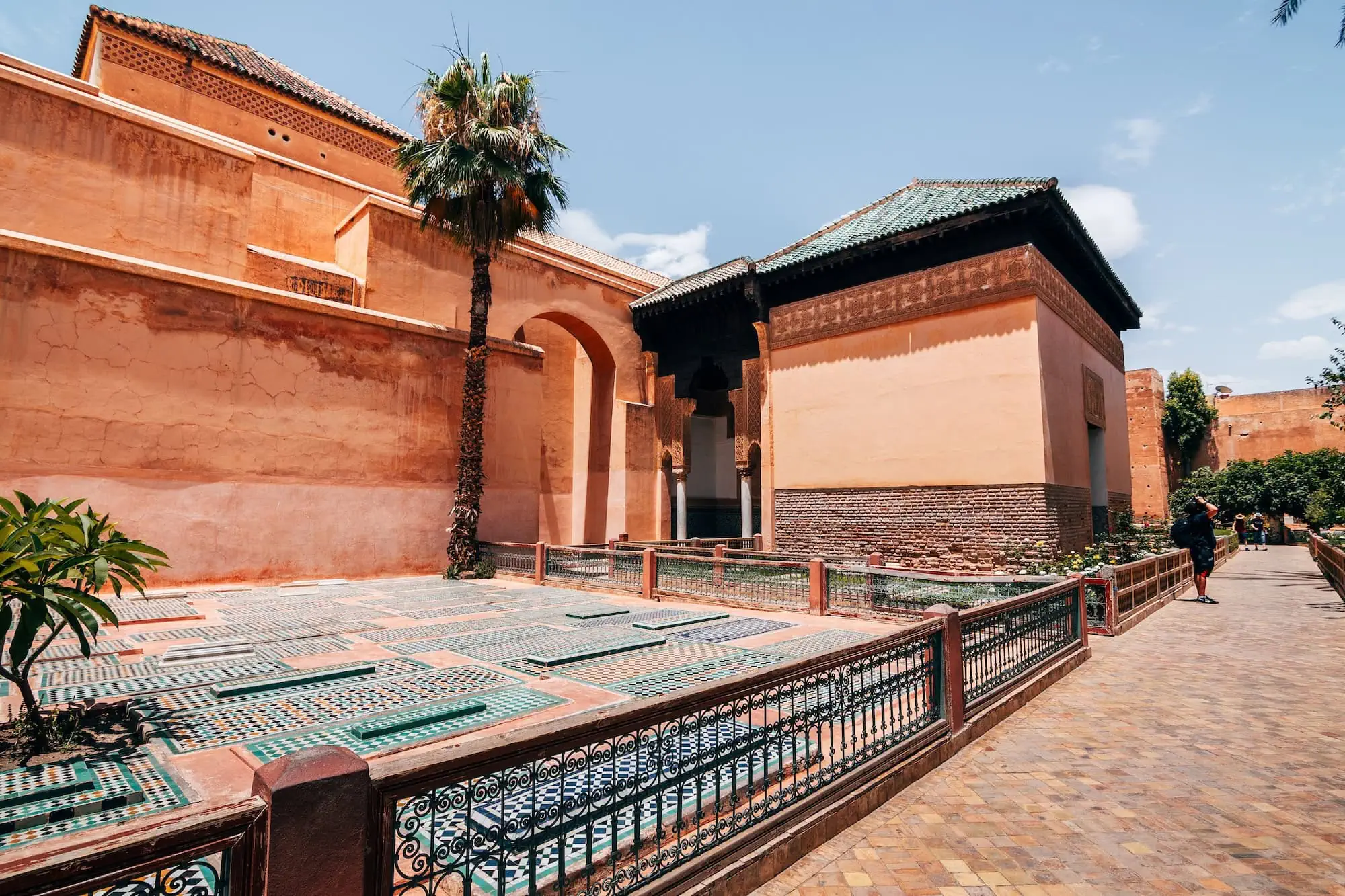
Royal Legacy of the Saadian Dynasty
The story begins with Sultan Ahmad al-Mansur, whose architectural ambitions transformed Morocco’s royal burial practices. During his 25-year reign, al-Mansur commissioned these elaborate mausolea as the final resting place for his family and successors. The dynasty’s influence extended far beyond Morocco, with trade connections reaching across the Sahara and diplomatic ties to European courts.
The Golden Age Under Ahmad al-Mansur
Ahmad al-Mansur earned his epithet “al-Mansur” (the Victorious) after his military successes, particularly the Battle of the Three Kings in 1578. His wealth, largely derived from sugar trade and gold from Sudan, funded the tomb complex’s construction. The sultan imported skilled craftsmen from across the Islamic world to create what would become his dynasty’s most enduring monument.
The architectural program reflected al-Mansur’s international outlook. Italian marble arrived via Mediterranean trade routes. Andalusian refugees brought sophisticated stucco techniques. Local artisans contributed traditional zellij tilework and carved cedar elements that remain pristine centuries later.
Muhammad al-Shaykh and Early Saadian Rule
Before al-Mansur’s golden age, the tombs housed earlier Saadian rulers including Muhammad al-Shaykh, the dynasty’s founder who established Saadian power in the 1540s. These earlier burials established the site’s sacred character and influenced the later, more elaborate constructions under al-Mansur’s patronage.
The Dynasty’s Decline and Concealment
After the Saadian dynasty ended in the early 1600s, the succeeding Alaouite rulers made a fateful decision. Rather than destroying the tombs, they walled them up completely, sealing the entrances and leaving only the adjoining Kasbah Mosque accessible. This concealment preserved the site for over three centuries until French colonial administrators rediscovered it during aerial surveys in 1917.
Architectural Masterpiece in Stone and Stucco
Walking through the Hall of Twelve Columns, you witness the pinnacle of Moorish decorative arts. Every surface displays meticulous craftsmanship that rivals the Alhambra’s most celebrated chambers.
The main mausoleum contains three rooms, each serving different ceremonial functions. The central chamber houses Ahmad al-Mansur’s tomb beneath a dome supported by twelve marble columns. These columns, carved from single blocks of Italian Carrara marble, create a rhythm of light and shadow that changes throughout the day. Between the columns, horseshoe arches display intricate muqarnas (stalactite vaulting) that took years to complete.
Walls throughout the complex feature multiple decorative layers. The lower sections display geometric zellij patterns in traditional colors – white, green, and brown terra cotta. Above this, carved plaster creates flowing arabesques and Koranic inscriptions in elegant Maghribi script. The highest zones feature wooden cedarwood panels with star-and-polygon patterns that demonstrate mathematical precision achieved through centuries of Islamic geometric tradition.
The smaller chambers house other royal family members, including Lalla Mas’uda, al-Mansur’s mother, whose tomb reflects the important role of royal women in Saadian court life. Each burial chamber maintains the same high artistic standards while varying decorative details to reflect individual status and period of construction.
Gold leaf originally covered much of the carved ceiling work, though centuries and restoration processes have reduced this metallic splendor. However, enough remains to suggest the original overwhelming richness that impressed visitors from European courts and Saharan kingdoms alike.
Visiting the Saadian Tombs Today
Modern access follows the same narrow passage that French officials used during the 1917 rediscovery. This quasi-hidden corridor preserves the sense of uncovering something extraordinary, though today’s entrance procedures are far more organized than the original archaeological exploration.
Practical Information and Timing
The tombs open daily from 9:00 am (09:00) to 5:00 pm (17:00), with tickets costing 70 dirhams for international visitors as of 2024. We recommend arriving either immediately at opening time or during the last two hours before closing to avoid the most intense crowds. Peak tourism periods between November and March create particularly long queues that can extend waiting times beyond an hour.
Purchase tickets at the entrance gate near the Kasbah Mosque. The site doesn’t offer advance online reservations, making early arrival your best strategy for minimal waiting. Weekend crowds tend to be lighter than weekday tourist groups, particularly early morning on Fridays when many guided tours haven’t yet arrived.
Navigating the Site and Crowds
The entrance corridor deliberately restricts visitor flow, creating natural crowd control but also bottlenecks during busy periods. Once inside, the site’s compact size means you’ll cover the entire complex within 45 minutes to one hour. Photography is permitted, though tripods and professional lighting equipment require special permission.
Best Photography Opportunities
Natural lighting creates the most spectacular effects between 10:00 am (10:00) and 2:00 pm (14:00) when sunlight filters through the architectural openings. The carved stucco details photograph best during these peak light hours, while the marble columns create interesting shadow patterns throughout the afternoon. The geometric ceiling work requires careful positioning to capture both detail and overall architectural harmony.
Understanding the Restoration Process
The current condition of the Saadian Tombs reflects decades of careful conservation work begun during the French Protectorate and continuing under Moroccan independence. Initial restoration focused on structural stability and clearing centuries of accumulated debris from the sealed chambers.
Contemporary conservation efforts balance historical accuracy with visitor access requirements. Modern climate control systems protect the delicate stucco work from humidity damage while maintaining the site’s authentic atmosphere. The restoration team includes specialists in Islamic architecture, medieval building techniques, and traditional Moroccan crafts who ensure repairs match original construction methods.
Archaeological documentation during restoration revealed construction phases spanning several decades under different Saadian rulers. This research helps visitors understand how the complex evolved from simpler burial chambers to the elaborate decorative program visible today. The restoration also uncovered evidence of the sealing process that preserved the tombs, including walled-up doorways and blocked passages that remained untouched for three centuries.
Exploring Marrakech’s Royal Quarter
The Saadian Tombs anchor a historic district containing multiple architectural treasures within walking distance. The adjacent Kasbah Mosque, which remained accessible during the tombs’ concealment, displays similar Saadian-era craftsmanship in an active religious context.
The Royal Kasbah District
This neighborhood functioned as Marrakech’s royal administrative center during Saadian rule. The Bahia Palace, built centuries later during the Alaouite dynasty, demonstrates how successive rulers adapted and expanded upon Saadian architectural innovations. The El Badi Palace ruins, also commissioned by Ahmad al-Mansur, provide context for understanding the broader scope of royal construction projects during the Saadian golden age.
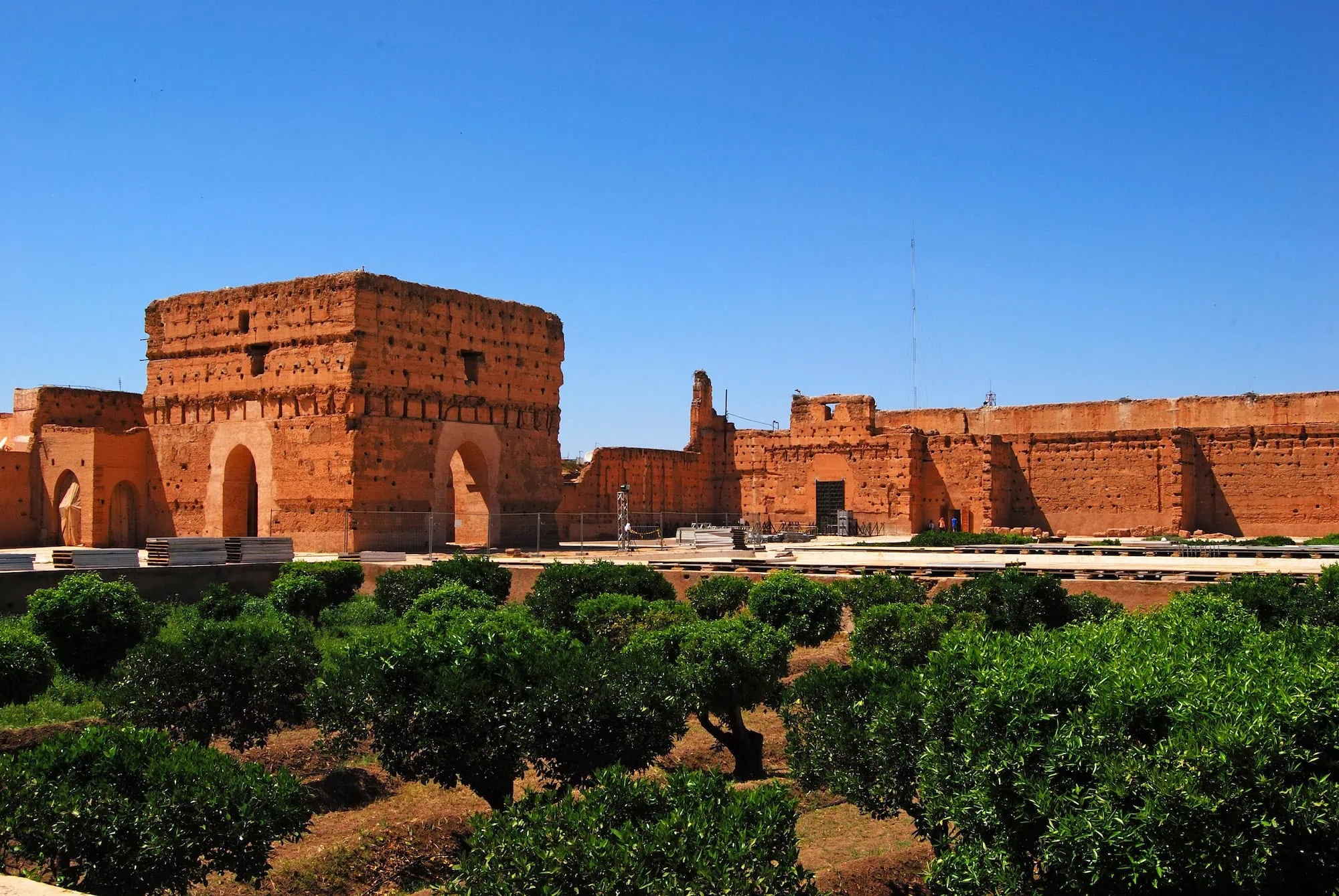
Combined Sightseeing Strategies
Private guided tours often combine the Saadian Tombs with other Kasbah district attractions, creating comprehensive historical narratives about Morocco’s imperial past. These tours typically last 3-4 hours and include walking through the traditional neighborhoods surrounding the royal compounds.
We organize customized itineraries that position the Saadian Tombs within broader Marrakech exploration, allowing visitors to understand connections between different historical periods and architectural styles. Our qualified guides provide detailed explanations of the restoration process, architectural techniques, and historical context that independent visits often miss.
The proximity to Jemaa el-Fnaa square makes the tombs an ideal afternoon destination after morning exploration of Marrakech’s famous central plaza and surrounding souks. This timing allows for natural transitions between different aspects of the city’s cultural landscape while optimizing daylight hours for photography and detailed architectural observation.
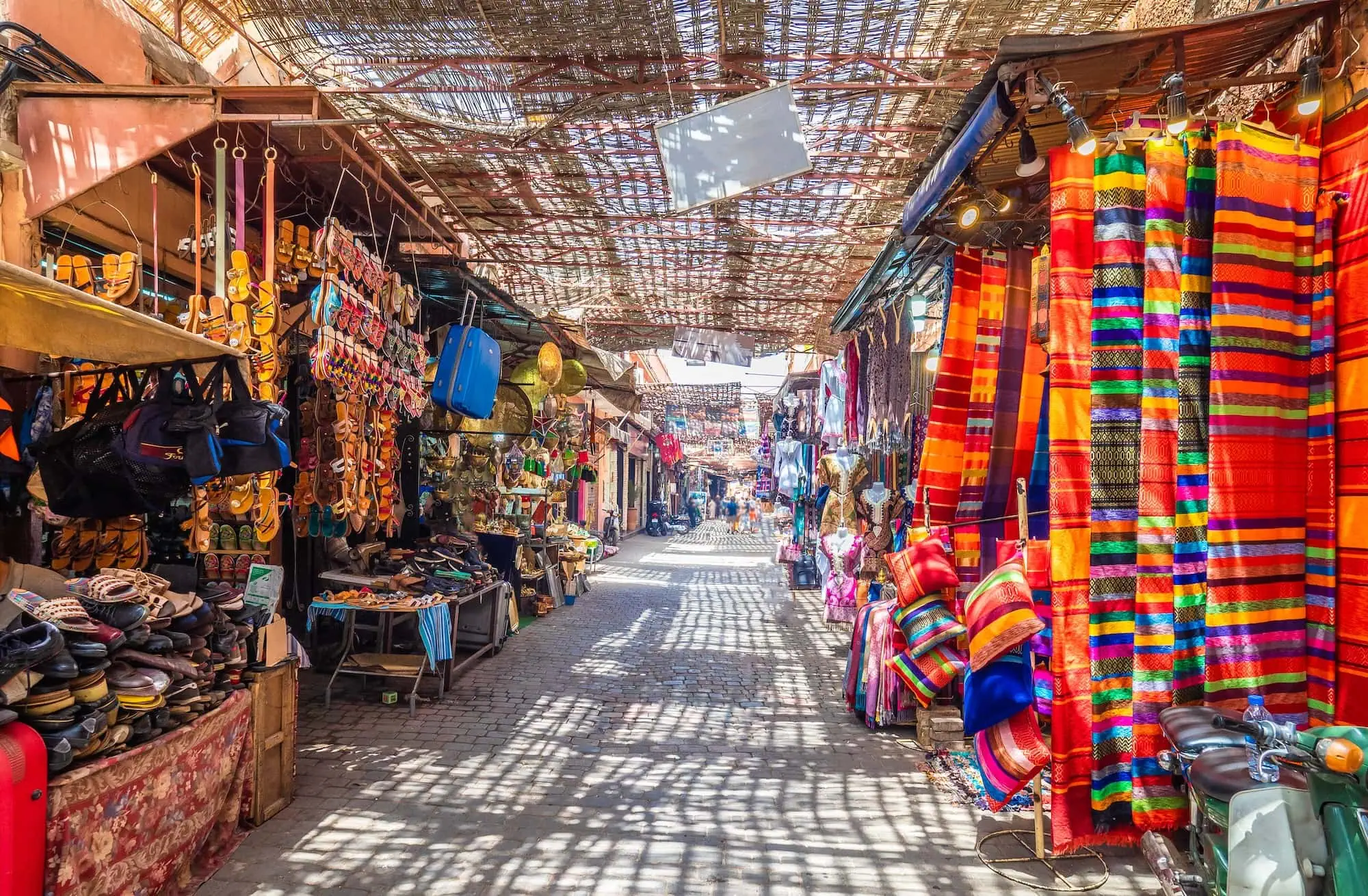
Planning Your Visit to Marrakech
The Saadian Tombs represent just one element of Marrakech’s rich historical tapestry, but their unique preservation story and architectural significance make them essential stops for visitors interested in Islamic art and Moroccan royal history.
Weather considerations affect your visiting experience significantly. Summer temperatures in Marrakech regularly exceed 40°C (104°F), making early morning or late afternoon visits more comfortable. Winter months provide ideal conditions for detailed exploration, with temperatures typically ranging from 15-25°C (59-77°F) during daylight hours.
We recommend allocating a full day for comprehensive Kasbah district exploration, including time for traditional Moroccan lunch in the neighborhood’s authentic restaurants. This pacing allows for unhurried appreciation of architectural details while providing opportunities to understand how these monuments functioned within their broader urban context.
For visitors with limited time in Marrakech, the Saadian Tombs offer concentrated insights into Morocco’s imperial heritage that complement rather than duplicate experiences available at other major attractions. The site’s manageable scale and exceptional preservation make it particularly valuable for understanding the artistic achievements possible when political power, international trade wealth, and sophisticated craftsmanship combine during periods of cultural flowering.
Frequently Asked Questions
Allow 1-2 hours total, including potential waiting time and detailed exploration of all three chambers and outdoor areas.
The narrow entrance corridor and uneven surfaces make wheelchair access challenging, though the site management provides assistance when possible.
Yes, personal photography is permitted, but professional equipment and flash photography require advance permission from site administrators.
Early morning (9:00-10:30 am) or late afternoon (4:00-5:00 pm) typically offer the shortest wait times and better lighting conditions.
Official guides are available at the entrance, though we recommend booking qualified guides in advance for more comprehensive historical context.
The tombs are approximately 1.2 km (0.75 miles) south of the main square, accessible via a 15-minute walk through the Kasbah district.
Modest clothing covering shoulders and knees is recommended out of respect for the religious significance of the site.
Basic facilities are available near the entrance, with more extensive dining and shopping options in the surrounding Kasbah neighborhood.
The mosque is active and accessible to Muslim visitors during non-prayer times, while non-Muslim visitors can view the exterior architecture.
Reduced rates apply for Moroccan students with valid ID, while international children under 12 enter free with adult supervision.
The exceptional preservation due to three centuries of concealment, combined with the integration of international materials and local craftsmanship, creates an unmatched example of Saadian royal art.
Design Your Custom Tour
Explore Egypt & Morocco your way by selecting only the attractions you want to visit