

Bahia Palace – A Journey into Morocco’s Royal Past
Step through the ornate gates and into Morocco’s past.
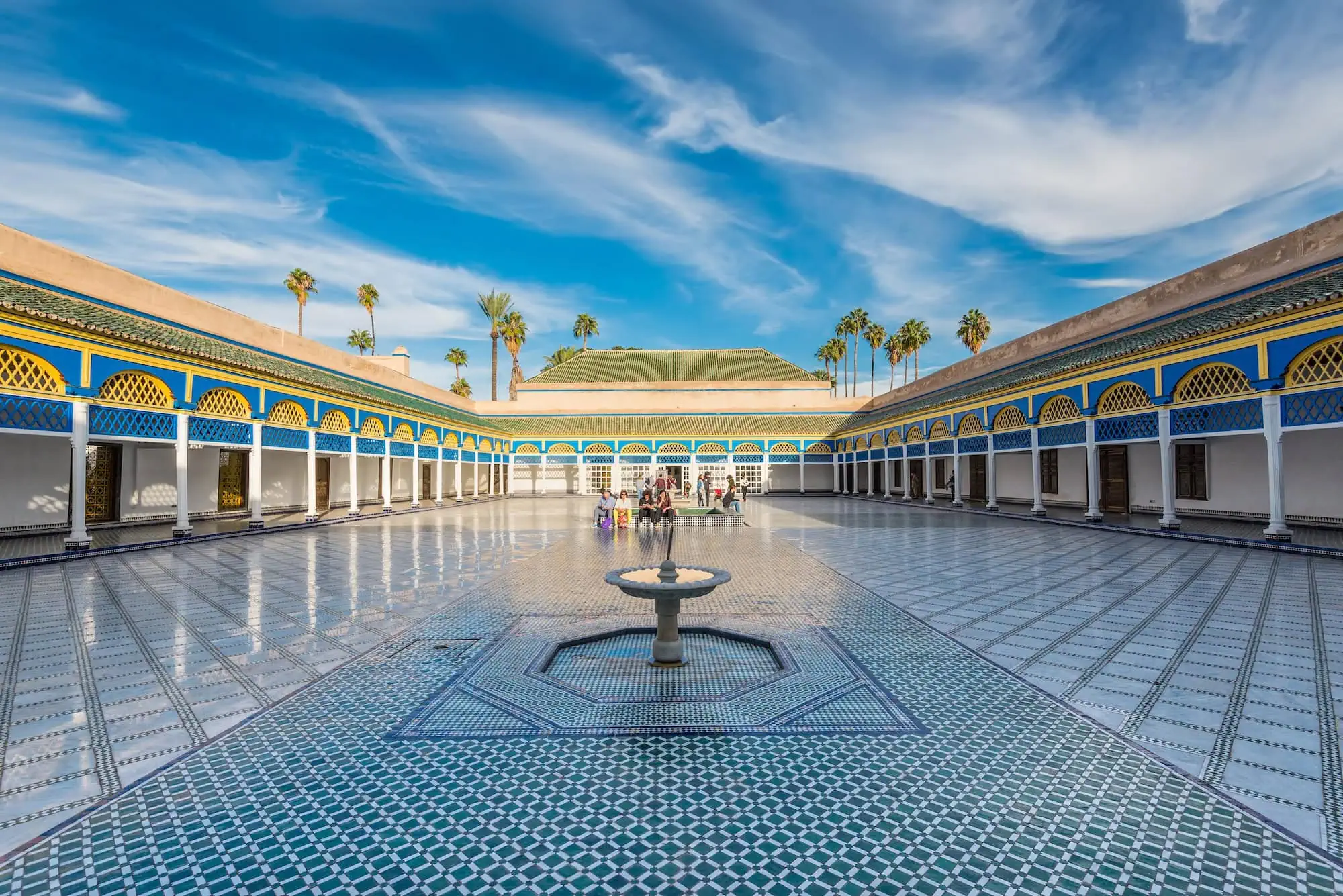
Bahia Palace stands as one of Marrakech’s most extraordinary architectural treasures, offering visitors a glimpse into the opulent lifestyle of 19th-century Moroccan royalty. Built over two generations in the late 1800s, this expansive complex showcases the finest elements of Islamic and Moorish design—from intricately painted wooden ceilings to serene courtyards filled with orange trees and fountains.
Bahia Palace can be included in our Egypt and Morocco Tours, where Morocco’s imperial cities are combined with its cultural highlights and Egypt’s ancient wonders for a rich and immersive travel experience.
The palace’s 150 rooms reflect the vision of Ba Ahmed ibn Musa, the powerful grand vizier who sought to create the most beautiful residence of his time. Every detail reveals a refined sense of craftsmanship and aesthetic balance.
While many visitors focus on Marrakech’s lively Jemaa el-Fnaa, those who explore Bahia Palace discover a more tranquil and atmospheric side of the city—where filtered sunlight and quiet spaces offer a deeper connection to Morocco’s royal past.
The Rich History Behind Morocco’s Royal Palace
Construction began in the 1860s under Si Musa, father of Ba Ahmed ibn Musa, who served as chamberlain to the Sultan. The initial building covered a modest area compared to what visitors see today.
Ba Ahmed inherited both his father’s position and his architectural ambitions when he became grand vizier in 1894. Under the Alawi dynasty, he wielded enormous power and used it to expand the palace into a massive complex worthy of his status. The name “Bahia” means “brilliance” in Arabic, reflecting Ahmed’s vision of creating the most magnificent residence in Morocco.
The Palace’s Golden Era Under Ba Ahmed
During Ba Ahmed’s reign as grand vizier, Bahia Palace became the unofficial center of political power in Morocco. The complex grew to encompass eight hectares (20 acres), with new wings added to accommodate the vizier’s four wives and 24 concubines, each receiving their own quarters within the sprawling estate.
European dignitaries and trade representatives frequently visited these halls, marveling at the blend of traditional Moroccan craftsmanship and innovative architectural techniques. The palace workshops employed hundreds of artisans who specialized in zellige tilework, carved plaster, and painted cedar ceilings.
From Royal Residence to French Colonial Headquarters
After Ba Ahmed’s death in 1900, the palace’s fortunes changed dramatically. The French protectorate, established in 1912, converted portions of the complex into administrative offices and residential quarters for colonial officials. This period saw both preservation efforts and unfortunate modifications to the original design.
During the protectorate era, many of the palace’s most valuable furnishings were relocated or sold. However, the basic architectural structure remained intact, allowing future generations to appreciate the building’s original grandeur.
Architectural Wonders That Define Islamic Design
Walking through Bahia Palace reveals the sophisticated artistry that defines Moroccan Islamic architecture.
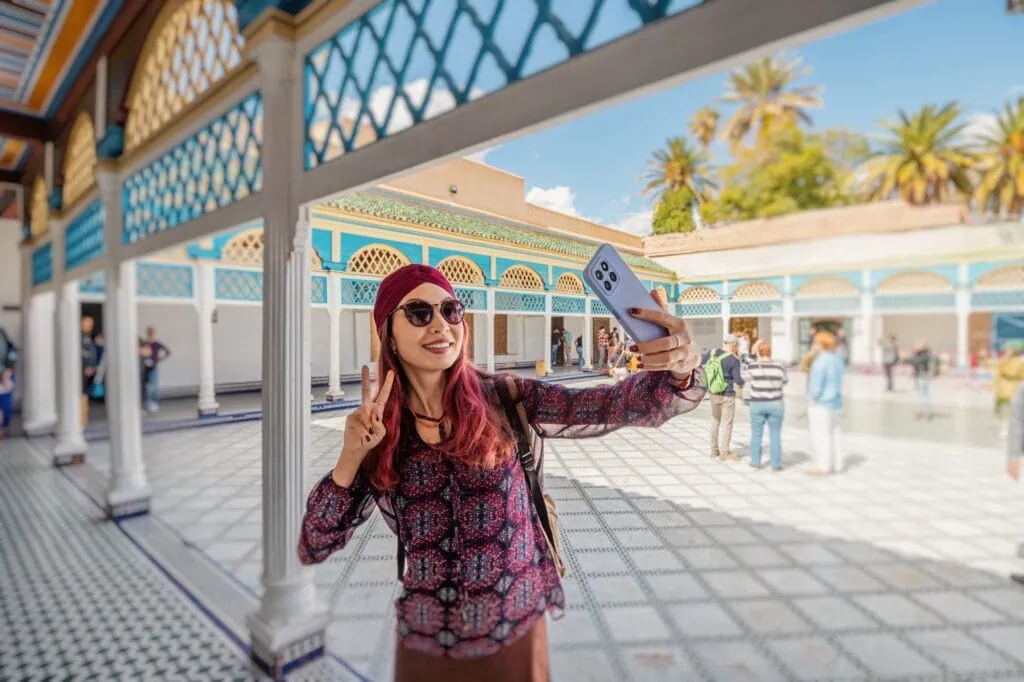
The palace exemplifies traditional Moroccan design principles, where every surface serves as a canvas for geometric patterns, calligraphy, and natural motifs. Master craftsmen from Fez created the intricate stucco work, while artisans from Tetouan contributed their expertise in painted wood techniques. The result is a harmonious blend of regional styles that represents the pinnacle of 19th-century Moroccan decorative arts.
Painted Cedar Ceilings: Masterpieces Overhead
Each room features hand-painted cedar ceilings that took artisans months to complete. These wooden masterpieces combine geometric patterns with Arabic calligraphy and floral motifs inspired by Islamic garden traditions.
The main reception hall showcases the most elaborate ceiling work, where over 3,000 individual wooden pieces fit together without a single nail. Artists used natural pigments including lapis lazuli for deep blues, cinnabar for brilliant reds, and gold leaf for accents that still shimmer in the Moroccan sunlight.
Courtyards and Gardens: Oases of Tranquility
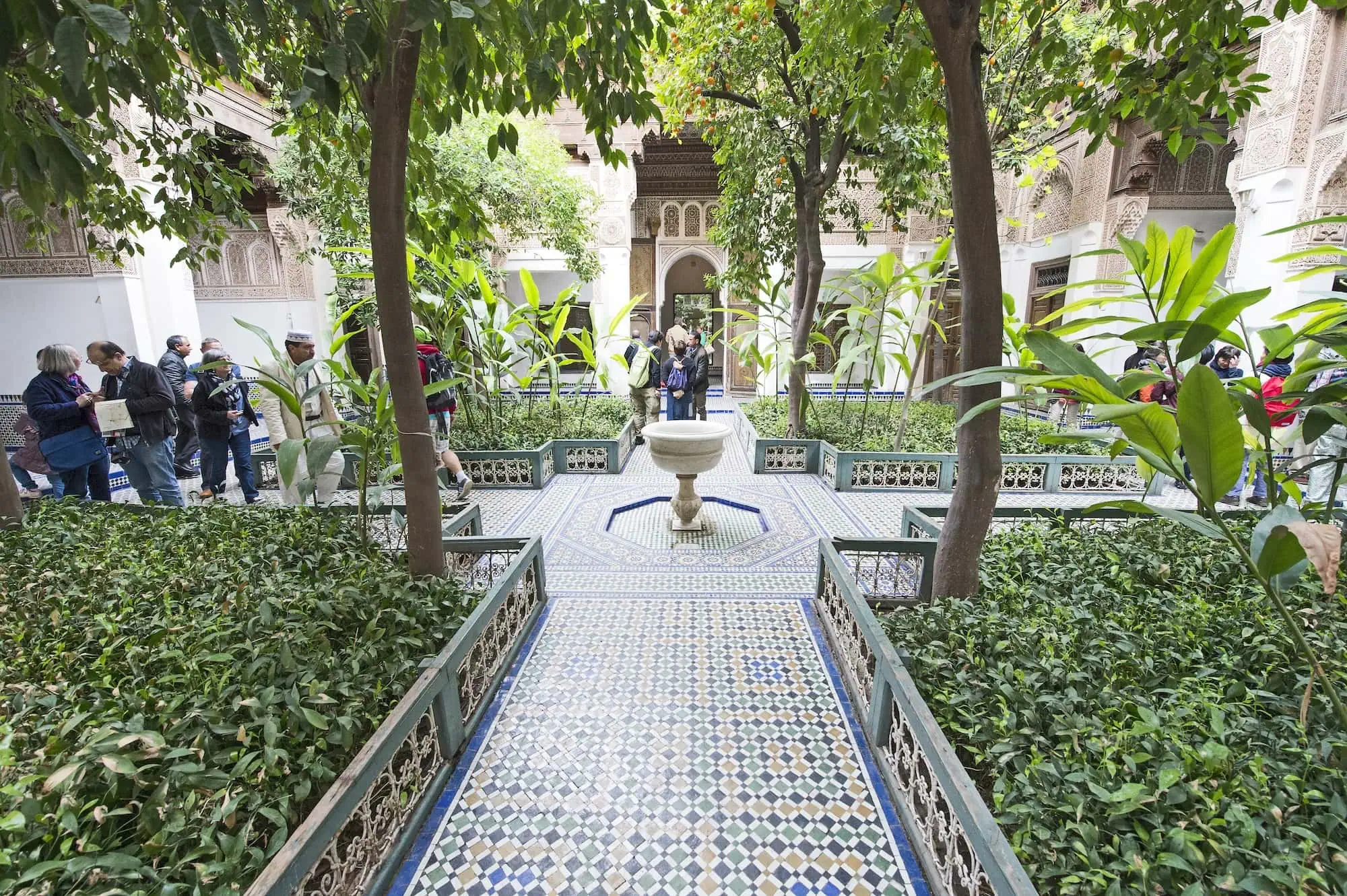
Seven major courtyards break up the palace’s interior spaces, each designed around central fountains and planted with traditional Moroccan garden elements. The largest courtyard, known as the Court of Honor, features a rectangular pool surrounded by orange and cypress trees.
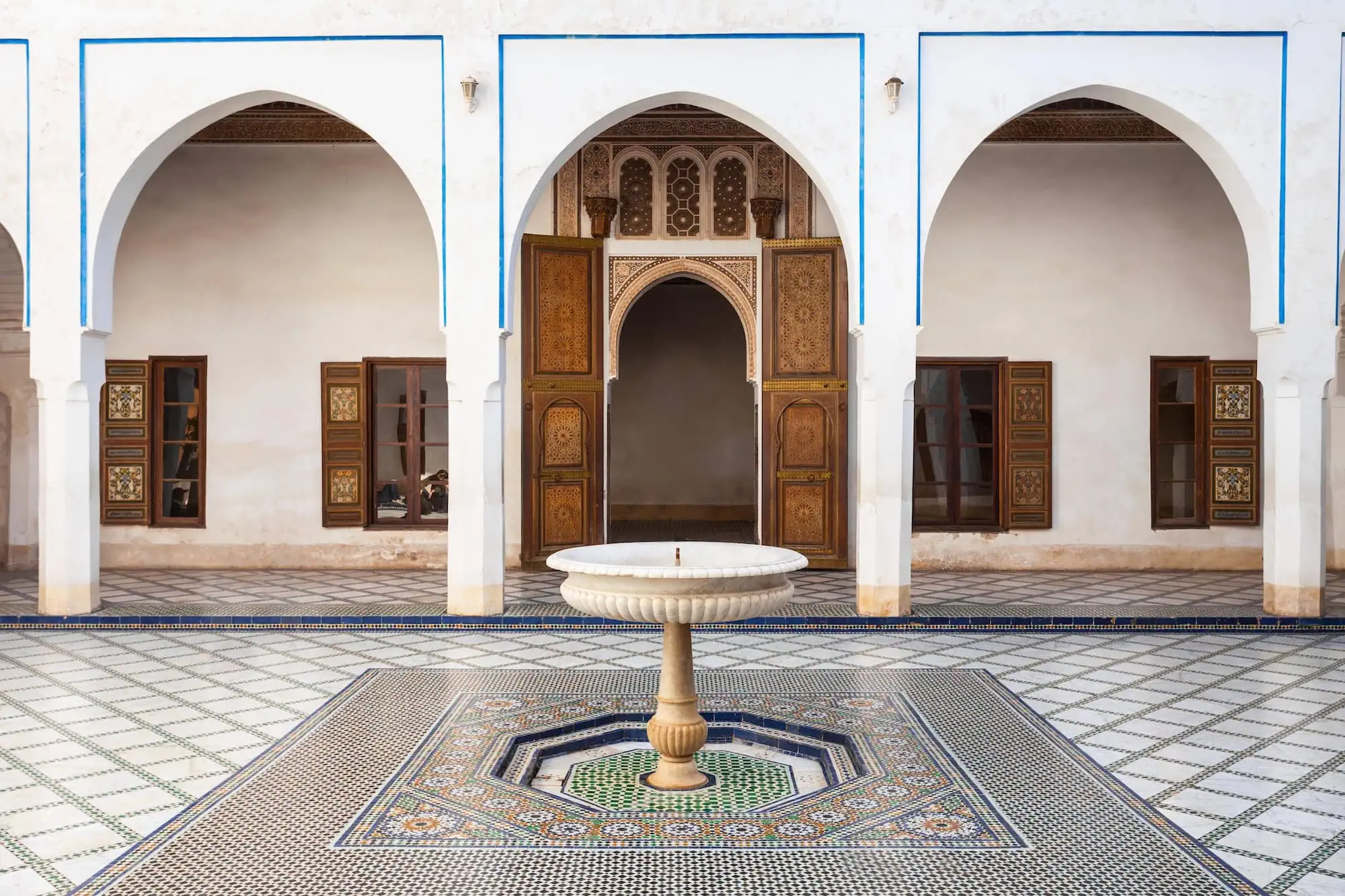
Islamic garden design principles guide these outdoor spaces, creating earthly representations of paradise as described in the Quran. Geometric patterns in the marble flooring mirror the mathematical precision found throughout Islamic art and architecture.
What Awaits You During Your Visit
Modern visitors encounter a carefully preserved monument that balances historical authenticity with practical accessibility.
The palace opens daily from 9:00 am to 5:00 pm (09:00 to 17:00), with entrance fees set at 70 dirhams for adults. Morning visits offer the best lighting for photography, as sunbeams stream through the intricate stone lattice windows known as mashrabiya. The complex includes accessible pathways through most major areas, though some upper level rooms remain off-limits for conservation reasons. Audio guides are available in multiple languages, providing detailed explanations of the architectural techniques and historical significance of each space. During peak tourist seasons from October through April, expect moderate crowds, particularly between 11:00 am and 3:00 pm (11:00 to 15:00).
Photography Tips for Capturing Palace Beauty
The interplay of light and shadow creates exceptional photographic opportunities throughout the day. Early morning visits reward photographers with soft, golden light that enhances the warm tones of the stucco work and wooden details.
Carved plaster screens filter daylight into intricate patterns on marble floors, creating natural compositions that change throughout the day. The painted ceilings photograph best with wide-angle lenses that can capture their full geometric complexity while avoiding the harsh shadows that develop during midday hours.
Navigating the Palace Layout
The palace follows traditional Moroccan residential design, with public and private areas clearly separated. Guest quarters occupy the sections closest to the main entrance, while family living areas extend deeper into the complex.
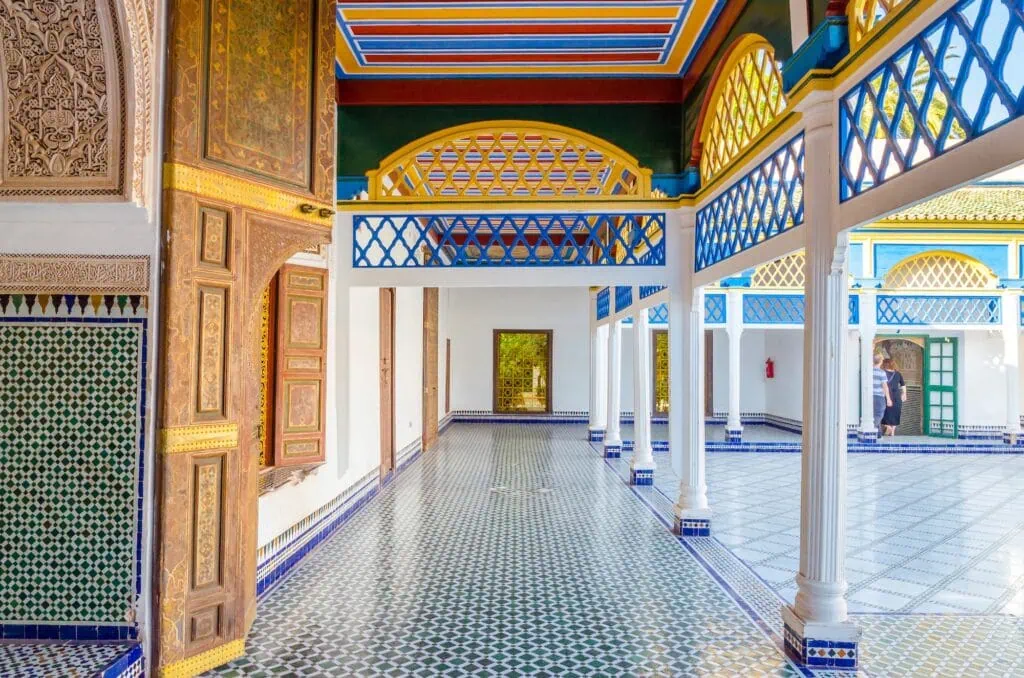
A logical visiting route begins with the main courtyard and reception rooms, then progresses through the smaller family courtyards toward the garden areas. This path follows the same progression that historical visitors would have experienced, moving from formal reception spaces to more intimate family areas.
Experiencing Moroccan Culture Beyond the Palace Walls
Traditional Craftsmanship in the Modern Era
Local artisan workshops near the palace continue many of the same techniques used in its construction. Visitors can observe craftsmen creating zellige tiles, carving cedar wood, and painting traditional geometric patterns using methods passed down through generations.
Combining Your Visit with Other Marrakech Attractions
The palace sits within walking distance of several other significant sites, making it easy to plan a comprehensive cultural day. El Badi Palace ruins offer an interesting contrast, showing how time and abandonment affect similar structures. The Saadian Tombs, discovered in 1917, provide another perspective on royal burial traditions and architectural styles from an earlier period.
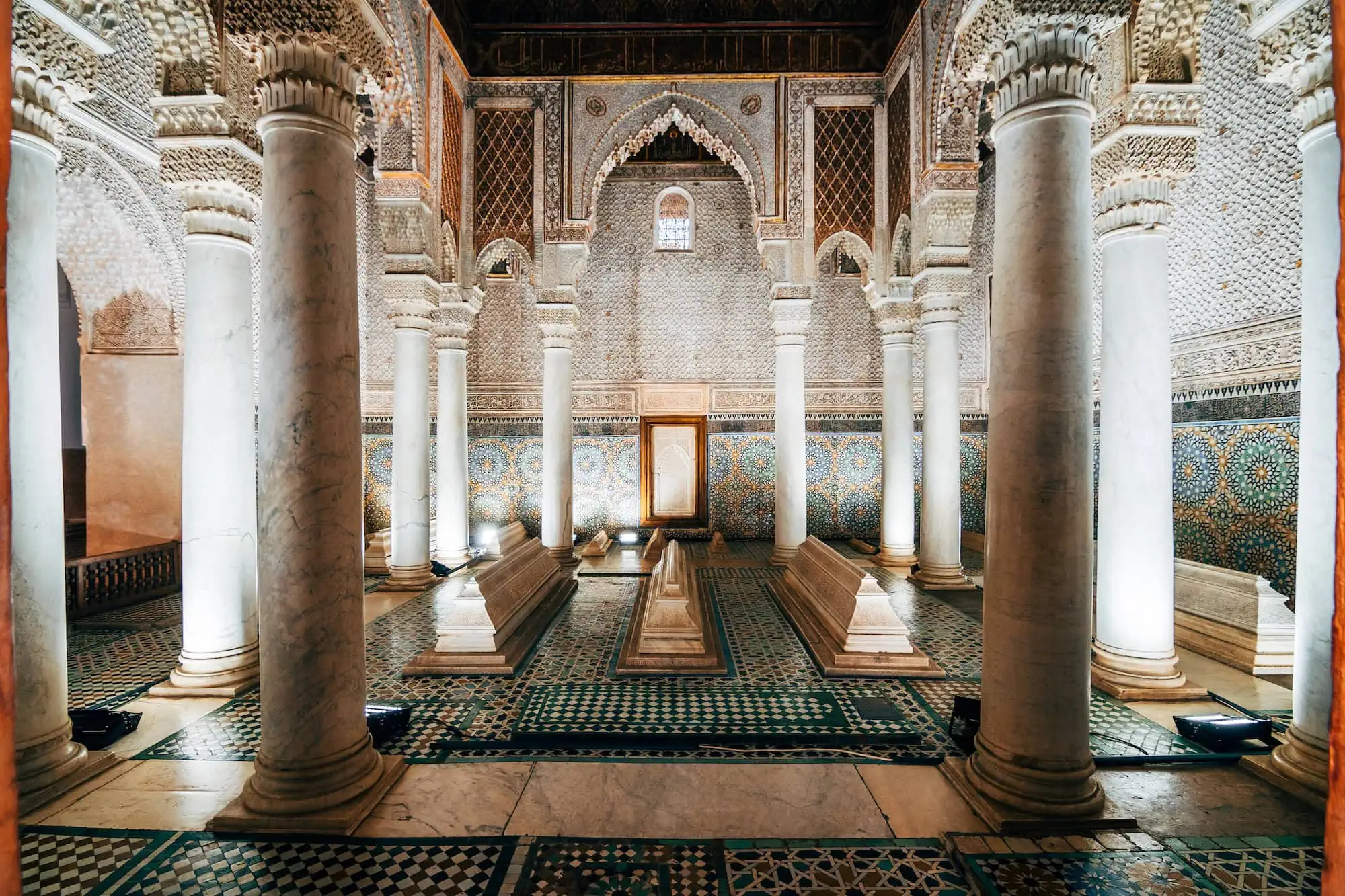
Many visitors combine Bahia Palace with a stroll through the nearby Mellah (Jewish Quarter), where narrow streets showcase a different architectural tradition within Marrakech’s diverse urban fabric.
Planning Your Perfect Palace Experience
Consider timing your visit to avoid the busiest periods while maximizing your experience of this architectural marvel. Weekday mornings typically offer the most peaceful atmosphere for contemplating the intricate details that make Bahia Palace special.
The complex requires approximately 90 minutes for a thorough visit, though photography enthusiasts and architecture lovers often spend considerably longer studying the decorative details. Comfortable walking shoes are essential, as the marble and tile floors can be slippery, particularly in areas near fountains.
Getting There and Practical Considerations
The palace is located in the southern part of Marrakech’s medina, accessible by taxi or a pleasant walk from the main square. Narrow streets leading to the entrance are typical of the old city, so larger tour buses cannot reach the immediate vicinity.
Storage facilities for large bags are not available within the palace, so plan accordingly. The site includes restroom facilities and a small gift shop featuring books about Moroccan architecture and craftsmanship.
Understanding Bahia Palace in Moroccan Context
This remarkable complex represents just one chapter in Morocco’s rich architectural heritage, connecting visitors to centuries of Islamic artistic tradition while showcasing the specific innovations of the late 19th century.
The palace demonstrates how Moroccan architecture evolved during a period of increasing European influence while maintaining its essential Islamic character. Unlike purely traditional designs, Bahia Palace incorporates subtle innovations in space planning and decorative techniques that reflect the cosmopolitan outlook of its creators.
Its preservation serves as a testament to Morocco’s commitment to maintaining its cultural heritage while sharing these treasures with visitors from around the world. Today’s restoration efforts employ traditional techniques and materials, ensuring that future generations can appreciate the same artistic mastery that amazed 19th-century visitors.
We at Egypt Tours Plus appreciate the artistry and cultural significance that makes palaces like Bahia such compelling destinations. Our decades of experience guiding travelers through North Africa’s architectural treasures allows us to understand what makes each site special and how to help visitors connect meaningfully with these incredible spaces.
Frequently Asked Questions
Allow 90 minutes to 2 hours for a thorough exploration, including time for photography and reading informational displays.
Adults pay 70 dirhams for entry, and the palace opens daily from 9:00 am to 5:00 pm (09:00 to 17:00).
Photography is permitted in most areas, though flash photography may be restricted in certain rooms to preserve delicate paintwork.
Audio guides are available in multiple languages, and local guides often offer services at the entrance for more personalized experiences.
Morning hours between 9:00 am and 11:00 am (09:00 to 11:00) provide the best natural lighting for photography and comfortable temperatures.
Bahia Palace is better preserved than El Badi Palace ruins and offers more intact decorative elements, making it ideal for understanding traditional Moroccan design.
Ground floor areas are generally accessible, though some upper levels and certain courtyards may present challenges due to historical construction methods.
Yes, the Saadian Tombs, El Badi Palace, and the Mellah quarter are all within walking distance for a comprehensive cultural day.
Large bags are not permitted, and professional photography equipment may require special permissions from palace administrators.
Modest dress is appropriate, and comfortable shoes with good grip are essential for walking on marble and tile surfaces.
Peak tourist season runs from October through April, with the heaviest crowds between 11:00 am and 3:00 pm (11:00 to 15:00).
Several traditional restaurants and cafes operate within a short walk of the palace entrance, offering authentic Moroccan cuisine and mint tea.
Design Your Custom Tour
Explore Egypt & Morocco your way by selecting only the attractions you want to visit