

Marrakech Museum – Beautiful, Interesting, and Inexpensive
Step into a 19th-century palace where Moroccan craftsmanship meets centuries of cultural legacy.
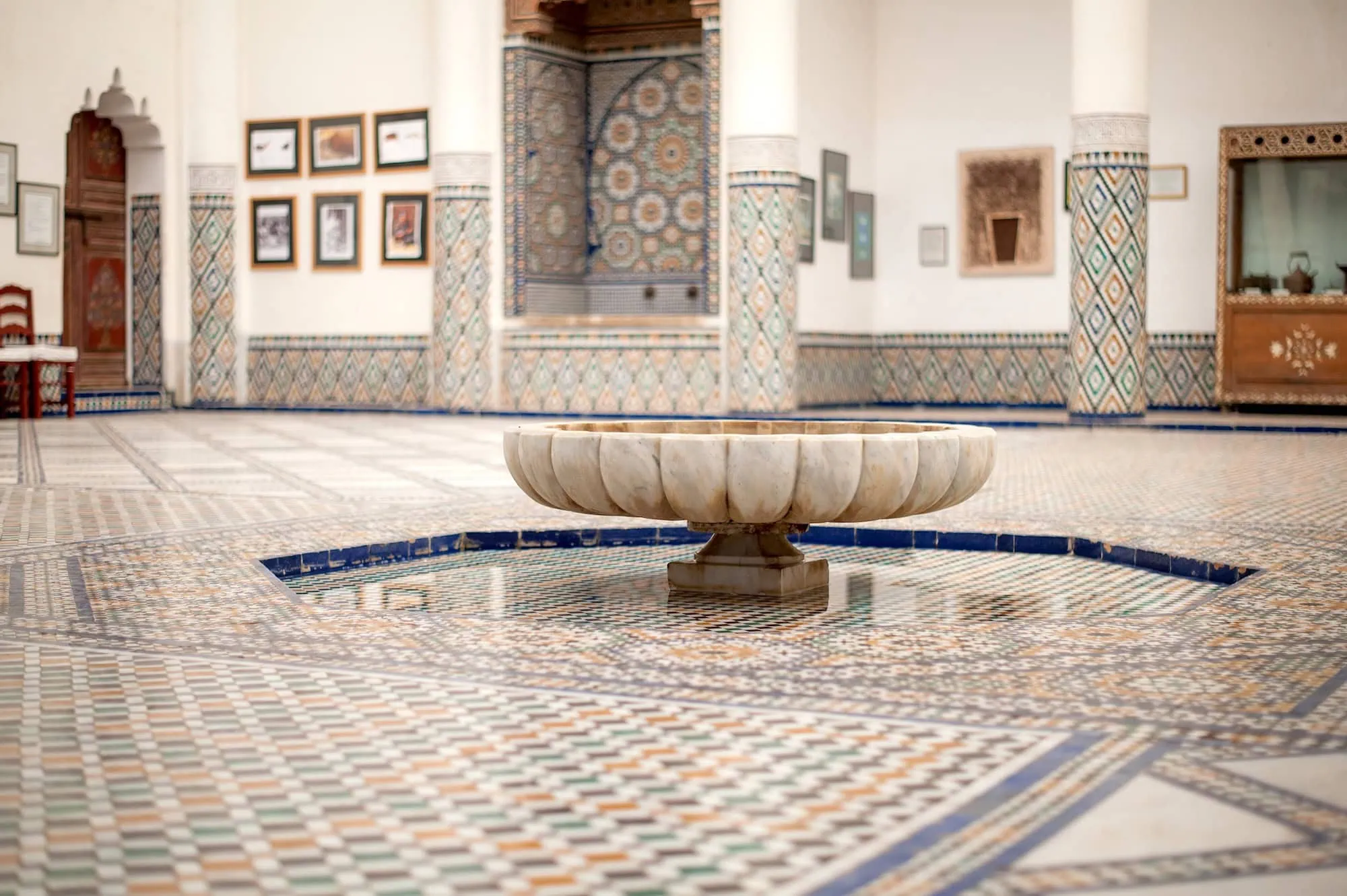
The Museum of Marrakech stands as one of Morocco’s most fascinating cultural institutions, housed within the magnificent Dar Mnebhi Palace. This remarkable venue presents the country’s artistic traditions through collections of Berber jewelry, ceramics, weapons, and textiles.
The Marrakech Museum can be included in our Combined Egypt and Morocco tours, where Morocco’s cultural highlights are combined with its historic cities and Egypt’s ancient wonders for a rich and immersive travel experience.
Located in the heart of the medina near Place Ben Youssef, the museum offers an intimate look into Morocco’s diverse heritage while showcasing the architectural beauty of a traditional palace setting.
Beyond its collections, the museum reflects Morocco’s dedication to preserving its artistic identity. Exploring its halls provides both cultural insight and a deeper appreciation of the country’s historical depth.
Historic Palace Transformed into Cultural Sanctuary
The Museum of Marrakech opened its doors in 1997, marking the successful transformation of Dar Mnebhi Palace into a dedicated cultural space. This 19th-century architectural masterpiece originally served as the residence of Mehdi al-Mnebhi, a prominent figure during the French Protectorate period.
From Political Residence to Educational Institution
The palace’s journey reflects Morocco’s modern political evolution. After Morocco gained independence, the Glaoui family briefly controlled the property before it was converted into a school. The Omar Benjelloun Foundation later acquired the building and invested significantly in its restoration, recognizing its potential as a museum venue.
Architectural Renaissance Through Restoration
Skilled craftsmen worked meticulously to restore the palace’s original splendor during the 1990s renovation project. The restoration focused on preserving authentic Moroccan architectural elements, including intricate zellij tilework and carved cedar woodwork. This careful attention to historical accuracy ensures visitors experience the palace as it appeared during its 19th-century heyday.
Strategic Location in Marrakech’s Cultural Quarter
Positioned near the Ben Youssef Madrasa and other significant monuments, the museum anchors Marrakech’s cultural district. Its coordinates at 31°37′52″N 7°59′12″W place it within easy walking distance of the city’s most important historical sites, making it a natural stop for cultural exploration.
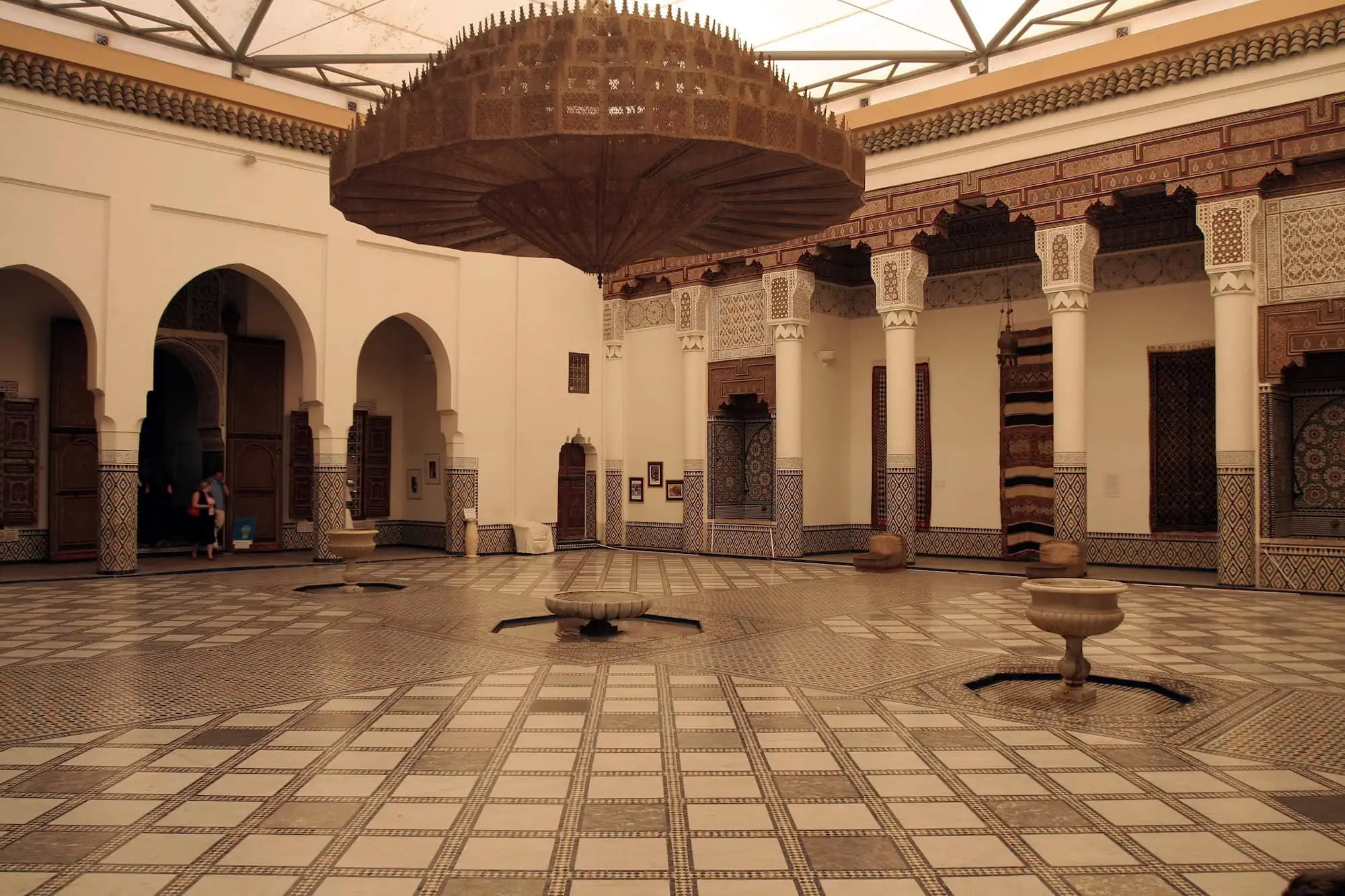
Architectural Splendor of Dar Mnebhi Palace
The palace architecture represents the pinnacle of late 19th and early 20th-century Moroccan design, blending traditional Islamic elements with regional Berber influences. Visitors immediately notice the building’s harmonious proportions and the careful integration of decorative elements throughout its various spaces. The structure demonstrates how Moroccan architects balanced grandeur with intimate human-scale details, creating spaces that feel both impressive and welcoming.
Central Courtyard: Heart of Moroccan Design
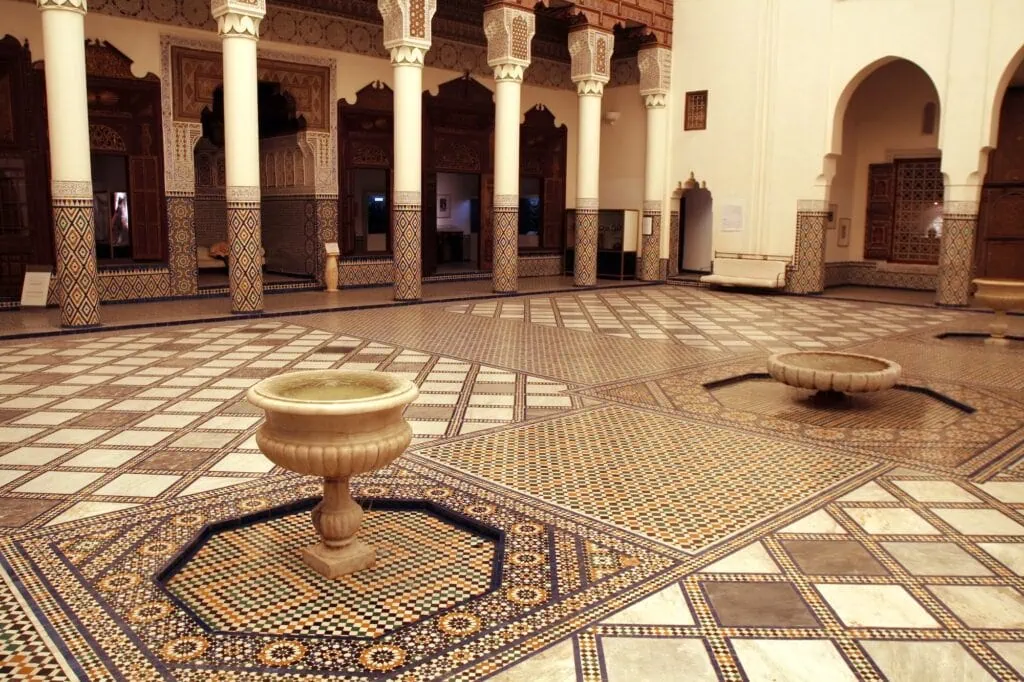
The museum’s central courtyard serves as its architectural centerpiece, featuring a magnificent brass chandelier suspended above the open space. This courtyard follows traditional riad design principles, providing natural light and ventilation while creating a peaceful focal point for the entire complex. The surrounding galleries open onto this central area, allowing visitors to orient themselves easily while appreciating the building’s overall composition.
Masterful Zellij and Cedar Craftsmanship
Intricate zellij tilework covers walls and columns throughout the palace, showcasing the geometric patterns that define Islamic decorative arts. Cedar wood arcades frame doorways and windows, their carved surfaces displaying the exceptional skill of Moroccan woodworkers. These materials work together to create an atmosphere of refined elegance, with natural cedar tones complementing the cool blues and greens of the ceramic tiles.
The painted wood ceilings add another layer of artistic detail, featuring traditional motifs that have been carefully restored to their original vibrancy.
Cultural Collections and Artistic Heritage
The museum houses an impressive array of Moroccan cultural artifacts spanning several centuries and representing diverse regional traditions. Collections include Berber jewelry from the Atlas Mountains, showcasing the sophisticated metalworking techniques of Morocco’s indigenous communities. Ceramic pieces demonstrate the evolution of pottery traditions across different historical periods, while textile displays highlight the country’s rich weaving heritage.
Traditional weapons and armor provide insights into Morocco’s military history, with examples ranging from ceremonial pieces to practical battlefield equipment. Jewish liturgical objects reflect the important role of Jewish communities in Moroccan society, offering visitors a more complete picture of the country’s multicultural heritage. Contemporary art installations complement these historical collections, creating dialogue between traditional and modern Moroccan artistic expression.
Numismatic displays trace Morocco’s monetary evolution, featuring coins that document trade relationships and political changes over time. Regional variations in artistic styles become apparent through side-by-side comparisons of similar objects from different areas of Morocco. The museum’s approach emphasizes education over mere display, with collections arranged to tell stories about Moroccan life, beliefs, and artistic achievements.
Berber Cultural Traditions
Berber artifacts form a substantial portion of the museum’s holdings, representing the indigenous culture that predates Arab influence in Morocco. Jewelry pieces demonstrate sophisticated metalworking techniques, often incorporating symbols and motifs that carry cultural significance beyond their decorative value. These collections help visitors understand the continuity of Berber traditions despite centuries of cultural change and political transformation.
Islamic Art and Moorish Influences
Moorish artistic elements throughout the collections reflect the sophisticated aesthetic traditions that developed in medieval Islamic Spain and North Africa. Calligraphy, geometric patterns, and architectural fragments show how Islamic artistic principles influenced Moroccan creative expression. These pieces connect Morocco to the broader Islamic world while highlighting regional adaptations and innovations.
Practical Information for Museum Visitors
We recommend allowing 1-2 hours for a complete museum visit, though architecture enthusiasts may want additional time to study the building’s decorative details. The admission fee is 60 dirhams for international visitors, with reduced rates available for students and children. Opening hours are typically 9:00 am (09:00) to 6:00 pm (18:00), though these may vary during Ramadan or other religious observances.
The museum is located at Place Ben Youssef, making it easily accessible from other major attractions in the medina. We suggest visiting in the morning when lighting conditions are optimal for photography and crowds are typically smaller. The museum includes a café in the courtyard area, providing a peaceful spot to rest and reflect on your visit.
Combining Museum Visit with Other Attractions
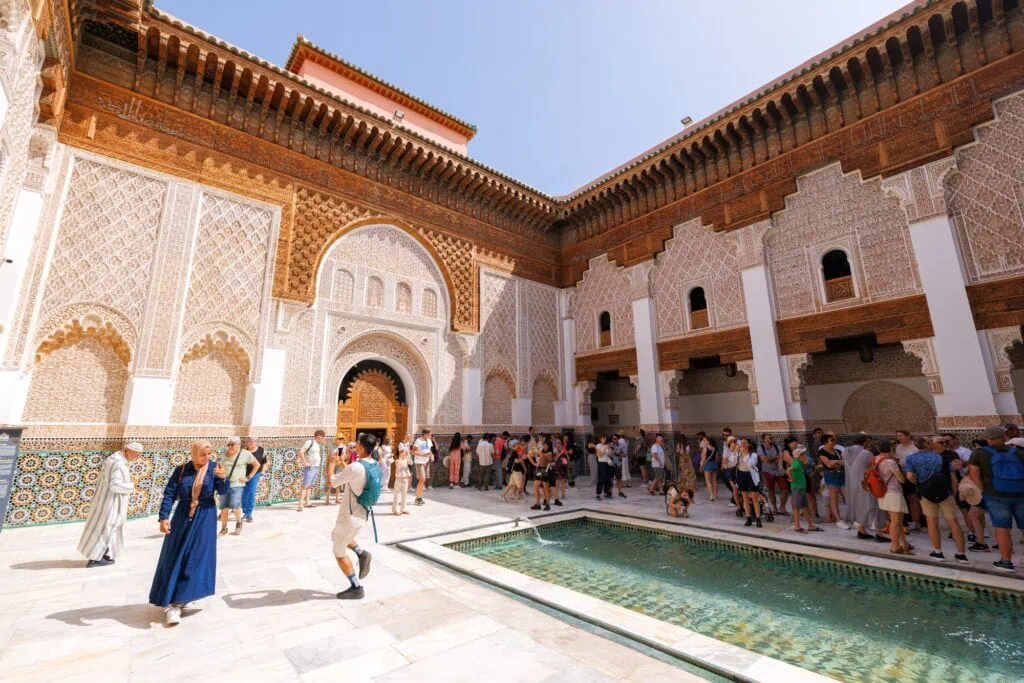
Many visitors incorporate the Museum of Marrakech into larger cultural tours that include the Ben Youssef Madrasa, Bahia Palace, and other significant monuments. These combined itineraries provide comprehensive exposure to different periods of Moroccan architecture and artistic achievement. We offer guided tours that connect these sites thematically, helping visitors understand the relationships between different cultural institutions.
Visitor Experience and Museum Quality
Recent visitor reviews reveal mixed opinions about the museum experience, with most praise focused on the building’s architectural merit rather than the exhibitions themselves. Many travelers express disappointment with the collection displays, noting that signage could be improved and some exhibits appear dated compared to international museum standards.
The palace architecture consistently receives high ratings, with visitors particularly impressed by the central courtyard and its dramatic chandelier. The peaceful atmosphere provides a welcome contrast to the bustling energy of Marrakech’s souks and main squares. However, several reviews suggest that the museum would benefit from modernized presentation techniques and more comprehensive labeling of artifacts.
Professional tour guides can significantly enhance the museum experience by providing historical context and pointing out architectural details that might otherwise go unnoticed. We’ve found that guided visits help visitors appreciate both the building’s significance and the cultural importance of its collections, transforming what might seem like a modest museum into a meaningful cultural encounter.
Morocco’s Museum Landscape and Cultural Context
The Museum of Marrakech represents one element in Morocco’s broader effort to preserve and present its cultural heritage to both domestic and international audiences. Compared to larger institutions like the Mohammed VI Museum of Modern and Contemporary Art in Rabat, the Marrakech Museum offers a more intimate cultural experience focused on traditional arts and crafts.
The museum’s emphasis on regional Moroccan culture complements other cultural institutions throughout the country, each highlighting different aspects of the nation’s diverse heritage. This decentralized approach allows visitors to encounter Morocco’s cultural richness in various contexts, from major urban museums to smaller regional collections.
Understanding the museum within this broader cultural framework helps visitors appreciate its specific contributions to Morocco’s cultural preservation efforts. The focus on traditional crafts and palace architecture provides insights that complement the contemporary art and historical artifacts found in other Moroccan museums.
Frequently Asked Questions
Most visitors spend 1-2 hours exploring the museum’s architecture and collections.
International visitors pay 60 dirhams for entrance with student discounts available.
The museum appeals primarily to visitors interested in traditional Moroccan architecture.
The museum is situated at Place Ben Youssef in Marrakech’s medina.
Photography policies vary but courtyard architecture is generally permitted for photos.
Standard hours are typically 9:00 am to 6:00 pm daily.
We provide comprehensive cultural tours including the museum with expert commentary.
The museum features a café in the palace courtyard for refreshments.
Modest clothing is recommended with comfortable walking shoes for exploring courtyards.
The museum focuses on cultural artifacts while Bahia emphasizes architectural grandeur.
The central medina location makes it easy to visit other cultural sites.
Design Your Custom Tour
Explore Egypt & Morocco your way by selecting only the attractions you want to visit