

Al-Hakim Mosque – A Built, Neglected and Revived Masterpiece
Standing magnificently in the heart of historic Cairo for over a thousand years. The Al-Hakim Mosque represents one of Egypt’s most significant architectural achievements, combining the grandeur of the Fatimid dynasty with centuries of complex history.
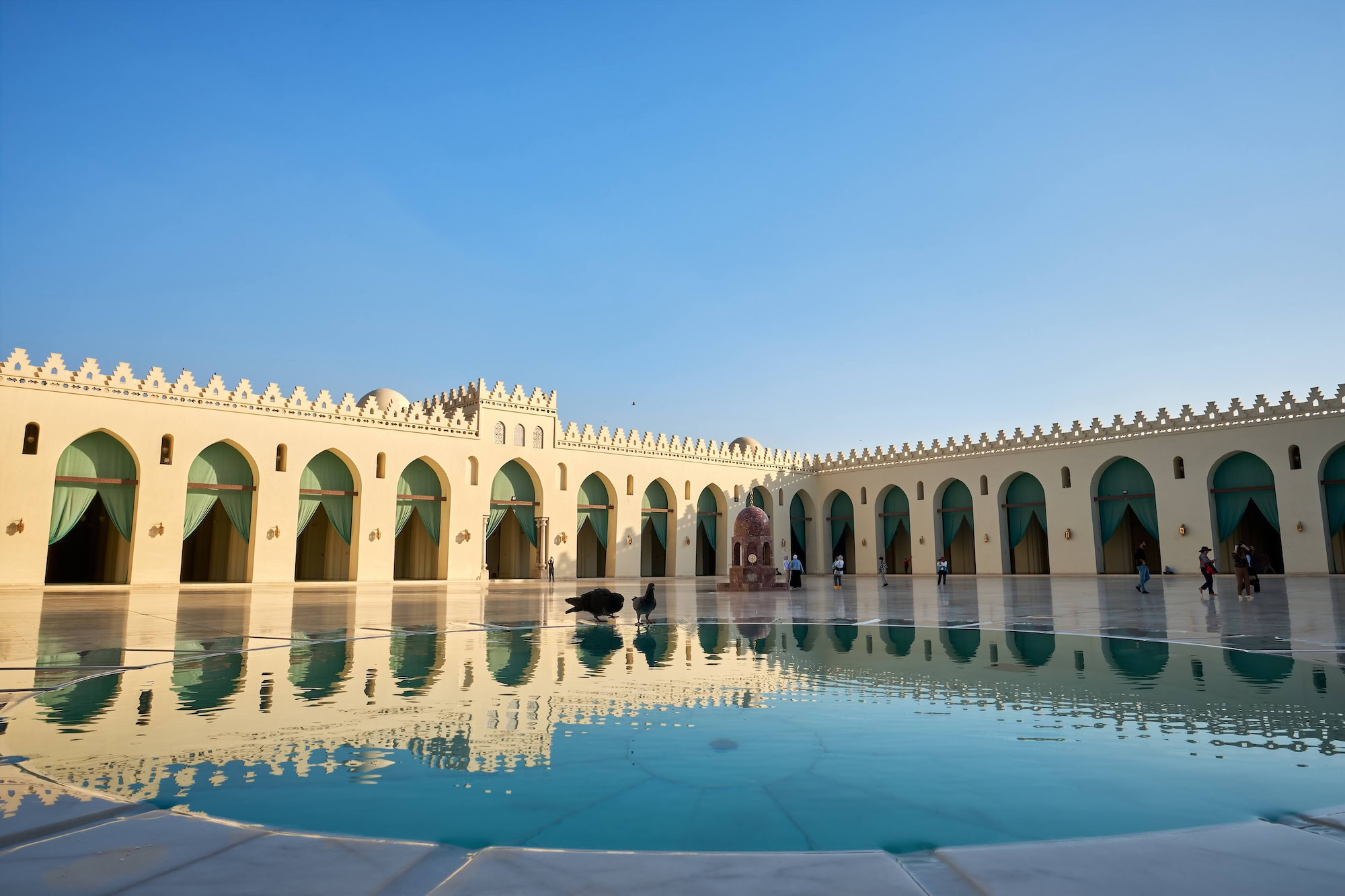
This extraordinary structure, initiated by Caliph al-Aziz Billah in 990 CE and completed under the patronage of al-Hakim bi-Amr Allah in 1013, holds the distinction of being Cairo’s fourth oldest mosque and the second largest after the renowned Ibn Tulun Mosque. Our decades of expertise guiding visitors through Egypt’s Islamic heritage has shown us that few structures capture the evolution of Islamic architecture as powerfully as this remarkable building.
Table of Contents
Construction and Early Fatimid Vision
Twenty-three years of careful planning and construction shaped this architectural marvel. The initial vision belonged to Caliph al-Aziz Billah, who recognized the need for a grand congregational mosque that would reflect the growing power and sophistication of Fatimid rule in Egypt. Construction began in 990 CE using innovative building techniques that combined traditional brick construction with elaborate stone facades.
The building process itself reveals the ambitious scope of Fatimid architectural planning. Workers laid the foundation using carefully selected materials transported from quarries throughout Egypt. Master craftsmen from across the Islamic world contributed their expertise, creating decorative elements that would influence mosque design for generations.
Architectural Innovation Under Al-Hakim bi-Amr Allah
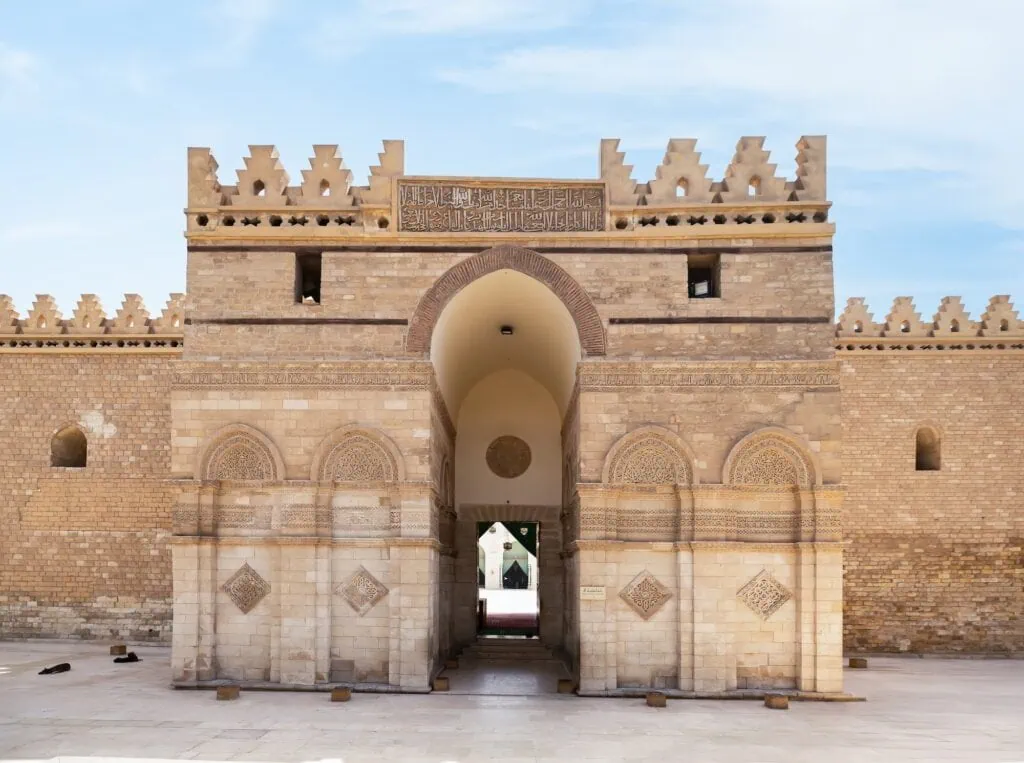
Al-Hakim bi-Amr Allah’s completion of the project in 1013 introduced several groundbreaking features. The mosque became one of the earliest examples in Egypt to feature projecting entrances, a design element that would become characteristic of later Islamic architecture throughout the region. These monumental portals created a dramatic approach to the sacred space within.
The structural layout follows a rectangular plan measuring approximately 120.78 meters by 113.01 meters. The central courtyard, known as the sahn, is surrounded by elegant arcades that create a sense of rhythmic harmony throughout the space. This hypostyle prayer hall arrangement maximized capacity while maintaining the intimate atmosphere essential for congregational worship.
Materials and Craftsmanship
Fatimid builders employed sophisticated construction techniques that ensured the mosque’s survival through centuries of use and natural disasters. The primary structure consists of brick construction reinforced with stone facades on the exterior walls. The towering minarets showcase the period’s mastery of stone carving, featuring intricate geometric patterns that demonstrate the mathematical precision valued in Islamic art.
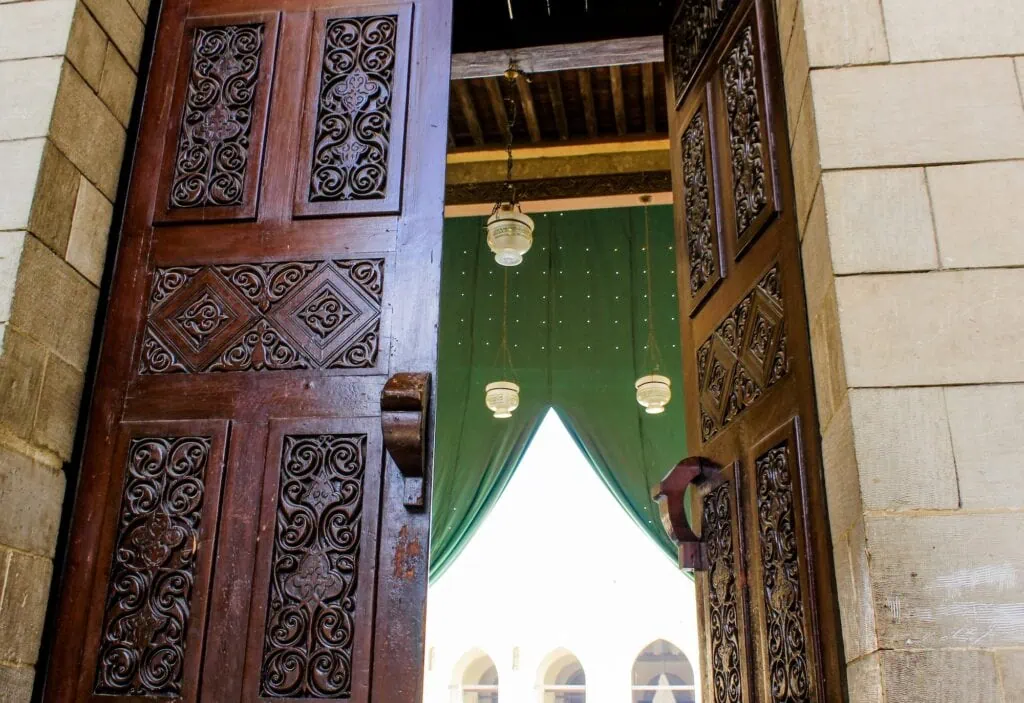
Rich decorative elements throughout the structure include extensive use of Kufic script, which creates both spiritual meaning and visual beauty. These inscriptions, carved in relief on stone surfaces, represent some of the finest examples of early Islamic calligraphy preserved in Egypt.
Architectural Features and Design Elements
The mosque’s sophisticated design reflects influences from across the medieval Islamic world, particularly from North Africa and Andalusia. This cross-cultural architectural exchange occurred during the height of Fatimid power, when diplomatic and trade connections facilitated the movement of artistic ideas throughout the Mediterranean Islamic world.
Master architects incorporated design elements first developed at the Mahdiya mosque in Tunisia, adapting these concepts to suit the specific requirements of Cairo’s urban environment. The result is a structure that feels both familiar within the broader tradition of Islamic architecture and uniquely suited to its Egyptian context.
The entrance portals deserve particular attention for their innovative design. These projecting structures create a transitional space between the bustling street life of medieval Cairo and the contemplative atmosphere within the mosque. Each portal features distinctive architectural details that announce the sacred nature of the space beyond.
Interior Spatial Organization
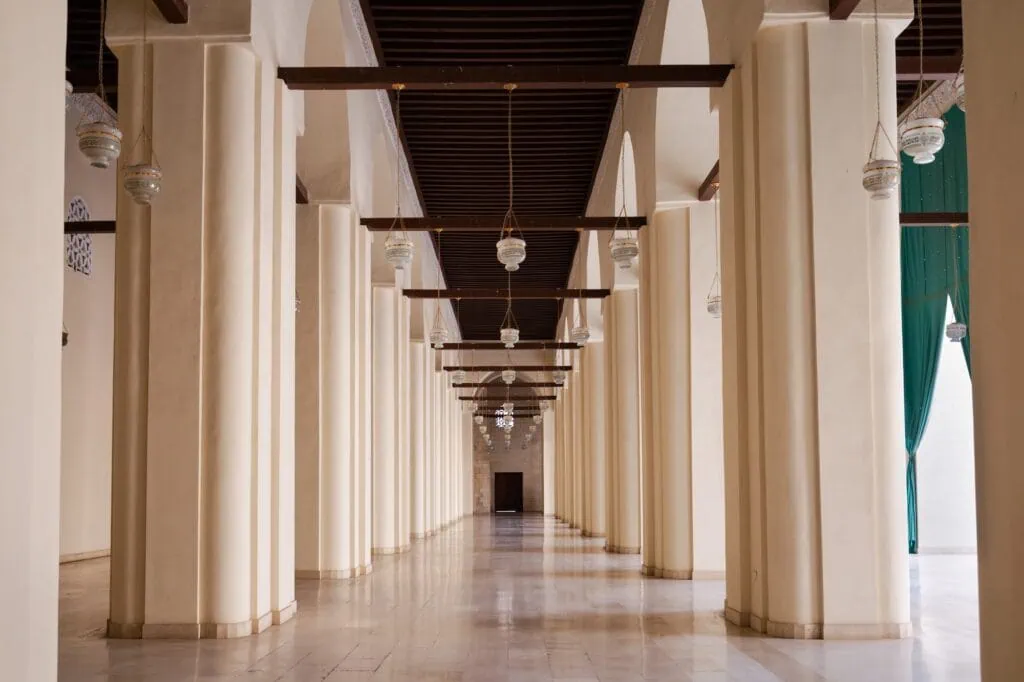
Inside, visitors encounter a carefully orchestrated sequence of spaces designed to facilitate both individual prayer and large congregational gatherings. The prayer hall’s hypostyle arrangement creates forest-like columns that support the roof while allowing natural light to filter throughout the interior. This lighting creates constantly changing patterns that enhance the spiritual atmosphere.
The mihrab, indicating the direction of Mecca, features exceptional decorative work that represents the pinnacle of Fatimid artistic achievement. Surrounding this focal point, the prayer hall accommodates hundreds of worshippers while maintaining acoustic properties that ensure the imam’s voice reaches every corner of the space.
Historical Transformations and Uses
Beyond its religious function, the Al-Hakim Mosque has served numerous purposes throughout its millennium-long history. During periods when Islamic rule in Egypt faced challenges, the building was repurposed as a fortress, prison, and stable. These alternative uses, while sometimes damaging to the original decoration, demonstrate the structure’s robust construction and adaptability.
Under Napoleon’s campaign in Egypt, French forces used the mosque as a military facility. Later, during various periods of political instability, local authorities converted portions of the building into workshops and storage areas. Textile workers operated within the prayer hall for several decades, fundamentally altering the interior atmosphere.
The building also functioned as a museum and school at different times. Each of these uses left traces on the physical structure while adding layers to its complex historical narrative. These transformations reflect broader patterns of cultural change in Cairo over the centuries.
Periods of Neglect and Damage
Several natural disasters tested the mosque’s structural integrity over the centuries. The earthquake of 1302 caused significant damage to the minarets and portions of the roof system. Sultan Qalawun initiated major repairs during this period, though these were completed with materials and techniques that differed from the original Fatimid construction.
Extended periods of minimal maintenance resulted in deterioration of decorative elements and structural components. By the mid-20th century, portions of the roof had collapsed, and many of the intricate stone carvings showed signs of serious weathering. The building’s condition reached a critical point that threatened its long-term survival.
Modern Restoration and Revival
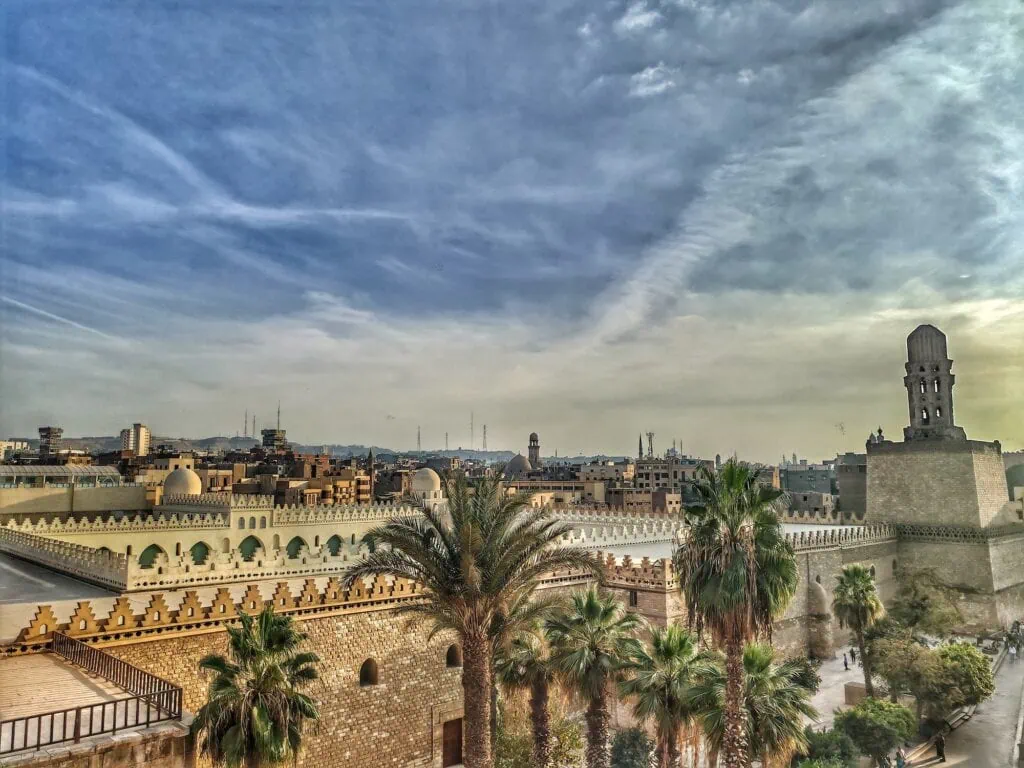
The 1980 restoration completed by the Dawoodi Bohras marked a turning point in the mosque’s preservation. This extensive project, overseen by Mohammed Burhanuddin, involved careful research into the building’s original appearance and the use of traditional materials wherever possible.
Restoration work included comprehensive repairs to the structural elements, cleaning and conservation of stone surfaces, and replacement of damaged decorative features. The project team consulted historical sources and employed archaeological techniques to ensure accuracy in reconstructed elements.
Contemporary Controversies and Debates
The restoration process sparked debates within the architectural conservation community about appropriate approaches to historic Islamic buildings. Some scholars praised the thoroughness of the work and the commitment to returning the mosque to active use. Others raised concerns about the extensive use of new materials, particularly marble elements and gold trim that may not reflect the original Fatimid aesthetic.
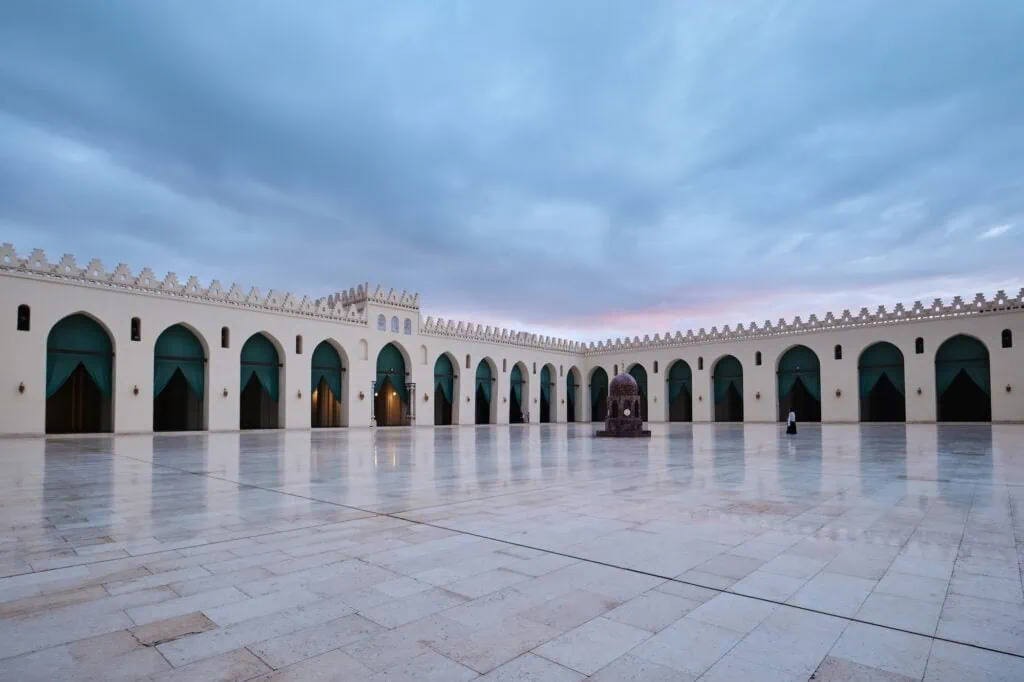
These discussions reflect broader questions about how modern communities should approach the preservation of medieval Islamic architecture. The balance between maintaining historical authenticity and ensuring structural safety for contemporary use requires careful consideration of multiple factors.
Current management practices emphasize accessibility while preserving the building’s religious function. The mosque remains an active place of worship, with daily prayers conducted according to Islamic tradition. Visitors from around the world can explore the structure free of charge, making it one of Cairo’s most accessible historic monuments.
Cultural Heritage and Global Significance
Recognition of the Al-Hakim Mosque’s outstanding universal value has grown significantly in recent decades. The building meets multiple criteria for cultural significance, including its association with major historical events and its representation of exceptional artistic achievement during the Fatimid period.
Scholarly research continues to reveal new aspects of the mosque’s historical and architectural importance. Recent studies have examined the building’s role in the development of Islamic architectural typologies and its influence on later construction throughout Egypt and the broader Islamic world.
Academic Research and Documentation
Multiple research institutions have contributed to comprehensive documentation of the mosque’s architectural features and historical significance. Studies by architectural historians including K.A.C. Creswell and Jonathan Bloom have established the building’s place within the broader context of Islamic art and architecture.
Technical documentation efforts have created precise measurements and detailed analysis of structural systems. This research provides essential information for ongoing conservation efforts while contributing to broader understanding of medieval Islamic building techniques.
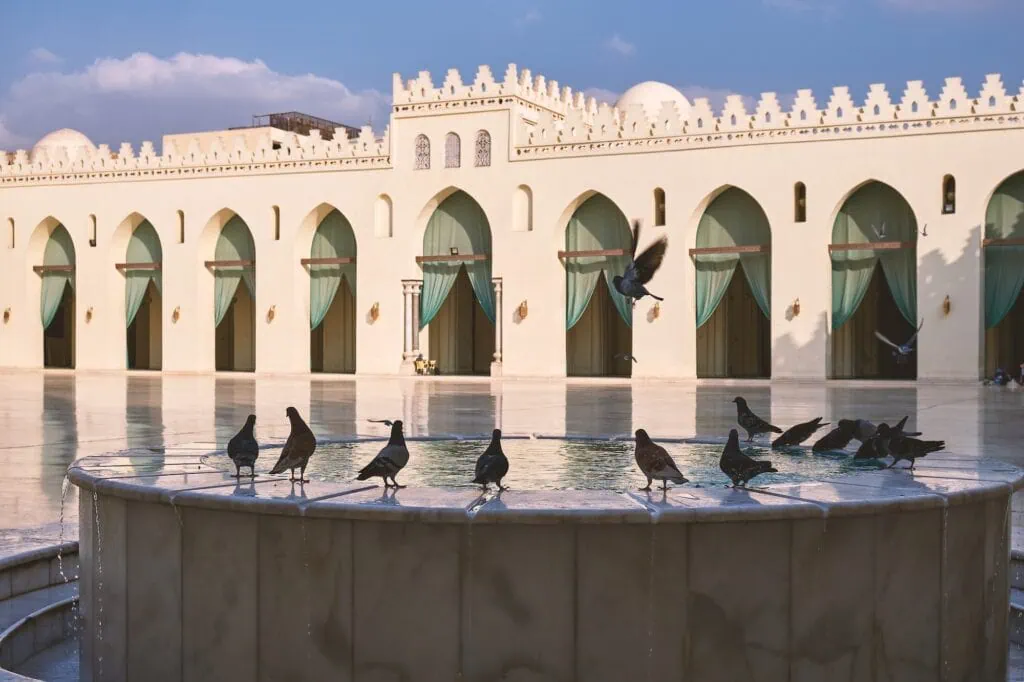
The mosque’s inclusion in academic curricula worldwide reflects its importance as a case study in Islamic architectural history. Universities across multiple continents use the Al-Hakim Mosque as an example when teaching about Fatimid cultural achievements and the evolution of mosque design.
Visiting the Al-Hakim Mosque Today
We recommend approaching your visit with an understanding of the mosque’s dual function as both historic monument and active religious site. The building opens daily for visitors, with no admission fees required. However, appropriate dress and respectful behavior are essential when entering any functioning mosque.
The location at the northern end of al-Muizz Street places the mosque within easy reach of other significant Islamic monuments. This historic thoroughfare, part of the al-Gamaliya district, contains one of the world’s largest collections of Islamic architectural heritage. Our guided tours often include the Al-Hakim Mosque as part of comprehensive explorations of Cairo’s Islamic heritage.
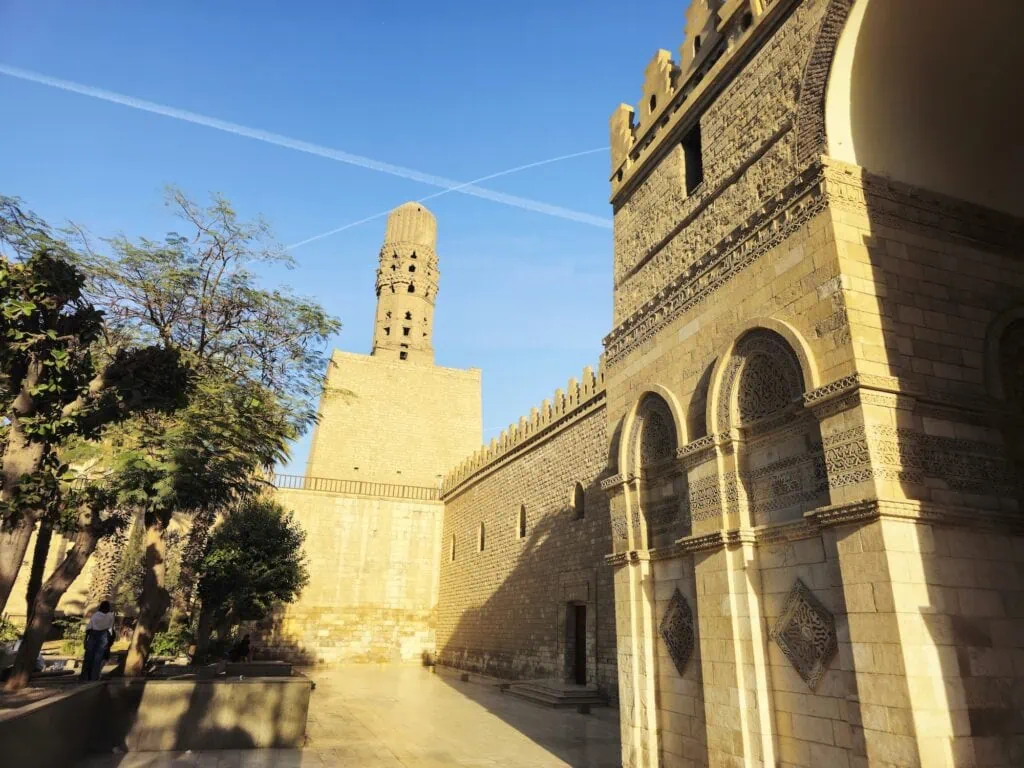
Early morning visits often provide the best experience for photography and contemplative exploration. The changing light throughout the day creates different atmospheric conditions within the prayer hall, offering visitors multiple perspectives on the architectural features.
Transportation to the mosque is straightforward from central Cairo, with various options available depending on your starting location and preferences. The site’s proximity to other major Cairo attractions makes it an excellent addition to broader explorations of historic Cairo.
Practical Considerations for Visitors
Photography is generally permitted in most areas of the mosque, though visitors should always confirm current policies with site attendants. Flash photography may be restricted to protect historic decorative elements from light damage.
Guided visits can significantly enhance understanding of the mosque’s historical significance and architectural details. Our expert guides provide context that helps visitors appreciate the sophisticated planning and execution that created this remarkable structure. Their knowledge of Fatimid history and Islamic architectural principles adds depth to the visual experience of exploring the building.
The mosque’s accessibility features accommodate visitors with mobility limitations, though some areas may present challenges due to the historic nature of the construction. Advance consultation can help ensure the best possible experience for all visitors.
When visiting Al-Hakim Mosque, several notable attractions are located within close proximity, making it easy to enrich your itinerary. Al-Muizz Street, one of Cairo’s oldest and most architecturally significant streets, lies just steps away and offers a dense concentration of Islamic monuments, including madrassas, sabils, and historic residences. Visitors can also explore Bab al-Futuh and Bab al-Nasr, two well-preserved Fatimid gates that once formed part of the city’s defensive walls.
For those interested in a broader cultural context, the nearby Khan el-Khalili bazaar provides a vibrant contrast with its traditional markets, artisan workshops, and cafés, offering insight into Cairo’s living heritage. Combining Al-Hakim Mosque with these surrounding sites creates a cohesive and immersive Old Cairo experience.
Step Into The Timeless Spirit Of Al-Hakim Mosque
Al-Hakim Mosque stands as a powerful reminder of Cairo’s layered history—where architecture, faith, and centuries of stories come together in one remarkable space. With Egypt Tours Plus, we integrate meaningful sites like this into a wider journey through Egypt, blending iconic highlights with authentic cultural depth.
Your trip is entirely your own—choose your travel dates, set your pace, and handpick the experiences and route that fit your vision. We handle the logistics with expert care, ensuring a smooth, private, and comfortable journey from start to finish.
Frequently Asked Questions
Al-Hakim Mosque was built between 990 CE and 1013 CE during the Fatimid period, making it one of Cairo’s oldest surviving congregational mosques. Construction began under Caliph al-Aziz Billah and was completed by his son, Caliph al-Hakim bi-Amr Allah, after whom the mosque is named. The 23-year building period reflects the monument’s immense scale and political importance within the Fatimid capital. Today, it remains one of the most significant architectural landmarks on historic al-Muizz Street.
Al-Hakim Mosque stands at the northern end of al-Muizz Street beside Bab al-Futuh in Cairo’s historic al-Gamaliya district. The mosque occupies a prominent position within the walled Fatimid city founded in 969 CE and serves as a key stop on most Islamic Cairo itineraries. Visitors can easily combine it with nearby monuments, traditional markets, and medieval gates within walking distance. Its location makes it one of the most accessible major Fatimid landmarks in Cairo.
No, entry to Al-Hakim Mosque is generally free for visitors. As an active place of worship and an important historical monument, the mosque welcomes both worshippers and tourists without a standard admission charge. Visitors should still follow mosque etiquette, including modest dress and respectful behavior during prayer times. Because regulations can occasionally change during restoration projects or special events, it is wise to verify current access conditions before visiting.
Al-Hakim Mosque is architecturally significant because it preserves some of the finest surviving examples of early Fatimid religious architecture in Egypt. Completed in 1013 CE, it features monumental stone facades, one of Cairo’s earliest projecting entrances, and distinctive minaret bases incorporated into defensive towers. Architectural historians often cite the mosque as a bridge between North African Fatimid traditions and later Cairene Islamic styles. Its design influenced mosque construction in Cairo for centuries afterward.
Yes, non-Muslims are welcome to visit Al-Hakim Mosque outside of prayer times, provided they dress modestly and behave respectfully. As both an active religious site and an important historical monument, the mosque receives visitors from around the world interested in Islamic history and architecture. Covered shoulders, long pants or skirts, and appropriate conduct are expected. Visiting during quieter morning hours often provides the best opportunity to appreciate the building’s architectural details.
Al-Hakim Mosque measures approximately 120.78 meters by 113.01 meters, making it one of the largest historic mosques in Cairo. Covering more than 13,000 square meters, the complex ranks among the grandest surviving Fatimid monuments in Egypt. Its vast courtyard, prayer hall, and imposing exterior walls demonstrate the political and religious ambitions of the Fatimid Caliphate during the late 10th and early 11th centuries. The scale remains impressive even by modern standards.
During the late 20th century, the Dawoodi Bohra community carried out a major restoration that returned Al-Hakim Mosque to active religious use after centuries of alteration and deterioration. The project repaired structural damage, restored decorative features, and revived many architectural elements that had been obscured over time. Although some restoration methods remain debated among conservation specialists, the work preserved a monument dating to 1013 CE and ensured its continued use as both a mosque and heritage site.
Al-Hakim Mosque sits on al-Muizz Street, one of the richest concentrations of medieval Islamic architecture anywhere in the world. Within a short walk, visitors can explore Bab al-Futuh, Bab al-Nasr, Sultan Qalawun’s complex, Al-Aqmar Mosque, and numerous Mamluk and Fatimid monuments. Khan el-Khalili Bazaar is also nearby, making it easy to combine religious, architectural, and cultural attractions in a single day. Plan at least two to three hours to explore the surrounding district properly.
Al-Hakim bi-Amr Allah was the sixth Fatimid caliph and the ruler who completed the mosque in 1013 CE. He governed Egypt from 996 to 1021 CE and remains one of the most controversial figures in Islamic history due to his unconventional policies and mysterious disappearance. Despite ongoing debate about his reign, his name remains permanently associated with one of Cairo’s most important Fatimid monuments. The mosque serves as a lasting reminder of the Fatimid dynasty’s influence in Egypt.
The design of Al-Hakim Mosque reflects strong Fatimid influences rooted in North Africa, particularly architectural traditions associated with Mahdia in present-day Tunisia. Features such as the monumental entrance, fortified appearance, and geometric simplicity distinguish it from later Mamluk mosques in Cairo. Architectural scholars often view the building as evidence of how Fatimid rulers transferred religious and artistic ideas across the Mediterranean. The mosque therefore represents both Egyptian and broader Islamic architectural heritage.
Construction of Al-Hakim Mosque took approximately 23 years, beginning in 990 CE and concluding in 1013 CE. The project spanned the reigns of two Fatimid caliphs, al-Aziz Billah and al-Hakim bi-Amr Allah, reflecting the scale and complexity of the undertaking. Building one of Cairo’s largest mosques required extensive labor, materials, and planning at a time when the city was still developing as the Fatimid capital. The lengthy construction period underscores its political and religious importance.
Al-Hakim Mosque was constructed primarily from brick, complemented by stone facades, minarets, and decorative architectural elements. The extensive use of stone on the exterior helped create a more monumental appearance than many earlier Islamic structures in Egypt. Visitors can still see carved inscriptions in Kufic script, one of the oldest forms of Arabic calligraphy used in monumental architecture. These materials contributed to the mosque’s durability and explain why it remains standing more than 1,000 years after completion.
Design Your Custom Tour
Explore Egypt your way by selecting only the attractions you want to visit