

Bab al-Futuh – A Timeless Relic of the Old City in Cairo
Standing before this massive stone gateway feels like stepping back nine centuries.
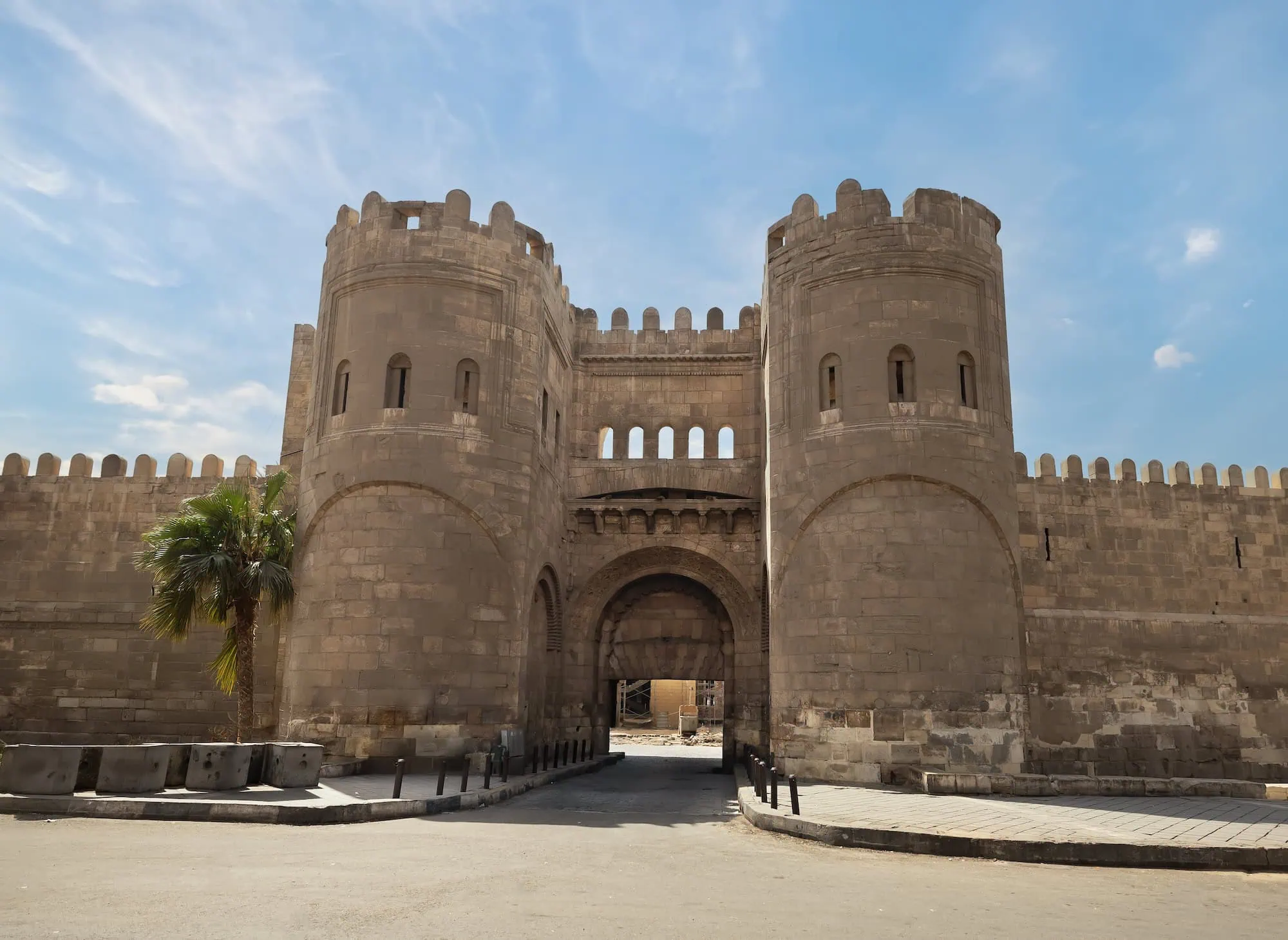
Bab al-Futuh represents one of Cairo’s most significant architectural achievements from the Fatimid period, built in 1087 CE during the reign of Caliph al-Mustansir. This northern gate of medieval Cairo showcases military engineering brilliance that continues to impress visitors today. The structure combines defensive functionality with artistic beauty, featuring innovations that influenced Islamic architecture across the region.
We’ve guided countless travelers through this historic monument, watching their expressions change from curiosity to genuine awe as they discover the intricate details hidden within its walls.
Table of Contents
Fatimid Military Architecture at Its Peak
The twin towers rising from Bab al-Futuh demonstrate advanced defensive design rarely seen in 11th-century fortifications. Each cylindrical tower reaches approximately 24 meters (79 feet) in height, constructed from massive limestone blocks that have withstood nearly a millennium of weathering.
Revolutionary Construction Techniques
Badr al-Gamali, the military commander who supervised the reconstruction, introduced spherical-triangular pendentives to Islamic Egypt for the first time. These architectural elements allowed builders to transition smoothly from square bases to circular domes, creating structural stability while maintaining aesthetic appeal.
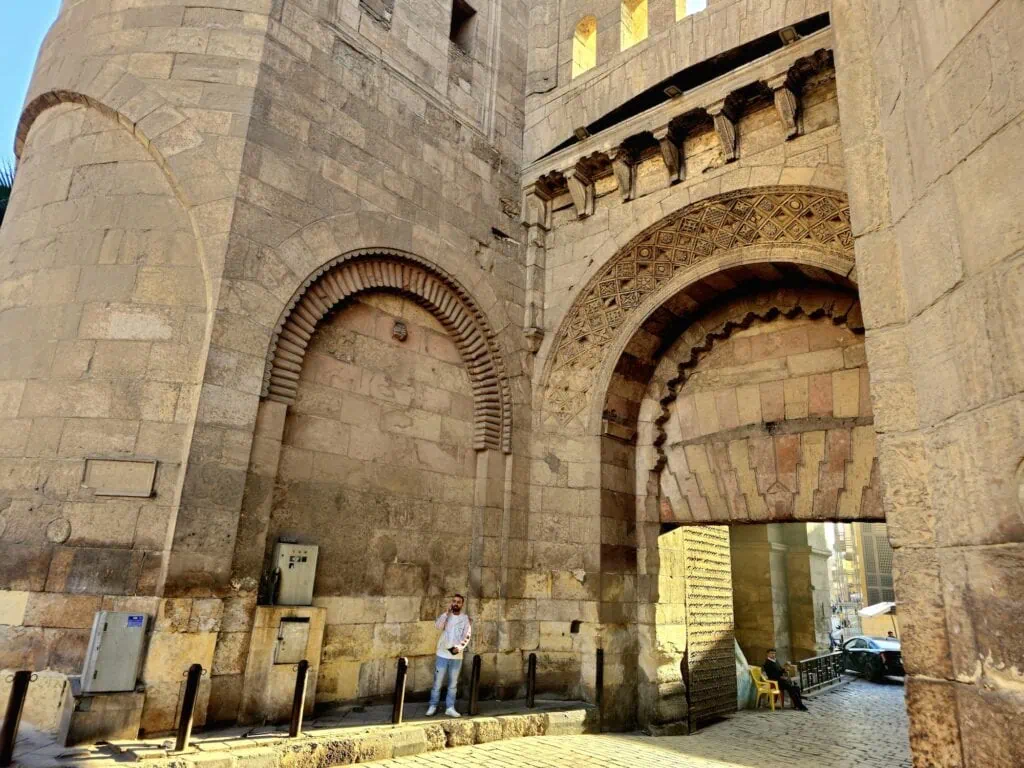
The stone carving work displays remarkable sophistication. Decorative bands wrap around the towers, featuring geometric patterns that reflect both local traditions and Byzantine influences brought by Armenian architects working under Fatimid patronage.
Defensive Innovation
Early forms of machicoulis appear throughout the gateway structure. These projecting galleries allowed defenders to drop objects or pour heated substances on attackers below, representing cutting-edge military technology for the medieval period. The design influenced fortress construction across the Islamic world.
Historical Context Within Islamic Cairo
Al-Muizz Street begins at Bab al-Futuh, creating the main thoroughfare through what would become one of the world’s largest collections of Islamic monuments. This urban planning decision shaped Cairo’s development for centuries.
During the Fatimid dynasty, Cairo served as the capital of an empire stretching from North Africa to the Levant. The gate controlled access to the royal city, where the caliph’s palace complex housed thousands of residents including soldiers, craftsmen, scholars, and court officials.
Strategic Military Importance
The location wasn’t chosen randomly. Bab al-Futuh faced north toward potential threats from Syria and Anatolia, while providing clear sight lines across the surrounding countryside. Military engineers could spot approaching armies from considerable distances, giving defenders crucial preparation time.
Contemporary historical sources describe elaborate ceremonies held at the gate during religious festivals and state occasions, when the Fatimid caliph would appear before crowds gathering in the open area beyond the walls.
Architectural Elements and Artistic Details
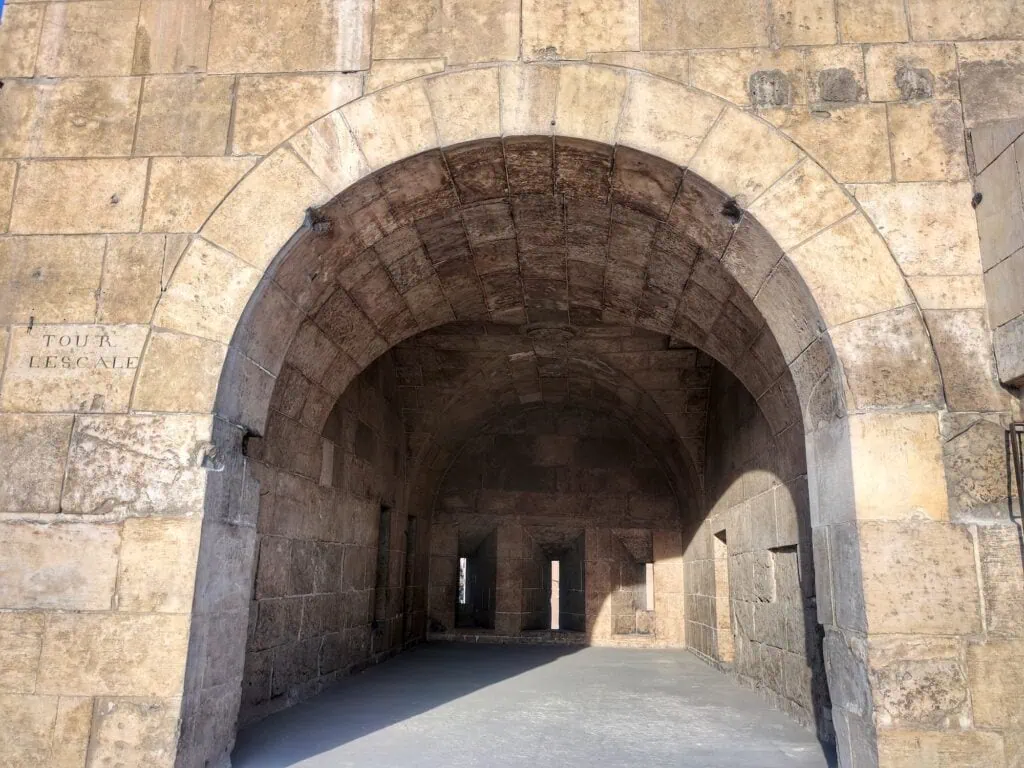
Walking through the gateway reveals layer upon layer of artistic achievement. The entrance passage extends deep into the structure, creating a tunnel effect that emphasizes the massive scale of the construction.
Stone blocks fit together with precision that continues to amaze modern engineers. No mortar was used in many sections, relying instead on careful cutting and placement techniques passed down through generations of master builders. Surface decorations include carved rosettes, geometric medallions, and Arabic calligraphy proclaiming religious formulas.
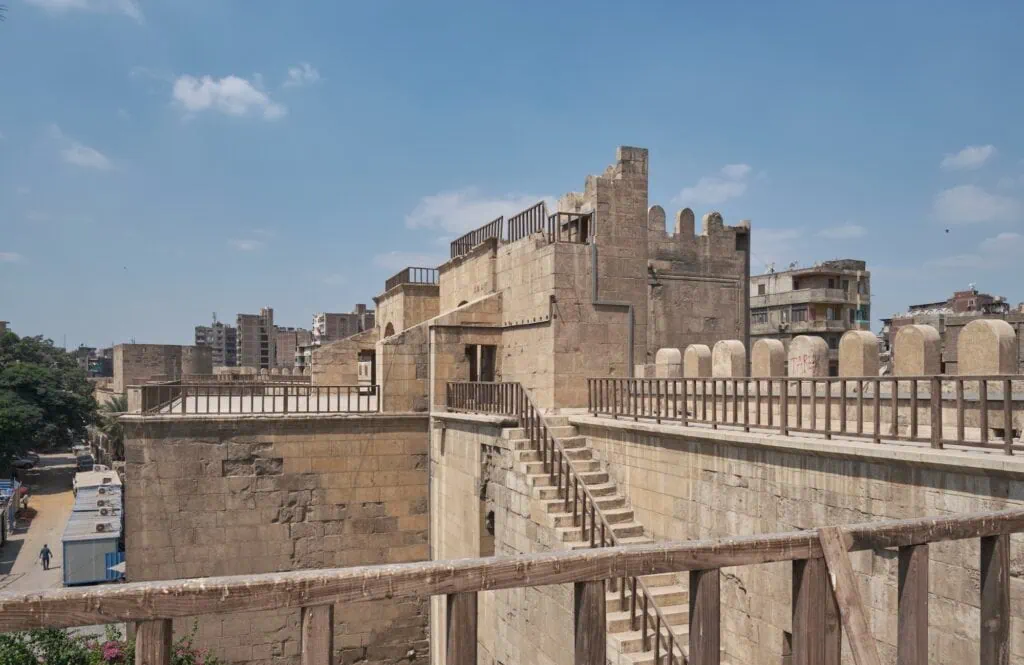
The interior chambers within the towers served multiple purposes. Ground-level rooms provided storage for weapons and supplies, while upper levels offered living quarters for garrison commanders and observation points for sentries.
Influence on Regional Architecture
Elements introduced at Bab al-Futuh spread throughout the Islamic world. The pendentive technique appeared in later Ayyubid and Mamluk structures across Egypt and Syria. Decorative motifs carved here influenced artistic traditions that continued for centuries.
Visiting Bab al-Futuh Today
The monument stands freely accessible at the northern end of al-Muizz Street, requiring no entrance fees. This location places it within easy walking distance of Khan el-Khalili bazaar and dozens of other historic sites.
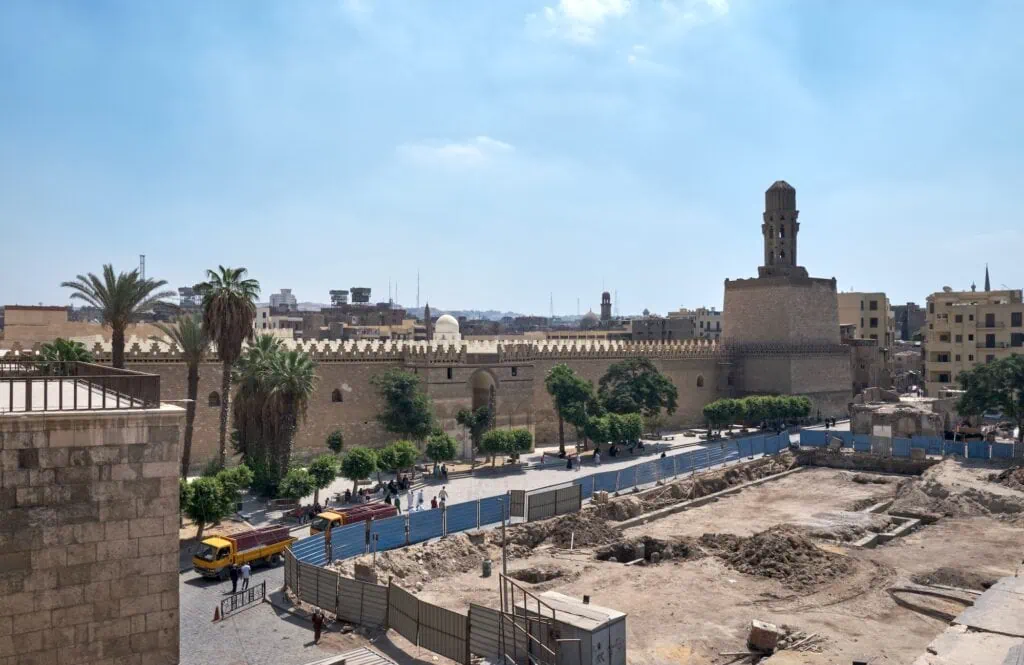
We recommend visiting during morning hours between 8:00 am (08:00) and 11:00 am (11:00) when lighting conditions highlight the carved details most effectively. Afternoon visits work well too, particularly for photography enthusiasts interested in dramatic shadows cast by the twin towers.
The surrounding area has been beautifully restored as part of Cairo’s historic preservation efforts. Stone paving, traditional lighting, and carefully planned landscaping create an atmosphere that helps visitors imagine medieval Cairo’s appearance.
Integration with Broader Cairo Experiences
Most travelers include Bab al-Futuh as part of comprehensive Islamic Cairo explorations. The gate serves as an excellent starting point for walking tours that continue south along al-Muizz Street, passing the Qalawun Complex, Al-Azhar Mosque, and numerous other monuments before reaching Bab Zuweila at the southern entrance to the old city.
Professional Guided Tours
Our expert guides bring decades of experience studying Fatimid history and Islamic architecture. They reveal details invisible to casual observers while explaining the broader historical context that makes each monument meaningful. Private tours allow for personalized pacing and in-depth discussions tailored to your specific interests.
Many clients combine their Bab al-Futuh visit with trips to the Citadel of Saladin, where Ayyubid fortifications demonstrate how military architecture evolved after the Fatimid period. The contrast helps illustrate changing defensive strategies and construction techniques across different Islamic dynasties.
Conservation and Heritage Significance
Recent restoration work has stabilized the structure while preserving its authentic character. Egyptian antiquities authorities worked with international conservation experts to address weathering damage accumulated over nine centuries, using traditional materials and techniques wherever possible.
The gate holds UNESCO World Heritage status as part of Historic Cairo, recognizing its outstanding universal value. This designation ensures continued protection while supporting tourism development that benefits local communities.
Scholars continue studying architectural details that reveal new information about Fatimid construction methods, trade relationships, and cultural exchanges between different regions of the medieval Islamic world. Each carved element tells part of a larger story about artistic innovation and cross-cultural influence.
Practical Photography Tips
The twin towers create excellent framing opportunities for both architectural and portrait photography. Early morning light illuminates the eastern facades beautifully, while late afternoon sun creates dramatic contrasts on the western sides.
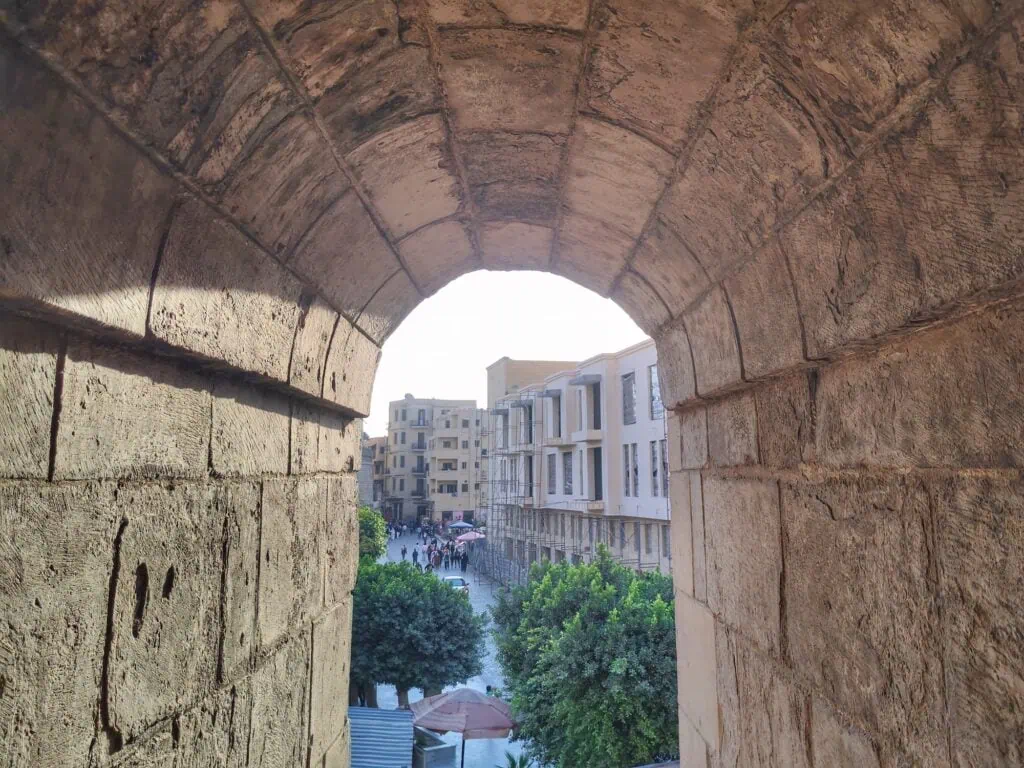
Inside the gateway, bring a flashlight or use your phone’s light to highlight carved details in the entrance passage. The stone surfaces show remarkable preservation, with many decorative elements remaining crisp and clear after nearly 1,000 years.
Wide-angle lenses capture the full scale of the structure, but telephoto lenses reveal intricate carving details invisible to the naked eye. Drone photography isn’t permitted in this area due to security restrictions around historic monuments.
Step Through The Historic Gates Of Cairo
Bab al-Futuh stands as a powerful reminder of Cairo’s medieval past—an imposing gateway that once guarded the city and now opens the door to its rich Islamic heritage. With Egypt Tours Plus, we seamlessly include this iconic landmark in a private journey that connects historic streets, vibrant bazaars, and Egypt’s most celebrated cultural sites.
You choose your travel dates, your pace, and the experiences that shape your route. From guided walks through Old Cairo to curated cultural experiences and refined comfort throughout, we tailor every detail around your preferences—ensuring a smooth, immersive, and deeply personal travel experience.
Frequently Asked Questions
Most visitors spend 30-45 minutes exploring Bab al-Futuh and the surrounding section of Al-Muizz Street, though architecture enthusiasts often stay longer. Built in 1087 CE during the Fatimid era, the gate features massive defensive towers, carved stone details, and one of medieval Cairo’s best-preserved entrances. The surrounding district includes cafés, mosques, and historic houses within a short walking distance. Early morning visits provide quieter streets and better photography conditions before tour groups arrive.
The ground-level areas around Bab al-Futuh are partially accessible, although uneven medieval stone paving can make movement difficult for wheelchair users. The upper tower sections and interior stairways require climbing steep, narrow steps that are not mobility-friendly. Located along Historic Cairo’s Al-Muizz Street, the area also becomes crowded during peak afternoon hours, which may further complicate access. Visitors with mobility concerns usually find morning visits more comfortable because pedestrian traffic is lighter.
The best time to visit Bab al-Futuh is between October and April, when Cairo daytime temperatures typically range from 15°C to 25°C (59°F to 77°F). Cooler weather makes walking through Historic Cairo and Al-Muizz Street far more comfortable than during the intense summer heat, when temperatures often exceed 38°C (100°F). Winter also brings clearer skies and better conditions for architectural photography. Morning visits usually offer the best combination of lighting, comfort, and manageable crowd levels.
Public access to the interior towers of Bab al-Futuh is usually restricted because of safety and preservation concerns involving steep medieval staircases and enclosed passageways. The gate’s massive circular towers were originally designed as defensive military structures during the Fatimid period in the late 11th century. Occasionally, special heritage tours or cultural events allow limited access under supervision. Even without tower entry, visitors can closely examine the impressive exterior stonework and fortified architectural design from ground level.
Bab al-Futuh is located approximately 400 meters north of Khan el-Khalili Bazaar, a walk that usually takes 5 to 7 minutes through the historic lanes of Islamic Cairo. The route follows Al-Muizz Street, one of Cairo’s most historically significant medieval thoroughfares lined with mosques, madrasas, and restored Mamluk monuments. Because the area is compact and pedestrian-friendly, many travelers combine the gate and the bazaar within a single walking tour. Evening walks are especially atmospheric when monuments are illuminated.
Yes, visitors will find restrooms, cafés, small restaurants, and souvenir shops within a few minutes’ walk of Bab al-Futuh along Al-Muizz Street. The surrounding Historic Cairo district is one of the city’s busiest cultural tourism areas, with numerous refreshment stops and shaded seating areas nearby. Larger dining options are concentrated closer to Khan el-Khalili Bazaar, roughly 400 meters away. Carrying bottled water remains advisable, especially during warmer months when daytime temperatures in Cairo rise quickly.
Bab al-Futuh sits within one of the densest concentrations of Islamic architecture in Cairo, surrounded by monuments spanning the Fatimid, Ayyubid, and Mamluk periods. Nearby sites include the Mosque of al-Hakim, Beit al-Suhaymi, Bab al-Nasr, and several medieval sabils and madrasas along Al-Muizz Street. Many of these landmarks date between the 10th and 16th centuries and can be explored on foot within a relatively compact area. Visitors often dedicate half a day to this section of Historic Cairo alone.
A guide is not essential at Bab al-Futuh, but expert interpretation greatly improves understanding of the gate’s military, political, and architectural significance. Constructed in 1087 CE by the Armenian commander Badr al-Jamali under the Fatimid Caliphate, the gate contains defensive innovations and symbolic carvings that many visitors overlook independently. Guided walks through Al-Muizz Street also connect Bab al-Futuh to broader Islamic Cairo history. Egypt Tours Plus often recommends guided exploration because the district’s layered history can otherwise feel overwhelming.
Yes, photography is generally permitted throughout the publicly accessible areas of Bab al-Futuh and the surrounding Historic Cairo district. Visitors frequently photograph the monumental stone towers, carved inscriptions, and the contrast between Fatimid military architecture and the lively streets nearby. Flash photography may occasionally be discouraged in enclosed or sensitive heritage areas to protect historic surfaces. Morning and late afternoon usually provide the best natural lighting for architectural photography along Al-Muizz Street.
Bab al-Futuh is widely regarded as one of Cairo’s finest surviving medieval gates because of its advanced military engineering and exceptional stone construction. Built during the Fatimid period in 1087 CE, it features massive rounded towers and sophisticated defensive planning that distinguish it from gates such as Bab Zuweila or Bab al-Nasr. Architectural historians often highlight its blend of strength and decorative elegance. Its excellent preservation also makes it one of the clearest examples of medieval Islamic fortification design in Egypt.
Comfortable walking shoes with solid grip are strongly recommended because the streets around Bab al-Futuh feature uneven medieval stone paving and long pedestrian stretches. Lightweight, modest clothing that covers shoulders and knees is appropriate for visiting Historic Cairo, especially since the district contains active mosques and religious institutions. During summer months between May and September, breathable fabrics and sun protection become particularly important as temperatures often exceed 35°C (95°F). Morning visits are usually cooler and more comfortable for extended walking tours.
Bab al-Futuh can be viewed from outside at any hour, but the best access to nearby monuments and detailed architectural viewing occurs during official daytime opening hours. In the evening, Al-Muizz Street becomes especially atmospheric as historic buildings and mosque façades are illuminated with decorative lighting. Many visitors combine nighttime walks with dinner or café stops in nearby Khan el-Khalili. Travelers interested in photography often prefer late afternoon and early evening because of softer light and reduced daytime heat.
Design Your Custom Tour
Explore Egypt your way by selecting only the attractions you want to visit