

Ancient Egypt, the way the river tells it
5-Day Nile Cruises
Our 5-day Nile cruises are the perfect way to experience ancient Egypt at the river’s own pace. Four nights between Luxor and Aswan give you every temple highlight with room to breathe — slower mornings, unhurried afternoons on the sun deck, and evenings where simply watching the desert stars feels like the day’s main event. Karnak, the Valley of the Kings, Edfu, Kom Ombo, and Philae, all walked with your own Egyptologist guide.
Four nights, every temple, no rush
Hand-Picked 5-Day Cruises for the Unhurried Traveler
Your Guide to 5-Day Nile Cruises
Everything you need to plan four nights on the river, on the right vessel, at the right pace.
Five days on the Nile is where the cruise stops feeling like a tight itinerary and starts feeling like a proper river holiday. This guide walks through what makes the extra night matter, the temples you’ll see between Luxor and Aswan, all three cruise tiers, what life onboard is actually like, and how the planning conversation works.
Table of Contents
Why Five Days Is the Comfortable Middle Ground on the Nile
A 5-day Nile cruise gives you four nights between Luxor and Aswan, and that single extra night changes the entire feel of the trip. The same temple route, walked at the same pace by the same Egyptologist guides, but with proper room to breathe between the highlights. An additional afternoon on the sun deck. An extra evening of onboard entertainment. A morning when nothing is scheduled and the boat itself is the destination.
Egypt Tours Plus has been booking Nile cruises since 1955, and 5-day sailings remain one of the most chosen durations in our entire programme. They sit at the sweet spot where the cruise tier you pick (luxury, deluxe, or dahabiya) starts to matter more than how much you fit in, because you’re no longer racing the clock between temple stops.
The trade-off versus a 4-day cruise is mostly one of mood. Both cover the same temple list. The 5-day version simply lets you settle into the river properly before the trip ends. The trade-off versus a 7-day cruise is the other way around. Seven days adds depth in Nubian and Sufi culture in Aswan, but most travelers find that the 5-day length is enough to feel they’ve cruised the Nile rather than merely sampled it.
What You See in Five Days on the Nile
A 5-day cruise covers the full Luxor–Aswan stretch, the most temple-dense section of the entire Nile valley. The sailing order depends on which direction you choose, but every itinerary visits the following sites with an Egyptologist guide.
In Luxor (East Bank)
- Karnak Temple: the largest ancient religious complex ever built, with the Great Hypostyle Hall and its 134 columns at the heart of it. Plan on at least two hours to take it in properly.
- Luxor Temple: linked to Karnak by the 2.7 km Avenue of Sphinxes (more than 1,000 sphinxes, fully re-excavated and reopened). Late-afternoon visits give the best light.
In Luxor (West Bank)
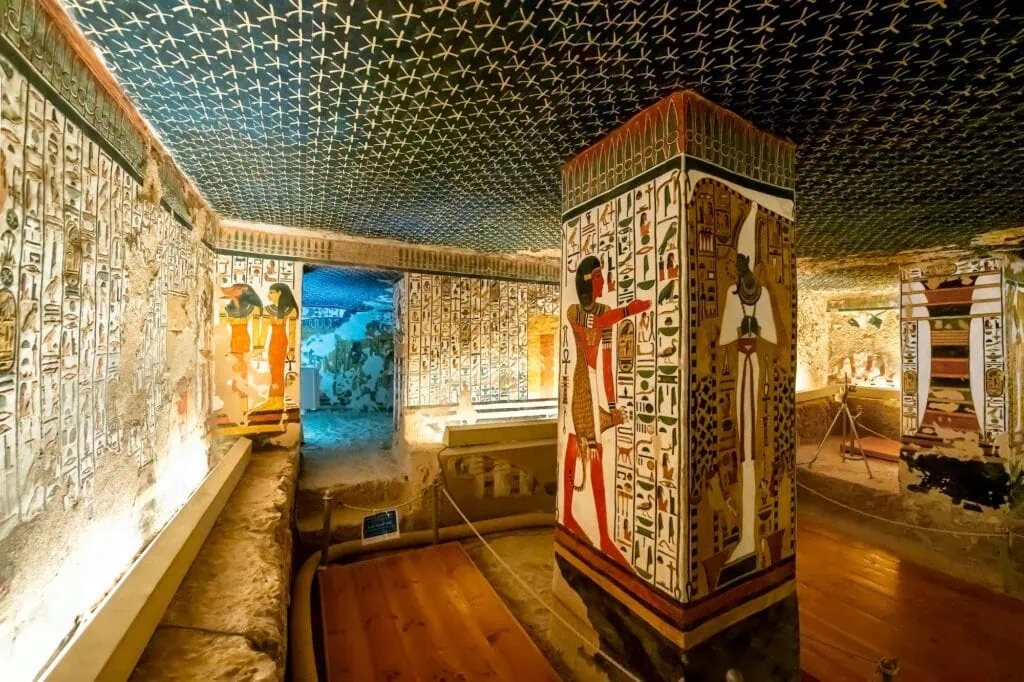
- Valley of the Kings: the royal necropolis of the New Kingdom pharaohs, including Tutankhamun. Standard tickets include three tombs; Tutankhamun’s own tomb sits behind a separate ticket and is worth adding.
- Hatshepsut Temple (Deir el-Bahari): the three-terraced mortuary temple of Egypt’s only successful female pharaoh, carved into the cliff wall. Architecturally unlike anything else in Egypt.
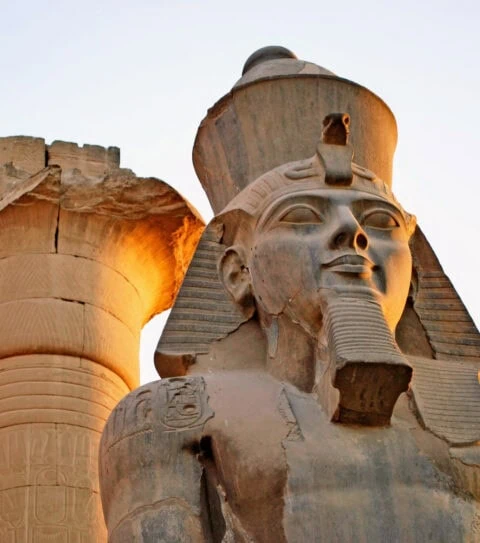
- Colossi of Memnon: the surviving pair of seated quartzite statues from Amenhotep III’s lost mortuary temple, a brief photo stop on the route between West Bank sites.
Between Luxor and Aswan
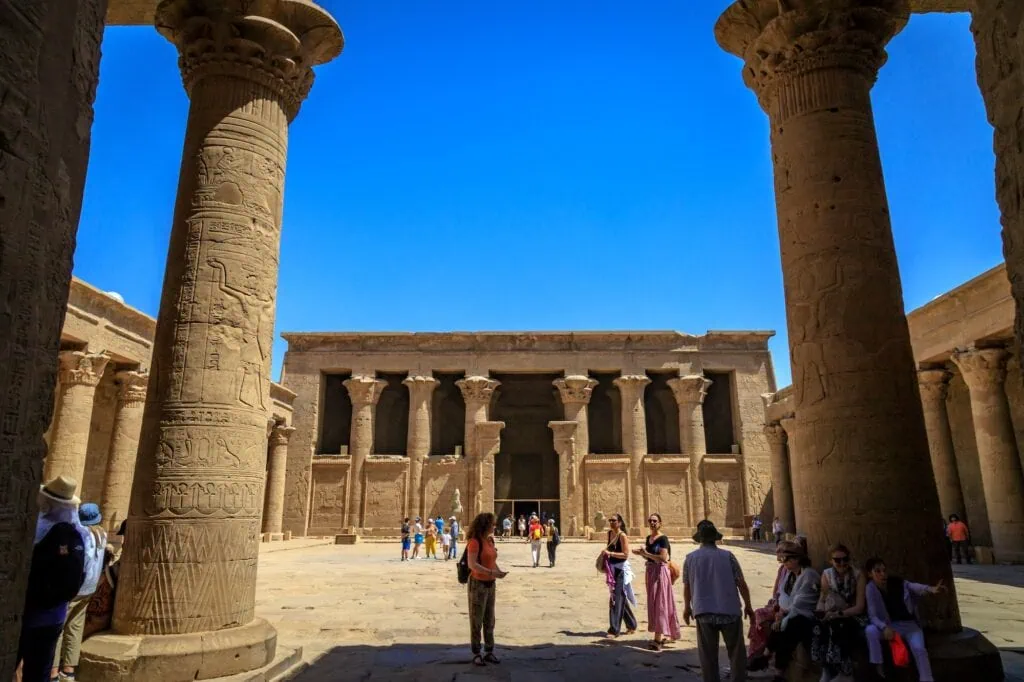
- Edfu Temple (Temple of Horus): the most completely preserved temple in Egypt, reached from the cruise dock by horse-drawn carriage. The reliefs along the inner walls tell the long mythological battle between Horus and Seth.
- Kom Ombo Temple: a double temple split symmetrically between Sobek (the crocodile god) and Horus the Elder. The on-site crocodile museum holds dozens of mummified crocodiles once raised in the temple’s sacred pools.
In Aswan
- Philae Temple: the Temple of Isis, dismantled and relocated to Agilkia Island during the UNESCO rescue operation of 1972–1980. Usually the closing highlight of the cruise.
- Unfinished Obelisk: a 42-metre granite obelisk still attached to the bedrock of its ancient quarry, abandoned when a crack appeared mid-carving. The clearest single view available of how Egyptian monuments were actually shaped.
- High Dam: the modern counterpoint, with a brief stop above Lake Nasser to take in the scale of the engineering that created modern Aswan.
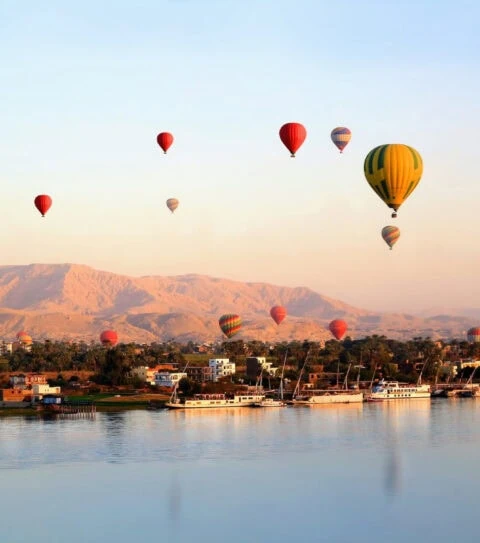
The extra night on a 5-day cruise also opens up easier add-ons. A hot-air balloon flight over Luxor’s West Bank at sunrise. An Abu Simbel day excursion by road or short flight from Aswan. A felucca sail in Aswan at sunset. None of these are squeezed onto a tight schedule the way they sometimes are on a shorter cruise.
What You’re Actually Looking At: A Quick Architectural Primer
Egyptian temples follow a remarkably consistent design grammar across more than two thousand years. Once you recognise the vocabulary, every temple you walk through on the cruise becomes substantially more legible.
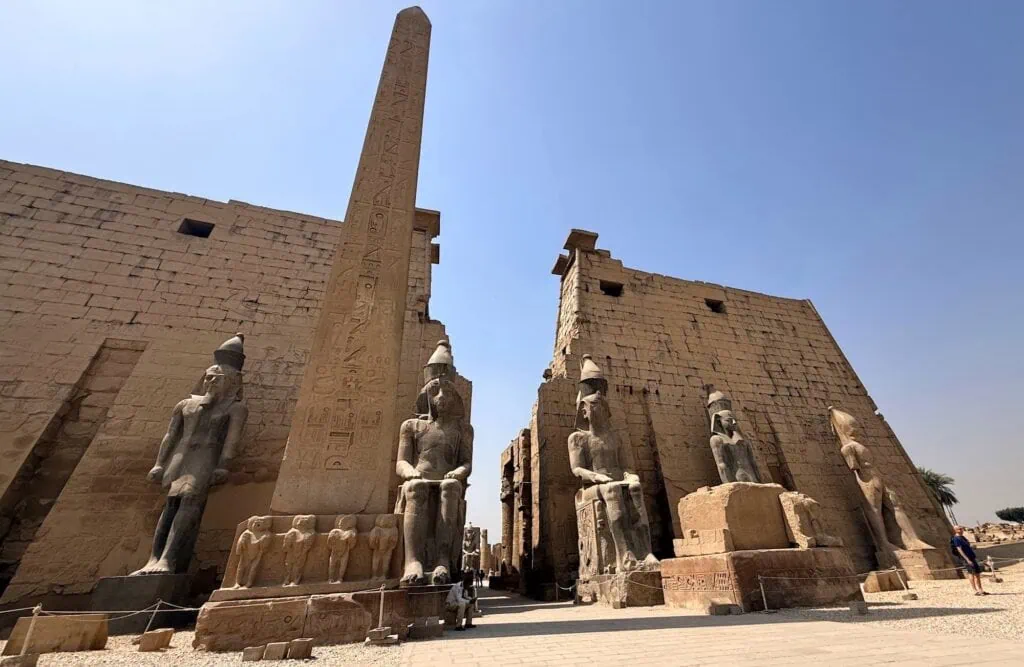
Pylons. Each temple opens with a monumental gateway: two sloping trapezoidal towers flanking the entrance. They symbolise the horizon where the sun god rose. The outside reliefs almost always show the reigning pharaoh smiting Egypt’s enemies, a standardised image of cosmic order being maintained by the king.
Open courtyards. Beyond the pylon, you enter a colonnaded courtyard open to the sky. These were the most public spaces in the temple, where worshippers gathered during festivals and where royal statues lined the perimeter.
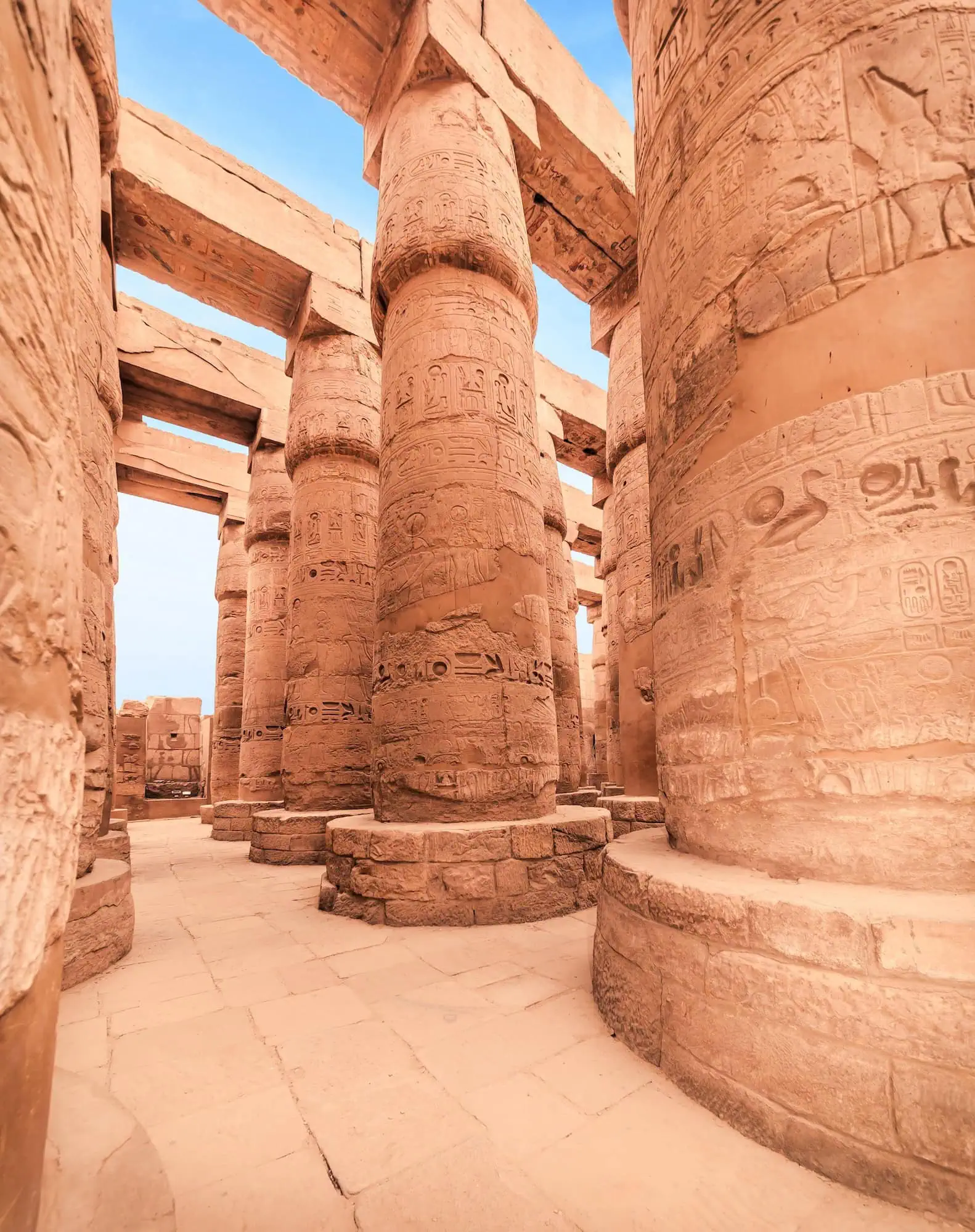
Hypostyle halls. The next chamber is roofed and crowded with massive columns standing closer together than feels rational. Karnak’s Great Hypostyle Hall, with its 134 columns, is the most famous example. Clerestory windows above brought light down through the column tops, designed to evoke the papyrus marsh of the Egyptian creation myth.
Inner sanctuaries. The deepest room is the smallest and darkest, the sanctuary where the god’s cult statue was kept. Only the high priest and the pharaoh could enter. The architectural compression as you walk inward (lower ceilings, narrower rooms, less light) was the whole point.
Hieroglyphics. Virtually every flat surface carries text and image, divided between religious content (rituals, hymns, offerings to the gods), royal records (military campaigns, construction projects, dynastic lineage), and administrative inscriptions. Your Egyptologist guide translates the key sequences as you walk between them.
The preservation of these monuments owes itself to two things. The first is Egypt’s exceptionally dry desert climate, which has spared the limestone and sandstone from the weathering that destroys equivalent monuments elsewhere. The second is the engineering of the ancient builders themselves. Massive cut blocks fitted together without mortar have survived earthquakes, river flooding, and three thousand years of human activity around them.
Both Directions, But Mostly Luxor to Aswan
Most 5-day cruises sail from Luxor to Aswan. The Aswan-to-Luxor direction exists too, but on a 5-day length the southbound routing dominates because it gives you the bigger Luxor temple complex up front (when energy is highest) and leaves Aswan’s gentler pace for the close.
Luxor to Aswan, the standard 5-day routing, begins with a flight into Luxor and boarding the vessel mid-afternoon. The first full day and second morning go to Luxor’s biggest temples: Karnak and Luxor Temple on the East Bank, then the Valley of the Kings, Hatshepsut, and the Colossi of Memnon on the West. The cruise then sails south, stopping at Edfu’s Temple of Horus, Kom Ombo, and finally Aswan, where Philae, the Unfinished Obelisk, and the High Dam close the trip.
Aswan to Luxor flips the rhythm. Available on selected vessels but less common at the 5-day length. Aswan’s three sites come at the start, the cruise then sails downriver past Kom Ombo and Edfu, and Luxor’s temples and tombs close the trip out instead. The river is the same, the temples are the same, but the emotional arc is different.
Most travelers pick the direction based on flight logistics and what comes either side of the cruise. If you’re adding Abu Simbel as a day excursion, starting or ending in Aswan keeps the routing clean.
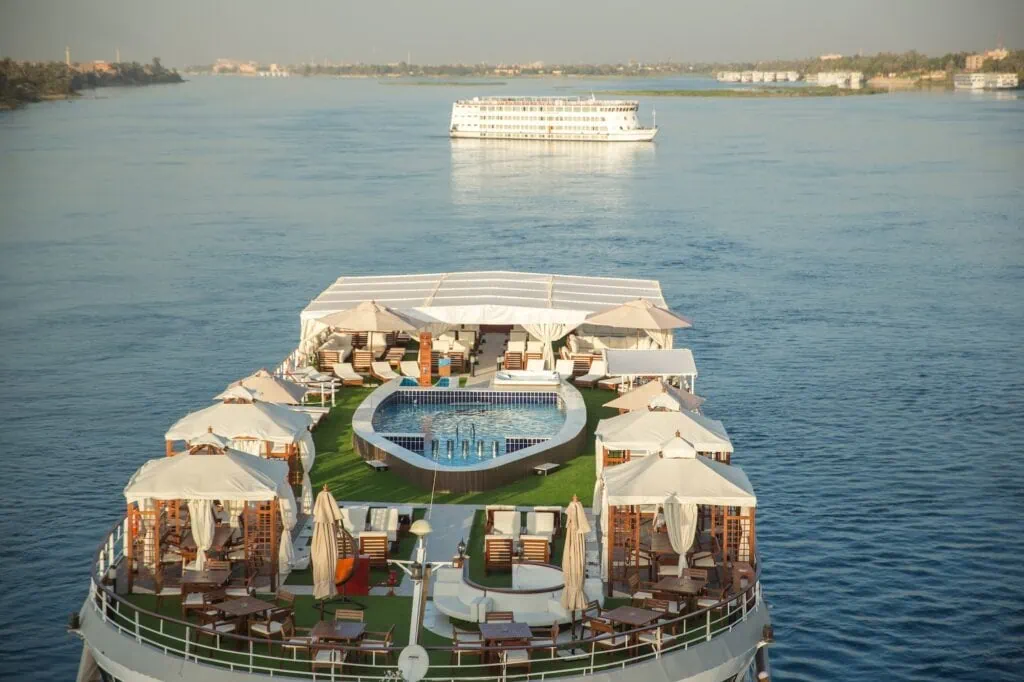
Three Ways to Sail in Five Days
The 5-day grid covers the full spectrum of Nile cruising, from the largest 5-star vessels down to small traditional sailing boats. The tier you choose shapes the onboard experience considerably; the temple programme is essentially identical.
Luxury Nile Cruises (5-star, 50–150 guests)
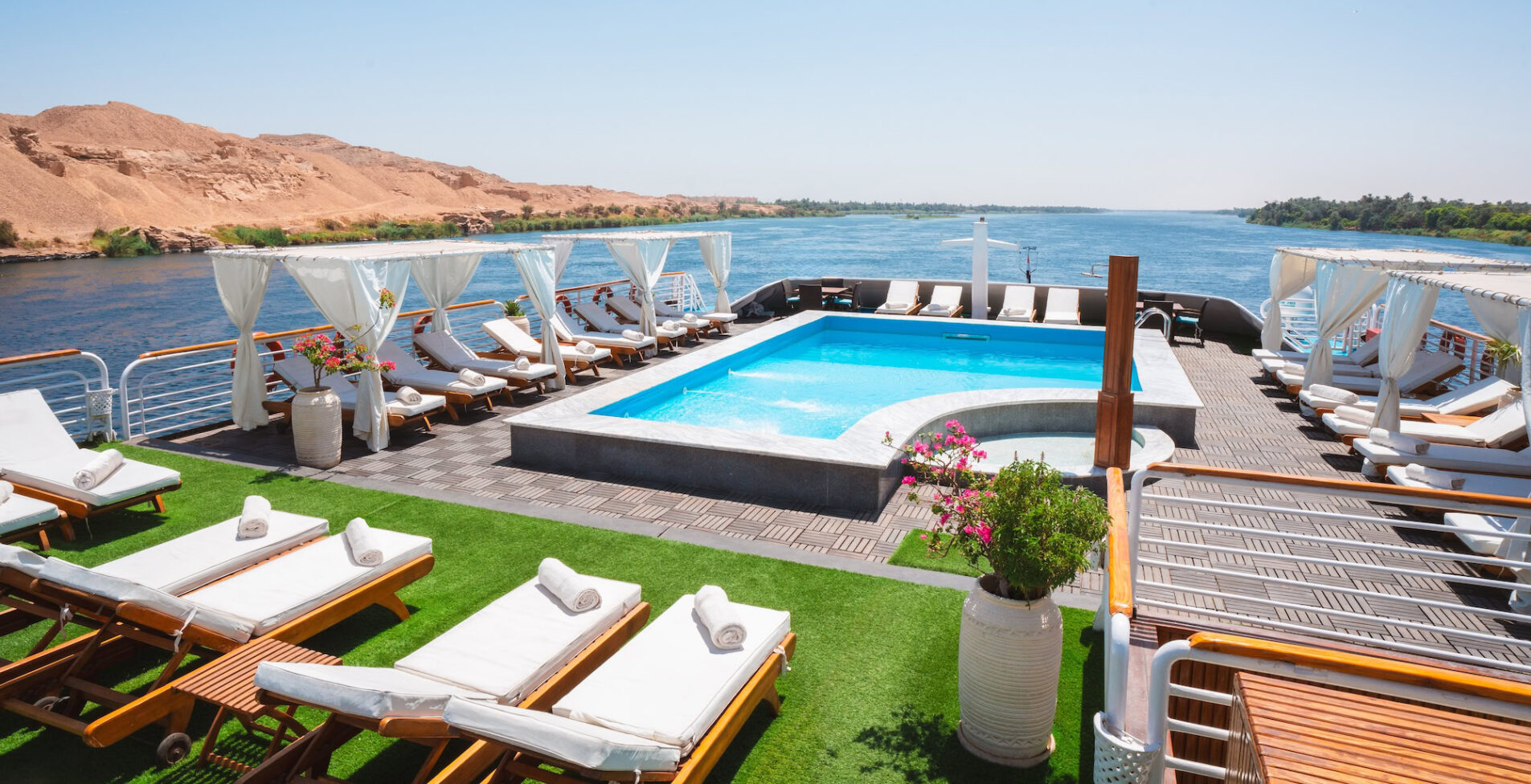
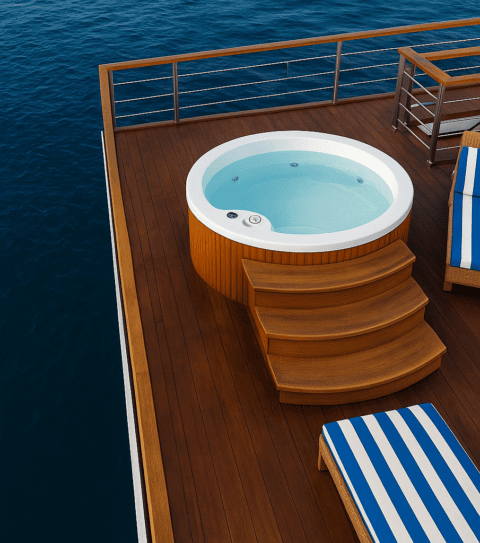
The flagship tier on the Nile. Suite-style cabins with floor-to-ceiling windows or private balconies on the higher grades. Sun decks with pools, full restaurants serving international and Egyptian menus, spa services, and varied evening entertainment programmes. Cabin amenities match a high-end land hotel: climate control, en-suite bathrooms, satellite TV, and laundry service. A luxury Nile cruise is the choice when you want the cruise itself to be part of the holiday rather than just transport between temples.
Deluxe Options Just Below the Luxury Tier
A step below the 5-star flagships, deluxe vessels run the same itinerary with the same temple programme at a more accessible price point. Cabins remain spacious, air-conditioned, and properly comfortable. Pool decks and dining are slightly more streamlined than the luxury tier, but the shore experience is the same. Many travelers find this tier hits the value sweet spot, especially when budget is also going toward Cairo accommodation, flights, and other tour elements.
Dahabiya Nile Cruises (8–16 guests)
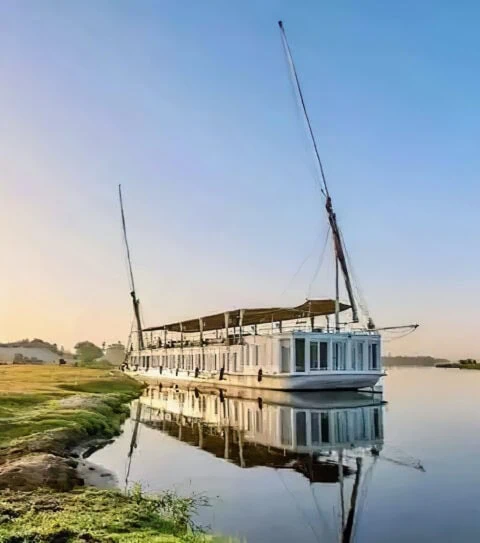
The traditional choice. Twin-mast sailing vessels, primarily wind-powered, gliding between Luxor or Esna and Aswan on schedules the large cruise ships can’t match. Onboard space is intimate, the whole boat functions as one small group, and stops at quieter river sites become possible. The atmosphere is closer to a private yacht than a hotel. A 5-day dahabiya cruise is the right pick when you want quiet, authenticity, and the sound of wind in canvas rather than amenities and entertainment.
Quick guide to choosing:
- Pick a Luxury Nile Cruise if you want a floating 5-star resort with pool, spa, suite cabins, evening entertainment, and the full hotel-grade experience for four nights.
- Pick a Deluxe Cruise if you want the same temple programme and itinerary at a lower price, with comfortable cabins and lighter onboard programming.
- Pick a Dahabiya if you want a small wind-powered vessel, near-private excursions, and access to quieter Nile stretches the large ships can’t reach.
If you’re still weighing the options, the simplest path is to talk through your priorities (budget, group size preference, sailing style, cabin grade) with your Travel Concierge, and we’ll surface the two or three departures that match.
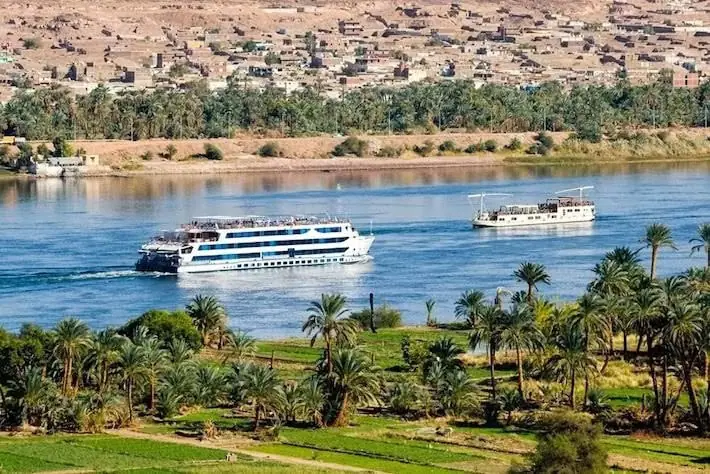
Life Onboard: The Rhythm of a 5-Day Nile Cruise
The extra night on a 5-day cruise matters most in the daily rhythm. Where a 4-day cruise feels like a tight programme, a 5-day version starts to unfold at the river’s pace.
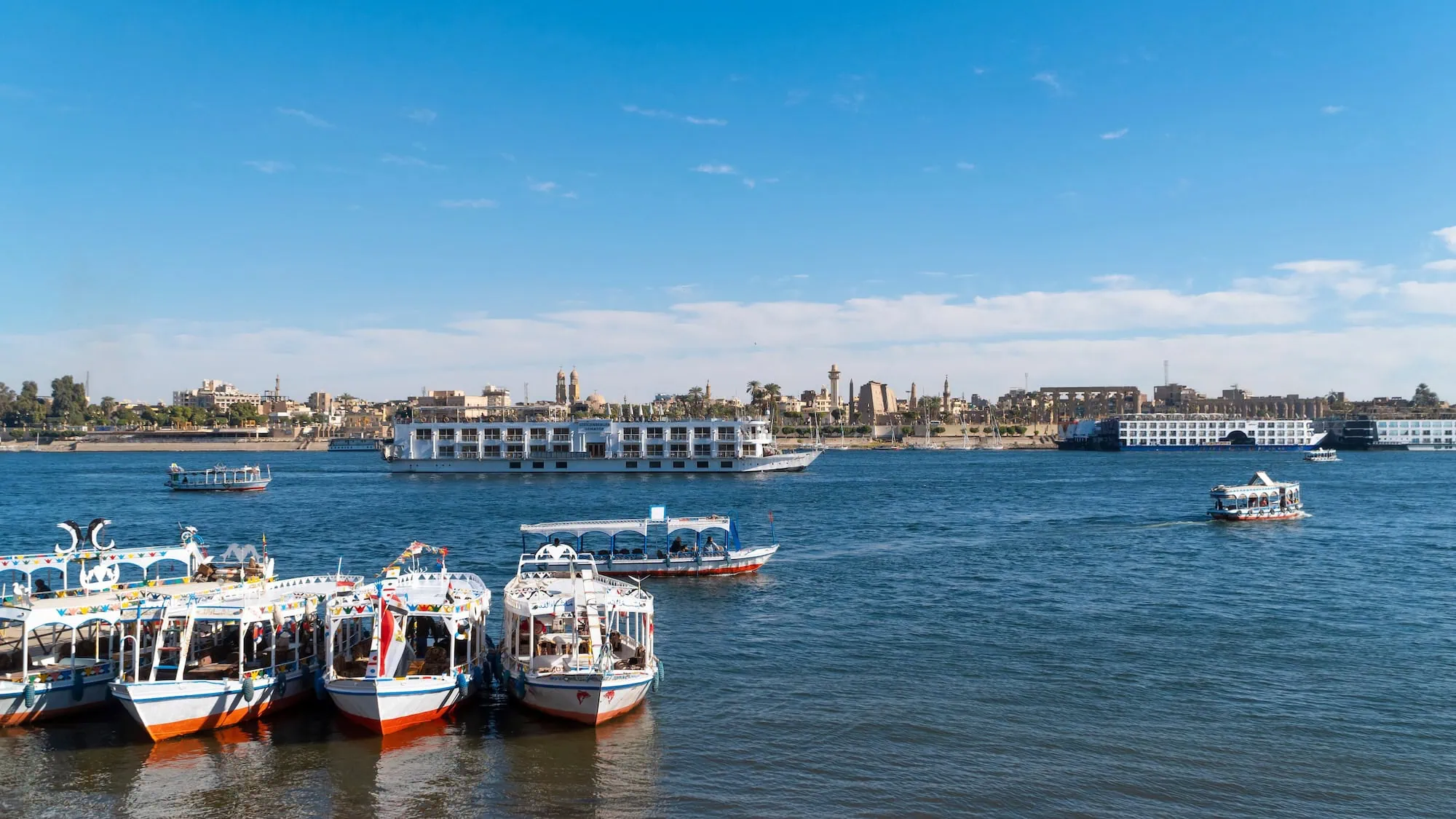
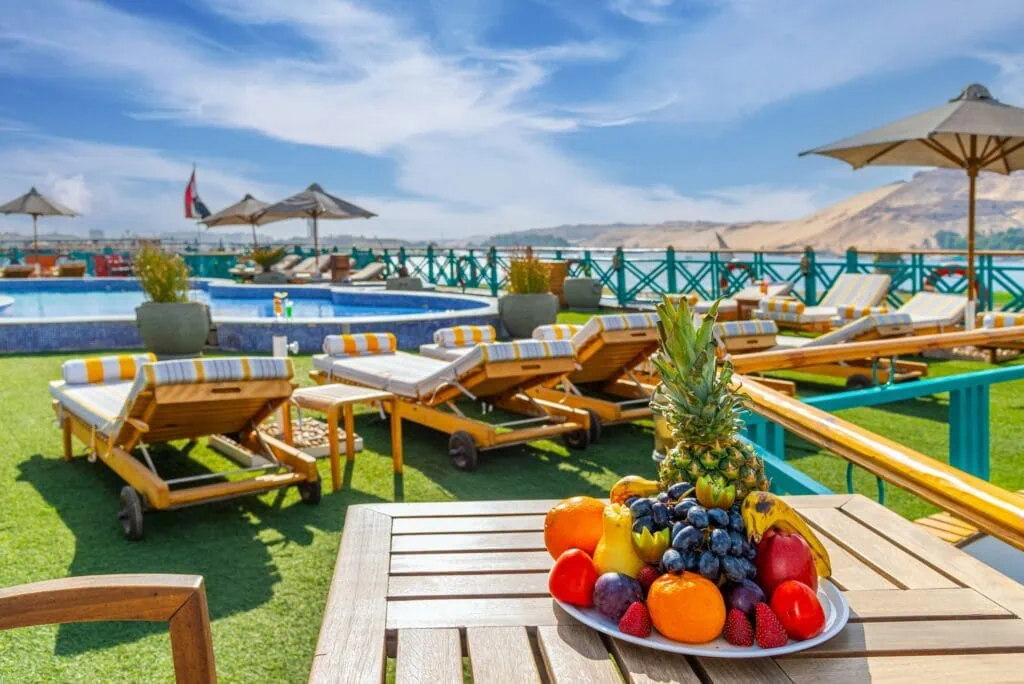
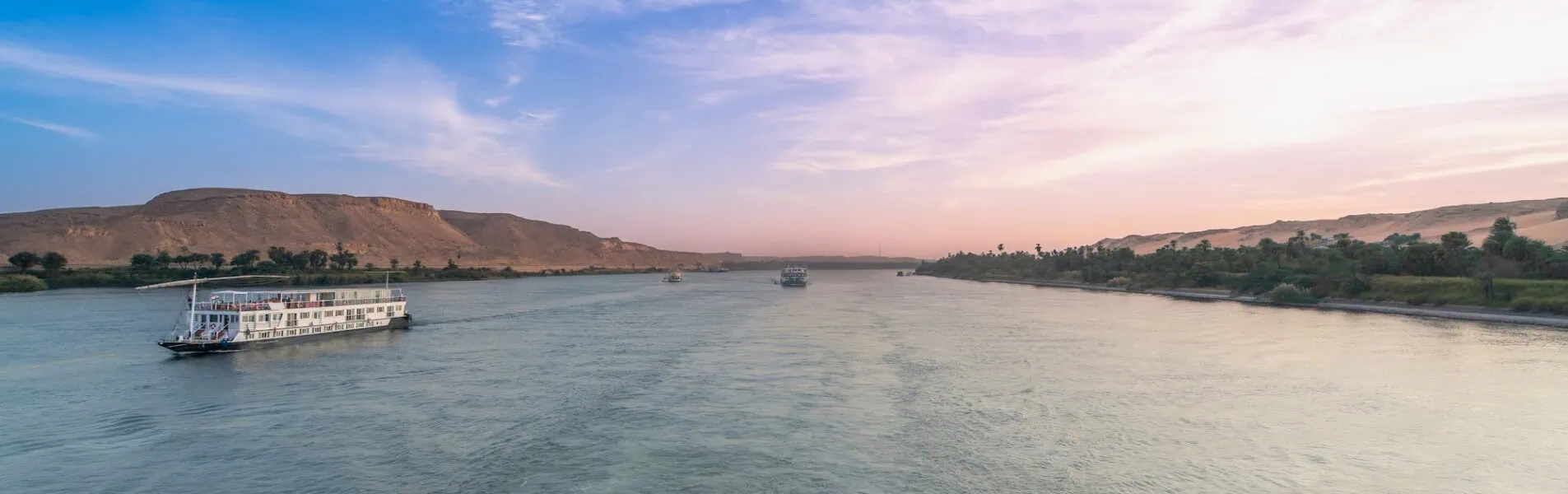
Mornings begin early because temple visits go out before the heat builds. Breakfast is served onboard, then guests disembark for shore excursions that typically run from 7:30 or 8:00 a.m. through to late morning. The boat sails during the afternoon heat, which is when the sun deck and pool come into their own. Outside, the river drifts past green riverbanks, palm groves, water buffalo grazing in the shade, fishermen working from small wooden boats, and the occasional brightly painted village on the far bank.
Afternoons may include a second shore excursion, usually at Edfu or Kom Ombo, where the late-afternoon light makes the reliefs photograph particularly well. On the days without a second excursion, tea and pastries appear on the upper deck and the boat continues its slow movement south. This is the difference that 5-day cruises sell on. By day three you’re properly settled into onboard life, in a way that a 4-day cruise never quite reaches.
Dinners are sit-down affairs, either set menu or buffet depending on the vessel. Most ships build one evening around an Egyptian gala dinner featuring traditional dishes like koshari, molokhia, tagines, and grilled Nile fish, often paired with live oud or tabla music. Evening entertainment varies by tier. Folkloric performances, galabeya parties where guests dress in traditional Egyptian robes, and on the larger vessels a whirling dervish performance under the deck lights.
The best evenings are often the quietest ones. Mint tea on the top deck after dinner, the desert sky above clearer than any city sky you’ve stood under, the boat barely moving as the lights of a small Nile-side town drift past. By the fourth night you’ll have learned that the cruise itself is half the experience, not just transport between temple stops.
What “Small Group” Excursions Actually Means
Every cruise we book uses small-group shore excursions, but the size and composition of the group depend on the vessel and on language.
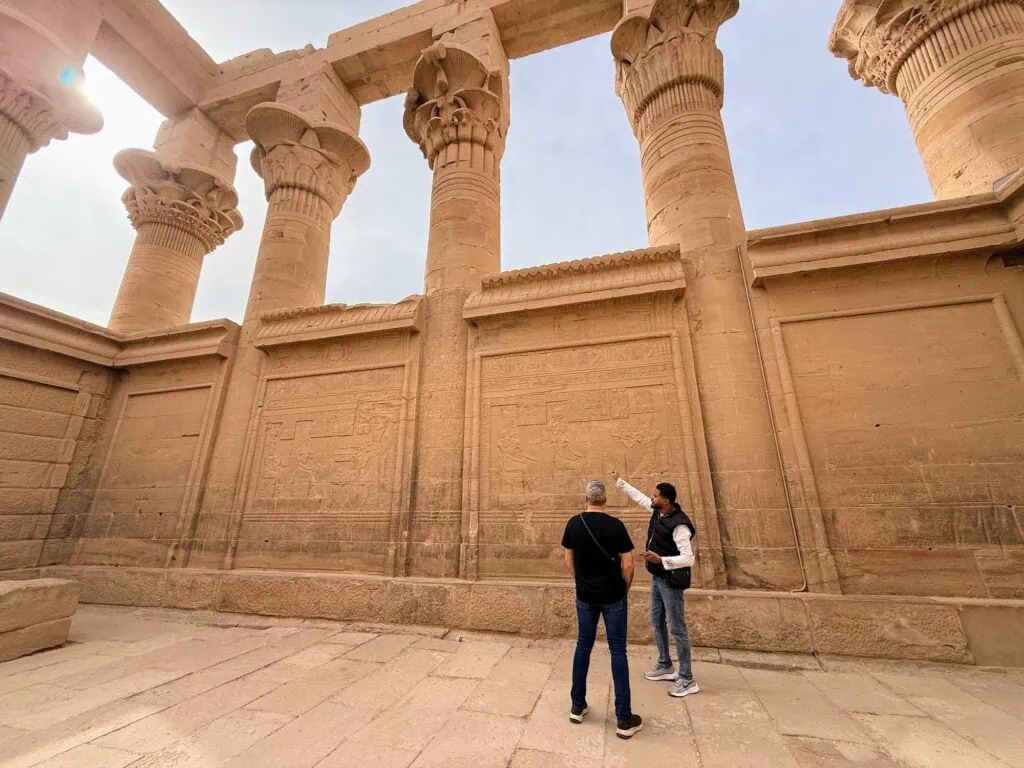
On luxury and deluxe Nile cruises, excursions typically run with around twelve guests to one Egyptologist guide. Numbers can climb higher during peak weeks like Christmas, New Year, and Easter when ships sail at capacity. Even at the higher end, the group is far smaller than a standard bus tour, and it’s drawn entirely from your own ship rather than merged with passengers from elsewhere.
On dahabiyas, language shapes the group as much as headcount. If there are eight Italian-speaking guests aboard, they tour together with their own Italian-speaking Egyptologist. If there are only two English-speaking guests booked through Egypt Tours Plus, those two get their own English-speaking guide. The arithmetic produces excursions that are often genuinely small, sometimes as few as two or three guests with a dedicated guide, and sometimes the full eight to sixteen when the entire boat shares a language.
Whatever your language, you’ll be matched with an Egyptologist guide who speaks it — English, Italian, Spanish, Portuguese, German, French, and others available on request. Fully private shore excursions on the larger cruise tiers are also possible on request, with the appropriate cost adjustment.
What’s Included in Every 5-Day Cruise
Standard inclusions across every 5-day cruise we book:
- Accommodation in your selected cabin category for four nights
- Full board: breakfast, lunch, and dinner (afternoon tea on most vessels)
- Meet-and-greet service by our representatives at the airport
- Assistance from our guest relations team throughout your stay
- All transfers in private air-conditioned vehicles
- Small-group shore excursions to every scheduled temple stop
- A licensed Egyptologist guide on every excursion
Not included:
- Optional add-on activities (Luxor sunrise balloon flight, Abu Simbel day excursion, sound-and-light shows)
- Personal expenses (drinks at the bar, spa treatments, laundry)
- Gratuities for crew and guides
The specific inclusion list for each vessel lives on that cruise’s individual itinerary page, so you can compare cabin grades, exact departure days, and any vessel-specific extras side by side before deciding.
Pair Your Cruise With Cairo and Beyond
A 5-day cruise is rarely a stand-alone Egypt trip. Most travelers add Cairo before or after, and many extend further to the Red Sea coast or into a neighbouring country.
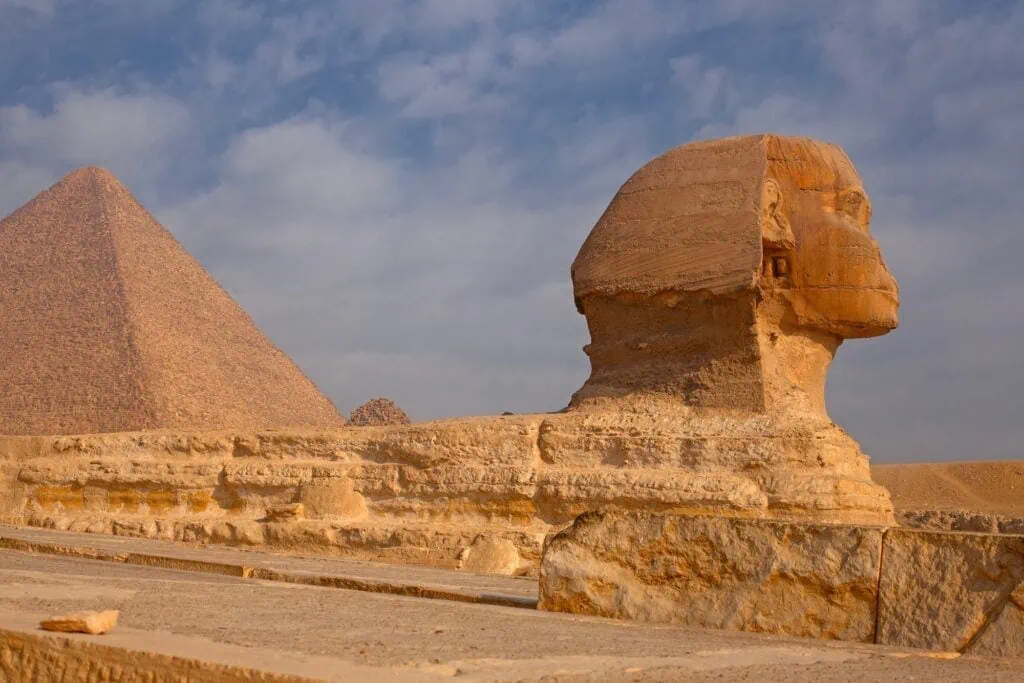
For travelers who want Cairo built into the same booking, our Egypt tours with Nile cruise packages combine Cairo (the Pyramids of Giza, the Grand Egyptian Museum, Old Cairo) with a Nile cruise into one seamless itinerary handled by a single Travel Concierge. The 5-day cruise length is available on these packages on request, alongside the 4-day standard and 7-day upgrades.
For travelers who want beach time after the cultural part of the trip, our Cairo and Red Sea holidays combine the pyramids, the cruise, and a Red Sea resort stay at Hurghada or Sharm El Sheikh. Most of the packages on that page can be adjusted to the 5-day cruise length.
Multi-country extensions sit on the same booking. Jordan with Petra and Wadi Rum, Greek island add-ons, Turkey via Istanbul, or Morocco with Marrakech and Fes can all be layered onto your Egypt cruise as one coordinated trip with consolidated logistics.
When to Take a 5-Day Nile Cruise
October through April delivers the most comfortable cruising weather. Daytime temperatures generally run between 20°C and 28°C (68–82°F), with Aswan sitting a few degrees warmer than Luxor as you move south. Evenings on deck stay cool enough for a light layer.
Within that window, late December and the first week of January carry the highest prices and the busiest temples. School holiday weeks (Easter, half-term breaks, Christmas) book out earliest. Shoulder months like November and March deliver similar comfortable weather at gentler rates. Christmas and New Year cruises run a special gala programme and need booking well in advance.
Summer cruises run from May through September too. Temperatures often climb above 35°C (95°F), so excursions start earlier in the day to beat the midday heat. Cabin rates drop noticeably, and onboard pools become considerably more useful than they are in winter. We’ve sent travelers in every month of the year, so the real question isn’t when can I cruise but rather what trade-off works for you.
Pack comfortable walking shoes for the temple sites, lightweight clothing covering shoulders and knees, sun protection at every level, and a light layer for cool evenings on deck. Bottled drinking water is provided in cabins and at meals.
How the Planning Process Actually Works
Planning a 5-day Nile cruise comes down to four decisions: cruise tier, cabin category, sailing direction, and the specific departure date. Share what you’re after with your dedicated Travel Concierge, and a first-draft itinerary lands in your inbox within 1 to 12 hours.
From there it’s a back-and-forth. Adjust between vessel tiers, change cabin grades, shift the departure date, layer in optional add-ons like the Luxor balloon flight or an Abu Simbel day excursion. Most travelers settle in two to four rounds of revisions, though some take longer until the trip is exactly right. There’s no pressure to commit at any stage. The itinerary is only finalised when you’re 100% satisfied.

Ready to Sail the Nile for Five Days?
Whether you’re leaning toward a 5-star luxury vessel, a deluxe option just below it, or an intimate dahabiya, your 5-day Nile cruise can be tailored down to the cabin grade, sailing direction, and optional add-ons that fit you. Share your preferences with your Travel Concierge, and your first-draft itinerary will be in your inbox within 1 to 12 hours.
Frequently Asked Questions
Both cruises cover the same temple list between Luxor and Aswan. The 5-day version simply gives you one extra night onboard, which translates into more time on the sun deck, an additional evening of dining and entertainment, and a more settled pace that starts to feel like a proper holiday rather than a tight programme. If the cruise tier (luxury, deluxe, or dahabiya) matters to you, the 5-day length is where that choice starts paying off properly.
Both directions visit identical sites, just in opposite order. Luxor-to-Aswan is the more common 5-day routing and front-loads Luxor’s bigger temples while energy levels are highest. Aswan-to-Luxor flips the rhythm, opening with Philae and Aswan’s calm pace and closing with Karnak and the Valley of the Kings. Most travelers pick by flight logistics and what they’re combining the cruise with.
Most excursions involve 60 to 90 minutes of walking on uneven stone surfaces, occasionally with inclines or stairs. There’s no strict fitness requirement, but proper closed walking shoes are essential. If anyone in your group has mobility limitations, mention it during planning so we can adjust pacing or arrange alternative access where it’s available.
Plan for the Luxor sunrise balloon flight (around $90–$130 per person), the Abu Simbel day excursion if you add it ($180–$280 per person depending on whether you fly or drive), and gratuities totalling roughly $50–$80 per person across the full cruise, split between your guide, driver, and ship crew. Personal drinks and souvenirs sit on top of that.
Yes. Cruise galleys handle vegetarian, vegan, gluten-free, halal, kosher (with advance notice), and most allergy requirements without difficulty. Flag your dietary needs at the booking stage and we confirm directly with the vessel before sailing.
Modest, lightweight clothing covering shoulders and knees works best at every temple site. Cotton or linen breathes better than synthetics in Egyptian heat. Closed walking shoes are essential since sandals don’t cope with uneven ancient stone. Bring a sunhat and sunglasses, plus a light layer for cool morning starts and breezy evening deck time.
Bottled water is provided in cabins and at meals, and that’s what we recommend for drinking. Tap water onboard is fine for showering and brushing teeth on modern vessels, but stick to bottled water for everything else.
Earlier is generally better, particularly for peak periods like late December, Christmas, New Year, and Easter. That said, we can also help with last-minute bookings, though the choice of vessels and cabin grades naturally narrows as the date approaches. If you have a specific window in mind, the cleanest move is to ask, and we’ll tell you honestly what’s still open.
Nile cruising is remarkably weather-stable compared to ocean cruising, and schedules are rarely disrupted. If something does affect the timing (a lock closure or a sandstorm, for instance), the cruise operator adjusts the itinerary to preserve all the temple visits, and our team coordinates any onward travel arrangements.
Yes, and most of our travelers do. Cairo at the start is the standard addition (typically two or three nights for the Pyramids of Giza, the Grand Egyptian Museum, and Old Cairo). The Red Sea coast at the end provides beach time. Multi-country extensions to Jordan, Greece, Turkey, or Morocco are planned end-to-end as one coordinated trip.
Tipping is customary in Egypt but not included in the cruise fare. As a practical guideline: $5–$8 per person per day for your Egyptologist guide, $3–$5 per day for the driver on transfer days, and roughly $8–$12 per person per day total for the cruise crew (collected at the end of the cruise and distributed by the cruise director).
Standard phone and camera photography is allowed at all the cruise temple stops. Some sites charge a small extra fee for tripods or professional camera gear, and certain interiors (notably some tombs in the Valley of the Kings) require a separate photo ticket bought at the entrance. Flash photography is generally prohibited inside tombs. Your Egyptologist guide flags any restrictions at each site.
No. Drones are heavily restricted in Egypt and effectively banned at all major archaeological sites without advance government permits, which are rarely issued to tourists. Bringing a drone into the country can lead to confiscation at customs. Best to leave it home.
Yes, on all luxury and deluxe vessels and most dahabiyas. Bars typically stock Egyptian beer (Stella, Sakara), local and imported wines, and standard spirits. Drinks aren’t included in the cruise fare and are billed to your cabin. A few dahabiyas operate on a bring-your-own-bottle policy; we confirm the specific arrangement for your vessel during planning.
Design Your Custom Tour
Explore Egypt your way by selecting only the attractions you want to visit