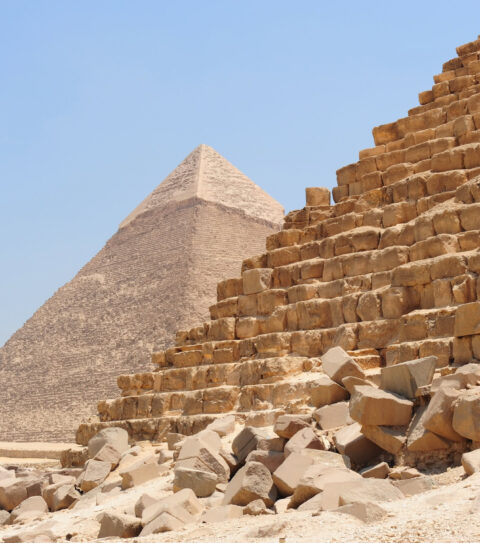
Private Nile River Cruises – Designed Around You Since 1955
Forget crowded tour groups pushing through ancient temples.
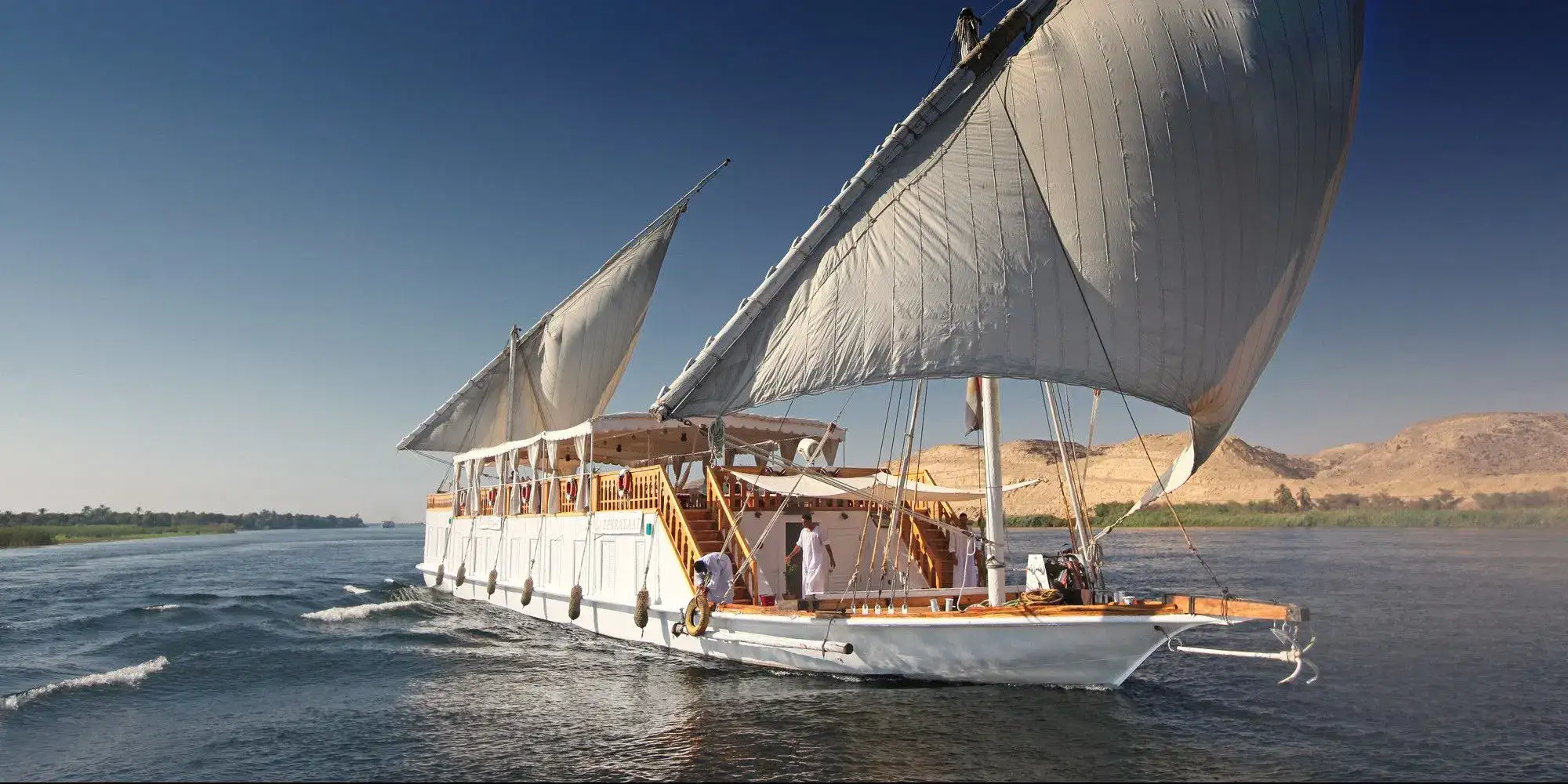
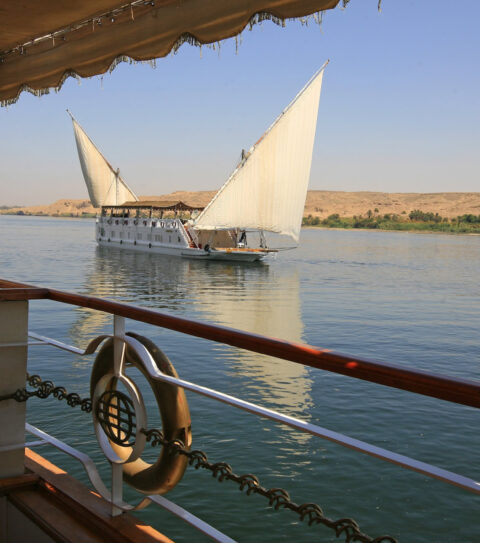
Private Nile River cruises offer something entirely different from a standard scheduled cruise. Picture yourself aboard your own private vessel, where sunsets, breakfast on deck, and shore visits belong to just you and your travel companions. From traditional dahabiyas (8 to 16 passengers under twin lateen sails) to fully chartered Luxury Nile Cruise ships (with up to 150 guests under your sole booking), Egypt Tours Plus tailors the entire experience around your group, your pace, and your preferences.
Since 1955, we’ve perfected private cruise experiences that honor both Egyptian traditions and modern expectations for luxury travel.
Table of Contents
Why Choose a Private Nile Cruise?
Private Nile cruises give you control over the experience that scheduled cruises cannot offer. Whether you’re sailing on a traditional dahabiya with your own party of 8 to 16, or chartering an entire Luxury Nile Cruise ship for an extended-family group, a company incentive trip, or a special-occasion gathering of 50 to 150 guests, the entire vessel functions around your preferences, your timing, and your pace.
Wind-Powered Sailing on Dahabiya Cruises
Dahabiyas rely on sail power and gentle river currents, creating an atmosphere of complete tranquility on board. No engine noise disrupts conversations or morning coffee. When winds die down, crews use a small support tugboat or traditional poles to keep progress steady. Modern Luxury Nile Cruise ships use diesel propulsion and offer different but equally valid Nile experiences with their own benefits, including more amenities, multiple restaurants, swimming pools, and broader accessibility.
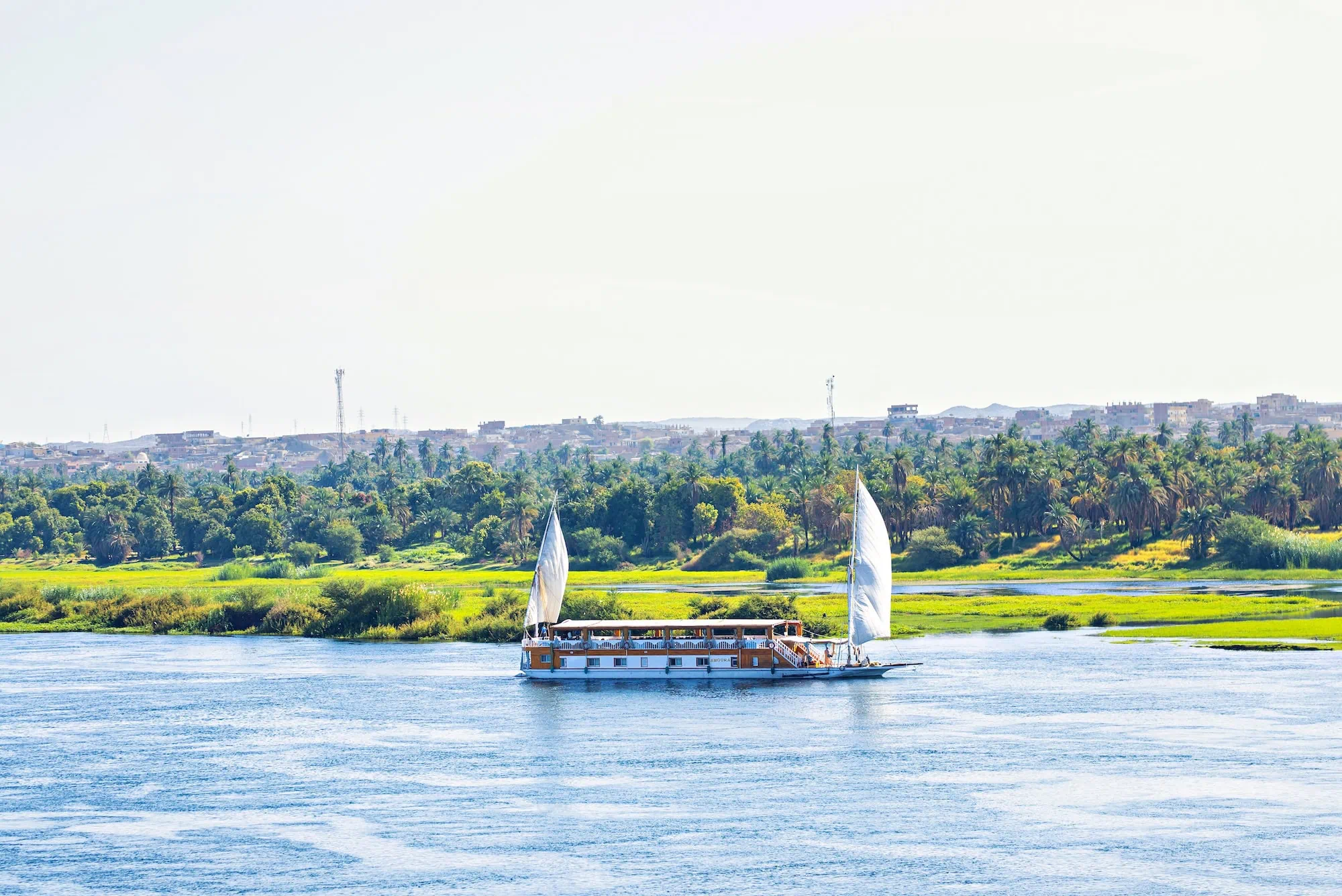
This slower pace allows genuine connection with Egypt’s landscapes and local communities along remote riverbanks.
Personalized Service Throughout
On both dahabiyas and chartered Luxury Nile Cruise ships, your group has access to professional crew members who focus exclusively on your preferences. Egyptologist guides adapt explanations to your interests, chefs accommodate dietary needs, and captains adjust pacing based on your energy levels and weather conditions.
The difference between cruise types comes down to scale. Dahabiyas anchor at smaller sites that larger vessels cannot reach, including riverside villages, side-temples, and quiet coves. Chartered Luxury Nile Cruise ships sail the standard Luxor-Aswan corridor with full hotel-style amenities and broader accessibility for travelers preferring resort-style comfort.
Flexible Itineraries
Private Nile cruises escape the rigid schedules of standard scheduled departures. Spend extra time at Kom Ombo with its rare medical-instrument relief carvings, enjoy extended temple visits at Edfu, or request stops at traditional villages or pottery workshops where larger ships cannot dock. Your guide and captain build flexibility into the day around what your group wants most.
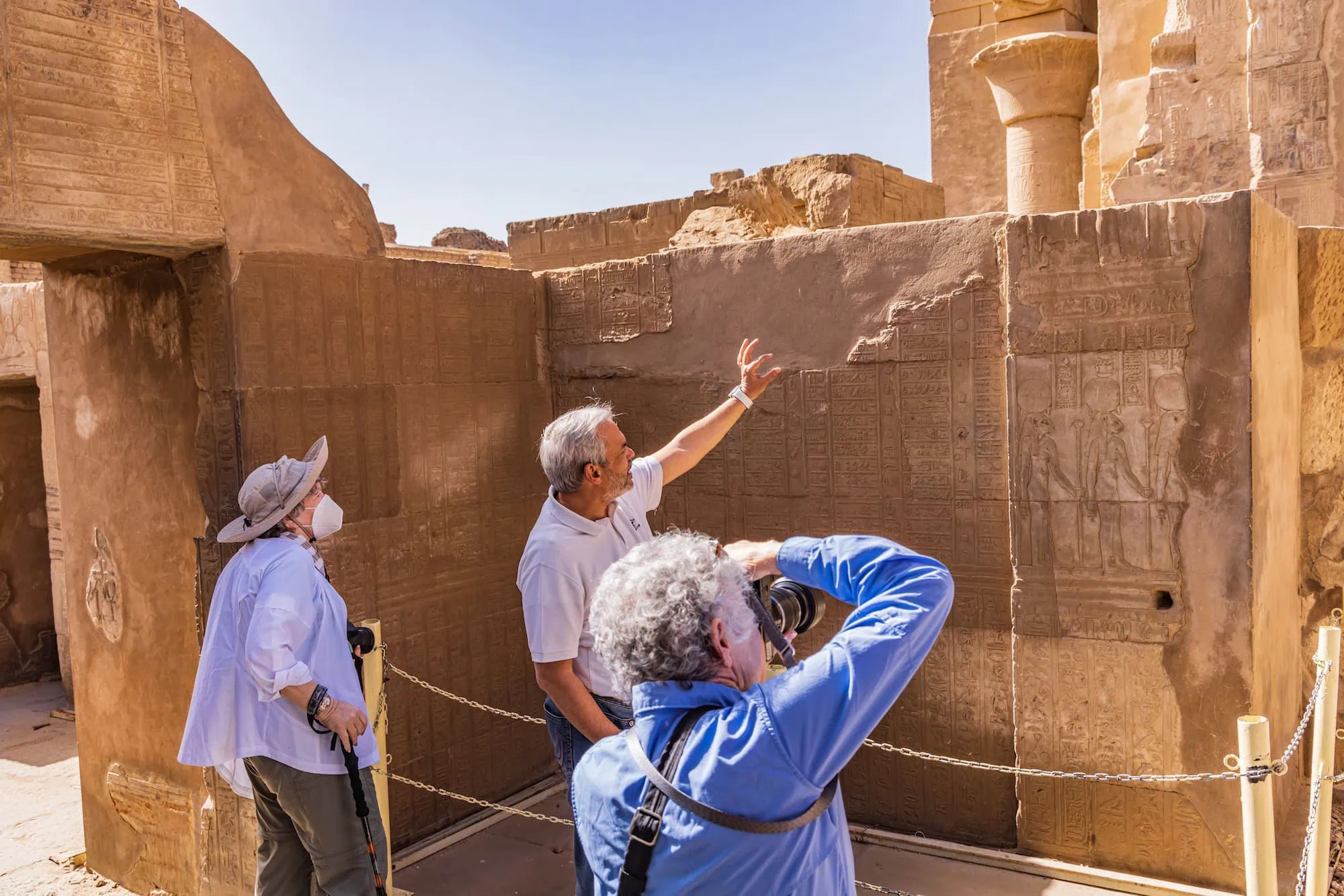
Your boat becomes a floating basecamp for curated adventures rather than a transportation vessel following predetermined routes.
Comfortable Accommodations on Both Vessel Types
Both dahabiya cabins and Luxury Nile Cruise ship staterooms feature panoramic river views, premium linens, and climate control. Dahabiya cabins are typically larger than standard cruise ship cabins (4 to 8 cabins per vessel total), while Luxury Nile Cruise ships offer broader cabin variety from standard staterooms to multi-room suites.
Shared spaces include spacious sun decks, dining areas with locally-sourced cuisine, and lounges. Luxury Nile Cruise ships add multiple restaurants, swimming pools, fitness centres, and full-service spas that dahabiyas don’t include.
Two Types of Private Nile Cruise Experiences
Egypt Tours Plus arranges private Nile River cruises in two distinct formats, each suited to different group sizes, budgets, and preferences.
Traditional Dahabiya Cruises (8 to 16 Passengers)
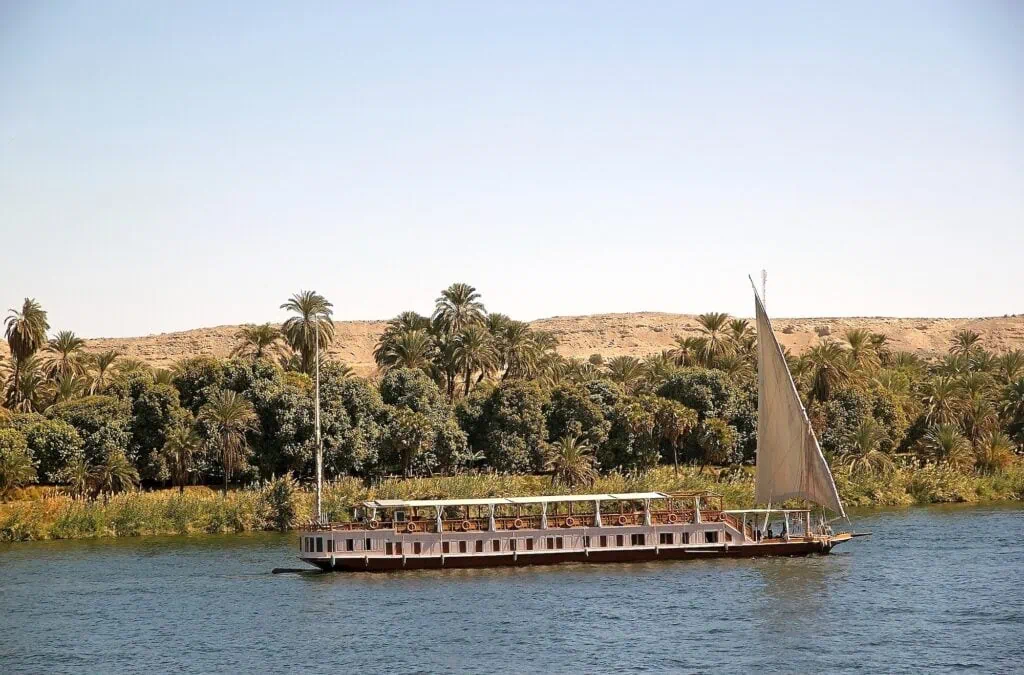
Dahabiyas are traditional twin-mast Egyptian sailing vessels carrying 8 to 16 passengers in 4 to 8 cabins. They cruise primarily between Esna (about 1 hour south of Luxor, beyond the main lock) and Aswan, sailing the quieter stretches and stopping at smaller sites that larger ships cannot access — including villages, side-temples, and quiet anchorages.
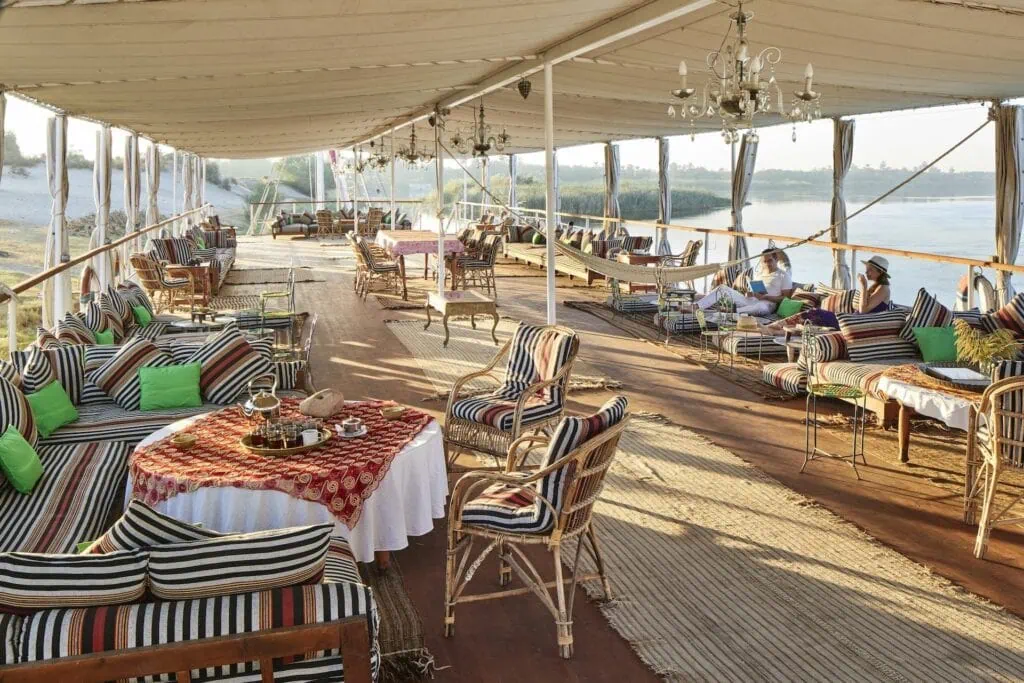
Classic mahogany construction creates warm, inviting interiors reflecting traditional boatbuilding techniques. Modern dahabiyas feature climate-controlled cabins, en-suite bathrooms with hot water, panoramic Nile-view windows, and shaded sun decks designed for both relaxation and authentic sailing experience. Professional galley kitchens enable fresh meal preparation using ingredients sourced from riverside markets.
Dahabiyas suit travelers who prioritize intimacy, authenticity, and slow pace over scale. Most operate as scheduled departures with 4 to 7-night itineraries, with private full-vessel charters available for groups of 12 or more wanting complete exclusivity.
Dahabiyas feel essentially private even on shared sailings because of the small group size. The entire vessel functions as a single small travel community, and shore visits work as a unified group rather than as separate guided sub-groups.
Chartered Luxury Nile Cruise Ships (50 to 150 Passengers)
For larger family groups, multi-family vacations, corporate retreats, or extended-family celebrations, Egypt Tours Plus arranges fully chartered Luxury Nile Cruise ships. These 5-star vessels typically host 50 to 150 passengers across 25 to 75 cabins, with multiple restaurants, swimming pools, panoramic observation decks, full-service spas, fitness centres, and evening entertainment programs.
Charter packages give your group exclusive use of the entire vessel, full control over the dining schedule, customized shore excursion timing, and a dedicated Egyptologist guide team accompanying your group exclusively. Cabin categories range from standard staterooms to multi-room presidential suites with private terraces.
Chartered Luxury Nile Cruise ships sail the standard Luxor-Aswan corridor and offer the standard 4-day/3-night itinerary or the 7-night extended journey. Charters are typically reserved 6 to 12 months ahead due to vessel availability constraints, particularly during the December-January peak season.
Most chartered ship clients are large family reunions, milestone-celebration groups (significant birthdays, anniversaries, retirement parties), corporate incentive groups, and faith-based or special-interest tour groups wanting both Egypt-immersion and full vessel exclusivity.
Routes and Destinations
The Standard Luxor-Aswan Corridor
The standard route between Luxor and Aswan covers Egypt’s greatest concentration of pharaonic monuments. Most dahabiyas sail between Esna (about 1 hour south of Luxor, beyond the main lock) and Aswan, while chartered Luxury Nile Cruise ships run the full Luxor-Aswan corridor.
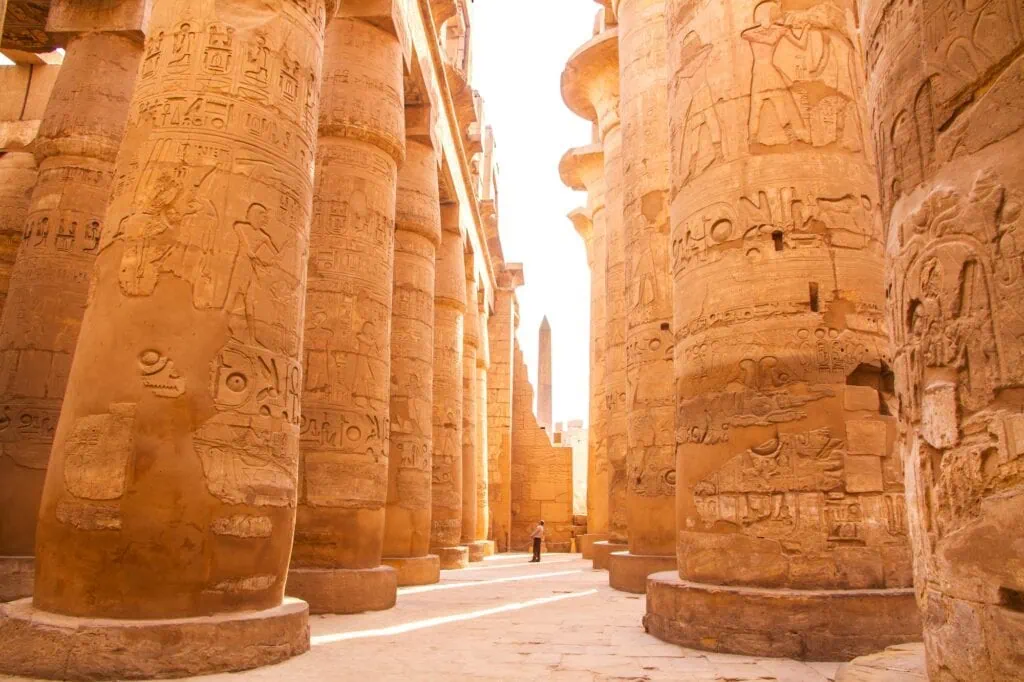
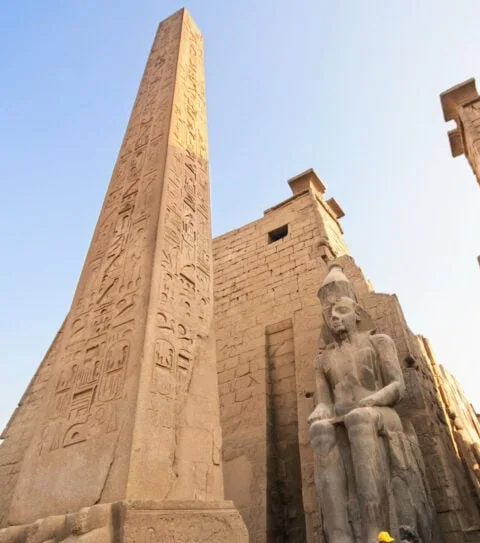
Pre-cruise time in Luxor typically includes the Valley of the Kings, where early-morning visits before tour-coach crowds arrive give your group meaningful time at the tombs. Karnak Temple’s massive Hypostyle Hall (134 columns spanning 200 hectares) and Luxor Temple round out the pre-cruise touring.
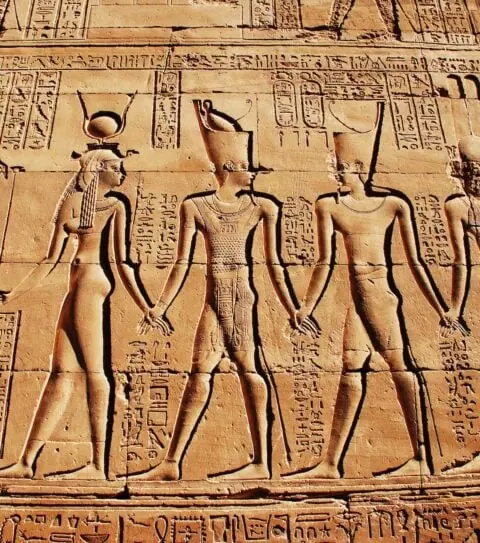
The cruise itself includes shore visits at Edfu Temple, dedicated to the falcon-headed god Horus and one of the best-preserved temples in Egypt with original paint traces visible across many wall carvings. The next stop is Kom Ombo’s unique double temple honoring both Sobek (the crocodile god) and Haroeris (Horus the Elder), featuring an unusual relief panel depicting ancient surgical instruments that date the medical knowledge represented to the Ptolemaic period.
The cruise concludes in Aswan, where Philae Temple sits on Agilkia Island accessible by small boat. Aswan’s other highlights include the High Dam, the Unfinished Obelisk in the ancient granite quarries, and the option to fly down to Abu Simbel for the temples of Ramses II and Nefertari at the southern Egyptian frontier.
Extended Routes to Dendara and Abydos
Some longer dahabiya itineraries extend north of Luxor to less-visited sites that showcase Egypt’s religious evolution across two millennia. Dendara Temple, dedicated to the goddess Hathor and constructed primarily during the Ptolemaic and early Roman periods (around 50 BC), features the famous zodiac ceiling (the original was removed to the Louvre in 1821; what’s seen at site is a high-quality replica) and remarkably preserved colors throughout the inner chambers.
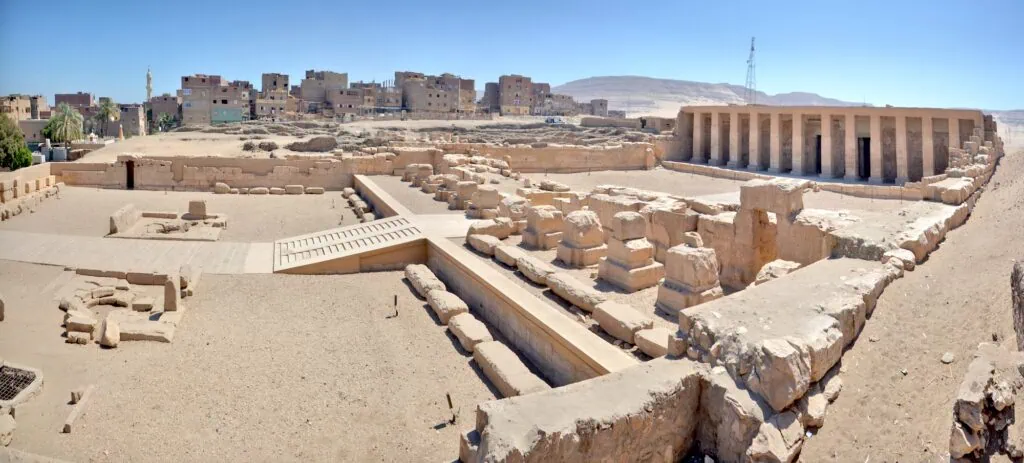
Abydos, considered one of ancient Egypt’s holiest cities, houses the magnificent Temple of Seti I (around 1290 BC) with its detailed Abydos King List — a chronological record of pharaohs from Menes to Seti I — and exceptional New Kingdom wall paintings. The site requires advance arrangement for visits and is typically accessed by road from Luxor rather than by river due to navigation constraints.
Extended itineraries require careful planning due to navigation challenges and seasonal weather patterns. Egypt Tours Plus coordinates all logistics while maintaining the flexibility that defines private Nile cruise experiences.
Best Times for Private Nile Cruises
Peak Season: October Through April
October through April offers ideal sailing and temple-touring conditions with daytime temperatures of 20 to 25°C (68 to 77°F). Gentle northerly breezes provide consistent sailing conditions and naturally cool cabins during afternoon rest periods.
December and January are peak season with the most comfortable weather but also the highest demand and prices. Late October through early December and February through April are sweet-spot months with excellent weather and slightly thinner crowds. Book 4 to 6 months ahead for this popular season, as premium dahabiyas operate limited schedules and chartered Luxury Nile Cruise ships often require 6 to 12 months advance booking.
Shoulder Seasons Offer Unique Advantages
May and September provide excellent value with fewer tourists at major sites and 15 to 25 percent lower rates than peak winter prices. Daytime temperatures average 30 to 33°C (86 to 91°F), comfortable for most travelers when activities are scheduled around early-morning and late-afternoon hours. Photography benefits from the dramatic lighting conditions during these transitional months.
Summer Cruising (June Through August)
June through August brings significantly lower prices and fewer tourists at famous monuments. Daytime temperatures regularly exceed 35°C (95°F) and approach 40°C (104°F) at midday in southern stretches near Aswan. Sailing schedules adjust to early-morning departures (6:00 am starts become routine for site visits) with extended midday breaks at anchor in shaded coves.
Afternoon sailing benefits from the natural cooling of breeze across the water, while evening deck dining works well in the comfortable post-sunset air. Crew members adjust schedules with cold-towel service, frequent hydration stops, and afternoon shade arrangements to ensure comfort without compromising the experience.
Choosing the Right Private Nile Cruise for Your Group
The right private Nile cruise depends on your group size, budget, and preferred level of luxury. Below is a quick guide to help match the cruise type to your specific situation.
Choosing a Dahabiya (8 to 16 Passengers)
Traditional dahabiyas accommodate 8 to 16 passengers in 4 to 8 cabins. Smaller dahabiyas (8 to 10 passengers) work well for couples, honeymooners, and small family groups seeking maximum privacy. Larger dahabiyas (12 to 16 passengers) suit extended families, friend groups, or multi-generational journeys, and can be fully chartered for complete group exclusivity.
Dahabiyas are typically priced per cabin, with charter rates negotiated separately. Standard 4 to 7-night sailings between Esna and Aswan are the most common format, with longer extended itineraries (9 to 11 nights including Dendara and Abydos) available on select vessels.
Cabin configurations vary between vessels. Premium dahabiyas feature 4 to 8 cabins with panoramic Nile-view windows and en-suite bathrooms. Most modern dahabiyas have replaced shared bathrooms with en-suite facilities throughout, though some heritage vessels still operate with traditional cabin layouts. Consider your group’s preferences for privacy and on-board space when selecting vessel size.
Choosing a Chartered Luxury Cruise Ship (50 to 150 Passengers)
Fully chartered Luxury Nile Cruise ships work for groups of 30 or more wanting exclusive vessel access. Below 30 passengers, the per-cabin charter rate becomes uneconomical compared to a dahabiya at full charter, so groups in the 16 to 30 range typically choose a fully chartered larger dahabiya or a partially-blocked Luxury Nile Cruise ship.
Above 30 passengers, full Luxury Nile Cruise ship charter becomes the standard option. Most chartered ships have 25 to 75 cabins across multiple categories, with charter packages typically including all cabin space, full crew service, all meals on board, and exclusive use of all common areas (restaurants, pools, spas, observation decks).
The standard 4-day/3-night Luxor-Aswan itinerary works for groups balancing cruise time with broader Egypt touring. The 7-night extended itinerary suits groups wanting deeper exploration with additional shore visits and more relaxation time on board.
Chartered Luxury Nile Cruise ships are typically reserved 6 to 12 months ahead due to vessel availability constraints, particularly during peak winter season.
Onboard Amenities
Modern dahabiyas blend traditional aesthetics with contemporary comfort systems including air conditioning in cabins and dining areas, generator systems for electricity and device charging, and full-service kitchens with professional chefs. Afternoon tea service and evening drinks on deck complete the boutique hospitality experience.
Luxury Nile Cruise ships add multiple restaurants (typically 2 to 3 dining venues), swimming pools (1 to 2 pools), full-service spas with massage and treatment rooms, fitness centres, evening entertainment programs (live music, traditional dance performances), and broader cabin variety from standard staterooms to multi-room presidential suites.
Sun deck amenities on both vessel types include comfortable lounge furniture, shade options for sensitive skin, and unobstructed photography positions for sunrise and sunset moments along the river.
Crew and Egyptologist Guides
Egyptologist guides on private Nile cruises hold advanced degrees in Egyptology, archaeology, or related fields, with years of field experience at major sites. Their expertise transforms temple visits into substantive educational experiences rather than simple sightseeing stops.
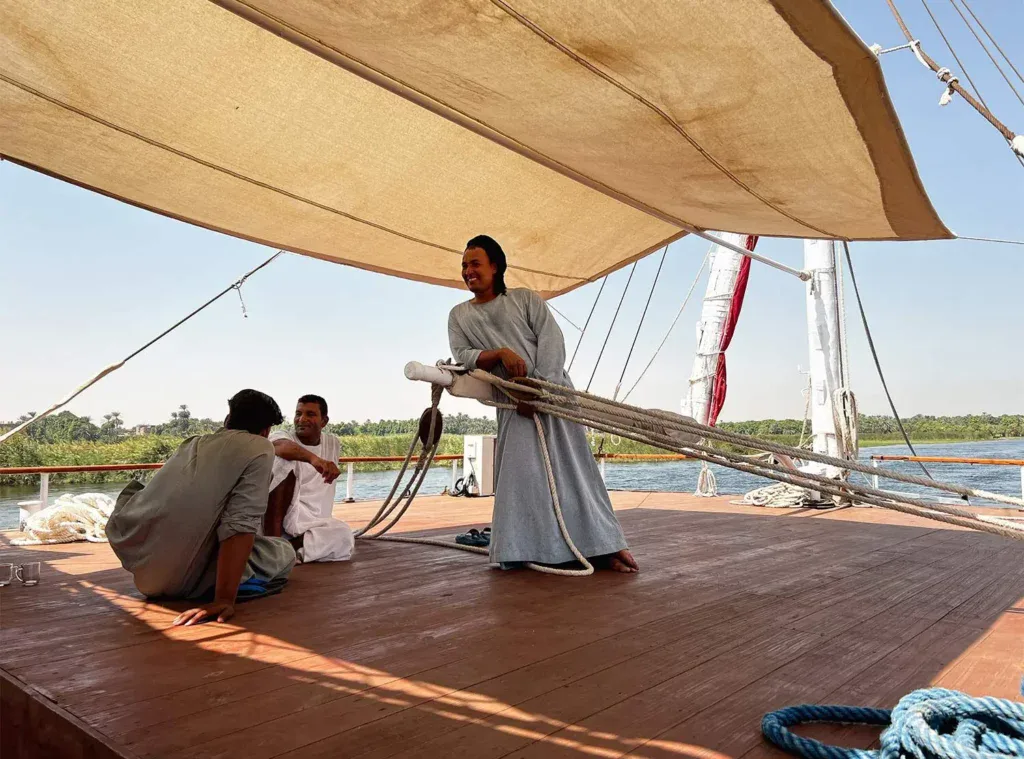
Boat crews combine traditional sailing skills with modern safety training. Many crew members represent multi-generational families who have worked Nile waters for decades, bringing personal stories and local knowledge that enhance cultural understanding throughout the cruise.
Archaeological Sites and Cultural Experiences
Private Nile cruises allow extended site visits, detailed explanations from your Egyptologist guide, and photography opportunities that scheduled tour groups cannot accommodate. The specific experience varies by cruise type, with dahabiyas offering smaller-scale flexibility and chartered Luxury Nile Cruise ships offering broader logistics options.
Valley of the Kings
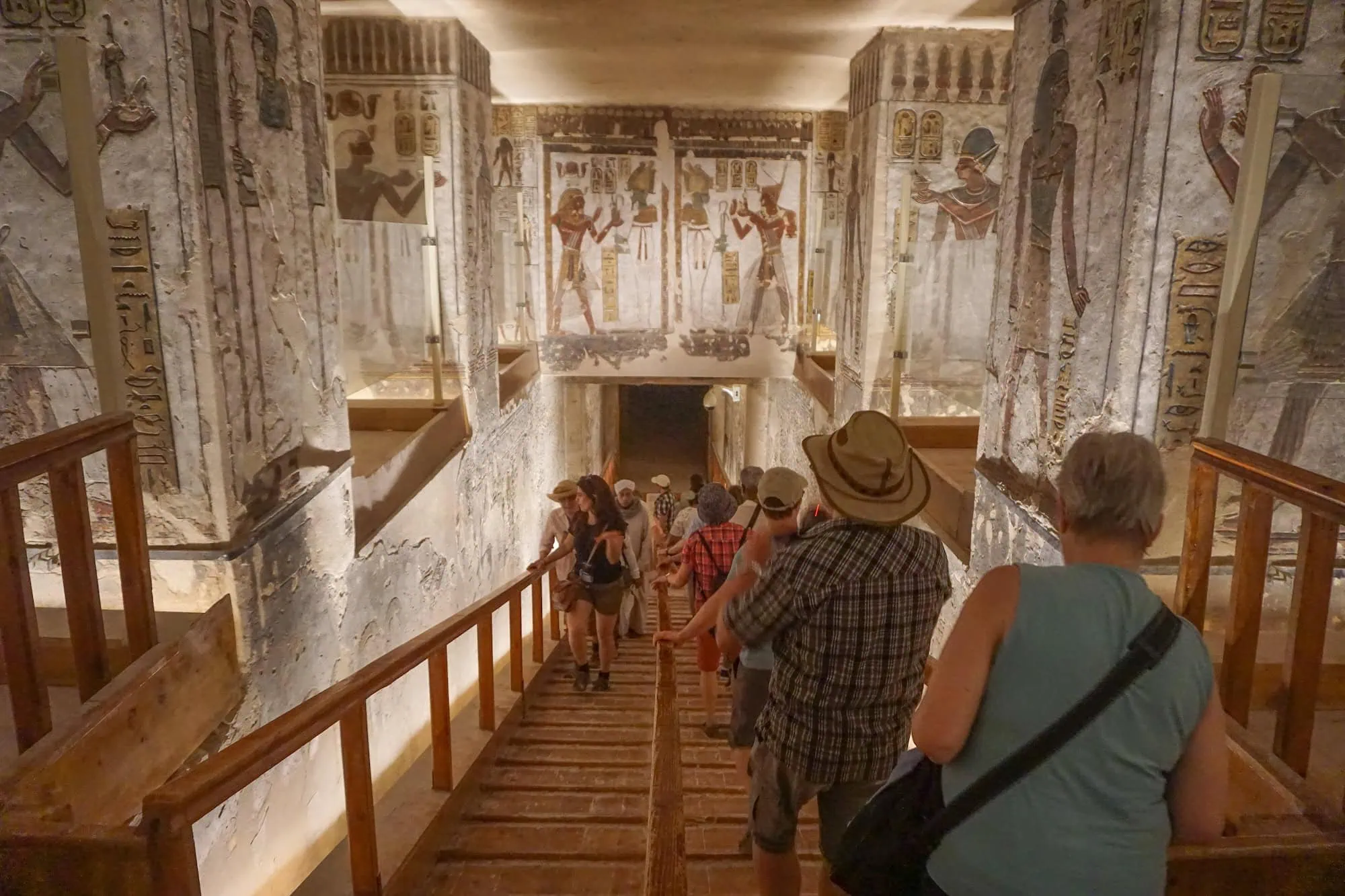
Pre-cruise Valley of the Kings visits are scheduled for early morning (typically 6:00 to 8:00 am arrivals) before tour-coach crowds arrive, creating much better atmospheric conditions for photography and contemplation than mid-morning visits. Your Egyptologist guide selects three tombs from the eight to ten currently open to visitors based on your historical interests, with the option to purchase additional tickets to access Tutankhamun’s tomb (KV62), Seti I’s tomb (KV17), or the tomb of Ramses VI (KV9, with its famous astronomical ceiling).
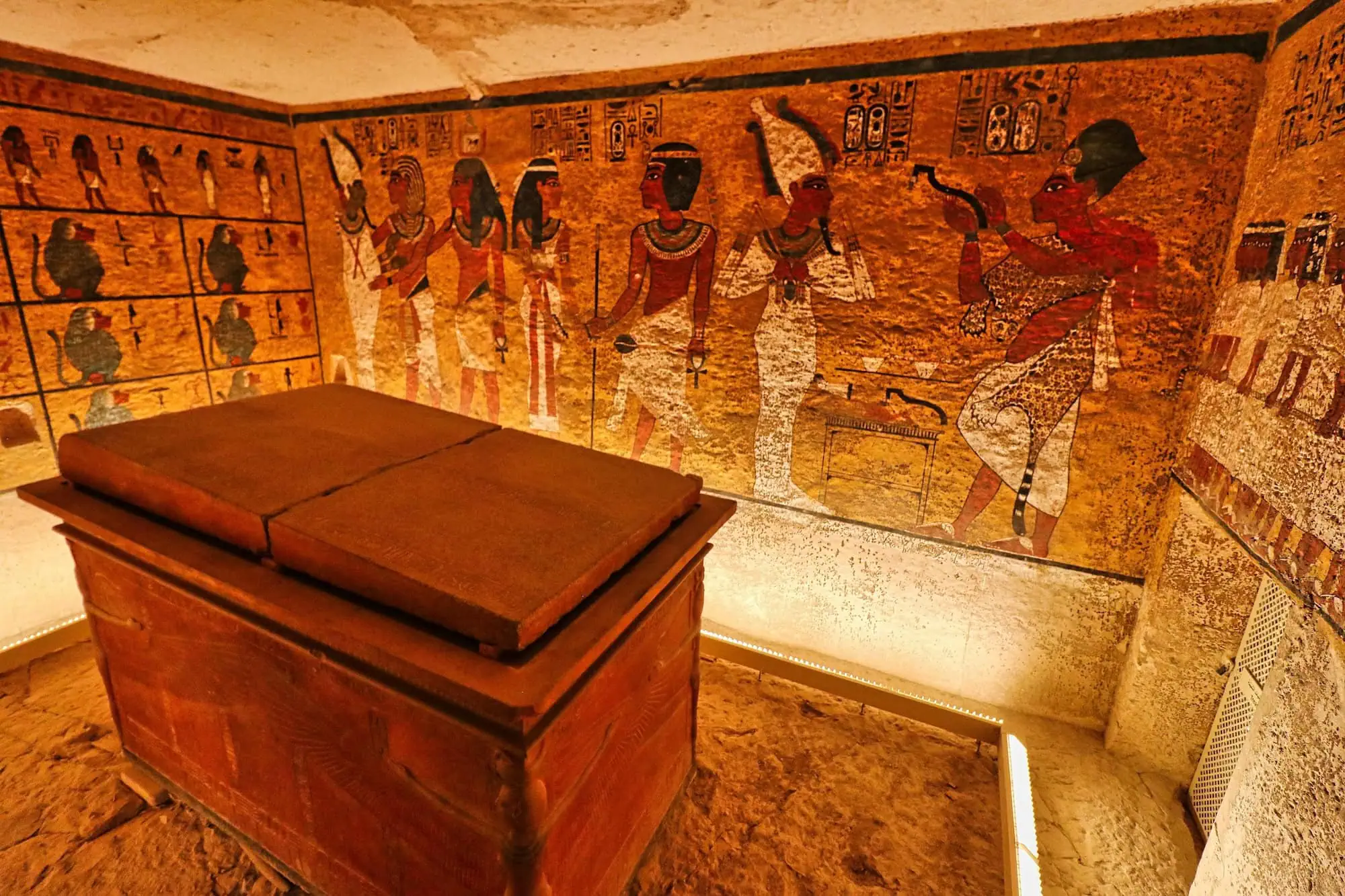
Extended access allows careful examination of hieroglyphic inscriptions and artwork details that rushed visits miss entirely. Professional guides explain burial practices, religious beliefs, and political contexts that surrounded each pharaoh’s death and afterlife preparation.
Temple Visits and the Karnak Sound and Light Show
Temple visits are typically scheduled for early morning (cooler conditions, smaller crowds) or late afternoon (golden hour photography light, shadow play across the columns). Karnak Temple is most photogenic during the golden hour 60 to 90 minutes before sunset, when the light catches the carved hieroglyphs at angles invisible at midday.
The Karnak Sound and Light Show runs nightly with English performances at 7 pm in winter and 8 pm in summer, with rotation through other languages on different days. The show is open to the public and your private cruise can include evening attendance as part of your Luxor pre-cruise programming.
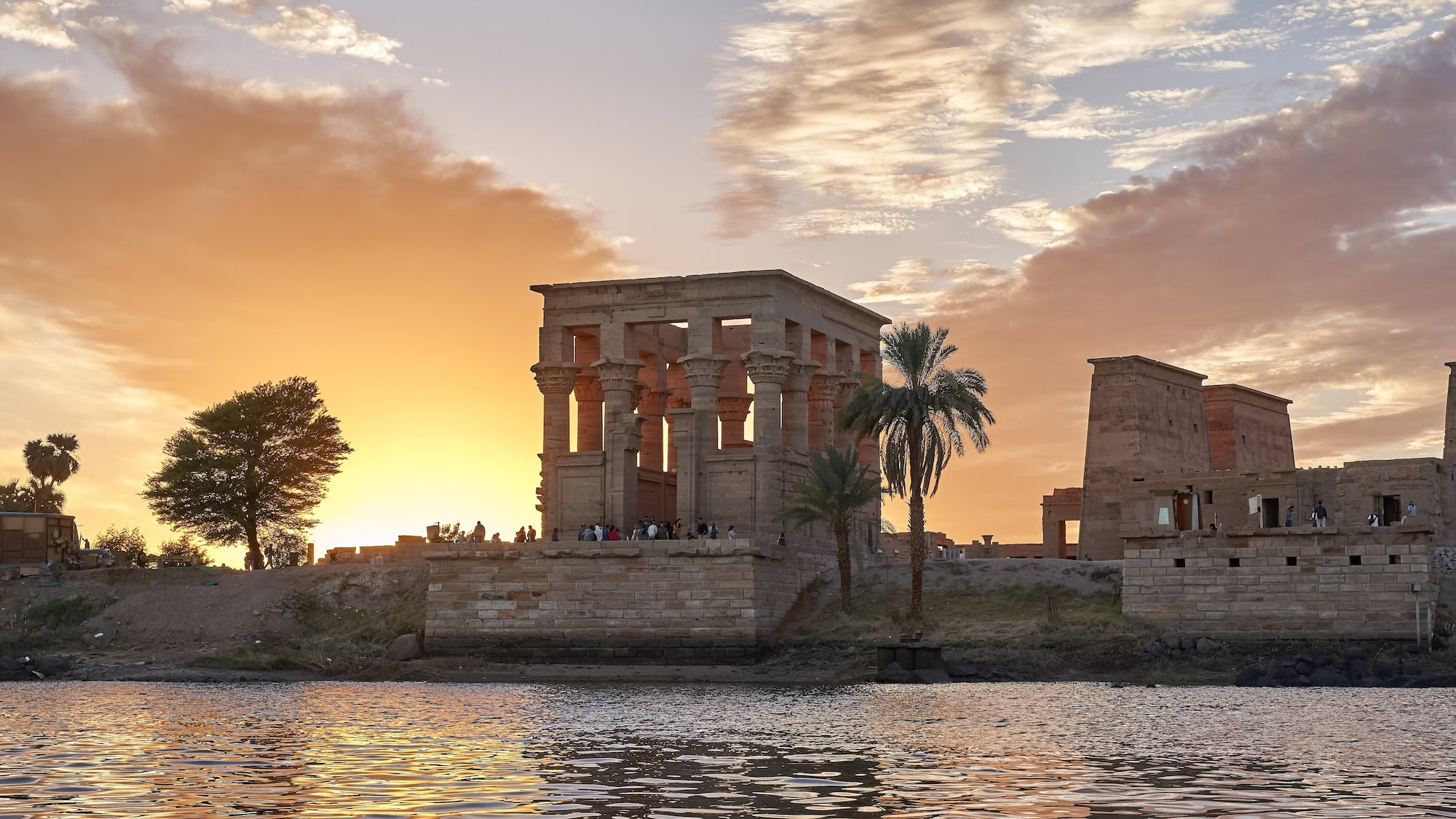
Philae Temple on Agilkia Island offers particularly memorable late-afternoon visits when the light catches the temple stones in warm gold tones. Boat transfers from the mainland are typically included with your cruise package, with timing coordinated by your Egyptologist guide.
Village Encounters
Traditional farming communities along quieter Nile stretches welcome small groups of respectful visitors interested in contemporary Egyptian rural life. Dahabiyas in particular can anchor near villages that larger vessels cannot reach, enabling genuine cultural exchanges through respectful tourism arrangements made by your guide.
Visits typically include pottery workshops where artisans create traditional water vessels using techniques largely unchanged for centuries, bread-making in family ovens, occasional harvest-time activities (depending on season), and tea-sharing with local families. Your Egyptologist guide arranges these encounters with longstanding partners in the riverside communities, ensuring the visits work for both travelers and hosts.
Planning Your Private Nile River Cruise
Advance Booking Recommendations
For peak-season travel (October through April, especially December and January), we recommend starting the planning conversation 4 to 6 months ahead to secure preferred dahabiya cabins and dates. Chartered Luxury Nile Cruise ship reservations typically require 6 to 12 months advance notice due to limited vessel availability.
Off-peak summer trips can be planned 2 to 3 months out for dahabiyas. For Christmas, New Year, and Easter periods, 6 months ahead is essential. Once you contact us, your dedicated Travel Concierge sends your first-draft itinerary within 1 to 12 hours, and most travelers go through 2 to 4 rounds of revisions before finalizing.
Pre-Cruise Preparation in Luxor or Aswan
Most private dahabiya journeys begin in Luxor (with the actual cruise starting from Esna, about 1 hour south). We recommend arriving 1 to 2 days early for proper acclimatization and pre-cruise sightseeing. Pre-cruise Luxor touring typically covers Karnak Temple, Luxor Temple, and a half-day at the Valley of the Kings on the West Bank.
Aswan-departures (where the cruise ends in Luxor) require similar 1 to 2-day advance arrival for Philae Temple, the Unfinished Obelisk, and optional Abu Simbel excursions. Early arrival also allows final pre-departure briefings with your Egyptologist guide.
Health and Safety Considerations
Private Nile cruises maintain comprehensive first aid equipment and safety procedures. Crew members receive regular emergency response training, and satellite or mobile communication systems ensure constant contact with medical facilities. Larger Luxury Nile Cruise ships add a dedicated medical officer or nurse on board.
Medical insurance covering international travel and evacuation services provides additional security for all passengers. Prescription medications should include sufficient supplies for extended journeys, as remote locations offer limited pharmaceutical access.
Sun protection becomes critical during extended outdoor temple exploration and deck relaxation time. High SPF sunscreen, wide-brimmed hats, and lightweight long-sleeve clothing prevent overexposure during archaeological adventures.
Your Private Nile Cruise, Designed Around You
A private Nile cruise is rarely a one-size product. The right vessel depends on your group size, your preferred level of luxury, and how much time you have along the river.
A 4-night dahabiya stretch between Esna and Aswan, a 7-night extended journey covering Dendara and Abydos, or a fully chartered Luxury Nile Cruise ship for a multi-generational family group — each is built differently, around different priorities.
Tell your dedicated Travel Concierge what kind of Nile experience you have in mind, and we’ll match you with the right vessel and route. Awarded TripAdvisor Travelers’ Choice every year from 2020 through 2026, with first-draft itineraries back in your inbox within 1 to 12 hours.
Frequently Asked Questions
Traditional dahabiyas accommodate 8 to 16 passengers in 4 to 8 cabins, depending on the vessel.
Smaller dahabiyas (8 to 10 passengers) work well for couples, honeymooners, and small family groups seeking maximum privacy. Larger dahabiyas (12 to 16 passengers) suit extended families, friend groups, or multi-generational journeys, and can be fully chartered for complete group exclusivity.
For groups of 30 or more wanting exclusive vessel access, a fully chartered Luxury Nile Cruise ship (typically 50 to 150 passengers across 25 to 75 cabins) becomes the more economical option. Egypt Tours Plus arranges both formats and helps match the right vessel type to your group size and preferences.
Standard private Nile cruise packages include accommodation in your selected cabin category, all meals on board (full-board for dahabiyas, varied dining options on Luxury Nile Cruise ships), guided shore visits at the major temples (Karnak, Luxor, Edfu, Kom Ombo, and Philae depending on direction), your private Egyptologist guide, all site entrance fees during the cruise, and airport-to-ship transfers.
Items typically not included: international flights to and from Egypt, Egyptian visa ($25 USD), travel insurance, drinks at meals (bottled water, wine, beer, and spirits are typically extra), gratuities for cruise crew and Egyptologist guide, and optional add-ons like hot air balloon rides over Luxor or special-access tomb tickets at the Valley of the Kings.
Every Egypt Tours Plus package is fully customizable, so anything can be added or removed during the planning conversation with your Travel Concierge.
Dahabiyas are wind-powered sailing vessels and handle normal Nile conditions excellently, including the typical 10 to 25 km/h northerly breezes that make sailing so reliable in winter and spring.
During the rare severe windstorms (occasional in late spring), dahabiyas may anchor temporarily in sheltered coves until conditions stabilize, with the schedule adjusted accordingly. Most weather-related delays are 2 to 4 hours rather than full days.
Chartered Luxury Nile Cruise ships use diesel propulsion and are unaffected by wind conditions, sailing on schedule regardless of weather. Both vessel types maintain comprehensive safety procedures, with crews trained in weather assessment and emergency response.
Dahabiya dining is significantly more personalized than the buffet format on standard Luxury Nile Cruise ships. Most dahabiyas serve plated meals at communal or small-group tables, with the chef preparing fresh dishes daily using ingredients sourced from riverside markets and farms.
Menus typically rotate through traditional Egyptian dishes (molokhia, koshari, grilled fish, slow-cooked tagines), Mediterranean preparations, and lighter international options. Vegetarian, vegan, gluten-free, halal, and other dietary requirements are accommodated with advance notification during booking.
Chartered Luxury Nile Cruise ships offer a different dining model with multiple restaurants on board (typically 2 to 3 venues), a mix of buffet and à la carte service, and broader cuisine variety to suit larger group preferences. Both formats include afternoon tea and evening drinks on deck.
Private Nile cruises work well for elderly travelers, particularly chartered Luxury Nile Cruise ships with elevators between decks, wider cabin doorways, on-board medical staff, and easier embarkation/disembarkation procedures.
Dahabiyas can also accommodate older travelers, though they involve more steps between decks and narrower companionways. Pre-cruise discussion with your Travel Concierge ensures the right vessel match for mobility considerations.
Shore excursions at major sites (Karnak, Edfu, Kom Ombo, Philae) involve significant walking on uneven ancient stone surfaces, with limited shade in some areas. Pacing is fully adjustable on private cruises, including the option to stay on board during specific shore visits or to arrange shorter, modified site visits with seating breaks.
The Valley of the Kings requires walking up moderate inclines and descending into tombs via wooden stairs, which may be challenging for travelers with significant mobility limitations.
A versatile zoom lens (24-105mm or 24-200mm range) covers most needs from temple-wide architectural shots to detailed hieroglyph close-ups. A wide-angle lens (16-35mm or similar) helps capture the massive scale of the Karnak Hypostyle Hall and the colossi at Abu Simbel.
A polarizing filter cuts haze and enhances the contrast between sky, sandstone, and the Nile water. Lens cleaning supplies are essential because dust accumulates quickly in the desert environment.
Smartphone cameras handle casual documentation well, particularly for golden-hour deck shots and informal moments on board. Tripods are restricted at most archaeological sites and require advance permits arranged through Egypt’s Ministry of Tourism and Antiquities for serious low-light photography. Drone use is heavily regulated and requires specific permits arranged through your Travel Concierge.
For peak-season travel (October through April, especially December and January), we recommend starting the planning conversation 4 to 6 months ahead to secure preferred dahabiya cabins and dates.
Chartered Luxury Nile Cruise ship reservations typically require 6 to 12 months advance notice due to limited vessel availability, particularly during peak winter season.
Off-peak summer trips can be planned 2 to 3 months out for dahabiyas. For Christmas, New Year, and Easter periods, 6 months ahead is essential for both vessel types.
Once you contact us, your dedicated Travel Concierge sends your first-draft itinerary within 1 to 12 hours, and most travelers go through 2 to 4 rounds of revisions before finalizing. We’ve also built complete private Nile cruise packages with as little as 4 to 6 weeks’ notice when needed, though vessel availability narrows considerably.
Professional chefs on both dahabiyas and chartered Luxury Nile Cruise ships routinely accommodate vegetarian, vegan, gluten-free, halal, kosher, low-sodium, diabetic, and most allergen-restricted diets with advance notification during the planning phase.
Specific allergies (nuts, shellfish, etc.) are handled with strict protocols including separate prep surfaces and dedicated cooking equipment when needed. Notify your Travel Concierge during booking, with severity-level confirmation 4 to 6 weeks before departure for kitchen preparation.
Strict kosher dining requires advance arrangement and may involve external catering on certain vessels — discuss specific requirements with your Travel Concierge as part of the planning conversation. Dahabiyas with their smaller kitchens are typically more flexible on individual customization, while Luxury Nile Cruise ships offer broader buffet variety to suit mixed-preference groups.
Weather-related delays on Nile cruises are uncommon but do occasionally happen, particularly during the late-spring khamsin (sandstorm) season in March-April when visibility temporarily drops.
Dahabiyas are most affected by wind and may anchor in sheltered coves during severe conditions. Schedule adjustments typically involve compressed sailing on the next day or modified shore-visit timing, with the cruise’s overall itinerary largely preserved. Critical archaeological visits at Karnak, Edfu, Kom Ombo, and Philae are protected as schedule priorities.
Chartered Luxury Nile Cruise ships use diesel propulsion and are essentially unaffected by wind, maintaining schedule regardless of weather conditions.
If a major delay does occur, your Egyptologist guide and cruise director coordinate alternative arrangements, including extra time at sites you haven’t yet visited or adjusted shore-excursion timing to make up for lost cruise hours. Egypt Tours Plus’ 24/7 in-country support team manages any required logistics adjustments.
Crew gratuities are not typically included in published cruise prices and are paid separately at the end of your sailing.
Standard practice on a Luxury Nile Cruise ship is approximately $10 to $15 USD per passenger per day distributed collectively to the crew (delivered as a single envelope at the end of the cruise), plus separate gratuities of $10 to $15 USD per day for your Egyptologist guide.
On dahabiyas with their smaller crew of 6 to 10 staff serving 8 to 16 passengers, the personalized service typically warrants $15 to $25 USD per passenger per day pooled to the crew, with the same $10 to $15 USD per day for the Egyptologist guide.
Additional recognition for exceptional service (specific staff members who went above standard service) is welcomed but not required. Your final itinerary documentation includes specific gratuity guidance for your selected vessel.
Modern dahabiyas feature en-suite private bathrooms in every cabin with hot water, full shower facilities, flush toilets, and daily housekeeping service. Premium dahabiyas include marble or stone-tile bathrooms, premium toiletries, and adequate space for comfortable use.
Bathroom size is typically smaller than a standard 4-star hotel bathroom because of the vessel’s space constraints, but functionally equivalent in terms of amenities and cleanliness standards.
Some heritage dahabiyas (older traditional vessels) still operate with shared bathroom arrangements, but these are increasingly rare. Egypt Tours Plus books only en-suite-equipped vessels by default unless specifically requested otherwise.
Chartered Luxury Nile Cruise ships offer larger bathroom configurations, particularly in suite categories, comparable to 4 and 5-star hotel standards.
Special celebrations work well on private Nile cruises, particularly because the entire vessel can be customized around your group’s needs.
Common arrangements include anniversary dinners with private deck setup, birthday celebrations with custom cakes and decorations, honeymoon-specific touches (rose petals, champagne arrangements, private dining), wedding-anniversary recreations, milestone retirements, and bar mitzvah/bat mitzvah celebrations.
Chartered Luxury Nile Cruise ships are particularly suited to larger celebrations like wedding parties, milestone-anniversary multi-family gatherings, or significant-birthday family reunions, with full vessel exclusivity and access to multiple dining venues for different parts of the celebration.
Discuss specific celebration needs with your Travel Concierge during the planning phase. Most arrangements require 2 to 4 weeks advance notification, with more elaborate celebrations (custom catered meals, specific entertainment, extensive decorations) requiring 6 to 8 weeks.

Design Your Custom Tour
Explore Egypt your way by selecting only the attractions you want to visit