

Ben Youssef Mosque – The Mosque that Refused to Die
The largest mosque in Marrakech has stood through centuries of change.
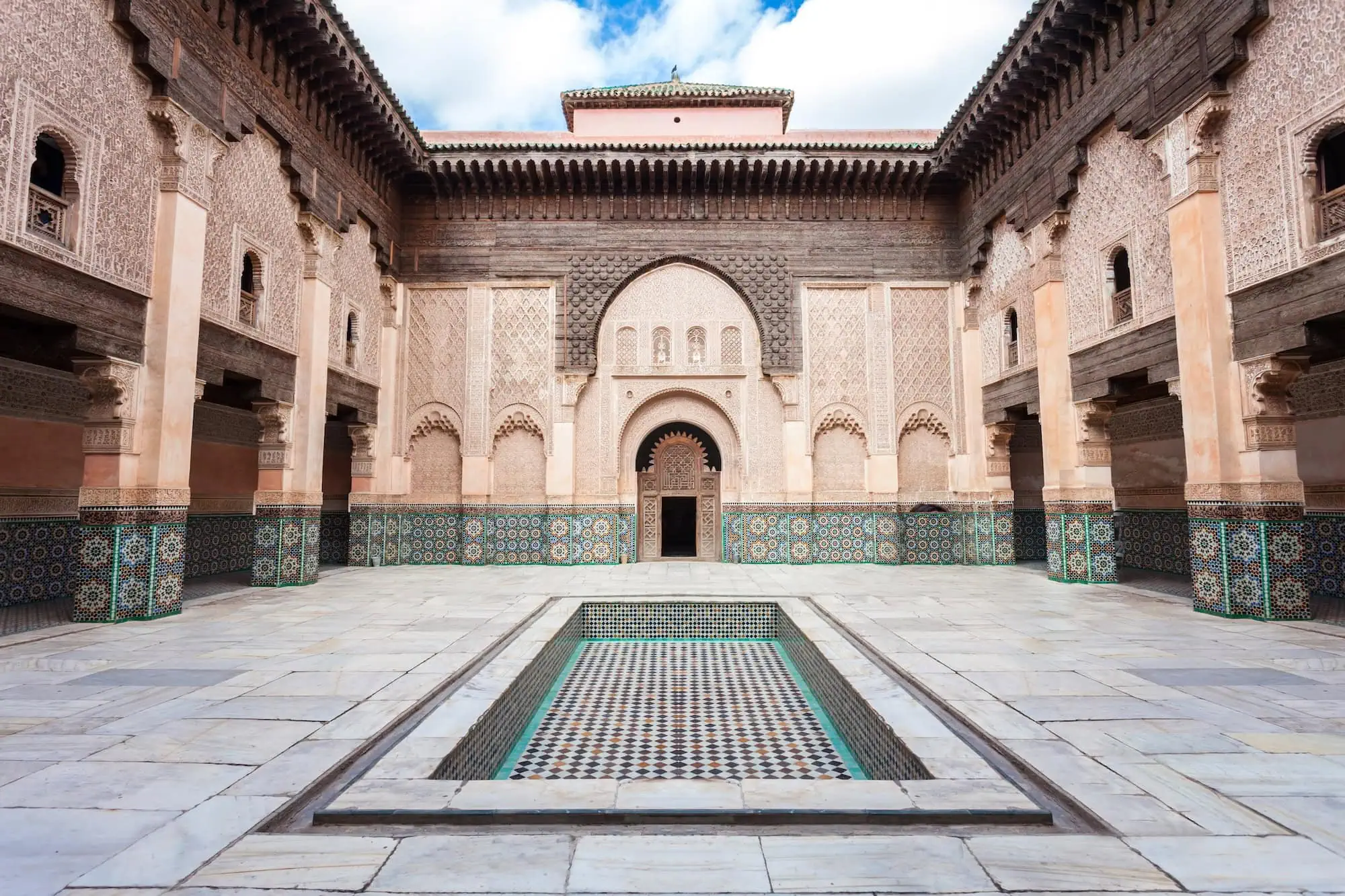
Dating back to the 12th century, Ben Youssef Mosque represents one of Morocco’s most significant religious monuments, where Almoravid architectural heritage meets active Islamic worship. This isn’t just another tourist destination—it’s a living piece of history where thousands still gather for prayer, maintaining traditions that stretch back nearly a millennium.
The mosque complex anchors Marrakech’s medina, serving as both spiritual center and architectural masterpiece that showcases the pinnacle of Hispano-Moresque design. Unlike many historical sites that function purely as museums, Ben Youssef Mosque continues its original purpose while offering glimpses of Morocco’s golden age of Islamic art and culture.
Historical Foundation and Almoravid Legacy
The mosque’s story begins with Sultan Ali ibn Yusuf in the early 12th century, during the height of Almoravid power. Originally constructed as Marrakech’s main congregational mosque, it served the spiritual needs of a rapidly growing imperial capital. The Almoravids chose this location strategically, positioning their grand mosque at the heart of what would become one of Morocco’s most important cities.
Early Almoravid Construction
When Yusuf ibn Tashfin first established Marrakech in 1070, the need for a central place of worship became paramount. The initial structure, though smaller than today’s version, already demonstrated the architectural sophistication that would define Moroccan Islamic art. Archaeological evidence suggests the original mosque cost approximately 60,000 gold dinars—an astronomical sum that reflected its importance to the ruling dynasty.
The Almoravid builders created more than just a place of prayer. They established a complex that included facilities for ritual washing, Islamic education, and community gatherings. The mihrab orientation, precisely calculated to face Mecca, became a model for subsequent mosques throughout the region.
Almohad Expansion and Enhancement
When the Almohads conquered Marrakech, they recognized the mosque’s significance rather than destroying it. The new rulers expanded the prayer hall and added decorative elements that blended their own artistic vision with existing Almoravid features. This collaborative architectural approach created layers of history visible today in the remaining structural elements.
The square minaret, rising prominently above the medina, dates from this Almohad period. Its geometric proportions and decorative stucco work exemplify the mathematical precision that characterizes Islamic architecture throughout Morocco and Al-Andalus.
Architectural Features and Islamic Design
Standing on a 64-meter square base, Ben Youssef Mosque showcases the classic hypostyl layout that defines traditional Islamic architecture. The prayer hall extends eastward toward Mecca, supported by rows of horseshoe arches that create rhythmic patterns of light and shadow throughout the day.
The mosque’s courtyard serves multiple functions beyond aesthetic beauty. This sahn provides space for overflow crowds during major Islamic holidays and creates the cooling effect essential for comfort in Marrakech’s climate. Traditional fountains once provided water for ritual ablutions, though modern facilities now serve this purpose more efficiently.
Moorish Decorative Elements
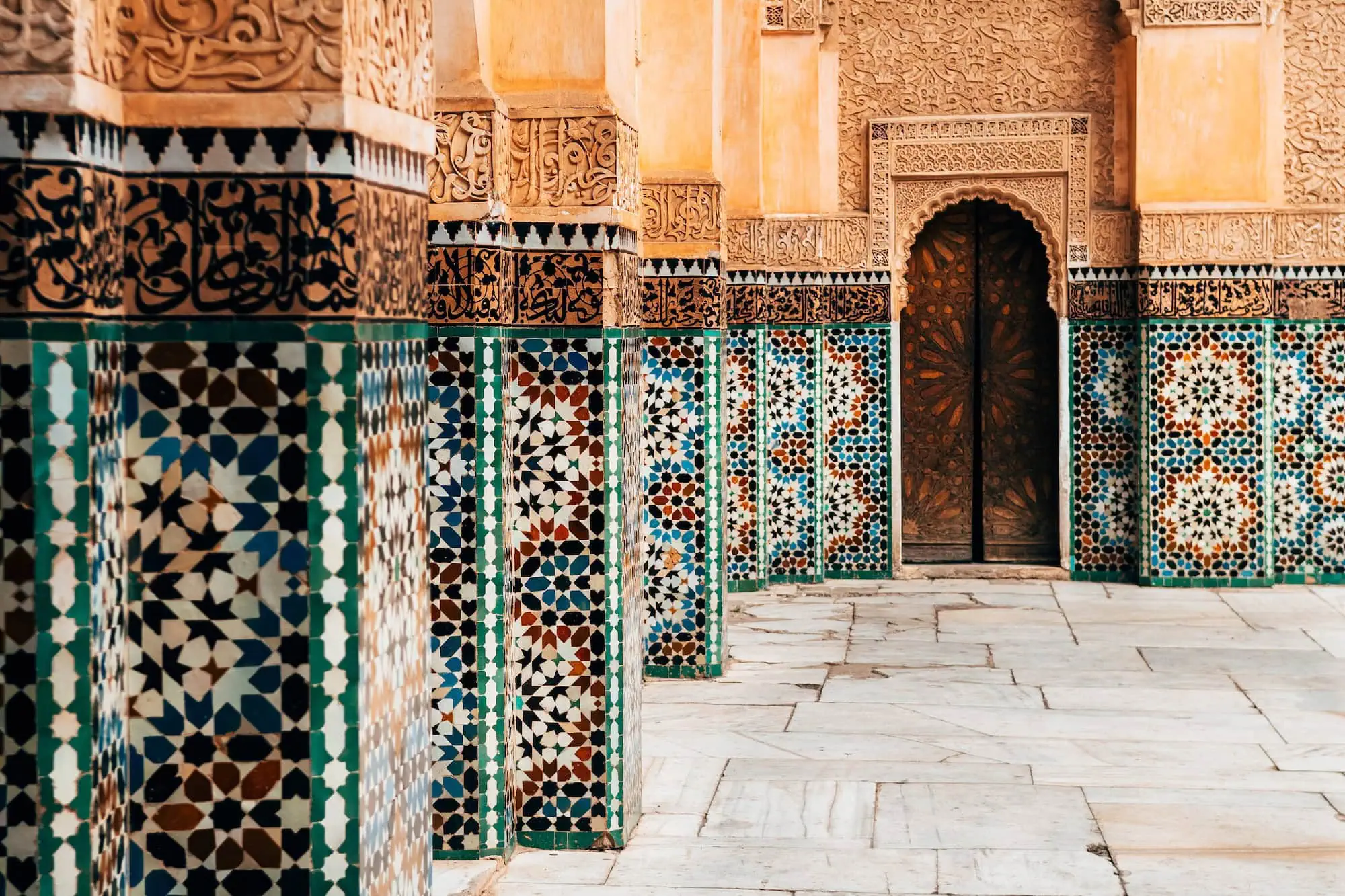
What visitors can observe from exterior viewpoints reveals intricate stucco work and geometric patterns characteristic of Hispano-Moresque style. These decorations aren’t merely ornamental—they represent Islamic artistic principles where infinite geometric patterns reflect divine order. The interplay of calligraphy, arabesques, and mathematical designs creates visual harmony that has influenced architectural styles across North Africa and southern Spain.
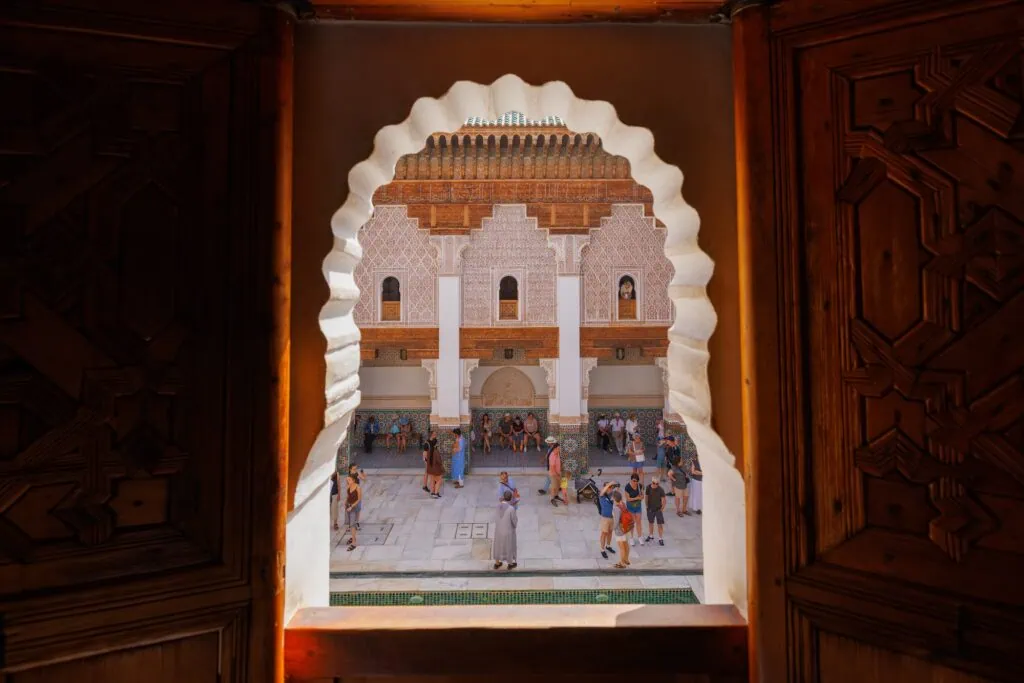
Cedar wood elements, carved by master craftsmen, demonstrate the high level of skill required for such monumental projects. Each wooden beam and decorative panel required months of careful work, explaining why such buildings took decades to complete.
Modern Conservation Efforts
Recent restoration work has focused on preserving original materials while ensuring structural stability. Specialists in Islamic architecture have worked to maintain authentic decorative techniques, training new generations of craftsmen in traditional skills. The Moroccan Ministry of Religious Affairs oversees these conservation efforts, recognizing the mosque’s importance to both religious life and cultural heritage.
Religious Function and Community Role
Ben Youssef Mosque remains an active center for Islamic worship, hosting five daily prayers and special services during Ramadan and major holidays. The mosque’s capacity allows thousands of worshippers to gather, particularly during Friday congregational prayers when the main prayer hall fills completely.
Traditional Islamic Education
Historically, the mosque supported extensive religious education programs. While formal madrasa functions have shifted to nearby institutions, religious instruction continues through traditional circles where Islamic scholars teach Quranic recitation, Islamic law, and Arabic language. These programs maintain centuries-old teaching methods passed down through generations of religious authorities.
The mosque’s library once held thousands of manuscripts covering Islamic jurisprudence, philosophy, and scientific texts. Though many historical documents have been moved to specialized collections, the tradition of Islamic scholarship remains integral to the mosque’s identity.
Community Gathering Space
Beyond formal religious services, the mosque serves broader community functions. Wedding ceremonies, funeral prayers, and religious celebrations bring together families and neighborhoods, reinforcing social bonds that extend far beyond the mosque walls. Local Islamic authorities, including the qadi who oversees religious legal matters, maintain offices connected to the complex.
Visiting Ben Youssef Mosque
Non-Muslim visitors cannot enter the mosque itself, following traditional Islamic protocol for active places of worship. However, the exterior architecture provides excellent opportunities for photography and appreciation of Moroccan Islamic art.
Viewing Opportunities and Photography
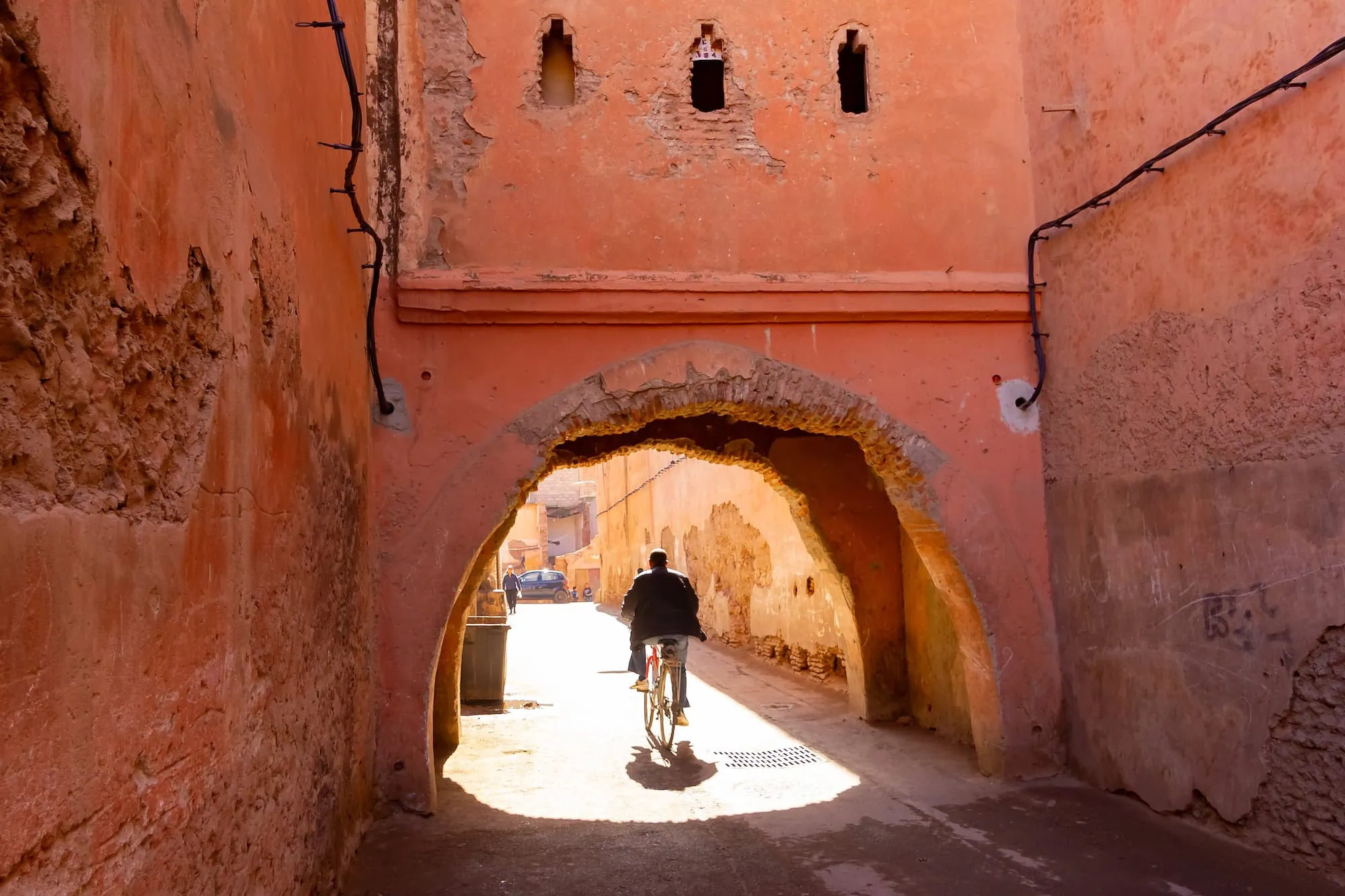
The mosque’s prominent position in the medina means visitors encounter it naturally while exploring Marrakech’s historical quarter. Early morning and late afternoon lighting create ideal conditions for architectural photography, highlighting the intricate stucco work and geometric proportions.
Street-level views allow appreciation of the minaret’s impressive height and the mosque’s integration with surrounding traditional buildings. The contrast between ancient Islamic architecture and bustling modern medina life creates compelling visual narratives for photography enthusiasts.
Integration with Medina Exploration
Most visitors combine mosque viewing with tours of nearby attractions, particularly the Ben Youssef Madrasa—the adjacent former Koranic school that shares architectural heritage and historical connections. This UNESCO World Heritage site offers interior access and demonstrates similar decorative techniques used in the mosque’s construction.
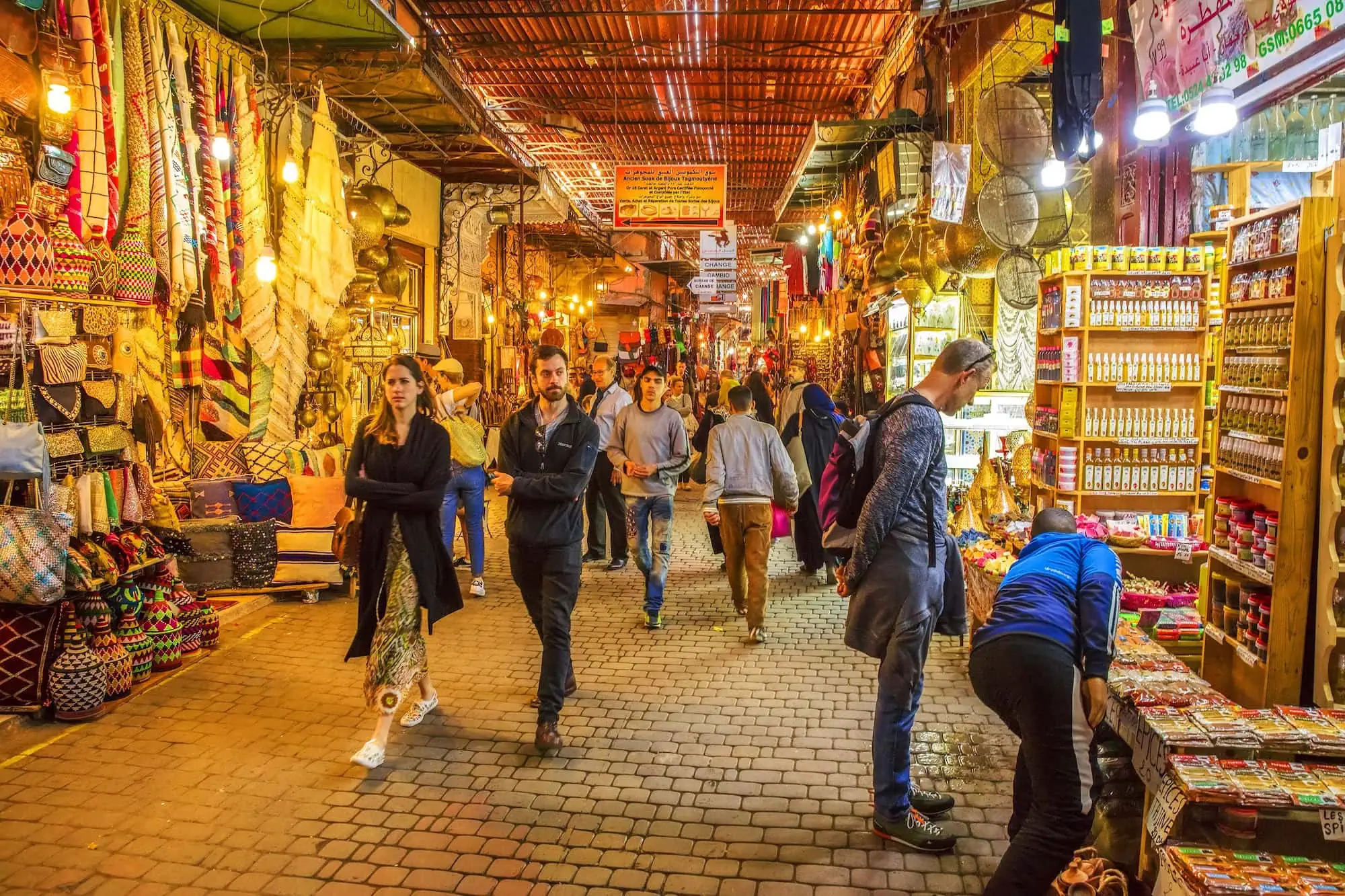
The surrounding medina quarters contain traditional souks, riads, and other historical buildings that complement the mosque experience. We recommend allowing several hours for comprehensive exploration of this historically rich area.
Cultural Significance and Modern Context
Ben Youssef Mosque represents more than architectural achievement—it embodies Morocco’s continuous Islamic heritage spanning nearly a thousand years. The building demonstrates how religious institutions adapt to changing times while maintaining core spiritual functions.
UNESCO Recognition and Protection
While the mosque itself isn’t individually listed, it sits within Marrakech’s medina UNESCO World Heritage site. This designation recognizes the entire historical quarter’s outstanding universal value and ensures protection for future generations. International conservation standards guide all maintenance and restoration work.
The mosque’s inclusion in heritage protection reflects growing appreciation for Islamic architectural contributions to world culture. Scholars from universities worldwide study its design principles and construction techniques as examples of medieval architectural sophistication.
Contemporary Religious Life
Today’s congregation includes longtime Marrakech residents alongside newer inhabitants drawn by the city’s economic opportunities. The mosque bridges traditional and modern Islamic practice, accommodating contemporary needs while preserving historical worship traditions.
Religious festivals and celebrations continue much as they have for centuries, creating continuity between past and present. The call to prayer, broadcast from the historic minaret, remains a defining sound of medina life, reminding residents and visitors of the mosque’s enduring spiritual significance.
Planning Your Marrakech Experience
We understand that experiencing Morocco’s Islamic heritage requires sensitivity to religious customs and cultural protocols. Our expert guides provide context that helps visitors appreciate architectural and historical significance while respecting active religious use.
Expert Guidance and Cultural Context
Our Morocco specialists design itineraries that include comprehensive medina exploration, allowing time for both major monuments and hidden architectural gems. With decades of experience in Moroccan tourism, we ensure visitors gain deep appreciation for Islamic culture and architectural achievement.
Private guides offer detailed explanations of architectural features, historical context, and religious significance that enhance understanding beyond what independent exploration can provide. This personalized approach helps visitors connect meaningfully with Morocco’s rich Islamic heritage.
Comprehensive Morocco Tours
Ben Youssef Mosque fits naturally into broader Morocco itineraries that might include imperial cities, Atlas Mountains, and desert experiences. We create tailored journeys that balance cultural immersion with practical comfort, ensuring every aspect of your Moroccan adventure exceeds expectations.
Our modern vehicles and experienced drivers navigate medina access points efficiently, maximizing time for exploration while ensuring comfortable travel between destinations. With 24/7 customer support, we handle all logistics so you can focus on experiencing Morocco’s wonders.
Frequently Asked Questions
No, the mosque is restricted to Muslim worshippers only, following traditional Islamic protocols.
Early morning and late afternoon provide optimal lighting for architectural photography highlighting details.
Allow 2-3 hours to explore the mosque exterior, nearby madrasa, and surrounding medina.
The medina’s narrow streets present accessibility challenges, though exterior viewing remains possible.
Modest dress is essential—long pants, covered shoulders, and respectful attire showing cultural sensitivity.
Yes, but maintain respectful distance during prayer services, especially Friday congregational prayers.
The madrasa was built adjacent to the mosque and shares architectural heritage.
Yes, expert guides provide cultural context and architectural explanation enhancing historical appreciation.
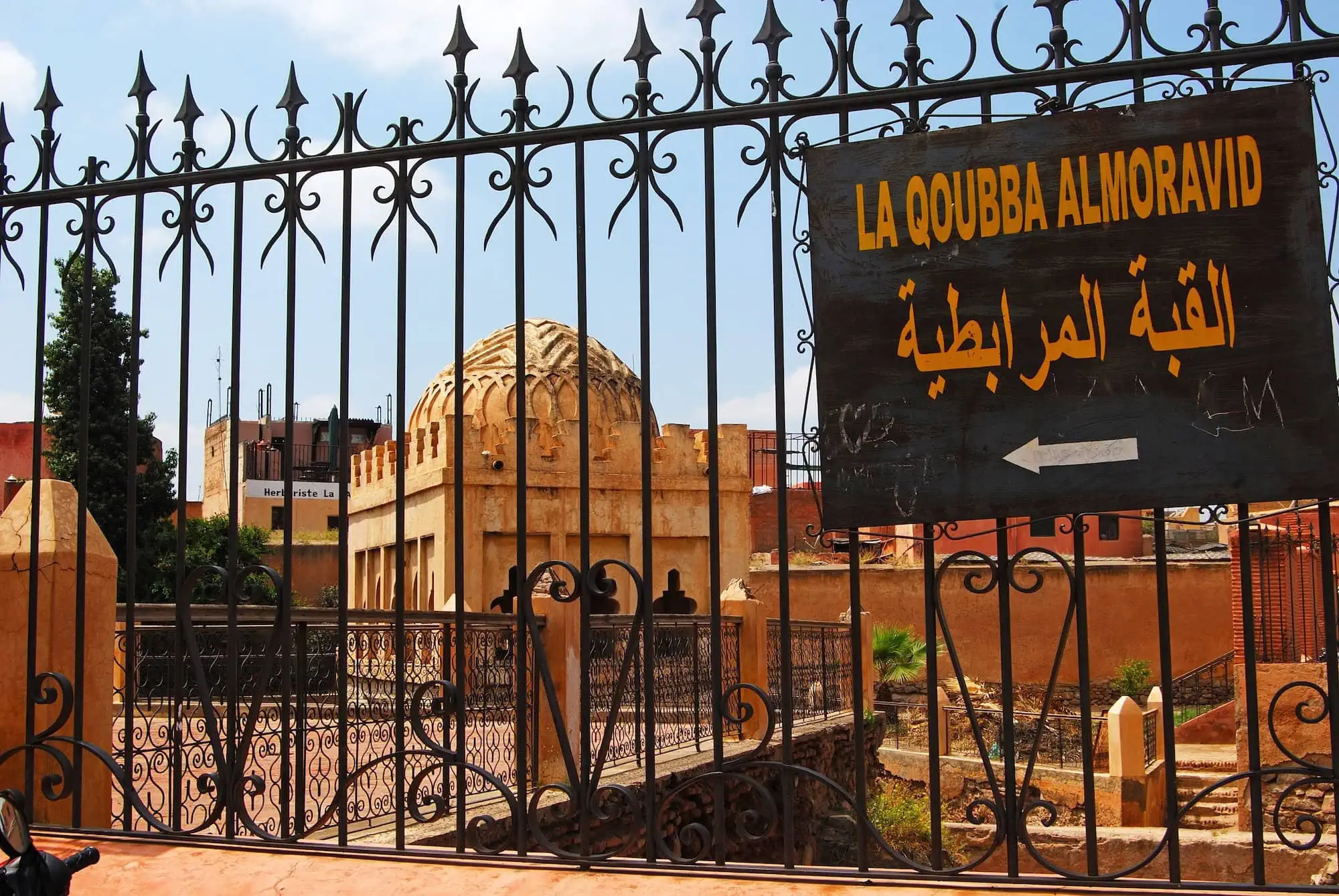
The Almoravid Qubba, traditional souks, and various historical riads create a rich cultural quarter.
Ben Youssef represents one of Morocco’s largest and most historically significant mosques.
Absolutely—the mosque integrates perfectly with medina exploration and other imperial city highlights.
Design Your Custom Tour
Explore Egypt & Morocco your way by selecting only the attractions you want to visit