

Eight days, the whole story
8-Day Nile Cruises
Eight days is enough time to see Egypt properly. Our 8-day Nile cruises run as traditional dahabiyas, 5-star vessels, or full tours that pair the river with Cairo and Abu Simbel, so you can travel the way that suits you. Whichever you choose, you sail the Luxor-to-Aswan stretch with an Egyptologist guide and seven nights to take it all in.
Filter by dahabiya, cruise ship, or full tour
Hand-Picked 8-Day Cruises and Tours, Luxor to Aswan
Your Guide to 8-Day Nile Cruises
Everything you need to choose between a dahabiya, a 5-star vessel, or a full Egypt tour with cruise.
Eight days is the length where Egypt stops feeling like a sampler and starts feeling like the real trip. This guide covers the three ways to travel it: a traditional dahabiya, a 5-star cruise vessel, or a complete Egypt tour that folds Cairo and Abu Simbel into the river journey. It walks through what each one is, what you’ll see, what life onboard looks like, and how to use the filter and search above to find the right departure.
Table of Contents
Why Eight Days Is the Right Length for Egypt
Most travelers underestimate how much time Egypt actually needs. Four or five days on the Nile covers the temples between Luxor and Aswan, but it leaves Cairo, the pyramids, and the deeper sites for “next time.” Eight days is the first length where the trip starts to feel complete rather than compressed.
For a river-focused trip, eight days means seven nights on the water, which is the longest standard cruise duration and the one that gives the sailing days room to breathe. For a fuller trip, eight days is enough to combine Cairo and the pyramids with a Nile cruise and still have time for Abu Simbel. It’s the point where the itinerary stops being a list of sites to tick off and becomes a proper journey.
Egypt Tours Plus has been booking Nile River cruises since 1955, and the 8-day length is consistently one of the most chosen durations in our entire programme. It sits at the sweet spot: long enough to see Egypt properly, short enough to fit a normal vacation. The three ways to travel it, covered next, simply change how you spend those eight days, not whether the length is right.
The Three Ways to Travel: Dahabiya, Cruise Ship, or Full Tour
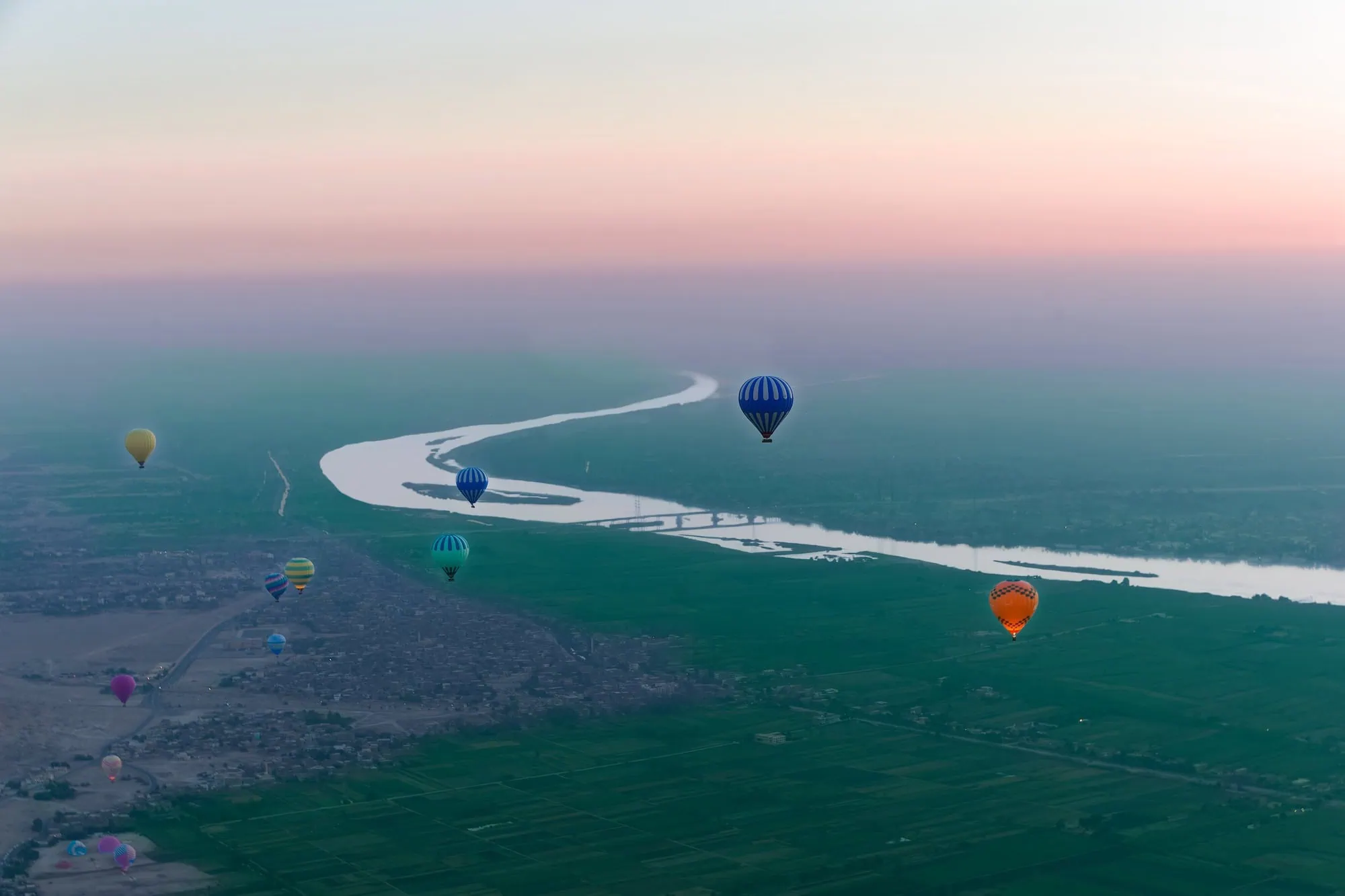
The filter above sorts every 8-day option into three categories. They cover genuinely different trips, so it’s worth understanding what each one is before you filter.
Dahabiya
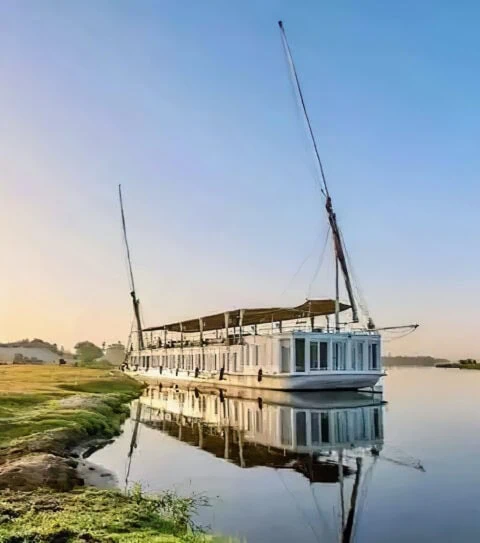
A dahabiya is a traditional twin-mast sailing vessel carrying between 8 and 16 guests. The whole boat functions as one small group, the pace is unhurried, and the vessel can moor at quieter river sites the large ships can’t reach. An 8-day dahabiya is the choice when you want intimacy, traditional sailing, and the river itself as the point of the trip rather than onboard amenities. There are no pools or evening shows on a dahabiya. There is silence, wind in canvas, and a small group of fellow travelers.
Nile Cruise
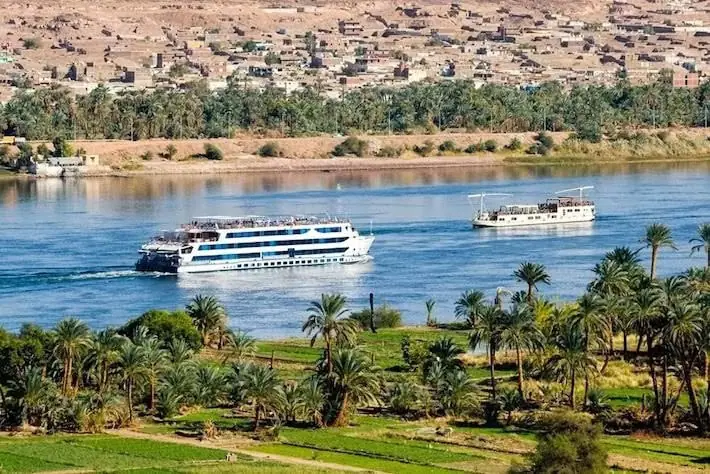
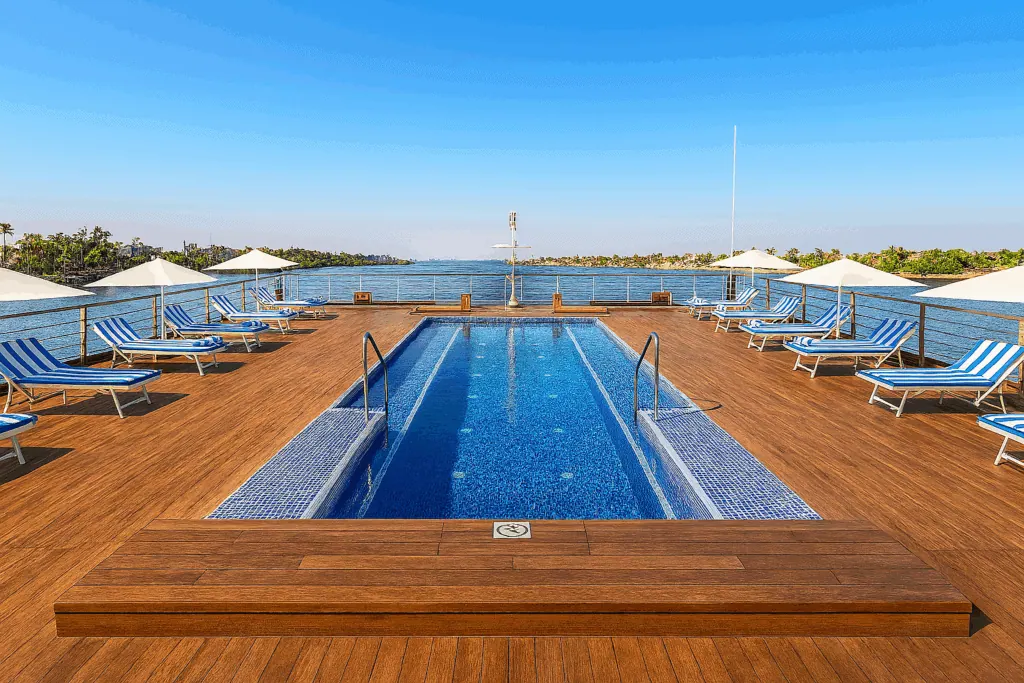
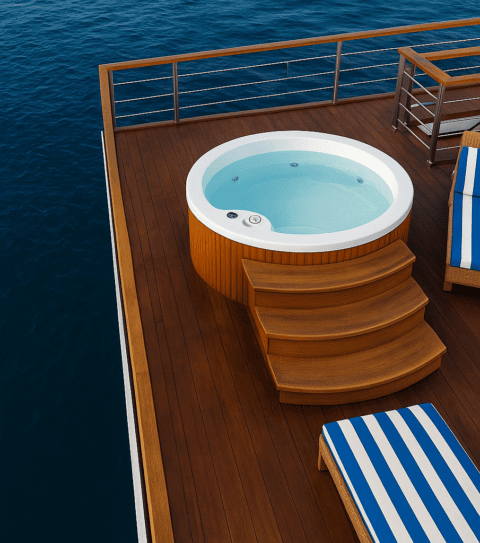
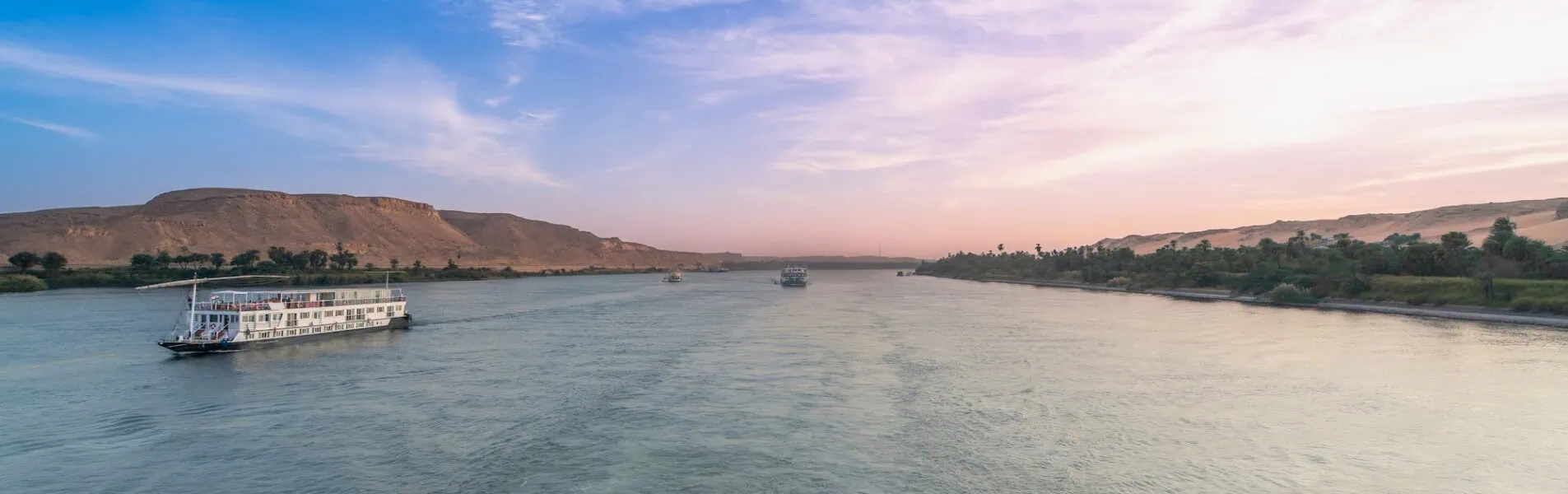
The 5-star cruise vessels are the flagship tier of the Nile: 50 to 150 guests, suite-style cabins, sun decks with pools, full restaurant dining, spa services, and evening entertainment. An 8-day cruise on a 5-star vessel gives you seven nights of hotel-grade comfort on the water, with the onboard experience as much a part of the trip as the temple stops. This is the choice when you want the cruise itself to feel like a floating resort.
Tour with Cruise
A tour with cruise is the complete Egypt trip. It pairs the Nile cruise with Cairo (the Pyramids of Giza, the Grand Egyptian Museum, Old Cairo), an internal flight, and sometimes Abu Simbel, all handled as one itinerary by a single Travel Concierge. The cruise is the river segment of a larger journey rather than the whole trip. This is the choice when you want to see Egypt’s headline sites and the Nile in a single coordinated booking.
Use the filter above to view one category at a time, or the search to find a specific vessel or departure. If you’re not sure which category fits, the planning conversation later in this guide is built around exactly that question.
What You See on an 8-Day Nile Cruise
Every 8-day option, whichever category you choose, covers the core Luxor-to-Aswan temple route. The tour-with-cruise options add Cairo and usually Abu Simbel on top. Here’s the full picture.
In Luxor (East Bank)
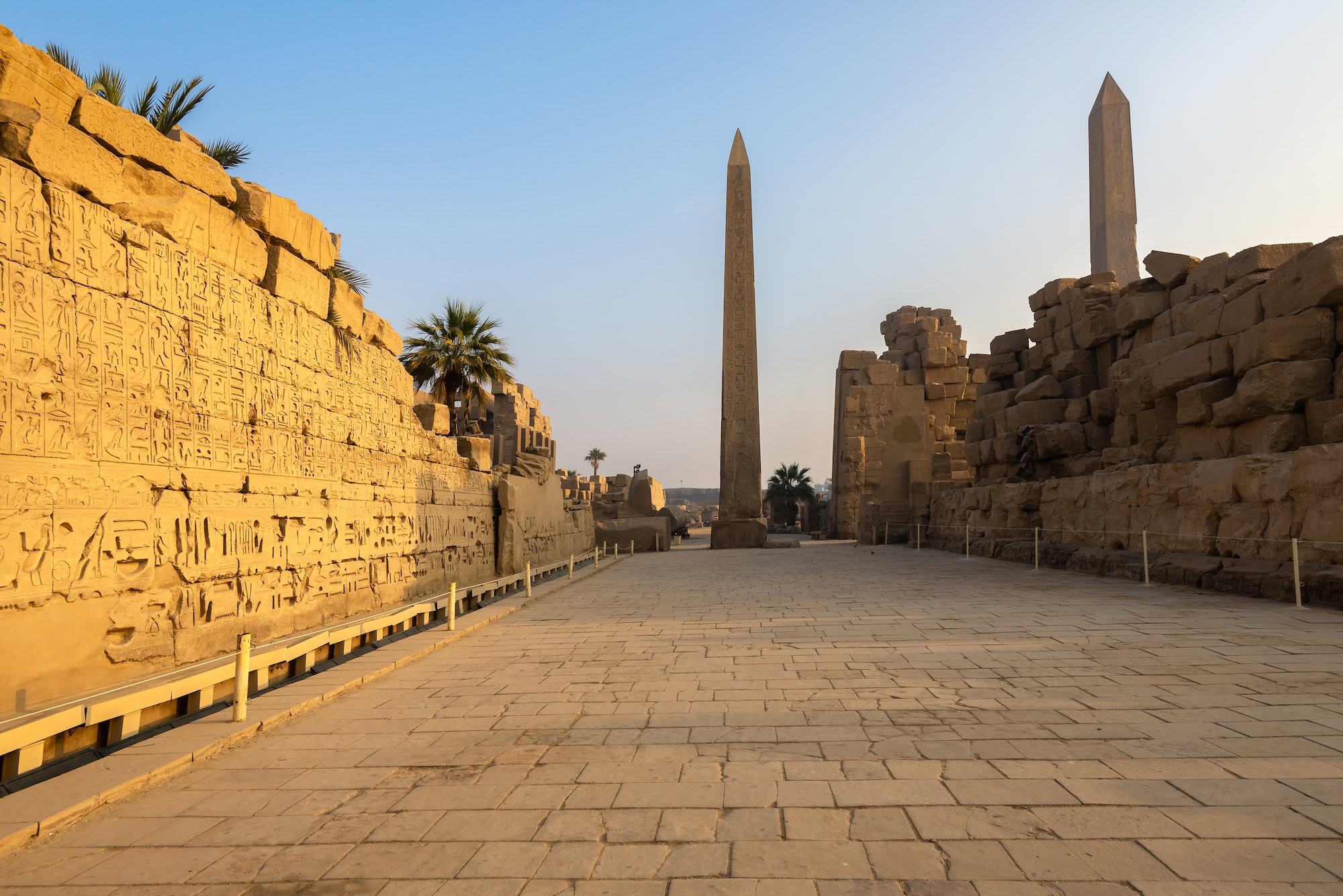
- Karnak Temple: the largest ancient religious complex ever built, with the Great Hypostyle Hall and its 134 columns at its heart.
- Luxor Temple: linked to Karnak by the 2.7 km Avenue of Sphinxes, strikingly lit after dark.
In Luxor (West Bank)
- Valley of the Kings: the royal necropolis with more than 60 tombs, including those of Tutankhamun and Ramses IV. Standard tickets include three tombs.
- Hatshepsut Temple (Deir el-Bahari): the three-terraced mortuary temple of Egypt’s only successful female pharaoh.
- Colossi of Memnon: the surviving quartzite statues of Amenhotep III, a brief photo stop between West Bank sites.
Between Luxor and Aswan
- Edfu Temple (Temple of Horus): the most completely preserved temple in Egypt, reached from the dock by horse-drawn carriage.
- Kom Ombo Temple: the double temple dedicated to Sobek and Horus the Elder, with its adjacent crocodile museum.
In Aswan
- Philae Temple: the Temple of Isis, relocated to Agilkia Island during the 1972-1980 UNESCO rescue operation.
- High Dam: the modern engineering counterpoint, with a stop above Lake Nasser.
- Unfinished Obelisk: a 42-metre granite obelisk still attached to the bedrock of its ancient quarry.
On the Tour-with-Cruise Options
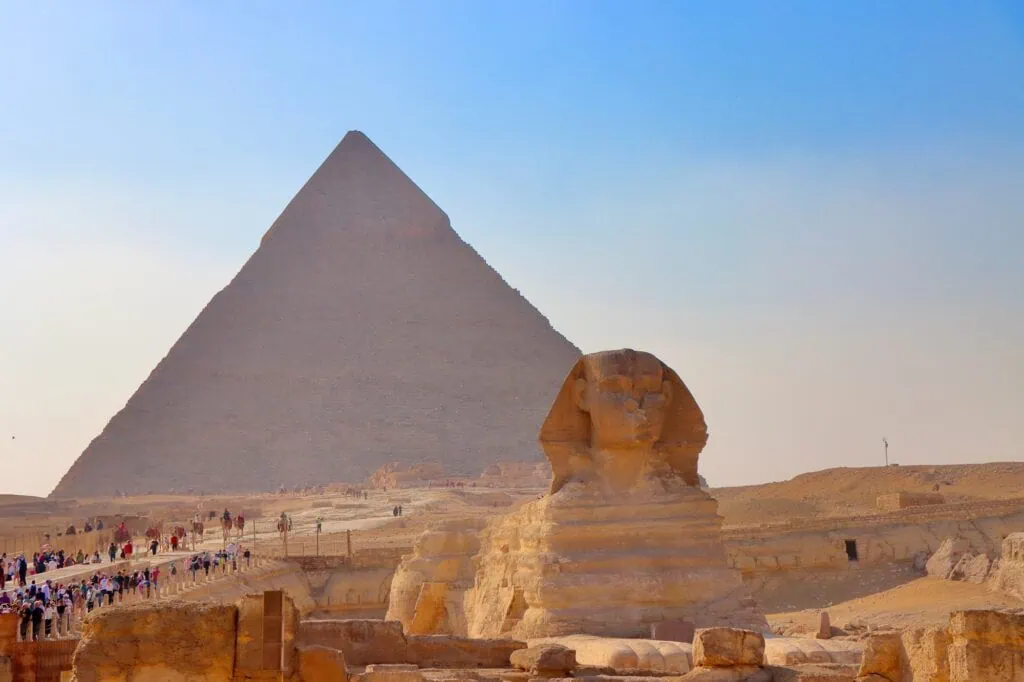
- The Pyramids of Giza and the Sphinx: the only surviving wonder of the ancient world.
- The Grand Egyptian Museum: now fully open, housing the world’s most comprehensive pharaonic collection, including the complete Tutankhamun collection of more than 5,000 items.
- Old Cairo: the historic Coptic and Islamic quarters.
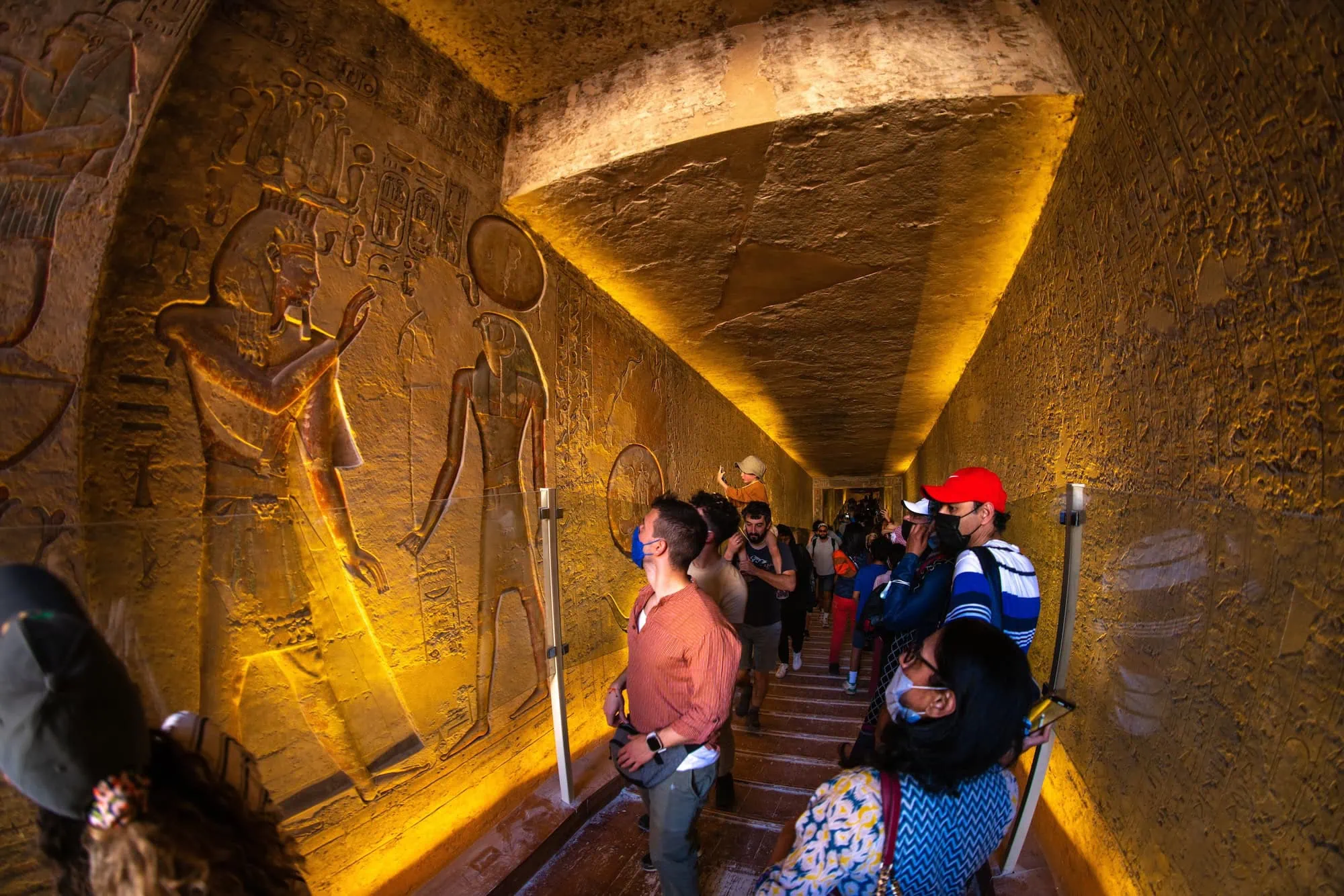
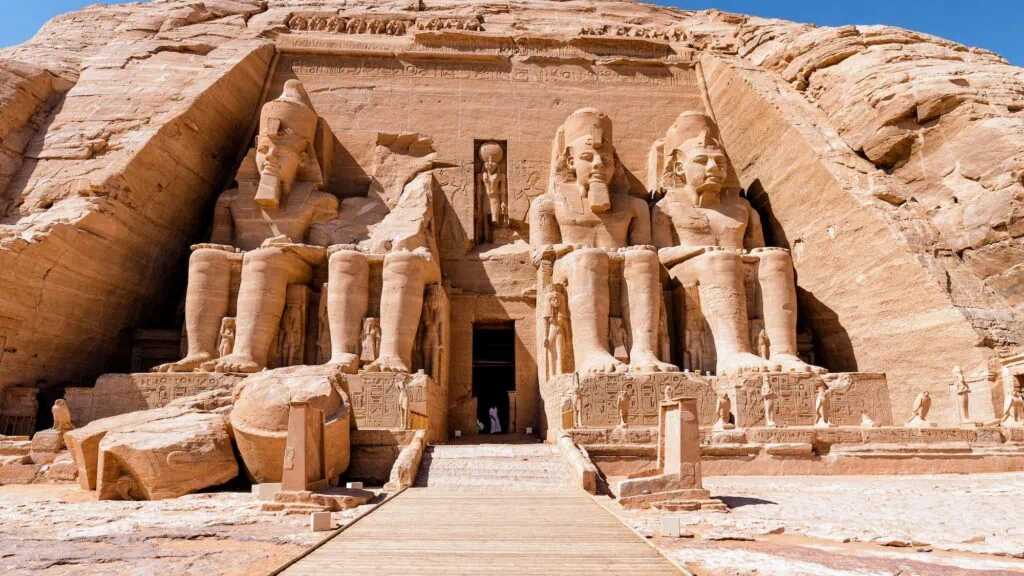
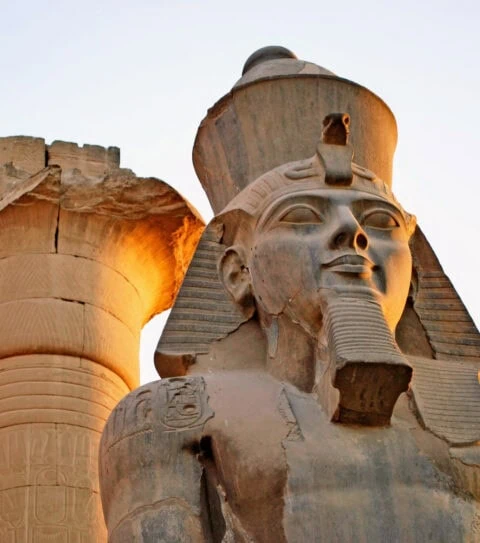
- Abu Simbel: Ramses II’s colossal rock-cut temples, usually reached by a short flight from Aswan.
The dahabiya itineraries may also include quieter river stops like Gebel el-Silsila and El-Kab, depending on the vessel and mooring conditions. The exact site list for any specific departure is on that vessel’s or tour’s individual page.
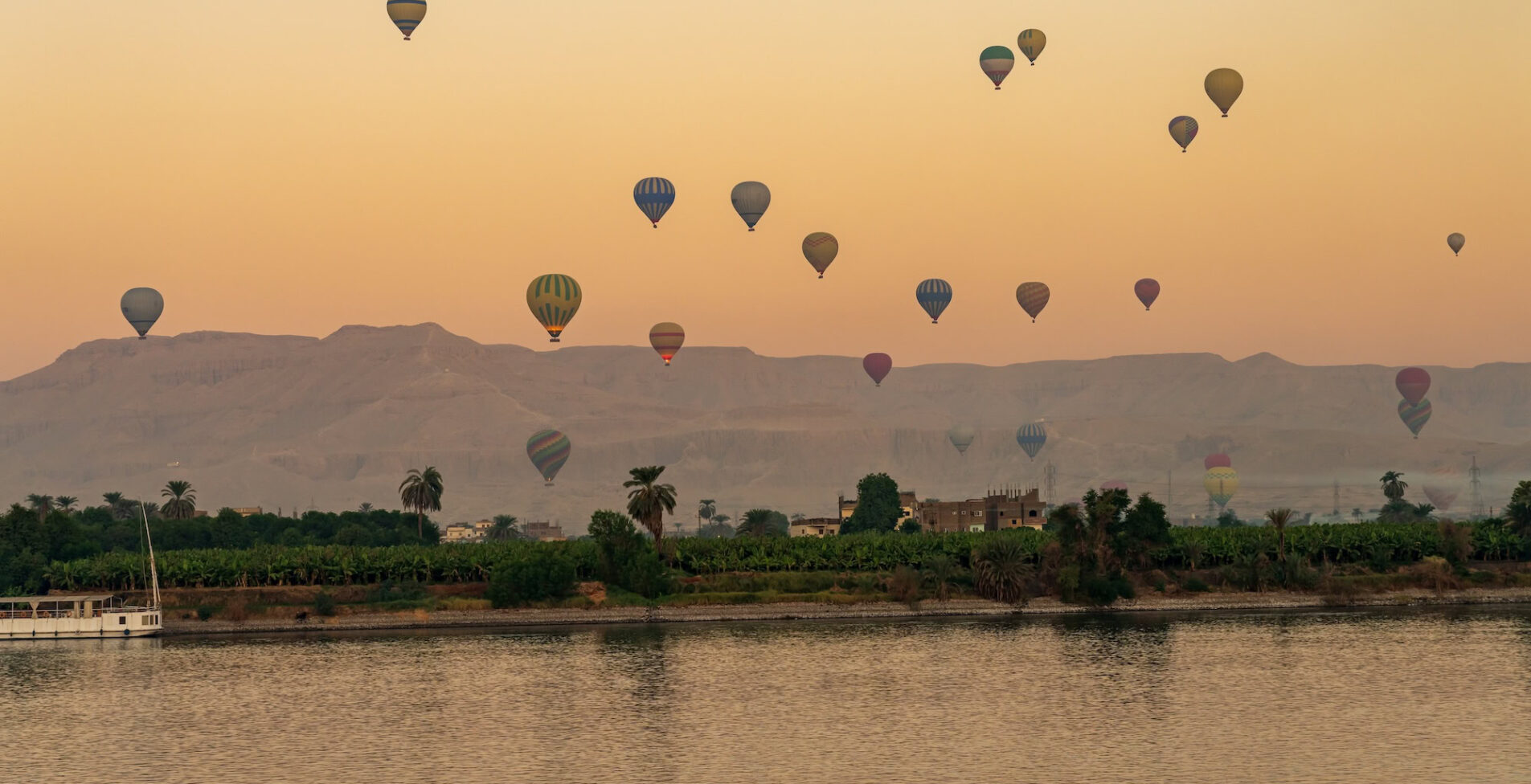
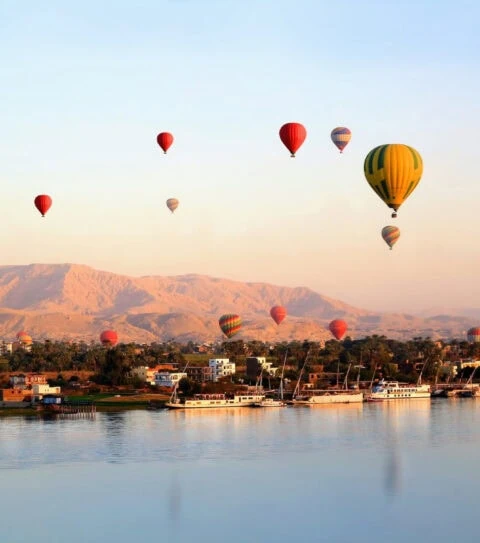
Optional add-ons that pair well with an 8-day trip: a hot-air balloon flight over Luxor’s West Bank at sunrise, Abu Simbel (if not included in the tour), and a felucca sail at sunset in Aswan.
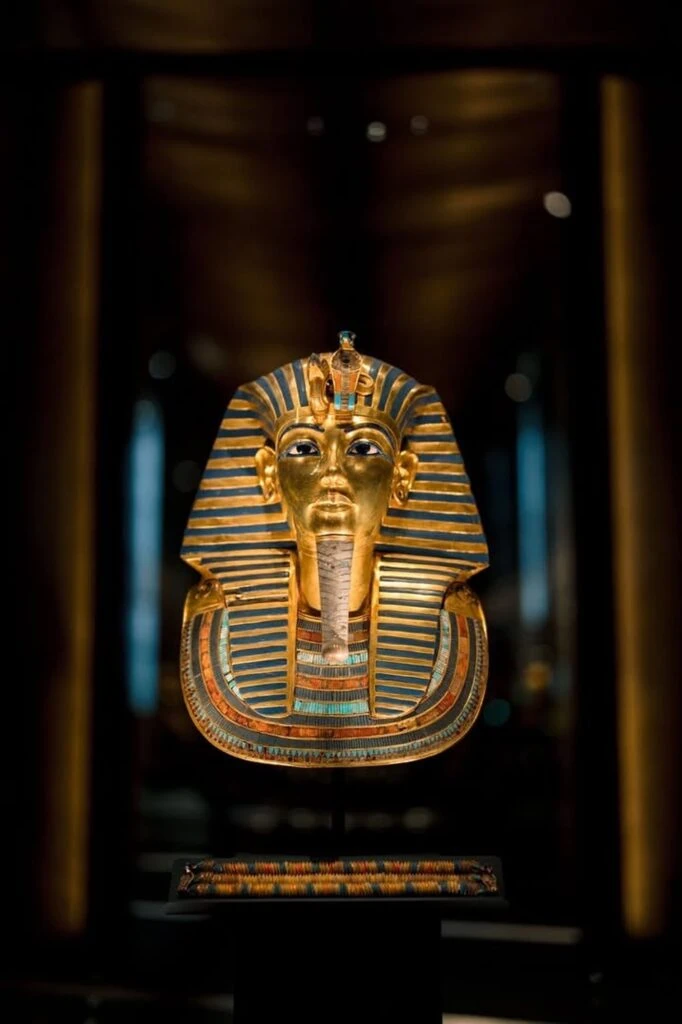
What You’re Actually Looking At: A Quick Architectural Primer
Egyptian temples follow a consistent design grammar across more than two thousand years. Recognising the basic vocabulary makes every site on the itinerary substantially more legible, and over eight days you’ll see enough temples for the pattern to become clear.
Pylons. The monumental gateway at the front of the temple, two sloping trapezoidal towers framing the entrance. They represented the horizon where the sun god rose, and the outside reliefs typically show the pharaoh smiting Egypt’s enemies.
Open courtyards. Behind the pylon sits a colonnaded courtyard open to the sky, the most public part of the temple, where festival processions gathered.
Hypostyle halls. A roofed chamber crowded with massive columns, built to evoke the papyrus marsh of the Egyptian creation myth, lit by clerestory windows high above.
Inner sanctuaries. The deepest and smallest room, where the god’s cult statue was kept, accessible only to the high priest and the pharaoh. The architectural compression as you move inward was deliberate.
Hieroglyphics. Inscriptions cover nearly every surface, divided between religious texts, royal records, and administrative content. Your Egyptologist guide translates the key passages as you walk.
The preservation of these monuments comes from two factors working together: Egypt’s exceptionally dry desert climate, and the engineering of the original builders, whose mortar-free stone construction has held for three thousand years through earthquakes and flooding.
Life Onboard
What life onboard looks like depends almost entirely on which of the three categories you choose, so it’s worth taking them separately.
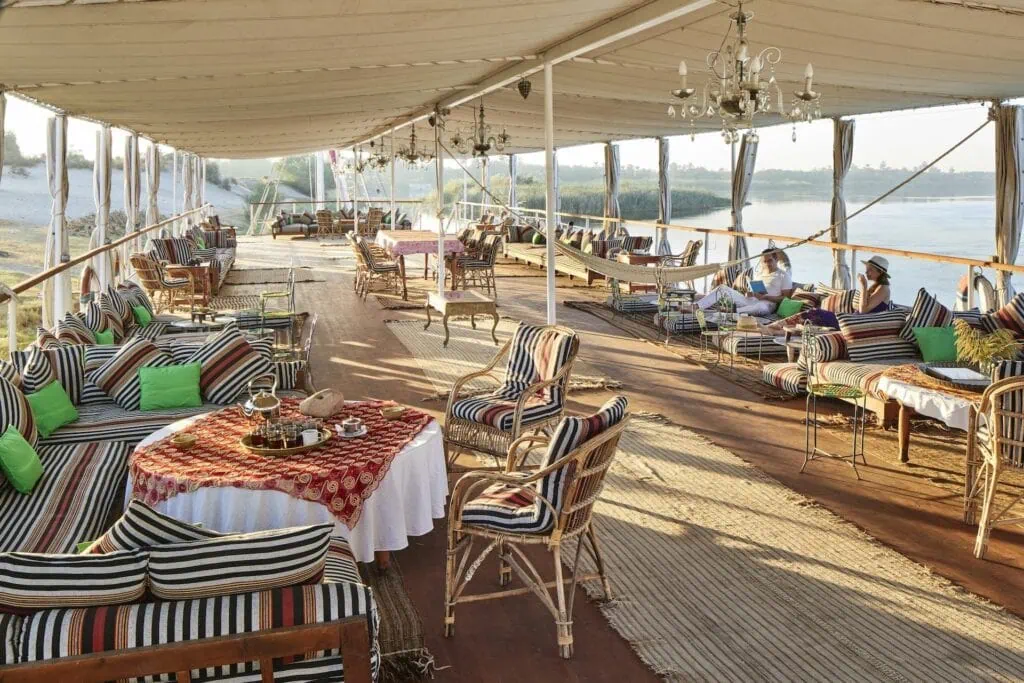
On a Dahabiya
Mornings are quiet, often with no engine noise because the boat is under sail. Breakfast is on the upper deck, meals are served at a single long table where the whole boat eats together, and afternoons are for the deck: reading, conversation, watching the banks change. Cabins are smaller than on the large ships but well-appointed, with private bathrooms and air conditioning. There are no pools or shows. The appeal is the silence and the small group.
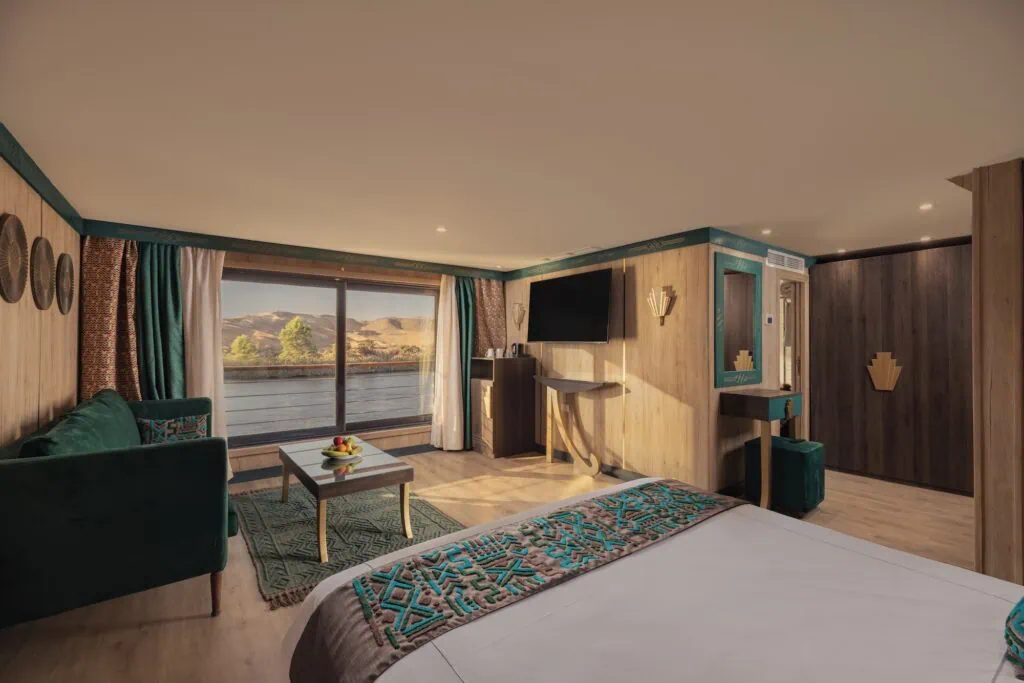
On a 5-Star Cruise Vessel
The rhythm is different. Mornings start with shore excursions, the vessel sails through the afternoon heat when the sun deck and pool come into their own, and evenings bring sit-down dinners, an Egyptian gala night, and entertainment that varies from folkloric performances to galabeya parties. Cabins match a high-end land hotel, with panoramic windows and private balconies on the higher grades. Over seven nights, the vessel genuinely becomes part of the trip.
On a Tour with Cruise
The cruise portion follows the 5-star vessel rhythm above, but it’s bookended by land touring. Cairo at the start or end, hotel nights rather than cabin nights for that segment, and an internal flight connecting the two. The pace is more varied than a pure cruise: city days, river days, and the early start for Abu Simbel all have a different texture.
How the Small-Group Excursions Work
Every 8-day option, across all three categories, uses small-group shore excursions with a licensed Egyptologist guide. The size of that group depends on the vessel.
On the 5-star cruise vessels and tour-with-cruise options, excursions run as small groups of around twelve guests to one guide, drawn from your own ship rather than merged with outside groups. Numbers can be higher during peak weeks like Christmas, New Year, and Easter when vessels sail at capacity.
On dahabiyas, the group is shaped by language as much as headcount. If the whole boat shares a language, the excursion is one group of 8 to 16. If languages are mixed, the boat splits into smaller language groups, each with its own guide, sometimes as few as two or three guests together.
Whatever your language, you’ll be matched with an Egyptologist guide who speaks it — English, Italian, Spanish, Portuguese, German, French, and others available on request. Fully private excursions can also be arranged on request, with the appropriate cost adjustment.
What’s Included
Inclusions vary slightly across the three categories, but the core is consistent.
Every 8-day option includes:
- Accommodation for seven nights (cabin nights on cruise-only options, a mix of cabin and hotel nights on tours with cruise)
- Full board on the cruise portion
- Meet-and-greet service by our representatives at the airport
- Assistance from our team throughout
- All transfers in private air-conditioned vehicles
- Small-group shore excursions with a licensed Egyptologist guide
- Entrance fees to the sites on the itinerary
Tour-with-cruise options additionally include the Cairo hotel nights, the internal flight, and the Cairo sightseeing, with Abu Simbel on some itineraries.
Not included across the board:
- International flights to and from Egypt
- Optional add-on activities (Luxor sunrise balloon flight, felucca sails)
- Personal expenses and gratuities for crew and guides
Pricing is confirmed by your Travel Concierge within 1 to 12 hours of your inquiry. Rates vary by category, vessel, cabin grade, season, and departure date, so we quote per inquiry rather than publishing fixed rates. The exact inclusion list for any specific departure is on that vessel’s or tour’s individual page.
When to Sail
October through April delivers the most comfortable weather for an 8-day trip. Daytime temperatures generally run between 20°C and 28°C (68–82°F), with Aswan a few degrees warmer than Luxor, and the Cairo leg on tour-with-cruise options sitting in a similar comfortable range. Evenings stay cool enough for a light layer.
Within that high-season window, late December and the first week of January carry the highest demand and book out earliest. Christmas and New Year departures are typically reserved months ahead. Shoulder months like November and early March deliver similar weather at slightly more accessible rates and better availability.
Summer sailings (May through September) run too, with temperatures often above 35°C (95°F). Excursions start earlier in the day to avoid the midday heat, onboard pools become considerably more useful, and rates drop noticeably. Dahabiya departures in particular are more available outside peak season.
Because many of the dahabiya and tour departures run on fixed dates, booking 3 to 6 months ahead is the practical norm, and longer for the Christmas and Easter periods. The filter and search above show what’s available, and your Travel Concierge can confirm specific dates.
Pack comfortable walking shoes, lightweight clothing covering shoulders and knees for temple visits, sun protection at every level, and a light layer for cool evenings.
How the Planning Process Actually Works
Planning an 8-day Egypt trip starts with one question: which of the three categories fits you? Dahabiya for intimacy and traditional sailing, a 5-star cruise for hotel-grade comfort on the water, or a full tour for the complete Egypt journey with Cairo and Abu Simbel.
If you already know, the filter and search above will take you straight to the options. If you’re not sure, that’s exactly what the planning conversation is for. Share your travel window, who you’re travelling with, and what matters most to you, and your dedicated Travel Concierge will come back with a first-draft proposal within 1 to 12 hours, usually with options across more than one category so you can see the difference.
From there it’s a back-and-forth on the details: category, vessel, cabin grade, sailing direction, the Cairo extension, optional add-ons. Most travelers settle in two to four rounds of revisions before booking. There’s no pressure to commit at any stage, and the itinerary is only finalised when you’re 100% satisfied.
Ready to Plan Your 8-Day Egypt Trip?
Whether you picture a traditional dahabiya, a 5-star cruise vessel, or a complete tour that pairs the Nile with Cairo and Abu Simbel, eight days is the length that lets you see Egypt without rushing it. Share your travel window and preferences with your Travel Concierge, and you’ll have a first-draft itinerary in your inbox within 1 to 12 hours.
Frequently Asked Questions
A dahabiya is a traditional sailing vessel for 8-16 guests, focused on intimacy and the river itself. A 5-star Nile cruise is a larger vessel (50-150 guests) with hotel-grade amenities like pools and restaurants. A tour with cruise pairs the Nile cruise with Cairo, an internal flight, and usually Abu Simbel, as one complete Egypt itinerary. The filter above sorts every option into these three categories.
Only the tour-with-cruise options include Cairo and the pyramids. The pure cruise options (dahabiya and 5-star vessel) cover the Luxor-to-Aswan temple route only. If you want Cairo and the pyramids in the same booking, filter for “Tour with Cruise” above.
Yes, on the cruise-only options. An 8-day Nile cruise means seven nights of accommodation aboard the vessel. On tour-with-cruise options, the seven nights are split between cabin nights on the cruise and hotel nights in Cairo.
Most excursions involve 60 to 90 minutes of walking on uneven stone surfaces, occasionally with inclines or stairs. There’s no strict fitness requirement, but proper closed walking shoes are essential. Mention any mobility limitations during planning so we can adjust pacing or arrange alternative access where available.
Yes. Both the cruise vessels and dahabiyas handle vegetarian, vegan, gluten-free, halal, kosher (with advance notice), and most allergy requirements. The smaller dahabiya kitchens often find this easier because everything is cooked to order. Flag your needs at the booking stage and we confirm before sailing.
It depends on what you want, not just on price. A dahabiya and a 5-star cruise can sit at similar price points while offering completely different experiences. A tour with cruise costs more because it includes Cairo, flights, and more touring, but it also replaces what would otherwise be a separate Cairo booking. Your Travel Concierge can compare real figures across categories once they know your dates.
Three to six months ahead is the practical norm, and longer for Christmas, New Year, and Easter departures. Many dahabiya and tour departures run on fixed dates, so earlier booking widens your choice of vessel and cabin grade. Last-minute departures can sometimes work if there’s residual availability.
Modest, lightweight clothing covering shoulders and knees works best at every temple site. Closed walking shoes are essential for the uneven ancient stone. Bring a sunhat and sunglasses, plus a light layer for cool morning starts and breezy evening deck time. Evening dress on the 5-star vessels is smart-casual; dahabiyas are casual throughout.
Abu Simbel is included on some tour-with-cruise itineraries, usually reached by a short flight from Aswan. On the pure cruise options, it can be added as an optional excursion. Check the individual itinerary, or ask your Travel Concierge to build it in.
Nile cruising is remarkably weather-stable compared to ocean cruising, and schedules are rarely disrupted. If a lock closure or sandstorm affects timing, the operator adjusts the itinerary to keep all temple visits intact, and our team coordinates any onward arrangements.
Standard phone and camera photography is allowed at all the temple stops. Some sites charge a small extra fee for tripods or professional camera gear, and certain tomb interiors in the Valley of the Kings require a separate photo ticket. Flash is generally prohibited inside tombs. Your Egyptologist guide flags any restrictions at each site.
Yes. The filter sorts every 8-day option by category (dahabiya, Nile cruise, or tour with cruise), and the search lets you look for a specific vessel or departure by name. If you can’t find what you’re looking for, your Travel Concierge can check wider availability.
Design Your Custom Tour
Explore Egypt your way by selecting only the attractions you want to visit