

Crafted journeys across iconic cultures
Middle East Vacations
Middle East Vacations bring you curated travel through Egypt, Jordan, Dubai, and beyond—designed entirely around your interests. Backed by more than seven decades of experience, your private guide and dedicated driver ensure a smooth, luxurious, and enriching experience. With flexible customization and round-the-clock specialist support, your dream Middle East escape becomes effortless.
Discover the Middle East with confidence and comfort
Middle East Vacations and Tours
Middle East Tours: Egypt as Your Anchor, the Region as Your Trip
How Egypt pairs with Jordan, Saudi Arabia, the UAE, and Turkey — and how we plan multi-country Middle East vacations end-to-end.
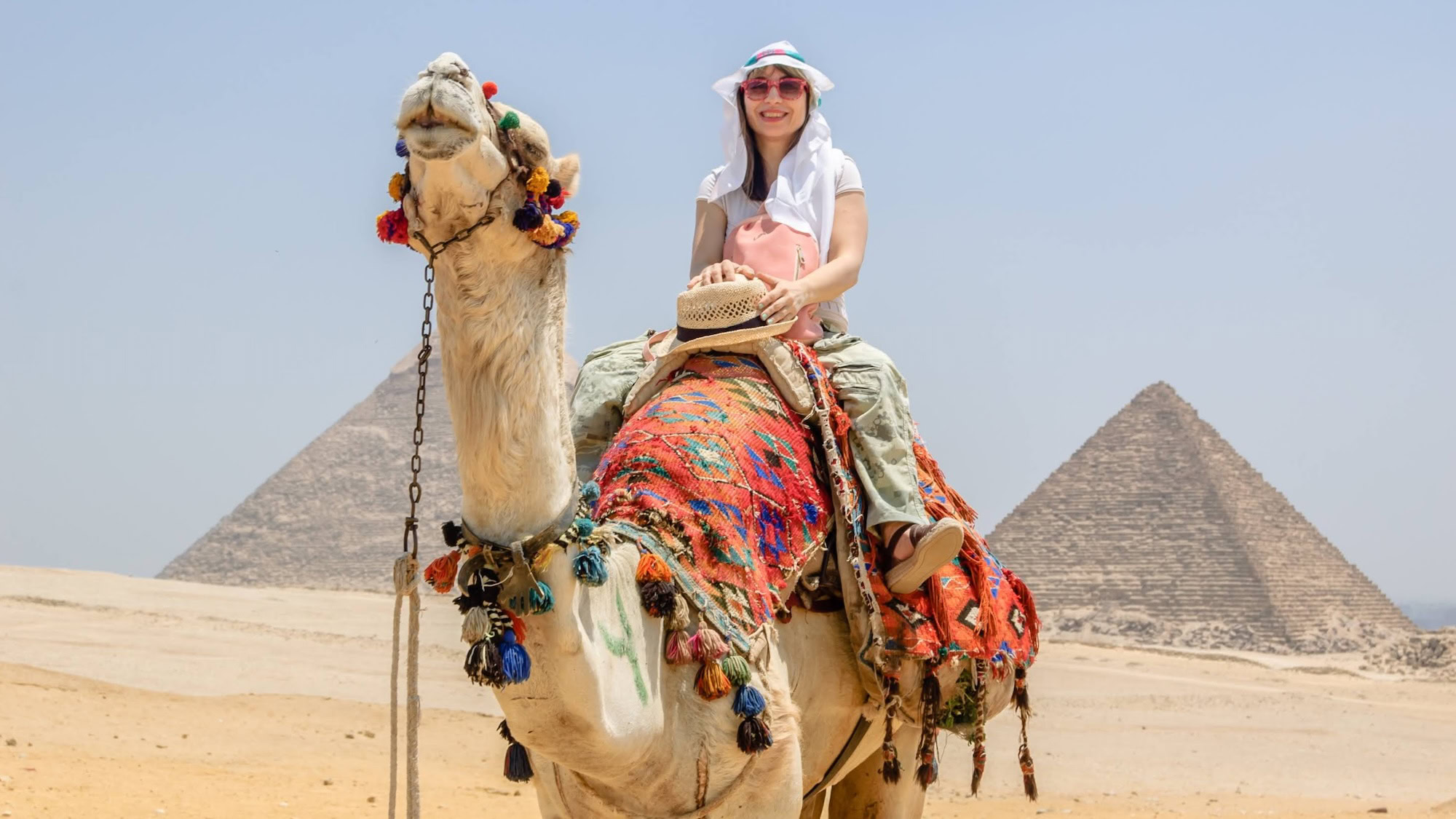
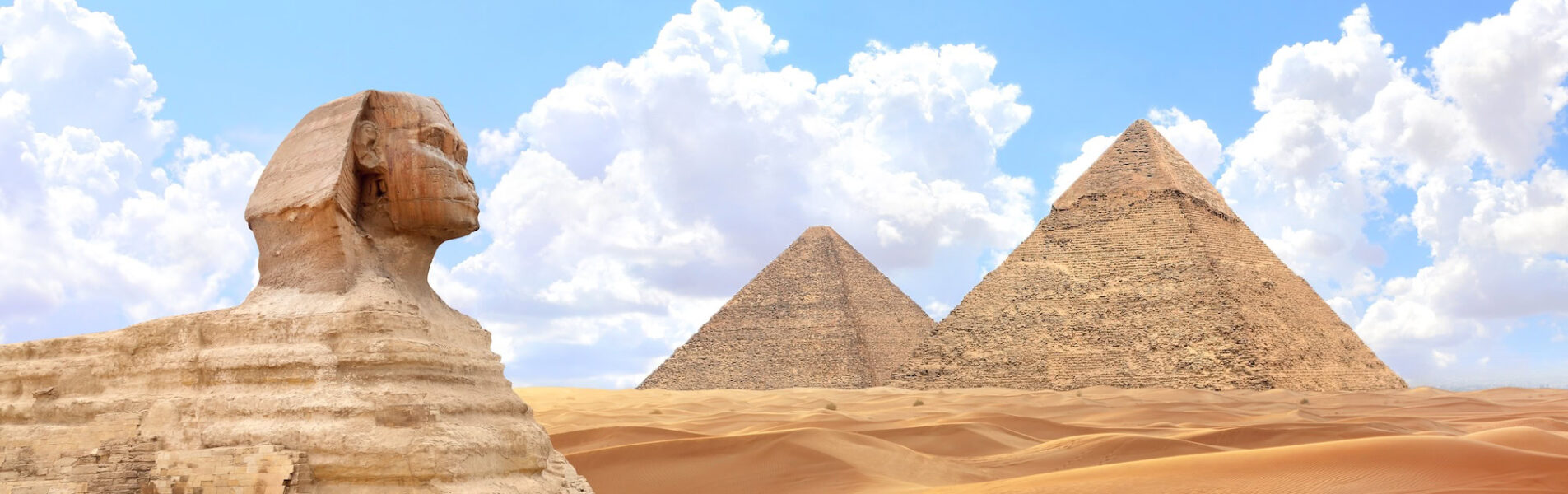
A Middle East trip almost always starts with Egypt. Cairo is the region’s strongest long-haul arrival hub, the country has the deepest tourism infrastructure of any Middle Eastern destination, and the cultural arc — Pyramids, the Nile, Luxor, Aswan — is the standard reference around which every other country in the region positions itself.
What you build on top of that anchor is what makes the trip yours. Petra and the Dead Sea in Jordan. Hegra and AlUla in Saudi Arabia. Burj Khalifa and the Sheikh Zayed Grand Mosque in the UAE. Hagia Sophia and Cappadocia in Turkey. Each combination gives you a different version of the Middle East, and the planning question is which version fits your time, dates, and interests.
We’ve been crafting Egypt journeys since 1955, with TripAdvisor Travelers’ Choice 2020 through 2026, and we run the full set of Middle East vacations — Egypt + one country, Egypt + two, Egypt + three — through one Travel Concierge who plans, books, and coordinates the whole trip from first email to return home.
Table of Contents
Why Egypt Anchors the Region
The strongest long-haul arrival hub
Cairo International Airport (CAI) has direct connections to most of the world’s major long-haul gateways: New York, London, Paris, Frankfurt, Madrid, Dubai, Istanbul, Sao Paulo, and many others. Most Middle East trips arrive into Cairo, do the Egypt segment first, then connect outward to the second country via short regional flights (Cairo–Amman, Cairo–Dubai, Cairo–Riyadh, Cairo–Istanbul are all 2–3 hours).
The deepest cultural arc
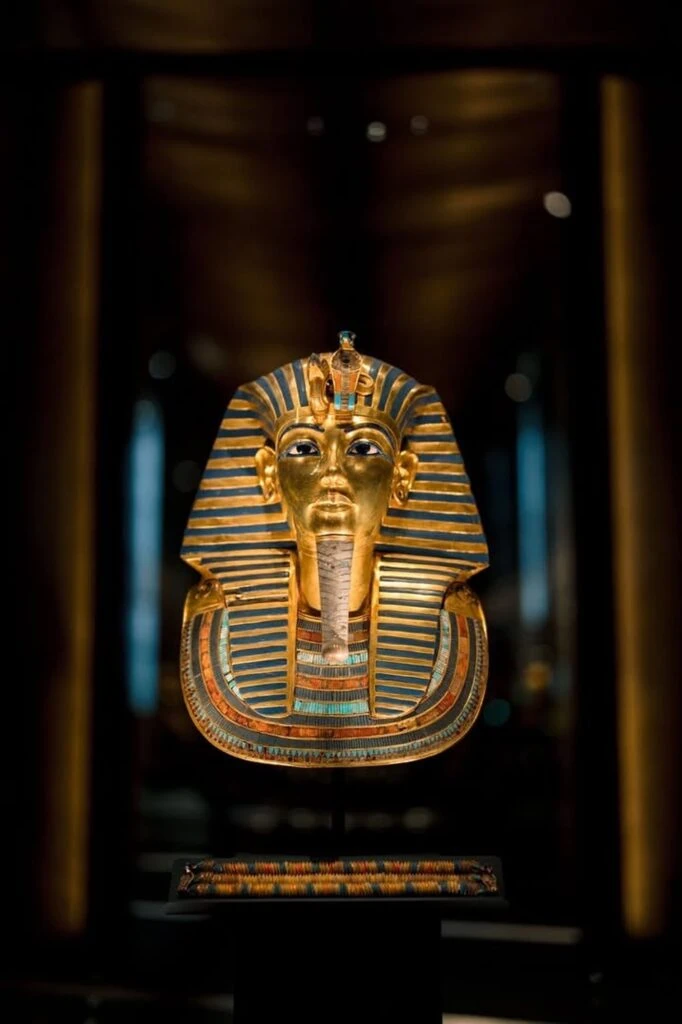
Egypt’s tourism arc is older and deeper than every other Middle Eastern country’s. The pharaonic monuments span 3,000 years. The Coptic, medieval Islamic, and Ottoman layers add another 1,500. The Grand Egyptian Museum (GEM) opened fully in 2025 and now displays the full Tutankhamun collection (5,000+ items) together for the first time in history. Every other country in the region positions itself relative to this arc, not the other way around.
The deepest Egypt operation in the region, with handpicked partners across the rest
Since 1955, we’ve run Egypt tours every day — seventy years of operational depth on the country that anchors every Middle East itinerary. Across the rest of the region, we’ve spent the same seven decades building partnerships with the operators we trust, and we book through them every day too. The Petra teams, the AlUla guides, the Dubai DMCs, the Cappadocia balloon operators — these are partners we’ve worked with for years and renew every year. Your Travel Concierge plans the whole trip end-to-end, and the standard is the same in Amman, Riyadh, Dubai, and Istanbul as it is in Cairo.
Your Middle East Country Options
The standard Middle East trip pairs Egypt with one of five countries. A few advanced options exist beyond those.
Jordan: Petra and Wadi Rum
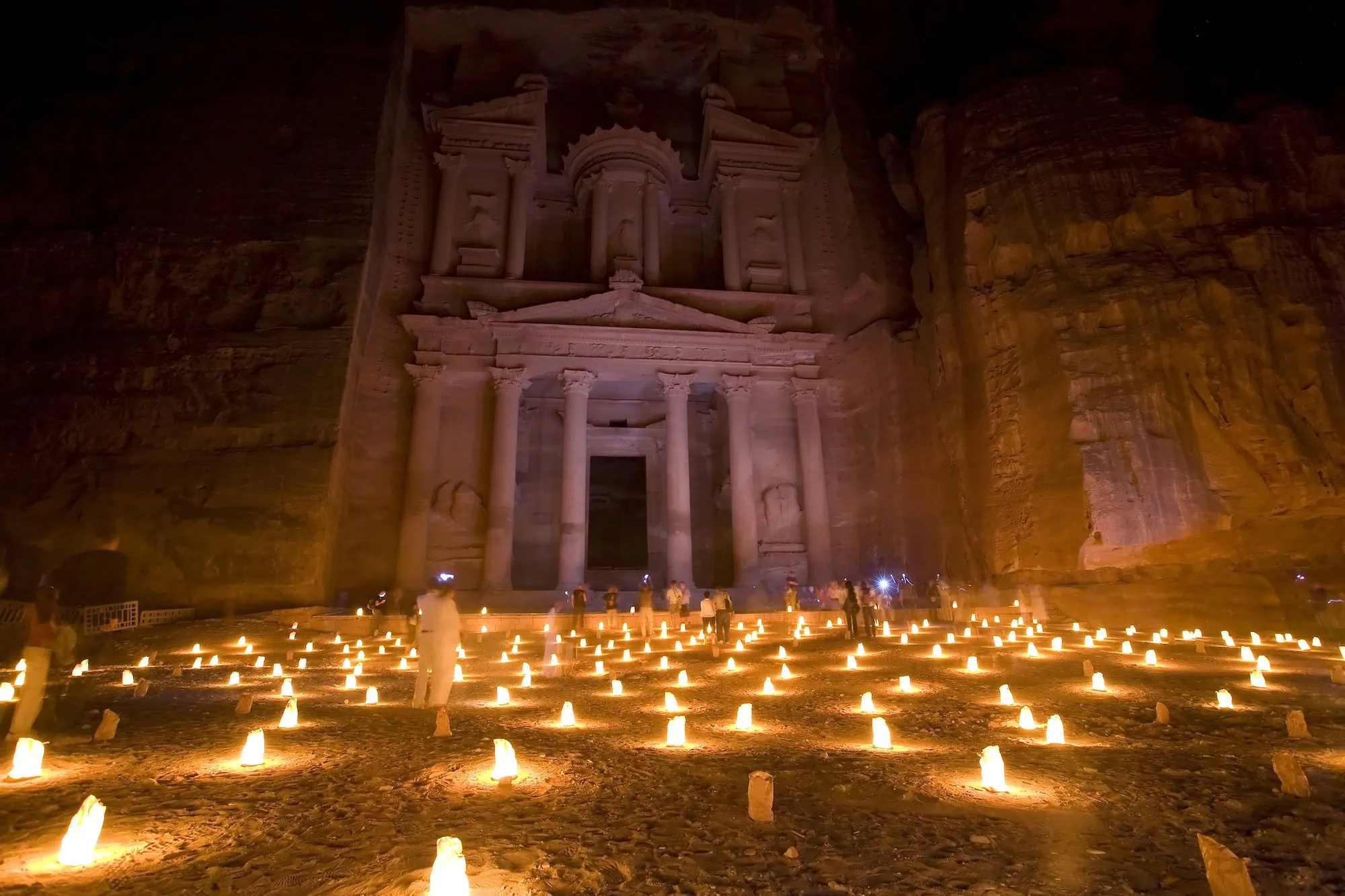
Jordan is the most-requested second country, and for good reason. Petra (UNESCO 1985), the Nabataean rock-cut city founded around the 4th century BC and absorbed into the Roman Empire in 106 AD, is the natural counterpart to Egypt’s pharaonic monuments — both are great rock-and-stone civilisations of the ancient Near East, and seeing them on the same trip lets you read them in parallel.
Wadi Rum is the other Jordan headline: a UNESCO-listed sandstone desert with rock formations, Bedouin camps, and the landscape used in Lawrence of Arabia, The Martian, and Dune. The Dead Sea (lowest point on Earth at 430m below sea level, 34% salinity) is the standard relaxation stop between Petra and Amman.
Egypt + Jordan trips run 10–14 days. Egypt and Jordan Tours has the full breakdown.
United Arab Emirates: Dubai and Abu Dhabi
The UAE is the modern-luxury counterpoint to Egypt’s heritage focus. Dubai is anchored by Burj Khalifa (the world’s tallest building at 828m), the Dubai Mall and its aquarium, the Burj Al Arab sail-shaped hotel on Jumeirah Beach, the man-made Palm Jumeirah, and Old Dubai’s Al Fahidi (Bastakia) historic district. Most travellers want a mix of the futuristic and the traditional.

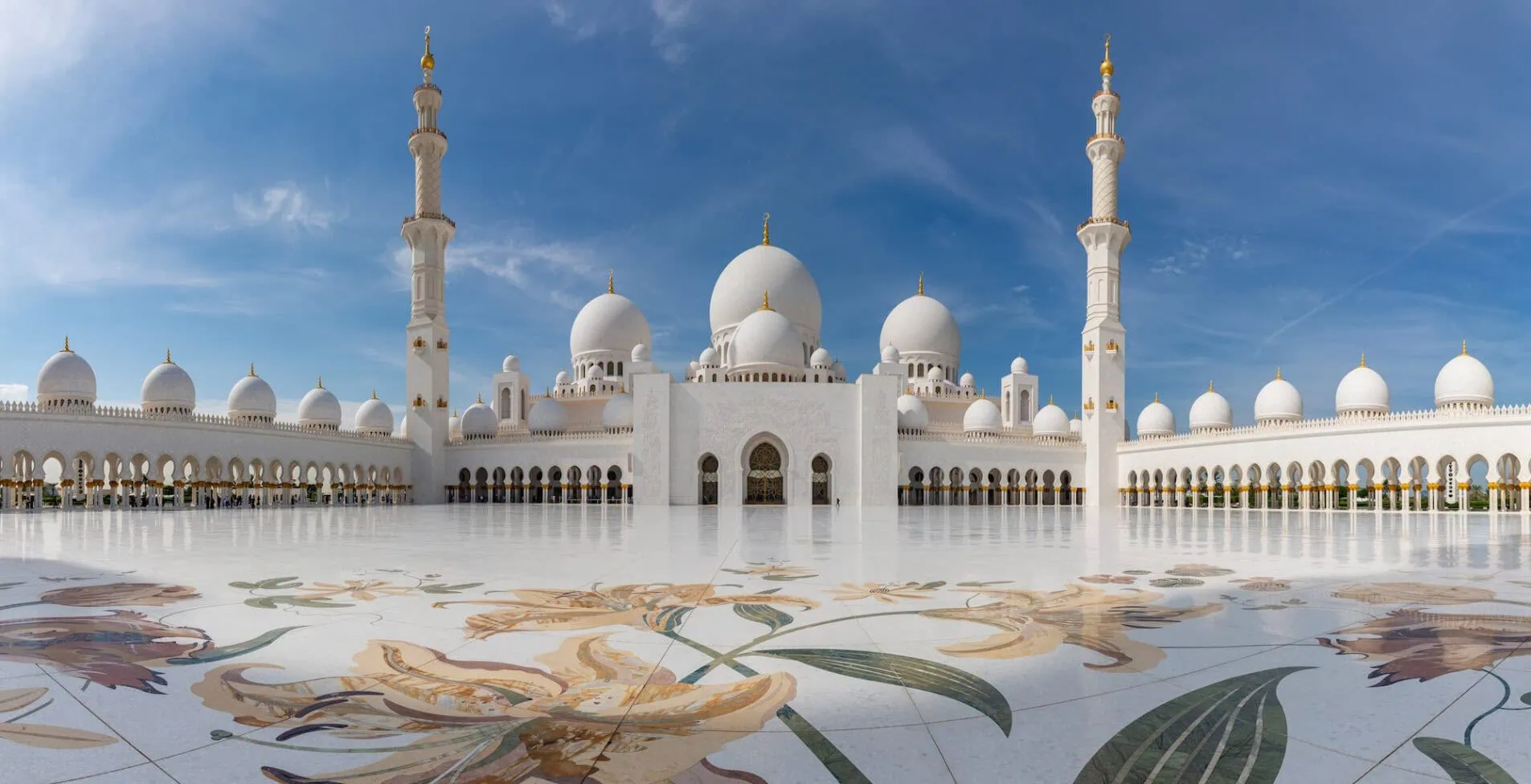
Abu Dhabi runs as a 1- to 2-day add-on to Dubai. The Sheikh Zayed Grand Mosque (one of the largest in the world, with a courtyard fully open to non-Muslim visitors), the Louvre Abu Dhabi (designed by Jean Nouvel), and the Saadiyat Island cultural district are the headline stops.
Dubai International (DXB) is the strongest long-haul return hub in the region, which makes Egypt-first / Dubai-second the logistically dominant sequence. Egypt + UAE trips run 9–13 days. Egypt and Dubai Tours has the details.
Saudi Arabia: AlUla, Hegra, Riyadh, and Jeddah
Saudi Arabia opened to general international tourism in September 2019 with the launch of the tourist eVisa — meaning this is the newest addition to the Middle East itinerary map and one of the most interesting trips you can build right now.
AlUla is the centre of gravity. Hegra (UNESCO 2008) is Saudi’s first World Heritage Site and the southern Nabataean capital, sister-city to Petra. The wider AlUla region adds the older Dadanite and Lihyanite sites at Dadan, the open-air inscription library at Jabal Ikmah, the restored Old Town, and Elephant Rock.
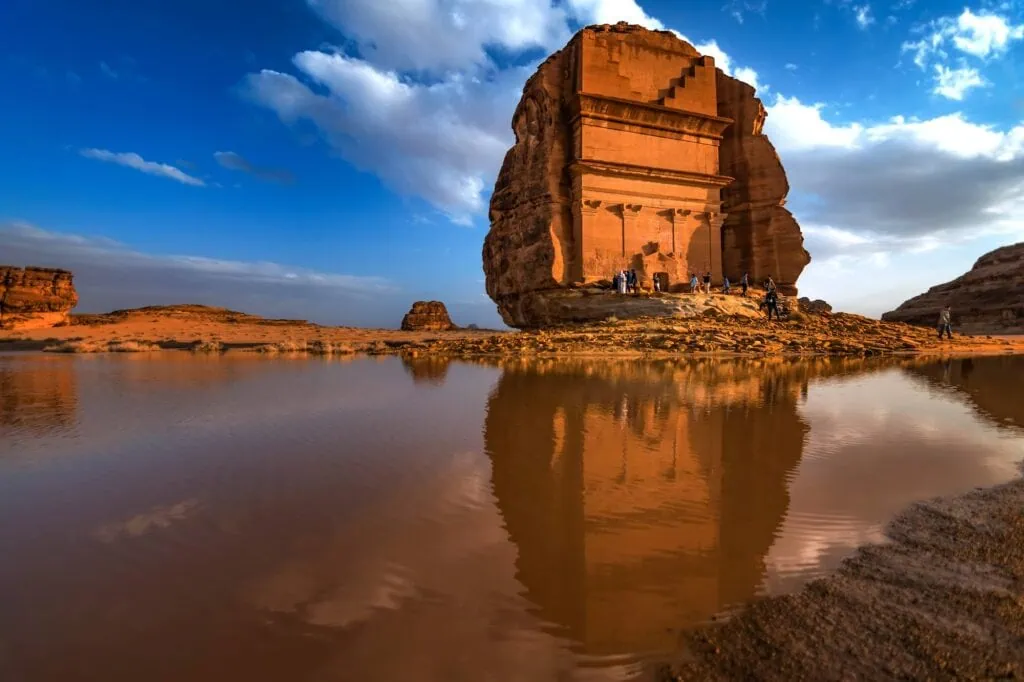
Riyadh adds Diriyah’s UNESCO-listed At-Turaif district (the original Saudi state capital). Jeddah’s UNESCO-listed Al-Balad old town anchors the Red Sea coast. Egypt + Saudi trips run 11–16 days. Egypt and Saudi Arabia Tours has the full breakdown.
Turkey: Istanbul and Cappadocia
Turkey gives you the Byzantine and Ottoman side of the Mediterranean’s eastern half. Istanbul anchors the trip — Hagia Sophia (Byzantine, 537 AD), Topkapi Palace, the Blue Mosque, the Basilica Cistern, the Grand Bazaar (founded 1455), and a Bosphorus cruise.
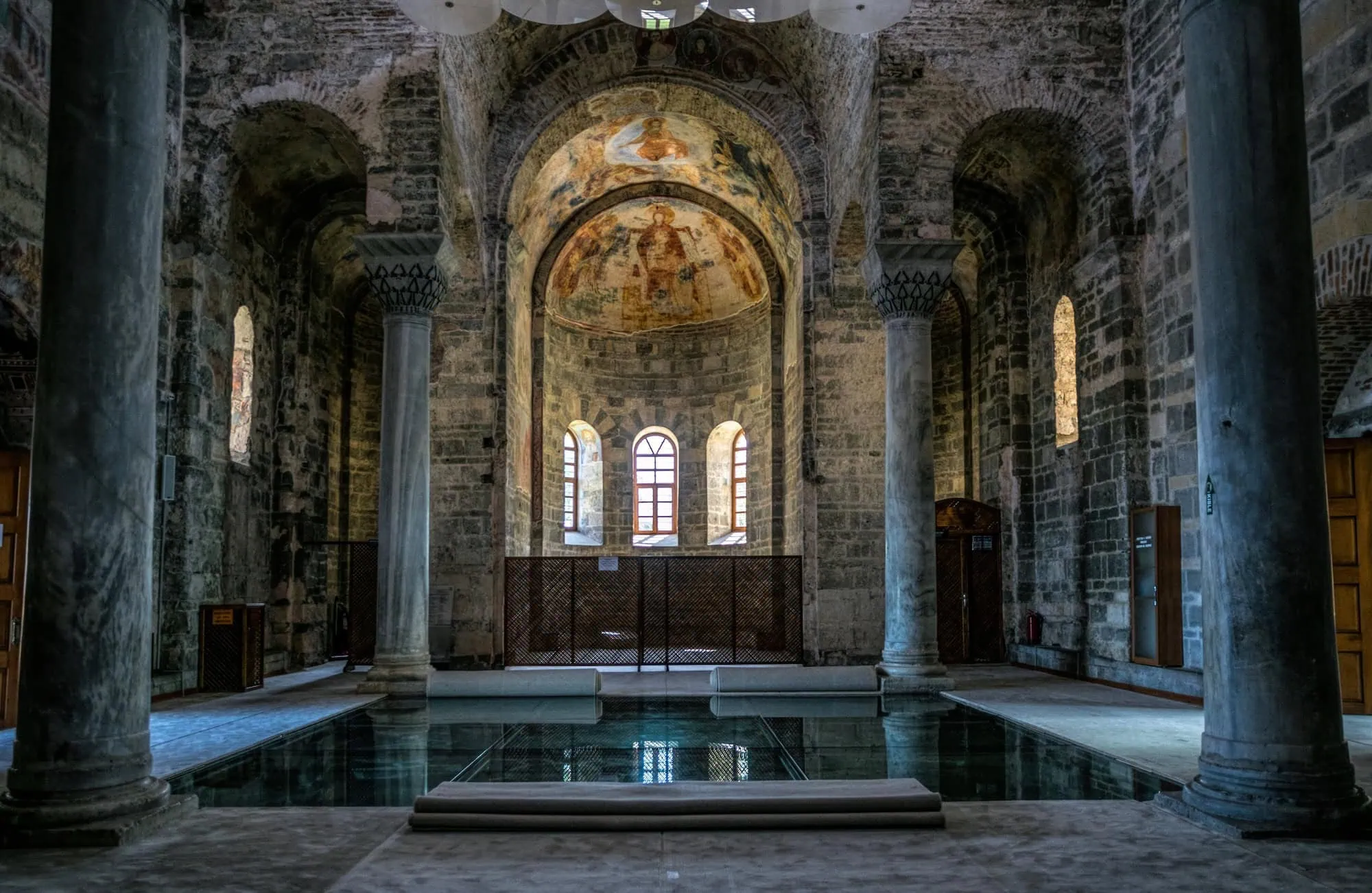
Cappadocia is the second anchor: dawn hot-air balloon flights over the volcanic fairy chimneys of Göreme, the UNESCO-listed rock-cut Byzantine churches at the Göreme Open-Air Museum, and the underground cities at Derinkuyu and Kaymaklı.

Cappadocia and Luxor are two of the world’s most established hot-air-balloon destinations, which makes Egypt + Turkey one of the rare trips where you can do dawn balloon flights in both halves. Egypt + Turkey trips run 12–18 days. Egypt and Turkey Tours has the details.
Israel and the Holy Land
Israel was historically a common Middle East addition, with Jerusalem (Western Wall, Dome of the Rock, Church of the Holy Sepulchre, Old City), the Dead Sea (the Israeli side), Bethlehem, and Tel Aviv as the standard anchors.
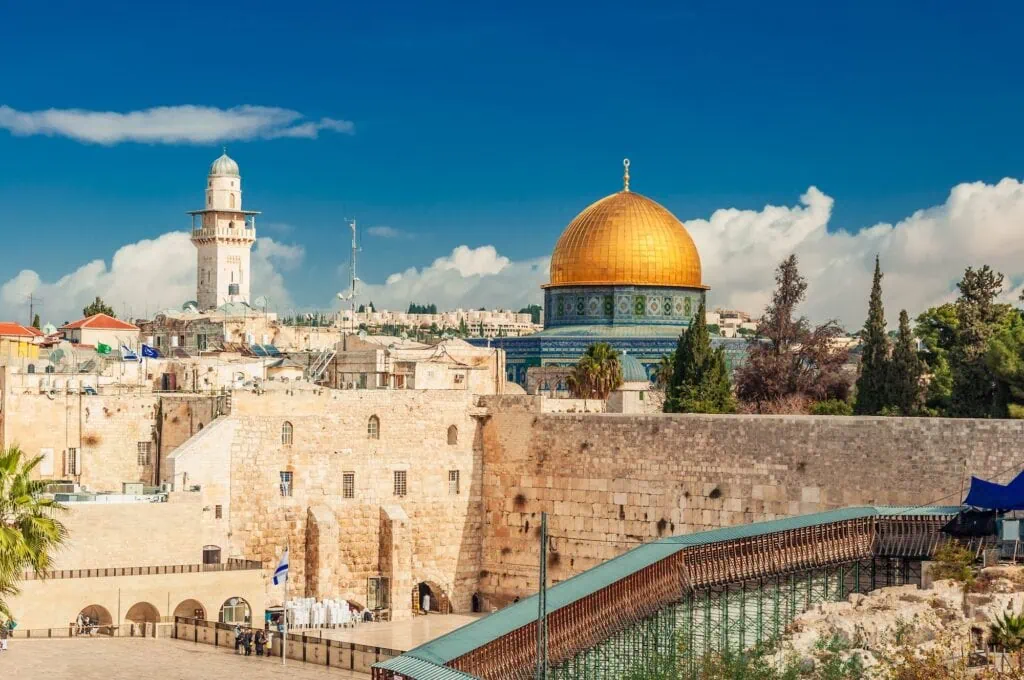
Travel to Israel and the Palestinian territories is currently subject to security advisories that change frequently. Some itineraries remain feasible; others don’t. Your Travel Concierge confirms current feasibility at the time of planning, with the most recent government advisories applied to your specific dates and routing.
Three-country trips
Three-country trips (Egypt + two add-ons) typically run 15–24 days. The most-requested combinations: Egypt, Jordan and Dubai, Egypt, Jordan and Saudi Arabia, Egypt, Turkey and Greece, or Egypt, Saudi and UAE.
How We Build a Middle East Tour
The structural choices on a Middle East itinerary cluster around four questions.
Trip duration
The working ranges by combination:
- Egypt + 1 country: 8 to 15 days, depending on which country
- Egypt + 2 countries: 15 to 24 days
- Egypt + 3 countries: 22+ days
Anything under 8 days for a two-country trip cuts at least one country to the bone.
The Egypt segment (universal across all combinations)
Most Middle East trips include the same core Egypt arc: 2–3 days in Cairo (Pyramids, GEM, Coptic Cairo, Khan El Khalili), a flight to Aswan or Luxor, a 4-day Nile cruise between Luxor and Aswan, optionally Abu Simbel as a 1- to 4-day extension. That’s 7–9 Egypt days, and it’s the foundation everything else builds on.
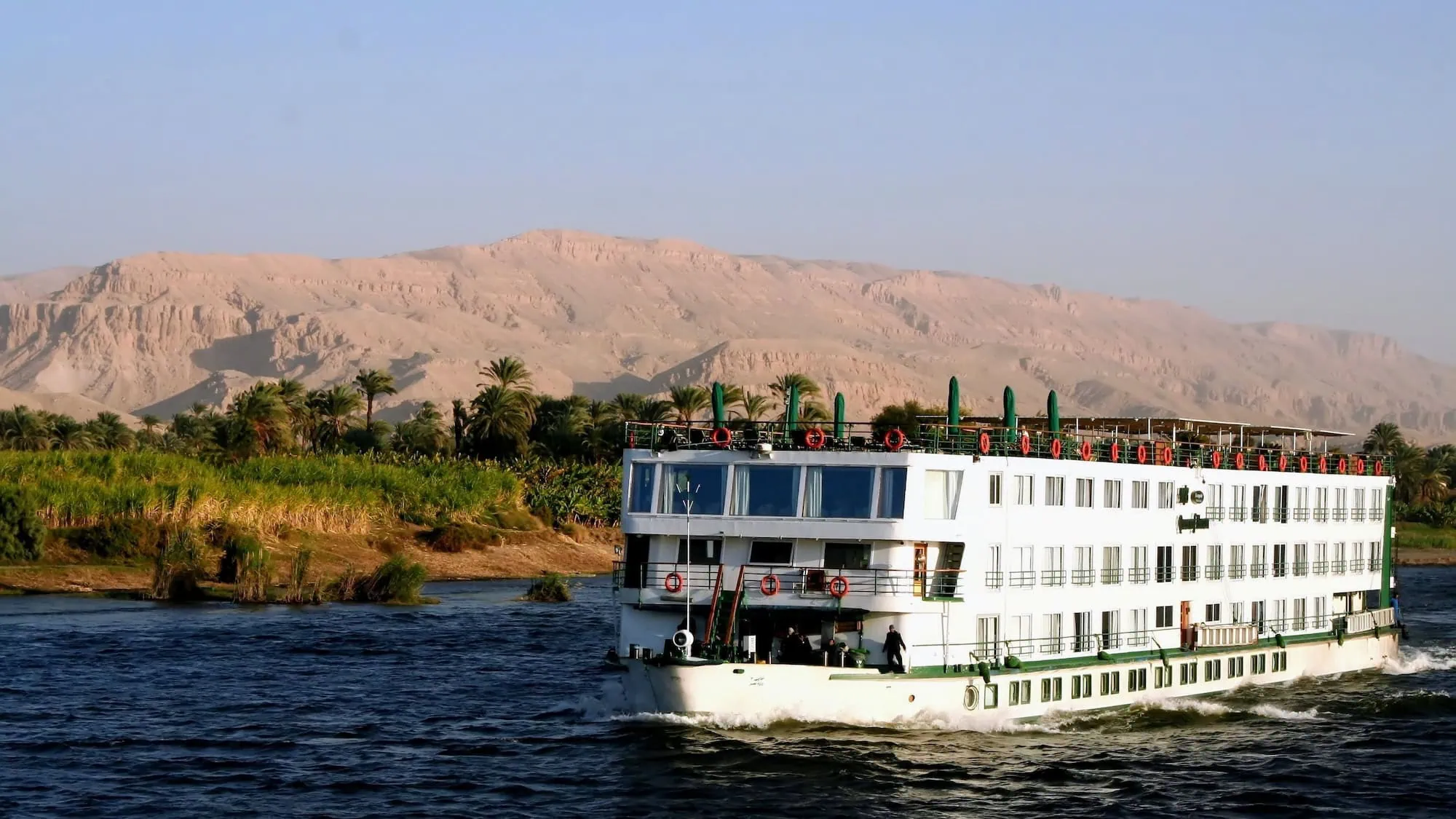
The Nile cruise is the section most travellers remember most clearly from any Middle East trip — we strongly recommend keeping it in. The standard inclusion is a 4-day / 3-night Luxor–Aswan sailing on a Luxury Nile Cruise vessel; longer cruises (5, 6, 7, 8 nights) and a 3- to 5-night Dahabiya alternative are available.
Order of travel
Egypt-first is the default for most combinations. Cairo arrival, Egypt segment, short flight to the second country, return home from the second country’s hub. This works particularly well for Dubai, Saudi Arabia, and Jordan.
Egypt-last works if you’re tying Egypt to a longer Mediterranean or European trip, or if the second country is your stronger arrival hub (Istanbul for some North American and European travellers).
Single guide vs handover
Across the whole trip, you have one Travel Concierge planning and managing everything. On the ground, you have a private Egyptologist guide and personal driver throughout the Egypt segment, and a separate licensed local guide and driver in each second country. The handover happens at the inter-country airport — your Cairo Travel Concierge briefs the in-country team in advance, so there’s no gap in coverage.
All land-based touring is fully private throughout, in every Middle Eastern country we operate in: just your party plus your guide and driver.
Visas Across the Region
The visa landscape across the Middle East is mostly accommodating to international travellers, but the rules vary country by country.
Egypt
Most travelers, including U.S., U.K., E.U., Canadian, Australian, and many Latin American nationalities, can obtain a 30-day Egypt tourist visa on arrival at Cairo Airport for $25 USD, or apply for an e-visa online before departure.
Jordan
Visa-on-arrival or eVisa (around $56 USD for single-entry) for U.S., U.K., E.U., Canadian, Australian, and most Latin American passports. Many of our Egypt + Jordan packages use the Jordan Pass, which combines the visa fee with admission to Petra and 40+ other sites.
Saudi Arabia
Tourist eVisa (around $80 USD, multi-entry, 1-year validity, 90 days per stay) for ~60 nationalities including U.S., U.K., all E.U., Canadian, Australian, Brazilian, Mexican, Argentinian, and Chilean passports. Visa-on-arrival also available for the same nationalities at major airports.
United Arab Emirates
Visa-free for 30 to 90 days for most U.S., U.K., E.U., Canadian, Australian, Brazilian, and Argentinian passports. No advance application required — the entry stamp is issued on arrival.
Turkey
Visa-free for 90 days for U.S., U.K., most E.U., Brazilian, and Argentinian passports (rules updated 2024). Australian, Canadian, and some other nationalities still require an eVisa (around $50 USD, online, processed within minutes to hours).
Israel
Visa-free for 90 days for U.S., U.K., E.U., Canadian, Australian, and many Latin American passports — but feasibility depends on current security advisories.
Three-country trips
For Egypt + 2 add-ons, you’ll need separate visas or visa-free entries for each country, but the process is straightforward and your Travel Concierge handles the sequencing. Visa rules change periodically — your Travel Concierge confirms the current rule for your specific passport when planning the trip.
Best Time to Travel Across the Middle East
The cross-region sweet spot is October through April. Every Middle East destination — Egypt, Jordan, Saudi Arabia, the UAE, Israel, and most of Turkey — runs comfortably in this window.
October–November and March–April (the optimal shoulders)
Daytime temperatures in the 20–28°C / 68–82°F range across most of the region. Cairo, Luxor, Aswan, Petra, AlUla, Dubai, and Jerusalem are all comfortable for sightseeing. Turkey’s interior is in the same band, with cooler nights.
December–February (peak Egypt and Jordan)
Egypt and Jordan are at their best. Saudi Arabia and the UAE are cooler than the rest of the year (UAE drops to 18–24°C / 64–75°F by day; AlUla nights drop close to 5°C). Turkey gets cold (Istanbul 5–10°C, Cappadocia snow). Christmas and Easter are the busiest single weeks of the year — book early.
May–September (summer, region-wide)
Difficult across most of the region. Egypt’s south, Jordan’s desert, and Saudi Arabia’s interior routinely exceed 40°C / 104°F. Dubai is brutal (45°C / 113°F is normal for July–August). Turkey’s coast and Istanbul stay manageable, but Cappadocia and Anatolia are warm.
We run summer trips and adjust the pace: earlier start times, longer mid-day pauses, indoor or shaded touring through the worst hours. The shoulder months are strongly preferable for any Middle East itinerary.
How the Planning Process Actually Works
The complexity of a Middle East trip sits in the trade-offs you make across countries. How many countries can fit your time. Which order. Where the cruise goes. Which add-ons (Abu Simbel, Petra by Night, AlUla helicopter, Cappadocia balloon, Dubai desert safari) are worth the extra days. Which hotels in each country. Where the trip starts and ends.
None of those are hard on their own. They interact, and they only resolve through conversation.
Your Travel Concierge builds a first-draft itinerary based on one conversation: your dates, who’s travelling, what you want included, pace preferences, hotel category, and how the time should split across countries. The first draft typically lands in your inbox within 1 to 12 hours.
What follows is the back-and-forth, and it’s the part that matters most. We swap hotels, change cabin categories on the cruise, restructure the day split between countries, push or pull add-ons in or out, swap one second-country option for another, and tune the trip until every piece sits right.
Most travelers go through two to four rounds of revisions before booking, though some take significantly more until every detail is locked. There’s no pressure to commit at any stage. The itinerary is finalised only when you’re 100% satisfied and ready to confirm.
Ready to Plan Your Middle East Tour?
The Pyramids of Giza, the Grand Egyptian Museum, a Nile cruise between Luxor and Aswan, Petra and Wadi Rum in Jordan, AlUla and Hegra in Saudi Arabia, Burj Khalifa and Sheikh Zayed Grand Mosque in the UAE, Hagia Sophia and Cappadocia in Turkey: any combination, any duration, planned end-to-end.
Tell us your dates, who’s travelling, which countries interest you, and what matters most, and your dedicated Travel Concierge will have a tailor-made Middle East itinerary back in your inbox within 1 to 12 hours.
We’ve been crafting Egypt journeys since 1955, with TripAdvisor Travelers’ Choice 2020 through 2026 in our pocket. Every Middle East trip we run is built as one continuous experience: coordinated flights, coordinated transfers, one Travel Concierge from first email to return home, across every country on your itinerary.
Frequently Asked Questions
The standard five are Jordan, the UAE (Dubai and Abu Dhabi), Saudi Arabia, Turkey, and Israel (subject to current security advisories). Beyond those, Oman, Bahrain, and the wider Mediterranean (Greece, Spain) are possible add-ons. Most travellers do Egypt + one country (9–18 days). Some do Egypt + two (17–24 days), and a few do three or more.
Egypt alone: 7–12 days. Egypt plus one country: 8–18 days depending on the country. Egypt plus two countries: 15–24 days. Egypt plus three: 22+ days.
The minimum recommended Egypt segment is 7 days (Cairo + Nile cruise + Luxor / Aswan). Anything you add to that is the second-country budget.
It depends on what you’re after.
Jordan is the most thematically natural — same ancient-civilisation arc, with Petra as the natural counterpart to Egypt’s pharaonic monuments.
Dubai is the best modern-luxury counterpoint and has the strongest long-haul return hub.
Saudi Arabia is the most interesting addition right now, since the country only opened to tourism in 2019 and the AlUla / Hegra programme is genuinely new.
Turkey gives you the Byzantine-Ottoman side of the Mediterranean’s eastern half, plus the only other major hot-air-balloon destination on the trip (Cappadocia pairs with Luxor).
Israel is occasionally requested but currently subject to security advisories.
Egypt-first is the default for most combinations. Cairo is the strongest long-haul arrival hub for many travellers, and the Egypt segment builds the cultural and pharaonic context that the second country plays off.
Egypt-last works if your second country has the better arrival hub for your specific origin, or if you’re tying the trip to a longer Mediterranean or European itinerary.
All land-based touring across every Middle Eastern country is normally fully private throughout. Your party, your guide, your driver. The single exception is the cruise segment in Egypt: on Luxury Nile Cruises, shore excursions run as small-group experiences (around 12 guests per guide) shared with fellow ship passengers — that’s the structural reality of how cruise excursions work industry-wide. Fully private cruise excursions can be arranged on request at additional cost. On Dahabiyas, the boat itself is small enough that excursions feel essentially private.
Yes, but the process is straightforward and your Travel Concierge handles the sequencing.
Egypt: visa on arrival or eVisa, $25 USD. Jordan: visa-on-arrival or Jordan Pass (combines visa with site admissions). Saudi Arabia: tourist eVisa, $80 USD. UAE: visa-free for most major passports. Turkey: visa-free or eVisa depending on nationality. Israel: visa-free for most major passports, subject to current security advisories.
Visa rules change periodically — your Travel Concierge confirms the current rule for your specific passport when planning the trip.
October through April is the cross-region sweet spot. Every Middle East destination runs comfortably in those months. October–November and March–April are the optimal shoulders for the whole region. December–February is peak season in Egypt and Jordan, with cooler temperatures than summer in the Gulf states (UAE, Saudi Arabia). May–September gets brutal across most of the region (40–45°C / 104–113°F is normal in summer).
The Middle Eastern destinations we operate in — Egypt, Jordan, Saudi Arabia, the UAE, and Turkey — are stable, well-policed tourism destinations with established infrastructure for international travellers. Israel and the Palestinian territories are subject to current security advisories that change frequently; your Travel Concierge confirms feasibility at the time of planning.
We’ve been running tours in Egypt since 1955 and have monitored the wider region through multiple political cycles. Your Travel Concierge briefs you on local customs (dress at religious sites, alcohol restrictions in Saudi, photography etiquette), and your private guide is on-site to handle anything practical.
By air, on direct regional flights. Cairo–Amman, Cairo–Dubai, Cairo–Riyadh, Cairo–Istanbul, and Cairo–Tel Aviv are all 2–3 hours direct. All transfers, accommodations, full-board cruise inclusions, entrance fees, private guides and drivers, and 24/7 support are included in our Middle East packages, .
International flights to Cairo and from your final country along with inter-country flights are the only travel components excluded from package pricing.
Standard inclusions: domestic flights (within the countries on your itinerary), accommodations, full-board on the Nile cruise, entrance fees to standard sites, your private guide and driver throughout the land portion in every country, airport meet-and-greet, and 24/7 support.
Excluded: international flights to/from the trip and and and inter-country flights, tipping, optional add-ons (Cappadocia balloon flight, Petra by Night, AlUla helicopter scenic flights, Dubai desert safaris, interior pyramid access, Abu Simbel options), personal expenses, and travel insurance.
Each tour itinerary on the site lists the precise inclusions and exclusions for that specific package — those are the authoritative reference, and your Travel Concierge will confirm everything in your final itinerary.
Whatever your language, you’ll be matched with an Egyptologist guide who speaks it — English, Italian, Spanish, Portuguese, German, French, and others available on request. The same applies in every other Middle Eastern country: your guides are local, multilingual, and fluent in the language your trip is run in.
Yes. Vegetarian, vegan, gluten-free, halal, and most allergen-aware diets are straightforward across the region. We flag your needs to hotels, cruise kitchens, and restaurants in advance. Middle Eastern cuisine has a strong vegetable, pulse, grain, and rice base — vegetarian travellers tend to eat very well.
Yes, and we strongly recommend it. The Nile cruise is the section most travellers remember most clearly from any Middle East trip. The standard inclusion is a 4-day / 3-night Luxor–Aswan sailing on a Luxury Nile Cruise vessel. Longer 5-, 6-, 7-, and 8-night cruises are available, and a 3- to 5-night Dahabiya is the alternative if you want a smaller, quieter ship.
Three things.
First, we’ve been crafting Egypt journeys since 1955, with TripAdvisor Travelers’ Choice 2020 through 2025 — seventy years of operational depth on Egypt, the country that anchors every Middle East itinerary.
Second, your trip is planned and managed by one dedicated Travel Concierge end-to-end: same point of contact for the Cairo arrival, every inter-country flight, every hotel handover, and the return.
Third, every itinerary is 100% customisable, with the first draft back in your inbox within 1 to 12 hours and as many revision rounds as it takes before you’re 100% satisfied.
Design Your Custom Tour
Explore Egypt and the Middle East your way by selecting only the attractions you want to visit