

The Amman Citadel – One of Jordan’s Most Promising Archeological Discoveries
Rising above the modern city, the Amman Citadel is a site where thousands of years of history converge in one place.
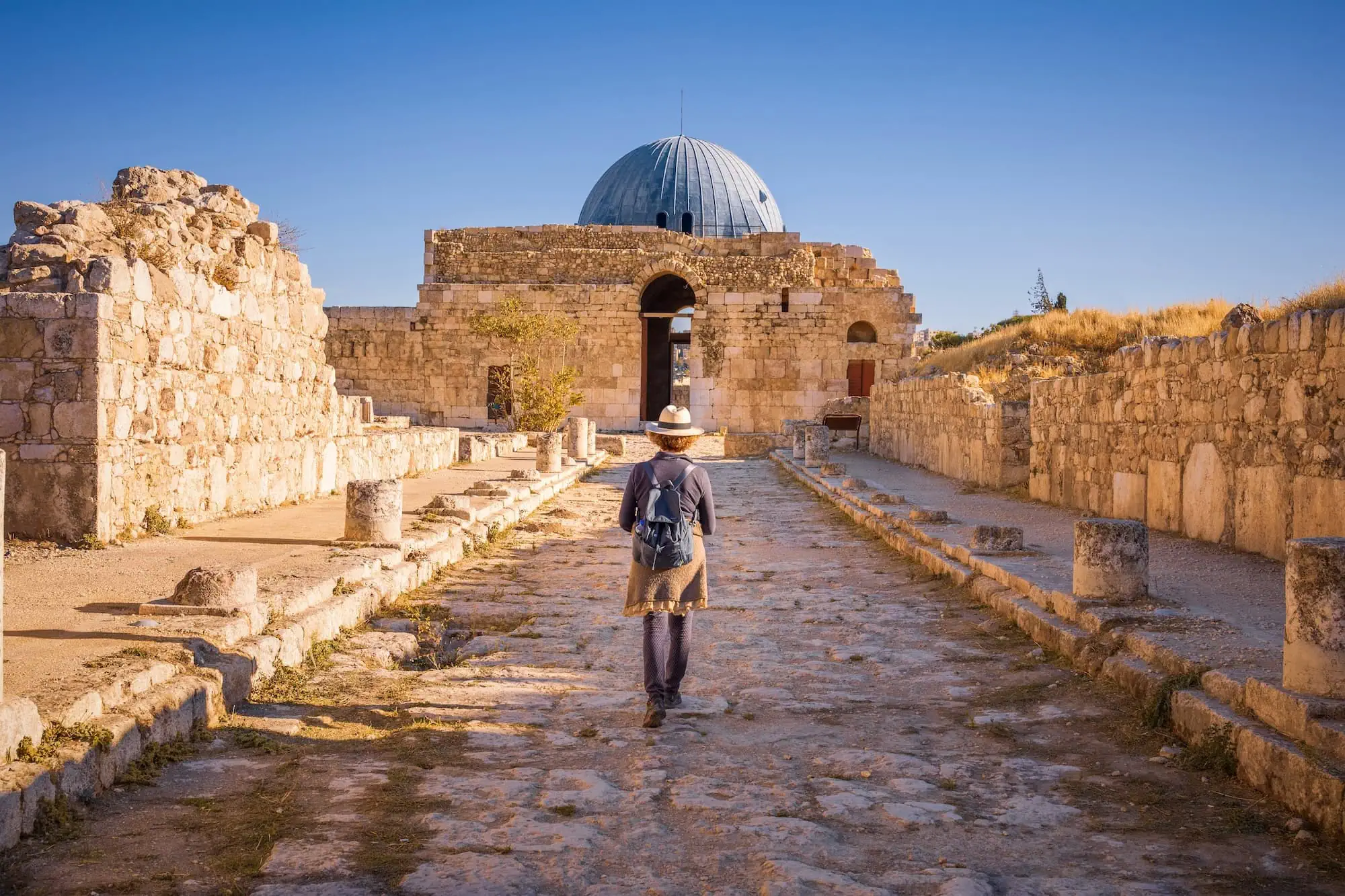
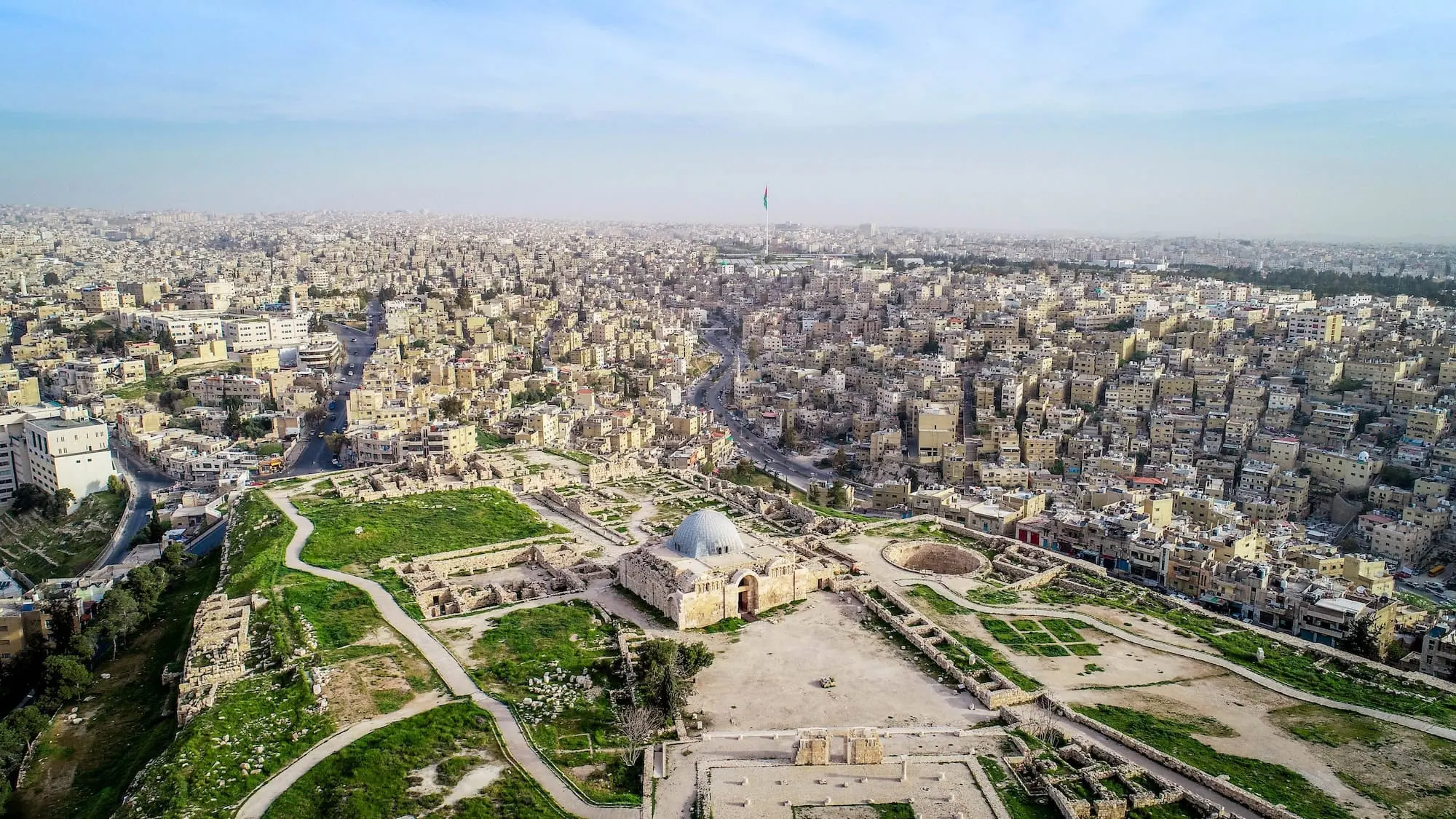
Perched on Jebel Al Qala’a at 850 meters (2,788 feet) above sea level, this hilltop complex has served as a center of power for successive civilizations. From Bronze Age settlements to Roman temples and early Islamic palaces, each layer adds depth to a site that ranks among the most significant archaeological landmarks in the Middle East. Visitors quickly understand why so many empires chose this exact location—it offers both strategic advantage and commanding views over the surrounding landscape.
Exploring the citadel reveals how Jordan’s diverse cultural heritage is preserved in remarkable detail. The blend of architectural styles, historical periods, and ongoing discoveries makes it a compelling destination for both archaeology enthusiasts and first-time visitors.
To experience the Amman Citadel alongside Petra, Wadi Rum, and Egypt’s world-renowned sites, explore our Egypt and Jordan multi-country tours.
Table of Contents
Archaeological Layers Tell Jordan’s Complete Story
Walking through the citadel means stepping through time zones of human civilization. Each structure represents a different chapter in this region’s remarkable history.
Bronze Age Foundations
Archaeological evidence confirms continuous habitation since the Neolithic period, making this one of the world’s longest-occupied sites. Excavations reveal Bronze Age pottery fragments, tools, and defensive walls that established the hilltop’s strategic importance. The original Ammonite settlement here controlled trade routes between the Arabian Peninsula and the Levant.
Recent digs uncovered Iron Age fortifications that demonstrate how ancient peoples recognized the site’s military value. These earliest inhabitants chose well – the elevated position provided both defense and visibility across the Jordan Valley.
Roman Imperial Grandeur
The massive Temple of Hercules dominates the central plateau, constructed when Geminius Marcianus governed the province. Roman engineers built this monument to last, using locally quarried limestone for walls that still stand nearly two millennia later.
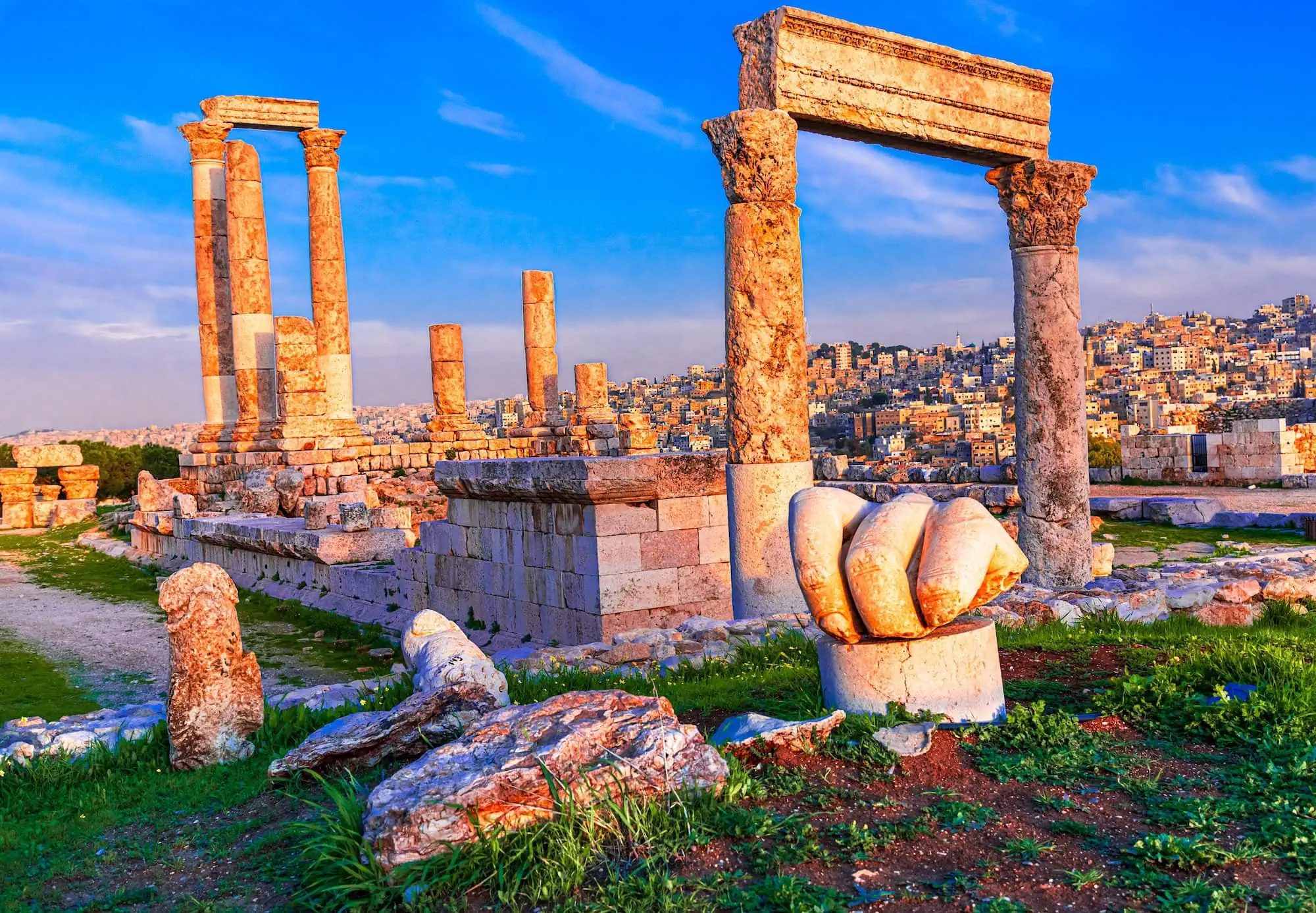
Thirteen-meter-tall (43-foot) columns once supported a roof covering a temple floor measuring 43 by 27 meters (141 by 89 feet). The famous colossal hand, carved from white marble, belonged to a statue that towered over worshippers. Roman construction techniques here influenced regional architecture for centuries.
Byzantine Christian Heritage
The sixth-century Byzantine church represents early Christianity’s spread through Jordan. Corinthian capitals and mosaic floors survive from this basilica-style building that served the growing Christian community. Byzantine architects adapted Roman construction methods while adding distinctly Christian symbolic elements.
Temple of Hercules: Masterpiece of Roman Engineering
This partially reconstructed monument showcases Roman architectural ambition at its peak.
Standing before the temple ruins, visitors immediately grasp the scale of Roman imperial building projects. The podium alone measures larger than a modern basketball court, supporting columns whose marble drums weigh several tons each. Roman engineers calculated these proportions to create visual harmony while ensuring structural stability against earthquakes.
Archaeological investigations by ACOR (American Center of Oriental Research) revealed construction details that modern engineers still admire. The foundation extends deep into bedrock, while metal clamps secured column sections using advanced joinery techniques.
Restoration Brings History to Life
USAID funding enabled partial reconstruction that allows visitors to appreciate the temple’s original grandeur. Greek architects from the University of Athens collaborated with Jordanian engineers to ensure historical accuracy.
The restored columns, rising against Amman’s modern skyline, create a powerful visual connection between ancient and contemporary Jordan. Sunset visits particularly highlight this juxtaposition, as golden light illuminates both Roman marble and glass towers.
Umayyad Palace: Islamic Architecture’s Golden Age
The best-preserved structure across the entire complex showcases early Islamic design sophistication.
Built during the reign of Caliph Hisham ibn Abd al-Malik in the eighth century, this palace complex demonstrates how Umayyad architects merged local building traditions with influences from Persia and Byzantium. The audience hall follows apadana-style design principles borrowed from Persian imperial architecture, while incorporating Byzantine decorative elements and local stone-carving traditions.
Water cisterns carved into bedrock supplied the palace through an ingenious gravity-fed system that functioned without mechanical pumps. Bath facilities featured underfloor heating adapted from Roman hypocaust technology. These engineering solutions reveal how Islamic builders absorbed and improved upon earlier innovations.
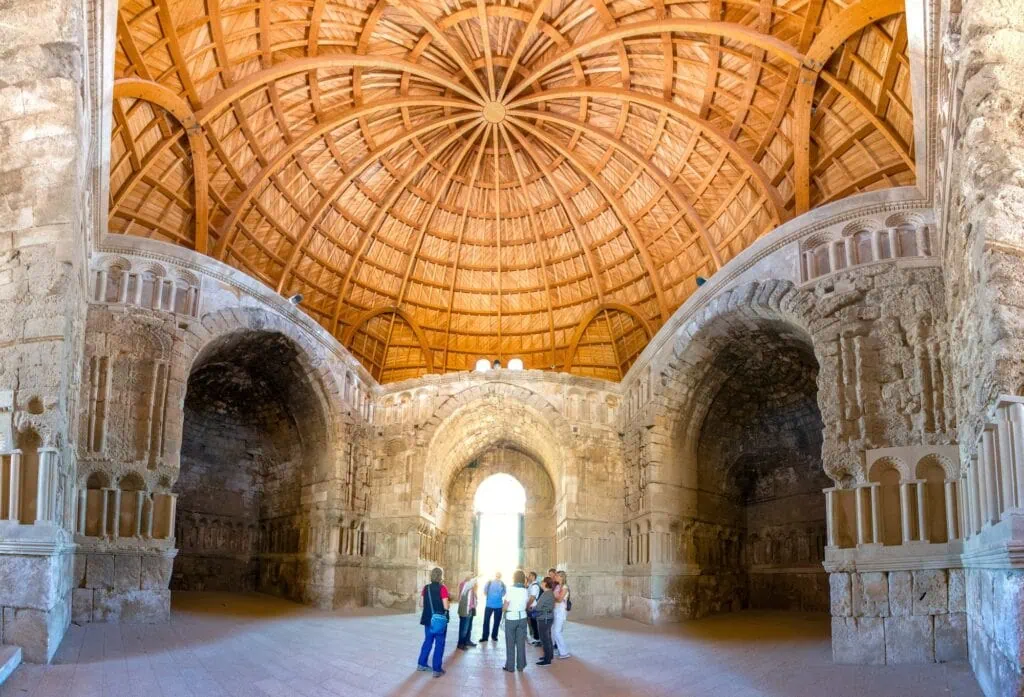
Archaeological excavations exposed foundation walls that outline mosque, residential quarters, and administrative buildings. The complex operated as a desert fortress controlling caravan routes while serving as a regional governance center. Pottery fragments and coins discovered here document trade connections spanning from Spain to Central Asia.
Defensive walls incorporated stones from earlier Roman and Byzantine structures, demonstrating practical resource management. Yet the overall design follows distinctly Islamic spatial concepts, with courtyards and gardens creating private areas for family life separate from public administrative functions.
Jordan Archaeological Museum: Preserving National Heritage
The museum building anchors the citadel’s eastern section with collections spanning Jordan’s complete archaeological timeline.
Ancient Treasures Under One Roof
Established in 1951, the museum houses artifacts that illuminate daily life across different historical periods. The Dead Sea Scrolls fragments provide insight into religious thought during the Second Temple period. Nabatean inscriptions reveal trade network complexity that connected Petra with Mediterranean ports.
Bronze Age jewelry, Roman glass vessels, and Islamic ceramics demonstrate evolving artistic styles. Each display case contains objects discovered within Jordan’s borders, creating a coherent narrative about cultural continuity.
Research Collections Support Ongoing Discoveries
Behind public galleries, climate-controlled storage areas preserve thousands of additional artifacts awaiting study. International archaeological teams regularly access these collections for comparative research projects. The museum’s laboratory facilities enable conservation work that extends artifact lifespans for future generations.
Visiting the Citadel: Practical Information
Planning your visit requires understanding seasonal variations and local logistics.
Entrance and Access Details
The citadel opens daily from 8:00 am (08:00) to 7:00 pm (19:00) during summer months, with reduced winter hours ending at 4:00 pm (16:00). Standard admission costs 3 JOD, but Jordan Pass holders enter free – a significant saving for travelers visiting multiple archaeological sites.
Taxi rides from downtown Amman take approximately ten minutes, though walking uphill from the Roman Theatre provides excellent exercise with gradually improving views. The steep approach explains why ancient armies found this position so defensible.
Guided Tours Enhance Understanding
Professional guides available at the entrance transform ruins into living history through detailed explanations. Many speak multiple languages and hold archaeology degrees from Jordanian universities. Private group tours can be arranged through established tour operators for deeper exploration.
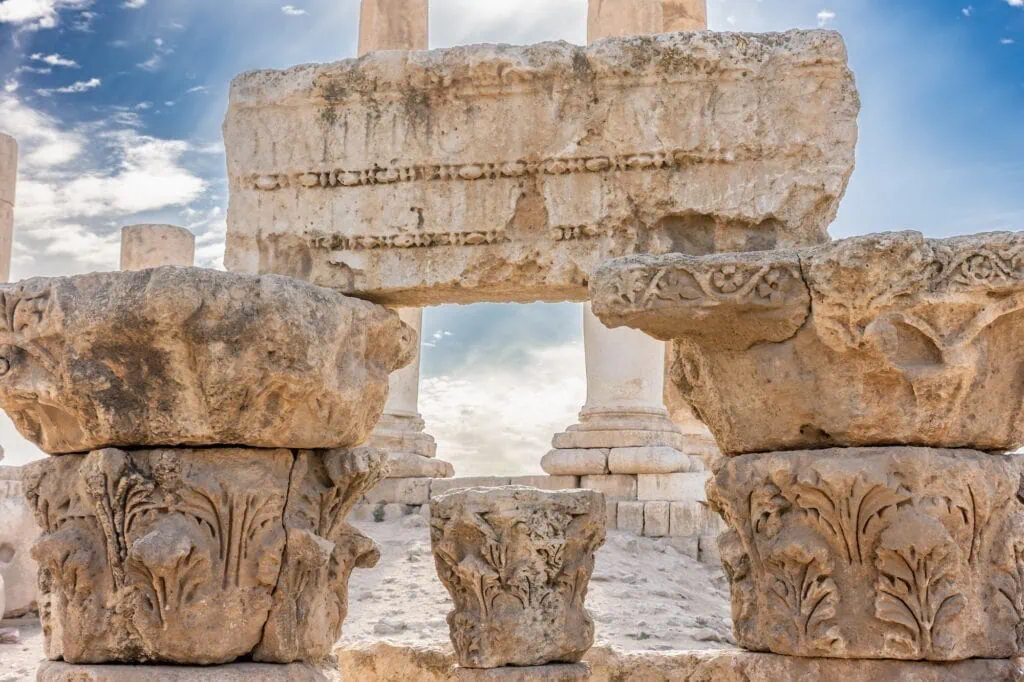
We recommend allocating at least two hours for a comprehensive visit, though photography enthusiasts often spend entire afternoons capturing changing light on ancient stones. Early morning visits avoid midday heat while providing optimal lighting for photography.
Combining Attractions for Exploration
The nearby Roman Theatre and Jordan Museum are key Jordan tourist attractions that pair naturally with a visit to the citadel, especially for travelers interested in archaeology and history. Meanwhile, downtown Amman’s traditional souks offer a vibrant cultural contrast after exploring ancient ruins.
Our multi-day itineraries across top Jordan tourist attractions often position the citadel visit on arrival day—helping travelers get oriented while beginning their journey through Jordan’s rich, layered past.
Cultural and Religious Significance Through Ages
Beyond archaeological importance, the citadel represents Jordan’s tradition of religious tolerance and cultural diversity.
Different faith communities have shared this space across millennia without destroying predecessors’ monuments. Roman temples coexist with Islamic palaces and Byzantine churches, creating visual testament to peaceful cultural transitions. This pattern of adaptation rather than destruction characterizes much of Jordan’s historical development.
Modern Jordan continues this inclusive approach, protecting archaeological heritage while accommodating contemporary urban growth. The citadel’s elevation above Amman provides perspective on how ancient principles of tolerance influence current policies. Religious pilgrims from various traditions visit here, finding connections to their own spiritual histories within these stones.
Archaeological research continues revealing new aspects of inter-cultural exchange. Recent discoveries include Byzantine-era coins minted with Arabic inscriptions, suggesting economic cooperation between different religious communities. Islamic architectural elements incorporate Christian symbolic motifs, while Umayyad decorative patterns show Roman geometric influences.
Frequently Asked Questions
Allow 2-3 hours for a thorough visit including the museum and all major structures.
Yes, especially if visiting Petra and other archaeological sites – the pass covers citadel admission.
Early morning (8:00-10:00 am) or late afternoon for cooler temperatures and better photography lighting.
Photography is permitted in most areas, but check for specific restrictions on certain artifacts.
Taxis cost 2-3 JOD from downtown, or walk uphill from the Roman Theatre (steep 15-minute climb).
Basic facilities exist at the entrance, but bring water especially during summer months.
Parts of the citadel involve uneven ancient stones and steps – contact site management for accessibility guidance.
Comfortable walking shoes and sun protection – avoid high heels due to uneven ancient surfaces.
The site remains open during most religious observances, but check current hours before traveling.
Professional guides speaking French, German, and Spanish are often available – inquire at the entrance.
While Petra is larger, the citadel offers multiple historical periods in one location with excellent city views.
Yes, the site is well-maintained with security present, making solo visits comfortable and safe.
Design Your Custom Tour
Explore Egypt and Jordan your way by selecting only the attractions you want to visit