

Sultan Al-Ghuri Complex – A Reminder of Egypt’s Mamluk Era
Few monuments capture the final glory of medieval Islamic architecture quite like this one.
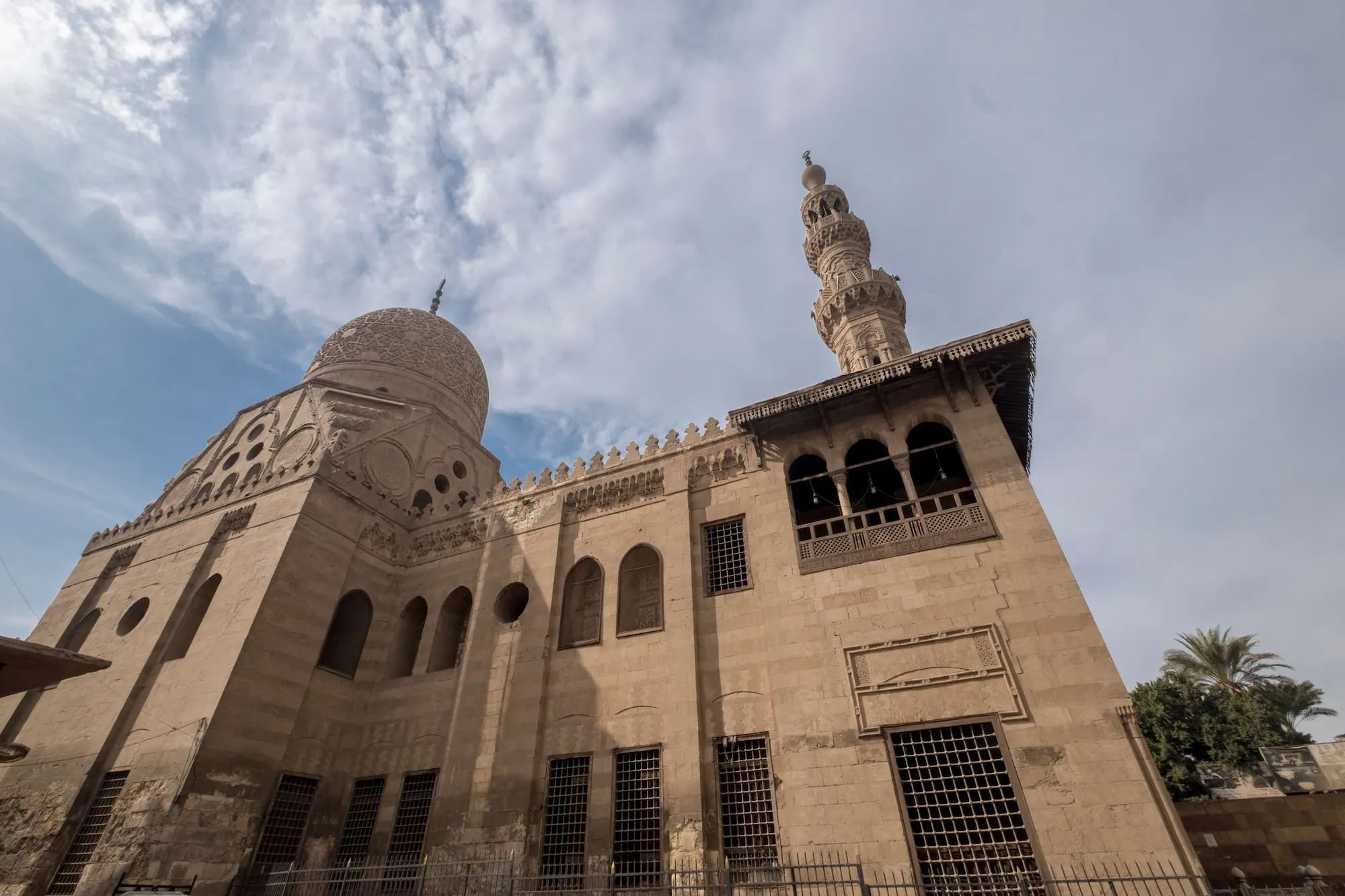
The Sultan Al-Ghuri Complex stands as the last monumental achievement of the Mamluk Sultanate before Ottoman conquest transformed Egypt forever. Built between 1503 and 1505 CE, this extraordinary religious and funerary complex showcases the sophisticated architectural innovations that defined late Mamluk period construction. The complex uniquely straddles Al-Mu’izz Street in Islamic Cairo, creating an integrated urban monument that served multiple social functions. Today, visitors can explore both the western mosque and madrasa alongside the eastern mausoleum and khanqah, experiencing firsthand the architectural brilliance that Sultan Qansuh al-Ghuri commissioned as his lasting legacy
What makes this complex particularly remarkable is how it represents both an ending and a culmination – the final flowering of Mamluk architectural tradition just years before the Ottomans would fundamentally alter Egypt’s cultural landscape.
Table of Contents
The Historical Context of Sultan Qansuh al-Ghuri
Understanding the man behind this architectural masterpiece reveals the complex political and military pressures of the early 16th century.
Sultan Qansuh al-Ghuri ruled the Mamluk Sultanate from 1501 to 1516, overseeing Egypt during one of its most challenging periods. His career before ascending to the sultanate included serving as governor of Tarsus and chamberlain of Aleppo, positions that gave him extensive experience managing the empire’s northern territories. These roles proved crucial as the Ottoman Empire expanded southward, creating mounting pressure on Mamluk lands. The sultan’s military background shaped his approach to both governance and architectural patronage, understanding that monumental buildings served as powerful symbols of legitimate authority.
Architectural Innovation Meets Religious Function
The complex breaks traditional mosque design conventions in several groundbreaking ways.
Revolutionary Minaret Design
The entirely rectangular minaret introduced the novel feature of a top story with four bulbs, departing from the traditional circular or octagonal forms common in earlier Mamluk architecture. This innovation represented the final changes in form and function that characterized late Mamluk religious architecture. The minaret’s distinctive silhouette became a defining feature of the Cairo skyline, visible from considerable distances along Al-Mu’izz Street.
Multifunctional Integration
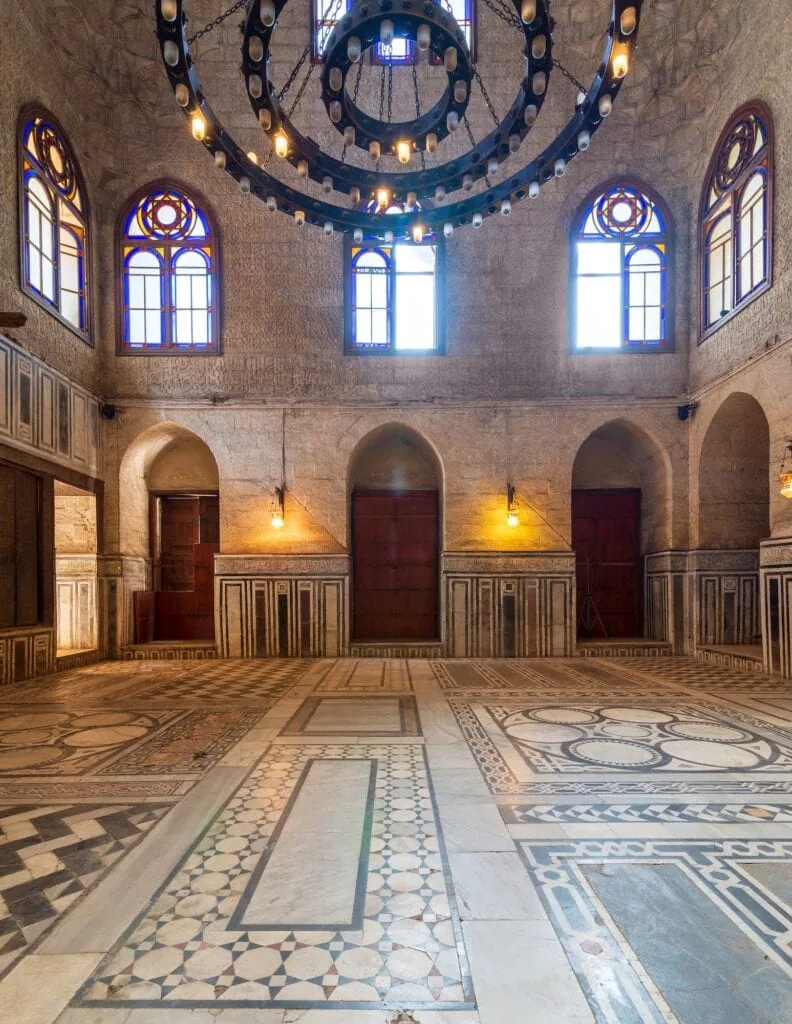
Rather than creating separate buildings for different purposes, al-Ghuri’s architects designed a unified complex that combined all social needs in one holistic structure. The western side houses the mosque and madrasa, where religious services and Islamic education took place daily. The eastern side contains the sultan’s intended mausoleum and khanqah, a facility for Sufi religious practices and community gatherings.
Urban Planning Innovation
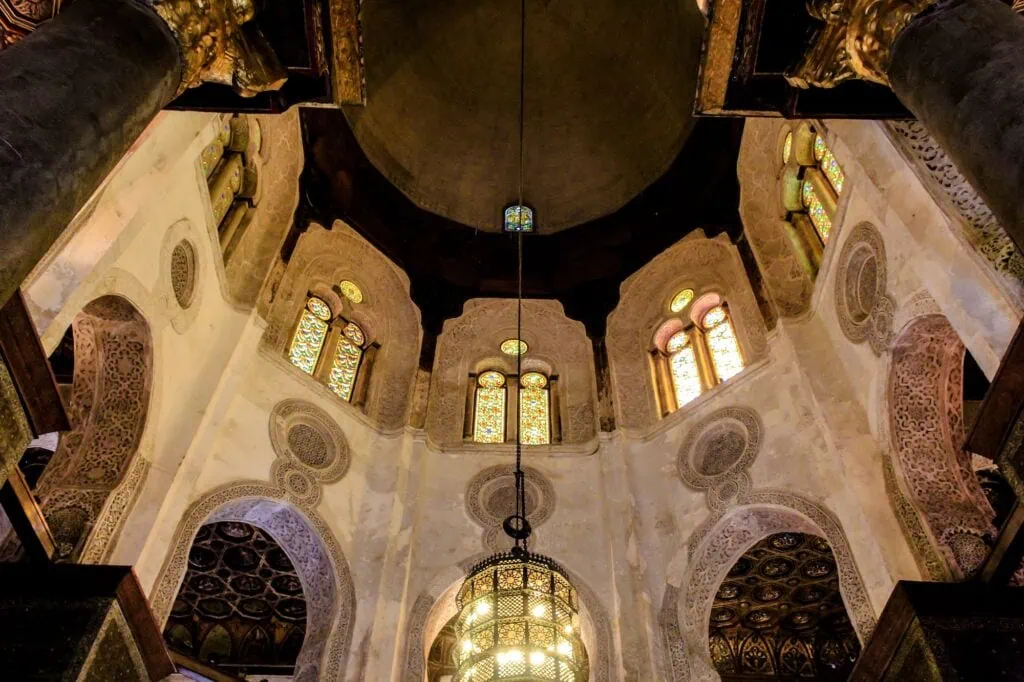
The facades don’t adjust to the street alignment and follow the orientation of the complex instead, demonstrating sophisticated urban planning principles. This approach created a monument that dominated its surroundings while maintaining proper religious orientation toward Mecca. The result is an architectural statement that transforms the entire streetscape of this section of Islamic Cairo.
Experiencing the Complex Today
Modern visitors encounter a remarkable blend of active religious life and historical preservation.
The complex operates with opening hours from 9:00 am to 5:00 pm (09:00 to 17:00), providing ample time for thorough exploration. Entrance is free, making it accessible to all visitors interested in Islamic architecture and Mamluk history. The ground level features vendors of garments and clothing in the Al-Mu’izz souk, continuing centuries-old traditions of commerce that have always surrounded major religious complexes in Cairo. This integration of sacred and commercial space reflects the complex’s original design as a comprehensive community center.
We’ve guided countless visitors through this architectural marvel, and the experience consistently proves most meaningful when guests understand the historical context before entering. The interplay between religious function and commercial activity creates an authentic atmosphere that connects modern Cairo with its medieval past. Professional guides can illuminate details about the building techniques, decorative elements, and religious practices that might otherwise go unnoticed.
What to Look For During Your Visit
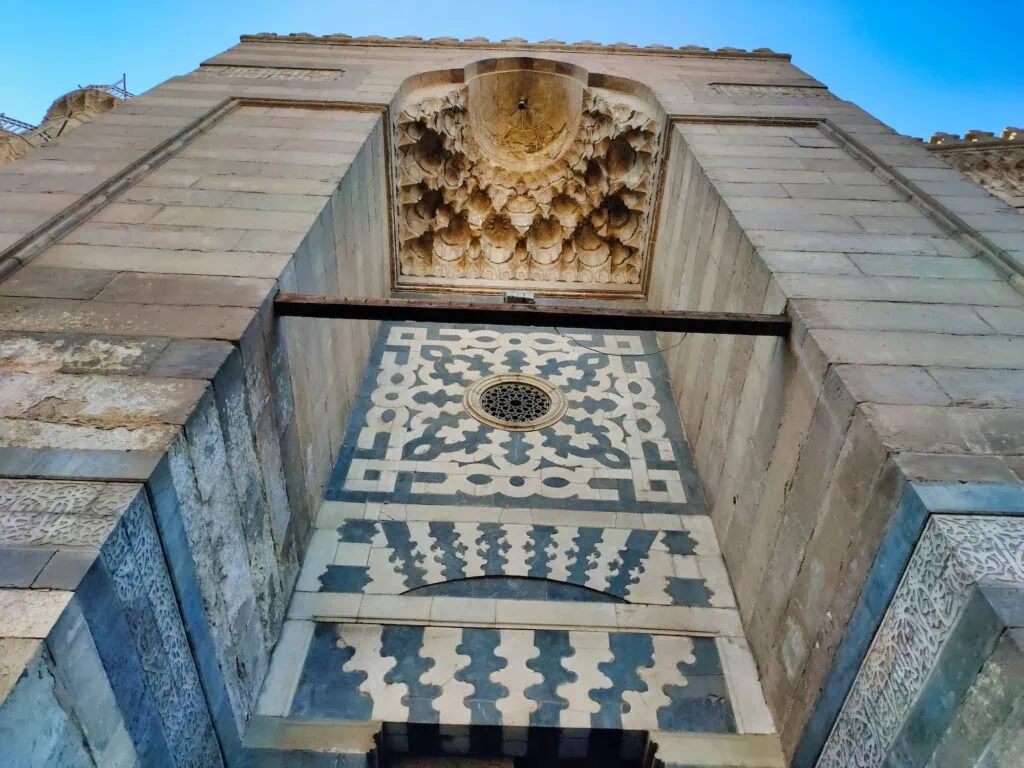
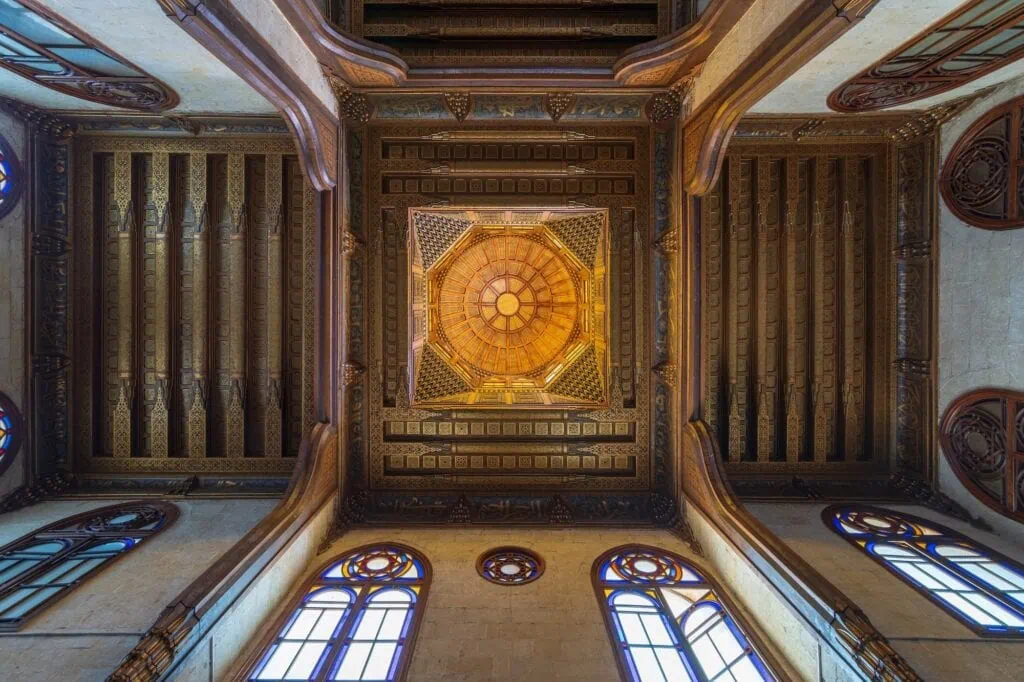
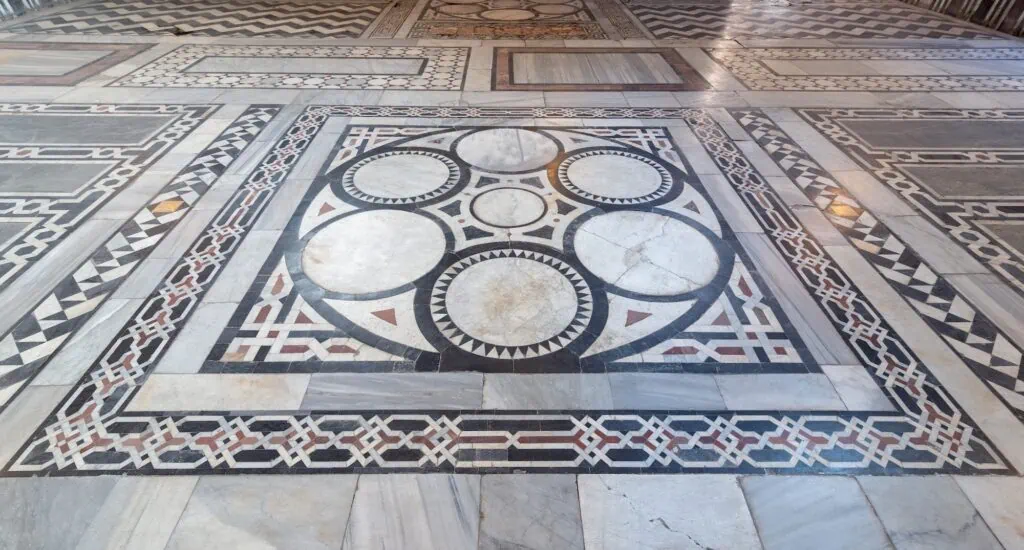
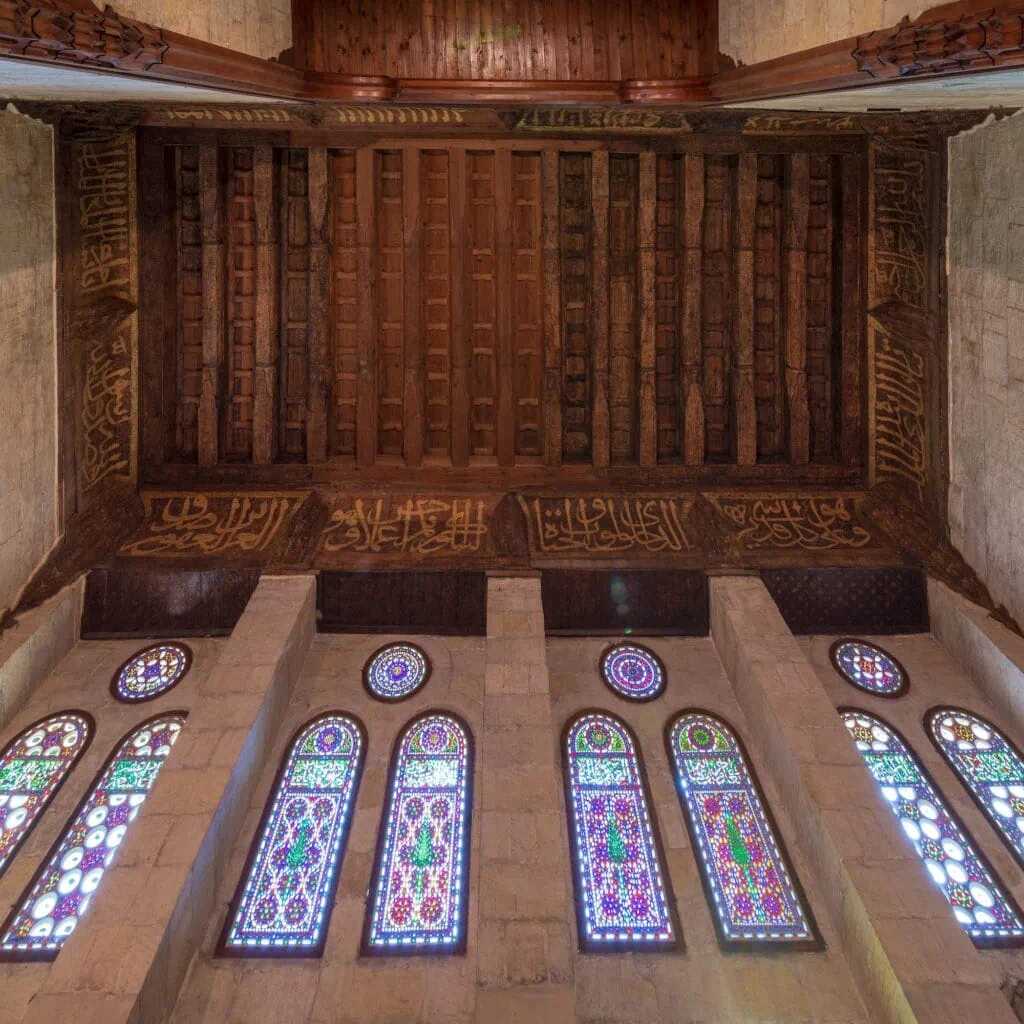
The complex rewards careful observation of architectural details that showcase Mamluk craftsmanship at its peak. Original decorative elements may have been covered with green tiles, though much of this ceramic work has been lost over the centuries. Stone carving throughout the complex demonstrates the sophisticated techniques that Mamluk artisans had perfected by the early 1500s.
The interior spaces reveal how different functions were accommodated within the unified design. The mosque section maintains proper orientation for prayer while the madrasa areas show evidence of the educational activities that once took place there. The mausoleum section, though Sultan al-Ghuri was never buried there, displays the funerary architectural traditions that defined Mamluk royal tombs.
The Complex’s Role in Islamic Cairo Heritage
This monument anchors one of the world’s most significant concentrations of Islamic architectural heritage.
Islamic Cairo contains dozens of major monuments from various periods, but the Sultan Al-Ghuri Complex holds particular importance as the final major Mamluk construction project. Its location on Al-Mu’izz Street places it within walking distance of numerous other significant Islamic monuments, making it an essential stop for visitors exploring this UNESCO World Heritage area. The complex serves as a bridge between the earlier Fatimid period monuments to the north and the Ayyubid and early Mamluk monuments to the south.
The ongoing restoration efforts have helped preserve key architectural elements while maintaining the complex’s active religious functions. This balance between preservation and continued use demonstrates how historic monuments can remain living parts of their communities rather than museum pieces. The restoration work has revealed important details about Mamluk building techniques and decorative programs that inform our understanding of late medieval Islamic architecture throughout the region.
Planning Your Visit to the Complex
Several factors can enhance your experience of this remarkable architectural achievement.
The complex functions best as part of a broader exploration of Islamic Cairo rather than as an isolated destination. We recommend combining your visit with other nearby Mamluk monuments to understand the architectural evolution that culminated in al-Ghuri’s innovations. The morning hours typically offer the most favorable lighting conditions for photography and the most comfortable temperatures for detailed exploration.
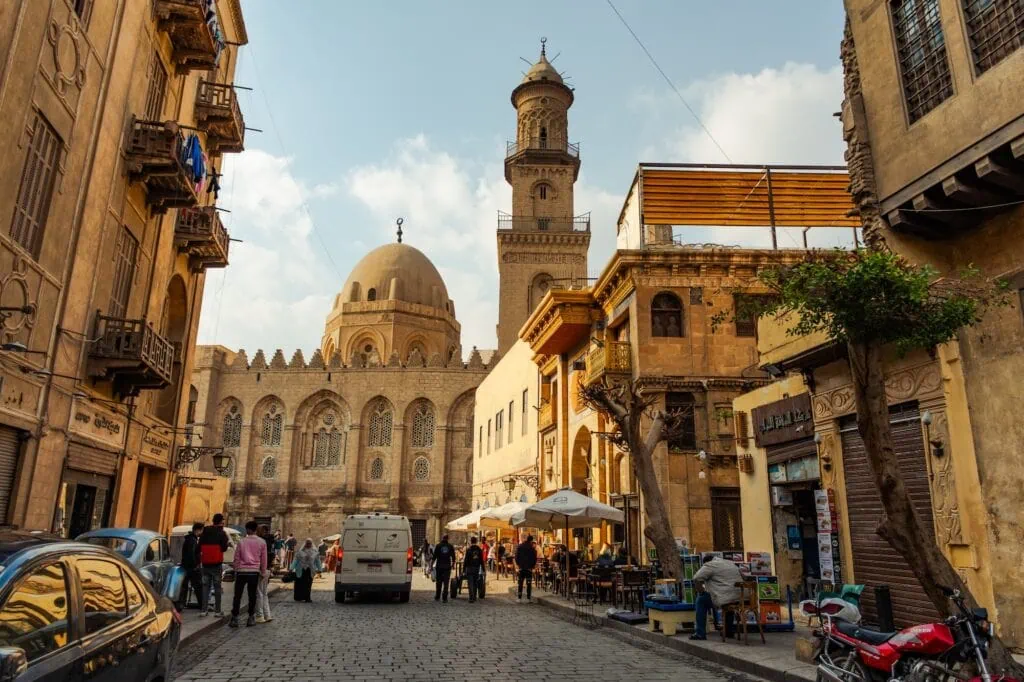
Visitors should allow at least 45 minutes for a thorough visit, though architecture enthusiasts often spend considerably longer examining the decorative details and spatial relationships. The complex’s position straddling Al-Mu’izz Street means that street-level commercial activity continues around the monument throughout the day, providing an authentic context that enhances rather than detracts from the historical experience.
The Legacy of Mamluk Architectural Achievement
The Sultan Al-Ghuri Complex represents the culmination of three centuries of Mamluk architectural development.
From the 13th through early 16th centuries, Mamluk architects progressively refined their approaches to religious architecture, developing distinctive decorative programs and spatial arrangements that influenced Islamic building throughout the eastern Mediterranean. The innovations visible in al-Ghuri’s complex – particularly the rectangular minaret design and the integrated urban planning approach – represent the mature expression of these centuries of experimentation and refinement.
The complex also demonstrates how political circumstances shaped architectural patronage during the late Mamluk period. Sultan al-Ghuri’s awareness of Ottoman military pressure influenced his decision to create a monument that would assert Mamluk cultural authority and religious legitimacy. The scale and sophistication of the complex served as a deliberate statement about the continued vitality of Mamluk civilization, even as external threats mounted.
Architectural Influence and Innovation
The building techniques and decorative approaches pioneered in the Sultan Al-Ghuri Complex influenced subsequent Islamic architecture throughout the Ottoman period, even as political control shifted. Elements of the design vocabulary developed here can be traced in later Ottoman monuments in Cairo and throughout the former Mamluk territories. This architectural continuity demonstrates how cultural traditions transcended political boundaries and military conquests.
The complex’s integration of multiple functions within a unified design also established precedents for later Ottoman religious complexes. The holistic approach to community service that the complex embodied – combining religious, educational, commercial, and social functions – became a standard feature of major Ottoman religious foundations throughout the empire.
Experience The Grandeur Of Sultan Al-Ghuri Complex
The Sultan Al-Ghuri Complex captures the elegance and power of Mamluk Cairo—where intricate architecture, historic courtyards, and cultural performances bring the past vividly to life. With Egypt Tours Plus, we seamlessly include this atmospheric landmark in a private journey that connects Islamic Cairo’s hidden gems with Egypt’s most iconic highlights.
You choose your travel dates, your pace, and the experiences that shape your route. From guided walks through historic streets to curated cultural experiences and refined comfort throughout, we tailor every detail around your preferences—ensuring a smooth, immersive, and deeply personal travel experience.
Frequently Asked Questions
The Sultan Al-Ghuri Complex is generally open daily from 9:00 am to 5:00 pm, although access may pause briefly during Friday prayers or religious activities. Located on Al-Muizz Street in Historic Cairo, the complex includes a mosque, mausoleum, madrasa, and sabil-kuttab dating to the early 1500s. Morning visits usually provide cooler temperatures, softer lighting, and fewer tour groups. Visitors interested in photography or architectural details should arrive before midday for the best viewing conditions.
No, entry to the Sultan Al-Ghuri Complex is typically free, making it one of Cairo’s most accessible Mamluk-era landmarks. Visitors can explore sections of the mosque, mausoleum, and surrounding architectural spaces without purchasing a separate ticket. Because the complex sits along Al-Muizz Street, many travelers combine it with nearby Islamic Cairo monuments during walking tours. Donations to support maintenance are sometimes welcomed, especially during cultural events or religious festivals held within the historic district.
Most visitors spend 45-60 minutes exploring the Sultan Al-Ghuri Complex, while architecture and Islamic history enthusiasts often stay closer to 90 minutes. The site includes richly carved stone façades, vaulted halls, a monumental minaret, and one of the last great Mamluk funerary complexes built before the Ottoman conquest of Egypt in 1517. Because the monument sits on Al-Muizz Street, many travelers extend their visit into a broader Islamic Cairo walking itinerary. Early morning visits allow a quieter and less rushed experience.
The Sultan Al-Ghuri Complex is considered one of the final masterpieces of Mamluk architecture, completed shortly before the Ottoman Empire defeated the Mamluks in 1517. Its distinctive rectangular minaret, integrated urban design, and combination of religious, educational, and charitable functions make it architecturally unusual even within Cairo’s historic core. Unlike earlier monuments focused on a single purpose, this complex operated as a multifunctional civic and religious center. The structure therefore represents the peak and final phase of late Mamluk artistic ambition.
Yes, personal photography is generally allowed throughout much of the Sultan Al-Ghuri Complex, including courtyards, façades, and architectural interiors. Visitors frequently photograph the carved stonework, wooden mashrabiya screens, and elaborate Mamluk ornamentation that define the monument’s late medieval style. Flash photography may be discouraged in sensitive interior areas to help preserve decorative details and religious spaces. Travelers visiting during morning hours often get the best natural light along Al-Muizz Street and inside the complex itself.
Yes, the mosque within the Sultan Al-Ghuri Complex remains an active religious space used for daily prayers and Islamic observances. Built in the early 16th century by Sultan Qansuh al-Ghuri, the complex continues serving both worshippers and visitors more than 500 years after its construction. Because religious functions remain active, tourists may encounter temporary access restrictions during prayer times, especially on Fridays. Modest dress and respectful behavior are expected throughout all prayer areas and religious halls.
Morning visits between 9:00 am and 11:00 am usually provide the best conditions for exploring the Sultan Al-Ghuri Complex. Cooler temperatures, lighter pedestrian traffic on Al-Muizz Street, and softer sunlight make architectural details easier to appreciate and photograph. Cairo afternoons can become crowded and noticeably hotter, especially from May through September when temperatures regularly exceed 35°C (95°F). Visitors interested in photography or quieter exploration should avoid peak midday tour hours whenever possible.
Yes, guided tours of the Sultan Al-Ghuri Complex are widely available through Egyptologists and Islamic Cairo specialists. Professional guides help explain Mamluk architectural symbolism, Sultan Qansuh al-Ghuri’s political legacy, and the monument’s role within Cairo’s medieval urban landscape. Without context, visitors often miss important features such as the unusual minaret shape, carved inscriptions, and integrated charitable institutions. Egypt Tours Plus frequently recommends combining the complex with nearby mosques and bazaars for a more complete Historic Cairo experience.
The Sultan Al-Ghuri Complex sits directly on Al-Muizz Street, one of the most historically important roads in Islamic Cairo and a UNESCO-recognized heritage corridor. Its central location makes it easy to combine with Khan el-Khalili Bazaar, Al-Azhar Mosque, Bayt al-Suhaymi, and several major Mamluk monuments within walking distance. Many travelers spend half a day exploring this district because of the density of medieval architecture concentrated in a relatively compact area. Morning tours usually offer the most comfortable walking conditions.
Sultan Qansuh al-Ghuri died in 1516 during battle against Ottoman forces near Aleppo, only months before the Ottoman conquest ended Mamluk rule in Egypt. Historical accounts suggest his body was never recovered, meaning he was never buried in the mausoleum prepared for him inside the complex. This unfinished funerary purpose gives the site unusual historical significance within Cairo’s Islamic monuments. The complex therefore stands as both a cultural achievement and a symbol of the final years of the Mamluk Sultanate.
Visitors to the Sultan Al-Ghuri Complex can see advanced late-Mamluk architectural features including a rare rectangular minaret, highly refined stone carving, and sophisticated urban integration across multiple connected structures. Built between 1503 and 1505, the complex combines a mosque, madrasa, mausoleum, and commercial spaces within a carefully planned civic design. Decorative elements include geometric ceilings, marble panels, and carved inscriptions that demonstrate the technical peak of Mamluk craftsmanship. Architectural historians often regard the monument as one of Cairo’s finest pre-Ottoman achievements.
Accessibility at the Sultan Al-Ghuri Complex is limited because the monument preserves original medieval architectural features such as stone staircases, uneven flooring, and narrow passageways. Some ground-level sections remain easier to navigate, but wheelchair access can be challenging in older interior areas. Visitors with mobility concerns may require assistance, especially on crowded days along Al-Muizz Street. Early visits generally provide more space and easier movement before the district becomes busy with tour groups and local foot traffic.

Design Your Custom Tour
Explore Egypt your way by selecting only the attractions you want to visit