

Valley of El Haiz – Natural Beauty and Unspoiled Marvel Await
The Valley of El Haiz holds secrets that archaeologists call among the most significant discoveries in Egypt’s Western Desert.
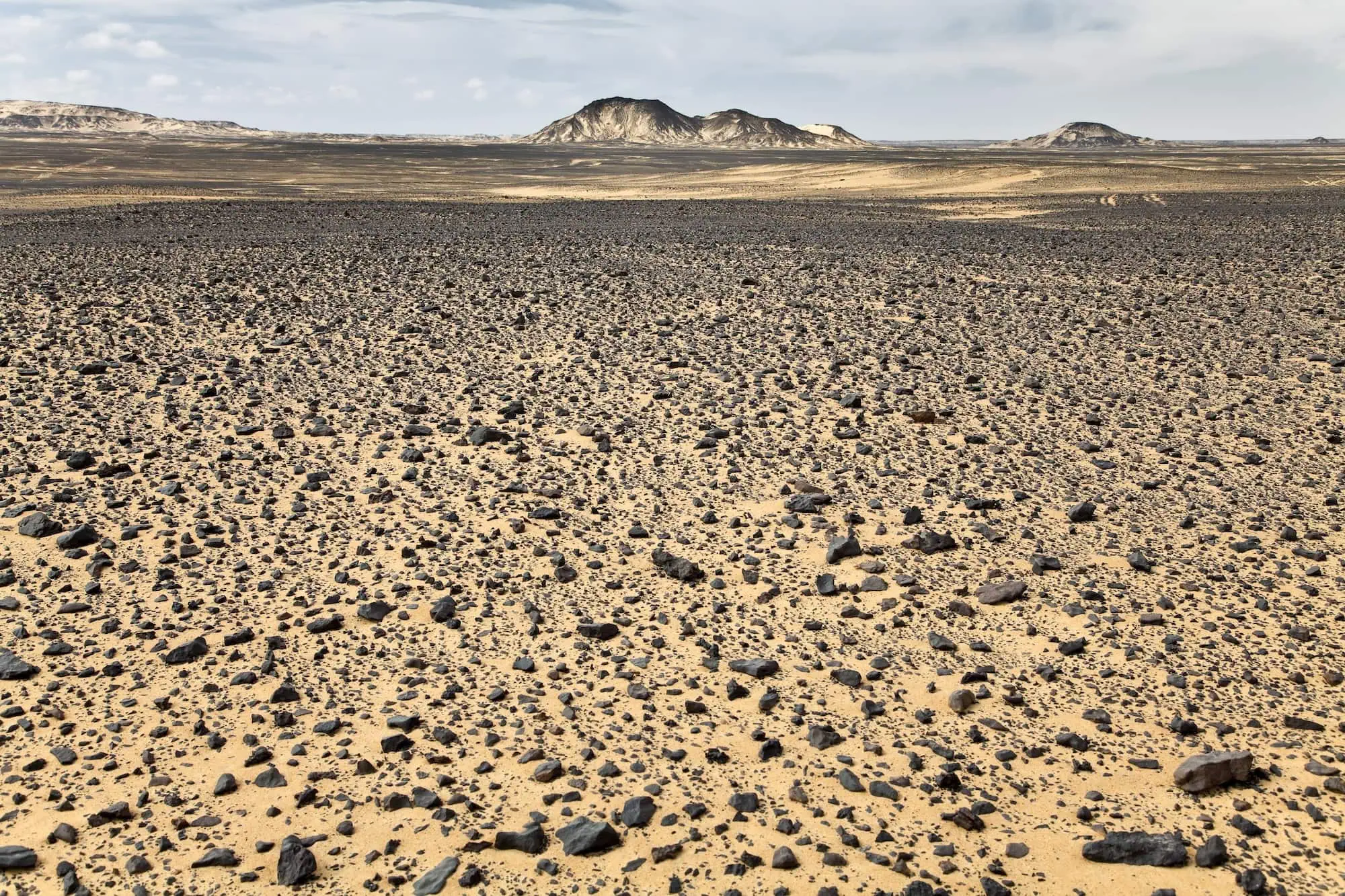
This remarkable valley in Bahariya Oasis transformed from a thriving Roman wine-producing region into one of modern Egypt’s most intriguing archaeological sites. Ancient ruins emerge from black basalt landscapes, telling stories of military fortresses, Christian basilicas, and sophisticated economic centers that once controlled vital caravan routes. The contrast between the valley’s dark geological formations and limestone surroundings creates a striking visual experience that captivates both researchers and travelers.
We’ve spent decades guiding visitors through Egypt’s hidden gems, and the Valley of El Haiz represents one of those rare places where history, geology, and adventure converge into an unforgettable experience.
Table of Contents
Roman Heritage and Archaeological Significancef
The valley’s archaeological importance became clear when researchers unearthed what they believe to be the largest Roman palace ever discovered in Egypt. This massive structure, along with accompanying ruins, reveals the sophisticated administrative and military organization that once controlled this strategic location.
The Great Roman Palace Complex
Excavations revealed a sprawling administrative center that served as the residence for local Roman rulers. The palace’s architectural layout demonstrates advanced urban planning, with multiple courtyards, administrative quarters, and residential areas arranged according to Roman engineering principles. Stone foundations still mark room divisions, while fragments of decorated walls hint at the luxury once enjoyed by the region’s governors.
Archaeological evidence suggests this complex functioned as both a governmental center and military headquarters. The strategic positioning allowed Roman authorities to monitor and protect the valuable caravan routes that connected the Nile Valley with distant oases and trade networks extending into sub-Saharan Africa.
Qasr Masuda Fortress Ruins
The Roman fortress known as Qasr Masuda protected merchants and their precious cargo traveling through this crucial junction. Massive stone walls, some still standing several meters high, enclosed barracks, storage facilities, and watchtowers that provided commanding views across the surrounding desert terrain.
Military archaeologists have identified weapon storage areas, training grounds, and living quarters that housed Roman garrisons. The fortress design reflects standard Roman military architecture adapted for desert conditions, with thick walls providing protection from both enemies and the harsh climate.
Wine Production Discovery
Perhaps the most surprising archaeological finding was Egypt’s first ancient wine factory, completely preserved beneath desert sands. The production facility includes fermentation chambers, storage areas, and sophisticated drainage systems that enabled large-scale wine manufacturing during the Roman period.
Clay amphora fragments bearing Latin inscriptions indicate this wine was traded throughout the Roman Empire. The discovery challenges previous assumptions about ancient Egypt’s agricultural capabilities and reveals the valley’s role as a major economic center rather than merely a military outpost.
Geological Wonders and Natural Formation
The Valley of El Haiz showcases some of Egypt’s most distinctive geological features, created through millions of years of volcanic activity and erosion. Black basalt deposits from the Oligocene period scatter across the landscape like natural breadcrumbs, creating an otherworldly environment that photographers and geologists find equally fascinating.
These dark volcanic rocks contrast dramatically with surrounding limestone formations, creating a natural laboratory for understanding Egypt’s geological history. Iron pyrite deposits add metallic glints to the black stones, while wind erosion has sculpted the basalt into smooth, rounded shapes that feel almost organic to the touch.
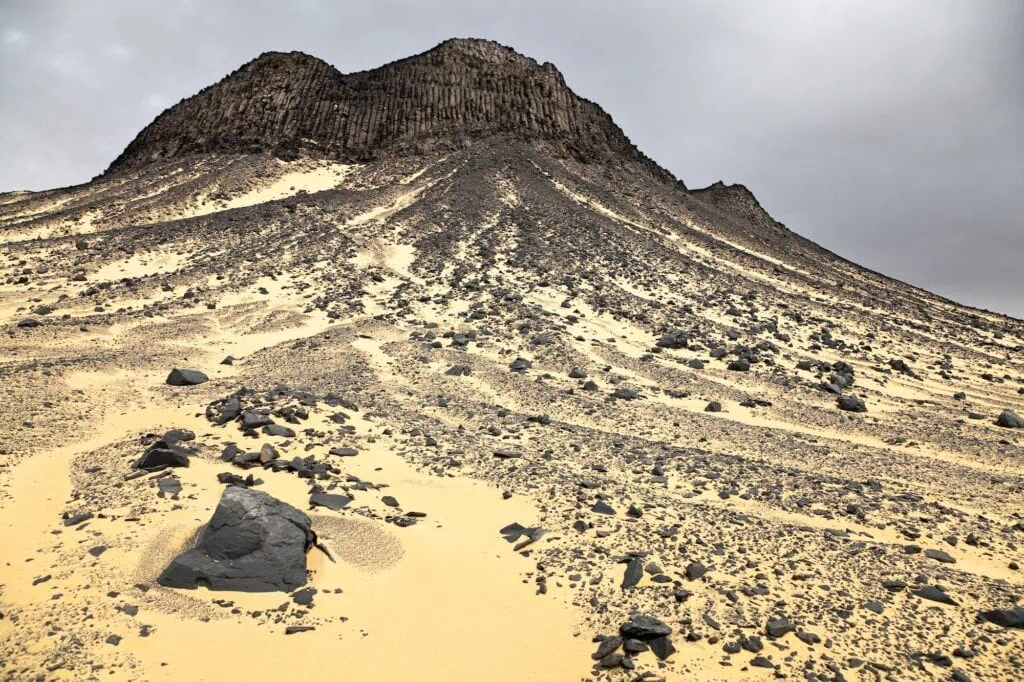
The geological diversity extends beyond surface appearances. Subsurface limestone layers created natural water sources that sustained both ancient settlements and modern wildlife. This unique combination of volcanic and sedimentary geology makes the valley a valuable research site for understanding how ancient civilizations adapted to changing environmental conditions.
Christian Transformation and Coptic Heritage
As Egypt embraced Christianity during the Byzantine period, the Valley of El Haiz witnessed remarkable religious transformation. The ruins of a Coptic basilica, built in classic three-nave style, demonstrate how Christian communities adapted Roman architectural techniques for their worship needs.
Basilica Architecture and Design
The church structure follows traditional basilica design with a central nave flanked by two smaller aisles. Stone columns that once supported the roof still stand in precise rows, while the remains of an altar area indicate the building’s eastern orientation following Christian traditions. Coptic architectural elements, including decorative stonework and distinctive doorway designs, blend Roman engineering with early Christian symbolism.
Archaeologists have uncovered fragments of religious artwork, including painted plaster pieces that once decorated interior walls. These artistic remnants provide insights into the aesthetic preferences and religious practices of Egypt’s early Christian communities.
Religious Community Life
Evidence suggests a thriving Christian community established itself around the basilica during the 4th and 5th centuries CE. Residential ruins near the church indicate where clergy and congregation members lived, while storage areas and cooking facilities reveal the practical aspects of religious community life.
The transformation from Roman military outpost to Christian religious center reflects Egypt’s broader conversion during this period. The community appears to have maintained some economic activities, including smaller-scale agricultural production, while focusing primarily on religious and spiritual pursuits.
Modern Tourism and Desert Adventures
Visiting the Valley of El Haiz requires careful planning and appropriate transportation, as the remote desert location presents both challenges and rewards for modern travelers. The journey itself becomes part of the adventure, offering insights into how ancient merchants and pilgrims navigated these same landscapes centuries ago.
We organize specialized desert expeditions using modern 4×4 vehicles equipped for challenging terrain and extended desert travel. Our experienced drivers understand the subtle navigation markers that guide travelers through seemingly featureless landscapes, while our qualified guides share archaeological insights and geological knowledge throughout the journey.
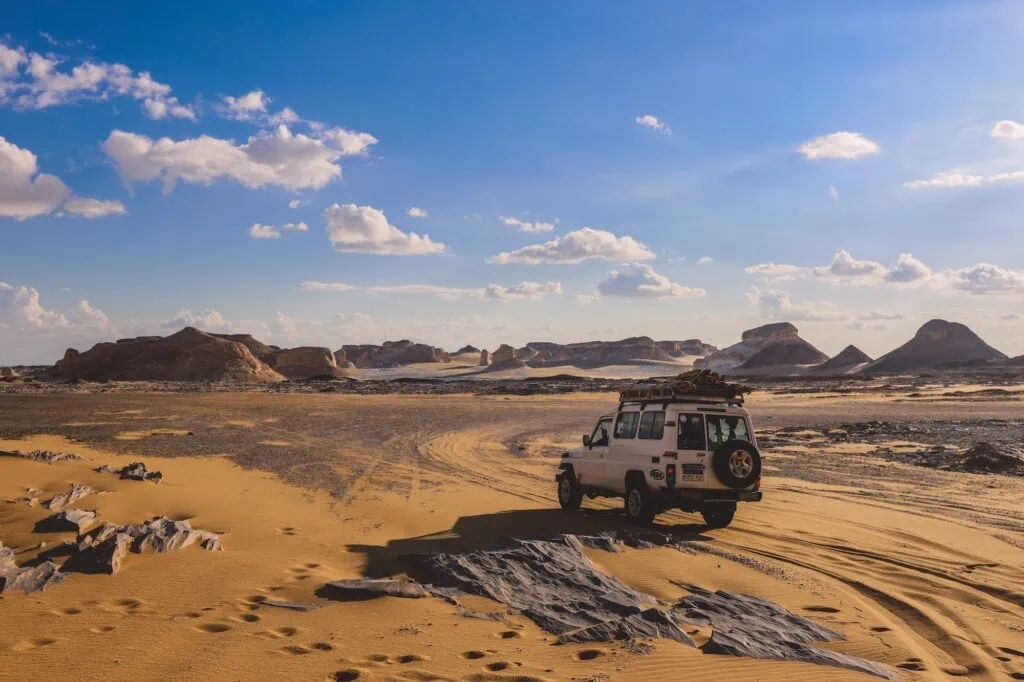
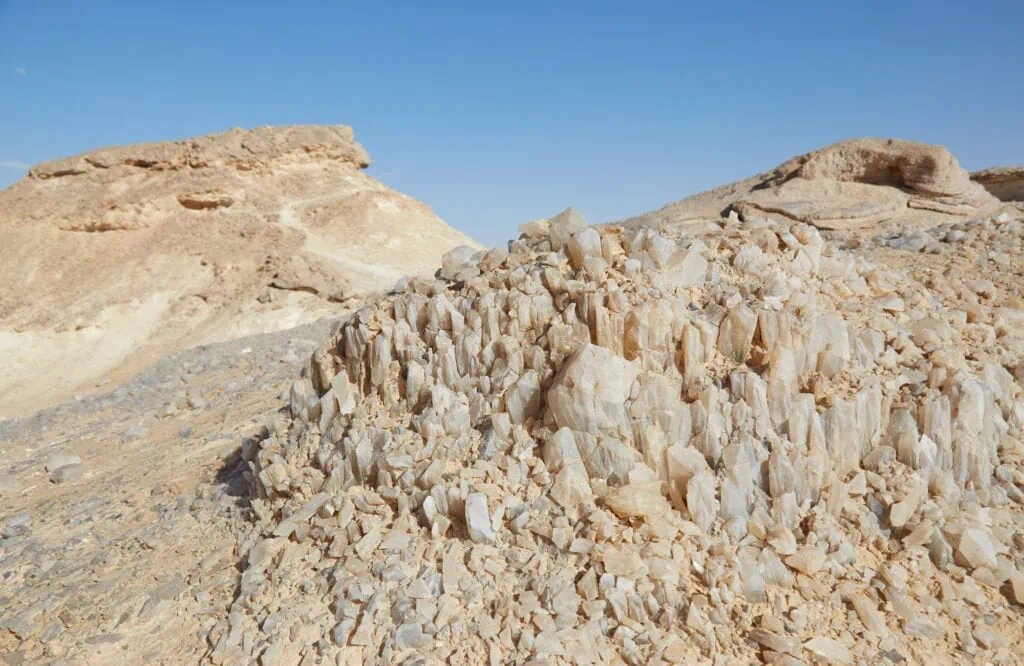
The valley’s location within Egypt’s Western Desert makes it an ideal addition to comprehensive desert safari packages that might include the Black Desert, Crystal Mountain, and other geological wonders. Many visitors choose multi-day camping experiences that allow time for thorough exploration of both archaeological sites and natural formations.
Rest facilities near the archaeological areas provide basic accommodations for overnight stays, including simple dining areas and essential amenities. These facilities operate seasonally and require advance arrangements through authorized tour operators who understand desert logistics and safety requirements.
Hot springs near the valley offer relaxation opportunities after long days of exploration. The mineral-rich waters provide therapeutic benefits while creating a welcome contrast to the dry desert environment.
Planning Your Valley of El Haiz Adventure
Transportation and Access Requirements
The valley’s remote location requires specialized transportation that can handle rough desert terrain and extended distances from paved roads. Standard vehicles cannot safely navigate the sandy tracks and rocky passages that lead to the archaeological sites.
Professional desert guides carry GPS equipment, emergency communications, and comprehensive safety gear including first aid supplies and extra fuel. The journey typically takes several hours from Bahariya Oasis, depending on weather conditions and route selection.
Best Visiting Conditions
Winter months from November through March provide the most comfortable conditions for desert exploration, with daytime temperatures ranging from 20-25°C (68-77°F) and cool nighttime conditions perfect for camping. Summer temperatures can exceed 45°C (113°F), making exploration extremely challenging and potentially dangerous.
Early morning and late afternoon hours offer the best lighting for photography while avoiding the harshest midday heat. Sunrise and sunset create dramatic lighting effects on the black basalt formations that enhance both visual impact and photographic opportunities.
What to Expect During Your Visit
Archaeological exploration typically requires 2-3 hours for thorough examination of the major sites, including the Roman palace ruins, fortress remains, and Coptic basilica. Professional guides provide historical context and point out architectural details that casual visitors might overlook.
The geological formations offer additional exploration opportunities for visitors interested in natural history and desert landscapes. Collecting mineral samples is generally prohibited, but photography is encouraged throughout the site.
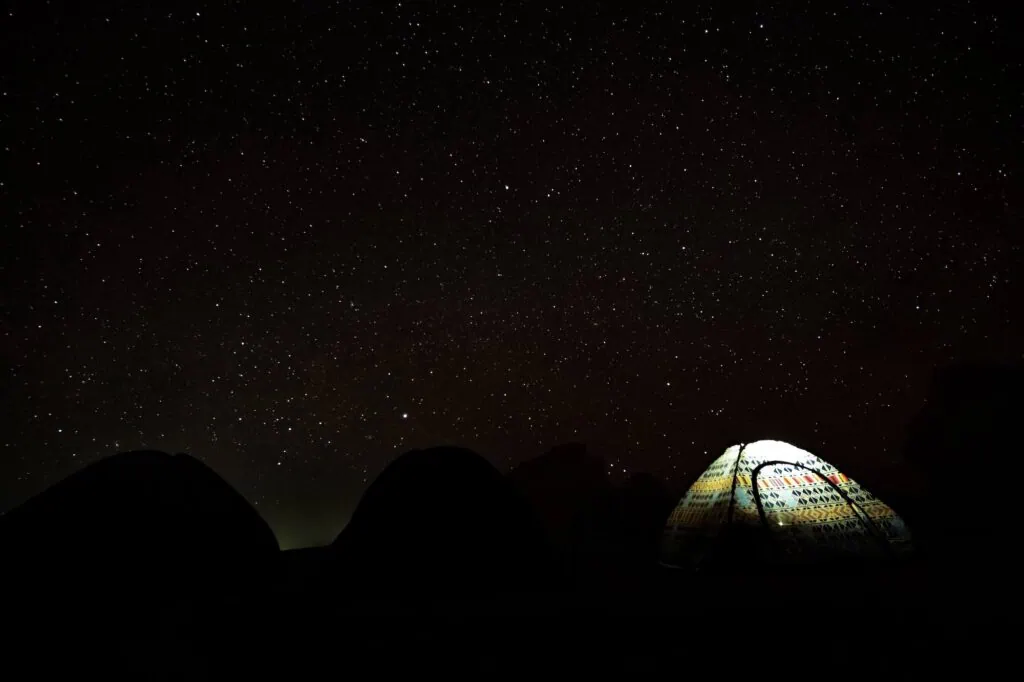
Desert camping experiences include traditional Bedouin-style accommodations with sleeping arrangements under desert stars. Meals typically feature local ingredients prepared over campfires, creating authentic desert dining experiences.
Archaeological Research and Ongoing Discoveries
Current archaeological projects continue revealing new aspects of the valley’s historical importance. International research teams work seasonally to excavate previously unexplored areas and analyze artifacts already discovered.
Recent findings include additional pottery fragments, metalwork pieces, and organic materials that provide insights into daily life during different historical periods. Carbon dating and other scientific techniques help researchers establish precise timelines for the various occupation phases.
Conservation efforts focus on protecting exposed ruins from wind erosion and other environmental factors that threaten these irreplaceable historical resources. Stabilization projects use compatible materials and techniques that preserve archaeological integrity while preventing further deterioration.
Future research priorities include subsurface exploration using non-invasive techniques that might reveal additional structures without disturbing existing ruins. Ground-penetrating radar and satellite imaging help identify promising excavation sites while minimizing environmental impact.
Discover The Hidden Calm Of The Valley Of El Haiz
Tucked between desert landscapes and natural springs, the Valley of El Haiz offers a rare blend of tranquility, history, and raw beauty. With Egypt Tours Plus, we transform this lesser-known gem into part of a seamless private journey—connecting peaceful desert moments with Egypt’s most iconic destinations.
Design your trip exactly the way you want it—choose your travel dates, set your pace, and shape your route and experiences to match your vision. From immersive desert exploration to refined comfort throughout, we handle every detail with care and expertise, ensuring a smooth and deeply personal journey.
Frequently Asked Questions
Visiting the Valley of El Haiz requires a four-wheel-drive vehicle and experienced desert guides because the site lies deep within Egypt’s Western Desert near Bahariya Oasis. Standard cars cannot safely navigate the sandy tracks, rocky sections, and isolated terrain surrounding the valley. Most travelers reach El Haiz as part of multi-day desert expeditions departing from Cairo or Bahariya, often combined with the Black Desert and White Desert. Early departures are recommended because daytime desert temperatures rise quickly after mid-morning.
Visitors to the Valley of El Haiz should bring sun protection, sturdy walking shoes, at least 2 liters of water per person, lightweight desert clothing, and a warm layer for evening temperatures. The Western Desert experiences intense daytime sun but can cool dramatically after sunset, especially between November and February. Cameras with dust protection are also useful because windblown sand is common around archaeological areas. A small backpack with snacks and personal medications is strongly recommended due to the valley’s remote location.
Children can visit the Valley of El Haiz safely with proper supervision, particularly those comfortable with desert environments, uneven terrain, and long vehicle journeys. Archaeological exploration involves walking across rocky ground, exposed ruins, and sandy pathways without modern barriers or shade structures. Families should bring extra water, hats, and sunscreen because summer temperatures in the Western Desert regularly exceed 40°C (104°F). Older children often enjoy the adventure aspect, especially when visits include camping or nearby desert formations.
Professional guides are strongly recommended for visiting the Valley of El Haiz because the remote desert location has limited signage, minimal mobile coverage, and challenging navigation conditions. Local guides also provide archaeological context about Roman settlements, Coptic remains, and ancient oasis agriculture that independent visitors could easily miss. Organized tours generally include transportation, safety equipment, and logistical support for desert travel. Travelers unfamiliar with Egypt’s Western Desert should avoid self-driving beyond the main oasis roads.
The best time to visit the Valley of El Haiz is between November and March, when daytime temperatures usually range from 20°C to 28°C (68°F to 82°F). These cooler months make archaeological exploration, hiking, and overnight camping significantly more comfortable than the extreme summer season. From June through August, temperatures in the Western Desert can exceed 45°C (113°F), limiting outdoor activity during midday hours. Winter also provides clearer skies and better conditions for photography and desert stargazing.
A complete Valley of El Haiz visit typically requires a full day, including travel time, archaeological exploration, and stops at nearby desert landmarks. Travelers wanting a deeper experience often stay overnight to enjoy camping, sunrise photography, and quieter conditions after daytime tour traffic leaves surrounding oasis areas. Multi-day itineraries frequently combine El Haiz with Bahariya Oasis, the Black Desert, and White Desert National Park. Overnight trips also reduce fatigue from the long desert drives required to reach the region.
Accommodation near the Valley of El Haiz is limited to basic rest houses, eco-lodges, and organized desert camping experiences rather than large hotels or resorts. Most visitors stay in Bahariya Oasis or choose guided camping setups with tents, bedding, meals, and support vehicles included. Desert camps provide exceptional night sky visibility because the area has minimal artificial light pollution. Travelers seeking more comfortable amenities generally base themselves in Bawiti before continuing into the Western Desert by four-wheel drive.
The Valley of El Haiz contains several important archaeological remains, including Roman palace ruins, Qasr Masuda fortress structures, ancient wine-production installations, and the remains of a well-preserved Coptic basilica. These sites illustrate how oasis communities adapted to desert life during Roman and early Christian periods in Egypt. Archaeologists believe the valley once supported agriculture through natural springs and caravan trade networks linking the Nile Valley to western regions. Guided visits help explain the strategic importance of these isolated settlements.
Photography for personal use is generally permitted throughout the Valley of El Haiz archaeological areas, including Roman ruins and surrounding desert landscapes. Commercial filming, drone usage, or professional photography equipment may require advance permits from Egyptian antiquities authorities. Flash photography should be avoided near fragile painted or carved surfaces to help preserve remaining details. Early morning and late afternoon usually provide the best lighting conditions because harsh midday desert sunlight can reduce image contrast and create heat distortion.
The Valley of El Haiz is geologically distinctive because it combines dark Oligocene basalt formations with pale limestone desert terrain shaped by ancient volcanic activity millions of years ago. This contrast creates dramatic black-and-white landscapes rarely seen elsewhere in Egypt’s Western Desert. The region’s geological history also connects it to nearby formations in the Black Desert and White Desert National Park. Visitors interested in photography or natural history often consider El Haiz one of the most visually unusual areas in Bahariya Oasis.
Removing rocks, fossils, pottery fragments, or archaeological artifacts from the Valley of El Haiz is strictly prohibited under Egyptian heritage and environmental protection laws. Even small items can hold scientific or historical significance for ongoing archaeological research in the Western Desert. Authorities may impose fines or confiscations for unauthorized collection activities within protected areas. Visitors are encouraged instead to photograph geological formations and ruins while leaving the landscape undisturbed for future travelers and researchers.
Visiting the Valley of El Haiz requires moderate physical fitness because travelers often walk across sand, rocky terrain, and partially collapsed archaeological structures in open desert conditions. Most routes do not involve technical climbing, but heat exposure and uneven surfaces can become tiring over several hours. Comfortable walking shoes and regular hydration are essential, especially during warmer months. Travelers with reasonable mobility generally manage the site well, though overnight desert itineraries may involve longer periods inside four-wheel-drive vehicles.
Design Your Private Western Desert Adventure
Travel with your own expert guide, private 4×4 vehicle, and a route tailored to you.