

Ancient oases, endless dunes, timeless silence
Sahara Desert Attractions
The Sahara Desert Attractions reveal a side of Egypt few travelers ever reach — from the chalk-white formations of the Western Desert’s White Desert to the palm-filled oases of Siwa and Bahariya. With 70+ years of expertise, private guides, and tailor-made itineraries, let our specialists craft your perfect desert journey.
Egypt’s Sahara Desert Attractions
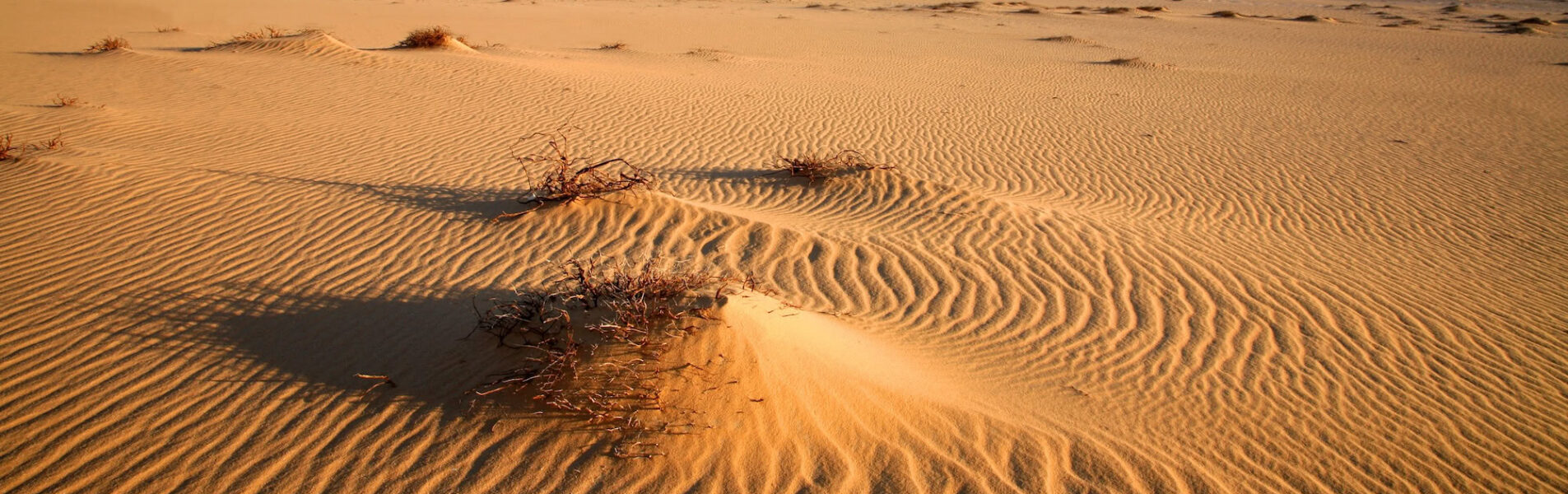
Journey into endless golden dunes where silence speaks louder than words.
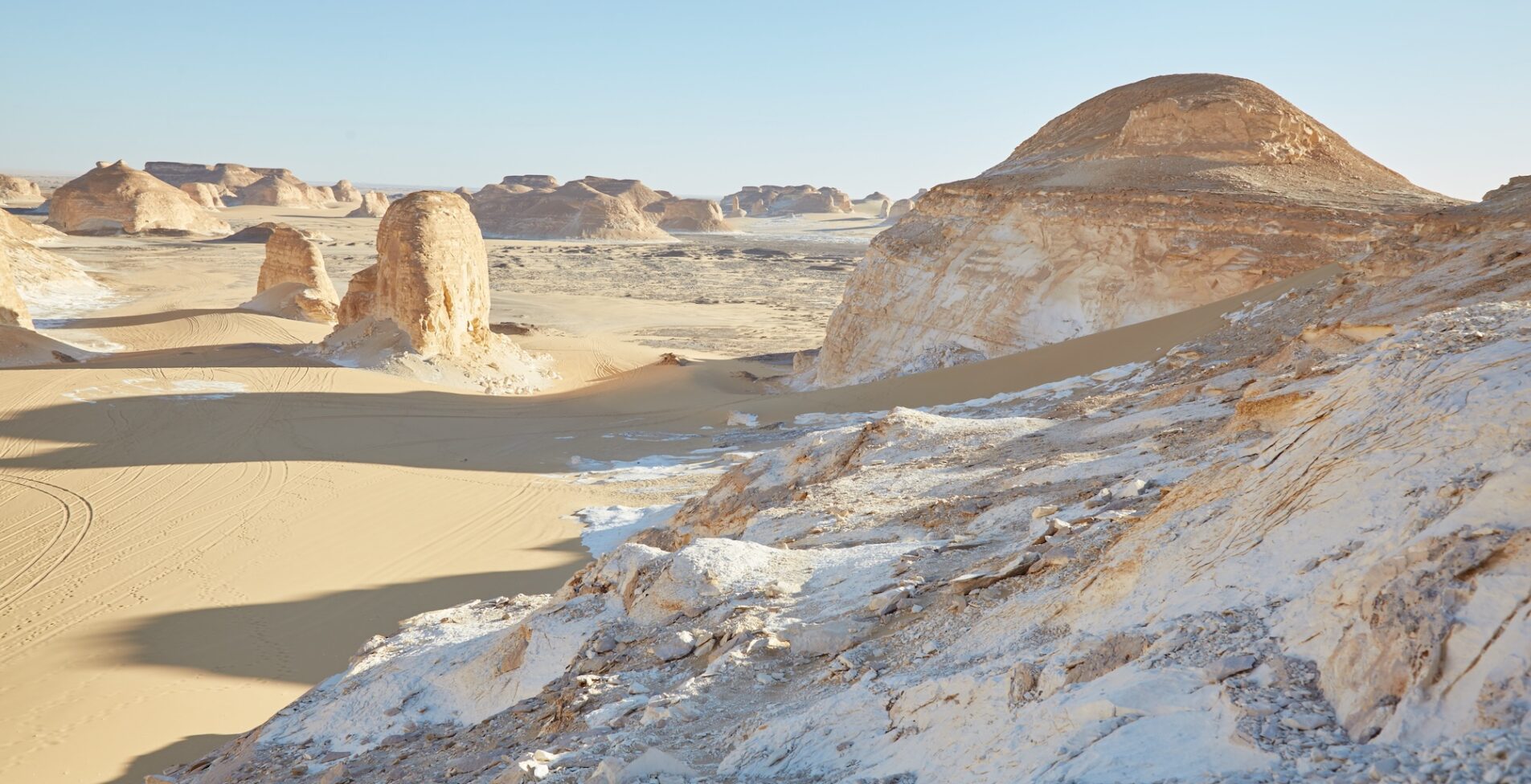
The Western Desert covers two-thirds of Egypt’s land mass, stretching from the Nile Valley to the Libyan border. This vast expanse of the Sahara Desert holds some of Africa’s most extraordinary landscapes, ancient oases that have sustained life for millennia, and geological formations that seem sculpted by otherworldly forces. Unlike the crowded monuments of Cairo or Luxor, the Western Desert offers solitude and raw natural beauty that transforms every visitor. Here, you’ll discover crystalline formations, pristine white limestone sculptures, and oasis communities that maintain traditions dating back thousands of years.
Our Western Desert tours draw on decades of expertise guiding travelers through Egypt’s diverse landscapes, giving us a deep understanding of the desert’s rhythms and knowing exactly when and where to find its most spectacular moments.
Table of Contents
Essential Oases That Define Western Desert Adventures
Each major oasis tells its own story through unique attractions and distinct character.
Siwa Oasis: Ancient Oracle and Natural Springs
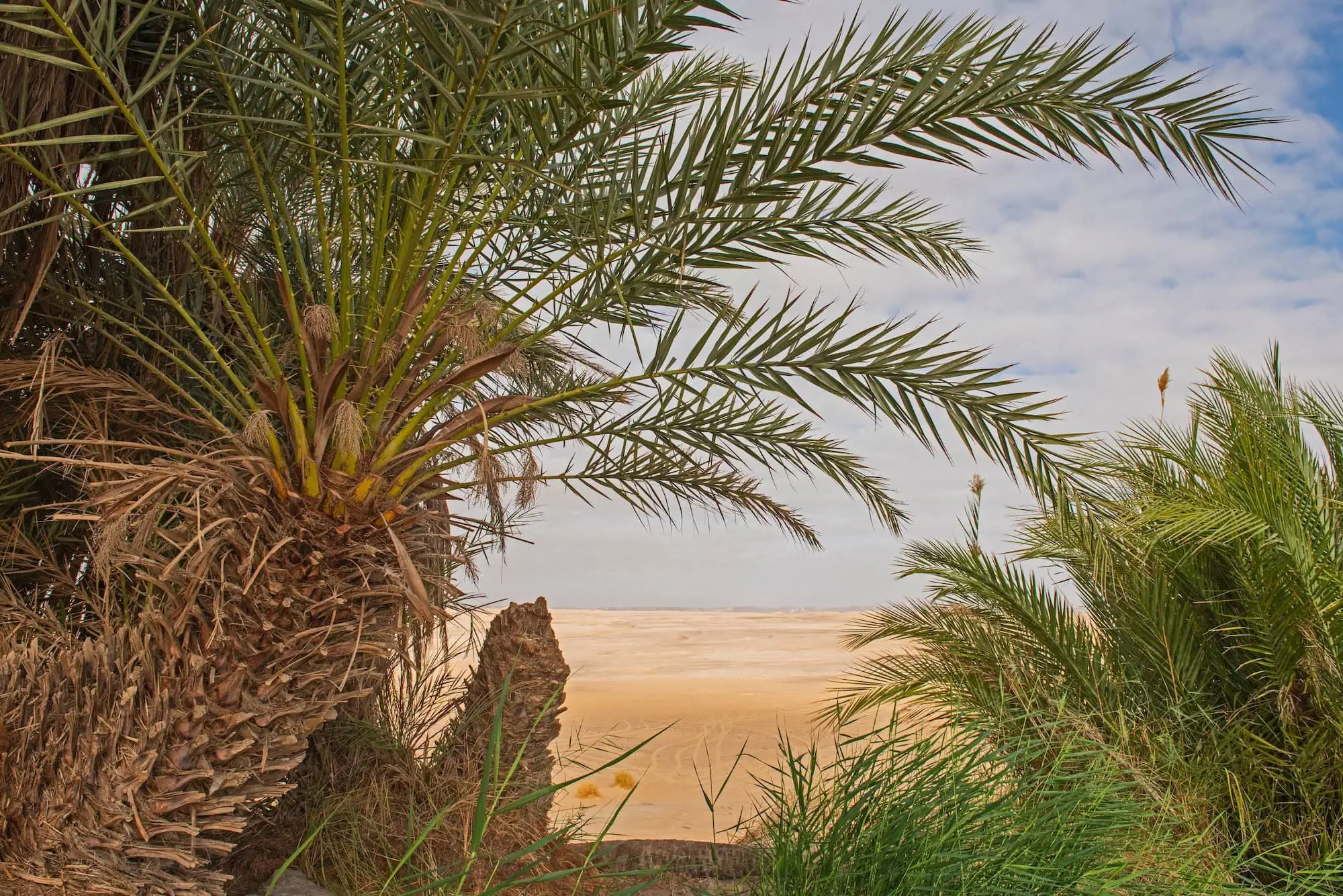
At Siwa Oasis, Cleopatra’s Pool sparkles with natural spring water where the legendary queen is said to have bathed, while the nearby Oracle Temple of Amun famously drew Alexander the Great himself, who journeyed here in 331 BCE seeking divine guidance. Beyond the ruins, salt lakes reflect endless skies and palm groves shelter mud-brick homes that have housed Berber communities for generations, their traditions still visible in local markets filled with intricate silver jewelry and hand-woven carpets.
Just outside the main settlement, the Mountain of the Dead rises from the oasis floor, its limestone cliffs honeycombed with ancient tombs whose painted walls still depict journeys to the afterlife. Nearby, natural hot springs maintain temperatures around 40°C (104°F) year-round, creating desert spas where travelers soak beneath star-filled skies.
Bahariya Oasis: Gateway to Desert Wonders
Bahariya Oasis, centered on the town of Bawiti, is one of the Western Desert’s most accessible destinations — just a few hours’ drive from Cairo and the traditional gateway to the White and Black Deserts beyond. Its greatest archaeological treasure is the Valley of the Golden Mummies, where over 250 Greco-Roman burials were discovered in 1996, their gilded masks still gleaming after two millennia. Ancient temples dedicated to local gods lie scattered across the landscape, their ruins quietly blending with the mud-brick streets of Bawiti and the palm groves that surround the town.
Just outside the settlement, hot springs near Bir Ghaba offer deep relief after long desert drives, their mineral-rich waters rising to 45°C (113°F) — a welcome ritual before travelers set off into the surrounding dunes.
Farafra Oasis: White Desert’s Doorstep
Farafra Oasis, the smallest and most remote of Egypt’s major oases, serves as the traditional gateway to the White Desert — its dusty main square the last stop before the surreal chalk formations begin.
Time moves slowly here: mud-brick buildings line narrow streets where donkey carts still transport daily goods, and the celebrated Badr Museum displays the lifelong sculptures and paintings of local artist Badr Abdel Moghny, built almost entirely from the desert’s own materials. Bedouin guides based in town lead camel treks and multi-day expeditions into the surrounding dunes, drawing on generations of knowledge passed quietly from father to son.
Black Desert and White Desert: Nature’s Sculpted Masterpieces
These contrasting landscapes create one of Egypt’s most photographed natural wonders.
The Black Desert extends north of Farafra, its dark volcanic hills standing against golden sand dunes like sentinels from another planet. Iron and manganese deposits create the distinctive coloring while quartz crystals scattered across the surface catch sunlight in brilliant flashes. Ancient volcanic activity shaped these formations over millions of years, leaving behind a landscape that feels both alien and deeply familiar.
Crystal Mountain rises from the desert floor like a massive geode, its hollow interior lined with clear and yellow crystals. Climbing inside reveals chamber walls that sparkle with natural formations, though visitors must exercise care to preserve this fragile geological treasure for future generations.
White Desert National Park: Limestone Fantasies
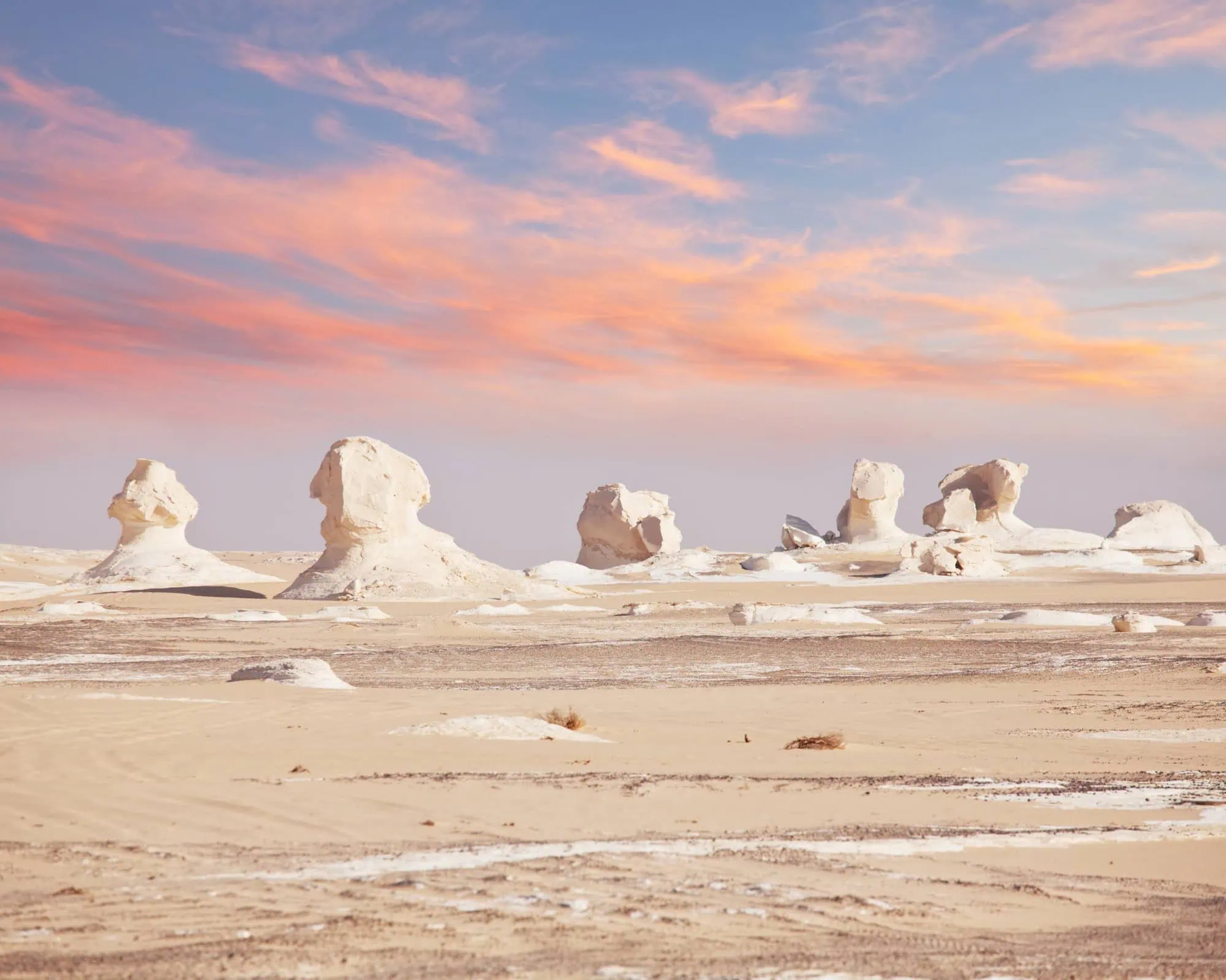
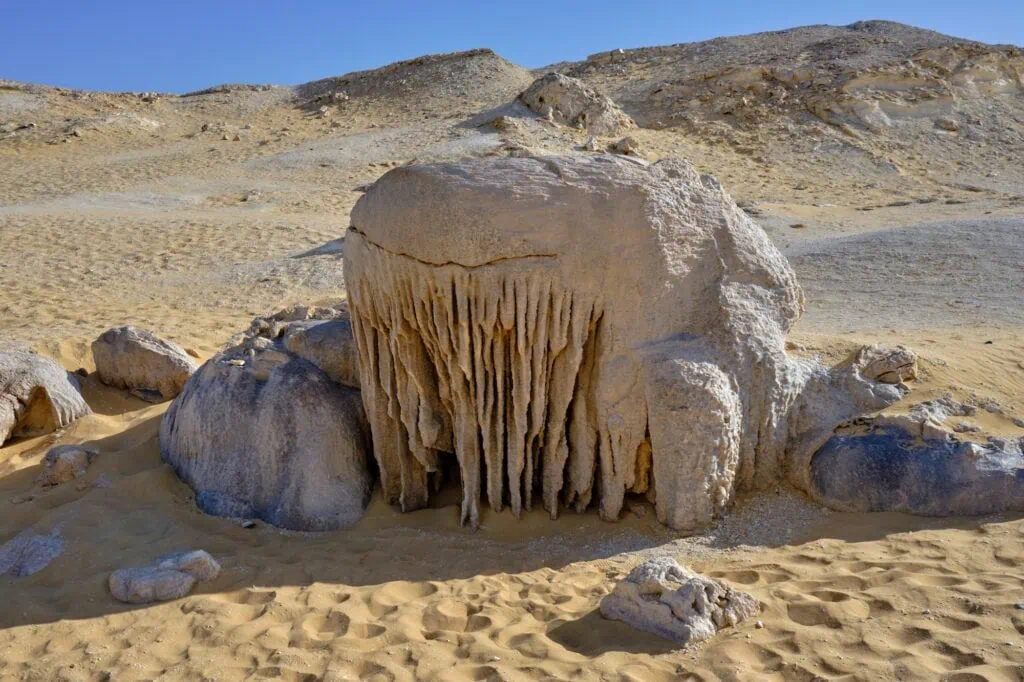
Established in 2002, White Desert National Park protects 3,010 square kilometers of the most spectacular limestone formations in the Sahara. Wind erosion has carved white chalk rocks into mushrooms, chickens, camels, and human figures that shift meaning depending on viewing angle and time of day. These sculptures glow pink during sunrise and sunset, creating natural galleries that change with every hour.
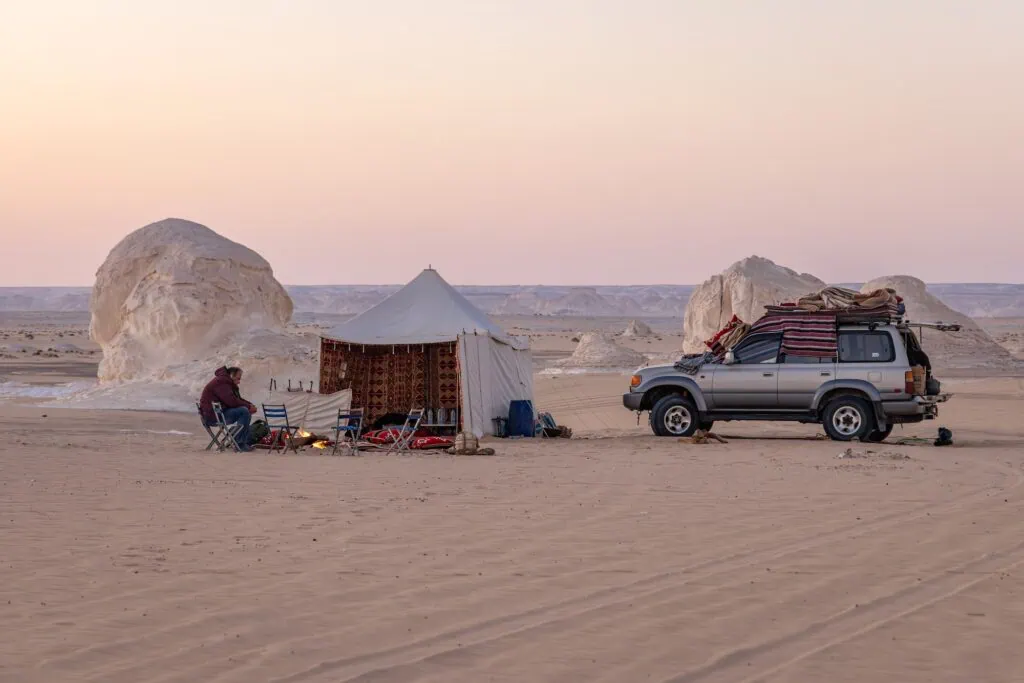
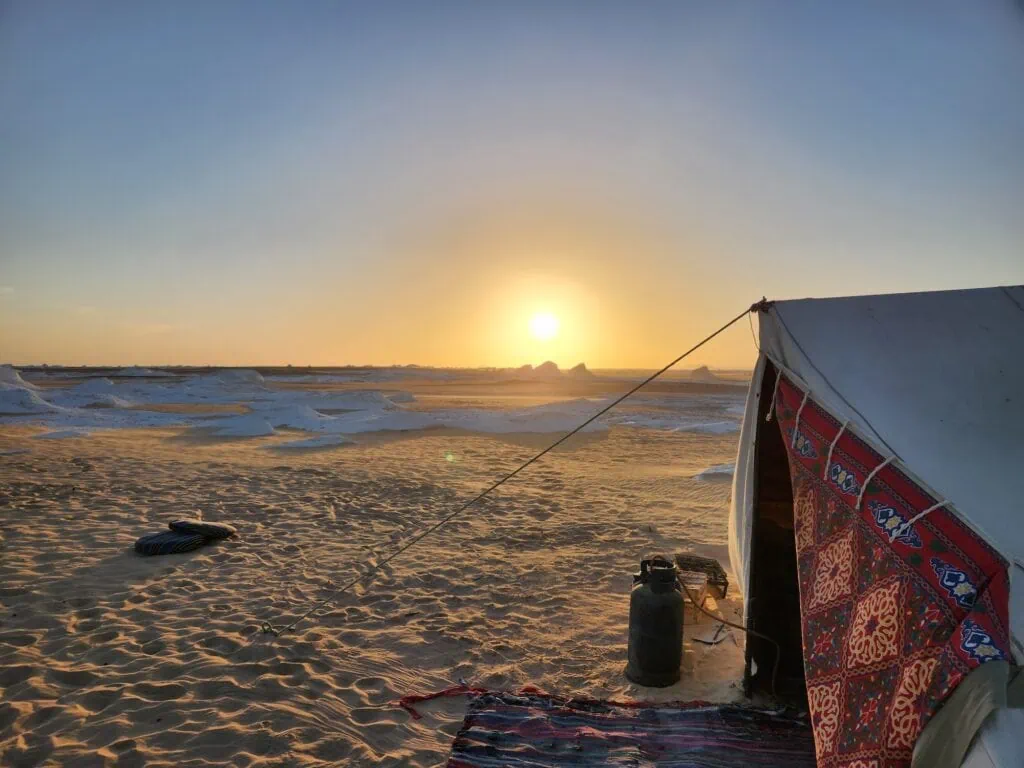
Camping in the White Desert between these formations under crystal-clear skies offers unparalleled stargazing opportunities. Desert foxes, sand cats, and various bird species call this protected area home, though spotting them requires patience and local knowledge.
Adventure Activities and Cultural Experiences
Desert Safari and Camel Trekking
Four-wheel drive vehicles navigate sand dunes and rocky terrain that standard cars cannot handle, reaching remote locations inaccessible by any other means. Professional drivers with decades of desert experience ensure safety while maximizing adventure, knowing exactly which dunes offer the most thrilling descents and which routes avoid dangerous soft sand.
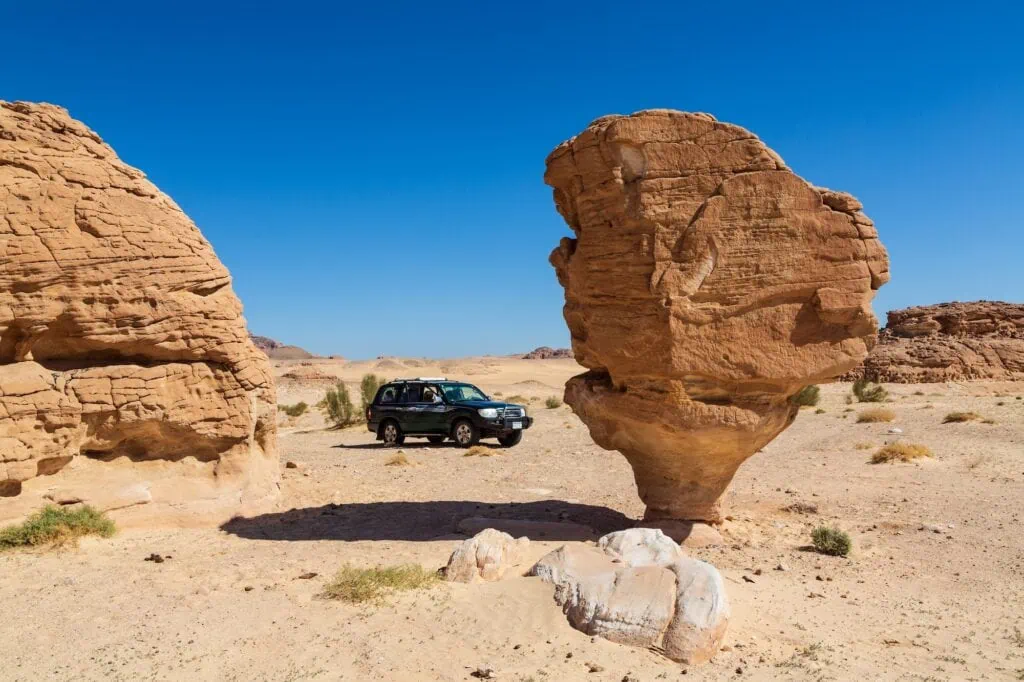
Traditional camel treks provide the authentic desert travel experience used by traders and nomads for millennia. These ships of the desert move at a steady pace that allows full appreciation of the landscape’s subtle changes, from mineral deposits that color the sand to plant life that survives in the harsh environment.
Sandboarding down massive dunes creates rushes of adrenaline as riders reach speeds of 50 kilometers per hour on specially designed boards. The Great Sand Sea offers some of the best sandboarding locations, with dunes reaching heights of 140 meters (460 feet).
Bedouin Culture and Traditional Crafts
Local Bedouin communities maintain traditional ways of life while welcoming respectful visitors who wish to learn about desert survival techniques and ancient customs. Evening gatherings around campfires include traditional music, storytelling, and demonstrations of handicraft creation. Women weave intricate patterns into textiles using techniques passed down through generations, while men demonstrate traditional hunting and navigation methods.
Shared meals feature traditional desert cuisine adapted to available ingredients and cooking methods suitable for nomadic life. Bread baked in sand ovens tastes unlike anything prepared in conventional kitchens, while herb teas provide both refreshment and medicinal benefits in the harsh climate.
Planning Your Western Desert Journey
Optimal Timing and Weather Considerations
October through April offers ideal conditions with daytime temperatures averaging 25-30°C (77-86°F) and cool nights that may require warm clothing. Summer months from May through September see temperatures exceeding 45°C (113°F) during the day, making extended outdoor activities dangerous.
Winter nights can drop to 5°C (41°F) or lower, especially in January and February when warm sleeping gear becomes essential for camping expeditions. Spring brings occasional sandstorms that can last several days, while autumn offers the most stable weather patterns for photography and extended exploration.
Tour Logistics and Accommodation Options
Most Western Desert expeditions begin from Cairo or can be integrated into longer Egypt itineraries that include Nile cruises and Red Sea extensions. Our tour consultants customize itineraries based on individual interests, physical capabilities, and time constraints while ensuring proper safety protocols throughout the journey.
Accommodation ranges from luxury desert camps with proper beds and bathroom facilities to authentic Bedouin camping experiences under the stars. Eco-lodges near major oases provide comfortable bases for day trips while minimizing environmental impact through solar power and water conservation systems.
Modern vehicles equipped with GPS navigation, satellite communication, and emergency supplies ensure safety even in remote locations where cell phone coverage disappears. Our experienced drivers carry spare parts, extra water, and mechanical expertise to handle any situation that might arise during desert expeditions.
Packing Essentials and Safety Precautions
Layered clothing accommodates dramatic temperature variations between day and night while protecting against sun exposure and windblown sand. Closed-toe shoes prevent sand intrusion and protect against hot surfaces, while wide-brimmed hats and sunglasses shield against intense ultraviolet radiation.
Adequate hydration requires consuming at least 4 liters of water daily during active desert exploration, with additional electrolyte replacement for extended hiking or camel riding. Sunscreen with SPF 50 or higher needs reapplication every two hours, even on cloudy days when UV rays remain strong.
UNESCO Heritage Sites and Geological Marvels
Wadi El Hitan: Valley of Whales
Located in Fayoum Depression adjacent to the Western Desert, Wadi El Hitan preserves 40-million-year-old whale fossils that demonstrate the evolution from land mammals to marine creatures. These prehistoric skeletons lie scattered across the desert floor exactly where they died when this area was covered by the ancient Tethys Sea.
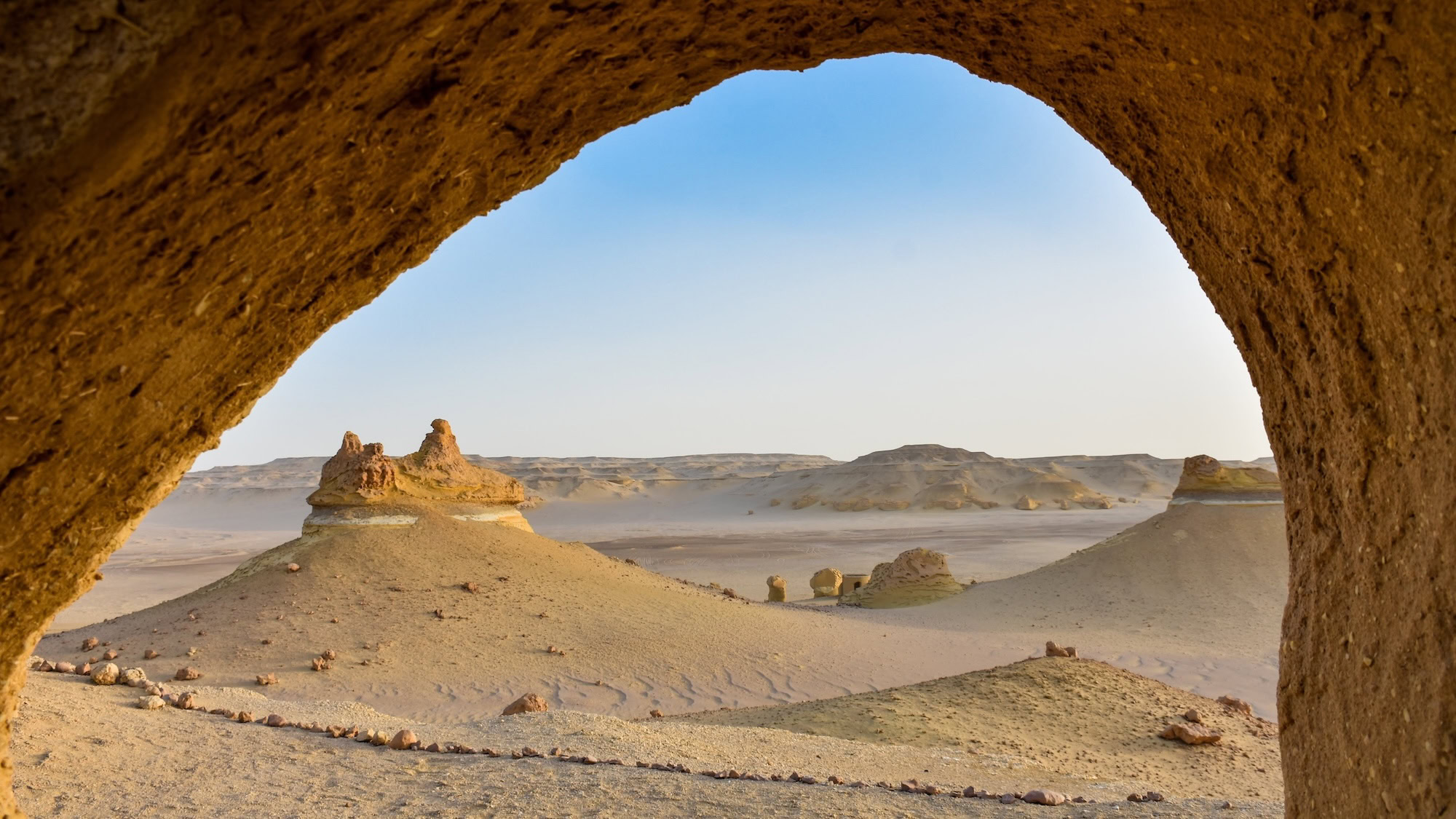
The site contains over 400 whale skeletons in various stages of evolution, including species that retained hind limbs and others that had developed fully aquatic characteristics. Walking trails with interpretive signs guide visitors through this outdoor museum where geological time becomes tangible reality.
Crystal Mountain and Unique Geological Features
Beyond the famous Crystal Mountain, the Western Desert contains numerous geological curiosities that attract scientists and curious travelers alike. Black and white desert formations represent different geological periods, creating natural laboratories where earth’s history lies exposed on the surface.
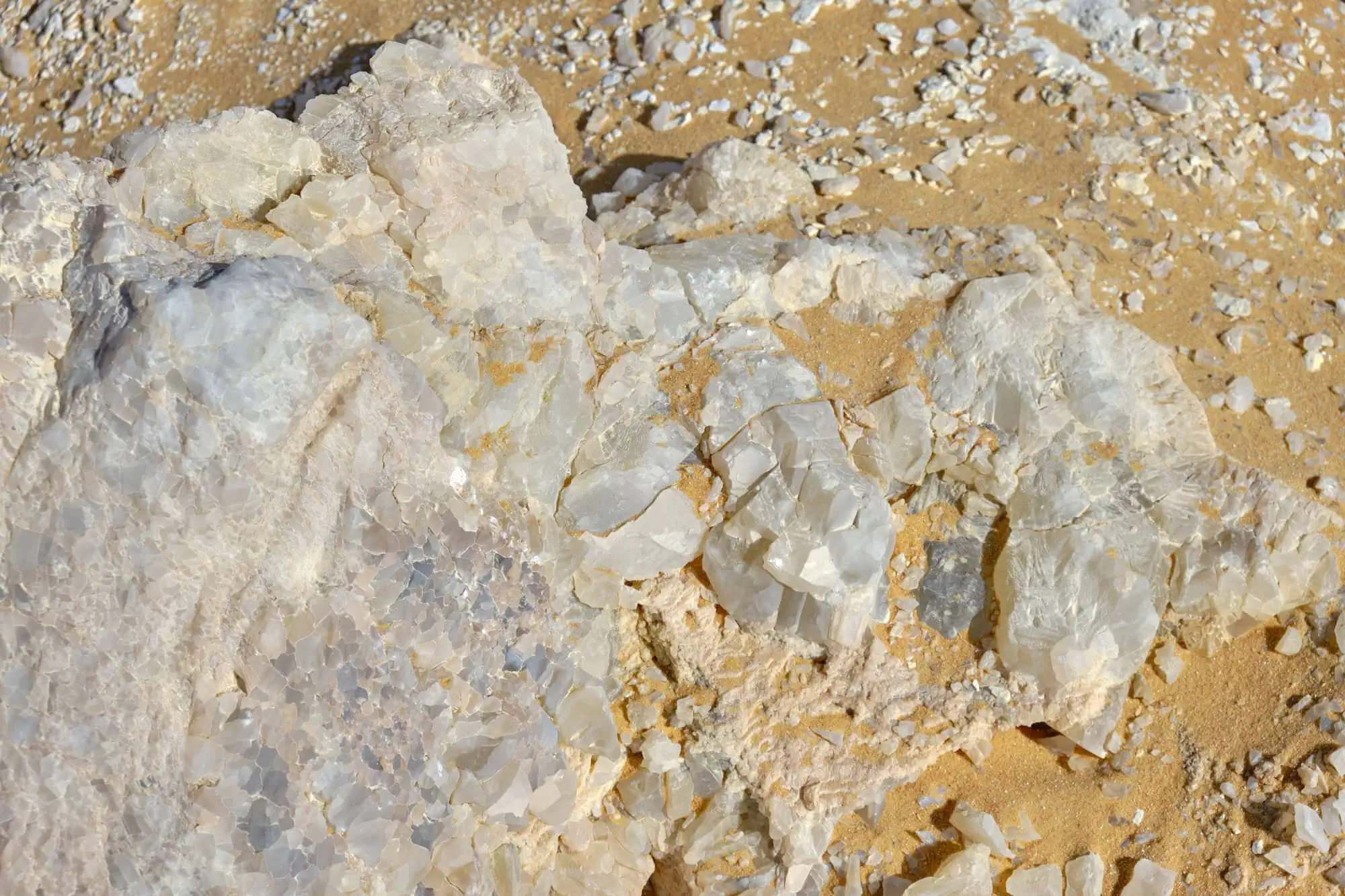
Petrified wood forests contain tree trunks turned to stone over millions of years, their original cell structure still visible in colorful mineral replacements. These ancient forests grew when the climate was much wetter, supporting diverse plant and animal communities that left fossil evidence scattered across the landscape.
Photography and Natural Beauty
Golden hour light transforms ordinary desert scenes into extraordinary photographs as shadows stretch across sand dunes and limestone formations glow with inner fire. Professional photographers often spend entire weeks capturing the subtle changes in light and color that occur throughout each day and season.
Star photography reaches its peak in the Western Desert where light pollution remains virtually nonexistent and clear skies prevail most nights. The Milky Way appears as a distinct bright band across the heavens while planets, nebulae, and distant galaxies become visible to the naked eye.
Wildlife photography requires patience and early morning starts when desert animals emerge from burrows and crevices to feed before the day becomes too hot. Desert foxes, various lizard species, and migratory birds provide subjects for those willing to wait quietly in strategic locations.
From Endless Dunes to Ancient Oases — Your Desert Awaits
Few landscapes on Earth rival the solitude and raw beauty of Egypt’s Western Desert. Explore our Egypt adventure tours to see how we bring the Sahara Desert attractions to life — camping beneath White Desert limestone sculptures, tracing the footsteps of Alexander the Great at Siwa’s Oracle Temple, and watching sunrise paint the Black Desert’s volcanic peaks, all on an itinerary tailored entirely to your pace.
Frequently Asked Questions
October through April offers comfortable temperatures and clear skies, with November through February being ideal for camping and extended outdoor activities.
The journey takes approximately 4 hours covering 365 kilometers (227 miles) on paved roads, making it accessible for weekend trips or longer expeditions.
Nights under star-filled skies with temperatures dropping significantly, basic camping facilities, and sunrise views over limestone formations that create unforgettable memories.
Yes, experienced guides provide instruction and select gentle camels for newcomers, though some muscle soreness is normal after longer treks.
Professional drivers handle all technical driving while passengers enjoy the adventure, though the rides can be bumpy over sand dunes and rocky terrain.
Desert foxes, sand cats, various lizard species, migratory birds, and occasionally gazelles, though sightings require patience and early morning timing.
No special permits required for standard tourist areas, though some remote locations may need advance notification through registered tour operators.
Yes, 4-7 day itineraries typically include 2-3 major oases plus White Desert camping, allowing comprehensive exploration of different landscapes and attractions.
From luxury eco-lodges with modern amenities to authentic Bedouin camping experiences, with various comfort levels available to suit different preferences and budgets.
Solo travel requires joining organized tours with experienced guides, as navigation challenges and safety concerns make independent desert travel inadvisable for most visitors.
Black Desert features dark volcanic formations north of Farafra, while White Desert showcases pale limestone sculptures south of the oasis, each offering distinct landscapes.
Minimum 4 liters per person per day for moderate activity, with additional supplies for extended hiking, camel riding, or hot weather conditions.
Design Your Private Western Desert Adventure
Travel with your own expert guide, private 4×4 vehicle, and a route tailored to you.