

Monastery of Saint Paul – A Coptic Wonder Of The Desert
Egyptian monasticism began here.
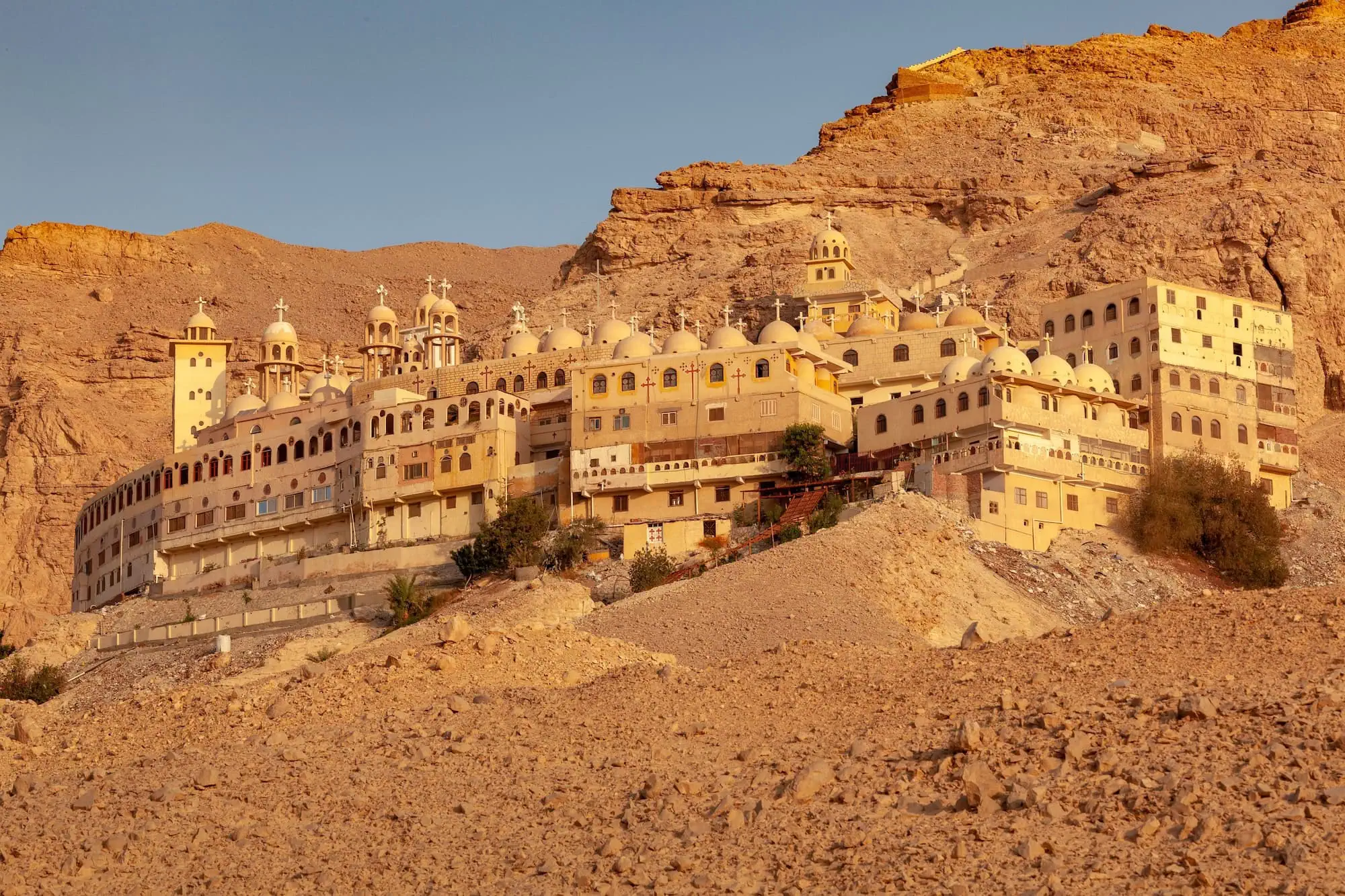
In the Eastern Desert near the Red Sea Mountains, approximately 405 km (251 miles) southeast of Cairo, stands one of Christianity’s oldest continuously operating monasteries. The Monastery of Saint Paul the Anchorite dates to the fourth century AD, built directly over the cave where Paul the First Hermit lived in solitude for over 80 years.
This remote sanctuary has witnessed the rise and fall of empires while maintaining its spiritual mission through Coptic Orthodox tradition, producing three popes and countless generations of devoted monks. We’ll guide you through this extraordinary pilgrimage site where ancient springs still flow and medieval manuscripts preserve centuries of wisdom.
Table of Contents
Origins and Historical Foundation
The monastery’s story begins with Saint Paul the Anchorite, born around 230 AD to a wealthy Alexandrian family. When Roman persecution intensified under Emperor Decius, the young Paul fled to the Eastern Desert, seeking refuge in a natural cave near an underground spring.
According to Coptic tradition, Paul lived in complete isolation for 90 years until Saint Anthony the Great discovered him shortly before Paul’s death in 341 AD. Anthony buried Paul with help from two lions, then established a small community of disciples to honor the hermit’s memory. These early monks built the first church directly over Paul’s cave, creating the foundation for what would become one of Egypt’s most significant monasteries.
Archaeological Evidence
Excavations have revealed layers of continuous habitation spanning 1,700 years. The original fourth-century church remains intact beneath later construction, with ancient Coptic inscriptions still visible on limestone walls.
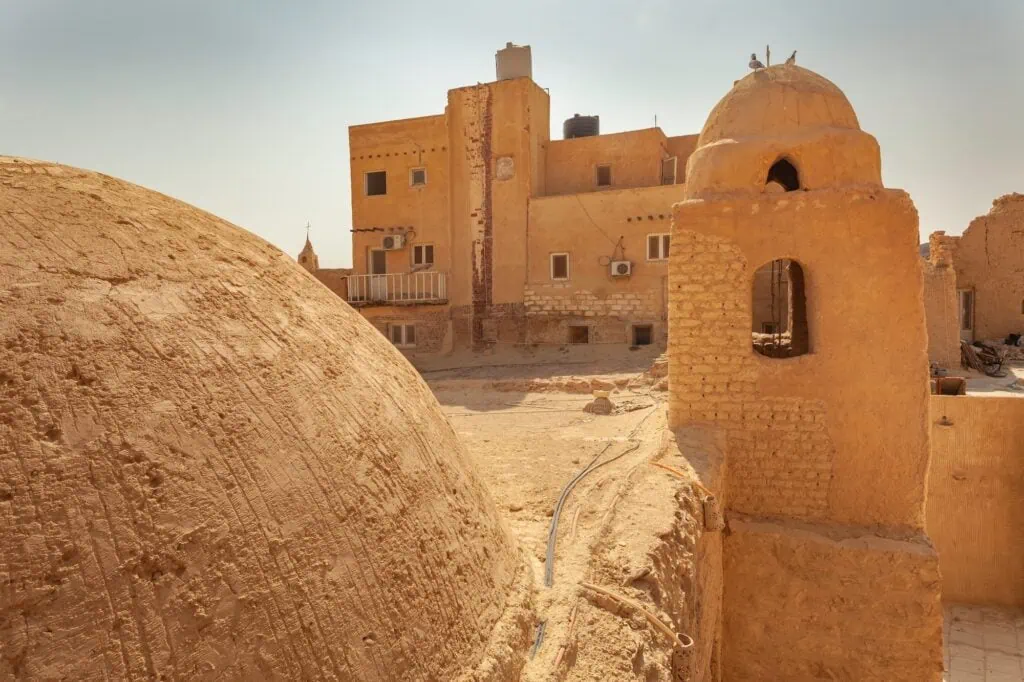
Stone tools and pottery fragments confirm the site’s importance as a major pilgrimage destination during the Byzantine period.
Coptic Orthodox Tradition
The monastery belongs to the Coptic Orthodox Church of Alexandria, maintaining strict adherence to ancient liturgical practices. Three monks from Saint Paul’s Monastery have been elevated to the Papal throne: Pope Peter VI (1718-1726), Pope John XVII (1727-1745), and Pope Mark VII (1745-1769).
This remarkable achievement underscores the monastery’s role in preserving theological scholarship and spiritual formation within Egyptian Christianity.
Architectural Features and Sacred Spaces
Unlike typical monastery complexes, Saint Paul’s developed organically around natural desert formations. High walls enclose approximately 10 acres, protecting four distinct churches and numerous monastic cells carved into rock faces.
Church of Saint Paul
The holiest site within the monastery is built directly over Paul’s original cave dwelling. Narrow stone steps descend to the underground chapel where the hermit spent decades in prayer and contemplation.
Ancient spring water still flows here, considered miraculous by pilgrims who visit throughout the year. Coptic frescoes dating to the 13th century cover the cave walls, depicting scenes from Paul’s life alongside traditional Orthodox iconography.
Church of Virgin Mary
This main sanctuary hosts daily liturgical services following the Coptic calendar. The altar contains relics of Saint Paul, displayed during major feast days.
Wooden iconostasis screens separate the sanctuary from the nave, hand-carved by monastery craftsmen using traditional techniques passed down through generations.
Ancient Fort and Tower
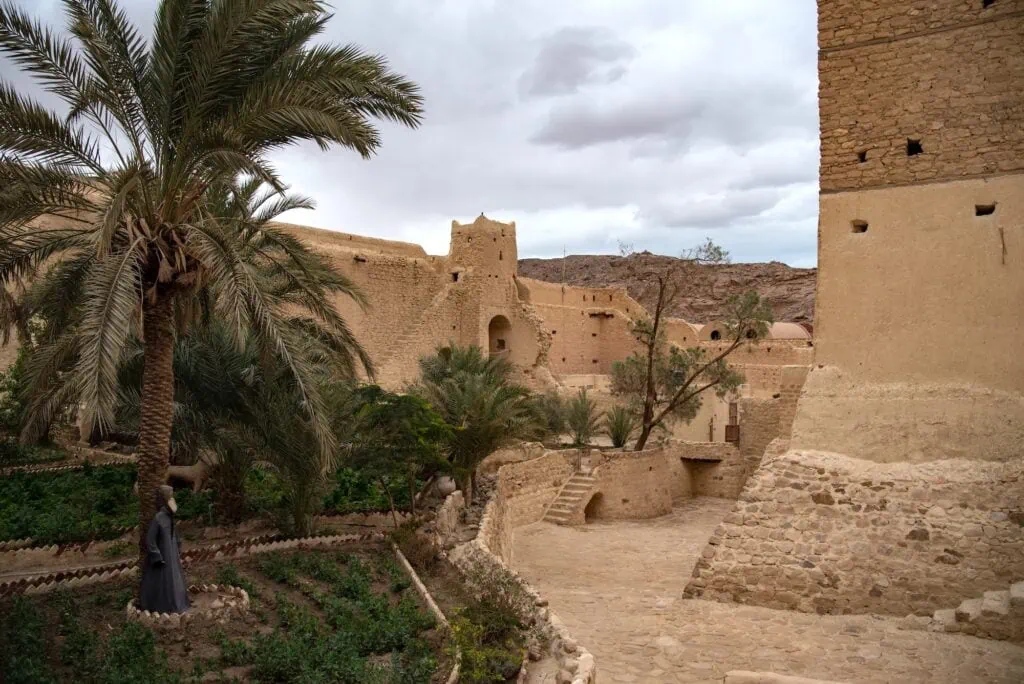
A defensive keep rises from the monastery’s center, built during the 12th century when Bedouin raids threatened desert communities. The tower provided refuge during attacks and served as a watchtower for approaching caravans.
Today it houses the monastery museum, displaying artifacts spanning 1,500 years of continuous monastic life.
Monastic Life and Practices
Twenty-four monks currently reside at Saint Paul’s Monastery under the guidance of Bishop Daniel, who serves as abbot. Daily life follows the ancient rhythm established by desert fathers, beginning with midnight prayers and continuing through eight canonical hours.
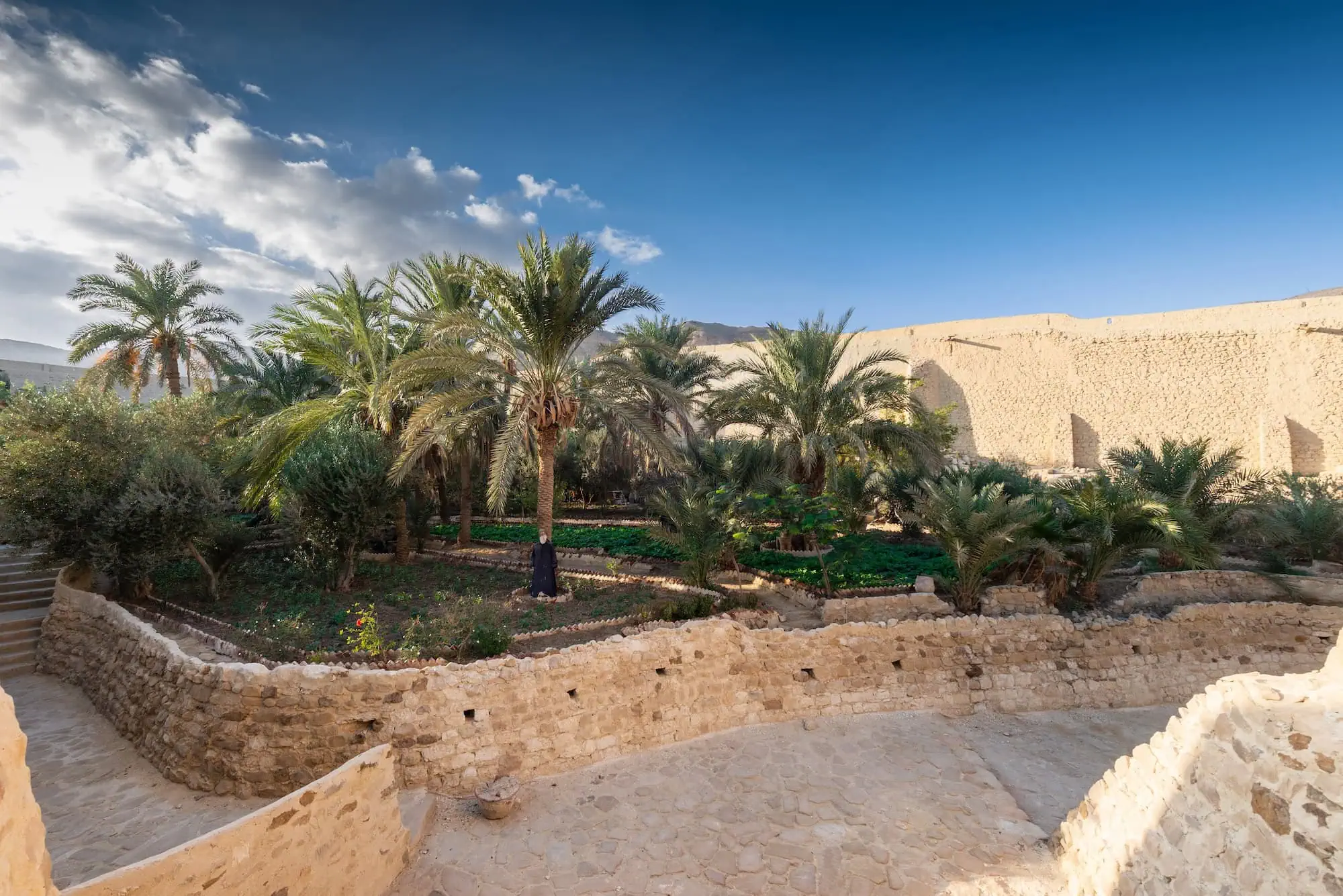
The community maintains strict fasting periods according to Coptic Orthodox tradition, consuming only vegetables, grains, and water during Lent and other designated times. Monks engage in manual labor including gardening, manuscript copying, and maintenance of the ancient spring system that provides water throughout the complex.
Retreat Ministry
We arrange guided retreats at Saint Paul’s Monastery for visitors seeking intensive spiritual formation. These programs include participation in liturgical services, private meetings with experienced monks for spiritual direction, and silent meditation periods in the desert surrounding the complex.
Retreats typically last three to seven days, accommodating both Orthodox Christians and those from other traditions interested in desert spirituality.
Pilgrimage and Visitor Experience
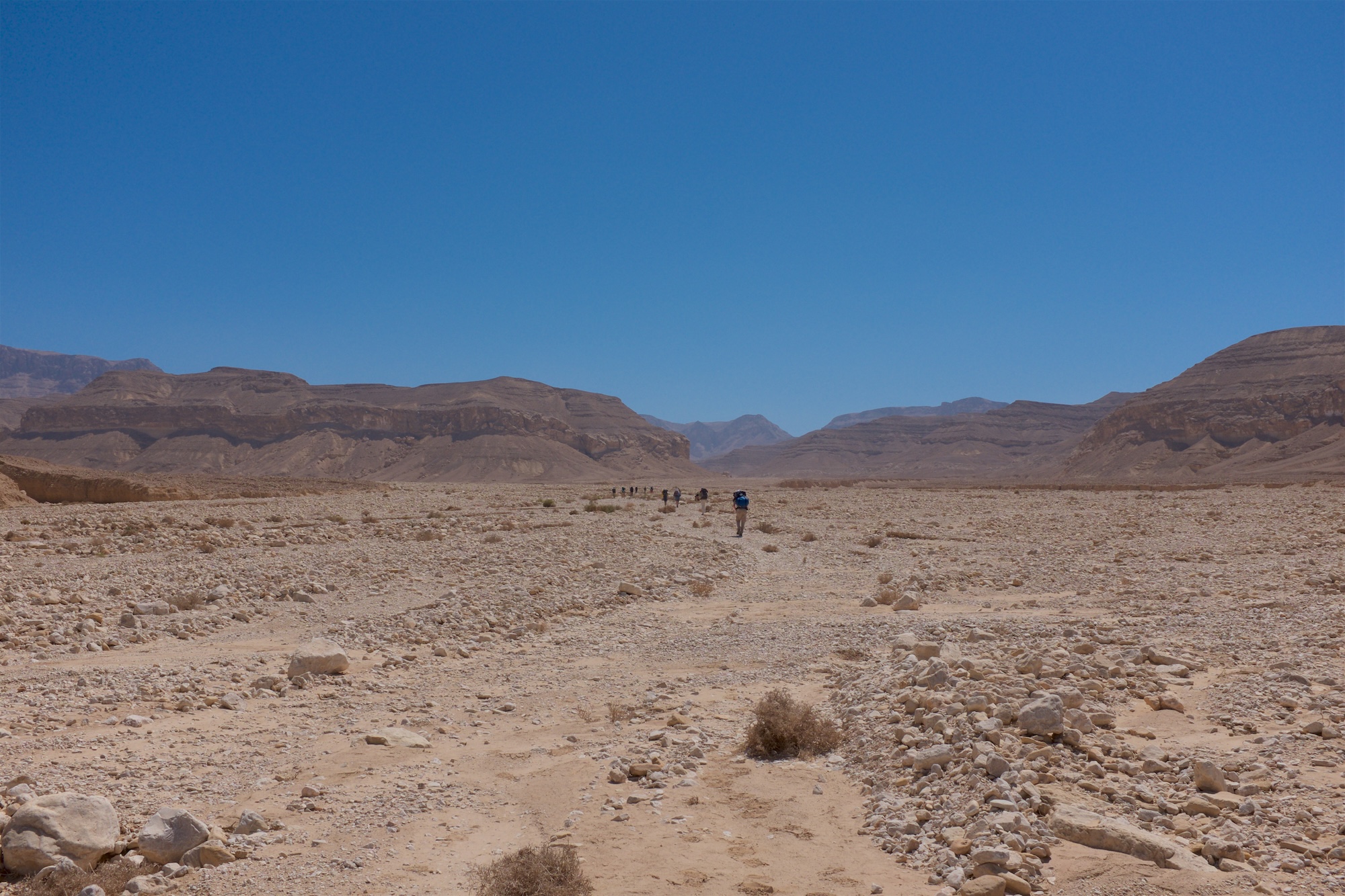
Reaching Saint Paul’s Monastery requires careful planning due to its remote location in the Red Sea Governorate. The journey from Cairo takes approximately five hours by vehicle, following ancient caravan routes through dramatic mountain landscapes.
What to Expect
Morning liturgy begins at 3:00 am (03:00) with ancient Coptic chants echoing through stone corridors. Visitors may observe services from designated areas while monks perform rituals unchanged since Byzantine times.
The underground chapel requires modest dress and respectful silence as pilgrims pray at the site where Saint Paul spent his final years. Photography is permitted in most areas except during active worship and within the manuscript library.
Seasonal Considerations
Desert temperatures vary dramatically between day and night, with summer highs reaching 45°C (113°F) and winter lows dropping to 5°C (41°F). Spring months from March through May offer the most comfortable conditions for extended visits.
The monastery observes Coptic Orthodox feast days which may restrict access during certain periods.
Connection to Other Sites
Saint Paul’s Monastery forms part of a broader network of desert monasteries throughout Egypt’s Eastern Desert. Saint Anthony’s Monastery lies approximately 80 km (50 miles) to the north, accessible via the same desert highway.
Many pilgrims visit both sites to experience the full scope of Egyptian monastic tradition. The monastery maintains relationships with Orthodox communities worldwide, particularly in America where English-language adaptations of Athonite spiritual traditions have taken root.
Practical Information for Pilgrims
We provide comfortable, air-conditioned vehicles with experienced drivers familiar with desert routes. The journey includes stops at scenic overlooks and historical markers explaining the region’s significance to early Christianity.
Emergency communications equipment ensures safety throughout the remote portions of the trip. Guest facilities within the monastery offer basic accommodations for serious pilgrims willing to participate in monastic routine.
Our pre-visit orientation covers appropriate behavior within Orthodox sacred spaces, basic Coptic terminology, and historical context enhancing your understanding of witnessed rituals. This preparation ensures respectful interaction with the monastic community while maximizing educational value of your pilgrimage experience.
Add The Monastery Of Saint Paul To A Journey Filled With History And Wonder
The Monastery of Saint Paul offers a peaceful and deeply authentic glimpse into Egypt’s ancient Christian heritage, surrounded by the dramatic landscapes of the Eastern Desert. Whether you want to combine this remarkable spiritual site with Cairo’s historic landmarks, the Red Sea coast, or a luxury Nile cruise, we can help you create an Egypt journey that feels personal from beginning to end.
With our custom Egypt tour planner, you choose your travel dates, pace, accommodations, experiences, and route while our Egypt specialists handle every detail with care. Enjoy a private, tailor-made Egypt vacation designed around comfort, flexibility, and the experiences that matter most to you.
Frequently Asked Questions
Most visitors spend 3 to 4 hours at the Monastery of Saint Paul, including the desert drive, church visits, guided exploration, and time observing daily monastic life. The monastery sits in Egypt’s Eastern Desert approximately 155 km southeast of Cairo and requires travel through mountainous terrain before reaching the fortified complex. Visitors often combine the monastery with Saint Anthony’s Monastery on the same day because the two sites are about 80 km apart. Arriving early helps avoid midday desert heat and larger tour groups.
Yes, the Monastery of Saint Paul welcomes respectful visitors from all Christian denominations as well as non-Christian travelers interested in Egypt’s Coptic heritage. Founded in the 4th century near the cave of Saint Paul the Hermit, the monastery functions both as an active religious community and an important historical site. Visitors are expected to follow monastery etiquette, including modest dress and quiet behavior inside churches and prayer areas. Morning visits generally provide the best access before religious activities become busier.
Visitors should wear conservative clothing at the Monastery of Saint Paul, including long pants or skirts, covered shoulders, and comfortable walking shoes suitable for uneven stone surfaces. Women may also prefer carrying a light scarf or shawl, especially when entering active worship spaces during Coptic Orthodox services. The monastery’s desert setting can produce strong sun exposure even during cooler months, so hats and lightweight breathable fabrics are recommended. Neutral, modest clothing helps visitors blend respectfully into the religious atmosphere.
Photography is generally permitted in many outdoor areas and selected church spaces at the Monastery of Saint Paul, but restrictions apply during worship services and around sensitive manuscripts or icons. Flash photography is commonly discouraged because it can damage centuries-old religious artwork and frescoes preserved within the monastery complex. Some interior chapels may prohibit cameras entirely depending on current monastic policies. Visitors should always ask guides or monks before photographing religious ceremonies or private devotional spaces.
Yes, guided tours of the Monastery of Saint Paul are commonly available in English, French, German, and Italian when arranged in advance through licensed operators or private Egypt tours. Multilingual guides help explain the monastery’s 4th-century origins, Coptic Orthodox traditions, and connections to Saint Paul the Hermit, one of Christianity’s earliest desert ascetics. Because the site contains religious symbolism and historical details not clearly labeled on-site, guided interpretation significantly improves the experience. Advance booking is strongly recommended during winter travel months.
Exploring the Monastery of Saint Paul requires moderate physical activity, including walking across uneven courtyards, climbing stone steps, and navigating narrow passages within the fortified desert complex. Most healthy travelers can comfortably complete the visit, but some staircases and elevated sections may challenge visitors with limited mobility. The dry Eastern Desert climate also increases fatigue during warmer months, particularly from May through September. Comfortable walking shoes, water, and slower pacing help make the visit more manageable.
March through May and October through December are considered the best periods for visiting the Monastery of Saint Paul because daytime temperatures are milder and more comfortable for desert travel. Winter daytime temperatures in the Eastern Desert often range between 20°C and 28°C (68°F to 82°F), while summer heat can exceed 40°C (104°F). Cooler weather also improves walking conditions inside the monastery’s stone courtyards and surrounding mountain landscape. Morning departures from Cairo provide the most comfortable overall experience.
Visitors may observe Coptic Orthodox liturgical services at the Monastery of Saint Paul from designated areas, although full sacramental participation is generally reserved for baptized Orthodox Christians. Services are conducted primarily in Coptic and Arabic and can last several hours, especially during feast days and major religious celebrations. Observing these ceremonies offers rare insight into one of the world’s oldest continuous Christian monastic traditions dating back more than 1,600 years. Quiet behavior and modest dress are expected throughout all religious services.
Yes, visiting hours at the Monastery of Saint Paul can change during Coptic Orthodox feast days, fasting periods, and major religious celebrations when access may become limited or temporarily restricted. Most standard visits occur during daytime hours, but schedules occasionally shift based on monastic activities and security procedures in the Eastern Desert region. Travelers visiting during Christmas, Easter, or major saints’ feast periods should confirm access in advance through their tour provider. Weekday mornings typically provide the smoothest visiting conditions.
Organized tours to the Monastery of Saint Paul typically include trained guides, first-aid equipment, and communication systems because the monastery sits in a remote section of Egypt’s Eastern Desert. Most professional operators maintain contact with local authorities and can coordinate emergency transport if medical assistance becomes necessary during the journey. The nearest large medical facilities are located far from the monastery itself, which makes preparation especially important. Visitors should carry personal medications, sun protection, and adequate drinking water during the trip.
The Monastery of Saint Paul is smaller, quieter, and more isolated than the nearby Monastery of Saint Anthony, which developed into a much larger monastic community over centuries. Saint Paul’s Monastery centers around the cave of Saint Paul the Hermit, traditionally regarded as Christianity’s first hermit, while Saint Anthony’s evolved around organized communal monasticism. The remote mountain setting gives Saint Paul’s a more contemplative atmosphere and fewer crowds. Travelers interested in early Christian asceticism often find the contrast historically fascinating.
Yes, the Monastery of Saint Paul operates a small shop selling Coptic Orthodox icons, prayer books, crosses, incense, and handmade monastery-produced goods that support the resident monastic community. Many items reflect traditional Egyptian Christian artistic styles preserved for centuries within Coptic culture. The shop usually offers more authentic locally produced religious items than standard tourist markets in larger cities. Visitors interested in meaningful souvenirs should bring cash because card payment facilities may be limited in this remote desert location.
Design Your Custom Tour
Explore Egypt your way by selecting only the attractions you want to visit