

Goreme Open Air Museum – A Truly Fascinating Ancient Marvel
Christianity found sanctuary in carved stone. When the Byzantine Empire faced religious upheaval during the 8th and 9th centuries, monks fled to Cappadocia’s unique rock formations in search of refuge.
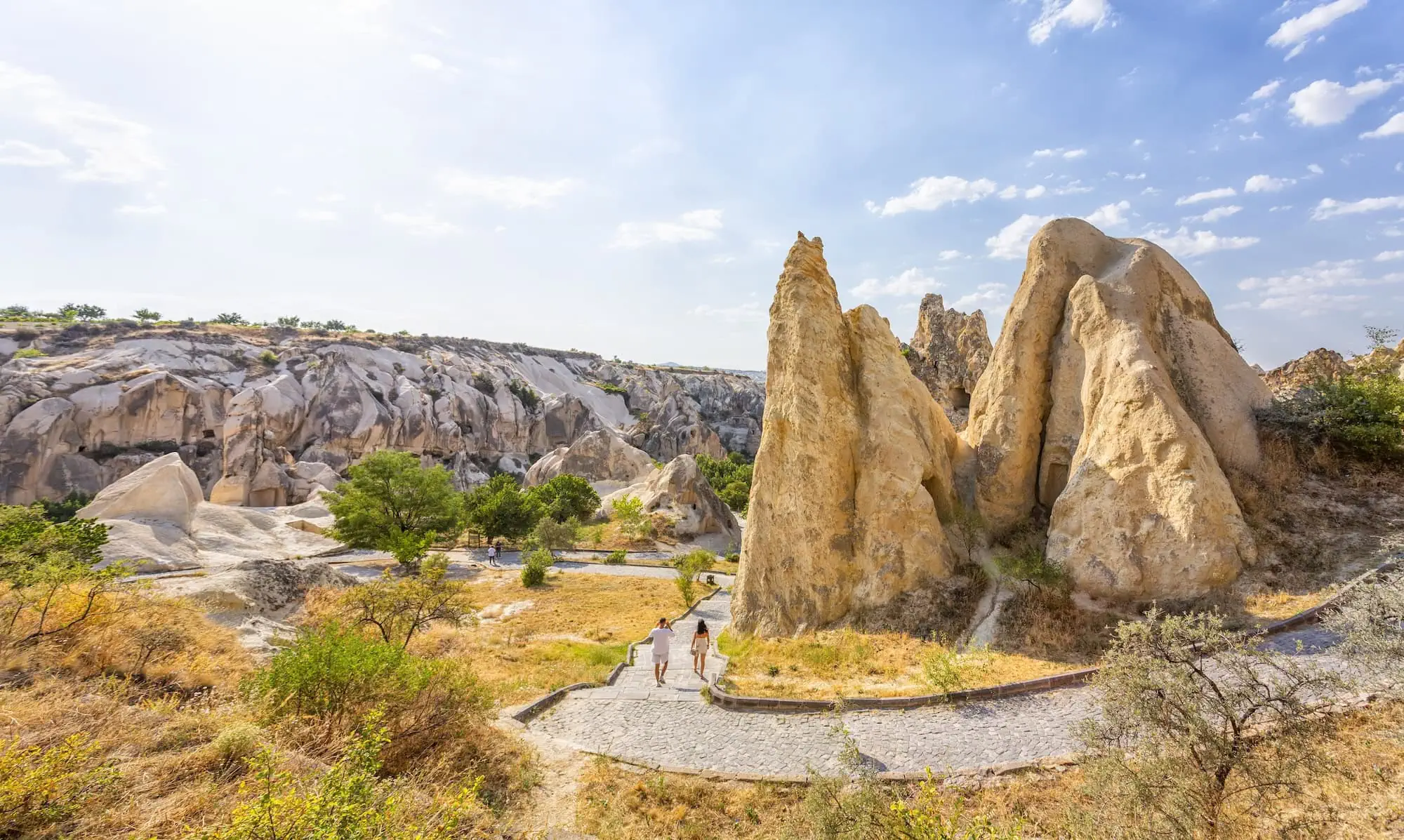
They transformed volcanic landscapes into intricate churches and monasteries, creating what is now known as the Goreme Open Air Museum. This UNESCO World Heritage Site features more than 30 Byzantine churches dating from the 4th to the 11th centuries, each preserving remarkable frescoes and stories of early Christian life.
Goreme Open Air Museum can be included in our Egypt and Turkey Holiday Packages, where Cappadocia’s extraordinary landscapes are combined with Istanbul’s iconic landmarks and Egypt’s ancient wonders.
As the largest monastic complex in the region, the site offers a rare glimpse into a civilization carved directly into stone. With extensive experience guiding visitors through these rock-cut sanctuaries, we help uncover the details that make this destination truly unforgettable.
Table of Contents
The Dark Church: Crown Jewel of Byzantine Art
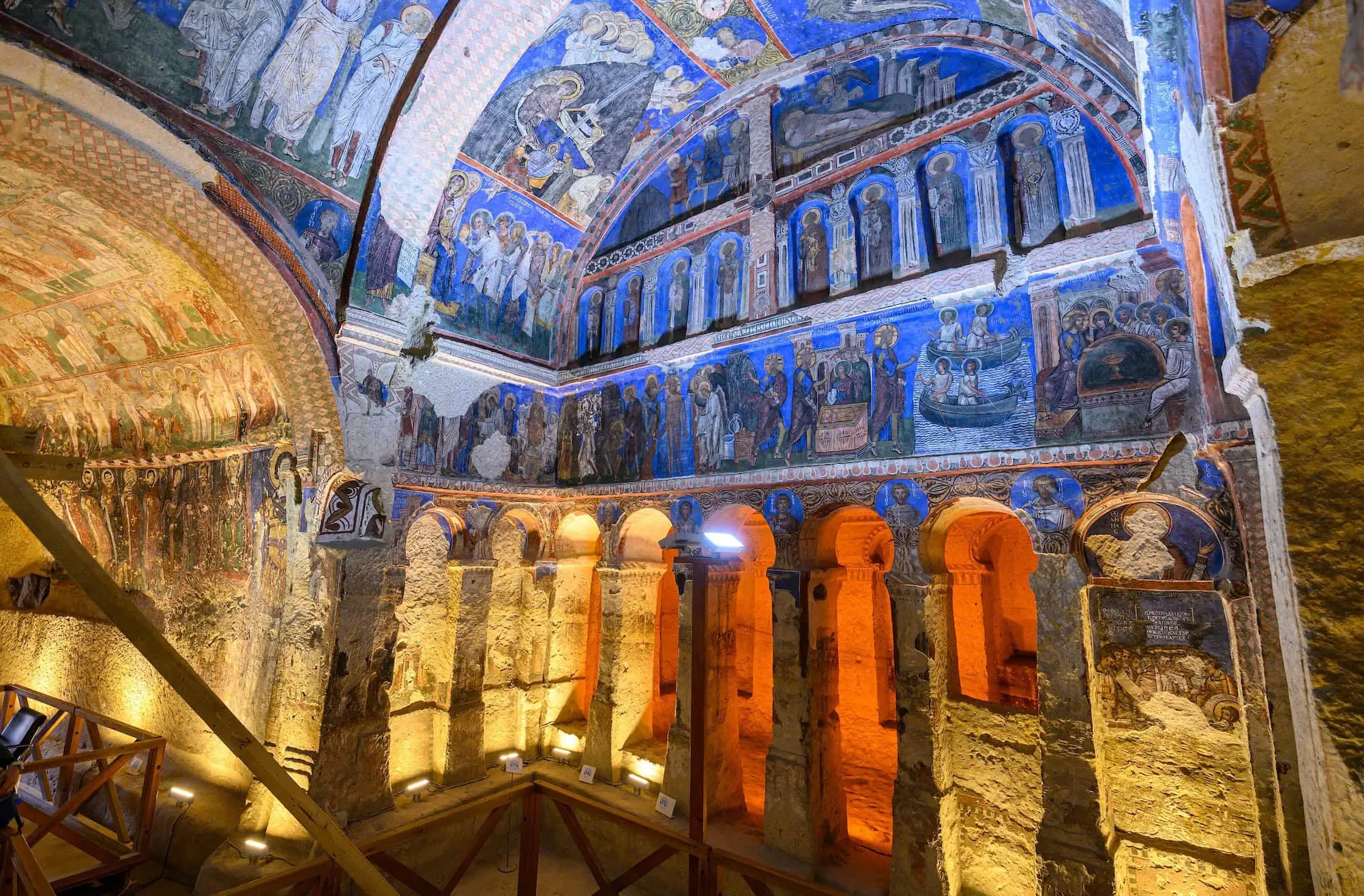
The Karanlik Kilise stands as the museum’s most celebrated attraction for compelling reasons. Its name translates to “Dark Church” because limited natural light helped preserve some of the finest Byzantine frescoes in existence. These 11th-century wall paintings display extraordinary detail and color intensity rarely seen elsewhere in Cappadocia.
Artistic Mastery Revealed
Master artists used expensive lapis lazuli pigments and real gold leaf to create biblical scenes that rival Constantinople’s imperial workshops. The church’s barrel-vaulted ceiling showcases Christ Pantocrator surrounded by scenes from the New Testament, painted in the metropolitan style that reflects significant imperial investment. We recommend purchasing the separate entrance ticket (6 euros) to witness these extraordinary artistic achievements firsthand.
Photography remains prohibited inside to protect the delicate pigments from camera flash damage.
Historical Context of Creation
Byzantine authorities commissioned this church during a period of renewed religious fervor following the end of Iconoclasm in 843 CE. The Cappadocian Fathers – including Basil the Great, Gregory of Nyssa, and Gregory of Nazianzus – had established theological foundations that made this region a center of Christian learning centuries earlier. Their influence attracted wealthy benefactors who funded elaborate artistic programs using Constantinople’s most skilled craftsmen.
Exploring the Valley’s Sacred Geography
Goreme Valley encompasses only 5% of Cappadocia’s total area yet contains the region’s highest concentration of religious architecture. Over 60 churches and 45 refectories carved into fairy chimneys created a self-sufficient monastic community that flourished for centuries.
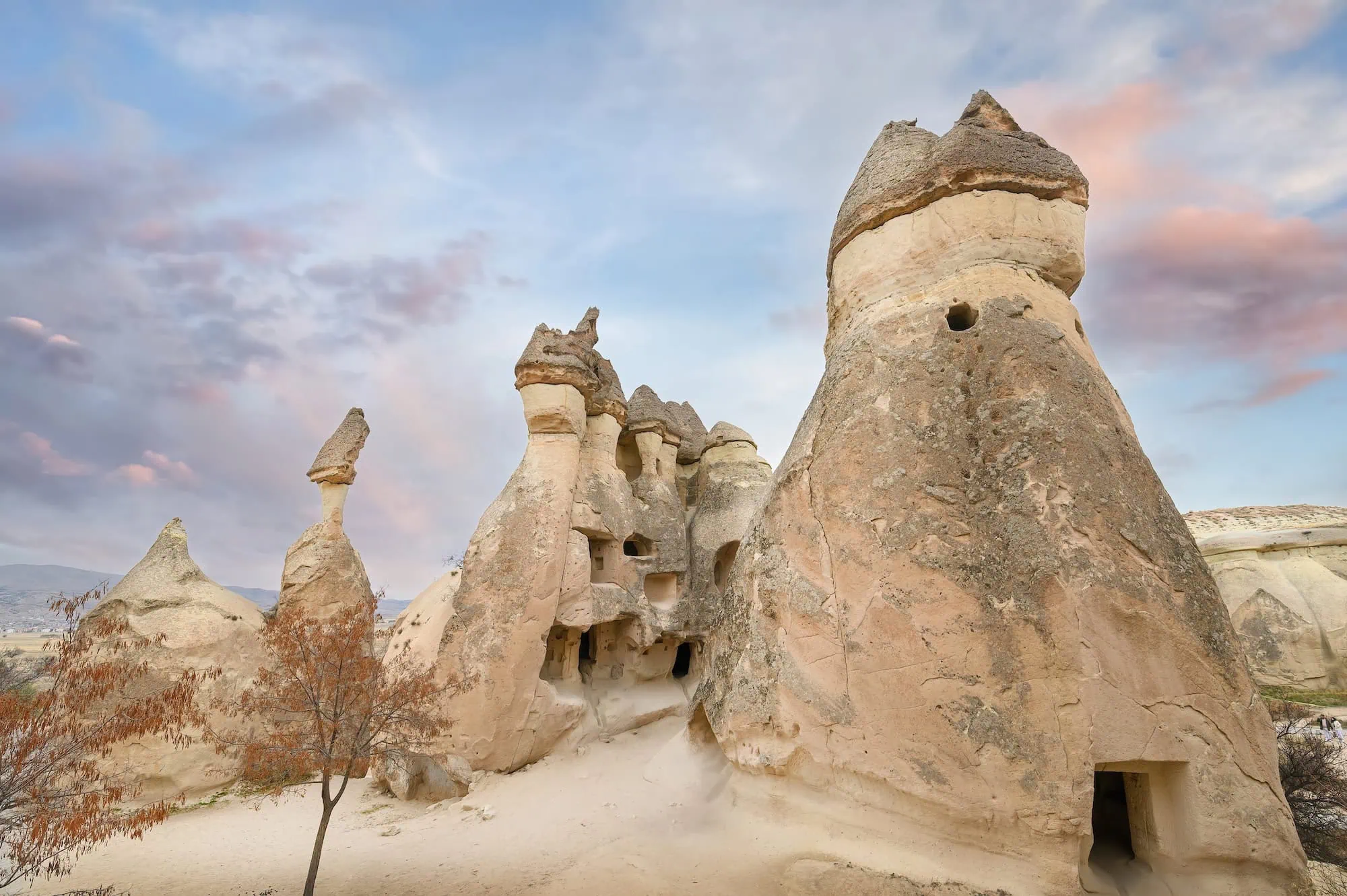
The volcanic landscape provided perfect conditions for cave construction. Mount Erciyes and Mount Hasan erupted millions of years ago, depositing ash layers that hardened into soft tufa rock. Wind and rain erosion carved the distinctive cone-shaped formations we see today, while early Christians discovered they could easily excavate living spaces and worship areas within these natural sculptures.
Three primary motivations drove monastery development here: sacred burial practices, intensive monastic life focused on prayer and contemplation, and the site’s growing importance as a pilgrimage destination. Religious communities established elaborate burial chambers for revered monks, while living quarters allowed contemplative withdrawal from worldly concerns. Pilgrims traveled from across the Byzantine Empire seeking spiritual healing and religious instruction from the valley’s renowned holy men.
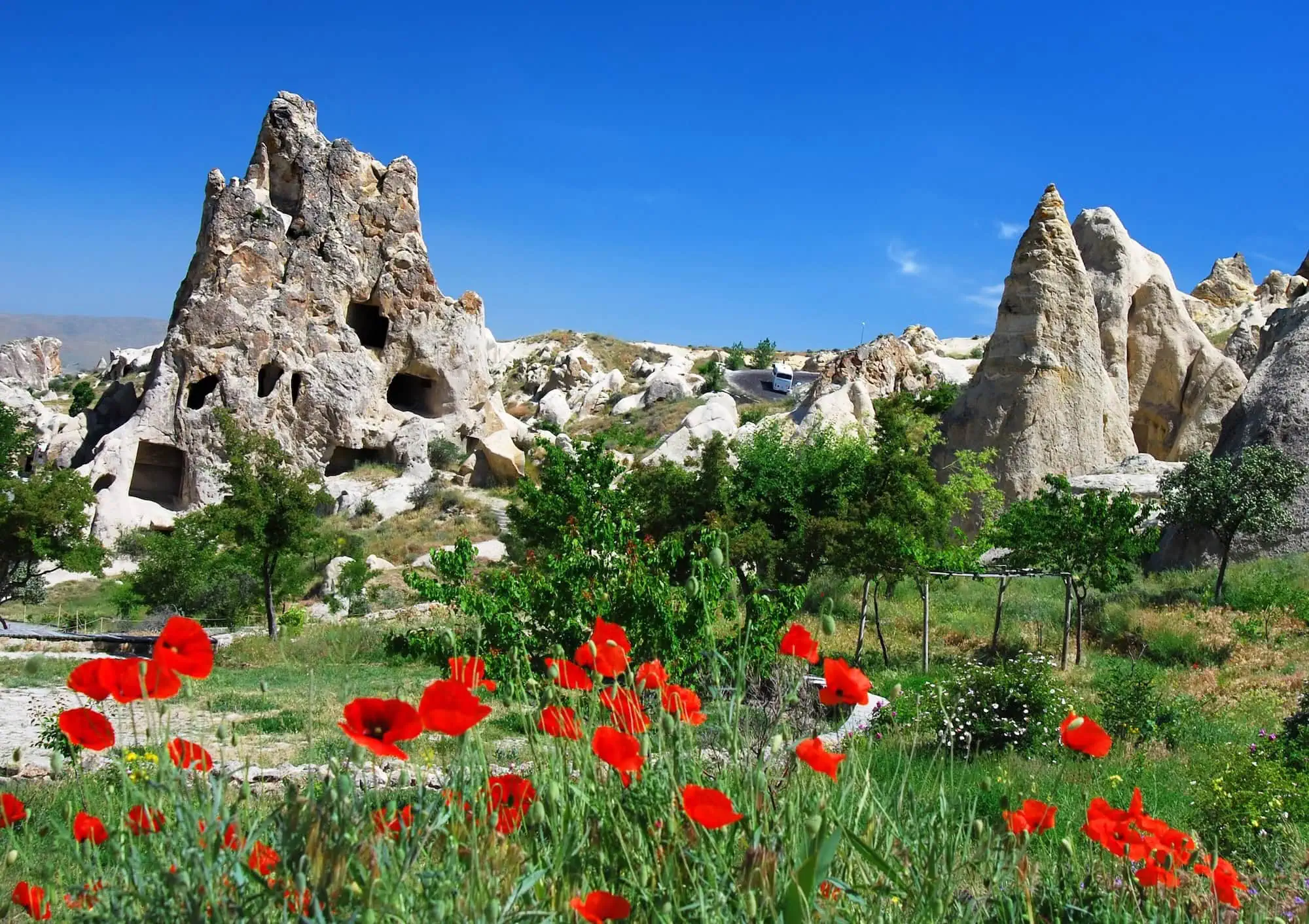
Apple Church and Snake Church represent typical examples of the valley’s religious architecture, each featuring unique iconographic programs adapted to their specific spiritual functions.
Byzantine Churches: Architecture Meets Devotion
Church with Sandals: Intimate Sacred Space
This smaller sanctuary earned its name from footprint carvings near the entrance, possibly representing Christ’s presence or pilgrims’ votive offerings. The intimate scale creates an intensely personal worship experience, with frescoes positioned at eye level for close contemplation. Provincial artists working here adapted metropolitan artistic styles to local conditions and available materials.
St. Basil Chapel: Theological Heritage
Dedicated to one of the Cappadocian Fathers, this chapel demonstrates the continuing influence of early Christian theologians who shaped monastic traditions. Basil the Great established rules for communal religious life that guided monastery operations throughout the Byzantine period. The chapel’s iconographic program emphasizes themes of asceticism and spiritual discipline that defined his theological teachings.
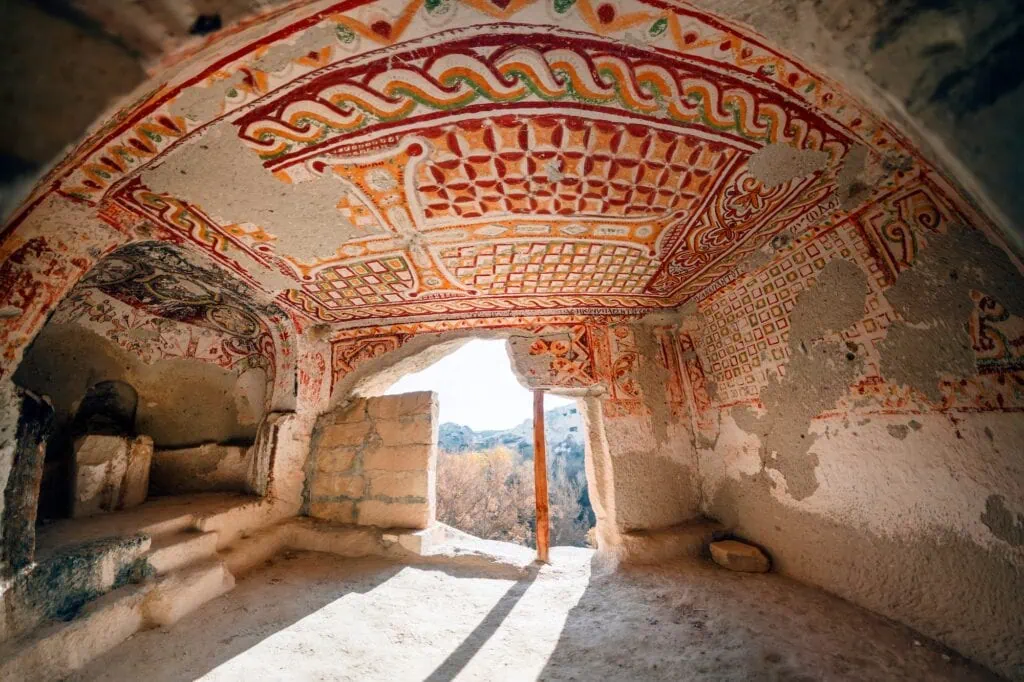
Tokali Church: Imperial Investment
Located slightly outside the main complex, the New Tokali Church represents the most ambitious artistic undertaking in Goreme Valley. Imperial resources funded an elaborate decorative scheme using costly blue pigments and gold leaf that rivaled court workshops in Constantinople. The church’s massive scale and sophisticated artistic program demonstrate Christianity’s political and economic importance during the 10th-century Byzantine renaissance.
Practical Visitor Information
Timing Your Visit
Early morning arrival (8:00 am/08:00 opening time) offers several advantages. Fewer crowds allow unhurried exploration of individual churches, while morning light enhances fresco visibility through natural openings. Plan 2-3 hours for comprehensive exploration, though photography enthusiasts often spend longer capturing the site’s architectural details.
Most tour groups arrive between 10:00 am (10:00) and 2:00 pm (14:00), creating significant congestion in popular churches like the Dark Church.
Ticketing and Costs
General admission costs 20 euros and includes access to most churches within the complex. The Dark Church requires an additional 6-euro ticket purchased separately at the entrance. We strongly recommend this upgrade given the exceptional quality of preserved frescoes. Museum authorities limit Dark Church visitors to prevent overcrowding and protect the artwork.
Audio guides available in multiple languages provide detailed historical context for each church, though our private guides offer personalized explanations tailored to your interests and questions.
Photography Guidelines
Photography is permitted throughout most of the complex except within the Dark Church and several smaller chapels where flash damage could harm delicate pigments. Tripods require special permission from museum administration. Professional photography sessions need advance booking and additional fees.
Historical Significance and UNESCO Recognition
The United Nations Educational, Scientific and Cultural Organization designated Goreme National Park as a World Heritage Site in 1985, recognizing both its geological importance and exceptional cultural value. This dual classification acknowledges the unique combination of natural fairy chimney formations and human artistic achievement that makes Cappadocia globally significant.
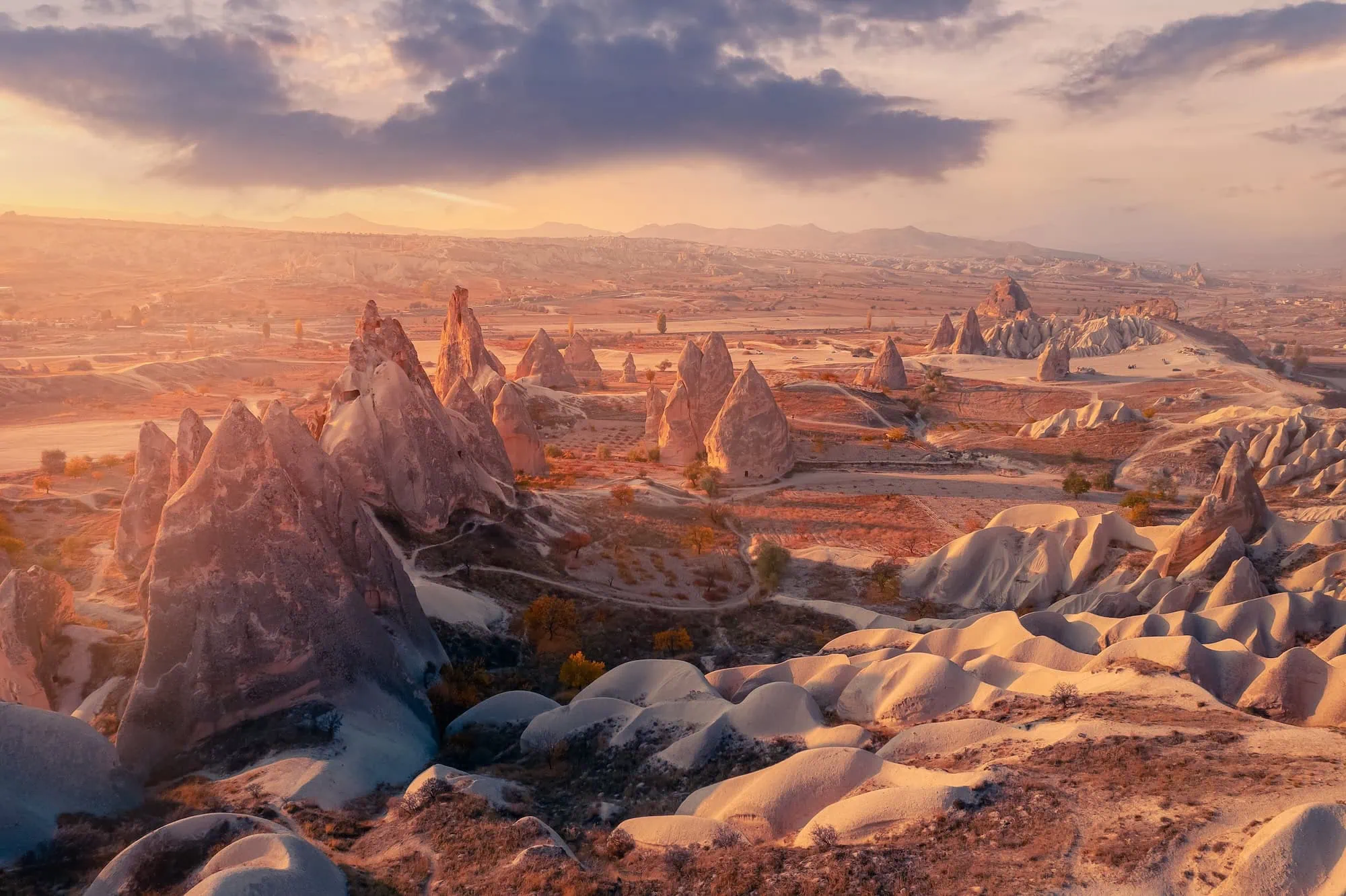
UNESCO’s evaluation emphasized three critical factors: the site represents outstanding universal value as testimony to Byzantine civilization; the geological formations demonstrate exceptional natural beauty; and the integration of human settlement with natural landscape creates a unique cultural landscape worthy of international protection.
Modern conservation efforts balance tourist access with artwork preservation, using advanced climate control systems and visitor management protocols developed specifically for rock-carved churches. International partnerships fund ongoing restoration projects that ensure future generations can experience these remarkable achievements of medieval Christian art and architecture.
We’ve witnessed firsthand how proper guidance enhances visitor understanding while respecting conservation requirements, ensuring your experience honors both the site’s spiritual heritage and preservation needs.
Planning Your Cappadocia Experience
Goreme Open Air Museum forms the centerpiece of most Cappadocia itineraries, but the region offers numerous complementary attractions. Underground cities like Derinkuyu and Kaymakli demonstrate how early Christians adapted to persecution threats, while Avanos pottery workshops continue artistic traditions dating to Hittite times.
Our personalized Cappadocia tours combine the Open Air Museum with hot air balloon flights over the fairy chimneys at sunrise, creating unforgettable memories of this extraordinary landscape. Private transportation eliminates the stress of navigating rural roads, while expert guides provide historical context that brings ancient stories to life.
Consider extending your stay to explore Ihlara Valley’s 14-kilometer (8.7-mile) gorge containing over 100 additional churches, or visit Zelve Open Air Museum for a less crowded but equally fascinating glimpse into Cappadocian monastic life. Each site reveals different aspects of how geography, geology, and human creativity combined to create one of the world’s most remarkable cultural landscapes.
Frequently Asked Questions
The exceptional preservation of 11th-century frescoes with original colors and gold leaf details creates an unmatched artistic experience.
Allow 2-3 hours for thorough exploration, with additional time if you’re particularly interested in Byzantine art and history.
Yes, though some church entrances require climbing steps carved into rock. Young children should be supervised carefully.
The terrain is uneven with many steps carved into rock. Some churches may not be accessible to wheelchair users.
Spring (April-May) and fall (September-October) offer pleasant temperatures. Summer can be very hot, while winter may have limited access due to weather.
Professional guides provide essential historical context and point out artistic details easily missed during self-guided visits.
Independent visits are welcome. Audio guides in multiple languages are available for rent at the entrance.
Goreme contains the highest concentration and best-preserved examples of Byzantine church art in the region.
Comfortable walking shoes with good grip, sun protection, water, and a camera except for the Dark Church.
Several restaurants and cafes in Goreme village are within walking distance, offering traditional Turkish cuisine and international options.
Reservations aren’t required for general admission, though large groups should contact museum administration in advance.
The site’s designation recognizes both its unique geological formations and exceptional examples of Byzantine religious art and architecture.
Design Your Custom Tour
Explore Egypt and Turkey your way by selecting only the attractions you want to visit