The sweet spot for a first visit to Egypt
7-Day Egypt Tours
Enjoy a full week of iconic Egyptian wonders on a private 7-day Egypt tour with your own guide and driver. Seven days is the sweet spot for covering Cairo, Luxor, Aswan, and Abu Simbel without the rush of a shorter trip. Fully customizable, designed around your travel style, and supported by 70 years of experience and 24/7 assistance.
Find Your Perfect 7-Day Egypt Itinerary
Browse our private-guided, fully customizable 7-day tour packages and quickly find the Egypt itinerary that’s right for you.
Why a 7-Day Egypt Tour Is the Sweet Spot
Cairo, Luxor, Aswan, and Abu Simbel at a comfortable pace, with room left to breathe.
Seven days is the sweet spot for a first Egypt tour. It is the length at which the classic Cairo-Luxor-Aswan triangle plus Abu Simbel becomes genuinely comfortable rather than rushed, with proper time at each stop and a buffer for the unexpected. Six days does the same trip but tightly; eight days fits a full Nile cruise on top. Seven sits cleanly in between, focused on the monuments and the cities rather than the river.
A typical 7-day Egypt tour covers two to three days in Cairo for the Pyramids of Giza, the Great Sphinx, and the Grand Egyptian Museum, then a short flight south to Luxor for the temples and royal tombs, followed by Aswan for Philae and a half-day flight to Abu Simbel. With a private Egyptologist guide and personal driver, every transfer, internal flight, and entry is handled for you, so the seven days go to the experiences rather than to logistics.
Whether you are drawn to Cairo’s bustling energy, Luxor’s open-air temples, or Aswan’s gentler Nubian south, a 7-day Egypt tour delivers all of Egypt’s monumental core at a pace that lets you absorb what you are seeing.
Table of Contents
Essential Destinations for Your 7-Day Egypt Adventure
Cairo anchors most week-long Egyptian journeys with its unmatched concentration of ancient sites. The capital city houses the iconic Giza pyramid complex, including the Great Pyramid and enigmatic Sphinx, alongside the world-renowned Grand Egyptian Museum containing Tutankhamun’s treasures.
Cairo’s Must-See Attractions
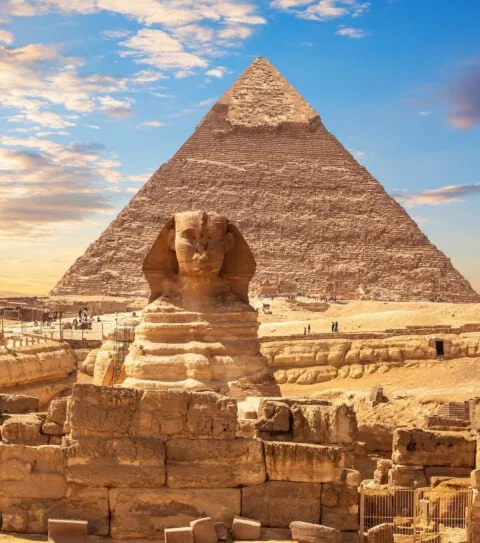
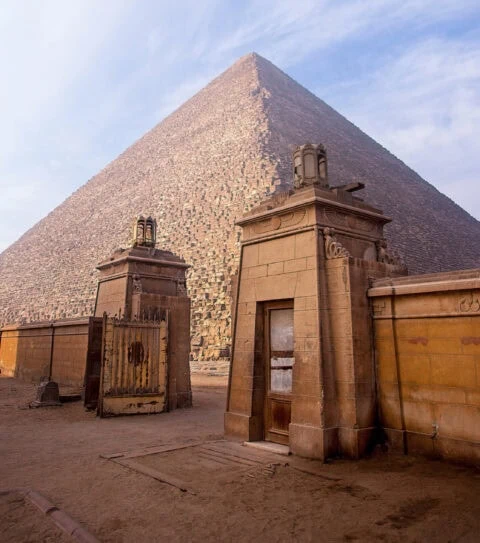
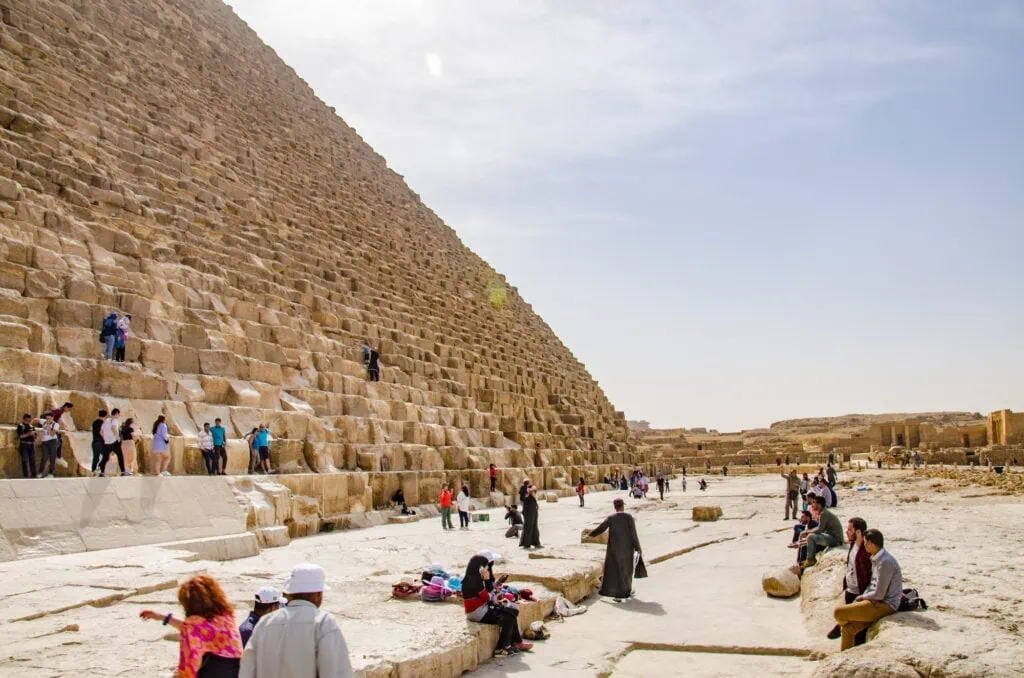
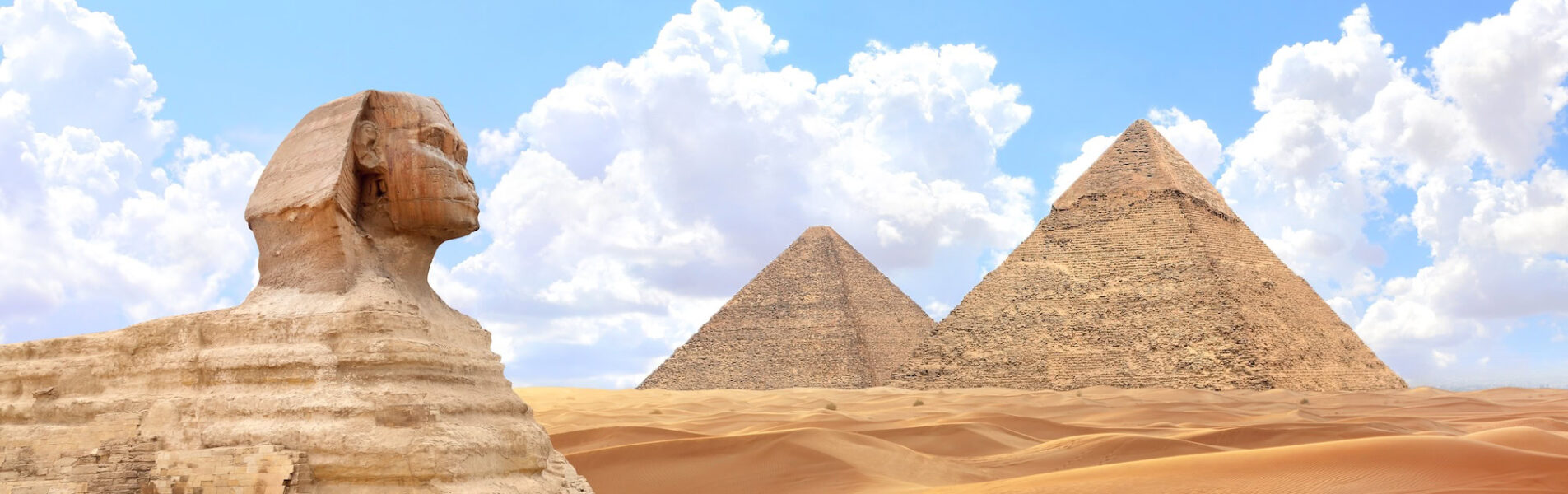
Your Cairo exploration begins at the Giza plateau, where the last surviving Wonder of the Ancient World awaits. The Great Pyramid of Khufu originally stood 146 metres (479 feet) tall and remains around 139 metres today, the largest of the three Giza pyramids. The nearby Great Sphinx, carved from a single mass of bedrock during the Fourth Dynasty around 4,500 years ago, guards the necropolis with its weathered gaze. Early morning visits help you avoid both the crowds and the afternoon heat, and capture the best light for photography.
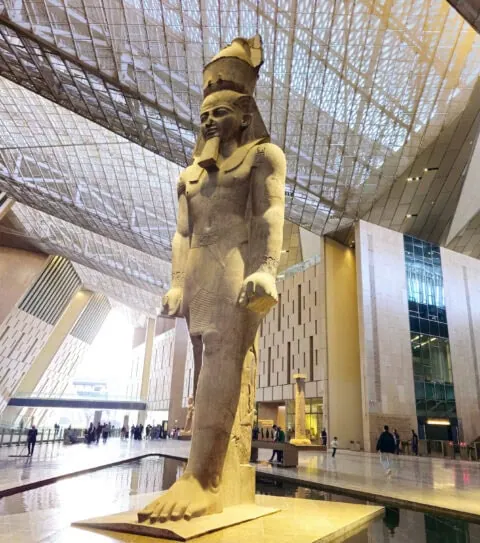
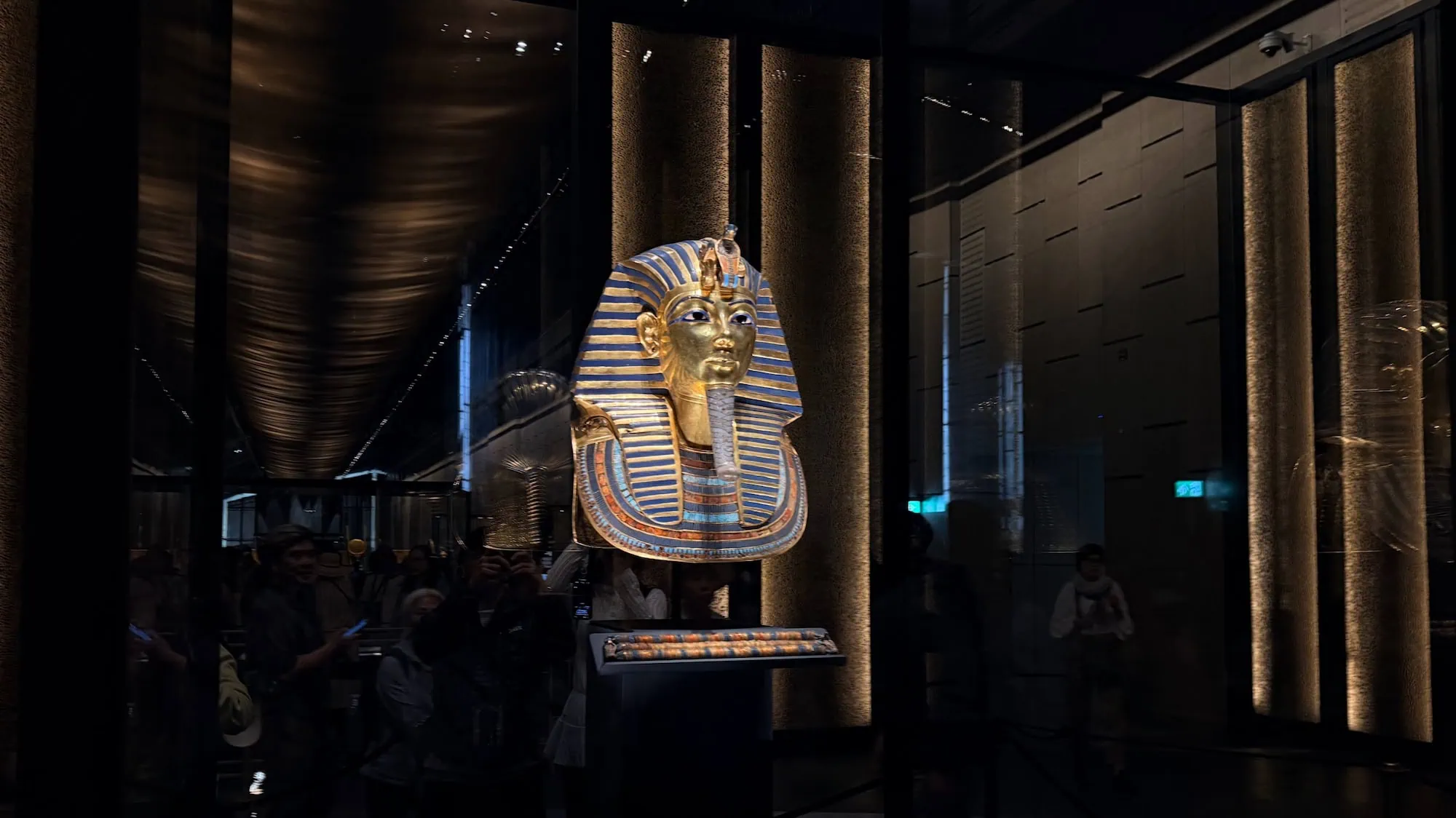
The Grand Egyptian Museum at the foot of the Giza plateau is now Egypt’s primary museum, holding over 100,000 artefacts spanning 5,000 years of pharaonic civilization. The complete Tutankhamun collection sits here for the first time in history, including the golden funerary mask, the inner shrines, and more than 5,000 items from the tomb. Plan three to four hours minimum to do the highlights justice.
Luxor’s Ancient Wonders
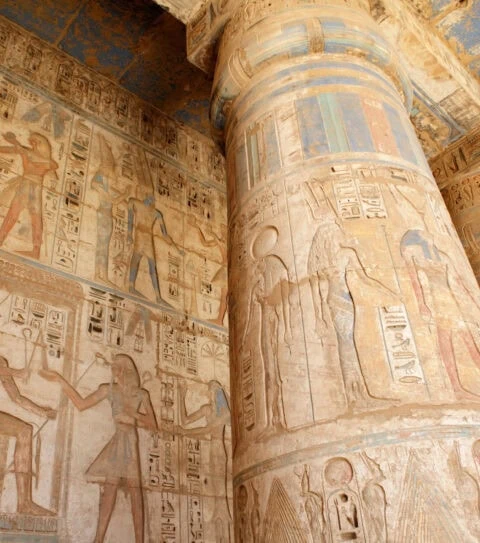
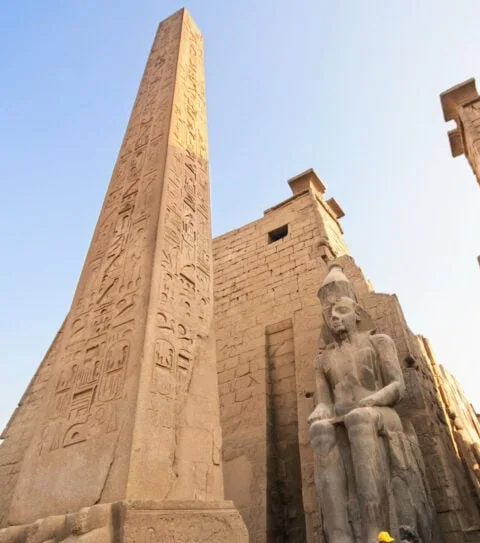
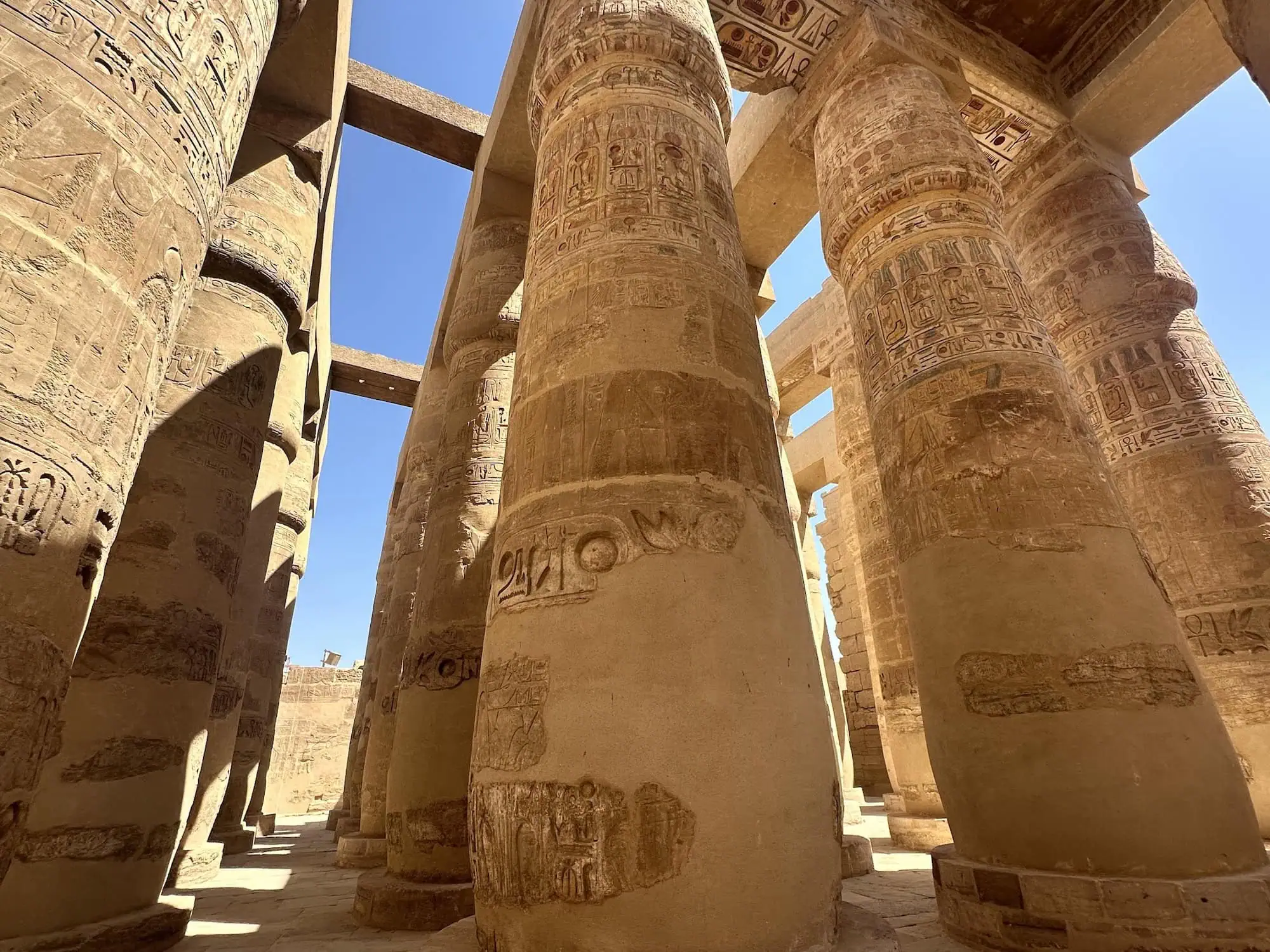
Luxor is often called the world’s greatest open-air museum. The east bank houses the Karnak Temple Complex, with its hypostyle hall of 134 sandstone columns covered in hieroglyphic inscriptions, and Luxor Temple, connected to Karnak by the 2.7 km Avenue of Sphinxes. The west bank conceals the Valley of the Kings, where the most powerful New Kingdom pharaohs found their eternal rest in elaborately painted rock-cut tombs. Your private Egyptologist guide brings these sites alive with historical context and the details most rushed visitors miss.
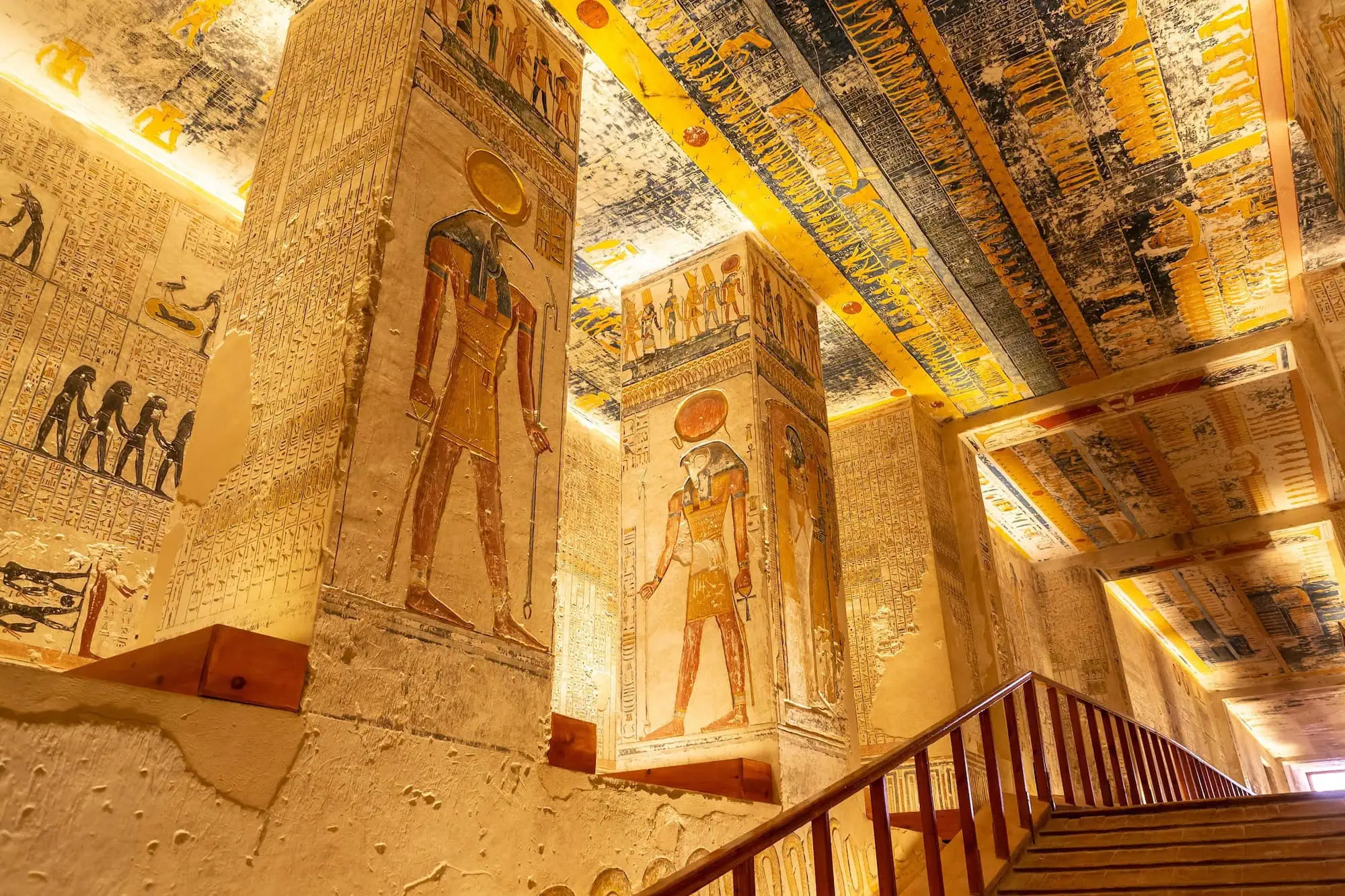
The Valley of the Kings contains over 60 royal tombs, including those of Ramesses VI, Seti I, and Tutankhamun. The standard ticket includes entry to three tombs of your choice, with Tutankhamun’s burial chamber available as a separate add-on ticket. The intricate painted walls and hieroglyphic texts provide some of the finest surviving art from the ancient world, and a fascinating window into pharaonic afterlife beliefs.
Aswan’s Nubian Culture
Aswan offers a gentler pace, with its softer Nile scenery and vibrant Nubian heritage. Philae Temple, dedicated to the goddess Isis and relocated stone by stone to nearby Agilkia Island in the 1970s to escape the rising waters of Lake Nasser, sits surrounded by water and reached by a short motorboat ride.
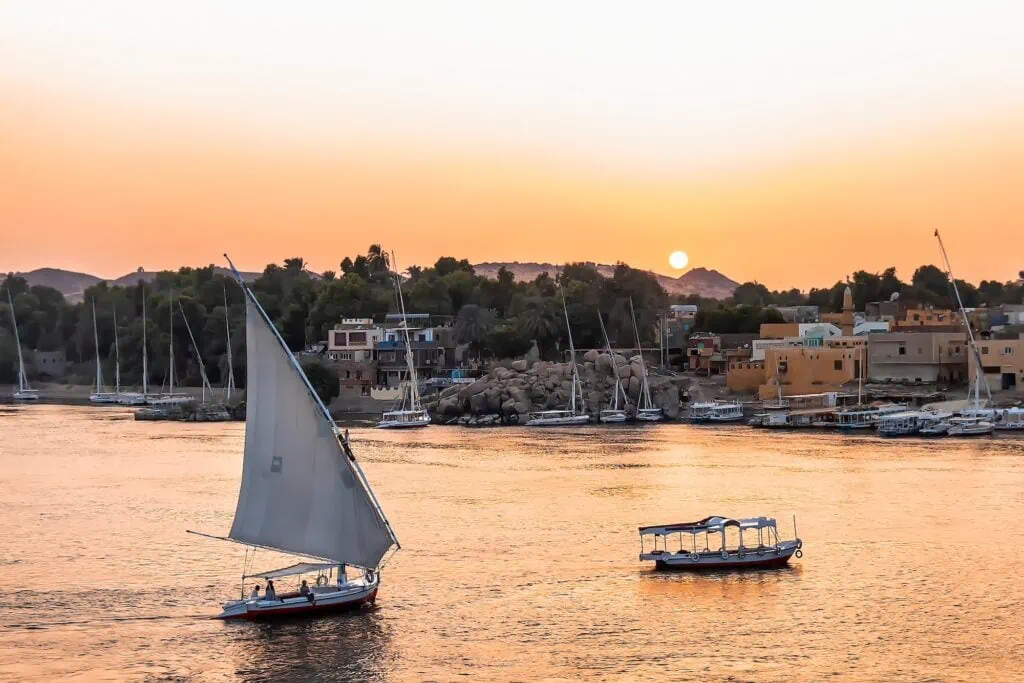
Traditional felucca sailboats provide peaceful sunset sails around Elephantine Island in the middle of the Nile, often combined with a visit to one of the Nubian villages on the river’s west bank.
Nile Cruise Experience: Luxor to Aswan
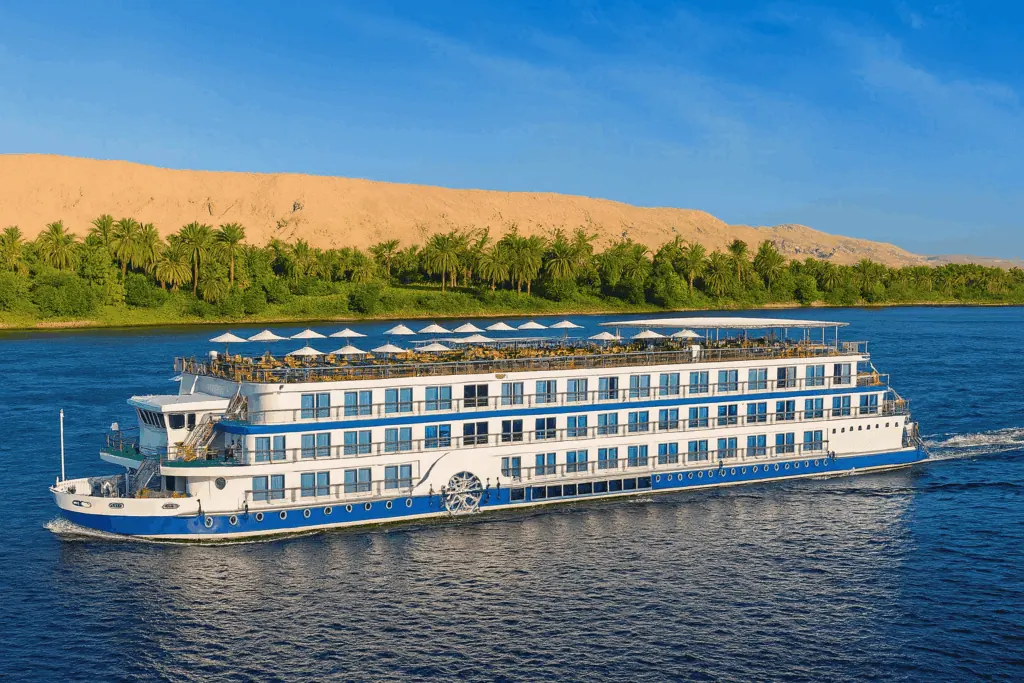
Nile cruises connect Luxor and Aswan over three to four days and remain one of Egypt’s most memorable travel experiences. These 5-star vessels combine comfort with convenience, with panoramic cabins, sun-deck pools, multiple dining venues, and the chance to wake up at a different temple stop each morning.
A Luxury Nile Cruise vessel carries 50 to 150 guests, and shore excursions to Kom Ombo Temple and Edfu Temple run as small groups of around 12 guests per Egyptologist, shared with fellow ship passengers. On a 7-day Egypt tour, a full cruise segment is usually too much to fit alongside Cairo, which is why most 7-day itineraries focus on the cities and monuments rather than a cruise. If a cruise is a priority for you, an 8-day Egypt tour fits one comfortably.
The dual temple at Kom Ombo uniquely honours both Sobek the crocodile god and Haroeris the falcon-headed god, with twin sanctuaries side by side. Crocodile mummies from the ancient Sobek cult are on display in the small site museum next door.
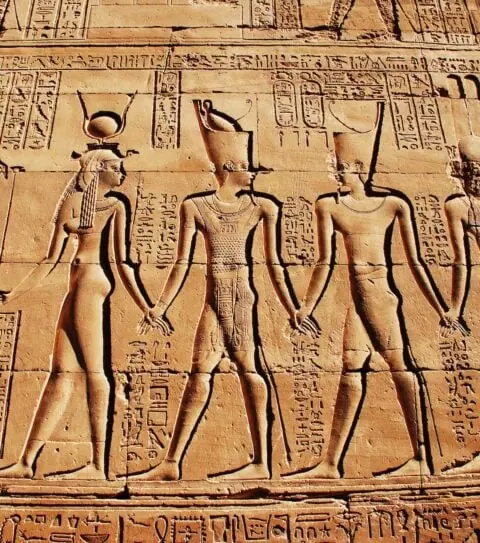
Edfu Temple, dedicated to Horus, is the best-preserved temple in Egypt. Horse-drawn carriages typically transport visitors from the Nile cruise dock to the temple, where falcon imagery and Ptolemaic-era carvings cover the walls inside and out.
Dahabiya Sailing Alternative
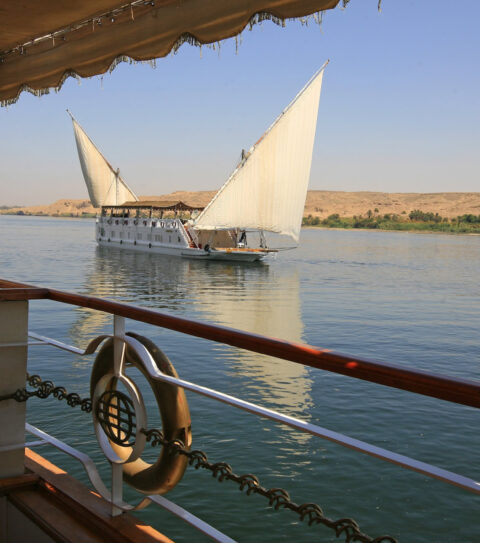
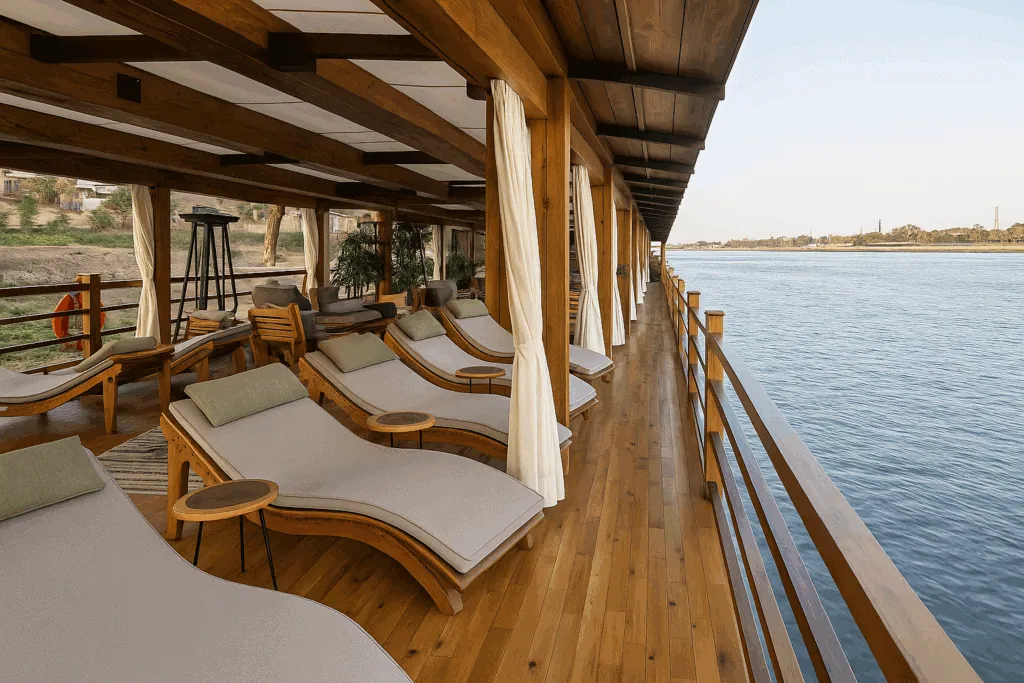
Traditional dahabiya sailboats offer a more intimate Nile experience, carrying just 8 to 16 guests on a twin-mast wind-powered vessel. These elegant boats reach quieter stretches of the river the larger Luxury Nile Cruise ships cannot, with gourmet meals prepared on board and the same kind of unhurried sailing that defined 19th-century Egyptian travel.
We arrange dahabiya cruises for travelers seeking authentic sailing with personalized service and flexible itineraries.
Practical 7-Day Egypt Tour Itinerary
A typical 7-day Egypt itinerary spends two to three days in Cairo for the Pyramids of Giza, the Great Sphinx, the Grand Egyptian Museum, and Islamic Cairo’s medieval streets. Your private Egyptologist guide times each visit around the heat and the crowds, and your personal driver handles every transfer in a modern, air-conditioned vehicle.
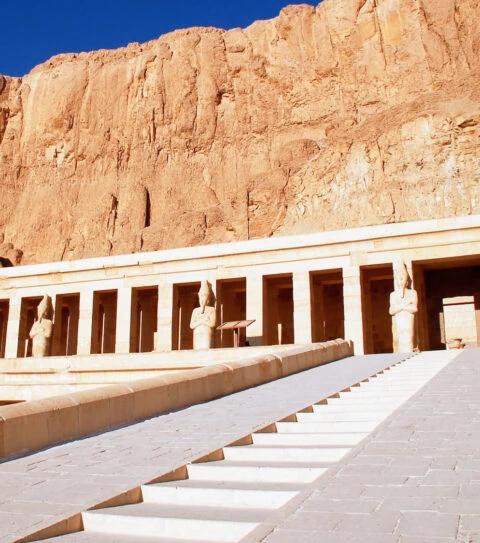
Days four through seven head south. A short domestic flight (around 1 hour 15 minutes) takes you to Luxor for the east bank temples of Karnak and Luxor Temple, then crosses the Nile for the Valley of the Kings, Hatshepsut’s mortuary temple, and the Colossi of Memnon on the west bank. From Luxor, either a flight or scenic drive takes you to Aswan for Philae, the High Dam, and a felucca sail around Elephantine Island.
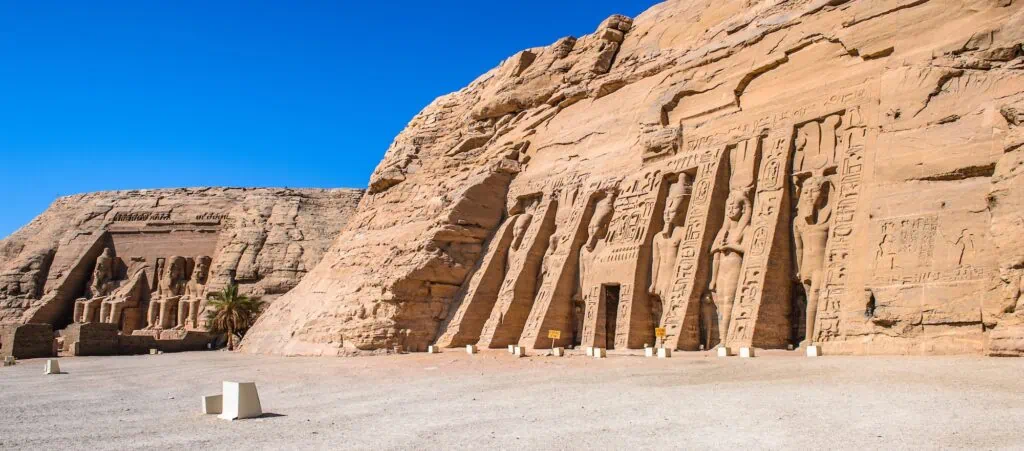
Abu Simbel is the most dramatic addition to a 7-day Egypt tour with Aswan included. The twin temples of Ramesses II and his wife Nefertari, relocated 65 metres uphill in the 1960s to escape the rising waters of Lake Nasser, are the most ambitious monuments any pharaoh ever built. The standard routing is an early morning flight from Aswan, with the temples reached in around 45 minutes and the return flight back to Aswan by early afternoon. A road convoy is also possible, taking around three hours each way.
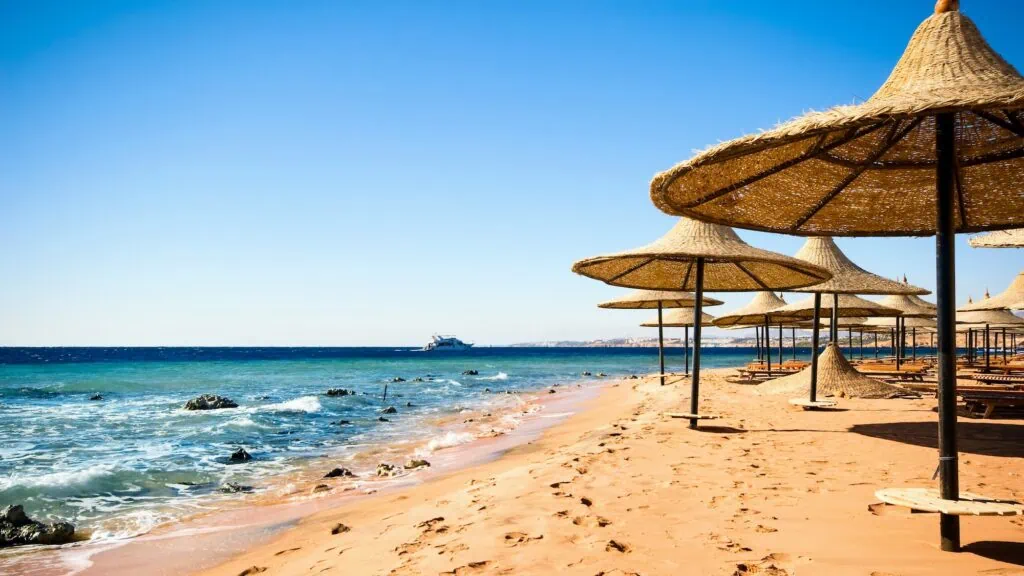
A Red Sea extension appeals to travellers who want beach time after the intensive monument days. Hurghada and Sharm El Sheikh offer resort accommodations with world-class diving and snorkelling, reached by a short domestic flight from Cairo or Luxor. Adding the Red Sea to a 7-day itinerary realistically extends the trip to 10 to 12 days total, which gives both the monuments and the coast the time they deserve. For travellers focused purely on the coast and the Pyramids, our Cairo and Red Sea holiday itineraries are a popular alternative for a relaxed and well-balanced 10–12 days total.
Transportation Options
Domestic flights connect major destinations efficiently. Cairo to Luxor takes approximately 1.5 hours, while Aswan to Cairo requires similar flight time. Train travel between Cairo and Luxor spans 10-12 hours overnight, offering a more adventurous alternative for travelers with flexible schedules.
Private guides and drivers accompany our tours, providing historical expertise and local insights throughout your journey. These personalized services are included in our carefully designed tour packages in Egypt, ensuring comfort, safety, and a deeper understanding of every destination.
Modern vehicles feature air conditioning, comfortable seating, and professional drivers familiar with tourist destinations.
Cultural Guidelines and Travel Preparation
Visa Requirements
Most travellers, including US, UK, EU, Canadian, Australian, and many Latin American nationals, can collect a 30-day tourist visa on arrival at Cairo International Airport for $25 USD in cash. An e-visa is also available in advance through the official Egyptian government portal, which some travellers prefer for a smoother arrival. Your passport should be valid for at least six months beyond your travel dates, and your Travel Concierge will confirm the right option for your nationality before you travel.
Cultural Etiquette
Egypt appreciates modest dress, particularly when visiting religious sites. Long pants and covered shoulders show respect for local customs. Women should carry lightweight scarves for mosque visits, where head covering is required.
Bargaining is part of the rhythm in bazaars and markets, and most stallholders enjoy a good-natured back and forth. Your guide can help you read fair prices and avoid the common tourist mark-ups.
Tipping (baksheesh) is customary for guides, drivers, and hotel staff, and your Travel Concierge will share specific guidelines with your pre-departure information.
Health and Safety
Egypt maintains excellent safety standards for tourists, with dedicated tourist police throughout major destinations. Bottled water is recommended for drinking, though hotel restaurants use filtered water for food preparation.
The peak season from October through April offers comfortable daytime temperatures of 20-25°C (68-77°F) with cool, pleasant evenings. Light, breathable fabrics keep you comfortable during the temple visits. Summer months from May through September regularly exceed 35°C (95°F) and can reach 40°C (104°F) in Aswan, making early morning starts and late afternoon resumes essential. On a private tour, your guide manages the daily timing around the heat whatever the season.
Maximizing Your 7-Day Egypt Experience
Photography Tips
Golden hour lighting transforms pyramid photographs, occurring just after sunrise and before sunset. The Sphinx faces east, making early morning ideal for front-facing shots. Temple interiors often restrict flash photography, so prepare camera settings for lower light conditions.
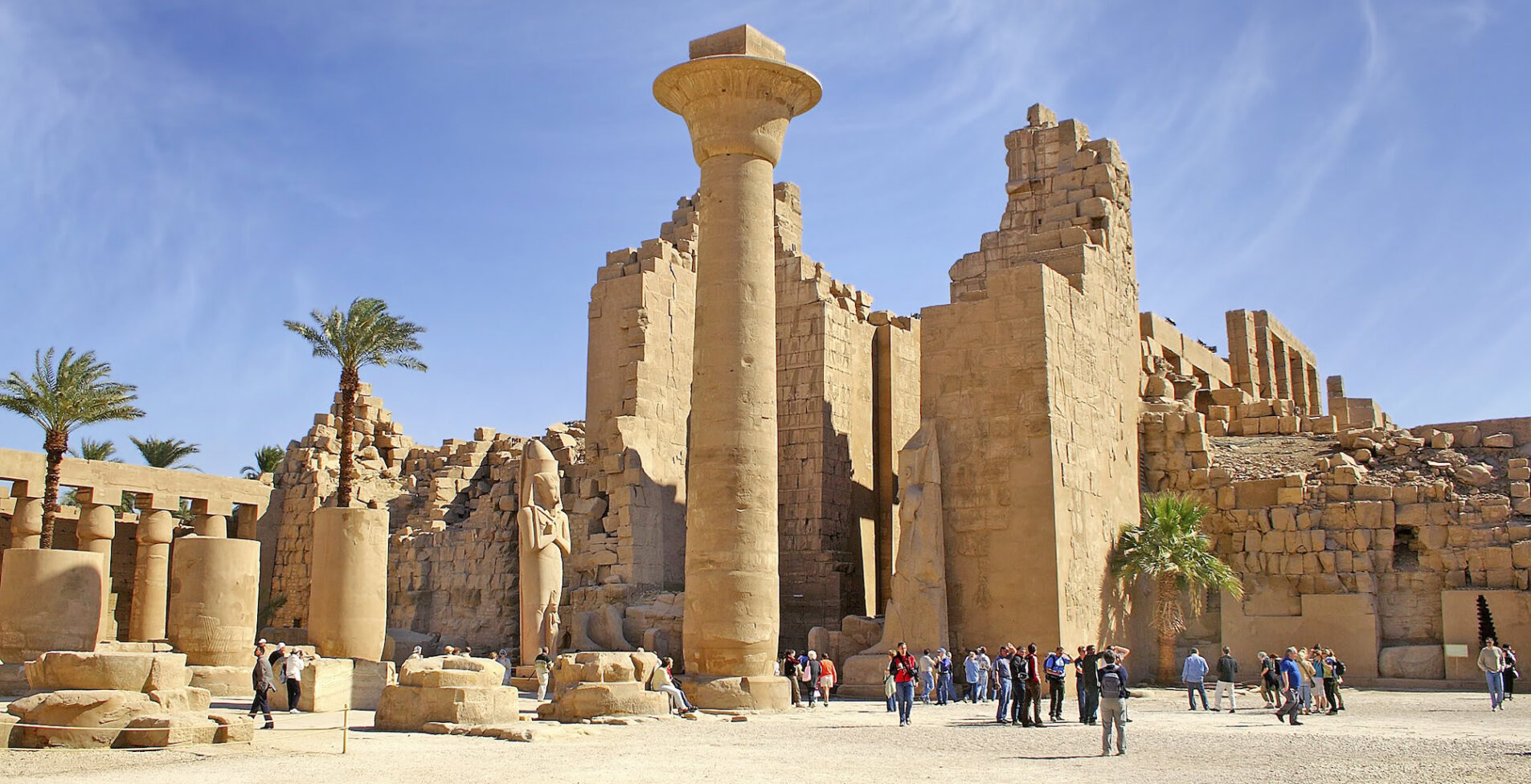
Karnak Temple’s Great Hypostyle Hall contains 134 massive columns creating dramatic shadows and perspective opportunities. Wide-angle lenses capture the scale, while detail shots highlight intricate hieroglyphic carvings.
Budget Planning
The cost of a 7-day Egypt tour depends on which itinerary you choose, your hotel category, the size of your party, and any add-ons. Because every Egypt Tours Plus tour is private and built around you, there is no fixed package price. A comfortable 4-star Cairo-and-Luxor tour sits at the more accessible end, while landmark 5-star hotels, internal flights, and Red Sea extensions raise the total.
Standard inclusions cover your private Egyptologist guide, personal driver, all major site entrance fees on your itinerary, internal flights, and 24/7 in-country support. Optional add-ons include the Abu Simbel half-day trip, entering the Great Pyramid, special-access tombs in the Valley of the Kings, and a sunrise hot air balloon flight over Luxor, all quoted separately.
The most accurate way to get a figure is to tell your Travel Concierge your dates, party size, and priorities. You will receive a tailored quote, typically within 1 to 12 hours, with no obligation to book.
Best Time to Visit
October through April provides ideal weather conditions with comfortable temperatures and minimal rainfall. December through February represents peak season with higher prices but perfect sightseeing weather.
Ramadan affects restaurant hours and some entertainment, though tourist sites maintain normal operations. We adjust itineraries accordingly while respecting local customs and traditions.
When 7 Days Isn’t the Right Fit
Seven days hits the sweet spot for the classic Cairo-Luxor-Aswan triangle plus Abu Simbel without a cruise. If you want to add a full 4-day Nile cruise on top, an 8-day Egypt tour is the natural next step. If your time is more limited, a 6-day Egypt tour still covers the triangle tightly, or a 5-day Egypt tour focuses on Cairo plus one southern stop. For the complete first-visit experience that includes Cairo, a full cruise, Abu Simbel, and either Alexandria or Red Sea time, look at 10-day Egypt tours.
Your 7-Day Egypt Tour, Designed Around You
Tell us your dates and what you most want to see, and we will design the itinerary around it. Whether you want the classic Cairo-Luxor-Aswan triangle, a focused Cairo-and-Luxor week with deeper time at each site, or a 7-day itinerary built around your specific interests, your dedicated Travel Concierge designs the trip around what matters to you. The private format means every choice is yours: the cities, the hotels, the pace, the optional extras.
We will send your first-draft itinerary within 1 to 12 hours, and we will keep refining it together until you are certain it is the trip you want.
Frequently Asked Questions
Seven days is the sweet spot for a first Egypt tour. It is the shortest length where the classic Cairo-Luxor-Aswan triangle plus Abu Simbel becomes genuinely comfortable rather than rushed, with proper time at each stop and a buffer for the unexpected.
A 7-day Egypt tour typically covers two to three days in Cairo for the Pyramids and the Grand Egyptian Museum, followed by Luxor’s temples and royal tombs, then Aswan with a half-day for Abu Simbel. The private format is what makes seven days work so well: your Egyptologist guide and personal driver handle every transfer, internal flight, and entry, so the time goes to the experiences.
What seven days does not fit comfortably is a full Nile cruise on top. If a cruise is a priority, an 8-day Egypt tour is the better length.
A typical 7-day Egypt itinerary spends two to three days in Cairo for the Giza Pyramids, the Great Sphinx, the Grand Egyptian Museum, and Islamic Cairo’s medieval streets and Khan El Khalili bazaar. From Cairo, a short 1 hour 15 minute domestic flight takes you to Luxor for two days among the temples and royal tombs.
Luxor covers Karnak Temple Complex and Luxor Temple on the east bank, then crosses the Nile to the Valley of the Kings, Hatshepsut’s mortuary temple, and the Colossi of Memnon on the west bank. From Luxor, either a flight or scenic drive brings you to Aswan for Philae Temple, the High Dam, and a felucca sail around Elephantine Island.
The final day is usually reserved for Abu Simbel as a half-day flight from Aswan, before returning to Cairo for your international departure.
The cost of a 7-day Egypt tour depends on which itinerary you choose, your hotel category, the size of your party, and any add-ons. Because every Egypt Tours Plus tour is private and built around you, there is no fixed package price. A comfortable 4-star Cairo-and-Luxor tour sits at the more accessible end, while landmark 5-star hotels, internal flights, and Red Sea extensions raise the total.
Optional add-ons such as entering the Great Pyramid, special-access tombs in the Valley of the Kings, the Abu Simbel half-day trip, or a sunrise hot air balloon flight over Luxor are quoted separately. The most accurate way to get a figure is to tell your Travel Concierge your dates, party size, and priorities. You will receive a tailored quote, typically within 1 to 12 hours, with no obligation to book.
A 7-day Egypt tour covers the classic Cairo-Luxor-Aswan triangle plus Abu Simbel comfortably, without a Nile cruise. It is the right choice when you want to focus on the monuments and cities, or when your dates are limited to a single week.
An 8-day Egypt tour adds one critical extra day, which lets a full 4-day Nile cruise fit between Luxor and Aswan on top of the same triangle. The cruise changes the trip considerably: shore excursions to Edfu and Kom Ombo, sun deck time on the river, and waking up at a different temple each morning.
If a Nile cruise is on your wish list at all, eight days is the better length. If you would rather focus your time on the cities and the monuments without spending two or three days on the water, seven is perfect.
The standard Nile cruise is four days and three nights between Luxor and Aswan, calling at the temples of Edfu and Kom Ombo. On a 7-day Egypt tour, fitting that full cruise on top of Cairo is genuinely tight, since the cruise alone takes up more than half the trip and leaves little room for Cairo’s Pyramids and the Grand Egyptian Museum at a comfortable pace.
For a 7-day itinerary, the most popular shape is the classic Cairo-Luxor-Aswan triangle plus Abu Simbel without a cruise, using domestic flights between the cities. If a Nile cruise is a priority, your Travel Concierge will recommend extending to an 8-day Egypt tour so the full 4-day cruise segment fits without crowding out Cairo.
Yes, and it is the standard way most travellers see Abu Simbel on a 7-day itinerary. The usual routing is an early morning flight from Aswan, with the temples reached in around 45 minutes and the return flight back to Aswan by early afternoon. A road convoy is also possible, taking around three hours each way.
The temples of Ramesses II and his wife Nefertari were relocated 65 metres uphill in the 1960s to escape the rising waters of Lake Nasser, and they remain the most ambitious monuments any pharaoh ever built. On a 7-day Egypt tour with Aswan included, the half-day for Abu Simbel fits naturally into the schedule.
Yes. A tourist visa is required regardless of how long your stay is. Most travellers, including US, UK, EU, Canadian, Australian, and many Latin American nationals, can collect a 30-day tourist visa on arrival at Cairo International Airport for $25 USD in cash. An e-visa is also available in advance through the official Egyptian government portal, which some travellers prefer for a smoother arrival.
Your passport should be valid for at least six months beyond your travel dates, with a blank page for the stamp. Because requirements can vary by nationality, your Travel Concierge will confirm the right option for your passport before you travel, so there are no surprises on arrival.
Egypt’s mainstream tourist regions, including Cairo, Luxor, Aswan, Abu Simbel, and the Red Sea coast, have welcomed international visitors without significant incident for many years and operate under coordinated tourist police presence. The one region we do not tour is North Sinai. The rest of the country sits well within standard travel advisories from US, UK, EU, Canadian, and Australian governments.
A private guided tour adds real practical value on top of that baseline. You skip the navigation, the negotiation, and the language friction, and you have someone on your side for the everyday small situations independent travellers sometimes struggle with. Most travellers find Egypt noticeably more comfortable than they expected.
The most comfortable window for a 7-day Egypt tour runs from October through April, when daytime temperatures across Cairo, Luxor, and Aswan sit between 20 and 25°C and evenings are cool and pleasant. This is the easiest period for an active week, with long stretches of comfortable outdoor sightseeing at the Pyramids and temples.
December and January bring the finest weather and the largest crowds. The shoulder months of October, November, March, and April offer an excellent balance of mild conditions and thinner queues. Summer, from May to September, regularly exceeds 35°C in Upper Egypt and can reach 40°C in Aswan, so early starts become essential. On a private tour, your guide manages the daily timing around the heat whatever the season.
Pack lightweight, breathable clothing that covers shoulders and knees for temple and mosque visits, plus a light jacket for cool evenings and air-conditioned interiors. Comfortable walking shoes are essential, since you will cover significant distances on uneven sandy or stepped surfaces at the archaeological sites.
A wide-brimmed hat, sunglasses, and high-SPF sunscreen are necessary year-round. Bring swimwear if your hotels have pools, plus a power bank for cameras and phones during long days at the sites. Egypt’s electrical outlets use the European two-pin standard, so most travellers bring a universal adapter.
A 7-day Egypt tour involves moderate activity, typically a few kilometres of walking a day across sites with uneven, sandy, or stepped surfaces, plus some early starts to beat the heat and crowds. Temple complexes such as Karnak cover large areas, and the Valley of the Kings involves walking down into the tombs. None of it is strenuous for travellers of average fitness.
A few optional extras are more demanding. Entering the Great Pyramid means a stooped climb through low, steep passages and is not suited to anyone with claustrophobia or knee or back problems. The private format lets you set the pace, rest when you like, and skip anything that does not suit you. If anyone in your party has mobility considerations, tell your Travel Concierge in advance so the itinerary can be paced and adapted accordingly.
Seven days is the most popular length for first-time visitors to Egypt, precisely because it covers the essentials without overwhelming. A 7-day Egypt tour delivers the Pyramids, the Great Sphinx, the Grand Egyptian Museum, Karnak, the Valley of the Kings, Hatshepsut’s temple, Philae, and Abu Simbel, which is the classic introduction to ancient Egypt.
For a first trip, the private format makes a real difference. Your Egyptologist guide provides the historical context that turns a wall of hieroglyphs into a story, while your driver handles the city traffic and the airport transfers. You spend your limited time experiencing Egypt rather than working out how to get around it.
For most 7-day Egypt tours, six to eight weeks is comfortable for arranging visas, hotels, internal flights, and any optional extras. Peak season from October through March books up earlier, and the best hotels, the most popular Luxor balloon flights, and special-access tombs can sell out four to six months ahead during the busiest weeks.
Booking earlier also gives you more time to refine the itinerary with your Travel Concierge through the usual two to four rounds of revisions, so the final plan genuinely fits what you want to see. If your dates are fixed around limited annual leave, the sooner you start the conversation, the more options you will have.
Yes, completely. You choose the focus, whether that is the full Cairo-Luxor-Aswan triangle, a deeper Cairo-and-Luxor week, or a 7-day itinerary built around specific interests such as photography, family travel, or honeymoon, along with your hotel category, the pace, and the order of each day.
You can add a sunrise balloon flight in Luxor, entry to the Great Pyramid, special-access tombs in the Valley of the Kings, a felucca sail in Aswan, or swap a city day for a Red Sea night. Your Travel Concierge builds the itinerary with you and refines it through the usual two to four rounds of revisions. There is no commitment until you are 100% satisfied with the plan.
Design Your Custom Tour
Explore Egypt your way by selecting only the attractions you want to visit