Sail Into Nubian Silence
Lake Nasser Cruises
Egypt keeps its quietest wonders in the far south. A Lake Nasser cruise sails the vast reservoir between Aswan and Abu Simbel, where the rescued temples of Nubia stand along empty shorelines and Ramses II’s great monument waits at the end of the water. Four- to five-day sailings, October through April, on 5-star ships or a traditional dahabiya.
Your Guide to Lake Nasser Cruises
Everything you need to plan a sailing between Aswan and Abu Simbel
A Lake Nasser cruise sails the reservoir behind the Aswan High Dam, calling at monuments most Egypt travelers never see. The route runs between Aswan and Abu Simbel — four nights sailing north, five nights sailing south — through a landscape of rescued Nubian temples that were relocated stone by stone in the 1960s to save them from the rising water. It’s a slower, quieter, more remote cruise than anything on the standard Nile, and the season is short: October through April only.
Table of Contents
The Route: Between Aswan and Abu Simbel
Two directions, three or four nights, one remote destination
Every Lake Nasser cruise sails between Aswan and Abu Simbel — the two settlements at either end of the reservoir. The difference between the sailings comes down to direction and length: four nights heading south from Aswan, or three nights heading north from Abu Simbel. Neither is objectively better, but the choice shapes your Egypt trip.
Aswan to Abu Simbel (Four Nights)
The four-night southbound sailing is the more common Lake Nasser cruise. You board in Aswan, spend the first night at the pier, and sail south over the next four days, calling at Kalabsha, Wadi el-Seboua, Amada, and Kasr Ibrim before arriving at Abu Simbel on the final morning. The pacing is gradual, with sightseeing spread across four full days and evenings spent quietly on board.
This direction works well if you’re already ending an Egypt tour in Aswan and want to continue south rather than fly back north. It also positions Abu Simbel as the trip’s culmination — you approach it slowly, learn about the smaller rescued temples along the way, and arrive at Ramses II’s monument with the full context of what the 1960s rescue project achieved.
Abu Simbel to Aswan (Three Nights)
The three-night northbound sailing starts at Abu Simbel and sails toward Aswan. You embark at the Abu Simbel pier — typically after a morning at the temples themselves — and cruise north over three nights, calling at the same monuments in reverse: Amada, Wadi el-Seboua, and Kalabsha, before disembarking in Aswan.
This direction works well if you’re planning to combine Lake Nasser with a Nile cruise or a stay in Aswan afterward. Starting at Abu Simbel means the trip’s most iconic monument is your first stop rather than your last — a strong opening that sets the tone. Ending in Aswan makes onward travel simpler: Aswan has more hotels, better flight connections, and a natural bridge to standard Nile cruises heading north toward Luxor.
Which Direction Should You Choose?
The direction depends on how Lake Nasser fits into your larger Egypt plan. If Lake Nasser is a standalone trip or the finale of a longer tour, sail south from Aswan and arrive at Abu Simbel as the culmination. If you’re combining Lake Nasser with a Nile cruise, a Cairo tour, or Red Sea time afterward, sail north from Abu Simbel and end in Aswan for easier onward connections.
Both directions cover the same monuments and offer the same on-board experience. The only real differences are pacing (five nights allows one extra day of relaxation) and where you start and end. Our Travel Concierge can walk you through which direction works best given the rest of your itinerary.
The Season: October Through April
Lake Nasser cruises operate only from October through April. Summer temperatures in southern Egypt regularly exceed 40°C, with peak months in July and August reaching 45°C or higher — conditions that make on-board comfort and site visits impractical. The ships themselves stop sailing during summer and resume in the fall.
The best months for a Lake Nasser cruise are November through February, when daytime temperatures range from 22°C to 28°C and evenings are cool enough for a light jacket on deck. October and April are still comfortable but noticeably warmer, and the shoulder-season pricing is often slightly better. Book early for Christmas, New Year, and Easter sailings — these fill quickly and often need to be reserved four to six months ahead.
The Rescued Nubian Monuments
What you’ll see along the way, and the story of how it was saved
When the Aswan High Dam was built between 1960 and 1970, the rising reservoir threatened to submerge every ancient monument in Egyptian Nubia. UNESCO launched the largest archaeological rescue operation in history: more than twenty temples were dismantled, moved, and rebuilt on higher ground, with some fifty countries contributing engineers, archaeologists, and funding. The monuments you visit on a Lake Nasser cruise are the result: rescued temples standing on new shorelines, in some cases just meters above the water that would have swallowed them. They’re listed here in southbound sailing order; northbound cruises visit them in reverse.
Kalabsha and Beit el-Wali
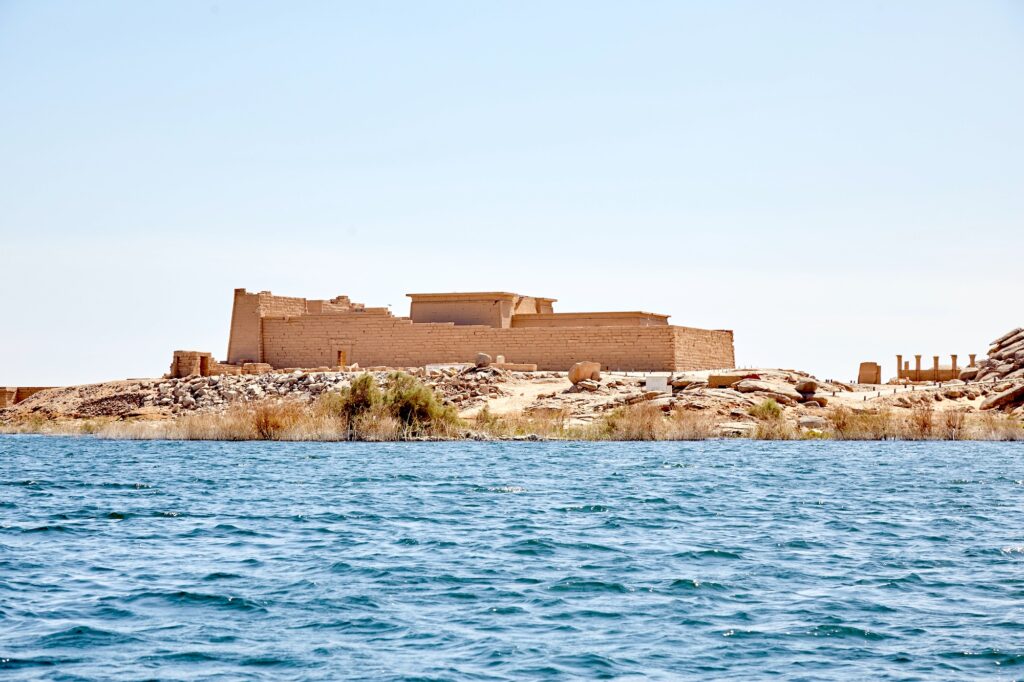
The first stop after leaving Aswan is New Kalabsha, where two rescued monuments now stand side by side. The Temple of Kalabsha is the largest free-standing temple of Egyptian Nubia, built around 30 BC under Roman rule and dedicated to the Nubian sun god Mandulis. It was dismantled into 13,000 blocks and rebuilt here with German assistance. Beside it stands Beit el-Wali, a small rock-cut temple built by Ramesses II early in his reign and moved by a Polish archaeological team. Its interior reliefs, showing the pharaoh’s campaigns against Nubians and Libyans, retain some of the brightest surviving colors in Nubia.
Wadi el-Seboua and Dakka
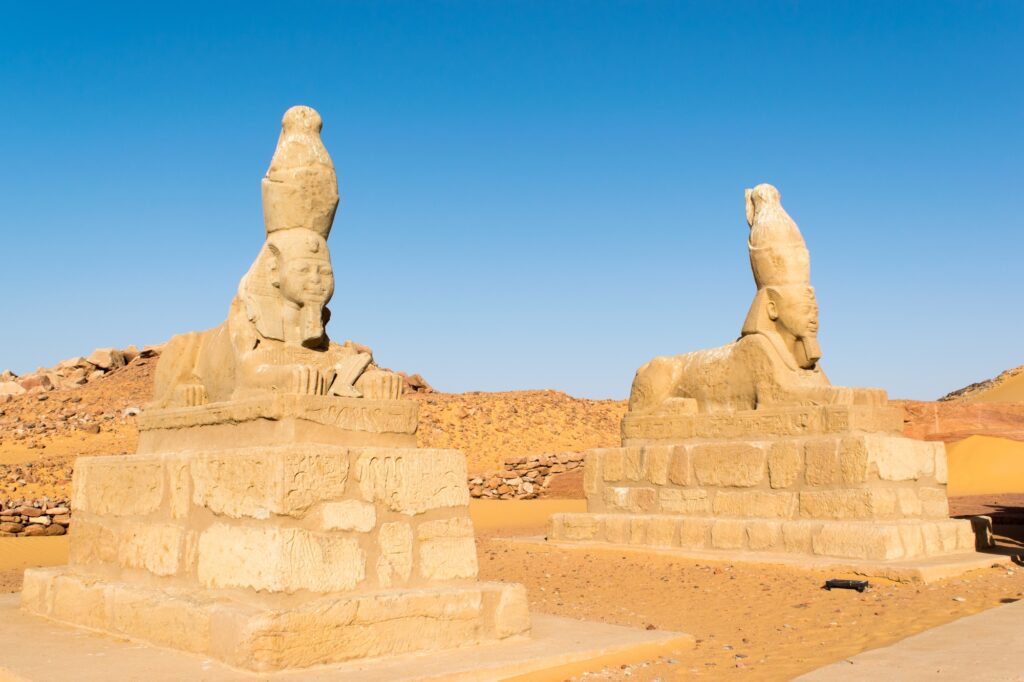
Wadi el-Seboua means “Valley of the Lions,” named for the avenue of sphinxes that leads to its temple, one of several Ramesses II built in Nubia. The temple was moved about four kilometers west of its original site. Sharing the new location is the Temple of Dakka, a Greco-Roman structure dedicated to Thoth, begun in the third century BC by the Nubian king Arqamani in collaboration with Ptolemy IV, a rare example of a Nubian ruler building in the Egyptian style. Dakka later served as a Roman fortress and then a Christian church before falling silent.
Amada, Derr, and the Tomb of Pennut
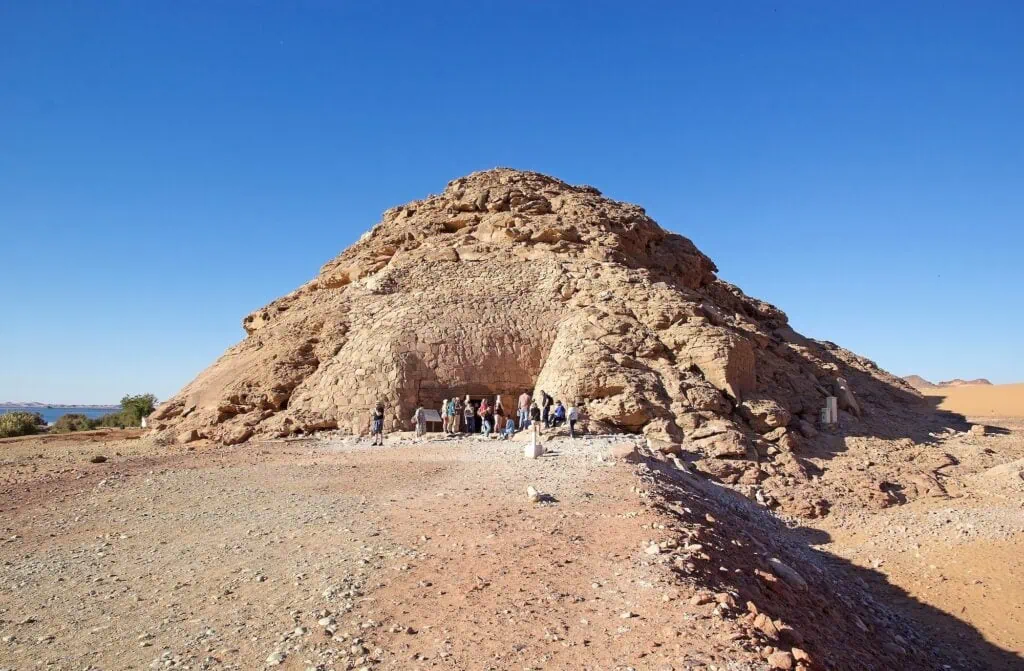
The Temple of Amada is the oldest Egyptian temple in Nubia, built by Thutmose III in the 18th Dynasty and extended by his successors. Its rescue was unique: the temple’s painted plaster reliefs were too fragile to survive dismantling, so French engineers placed the entire structure on three rail tracks and moved it 2.6 kilometers to higher ground in one piece. The Amada site also holds the rock-cut Temple of Derr, built by Ramesses II, and the Tomb of Pennut, a Nubian viceroy under Ramesses VI. It is the only decorated private tomb rescued from Lower Nubia.
Kasr Ibrim, the One That Stayed
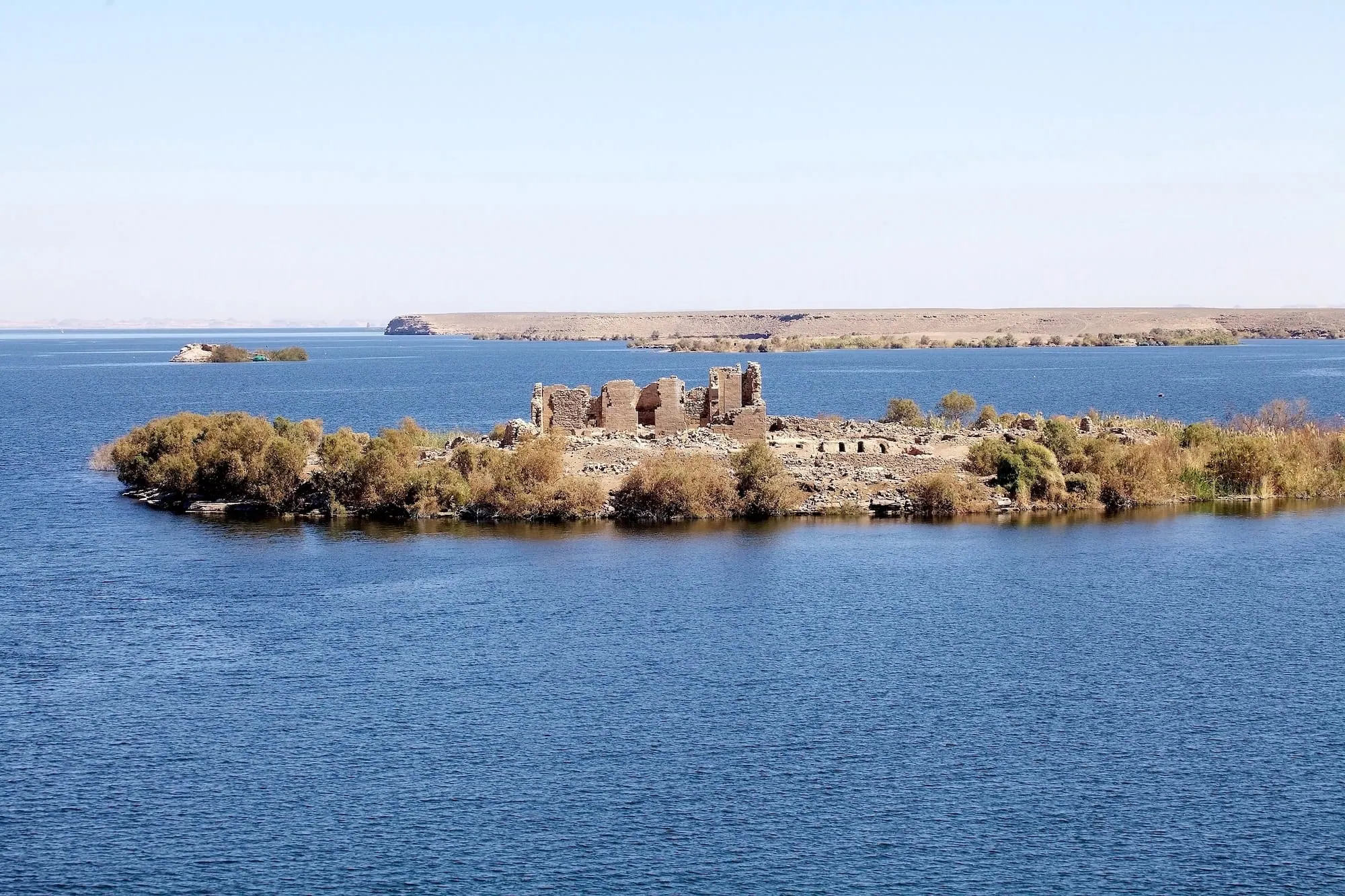
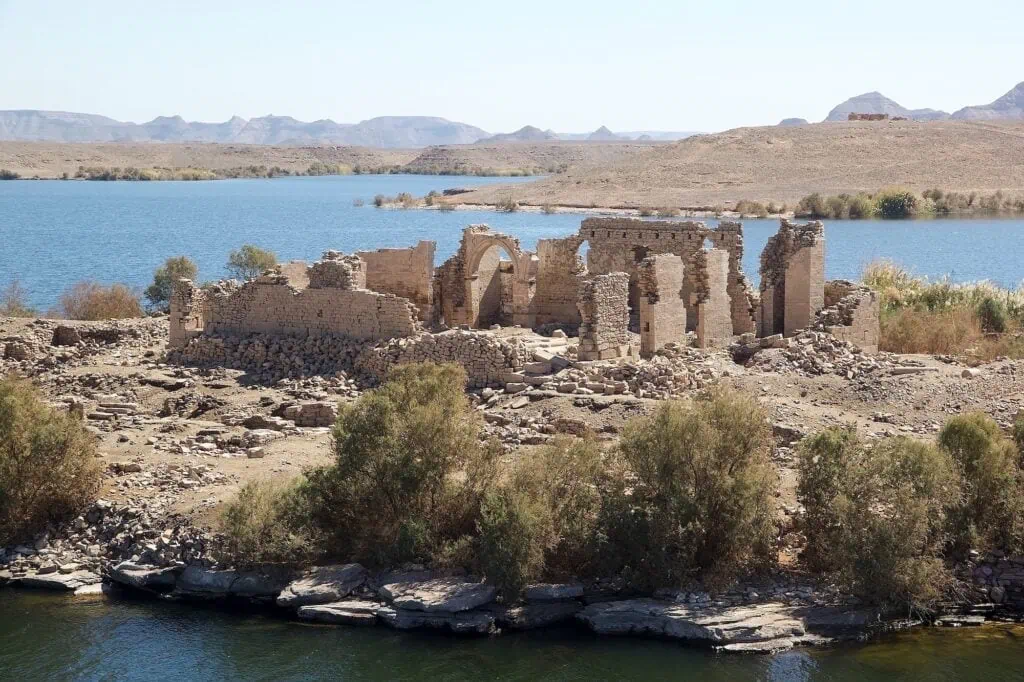
Kasr Ibrim is the exception on Lake Nasser: the only major site still standing in its original location. Once a fortress city on a high bluff overlooking the Nile valley, it was continuously inhabited for nearly three thousand years, from around 1000 BC until 1813, serving Egyptians, Kushites, Romans, Christians, and Ottomans in turn. The rising lake turned the bluff into an island, and the site is too fragile for visitors. Cruise ships pause offshore for around fifteen minutes so passengers can view and photograph it from the deck.
Abu Simbel, the Destination
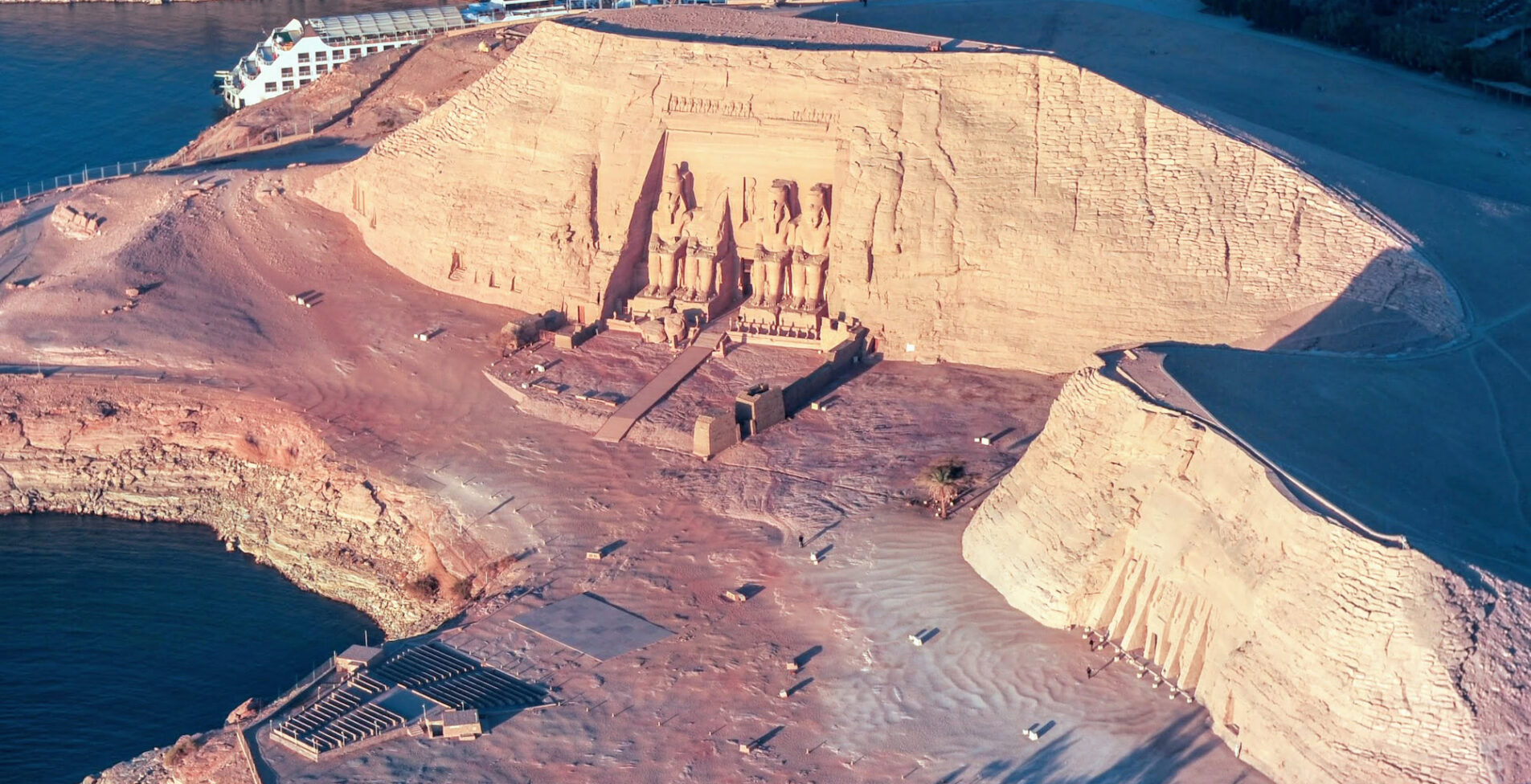
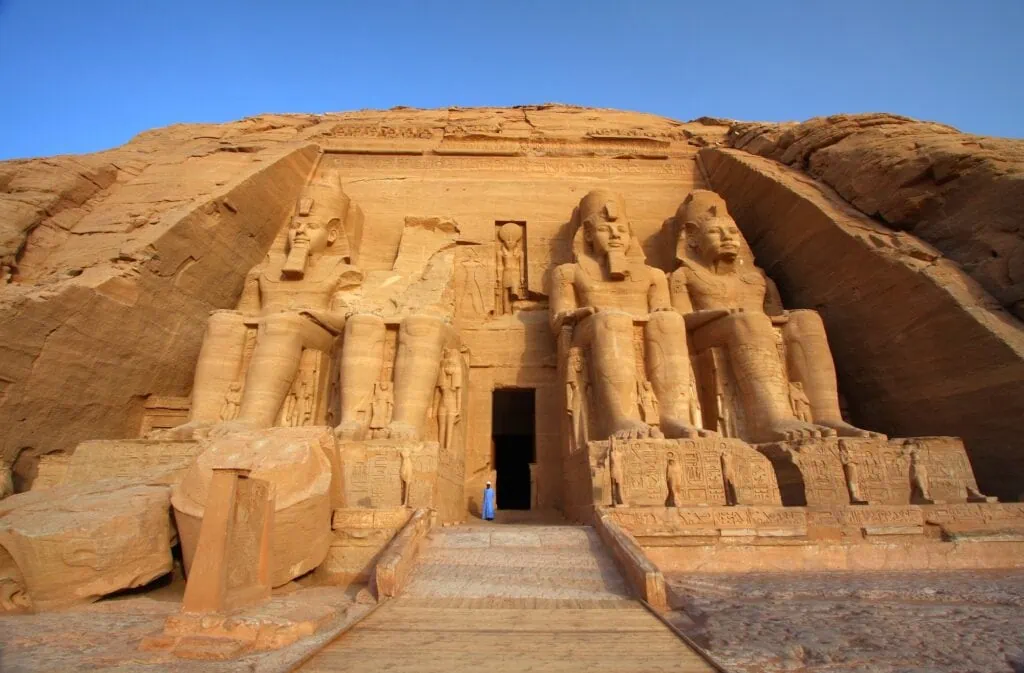
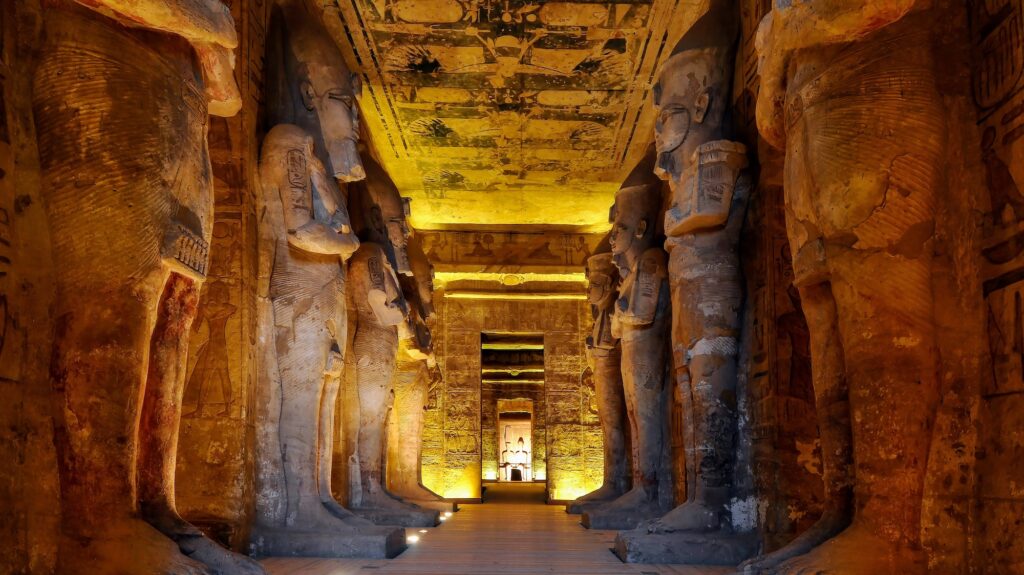
Abu Simbel is where every Lake Nasser cruise begins or ends: two rock-cut temples built by Ramesses II in the 13th century BC, fronted by four colossal seated statues of the pharaoh, each around 20 meters tall. The Great Temple is aligned so that twice a year, on February 22 and October 22, the rising sun reaches the sanctuary deep inside the mountain and illuminates the statues of the gods. The 1964–68 relocation cut both temples into more than a thousand blocks and rebuilt them 65 meters higher inside an artificial mountain. Seeing them from the water, the way ancient travelers did, remains the strongest argument for the cruise itself.
Your Ship: 5-Star or Dahabiya
Three vessels, two formats, the same rescued monuments
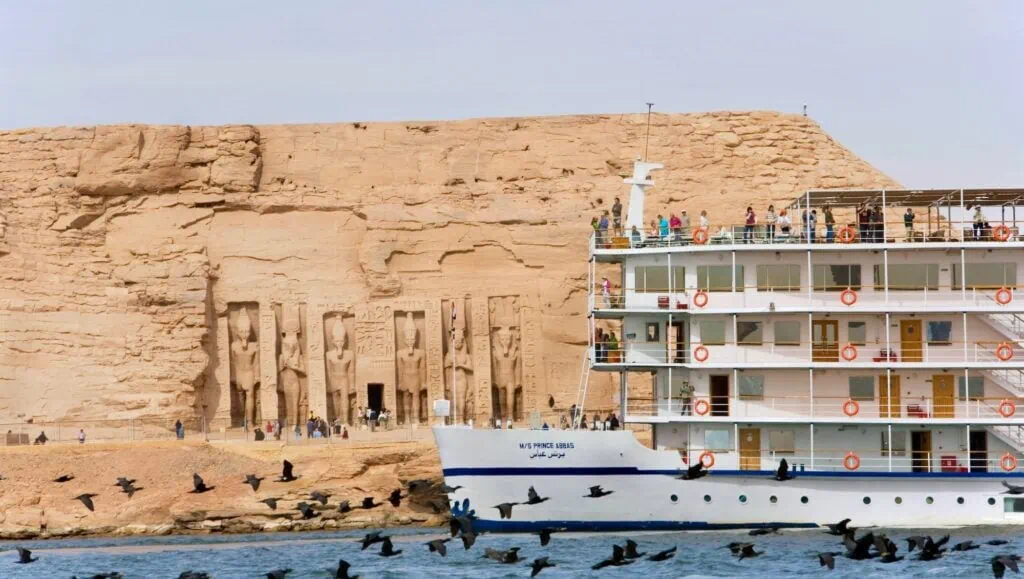
Only a handful of vessels sail Lake Nasser at all, far fewer than the hundreds on the main Nile. Our collection covers the two formats worth choosing between: two 5-star cruise ships, the Movenpick Prince Abbas and the Steigenberger Omar El Khayam, and one traditional dahabiya, the Sai.
The 5-Star Ships
The Movenpick Prince Abbas and the Steigenberger Omar El Khayam are purpose-built Lake Nasser cruisers offering hotel-level comfort in one of Egypt’s most remote landscapes. Both carry full facilities: restaurant dining, bars, generous sun decks, and evening entertainment, including a traditional Nubian show on board. The Steigenberger adds a swimming pool; the Prince Abbas answers with a steam bath.
Days on board follow a relaxed rhythm: sightseeing in the morning, sailing through the afternoon, dinner and quiet evenings on the water. Cabins are hotel-standard with air conditioning and en-suite bathrooms, and the upper decks give the long sailing stretches their purpose. The emptiness of Lake Nasser is best watched from a deck chair.
For most travelers, the 5-star ships are the natural choice: the comfort is genuine, the pacing is unhurried, and the contrast between the remote landscape and the service on board is part of the experience.
The Dahabiya
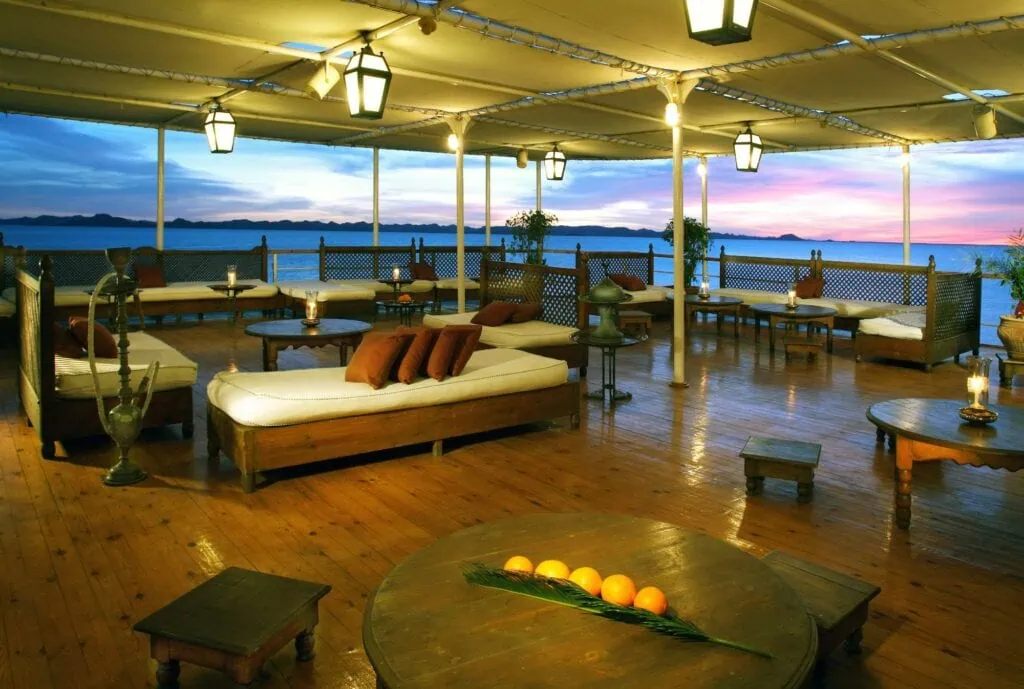
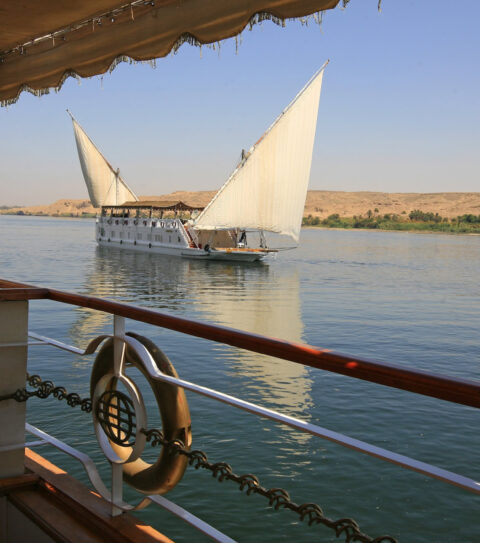
The Sai is a traditional twin-masted dahabiya, the same vessel type that carried travelers up the Nile in the nineteenth century, adapted for the lake. With only a handful of cabins, it carries a fraction of the guests of the larger ships. There is no pool, no stage show, and no crowd. That is the point.
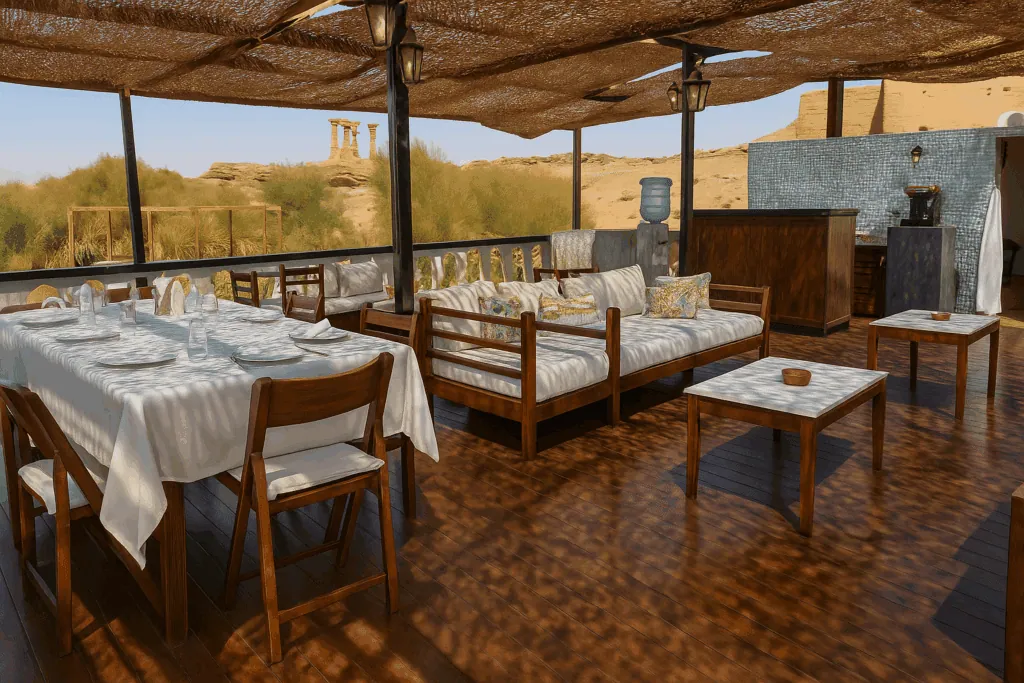
A dahabiya suits the lake unusually well. Lake Nasser’s defining quality is silence: empty shorelines, still water, and skies without light pollution. A small vessel keeps you closer to all of it. Evenings are quiet, with dinner on deck and the kind of darkness that makes the stars feel close.
The Sai sails the same route and visits the same monuments as the 5-star ships, in both directions. For couples, photographers, and travelers who chose Lake Nasser precisely for its remoteness, the dahabiya is the format that matches the landscape.
Which Should You Choose?
The route, the monuments, and the season are identical across all three vessels. The choice is about the kind of days you want on the water.
Choose a 5-star ship if you want full facilities, a pool or steam bath, evening entertainment, and a larger social setting. Families and first-time Egypt travelers tend to prefer this format. Choose the dahabiya if intimacy and quiet matter more than amenities, and if Lake Nasser appeals to you precisely because so few people go there.
There is no wrong answer, and prices across the three vessels are closer than you might expect. If you’re unsure, our Travel Concierge can walk you through cabin layouts, current availability, and which vessel fits your dates.
How Lake Nasser Fits Into a Larger Egypt Trip
Most travelers pair the lake with something else — here’s what works
Few travelers fly to southern Egypt for Lake Nasser alone. The lake sits at the natural end point of a classic Egypt route, which makes it easy to attach to a Nile cruise, a Cairo stay, or Red Sea time afterward. These are the four combinations that work best.
Combined with a Nile Cruise
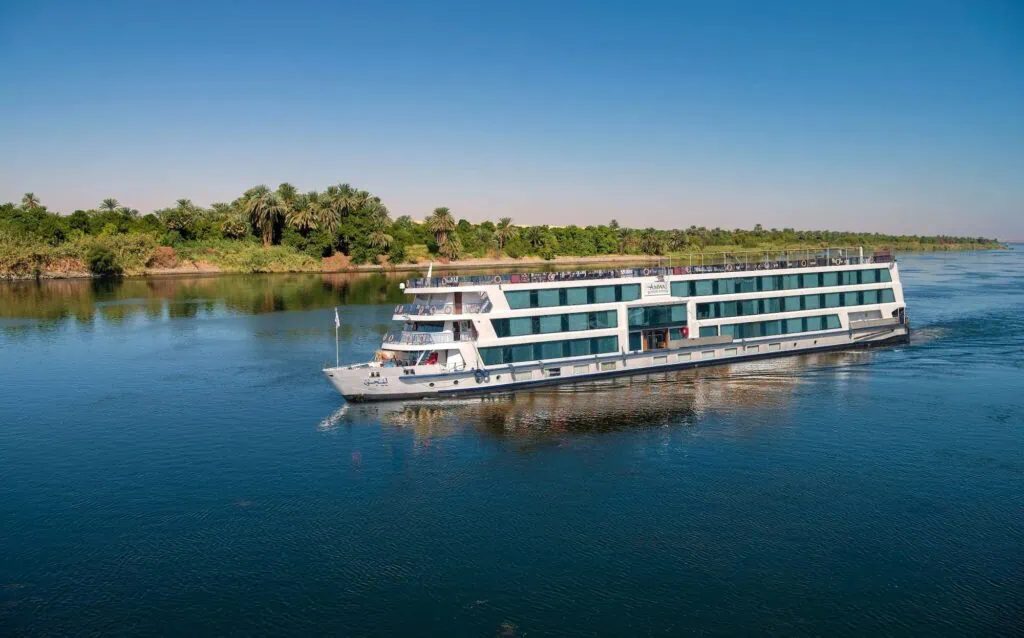
The classic pairing, and the one our 12-day itinerary is built around: Cairo first, then a standard Nile cruise from Luxor to Aswan, then a Lake Nasser sailing onward to Abu Simbel. Two cruises, seven nights afloat, and the two great monument corridors of Egypt in a single trip.
The geography does the work for you. A Nile cruise ends in Aswan, which is exactly where the southbound Lake Nasser sailing begins. You step off one vessel, spend a night or two in Aswan if you wish, and board the next. The full guide is at Egypt Tours with Nile Cruise.
Combined with Cairo
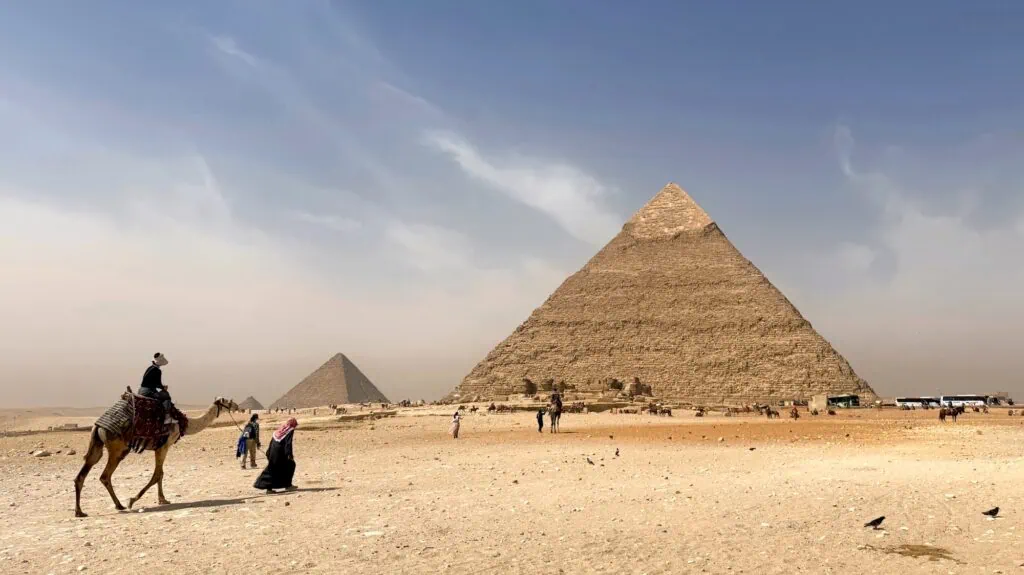
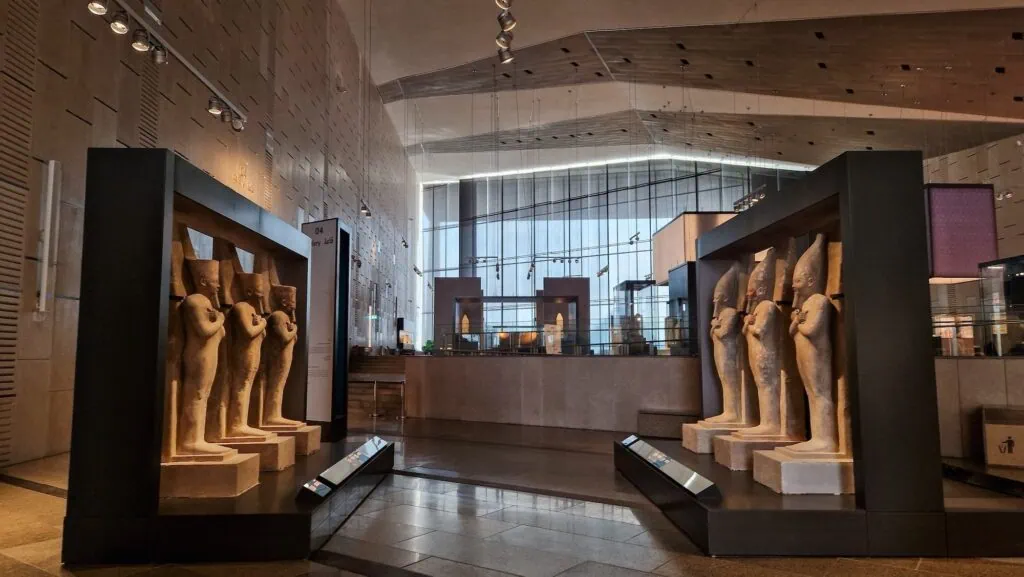
Cairo and Lake Nasser make a compact trip with strong contrast: the density of the capital first, then the emptiest landscape in Egypt. A typical structure is two or three days in Cairo covering the Pyramids, the Grand Egyptian Museum, and Old Cairo, then a flight south to Aswan or Abu Simbel for the sailing.
Domestic flights connect Cairo to both ends of the lake. Flying into Abu Simbel and sailing north to Aswan is the smoother version, since Aswan’s onward connections are better. Browse city options at Cairo Tours.
Combined with the Red Sea
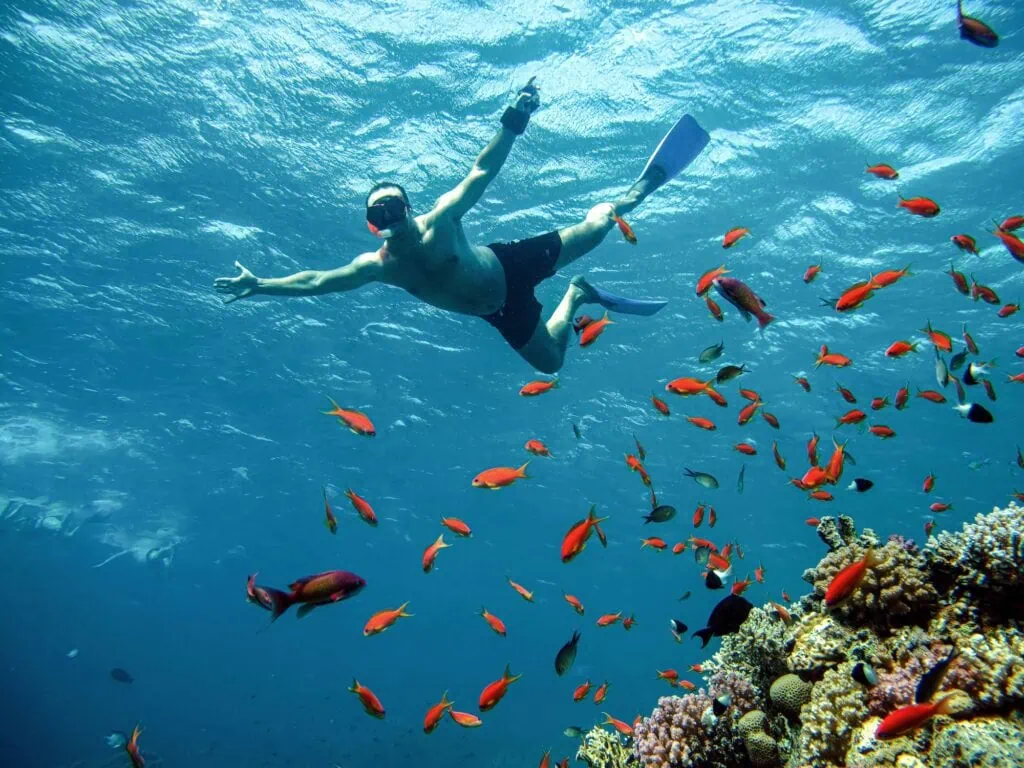
Lake Nasser and the Red Sea pair a monument cruise with beach time, and the order matters: cruise first, coast second. After disembarking in Aswan, a drive or connecting flight brings you to Marsa Alam or Hurghada for several nights of resort time, snorkeling, or diving before the flight home.
It’s the right structure for travelers who want the trip to wind down rather than up: history and early mornings first, then nothing but reef and pool. The full guide is at Cairo and Red Sea Holidays.
Lake Nasser on Its Own
A standalone Lake Nasser cruise makes sense for one group above all: returning Egypt travelers. If you’ve already done Cairo and the classic Nile cruise, the lake is the natural next chapter — the monuments you didn’t see, on the water you didn’t sail.
As a standalone trip it’s short and simple: fly into Aswan or Abu Simbel, sail three or four nights, fly out the other end. Add a night in Aswan on either side and the whole trip fits inside a week.
How We Build Your Lake Nasser Cruise
A short conversation, a tailored plan, and no pressure to commit
- 1. Tell us your dates and your party. Send us your rough travel window, the number of travelers, and whether Lake Nasser is the whole trip or one part of a longer Egypt itinerary. If you already know your preferred direction or vessel, mention it — if not, that’s exactly what the first draft is for.
- 2. We send a first proposal within 1 to 12 hours. Your Travel Concierge checks which sailings fall inside your window, across all three vessels and both directions, and sends a draft built around the best match: cruise dates, cabin category, connecting flights, any nights in Aswan or Cairo, and a clear total price. Typically this arrives within an hour or two during business hours, up to 12 hours evenings and weekends.
- 3. We refine until it’s right. Most Lake Nasser plans go through 2 to 4 rounds of adjustment. Swap the 5-star ship for the dahabiya, shift the trip a week to catch a different departure day, add a Nile cruise before or Red Sea days after, upgrade the cabin. Because departures are weekly rather than daily, small date shifts sometimes open better options — your Concierge will flag these rather than wait for you to ask.
- 4. You confirm only when ready. Once the plan matches what you want, we finalize with a deposit and confirm your cabin. You receive the full day-by-day itinerary, flight details, and meeting instructions for embarkation. From there, everything on the ground is handled: airport pickup, transfers, and an Egyptologist guide on every shore excursion.
Ready to Sail Lake Nasser?
Send us your dates and we’ll match them to a sailing
Whether Lake Nasser is the finale of a full Egypt tour or a standalone escape to the quietest corner of the country, the process is the same: send us your travel window and party size, and our Travel Concierge replies with a tailored proposal within 1 to 12 hours.
No commitment, no pressure, just a clear itinerary and a transparent price, refined until it fits. Three vessels, two directions, one short season — and at the end of the water, Ramses II waiting in the Nubian silence.
Frequently Asked Questions
For travelers drawn to quiet and remoteness, yes. A Lake Nasser cruise reaches rescued Nubian temples that standard Nile cruises never see, ends (or begins) at Abu Simbel approached from the water, and sails a reservoir with almost no other traffic. If you’ve already done the classic Luxor to Aswan cruise, the lake is the natural next chapter.
A standard Nile cruise sails between Luxor and Aswan past temples, villages, and steady river traffic. Lake Nasser is a vast reservoir south of Aswan: empty shorelines, few vessels, and monuments rescued from the flooding in the 1960s. The Nile cruise is busier and more varied; the lake is slower, quieter, and more remote.
Four nights sailing south from Aswan to Abu Simbel, or three nights sailing north from Abu Simbel to Aswan. Both directions visit the same monuments. Our 12-day itinerary combines a classic Nile cruise with a Lake Nasser sailing for seven nights afloat in total.
October through April only. Summer temperatures in southern Egypt regularly exceed 40°C, so the vessels pause from May to September. The most comfortable months are November through February, with daytime temperatures of 22°C to 28°C. Christmas, New Year, and Easter sailings often need booking four to six months ahead.
Only a handful of vessels operate on the lake. Our collection covers the Movenpick Prince Abbas and the Steigenberger Omar El Khayam, both 5-star cruise ships, and the Sai, a traditional twin-masted dahabiya. All three sail the same route and visit the same monuments in both directions.
Kalabsha and Beit el-Wali near Aswan, Wadi el-Seboua and Dakka, then Amada, Derr, and the Tomb of Pennut, with a deck-side view of Kasr Ibrim before Abu Simbel. All except Kasr Ibrim were dismantled and rebuilt on higher ground during the UNESCO rescue operation of the 1960s.
No. Kasr Ibrim is the only major site still in its original location, now an island too fragile for visitors. Ships pause offshore for around fifteen minutes so passengers can view and photograph the fortress from the sun deck.
Yes. Every shore excursion is included, with a licensed Egyptologist guide accompanying you at each site. Transfers between the airport or railway station and the ship are also included, in modern air-conditioned vehicles. Meals on board follow full board: breakfast, lunch, and dinner on sailing days.
Light, breathable clothing for warm days, plus a jacket or sweater for cool evenings on deck, especially November through February. Comfortable walking shoes for uneven ground at the temple sites, sun protection, and a camera or binoculars for Kasr Ibrim and the shoreline. Evenings on board are informal.
Yes, though with a caveat: Lake Nasser is one of the most remote areas of Egypt, and connectivity weakens along the lake, particularly between Wadi el-Seboua and Abu Simbel. Treat the cruise as a chance to be mostly offline, with Wi-Fi available rather than guaranteed fast.
Easily, and most travelers do. The classic structure is Cairo, then a Nile cruise from Luxor to Aswan, then Lake Nasser onward to Abu Simbel. Red Sea days at Marsa Alam or Hurghada work well after disembarking in Aswan. Our Travel Concierge builds the connecting flights and hotels around the sailing dates.
Design Your Custom Tour
Explore Egypt your way by selecting only the attractions you want to visit