Common Egyptian Phrases – Unlocking the Pharaoh’s Tongue
Need to connect with locals during your Egypt adventure?
Learning common Egyptian phrases transforms your travel experience from tourist-level interactions to meaningful conversations with taxi drivers, shopkeepers, and everyday Egyptians. Whether you’re bargaining in Khan el-Khalili bazaar or asking for directions to the pyramids, these essential expressions open doors to authentic cultural exchanges. Egyptian Arabic differs from standard Arabic taught in schools, making these colloquial phrases your key to real communication.
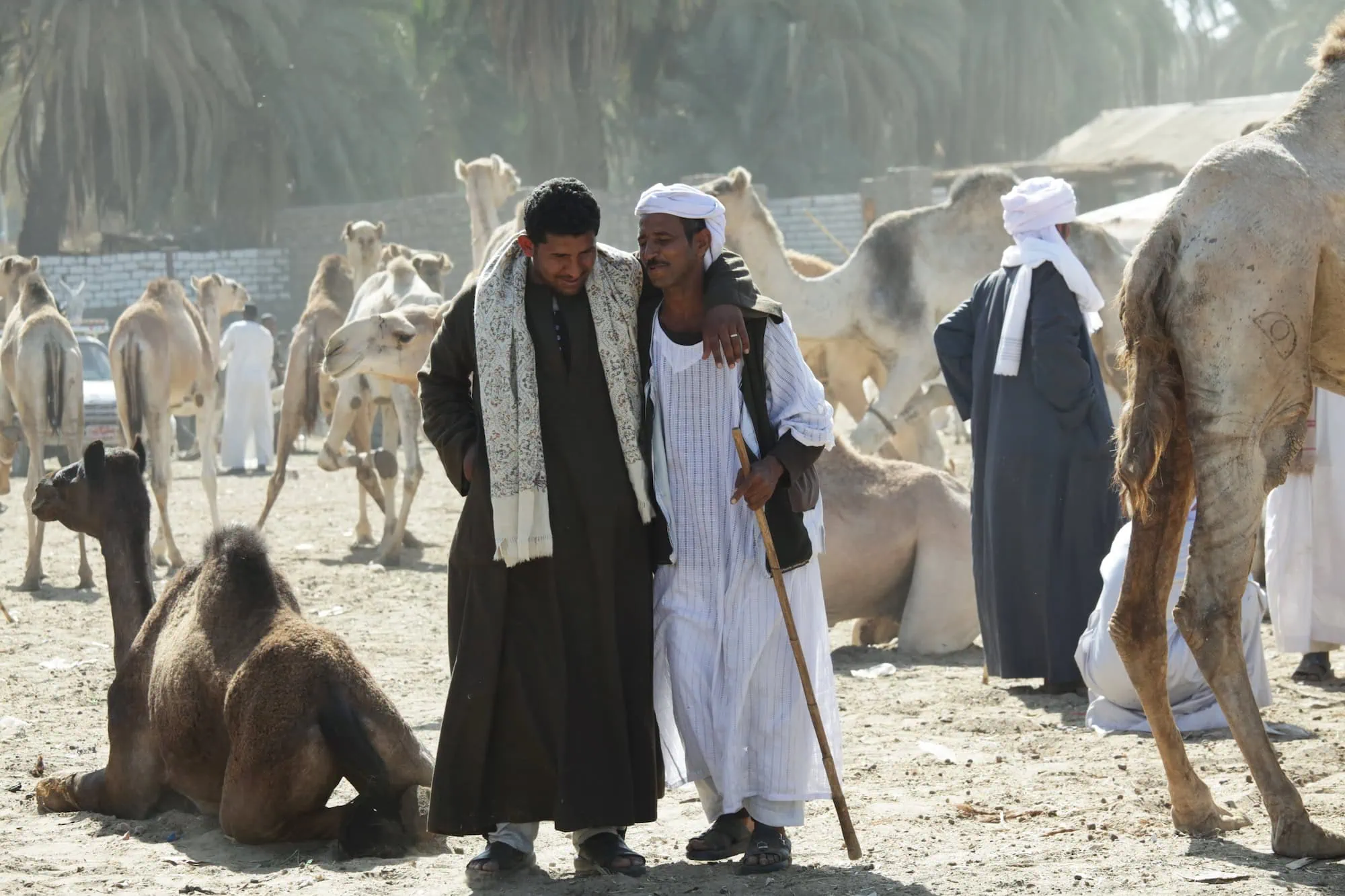
Mastering just a dozen core phrases dramatically improves how locals respond to you. We’ll show you the pronunciation, context, and cultural nuances that make each expression effective.
Basic Greetings and Politeness Phrases
Starting conversations with proper greetings sets a respectful tone that Egyptians appreciate deeply.
Essential Hello and Goodbye Expressions
“Salaam aleikum” (sah-LAHM ah-LAY-koom) serves as your universal greeting meaning “peace be upon you.” Locals respond with “wa aleikum salaam” (wah ah-LAY-koom sah-LAHM). This traditional greeting works in any setting, from formal hotel interactions to casual street encounters.
For casual situations, “ahlan wa sahlan” (AH-lan wah SAH-lan) means “welcome” or “hello” and creates instant warmth. You’ll hear this constantly from shopkeepers and restaurant staff who genuinely want to make you feel at home.
“Ma’is salama” (MAH-ah sah-LAH-mah) means goodbye, literally translating to “go with peace.” Use this when leaving shops, restaurants, or ending conversations with new Egyptian friends.
Showing Respect and Gratitude
“Shukran” (SHOOK-ran) covers basic thanks, but “shukran kteer” (SHOOK-ran k-TEER) means “thank you very much” and shows extra appreciation. Egyptians value politeness, so generous thanks always works in your favor.
When someone helps you significantly, “rabbina yikhallik” (rab-BEE-nah yih-KHAL-lik) means “may God keep you” and expresses deep gratitude. This phrase particularly resonates with older Egyptians and religious individuals.
“Ma’lish” (mah-LEESH) serves multiple purposes – “sorry,” “excuse me,” or “no problem.” Use it when accidentally bumping someone, getting attention, or accepting minor inconveniences with grace.
Practical Travel Communication
Real travel situations demand specific phrases that guidebooks often overlook.
Getting Around and Asking Directions
“Feen” (feen) means “where” and starts most location questions. “Feen el-hammam” (feen el-ham-MAHM) asks for the bathroom – essential knowledge for any traveler. “Feen el-metro” (feen el-MET-ro) helps you find Cairo’s subway system.
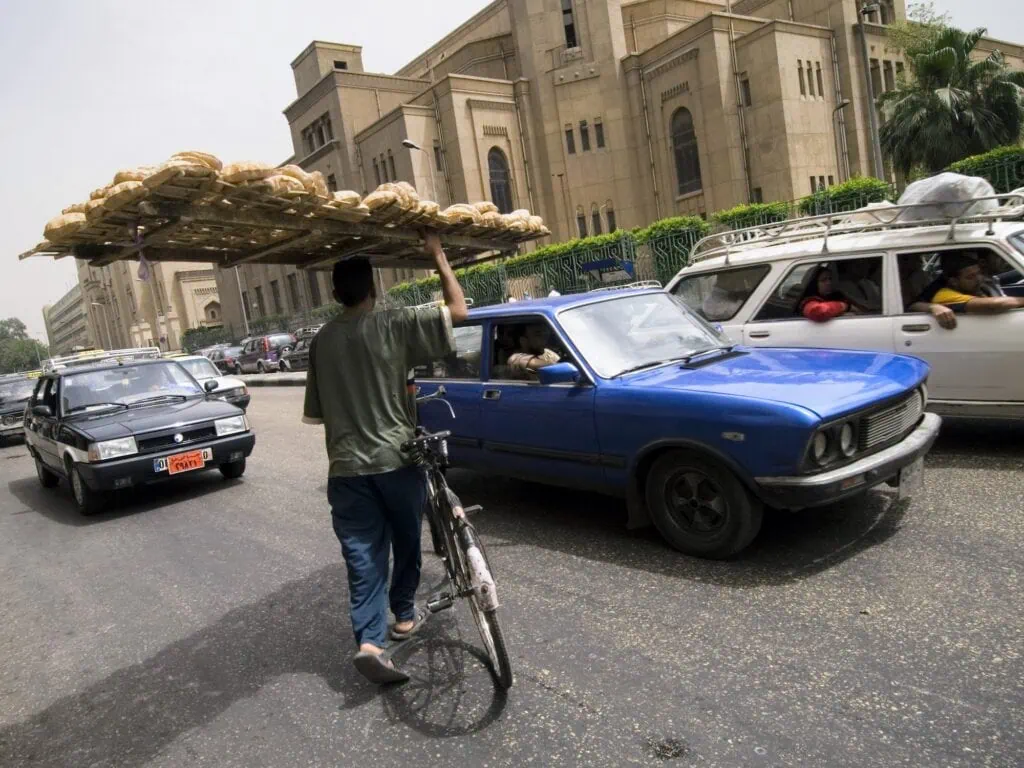
When taking taxis, “ya usta” (yah OOS-tah) gets the driver’s attention respectfully. “Usta” means “master” or “boss” and shows proper deference to working professionals. Follow with your destination and “min fadlik” (min FAD-lik) meaning “please.”
“Stop hina” (stop HEE-nah) tells taxi drivers to stop here. “Shimal” (shee-MAHL) means left, “yameen” (yah-MEEN) means right, and “dughri” (DOOG-ree) means straight ahead. These direction words prove invaluable when navigating Cairo’s chaotic streets.
Shopping and Bargaining Essentials
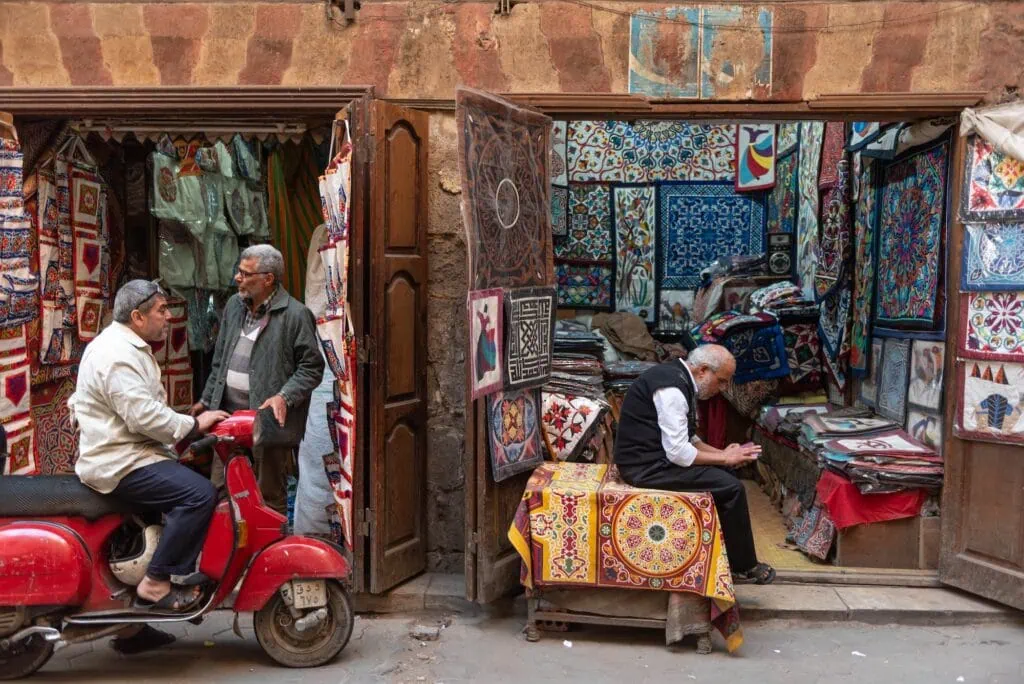
“Bikam da” (BEE-kam dah) asks “how much is this?” – your opening line in any market negotiation. Expect shopkeepers to quote inflated tourist prices initially. “Ghali kteer” (GHAH-lee k-TEER) means “too expensive” and signals you’re ready to negotiate.
“Akher kalam” (AH-kher ka-LAHM) translates to “final word” or “best price.” Use this to push for the seller’s lowest offer. “Khalass” (kha-LAHS) means “finished” or “done” – perfect for ending negotiations or signaling you’re walking away.
“Ayza” (AY-zah) if you’re female or “ayez” (AY-ez) if you’re male means “I want.” Follow with pointing or simple Arabic numbers to communicate your needs clearly.
Building Connections Through Small Talk
Personal interactions distinguish memorable travel from mere sightseeing.
“Izzayak” (iz-ZAY-yak) for males or “izzayik” (iz-ZAY-yik) for females asks “how are you?” Egyptians use this constantly, even with strangers. The standard response is “alhamdulillah” (al-ham-du-LIL-lah) meaning “praise to God” or simply “kuwayis” (ku-WAY-yis) for “good.”
“Ismee” (IS-mee) means “my name is” – useful for introductions with guides, hotel staff, or friendly locals. “Ana min America” (AH-nah min ah-MARE-ee-kah) tells people you’re from America. Replace “America” with your actual country: “Ingliterra” for England, “Kanada” for Canada, or “Ostralia” for Australia.
“Habibi” (ha-BEE-bee) for males or “habibti” (ha-BEEB-ti) for females means “my dear” and shows affection. Egyptians use this with friends, family, and even friendly strangers. When locals call you “habibi,” you’ve made a genuine connection.
Expressing Appreciation and Understanding
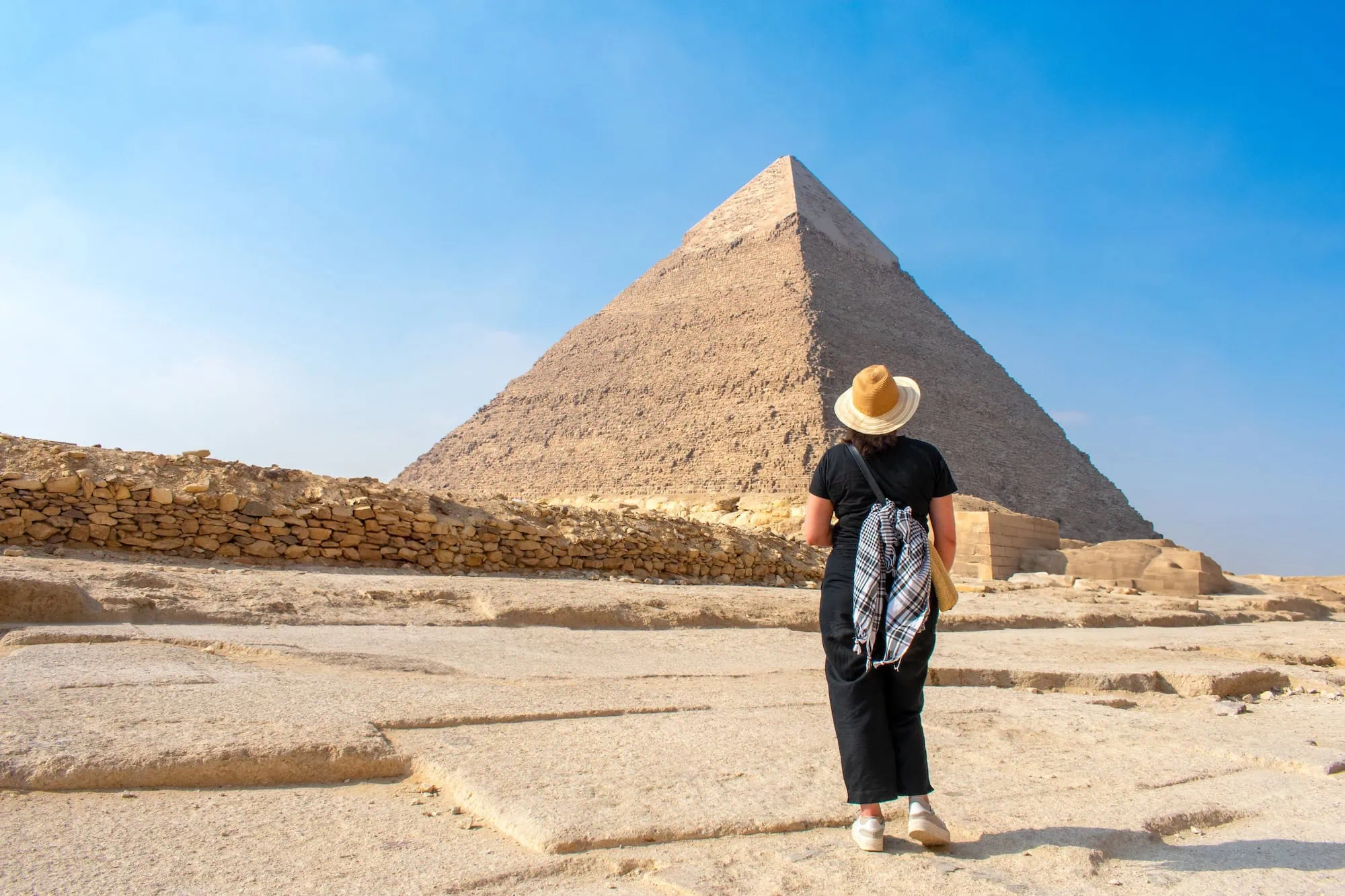
“Gameel kteer” (ga-MEEL k-TEER) means “very beautiful” and works perfectly when admiring Egyptian monuments, landscapes, or local crafts. “Magnoon” (mag-NOON) describes something “crazy” or “amazing” – great for reacting to Egypt’s incredible sights.
“Fahem” (FAH-him) means “I understand,” while “mish fahem” (mish FAH-him) means “I don’t understand.” These phrases help clarify communication when language barriers arise.
“Inshallah” (in-SHAH-allah) meaning “God willing” reflects Egyptian culture’s religious foundation. Use it when discussing future plans: “Inshallah, ana ha-roof el-ahram bukra” (God willing, I’ll see the pyramids tomorrow).
Food and Restaurant Interactions
Egyptian cuisine experiences improve dramatically with proper Arabic phrases.
“Ana ayez akl” (AH-nah AY-ez AH-kel) means “I want food” – direct and effective in restaurants. “Feen akl kuwayis” (feen AH-kel ku-WAY-yis) asks “where is good food?” – locals love recommending their favorite spots.
“Maya” (MY-yah) requests water, essential in Egypt’s heat. “Maya seghira” (MY-yah se-GHEE-rah) asks for a small bottle, “maya kibeera” (MY-yah ki-BEE-rah) for a large one. “Min gheer thalg” (min ghayr THAHLG) means “without ice” if you prefer avoiding tap water ice.
“Lazy” (LAH-zee) means “spicy” – crucial information if you can’t handle heat. “Mish lazy” (mish LAH-zee) requests “not spicy.” “Helw” (HELL-oo) describes sweet foods, “malih” (MAH-lih) means salty.
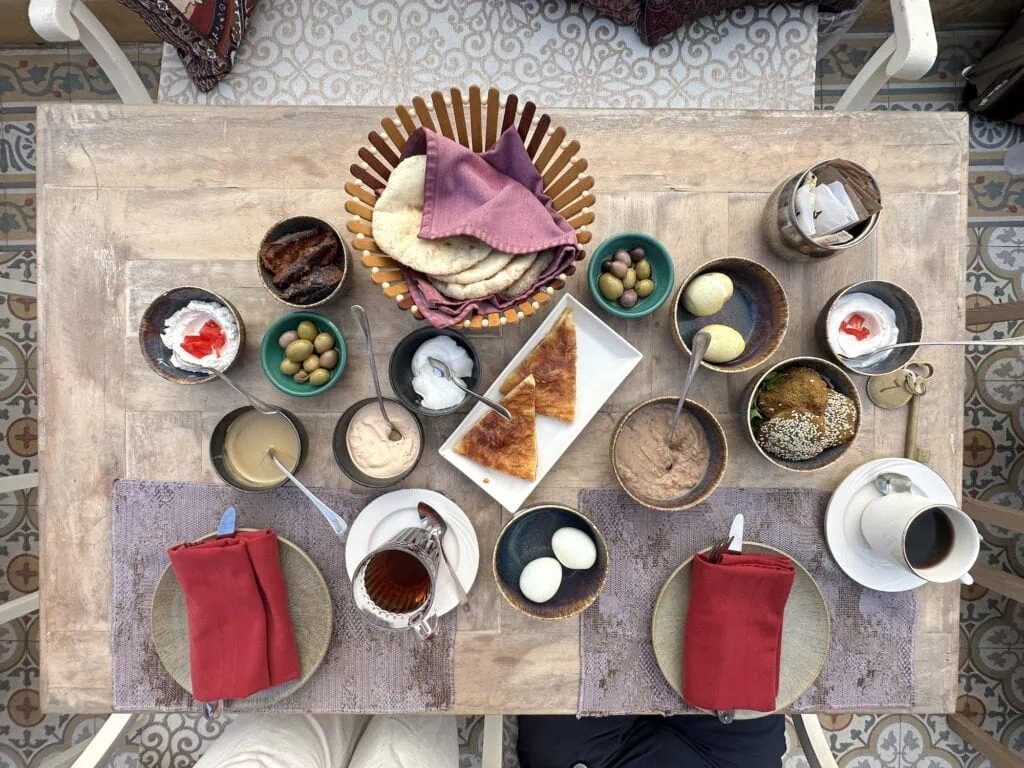
“El-hesab, min fadlik” (el-he-SAHB min FAD-lik) politely requests the check. “Bakshish” (BAK-sheesh) refers to tips, expected in most Egyptian service situations.
Emergency and Problem-Solving Phrases
Challenging situations require specific vocabulary that guidebooks rarely teach.
“Saidni” (sah-ID-nee) means “help me” – your emergency phrase for serious problems. “Ana tayeh” (AH-nah TAH-yeh) if male or “ana tayha” (AH-nah TAH-hah) if female means “I’m lost.” Follow with pointing to maps or hotel business cards.
“Atshan” (at-SHAHN) means thirsty, “g’oan” (g-AH-ahn) means hungry. “Ana ta’ban” (AH-nah TAH-bahn) communicates fatigue. These basic needs phrases help when you can’t function normally due to travel stress.
“Doctor” (DOK-tor) remains the same in Arabic. “Isaf” (is-AHF) describes ambulances. “Shorta” (SHOR-tah) means police – hopefully unnecessary but good to know.
Cultural Context for Effective Communication
Understanding when and how to use these phrases makes the difference between awkward interactions and genuine connections. Egyptian society values respect for elders, so always use polite forms with older individuals. “Ustaaz” (oos-TAHZ) for older men and “ustaza” (oos-TAH-zah) for older women show proper respect.
Religious expressions permeate Egyptian Arabic. “Maasalama” (mah-ah-sah-LAH-mah) means goodbye with religious blessing. “Barak Allahu feek” (BAH-rak al-LAH-oo feek) expresses “God bless you” after someone helps you significantly.
Tone matters enormously. Egyptians speak passionately and expressively, but always maintain respect. Smiling while speaking Arabic phrases forgives pronunciation errors and shows good intentions. Your Egyptologist guide on our Egypt tour packages can help you try these phrases with locals along the way.
Frequently Asked Questions
Most sounds exist in English, making pronunciation achievable with practice.
Egyptians prefer their colloquial dialect for daily conversations and authentic interactions.
Egyptians appreciate your effort and usually understand meaning despite minor mistakes.
Use formal with hotel staff and elderly people, informal with taxi drivers.
Arabic numerals help with prices but most Egyptians understand English numbers.
English works in major sites, but Arabic unlocks authentic experiences and better prices.
Basic greetings work universally, but some phrases change based on speaker gender.
“Shukran” and “min fadlik” open doors everywhere with basic politeness.
Egyptians show tremendous warmth when foreigners attempt Arabic, even imperfectly.
Yes, practice pronunciation to make real conversations flow more smoothly.
Design Your Custom Tour
Explore Egypt your way by selecting only the attractions you want to visit