

Memphis, Egypt – The Ancient Capital of the Old Kingdom
Ancient Egypt whispers its secrets through crumbling stones.
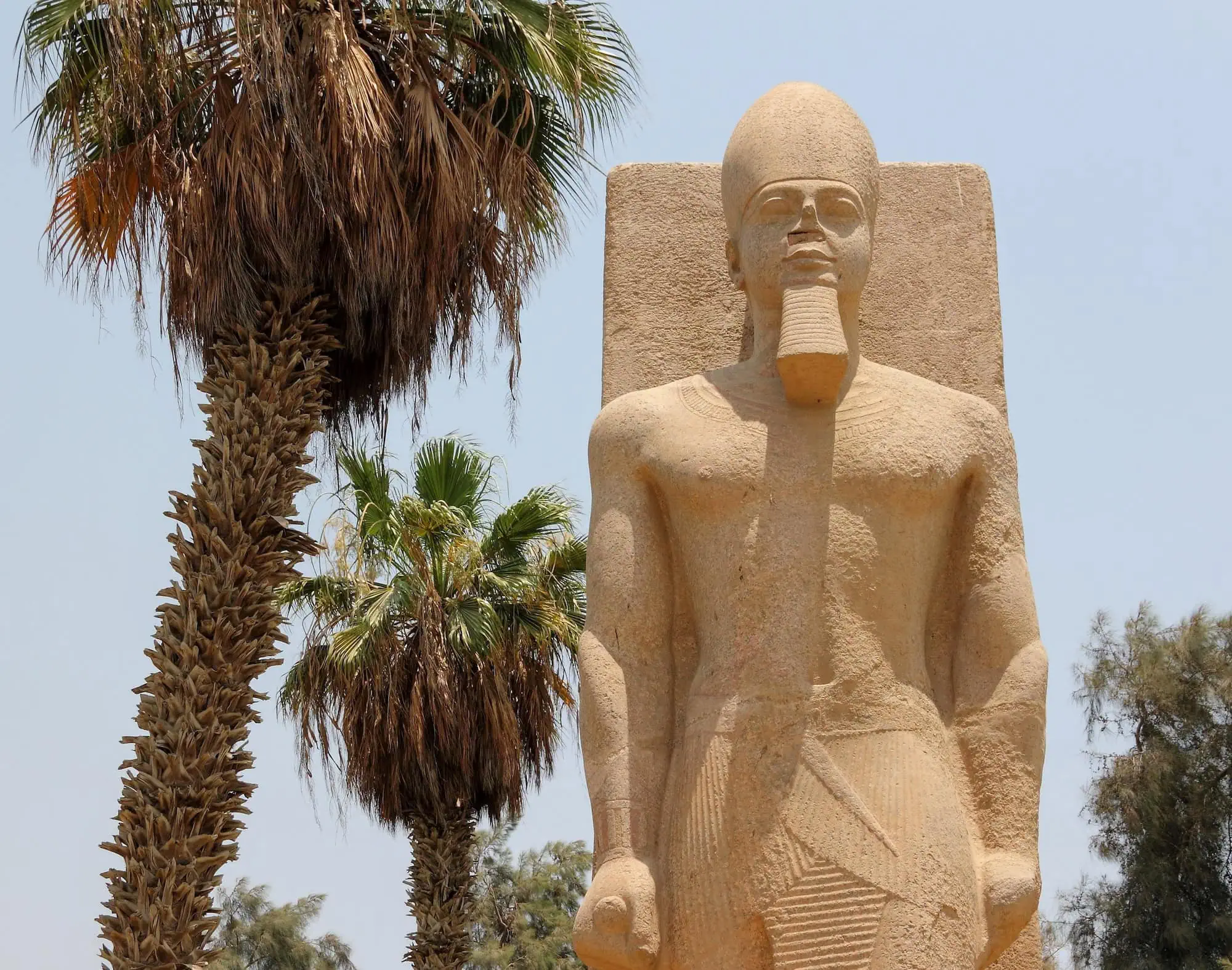
Memphis stands as one of history’s most significant archaeological treasures, where pharaohs once ruled the mighty Egyptian empire from their White Walls fortress. Located near modern-day Mit Rahina, approximately 20 kilometers south of Cairo, this ancient capital served as Egypt’s political and religious heartland for over three millennia. The ruins tell stories of divine kingship, monumental architecture, and the powerful Ptah cult that shaped Egyptian civilization.
We invite you to explore this UNESCO World Heritage site where colossal statues of Ramesses II still guard ancient secrets, and the echoes of Old Kingdom glory resonate through time.
Table of Contents
Foundation of Egypt’s First Capital
Memphis emerged around 2900 BCE when King Menes unified Upper and Lower Egypt into a single kingdom. The strategic location at the apex of the Nile Delta made it the perfect administrative center for controlling both regions. Archaeological evidence suggests the city was originally called Inebu-hedj, meaning “White Walls,” referring to the gleaming limestone fortifications that protected the royal palace.
The Legend of Menes and Unification
King Menes, possibly the same ruler known as Narmer, chose this location deliberately. Ancient texts describe how he diverted the Nile River to create suitable ground for his new capital. The city’s foundation marked the beginning of dynastic Egypt, establishing Memphis as the seat of power that would endure through multiple kingdoms.
Strategic Importance of the Location
The geographical advantages of Memphis cannot be overstated. Positioned where the Nile Valley meets the Delta, it controlled river traffic and trade routes connecting Upper and Lower Egypt. This strategic position allowed pharaohs to govern their vast territories effectively while maintaining contact with both the Mediterranean world and Nubian kingdoms to the south.
Early Royal Residence and Government
During the Old Kingdom (2686-2181 BCE), Memphis reached its zenith as the undisputed capital of Egypt. The pharaohs built magnificent palaces within the city walls, from which they administered justice, collected taxes, and commanded military campaigns. Royal scribes recorded laws and decrees that governed Egyptian society from their Memphis offices.
Religious Heart of Ancient Egypt
Memphis held profound religious significance as the primary center of Ptah worship, one of Egypt’s most important creator deities. The great Temple of Ptah dominated the city’s religious quarter, attracting pilgrims from across the ancient world who came to seek the god’s blessings for craftsmanship, creation, and rebirth.
Ptah was particularly revered as the patron of artisans and builders, making Memphis the spiritual home of Egypt’s skilled craftsmen. The Memphite Theology, developed by priests in this city, presented Ptah as the supreme creator who spoke the world into existence through divine words. This theological concept profoundly influenced Egyptian religious thought for centuries.
The city’s religious importance extended beyond Ptah worship. Multiple temples dedicated to other deities dotted the landscape, creating a sacred complex that served the spiritual needs of the royal court and common people alike. Religious festivals brought thousands of worshippers to Memphis, reinforcing its status as a holy city.
The Great Temple of Ptah
Archaeological excavations have revealed the massive scale of Ptah’s temple complex, which once rivaled Karnak in grandeur. The temple precinct included workshops where skilled artisans created religious artifacts, royal statues, and ceremonial objects. Priests conducted daily rituals that maintained cosmic order according to ancient Egyptian beliefs.
Archaeological Wonders at Mit Rahina
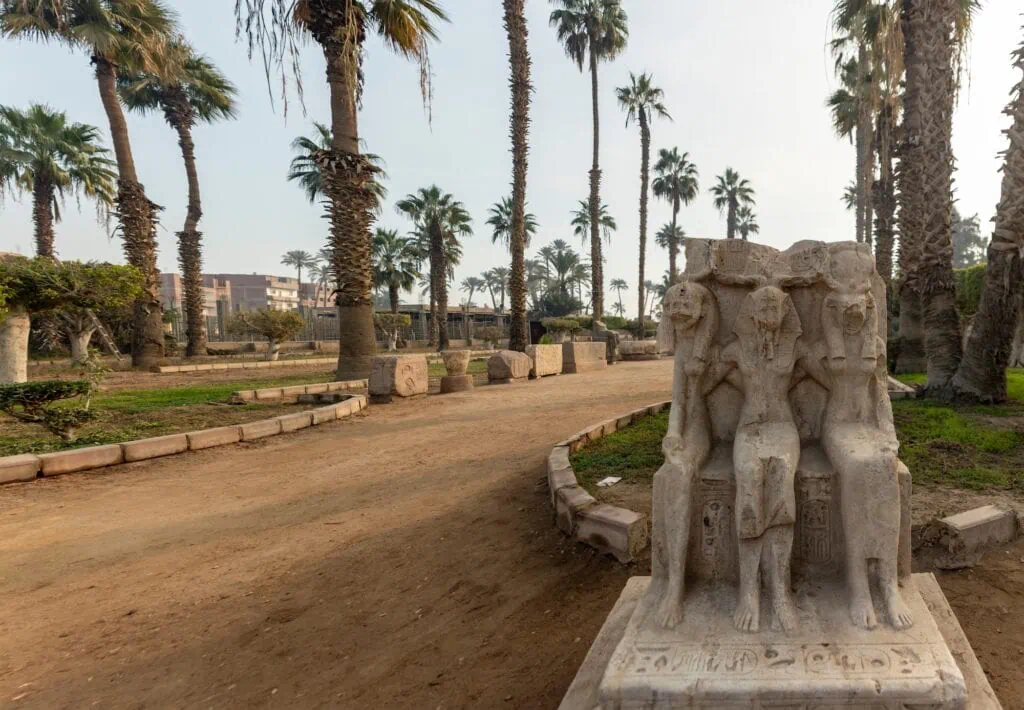
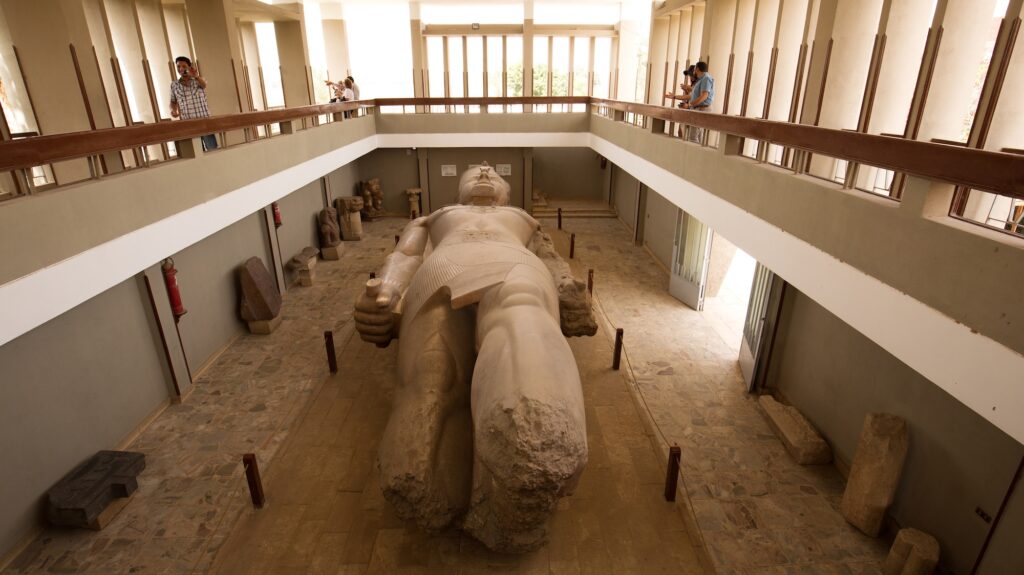
The modern village of Mit Rahina sits atop ancient Memphis, preserving remarkable artifacts that survived millennia of neglect and natural disasters. Today’s Open Air Museum displays some of the most spectacular finds, including the famous limestone colossus of Ramesses II that originally stood over 10 meters tall.
This magnificent statue, carved from a single block of limestone, showcases the incredible skill of ancient Egyptian sculptors. Despite damage to the legs, the statue’s torso and head remain remarkably well-preserved, allowing visitors to appreciate the pharaoh’s idealized features and royal regalia. The craftsmanship demonstrates why Memphis was considered the center of artistic excellence in the ancient world.
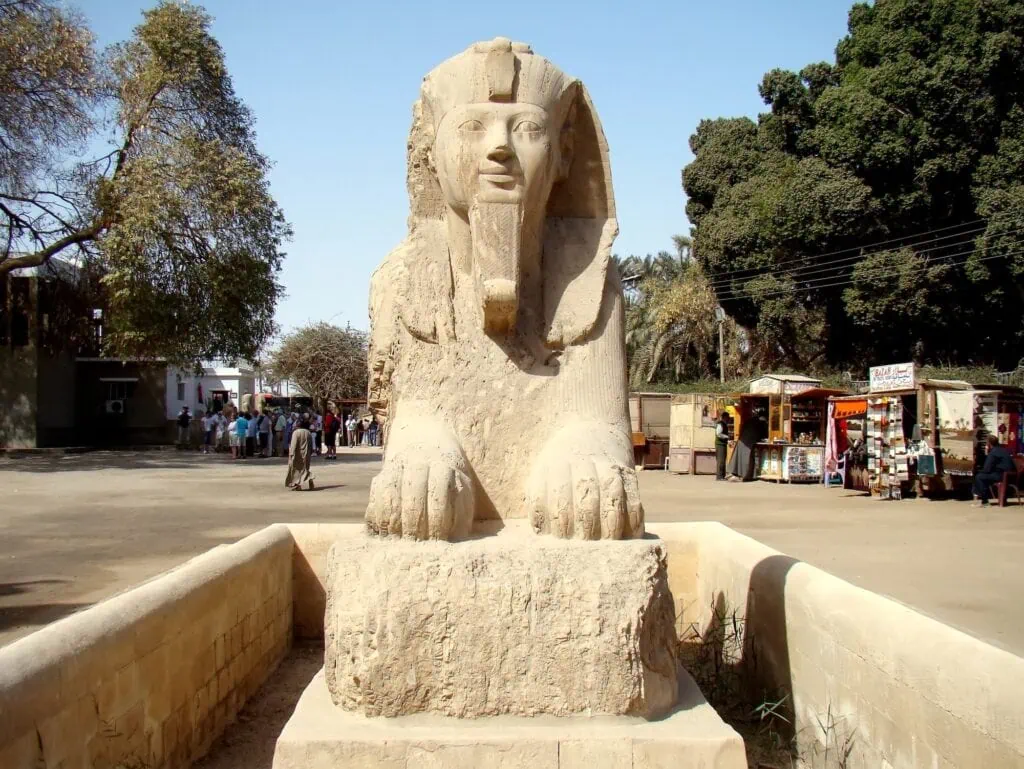
Another treasure is the alabaster sphinx, smaller than its famous Giza counterpart but no less impressive in its execution. Dating to the New Kingdom period, this sphinx combines human intelligence with leonine strength, embodying the pharaoh’s divine nature.
Ongoing excavations continue to reveal new insights into daily life in ancient Memphis. Archaeologists have uncovered residential quarters, workshops, and administrative buildings that paint a vivid picture of a bustling metropolitan center. Pottery fragments, tools, and personal items provide intimate glimpses into how ordinary Egyptians lived and worked in the shadow of their pharaohs.
Recent discoveries include sections of the city’s harbor, where goods from across the Mediterranean and Africa once arrived to supply the royal court. These findings confirm Memphis’s role as an international trading hub that connected Egypt with the broader ancient world.
The University Museum’s expeditions, led by archaeologists like Clarence Fisher and Rudolf Anthes, established modern archaeological methods at Memphis. Their systematic excavations between 1915 and 1956 uncovered the palace of Pharaoh Merenptah and numerous artifacts that deepened our understanding of New Kingdom royal architecture.
Memphis Necropolis and the Pyramid Fields
The UNESCO World Heritage designation encompasses not just Memphis itself but the entire necropolis stretching from Giza to Dahshur. This vast cemetery complex represents humanity’s most ambitious funerary architecture, where pharaohs and nobles prepared for their journey into the afterlife.
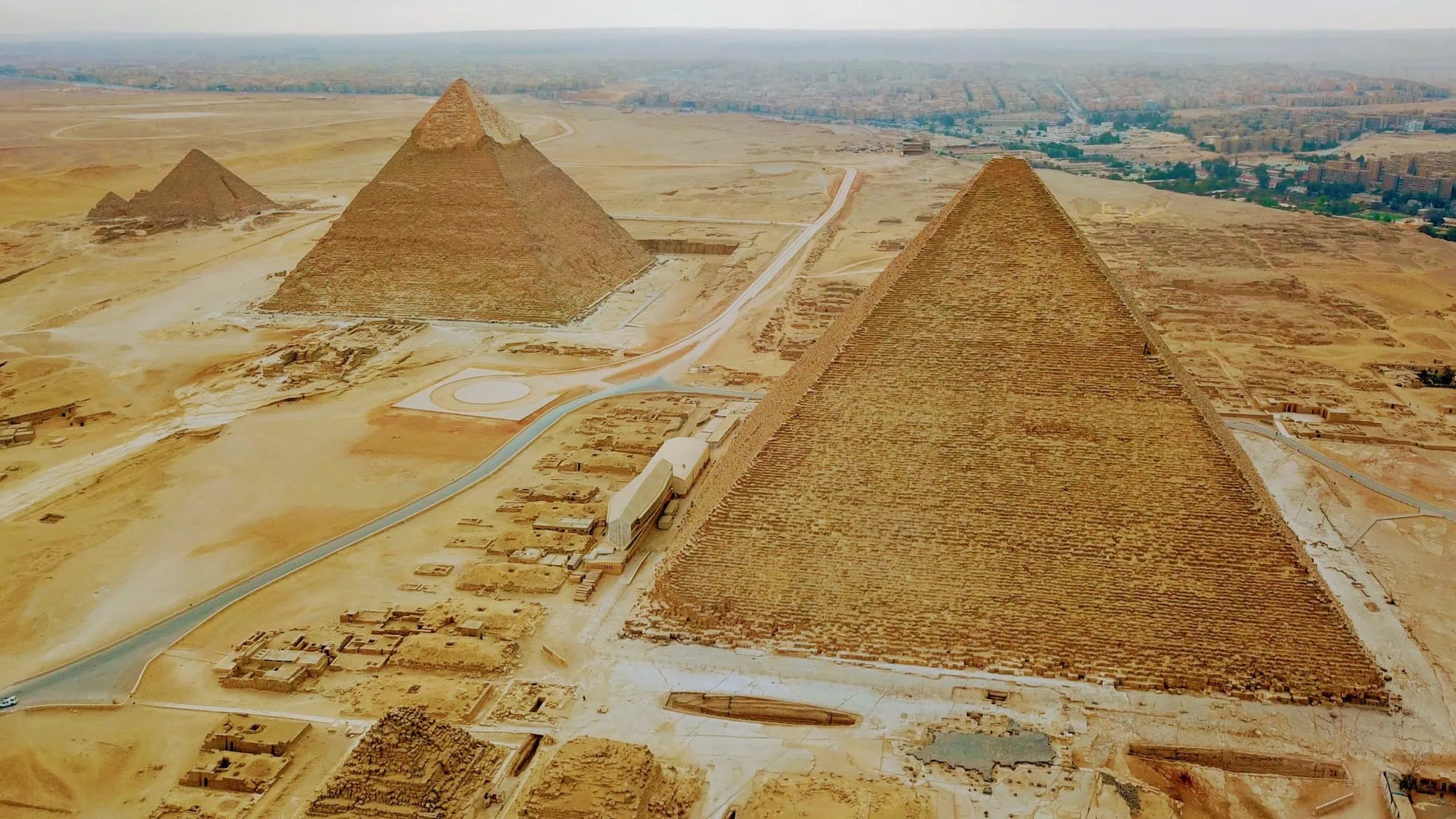
Connection to Giza’s Great Pyramids
The Great Pyramids at Giza served as royal tombs for Memphis-based pharaohs Khufu, Khafre, and Menkaure. These monuments demonstrate the incredible resources Memphis rulers commanded, organizing massive construction projects that required skilled workers, advanced engineering, and sophisticated logistics. The proximity to Memphis ensured that pharaohs could oversee pyramid construction while maintaining their governmental duties.
Saqqara: The Premier Royal Cemetery
Saqqara necropolis, directly associated with Memphis, contains Egypt’s oldest pyramid – the Step Pyramid of Djoser. This revolutionary structure, designed by the architect Imhotep, marked the transition from mastaba tombs to true pyramids. The complex includes numerous mastabas of court officials who served Memphis-based pharaohs.
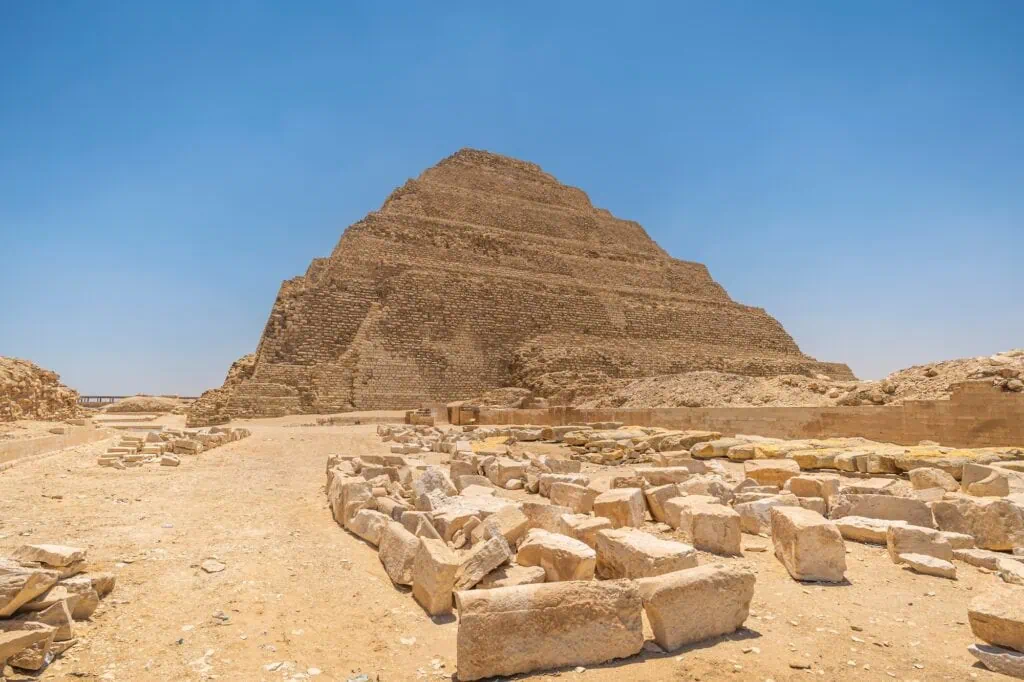
The Pyramid Texts, first inscribed in Saqqara’s pyramids, represent the world’s oldest religious literature. These hieroglyphic inscriptions describe the pharaoh’s journey through the afterlife, providing invaluable insights into ancient Egyptian beliefs about death and resurrection.
Dahshur’s Architectural Evolution
The pyramid fields at Dahshur showcase architectural experimentation as Memphis builders perfected pyramid construction techniques. The Bent Pyramid demonstrates how ancient engineers solved structural problems, while the Red Pyramid represents their ultimate success in creating true pyramid geometry.
Decline and Archaeological Rediscovery
Memphis began losing political importance during the Middle Kingdom as pharaohs established new capitals like Thebes. However, the city remained religiously significant and economically vital throughout Egyptian history.
The Persian conquest in 525 BCE marked the beginning of Memphis’s gradual decline. Greek and Roman rule brought new administrative centers, reducing Memphis to a provincial town. The rise of Christianity led to the abandonment of Ptah’s temple, while Arab conquest in 641 CE accelerated the city’s depopulation.
Medieval Arab historians like Al-Masudi described Memphis ruins as sources of building materials for new Islamic cities. Limestone blocks from ancient temples were recycled into mosques and palaces in nearby Cairo, gradually erasing surface remains of the once-mighty capital.
Modern archaeological interest began in the 18th century when European travelers started documenting Egyptian antiquities. Napoleon’s expedition in 1798 included scholars who mapped Memphis ruins and copied inscriptions. Their published descriptions sparked international fascination with ancient Egyptian civilization.
The establishment of the Egyptian Antiquities Service led to systematic excavations that revealed Memphis’s true extent and importance. Archaeologists like Auguste Mariette and later Sir Flinders Petrie developed scientific methods for studying the site, moving beyond treasure hunting to understanding ancient Egyptian society.
Visiting Memphis Today
We recommend combining your Memphis visit with nearby Saqqara and Giza for a comprehensive understanding of ancient Egyptian royal burial practices. The short distance between these sites makes it possible to explore all three locations in a single day with proper planning.
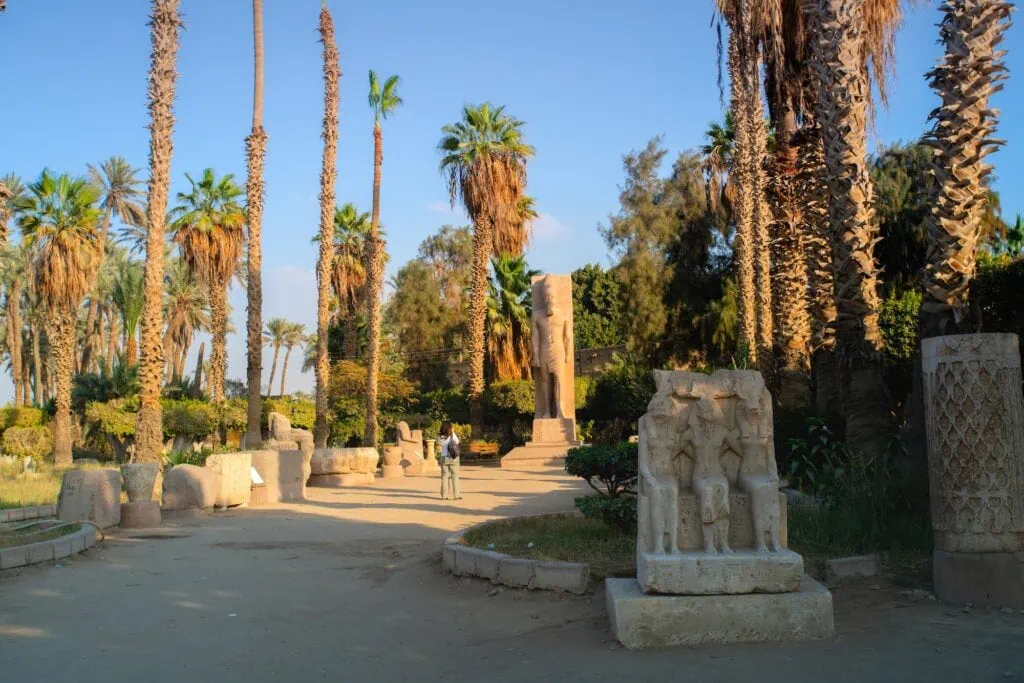
The Open Air Museum at Mit Rahina provides excellent context for understanding Memphis’s historical significance. Information panels in multiple languages explain the artifacts’ origins and importance within ancient Egyptian culture. The museum’s layout allows visitors to walk among the ruins while imagining the city’s former grandeur.
Best Time to Visit
Memphis is accessible year-round, but we suggest visiting during Egypt’s cooler months from October to April when temperatures average 20-25°C (68-77°F). Early morning visits from 8:00 am (08:00) to 10:00 am (10:00) offer the best lighting for photography while avoiding peak heat and crowds.
Getting There from Cairo
The journey from central Cairo takes approximately 45 minutes by private vehicle via the Ring Road. We arrange comfortable, air-conditioned transportation with experienced drivers who know the archaeological sites intimately. Our vehicles are equipped with cold water and provide commentary during the drive.
What to Expect During Your Visit
Your Memphis exploration typically lasts 1-2 hours, allowing time to examine the major artifacts and understand the site’s historical context. Our qualified Egyptologist guides provide detailed explanations of the sculptures, temple remains, and ongoing excavations. The relatively compact museum area makes Memphis accessible for visitors of all ages and mobility levels.
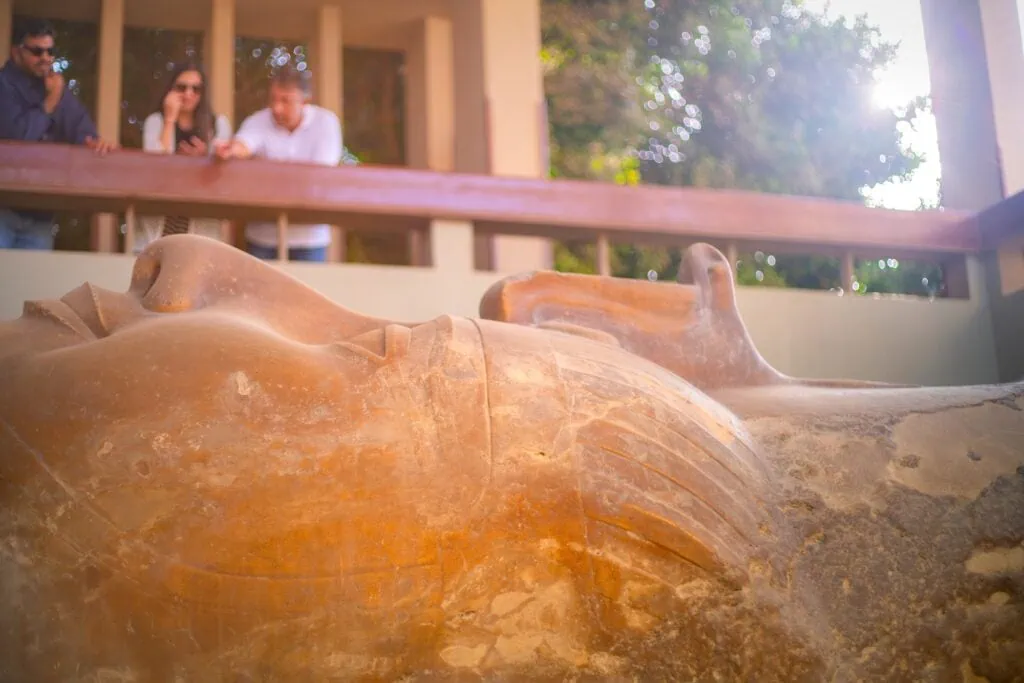
We ensure your visit includes time to photograph the Ramesses II statue from multiple angles and examine the alabaster sphinx’s intricate details. Our guides explain the significance of hieroglyphic inscriptions and point out architectural features that reveal ancient construction techniques.
Planning Your Ancient Egypt Adventure
Memphis represents just one chapter in Egypt’s vast archaeological story. We design personalized itineraries that place Memphis within the broader context of pharaonic civilization, connecting your visit to complementary sites like the Grand Egyptian Museum, Luxor temples, and Valley of the Kings.
Our decades of experience organizing Egypt tours allows us to create seamless travel experiences that maximize your time while minimizing logistical stress. We handle all entrance fees, transportation, and expert guiding so you can focus on absorbing the wonder of ancient Egyptian achievements.
Whether you’re interested in archaeology, history, or photography, Memphis offers unique perspectives on humanity’s earliest urban civilization. Our private guides adapt their presentations to match your interests, ensuring every visitor gains meaningful insights from their Memphis experience.
Walk Through The Origins Of Ancient Egypt
Memphis, once the capital of ancient Egypt, offers a powerful connection to the very beginnings of one of the world’s greatest civilizations. With EgyptToursPlus, we bring historic sites like Memphis together with Egypt’s most iconic landmarks, creating a journey that feels both meaningful and seamlessly connected.
Design your experience around what matters most to you—choose your travel dates, set your own pace, and select the route and experiences that match your interests. We take care of every detail, delivering a private, comfortable, and expertly guided journey from start to finish.
Frequently Asked Questions
Memphis served as Egypt’s primary capital for roughly 800 years during the Old Kingdom and remained an important administrative center for much longer. Founded around 3100 BCE and traditionally associated with King Narmer (Menes), Memphis controlled access between Upper and Lower Egypt at the apex of the Nile Delta. Its strategic location helped make it the political and economic heart of early Egyptian civilization. Even after losing capital status, Memphis remained influential for more than two millennia.
The name Memphis derives from the ancient Egyptian phrase “Men-nefer,” meaning “enduring and beautiful.” Originally, the term referred to the pyramid complex of Pharaoh Pepi I of the Sixth Dynasty before gradually becoming the name of the entire city. Greek visitors later adapted the name into “Memphis,” which became widely used throughout the classical world. The evolution of the name reflects the close connection between royal monuments and urban identity in ancient Egypt.
Memphis declined as Egypt’s capital because political power gradually shifted southward, particularly toward Thebes during the Middle Kingdom and New Kingdom periods. Although administrative priorities changed, Memphis remained a major religious, military, and commercial center for centuries afterward. Its Temple of Ptah continued to attract pilgrims and officials from across Egypt. The city’s decline was gradual rather than sudden, which explains why it remained important long after losing official capital status.
Yes, visitors can see parts of the Saqqara necropolis and surrounding desert plateau from the Memphis area, highlighting the close relationship between the ancient city and its royal burial grounds. Memphis served as the administrative center for kings who commissioned pyramids at Saqqara, Dahshur, and Giza. The visual connection between city and necropolis reflects how ancient Egyptians linked daily life with royal funerary traditions. Clear morning conditions usually provide the best views.
The Memphis Open Air Museum displays several remarkable artifacts, including the colossal limestone statue of Ramesses II, an alabaster sphinx, and numerous temple fragments recovered from the ancient city. The reclining Ramesses II colossus measures approximately 10 meters (33 feet) long and is one of the site’s most famous attractions. These monuments provide direct evidence of Memphis’s importance during the New Kingdom. Most visitors spend 30 to 60 minutes exploring the museum’s outdoor exhibits.
Memphis was the administrative and political center that supported the construction of the Giza pyramids during Egypt’s Old Kingdom. Pharaohs who ruled from Memphis commissioned monumental projects at Giza, located roughly 20 km north of the city. Government officials, craftsmen, laborers, and supply networks were organized from the Memphis region to build these royal tombs. Understanding Memphis helps explain how the resources behind the Great Pyramid and neighboring monuments were managed.
The Temple of Ptah was one of ancient Egypt’s most important religious complexes and served as the principal sanctuary of Ptah, the creator god of Memphis. Ancient writers described it as a vast temple precinct filled with courtyards, shrines, statues, and ceremonial gateways. For centuries, it functioned as both a religious center and a symbol of royal authority. Although much of the complex has disappeared, archaeological remains confirm its enormous scale and historical significance.
UNESCO recognizes Memphis and its necropolis as a World Heritage Site because the area preserves more than 3,000 years of ancient Egyptian funerary and architectural development. The designation includes major sites such as Giza, Saqqara, Dahshur, and Abu Sir, all connected to the ancient capital. Together, these monuments document the evolution of pyramid construction and royal burial practices. Memphis serves as the historical centerpiece of this extraordinary archaeological landscape.
Archaeological work continues at Memphis through ongoing excavations focused on residential districts, harbor facilities, workshops, and administrative buildings. While monumental structures reveal royal history, these investigations help researchers understand how ordinary people lived and worked in Egypt’s ancient capital. Egyptian and international archaeological teams regularly study artifacts, settlement patterns, and environmental evidence from the site. New discoveries continue to refine scholars’ understanding of Memphis’s role in Egyptian civilization.
Prepare for a Memphis visit by wearing comfortable walking shoes, carrying water, and using effective sun protection throughout the day. Temperatures regularly exceed 30°C (86°F) from late spring through early autumn, and much of the site offers limited shade. Lightweight clothing, sunglasses, and a wide-brimmed hat can significantly improve comfort during exploration. Morning visits between 8:00 am and 10:00 am generally provide cooler conditions and better lighting for photography.
Design Your Custom Tour
Explore Egypt your way by selecting only the attractions you want to visit