

Temple of Hibis – A Resurrected 26th Dynasty Roman Temple
Hidden deep in the Kharga Oasis lies an archaeological wonder.
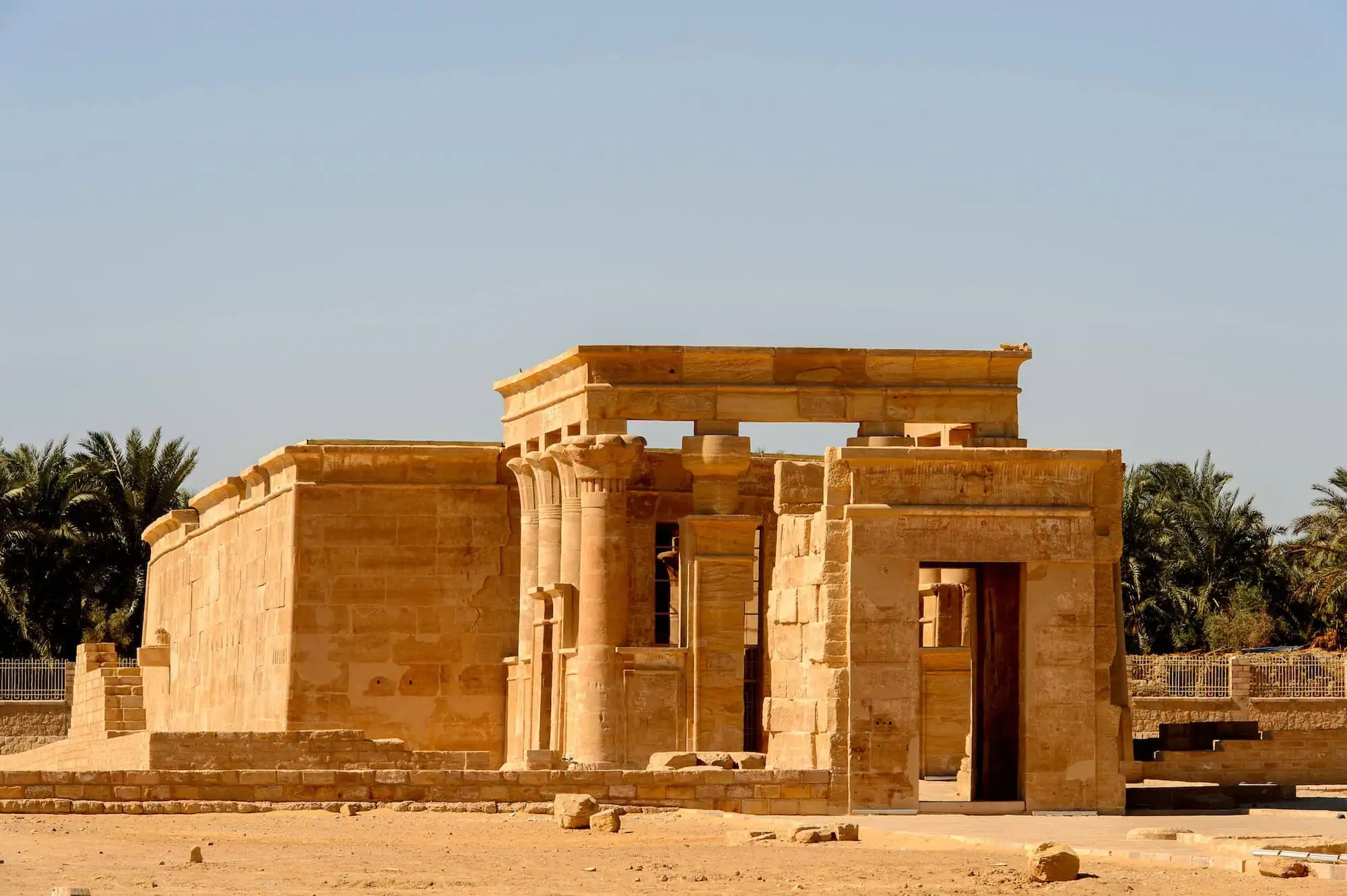
This limestone masterpiece stands as Egypt’s largest and most intact temple from the Persian occupation, offering visitors a rare glimpse into a period when two great civilizations merged their artistic traditions. Built over centuries and dedicated to Amun, the Temple of Hibis showcases remarkable architectural elements and religious symbolism that survived millennia in the Western Desert’s protective isolation.
Whether you’re planning a egypt adventure tour or simply curious about Egypt’s lesser-known treasures, this ancient sanctuary promises an experience unlike the crowded monuments of the Nile Valley.
Table of Contents
Historical Significance of the Temple Complex
The Temple of Hibis represents a fascinating chapter in Egyptian history when Persian rulers embraced local religious traditions while leaving their own cultural fingerprints. Construction began during the 26th Dynasty under Psamtik II, but the temple’s most distinctive features emerged during the first Persian occupation.
Darius I ordered the temple’s elaborate decoration program, creating a unique blend of Persian imperial ideology and traditional Egyptian religious iconography. This cultural fusion makes Hibis particularly valuable to historians studying cross-cultural exchange in the ancient world.
Archaeological evidence suggests the site held religious significance long before the current structure. New Kingdom foundations lie beneath the temple, indicating continuous worship spanning over a millennium. The Saite-Persian period construction transformed this modest shrine into the impressive complex visitors see today.
Architectural Evolution Through Dynasties
The temple’s construction spanned multiple dynasties, each leaving distinctive architectural signatures. Early Saite foundations provided stability for the ambitious expansion projects that followed.
Persian architects introduced innovative column capitals combining traditional Egyptian palmiform designs with new composite elements. These hybrid styles appear nowhere else in Egypt with such preservation quality.
Later dynasties continued adding elements through the Ptolemaic and Roman periods, creating a fascinating architectural timeline carved in stone.
Religious Importance in Ancient Times
Amun of Hibis held special significance as a local manifestation of the great Theban deity. Desert communities viewed this temple as their spiritual center, drawing pilgrims from across the Western Desert oases.
The temple’s isolation actually enhanced its religious importance. Priests could conduct elaborate ceremonies without interference from competing religious centers, developing unique ritual practices documented in the temple’s hieroglyphic texts.
Temple Architecture and Layout
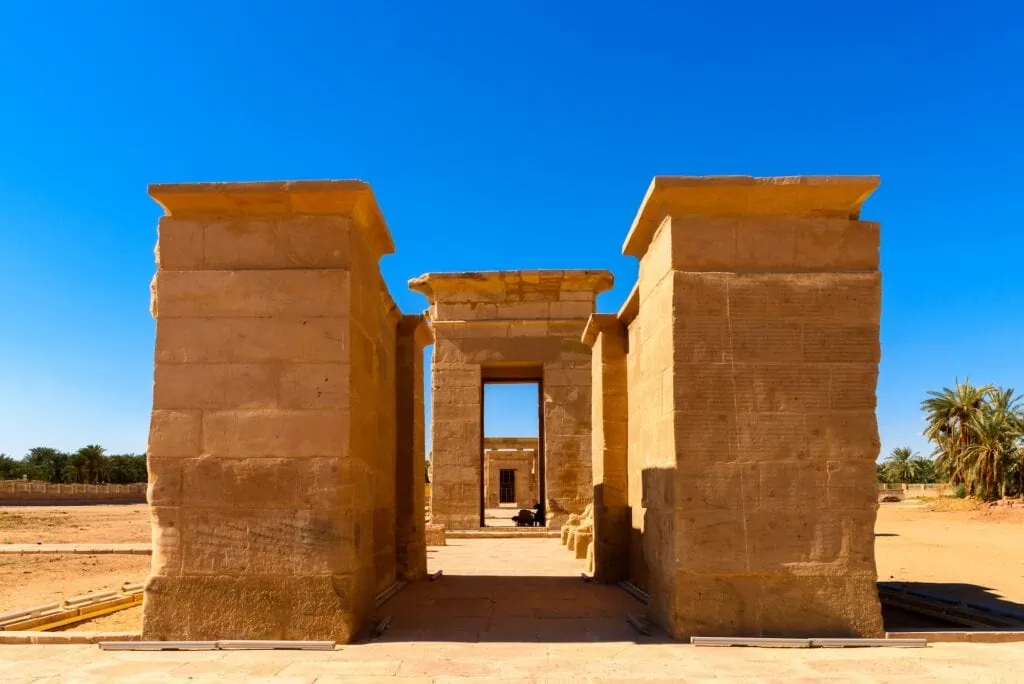
Walking through Hibis reveals a masterfully planned progression from the mundane world to the sacred. The complex extends far beyond the temple proper, incorporating a ceremonial avenue that once led to a sacred lake.
The Portico and Entrance
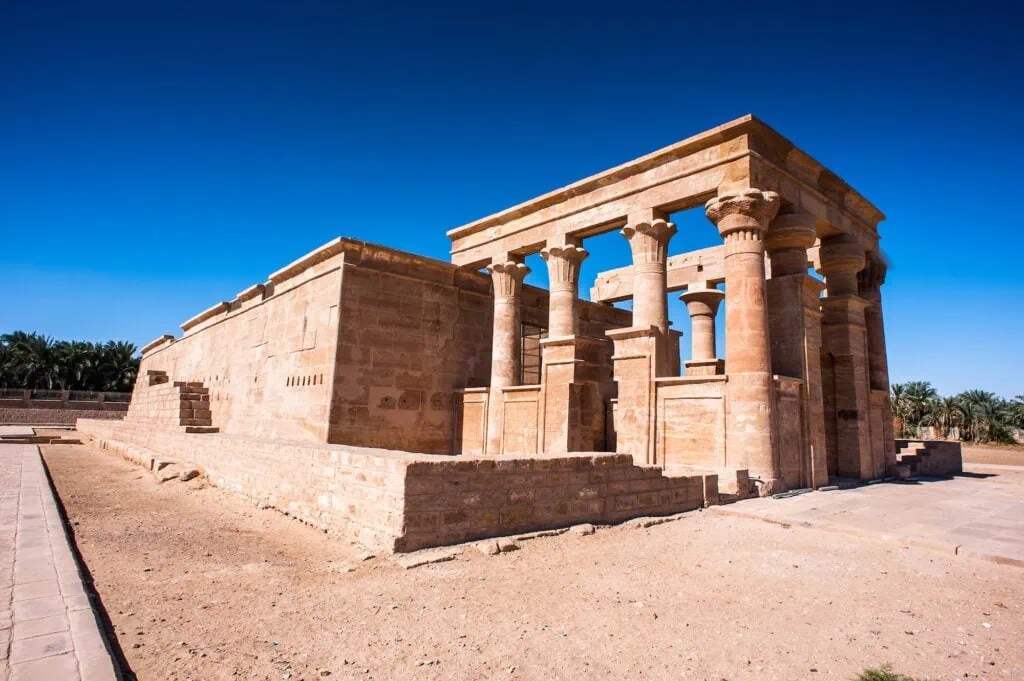
Six columns support the temple’s imposing facade, their capitals showcasing the Persian-influenced artistic style that makes Hibis unique. Each column tells a story through its decorative elements, combining Egyptian religious symbolism with Persian imperial motifs in ways that scholars are still interpreting.
The entrance walls display some of Egypt’s finest relief work from the Persian period. These carvings demonstrate how local artisans adapted traditional Egyptian artistic conventions to accommodate Persian royal ideology.
Hypostyle Hall Decorations
Step inside and you’re surrounded by columns supporting a stone ceiling decorated with astronomical texts and images. The famous scene of Seth battling Apophis dominates one wall, representing the eternal struggle between order and chaos.
This mythological battle takes on special meaning in the desert context. Ancient Egyptians viewed the Western Desert as a realm where cosmic forces played out their eternal conflicts, making this imagery particularly appropriate for Hibis’s location.
The hall’s columns feature various capital styles, creating visual rhythm while demonstrating the technical skills of Persian-period craftsmen. Palmiform and campaniform capitals alternate with more experimental composite designs found nowhere else in Egypt.
The Sanctuary Complex
The temple’s innermost chambers housed the cult statue of Amun of Hibis and served as the focal point for daily religious activities. These rooms remain largely intact, preserving original ceiling decorations and wall reliefs that illuminate ancient Egyptian religious practices.
Priests performed daily rituals here following traditions established centuries earlier in Thebes, but adapted for the oasis environment. The sanctuary’s intimate scale creates a profound sense of connection with the ancient world.
Hidden chambers within the sanctuary complex likely stored ritual objects and temple treasures. Modern archaeological investigations continue uncovering evidence of the temple’s rich ceremonial life.
Modern Archaeological Discoveries
Herbert Winlock’s Metropolitan Museum expeditions in the early 20th century first brought Hibis to international attention. These pioneering efforts documented the temple’s remarkable preservation state and began the long process of understanding its historical significance.
Recent archaeological work has focused on understanding the site’s broader context within ancient Egypt’s desert frontier regions. Ground-penetrating radar surveys have revealed additional structures buried beneath centuries of sand accumulation.
The temple’s exceptional preservation owes much to the Kharga Oasis’s dry climate and relative isolation. While other Persian-period monuments suffered destruction or heavy weathering, Hibis survived virtually intact.
Contemporary conservation efforts balance public access with preservation needs. Rising groundwater levels pose new challenges for maintaining the temple’s structural integrity, leading to ongoing discussions about protective measures.
Digital documentation projects now create detailed three-dimensional records of every surface, ensuring future generations can study Hibis even if environmental factors threaten the physical structure.
Visiting the Temple of Hibis Today
The temple sits approximately 2 kilometers (1.2 miles) north of Kharga town, easily accessible by road through the modern oasis settlement. Unlike Egypt’s major tourist sites, Hibis offers visitors the rare experience of exploring an ancient monument in relative solitude.
Planning Your Visit
Most visitors combine Hibis with other Kharga Oasis attractions, creating a comprehensive desert archaeological tour. The temple requires about two hours for thorough exploration, allowing time to appreciate both architectural details and historical context.
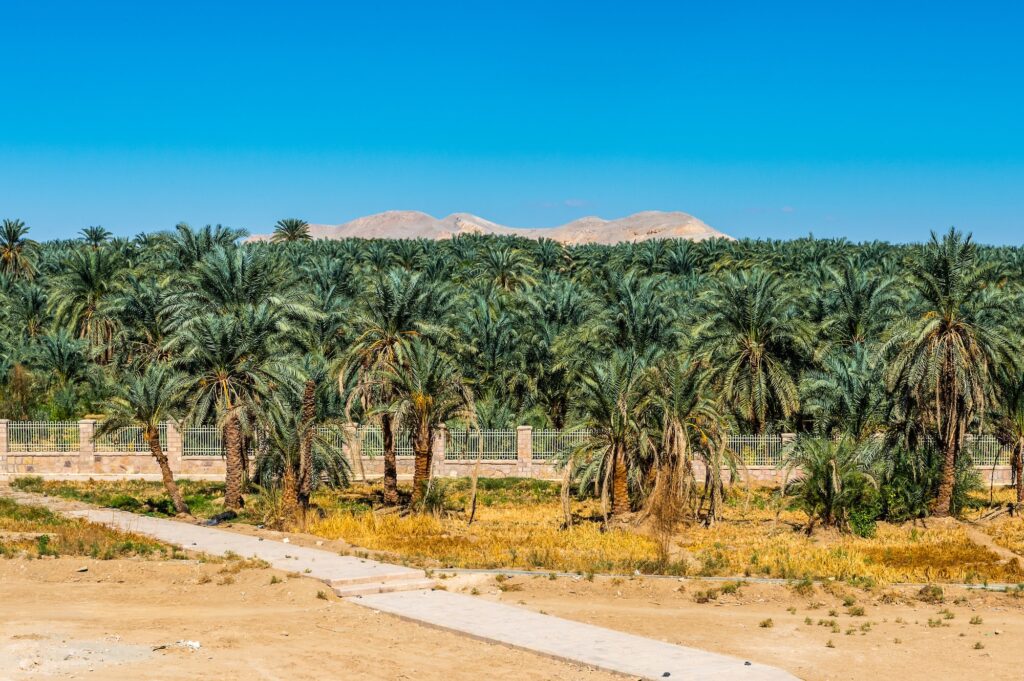
Morning visits offer the best lighting conditions for photography and comfortable temperatures during winter months. Summer temperatures can exceed 40°C (104°F), making early morning or late afternoon visits essential.
No advance reservations are required, but checking current opening hours before travel is recommended. Local authorities occasionally close the site for conservation work or special events.
What to Expect During Your Tour
Self-guided exploration is possible, but knowledgeable guides significantly enhance the experience by explaining the complex religious and historical symbolism throughout the temple. We offer specialized tours with Egyptologists who can decode the hieroglyphic texts and architectural significance.
The site includes basic visitor facilities, but bringing water and sun protection is essential. Comfortable walking shoes are recommended for exploring the temple complex and surrounding archaeological areas.
Photography is permitted throughout most of the temple, though flash photography may be restricted in certain areas to protect ancient pigments on wall reliefs.
Transportation and Access
Regular bus service connects Kharga with Cairo and other major Egyptian cities, making the oasis surprisingly accessible for independent travelers. The journey from Cairo takes approximately 8-10 hours by road through dramatic desert landscapes.
Private vehicle arrangements offer greater flexibility for exploring multiple oasis sites during a single trip. We provide comfortable, air-conditioned transportation with experienced drivers familiar with desert travel requirements.
Domestic flights serve Kharga Airport, though service may be seasonal. Road travel remains the most reliable option for reaching the temple.
Religious Symbolism and Ancient Worship
The Temple of Hibis functioned as more than an architectural monument – it served as the spiritual heart of Egypt’s western frontier. Amun’s worship here took on unique characteristics influenced by the desert environment and the community’s isolation from mainstream Egyptian religious centers.
Priests developed specialized ritual calendars aligned with desert seasonal patterns rather than Nile flood cycles. These adaptations demonstrate ancient Egyptian religion’s remarkable flexibility in different geographical contexts.
The temple’s decoration program incorporates unusual iconographic elements rarely seen elsewhere in Egypt. Desert animals appear alongside traditional Egyptian religious symbols, creating a unique artistic vocabulary that reflects local environmental conditions.
The Sacred Lake Connection
Ancient texts reference a sacred lake associated with the temple, though this water feature disappeared centuries ago. Archaeological evidence suggests elaborate ceremonies took place around this lake during major religious festivals.
The lake’s symbolic importance connected earthly worship with cosmic mythology, as ancient Egyptians viewed bodies of water as gateways between the human and divine realms. This connection made the Hibis temple complex particularly powerful in ancient religious imagination.
Water management systems around the temple demonstrate sophisticated engineering that supported both religious activities and the broader oasis community. These installations represent early examples of sustainable desert development.
The Temple in Archaeological Context
Hibis occupies a unique position within Egyptian archaeological studies as the best-preserved example of Persian-period religious architecture. While other monuments from this era suffered destruction or heavy modification, Hibis provides an unfiltered view of artistic and architectural developments during a crucial historical transition.
Comparative analysis with Persian monuments in Iran reveals fascinating cultural exchange patterns. Egyptian artisans incorporated Persian royal iconography while maintaining traditional Egyptian religious themes, creating hybrid artistic styles that influenced later Ptolemaic art.
The temple’s isolated location protected it from the religious reforms and political upheavals that affected monuments in more central locations. This preservation allows modern scholars to study Persian-period Egyptian religion without the distortions caused by later modifications or destruction.
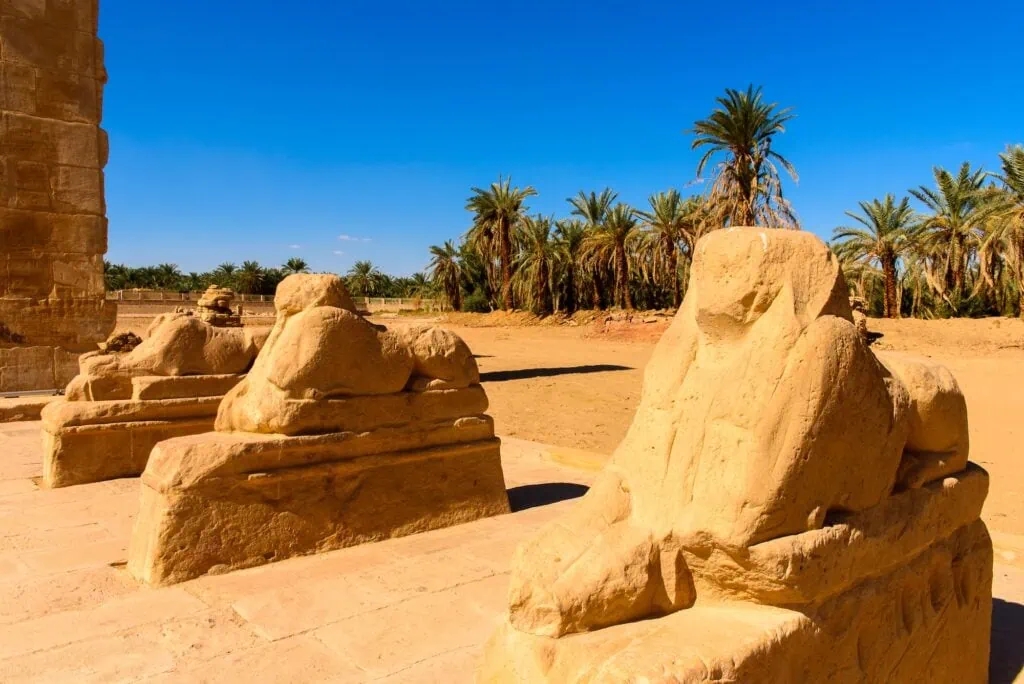
Recent technological advances in archaeological documentation have revealed previously unknown details about the temple’s construction techniques and decoration methods. High-resolution imaging shows evidence of multiple artistic hands working on different sections, providing insights into ancient workshop organization.
Carbon dating of organic materials found during excavations confirms the temple’s construction chronology and provides evidence for continuous use through the Roman period. These scientific approaches complement traditional art historical analysis to create comprehensive understanding of the site’s development.
Step Into History At The Temple Of Hibis
Set deep within the Kharga Oasis, the Temple of Hibis offers a rare glimpse into Egypt’s late-period heritage—peaceful, atmospheric, and far from the crowds. With EgyptToursPlus, we seamlessly connect this hidden gem to a wider journey across Egypt, blending remote desert beauty with the country’s most iconic sights.
You choose your travel dates, pace, and experiences—whether that means exploring multiple oases, adding a Nile cruise, or focusing on cultural depth. We design every detail around you, delivering a private, comfortable, and effortlessly smooth journey guided by true expertise.
Frequently Asked Questions
The Temple of Hibis is the largest and best-preserved surviving temple from Egypt’s Persian period, particularly the 27th Dynasty under Darius I around the 6th century BC. Its architecture blends traditional Egyptian temple design with Persian imperial influences rarely preserved elsewhere in Egypt. The temple’s remote Kharga Oasis location protected many reliefs, inscriptions, and painted details from later destruction and urban expansion. Historians consider it one of the clearest surviving records of how foreign rulers adapted Egyptian religious traditions for political legitimacy.
Most travelers spend 2 to 3 hours exploring the Temple of Hibis thoroughly, including time for photography, reading inscriptions, and understanding the temple’s layered Persian, Greek, and Roman history. The complex contains detailed reliefs, columned halls, and surrounding archaeological remains that reward slower exploration. Visitors interested in Egyptology or architectural history often stay longer, especially when touring nearby Kharga Oasis monuments on the same day. Morning visits provide cooler temperatures and softer lighting for photography inside the temple.
October through March offers the best conditions for visiting Kharga Oasis, with daytime temperatures typically ranging from 15°C to 25°C (59°F to 77°F). Summer temperatures frequently exceed 40°C (104°F), especially between June and August, which makes extended archaeological exploration physically demanding. Winter weather also improves visibility for photography and desert excursions while reducing heat exhaustion risks. Travelers planning multiple outdoor stops, including Hibis Temple and Al-Bagawat cemetery, should prioritize cooler months for a more comfortable experience.
Independent visits to the Temple of Hibis are possible because the site is accessible from Kharga town by paved roads and standard vehicles without special permits. However, guided tours provide valuable interpretation of the temple’s religious symbolism, Persian-era inscriptions, and historical role within the Western Desert oasis system. Many reliefs contain complex theological scenes that are difficult to understand without context. Visitors combining several Kharga Oasis sites often benefit from local guides familiar with desert logistics and archaeological chronology.
Kharga Oasis contains several important attractions near the Temple of Hibis, including Al-Bagawat Christian necropolis, the Nadura Temple ruins, Roman fortifications, and traditional oasis settlements dating back centuries. Many sites are reachable within 15 to 45 minutes by vehicle, which makes Kharga one of Egypt’s most concentrated desert archaeology destinations. Travelers interested in Roman Egypt, early Christianity, and oasis trade history can easily build a full two-day itinerary around the region. Combining sites also provides stronger historical context for Hibis Temple itself.
The Temple of Hibis preserves exceptionally detailed wall reliefs, hieroglyphic inscriptions, and architectural carvings thanks largely to Kharga Oasis’s dry desert climate and relative isolation from dense urban settlement. Many scenes remain sharply visible, including depictions of Darius I presenting offerings to Egyptian gods such as Amun and Osiris. Unlike heavily restored Nile Valley temples, Hibis retains much of its authentic surface character. Early morning light highlights carved relief depth especially well, making that the best time for detailed photography.
Travelers can reach Kharga Oasis by long-distance bus from Cairo in approximately 8 to 10 hours, private vehicle transfers, or limited domestic flights through Kharga Airport depending on seasonal schedules. Road travel remains the most common method because it allows flexible stops at desert sites and neighboring oases. Private drivers are particularly useful for travelers continuing toward Dakhla or Farafra Oasis afterward. Visitors planning archaeological itineraries often prefer overnight stays because travel distances across Egypt’s Western Desert are substantial.
Photography is generally permitted throughout the Temple of Hibis complex for personal use, although flash photography may be restricted in sensitive areas containing traces of ancient pigments and delicate relief surfaces. Tripods and professional filming equipment sometimes require separate authorization from Egyptian antiquities authorities. The temple’s sandstone textures and preserved inscriptions photograph particularly well during the early morning and late afternoon when sunlight creates stronger relief contrast. Visitors should still avoid touching carved surfaces while positioning cameras or mobile devices.
Visitors exploring the Temple of Hibis should carry water, sunscreen, sunglasses, comfortable walking shoes, and lightweight clothing suitable for dry desert conditions and prolonged outdoor exposure. Temperatures in Kharga Oasis can rise rapidly even during winter afternoons, especially in open archaeological areas with little shade. A hat and camera are also strongly recommended because the temple’s carvings and desert surroundings offer exceptional photography opportunities. Travelers visiting multiple oasis sites should keep extra water supplies inside their vehicle throughout the day.
The Temple of Hibis is considered the best-preserved Persian-period temple in Egypt and provides far more complete architectural evidence than most surviving monuments from the 27th Dynasty. Many Persian-era structures elsewhere were altered, dismantled, or absorbed into later construction phases, while Hibis remained comparatively intact due to its isolated oasis location. The temple clearly demonstrates how Persian rulers adopted Egyptian religious iconography to reinforce authority over Egypt. Scholars frequently use Hibis as a benchmark for studying cross-cultural imperial architecture in antiquity.
Kharga Oasis offers a range of accommodations including modest guesthouses, mid-range hotels, and desert lodges designed for travelers exploring Egypt’s Western Desert archaeological circuit. Most properties are located near Kharga town and provide practical access to major sites such as the Temple of Hibis and Al-Bagawat cemetery. Facilities are generally simpler than Cairo or Red Sea resorts, but many include air conditioning, private bathrooms, and local cuisine. Advance reservations are advisable during Egypt’s peak winter tourism season between November and February.
The Temple of Hibis functioned as the primary religious center for Amun of Hibis, a regional form of the god Amun worshipped throughout Egypt and especially associated with state legitimacy and divine kingship. Priests conducted rituals, offerings, and ceremonial festivals connecting the isolated oasis population with mainstream Egyptian religious traditions centered at Karnak and Thebes. The temple also reinforced political authority under Persian rulers like Darius I, who presented themselves visually as legitimate Egyptian pharaohs through temple construction and religious patronage.
Design Your Private Western Desert Adventure
Travel with your own expert guide, private 4×4 vehicle, and a route tailored to you.