

Kiosk of Qertassi – An Ancient Roman Relic Saved From Destruction
This tiny Roman masterpiece almost vanished beneath Lake Nasser. The Kiosk of Qertassi represents one of ancient Egypt’s most delicate architectural achievements—a small Roman temple that survived both time and modern engineering challenges.
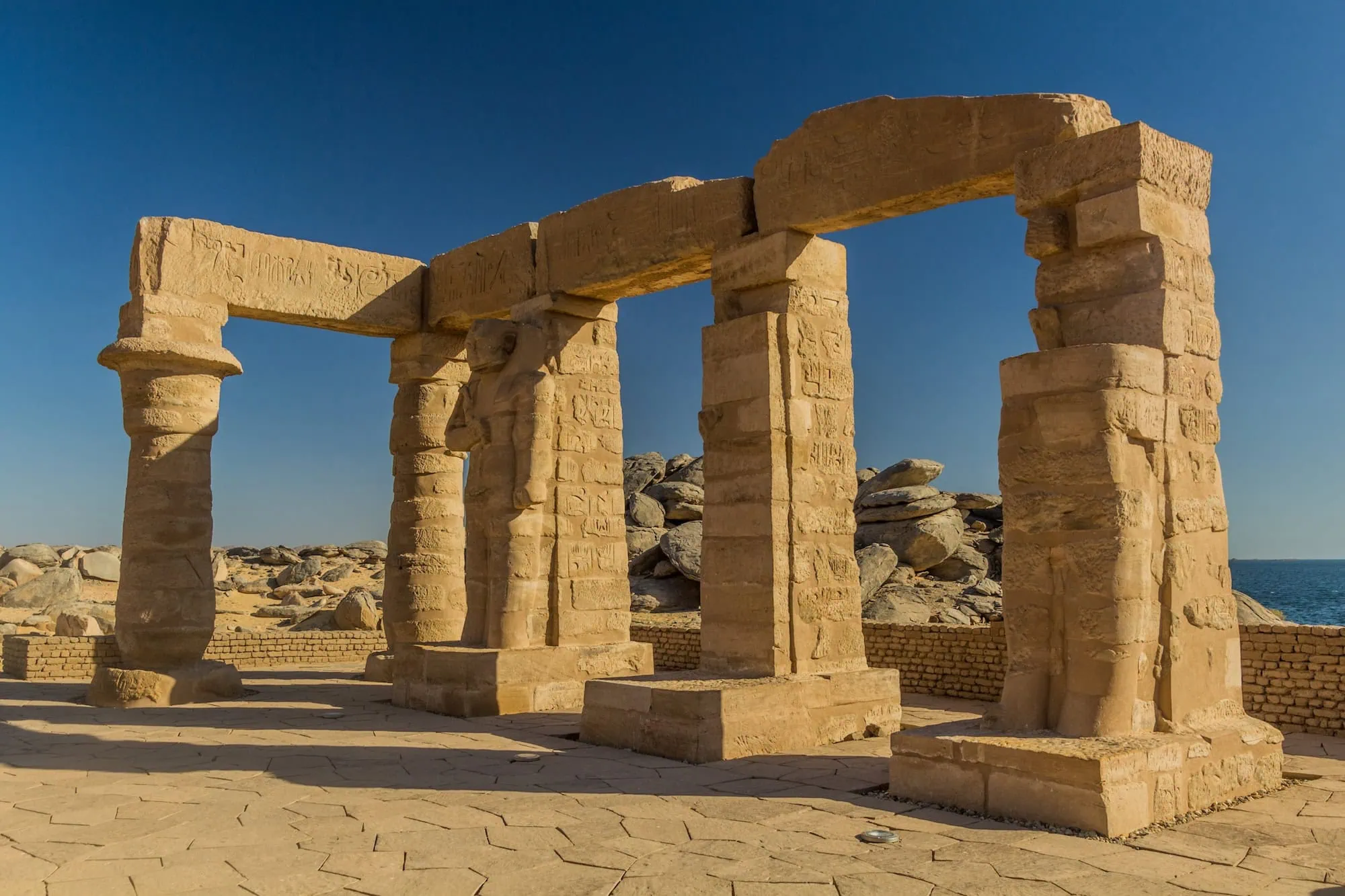
When the Aswan High Dam threatened to flood countless Nubian monuments in the 1960s, this elegant structure joined one of history’s most ambitious rescue operations. Today, visitors can explore this relocated treasure on New Kalabsha Island, where Hathor columns and papyrus capitals continue to showcase the artistic fusion of Roman and Egyptian traditions.
Our decades of expertise guiding travelers through Egypt’s relocated monuments ensures you experience these preserved treasures with proper historical context and seamless logistics.
Table of Contents
Roman Architecture Meets Egyptian Sacred Art
The kiosk demonstrates remarkable artistic synthesis during the early Roman period. Built possibly during Emperor Trajan’s reign, this unfinished temple blends classical Roman construction techniques with traditional Egyptian religious symbolism.
Hathor Column Capitals and Divine Symbolism
Four slender papyrus columns support the structure, each crowned with intricate Hathor heads. The goddess Hathor, often depicted with cow ears and a serene expression, represented motherhood, music, and joy in ancient Egyptian religion. These column capitals showcase exceptional craftsmanship, with detailed carvings that have survived centuries of Nile floods and desert winds.
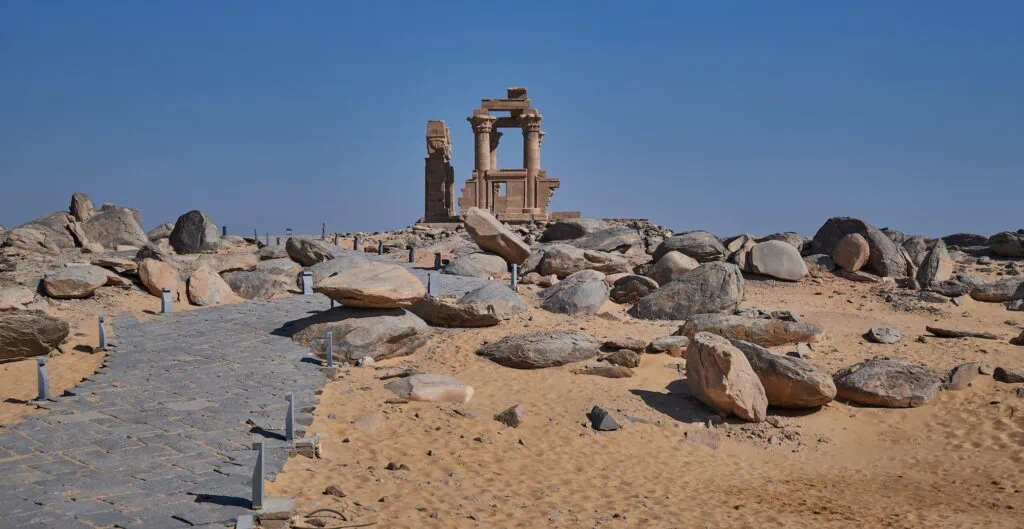
The papyrus motif carries deep significance in Egyptian temple design. Papyrus plants symbolized creation and rebirth, making them perfect architectural elements for sacred spaces dedicated to divine worship.
Sandstone Construction and Roman Engineering
Roman builders selected local sandstone for construction, following traditional Egyptian building practices while incorporating their own structural innovations. The kiosk’s proportions reflect Roman architectural principles, with carefully calculated spacing between columns and precise geometric relationships.
Evidence suggests the temple remained unfinished when construction ceased. Missing decorative elements and incomplete wall sections indicate work stopped abruptly, possibly due to changing political priorities or resource constraints during the later Roman occupation of Egypt.
Sacred Purpose and Isis Worship
Archaeological evidence points to the kiosk’s dedication to the goddess Isis, whose cult had spread throughout the Roman Empire by this period. The temple likely served as a way station for religious processions traveling between major temple complexes in ancient Nubia.
Small temples like Qertassi played crucial roles in regional religious networks, providing places for ritual purification and offerings before pilgrims continued to larger sacred sites.
The International Campaign to Save Nubian Monuments
The 1960s rescue operation transformed archaeological preservation forever. When Egypt announced plans for the Aswan High Dam, UNESCO launched an unprecedented international effort to save threatened monuments throughout Nubia.
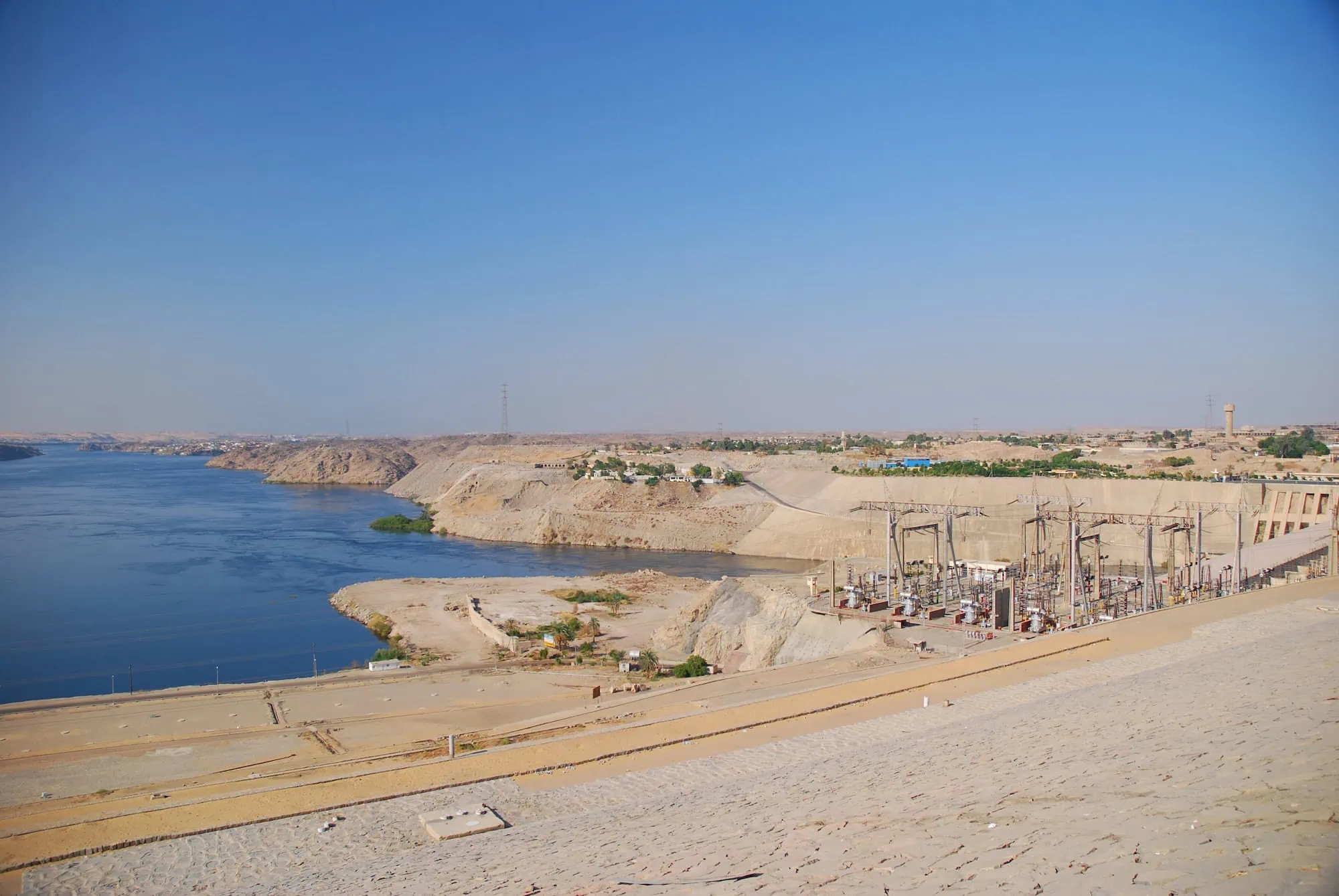
The Kiosk of Qertassi faced complete submersion beneath the future Lake Nasser. Engineers carefully documented every stone block, creating detailed architectural drawings and photographic records before dismantling began. Each carved element received individual numbering and protective treatment during the delicate removal process.
Teams of specialists worked against rising water levels as the dam’s construction progressed. The rescue timeline allowed no delays—monuments had to be moved before flooding reached their original locations. International funding and expertise made possible what national resources alone couldn’t achieve.
Relocation to New Kalabsha Island
New Kalabsha Island became the new home for several rescued Nubian monuments, including the Kiosk of Qertassi. The artificial island, created specifically for monument preservation, sits safely above Lake Nasser’s highest water levels.
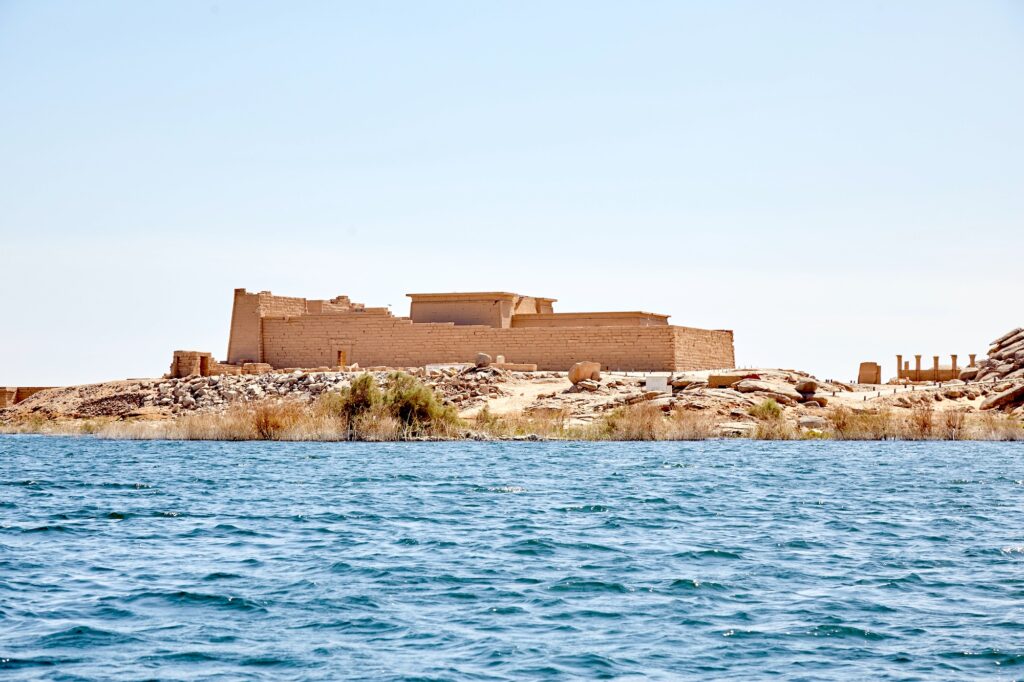
Reconstruction required meticulous attention to original orientation and structural relationships. Engineers ensured the kiosk maintained its proper geographical alignment while adapting to the new island’s topography. The relocated temple now stands approximately 40 meters (131 feet) from the massive Kalabsha Temple, creating an impressive archaeological complex.
Visiting the Preserved Roman Kiosk Today
Reaching New Kalabsha Island requires boat transportation across Lake Nasser from the Aswan area. We arrange private boat transfers as part of our tailored itineraries, ensuring comfortable access to this remote archaeological site.
Early morning visits offer the best photography conditions and cooler temperatures. The kiosk’s sandstone surfaces glow beautifully in soft morning light, highlighting the intricate Hathor column details and carved decorative elements. Afternoon visits can be extremely hot, particularly during summer months when temperatures exceed 40°C (104°F).
The island visit typically includes exploration of Kalabsha Temple, one of Egypt’s largest freestanding temples, along with the smaller Kiosk of Qertassi and the nearby tomb of Beit al-Wali. This combination creates a comprehensive introduction to both Ptolemaic and Roman-era architecture in ancient Nubia.
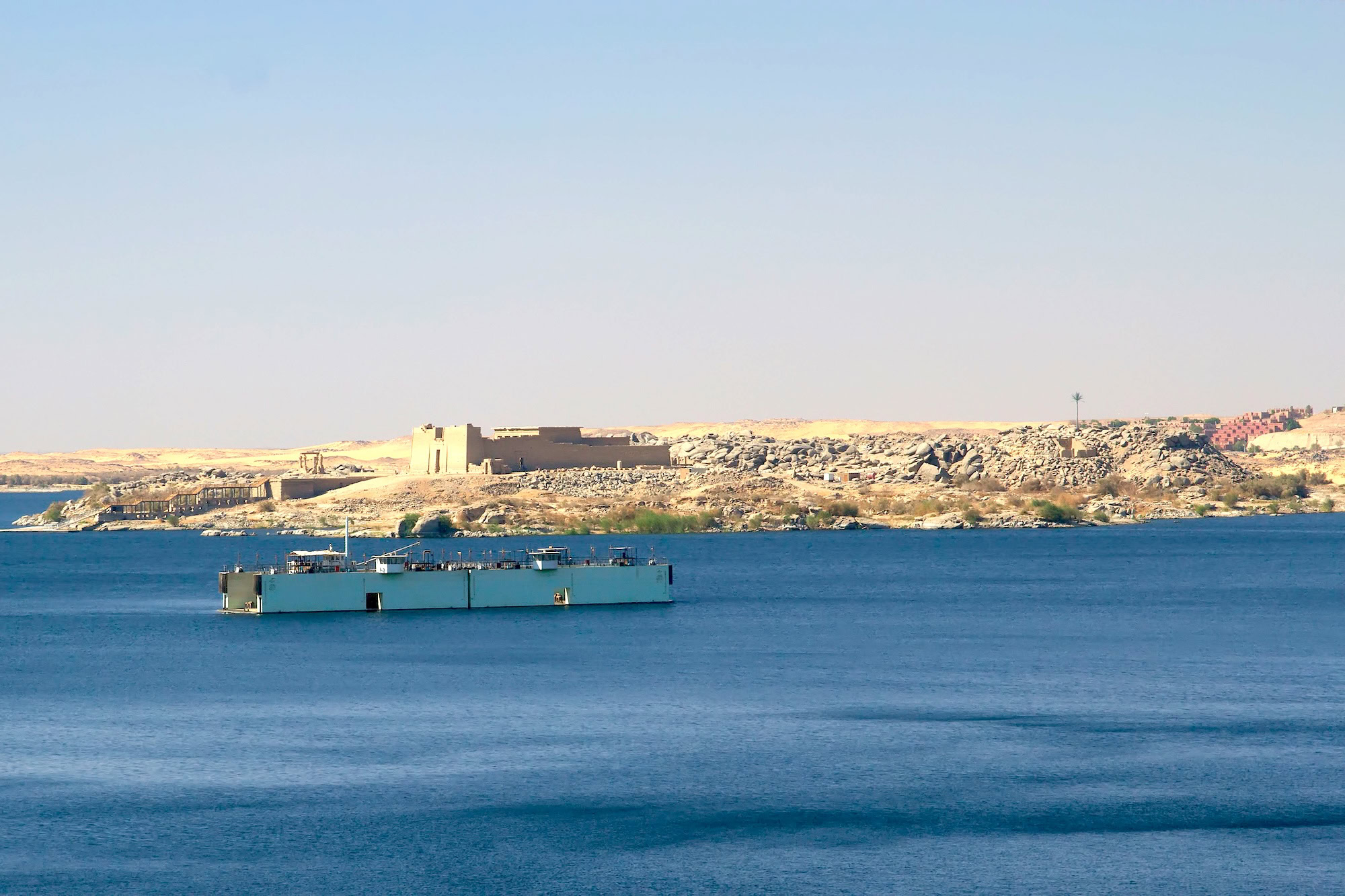
Access requires advance planning since boat services operate on scheduled timetables. Private tours offer flexibility for extended photography sessions and detailed exploration of architectural features.
Tourist facilities on the island remain minimal—bring water, sun protection, and comfortable walking shoes for exploring the rocky terrain around the monuments.
Architecture and Artistic Details Worth Noting
The kiosk’s compact dimensions make detailed examination possible during short visits. Each Hathor column capital displays unique carved features, with subtle variations in facial expressions and decorative elements that reward close inspection.
Column Design and Proportional Harmony
Roman architects achieved visual balance through careful proportional relationships between column height, spacing, and capital dimensions. The papyrus column shafts taper gently upward, following Egyptian architectural traditions while incorporating Roman structural principles.
Stone-cutting techniques demonstrate high skill levels among ancient craftsmen. Joint lines remain nearly invisible, and carved surfaces show consistent depth and precision across all decorative elements.
Incomplete Elements and Historical Evidence
Unfinished wall sections provide insights into ancient construction sequences. Tool marks on stone surfaces reveal techniques used by Roman-era stonemasons working in traditional Egyptian styles.
Missing roof elements and incomplete interior decorations suggest construction ceased suddenly. This unfinished state actually enhances the monument’s educational value, allowing visitors to understand ancient building processes through visible evidence.
Preservation Challenges and Modern Conservation
Relocation preserved the kiosk from flooding but created new conservation challenges. Desert wind erosion and temperature fluctuations affect exposed sandstone surfaces differently than the original Nile Valley environment provided.
Regular monitoring and maintenance ensure long-term preservation. UNESCO continues supporting conservation efforts for relocated Nubian monuments through technical expertise and funding assistance.
Connection to Other Rescued Nubian Temples
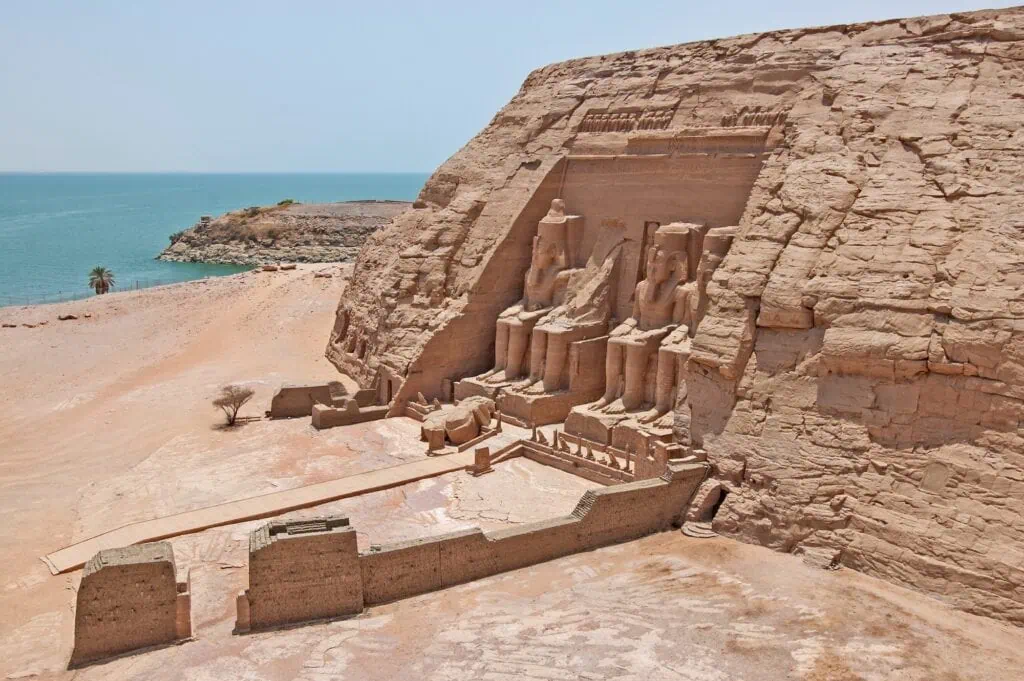
The Kiosk of Qertassi represents just one success story from the massive Nubian rescue campaign. Other relocated temples include the famous Abu Simbel temples, now among Egypt’s most visited archaeological sites.
Trajan’s Kiosk at Philae Temple shares architectural similarities with the Qertassi kiosk, both featuring elegant column capitals and Roman-era construction techniques. These monuments demonstrate the widespread influence of Roman architectural styles throughout Egypt during the early imperial period.
The temple of Dendur, relocated to New York’s Metropolitan Museum of Art, shows how international cooperation preserved Nubian heritage for global audiences. Similar preservation efforts saved the Temple of Dabod, now reconstructed in Madrid, Spain.
These rescue operations established precedents for modern archaeological preservation projects worldwide. The techniques developed during the Nubian campaign influence current efforts to protect threatened cultural heritage sites from natural disasters and human conflicts.
Add A Hidden Gem To Your Nile Experience
The Kiosk of Kertassi may be small in scale, but its elegance and setting make it a memorable stop along Lake Nasser—offering a quiet, refined glimpse into Egypt’s ancient architectural beauty. With Egypt Tours Plus, we seamlessly include this charming site in a private journey that connects lesser-known treasures with Egypt’s most iconic highlights.
You choose your travel dates, your pace, and the experiences that shape your route. Whether part of a Nile cruise or a broader exploration of southern Egypt, we tailor every detail around your preferences—ensuring a smooth, comfortable, and deeply personal travel experience from beginning to end.
Frequently Asked Questions
Most visitors spend 30 to 45 minutes exploring the Kiosk of Qertassi itself, although combined excursions to New Kalabsha Island usually last 2 to 3 hours including boat transfers and nearby monuments. The kiosk is relatively small compared to major Nubian temples, but its unfinished Roman architecture and Hathor-headed columns reward close observation and photography. Many tours combine it with Kalabsha Temple and Beit al-Wali in one itinerary. Morning visits generally provide cooler temperatures and softer photographic lighting.
Yes, New Kalabsha Island remains accessible throughout the year, although winter months from November through March offer the most comfortable touring conditions with temperatures typically ranging between 20-30°C (68-86°F). Summer temperatures in Aswan regularly exceed 40°C (104°F), making midday exploration difficult on exposed stone surfaces with limited shade. Boat schedules continue year-round, but early morning departures are strongly recommended during hotter months. Visitors sensitive to heat should avoid afternoon excursions between June and August.
Accessibility at the Kiosk of Qertassi is limited because New Kalabsha Island contains uneven stone paths, rocky terrain, and areas without modern ramps or smooth walking surfaces. Visitors with mobility challenges may require assistance when boarding boats or navigating archaeological areas around the kiosk and neighboring temples. Compared with larger museum-style attractions, infrastructure here remains relatively undeveloped due to the island’s archaeological character. Supportive walking shoes and slower-paced private tours can significantly improve comfort during the visit.
Both the Kiosk of Qertassi and Trajan’s Kiosk at Philae are Roman-era Nubian monuments featuring Hathor-headed columns, but Trajan’s Kiosk is much larger, more elaborate, and architecturally complete. Qertassi remains unfinished, which actually gives historians valuable insight into Roman construction methods and interrupted temple projects in southern Egypt. Trajan’s Kiosk dominates Philae Island visually, while Qertassi offers a quieter and more intimate atmosphere on New Kalabsha Island. Both structures were relocated during UNESCO rescue operations after the Aswan High Dam project.
New Kalabsha Island lies roughly 50 kilometers south of central Aswan, and the boat journey from the marina usually takes 45 to 60 minutes depending on water levels, wind conditions, and vessel type. Most travelers reach the island through organized excursions departing near the High Dam area rather than from downtown Aswan directly. Because transportation involves both road transfers and boat travel, visitors should budget at least half a day for the experience. Morning departures generally offer calmer lake conditions and clearer visibility.
Guided tours are not mandatory at the Kiosk of Qertassi, but professional Egyptologists greatly improve the experience by explaining Roman Nubian architecture, religious symbolism, and the UNESCO relocation campaign that saved the monument from flooding. Without interpretation, many visitors overlook details such as unfinished carvings, Hathor capitals, and connections to nearby Kalabsha Temple. The site lacks extensive modern signage compared with major attractions like Philae or Karnak. Travelers interested in Nubian history usually gain far more historical context through guided visits.
Visitors to New Kalabsha Island should bring bottled water, sunscreen, sunglasses, a wide-brimmed hat, and comfortable walking shoes because facilities on the island remain minimal and shade is limited. Lightweight cotton clothing works best in Aswan’s dry desert climate, especially between April and October when temperatures rise sharply. A camera or zoom lens is also recommended for architectural photography and Lake Nasser views. Travelers taking boat excursions should carry cash and personal essentials since commercial services are extremely limited on-site.
Yes, travelers can combine New Kalabsha Island and Abu Simbel within the same Aswan itinerary, although the two sites require separate transportation systems and are usually visited on different days. Kalabsha excursions involve boat travel on Lake Nasser near Aswan, while Abu Simbel lies approximately 280 kilometers south by road or short domestic flight. Both sites were rescued during UNESCO’s Nubian Monuments Campaign after the construction of the Aswan High Dam. Multi-day Nubian itineraries often include both monuments for broader historical context.
Historians believe the Kiosk of Qertassi was left unfinished during the Roman period because of shifting political priorities, financial constraints, or declining regional importance in Lower Nubia. Architectural evidence shows incomplete carvings and structural elements that suggest construction stopped before final decorative phases were completed. Similar interruptions affected several Roman-era Egyptian projects during periods of administrative transition. Ironically, the unfinished state now makes the kiosk historically valuable because archaeologists can study ancient construction methods normally hidden beneath completed decoration and stone finishing.
Personal photography is generally permitted at the Kiosk of Qertassi, including mobile phones and standard cameras used for non-commercial purposes. Professional photography equipment such as large tripods, lighting systems, or commercial filming setups may require additional permits issued through Egyptian antiquities authorities. The open architectural layout and surrounding Lake Nasser scenery make the site especially attractive for landscape and historical photography. Early morning light usually produces the strongest contrast on the sandstone columns and unfinished decorative details.
During the UNESCO Nubian rescue campaign of the 1960s, engineers dismantled the Kiosk of Qertassi stone by stone before reconstructing it on higher ground at New Kalabsha Island above the future waters of Lake Nasser. Each block was carefully documented, numbered, and transported to preserve the monument’s original orientation and architectural integrity. Similar rescue operations saved Abu Simbel, Philae, and Kalabsha Temple after the construction of the Aswan High Dam threatened to flood Lower Nubia permanently beneath the reservoir.
New Kalabsha Island contains several important Nubian monuments including Kalabsha Temple, the Kiosk of Qertassi, and Beit al-Wali, all relocated during the UNESCO rescue campaign of the 1960s. Kalabsha Temple is the largest free-standing Nubian temple in Egyptian Nubia and dates to the Roman Emperor Augustus, while Beit al-Wali preserves remarkable Ramesside military reliefs. Visiting the three sites together provides a broader understanding of Nubian religious and political history across different historical periods.
Design Your Custom Tour
Explore Egypt your way by selecting only the attractions you want to visit