

Kalabsha Temple – Saved From the Waters of the Mighty Lake Nasser
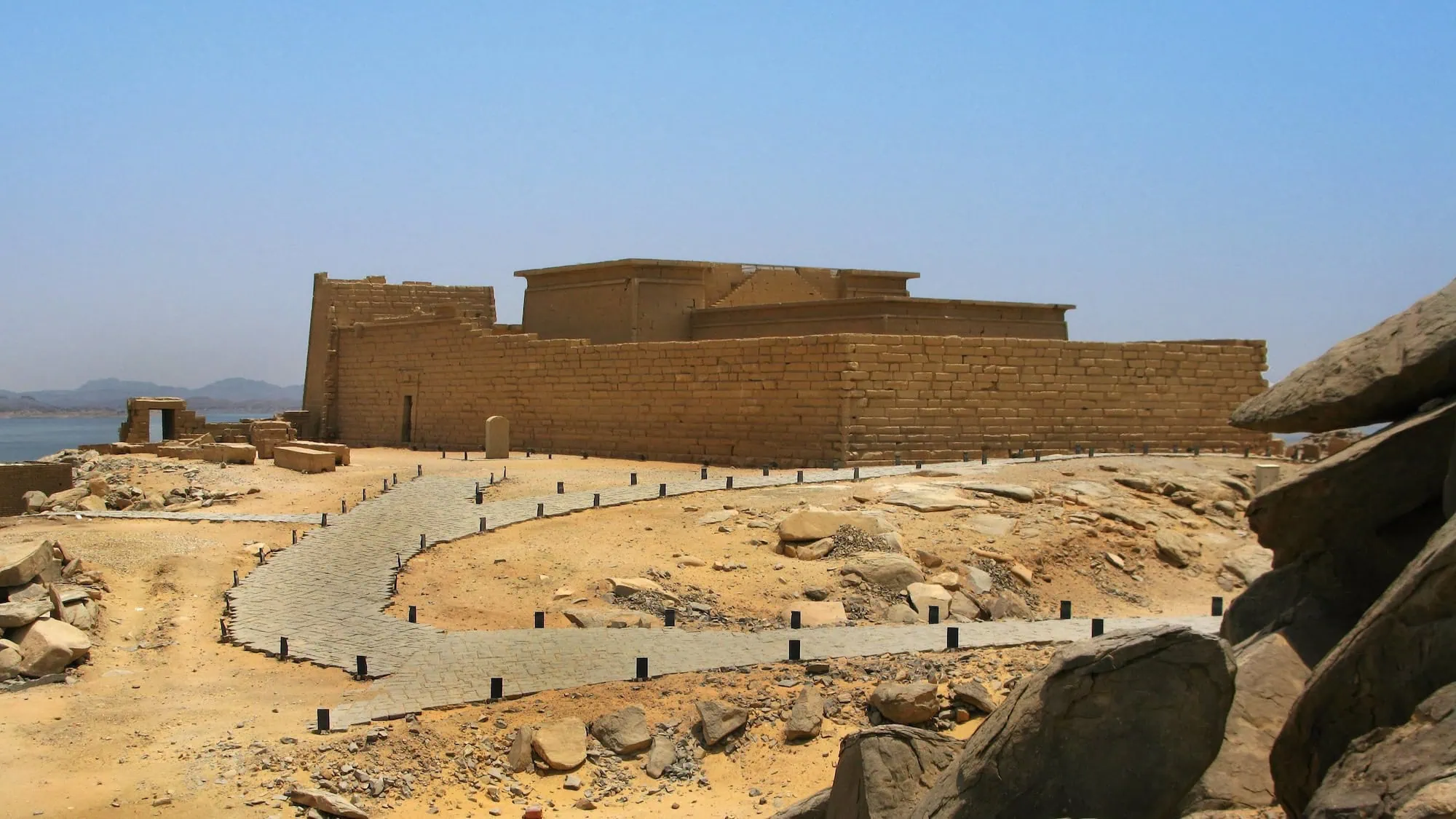
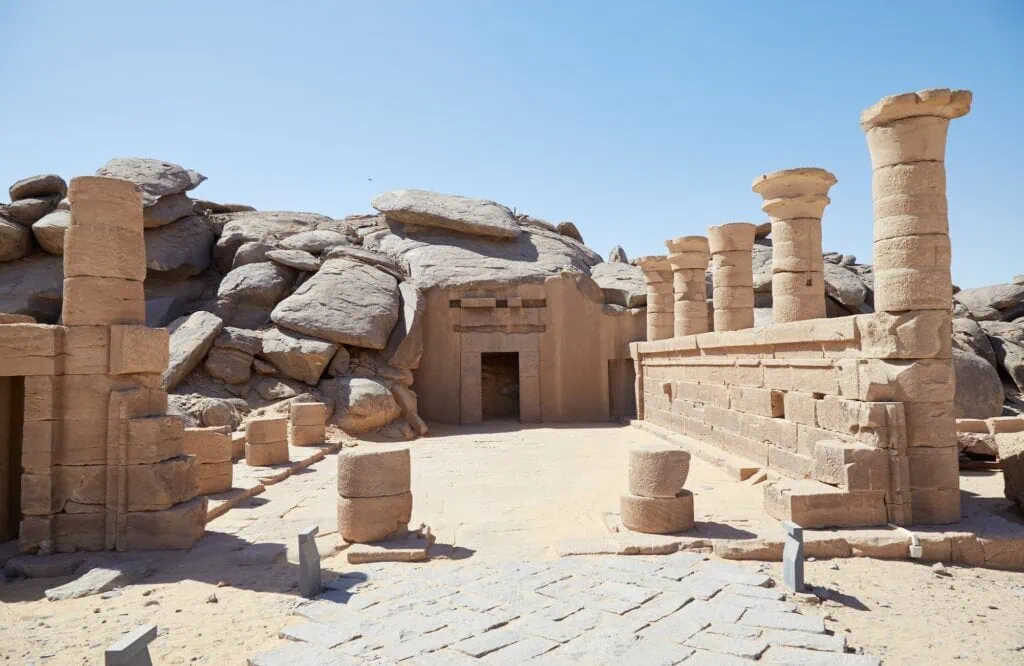
Standing majestically on the New Kalabsha site (often referred to as “New Kalabsha Island”) near Aswan, this extraordinary temple complex defies every expectation of ancient Egyptian monuments.
What makes Kalabsha Temple truly remarkable isn’t just its impressive scale as the largest free-standing temple of Egyptian Nubia, but its incredible journey of survival. Originally constructed during the reign of Emperor Augustus around 30 BCE, this sacred site dedicated to the Nubian solar god Mandulis has weathered millennia of change, from Roman rule through Christian conversion to modern-day preservation efforts. The temple’s stunning relocation in the 1960s – dismantled stone by stone and rebuilt on higher ground – represents one of UNESCO’s most ambitious heritage rescue operations.
For travelers seeking authentic Egyptian experiences beyond the crowded monuments of Giza and Luxor, Kalabsha offers something genuinely special. Here, surrounded by the tranquil waters of Lake Nasser, you’ll discover architectural masterpieces in peaceful isolation, where every carved relief and towering pylon tells the fascinating story of Nubia’s rich cultural heritage.
Table of Contents
Discovering the Temple Complex Architecture
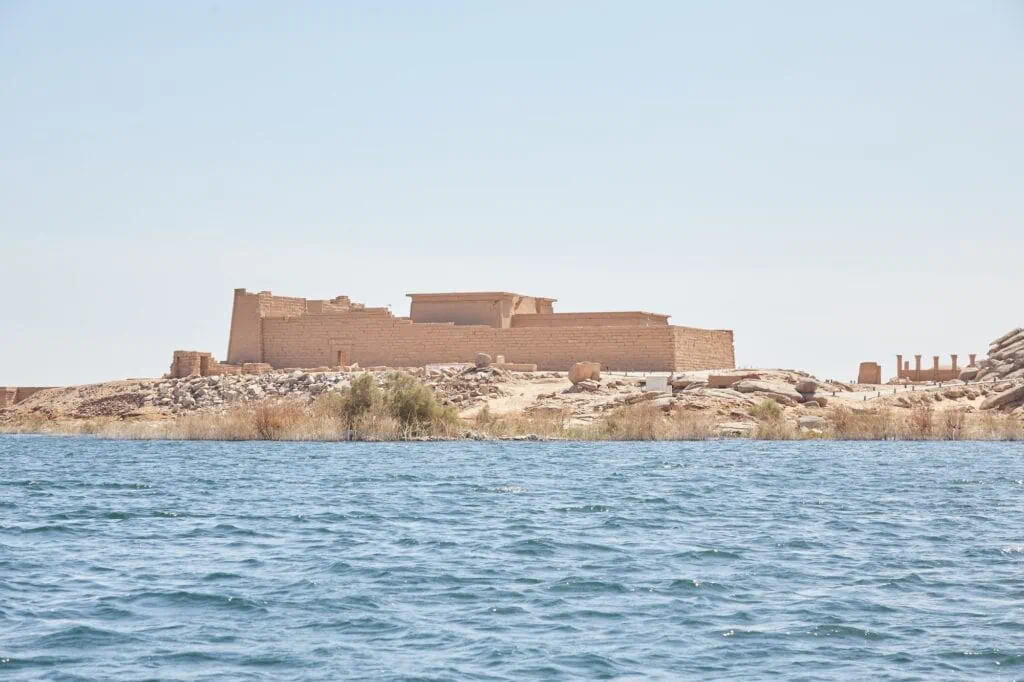
The moment your boat approaches New Kalabsha, the temple’s imposing sandstone facade commands attention across the lake waters.
The Grand Entrance and Pylon
Walking through the massive stone causeway that leads to the entrance, visitors first encounter the temple’s impressive pylon, roughly in the 30+ meter range in width. This monumental gateway, rising to around the mid-teens in meters, features intricate reliefs depicting Emperor Augustus making offerings to various Egyptian deities. The craftsmanship demonstrates the remarkable fusion of Roman imperial propaganda with traditional Egyptian religious iconography. In sheltered areas, traces of original pigment can still be seen.
Colonnaded Courtyard and Hypostyle Hall
Beyond the pylon lies the spacious colonnaded court, where 14 elegant columns once supported a roof that provided shade for religious ceremonies. The surviving columns showcase the distinctive capitals that blend Egyptian lotus motifs with Greco-Roman design elements. Moving deeper into the temple, the hypostyle hall presents one of Kalabsha’s most photographed spaces, with its remaining columns creating dramatic patterns of light and shadow throughout the day.
Sacred Sanctuary Chambers
The innermost sanctuary housed the sacred barque of Mandulis, though centuries of use as a Christian church left their mark on these holy chambers. Visitors can still observe ancient Egyptian hieroglyphs alongside later Coptic crosses carved into the walls. The sanctuary’s elevated position offers commanding views across Lake Nasser, making it easy to understand why this location held such spiritual significance for ancient Nubians.
The Mysterious Nilometer
Adjacent to the main temple structure, archaeologists have identified the remains of a Nilometer – an ancient device used to measure the Nile’s flood levels. This practical addition highlights how religious sites in ancient Egypt served multiple community functions beyond worship alone.
The UNESCO Rescue Mission: A Modern Marvel
The 1960s brought both triumph and tragedy to Egypt’s ancient monuments.
When construction of the Aswan High Dam began creating Lake Nasser, dozens of precious archaeological sites faced permanent submersion beneath rising waters. Kalabsha Temple, originally located 50 kilometers south of Aswan at the site of ancient Talmis, stood directly in the flood zone. The international community, led by UNESCO, launched one of history’s most ambitious heritage preservation campaigns.
German engineers and archaeologists volunteered to lead the complex dismantling process. Every single stone block was carefully numbered, photographed, and catalogued before removal. The meticulous reconstruction process took years to complete, with each piece precisely repositioned according to detailed architectural plans. Today’s visitors can barely detect evidence of this massive undertaking, testament to the skill and dedication of the international preservation teams.
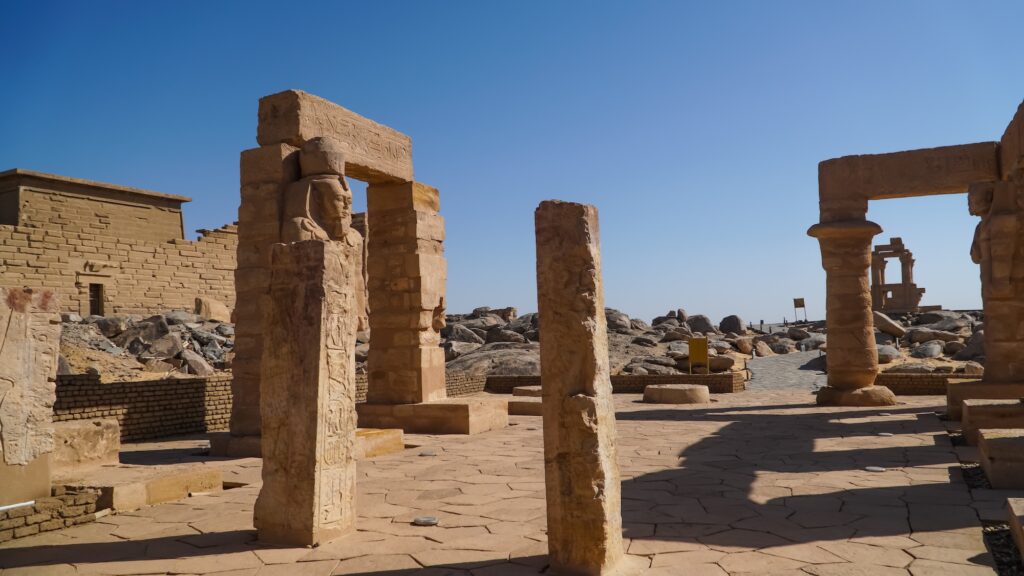
This collaborative effort saved not only Kalabsha Temple but also the smaller Chapel of Dedwen and the elegant Qertassi Kiosk, both now residing on the same island. The entire complex serves as a powerful reminder of what international cooperation can achieve when cultural heritage faces existential threats.
Mandulis: The Nubian Solar Deity
Understanding Kalabsha Temple requires appreciating its connection to Mandulis, known to the Greeks as Mandoules and to ancient Nubians by various names including Merwel.
This powerful solar deity represented the life-giving force of the sun, particularly important in the harsh desert environment of ancient Nubia. Unlike the more familiar Egyptian pantheon, Mandulis held special significance for Nubian communities who saw him as their protector and provider. The temple reliefs depict him in various forms – sometimes as a man with elaborate feathered headdresses, other times merged with traditional Egyptian solar symbols.
Archaeological evidence suggests that Mandulis worship predated the Roman period by centuries, making Kalabsha Temple both a continuation of ancient traditions and an adaptation to Roman imperial requirements. Emperor Augustus, seeking to maintain stability in this strategically important border region, wisely chose to honor local religious customs rather than impose purely Roman practices.
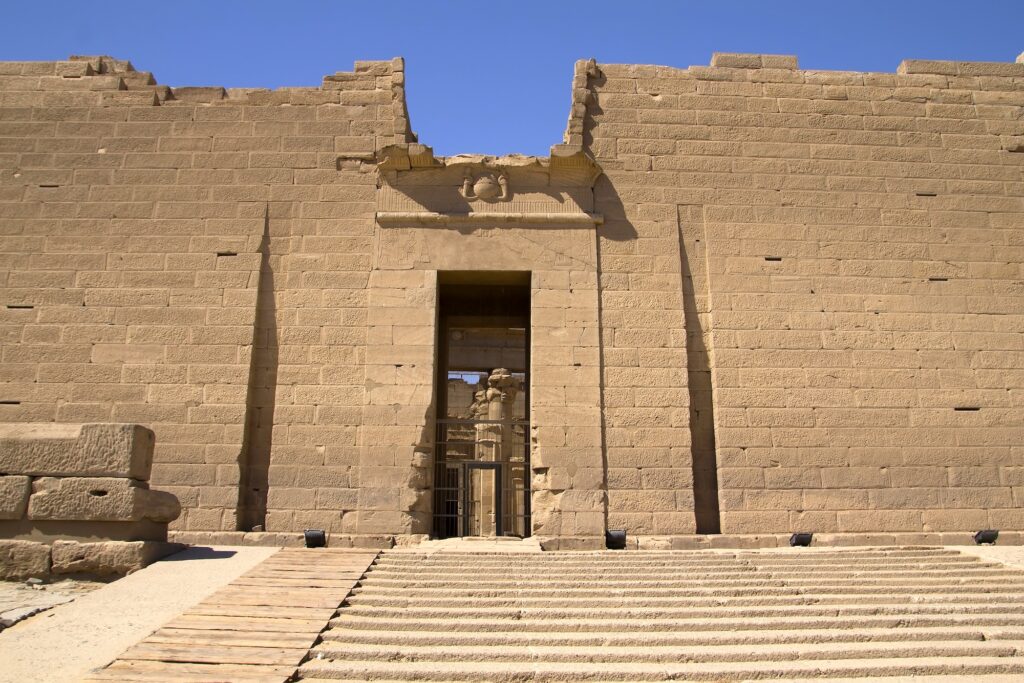
The fusion of Nubian, Egyptian, and Greco-Roman religious elements visible throughout the temple creates a unique spiritual atmosphere. Visitors often comment on the site’s peaceful energy, perhaps reflecting centuries of diverse communities finding common ground in shared reverence for this sacred space. Wall inscriptions in multiple scripts – hieroglyphic Egyptian, Meroitic, and later Greek and Latin – demonstrate the temple’s role as a cultural crossroads where different civilizations met and mingled.
Planning Your Kalabsha Temple Visit
Getting There from Aswan
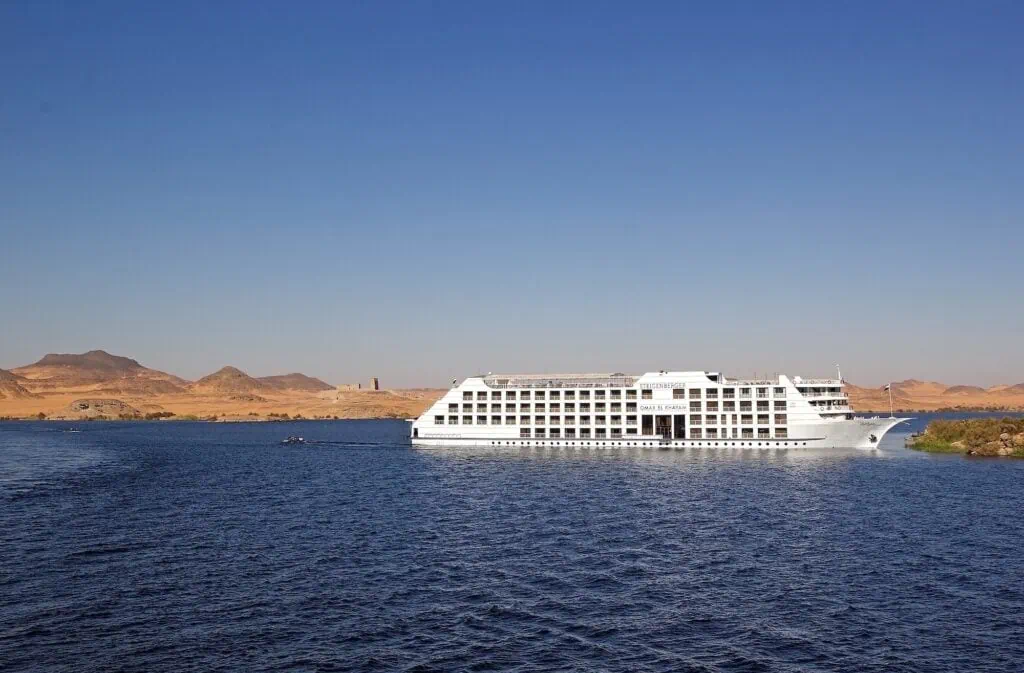
Reaching Kalabsha Temple requires crossing Lake Nasser by boat, typically arranged through authorized tour operators or independent boatmen at Aswan’s waterfront. We recommend booking through established operators who provide reliable transportation and knowledgeable guides familiar with the site’s complex history. The boat journey takes approximately 45 minutes each way, offering spectacular views of the lake’s desert shoreline and occasional wildlife sightings.
Best Times to Visit
Early morning departures between roughly 7:00 and 8:00 provide the most comfortable experience, with cooler temperatures and excellent lighting for photography. Afternoon visits after 3:00 pm (15:00) offer dramatic sunset views but can be quite warm, especially during summer months when temperatures exceed 40°C (104°F). Winter visits between November and March provide the most pleasant conditions, with daytime temperatures around 25°C (77°F).
What to Bring
Essential items include sun protection, comfortable walking shoes, and plenty of water. Photography equipment benefits from lens cloths due to occasional sand-blown conditions. We strongly recommend bringing a wide-brimmed hat and light, long-sleeved clothing to protect against intense UV reflection from the lake surface.
Exploring Nearby Monuments
Temple of Beit el-Wali
This smaller but equally fascinating temple, also rescued and relocated to New Kalabsha Island, showcases some of Egypt’s most vivid ancient paintings. Originally built by Ramses II, the temple features brilliantly preserved scenes of the pharaoh’s Nubian military campaigns. The intimate scale allows for detailed appreciation of the artistic techniques used by ancient painters.
Qertassi Kiosk
The elegant Roman-period kiosk represents one of the latest examples of traditional Egyptian temple architecture. Its simple but graceful columns and open-air design created a welcoming entry point for ancient pilgrims approaching the sacred island. Today, it provides an excellent vantage point for lake photography and sunset viewing.
Gerf Hussein
Gerf Hussein was only partly relocated: the free-standing section was moved to New Kalabsha, while much of the rock-cut portion remained at the original location and is now submerged beneath Lake Nasser.
The Christian Period and Coptic Heritage
During the 6th century CE, Kalabsha Temple underwent significant transformation as Christian communities converted the ancient sanctuary into a church. This adaptive reuse contributed to the site’s layered history rather than representing simple destruction. Crosses carved alongside older reliefs create a visual dialogue between religious traditions. Later graffiti and prayers in Greek/Coptic contexts provide evidence of continuing sacred use after the Roman-period cult declined.
Coptic crosses carved alongside pharaonic reliefs create fascinating visual dialogues between different religious traditions. Christian graffiti and prayers inscribed in Greek and Coptic scripts provide evidence of active worship continuing centuries after the original builders intended. Some scholars suggest that certain Christian symbols deliberately echo earlier solar worship themes, demonstrating cultural continuity despite changing religious practices.
The Christian community apparently maintained the temple’s physical structure with care, recognizing its architectural and spiritual value even while adapting its function. This respectful approach to heritage preservation offers lessons for modern conservation efforts, showing how different cultures can honor shared spaces without erasing previous traditions.
Byzantine-period modifications included installation of altars and modification of interior spaces to accommodate Christian liturgical requirements. Archaeological excavations have revealed remains of Christian burials around the temple grounds, indicating that the site retained its sacred character across religious transitions.
Photography and Documentation Tips
The interplay of ancient stone architecture against Lake Nasser’s blue waters creates exceptional photographic opportunities throughout the day. Morning light enhances relief details and brings out the warm tones of the sandstone construction. Late afternoon provides dramatic contrasts and longer shadows that emphasize architectural depth.
Professional photographers often recommend bringing both wide-angle lenses for capturing the temple’s impressive scale and macro lenses for documenting intricate relief work. The site’s relative isolation means fewer crowds interfering with compositions, particularly during weekday visits. Drone photography requires special permits through Egyptian aviation authorities.
Interior chambers benefit from careful flash photography techniques that don’t damage ancient pigments. We work with guides trained in appropriate documentation methods that respect conservation requirements while capturing the temple’s artistic treasures. The varying light conditions throughout different chambers require patience and technical skill to achieve optimal results.
Many visitors find that spending additional time simply observing the monument without cameras allows deeper appreciation of its spiritual and aesthetic qualities. The peaceful setting encourages contemplative photography that captures not just architectural details but the site’s extraordinary atmosphere of preserved ancient grandeur.
Experience The Grandeur Of Kalabsha Temple
Set on the shores of Lake Nasser, Kalabsha Temple combines impressive scale with a peaceful, uncrowded atmosphere—offering a deeper, more relaxed way to experience Egypt’s ancient heritage. With Egypt Tours Plus, we seamlessly include this striking site in a private journey that connects Aswan’s highlights with the hidden gems of southern Egypt.
You choose your travel dates, your pace, and the experiences that shape your route. From Nile-side exploration to cultural landmarks and comfortable stays, we tailor every detail around your preferences—ensuring a smooth, refined, and deeply personal travel experience from start to finish.
Frequently Asked Questions
Plan for approximately 4 to 5 hours total when visiting Kalabsha Temple, including round-trip boat transportation from Aswan and exploration of nearby monuments on New Kalabsha Island. The temple itself usually takes 90 minutes to 2 hours to explore thoroughly because of its large courtyard, detailed reliefs, and riverside setting. Most itineraries also include the Kiosk of Qertassi and Beit El Wali Temple during the same excursion. Morning departures generally provide cooler temperatures and calmer lake conditions.
Kalabsha Temple can be partially accessible for visitors with mobility limitations, although uneven stone pathways, stairs, and boat boarding create challenges throughout the site. Ground-level sections of the temple complex are easier to navigate, but some elevated areas and interior chambers require careful walking on ancient surfaces. Compared to major urban museums, accessibility infrastructure remains limited because the monument sits on a remote island in Lake Nasser. Visitors needing assistance should arrange private transportation and slower-paced guided visits in advance.
Kalabsha Temple offers a quieter and more flexible experience than Abu Simbel, while Abu Simbel is famous for its colossal statues and monumental scale built by Ramses II. Kalabsha dates primarily to the Roman period under Emperor Augustus around 30 BCE, whereas Abu Simbel belongs to the earlier New Kingdom period. Visitors at Kalabsha can often explore with fewer crowds and spend more time examining relief details at close range. Travelers interested in Nubian history frequently visit both sites for contrasting architectural styles and historical periods.
Yes, independent visits to Kalabsha Temple are possible through private boat arrangements from Aswan, although guided tours simplify logistics and provide essential historical interpretation. The temple sits on New Kalabsha Island near the Aswan High Dam, so transportation coordination can be confusing for first-time visitors unfamiliar with local schedules and ticket procedures. Egyptologist guides also explain the temple’s Roman-era inscriptions, Nubian religious influences, and UNESCO relocation history. Independent travelers should still budget several hours for transportation and island exploration.
New Kalabsha Island has very limited visitor infrastructure and no full-service restaurants, cafes, or commercial shopping facilities near the archaeological monuments. Travelers should bring bottled water, snacks, sunscreen, and any personal necessities before departing from Aswan because services on the island remain minimal. Basic restrooms may be available near docking areas depending on maintenance conditions and visitor traffic. Organized excursions generally handle refreshments more comfortably than independent visits. Carrying extra water is especially important between May and September when temperatures rise sharply.
Construction of Kalabsha Temple began during the late Ptolemaic period and was completed under Roman Emperor Augustus around 30 BCE, shortly after Rome annexed Egypt. The temple was dedicated primarily to the Nubian god Mandulis, a solar deity worshipped throughout Lower Nubia during the Greco-Roman era. Although relatively late compared to Pharaonic temples like Karnak or Luxor, Kalabsha preserves many traditional Egyptian architectural and religious elements. Its size and preservation make it the most important Roman-period temple surviving in Nubia today.
Kalabsha Temple was relocated during the 1960s because the creation of Lake Nasser after construction of the Aswan High Dam would have submerged the original site at ancient Talmis. UNESCO coordinated a massive international rescue campaign to dismantle and rebuild endangered Nubian monuments on higher ground throughout southern Egypt. Engineers carefully documented and transferred Kalabsha block by block to New Kalabsha Island near Aswan. Without the relocation project, one of Nubia’s largest surviving temples would now lie underwater beneath the reservoir.
Kalabsha Temple’s original monumental gateway was gifted to Germany in the 19th century and is now displayed at the Egyptian Museum in Berlin. The gateway, known as the Kalabsha Gate or Talmis Gate, contains detailed relief carvings and inscriptions connected to the worship of Mandulis and Roman imperial authority in Nubia. Its removal occurred long before the UNESCO rescue campaign associated with Lake Nasser. Visitors to Kalabsha today still see the reconstructed temple complex, although the original entrance structure remains abroad.
Kalabsha Temple is the largest free-standing temple in Lower Nubia and one of the finest surviving examples of Roman-period architecture in southern Egypt. Unlike the rock-cut temples of Abu Simbel, Kalabsha features expansive courtyards, sandstone pylons, and open ceremonial spaces that visitors can explore at ground level. The temple also preserves a unique blend of Egyptian, Nubian, and Roman religious influences centered on the god Mandulis. Its scale, preservation, and lakeside setting make it one of Lake Nasser’s most important archaeological sites.
Yes, Kalabsha Temple is commonly combined with other Lake Nasser attractions including Abu Simbel, Beit El Wali, the Kiosk of Qertassi, and multi-day Nubian cruise itineraries departing from Aswan. Because Kalabsha sits close to the Aswan High Dam, it works particularly well as a half-day excursion before or after longer southern journeys. Lake Nasser cruises also provide historical continuity by linking relocated temples rescued during the UNESCO campaign. Travelers interested in Nubian archaeology usually benefit from visiting several monuments together rather than individually.
Design Your Custom Tour
Explore Egypt your way by selecting only the attractions you want to visit