

Abu Simbel Temples – The Rock Carved Temples of Ramesses II
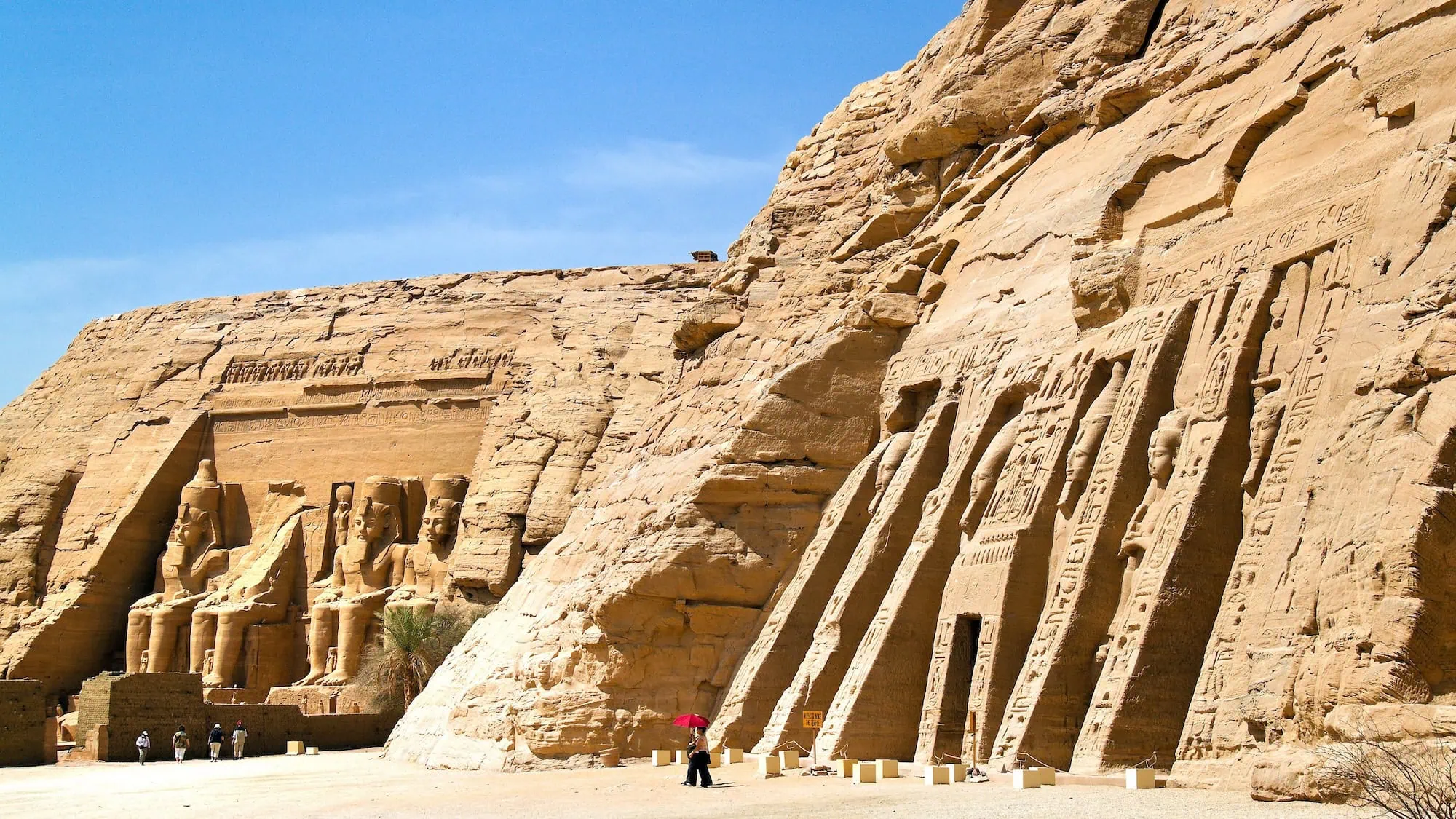
Built by Ramses II around 1264 BCE, the Abu Simbel temples stand as perhaps ancient Egypt’s most ambitious architectural statement. Carved directly into sandstone cliffs along the Nile’s banks in southern Egypt, these twin temples are among the most remarkable landmarks for travelers Aswan and Upper Egypt. The larger temple honors Ramses himself, while the smaller temple celebrates his beloved queen Nefertari.
What makes these monuments truly extraordinary isn’t just their size or artistic mastery, but the incredible modern engineering feat that saved them from destruction in the 1960s. Today, visitors to Abu Simbel witness both ancient genius and contemporary determination. The temples were carefully dismantled and relocated 200 feet higher to escape rising waters from the Aswan High Dam, a preservation effort similar to what later saved other relocated temples, including Philae Temple.
Table of Contents
The Great Temple: Ramses II’s Monument to Power
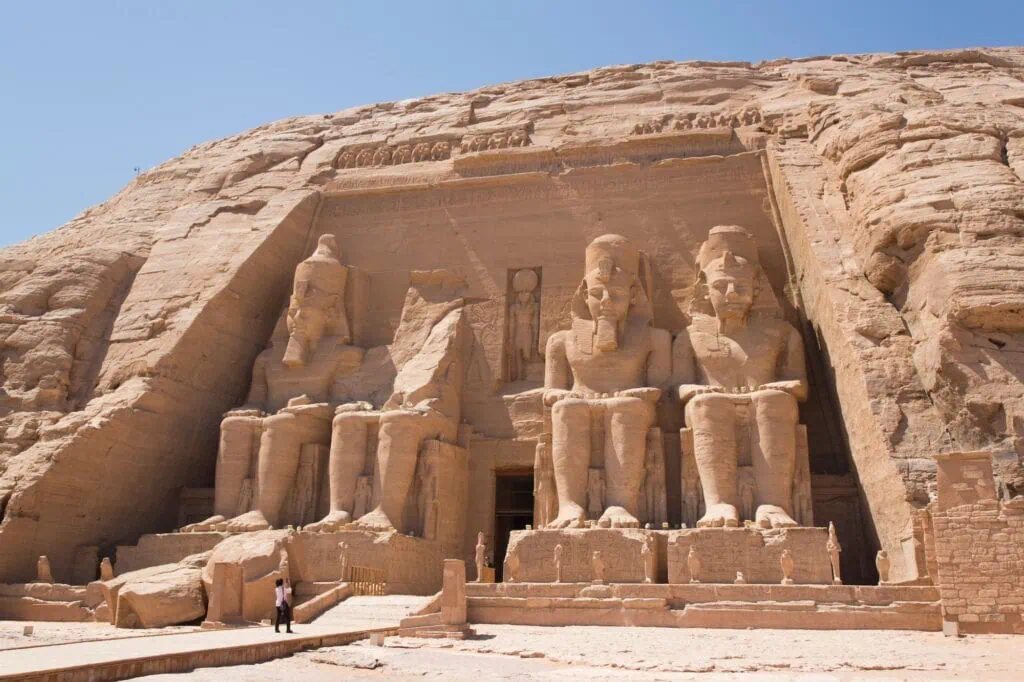
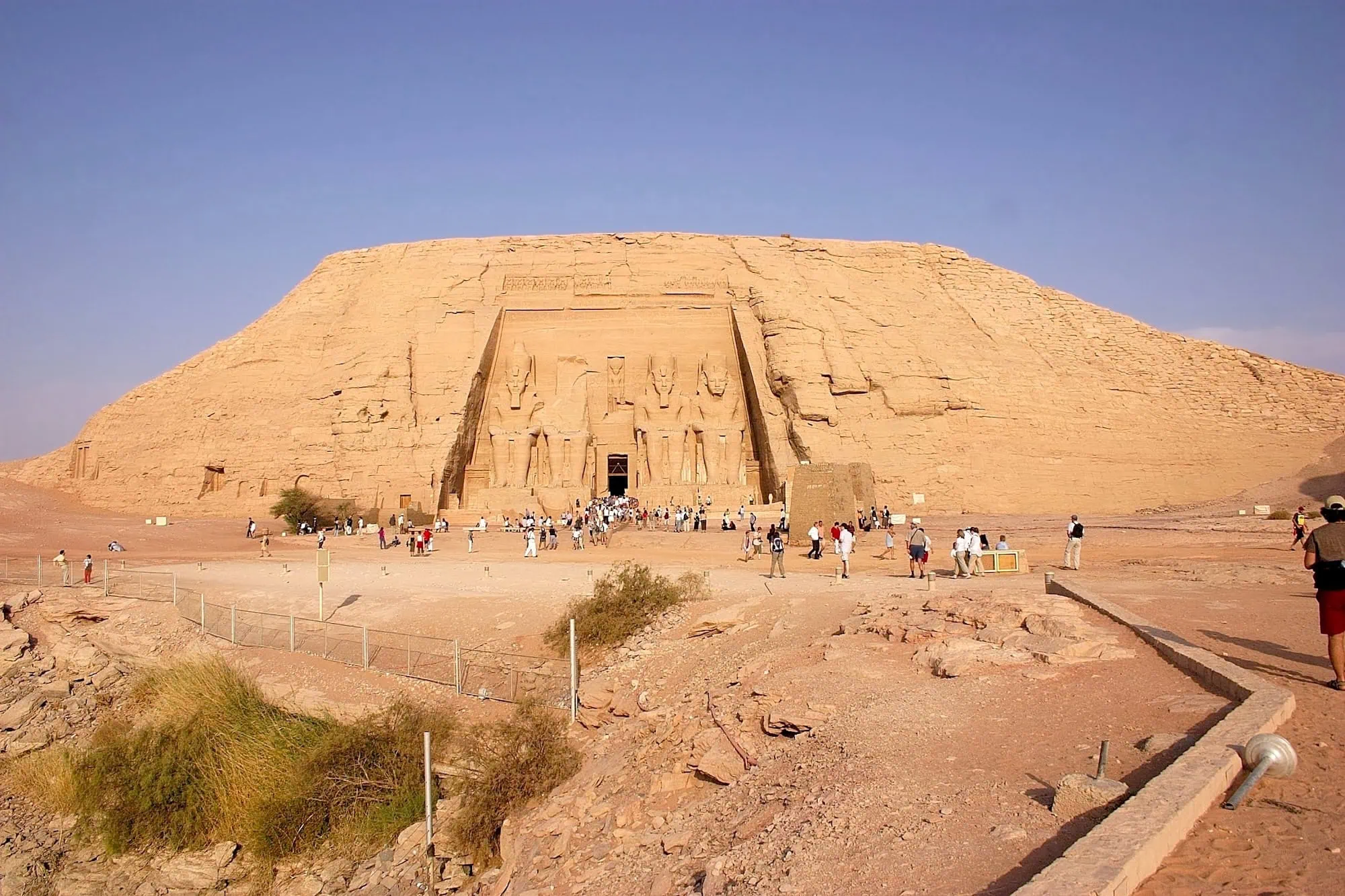
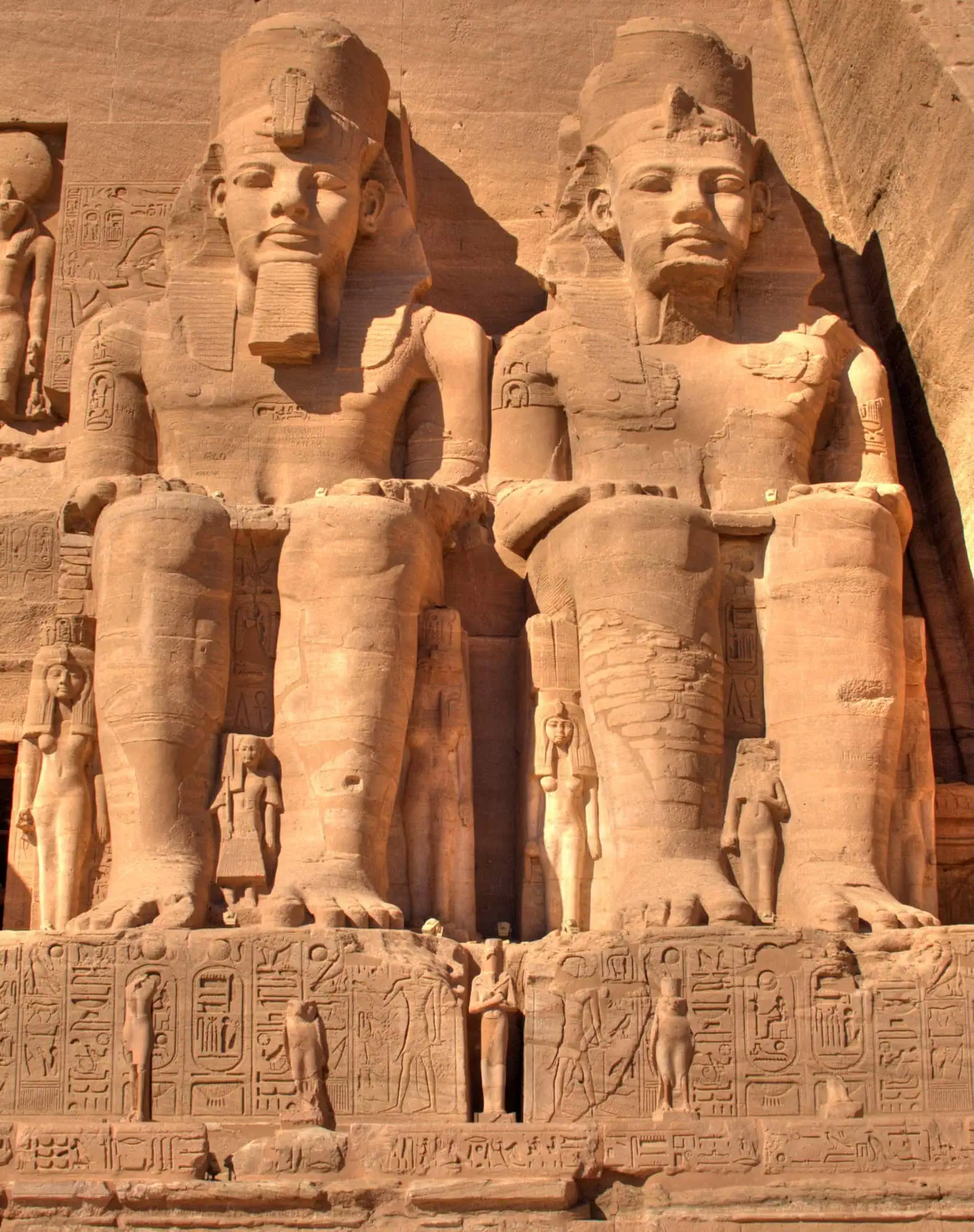
Four massive seated statues of Ramses II dominate the temple’s facade, each towering 66 feet into the desert sky. Ancient sculptors carved these colossal figures directly from the living rock, creating an entrance that must have struck fear into Egypt’s enemies and awe into its allies.
Architectural Marvel of the Ancient World
The temple extends 185 feet into the cliff face, featuring a series of increasingly sacred chambers. Visitors first enter the great hall, supported by eight enormous pillars carved as standing figures of Ramses II in divine form. These Osirid pillars, each 30 feet tall, create a forest of royal power that guides visitors deeper into the sacred space.
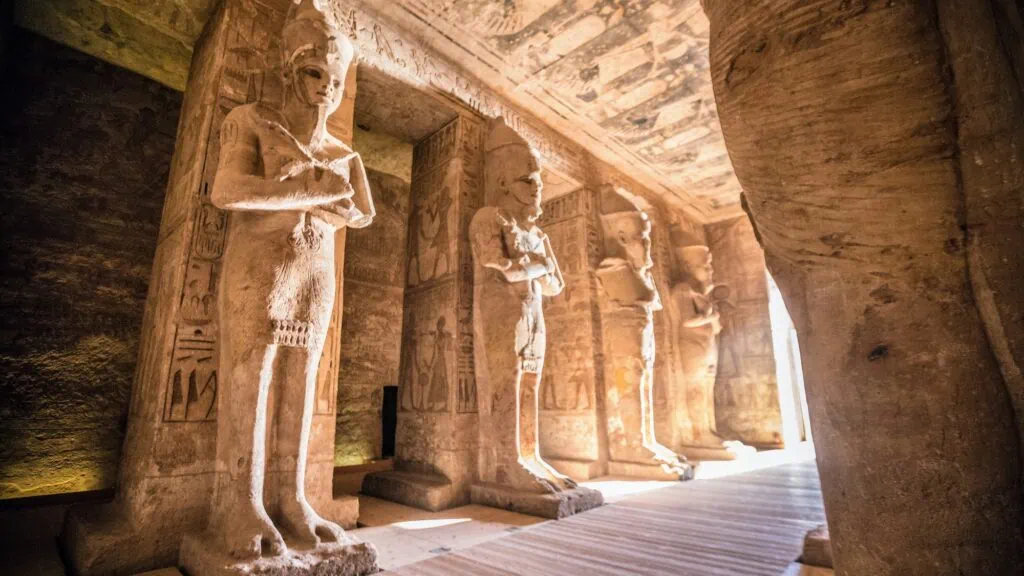
Wall carvings throughout the temple chronicle Ramses II’s military victories, particularly the famous Battle of Kadesh against the Hittites. Skilled artisans depicted the pharaoh in his war chariot, arrows flying around him as he charges into battle. These scenes served both religious and political purposes, reinforcing Ramses’ image as Egypt’s divine protector.
Solar Alignment Phenomenon
Twice each year, a rare solar alignment phenomenon occurs at Abu Simbel. On February 22 and October 22, the rising sun penetrates deep into the temple, lighting up statues of Ramses II, Ra-Horakhty, and Amun-Ra—while Ptah, the god of darkness, remains mysteriously unlit.
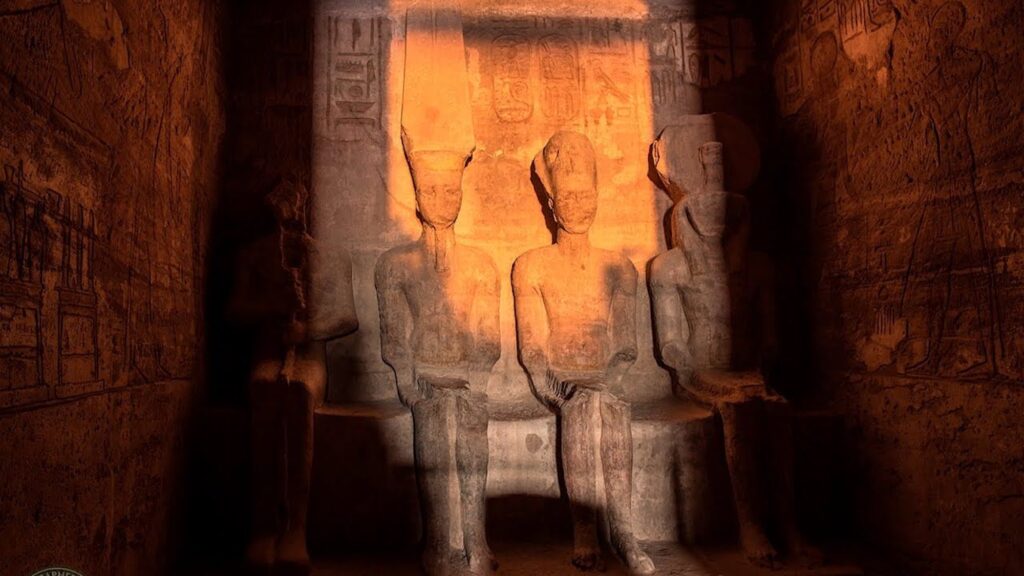
This astronomical precision demonstrates ancient Egyptian mastery of both architecture and astronomy. Engineers designed the temple’s axis to capture sunlight at specific moments, likely corresponding to Ramses II’s birthday and coronation anniversary.
Graffiti from Ancient Tourists
Greek mercenaries serving in Egypt’s army left inscriptions on the temple’s facade around 591 BCE, providing valuable historical evidence of ancient tourism. These early “visitors” carved their names and comments in Greek letters, proving that Abu Simbel has attracted travelers for over 2,500 years.
Nefertari’s Temple: A Queen’s Divine Status
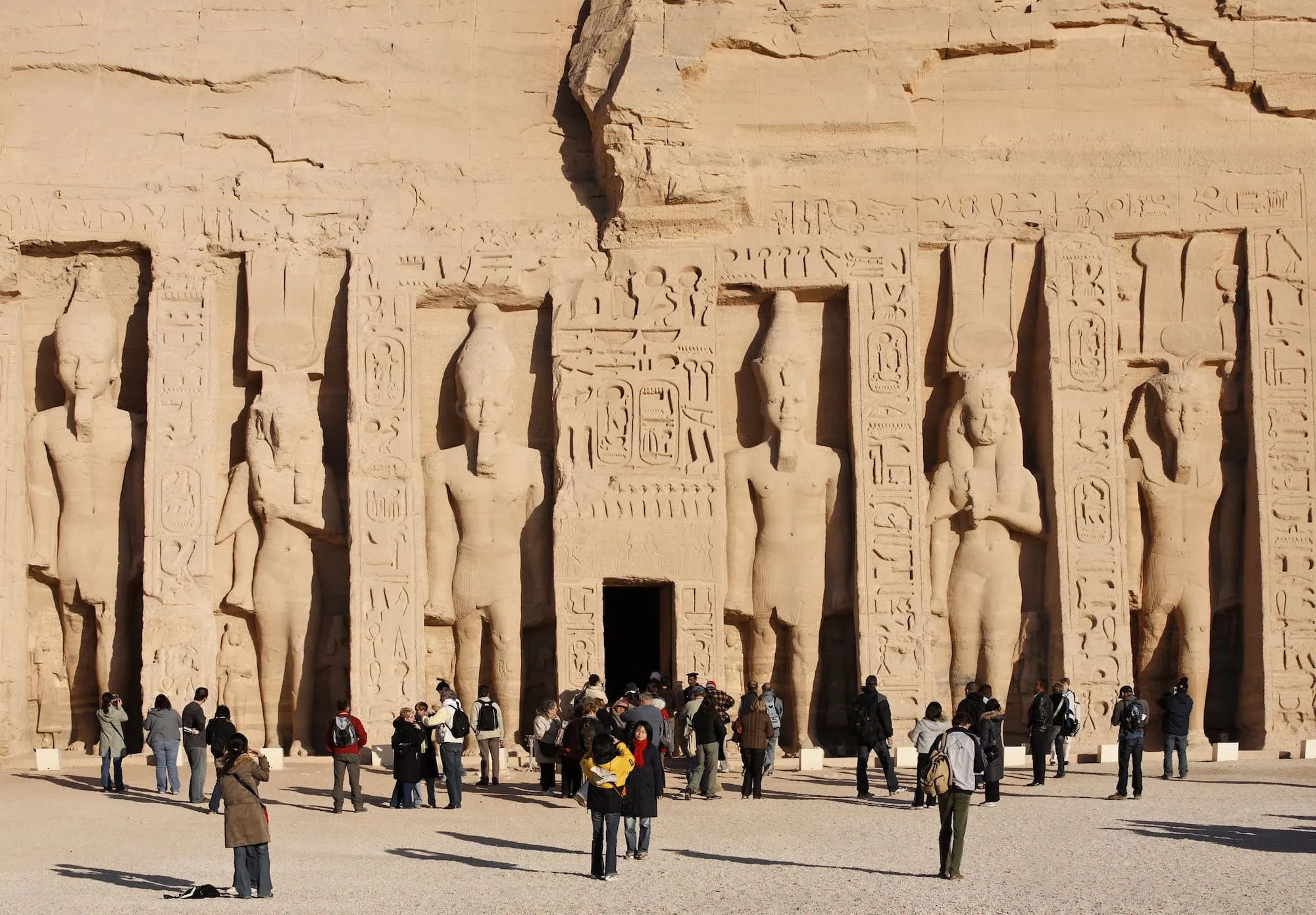
The smaller temple breaks Egyptian convention by depicting Queen Nefertari as equal in size to her royal husband.
Six standing colossal statues guard this temple’s entrance – four of Ramses II and two of Nefertari herself. Each figure stands 33 feet tall, an unprecedented honor for an Egyptian queen. Traditionally, royal wives appeared much smaller beside their pharaoh husbands, making Nefertari’s equal representation revolutionary for its time.
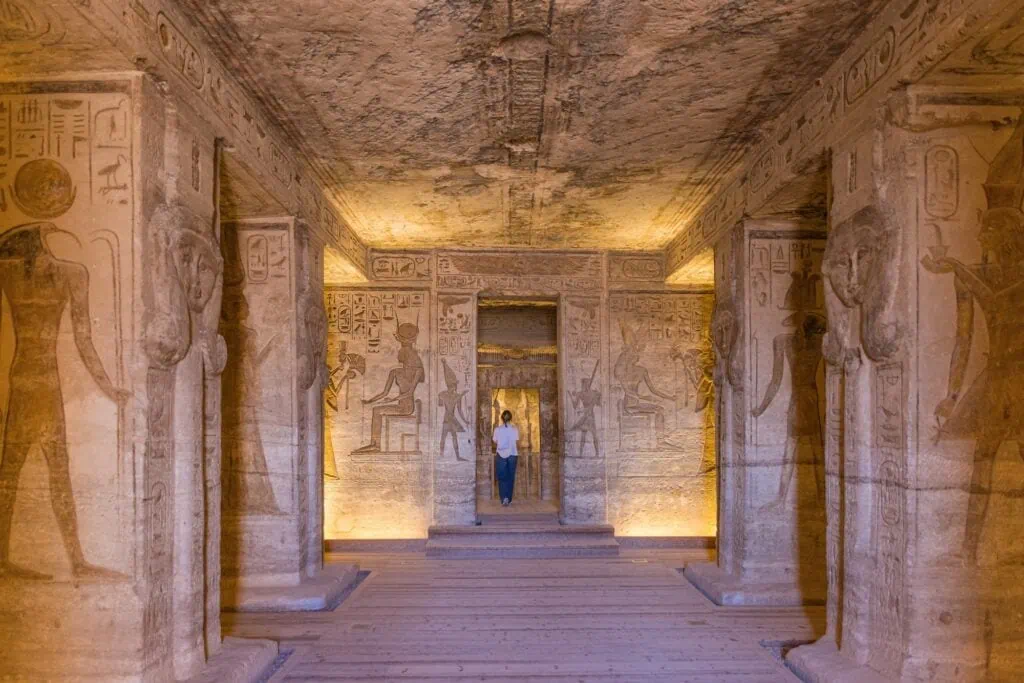
Inside, the temple dedicates itself to Hathor, goddess of love and motherhood, with Nefertari serving as Hathor’s earthly incarnation. Wall paintings depict the queen participating in religious ceremonies, emphasizing her divine role rather than merely her political position. Vibrant colors still shine from these ancient walls, preserved by the dry desert climate and careful restoration work.
The temple’s design creates an intimate sacred space compared to the grand scale of Ramses II’s monument. Smaller chambers and more delicate architectural details reflect the temple’s dedication to feminine divine power, while still maintaining the impressive scale expected of royal architecture.
UNESCO’s Impossible Rescue Mission
Rising waters from the newly constructed Aswan High Dam threatened to submerge both temples permanently in the 1960s. International cooperation launched one of archaeology’s most ambitious preservation projects — a campaign that would later see Abu Simbel and its neighbors inscribed among Egypt’s most treasured UNESCO World Heritage Sites.
Engineers from multiple countries worked together to save Abu Simbel through an almost unimaginable process. They carefully cut both temples into over 1,000 massive stone blocks, each weighing up to 30 tons. Every carving, every painted surface, every architectural detail required precise documentation and protection during the dismantling process.
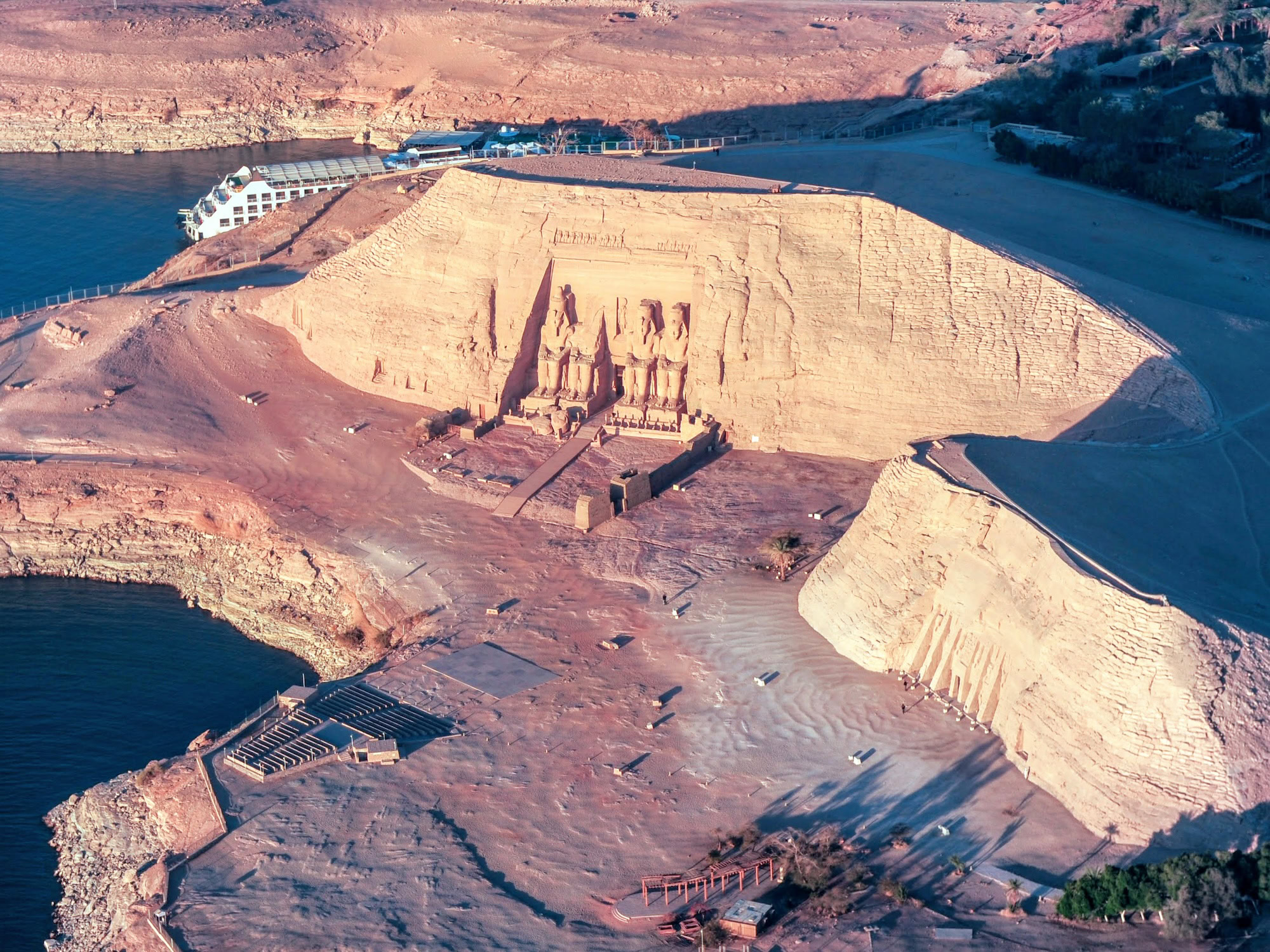
Transportation of these enormous pieces required specially designed equipment and careful planning. Teams moved each block to the new site 200 feet higher up the cliff, where they reconstructed the temples with millimeter precision. The entire operation took four years and cost over $40 million in 1960s currency.
Creating an Artificial Mountain
Reconstruction involved building an artificial hill around the relocated temples to recreate their original cliff-face setting. Engineers used reinforced concrete domes covered with rubble and sand to simulate the natural rock formation. This modern construction technique successfully recreates the visual impact of temples emerging from solid stone.
The relocation project slightly altered the solar alignment phenomenon, shifting the illumination dates by one day. February 21 and October 21 now mark the biannual events, a minor compromise that preserved the temples for future generations to experience.
Visiting Abu Simbel Today
Modern visitors can experience these ancient wonders through various transportation options from Aswan, along with other places commonly included on an Aswan sightseeing itinerary.
Most travelers choose to fly from Aswan, with daily flights taking just 45 minutes to reach Abu Simbel Airport. Early morning departure times at 8:00 am (08:00) allow visitors to reach the temples before the intense midday heat, with return flights typically scheduled around 1:30 pm (13:30). Advanced booking ensures availability, particularly during peak tourist seasons from October through April.
Overland travel by tourist bus or private vehicle takes approximately three hours each way through desert highways. This option appeals to visitors who enjoy desert landscapes and want more time flexibility, though the journey requires early departure around 4:00 am (04:00) to avoid afternoon heat during summer months.
The temples open daily from 6:00 am (06:00) until 6:00 pm (18:00), with extended hours until 9:00 pm (21:00) for the evening sound and light show. Entry tickets include access to both temples, though photography inside requires additional permits. Temperature ranges from comfortable 75°F (24°C) in winter months to challenging 105°F (41°C) during summer, making timing crucial for visitor comfort.
The Sound and Light Spectacle
Evening presentations illuminate the temple facades with colored lights while narrating the story of Ramses II and the UNESCO rescue operation. These 45-minute shows occur nightly in multiple languages, creating a dramatic backdrop against the desert sky.
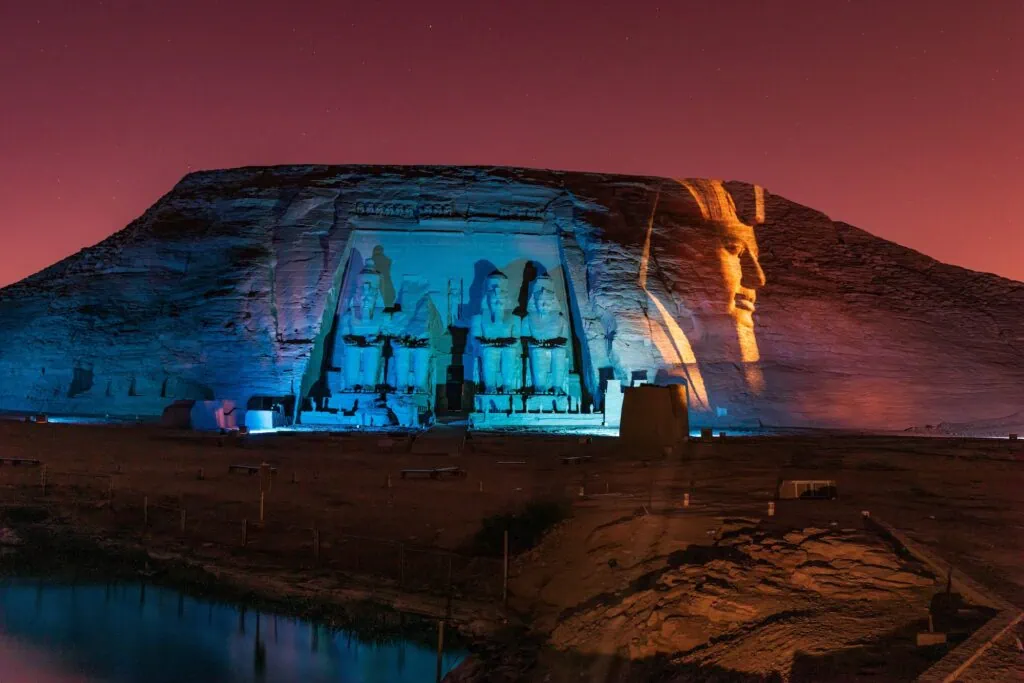
The light show brings ancient history to life through modern technology, though some visitors prefer experiencing the temples in natural daylight to appreciate authentic ancient craftsmanship.
Professional Guided Experience
Expert guides enhance the Abu Simbel experience as part of Egypt tours that include a Nile cruise, explaining architectural details, historical context, and preservation techniques that casual visitors might otherwise overlook. With decades of expertise in Egyptian archaeology and culture, professional tour guides provide insights into the temples’ construction methods, religious significance, and political messaging that transform a sightseeing visit into educational immersion.
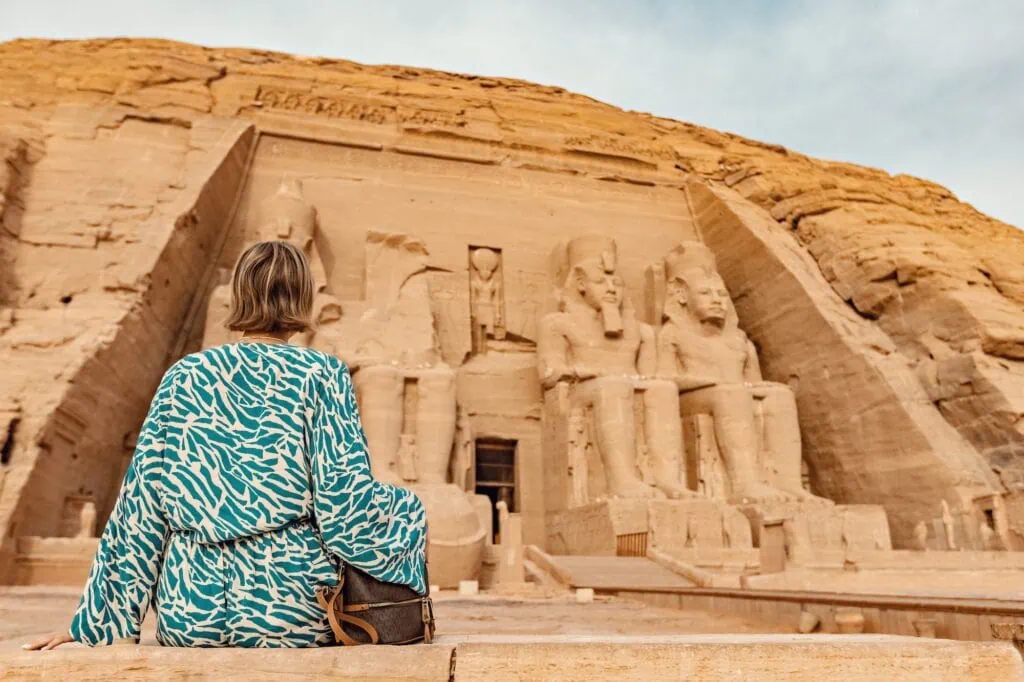
Egypt Tours Plus offers personalized Abu Simbel excursions with qualified Egyptologists who bring these ancient stones to life through detailed storytelling and historical analysis. Their private guides ensure visitors understand both the pharaonic achievements and modern preservation miracle that makes today’s visit possible, supported by comfortable transportation and 24/7 customer assistance throughout the journey.
Practical Considerations for Temple Visitors
Abu Simbel’s remote location requires advance planning and preparation for optimal experience.
Accommodation options remain limited near the temples, with most visitors staying in Aswan and making day trips to Abu Simbel. The nearby Seti Abu Simbel Lake Resort provides luxury accommodation for travelers wanting to stay overnight, allowing early morning temple visits before tour groups arrive. This proximity enables photography during golden hour lighting conditions that showcase the temples’ carved details most dramatically.
Food and beverage options at Abu Simbel consist primarily of a small visitor center cafe and souvenir shops. Bringing water and snacks ensures comfort during extended visits, particularly important given the desert climate’s dehydrating effects. The visitor center provides air-conditioned relief between temple explorations and restroom facilities.
Photography enthusiasts should note that tripods require special permits and additional fees. Interior photography of both temples carries separate charges, while exterior photography remains included with general admission. Professional photography equipment may require advance coordination with site management.
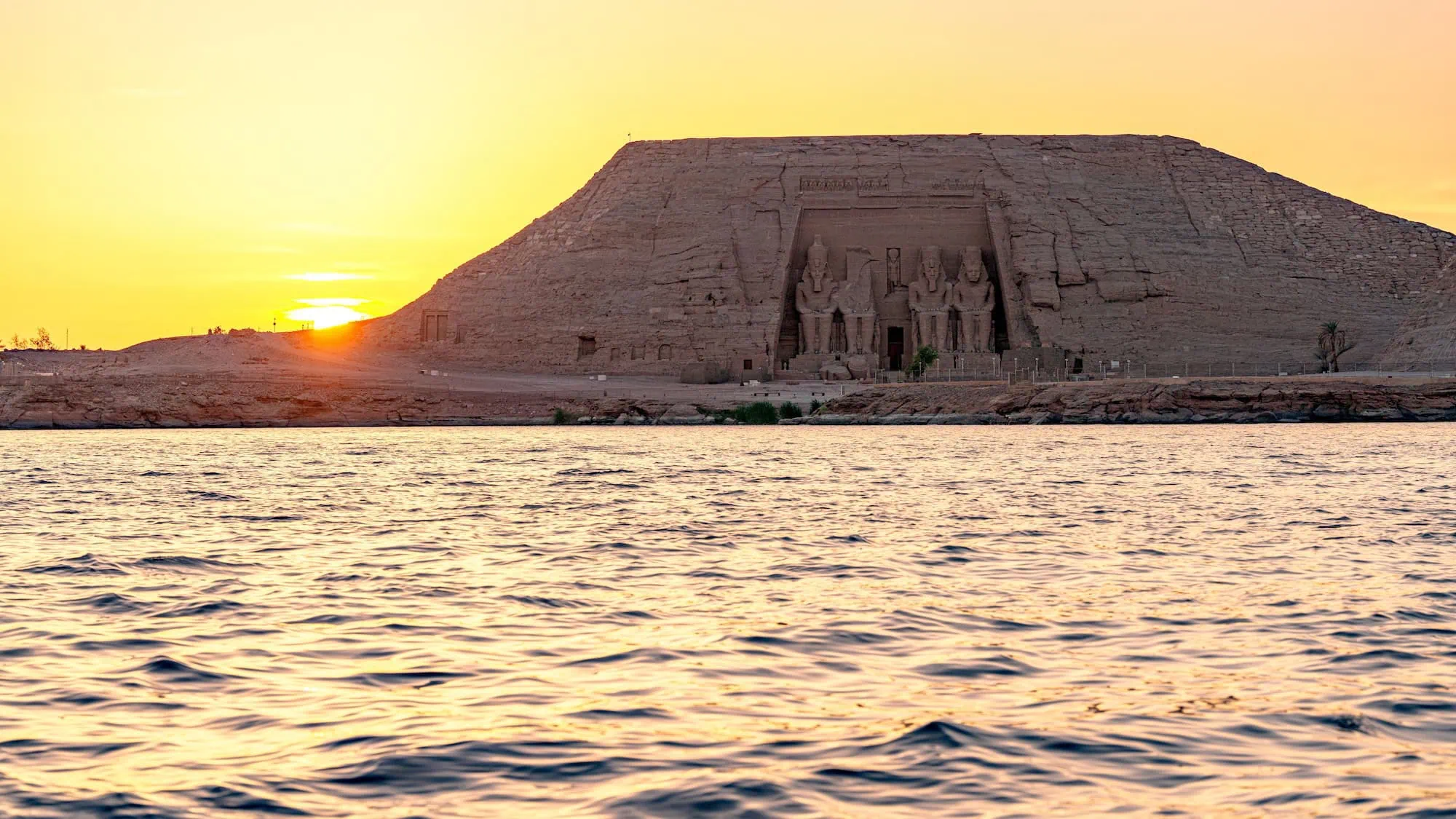
Climate considerations significantly impact visit timing and comfort levels. Summer temperatures regularly exceed 100°F (38°C) with minimal shade, making early morning visits essential. Winter months offer comfortable exploration conditions with daytime temperatures around 80°F (27°C), though evenings can cool dramatically in the desert environment.
Cultural and Historical Significance
Abu Simbel represents far more than impressive architecture – these temples embody ancient Egypt’s political strategy and religious worldview.
Ramses II chose this specific location along Egypt’s southern border to project power toward Nubian territories. Ancient Nubia controlled valuable gold mines and trade routes, making this region economically vital to Egyptian prosperity. The temples’ massive scale and prominent placement sent clear messages about pharaonic authority to anyone approaching Egypt from the south.
Religious symbolism permeates every aspect of both temples’ design and decoration. Ramses II appears not merely as mortal ruler but as divine incarnation, equal to Egypt’s traditional gods. This deification served political purposes by legitimizing royal authority through religious sanction, a common practice throughout pharaonic history.
The temples also demonstrate ancient Egypt’s sophisticated understanding of astronomy and mathematics. Precise solar alignment required complex calculations and engineering skills that rival modern architectural achievements. Ancient architects possessed knowledge of celestial movements, geological stability, and artistic proportion that produced monuments lasting over three millennia.
Begin Your Journey Into Egypt’s Ancient Wonders
Standing before the Abu Simbel Temples is an experience that stays with you forever—especially when explored with your own private Egyptologist who brings every carving and chamber to life. Whether you dream of combining the Abu Simbel Temples with a Nile cruise, the treasures of Luxor, the vibrant energy of Cairo, or a deeper dive into ancient history, we design each itinerary around your pace, interests, and sense of adventure.
Since 1955, we’ve crafted seamless, fully personalized Egypt tour packages for travelers seeking comfort, insight, and meaningful experiences. With your private guide, dedicated driver, and 24/7 support in English, Portuguese, Spanish, Italian, and more, every moment becomes effortless and enriching.
Share your travel wishes with us, and we’ll craft a tailor-made trip that brings the ancient world to life.
Make Abu Simbel The Crown Jewel Of Your Egypt Journey
Few places in the world leave a lasting impression like the Abu Simbel Temples—monumental, precise, and set against the serene backdrop of Lake Nasser. With EgyptToursPlus, we seamlessly incorporate this iconic highlight into a private, expertly crafted journey that connects Upper Egypt’s wonders with the country’s most unforgettable experiences.
You choose your travel dates, your pace, and the experiences that shape your route. Whether you want to combine Abu Simbel with a Nile cruise, cultural landmarks, or exclusive moments along the way, we tailor every detail around your preferences—ensuring a smooth, refined, and deeply personal journey.
Frequently Asked Questions
Most visitors spend 2 to 3 hours exploring the two Abu Simbel temples, including the Great Temple of Ramesses II, the smaller Temple of Hathor dedicated to Queen Nefertari, and the visitor center. The site covers a large desert plateau overlooking Lake Nasser, with extensive reliefs, colossal statues, and interior chambers that reward slow exploration. Travelers visiting during the February or October solar alignment events often stay longer because of crowd levels and special ceremonies. Arriving early helps avoid peak heat and tour bus congestion.
The best time to visit Abu Simbel is between October and April, when daytime temperatures are usually milder and more comfortable for outdoor exploration. Summer temperatures from May through September regularly exceed 40°C (104°F), making early morning arrivals essential for safety and comfort. February and October are especially popular because of the famous solar alignment phenomenon occurring around February 21 and October 21 each year. Winter mornings provide the clearest light for photography and the most pleasant walking conditions.
Visitors can travel independently to Abu Simbel by domestic flight, private car, or public bus from Aswan, but guided tours simplify the long-distance logistics and provide valuable historical interpretation. Abu Simbel lies approximately 280 kilometers south of Aswan near the Sudanese border, so transportation planning is important. Egyptologist guides explain the symbolism behind the colossal statues, battle reliefs, and UNESCO relocation project that many independent travelers miss. Organized tours also coordinate timing efficiently for sunrise visits and return transportation.
Abu Simbel does not enforce a strict formal dress code, but modest clothing covering shoulders and knees is strongly recommended out of respect for Egyptian cultural norms and the sacred nature of the temples. Lightweight cotton clothing works best because temperatures in southern Egypt can become extremely hot, especially from late spring through early fall. Comfortable closed shoes are also important because visitors walk across stone surfaces and sandy paths throughout the archaeological complex. Hats and sunglasses are highly recommended year-round.
Domestic flights to Abu Simbel should ideally be booked at least 2 to 3 days in advance, while peak winter travel periods may require reservations several weeks earlier. Flights from Aswan take approximately 45 minutes each way and are the fastest option for travelers with limited time. Seats often sell out quickly during December, January, February, and the solar alignment festivals in February and October. Morning flights are especially popular because they allow cooler temperatures and better photography conditions at the temples.
Exterior photography at Abu Simbel is included with standard admission tickets, but interior photography inside the temples typically requires an additional permit or photography ticket issued by Egyptian authorities. Flash photography is generally prohibited because repeated exposure can damage ancient pigments and carved reliefs that have survived for more than 3,000 years. The colossal seated statues outside the Great Temple are among Egypt’s most photographed monuments, especially at sunrise. Visitors using professional equipment may face additional permit requirements.
The original Abu Simbel temples were dismantled and relocated during UNESCO’s international rescue campaign after the construction of the Aswan High Dam threatened to submerge the site beneath Lake Nasser. Between 1964 and 1968, engineers cut the temples into massive numbered blocks weighing up to 30 tons each and reconstructed them approximately 65 meters higher and 200 meters inland. This operation became one of the largest archaeological preservation projects in history and saved the monuments from permanent flooding.
The famous solar alignment at Abu Simbel occurs only twice each year, around February 21 and October 21, when sunlight penetrates deep into the Great Temple’s sanctuary at dawn. During the event, the rays illuminate statues of Ramesses II, Amun-Ra, and Ra-Horakhty while leaving the figure of Ptah, associated with darkness, mostly in shadow. Thousands of visitors travel to southern Egypt specifically for this phenomenon. Travelers attending alignment days should book hotels and transportation well in advance because demand rises sharply.
Abu Simbel offers basic accessibility features, including paved walkways and viewing areas, but some sections remain difficult for elderly visitors or travelers with significant mobility limitations. The site includes stairs, uneven stone flooring, and sloped access routes between the visitor center and temple entrances. Because the complex sits in an exposed desert environment, heat and walking distances can also create additional challenges. Visitors needing assistance should consider private transportation, slower-paced touring schedules, and early morning visits to avoid extreme temperatures.
Abu Simbel is commonly combined with other Upper Egypt attractions including Philae Temple, the Aswan High Dam, Kom Ombo Temple, and traditional felucca sailing experiences on the Nile. Many travelers stay in Aswan and take either a day trip or an overnight excursion to Abu Simbel because the temples are located about 3 hours away by road. Combining these sites creates a broader understanding of Nubian culture, ancient Egyptian religion, and modern engineering projects connected to Lake Nasser and the Nile Valley.
Travelers should allow approximately 45 minutes each way for flights between Aswan and Abu Simbel or about 3 to 3.5 hours each direction for overland travel through the Western Desert highway. Road convoys and organized departures often begin before sunrise to avoid midday desert heat and maximize sightseeing time at the temples. Including hotel pickup, rest stops, and security checkpoints, a complete overland excursion from Aswan usually occupies most of the day. Flights are faster but generally more expensive than road transport.
Abu Simbel can be an excellent destination for children interested in ancient history, especially because of the enormous 20-meter-tall statues of Ramesses II and the dramatic lakeside desert setting. Families should plan carefully, however, because the remote location and high temperatures can become exhausting for younger travelers, particularly during summer months. Early morning departures, frequent hydration, hats, and shaded rest breaks are important for comfort and safety. Children often enjoy the scale of the temples and the story of their UNESCO rescue.
Ancient Wonders of Aswan, Modern Comfort
Sail the Nile Through Aswan Like a Pharaoh
Design Your Custom Tour
Explore Egypt your way by selecting only the attractions you want to visit