

Temple of Derr – A Splendid Rock-Cut Marvel Built by Ramesses II
The last ancient temple to leave its original home.
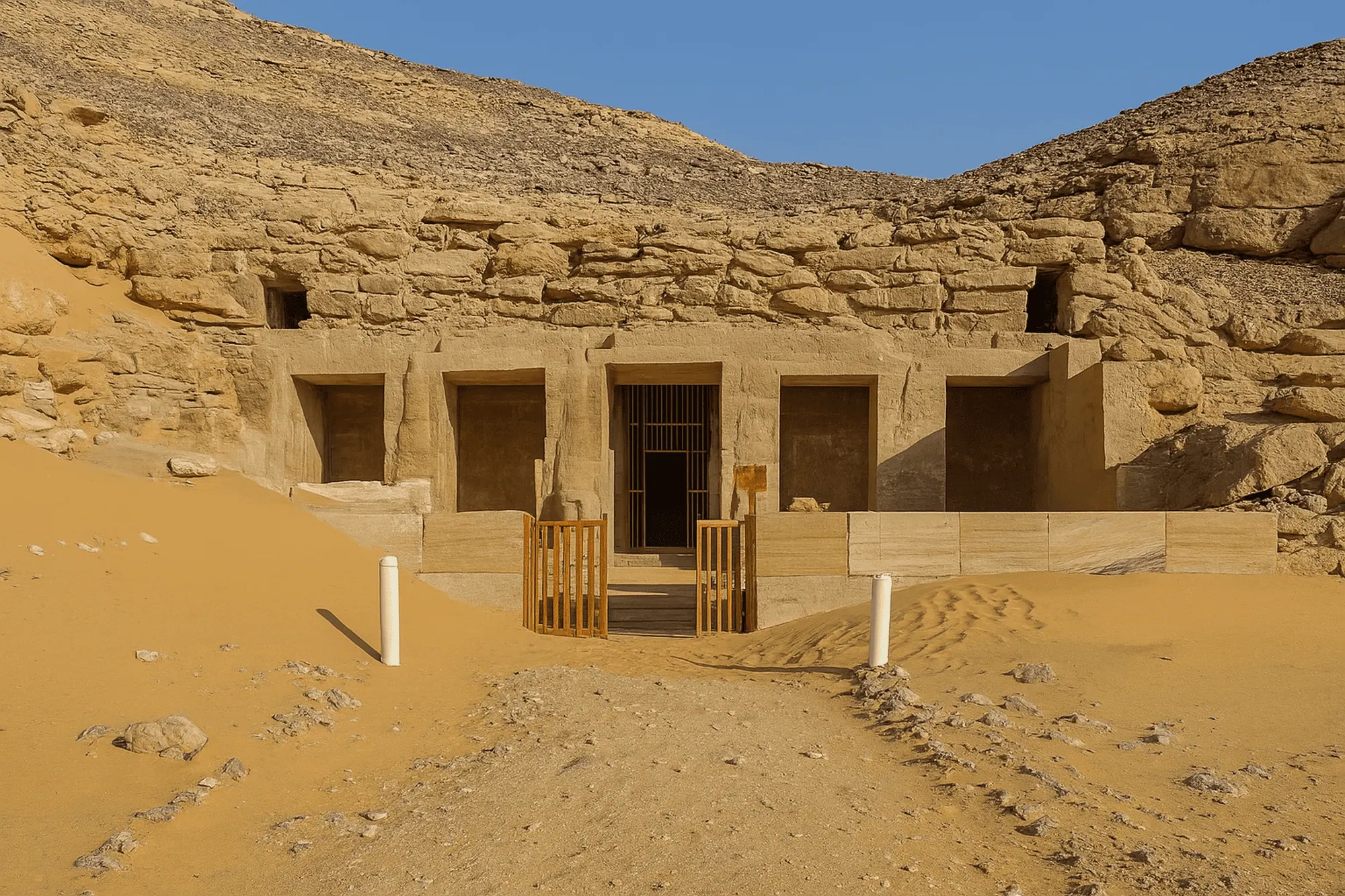
When the mighty Nile threatened to reclaim what it had witnessed for millennia, an extraordinary rescue mission began. The Temple of Derr, one of Ramesses II’s most remarkable rock-cut sanctuaries in ancient Nubia, faced submersion beneath the rising waters of Lake Nasser in the 1960s. This more than 3,200-year-old monument represented more than stone and artistry—it embodied the pharaoh’s divine authority over conquered territories and his devotion to Ra-Horakhty.
Today, visitors to New Amada discover this relocated treasure, where every carved relief and towering statue tells stories of imperial ambition, religious devotion, and modern preservation triumph.
Table of Contents
Discovering Ramesses II’s Nubian Sanctuary
The Temple of Derr emerged from solid rock during Egypt’s 19th Dynasty, approximately during the reign of Ramesses II (c. 1279–1213 BCE). Unlike traditional constructed temples, this speos was entirely carved into the living cliff face on the Nile’s right bank.
A Pharaoh’s Divine Statement
Ramesses II commissioned this sanctuary to demonstrate his eternal presence in newly conquered Nubia. The temple’s original Egyptian name, “The Domain of Ra” reflected its dedication to Ra-Horakhty, the falcon-headed solar deity who symbolized royal power and divine protection. Construction likely began around the pharaoh’s 30th regnal year, marking three decades of successful rule.
The location wasn’t arbitrary. Positioned strategically in Lower Nubia, the temple served both spiritual and political purposes, reminding local populations of Egyptian dominance while providing a sacred space for religious ceremonies.
Architectural Innovation Meets Tradition
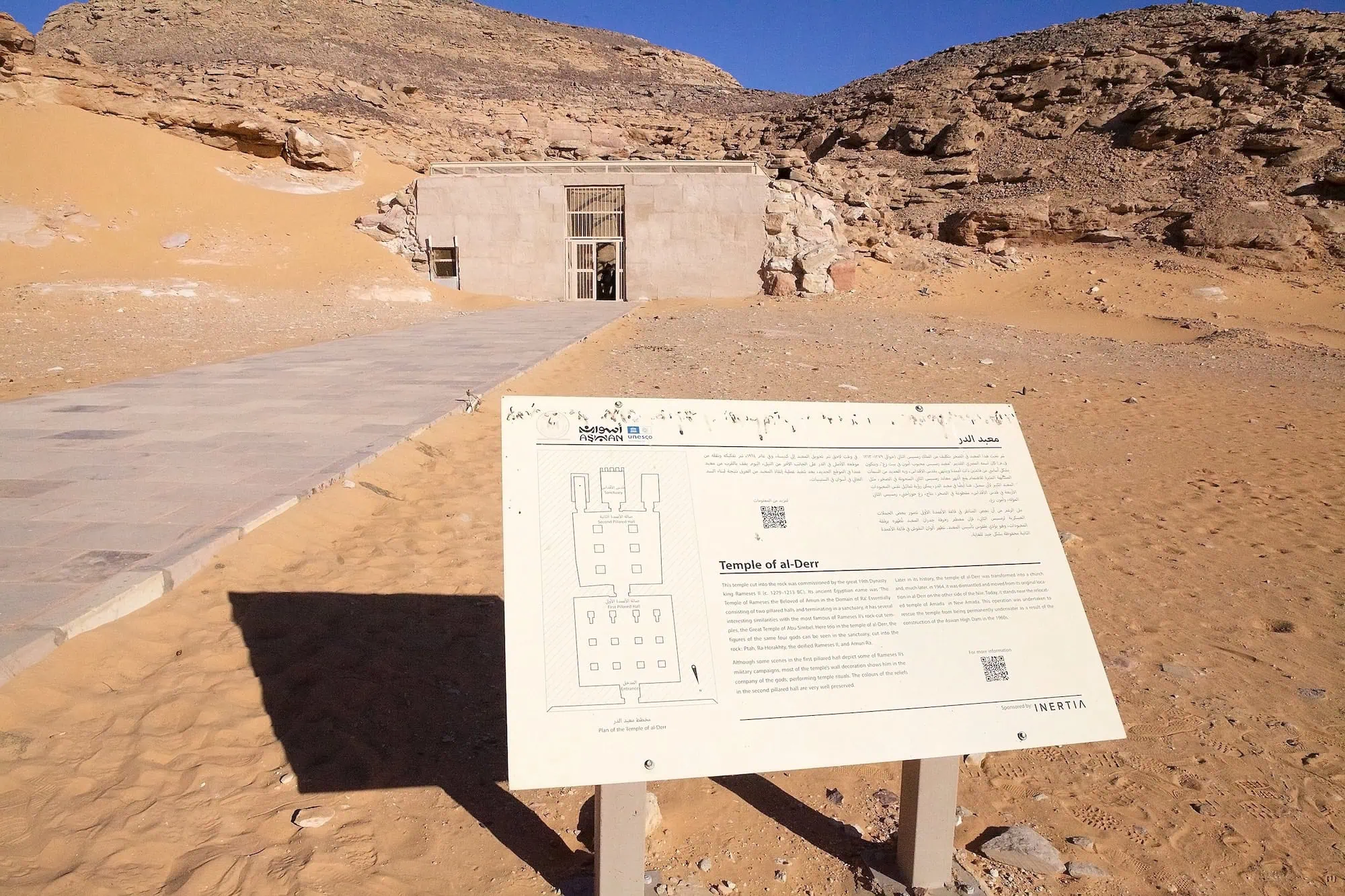
This speos represented a unique fusion of rock-cutting techniques and traditional temple architecture. The builders carved an impressive facade directly into the cliff, creating a dramatic entrance that mimicked free-standing temple pylons. Inside, they excavated halls, chambers, and sanctuaries following established religious layouts.
Four colossal seated statues of Ramesses II once dominated the façade, each measuring approximately 6–7 meters (around 20–23 feet) in height. These figures portray the king in divine form, emphasizing royal power and permanence rather than functioning as true Osirid statues.
Sacred Spaces Within Living Rock
The temple’s interior followed traditional Egyptian religious architecture adapted to rock-cut constraints. Visitors entered through a vestibule leading to the first hypostyle hall, supported by pillars carved to resemble bundled papyrus plants. Beyond lay the sanctuary, where priests conducted daily rituals honoring Ra-Horakhty and the deified Ramesses II.
Wall reliefs throughout the complex depicted scenes of royal triumph, religious ceremonies, and divine interactions. These carvings served both decorative and propagandistic purposes, reinforcing Egyptian cultural values while celebrating pharaonic achievements in Nubia.
The International Campaign to Save Monuments
The construction of the Aswan High Dam in the 1960s created an unprecedented threat to Nubian heritage. Rising waters endangered dozens of monuments, including the Temple of Derr.
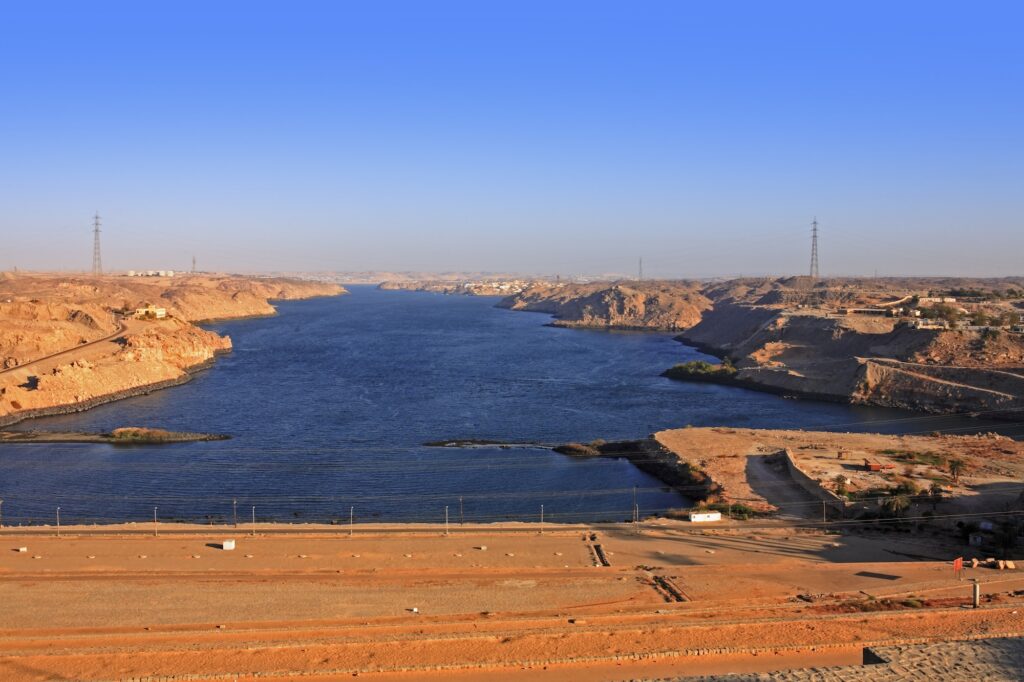
UNESCO launched the International Campaign to Save the Monuments of Nubia in 1960, mobilizing global expertise and funding. The relocation of Derr began in 1964, requiring exhaustive documentation and careful dismantling.
Unlike Abu Simbel, which was cut into massive rock, Derr’s structure combined carved and built elements, making relocation particularly complex.
Technical Precision Meets Historical Preservation
The relocation team photographed and measured every surface before dismantling. Numbered blocks allowed exact reconstruction at New Amada, approximately 65 kilometers (40 miles) from the original location. This painstaking process preserved not only the temple’s physical structure but also its spiritual significance and artistic integrity.
International funding supported this massive undertaking, with contributions from over 50 countries demonstrating global commitment to cultural heritage preservation. The successful relocation became a model for future archaeological rescue operations worldwide.
Architectural Features and Religious Significance
The Temple of Derr showcases sophisticated rock-cutting techniques developed during the New Kingdom period. Its design reflects both practical considerations and religious requirements specific to solar worship.
Facade Design and Royal Iconography
The temple’s facade presents one of ancient Egypt’s most striking architectural compositions. Four colossal statues of Ramesses II, each carved from living rock, create an imposing entrance that announces royal presence from great distances. These figures wear the traditional nemes headdress and false beard of divine kingship.
Between the seated colossi, smaller standing figures represent royal family members and high officials. Relief carvings above the entrance depict the pharaoh making offerings to Ra-Horakhty, emphasizing the temple’s primary religious function.
Interior Layout and Sacred Geometry
The temple’s interior follows classical Egyptian proportions adapted to rock-cut construction. The first hypostyle hall contains eight pillars arranged in two rows, each topped with lotus capitals that demonstrate the builders’ attention to decorative detail despite working within solid rock.
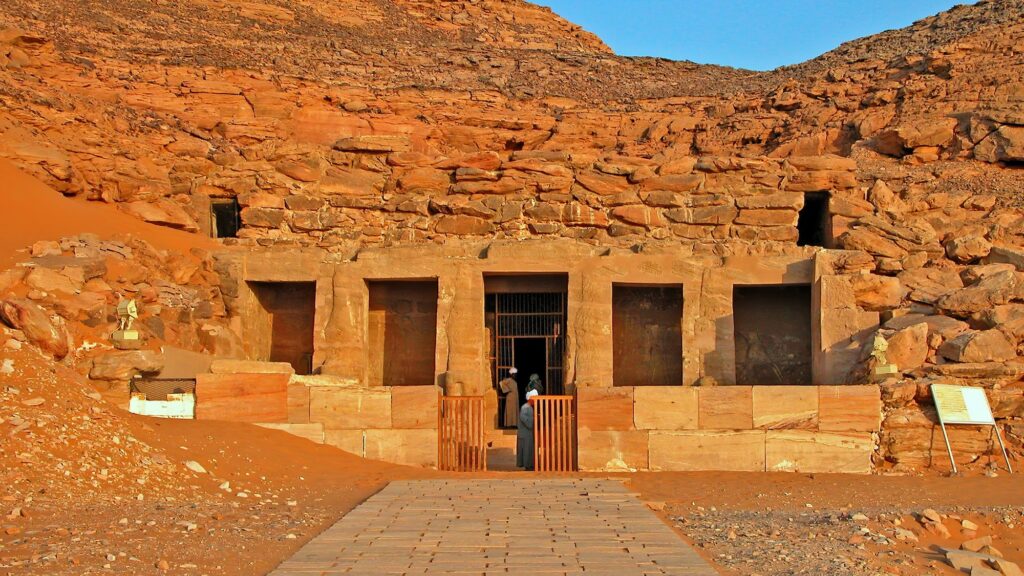
Beyond the hypostyle hall lies the sanctuary, where the cult statue of Ra-Horakhty once resided. This innermost chamber received carefully calculated natural lighting during specific times of day, creating dramatic illumination effects that enhanced religious ceremonies.
Wall decorations throughout the complex depict scenes from the pharaoh’s Nubian campaigns, religious festivals, and divine interactions. These reliefs serve as historical records while reinforcing the temple’s role as a monument to royal achievement and divine favor.
Cultural Legacy and Modern Recognition
The Temple of Derr earned UNESCO World Heritage Site designation in 1979 as part of the “Nubian Monuments from Abu Simbel to Philae” complex. This recognition acknowledges both its ancient significance and modern preservation achievement.
From Ancient Sanctuary to Christian Church
During the Christian period, local communities converted the temple into a church, adapting ancient spaces for new religious practices. This transformation demonstrates the site’s continued spiritual importance across different cultural periods, while also creating unique archaeological layers that inform our understanding of religious continuity in Nubia.
Christian modifications included alteration of original reliefs and addition of new decorative elements. These changes, while altering the temple’s original appearance, provide valuable insights into early Christian practices in Nubia and the adaptive reuse of pharaonic monuments.
Contemporary Visitor Experience
Today’s visitors to New Amada encounter the temple within a carefully designed archaeological park that preserves both the monument and its relocated context. Modern conservation techniques maintain the ancient reliefs while protecting them from environmental damage.
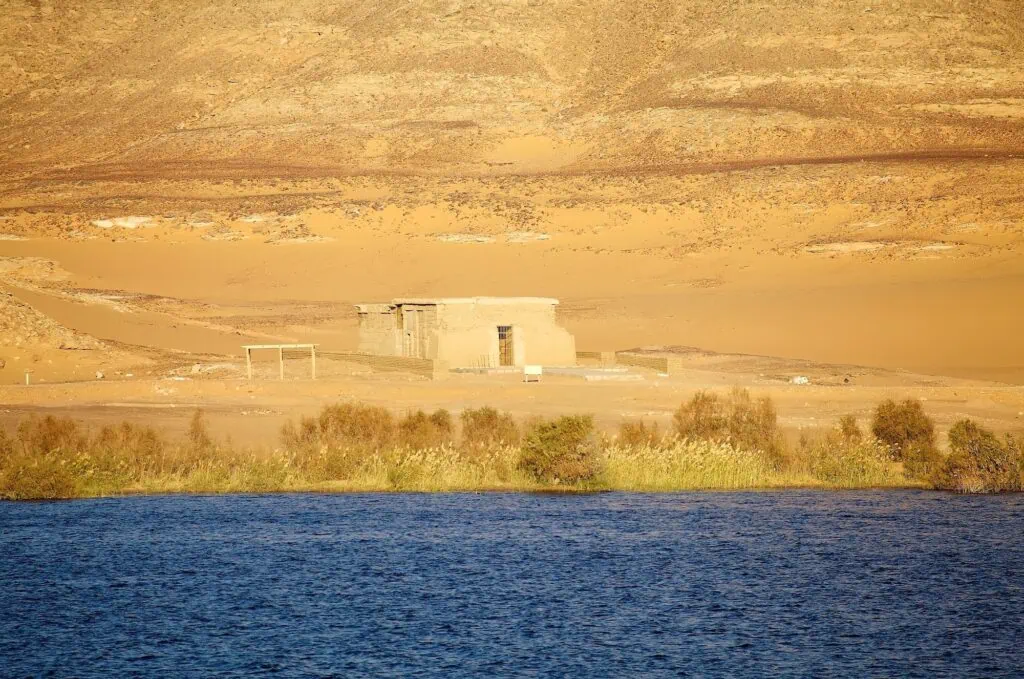
We at Egypt Tours Plus offer specialized guided visits that highlight the temple’s unique history, architectural features, and remarkable preservation story. Our expert Egyptologists provide detailed explanations of the relief scenes, construction techniques, and historical significance while ensuring respectful access to this sacred space.
The temple’s current location allows comparison with nearby relocated monuments, creating educational opportunities that demonstrate both ancient Egyptian achievement and modern preservation capabilities.
Planning Your Visit to the Temple of Derr
The relocated temple sits within the New Amada archaeological complex, approximately 180 kilometers (112 miles) south of Aswan. Access requires coordination with local tourism authorities and advance planning for the most rewarding experience.
Access and Transportation
Most visitors reach New Amada through organized tours departing from Aswan. The journey typically involves overland travel through spectacular Nubian landscapes, offering glimpses of traditional villages and desert scenery. Private transportation provides flexibility for photography and extended exploration time.
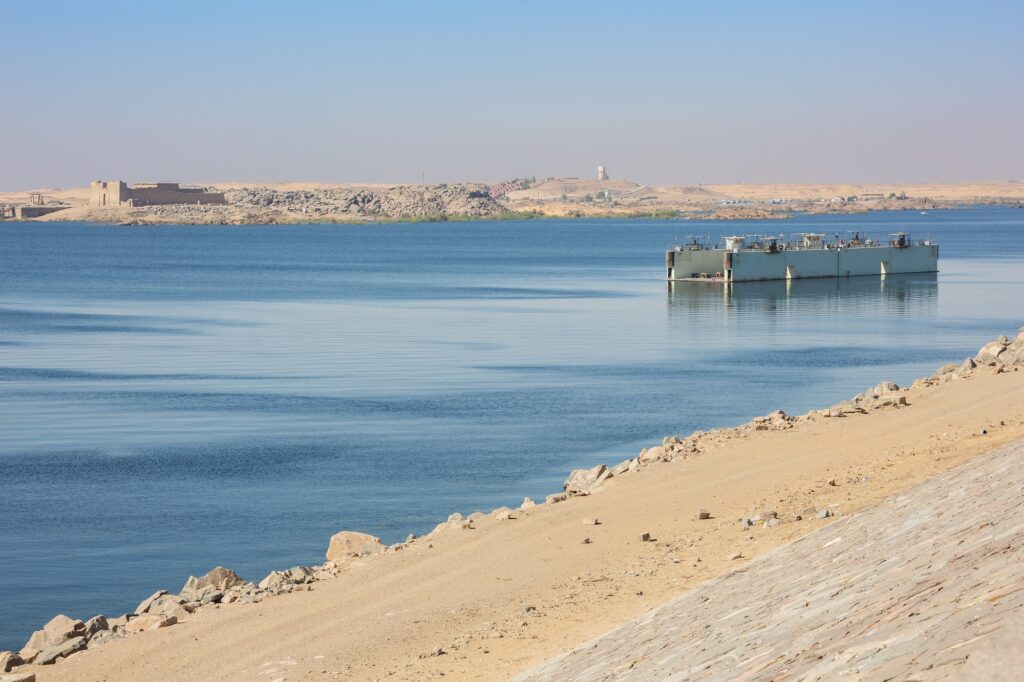
Lake Nasser cruise itineraries often include New Amada as a scheduled stop, combining temple visits with scenic navigation through the flooded Nile valley. These cruises offer unique perspectives on the relocated monuments’ new settings while providing comfortable accommodation and expert guidance.
Optimal Visiting Conditions
Morning visits provide the best lighting for photography and comfortable temperatures for exploration. Early timing also allows more intimate experiences with fewer crowds, essential for appreciating the temple’s spiritual atmosphere.
Winter months from November through March offer ideal weather conditions, with temperatures ranging from 15°C to 25°C (59°F to 77°F). Summer visits require early morning scheduling due to extreme afternoon heat exceeding 40°C (104°F).
Visitors should bring sun protection, comfortable walking shoes, and camera equipment for documenting the remarkable relief work. Flash photography restrictions protect the ancient pigments while allowing natural light documentation of the architectural features.
Our guided experiences include detailed explanations of the relocation process, architectural significance, and religious symbolism, ensuring visitors understand both the temple’s original purpose and its modern preservation achievement.
Discover The Hidden Depths Of The Temple Of Derr
Carved into the rock along Lake Nasser, the Temple of Derr offers a more intimate and atmospheric glimpse into Egypt’s ancient world—quiet, powerful, and far from the crowds. With Egypt Tours Plus, we seamlessly integrate this lesser-known treasure into a private journey that connects remote temples with Egypt’s most iconic experiences.
You choose your travel dates, your pace, and the experiences that shape your route. From in-depth cultural exploration to comfortable stays and smooth logistics throughout, we tailor every detail around your preferences—ensuring a refined, effortless, and deeply personal journey.
Frequently Asked Questions
The Temple of Derr was built during the reign of Pharaoh Ramesses II, approximately between 1279 and 1213 BCE during Egypt’s 19th Dynasty. Constructed more than 3,200 years ago, the temple formed part of Ramesses II’s broader strategy to reinforce Egyptian authority in Nubia through monumental architecture and solar worship. The structure was carved directly into sandstone cliffs along the Nile’s eastern bank. Its inscriptions and reliefs remain valuable evidence of New Kingdom political and religious expansion into Lower Nubia.
The Temple of Derr was relocated during the 1960s because the rising waters of Lake Nasser threatened to permanently flood the original Nubian site after construction of the Aswan High Dam. UNESCO coordinated a massive international rescue campaign that saved dozens of endangered monuments across southern Egypt and Sudan. Engineers carefully dismantled and reconstructed the temple at New Amada between 1964 and 1966. Without relocation, one of Ramesses II’s most important Nubian temples would now lie underwater.
Both the Temple of Derr and Abu Simbel were commissioned by Ramesses II as rock-cut monuments in Nubia, but Abu Simbel is significantly larger and more elaborate. Derr was dedicated mainly to Ra-Horakhty, while Abu Simbel honored multiple deities alongside the pharaoh himself. Unlike Abu Simbel’s colossal exterior statues, Derr is more intimate and easier to examine in detail. Travelers interested in quieter archaeological experiences often appreciate Derr’s preserved reliefs and lower visitor numbers compared to Abu Simbel.
In ancient Egyptian architecture, a “speos” refers to a temple carved directly into living rock rather than constructed from freestanding stone blocks. The term is commonly used for Nubian monuments such as the Temple of Derr and Abu Simbel, both created by excavating sandstone cliffs along the Nile Valley. Rock-cut construction helped temples blend into surrounding landscapes while providing structural stability in desert environments. Speos temples also allowed highly controlled interior lighting that enhanced religious rituals and sacred imagery.
Yes, visitors can enter the Temple of Derr’s interior chambers during guided visits, although photography restrictions may apply to protect surviving pigments and carved reliefs. The temple’s halls contain scenes of Ramesses II presenting offerings to Egyptian gods, particularly Ra-Horakhty and Amun-Ra. Interior spaces are narrower and darker than those at larger Nubian temples, so guided interpretation greatly improves the experience. Morning visits usually provide cooler temperatures and more comfortable viewing conditions inside the chambers.
The relocation of the Temple of Derr took approximately two years, with dismantling and reconstruction work carried out between 1964 and 1966 during UNESCO’s Nubian Monuments Campaign. Engineers documented every carved surface before cutting the structure into transportable sections and rebuilding it near New Amada above the future flood line of Lake Nasser. The operation required extraordinary precision to preserve inscriptions, painted reliefs, and architectural alignment. The rescue remains one of the most important international preservation efforts of the 20th century.
The ancient Egyptian name of the Temple of Derr was “Per-Ra,” meaning “Domain of Ra,” reflecting its dedication to the solar deity Ra-Horakhty. This naming emphasized the importance of sun worship during the reign of Ramesses II and reinforced royal authority in Nubia through religious symbolism. Temples dedicated to solar gods often functioned as both spiritual centers and political statements. Inscriptions inside Derr repeatedly associate Ramesses II with divine solar power and Egyptian control of southern territories.
Yes, the New Amada complex includes several relocated Nubian monuments rescued during the UNESCO preservation campaign of the 1960s. Nearby sites include the Temple of Amada, the Tomb of Pennut, and the Temple of Derr itself, all reconstructed above the waters of Lake Nasser. These monuments collectively illustrate Egyptian rule in Nubia across multiple dynasties and religious traditions. Visiting the entire complex provides broader historical context than seeing a single temple in isolation.
Most international travelers visiting the Temple of Derr need a standard Egyptian tourist visa, which many nationalities can obtain online through Egypt’s e-visa system or upon arrival at major airports such as Cairo and Aswan. Visa validity and entry rules vary by nationality, so travelers should verify current requirements before departure. Because the temple is usually visited as part of a Lake Nasser itinerary, visitors should also carry passports during cruise excursions. Always confirm updated immigration policies before travel.
The Temple of Derr is unique because it was the only major rock-cut temple constructed on the Nile’s right bank in ancient Nubia. Unlike many freestanding Nubian temples, Derr was carved directly into sandstone cliffs and designed with architectural adaptations suited to its eastern riverbank location. The monument also preserves detailed reliefs emphasizing solar worship and Ramesses II’s military authority. Its smaller scale allows closer examination of carvings that can be difficult to study at larger, more crowded temples.
Conservation teams preserved the Temple of Derr’s original painted reliefs by photographing, documenting, and stabilizing every decorated surface before dismantling the monument during the 1960s relocation. Specialists carefully removed sections containing fragile pigments and reconstructed them at New Amada using the original alignment wherever possible. Nubia’s extremely dry climate had already helped preserve many colors for more than 3,000 years. Controlled handling during transport was critical because even minor vibrations could damage surviving paint layers permanently.
International cooperation was essential to saving the Temple of Derr because UNESCO’s Nubian Monuments Campaign united financial, technical, and archaeological support from more than 50 countries during the 1960s. The global rescue effort protected dozens of ancient temples threatened by the Aswan High Dam project, including Abu Simbel, Kalabsha, and Amada. Engineers, archaeologists, and conservators collaborated across multiple nations to preserve Nubia’s cultural heritage. The campaign remains a landmark example of large-scale international heritage preservation.
Design Your Custom Tour
Explore Egypt your way by selecting only the attractions you want to visit