Ramesses II’s colossal temples, by air, road, or water
Abu Simbel Tours
Stand before the most ambitious monuments any pharaoh ever built with our Abu Simbel Tours. The colossal rock-cut temples of Ramesses II and Queen Nefertari, relocated 65 metres uphill in a legendary UNESCO rescue, can be reached three ways: a short flight from Aswan, the desert road convoy, or, most memorably, by water on a Lake Nasser cruise that sails right to the temples. From a 4-day Upper Egypt itinerary to a 12-day Nile and Lake Nasser journey from Cairo, every tour is guided throughout.
Your Guide to Visiting Abu Simbel
Experience one of humanity’s greatest archaeological achievements with a journey to Abu Simbel.
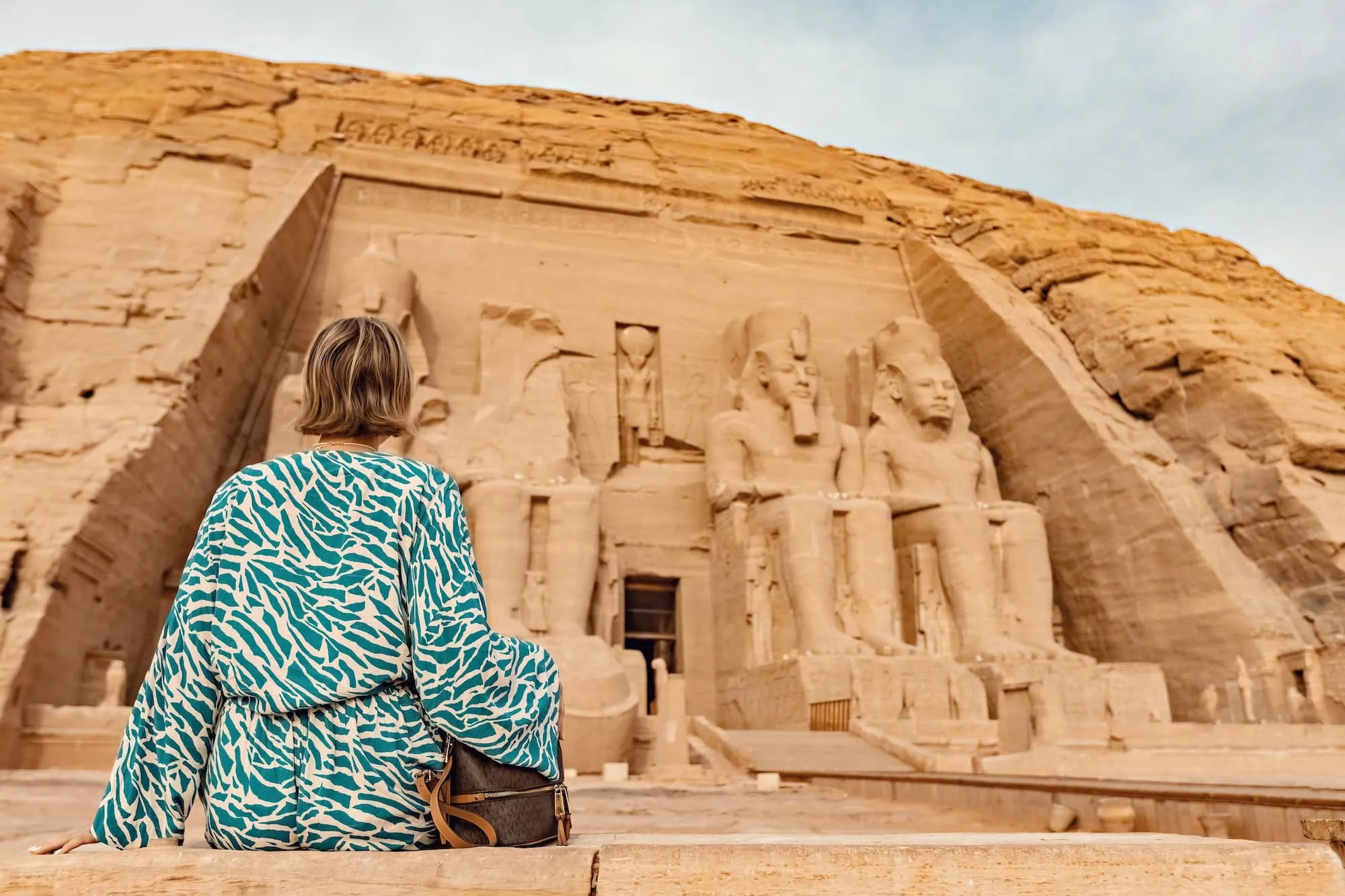
These colossal temples, carved directly into solid rock cliffs beside Lake Nasser, represent the pinnacle of ancient Egyptian architecture and engineering. Built by Ramesses II over 3,000 years ago, the Abu Simbel complex showcases not only the pharaoh’s military victories but also his devotion to Queen Nefertari. The temples’ remarkable preservation and dramatic lakeside setting create an unforgettable experience that draws travelers from across the globe. When UNESCO relocated the entire complex stone by stone in the 1960s to save it from flooding, they ensured future generations could witness this testament to human creativity and determination.
Table of Contents
Transportation Options and Practical Planning
Getting to Abu Simbel requires careful coordination due to its remote location 280 km (174 miles) south of Aswan.
The Road Convoy from Aswan
Most visitors travel by road, departing Aswan in the early morning, around 4:00 am (04:00). Vehicles make the journey in supervised convoys along well-maintained desert highways, with the drive taking around three hours each way. On our tours, you travel in your own private, air-conditioned vehicle within the convoy rather than on a shared coach.
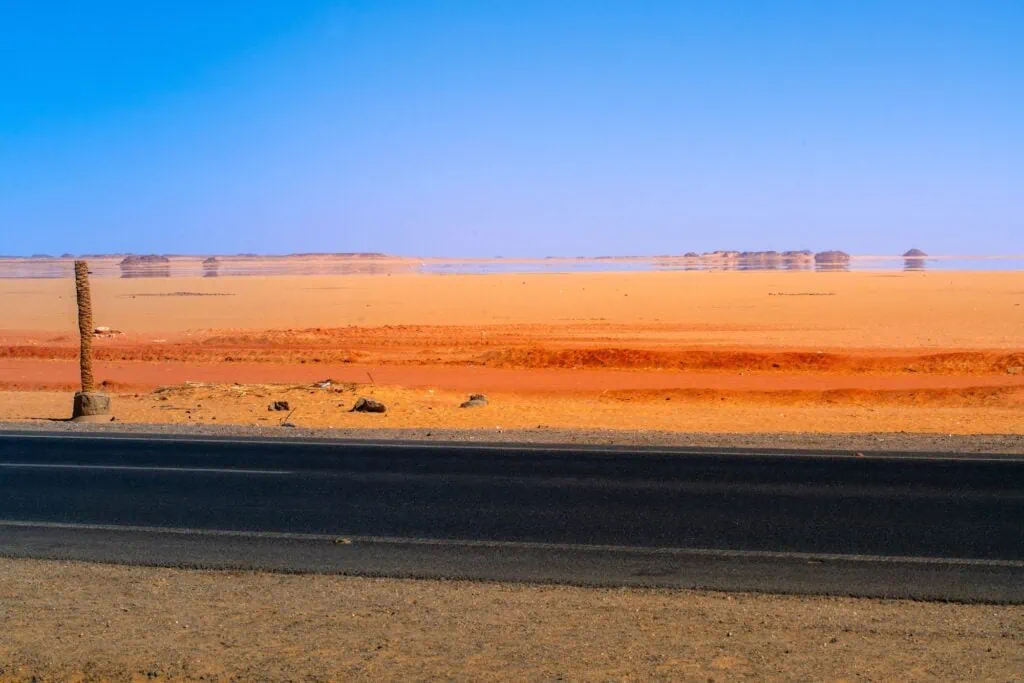
We arrange comfortable seating and provide bottled water throughout the three-hour journey. The return trip typically departs Abu Simbel at 11:00 am (11:00), arriving back in Aswan by mid-afternoon.
Private Vehicle Adventures
Private tours offer maximum flexibility for photography and exploration. Your dedicated driver and professional Egyptologist guide create a personalized experience, allowing extended time at preferred viewpoints.
Private vehicles can adjust departure times based on your preferences, though early morning starts remain ideal for avoiding afternoon heat and crowds.
Flight Connections
Short domestic flights from Aswan take just 45 minutes, providing aerial views of Lake Nasser’s vast expanse. Flight schedules align with optimal temple viewing times, though this premium option costs significantly more than ground transportation.
Arriving by Water: The Lake Nasser Cruise
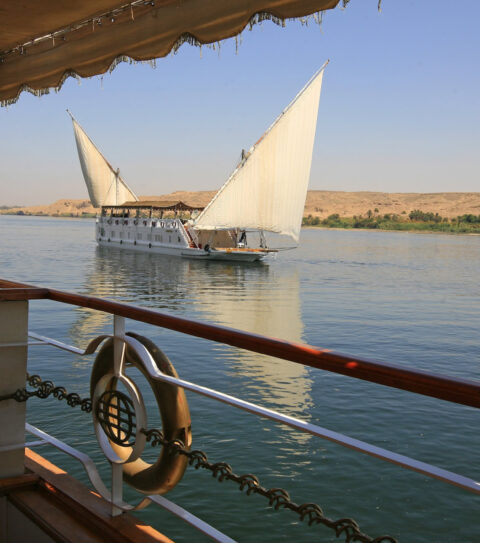
The most memorable way to reach Abu Simbel is by water. Lake Nasser cruises sail between Aswan and Abu Simbel over four or five days, calling at relocated monuments like Wadi El Seboua, Amada, and Kasr Ibrim that almost no road itinerary includes, before arriving at the temples themselves. Waking up with the colossi of Ramesses II outside your window is an experience no day trip can match.
The Great Temple of Ramesses II
Four colossal seated statues guard the entrance to Ramesses II’s magnificent temple.
Each towering figure stands 20 meters (65 feet) high, carved with incredible precision from the living rock face. The facade itself reaches 35 meters (115 feet) wide and 30 meters (98 feet) tall, demonstrating the pharaoh’s absolute power and divine status. Ancient artisans positioned these monuments to face eastward, welcoming the rising sun each dawn. Small figures representing members of the royal family, including Queen Nefertari and several princes, stand beside the pharaoh’s legs.
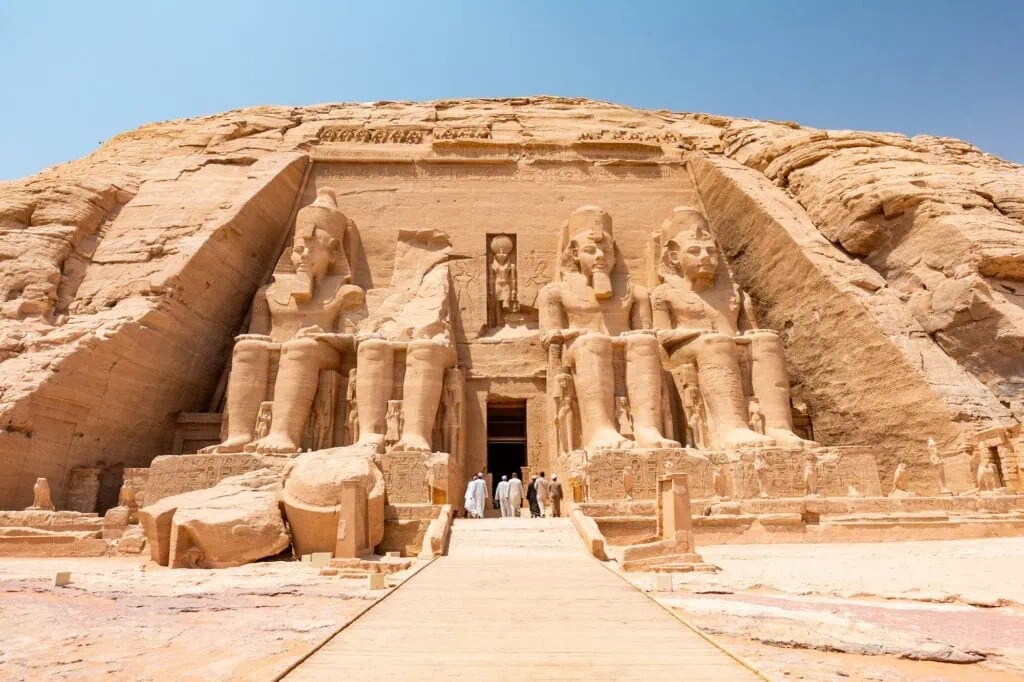
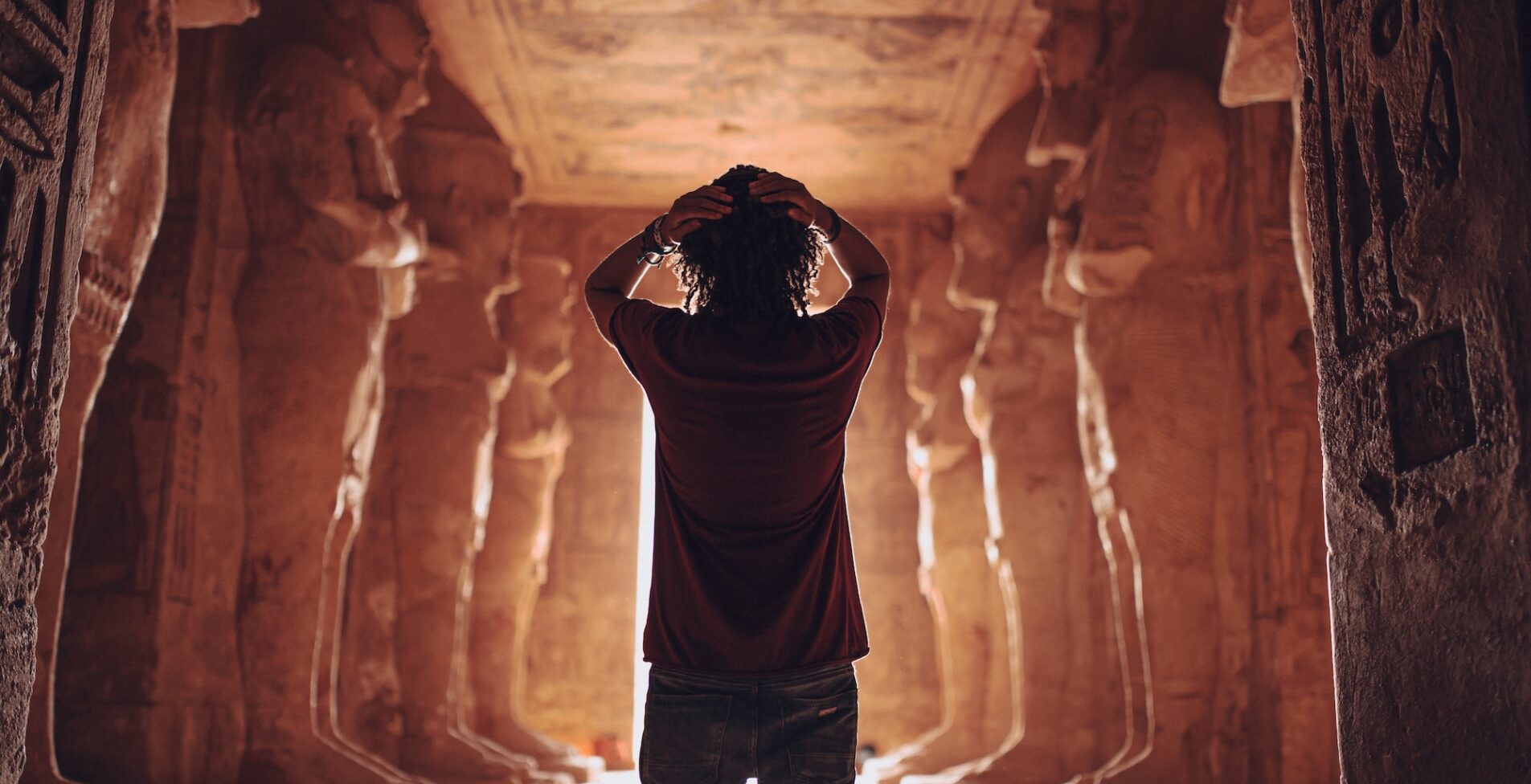
The temple’s interior consists of a series of halls leading to the sacred sanctuary. Massive pillars in the hypostyle hall feature Ramesses II in various poses, surrounded by hieroglyphic texts describing his military campaigns. Wall reliefs depict the famous Battle of Kadesh, where Egyptian forces clashed with the Hittite empire. The inner sanctuary houses four seated statues: Ptah, Amun-Ra, Ramesses II, and Ra-Horakhty.
Twice yearly, on February 22nd and October 22nd, sunlight penetrates the temple’s entire length. This solar phenomenon illuminates three of the four sanctuary statues, leaving only Ptah in darkness as befits the god of the underworld.
Temple of Queen Nefertari
Royal Devotion in Stone
Ramesses II dedicated this smaller temple to his beloved queen Nefertari and the goddess Hathor. Six statues adorn the facade, four representing the pharaoh and two depicting Nefertari as the goddess Hathor.
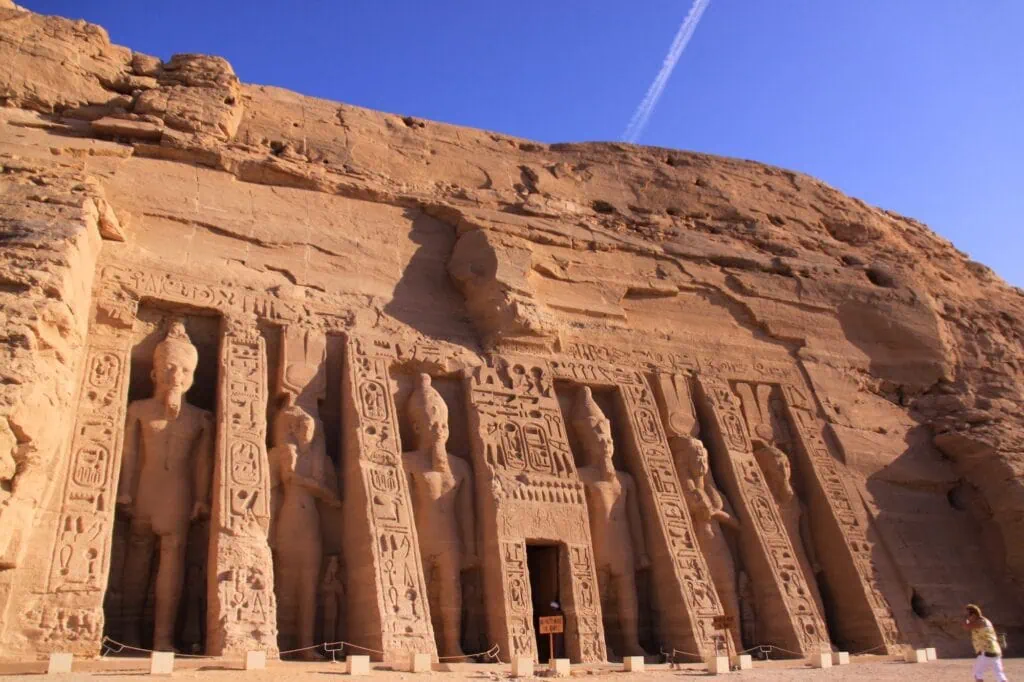
The queen’s statues equal the king’s in height, an unprecedented honor demonstrating her exceptional status in the royal court.
Interior Artistic Mastery
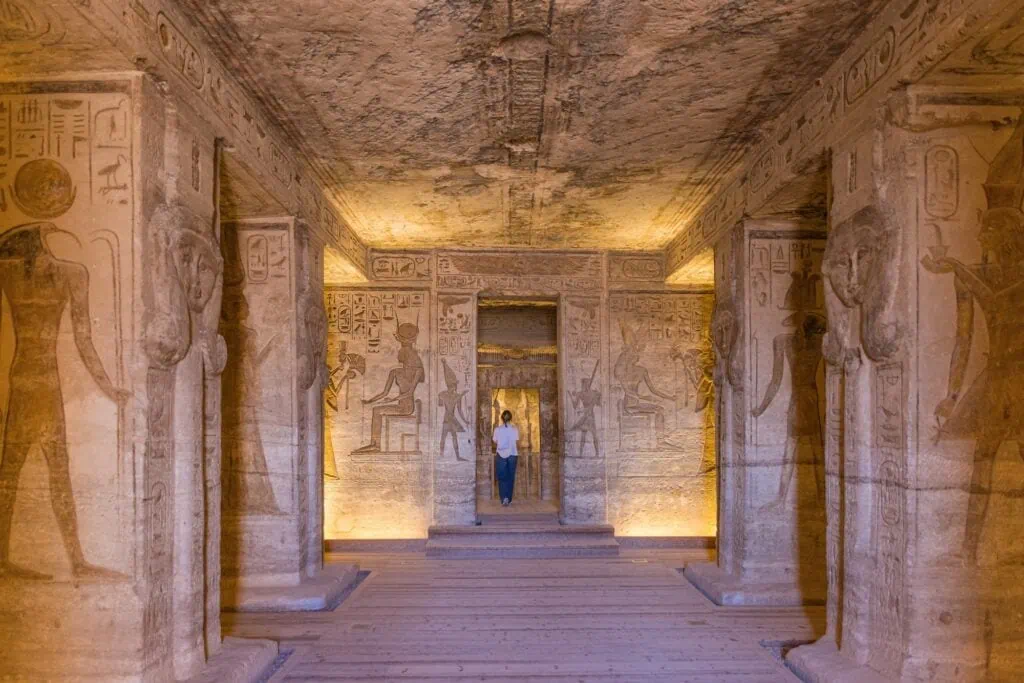
The temple’s interior showcases some of ancient Egypt’s finest artistic achievements. Painted reliefs maintain their vibrant colors after three millennia, depicting religious ceremonies and divine interactions.
Nefertari appears in various goddess forms, emphasizing her role in ensuring Egypt’s prosperity and divine protection. The sanctuary contains a statue of the sacred cow of Hathor, emerging from the temple’s rear wall.
UNESCO World Heritage Significance
The 1960s presented Abu Simbel with its greatest challenge since ancient times.
Construction of the Aswan High Dam would create Lake Nasser, submerging these irreplaceable monuments forever. UNESCO launched an unprecedented international rescue operation, mobilizing engineers and archaeologists from dozens of countries. Teams carefully dismantled both temples, cutting them into 1,036 precisely numbered blocks weighing up to 30 tons each. The entire complex was rebuilt 65 meters (213 feet) higher on artificial hills, maintaining exact solar alignments.
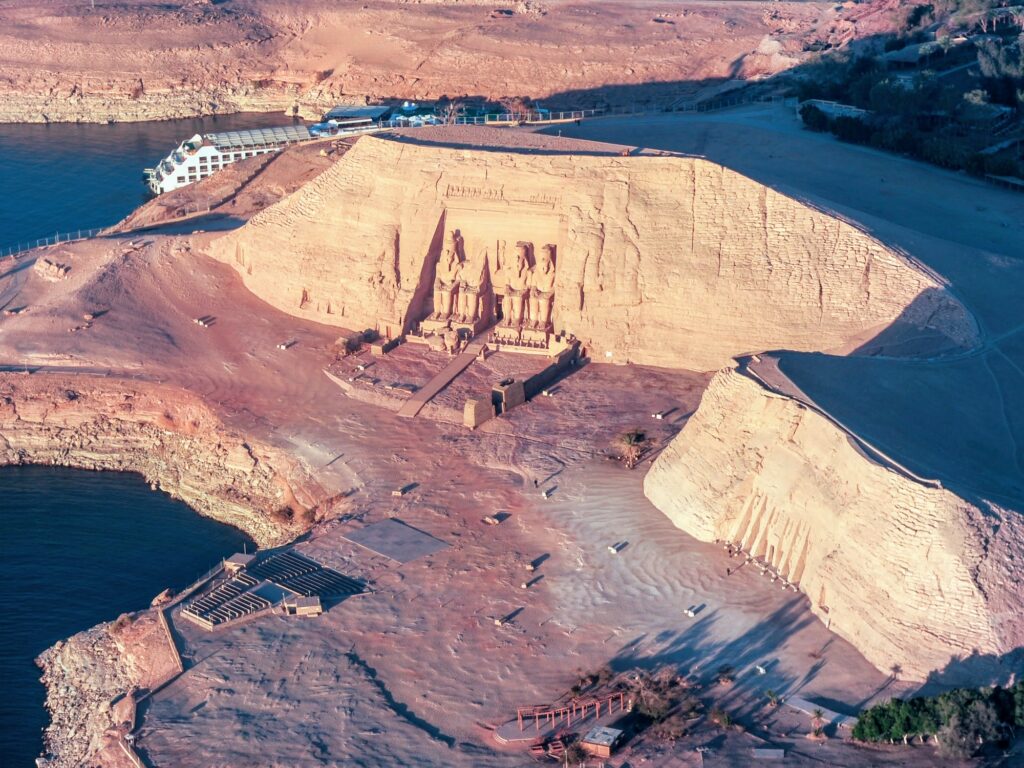
This remarkable achievement took four years and cost $40 million, establishing new standards for archaeological preservation. The project’s success inspired similar efforts worldwide, proving that international cooperation could protect humanity’s shared cultural heritage. Today, Abu Simbel stands as both an ancient wonder and a modern miracle of engineering precision.
Best Times for Your Visit
Weather Considerations
Abu Simbel’s desert climate creates extreme temperature variations throughout the year. Winter months from November through February offer ideal conditions, with daytime temperatures around 25°C (77°F) and comfortable evenings.
Spring and autumn provide pleasant weather, though temperatures can reach 35°C (95°F) during midday hours.
Crowd Management
Early morning arrivals guarantee optimal photography opportunities and peaceful temple exploration. Tour groups typically arrive between 8:00 am (08:00) and 10:00 am (10:00), creating busier conditions afterward.
We recommend spending at least two hours at the site to fully appreciate both temples and their surrounding landscape views.
Solar Alignment Events
The biannual sun festivals on February 22nd and October 22nd attract thousands of visitors worldwide. These dates are traditionally linked to Ramesses II’s birthday and coronation, when sunlight illuminates the sanctuary’s sacred statues.
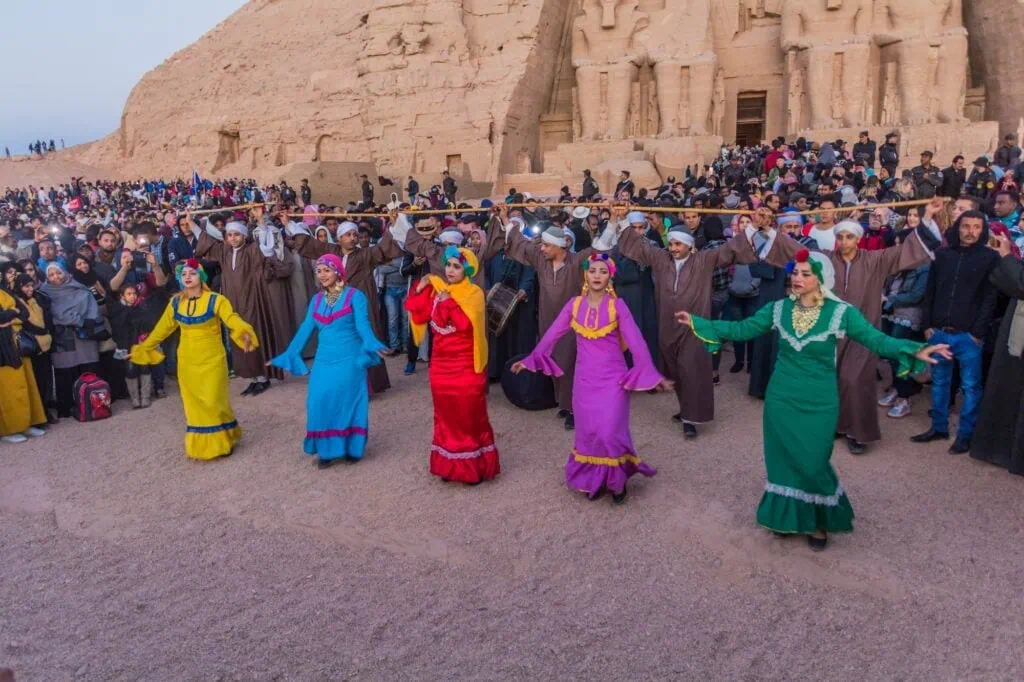
Securing accommodation and tours requires advance booking, often months ahead, but witnessing this ancient astronomical precision creates unforgettable memories.
Photography and Cultural Etiquette
Professional photography inside the temples requires separate permits purchased at the entrance. Standard tourist photography is permitted in most areas, though flash photography damages ancient pigments and is strictly forbidden.
The best exterior shots capture the temples’ imposing facade against Lake Nasser’s brilliant blue waters.
Respectful behavior enhances everyone’s experience at this sacred site. Comfortable walking shoes help navigate uneven temple floors, while modest clothing shows appropriate respect for ancient religious spaces.
Our guides provide detailed explanations of hieroglyphic meanings and architectural significance, enriching your understanding of these remarkable monuments.
Frequently Asked Questions
Full-day tours from Aswan last approximately 9-10 hours, including 3 hours at the temples and 6 hours travel time.
Pack sunscreen, hat, comfortable shoes, bottled water, and layers for temperature changes throughout the day.
The temple entrances involve steps and uneven surfaces, making wheelchair access difficult without assistance.
Yes, but professional Egyptologist guides provide invaluable historical context and hieroglyphic translations that enhance the experience significantly.
Group tours follow fixed schedules and cost less, while private tours offer flexible timing and personalized attention from dedicated guides.
Standard photography is permitted, but professional equipment and flash photography require special permits purchased separately at the entrance.
Regular tours can be booked 24-48 hours ahead, but solar alignment festival dates require months of advance planning.
The combination of colossal scale, perfect preservation, dramatic lake setting, and UNESCO rescue story creates an unmatched archaeological experience.
Basic facilities including restrooms and a small cafe are available, though most tours include refreshments and return to Aswan for meals.
Typical packages include hotel pickup, air-conditioned transportation, professional guide services, entrance fees, and bottled water throughout the journey.
Design Your Custom Tour
Explore Egypt your way by selecting only the attractions you want to visit