Egypt’s classics, plus room for more
10-Day Egypt Tours
Unlock the full magic of Egypt with our 10-Day Egypt Tours, designed for travellers who want a richer, more immersive experience. Ten days covers the Pyramids, a full Nile cruise, and Abu Simbel, with room left over for the Red Sea, Alexandria, or a second country. Explore every site with your own private Egyptologist guide, travel seamlessly with a personal driver, and tailor each day to your interests.
Why 10 Days Is the Complete First Visit to Egypt
The full triangle, a Nile cruise, and Abu Simbel, with room left for the coast or a second country.
Ten days is the length at which you stop having to choose. An 8-day Egypt tour fits the classic Cairo-Luxor-Aswan triangle and a full Nile cruise, but little more. The two extra days of a 10-day Egypt tour open the itinerary up: the same cruise and monuments at a more relaxed pace, plus room for the Red Sea, Alexandria, a longer cruise, or even a second country such as Jordan.
A typical 10-day Egypt tour spends two to three days in Cairo for the Pyramids of Giza, the Great Sphinx, and the Grand Egyptian Museum, then flies south for a 4-day Nile cruise between Luxor and Aswan, calling at the temples of Edfu and Kom Ombo, with Abu Simbel as a day trip from Aswan. That leaves two or three days to add a Red Sea beach stay at Hurghada, Marsa Alam, or Sharm El Sheikh, a day in Alexandria on the Mediterranean, or a cultural extension into Jordan and Petra.
With a private Egyptologist guide, a personal driver in each region, and your cruise carrying you through the south, a 10-day Egypt tour delivers the complete classic Egypt without the rush, and with enough breathing room to do more than just the highlights.
Table of Contents
What the Extra Days Let You Add
Eight days covers Cairo, the cruise, and Abu Simbel. Ten days lets you build on that core in one of four directions, without dropping anything.
A Red Sea Finish
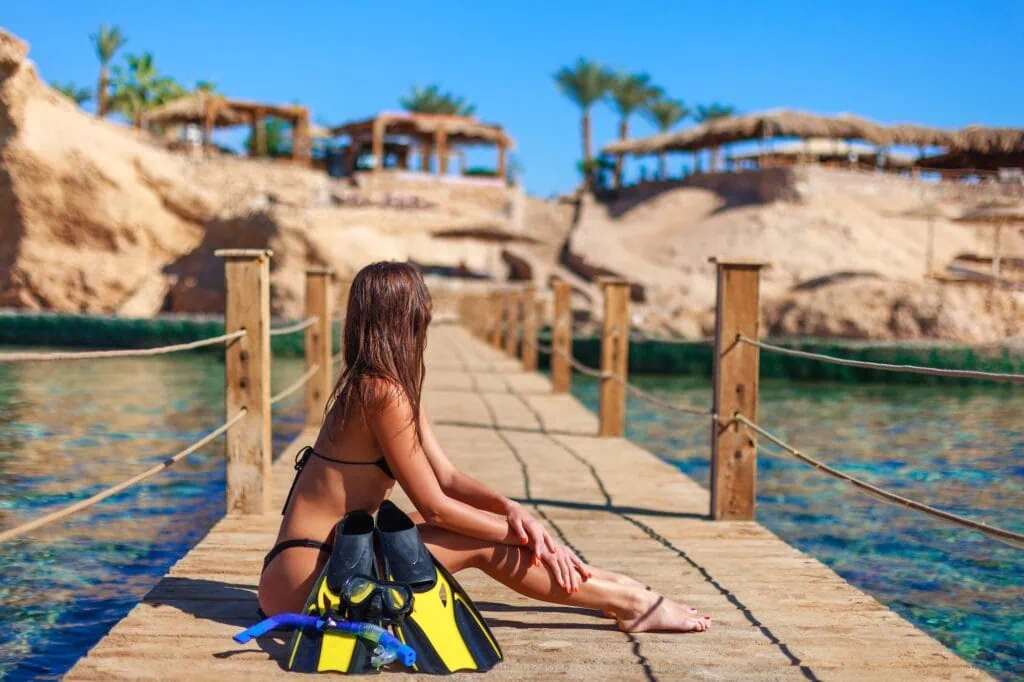
After the monuments and the cruise, a short flight or drive reaches the Red Sea coast for two or three days of snorkelling, diving, or simply unwinding on the beach. The three main resort areas are Hurghada, the most established and the easiest to reach, Marsa Alam further south for the quietest beaches and the best reefs, and Sharm El Sheikh across on the Sinai coast. It is the most popular way to end a 10-day Egypt tour, balancing intensive sightseeing with genuine rest. Our 10-Day Egypt Overland Tour through Cairo, Aswan, Luxor, and Hurghada is built around exactly this combination.
A Longer or More Luxurious Cruise
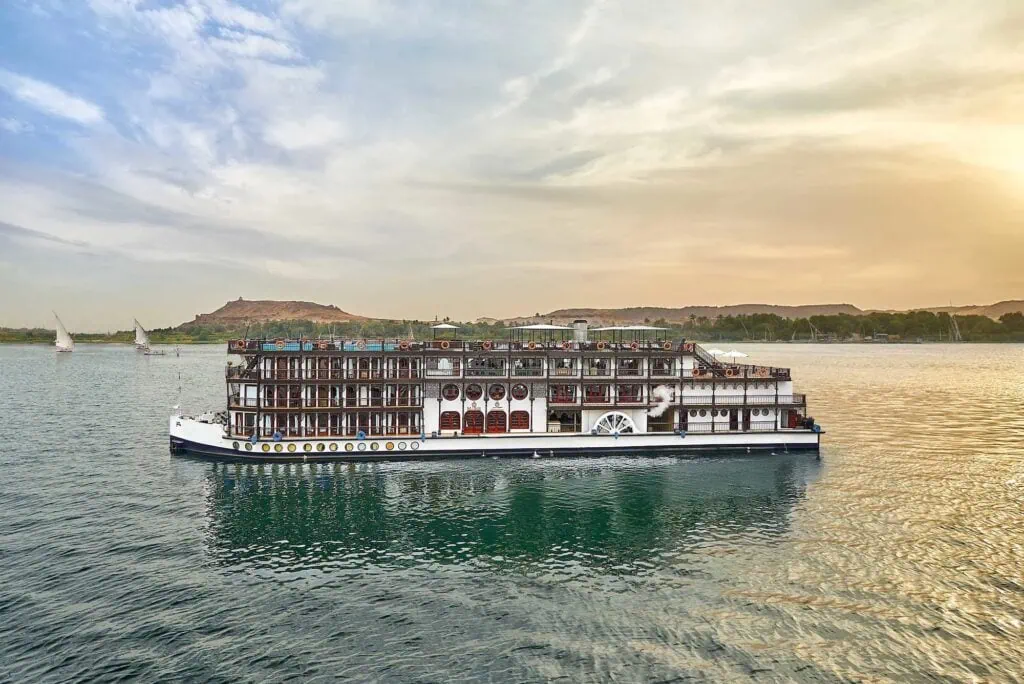
The extra days also allow a more leisurely or more luxurious Nile journey. Rather than the standard 4-day sailing, some travellers choose a premium round-trip cruise or the historic SS MISR, spending more time on the water with gourmet dining and a slower rhythm between temples.
Alexandria and the Mediterranean
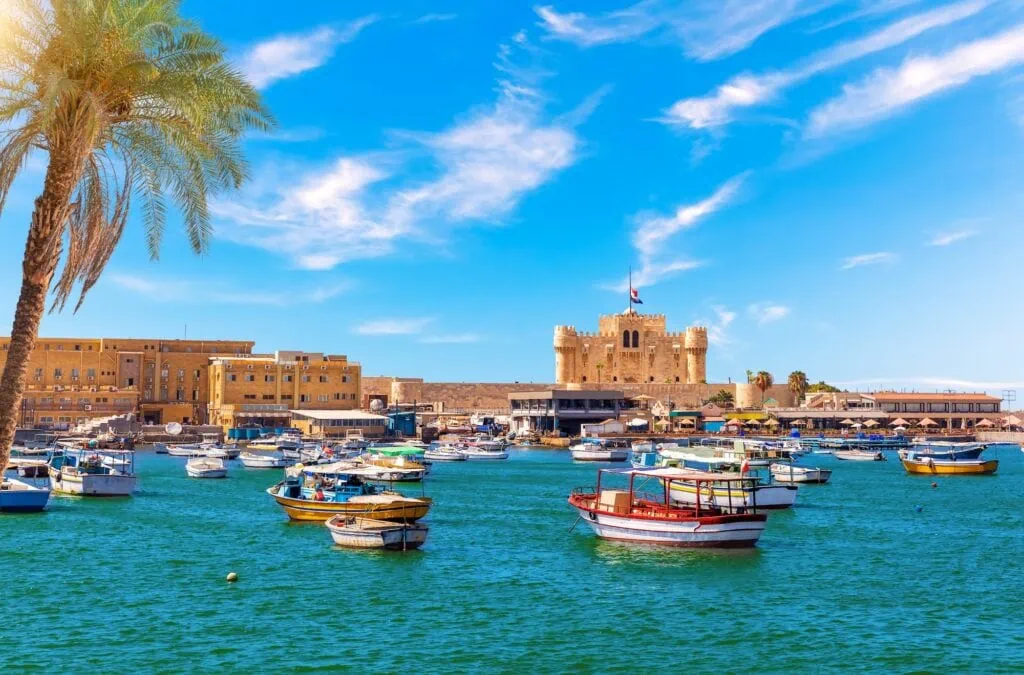
A day or two in Alexandria adds a completely different side of Egypt: the Mediterranean coast, the Graeco-Roman past, the Catacombs of Kom El Shoqafa, and the modern Bibliotheca Alexandrina. Reached in around three hours by road from Cairo, it pairs naturally with the capital at the start or end of the trip.
A Second Country
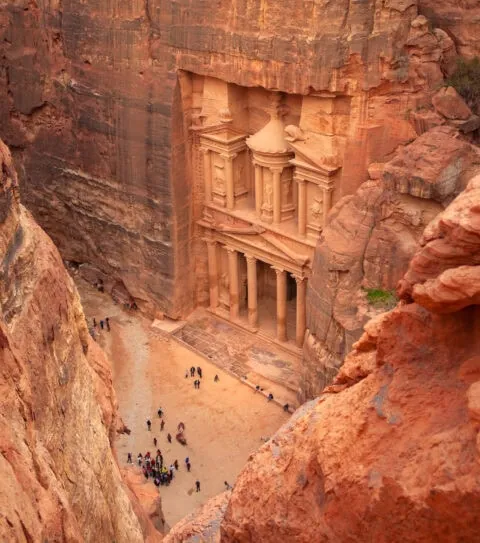
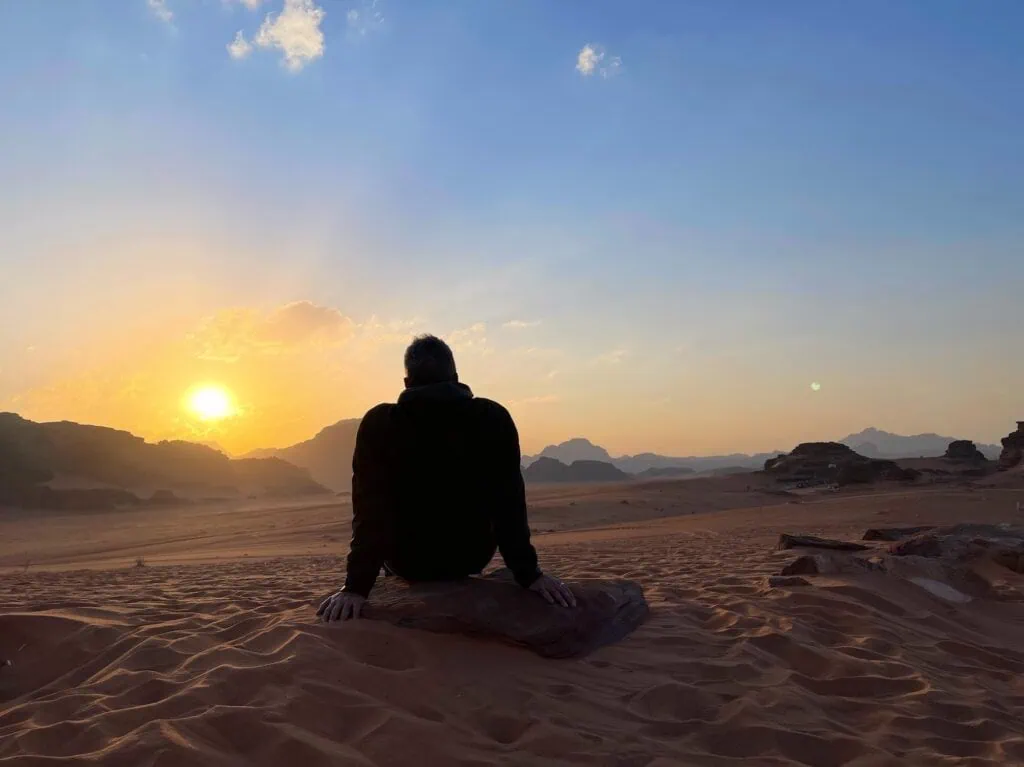
For travellers who want more than Egypt, ten days is enough to add a focused taste of a neighbour. Our 10-Day Egypt and Jordan luxury tour pairs the Pyramids and the Nile with Petra and Wadi Rum, two of the Middle East’s greatest sites, in a single trip.
Planning Your Perfect 10-Day Egypt Adventure
Start planning at least three months ahead for the best experience.
Flight bookings to Cairo typically offer better rates when reserved early, especially during peak season from October to April. We recommend arriving at Cairo International Airport by early afternoon to maximize your first day. Our airport representatives meet every client personally, handling visa procedures and ensuring smooth transfers to your hotel.
Visa Requirements Made Simple
Most travellers, including US, UK, EU, Canadian, Australian, and many Latin American nationals, can collect a 30-day tourist visa on arrival at Cairo International Airport for $25 USD in cash. An e-visa is also available in advance through the official Egyptian government portal, which some travellers prefer for a smoother arrival.
Your passport should be valid for at least six months beyond your travel dates, with a blank page for the stamp. If your itinerary includes Jordan, your Travel Concierge will advise on the separate entry requirements there. Because requirements vary by nationality, your Concierge confirms the right option for your passport before you travel.
Best Travel Seasons
October through April offers ideal daytime temperatures between 20 and 25°C (68-77°F) with cool, pleasant evenings. Summer months from May through September regularly exceed 35°C (95°F) and can reach 40°C (104°F) in Upper Egypt, making the middle of the day intense for outdoor sightseeing. On a private tour, your guide schedules temple visits for the cooler morning and late afternoon hours, so the timing stays comfortable whatever the season.
Packing Essentials
Comfortable walking shoes are crucial for pyramid exploration and temple visits. Lightweight, modest clothing respects local customs while keeping you cool.
Don’t forget sun protection, as shade can be limited at archaeological sites.
Cairo’s Ancient Treasures
Cairo welcomes you with an extraordinary blend of pharaonic monuments and vibrant contemporary culture that spans over 5,000 years of continuous civilization.
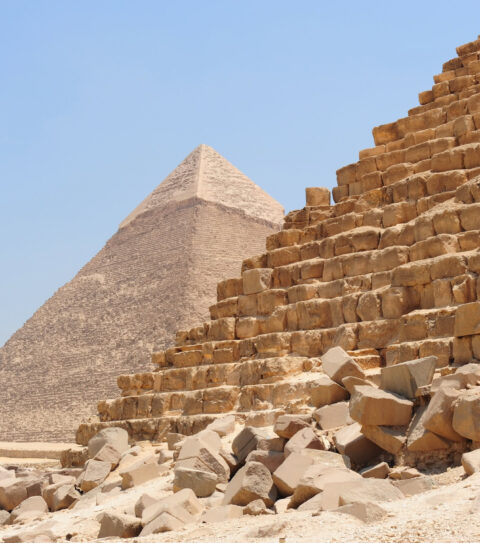
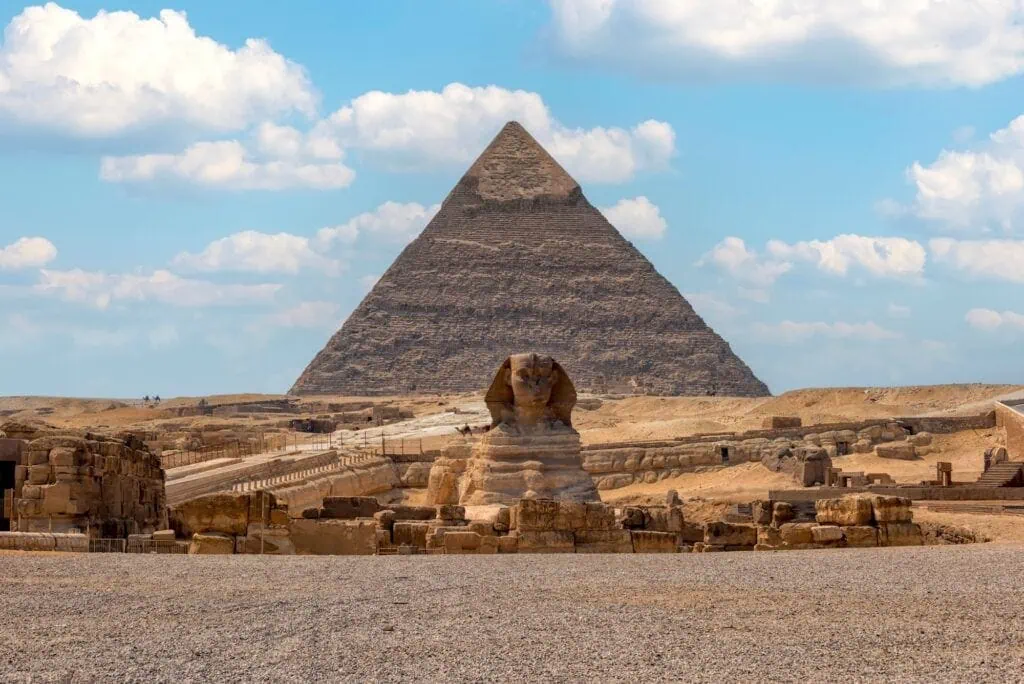
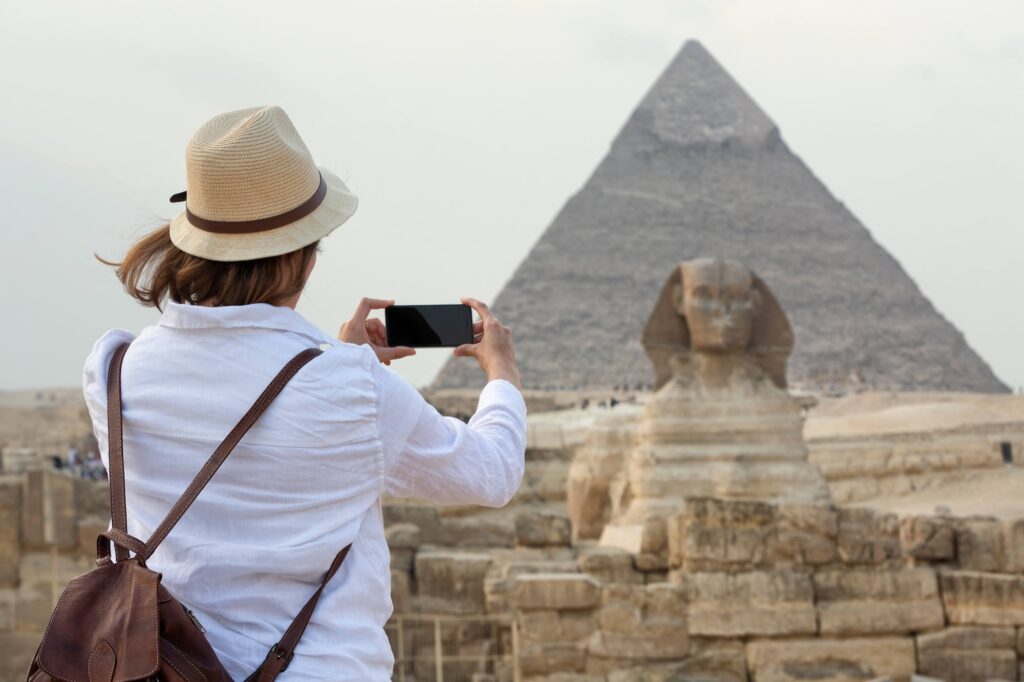
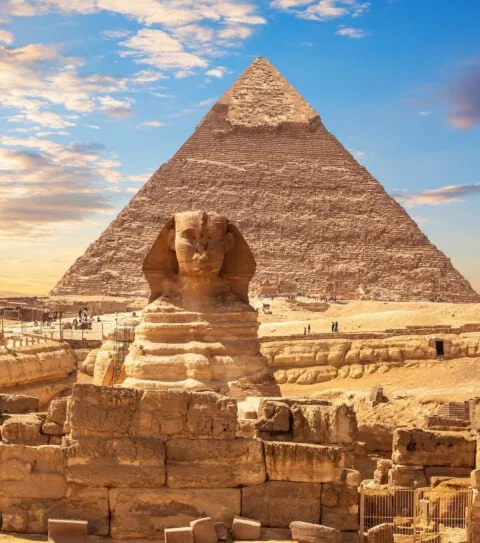
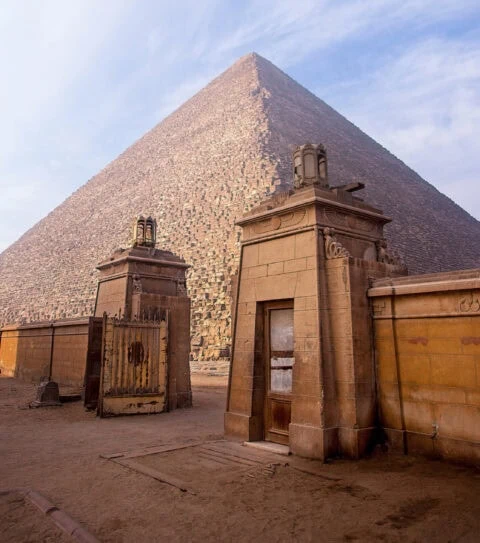
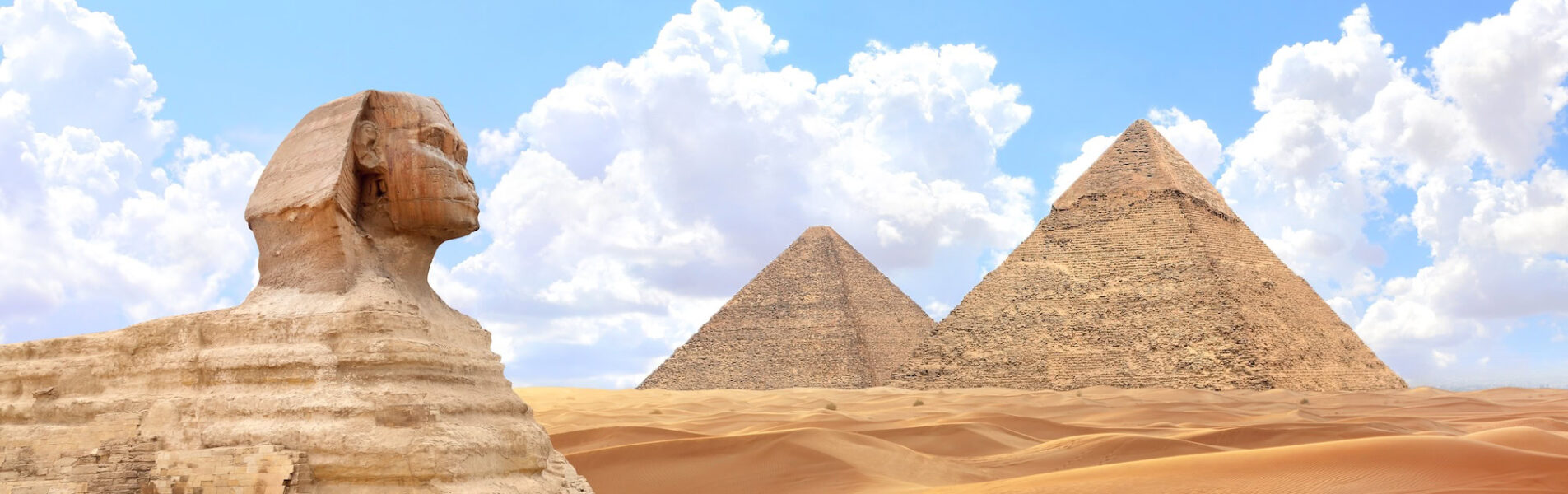
Your first morning takes you to the Giza plateau, home to the Great Pyramid of Khufu, the only surviving Wonder of the Ancient World. Originally 146 metres (479 feet) tall and around 139 metres today, this architectural masterpiece was built from roughly 2.3 million stone blocks. The Great Sphinx guards the complex with its enigmatic gaze, carved from a single mass of bedrock during the Fourth Dynasty around 4,500 years ago. We can arrange camel rides at sunset, offering spectacular photo opportunities with the pyramids silhouetted against golden desert light.
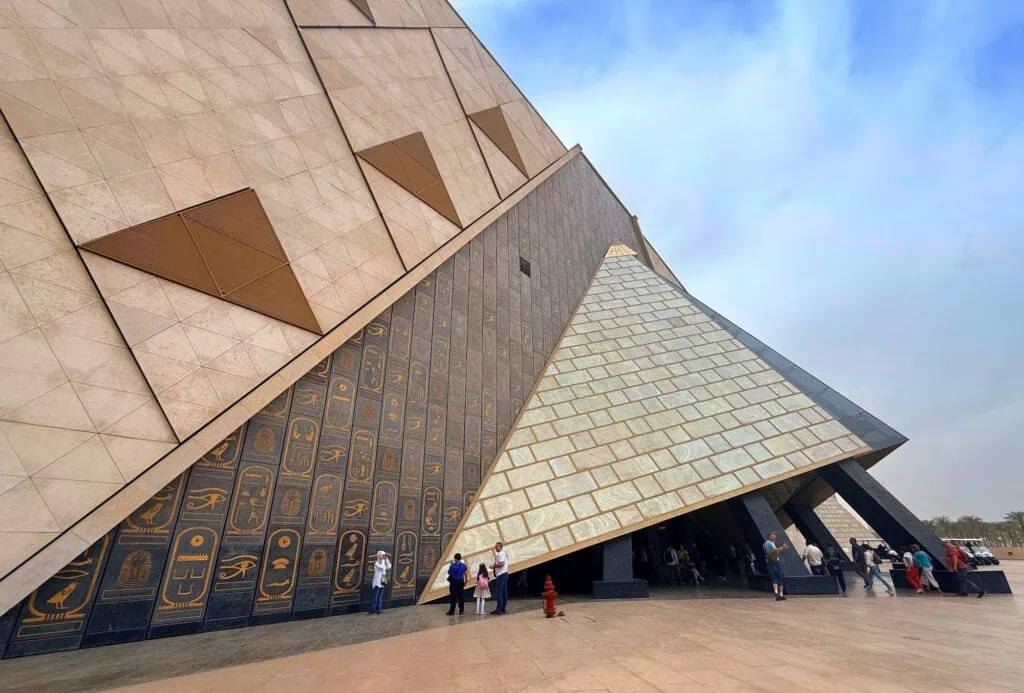
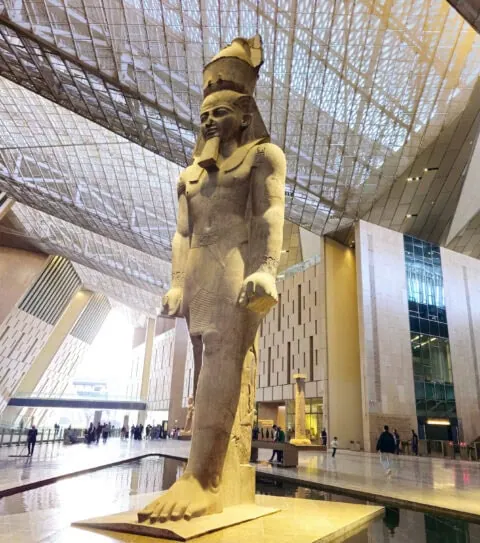
The Grand Egyptian Museum at the foot of the plateau is now Egypt’s primary museum, holding the world’s most extensive collection of pharaonic artefacts. The complete Tutankhamun collection sits here for the first time in history, including the golden funerary mask, the inner shrines, and more than 5,000 items from the tomb. Your Egyptologist guide explains the significance of each piece, making connections between the objects and the rulers who once owned them.
Islamic Cairo Exploration
The medieval streets of Islamic Cairo contain over 600 mosques, madrasas, and monuments dating from the Fatimid through Ottoman periods.
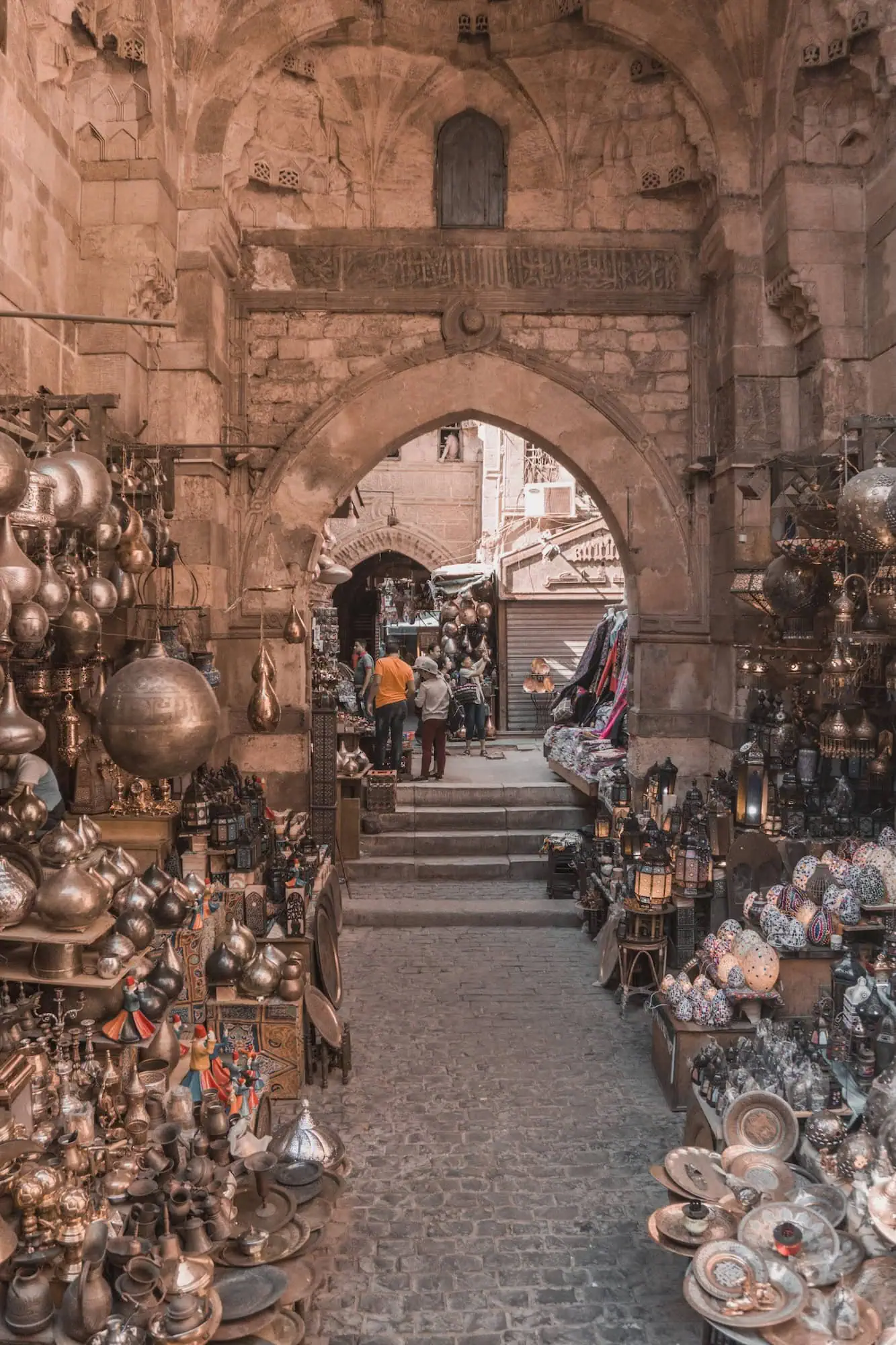
Khan el-Khalili bazaar offers authentic shopping experiences where skilled craftsmen still practice traditional metalwork, jewelry making, and textile production. The Citadel of Saladin provides panoramic city views while housing several historic mosques.
Coptic Cairo Heritage
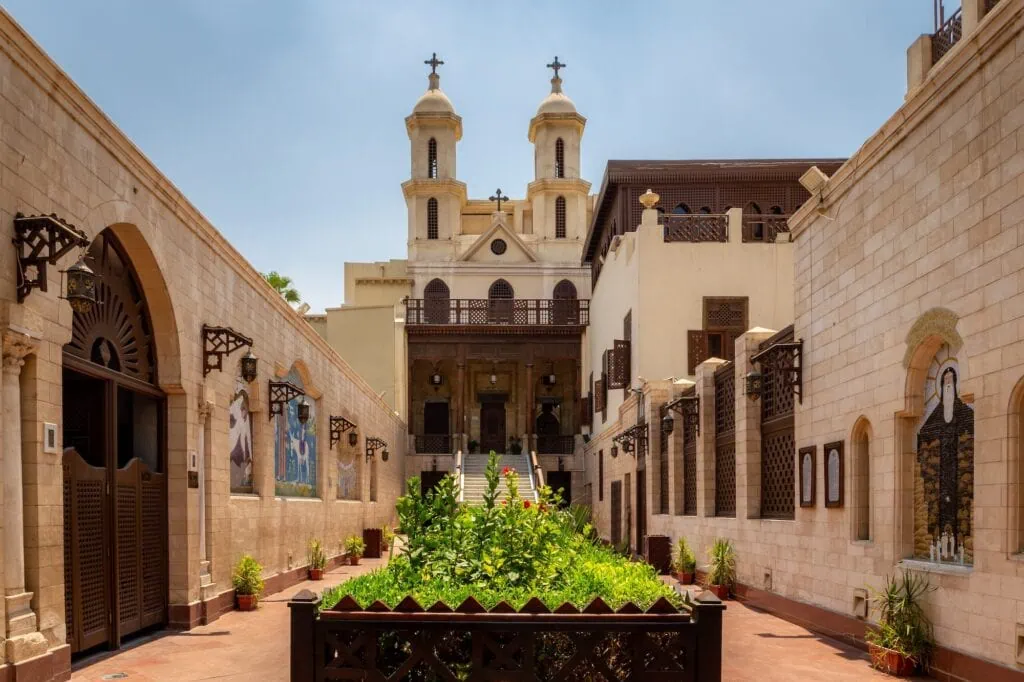
Egypt’s Christian heritage comes alive in Coptic Cairo, where tradition holds that the Holy Family stayed during their flight into Egypt. The Hanging Church, suspended above the gatehouse of a Roman fortress, contains beautiful wooden screens and ancient icons. Nearby, Ben Ezra Synagogue is associated by tradition with the place where the infant Moses was found, bringing Jewish, Christian, and Islamic heritage together in one remarkable neighbourhood.
Luxury Nile Cruise: Sailing Between Luxor and Aswan
Board your Nile cruise in Luxor for four days of scenic river sailing combined with extraordinary temple visits along the Nile’s banks.
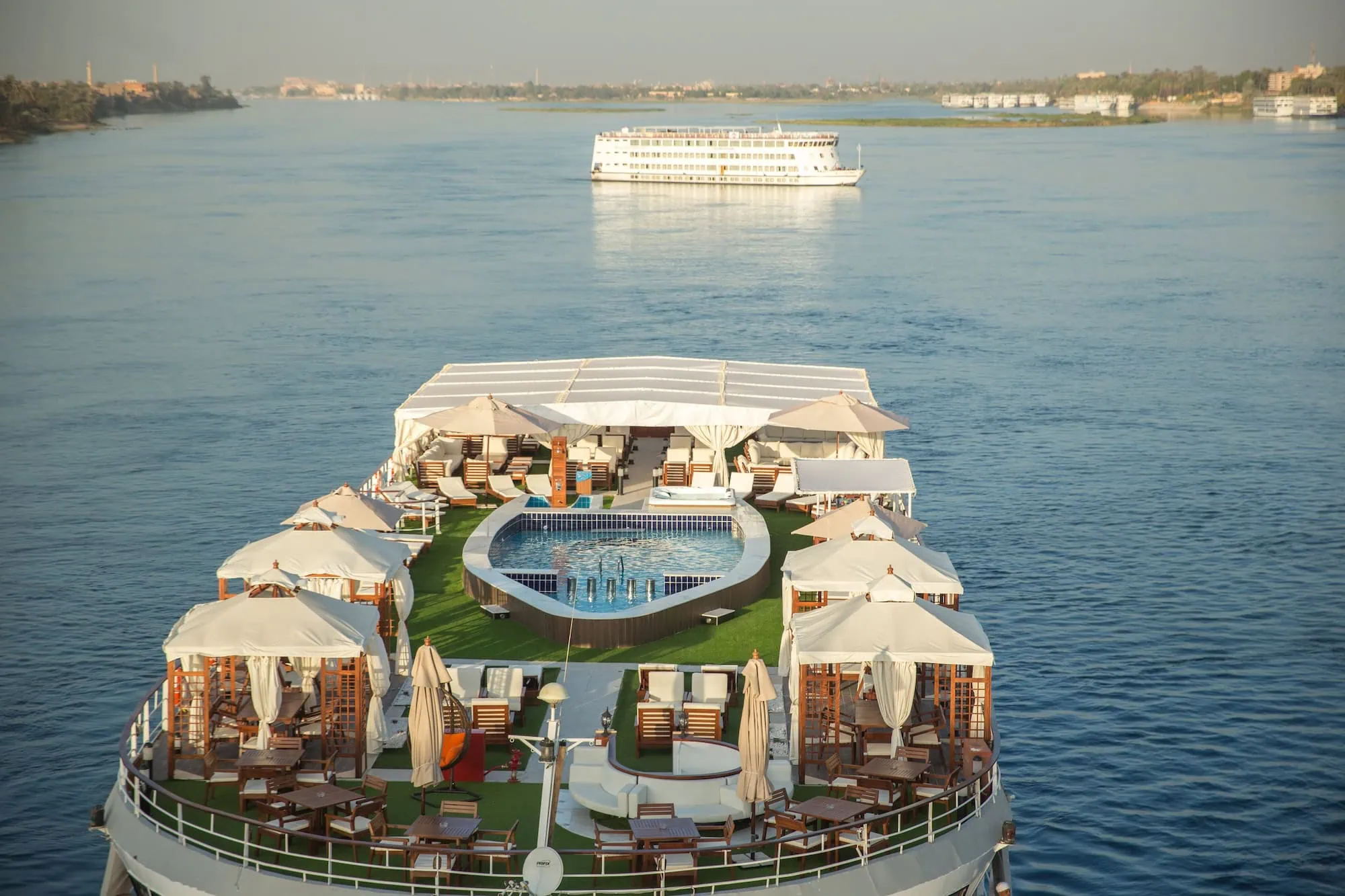
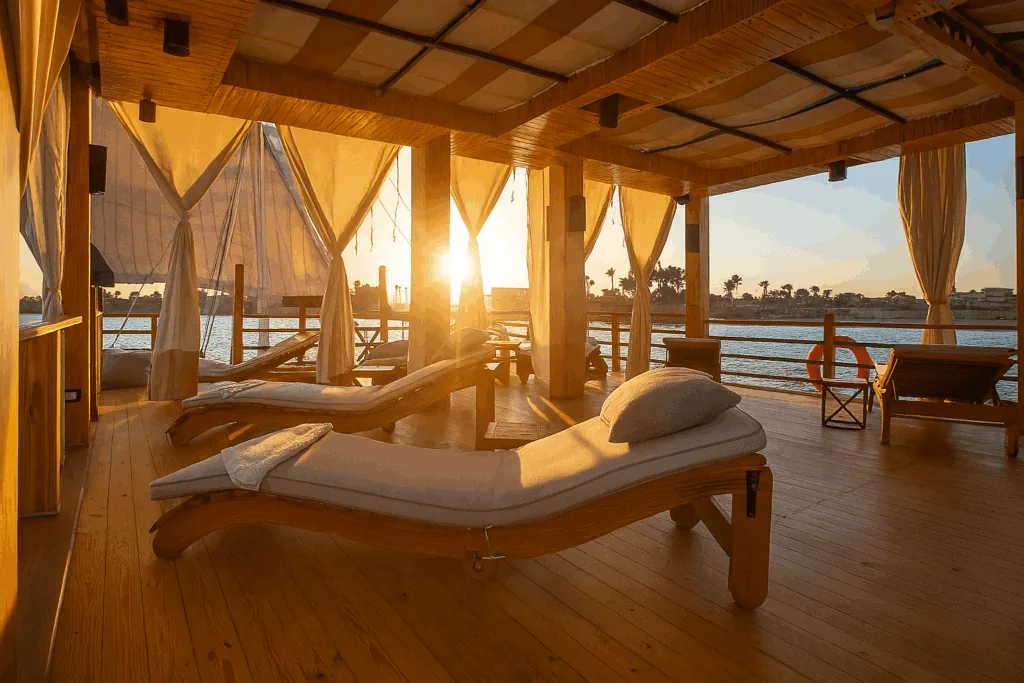
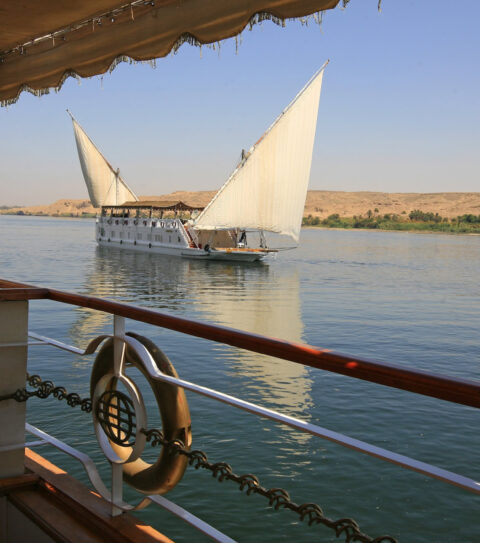
A Luxury Nile Cruise vessel offers spacious cabins, some with private balconies, full-service spas, and sun decks perfect for watching rural Egyptian life unfold along the riverbanks. For a more intimate and traditional experience, you can also choose a dahabiya, the smaller twin-mast sailing vessel carrying just 8 to 16 guests, known for its quiet sailing and relaxed pace.
Meals feature international cuisine alongside traditional Egyptian dishes, while evenings on board are unhurried. The gentle pace allows time to read, relax, and absorb the incredible sights you visit at each stop along the river.
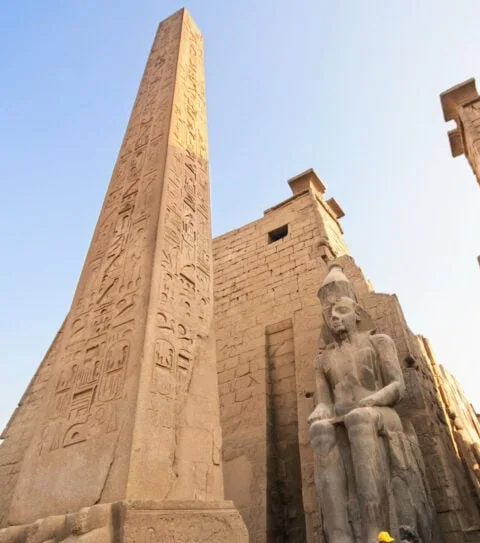
Luxor serves as your embarkation point, often called the world’s greatest open-air museum. The Valley of the Kings contains over 60 discovered tombs, including those of Tutankhamun, Ramesses VI, and Seti I. Each tomb features unique wall paintings and hieroglyphic texts from the Book of the Dead, designed to guide the pharaoh through the afterlife. The Karnak Temple Complex covers more than 200 acres, built and added to over 2,000 years by dozens of pharaohs.
Temple Hopping Along the River
Edfu Temple, dedicated to the falcon god Horus, is the best-preserved temple in Egypt. Built during the Ptolemaic period, its walls contain detailed reliefs depicting the mythological struggle between Horus and Seth. Kom Ombo’s unique double design honours both Sobek the crocodile god and Haroeris the falcon-headed god, with twin sets of symmetrical halls and sanctuaries side by side.
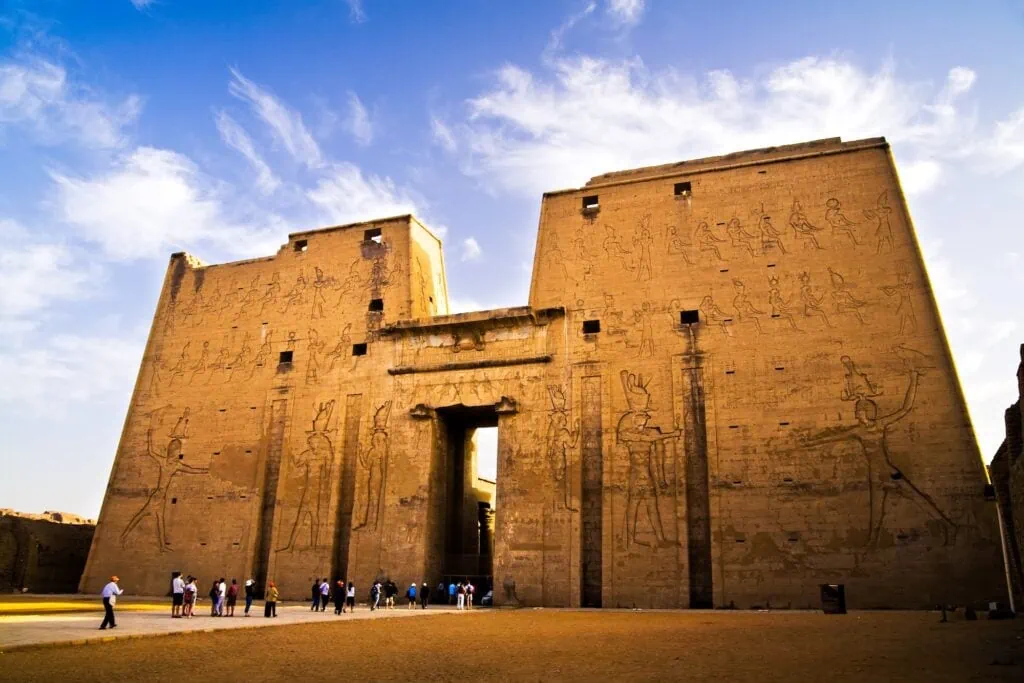
On a Luxury Nile Cruise ship, these shore excursions run as small groups of around 12 guests per Egyptologist, shared with fellow ship passengers, without the crowded tour-bus atmosphere. On a dahabiya, with just 8 to 16 guests aboard, the excursions feel essentially private. Your guide shares archaeological insight while leaving time for personal reflection and photography at each site.
Aswan’s Nubian Culture and Engineering Marvels
Aswan showcases a gentler side of Egypt where Nubian traditions blend with pharaonic monuments and modern engineering achievements.
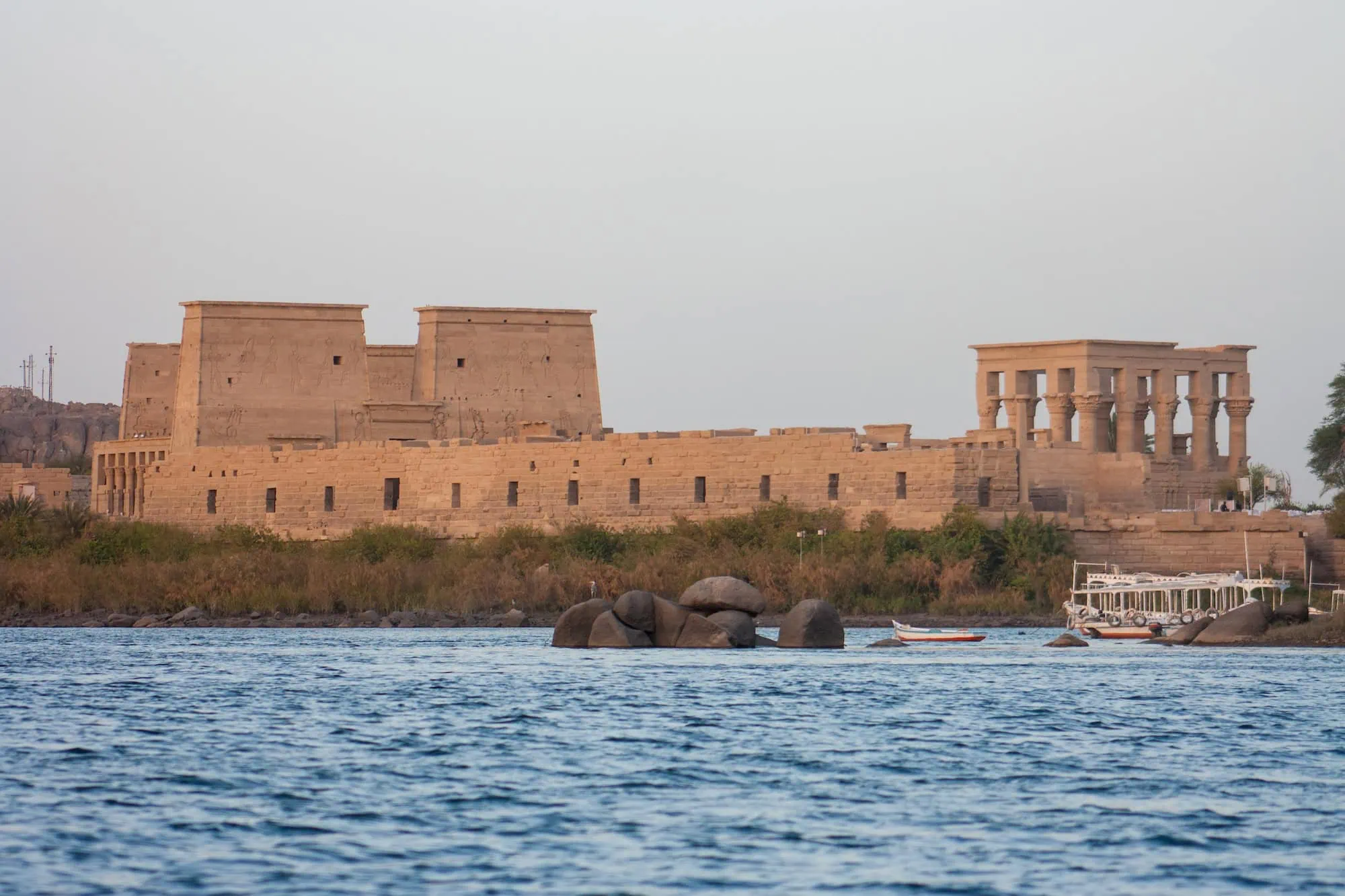
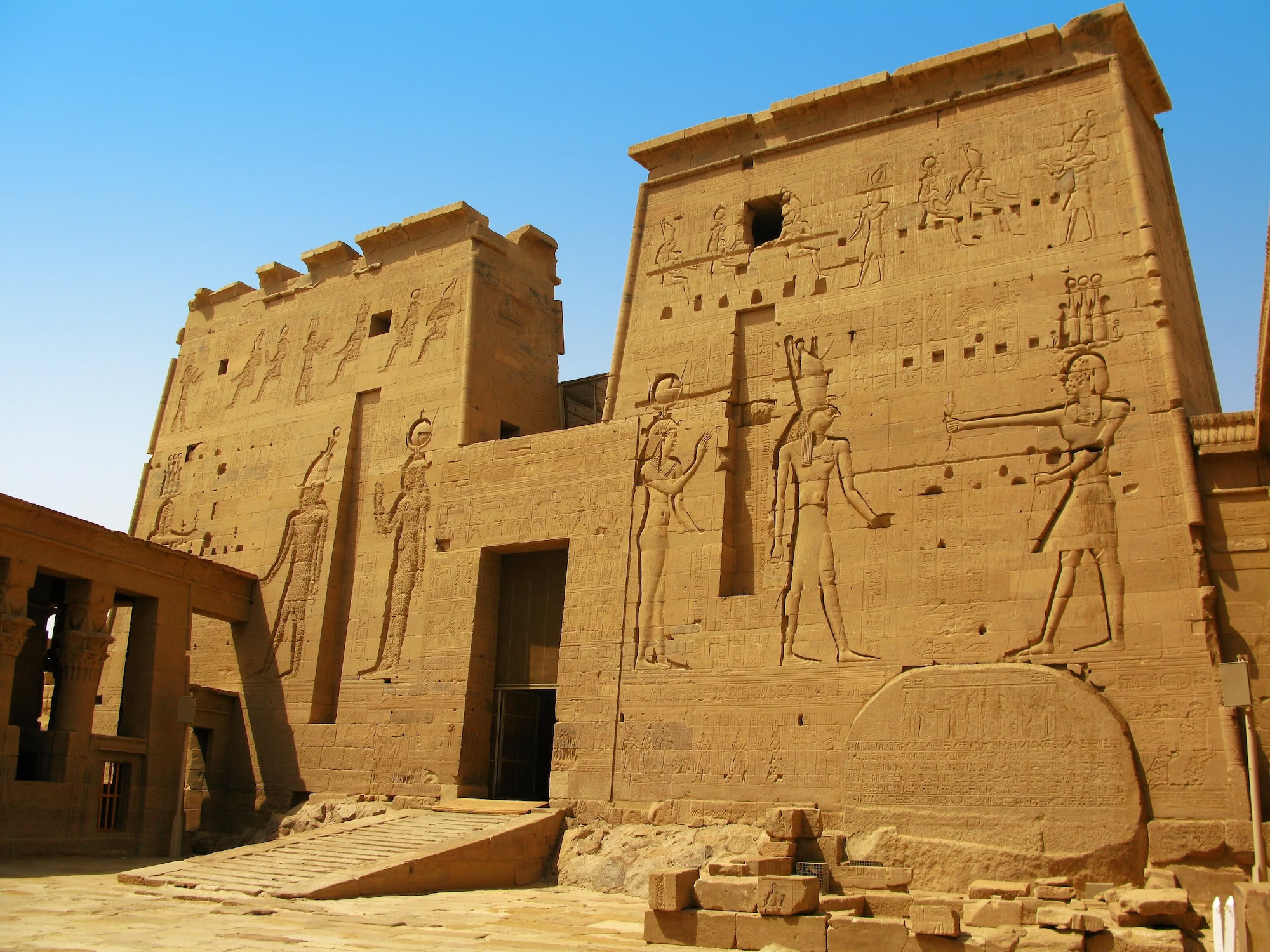
The Philae Temple complex, relocated stone by stone to Agilkia Island in the 1970s to save it from the rising waters of Lake Nasser, stands as one of the great heritage rescue operations of the 20th century.
Dedicated to Isis, goddess of magic and motherhood, these temples feature some of Egypt’s most beautiful reliefs and hieroglyphic inscriptions, and sit surrounded by water in one of the country’s most atmospheric settings. Evening sound and light shows illuminate the monument while narrating the legend of Isis and Osiris.
The High Dam Achievement
Aswan High Dam, completed in 1970, created Lake Nasser while controlling the Nile’s annual flood cycle. This massive concrete structure stretches 3.6 kilometers (2.2 miles) across the Nile and stands 111 meters (364 feet) tall. The project required relocating several ancient monuments, including Abu Simbel, demonstrating Egypt’s commitment to balancing progress with heritage preservation.
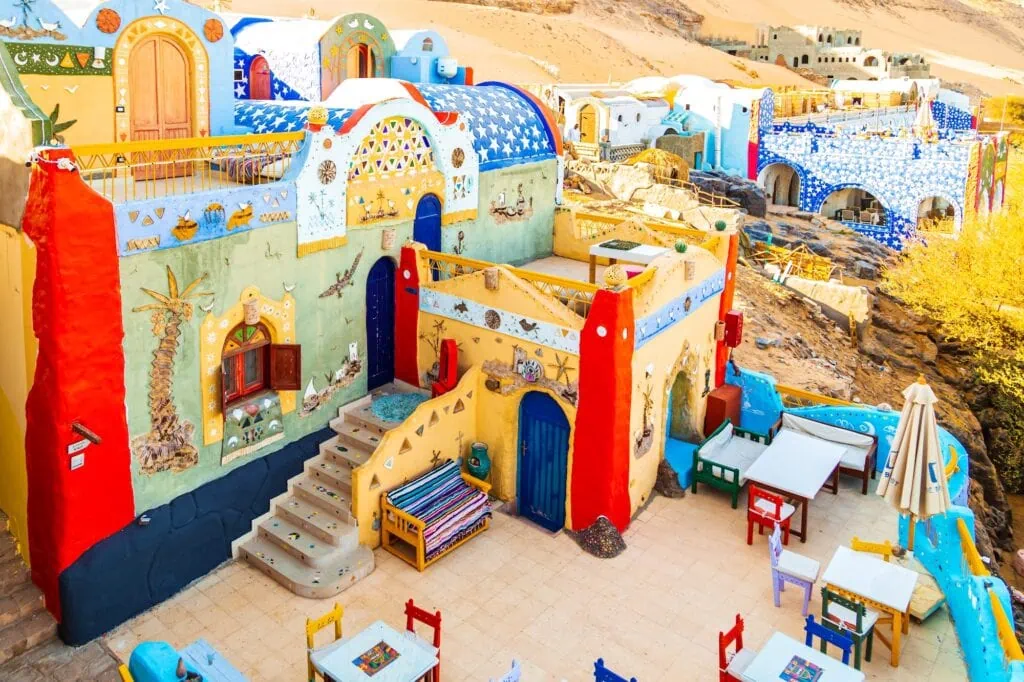
Nubian villages offer authentic cultural experiences where colorful houses line the Nile’s banks and traditional crafts continue through family generations. Boat trips to Elephantine Island reveal archaeological sites dating to ancient Egypt’s southern frontier, where pharaohs monitored trade routes to sub-Saharan Africa.
Abu Simbel: Ramesses II’s Desert Masterpiece
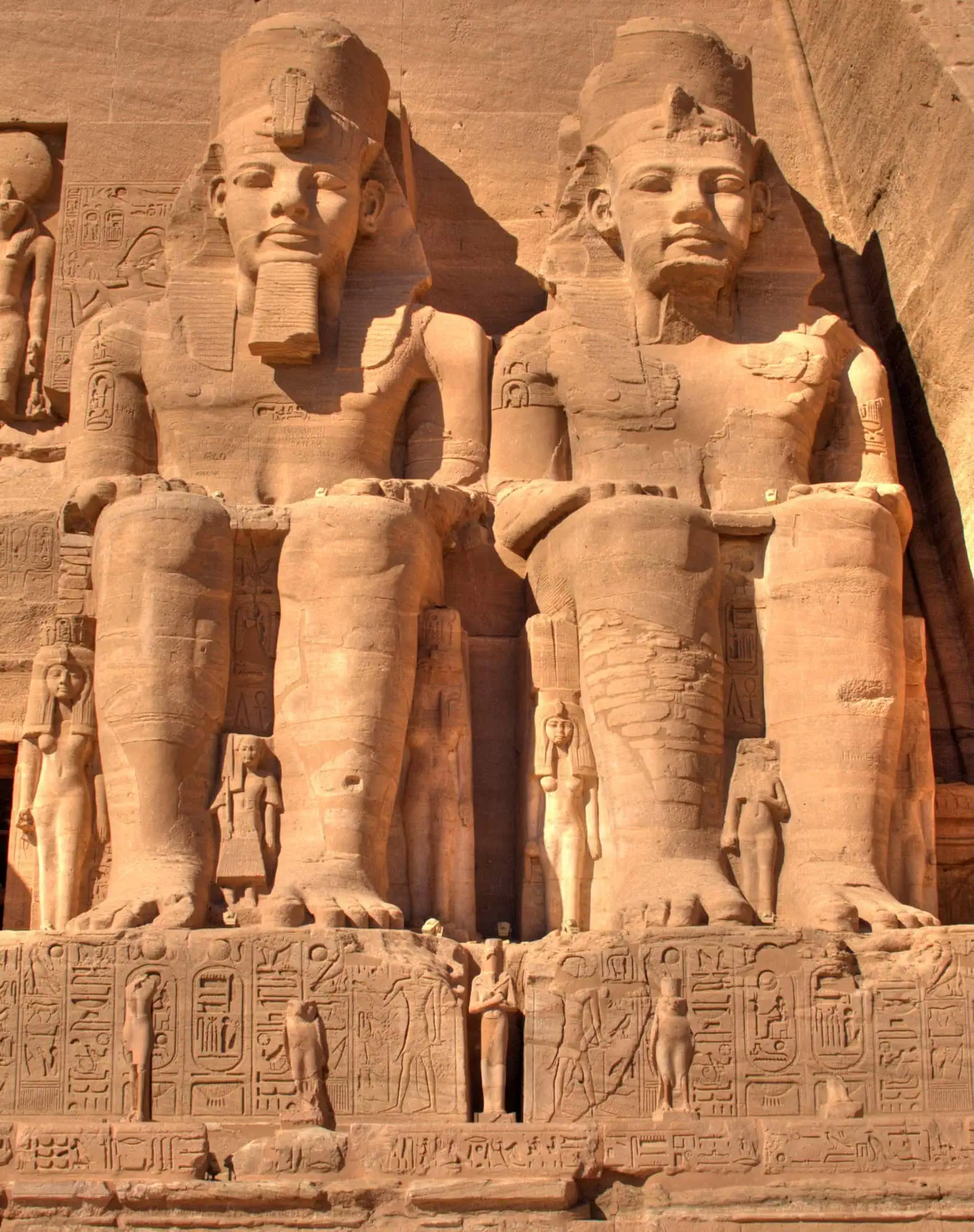
Abu Simbel represents ancient Egypt’s most dramatic architectural statement, carved directly into cliff faces overlooking Lake Nasser.
The Great Temple’s four colossal statues of Ramesses II, each standing 20 meters (65 feet) tall, announce the pharaoh’s power to anyone approaching from the south. Built in the 13th century BC, this UNESCO World Heritage site celebrates Ramesses II’s military victories while honoring the gods Ra-Horakhty, Amun-Ra, and Ptah. The smaller temple honors Queen Nefertari, Ramesses II’s beloved wife, with her statues standing equal in size to the pharaoh’s – unprecedented in Egyptian art.
Inside the Great Temple, eight pillars carved as Osiris support the hypostyle hall, while battle scenes covering the walls depict the famous Battle of Kadesh. The sanctuary holds four seated statues, and twice each year, on February 22 and October 22, the rising sun penetrates around 60 metres into the temple to illuminate three of the four figures, leaving only Ptah, god of the underworld, in shadow.
The entire complex was dismantled and relocated 65 meters (213 feet) higher between 1964-1968 to save it from flooding when Lake Nasser was created. This extraordinary UNESCO rescue operation involved cutting the monuments into 1,036 blocks, each weighing up to 30 tons, then reassembling them with millimeter precision.
Planning Your Abu Simbel Visit
Early morning flights from Aswan take around 45 minutes each way, allowing you to explore the temples before the afternoon heat builds. A road convoy is also possible, taking around three hours each way through the desert, with views of Lake Nasser along the route. We usually recommend basing yourself in Aswan for the Abu Simbel trip, so the early start is as easy as possible.
Red Sea Relaxation: Desert Meets Ocean
Complete your Egyptian adventure with two or three days along the Red Sea coast, where world-class resorts meet extraordinary marine ecosystems. This extension is a key part of our Cairo and Red Sea holiday itineraries, designed to balance cultural discovery with coastal relaxation.
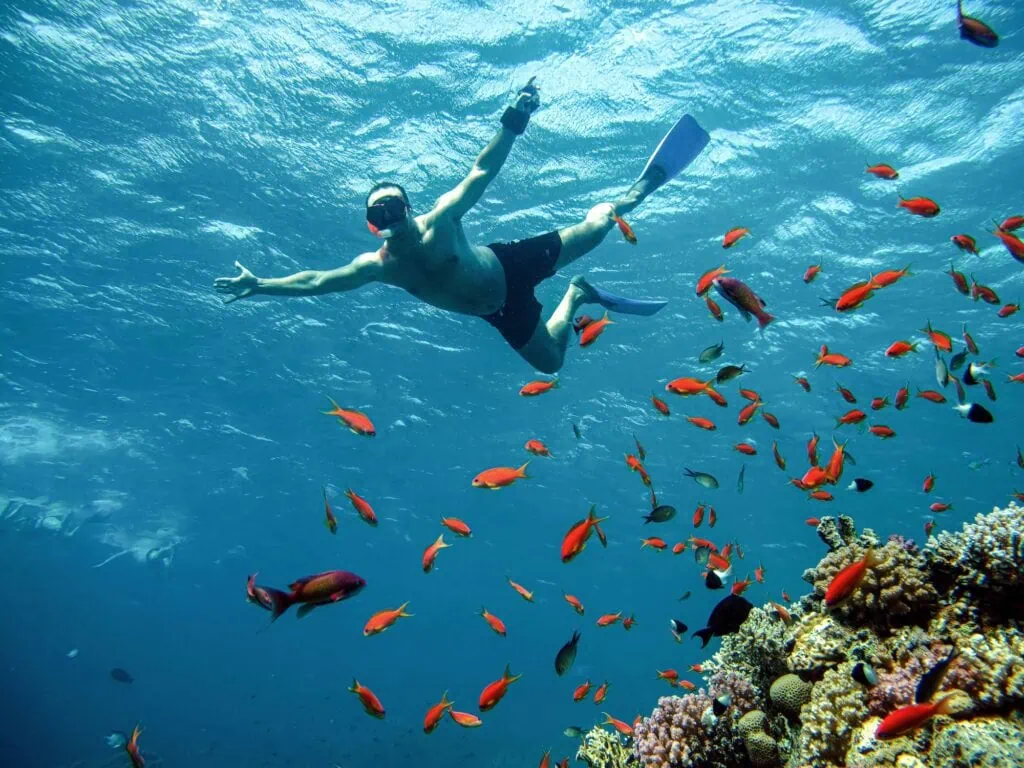
Hurghada, Marsa Alam, and Sharm El Sheikh all offer beachfront accommodations, available at every level up to luxury, with direct access to coral reefs teeming with colourful fish. Hurghada is the most established and the easiest to combine with a Nile itinerary, Marsa Alam to the south is quieter with some of the finest reefs in the country, and Sharm El Sheikh sits across on the Sinai coast near the famous dive sites of Ras Mohammed. The clear, warm waters hold temperatures between 22 and 28°C (72-82°F) year-round, ideal for snorkelling and diving.
Underwater adventures reveal some of the world’s most pristine coral formations. The Red Sea contains over 200 coral species and 1,100 fish species, including parrotfish, angelfish, and occasional dolphin sightings. Diving excursions cater to all skill levels, from shallow reef snorkeling to advanced wreck diving experiences.
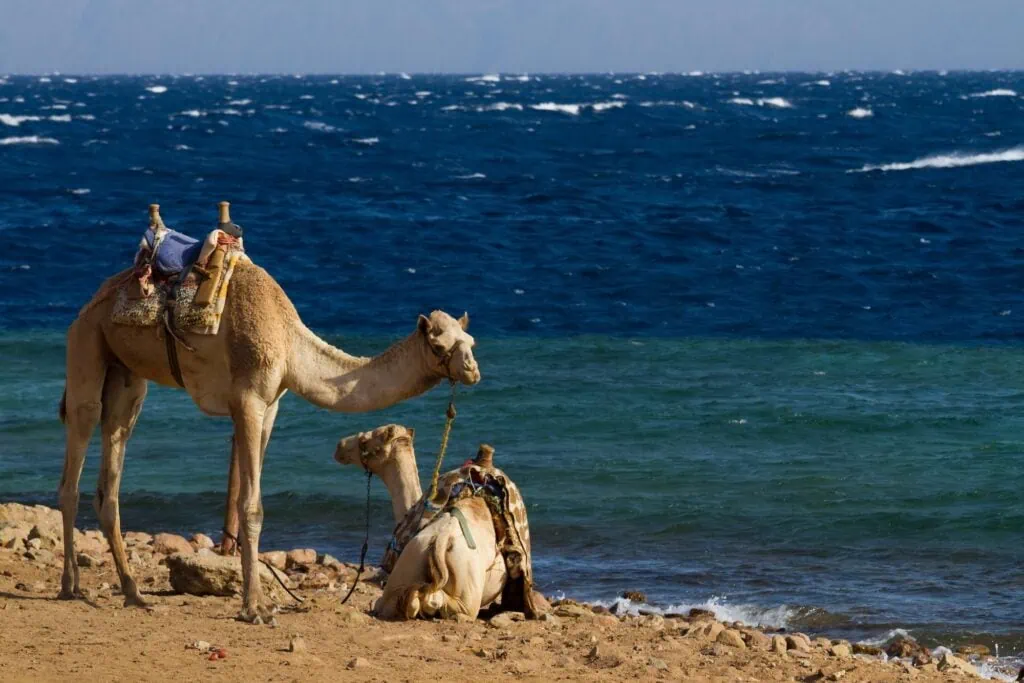
Desert safari adventures combine four-wheel driving through Eastern Desert landscapes with Bedouin cultural experiences. Traditional dinner camps feature authentic cuisine, folk music, and stargazing opportunities far from city light pollution. Camel trekking and quad biking offer alternative ways to explore the dramatic terrain between the Nile Valley and Red Sea coast.
Practical Tips for Your Egyptian Journey
Currency and payments require some advance planning for smooth transactions throughout your trip.
Egyptian pounds (EGP) are the local currency, though U.S. dollars and euros are widely accepted at tourist sites and hotels. ATMs are readily available in major cities, but carry cash for smaller vendors and tip money. We recommend exchanging money at banks or authorized exchange offices rather than airports for better rates. Credit cards work at upscale establishments, though Visa and Mastercard have broader acceptance than American Express.
Tipping, known locally as baksheesh, is an established part of Egyptian service culture. Guides, drivers, hotel staff, and restaurant servers all customarily receive tips reflecting the service and the length of your trip. Your Travel Concierge will share suggested amounts with your pre-departure information, and keeping small notes handy makes the day-to-day easy.
Communication stays easy with international roaming or local SIM cards available at Cairo airport. Wi-Fi is standard in hotels and many restaurants, though connection speeds vary outside major cities. We provide 24/7 support throughout your journey, ensuring assistance is always available when needed.
Photography and Cultural Etiquette
Capturing Egypt’s wonders requires understanding local customs while maximizing photographic opportunities.
Photography permits are required inside some tombs and museums, with fees depending on the location. The Great Pyramid’s interior and Tutankhamun’s tomb both require separate tickets with limited daily availability, and entering the Great Pyramid is an optional add-on involving a stooped, steep climb. We help secure permits and tickets in advance, so you can photograph the experiences that matter most to you.
Respect local customs when photographing people, especially in rural areas and religious sites. Always ask permission before taking portraits, and consider offering to show subjects their photos on your camera screen. Many Egyptians are proud to share their heritage but appreciate courteous approaches.
Morning and late afternoon provide the best lighting for monument photography, avoiding harsh midday shadows while capturing golden hour warmth. The Great Sphinx faces east, making sunrise shots particularly dramatic. Nile cruise sunsets offer spectacular opportunities with feluccas and monuments silhouetted against colorful skies.
Religious sites require modest dress regardless of gender. Cover shoulders and knees, and women should carry scarves for mosque visits. Remove shoes before entering mosque prayer areas, and maintain quiet, respectful behavior throughout religious sites.
Traveling with local experts makes navigating cultural etiquette effortless. Our thoughtfully planned tour packages to Egypt ensure you experience the country respectfully, comfortably, and at the right moments, without missing a single unforgettable scene.
When 10 Days Isn’t the Right Fit
Ten days is the complete first visit, with room to add the coast or a second country. If your time is more limited, an 8-day Egypt tour still fits Cairo, a full Nile cruise, and Abu Simbel, and a 7-day Egypt tour covers the Cairo-Luxor-Aswan triangle without a cruise. If you want to go further, a 12-day Egypt tour opens up the Western Desert oases or a deeper multi-country trip, and a 14-day Egypt tour allows an unhurried run through all of Egypt plus a second country. Your Travel Concierge can compare the options against your priorities.
Your 10-Day Egypt Tour, Designed Around You
Tell us your dates and what you most want to see, and we will design the itinerary around it. Whether you want the classic Cairo-and-cruise itinerary with a Red Sea finish, a longer luxury Nile sailing, a day on the Mediterranean in Alexandria, or a cultural extension into Jordan, your dedicated Travel Concierge designs the trip around what matters to you. The private format means every choice is yours: the cities, the cruise, the hotels, the pace, the optional extras.
We will send your first-draft itinerary within 1 to 12 hours, and we will keep refining it together until you are certain it is the trip you want.
Frequently Asked Questions
Egypt’s mainstream tourist regions, including Cairo, Luxor, Aswan, Abu Simbel, and the Red Sea coast, have welcomed international visitors without significant incident for many years and operate under coordinated tourist police presence. The one region we do not tour is North Sinai. The rest of the country sits well within standard travel advisories from US, UK, EU, Canadian, and Australian governments.
A private guided tour adds real practical value on top of that baseline. You skip the navigation, the negotiation, and the language friction, and you have someone on your side throughout. Most travellers find Egypt noticeably more comfortable than they expected.
Ten days is the ideal length for a complete first visit to Egypt. It covers everything most travellers come for, the Pyramids of Giza, the Great Sphinx, the Grand Egyptian Museum, a full Nile cruise between Luxor and Aswan, the temples of Edfu and Kom Ombo, and Abu Simbel, with two or three days left over.
Those spare days are what set ten apart from eight. Rather than finishing on the cruise, a 10-day Egypt tour leaves room to add a Red Sea beach stay, a day in Alexandria, a longer or more luxurious cruise, or even a short extension into Jordan.
For a first trip where you want to see the classic sites without rushing and still have time for something beyond the highlights, ten days is the sweet spot.
A typical 10-day Egypt itinerary opens with two to three days in Cairo for the Giza Pyramids, the Great Sphinx, the Grand Egyptian Museum, and Islamic Cairo’s medieval streets and Khan El Khalili bazaar. A short domestic flight then takes you south to Luxor to join your Nile cruise.
The 4-day, 3-night cruise sails between Luxor and Aswan, with guided shore excursions to Karnak and the Valley of the Kings around Luxor, then Edfu and Kom Ombo along the river, and Philae and the High Dam at Aswan. Abu Simbel is usually added as a half-day flight from Aswan.
The final two or three days are where the itinerary opens up: a Red Sea stay at Hurghada, a day in Alexandria, or a cultural extension into Jordan. Your Travel Concierge tailors the ending to your interests.
The cost of a 10-day Egypt tour depends on which itinerary you choose, your hotel and cruise category, the size of your party, and any add-ons. Because every Egypt Tours Plus tour is private and built around you, there is no fixed package price. A comfortable 4-star tour with a standard cruise sits at the more accessible end, while landmark 5-star hotels, a premium cruise vessel such as the SS MISR, a Red Sea extension, or a second country raise the total.
Optional add-ons such as entering the Great Pyramid, special-access tombs, the Abu Simbel trip, or a sunrise hot air balloon flight over Luxor are quoted separately. The most accurate way to get a figure is to tell your Travel Concierge your dates, party size, and priorities. You will receive a tailored quote, typically within 1 to 12 hours, with no obligation to book.
The difference is what you do beyond the classic core. An 8-day Egypt tour fits Cairo, a full Nile cruise, and Abu Simbel, which is the complete classic itinerary and ideal if your time is limited to roughly a week.
A 10-day Egypt tour keeps all of that and adds two or three days, which is enough to include a Red Sea beach stay, a day in Alexandria, a longer or more luxurious cruise, or a short extension into Jordan. It also lets the whole trip breathe, with less pressure on the busy Cairo and Luxor days.
If you want only the essentials and want them efficiently, eight days works well. If you want the essentials plus genuine rest or something extra, ten days is the better choice.
Yes, and it is one of the most popular ways to use the extra days. After Cairo, the Nile cruise, and Abu Simbel, a short flight reaches Hurghada, Marsa Alam, or Sharm El Sheikh on the Red Sea coast for two or three days of snorkelling, diving, or simply relaxing on the beach.
The Red Sea offers some of the clearest water and best reef diving in the world, and it provides a genuine change of pace after the intensive monument days. Our 10-Day Egypt Overland Tour through Cairo, Aswan, Luxor, and Hurghada is built around exactly this combination of culture and coast.
Yes, and it is included on some 10-day itineraries as a half-day from Aswan. The usual routing is an early morning flight from Aswan, with the temples reached in around 45 minutes and the return flight back by early afternoon. A road convoy is also possible, taking around three hours each way.
The twin temples of Ramesses II and his wife Nefertari, relocated 65 metres uphill in the 1960s to escape the rising waters of Lake Nasser, are the most ambitious monuments any pharaoh ever built. With ten days, there is no pressure to squeeze Abu Simbel in, and it fits comfortably into the Aswan portion of the trip.
Plan two to three hours at Abu Simbel to explore both the Great Temple of Ramesses II and the smaller temple of Nefertari, and to take in the scale of the relocated monuments. The four 20-metre colossi of the Great Temple and the battle scenes inside reward unhurried time.
Most visitors arrive on the early morning flight from Aswan, which allows plenty of time at the temples before the midday heat and the return flight by early afternoon. With a private guide, you set the pace and are not tied to a larger group’s schedule.
Yes. Ten days is enough to pair the highlights of Egypt with a focused taste of Jordan. A typical split spends six to seven days on Egypt’s Pyramids, Nile cruise, and temples, then crosses to Jordan for Petra, the rose-red city carved into the rock, and the desert landscapes of Wadi Rum.
Our 10-Day Egypt and Jordan tour handles the international flight between the two countries and keeps the private, guided standard consistent throughout. It is a strong choice for travellers who want two of the Middle East’s greatest destinations in a single trip, though it does mean less time in Egypt than a full 10-day Egypt tour.
Yes. A Nile cruise is part of almost every 10-day Egypt tour, and the extra days mean it does not have to be rushed. The standard 4-day, 3-night cruise sails between Luxor and Aswan, calling at the temples of Edfu and Kom Ombo, and serves as both your transport and your accommodation for that part of the trip.
Because ten days allows more flexibility than eight, some travellers choose a longer or more luxurious sailing, such as a premium round-trip cruise or the historic SS MISR, while others keep the standard cruise and use the spare days for the Red Sea or Alexandria. Your Travel Concierge will help you choose the cruise that suits you.
Yes. A tourist visa is required regardless of how long your stay is. Most travellers, including US, UK, EU, Canadian, Australian, and many Latin American nationals, can collect a 30-day tourist visa on arrival at Cairo International Airport for $25 USD in cash. An e-visa is also available in advance through the official Egyptian government portal, which some travellers prefer for a smoother arrival.
Your passport should be valid for at least six months beyond your travel dates, with a blank page for the stamp. If your itinerary includes Jordan, your Travel Concierge will advise on the separate entry requirements there, including the Jordan Pass. Because requirements vary by nationality, your Concierge confirms the right option for your passport before you travel.
The most comfortable window for a 10-day Egypt tour runs from October through April, when daytime temperatures across Cairo, Luxor, and Aswan sit between 20 and 25°C and evenings are cool and pleasant. This is also the best period for the Nile cruise and for a Red Sea extension, when both the river and the coast are at their most comfortable.
December and January bring the finest weather and the largest crowds. The shoulder months of October, November, March, and April offer an excellent balance of mild conditions and thinner queues. Summer, from May to September, regularly exceeds 35°C in Upper Egypt and can reach 40°C in Aswan, though the Red Sea coast stays more pleasant thanks to sea breezes. On a private tour, your guide manages the daily timing around the heat whatever the season.
Pack lightweight, breathable clothing that covers shoulders and knees for temple and mosque visits, plus a few smarter outfits for the cruise evenings. A light jacket or shawl is useful for cool evenings and air-conditioned interiors, and comfortable walking shoes are essential for the archaeological sites.
If your itinerary includes the Red Sea, add swimwear, a beach cover-up, and reef-safe sunscreen. A wide-brimmed hat, sunglasses, high-SPF sunscreen, a power bank, and a universal adapter for Egypt’s European-style two-pin sockets round out the essentials. Your Travel Concierge can send a full packing list tailored to your specific itinerary.
A 10-day Egypt tour involves moderate activity, typically a few kilometres of walking a day across sites with uneven, sandy, or stepped surfaces, plus some early starts to beat the heat and crowds. The Nile cruise and any Red Sea days are more relaxed, which is part of why ten days feels more comfortable than a shorter, more concentrated trip.
A few optional extras are more demanding. Entering the Great Pyramid means a stooped climb through low, steep passages and is not suited to anyone with claustrophobia or knee or back problems. The private format lets you set the pace, rest when you like, and skip anything that does not suit you. If anyone in your party has mobility considerations, tell your Travel Concierge in advance, and note that we also arrange dedicated wheelchair-accessible 10-day itineraries.
Yes, comfortably. Egyptian cuisine naturally includes many vegetarian and vegan options, with dishes like koshari, ful medames, and grilled vegetables widely available. Gluten-free, halal, kosher, and other specific needs can also be accommodated at hotel restaurants, on the Nile cruise, and at Red Sea resorts.
The cruise and resort portions are especially easy to cater for, since meals are prepared on site and kitchens can plan around your requirements when notified in advance. The earlier you let your Travel Concierge know about any restrictions or allergies, the easier it is to brief the relevant hotels, cruise vessel, and resorts.
Completely. Customization is the whole point of a private tour. You choose the shape of the trip, whether that is Cairo and the cruise with a Red Sea finish, a longer luxury sailing, a day in Alexandria, or an extension into Jordan, along with your hotel and cruise category, the pace, and the order of each day.
You can add a sunrise balloon flight in Luxor, entry to the Great Pyramid, special-access tombs, deeper museum time, or swap a beach day for an extra cultural stop. Your Travel Concierge builds the trip with you and refines it through the usual two to four rounds of revisions. There is no commitment until you are 100% satisfied with the plan.
Design Your Custom Tour
Explore Egypt your way by selecting only the attractions you want to visit