

Aqsunqur Mosque – A Real Gem in Cairo’s Old Islamic Quarter
You’ll find hidden treasures throughout Islamic Cairo, but few match the serene beauty of this 14th-century architectural masterpiece.
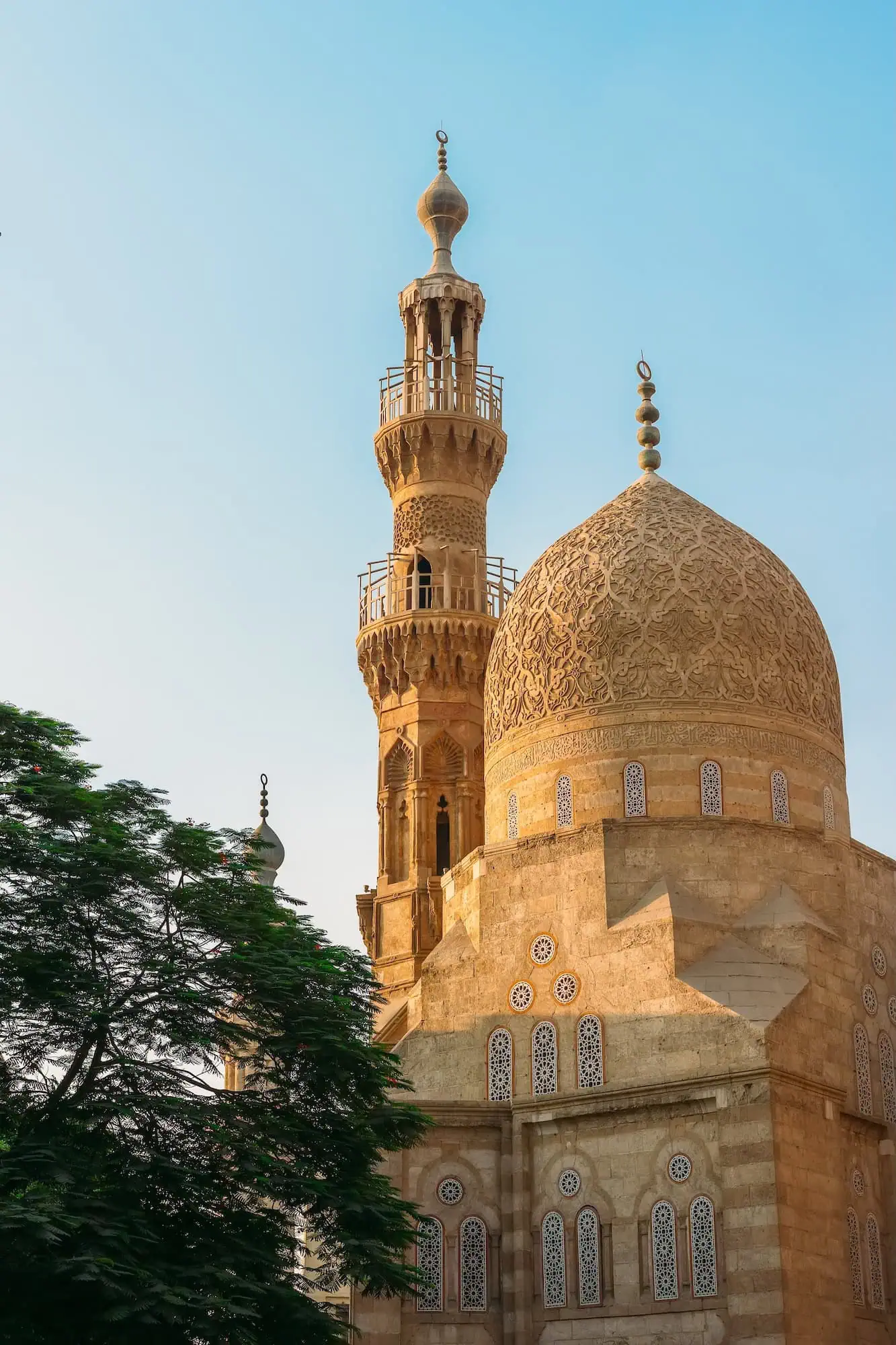
The Aqsunqur Mosque stands as one of Cairo’s most remarkable examples of Mamluk religious architecture, completed in 1347 during a period of extraordinary artistic achievement. Located in the historic Darb al-Ahmar district between Bab Zuweila and the Citadel, this mosque earned its famous “Blue Mosque” nickname from the stunning Iznik tiles that transform its interior into an oasis of tranquil color. While many visitors focus on Cairo’s more famous monuments, we believe this beautifully restored sanctuary offers something truly special – a chance to experience authentic Mamluk craftsmanship in peaceful surroundings that few other sites can match.
Our decades of guiding travelers through Egypt’s hidden corners have shown us that the most memorable experiences often come from discovering places where history, art, and spiritual calm converge in unexpected ways.
Table of Contents
The Blue Mosque Legacy
Understanding this mosque begins with recognizing its unique dual identity shaped by two great Islamic dynasties.
Original Mamluk Foundation
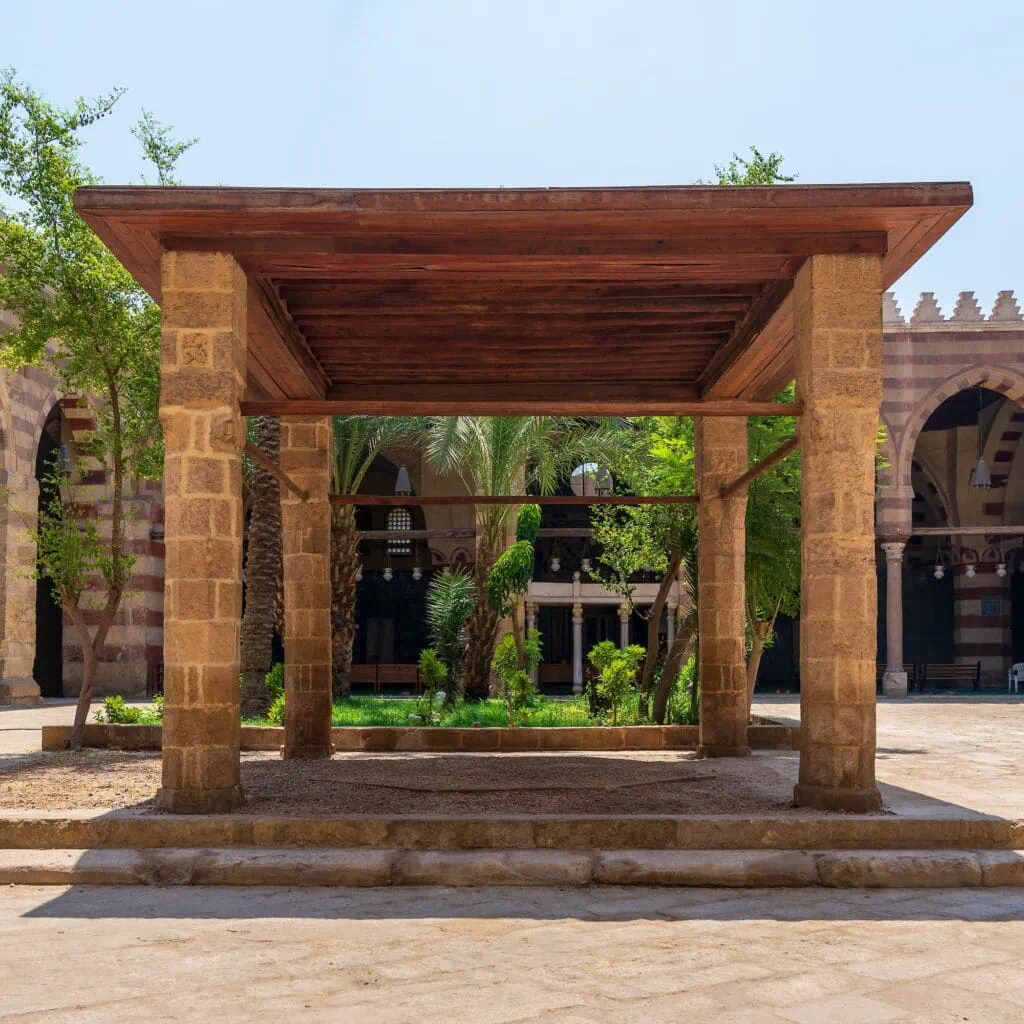
Amir Shams ad-Din Aqsunqur commissioned this mosque during the height of Mamluk power, personally supervising construction with remarkable attention to detail. The general layout follows traditional Mamluk design principles – a large open sahn (courtyard) surrounded by four riwaqs (covered arcades) that create both spiritual focus and practical shelter. What made Aqsunqur’s vision distinctive was his integration of the existing mausoleum of Sultan al-Ashraf Kujuk directly into the mosque structure, creating architectural challenges that required innovative solutions.
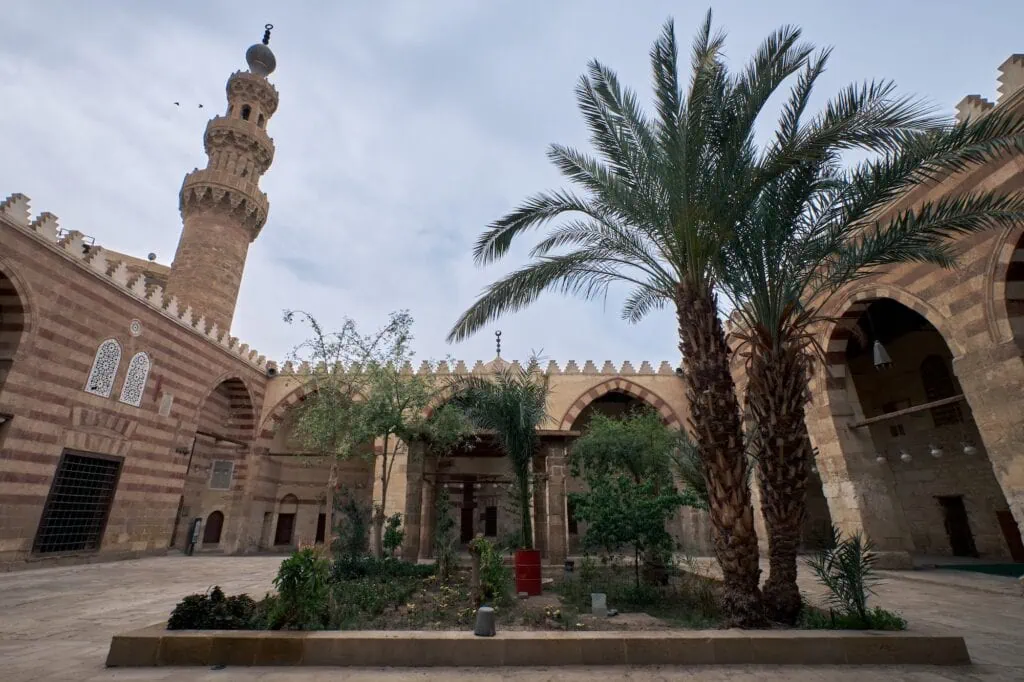
The facade showcases the sophisticated Mamluk approach to decorative stonework, featuring handsome blue-gray marble inlays that hint at the interior splendor to come. Syrian architectural influences appear throughout the design, reflecting the cosmopolitan nature of 14th-century Cairo where artisans from across the Islamic world contributed their expertise.
Ottoman Transformation
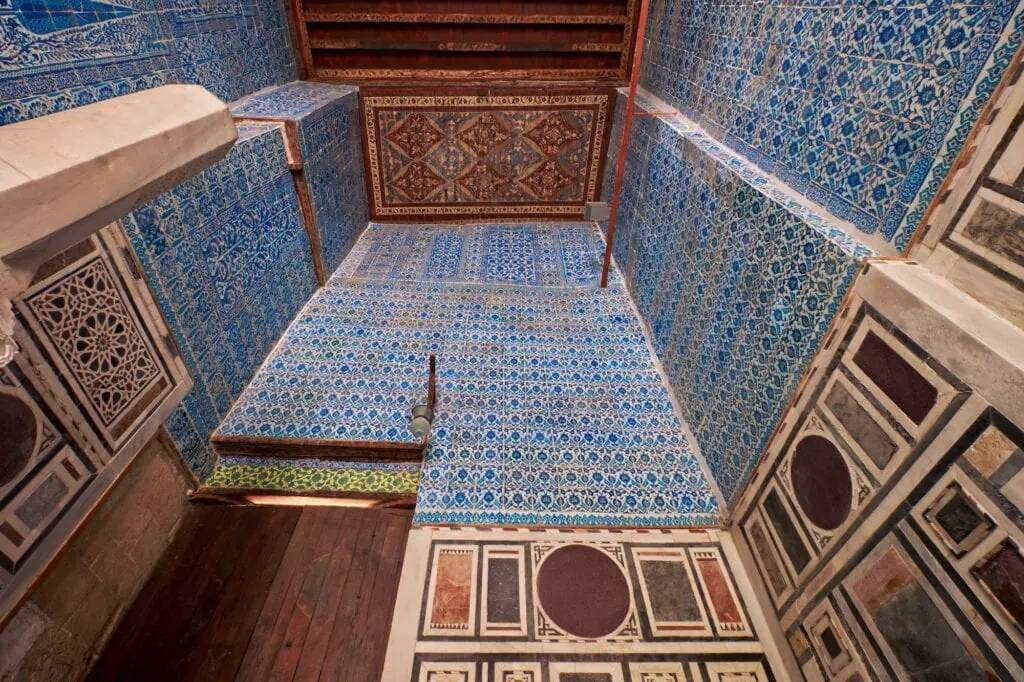
The nickname “Blue Mosque” emerged during the Ottoman period when Ibrahim Agha undertook extensive renovations that fundamentally changed the interior character. These restoration efforts introduced the spectacular Iznik tiles that now define the visitor experience – flowing patterns in salmon, green, plum, and various shades of blue that create an almost dreamlike atmosphere. The mausoleum area received particularly elaborate treatment, with blue marble tiles and mihrab work that exemplifies Ottoman decorative mastery.
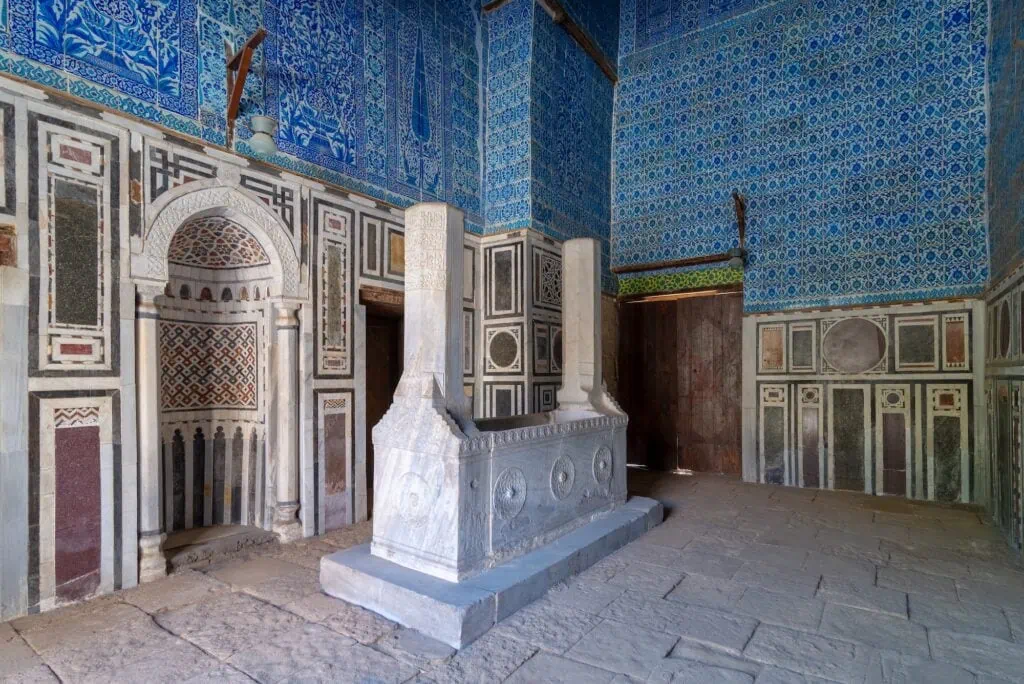
This Ottoman layer didn’t replace the original Mamluk structure but enhanced it, creating a fascinating architectural dialogue between two distinct artistic traditions. The result feels both historically authentic and visually cohesive – a testament to the skill of craftsmen who understood how to honor the past while creating something new.
Political Drama and Personal Tragedy
The mosque’s history carries darker undertones that add human dimension to its architectural significance. Amir Aqsunqur’s involvement in political conspiracies against Sultan El Kamil Shaban led to his execution in 1347, the same year his beloved mosque was completed. This tragic timing transforms the building into something more than a religious monument – it becomes a memorial to ambition, artistic patronage, and the dangerous politics of medieval Cairo.
Architectural Marvel: Syrian Influences
The building’s structural sophistication reveals itself to visitors who take time to appreciate its technical achievements.
Walking through the entrance, you encounter an arched recess decorated with intricate geometric patterns that immediately establish the mosque’s artistic credentials. The interior space demonstrates remarkable acoustic properties – prayers and conversations carry clearly across the courtyard while maintaining an sense of intimacy that larger mosques sometimes lack. Light grey, salmon, green and plum-colored stone inserts create visual rhythms that guide the eye naturally toward the mihrab and minbar areas.
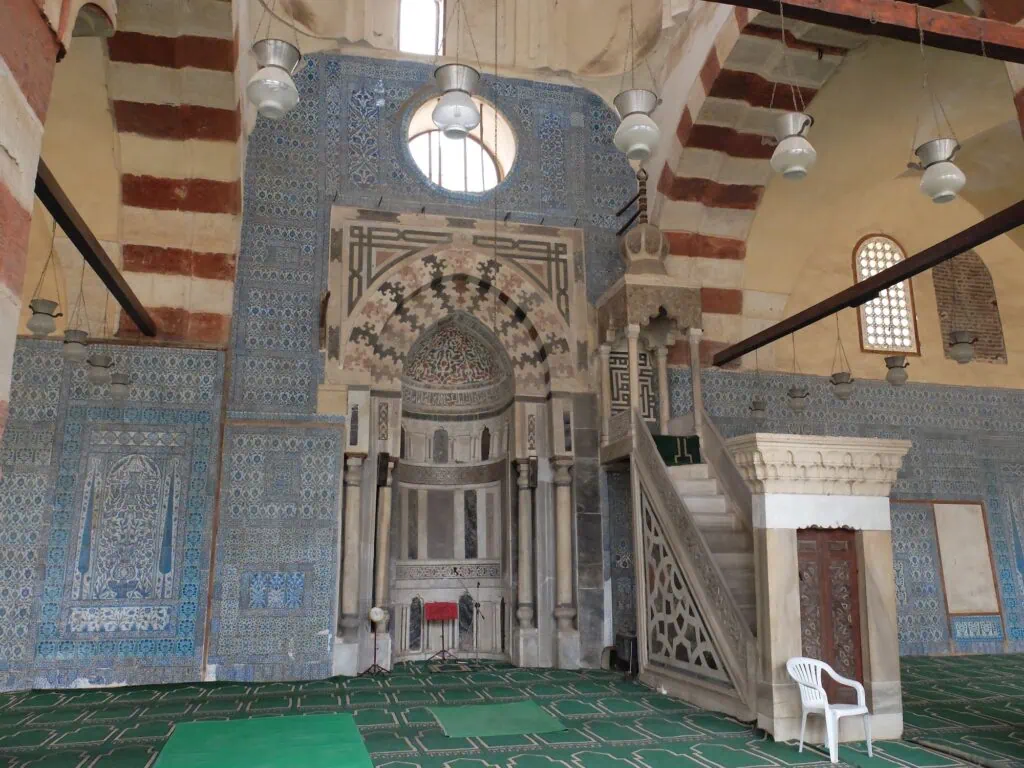
The integration of Kujuk’s pre-existing mausoleum created unique architectural challenges that the builders solved with considerable ingenuity. Rather than demolishing the older structure, they incorporated it seamlessly into the new design, creating internal sightlines that feel both planned and organic. This approach required modifications to standard Mamluk mosque layouts, resulting in spatial arrangements that you won’t find replicated elsewhere in Cairo.
Syrian architectural elements appear most clearly in the proportional relationships between different sections of the building and in specific decorative motifs that reflect trade connections between Cairo and Damascus. These influences blend so naturally with local Mamluk traditions that identifying them requires careful observation – exactly the kind of architectural detective work that makes visiting this mosque particularly rewarding for travelers interested in Islamic art history.
Conservation Success
Modern preservation efforts have given this historic mosque a remarkable second life after decades of neglect and damage.
The 1992 earthquake created serious structural problems that threatened the building’s survival. Damaged arches, rising damp that left salt deposits on masonry surfaces, and years of inadequate maintenance had created a conservation crisis. Perhaps most tragically, the famous blue Iznik tiles became targets for theft during periods when the site remained unguarded, creating gaps in the decorative program that seemed impossible to repair authentically.
World Monuments Fund Partnership
Recognition as a World Monument site brought international attention and, crucially, the resources needed for comprehensive restoration. The Aga Khan Trust for Culture became a key partner in this effort, contributing both funding and technical expertise in Islamic architectural conservation. This collaboration lasted six years and addressed everything from structural stabilization to meticulous recreation of missing tile work.
The project’s success becomes apparent the moment you step inside. Where earthquake damage once threatened walls and arches, you now find structurally sound masonry that will protect the building for generations. The salt deposits that once clouded marble surfaces have been carefully removed, revealing the stone’s natural beauty. Most remarkably, missing Iznik tiles have been replaced with historically accurate reproductions that blend seamlessly with surviving original work.
2015 Reopening and Public Access
When the mosque reopened in May 2015, it marked not just the completion of conservation work but the beginning of a new chapter in public engagement. Unlike many historic mosques that restrict access or charge high entrance fees, this site welcomes visitors during regular hours from 11:00 am (11:00) to 7:00 pm (19:00) daily without requiring admission payments – though tipping the caretaker reflects local custom and helps support ongoing maintenance.
The restoration preserved the mosque’s essential character as an active place of worship while making it accessible to international visitors seeking authentic encounters with Islamic architectural heritage. This balance between preservation, religious function, and cultural tourism represents exactly the kind of thoughtful approach that ensures historic sites remain living parts of their communities rather than museum pieces.
Visiting Experience
Every traveler’s experience of Cairo includes moments of overwhelming sensory input – the bustling markets, constant traffic, and crowded tourist sites that make the city so vibrant but sometimes exhausting.
This mosque offers something different entirely. Step through the entrance and the urban chaos fades into background whispers. The blue-tiled interior creates an atmosphere of almost meditative calm that provides exactly the respite many visitors need during intensive sightseeing in Islamic Cairo. Local worshippers move quietly through their daily prayers, creating a sense of authentic religious life that many tourist-focused sites inevitably lack.
Photography enthusiasts find endless inspiration in the interplay between natural light and the complex tile patterns. Morning light brings out the cooler blue tones, while afternoon sun emphasizes the warmer salmon and green accents. The acoustic properties make conversations feel more intimate, allowing travel companions to share observations without disturbing other visitors or interrupting religious activities.
The mosque ranks #119 of 349 things to do in Cairo according to major travel platforms – a position that accurately reflects its status as a significant but not overwhelmingly crowded destination. This ranking works in visitors’ favor, providing access to world-class Islamic architecture without the tour bus crowds that sometimes compromise the experience at more famous sites.
Practical Integration with Cairo Exploration
Our private guides regularly incorporate this mosque into broader Islamic Cairo itineraries, where it serves as an ideal counterpoint to busier attractions like the Citadel or Khan el-Khalili bazaar. The location in Darb al-Ahmar puts you within walking distance of numerous other historic sites, making it easy to create a full day of architectural exploration without excessive travel time between locations.
We’ve found that visitors appreciate having this peaceful space available when they need a break from more intense tourist experiences. The lack of entrance fees makes spontaneous visits practical, while the consistent opening hours eliminate the scheduling complications that some other historic sites present. Our decades of experience in Cairo attractions have taught us that the most satisfying itineraries include both must-see monuments and these quieter discoveries that provide breathing space for reflection and appreciation.
Discover The Hidden Beauty Of Historic Cairo
Aqsunqur Mosque, known for its striking blue tilework and peaceful atmosphere, offers a more intimate glimpse into Cairo’s rich Islamic heritage. With EgyptToursPlus, we weave unique sites like this into a seamless journey that connects iconic landmarks with lesser-known treasures for a deeper, more rewarding experience.
Design your trip exactly the way you want it—choose your travel dates, set your pace, and select the experiences that matter most to you. We take care of every detail with expert planning, private guides, and a level of comfort that lets you simply enjoy the journey.
Frequently Asked Questions
Early morning between 9:00 am and 11:00 am or late afternoon before sunset offers the best conditions for visiting Aqsunqur Mosque, especially for photography and comfortable temperatures. The mosque’s famous blue Iznik-style tilework becomes particularly vivid when natural sunlight filters through the interior windows. Located in Cairo’s Darb al-Ahmar district, the site remains quieter than major tourist-heavy mosques such as Al-Azhar or Sultan Hassan. Weekday visits generally provide the most peaceful atmosphere for architectural appreciation and reflection.
No official entrance fee is required to visit Aqsunqur Mosque, which is often called Cairo’s Blue Mosque because of its distinctive Ottoman-era blue tile decoration. Visitors commonly offer caretakers a small gratuity of around 20 to 50 Egyptian pounds in appreciation for maintenance and assistance. Unlike ticketed museum-style monuments, the mosque continues functioning primarily as an active religious and community space. Carrying small cash notes is helpful when visiting historic Islamic Cairo sites with informal donation customs.
Most visitors should allow 45 minutes to 1 hour to properly explore Aqsunqur Mosque, including time to admire the blue tilework, carved wooden details, and spacious prayer hall. Built originally in 1347 during the Mamluk era and later restored with Ottoman influences, the mosque rewards slower exploration because many decorative details are subtle rather than monumental. Travelers interested in architecture or photography often stay longer. Combining the mosque with nearby Darb al-Ahmar attractions creates an ideal half-day itinerary.
Yes, Aqsunqur Mosque is frequently included in guided Islamic Cairo tours because its Darb al-Ahmar location places it near several major Mamluk monuments and historic gates. Egypt Tours Plus often combines the mosque with nearby attractions such as Bab Zuweila, Sultan Hassan Mosque, and the Citadel for a deeper exploration of medieval Cairo. Guided visits are particularly valuable because the mosque’s historical significance and Ottoman tile restoration are not fully explained through on-site signage. Private tours also simplify navigation through Cairo’s older districts.
Visitors to Aqsunqur Mosque should wear modest clothing that covers shoulders, arms, and legs because the building remains an active Islamic religious site. Women are encouraged to bring a headscarf for entering prayer areas, although coverings may sometimes be available locally if needed. Lightweight fabrics are recommended during Cairo’s warmer months, when temperatures can exceed 35°C (95°F). Comfortable walking shoes are also important because the surrounding Darb al-Ahmar district contains uneven medieval streets and stone pathways.
The main ground-level sections of Aqsunqur Mosque are accessible for many visitors with mobility limitations, although certain historic architectural features may present challenges. Uneven flooring, raised thresholds, and narrow passages are common in medieval Cairo religious monuments that were not designed for modern accessibility standards. Visitors using wheelchairs or requiring assistance often benefit from traveling with companions or organized tours familiar with the site layout. Morning visits typically provide easier movement before larger groups and local worship activity increase.
Aqsunqur Mosque stands out from other Cairo mosques because of its rare blue Iznik-style tile decoration and its unusually calm atmosphere compared with busier Islamic landmarks. Originally constructed during the Mamluk period in 1347, the mosque later received Ottoman renovations that introduced the vivid blue interior panels responsible for its “Blue Mosque” nickname. Unlike heavily crowded sites such as Al-Hussein or Al-Azhar, Aqsunqur often feels quieter and more contemplative. Architecture enthusiasts frequently consider it one of Islamic Cairo’s hidden gems.
Photography is generally permitted inside Aqsunqur Mosque, especially for architectural details and wide interior views, but visitors should remain respectful during active prayer periods. Flash photography is discouraged because it can disturb worshippers and diminish the atmosphere within the prayer hall. The mosque’s blue tilework, carved wooden minbar, and filtered natural light make it especially attractive for photographers interested in Islamic architecture. Asking permission before photographing people remains an important cultural courtesy throughout Islamic Cairo.
Aqsunqur Mosque is located in Cairo’s historic Darb al-Ahmar district, approximately 5 km southeast of Tahrir Square and easily reached by taxi, ride-sharing apps, or organized Islamic Cairo tours. Because the surrounding streets are narrow and complex, many first-time visitors prefer guided transportation rather than navigating independently. The mosque is often combined with nearby monuments such as Bab Zuweila and Sultan Hassan Mosque in a single itinerary. Allow extra travel time during Cairo’s morning and evening traffic peaks.
Several major Islamic Cairo landmarks lie within walking distance of Aqsunqur Mosque, including Bab Zuweila, Sultan Hassan Mosque, Al-Rifa’i Mosque, and the Citadel of Saladin. The surrounding Darb al-Ahmar district contains one of Cairo’s richest concentrations of Mamluk architecture, with historic streets dating back more than 600 years. Many visitors combine multiple monuments into a half-day or full-day walking tour focused on medieval Islamic history. Early starts help avoid both midday heat and heavier pedestrian congestion.
Yes, the Darb al-Ahmar area surrounding Aqsunqur Mosque is generally safe for daytime visits, especially along established tourist and heritage routes through Islamic Cairo. Like any dense urban historic district, visitors should remain aware of their belongings and use normal travel precautions in crowded areas. First-time travelers often prefer guided tours because the neighborhood’s medieval street layout can be confusing without local knowledge. Morning and afternoon visits are typically more comfortable than exploring after dark for unfamiliar visitors.
Yes, visitors may enter Aqsunqur Mosque during prayer times, but movement inside the prayer hall should remain minimal and respectful while worship is taking place. Because the mosque continues serving local residents as an active religious space, tourists are expected to maintain silence, avoid photography near worshippers, and follow guidance from mosque attendants. Friday midday prayers attract the largest congregations and can temporarily restrict sightseeing access. Visiting outside the five daily prayer periods provides a more relaxed exploration experience.
Design Your Custom Tour
Explore Egypt your way by selecting only the attractions you want to visit