

Giza Pyramids – The Famous Face of an Ancient Civilization
Standing before these monuments feels like touching eternity itself.
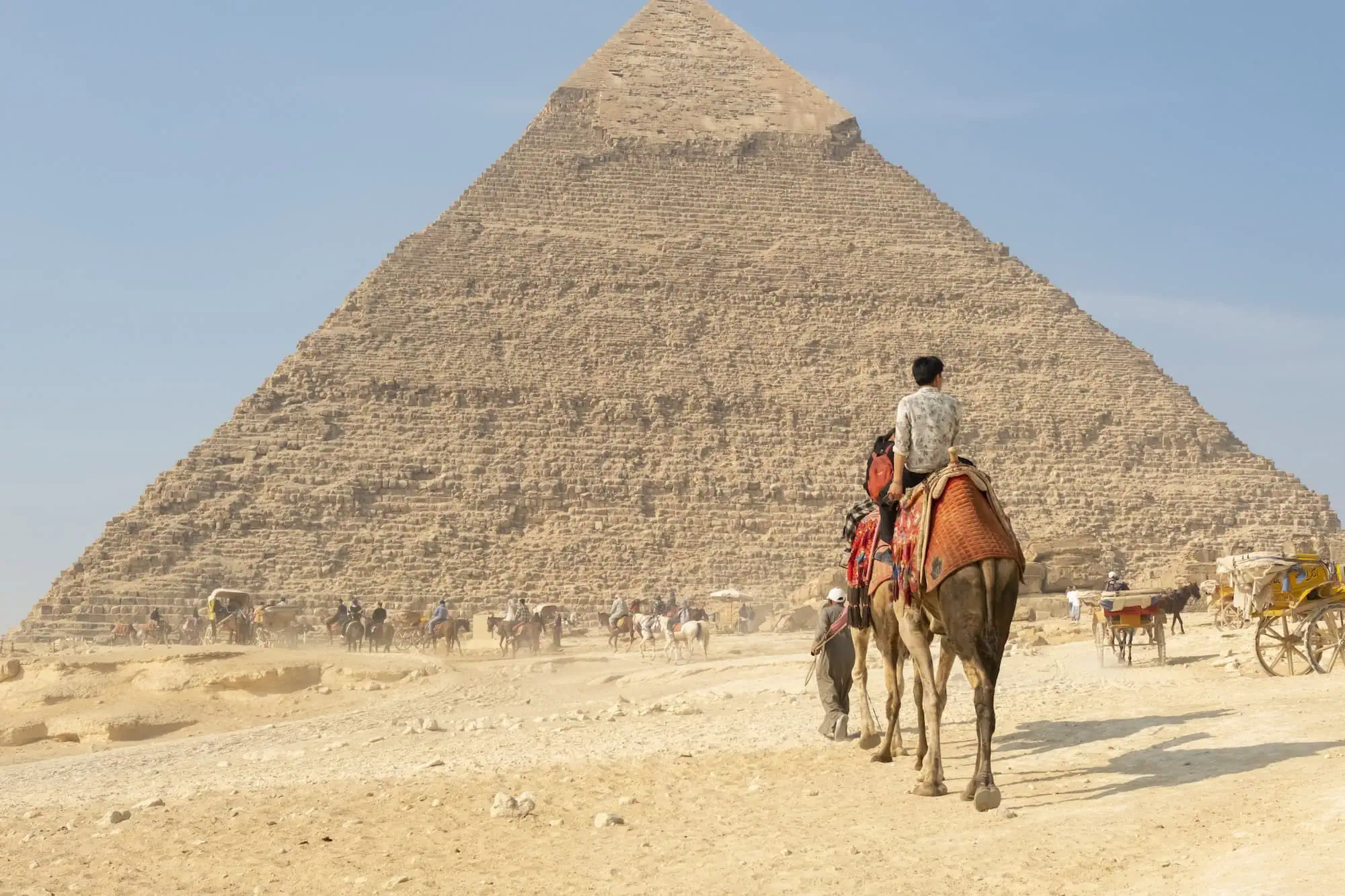
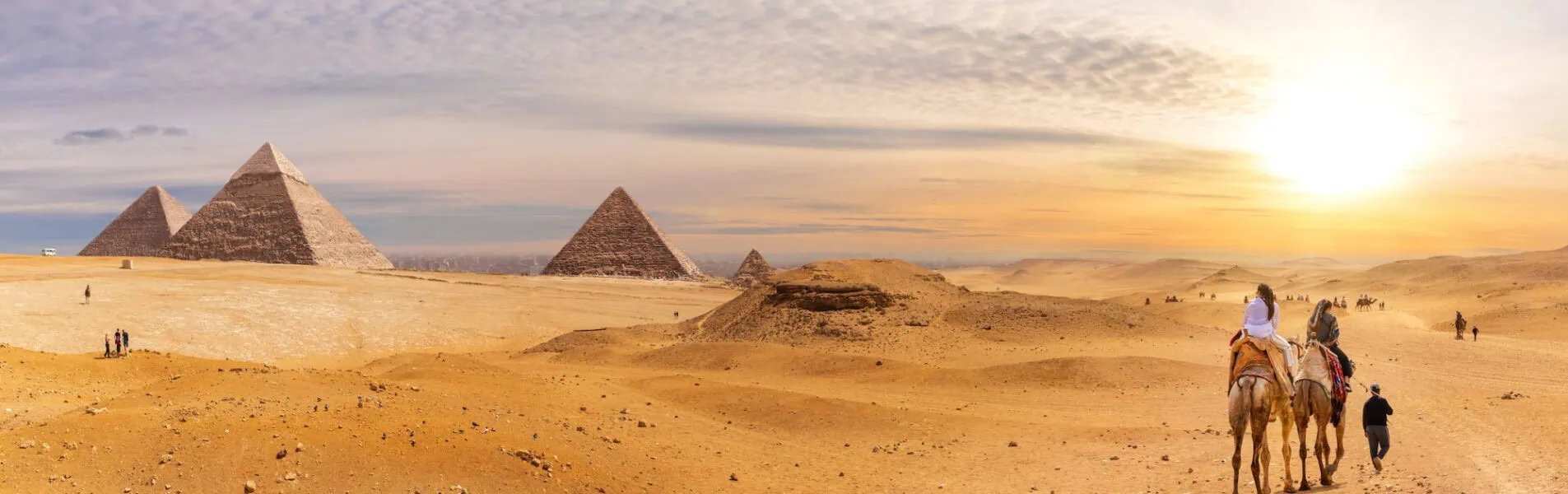
The Giza pyramid complex represents humanity’s most ambitious architectural achievement, built over 4,500 years ago during Egypt’s Fourth Dynasty. These three main pyramids – dedicated to pharaohs Khufu, Khafre, and Menkaure – continue to captivate millions of visitors annually while revealing new secrets through cutting-edge archaeological research. As the only surviving wonder of the ancient world, the Great Pyramid of Giza maintains its status as both a UNESCO World Heritage Site and one of the most studied monuments on Earth.
Whether you’re planning your first visit or seeking deeper understanding of these remarkable structures, this guide covers everything from construction mysteries to practical visitor information. We’ll explore the latest scientific discoveries, the complex’s rich history, and essential tips for making the most of your Egyptian adventure.
Table of Contents
Architectural Marvels That Define Ancient Engineering
The Great Pyramid of Khufu dominates the Giza plateau with its original height of 146.5 meters (481 feet), constructed using approximately 2.3 million limestone blocks. Each stone weighs between 2.5 and 15 tons, precisely cut and positioned with remarkable accuracy. The pyramid’s base covers 13 acres, with each side measuring 230 meters (755 feet) at ground level.
Precision Beyond Ancient Capabilities
Modern measurements reveal the pyramid’s astronomical orientation aligns perfectly with cardinal directions, deviating by only 3/60th of a degree. This precision suggests ancient Egyptian engineers possessed sophisticated understanding of mathematics and astronomy.
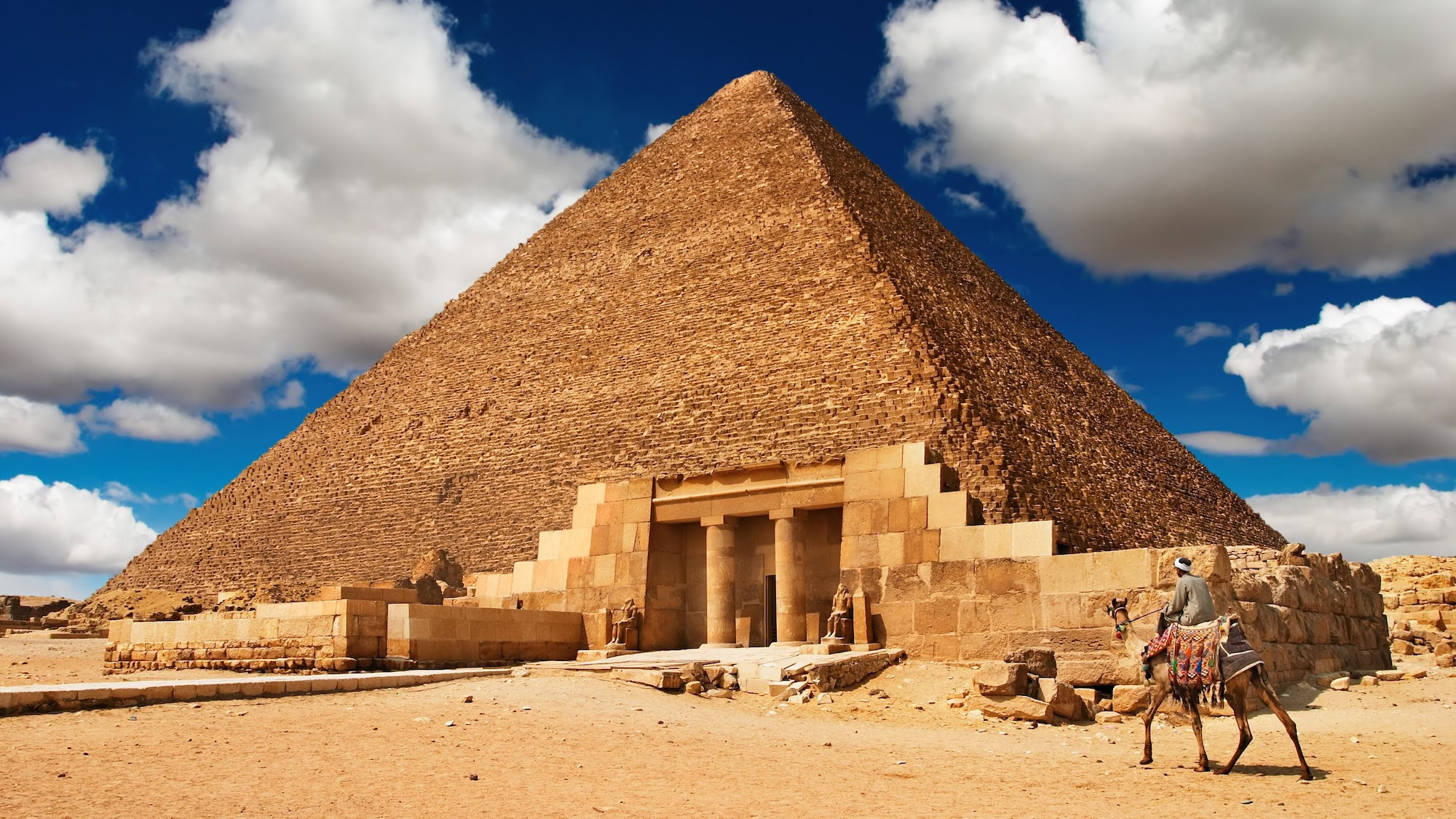
The internal chambers include the King’s Chamber, Queen’s Chamber, and the mysterious Grand Gallery – a 47-meter (154-foot) ascending corridor with a corbelled ceiling rising 8.6 meters (28 feet) high.
The Khafre and Menkaure Pyramids
Pharaoh Khafre’s pyramid appears taller due to its elevated position, though it measures 143.5 meters (471 feet) in height. Its mortuary temple remains better preserved than Khufu’s, featuring granite columns and statuary alcoves. The smallest pyramid, belonging to Menkaure, stands 65 meters (213 feet) tall and showcases a granite casing on its lower courses that originally covered the entire structure.
Great Sphinx Guardian
The iconic Great Sphinx measures 73 meters (240 feet) long and 20 meters (66 feet) high, carved from a single limestone outcrop. Archaeological evidence suggests the Sphinx was sculpted during Khafre’s reign, serving as a guardian for the pyramid complex.
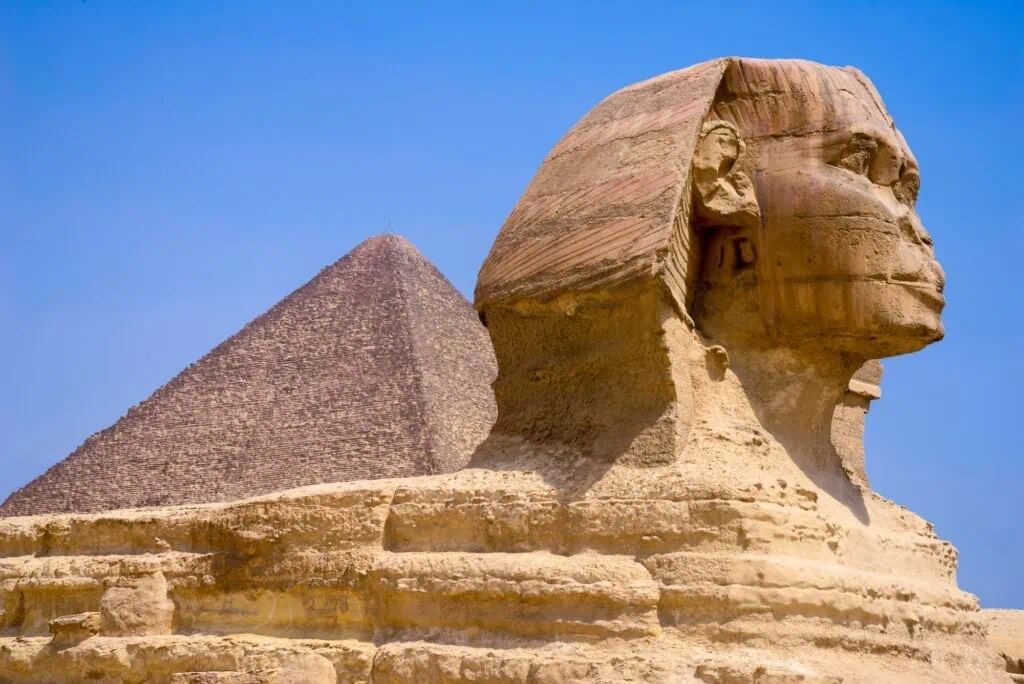
Recent restoration efforts have preserved this monument while ongoing research continues to uncover its original appearance and purpose.
Revolutionary Construction Techniques and Workforce Organization
Archaeological discoveries at the workers’ village provide unprecedented insight into pyramid construction logistics and the massive workforce required. Excavations revealed bakeries capable of producing thousands of loaves daily, breweries, and even medical facilities – suggesting a well-organized community rather than slave labor.
Evidence points to rotating teams of approximately 20,000 workers, including permanent crews of skilled craftsmen and seasonal agricultural laborers. Ramp systems likely facilitated stone transport, though exact methods remain debated among Egyptologists. Recent discoveries of workers’ tombs near the pyramids indicate these laborers held respected positions in Egyptian society, contradicting popular misconceptions about forced labor.
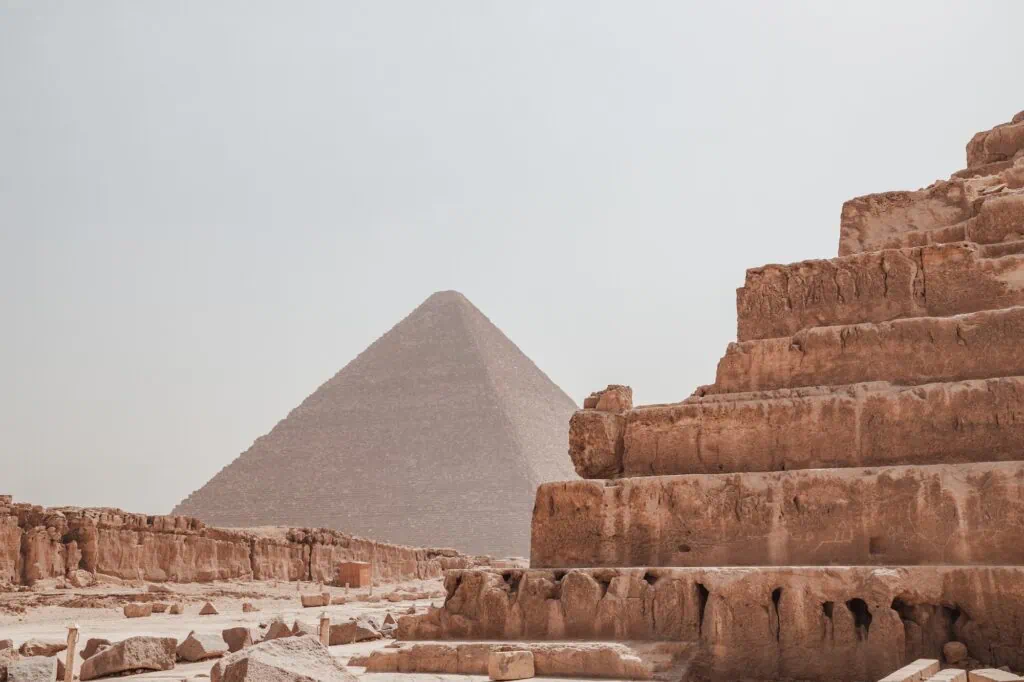
The limestone blocks originated from local quarries, while granite for interior chambers was transported over 800 kilometers (500 miles) from Aswan. Transport methods probably involved copper tools, wooden sledges, and sophisticated rope systems. Organization of such massive undertakings demonstrates the advanced administrative capabilities of Old Kingdom Egypt.
Modern Scientific Discoveries Unveiling Ancient Secrets
Cutting-edge technology continues revealing hidden aspects of pyramid construction and design. Cosmic ray muon imaging has detected previously unknown voids within the Great Pyramid, including a substantial chamber above the Grand Gallery discovered in 2017. These scanning techniques penetrate stone without causing structural damage, opening new possibilities for non-invasive exploration.
Technological Breakthroughs in Archaeology
Ground-penetrating radar and thermal imaging have identified additional anomalies suggesting more hidden chambers await discovery. The ScanPyramids project, launched in 2015, employs multiple advanced technologies to create detailed internal maps of all three pyramids. Results indicate the Great Pyramid contains several unexplored spaces that could revolutionize understanding of its original design.
Recent analysis of construction materials reveals sophisticated mortar compositions and tool marks that provide clues about building techniques. Microscopic examination of stone surfaces shows evidence of copper tools, wooden implements, and grinding techniques that achieved remarkably smooth finishes.
Hidden Chambers and Future Exploration
The newly detected void measures approximately 30 meters (98 feet) long and maintains the same inclination as the Grand Gallery below it. Scientists theorize this space could contain burial artifacts, construction materials, or serve unknown ceremonial purposes. Plans for robotic exploration may soon provide direct visual evidence of these chambers’ contents.
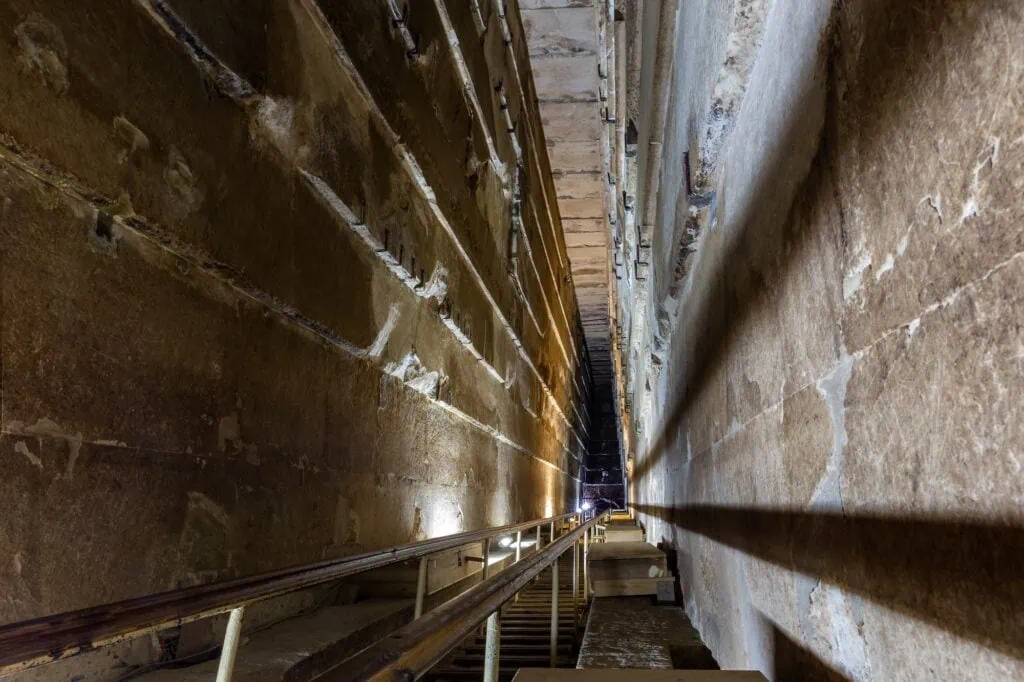
Infrared thermography has revealed temperature variations across pyramid surfaces, suggesting internal structural differences not visible to the naked eye. These thermal signatures could indicate additional passages or chambers that traditional archaeological methods have missed. Advanced 3D modeling now allows researchers to virtually explore pyramid interiors and test theories about their construction.
Planning Your Visit to the Complex
Entry to the Giza pyramid complex requires advance ticket booking, especially during peak tourist seasons from October through April. Standard admission includes access to the pyramid exteriors, Great Sphinx, and surrounding archaeological areas. Special tickets for entering pyramid interiors must be purchased separately and are limited to 300 visitors daily for the Great Pyramid.
Morning visits between 8:00 am (08:00) and 10:00 am (10:00) offer cooler temperatures and fewer crowds. Afternoon light provides excellent photography conditions, particularly for sunset shots with the pyramids silhouetted against the Cairo skyline.
A visit to the nearby Grand Egyptian Museum (GEM) can easily be combined with the Giza complex for a more comprehensive experience. The museum houses an unparalleled collection of ancient artifacts, including the reconstructed Khufu Solar Boat, one of the most significant discoveries linked directly to the Great Pyramid. Located just minutes from the plateau, the GEM offers modern exhibition spaces that provide valuable context to the monuments seen at Giza, making it a highly recommended addition to any itinerary.
Transportation and Logistics
The complex lies approximately 20 kilometers (12 miles) southwest of central Cairo, accessible by taxi, tour bus, or ride-sharing services. Metro Line 2 to Giza station provides budget-friendly transport, followed by a short taxi ride to the entrance. Private transportation offers greater flexibility for visiting multiple sites in a single day.
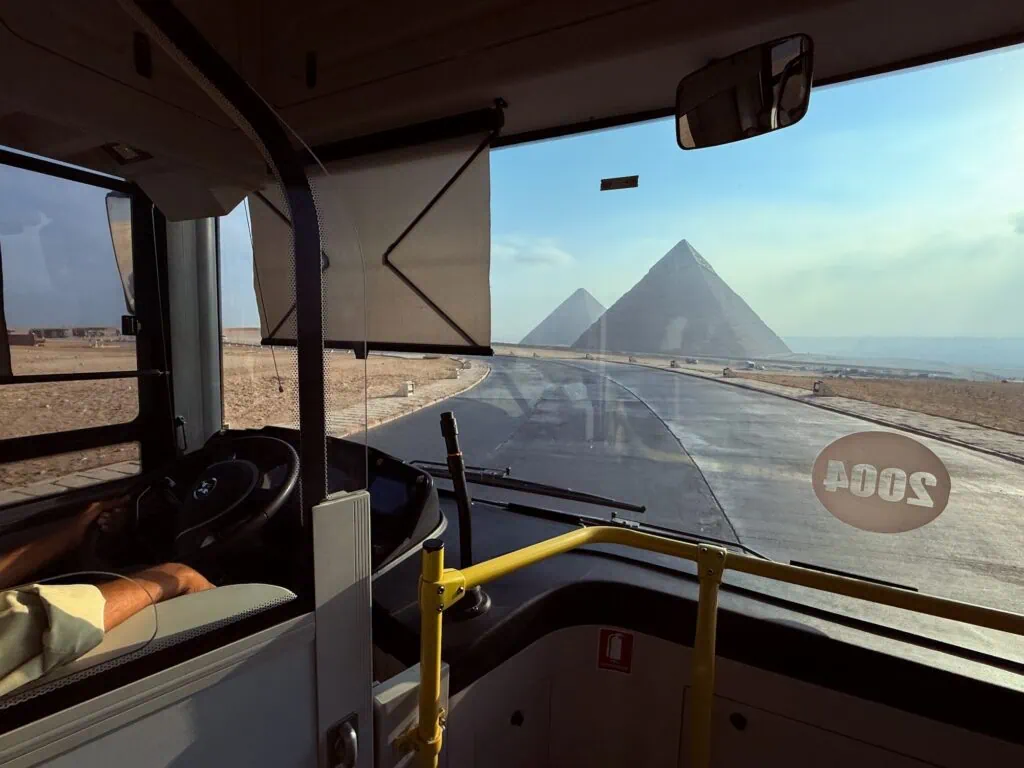
Parking facilities accommodate tour buses and private vehicles, though spaces fill quickly during peak hours. We arrange comfortable, air-conditioned vehicles with experienced drivers who know optimal routes and timing for pyramid visits. Our drivers provide historical commentary during the journey and assist with ticket purchases and site navigation.
Essential Visitor Experience and Cultural Context
The sound and light show at Giza presents pyramid history through dramatic narration and colorful illumination of the monuments. Shows run nightly in multiple languages, with English presentations typically scheduled at 7:00 pm (19:00) during winter months and 8:30 pm (20:30) in summer. Advanced booking ensures preferred seating and language selection.
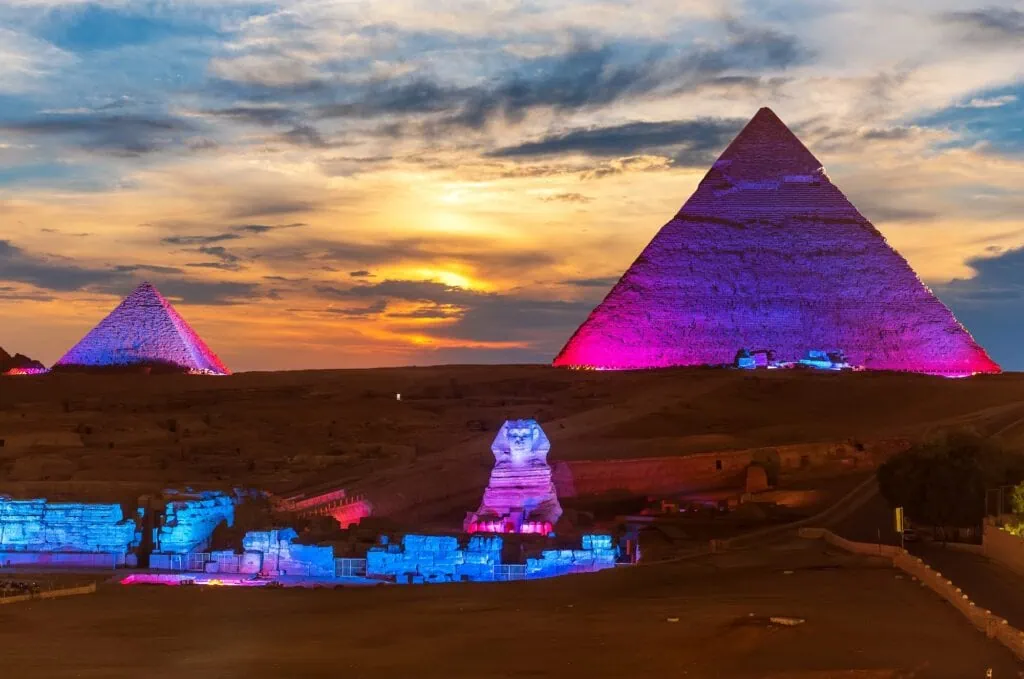
Beyond the famous trio, the complex contains numerous smaller pyramids, mastaba tombs, and the remains of mortuary temples connected by ancient causeways.
Photography enthusiasts should bring telephoto lenses for detailed shots and wide-angle capabilities for capturing the pyramids’ full scale. Early morning and late afternoon provide the most dramatic lighting conditions. Drone photography requires special permits from Egyptian authorities and is generally restricted near archaeological sites.
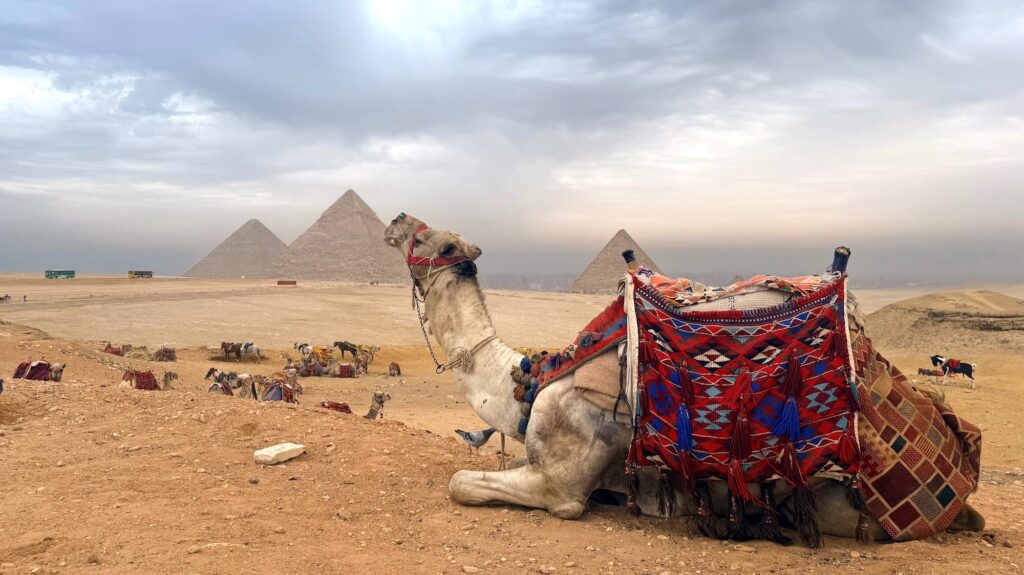
Camel and horse rides around the complex offer traditional experiences, though we recommend choosing reputable operators who prioritize animal welfare. Some visitors prefer walking the perimeter to appreciate the pyramids’ massive scale and desert setting. Comfortable walking shoes and sun protection are essential for extended exploration.
Preserving Ancient Heritage for Future Generations
UNESCO World Heritage status, granted in 1979, recognizes the Giza complex as part of the Memphis necropolis with outstanding universal value. This designation brings international protection standards and funding for conservation efforts, though balancing preservation with tourism access creates ongoing challenges.
Climate change and urban encroachment threaten long-term preservation of these monuments. Cairo’s expanding suburbs increasingly surround the archaeological zone, while air pollution and groundwater changes affect stone stability. Egyptian authorities work with international experts to monitor environmental impacts and implement protective measures.
Conservation efforts focus on structural stabilization, stone treatment, and controlling visitor access to sensitive areas. Recent projects have restored damaged sections of the Great Sphinx and strengthened pyramid foundations affected by seismic activity. Advanced monitoring systems track temperature, humidity, and structural stress to prevent further deterioration.
The Egyptian Ministry of Tourism and Antiquities continues developing sustainable tourism practices that protect archaeological integrity while providing meaningful visitor experiences. New visitor pathways, improved lighting systems, and educational displays enhance understanding while minimizing impact on ancient structures.
Future preservation depends on international cooperation, technological innovation, and responsible tourism practices. We support conservation efforts through partnerships with Egyptian archaeological authorities and by educating visitors about the importance of protecting these irreplaceable monuments for future generations.
Experience The Iconic Power Of The Giza Pyramids
Standing before the Giza Pyramids is a moment that defines any journey to Egypt—timeless, monumental, and unforgettable. With Egypt Tours Plus, we transform this world-famous experience into part of a seamless private journey, connecting Egypt’s greatest highlights into one carefully curated itinerary.
You choose your travel dates, your pace, and the experiences that shape your route. From exclusive pyramid visits to cultural discoveries and refined comfort throughout, we tailor every detail around your preferences—ensuring a smooth, expertly planned, and deeply personal travel experience.
Frequently Asked Questions
Plan 4 to 6 hours for a comprehensive visit to the Giza Plateau, including the Great Pyramid of Khufu, the Pyramid of Khafre, the Pyramid of Menkaure, and the Great Sphinx. Entering a pyramid interior can add 30 to 60 minutes per monument, while photography stops and walking between sites require additional time. The archaeological zone covers several square kilometers, so a rushed visit often misses key viewpoints. Arrive early to avoid midday heat and large tour-group crowds.
October through April is generally the best time to visit the Giza Pyramids, with daytime temperatures often ranging from 15°C to 25°C (59°F to 77°F). Cooler weather makes walking across the exposed desert plateau significantly more comfortable than during summer, when temperatures can exceed 35°C (95°F). Winter mornings also tend to offer clearer visibility for photography of the pyramids and the Sphinx. For the best balance of weather and crowd levels, aim for a weekday morning between November and February.
Interior access is available for selected pyramids, but entry rules, availability, and ticket allocations can vary throughout the year. The Great Pyramid of Khufu typically requires a separate ticket, while access to the pyramids of Khafre and Menkaure depends on current archaeological and conservation schedules. Not all interiors are open simultaneously, and daily visitor numbers may be limited to protect the monuments. Purchase interior tickets as early as possible if entering a pyramid is a priority.
No official age restrictions apply for entering the Giza pyramids, but the interior passages can be physically challenging for some visitors. Narrow corridors, steep inclines, low ceilings, and confined spaces require moderate mobility and comfort in enclosed environments. Young children, elderly travelers, and anyone with claustrophobia may find the experience difficult despite the relatively short duration. Consider viewing the exterior monuments only if mobility or comfort is a concern.
Standard admission requires a general entrance ticket, while separate fees apply for entering specific pyramids such as the Great Pyramid of Khufu. Additional charges may apply for special exhibitions, transportation services within the site, or premium experiences. Because pricing changes occasionally, visitors should verify current rates shortly before travel or through their tour provider.
Photography policies inside the Giza pyramids have evolved in recent years, and current rules depend on the specific monument and Ministry of Tourism and Antiquities regulations. Exterior photography across the Giza Plateau is widely permitted, but interior access may involve separate permissions or restrictions. Professional equipment, tripods, and commercial filming often require additional authorization. Confirm the latest rules before your visit if photography is important to your plans.
Bring comfortable walking shoes, sun protection, drinking water, and cash for your visit to the Giza Pyramids. The site covers a large desert area with limited shade, and visitors often spend four or more hours outdoors. A wide-brimmed hat, sunglasses, sunscreen, and a fully charged phone or camera are particularly useful. During winter mornings, a light jacket can be helpful before temperatures rise. Carry only essentials to make walking between monuments more comfortable.
The Giza Pyramids are located approximately 20 kilometers (12 miles) southwest of downtown Cairo. Travel times typically range from 30 minutes in light traffic to more than 90 minutes during Cairo’s busiest rush-hour periods. The complex sits on the western edge of the Nile Valley near modern Giza City and the Grand Egyptian Museum. Visitors staying in Downtown Cairo, Zamalek, or Garden City should allow extra time, particularly during morning and evening traffic peaks.
You can visit the Giza Pyramids independently, but a knowledgeable guide provides historical context that many travelers find valuable. Independent visitors can purchase tickets directly and explore at their own pace, while guided tours help explain the differences between Khufu, Khafre, and Menkaure, as well as the significance of the Great Sphinx. Guides can also streamline logistics across the large archaeological zone. First-time visitors often benefit most from a professionally guided experience.
The Great Sphinx is one of ancient Egypt’s most recognizable monuments and is widely believed to represent Pharaoh Khafre, who ruled during the 4th Dynasty around 2500 BCE. Carved from a single limestone outcrop, the statue measures approximately 73 meters (240 feet) long and 20 meters (66 feet) high. Combining a human head with a lion’s body, the Sphinx symbolized royal authority, strength, and divine protection. Its position beside Khafre’s pyramid complex reinforces its role as a guardian monument.
Archaeological evidence indicates that the pyramids were built using sophisticated engineering, organized labor forces, and simple but effective tools rather than advanced machinery. Workers used copper tools, stone hammers, wooden sledges, and carefully designed ramp systems to transport and position limestone blocks weighing several tons. Excavations near Giza have revealed worker settlements, bakeries, and administrative facilities, demonstrating a highly coordinated workforce. Modern research shows the pyramids were the product of planning, logistics, and skilled craftsmanship rather than mystery or myth.
Design Your Custom Tour
Explore Egypt your way by selecting only the attractions you want to visit