

Theban Necropolis – One of the Best Ancient Sites in All of Egypt
Death was only the beginning. For nearly a millennium, Egypt’s most powerful rulers and elite transformed a dramatic limestone landscape on the west bank of the Nile into what is now known as the Theban Necropolis—one of the most extraordinary burial grounds in the ancient world.
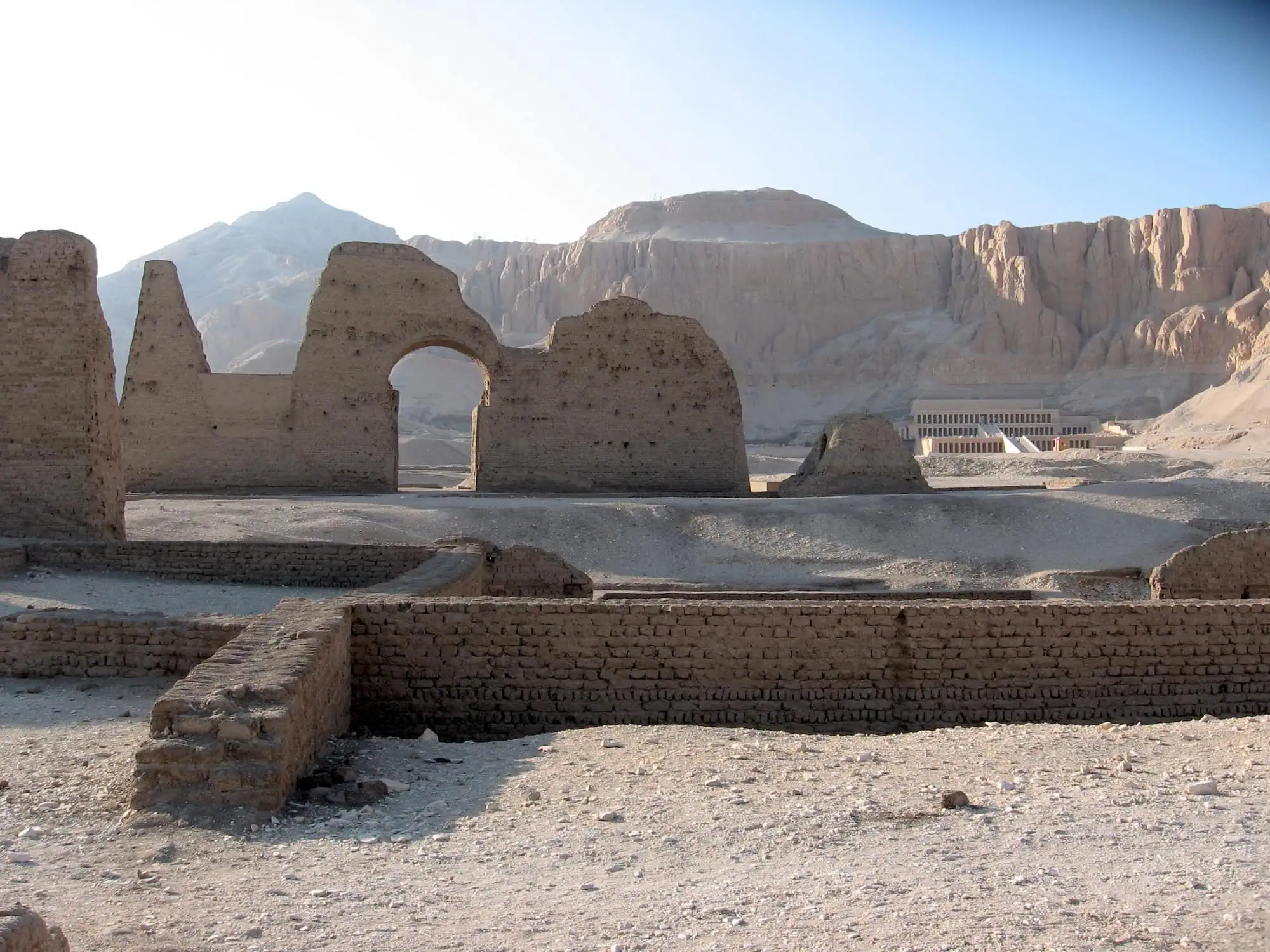
Beneath desert cliffs where the sun sets each evening, pharaohs, queens, nobles, and officials prepared for their journey into the afterlife. Used primarily from the Middle Kingdom through the end of the New Kingdom, the Theban Necropolis represents ancient Egyptian civilization at its cultural, religious, and artistic peak. Its tombs, temples, and settlements continue to shape our understanding of ancient beliefs about death, eternity, and divine order.
Table of Contents
Royal Heart of Egypt’s Greatest Dynasty
Ancient Thebes (modern Luxor) rose to prominence during the Middle Kingdom and reached its height as Egypt’s capital in the New Kingdom. It was both the political center of the empire and the religious heart of the cult of Amun, whose priesthood wielded immense influence alongside the pharaohs.
The west bank of the Nile became the sacred landscape of death, deliberately chosen for royal burials and monumental memorial temples that ensured the eternal existence of Egypt’s rulers.
Valley of the Kings
The Valley of the Kings is the most famous part of the Theban Necropolis. Over sixty tombs have been identified here, most intended for New Kingdom pharaohs, though not all were completed or used.
Tutankhamun’s tomb is the best-known discovery, largely because it was found nearly intact in 1922. However, the tomb of Seti I is the longest and among the most spectacular, extending more than 130 meters into the mountain and featuring exceptionally detailed wall reliefs. The tomb of Ramesses VI is renowned for its astronomical ceiling, depicting ancient Egyptian concepts of the cosmos and the afterlife.
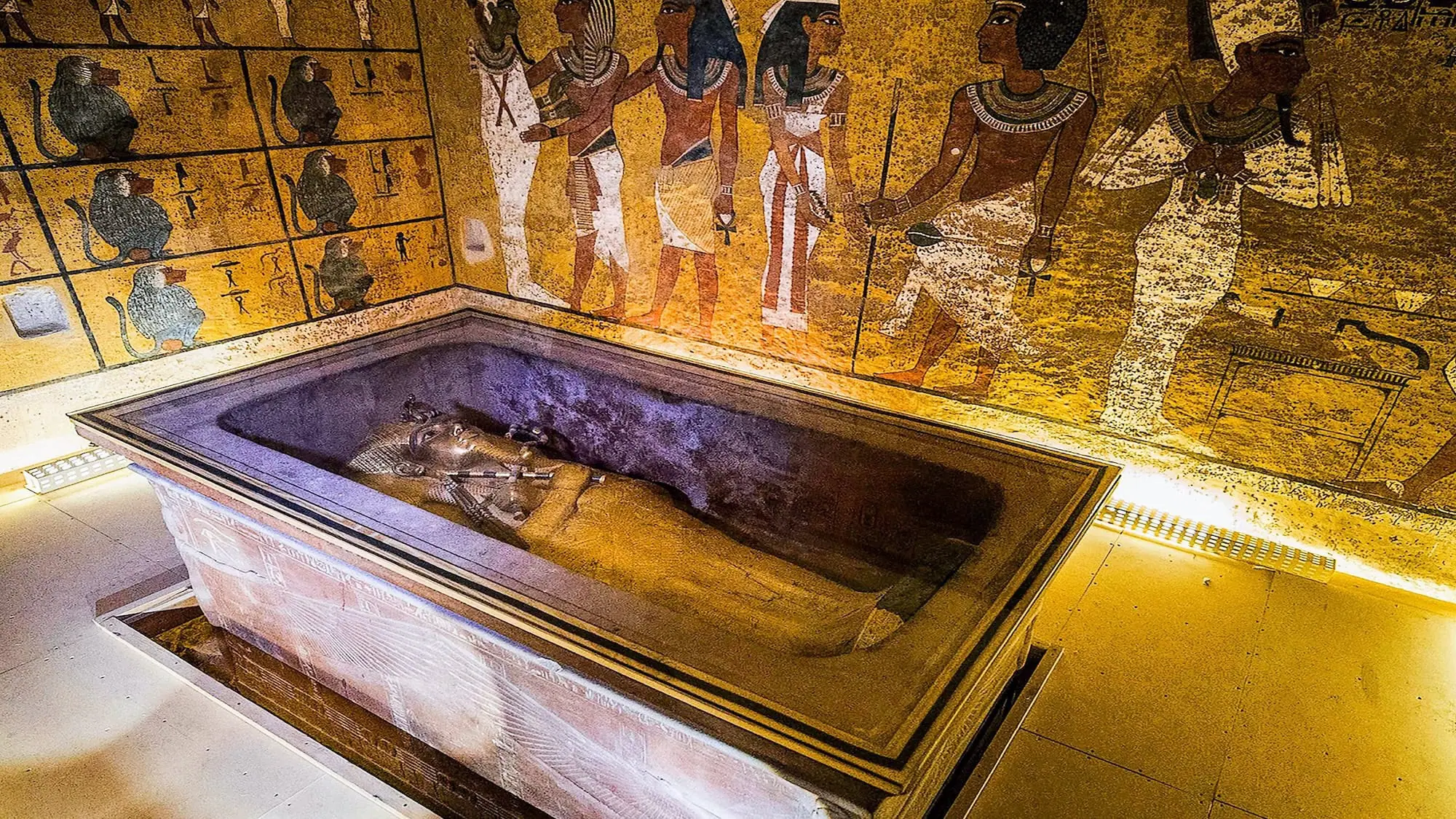
Each royal tomb follows a general architectural progression: descending corridors lead through decorated chambers toward the burial chamber, where stone sarcophagi once held nested coffins and mummified pharaohs. While most royal mummies were removed in antiquity to protect them from tomb robbers, the tombs themselves remain extraordinary works of religious art and engineering.
Valley of the Queens
South of the Valley of the Kings lies the Valley of the Queens, the burial place of royal wives and children. More than ninety tombs are known here, many preserving some of the finest wall paintings in ancient Egypt.
The tomb of Queen Nefertari, wife of Ramesses II, is often described as the pinnacle of ancient Egyptian tomb art. Its vibrant colors and refined figures have earned it the nickname “the Sistine Chapel of Ancient Egypt.” Due to its fragility, access is strictly limited to preserve the paintings.
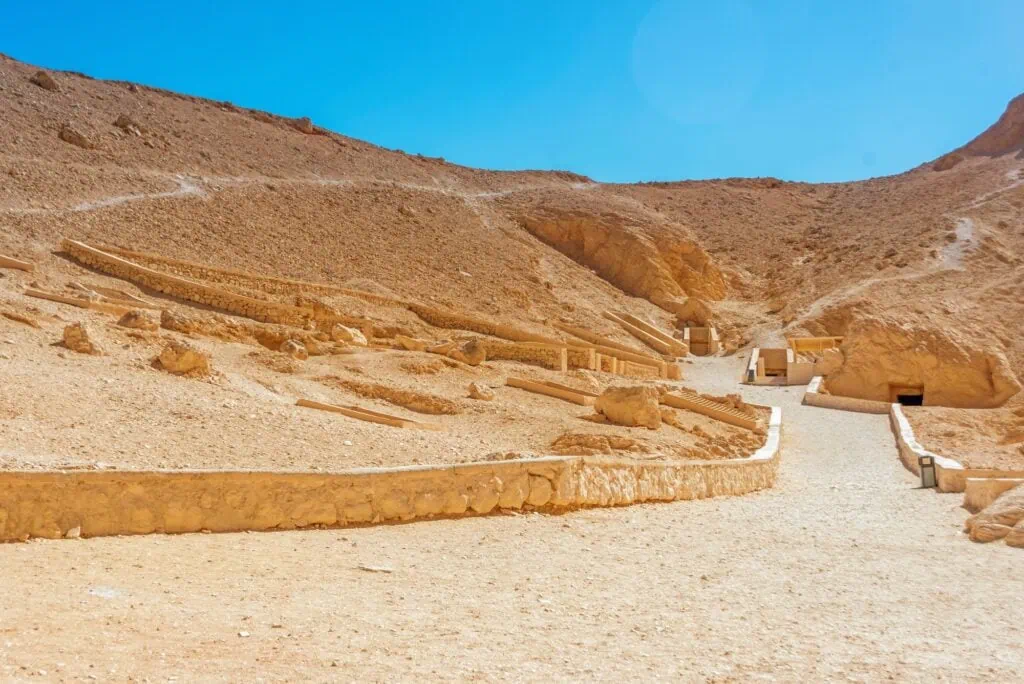
The valley also contains tombs of princes and princesses, decorated with protective deities guiding them safely through the afterlife.
Mortuary Temples of the West Bank
The mortuary temples of the Theban Necropolis were monumental structures built to honor deceased pharaohs and sustain their cults through daily rituals and offerings. These temples also served as powerful statements of royal legitimacy and divine favor.
The Temple of Hatshepsut at Deir el-Bahari stands as one of the most innovative architectural achievements of ancient Egypt, harmoniously integrated into the surrounding cliffs. Medinet Habu, the mortuary temple of Ramesses III, is famous for its detailed reliefs depicting military victories and religious ceremonies.
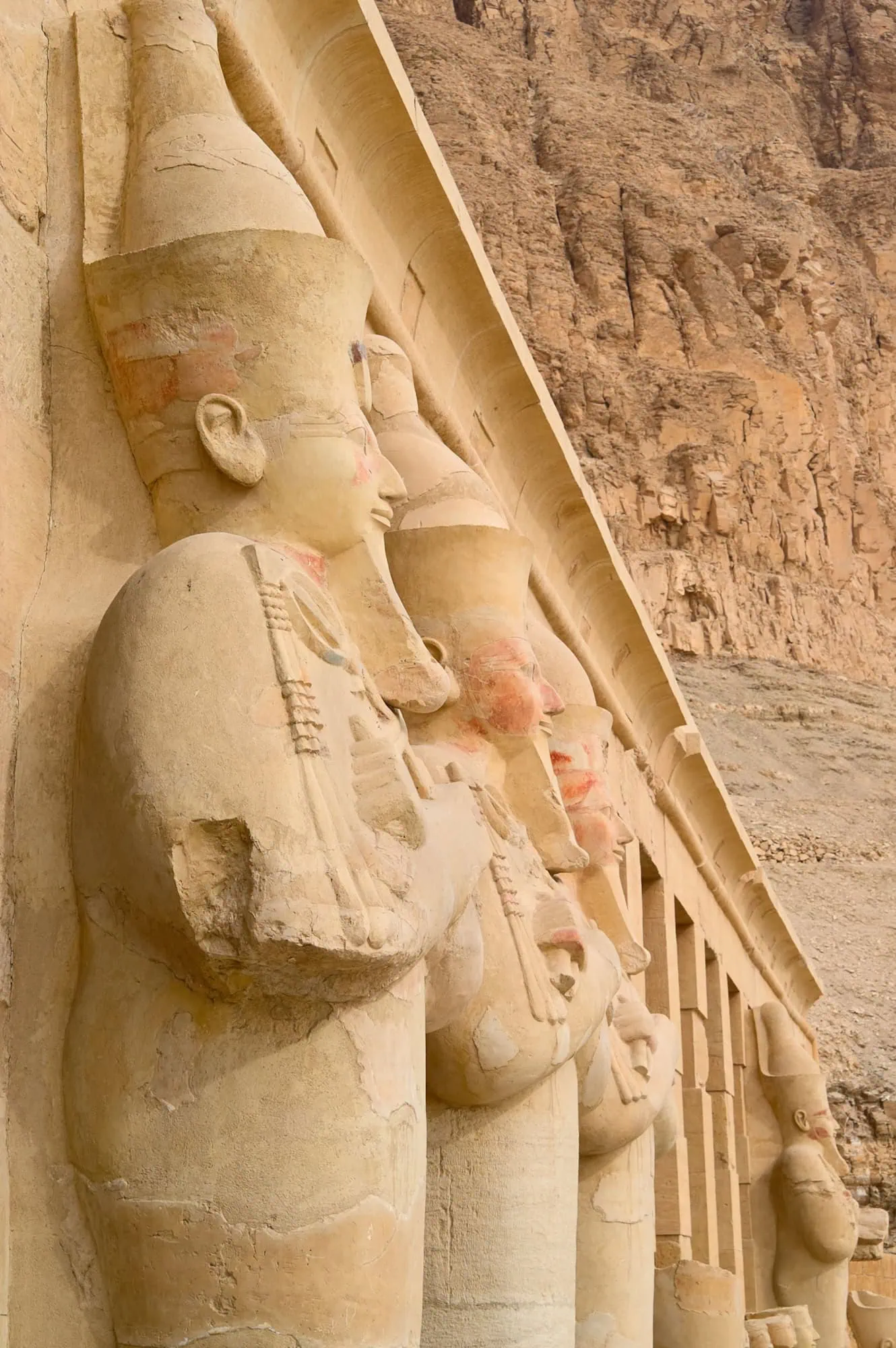
While mortuary temples were not physically connected to royal tombs, they were ritually linked. Priests performed offerings to sustain the pharaoh’s ka (life force), ensuring his continued existence in the afterlife.
Noble Tombs and Elite Society
Beyond the royal valleys, hundreds of tombs belonging to nobles, high priests, and senior officials spread across the hillsides of the Theban Necropolis. These private tombs provide invaluable insight into daily life, administration, religious practices, and social hierarchy during Egypt’s golden age.
Wall scenes depict banquets, agricultural work, craftsmanship, religious festivals, and family life—subjects rarely shown in royal tombs. Biographical inscriptions record careers, titles, and expressions of loyalty to the pharaoh and the gods.
Deir el-Medina: Village of the Tomb Builders
The artisans who constructed and decorated the royal tombs lived in the planned village of Deir el-Medina. For over four centuries, generations of skilled craftsmen devoted their lives to tomb construction, wall painting, and stone carving.
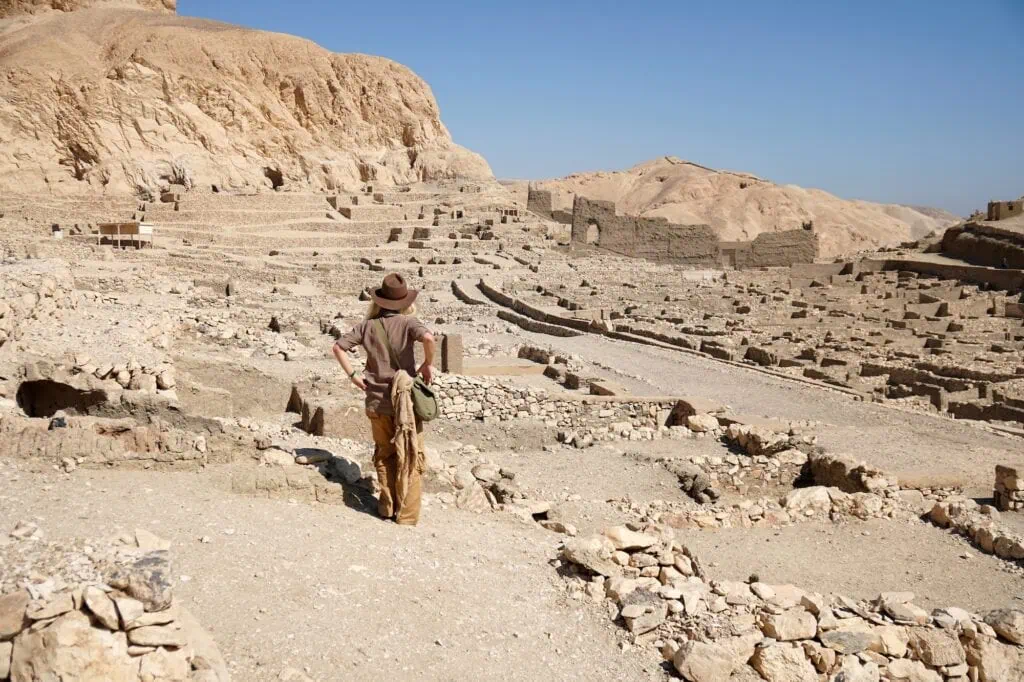
Archaeological finds from the village—including letters, legal documents, and personal objects—offer one of the most detailed records of working-class life from the ancient world. The private tombs of these artisans often feature artwork of exceptional quality, reflecting both their skills and their close association with royal projects.
Archaeological Discoveries That Changed History
The Royal Cache of TT320
In 1881, a hidden tomb at Deir el-Bahari (TT320) revealed one of the most important discoveries in Egyptology: a cache of more than fifty royal mummies. During the political instability of the 21st Dynasty, priests secretly reburied pharaohs—including Ramesses II and Seti I—to protect them from widespread tomb robbery.
This discovery transformed scholarly understanding of ancient Egyptian burial practices and preservation efforts.
Ongoing Research and Technology
Modern archaeological work in the Theban Necropolis uses non-invasive methods such as ground-penetrating radar, digital documentation, and environmental monitoring. These techniques occasionally reveal new features or refine interpretations, while helping protect fragile wall paintings and structures from damage.
UNESCO World Heritage Site
The Theban Necropolis forms part of the UNESCO-listed “Ancient Thebes with its Necropolis”, recognized for its outstanding universal value. International conservation efforts focus on stabilizing tombs, controlling humidity, and managing visitor impact.
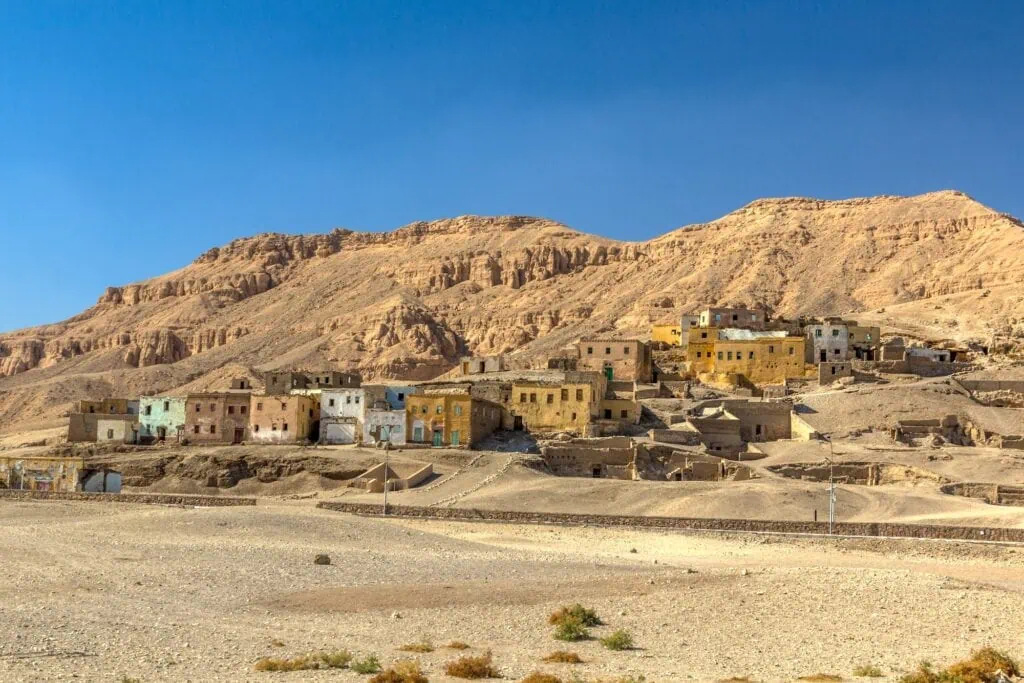
Climate change, groundwater fluctuations, and mass tourism present ongoing challenges, making careful preservation and visitor management essential for the site’s long-term survival.
Spiritual Geography of Death
The west bank of the Nile held deep symbolic meaning for ancient Egyptians. Associated with sunset and the realm of Osiris, it represented the transition from life to rebirth. The surrounding cliffs were seen as protective barriers, safeguarding the dead and aiding their transformation into divine beings.
Religious symbolism, landscape features, and ritual tradition shaped the placement of tombs and temples across the necropolis, reinforcing the connection between earth, sky, and the afterlife.
Planning Your Visit
Best Times and Access
The most comfortable period to explore the Theban Necropolis is from October to April, when temperatures are moderate. Summer temperatures can exceed 45°C (113°F), making tomb visits physically demanding.
Tickets and Access
Only a selection of tombs is open at any given time to limit wear and allow conservation work. Special tickets are required for high-profile tombs such as Tutankhamun, Seti I, and Nefertari. Most tombs involve steep stairs and narrow passages and are not wheelchair accessible.
Visitor Experience
Individual tomb visits are typically limited to 15–20 minutes. Modern lighting systems illuminate wall paintings without damaging pigments, allowing visitors to appreciate colors and details that remain remarkably vivid after more than three thousand years.
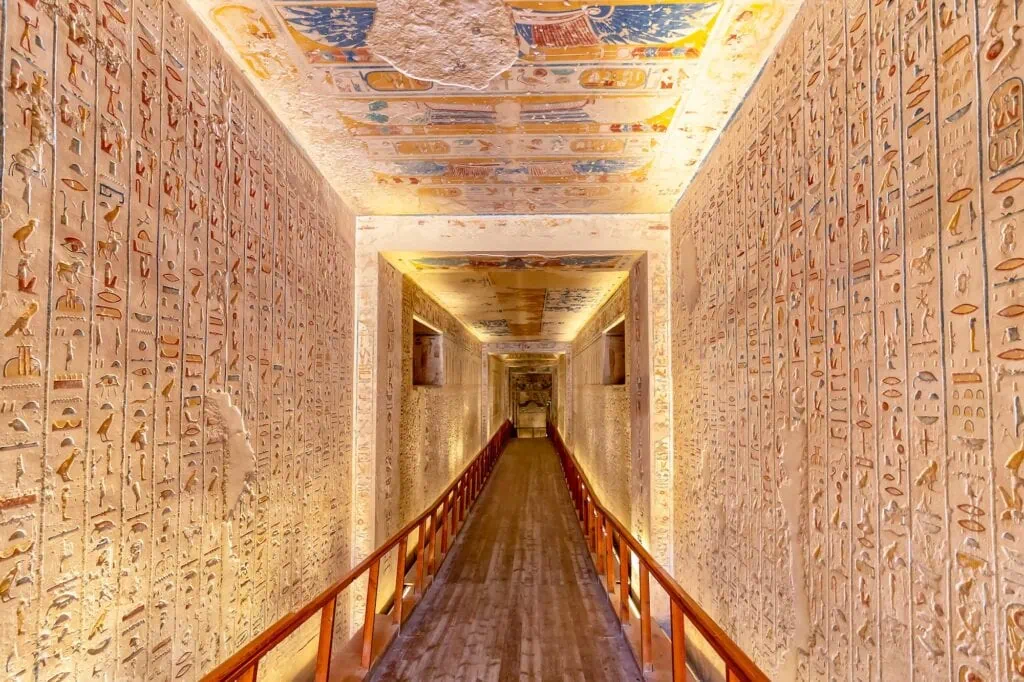
Individual tomb visits typically last 15-20 minutes due to conservation requirements and visitor volume management. Our expert guides provide historical context and artistic interpretation that transforms your experience from simple sightseeing into profound cultural understanding.
Step Into The Vast History Of The Theban Necropolis
The Theban Necropolis is not just a single site—it’s an entire landscape of ancient tombs, temples, and stories carved into the west bank of the Nile. With Egypt Tours Plus, we transform this extraordinary area into a seamless private journey, connecting its many highlights with Egypt’s most iconic and unforgettable experiences.
You choose your travel dates, your pace, and the experiences that shape your route. From exclusive tomb visits and guided exploration to Nile cruises and refined comfort throughout, we tailor every detail around your preferences—ensuring a smooth, immersive, and deeply personal travel experience.
Frequently Asked Questions
Approximately 15 to 20 tombs across the Theban Necropolis are open to visitors at any given time, with access rotating regularly for conservation and restoration work. Sites include tombs in the Valley of the Kings, Valley of the Queens, and the Tombs of the Nobles on Luxor’s West Bank. Egyptian antiquities authorities limit visitor numbers to reduce humidity and carbon dioxide damage inside painted chambers. Checking current opening schedules in advance is important because major tombs can close temporarily without much notice.
The Theban Necropolis differs from the Giza pyramids because it reflects New Kingdom burial traditions focused on hidden underground tombs decorated with elaborate wall paintings rather than monumental stone pyramids. Located on Luxor’s West Bank, the necropolis includes the Valley of the Kings, royal mortuary temples, and noble tombs dating mainly between 1550 BCE and 1070 BCE. Its artwork emphasizes religious texts, afterlife journeys, and daily life scenes with far greater interior detail than Old Kingdom pyramid complexes near Cairo.
A thorough exploration of the Theban Necropolis usually requires two to three full days because the archaeological zone stretches across dozens of major tombs, temples, and royal burial sites on Luxor’s West Bank. Key highlights include the Valley of the Kings, Valley of the Queens, Hatshepsut Temple, Medinet Habu, and the Tombs of the Nobles. Trying to see everything in one day often becomes physically exhausting, especially during warmer months. Early morning starts help visitors cover more sites comfortably.
The wall paintings inside accessible tombs at the Theban Necropolis are original ancient Egyptian artworks, many dating back more than 3,000 years to the New Kingdom period. Conservation teams carefully monitor humidity, visitor traffic, and lighting conditions to preserve these fragile pigments and plaster surfaces. Some tombs now use climate controls and restricted entry systems because human breath and body heat accelerate deterioration. The remarkable survival of these paintings is largely due to Luxor’s extremely dry desert environment and centuries of sealed burial conditions.
Royal mummies from the Theban Necropolis were relocated during the 21st Dynasty, around the 11th century BCE, because priests feared widespread tomb robbery threatened the pharaohs’ remains and funerary treasures. Many royal bodies, including those of Ramses II and Seti I, were secretly transferred into hidden caches such as Deir el-Bahari for protection. Ancient Egypt experienced severe political instability and economic decline during this period, which fueled looting throughout the Valley of the Kings. These emergency relocations ultimately helped preserve many royal mummies.
Visitors exploring tombs in the Theban Necropolis should wear lightweight breathable clothing, sturdy walking shoes with good grip, and sun protection suitable for Luxor’s desert climate. Tomb entrances often include steep staircases, uneven stone floors, and low-ceilinged corridors that require careful footing. Temperatures outside frequently exceed 38°C (100°F) during summer afternoons, although underground chambers can feel cooler and more humid. Carrying water and avoiding heavy backpacks helps make extended tomb exploration more comfortable and practical.
No, visitors cannot access all royal tombs in the Valley of the Kings because only a rotating selection remains open at any given time for conservation purposes. Standard admission tickets usually include entry to three tombs, while famous chambers such as Tutankhamun’s tomb (KV62) and Seti I’s tomb require additional premium tickets. Some tombs close periodically due to restoration work or environmental concerns related to fragile paintings. Arriving early improves access before crowds increase inside the narrow underground corridors.
Queen Nefertari’s tomb in the Valley of the Queens is widely considered the finest painted tomb in ancient Egypt because of its exceptionally vivid colors, detailed artistry, and near-complete decorative program. Built for the favorite wife of Ramses II around the 13th century BCE, the tomb contains intricate scenes from the Book of the Dead painted across walls and ceilings with extraordinary precision. Conservation efforts have kept visitor numbers strictly limited for decades. Many Egyptologists regard its artwork as the peak of New Kingdom funerary painting.
Accessibility within the Theban Necropolis remains limited because many tombs require descending steep staircases and navigating narrow underground corridors carved directly into desert rock. Wheelchair access is difficult or impossible at most royal tombs, including many areas of the Valley of the Kings and Valley of the Queens. However, some viewing platforms, visitor centers, and exterior temple areas provide partial access with assistance. Travelers with mobility concerns should prioritize larger open-air sites such as Hatshepsut Temple or Medinet Habu where terrain is easier.
Archaeologists continue discovering new tombs in the Theban Necropolis through advanced technologies such as ground-penetrating radar, satellite imaging, thermal scanning, and digital mapping systems. Luxor’s West Bank still contains vast unexplored areas beneath desert debris and ancient flood deposits accumulated over thousands of years. Recent excavations by Egyptian and international teams have uncovered burial shafts, worker settlements, and previously unknown chambers near the Valley of the Kings. The density of royal and noble burials makes the necropolis one of archaeology’s richest active research zones.
Ancient Egyptians selected the west bank of the Nile for the Theban Necropolis because the setting sun symbolized death, rebirth, and the entrance to the afterlife associated with Osiris, god of the underworld. The Nile also provided practical transportation for moving stone, workers, and funeral processions from the eastern city of Thebes, modern Luxor. Seasonal flooding reinforced ideas of renewal and regeneration central to Egyptian religion. The desert cliffs additionally offered natural protection for hidden underground royal tombs.
Some tombs in the Theban Necropolis remain closed because fragile wall paintings, structural instability, or ongoing conservation projects make unrestricted tourism too risky for long-term preservation. Human humidity, body heat, dust, and carbon dioxide gradually damage ancient pigments and plaster surfaces inside confined underground chambers. Egyptian authorities rotate public access specifically to reduce environmental stress on vulnerable tombs. Certain tombs, including highly decorated royal burials, may also close temporarily for scientific documentation, restoration work, or digital scanning projects.
Design Your Custom Tour
Explore Egypt your way by selecting only the attractions you want to visit