

Hatshepsut Temple: A Window into the Reign of One of Egypt’s Most Powerful Female Rulers
The mortuary temple of Queen Hatshepsut stands as one of ancient Egypt’s most extraordinary achievements.
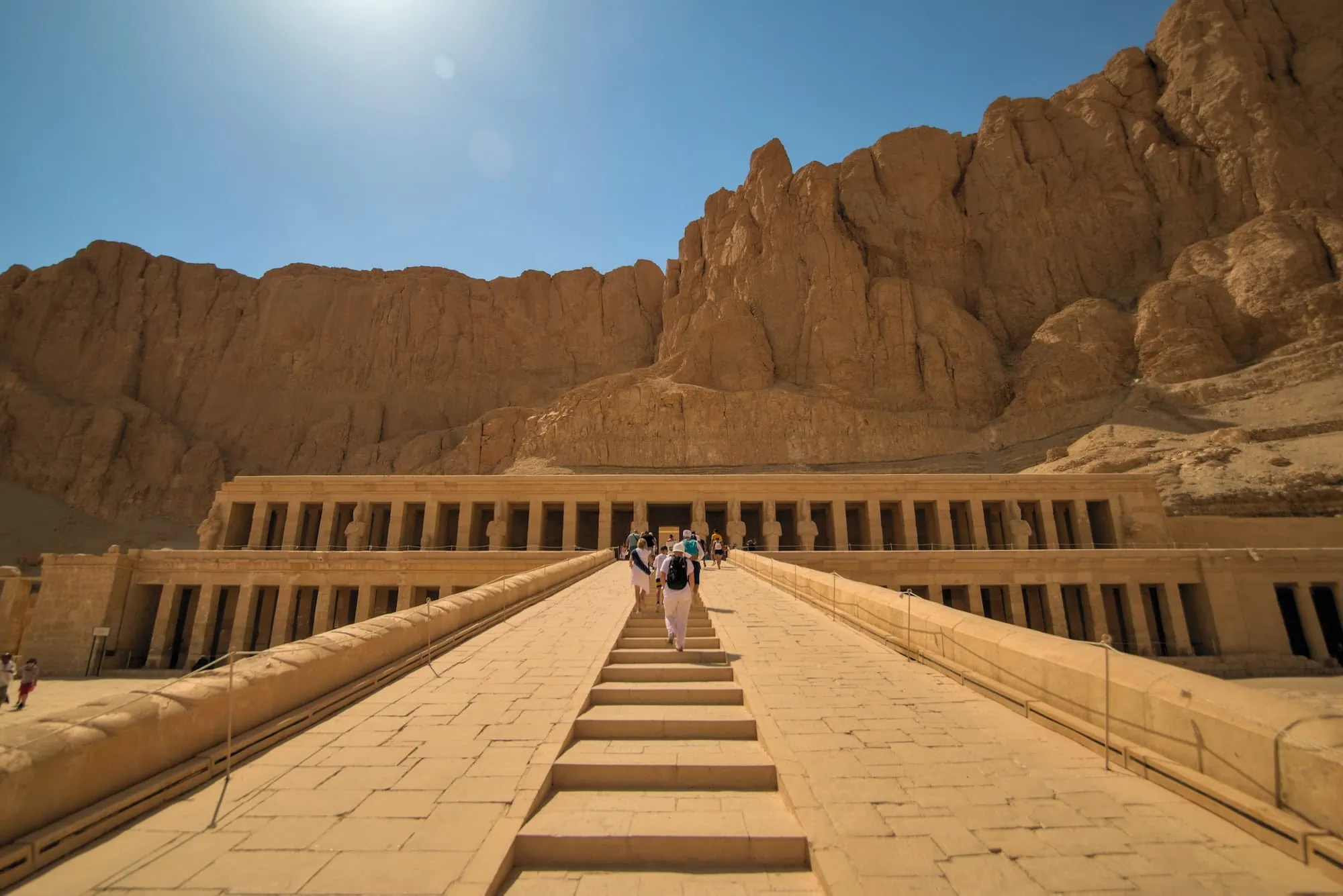
Rising from the desert floor in dramatic terraces, this temple complex at Deir el-Bahari represents far more than royal architecture. We see here a masterpiece that challenged conventions, showcased female pharaonic power, and established new standards for sacred building design.
The temple’s innovative three-level structure integrated seamlessly into the cliff face, creating a harmonious blend of natural landscape and human artistry that continues to inspire visitors nearly 3,500 years after its completion. Our exploration reveals how this remarkable monument served multiple purposes: a mortuary temple for eternal worship, a statement of political legitimacy, and an architectural revolution that influenced Egyptian building practices for centuries to come.
Table of Contents
The Extraordinary Queen Behind the Temple
Hatshepsut ruled Egypt as pharaoh for approximately 22 years during the Eighteenth Dynasty, one of the most prosperous periods in ancient Egyptian history. Her rise to power began as regent for her young stepson Thutmose III, but she gradually assumed full pharaonic authority, adopting the traditional male regalia including the false beard and royal crook and flail. Unlike previous female rulers who served as temporary regents, Hatshepsut established herself as a legitimate pharaoh through carefully crafted propaganda campaigns.
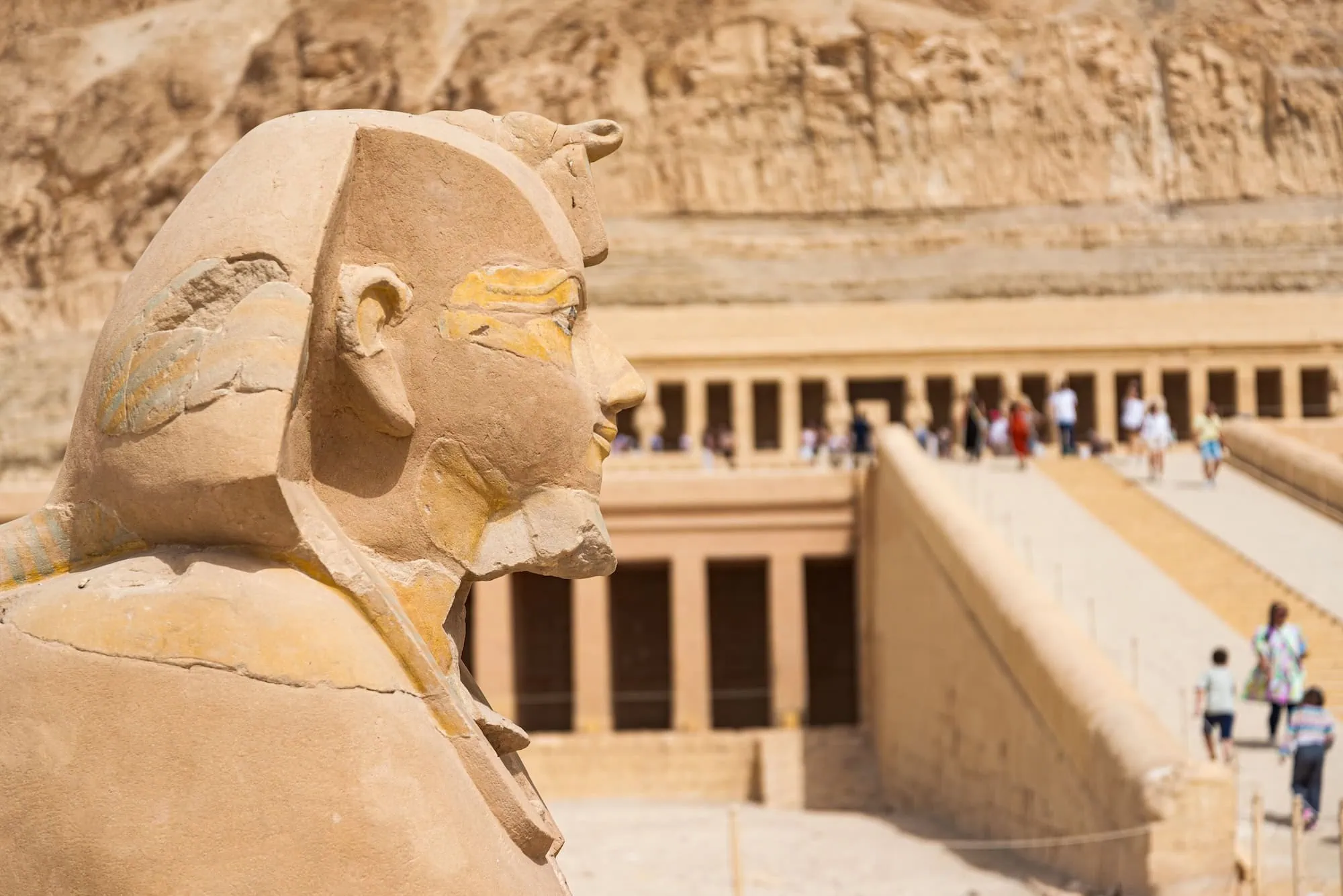
The temple walls showcase her divine birth story, depicting the god Amun-Re as her father, which provided religious justification for her unprecedented rule. These reliefs demonstrate sophisticated political messaging that combined traditional royal iconography with innovative narrative techniques.
Breaking Royal Conventions
The temple’s Holy of Holies contains some of the most important royal legitimacy texts ever discovered. Hatshepsut commissioned extensive reliefs showing her coronation by the gods, her divine selection as pharaoh, and her successful military campaigns. These visual narratives served as permanent testimony to her right to rule, addressing contemporary skeptics and future generations alike.
Architectural Patron and Innovator
Working closely with her architect Senenmut, Hatshepsut revolutionized Egyptian temple design. Previous mortuary temples followed traditional rectangular layouts, but Djeser-Djeseru (“Holy of Holies”) integrated multiple levels, creating vertical progression that mirrored the pharaoh’s journey from earthly ruler to divine being. This conceptual breakthrough influenced temple architecture throughout the New Kingdom period.
Architectural Innovation and Sacred Design
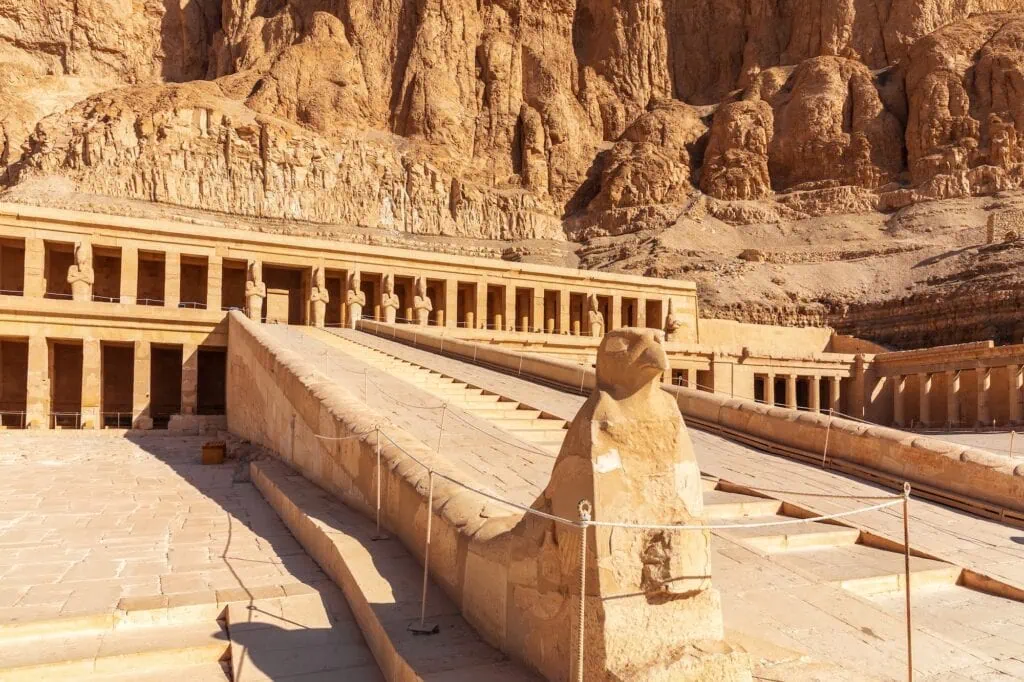
The temple’s three massive terraces create a sense of ascending toward the divine realm, each level serving distinct religious and ceremonial purposes. The lowest terrace featured gardens with exotic trees brought from the land of Punt, creating an earthly paradise that symbolized the fertile afterlife. Colonnades lined each level, their columns carved in various styles that demonstrated the sophisticated craftsmanship of royal workshops.
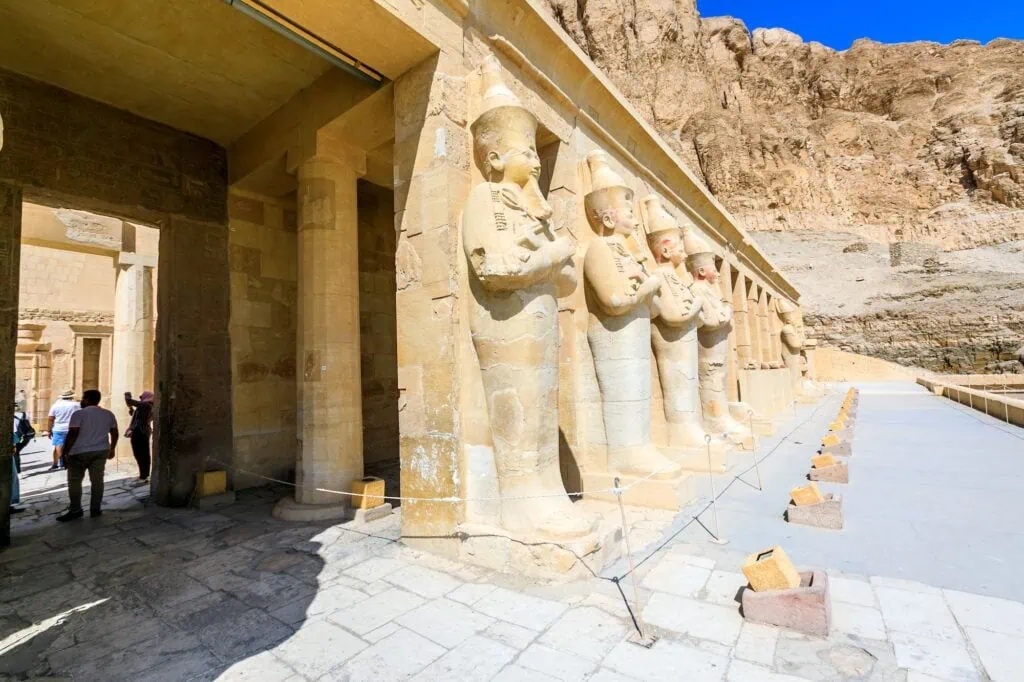
Senenmut’s architectural genius becomes apparent when examining how the structure responds to its environment. Built directly into the cliff face, the temple appears to emerge organically from the rock itself. The architect positioned the complex to align with important astronomical events and religious festivals, particularly the Beautiful Festival of the Valley when Amun’s sacred barque processed from Karnak Temple across the Nile.
The innovative use of Osiride statues along the upper terraces created a powerful visual statement about royal divinity. These colossal figures, depicting Hatshepsut in Osiris form with traditional pharaonic regalia, proclaimed her eternal status as a god-king. The systematic placement of these statues followed precise religious protocols while creating dramatic architectural rhythm.
The Hathor Chapel
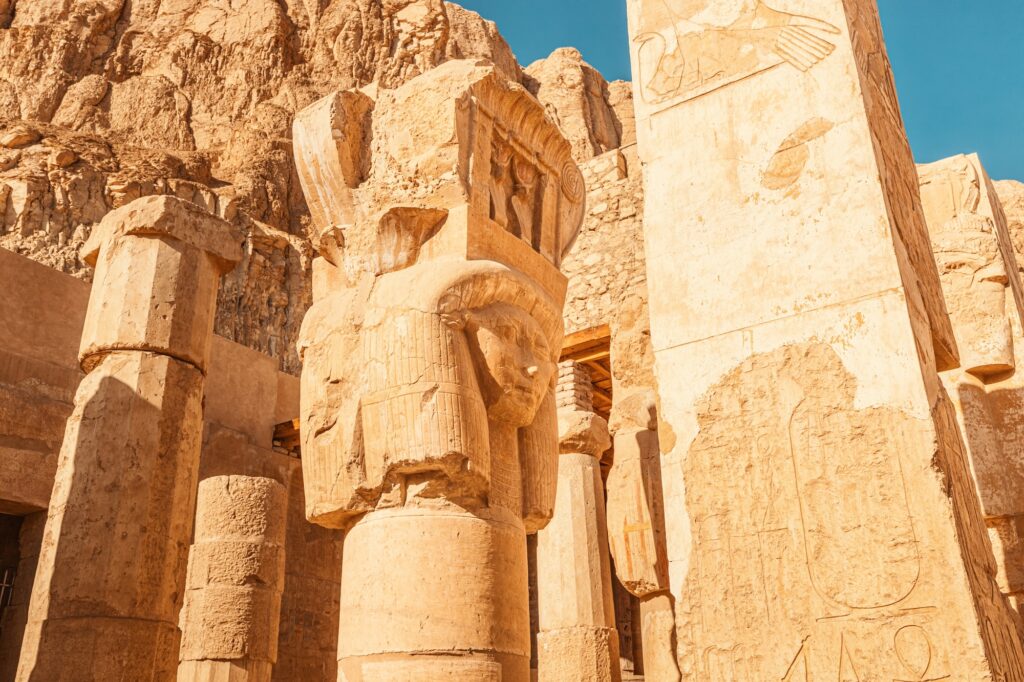
Sacred to the goddess Hathor, this chapel featured unique sistrum-topped columns that celebrated the divine feminine principle. The reliefs inside depicted Hatshepsut nursing from Hathor in cow form, emphasizing the queen’s divine motherhood and protection by Egypt’s most important goddess after Isis.
The Anubis Shrine
Dedicated to the jackal-headed god of mummification, this shrine prepared visitors mentally for the mortuary temple’s primary function. The walls contain some of the finest painted reliefs in Egyptian art, with original mineral pigments still vibrant after millennia.
The Punt Expedition: Economic Success
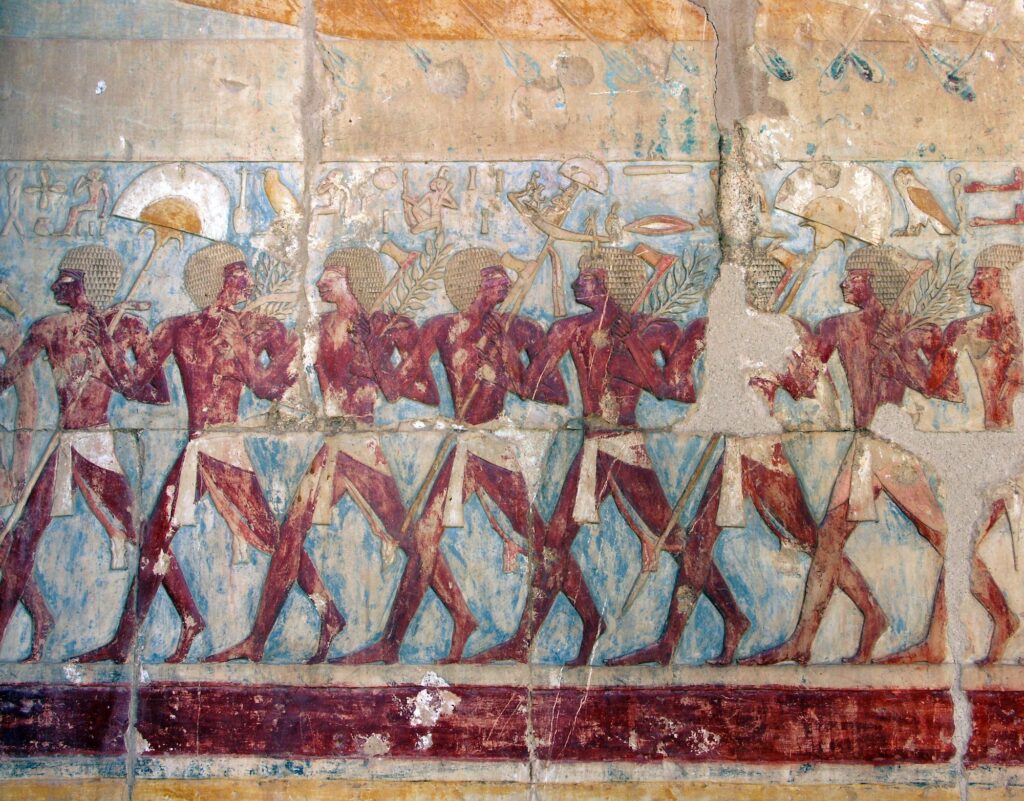
One of the temple’s most celebrated relief cycles documents Hatshepsut’s trading expedition to the mysterious land of Punt, likely located along the modern-day Horn of Africa. These detailed carvings provide invaluable insights into ancient Egyptian international relations and economic activities during the New Kingdom. The Punt reliefs showcase exotic animals, plants, and goods brought back to Egypt, including incense trees that were transplanted to the temple gardens.
These images served dual purposes: documenting a successful economic venture that brought prosperity to Egypt, and demonstrating Hatshepsut’s effective leadership in peaceful pursuits rather than military conquest. We observe careful attention to ethnographic detail in these reliefs. The artists depicted Puntite people, their distinctive architecture, and local flora and fauna with remarkable accuracy.
The incense trees from Punt held special religious significance. Frankincense was essential for temple rituals dedicated to Amun-Re, and by establishing a reliable supply, Hatshepsut demonstrated her ability to fulfill Egypt’s sacred obligations. Political messages embedded in the Punt expedition narrative emphasized peaceful trade over military conquest. While male pharaohs typically celebrated battlefield victories, Hatshepsut promoted economic prosperity and diplomatic success as equally valid expressions of royal power.
Destruction and Rediscovery
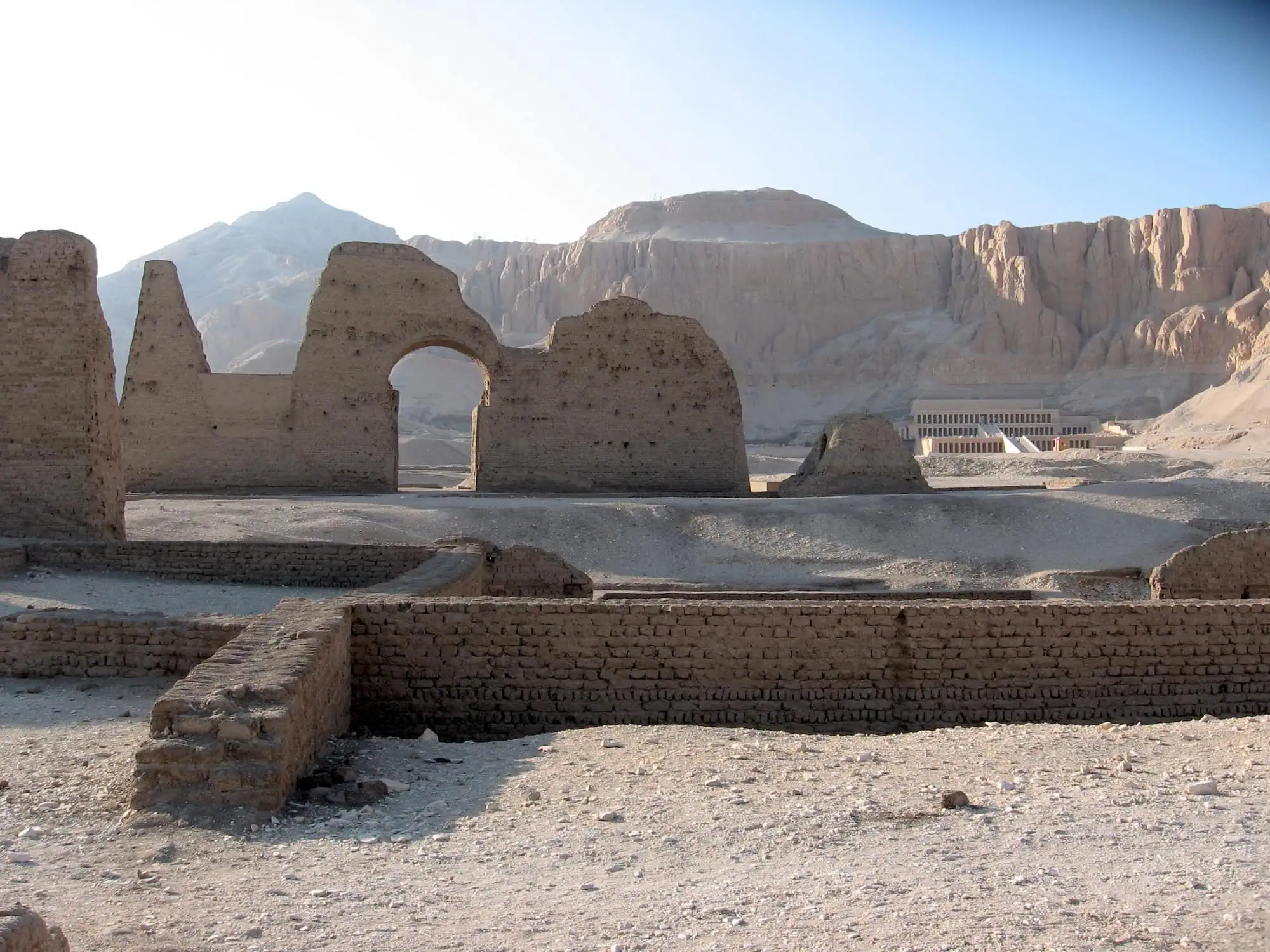
Following Hatshepsut’s death, Thutmose III initiated systematic erasure of her monuments and inscriptions throughout Egypt. The Deir el-Bahari temple suffered extensive damage during this proscription campaign, with Hatshepsut’s images chiseled away and replaced with those of Thutmose I and Thutmose II. However, the monument’s remote location and massive scale prevented complete destruction.
Early Christian monks converted portions of the temple into a monastery during the Coptic period, adding another layer to its complex history. The Northern Monastery, as it became known, operated for several centuries before being abandoned to desert sands and occasional tomb robbers.
Modern Archaeological Excavation
The Metropolitan Museum of Art’s Egyptian Expedition, led by Herbert Winlock in the early 20th century, began serious archaeological investigation of the site. Excavators discovered thousands of statue fragments, relief blocks, and architectural elements scattered throughout the temple complex and surrounding area.
Polish Restoration Project
Since the 1960s, the Polish Centre of Mediterranean Archaeology has conducted meticulous restoration work at Deir el-Bahari. Their efforts have reconstructed major portions of the temple, reassembled countless statue fragments, and developed new conservation techniques for protecting the monument from environmental damage. The Polish team’s work extends beyond physical restoration to include comprehensive documentation of every relief, inscription, and architectural element.
Religious Significance and Festival Celebrations
The mortuary temple functioned as the focal point for elaborate religious ceremonies throughout the ancient Egyptian calendar year. The most important celebration was the Beautiful Festival of the Valley, an annual event when statues of Amun, Mut, and Khonsu crossed from Karnak Temple to visit mortuary temples on the Theban west bank. During these festivals, the temple courtyards filled with crowds of worshippers, priests, musicians, and dancers.
The sacred barque of Amun-Re would rest in specially designed shrines while elaborate offerings were presented to ensure the pharaoh’s continued divine favor. These celebrations reinforced the connection between the living pharaoh, the gods, and the deceased royal ancestors. The solar cult court on the upper terrace served as a dedicated space for sun worship rituals.
Here, priests performed daily ceremonies at dawn and dusk, ensuring the pharaoh’s successful journey through the afterlife in the solar barque of Re. Private tomb owners throughout the Theban necropolis oriented their burial chambers to maintain visual connection with Hatshepsut’s temple. This practice created a vast network of interconnected sacred spaces, all focused on the mortuary complex as a central point of divine power.
Ongoing Mysteries
Despite extensive excavation and study, significant questions remain about the temple’s construction, original decoration, and daily operations. Foundation deposits discovered in recent years suggest the existence of additional structures that have not yet been fully excavated. Archaeological work continues to reveal new chambers, passageways, and storage areas that expand our understanding of the complex’s original scope.
Recent discoveries of ostraca (limestone flakes with inscribed text) provide glimpses into the daily lives of temple workers, priests, and visitors. Advanced imaging techniques now allow researchers to detect original paint traces invisible to the naked eye. These discoveries are revolutionizing our understanding of how the temple appeared when first completed, with walls covered in brilliant colors that created an almost overwhelming visual experience for ancient visitors.
Experience The Elegance Of Queen Hatshepsut’s Legacy
Set against the dramatic cliffs of Deir el-Bahari, the Temple of Hatshepsut stands out with its striking design and powerful story—an architectural masterpiece that reflects one of Egypt’s most remarkable rulers. With EgyptToursPlus, we seamlessly include this iconic site in a private journey that connects Luxor’s greatest landmarks with Egypt’s most unforgettable experiences.
You choose your travel dates, your pace, and the experiences that shape your route. From in-depth temple exploration and guided insights to Nile cruises and refined comfort throughout, we tailor every detail around your preferences—ensuring a smooth, immersive, and deeply personal travel experience.
Frequently Asked Questions
Hatshepsut’s mortuary temple at Deir el-Bahari took roughly 15 years to complete during her reign in the 15th century BCE, with construction beginning around 1479 BCE. The project involved thousands of laborers, stone masons, sculptors, and architects under the direction of Senenmut, Hatshepsut’s influential royal steward. Its massive terraces, ramps, and colonnades required careful engineering against the cliffs of western Thebes. Visitors interested in architecture should allow extra time to study the temple’s precise symmetry and alignment.
Hatshepsut’s temple was built directly against the limestone cliffs of Deir el-Bahari to symbolize sacred harmony between architecture, nature, and the western realm of the dead. Ancient Egyptians associated the west bank of the Nile with the afterlife because the sun set there each evening. The dramatic cliff backdrop also provided natural protection from desert winds and visually linked the temple to nearby royal burial valleys. Morning visits offer the best light for appreciating the temple’s geometric integration with the cliffs.
Most statues of Hatshepsut were deliberately damaged or destroyed during a political campaign initiated by Thutmose III roughly 20 years after her death. Archaeologists discovered hundreds of broken statue fragments buried in pits around Deir el-Bahari, many showing smashed faces and erased royal names. Historians believe the campaign aimed to reinforce traditional male kingship and strengthen Thutmose III’s legitimacy rather than erase Egypt’s history entirely. Several reconstructed statues are now displayed in the Metropolitan Museum of Art and the Egyptian Museum.
Most major sections of Hatshepsut Temple are open to visitors, including the terraces, courtyards, colonnades, and several decorated chapels, although restricted areas occasionally close for conservation work. Egyptian antiquities authorities carefully manage visitor access because the temple’s painted reliefs and stone surfaces remain vulnerable to heat, humidity, and foot traffic. Some upper chambers and fragile sections may only open seasonally or during guided visits. Arriving early helps visitors experience quieter pathways before larger Luxor tour groups arrive.
Hatshepsut Temple differs from most Egyptian temples because of its striking terraced design, clean horizontal lines, and direct integration into the cliffs of Deir el-Bahari. Unlike the towering pylons of Karnak or Luxor Temple, this structure emphasizes symmetry, open courtyards, and elevated ramps inspired partly by earlier Middle Kingdom architecture nearby. Built for a female pharaoh, the temple also contains unusually detailed reliefs celebrating diplomacy, trade expeditions, and divine birth narratives. Many historians consider it one of ancient Egypt’s most elegant architectural achievements.
The Land of Punt depicted in Hatshepsut’s temple reliefs was likely located along the Red Sea coast of present-day Eritrea, Somalia, or eastern Sudan, although scholars still debate its exact location. Reliefs at Deir el-Bahari show Egyptian ships returning with incense trees, ebony, gold, ivory, exotic animals, and myrrh during a famous trading expedition around 1490 BCE. These scenes provide some of the world’s oldest surviving records of international maritime trade. The Punt reliefs remain among the temple’s most studied historical features.
Thutmose III likely ordered the removal of Hatshepsut’s names and images to reinforce dynastic legitimacy and restore traditional male succession after a rare female pharaoh ruled Egypt as king. The campaign occurred decades after Hatshepsut’s death, suggesting it was politically calculated rather than emotionally motivated. Workers erased cartouches, dismantled statues, and altered inscriptions throughout Deir el-Bahari and Karnak Temple. Ironically, the scale of the destruction helped modern archaeologists identify how powerful and influential Hatshepsut’s reign had become.
Yes, several chapels and interior sections of Hatshepsut Temple still preserve original ancient Egyptian pigments, including vivid reds, blues, yellows, and blacks applied more than 3,400 years ago. Mineral-based paints survived especially well in protected areas shielded from direct sunlight and wind erosion. The reliefs illustrating the Punt expedition and religious ceremonies retain some of the clearest surviving colors in Luxor’s west bank monuments. Visitors interested in preserved artwork should spend extra time inside shaded porticoes and chapels.
Historians estimate that several thousand workers participated in constructing Hatshepsut’s temple, including quarrymen, engineers, scribes, transport crews, sculptors, painters, and skilled stone masons. The workforce likely operated in rotating teams over approximately 15 years during the New Kingdom period. Massive limestone blocks had to be quarried, transported, and fitted precisely into the terraces and colonnades beneath towering cliffs. The scale of organization demonstrates the administrative sophistication of Hatshepsut’s government and the resources available to Egypt’s 18th Dynasty rulers.
Hatshepsut Temple remains in remarkably stable condition today due largely to decades of conservation led by the Polish-Egyptian Archaeological and Conservation Mission working at Deir el-Bahari since the 1960s. Extensive restoration stabilized columns, reconstructed damaged terraces, and preserved fragile painted reliefs exposed to desert weather conditions. Although some original sections remain incomplete or weathered, the temple now ranks among Luxor’s best-preserved archaeological complexes. Early morning visits provide the clearest opportunity to appreciate restoration details before harsh midday sunlight washes out carvings.
Yes, Hatshepsut Temple is visible from several elevated points near the Valley of the Kings because both sites lie within Luxor’s western mountain amphitheater. The temple’s pale limestone terraces stand out dramatically against the cliffs of Deir el-Bahari, especially during early morning light when shadows emphasize its geometric symmetry. Ancient Egyptians intentionally positioned mortuary temples and royal tombs within the same sacred western landscape associated with rebirth and the afterlife. Clear winter mornings usually provide the sharpest long-distance views.
The Polish conservation mission at Hatshepsut Temple is internationally respected for pioneering advanced archaeological restoration methods while preserving as much original material as possible. Since the 1960s, Polish and Egyptian specialists have reconstructed collapsed columns, stabilized fragile reliefs, and created detailed digital documentation archives recording every restoration stage. Their work balances tourism access with long-term preservation, a major challenge at heavily visited Luxor monuments. Many modern conservation standards used elsewhere in Egypt were refined through projects at Deir el-Bahari.
Design Your Custom Tour
Explore Egypt your way by selecting only the attractions you want to visit