

Abusir Pyramids Complex – An Ancient and Noble Burial Ground
Most travelers rush to Giza, but Egypt’s most intriguing pyramid complex lies just 25 kilometers (15.5 miles) south.
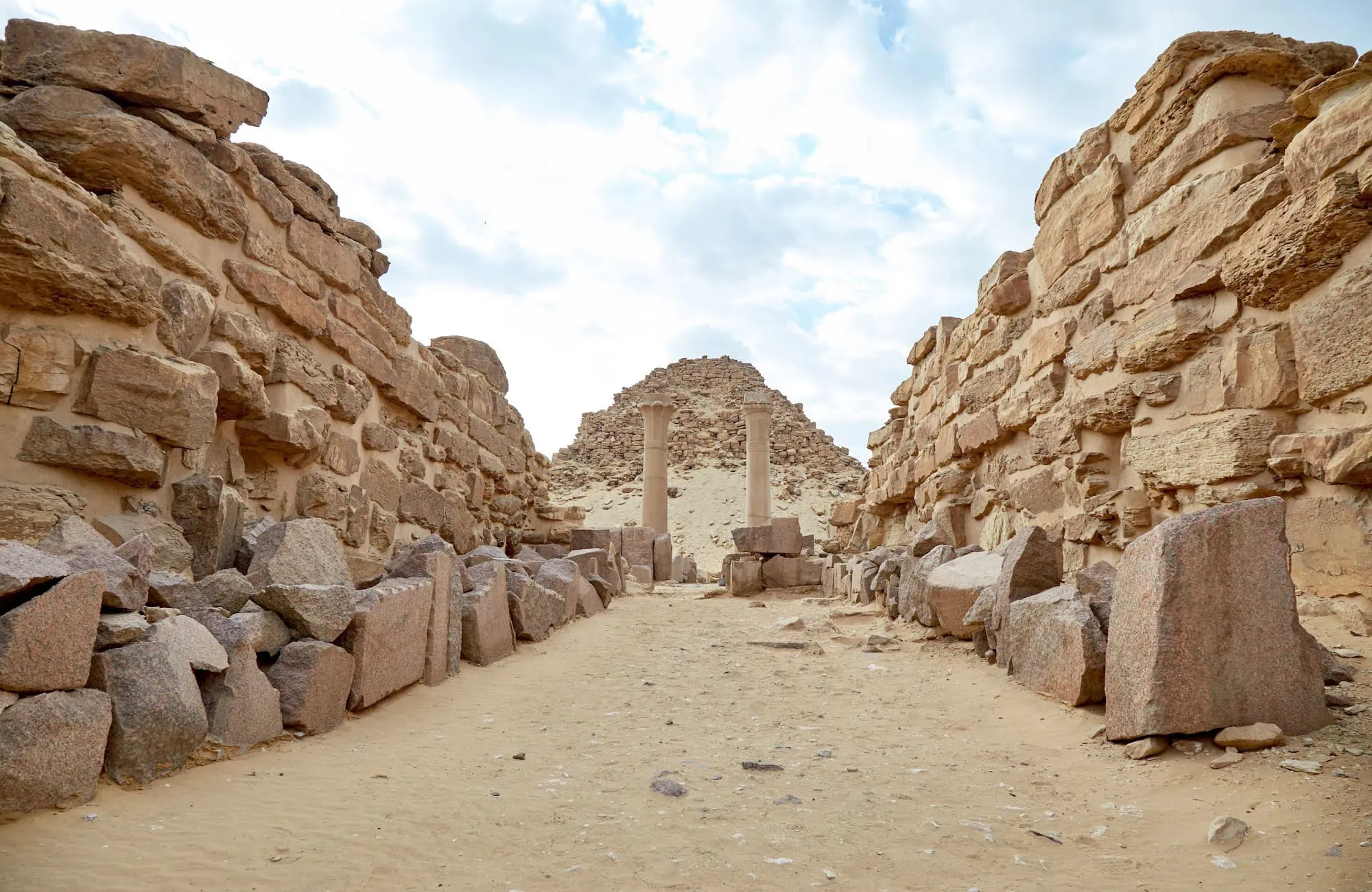
The Abusir pyramid complex represents one of ancient Egypt’s most significant archaeological sites, housing the remnants of four royal pyramids built during the Fifth Dynasty period of the Old Kingdom. Located southwest of Cairo near the ancient capital of Memphis, this extensive necropolis served as the primary burial ground for pharaohs who ruled Egypt between 2494 and 2345 BCE.
While less famous than their Giza counterparts, these pyramids offer visitors an authentic glimpse into the architectural innovations and religious practices that defined one of Egypt’s most prosperous eras. Unlike the crowded tourist sites elsewhere, Abusir provides an intimate encounter with ancient Egyptian history. The site’s ongoing excavations continue revealing papyrus archives, administrative records, and architectural details that reshape our understanding of Fifth Dynasty civilization.
Table of Contents
The Royal Necropolis of Memphis
The Abusir pyramid complex functioned as the principal royal cemetery during the Fifth Dynasty, when Memphis held its position as Egypt’s administrative and cultural center. Five pharaohs chose this location for their eternal resting places, though only four pyramids remain visible today.
Sahure’s Pyramid: Architectural Innovation
Sahure’s pyramid stands as the northernmost structure in the complex, originally rising to 47 meters (154 feet) before centuries of erosion reduced its height. This monument introduced several architectural innovations that would influence pyramid construction for generations. The internal chambers featured fine limestone reliefs depicting the pharaoh’s military victories and religious ceremonies, while the pyramid’s causeway stretched over 230 meters (755 feet) to connect with a valley temple.
Archaeological excavations have uncovered fragments of these relief scenes, providing valuable insights into Fifth Dynasty artistic techniques and political propaganda. The pyramid’s internal design also incorporated advanced drainage systems to protect the burial chamber from groundwater infiltration.
Neferirkare’s Pyramid: The Largest Monument
Neferirkare Kakai commissioned the largest pyramid in the Abusir complex, with a base measuring 105 meters (344 feet) on each side. Construction began as a step pyramid before being modified to create smooth sides, though the project remained unfinished when the pharaoh died. The incomplete state actually benefits modern visitors, as the exposed internal structure reveals construction techniques invisible in other pyramids.
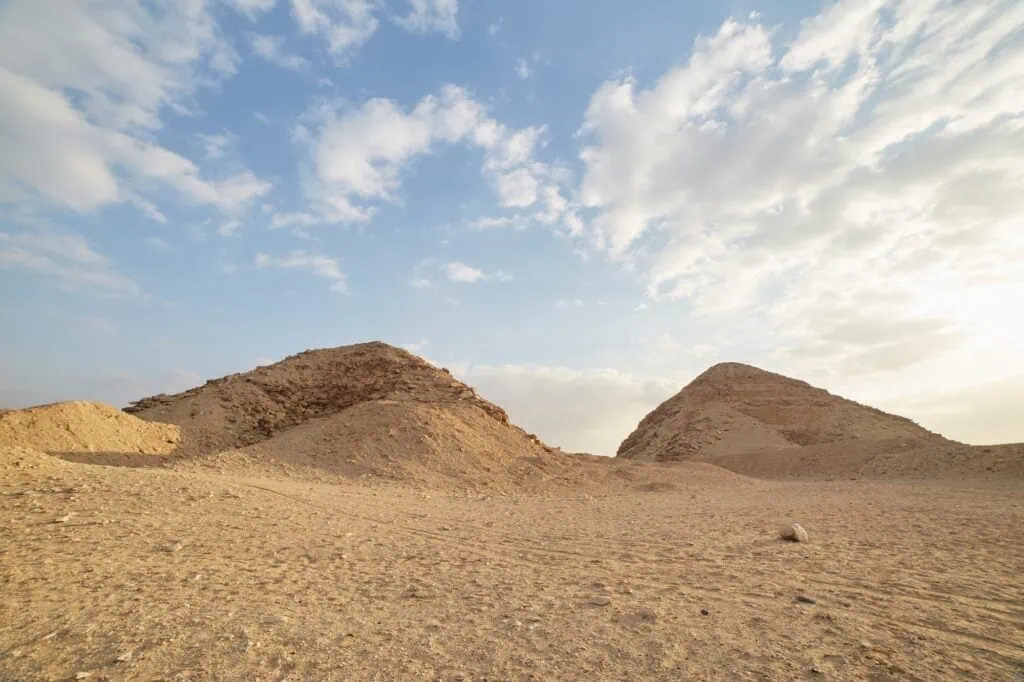
The pyramid’s mortuary temple yielded one of ancient Egypt’s most significant papyrus archives. These documents detail temple administration, offering schedules, and royal decrees spanning several decades of Fifth Dynasty rule.
Niuserre’s Complex: Precision Engineering
Niuserre built the best-preserved pyramid at Abusir, demonstrating remarkable engineering precision despite using smaller limestone blocks than earlier monuments. Standing 51.5 meters (169 feet) tall, this pyramid maintains much of its original limestone casing on the lower courses.
The mortuary temple attached to Niuserre’s pyramid contains elaborate relief carvings depicting the pharaoh’s sed-festival celebrations and interactions with various deities. These scenes provide crucial information about Fifth Dynasty religious practices and royal ceremonial protocols.
Archaeological Discoveries and Czech Excavations
Czech archaeologists have conducted systematic excavations at Abusir since 1976, uncovering treasures that rival discoveries from more famous sites. Their meticulous work has revealed complete papyrus archives, intact burial chambers, and previously unknown tombs of high officials who served the Fifth Dynasty pharaohs.
One remarkable discovery involved the tomb of Queen Khentkaus II, wife of Neferirkare, which contained well-preserved relief scenes and hieroglyphic inscriptions. The tomb’s antechamber features a unique astronomical ceiling that maps star positions during the Fifth Dynasty period. Recent analysis of these celestial charts provides new data about ancient Egyptian astronomy and calendar systems.
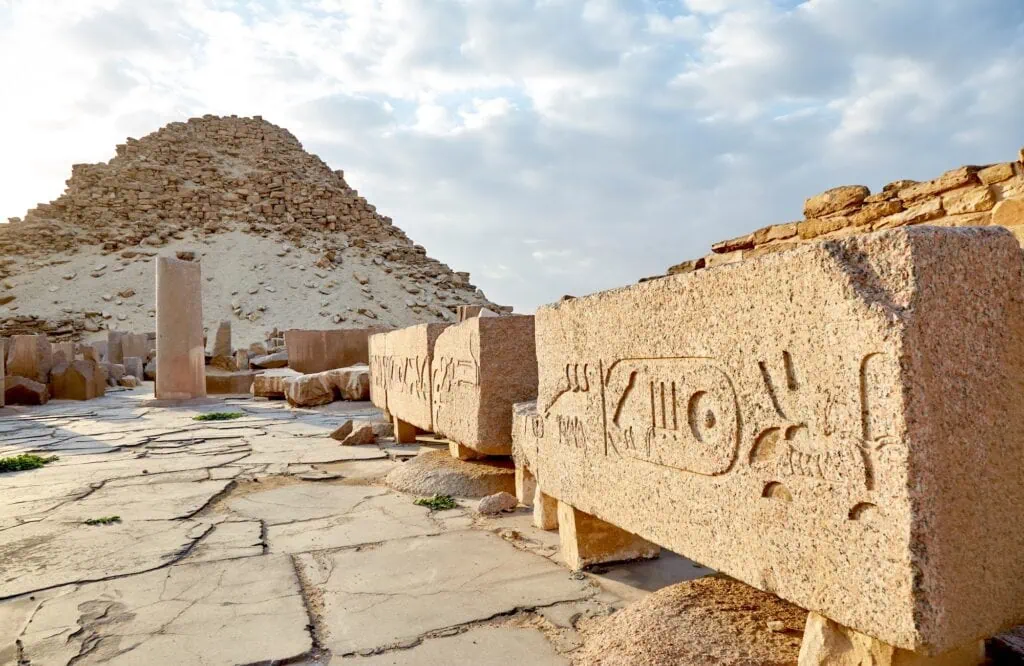
The Czech team also uncovered extensive administrative papyri that document daily life in the pyramid complexes. These records detail everything from bread offerings to guard schedules, creating an unprecedented picture of how these sacred sites functioned as active religious centers. Carbon dating of organic materials found alongside these documents confirms construction dates and helps establish more precise chronologies for Fifth Dynasty reigns.
Climate data extracted from sediment cores near the pyramids suggests that the Nile flood patterns during the Fifth Dynasty were particularly favorable for large-scale construction projects. This environmental evidence supports historical accounts describing this period as exceptionally prosperous.
Planning Your Visit to Abusir
Access and Timing
Abusir lies approximately 25 kilometers (15.5 miles) southwest of central Cairo, accessible via a scenic drive through rural communities and date palm groves. The site opens daily from 8:00 am (08:00) to 4:00 pm (16:00), though access requires special permits arranged in advance. Unlike Giza or Saqqara, individual visitors cannot simply arrive and purchase tickets at the gate.
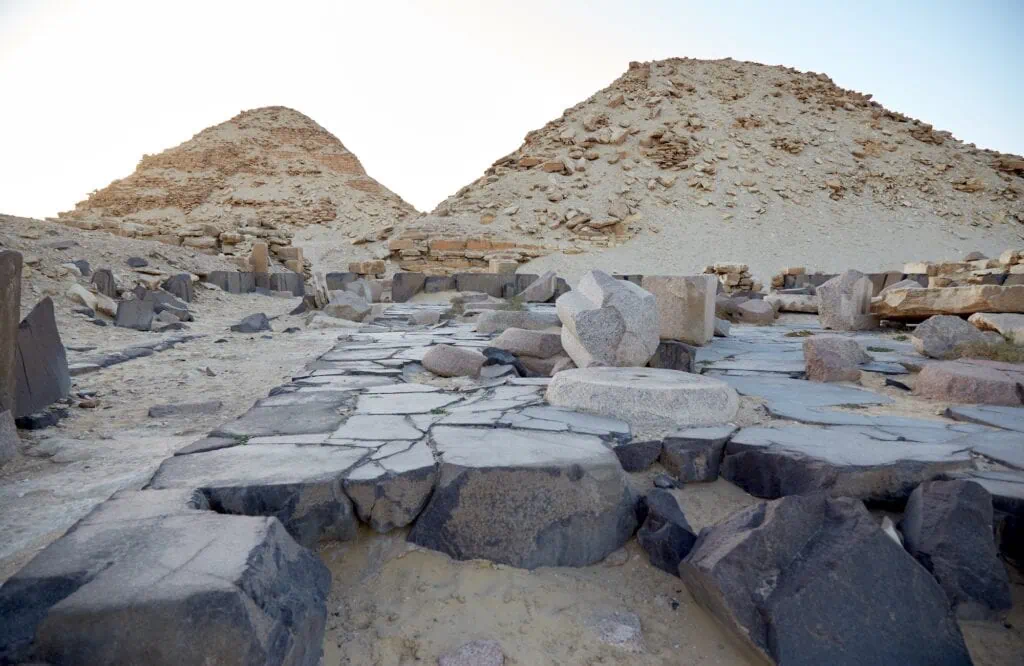
We recommend planning your Abusir visit as part of a comprehensive Memphis necropolis tour that includes Saqqara and Dahshur. This approach maximizes your time while providing cultural context that makes each site more meaningful. Our private guides possess the specialized permits required for Abusir access and can arrange transportation in our modern, air-conditioned vehicles.
What to Expect During Your Tour
The Abusir experience differs significantly from more commercialized pyramid sites. Expect to walk across sandy terrain with minimal infrastructure – comfortable walking shoes are essential. The site lacks tourist facilities, so bring water and sun protection for your comfort during the typically 90-minute exploration.
Photography enthusiasts will appreciate the excellent lighting conditions during morning hours, when shadows create dramatic contrasts against the limestone structures. The absence of crowds means you can take your time examining architectural details and reading hieroglyphic inscriptions without pressure from other visitors.
Combining Abusir with Other Memphis Sites
Saqqara Integration
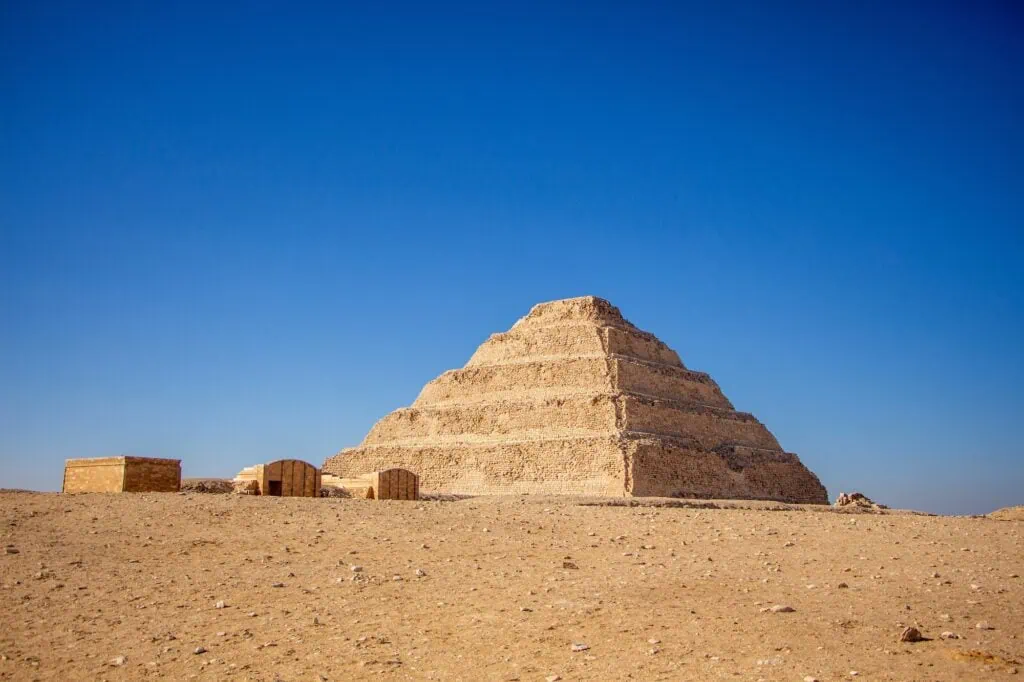
Saqqara lies just 10 kilometers (6.2 miles) north of Abusir, making it natural to visit both sites in a single day. The Step Pyramid of Djoser at Saqqara provides context for understanding the architectural evolution that led to Abusir’s Fifth Dynasty innovations. We typically recommend starting at Saqqara in the morning when temperatures are cooler, then proceeding to Abusir for the afternoon portion of your tour.
Dahshur Connection
The Bent Pyramid and Red Pyramid at Dahshur represent crucial steps in pyramid development between the Third Dynasty achievements at Saqqara and the Fourth Dynasty perfection at Giza. Including Dahshur in your Memphis necropolis tour creates a comprehensive timeline of pyramid evolution spanning three centuries of ancient Egyptian civilization.
Transportation and Logistics
Our experienced drivers navigate the rural roads between these sites efficiently while providing air-conditioned comfort throughout your journey. The route offers glimpses of traditional Egyptian village life and agricultural practices that remain largely unchanged since ancient times. These cultural observations enhance your understanding of how geography and society influenced ancient Egyptian civilization.
The Memphis Connection: Context for Understanding
Memphis served as Egypt’s capital during the Old Kingdom period, making Abusir part of a vast necropolis system that extended along the western desert edge. The ancient city’s strategic location at the junction of Upper and Lower Egypt made it the natural choice for royal burial sites, as pharaohs could oversee their eternal monuments from the palace complex.
Administrative papyri discovered at Abusir reveal the complex logistics required to maintain these pyramid complexes. Teams of priests performed daily rituals, while agricultural estates throughout the Memphis region provided offerings and funding for perpetual mortuary services. The scale of these operations demonstrates the centralized power and economic prosperity that characterized Fifth Dynasty Egypt.
Recent archaeological work has identified residential areas near Abusir where pyramid builders and maintenance workers lived. These settlements provide insights into the social organization and daily life of communities devoted to serving the pharaoh’s afterlife needs. Unlike the temporary worker villages at Giza, these Abusir communities appear to have functioned for generations, suggesting more permanent administrative arrangements during the Fifth Dynasty.
Architectural Innovations and Construction Techniques
Fifth Dynasty pyramid builders developed several innovations that distinguished Abusir monuments from earlier structures. Internal chamber designs became more sophisticated, incorporating multiple security systems and improved ventilation. Relief carving techniques achieved new levels of artistic refinement, while architectural proportions reflected evolving mathematical and aesthetic principles.
Building Materials and Methods
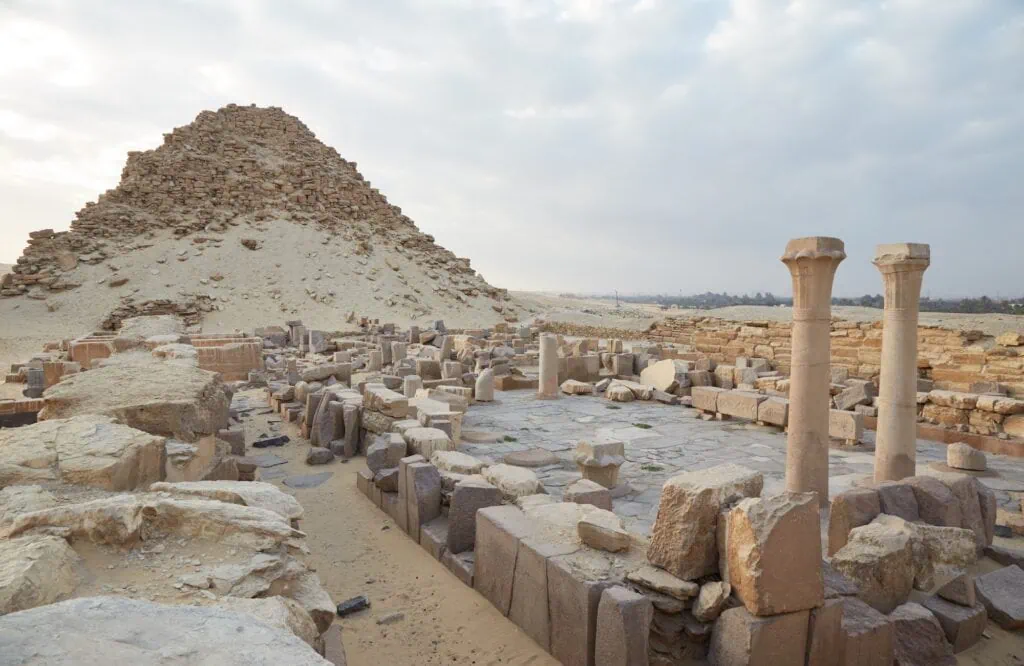
Abusir pyramids utilized locally quarried limestone supplemented by fine Tura limestone for facing stones. Analysis of construction marks reveals that builders organized work crews differently than at Giza, employing smaller, more specialized teams rather than massive labor gangs. This approach produced monuments with superior craftsmanship despite their smaller size compared to Fourth Dynasty achievements.
Stone analysis indicates that pyramid builders selected materials based on specific structural requirements rather than simply using whatever was available. Core stones came from nearby quarries, while decorative elements used premium limestone transported from distant sources. This selective approach demonstrates sophisticated understanding of material properties and long-term preservation requirements.
Engineering Solutions
Fifth Dynasty architects solved several structural challenges that had plagued earlier pyramid builders. Improved foundation systems prevented settling problems, while innovative drainage techniques protected internal chambers from moisture damage. These engineering advances helped Abusir pyramids survive millennia of environmental stress better than some larger monuments from earlier periods.
The complex geometric calculations required for pyramid construction reached new sophistication during the Fifth Dynasty. Mathematical papyri found at Abusir detail surveying techniques and angular measurements that demonstrate advanced knowledge of geometry and astronomy. These documents provide rare insights into the scientific knowledge underlying ancient Egyptian architecture.
Why Choose Egypt Tours Plus for Your Abusir Experience
Our decades of expertise in Egyptian archaeology and tourism make us the ideal partner for exploring Abusir’s hidden treasures. We maintain the specialized permits required for site access while our qualified guides possess deep knowledge of recent archaeological discoveries and ongoing research. This expertise ensures you experience Abusir’s significance rather than simply viewing ancient ruins.
Our private tour approach allows flexible scheduling that maximizes your time at each site within the Memphis necropolis. While group tours rush through multiple locations, we provide the unhurried exploration that Abusir deserves. Our modern vehicles and professional drivers ensure comfortable transportation across varied terrain while maintaining the intimate experience that makes Abusir special.
We understand that visiting lesser-known sites requires additional planning and expertise. Our award-winning service includes comprehensive pre-trip briefings, cultural context explanations, and post-visit resources that enhance your understanding long after your tour concludes. This comprehensive approach transforms sightseeing into genuine cultural education that deepens your appreciation for ancient Egyptian civilization.
Explore The Quiet Grandeur Of The Abusir Pyramids Complex
The Abusir Pyramids Complex offers a more intimate encounter with Egypt’s pyramid legacy—where ancient structures rise from the desert in a setting untouched by crowds. With EgyptToursPlus, we seamlessly incorporate this hidden gem into a private journey that connects lesser-known sites with Egypt’s most iconic landmarks.
You choose your travel dates, your pace, and the experiences that shape your route. From early pyramid exploration to cultural highlights and refined comfort along the way, we tailor every detail around your preferences—ensuring a smooth, expertly planned, and deeply personal travel experience.
Frequently Asked Questions
Yes, visits to the Abusir Pyramids Complex generally require advance coordination or permits because the archaeological zone is more restricted than heavily touristed sites like Giza or Saqqara. Unlike Giza, tickets are not always reliably available at a public entrance gate, and access policies can change depending on active excavations or conservation work led by the Czech Institute of Egyptology. Organized tours usually handle the required permissions in advance. Travelers should avoid arriving unannounced, especially on Fridays or public holidays when staffing may be limited.
Abusir offers a quieter and more archaeological experience than the Giza Plateau, with smaller pyramids but dramatically fewer crowds and less commercial activity. The site mainly contains 5th Dynasty royal pyramids built around 2500 BC, including those of Sahure, Neferirkare, and Niuserre. Unlike Giza’s monumental scale, Abusir appeals to travelers interested in excavation history, temple layouts, and Old Kingdom administration. Photography is often easier because visitors can explore large sections of the necropolis without dense tour groups blocking views.
Lightweight clothing, sturdy walking shoes, sunglasses, and a wide-brimmed sun hat are essential for visiting Abusir because the site offers little natural shade and involves walking across uneven desert terrain. Summer temperatures between May and September frequently exceed 35°C (95°F), while sandy ground and scattered stone debris make open footwear impractical. Neutral-colored breathable fabrics work best for both comfort and photography. Bring sunscreen and at least 1 liter of water per person because there are no reliable on-site vendors.
Photography rules at Abusir vary depending on the specific pyramid, tomb, or excavation zone, and permissions can change according to current conservation policies. Exterior photography is generally permitted, but interior chambers may require additional approval or prohibit flash photography to protect fragile stone surfaces and pigments. Archaeological teams occasionally restrict access entirely around active excavation areas. Travelers interested in professional photography or filming should confirm regulations before arrival because enforcement can differ between monuments within the same complex.
Most visitors spend around 90 minutes to 2 hours exploring the main Abusir monuments, excluding travel time from Cairo or nearby pyramid fields. The complex is less densely developed for tourism than Giza, so visits focus on walking between exposed pyramid ruins, mortuary temples, and excavation zones rather than entering multiple interiors. Travelers combining Abusir with Saqqara or Dahshur should plan a full-day archaeological itinerary. Early morning scheduling provides cooler temperatures and softer desert lighting for photography.
Abusir can be challenging for visitors with mobility limitations because the site consists largely of uneven sand, loose stones, and unpaved desert paths without modern accessibility infrastructure. Unlike major museums or central Cairo attractions, there are no wheelchair-friendly walkways, elevators, or consistent seating areas across the archaeological zone. Some vehicles can approach closer to certain pyramids, but substantial walking is usually unavoidable. Travelers with mobility concerns should discuss site conditions with tour organizers before confirming a visit.
The best time to visit Abusir is between 8:00 am and 10:00 am, when desert temperatures are cooler and visibility across the necropolis is clearer before midday haze develops. Winter and spring months from October through April provide the most comfortable conditions, with daytime temperatures often ranging between 18°C and 28°C (64°F to 82°F). Because the site receives far fewer visitors than Giza, early arrivals often experience near-total quiet across large sections of the ruins. Morning light also enhances relief carvings and stone textures.
Fifth Dynasty pharaohs selected Abusir because of its strategic proximity to Memphis, nearby limestone quarries, and available desert plateau suitable for large royal funerary complexes. Located between Giza and Saqqara, Abusir became a major royal necropolis around 2490-2345 BC during a period when pyramid scale decreased but temple design and solar cult symbolism expanded significantly. Archaeologists also believe political and economic shifts influenced the move away from the massive pyramid projects of the 4th Dynasty. The location offered both prestige and practical construction advantages.
The Czech Institute of Egyptology’s excavations at Abusir are internationally significant because they uncovered extensive Old Kingdom papyrus archives, tomb complexes, and administrative records rarely preserved elsewhere in Egypt. These discoveries, particularly around the pyramid complex of Neferirkare, revealed detailed information about royal cult administration, priestly organization, taxation, and daily operations around 4,500 years ago. Few archaeological sites in Egypt have produced such comprehensive written documentation from the pyramid age. The ongoing Czech mission has worked at Abusir continuously since the 1960s.
Yes, Abusir is commonly combined with Saqqara and Dahshur because all three pyramid fields lie southwest of Cairo along the same broader desert corridor. Many travelers choose this route as an alternative to spending an entire day at Giza because it provides a deeper understanding of pyramid evolution across different dynasties. Distances between sites are relatively manageable by private vehicle, with Abusir sitting roughly midway between Giza and Saqqara. A full-day itinerary usually works best for covering all three comfortably.
No, the Abusir archaeological zone has virtually no tourist infrastructure, including restaurants, cafes, shaded rest areas, or permanent visitor centers. Travelers should bring water, snacks, sun protection, and any personal necessities before leaving Cairo because the surrounding area is largely rural and undeveloped. Unlike Giza, there are no souvenir markets or extensive commercial facilities immediately adjacent to the monuments. Most organized tours schedule lunch stops separately in Saqqara, Giza, or central Cairo after the visit concludes.
Abusir lies approximately 25 km (15.5 miles) southwest of central Cairo, and the drive usually takes 45 minutes to 1 hour depending on traffic conditions and departure point. The site sits between the major necropolises of Giza and Saqqara, making it geographically convenient for combined archaeological excursions. Morning departures from downtown districts like Zamalek or Garden City are recommended because Cairo traffic intensifies significantly after 8:00 am. Private transportation remains the most practical option because public transit connections are limited.
Design Your Custom Tour
Explore Egypt your way by selecting only the attractions you want to visit