The legendary, the lesser-known, and the unforgettable
Explore the Best of Egypt
Egypt is a country where the famous and the undiscovered sit side by side. In this guide, we share the best of Egypt — the must-see icons, the overlooked treasures, and everything in between — drawing on 70+ years of experience and private, expert guidance. Begin planning your perfect journey with us.
Best of Egypt: Top Sites, Hidden Gems & Everything in Between
Egypt transforms first-time visitors into lifelong devotees.
The land of pharaohs beckons with an irresistible blend of ancient mysteries and modern adventures. From the moment you witness the Great Pyramid piercing the desert horizon to your final sunset over the Nile, Egypt delivers experiences that redefine what travel can be. We’ve guided thousands of travelers across the country since 1955, and every Egypt tour package we craft reveals why it remains one of the world’s most captivating destinations.
Whether you’re drawn by archaeological wonders, cultural immersion, or simply the allure of walking where history began, Egypt rewards every type of traveler with memories that last decades.
Table of Contents
Iconic Pyramids and Ancient Monuments
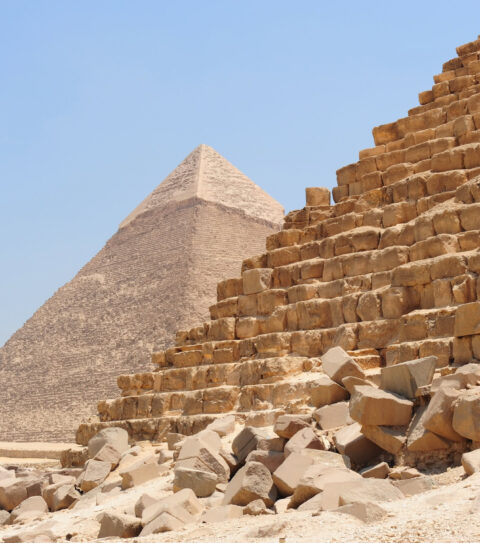
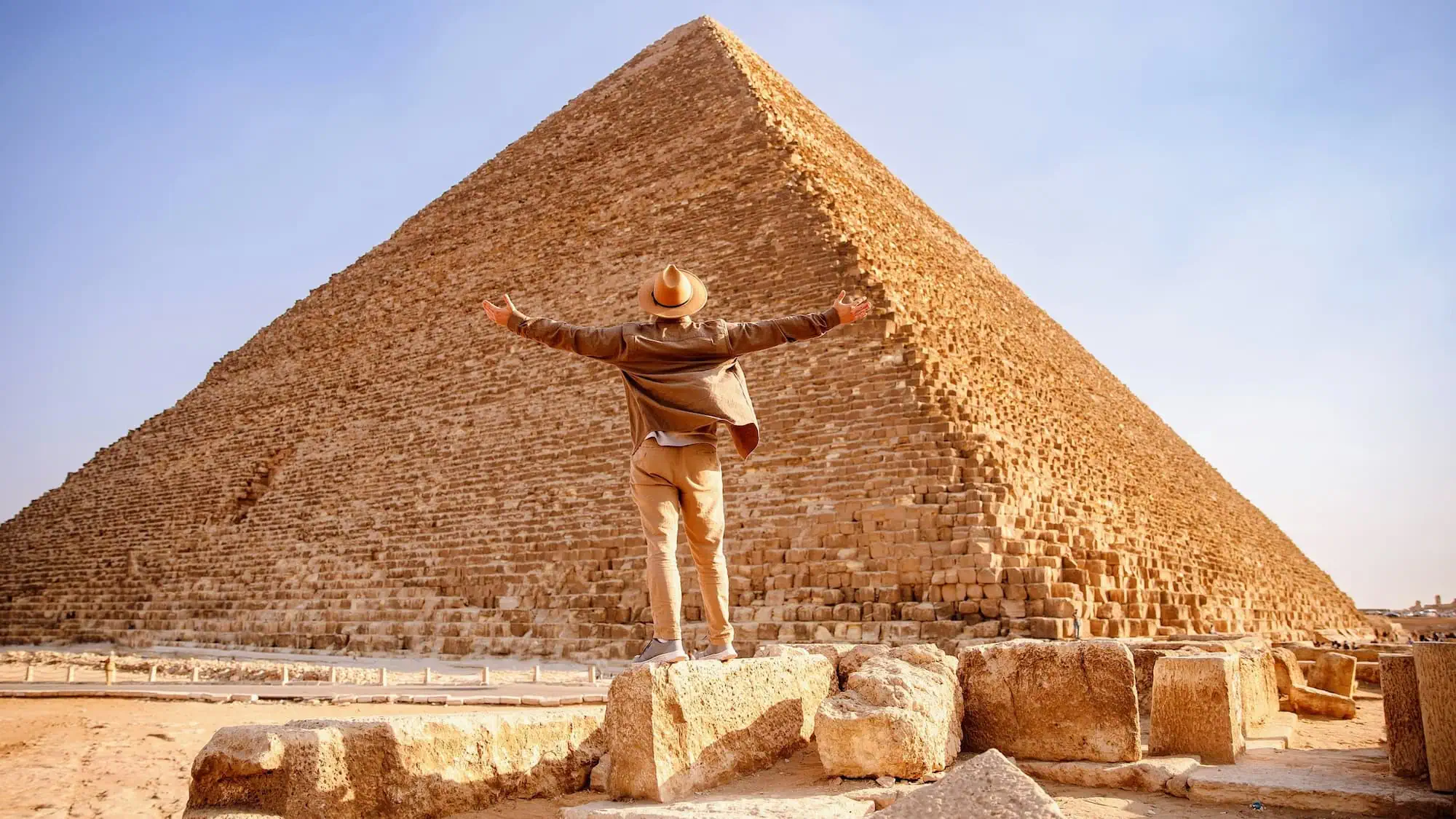
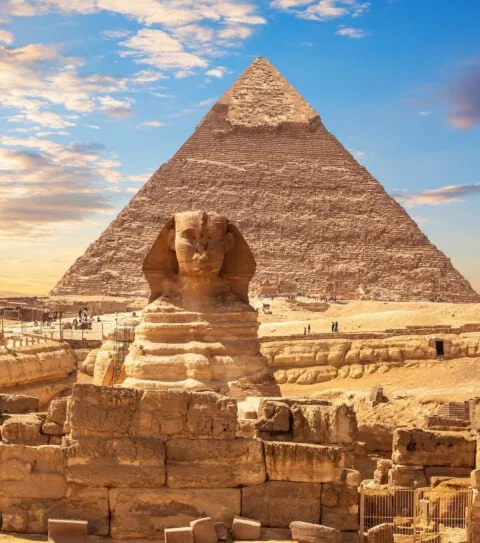
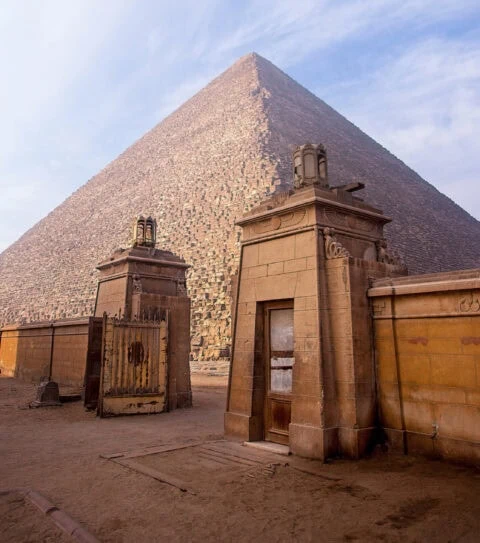
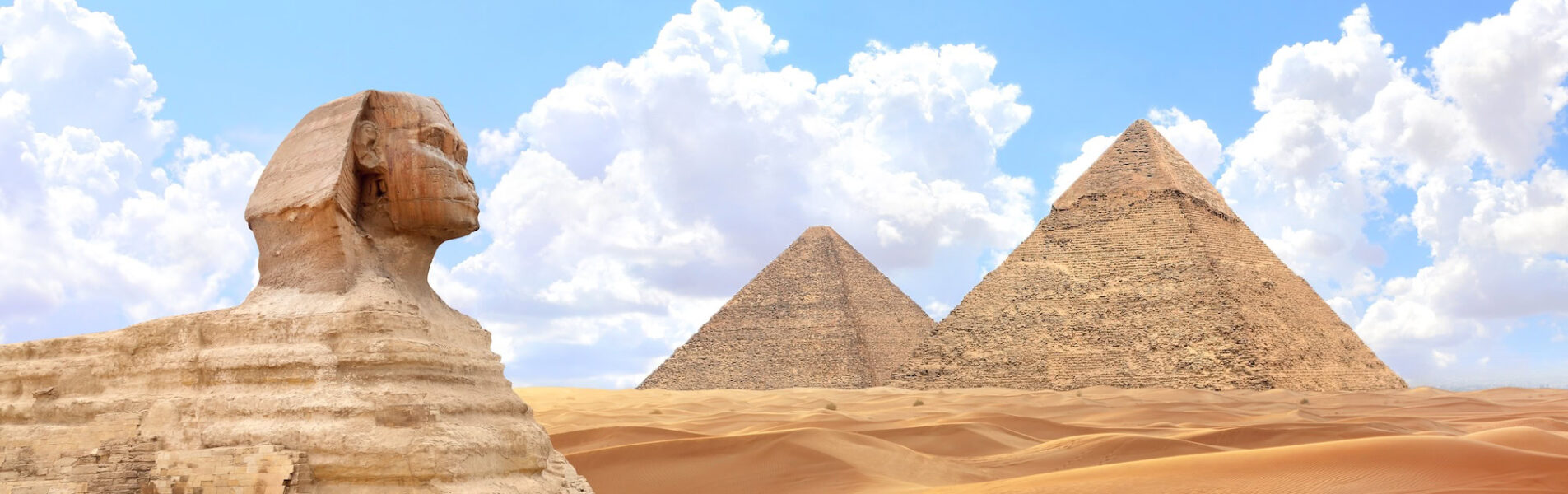
The pyramids at Giza remain Egypt’s crown jewel for good reason. Standing before these 4,500-year-old monuments creates a profound connection to humanity’s greatest architectural achievements. The Great Pyramid alone contains over 2 million stone blocks, each weighing between 2.5 and 15 tons.
The Great Sphinx and Pyramid Complex
Beyond the main pyramids, the Sphinx commands attention with its enigmatic gaze across the desert. This limestone guardian has watched over Giza for millennia, its weathered features still inspiring awe and speculation.
Valley of the Kings
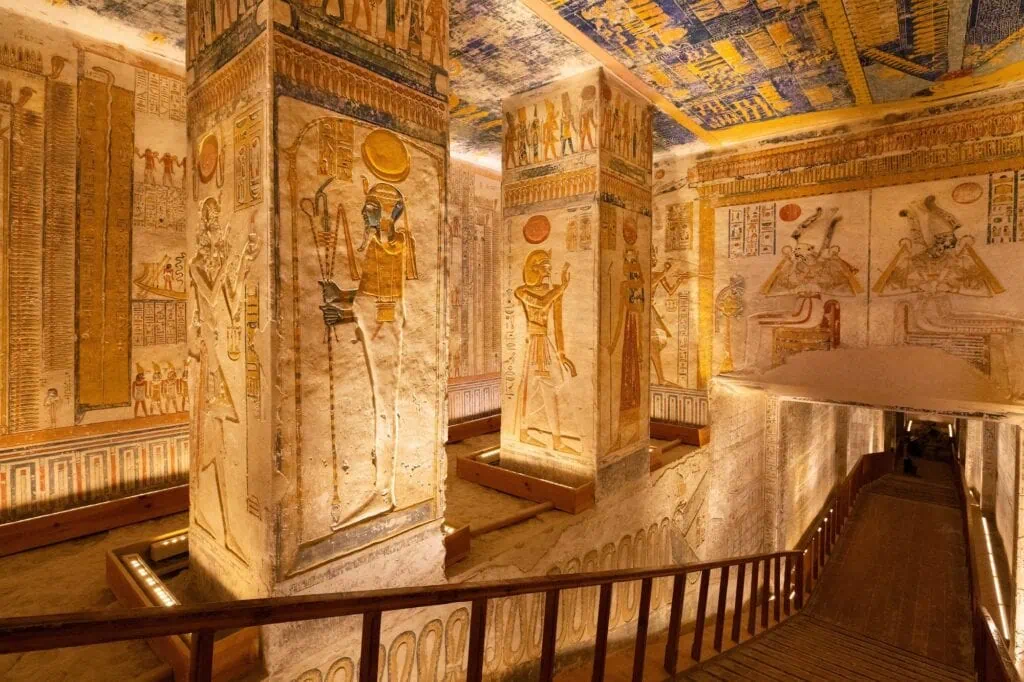
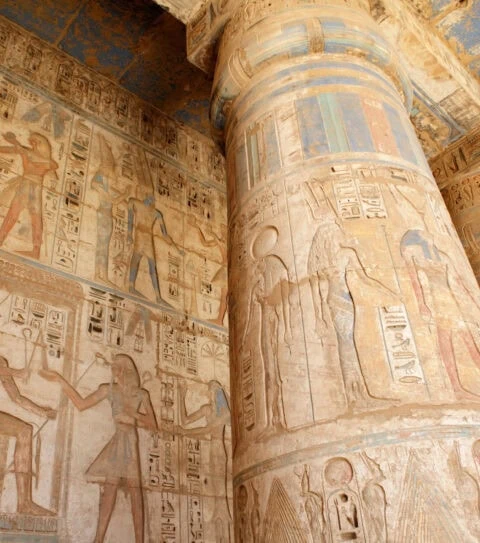
Luxor’s Valley of the Kings houses 65 discovered tombs, including Tutankhamun’s burial chamber (KV62, discovered by Howard Carter in 1922). The intricate wall paintings and hieroglyphics inside these tombs showcase ancient Egyptian beliefs about the afterlife. The tomb of Seti I (KV17), at 137 metres long, is the deepest and most fully decorated tomb in the valley, with vibrant colors that remain remarkably preserved 3,300 years after the burial.
Abu Simbel Temples
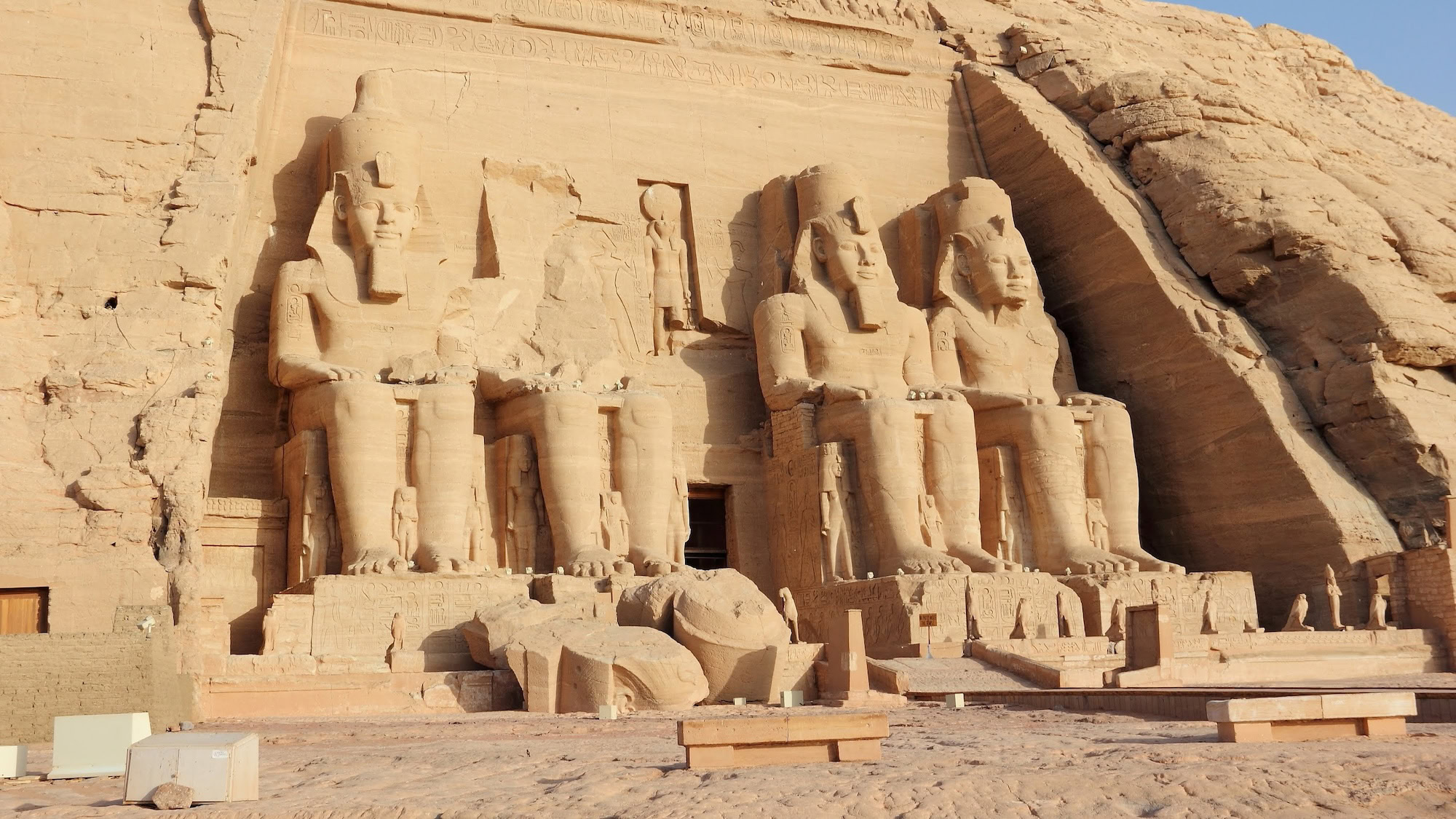
Carved directly into cliffsides near Aswan, Abu Simbel represents ancient engineering at its finest. Four colossal statues of Ramesses II guard the main temple entrance, each standing 20 meters (66 feet) tall. The entire complex was relocated in the 1960s to save it from rising waters during the Aswan High Dam construction.
Nile River Cruises and Navigation
The Nile flows north for 6,650 kilometers (4,130 miles), making it the world’s longest river. Cruise vessels navigate the stretch between Aswan and Luxor, revealing temples, ancient settlements, and traditional villages along the banks.
Modern cruise ships offer comfortable accommodations while following routes used by traders and travelers for thousands of years. The journey typically spans three to seven days, with stops at Kom Ombo Temple, Edfu Temple, and Esna Lock. Evening entertainment often includes traditional music and dance performances that connect passengers to Egyptian cultural heritage.
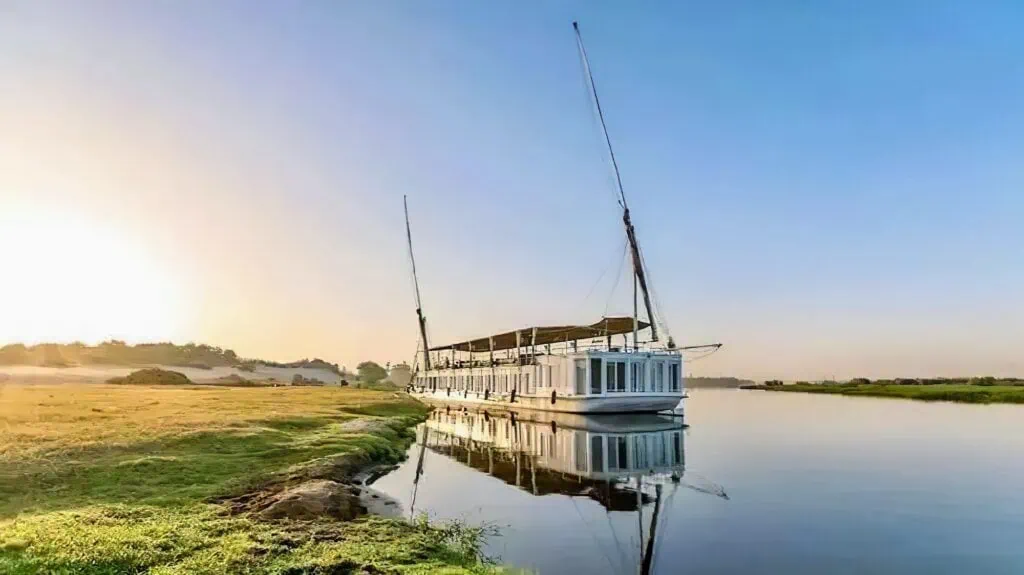
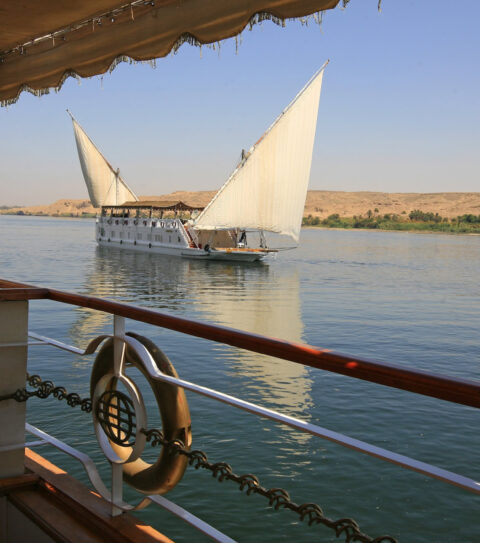
Traditional Dahabiya sailboats offer the most intimate way to cruise the Nile. These elegant, shallow-draft vessels — once favored by 19th-century explorers and Egyptian nobility — carry just a handful of cabins, letting them anchor at quiet spots the larger ships sail past. Drifting between Luxor and Aswan under white sails, you’ll visit lesser-known temples and villages at a pace that feels worlds away from busier cruise itineraries.
Temple of Karnak
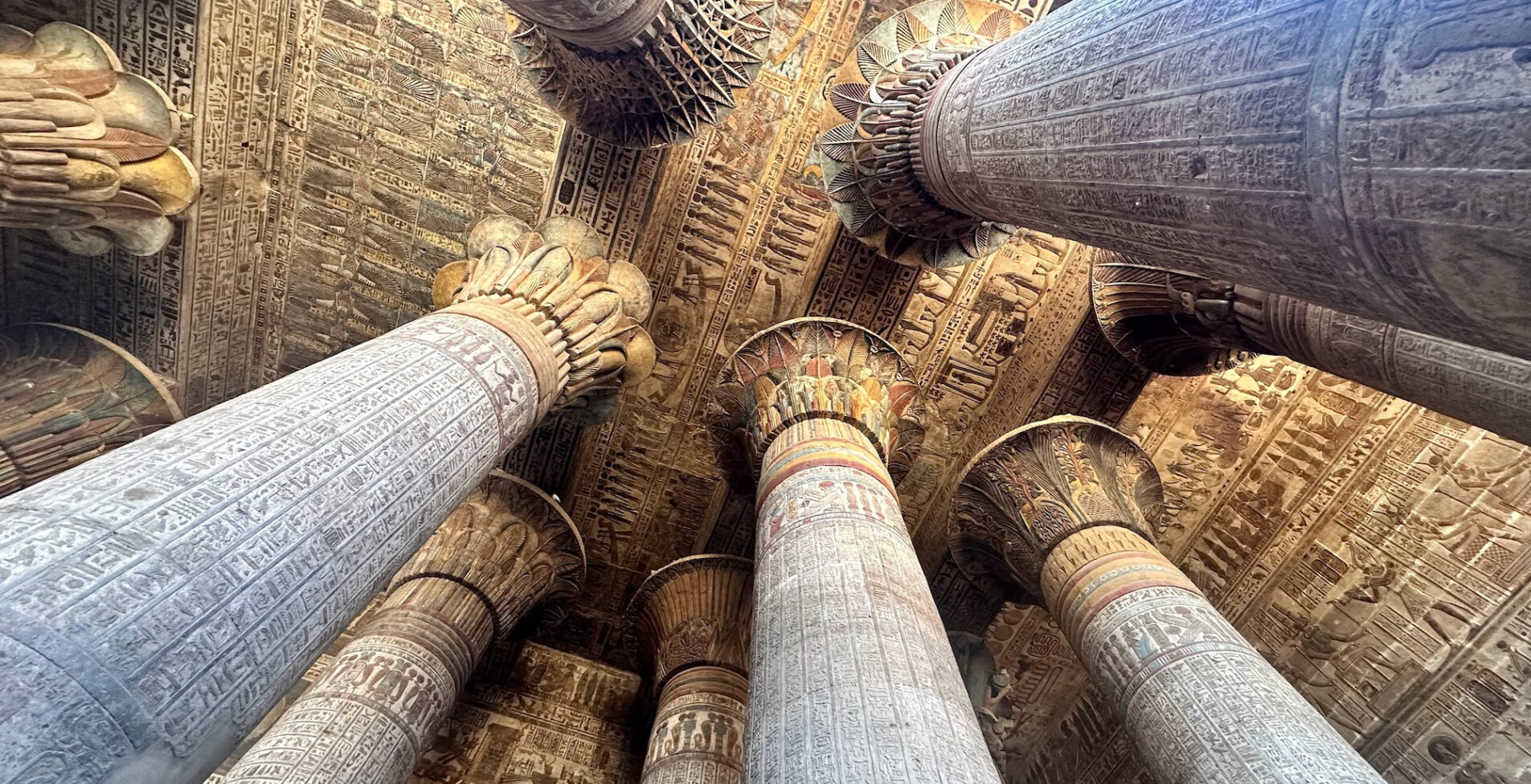
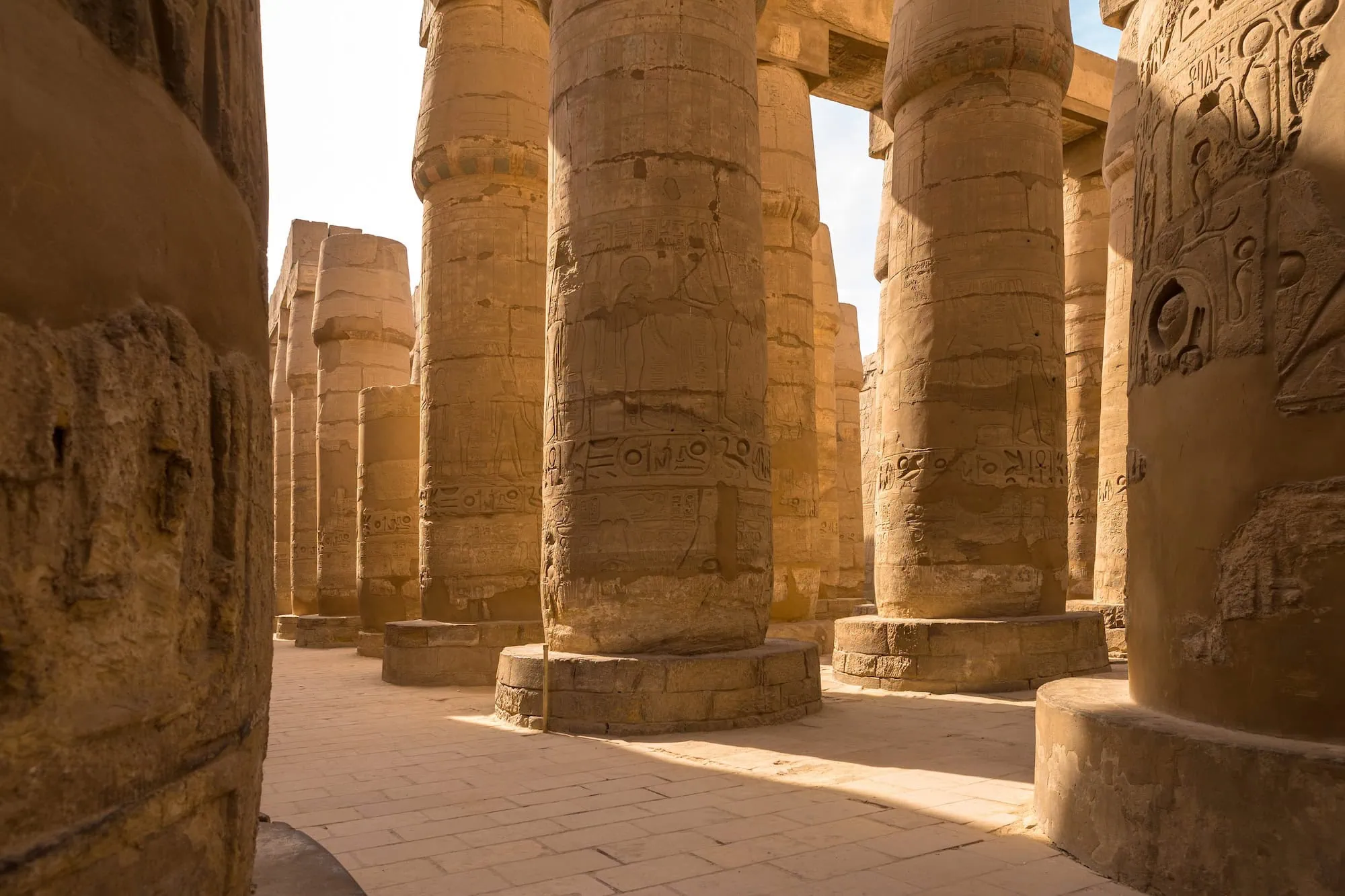
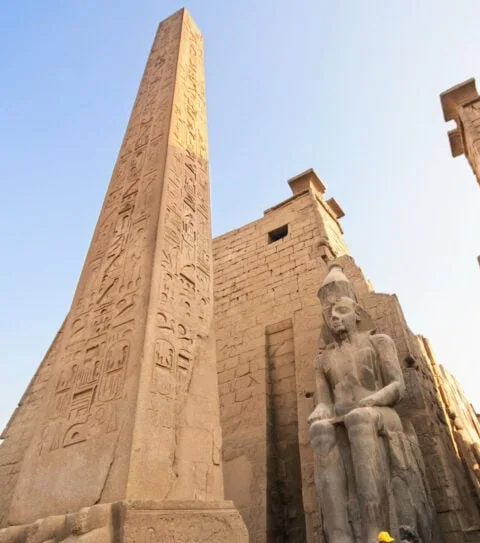
Karnak Temple represents the largest religious complex ever built, spanning over 200 hectares (494 acres). Construction continued for over 2,000 years, with successive pharaohs adding temples, chapels, and monuments. The Great Hypostyle Hall contains 134 massive columns, with the central twelve reaching 21 metres (69 feet) and the outer 122 columns standing 12 metres (39 feet). Evening sound and light shows illuminate the temple’s grandeur while narrating ancient Egyptian history.
Museums and Archaeological Treasures
Cairo is home to the world’s most significant collection of ancient Egyptian antiquities, presenting over 5,000 years of civilization through world-class museums and curated exhibitions.
Grand Egyptian Museum (GEM)
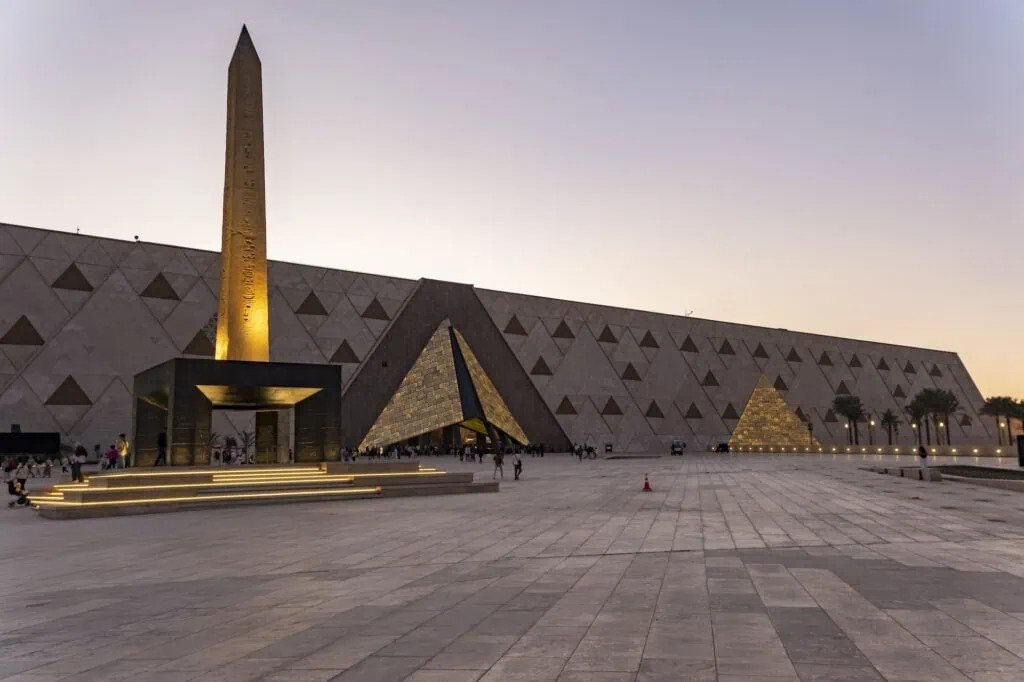
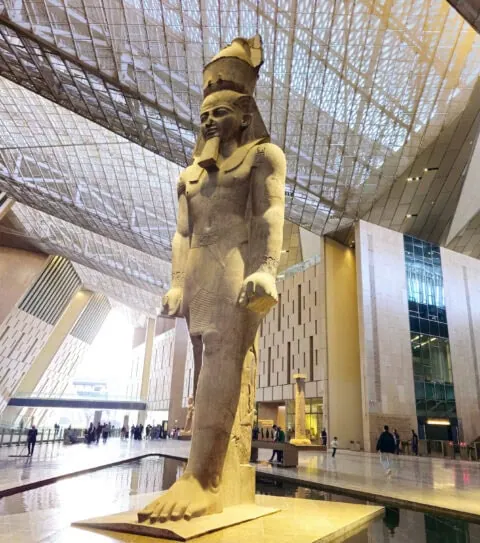
Located near the Giza Pyramids, the Grand Egyptian Museum is the largest archaeological museum in the world dedicated to a single civilization. The museum displays more than 100,000 artifacts, offering a comprehensive narrative of ancient Egypt from prehistory to the Greco-Roman period.
A major highlight is the complete collection of Tutankhamun’s burial treasure, exhibited together for the first time. Visitors can view his iconic golden mask, nested coffins, ceremonial chariots, jewelry, and personal belongings within purpose-built galleries designed to provide historical context and immersive storytelling.
The museum also features state-of-the-art conservation laboratories visible to visitors. Here, specialists restore and preserve artifacts using advanced scientific methods combined with traditional craftsmanship. Interactive exhibits explain key aspects of ancient Egyptian society, including mummification techniques, pyramid engineering, religious beliefs, and daily life along the Nile.
National Museum of Egyptian Civilization (NMEC)
The National Museum of Egyptian Civilization offers a chronological overview of Egypt’s history from prehistoric times to the modern era. Unlike other museums focused solely on the Pharaonic period, NMEC presents a holistic narrative that includes Pharaonic, Greco-Roman, Coptic, Islamic, and contemporary heritage.
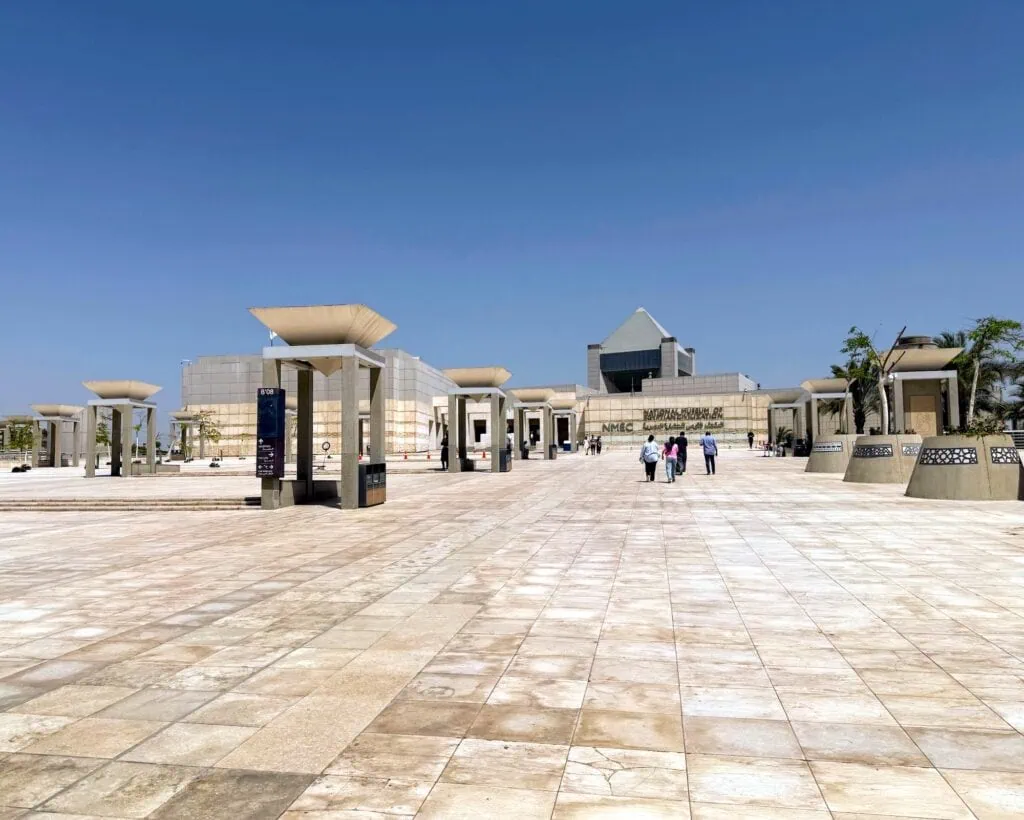
Its most renowned feature is the Royal Mummies Hall, where 22 royal mummies are displayed in dedicated atmospheric galleries. Visitors can encounter the carefully preserved remains of Egypt’s most powerful rulers, including Ramesses II, Hatshepsut, Seti I, and Thutmose III. The mummies were transferred from the Egyptian Museum at Tahrir Square in the 2021 Pharaohs’ Golden Parade. The display combines atmospheric presentation with detailed historical interpretation, providing insight into leadership, religion, and burial traditions across dynasties.
Egyptian Museum in Tahrir Square
The historic Egyptian Museum in downtown Cairo remains an iconic institution. Its two floors house extensive collections of sarcophagi, statues, papyrus scrolls, jewelry, and religious artifacts.
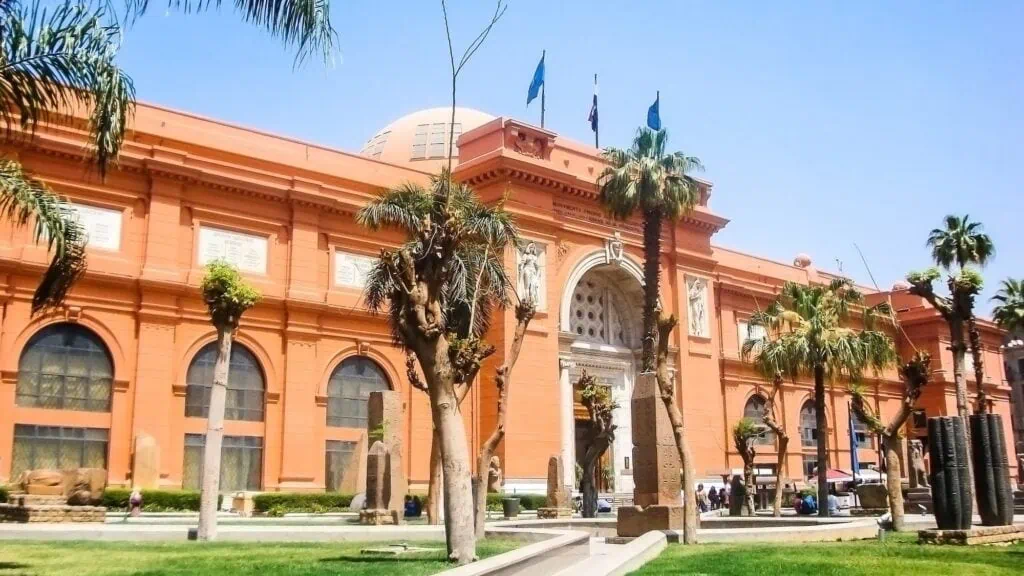
While parts of its collection have been relocated to newer museums, Tahrir continues to display important masterpieces and offers visitors a classic museum experience in a landmark building that has served as the heart of Egyptian archaeology for over a century.
Authentic Cultural Experiences
Egyptian culture extends far beyond ancient monuments. Contemporary Egypt pulses with vibrant traditions, delicious cuisine, and warm hospitality that welcomes visitors into local communities.
Khan el-Khalili bazaar in Islamic Cairo buzzes with activity from early morning until late evening. Narrow alleys wind past shops selling spices, textiles, jewelry, and handicrafts. The aroma of freshly ground coffee and burning incense creates an intoxicating atmosphere. Skilled artisans work copper, create intricate woodcarvings, and weave carpets using techniques passed down through generations.

Traditional coffeehouses serve strong Turkish coffee and mint tea while patrons play backgammon and discuss local events. These gathering places offer authentic glimpses into Egyptian social life. Street food vendors prepare ful medames (fava beans), koshari (mixed rice and lentils), and fresh flatbread that locals consider essential comfort foods.
Nubian villages near Aswan preserve distinct cultural traditions. Colorful houses line the Nile banks, decorated with geometric patterns and symbols. Nubian families often welcome visitors to share meals and learn about their heritage, which predates Arab settlement in Egypt. Traditional music features unique instruments and rhythms that differ markedly from other Egyptian regions.
Desert Adventures
The Western Desert stretches endlessly beyond the Nile Valley, hiding oases that have sustained travelers for millennia. Siwa Oasis, near the Libyan border, offers natural hot springs, salt lakes, and ancient oracle temples. Bedouin guides lead camel treks across sand dunes that shift constantly under desert winds.
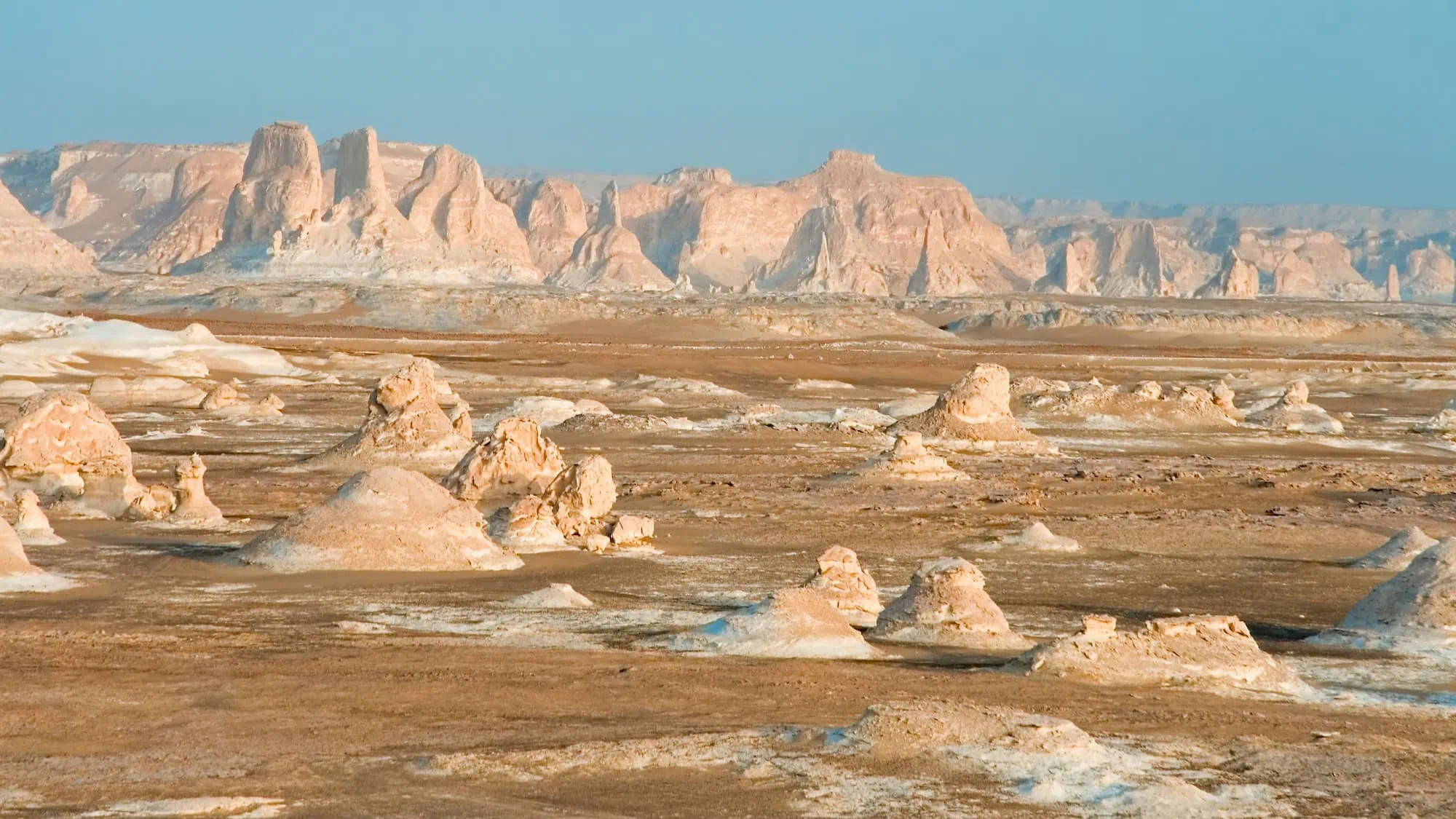
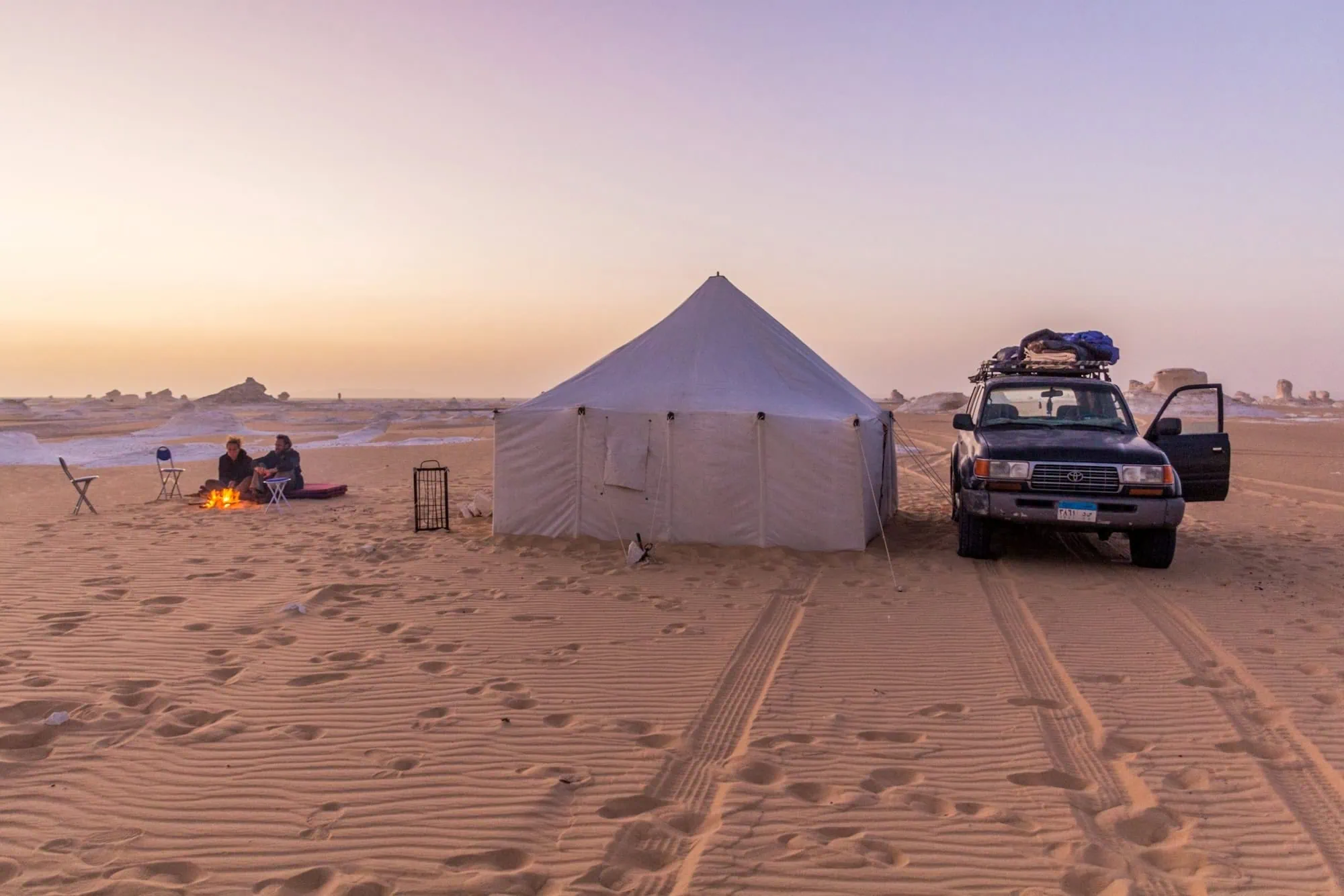
White Desert National Park features surreal limestone formations carved by wind erosion. These natural sculptures create alien landscapes perfect for overnight camping under star-filled skies. The silence and isolation provide profound contrast to Egypt’s bustling cities.
Red Sea Coastal Getaways
Egypt’s Red Sea coastline offers world-class diving and beach relaxation. Sharm El Sheikh and Hurghada feature coral reefs teeming with tropical fish, sea turtles, and dolphins. Water temperatures remain comfortable year-round, averaging 22-28°C (72-82°F).
Dahab and Underwater Exploration
Dahab attracts divers with the famous Blue Hole, a submarine sinkhole approximately 100 metres deep with a 26-metre underwater archway known as “the Arch” leading out to the open sea at 56 metres depth. The site offers dramatic underwater topography but is also notorious as one of the world’s most dangerous dive sites, with strict depth limits enforced for safety.
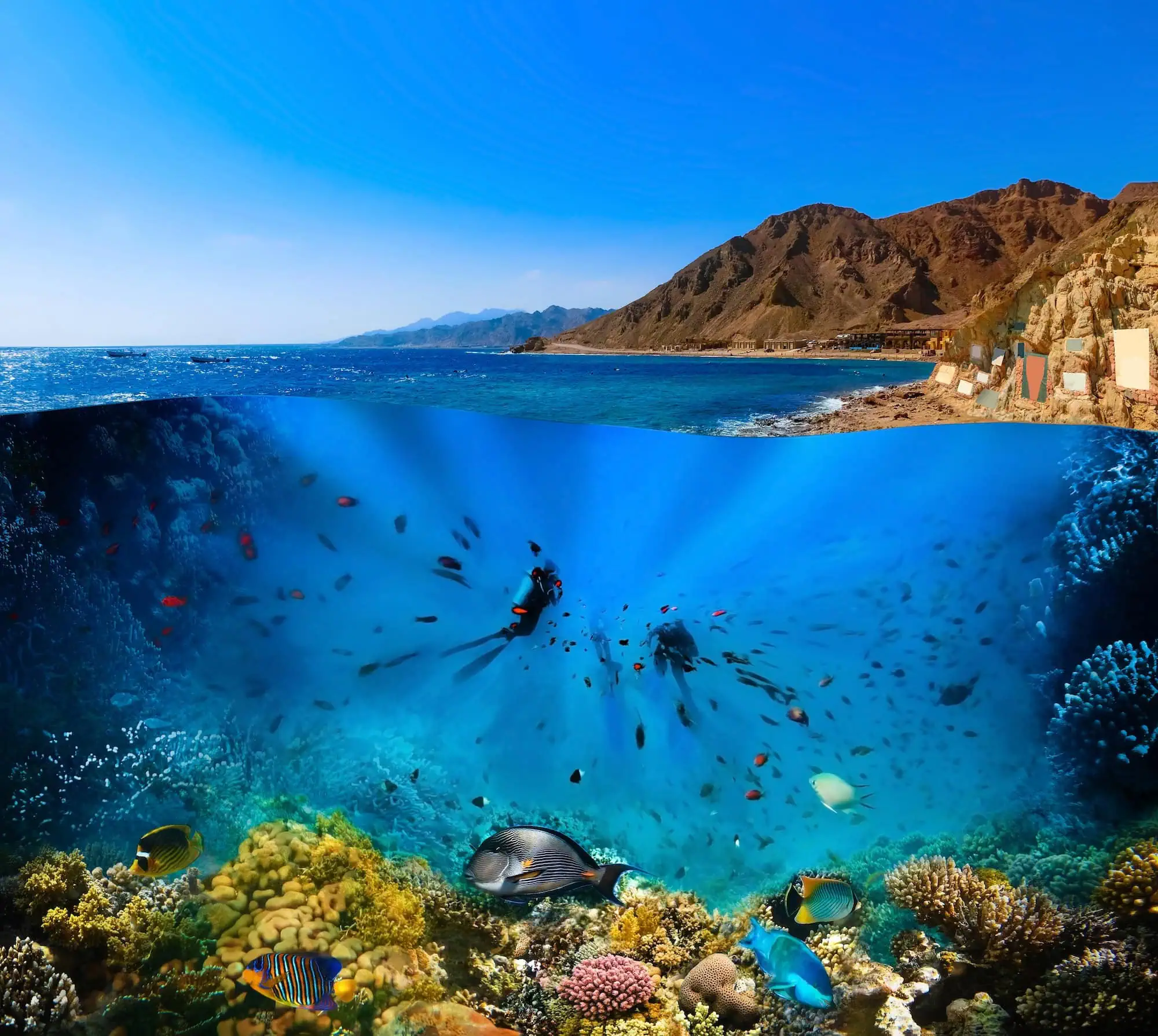
Professional dive centers offer certification courses and guided excursions to pristine reefs. Many sites remain accessible directly from shore, making diving convenient and affordable. The combination of excellent visibility, diverse marine ecosystems, and favorable weather conditions creates ideal underwater exploration circumstances.
Practical Planning and Travel Logistics
Egypt welcomes visitors year-round, though timing affects comfort and crowds. October through April offers ideal sightseeing conditions with daytime temperatures of 20 to 25°C (68 to 77°F). May through September regularly exceeds 35°C (95°F) and approaches 40°C (104°F) at midday in southern regions like Aswan and Abu Simbel, requiring early-morning visits with extended midday breaks.
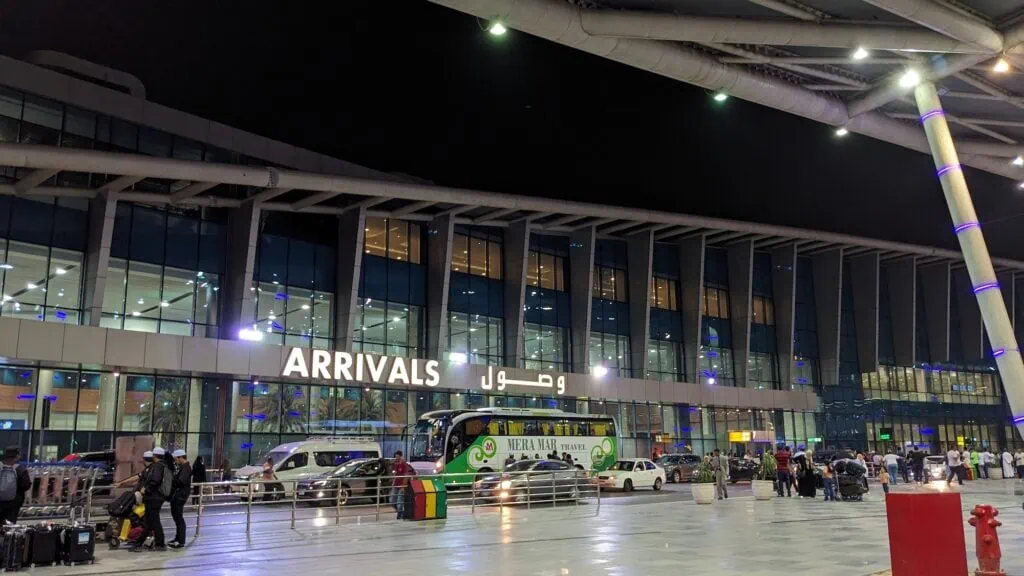
Most international flights arrive at Cairo International Airport, with connections available to domestic destinations. Direct flights operate from major cities in Europe, North America, and Asia. Most international visitors enter Egypt on a tourist visa for $25 USD valid for 30 days, available either online before departure through Egypt’s e-visa system or on arrival at major airports. The e-visa system handles US, UK, EU, Canadian, Australian, and many Latin American passport holders in advance. Travelers from other countries should verify current requirements with their local Egyptian consulate.
We recommend booking accommodations in advance, especially during peak season (December to February). Egypt offers lodging options ranging from luxury Nile cruise ships to budget hostels in Cairo and Alexandria. Many properties provide pickup services from airports and train stations.
The Egyptian pound (EGP) serves as local currency, though U.S. dollars and euros are widely accepted at tourist sites. Credit cards work in hotels and upscale restaurants, but cash remains necessary for markets, street food, and small vendors. ATMs operate throughout major cities and tourist areas.
Transportation Within Egypt
Domestic flights connect Cairo with Luxor, Aswan, and Sharm El Sheikh in under two hours. Egyptian National Railways operates comfortable trains between Cairo, Luxor, and Aswan, with sleeping cars available for overnight journeys. The trip from Cairo to Aswan takes approximately 12 to 14 hours by train; Cairo to Luxor takes 9 to 10 hours.
Private transportation offers flexibility and comfort for sightseeing. Professional drivers navigate traffic efficiently while providing local insights and recommendations. Air-conditioned vehicles prove essential during warmer months, ensuring comfortable travel between widely scattered attractions.
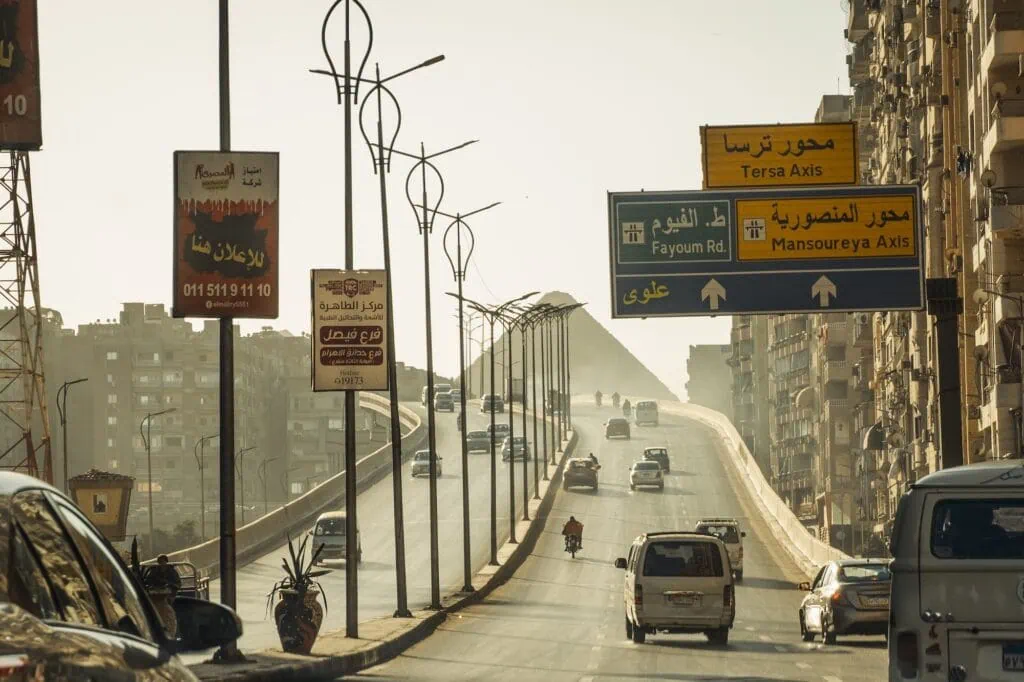
For independent travelers, ride-sharing apps operate in major cities, while taxis remain abundant though requiring negotiation skills. Uber and Careem provide fixed pricing and English-language support that many visitors prefer.
Ready to Experience the Best of Egypt for Yourself?
Reading about the best of Egypt is one thing. Standing before the Pyramids at sunrise, drifting down the Nile on a dahabiya, or wandering the tombs of the Valley of the Kings with an Egyptologist beside you is something else entirely.
Since 1955, Egypt Tours Plus has helped travelers turn Egypt’s greatest sites and its hidden gems into a single, seamless journey. Private Egyptologist guides, personal drivers, and itineraries built entirely around what you want to see. Awarded TripAdvisor Travelers’ Choice every year from 2020 through 2026.
100% customizable, no group crowds, and your dedicated Travel Concierge sends a tailored quote within 1 to 12 hours.
Frequently Asked Questions
October through April offers Egypt’s ideal sightseeing conditions with daytime temperatures of 20 to 25°C (68 to 77°F). December and January are peak season with the most comfortable weather but also the largest crowds and highest prices. Late October through early December and February through April are sweet-spot months with excellent weather and slightly thinner crowds. May through September regularly exceeds 35°C (95°F) and approaches 40°C (104°F) at midday in southern regions like Aswan and Abu Simbel, requiring early-morning visits with extended midday breaks.
Seven to ten days covers Egypt’s major highlights comfortably. A classic 8-day itinerary includes 2 to 3 days in Cairo (Pyramids, Sphinx, Grand Egyptian Museum, Khan El-Khalili), a 4-day Nile cruise from Luxor to Aswan with Abu Simbel, and time for arrival and departure logistics. Travelers wanting depth at every site or adding the Red Sea coast typically book 12 to 14 days, while 5-day short breaks focus on Cairo plus a quick Luxor flight. Most Egypt Tours Plus travelers find 8 to 10 days the sweet spot for a first visit, with 14+ days for those including multi-country routes through Jordan, Greece, or Morocco.
Egypt maintains strong tourism security infrastructure, with dedicated Tourist Police units stationed at all major attractions, hotels, and transportation hubs. Tourist areas in Cairo, Luxor, Aswan, the Red Sea coast, and the Pyramids see consistent professional security presence. Egypt Tours Plus has been arranging private journeys here since 1955 and provides 24/7 in-country support throughout your trip. Standard travel precautions apply — keep copies of your passport, secure valuables in hotel safes, drink bottled water, and use registered taxis or your provided driver rather than unmarked vehicles. The Foreign and Commonwealth Office and US State Department periodically update specific advisories worth checking before travel.
Modest clothing covering shoulders and knees is respectful at temples and mosques and comfortable in Egypt’s climate. Lightweight breathable cotton or linen works well year-round. Long trousers or skirts that cover knees, and short-sleeved or long-sleeved tops, are recommended for both men and women. Women visiting mosques (such as the Mosque of Muhammad Ali at the Citadel) need a headscarf and longer sleeves. Comfortable walking shoes are essential — temple floors are uneven ancient stone, and pyramid plateau visits involve significant walking on sand. A wide-brimmed hat, sunglasses, and high-SPF sunscreen are non-negotiable from May through September.
No vaccines are mandatory for entry into Egypt for travelers from most countries. Routine immunizations should be current, including measles-mumps-rubella, diphtheria-tetanus-pertussis, and seasonal flu. The CDC and WHO recommend Hepatitis A and typhoid vaccinations for most travelers, and Hepatitis B for stays of one month or longer. A yellow fever vaccination certificate is required only for travelers arriving from countries with active yellow fever transmission. Consult your healthcare provider 4 to 6 weeks before departure for personalized recommendations based on your itinerary and medical history.
Photography inside pyramid interiors requires a separate ticket purchased at the entrance gate (typically $10 to $15 USD on top of the interior access fee). Standard hand-held camera and smartphone photography is permitted with this ticket. Flash photography is restricted in some chambers to protect ancient pigments. Professional equipment, including tripods, additional lighting, and drones, requires advance permits arranged through Egypt’s Ministry of Tourism and Antiquities. Inside the Great Pyramid’s Grand Gallery and King’s Chamber, photography is allowed but conditions are challenging due to low light.
Your Travel Concierge can arrange the appropriate permits if photography is central to your visit.
Standard Nile cruise packages include accommodation in your selected cabin category, all meals (typically full board with buffet plus à la carte options), guided temple visits at Kom Ombo, Edfu, and either Luxor or Aswan temples, transportation between cruise stops, and onboard entertainment. Shore excursions during Luxury Nile Cruise sailings are small group experiences shared with fellow ship passengers. Dahabiya sailings (8 to 16 passengers) feel essentially private. Items typically not included: drinks at meals (bottled water, wine, beer, and spirits are extra), Optional add-ons like hot air balloon rides over Luxor, and tipping for cruise staff and guides. Egypt Tours Plus packages all logistics and provides your private Egyptologist guide on every land-touring day.
Egypt accommodates a wide range of budgets. Backpacker-style independent travel costs roughly $40 to $70 USD per day with hostels, local food, and public transport. Mid-range private tours with 4 or 5-star hotels and Nile cruises run $200 to $400 USD per person per day all-inclusive. Premium and luxury Egypt Tours Plus itineraries with 5-star properties, dahabiya sailings, and full private logistics run $400 to $800+ USD per person per day. Single-occupancy supplements apply to solo travelers, and high-season rates (December and January) typically run 15 to 25 percent above off-peak. Your Travel Concierge sends a tailored quote within 1 to 12 hours based on your specific dates and preferences.
Tipping (known locally as baksheesh) is customary throughout Egypt’s service industries. Typical amounts include 10 to 15 percent at restaurants (check whether service is already included), $10 to $15 USD per day for guides, $5 to $10 USD per day for drivers, $1 to $2 USD per bag for hotel porters, $3 to $5 USD per day for hotel housekeeping, and small amounts ($1 to $2 USD) for restroom attendants and small services. Egyptian pounds and US dollars are both accepted. For Nile cruises, a single combined tip of $10 to $15 USD per passenger per day is typically distributed among the crew at the end of the journey. Your Travel Concierge provides a detailed tipping guide as part of your final itinerary.
Cairo and Luxor offer fundamentally different experiences and are best understood as complementary, not competing. Cairo is the modern Egyptian capital with 22 million residents and is home to the Pyramids of Giza, the Sphinx, the Grand Egyptian Museum, the Egyptian Museum at Tahrir, the National Museum of Egyptian Civilization, the Citadel of Saladin, and Khan El-Khalili bazaar.
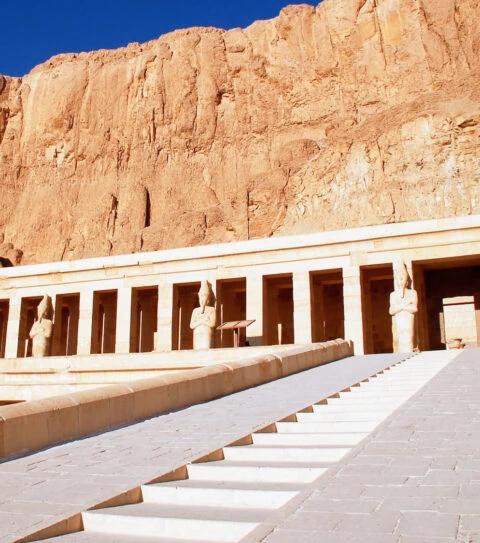
Luxor is a smaller riverside city built on the ancient Egyptian capital of Thebes, focused entirely on the New Kingdom (1550 to 1077 BC) with the Karnak and Luxor temples on the East Bank and the Valley of the Kings, Valley of the Queens, and Hatshepsut’s temple on the West Bank. Most Egypt itineraries include both, typically with 2 to 3 days in Cairo bookending a Nile cruise that starts or ends in Luxor.
Egyptian cuisine is naturally vegetarian-friendly. Many of the country’s most iconic dishes are plant-based, including ful medames (slow-cooked fava beans, often served for breakfast), koshari (a layered dish of rice, lentils, pasta, chickpeas, and tomato sauce — Egypt’s national comfort food), molokhia (a leafy green soup), tahini-based mezze, baba ganoush, hummus, fresh flatbread, and grilled vegetables.
Hotels and Nile cruises offer dedicated vegetarian menus and accommodate vegan, gluten-free, and other dietary preferences with advance notice. Strictly kosher dining is available at select properties in Cairo with advance arrangement. Let your Travel Concierge know your dietary requirements during the planning conversation.
For peak-season travel (October through April, especially December and January), we recommend starting the planning conversation 4 to 6 months ahead to secure preferred 5-star hotels, dahabiya cabins, and Egyptologist guides. Off-peak summer trips can be planned 2 to 3 months out. For Christmas, New Year, and Easter periods, 6 months ahead is essential. Once you contact us, your dedicated Travel Concierge sends your first-draft itinerary back within 1 to 12 hours, and most travelers go through 2 to 4 rounds of revisions before finalizing.
Design Your Custom Tour
Explore Egypt your way by selecting only the attractions you want to visit