

Cairo’s Egyptian Museum: Essential Highlights
Few museums in the world offer such an intimate encounter with ancient civilizations.

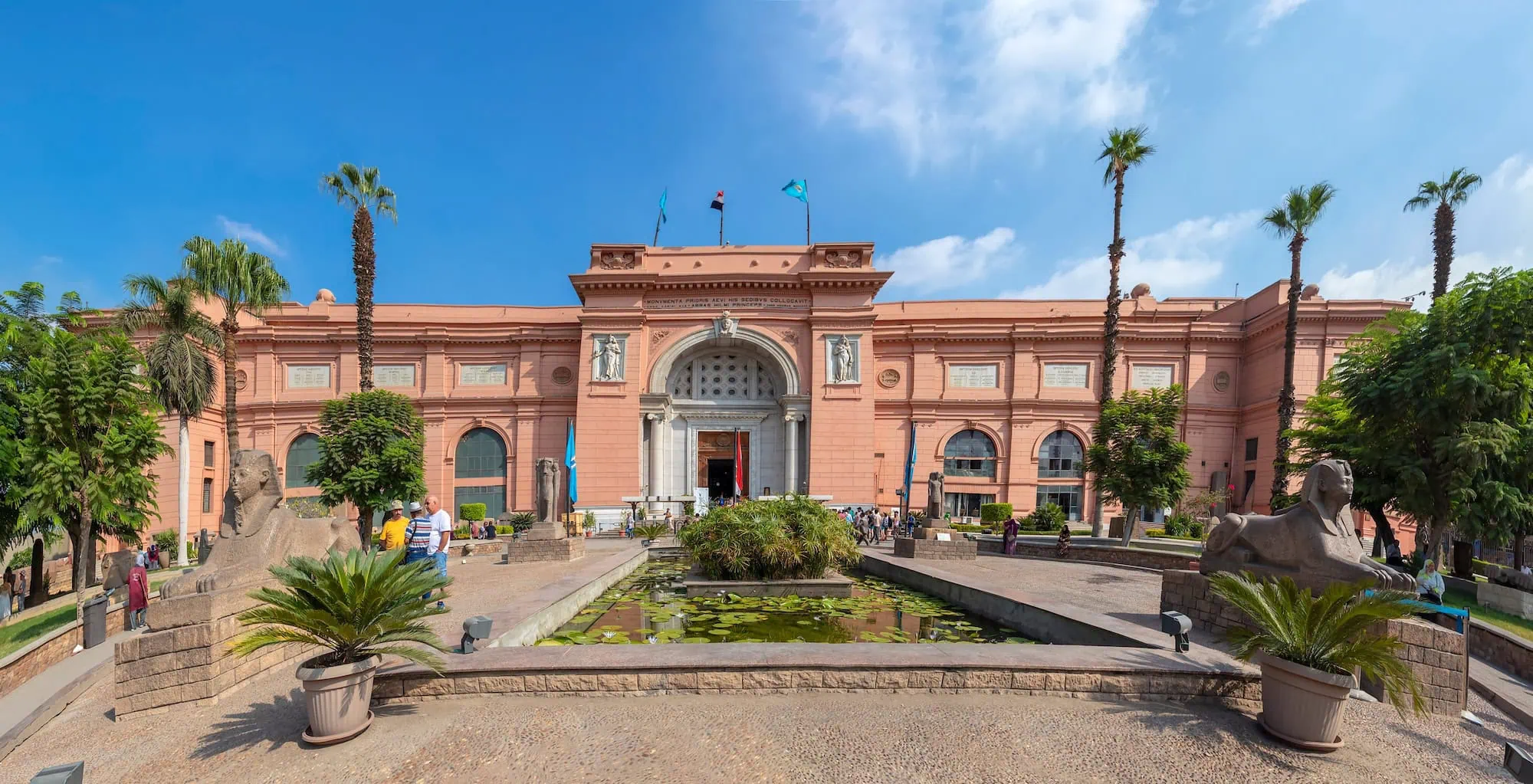
The Egyptian Museum in Cairo, located near Tahrir Square, remains one of the world’s most important repositories of ancient Egyptian antiquities. Opened in 1902, it has long housed over 120,000 artifacts spanning more than 5,000 years of history. While many headline collections have been relocated in recent years, the museum continues to offer an unparalleled, densely curated experience that brings visitors face to face with Egypt’s archaeological legacy.
We’ve guided thousands of travelers through these historic halls. Despite the opening of newer museums, the Egyptian Museum retains a unique atmosphere—raw, authentic, and deeply evocative of the early days of Egyptology.
Table of Contents
Planning Your Egyptian Museum Visit
The museum is open daily from 9:00 am (09:00). Visiting early in the morning is highly recommended, as crowds begin to build from late morning and are at their busiest between 11:00 am (11:00) and 2:00 pm (14:00).
Best Time to Visit
Early morning visits between 9:00 am (09:00) and 10:30 am (10:30) offer several advantages. The lighting is optimal for photography, crowds remain manageable, and the cooler temperatures make exploring more comfortable. Afternoon visits after 3:00 pm (15:00) also work well, as tour groups begin departing.
Ticket Options and Pricing
Standard admission provides access to the main galleries and costs approximately 200 EGP for international visitors. Reduced rates are available for students with valid ID.
Important update:
The Royal Mummies, once housed here, have been permanently transferred to the National Museum of Egyptian Civilization (NMEC) in Fustat. As a result, the Royal Mummies Hall at the Egyptian Museum is no longer in operation.
Photography without flash is generally permitted in many areas, though rules may vary by gallery. Professional equipment may require special permission.
Treasures That Define Egyptian History
The Egyptian Museum’s strength today lies in the breadth and density of its collection rather than blockbuster displays.
While the majority of Tutankhamun’s treasures—including the golden mask—have been transferred to the Grand Egyptian Museum, the Egyptian Museum still holds important objects from his tomb, along with thousands of masterpieces from other dynasties.
Highlights include:
- The Narmer Palette, documenting the unification of Upper and Lower Egypt
- Exceptional Middle Kingdom statues and reliefs
- Vast collections of coffins, stelae, jewelry, papyri, and daily-life objects
- Masterworks from the Old and New Kingdoms that are not duplicated elsewhere
The museum’s galleries showcase Egypt’s artistic and religious evolution in a way that feels encyclopedic and immersive.
Navigating the Museum’s Layout
The ground floor is organized primarily by chronology and material, featuring large stone statues, sarcophagi, and architectural fragments from the Old Kingdom through the Greco-Roman period.
The upper floor focuses on thematic and tomb-based collections, including wooden models, coffins, reliefs, and smaller artifacts that offer detailed insight into daily life, burial customs, and religious practices.
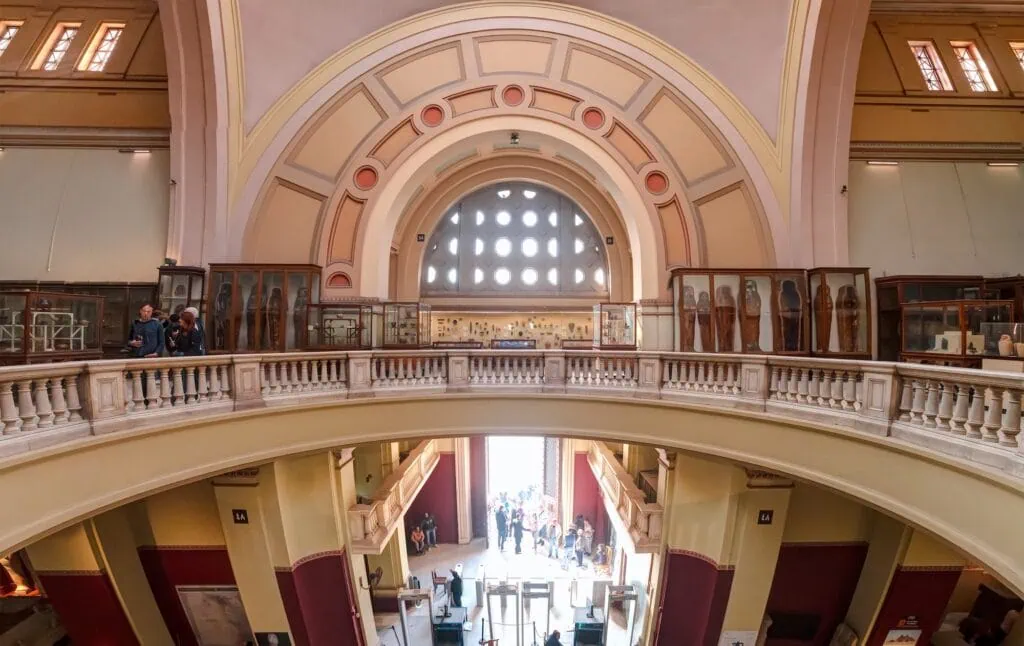
Unlike the highly curated layout of GEM, the Egyptian Museum rewards visitors who enjoy discovery and depth over spectacle.
Archaeological Research and Interpretation
Although many objects have been relocated, the Egyptian Museum remains an active research hub. Many artifacts on display continue to be studied using modern technologies such as CT scanning and material analysis.
Findings from past research—particularly on mummification techniques, medical practices, and craftsmanship—are reflected throughout the collection. The museum also plays an ongoing role in conservation training and academic collaboration.
Cultural Significance
The Egyptian Museum is inseparable from the history of modern Egyptology. It represents the era when many of Egypt’s greatest discoveries were first studied, catalogued, and presented to the world.
For scholars and culturally curious travelers alike, the museum offers something increasingly rare: proximity to original artifacts displayed with minimal mediation, preserving the sense of exploration that defined early archaeological research.
Visitor Experience and Practical Tips
Modern visitors benefit from enhanced accessibility and educational resources. Audio guides are available in multiple languages, providing detailed explanations of major artifacts and their historical significance. We often arrange private guided tours that offer deeper insights than self-guided visits.
Security measures protect both visitors and artifacts. Bag checks are standard, and large bags must be stored in designated areas. Food and drinks are not permitted in gallery spaces, though a café operates near the entrance.
Climate control systems maintain optimal conditions for artifact preservation. This means gallery temperatures remain cool year-round, so bringing light layers ensures comfort during extended visits.
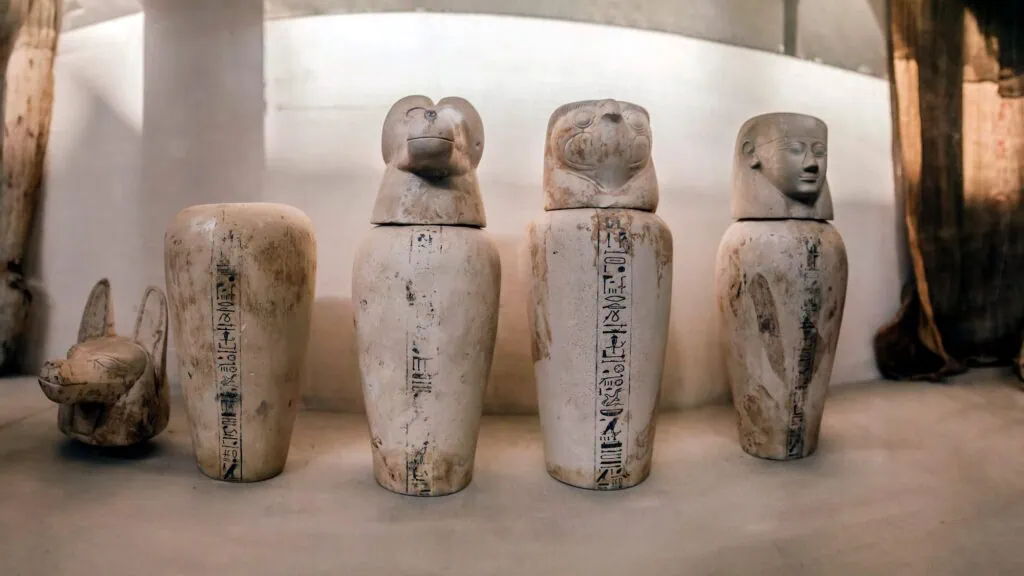
The museum shop offers high-quality reproductions and scholarly publications. These authentic replicas make excellent souvenirs while supporting the museum’s conservation efforts.
Accessibility features include ramps and elevators for visitors with mobility challenges. Staff members are trained to assist visitors with special needs, and wheelchairs are available upon request.
The Museum’s Role in Modern Egypt
Today’s Egyptian Museum represents more than historical preservation. It stands as a symbol of national identity and cultural continuity, connecting modern Egyptians with their ancient heritage. Educational programs introduce students to the achievements of their ancestors while encouraging future careers in archaeology, conservation, and museum studies.
Conservation efforts combine traditional craftsmanship with modern technology. Advanced climate-monitoring systems regulate humidity and temperature to protect fragile artifacts, while specialized lighting ensures optimal visibility without compromising preservation.
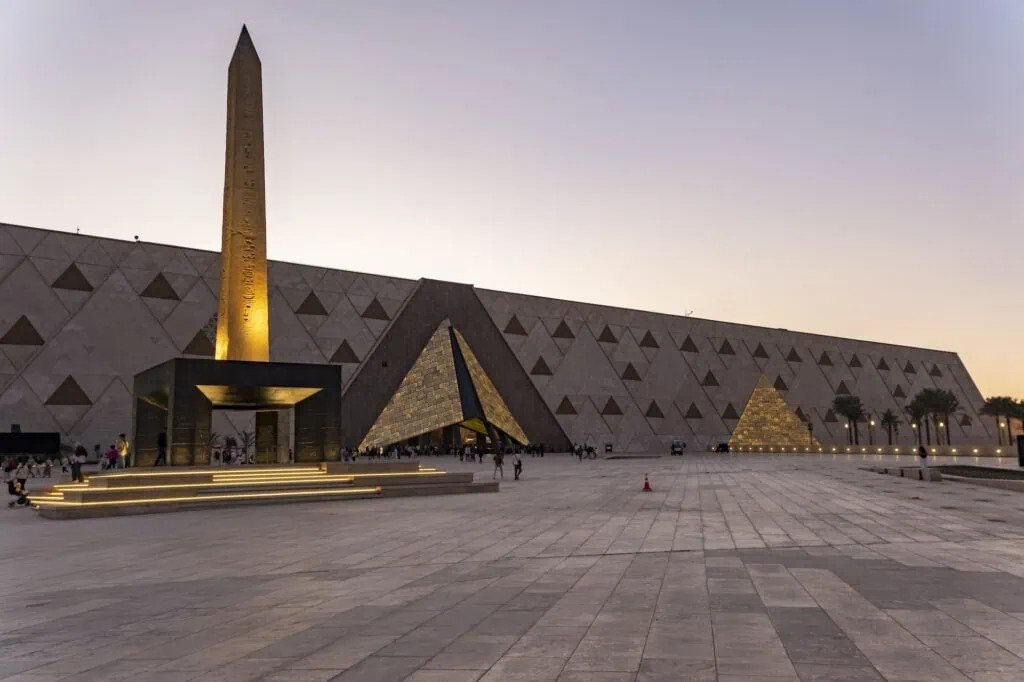
The Grand Egyptian Museum, now open near the Giza pyramids, has become Egypt’s primary museum for monumental collections, including many artifacts formerly displayed at the Egyptian Museum. Despite this transition, the original museum in Tahrir Square continues to operate with carefully curated exhibitions that highlight key discoveries and provide historical depth unavailable elsewhere.
Ongoing research partnerships with international institutions bring global expertise to conservation and scholarship. These collaborations ensure that preservation techniques meet international standards while remaining rooted in Egypt’s cultural and scientific traditions.
Step Into The Treasures Of Cairo’s Egyptian Museum
Cairo’s Egyptian Museum is where the story of ancient Egypt truly comes to life—home to legendary artifacts, royal treasures, and moments that define a civilization. With EgyptToursPlus, we seamlessly integrate this iconic experience into a private journey that connects Egypt’s greatest highlights into one cohesive, unforgettable itinerary.
You choose your travel dates, your pace, and the experiences that shape your route. From world-famous landmarks to hidden gems and refined comfort along the way, we tailor every detail around your preferences—ensuring a smooth, expertly planned, and deeply personal travel experience.
Frequently Asked Questions
Most visitors spend 3 to 4 hours exploring Cairo’s Egyptian Museum, although travelers deeply interested in ancient Egyptian history can easily spend an entire day inside the galleries. The museum contains more than 120,000 artifacts spanning from the Predynastic Period to the Greco-Roman era, including treasures from Tutankhamun’s tomb and royal statuary. Because the building’s layout is dense and only partially chronological, guided visits often help visitors prioritize highlights efficiently. Arriving early provides a calmer experience before large tour groups arrive.
Photography is permitted in most galleries of Cairo’s Egyptian Museum provided visitors do not use flash, which can damage sensitive pigments, textiles, and papyrus artifacts over time. Certain temporary exhibitions and high-value collections may prohibit photography entirely, especially areas containing fragile royal objects or loaned pieces. Professional cameras, tripods, and video equipment may require separate permissions or fees depending on current museum policy. Visitors should always watch for posted restrictions because photography rules occasionally change between galleries.
Cairo’s Egyptian Museum in Tahrir Square is the historic 1902 museum that currently houses many of Egypt’s best-known antiquities, while the Grand Egyptian Museum near Giza is the massive new facility designed to become Egypt’s primary archaeological museum. The Grand Egyptian Museum sits about 2 km from the Pyramids of Giza and offers modern exhibition technology and larger display spaces. Some major collections, including parts of Tutankhamun’s treasures, are gradually transferring between the two institutions as the transition continues.
Yes, audio guides at Cairo’s Egyptian Museum are typically available in English, Arabic, French, German, Spanish, and several additional languages for an added fee. These guides help visitors navigate the museum’s vast collection of more than 120,000 artifacts without missing key historical context about dynasties, burial customs, and royal collections. Audio commentary is especially useful because many galleries contain densely displayed objects with limited explanatory signage. Travelers interested in deeper interpretation often combine audio guides with licensed Egyptologist-led tours.
Bring comfortable walking shoes, valid identification, a refillable water bottle for outdoor areas, and a light layer because many galleries inside Cairo’s Egyptian Museum are strongly air-conditioned. Visitors planning to claim student discounts usually need an official university ID or ISIC card at the ticket counter. Since the museum complex contains multiple floors and extensive exhibit halls, comfortable footwear becomes important during visits lasting 3 hours or longer. A small notebook or charged phone is also useful because photography restrictions vary between galleries.
Yes, Cairo’s Egyptian Museum provides wheelchair access, elevators, and staff assistance for visitors with mobility challenges, although the historic 1902 building presents some limitations compared with newer museums. Main galleries and entrances are accessible, but certain older staircases and crowded exhibition rooms may require additional support during busy hours. Visitors traveling with wheelchairs or mobility equipment should arrive early because morning periods generally provide easier movement through galleries. Organized tours can also coordinate assistance in advance for smoother entry and navigation.
Early morning visits between 9:00 am and 10:30 am or late afternoon visits after 3:00 pm usually provide the quietest experience inside Cairo’s Egyptian Museum. Midday hours often become crowded with school groups, tour buses, and domestic visitors, especially during winter tourism season from October through April. Visiting during calmer periods improves visibility around famous artifacts like Tutankhamun’s treasures and reduces waiting times at ticket and security checkpoints. Weekdays are typically less crowded than Fridays, weekends, and public holidays.
Advance booking is not usually required for general admission to Cairo’s Egyptian Museum, but reserving tickets ahead of time is recommended during peak travel months and Egyptian national holidays. Online booking can reduce waiting times at entrance queues, particularly between October and April when Cairo receives its highest volume of international visitors. Travelers planning specialized guided tours or combined museum itineraries often benefit from advance reservations because Egyptologist availability can become limited during busy periods. Morning entry slots are usually the least congested.
Yes, Cairo’s Egyptian Museum includes a café near the entrance serving light meals, coffee, bottled drinks, and snacks, although food and beverages are prohibited inside exhibition galleries. Most visitors use the café for short breaks during longer museum visits lasting 3 hours or more because the collection can be physically demanding to explore continuously. Additional restaurants and fast-casual dining options are available within walking distance around Tahrir Square and downtown Cairo. Carrying small snacks inside galleries is generally not permitted.
Cairo’s Egyptian Museum is best known for Tutankhamun’s golden funerary mask, the Narmer Palette, royal mummies, colossal statues from the New Kingdom, and exceptionally preserved predynastic artifacts dating back more than 5,000 years. Tutankhamun’s treasures alone originally filled multiple galleries and remain among the most famous archaeological discoveries ever made following Howard Carter’s 1922 excavation. The museum also contains priceless papyri, jewelry, coffins, and statues spanning nearly every major Egyptian dynasty. Guided tours help visitors prioritize these highlights efficiently within limited time.
Yes, private group tours of Cairo’s Egyptian Museum can be arranged with licensed Egyptologists who provide detailed historical interpretation tailored to specific interests, age groups, and available time. Egypt Tours Plus regularly organizes customized museum experiences for families, educational groups, and travelers focusing on subjects such as Tutankhamun, royal mummies, or ancient Egyptian religion. Private tours also streamline navigation through the museum’s dense layout and help visitors avoid missing major artifacts. Booking several days ahead is recommended during high tourism season.
Design Your Custom Tour
Explore Egypt your way by selecting only the attractions you want to visit