

Gayer Anderson Museum – The Art Museum in Sayyida Zeinab, Cairo
Few places capture the soul of medieval Islamic Cairo quite like this hidden gem.
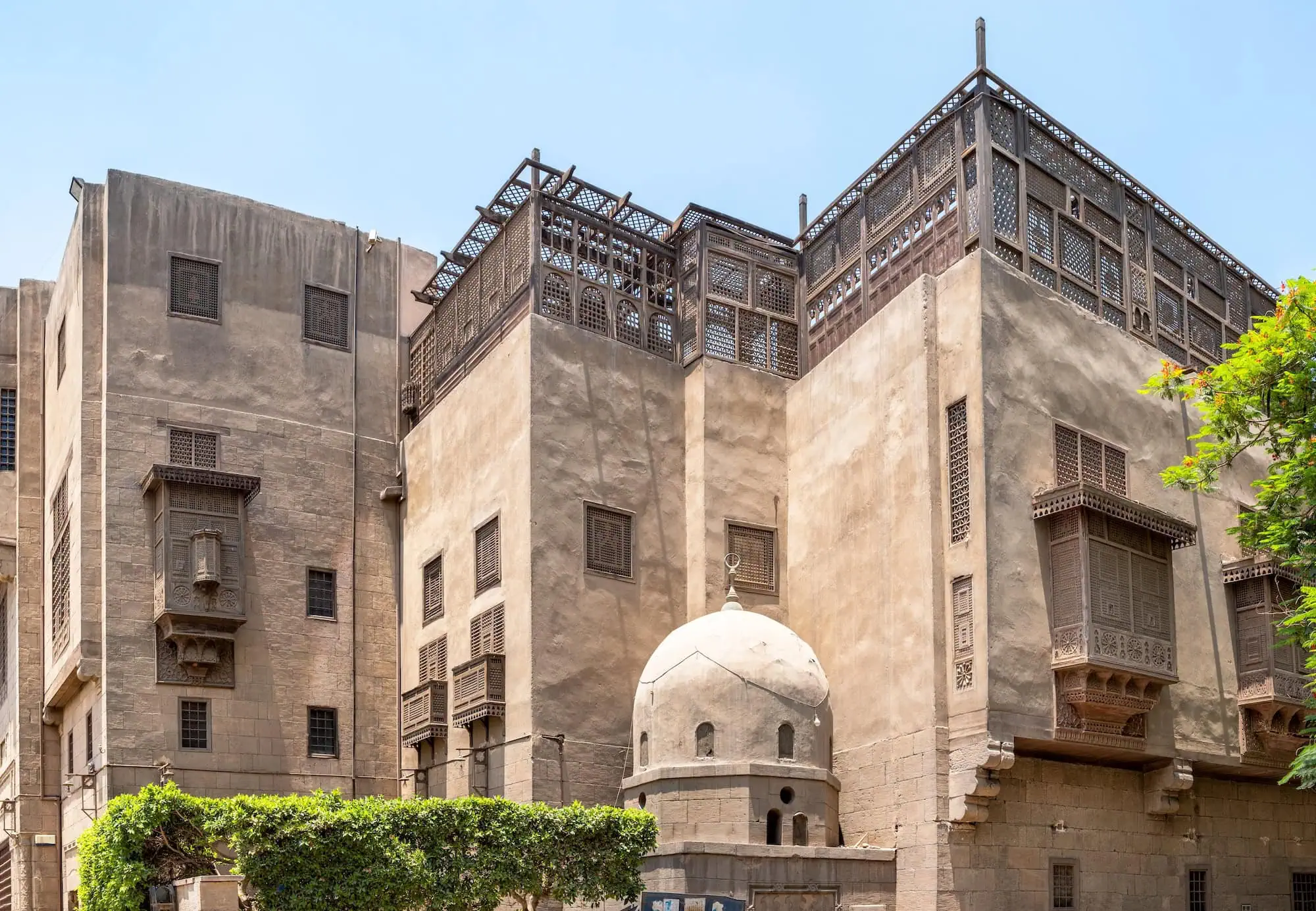
The Gayer-Anderson Museum stands as one of Egypt’s most beautifully preserved examples of 17th-century domestic architecture, offering visitors an intimate glimpse into the sophisticated world of Ottoman-era Cairo. Built around 1631 during the Mamluk period, this remarkable complex consists of two interconnected houses that have been meticulously restored to showcase the finest traditions of Islamic interior design and craftsmanship. Located adjacent to the magnificent Ibn Tulun Mosque in the historic Sayyida Zeinab neighborhood, the museum provides a rare opportunity to step inside an authentic medieval Cairo residence and experience the elegant lifestyle of Egypt’s aristocratic past.
Our decades of expertise guiding travelers through Egypt’s most treasured sites has shown us that the Gayer-Anderson Museum consistently ranks among our guests’ most memorable experiences in Cairo, combining architectural beauty with fascinating stories that bring Egypt’s rich cultural heritage to life.
Table of Contents
The Remarkable History Behind Two Connected Houses
Major Robert Grenville Gayer-Anderson, a British army officer and passionate collector of Oriental art, transformed these historic buildings into one of Cairo’s most distinctive museums during his residence from 1935 to 1942. The complex actually comprises two separate 17th-century houses: Bayt al-Kritliyya (House of the Cretan Woman) and Beit Amna bint Salim, both built using portions of the outer wall of the adjacent Ibn Tulun Mosque.
The Mamluk Origins
The older house, known as Bayt al-Kritliyya, dates to approximately 1631 and was commissioned by Hagg Mohamed Salem Galmam el-Gazzar, a prominent merchant of the era. According to local legends, the site holds even deeper historical significance, allegedly built upon remnants of an ancient mountain called Gebel Yashkur, where biblical stories place significant events.
Gayer-Anderson’s Vision
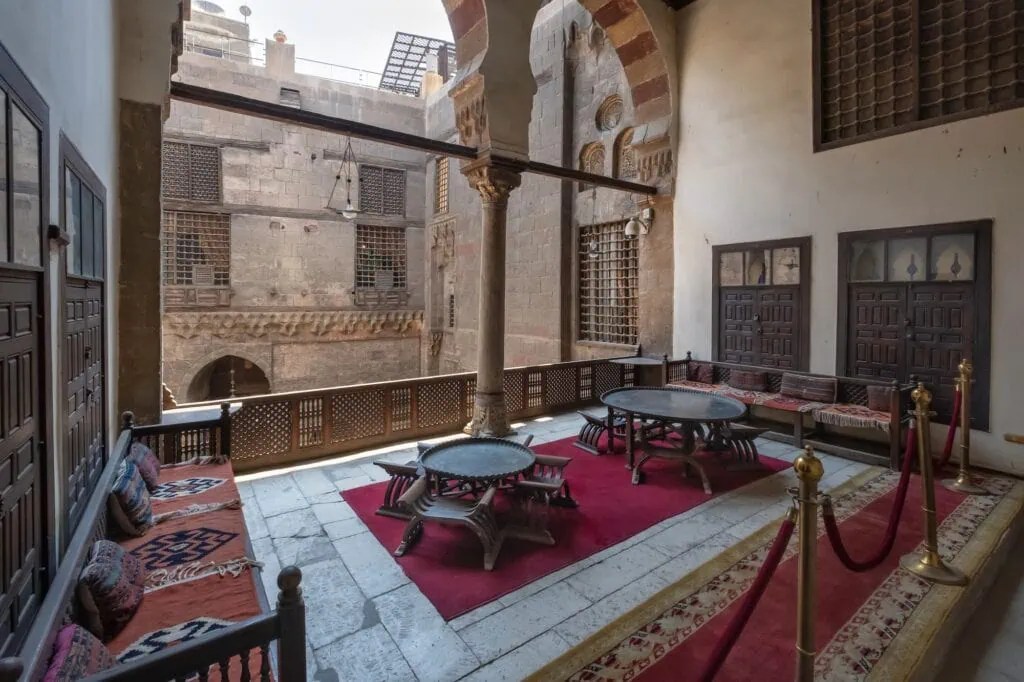
When Major Gayer-Anderson submitted his formal request to the Egyptian government’s Assembly of Preserving Arab Antiquities in 1935, he envisioned creating a living museum that would preserve not just the architectural elements but the authentic atmosphere of medieval Islamic domestic life. His seven-year residency allowed him to carefully curate every room with period-appropriate furnishings, artworks, and decorative objects sourced from across the Islamic world.
Modern Museum Status
Following Gayer-Anderson’s departure in 1942, the Egyptian government officially designated the complex as a public museum, recognizing its exceptional value as both an architectural monument and a showcase of Islamic decorative arts. Today, the museum operates under the supervision of the Egyptian Ministry of Tourism and Antiquities, ensuring its preservation for future generations.
Exploring the Architectural Marvel
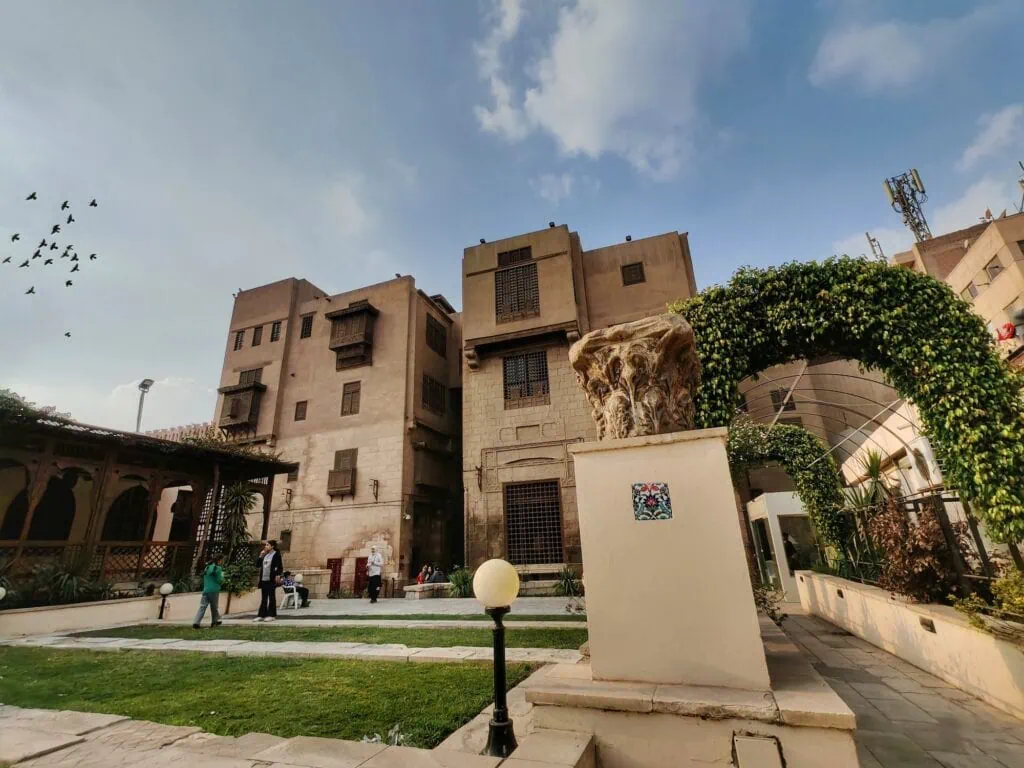
The traditional Islamic house design divides living spaces into two distinct areas reflecting the social customs of the era.
The Haramlik: Women’s Private Quarters
The Haramlik served as the private family quarters where women could move freely without concern for male visitors. These rooms feature intricate mashrabiya screens that allowed residents to observe the courtyard and street life while maintaining privacy. The delicate wooden lattework represents some of the finest examples of this traditional Islamic architectural element found in Cairo.
The Salamlik: Men’s Reception Areas
In contrast, the Salamlik functioned as the public reception area where the master of the house entertained male guests and conducted business. The grandest of these rooms is the Muhammad Ali Hall, with its soaring ceiling and ornate decorations that demonstrate the wealth and sophistication of the original owners. Each space flows naturally into the next, creating an elegant progression through the house that guides visitors from more formal areas to increasingly intimate spaces.
Hidden Architectural Secrets
One of the most fascinating features is the concealed observer’s gallery, accessed through a hidden staircase, where women could discreetly watch social gatherings in the men’s quarters below. The comfortable chairs and strategic viewing angles show the ingenious way Islamic architects balanced social customs with family dynamics.
The central courtyard, or sahn, serves as the heart of the complex, providing natural light and ventilation while creating a peaceful oasis away from the bustling Cairo streets. The traditional fountain and surrounding gardens reflect the Islamic concept of paradise, bringing nature into the domestic environment.
Exceptional Collections and Artistic Treasures
The Muhammad Ali Hall houses some of the museum’s most spectacular pieces, including Persian carpets that span several centuries of weaving traditions. Each room tells its own story through carefully curated collections of furniture, ceramics, metalwork, and textiles that Gayer-Anderson assembled during his travels throughout the Middle East and North Africa.
The Damascus Room
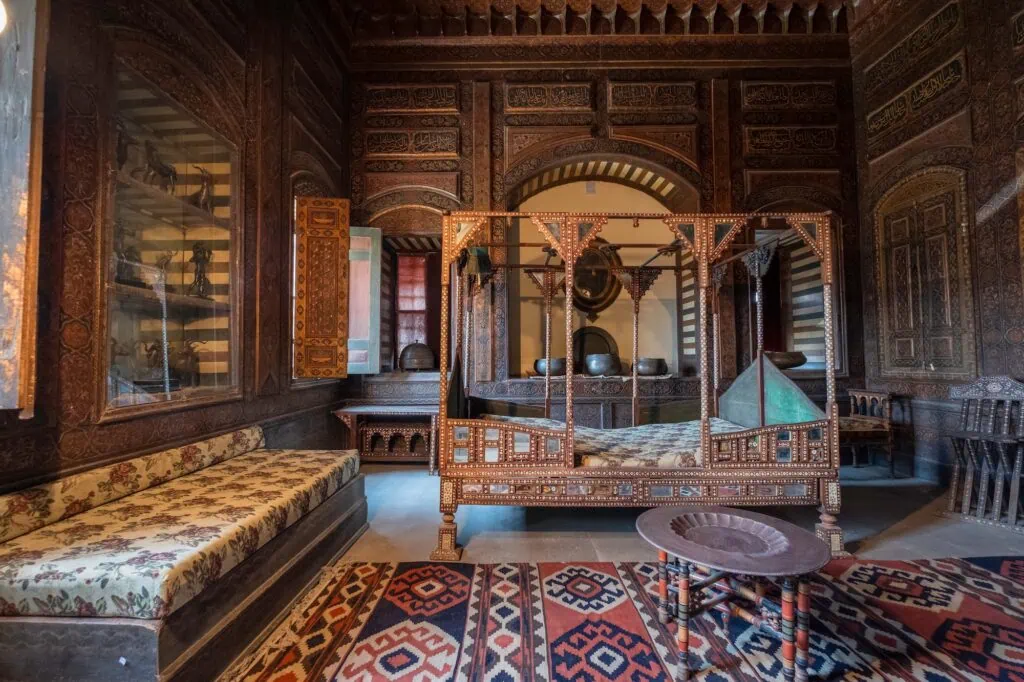
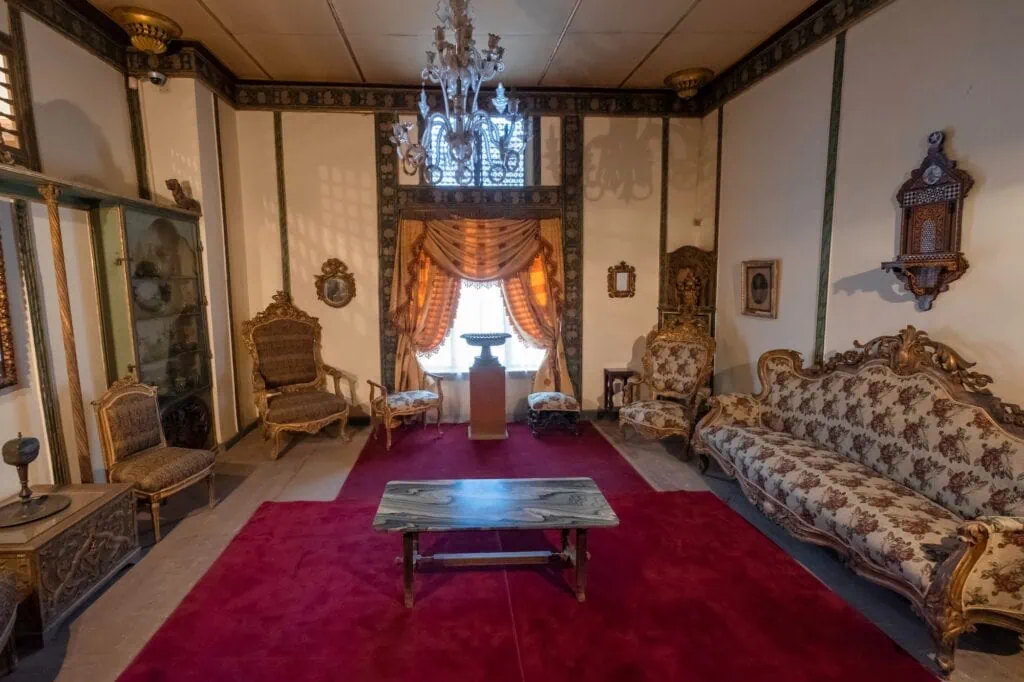
Perhaps the most extraordinary space in the entire museum, this room was literally transported piece by piece from a 16th-century house in Damascus, Syria. Gayer-Anderson personally oversaw the dismantling, shipping, and reassembly of the entire room, complete with its original wooden panels, intricate calligraphy, and mother-of-pearl inlays. The Persian cupboards and Ottoman furnishings create an authentic atmosphere that transports visitors directly into the golden age of Islamic civilization.
Ancient Artifacts and Curiosities
Beyond the architectural elements, the museum houses an impressive collection of ancient Egyptian artifacts, including a mysterious bronze cat that has become one of the museum’s most photographed objects. The library contains rare manuscripts and books that reflect the scholarly interests of the Islamic world, while various rooms display everything from Chinese porcelain to Indian textiles, demonstrating the extensive trade networks that connected medieval Cairo to the wider world.
The Well of Legend
In the basement lies an ancient well that local folklore connects to mystical stories of djinns and supernatural guardians. While the legends may be fanciful, the well represents a genuine archaeological feature that predates the current houses, linking the site to Cairo’s much deeper history.
Planning Your Visit to This Hidden Gem
Practical Information
The museum welcomes visitors daily from 9:00 am to 5:00 pm (09:00 to 17:00), with last entry at 4:00 pm (16:00). Ticket prices are set at 100 Egyptian pounds for international visitors and 50 Egyptian pounds for students with valid identification. Children under six years old enjoy free admission, and special rates apply for visitors with disabilities.
Getting There
Located in the Sayyida Zeinab neighborhood, the museum sits directly adjacent to the Ibn Tulun Mosque, making it easy to combine visits to both attractions. The proximity to this magnificent 9th-century mosque creates opportunities for understanding the continuity of Islamic architectural traditions across different historical periods.
Photography Guidelines
Mobile phone photography is permitted throughout the museum without additional fees, though flash photography is strictly prohibited to protect the delicate artifacts and furnishings. Professional camera equipment requires special permission and additional fees.
Best Times to Visit
Early morning visits, particularly between 9:00 am and 11:00 am (09:00 and 11:00), offer the most peaceful experience with fewer crowds and optimal natural lighting for photography. The intimate scale of the museum means that even small groups can feel crowded in the smaller rooms, so timing your visit strategically enhances the experience significantly.
Cultural Significance and Modern Recognition
The James Bond film “The Spy Who Loved Me” featured several scenes shot in the museum’s most dramatic spaces, introducing this architectural treasure to international audiences and highlighting its cinematic appeal. Roger Moore’s scenes were filmed primarily in the ceremonial hall, taking advantage of the spectacular views toward the Saladin Citadel that are visible from the upper floors.
This pop culture connection has brought additional attention to the museum while raising awareness about the importance of preserving Cairo’s medieval architectural heritage. The Egyptian government has invested significantly in conservation efforts, ensuring that this remarkable example of 17th-century Islamic domestic architecture continues to inspire future generations.
Preservation Efforts
Modern conservation techniques help maintain the delicate balance between public access and preservation of these irreplaceable historical interiors. Climate control systems protect the wooden mashrabiya screens and painted ceilings from Cairo’s desert environment, while careful visitor management prevents overcrowding that could damage the fragile decorative elements.
The museum’s role extends beyond simple preservation, serving as a research center for scholars studying Islamic decorative arts, domestic architecture, and the social history of Ottoman-era Egypt. International collaboration with conservation experts ensures that restoration work maintains the highest standards of historical authenticity.
Why We Include This in Our Cairo Experiences
Our private guided tours of Islamic Cairo regularly feature the Gayer-Anderson Museum as a highlight that perfectly complements visits to nearby attractions like the Ibn Tulun Mosque and the Saladin Citadel. The museum’s intimate scale allows our expert guides to share detailed stories about daily life in medieval Cairo that larger monuments simply cannot convey.
The museum represents everything we love about guiding travelers through Egypt’s lesser-known treasures – authentic historical environments, fascinating personal stories, and architectural beauty that creates lasting memories. Our guides’ deep knowledge of Islamic history and decorative arts helps visitors understand not just what they’re seeing, but why these spaces mattered to the people who lived and worked in them centuries ago.
We particularly recommend combining the museum visit with our comprehensive Islamic Cairo walking tour, which provides the broader historical context that makes the Gayer-Anderson experience even more meaningful. The contrast between the public grandeur of the great mosques and the private elegance of this aristocratic residence gives visitors a complete picture of medieval Islamic civilization in Egypt.
Step Inside The Story Of Gayer Anderson Museum
The Gayer Anderson Museum offers a rare glimpse into Cairo’s layered past—where historic architecture, personal collections, and cultural detail come together in a setting full of character. With EgyptToursPlus, we seamlessly include this unique experience in a private journey that connects Cairo’s hidden gems with Egypt’s most iconic landmarks.
You choose your travel dates, your pace, and the experiences that shape your route. From cultural discoveries to historic sites and carefully selected comforts, we tailor every detail around your preferences—ensuring a smooth, refined, and deeply personal travel experience from start to finish.
Frequently Asked Questions
Most visitors spend 60 to 90 minutes exploring the Gayer-Anderson Museum, although architecture and decorative arts enthusiasts often stay closer to 2 hours. The museum contains two interconnected 16th- and 17th-century houses filled with Islamic furniture, mashrabiya screens, manuscripts, ceramics, and Ottoman-era interiors collected by Major R.G. Gayer-Anderson in the 1930s. Its layered rooms reward slow exploration because nearly every chamber contains preserved historical details. Visiting early in the morning provides quieter conditions for photography and architectural appreciation.
Yes, a single admission ticket includes access to both Beit al-Kritliya, known as the House of the Cretan Woman, and Beit Amna bint Salim, which together form the Gayer-Anderson Museum. The two historic houses are physically connected through interior passages and shared courtyards, creating one continuous museum experience beside the Mosque of Ibn Tulun. Visitors move through reception halls, rooftop terraces, and private living quarters in a logical sequence. Combining both houses typically takes at least one hour without rushing.
The Gayer-Anderson Museum welcomes families, but parents should supervise children carefully because the historic interiors contain delicate artifacts, steep staircases, and narrow corridors. Older children interested in history or architecture often enjoy exploring the maze-like rooms, hidden courtyards, and traditional Islamic design elements preserved inside the houses. The museum feels more like walking through a historic residence than a conventional gallery, which makes the experience immersive but less stroller-friendly. Comfortable footwear is recommended because floors and stairways can be uneven.
The Gayer-Anderson Museum is directly attached to the Mosque of Ibn Tulun, with portions of the museum complex built against the mosque’s outer walls in Cairo’s Sayyida Zeinab district. The proximity reflects the historical pattern of elite residential homes developing around major Islamic monuments during the Mamluk and Ottoman periods. Visitors can walk between the mosque and museum within minutes, making them one of Cairo’s best combined architectural experiences. Exploring Ibn Tulun first helps visitors better understand the museum’s Islamic architectural influences.
The museum itself does not consistently provide official guided tours, but private Cairo tours often include expert guides specializing in Islamic architecture, Ottoman interiors, and Cairo’s residential heritage. Guided interpretation is particularly valuable because many rooms contain symbolic decorative elements, historical furnishings, and imported artifacts collected during the early 20th century by Major Gayer-Anderson. Without context, visitors may overlook important details hidden in carved woodwork, painted ceilings, and reception halls. Booking a specialized guide greatly enhances the historical depth of the visit.
Mobile phone photography is generally permitted inside the Gayer-Anderson Museum, although flash photography and professional equipment usually require advance permission from museum authorities. Restrictions exist because strong lighting can damage fragile textiles, manuscripts, painted ceilings, and antique furnishings preserved inside the historic residence. The museum’s courtyards, mashrabiya windows, and rooftop terraces are especially popular for photography due to their preserved Ottoman atmosphere. Early morning visits provide the best natural lighting and fewer visitors appearing in interior shots.
Some sections of the Gayer-Anderson Museum include climate-controlled areas, but much of the cooling comes naturally from traditional Islamic architectural design rather than modern air-conditioning systems. Features such as shaded courtyards, thick stone walls, mashrabiya screens, and high ceilings were historically designed to reduce Cairo’s summer heat long before mechanical cooling existed. Visitors during June through September should still expect warm conditions in certain rooms. Morning visits between 9:00 am and 11:00 am are usually the most comfortable.
Unlike Cairo’s larger archaeological museums, the Gayer-Anderson Museum preserves a fully furnished historic residence that shows how wealthy households functioned in medieval and Ottoman Cairo. Rather than displaying artifacts behind glass alone, the museum recreates authentic domestic spaces with reception rooms, private quarters, fountains, and decorative interiors largely intact. This immersive atmosphere gives visitors a more personal understanding of daily life in historic Islamic Cairo. Many travelers consider it one of the city’s most atmospheric and underrated cultural sites.
Either sequence works well, but many visitors prefer starting with the Mosque of Ibn Tulun because it provides historical and architectural context for understanding the adjoining Gayer-Anderson Museum. Ibn Tulun, built in the 9th century, is Cairo’s oldest surviving mosque in near-original form and strongly influenced surrounding residential architecture. After exploring the mosque’s courtyard and spiral minaret, the museum’s carved woodwork, mashrabiya windows, and Ottoman interiors become easier to interpret. Together, both sites create an excellent half-day historical itinerary.
Large bags are typically checked or inspected before entering the Gayer-Anderson Museum, and food or beverages are not allowed inside the historic interiors. These rules help protect fragile furnishings, antique carpets, manuscripts, and centuries-old wooden surfaces from accidental damage. Tripods and professional photography equipment may also require prior approval from museum authorities. Because the museum contains narrow staircases and compact rooms, traveling light makes the visit more comfortable and helps preserve the intimate atmosphere of the historic residence.
The Gayer-Anderson Museum is located beside the Mosque of Ibn Tulun in Cairo’s Sayyida Zeinab district, approximately 4 km south of Tahrir Square. Taxis and ride-sharing services provide the simplest access because the surrounding streets can be confusing for first-time visitors navigating independently. Travelers using public transportation can combine the visit with nearby Islamic Cairo attractions, although some walking through historic neighborhoods is required. Morning departures usually avoid Cairo’s heaviest traffic congestion and provide more comfortable sightseeing conditions.
The Gayer-Anderson Museum primarily focuses on its permanent collection of period rooms, Islamic decorative arts, and personal artifacts assembled by Major Gayer-Anderson during the 1930s. Occasional temporary displays highlight themes such as Ottoman craftsmanship, traditional textiles, or historic Cairo domestic life, although the museum is not known for large rotating exhibitions. Its main appeal lies in the preserved atmosphere of the residence itself rather than changing gallery programming. Visitors interested in authentic architectural interiors generally find the permanent collection more compelling than temporary exhibits.
Design Your Custom Tour
Explore Egypt your way by selecting only the attractions you want to visit