

Temple of Ain El Muftella – The Chapels Devoured by the Desert
Four ancient chapels emerge from Bahariya Oasis sands.
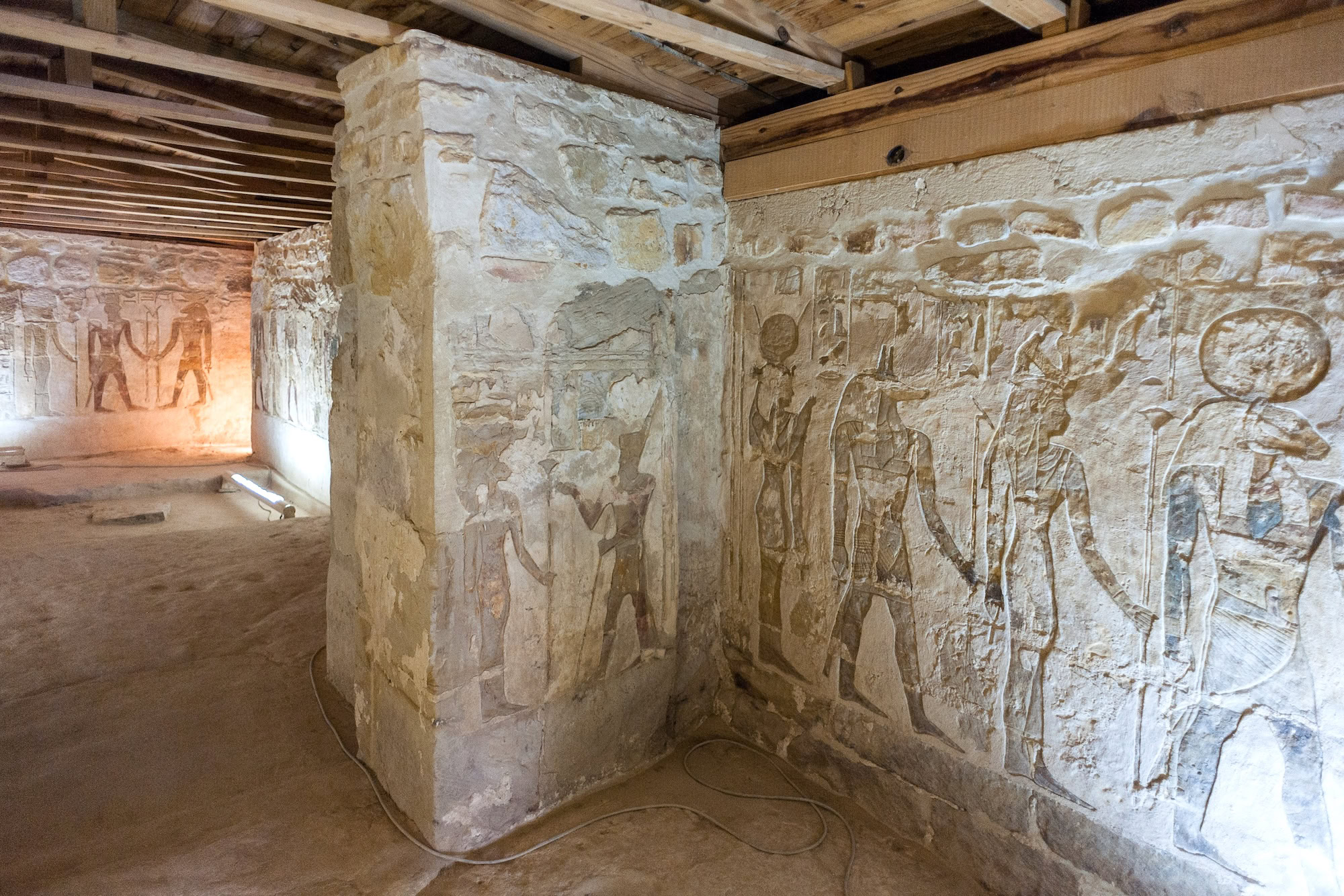
We often marvel at Egypt’s grand pyramids and towering temples, yet some of the most remarkable archaeological treasures remain tucked away in the Western Desert. The Temple of Ain El Muftella stands as one such hidden gem, where 26th Dynasty artisans created a masterpiece that survived centuries of desert winds. Located near the ancient city of El Qasr in Bahariya Oasis, this temple complex offers visitors an intimate glimpse into Egypt’s final native dynasty period.
Our years of guiding visitors through Egypt’s lesser-known sites have shown us that temples like Ain El Muftella provide experiences that rival the famous monuments. Here, you can walk through chambers where ancient priests once made offerings to multiple deities, examining reliefs that retain their original painted details.
Table of Contents
Archaeological Discovery and Historical Context
Ahmed Fakhry’s 1939 discovery transformed our understanding of Western Desert archaeology.
The renowned Egyptian archaeologist uncovered four distinct chapels dating to the reign of Amasis II during the 26th Dynasty. Each chapel served specific religious functions within what archaeologists believe was the spiritual heart of ancient El Qasr. The site’s exceptional preservation stems from its remote location and the protective qualities of desert sand.
The 26th Dynasty Significance
This period marked the last time native Egyptians ruled their homeland before Persian conquest. Amasis II, who reigned from 570 to 526 BCE, oversaw a cultural renaissance that included extensive temple construction throughout Egypt. The Ain El Muftella chapels represent some of the finest examples of late-period Egyptian religious architecture.
Structural Layout and Design
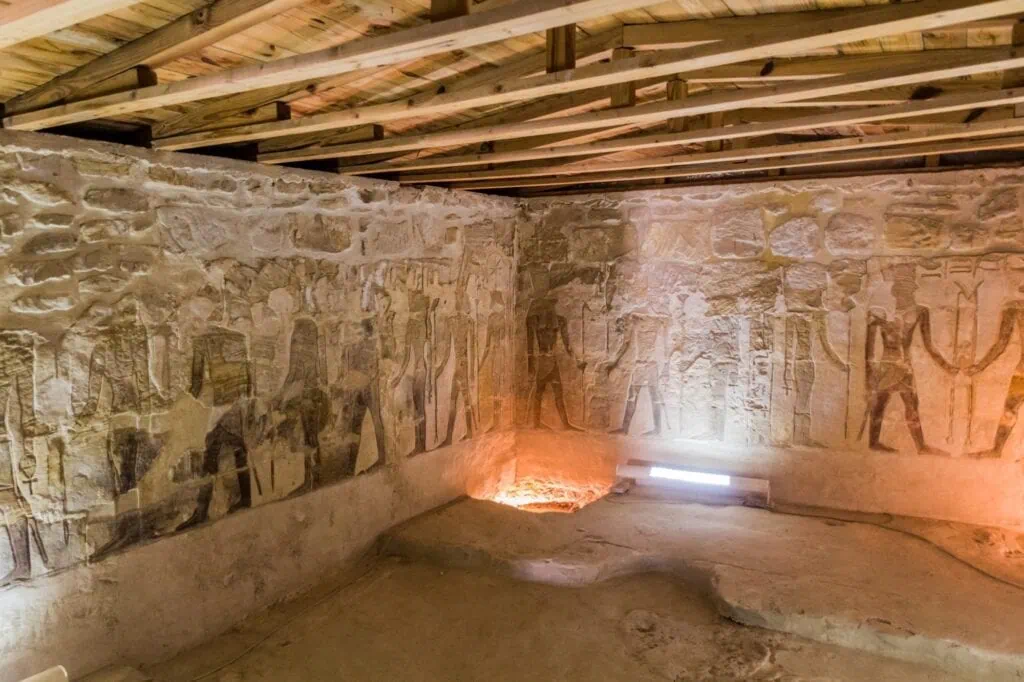
The four chapels arrange themselves around a central courtyard, following traditional Egyptian temple planning principles. Builders constructed the walls using local sandstone, then covered them with limestone plaster to create smooth surfaces for painted reliefs. The architectural style blends classic Egyptian elements with subtle influences from contemporary Greek and Persian designs.
Religious Purpose and Function
Archaeological evidence suggests the temple served as a general-purpose worship center for El Qasr’s residents. Multiple deities received veneration here, including Zed-Khonsu-ankh, Bastet, and Hathor. This multi-religious approach was common in oasis communities, where diverse populations required flexible spiritual spaces.
Artistic Treasures and Religious Scenes
The painted reliefs at Ain El Muftella showcase the artistic sophistication of 26th Dynasty craftsmen. These sunk relief carvings retain much of their original pigmentation, creating a vivid window into ancient Egyptian religious practices.
Scenes depicting offerings to various gods cover the chapel walls. Priests present food, incense, and precious objects to seated deities, while hieroglyphic inscriptions record the names of benefactors and religious officials. The quality of execution rivals work found in major temples throughout the Nile Valley.
Preservation Challenges and Conservation
Desert conditions that protected the temple for millennia now pose preservation challenges. We work with local authorities to ensure visitor access while protecting these irreplaceable artworks. Recent conservation efforts have stabilized vulnerable sections and improved lighting to showcase the reliefs’ details.
The temple’s remote location actually benefits preservation efforts. Unlike heavily visited sites, Ain El Muftella experiences minimal wear from tourism, allowing the painted surfaces to maintain their integrity. However, this isolation also means limited resources for ongoing maintenance and protection.
Visiting Ain El Muftella Temple
Planning your visit requires coordination with local tour operators familiar with Western Desert conditions. We recommend combining the temple visit with exploration of other Bahariya Oasis attractions to maximize your best Western Desert tours.
Access and Transportation
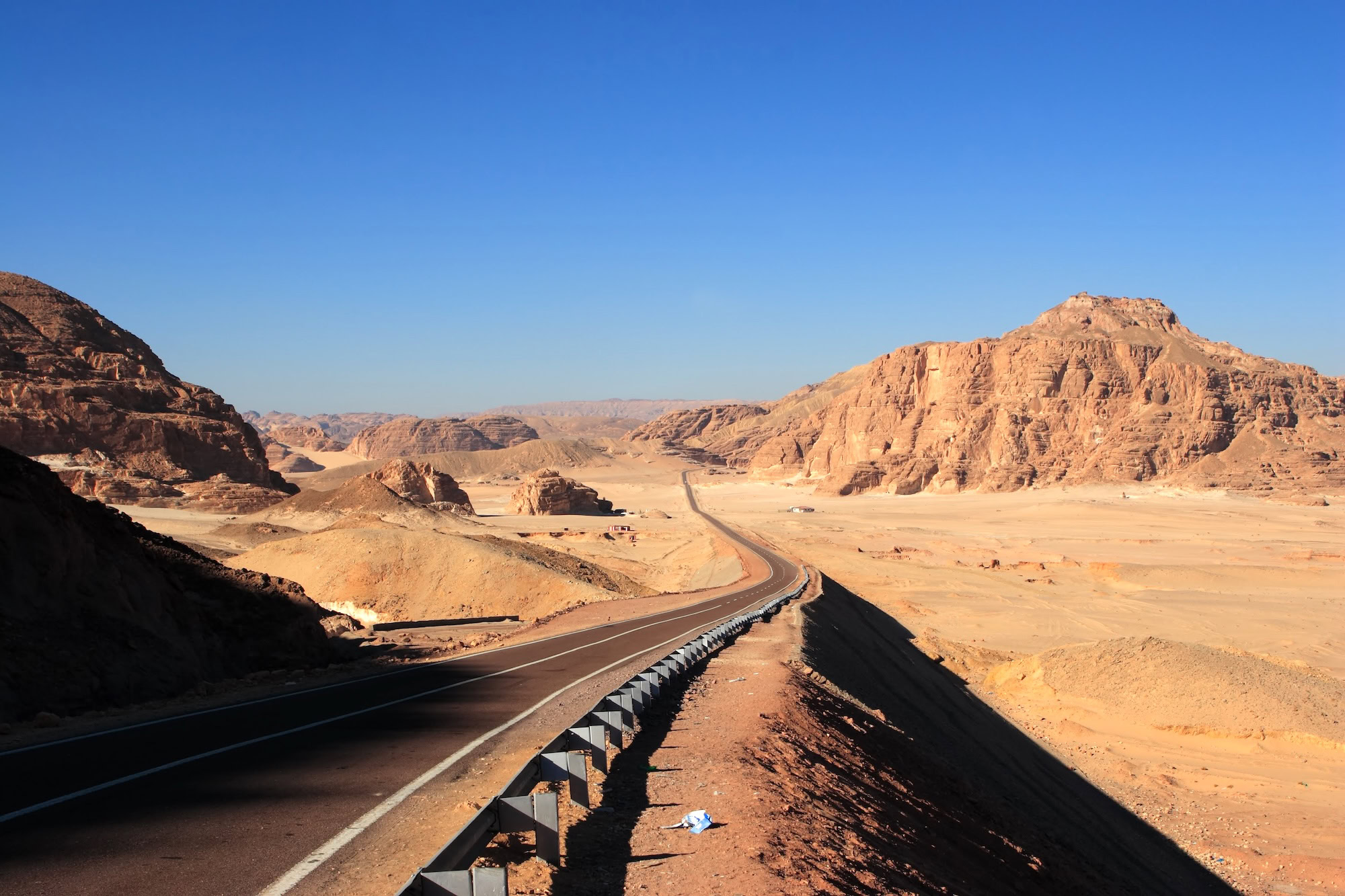
The temple sits approximately 3 km (1.9 miles) from El Qasr village center. Four-wheel-drive vehicles are essential for navigating desert tracks leading to the site. Our experienced drivers know these routes well and can share insights about the surrounding archaeological landscape during the journey.
Best Visiting Times
Morning hours between 8:00 am (08:00) and 11:00 am (11:00) offer ideal lighting conditions for photographing the reliefs. Desert temperatures during winter months (November through March) remain comfortable, typically ranging from 20°C to 25°C (68°F to 77°F). Summer visits require early departure to avoid extreme heat that can reach 45°C (113°F) by midday.
What to Expect During Your Visit
The temple visit typically lasts 45 minutes to one hour. Our qualified guides explain the historical context and point out significant artistic details that casual observers might miss. Photography is permitted, though flash photography can damage the ancient pigments.
Visitors should wear comfortable walking shoes suitable for uneven desert terrain. Bringing water is essential, as the nearest facilities are in El Qasr village. Sun protection becomes crucial during any season, given the desert’s intense UV exposure.
The Broader Archaeological Landscape
Ain El Muftella represents just one element in Bahariya Oasis’s rich archaeological tapestry. The surrounding area contains numerous sites spanning different historical periods, from Old Kingdom tombs to Roman-era settlements.
El Qasr village itself preserves medieval Islamic architecture built atop ancient foundations. Walking through its narrow streets provides context for understanding how communities have continuously occupied this oasis for thousands of years. The village’s strategic location along ancient trade routes connecting the Nile Valley with Libya explains its historical importance.
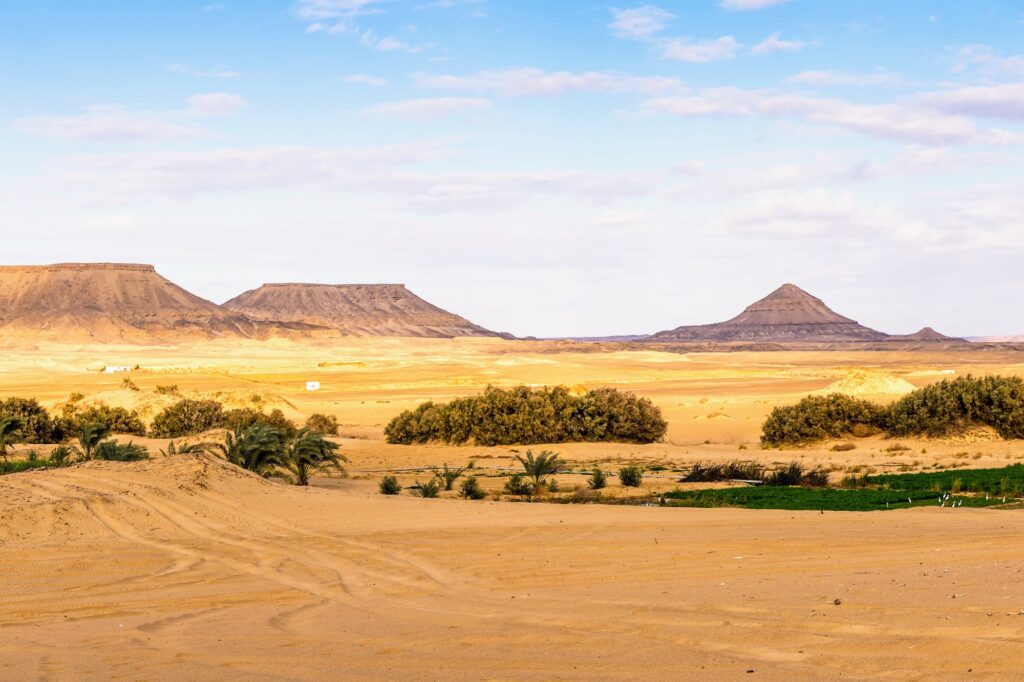
Recent archaeological surveys have identified additional 26th Dynasty sites throughout the oasis. These discoveries suggest that Bahariya supported a more complex religious and administrative network during this period than previously understood. Ongoing excavations continue revealing new information about daily life in ancient Egyptian oasis communities.
Connection to Western Desert Exploration
The temple fits within broader patterns of Western Desert archaeology that have transformed our understanding of ancient Egyptian civilization. Sites like Dakhla Oasis’s Deir el-Hagar and Siwa’s Temple of the Oracle demonstrate how oasis communities maintained sophisticated religious traditions while adapting to local conditions.
Modern archaeological techniques are revealing new details about ancient oasis life. Ground-penetrating radar and satellite imagery help researchers identify buried structures without disturbing surface remains. These methods promise future discoveries that will further illuminate the role of oasis communities in ancient Egyptian society.
Cultural and Religious Significance
The temple’s dedication to multiple deities reflects the cosmopolitan nature of oasis communities. Trade connections brought diverse populations to Bahariya, creating religious practices that accommodated various traditions while maintaining distinctly Egyptian characteristics.
Zed-Khonsu-ankh, one of the primary deities venerated here, represents lunar aspects of divine power. Reliefs show priests making offerings of bread, beer, and incense to ensure the god’s continued protection of the community. Bastet’s presence connects the temple to broader Egyptian religious traditions, while Hathor’s inclusion emphasizes the site’s role in fertility and prosperity rituals.
The 26th Dynasty period witnessed increased emphasis on traditional religious forms as Egyptian rulers sought to legitimize their authority. Temples like Ain El Muftella served as symbols of cultural continuity during politically turbulent times. The Persian conquest in 525 BCE ended this renaissance, making sites like Ain El Muftella among the last expressions of independent Egyptian religious architecture.
Planning Your Bahariya Oasis Adventure
We specialize in creating comprehensive Western Desert experiences that showcase the region’s archaeological and natural wonders. Our private guides possess decades of experience exploring Bahariya’s hidden treasures, ensuring you gain maximum insight from every site visit.
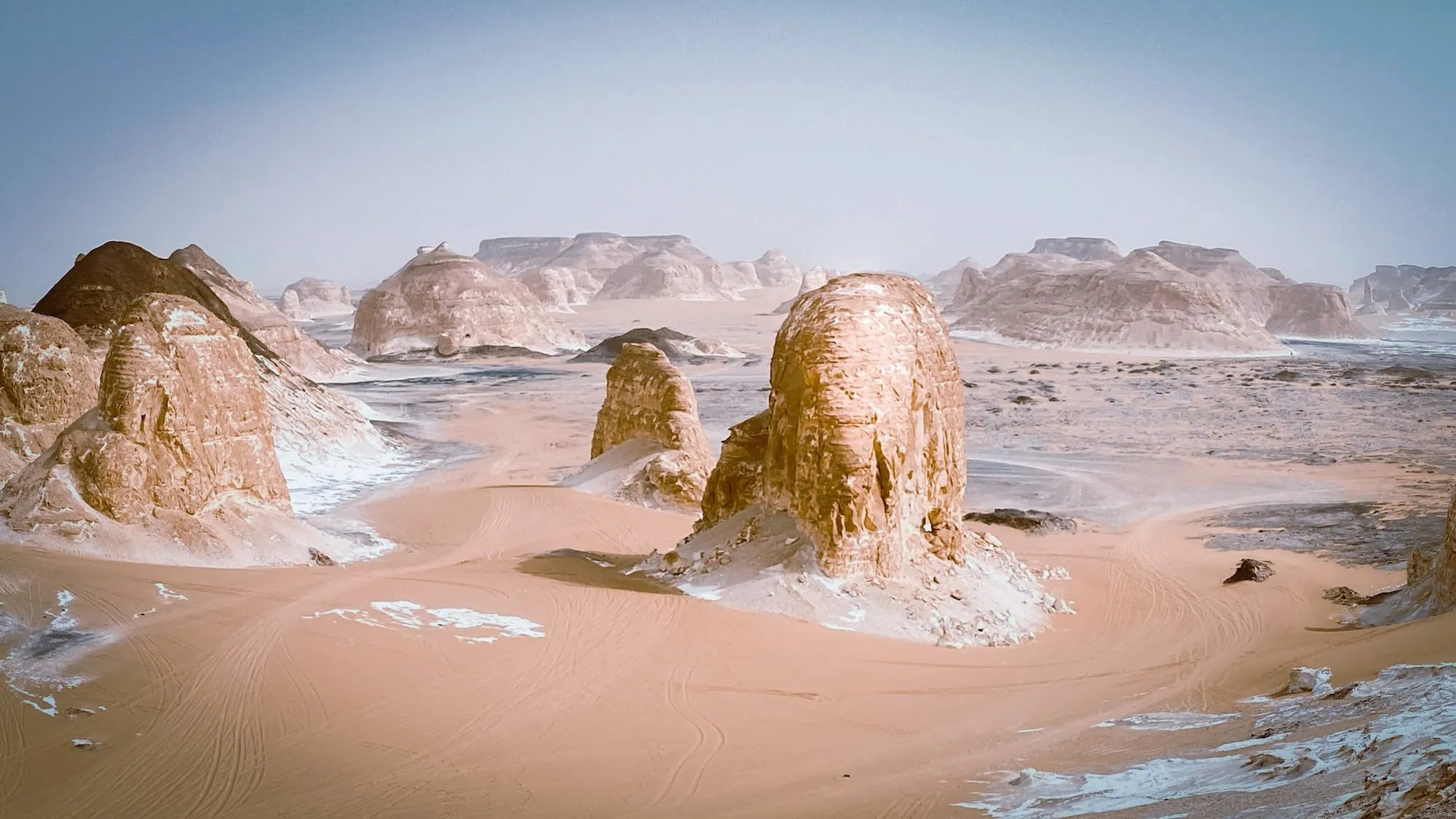
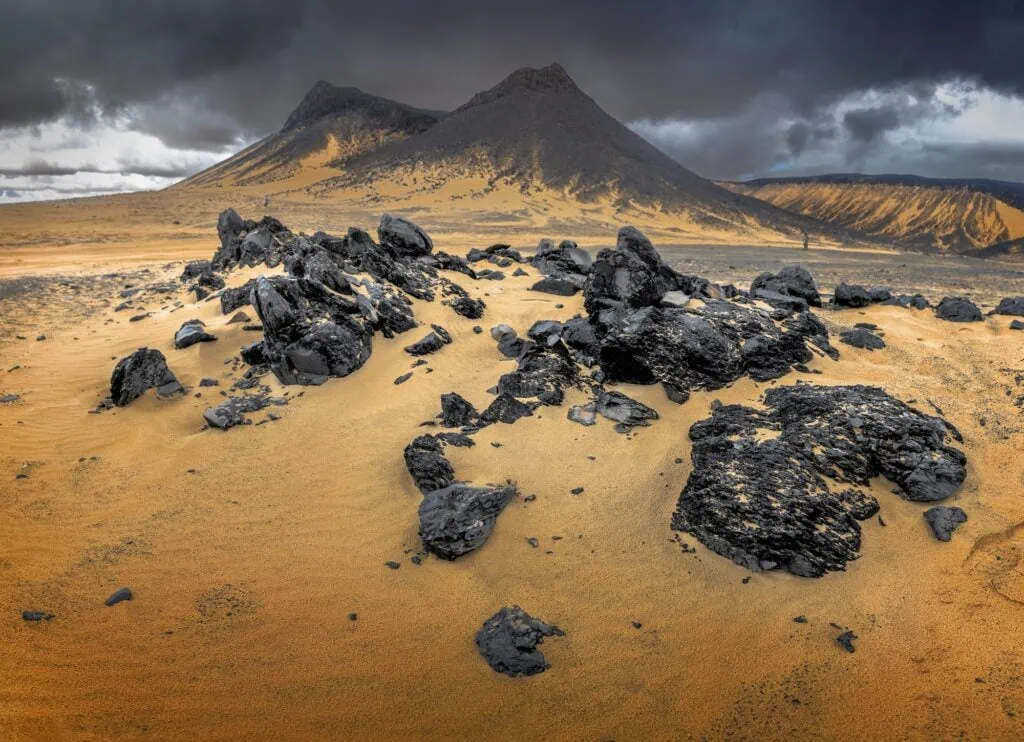
Multi-day packages allow time to explore Ain El Muftella alongside the famous Golden Mummies Museum and the striking landscapes of the Black Desert and White Desert. These itineraries offer full immersion in the oasis environment while ensuring comfortable stays in nearby Bawiti.
Our modern, air-conditioned vehicles are specifically equipped for desert travel. Professional drivers familiar with local conditions ensure safe passage across challenging terrain. We provide all necessary equipment, including emergency communication devices and comprehensive first-aid supplies.
Customized itineraries accommodate different interests and physical capabilities. Photography enthusiasts receive additional time at each location, while families with children benefit from flexible scheduling that accounts for desert conditions. Our 24/7 customer support ensures assistance whenever needed during your Western Desert adventure.
Discover The Hidden Stories Of Ain El Muftella
Set among the quiet landscapes of the Bahariya Oasis, the Temple of Ain El Muftella offers a more intimate glimpse into Egypt’s ancient past—rich in symbolism, history, and atmosphere. With EgyptToursPlus, we seamlessly connect this lesser-known site to a wider private journey, blending off-the-beaten-path discoveries with Egypt’s most iconic highlights.
You choose your travel dates, your pace, and the experiences that matter most to you. From desert oases to cultural landmarks and comfortable stays, we tailor every element of your journey with care—ensuring a smooth, refined, and fully personalized experience from start to finish.
Frequently Asked Questions
Egyptian archaeologist Ahmed Fakhry formally documented and excavated the Temple of Ain El Muftella in 1939 during his extensive surveys of Egypt’s Western Desert oases. Fakhry’s work helped reveal the religious importance of Bahariya Oasis during the Late Period of ancient Egyptian history, particularly under the 26th Dynasty. The discovery also exposed remarkably preserved painted chapels buried beneath desert sands for centuries. Travelers interested in Egyptology often combine Ain El Muftella with nearby sites such as the Valley of the Golden Mummies and Alexander Temple.
The Temple of Ain El Muftella was built during Egypt’s 26th Dynasty, most likely under Pharaoh Amasis II, who ruled between 570 and 526 BCE during the Late Period. This dynasty is often called the Saite Period and is known for reviving classical Egyptian artistic and religious traditions after earlier foreign domination. The temple reflects this cultural revival through detailed painted reliefs and traditional iconography. Historians consider the site an important example of Egypt’s final era of independent native rule before Persian conquest.
The Temple of Ain El Muftella complex consists of four connected chapels, each dedicated to specific deities worshipped in Bahariya Oasis during the Late Period of ancient Egypt. These chapels were built using mudbrick and decorated with painted reliefs rather than the massive stone architecture associated with larger Nile Valley temples. The compact layout reflects the realities of oasis religious life in Egypt’s remote Western Desert. Visitors can still identify sections of wall decoration and ceremonial spaces within the interconnected structures.
The Temple of Ain El Muftella honored several important deities, including Zed-Khonsu-ankh, Bastet, Hathor, and regional oasis gods associated with fertility, protection, and water sources. Hathor was widely connected to motherhood and joy throughout Egypt, while Bastet represented protection and healing. The presence of local desert deities highlights how oasis religion blended mainstream Egyptian beliefs with regional traditions unique to Bahariya Oasis. These religious connections were especially important in isolated desert communities dependent on springs and agriculture for survival.
The Temple of Ain El Muftella is located approximately 3 km from El Qasr village in Bahariya Oasis, making it a short drive from the oasis center and nearby archaeological attractions. Most visitors reach the temple within 10 to 15 minutes by vehicle depending on desert road conditions and tour routes. The surrounding landscape consists of palm groves, low desert hills, and isolated archaeological remains that illustrate oasis settlement patterns over thousands of years. Combining multiple nearby sites creates a more complete understanding of Bahariya’s history.
Yes, four-wheel-drive vehicles are generally recommended for reaching the Temple of Ain El Muftella because sections of the route pass through sandy desert tracks and uneven terrain around Bahariya Oasis. Standard passenger cars may struggle outside paved areas, especially after windstorms or shifting sand conditions common in the Western Desert. Most travelers visit the temple through organized tours that combine transportation, local guidance, and access to nearby archaeological sites. Morning departures usually provide cooler conditions and smoother travel across desert roads.
The Temple of Ain El Muftella is especially valued for its surviving painted reliefs, which still preserve traces of original Late Period pigments more than 2,500 years after their creation. Unlike many heavily weathered desert ruins, parts of the temple retain vivid decorative details showing deities, offerings, and ritual scenes associated with 26th Dynasty religious practices. Egyptologists consider these paintings important because they demonstrate the artistic revival that occurred under the Saite rulers. Early daylight hours provide the best visibility for examining surviving colors and carvings.
Yes, photography is generally permitted at the Temple of Ain El Muftella, although flash photography is discouraged or prohibited to help protect the fragile painted surfaces and ancient pigments. The temple’s compact chapels and surviving reliefs make it particularly attractive for travelers interested in archaeological and historical photography. Because lighting conditions inside some sections can be dim, cameras with strong low-light performance are useful. Visitors should also avoid touching painted walls or climbing on fragile structures during photography sessions.
Visitors to the Temple of Ain El Muftella should bring bottled water, sun protection, comfortable walking shoes, sunglasses, and lightweight clothing suitable for Egypt’s dry desert climate. Temperatures in Bahariya Oasis can exceed 35°C (95°F) outside winter months, and shaded areas around the temple are limited. A camera is also recommended because the surrounding oasis landscape and preserved temple artwork offer strong photographic opportunities. Travelers exploring multiple desert sites should carry extra water and avoid midday heat whenever possible.
Yes, the Temple of Ain El Muftella remains accessible throughout the year, but October through April provides the most comfortable conditions for exploring archaeological sites in Bahariya Oasis. Winter daytime temperatures typically range between 20°C and 28°C (68°F to 82°F), while summer afternoons can become extremely hot and exhausting for outdoor visits. Cooler weather also improves visibility and walking comfort across exposed desert terrain. Most experienced guides recommend early morning visits to avoid intense midday sun and stronger desert winds.
Most travelers spend 45 minutes to one hour exploring the Temple of Ain El Muftella, depending on interest in ancient religion, photography, and surrounding oasis history. The relatively compact size of the four-chapel complex makes it manageable within a broader Bahariya Oasis itinerary that may also include tombs, Roman ruins, and desert landscapes. Guided visits often last longer because the temple’s symbolism and inscriptions require explanation for full historical context. Combining the site with nearby attractions creates a more rewarding archaeological experience.
The Temple of Ain El Muftella is historically significant because it represents one of the final flourishing periods of independent Egyptian religious architecture before Persian control began in 525 BCE. Built during the 26th Dynasty, the complex demonstrates how traditional Egyptian beliefs, temple rituals, and artistic conventions remained active even in remote oasis communities far from the Nile Valley. The site also provides valuable evidence about regional worship practices in Bahariya Oasis. Scholars view it as an important bridge between pharaonic Egypt and later foreign-influenced periods.
Design Your Private Western Desert Adventure
Travel with your own expert guide, private 4×4 vehicle, and a route tailored to you.