The Middle East Peace Treaty 1979 – The Camp David Accords
Thirteen days changed the course of Middle East history forever.
In September 1978, President Jimmy Carter brought together two unlikely allies at the secluded presidential retreat of Camp David. Egyptian President Anwar Sadat and Israeli Prime Minister Menachem Begin had been bitter enemies for decades, representing nations locked in seemingly endless conflict. What emerged from those intense negotiations would reshape the region’s political landscape and offer a blueprint for Arab-Israeli peace that endures today.
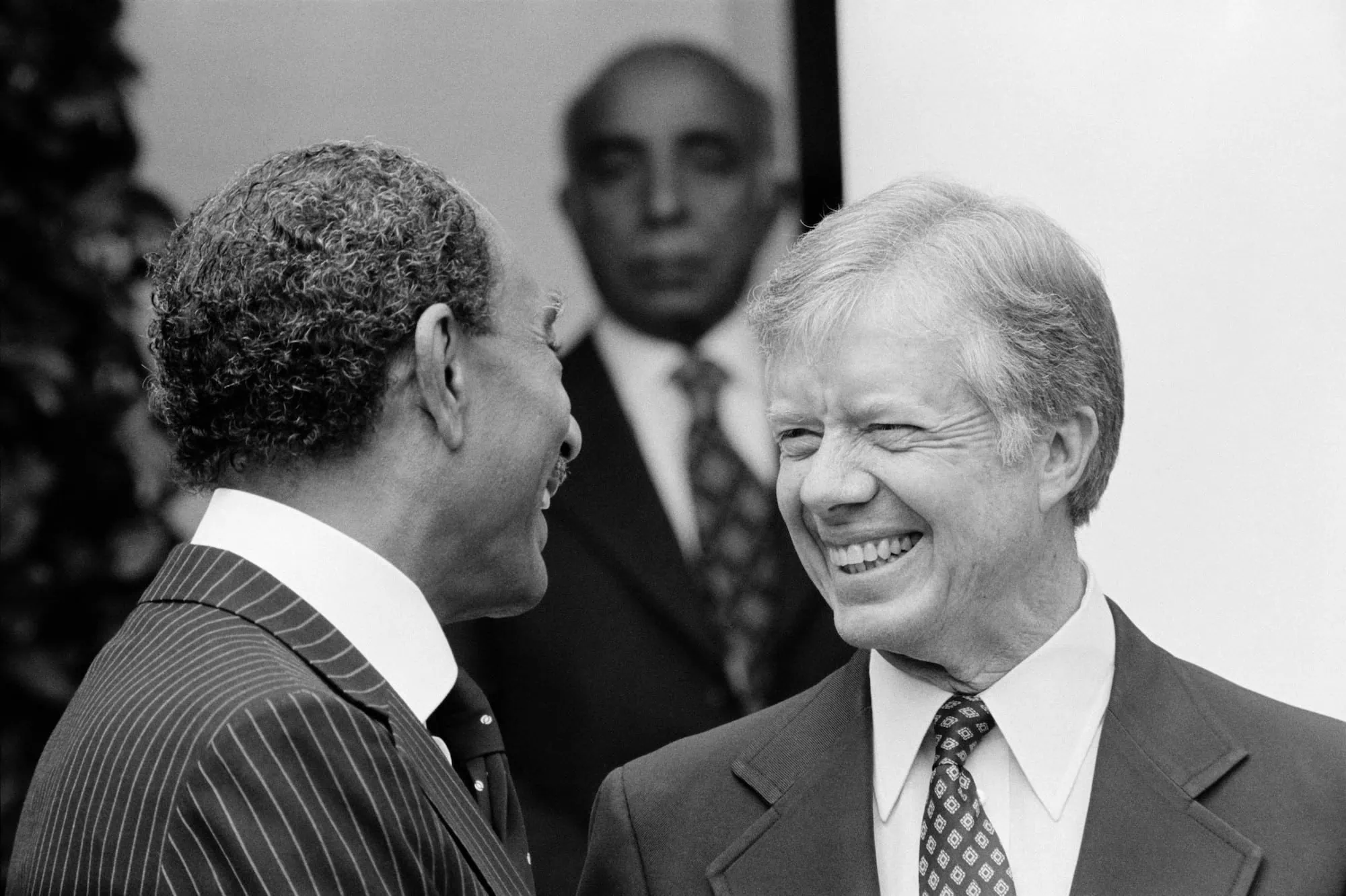
The Camp David Accords marked the first time an Arab nation officially recognized Israel’s right to exist, breaking decades of unified Arab rejection. This diplomatic breakthrough came at enormous personal and political cost to all involved, yet established a framework for peace that has weathered multiple regional crises.
The Road to Camp David: Setting Stage
The path to the Maryland mountaintop retreat began with Sadat’s stunning visit to Jerusalem in November 1977. This unprecedented diplomatic gesture sent shockwaves throughout the Arab world and demonstrated Egypt’s willingness to pursue a separate peace with Israel.
Carter’s administration recognized this opening and launched intensive diplomatic efforts throughout 1978. Secretary of State Cyrus Vance conducted shuttle diplomacy between Cairo and Jerusalem, laying groundwork for what would become the most significant Middle East peace initiative of the 20th century. The American president understood that face-to-face negotiations away from media scrutiny offered the best chance for breakthrough.

Preparing for Summit Diplomacy
Begin arrived at Camp David deeply skeptical about Palestinian autonomy discussions. The Israeli prime minister had spent his political career opposing any form of Palestinian self-governance in the West Bank and Gaza Strip. His Likud party viewed these territories as integral parts of biblical Israel, making territorial concessions extremely difficult politically.
Sadat faced equally daunting domestic challenges. The Egyptian leader had already been criticized by Arab League members for his Jerusalem visit, and many within his own government questioned the wisdom of separate negotiations. Palestinian leaders, particularly the PLO, had explicitly rejected any peace process that excluded their direct participation.
Carter’s Strategic Approach
The American president prepared meticulously for the summit, studying both leaders’ personalities and political constraints. Carter’s team developed multiple negotiating scenarios, anticipating the complex interplay between Israeli security concerns and Egyptian territorial demands. The isolation of Camp David was deliberately chosen to prevent external pressures from derailing sensitive discussions.
Carter also recognized that success would require addressing two distinct but interconnected issues: Egyptian-Israeli bilateral relations and the broader Palestinian question. This dual-track approach would prove both the summit’s greatest strength and its most controversial element.
The Thirteen Days: Inside Camp David
What unfolded at Camp David between September 5-17, 1978, tested the limits of diplomatic endurance. Carter later described the negotiations as the most difficult and rewarding experience of his presidency.
The first week proved particularly challenging as Begin and Sadat barely spoke directly to each other. Years of mutual hostility and fundamentally different worldviews created an atmosphere of distrust that Carter had to navigate carefully. The American president found himself serving as both mediator and active participant, shuttling between the two leaders’ separate cabins.
Egyptian demands centered on complete Israeli withdrawal from the Sinai Peninsula, captured during the 1967 Six-Day War. Sadat insisted that every inch of Egyptian territory must be returned, including Israeli settlements and military installations. The Egyptian position was non-negotiable – full withdrawal or no agreement.
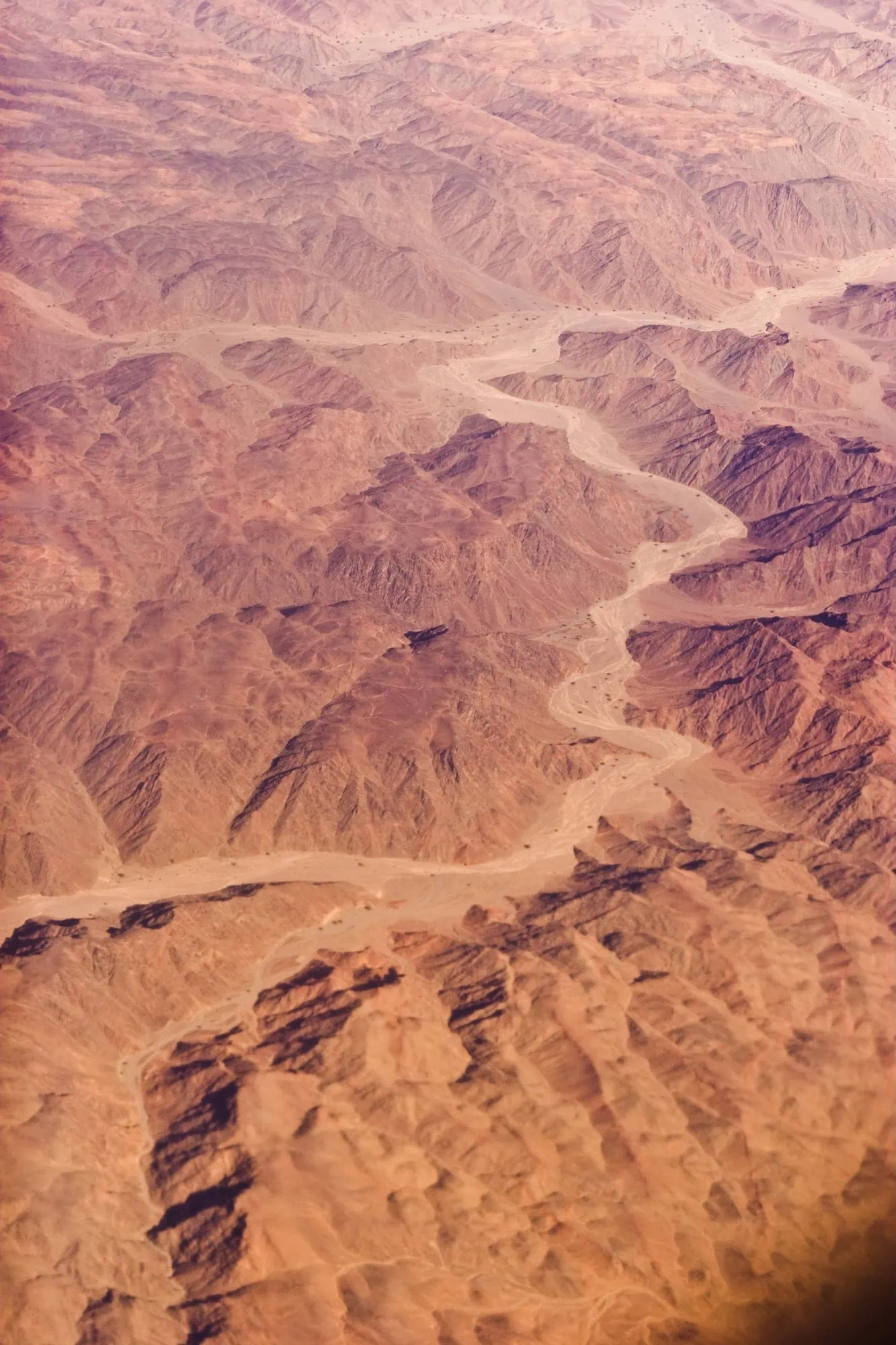
Israel’s security concerns dominated Begin’s negotiating stance. The prime minister argued that the Sinai Peninsula had become crucial to Israeli defense, providing strategic depth and early warning capabilities. Israeli settlements in Sinai, particularly Yamit, represented significant emotional and financial investments that would be difficult to abandon.
The Palestinian Question Creates Deadlock
By the second week, discussions reached a critical impasse over Palestinian autonomy. Begin refused to consider any arrangement that might lead to Palestinian statehood, while Sadat insisted that ignoring Palestinian rights would delegitimize any agreement in the Arab world.
Carter proposed a creative solution: a five-year transitional period for Palestinian self-governance in the West Bank and Gaza Strip. This compromise avoided the immediate question of Palestinian statehood while establishing a framework for future negotiations. The arrangement would allow Palestinians to elect their own governing council while maintaining Israeli security presence.
Two Frameworks Emerge: Bilateral and Regional
The final breakthrough came when negotiators separated the Egyptian-Israeli bilateral issues from the broader Palestinian question. This approach produced two distinct frameworks addressing different aspects of the Middle East conflict.
Framework for Peace Middle East
The first framework outlined principles for comprehensive Middle East peace, including Palestinian autonomy arrangements. This document established the concept of Palestinian self-governance during a five-year transitional period, after which permanent status negotiations would determine the final outcome.
The framework called for Palestinian elections and the establishment of a self-governing authority with responsibility for education, health, and local administration. Israeli military forces would redeploy to specified security locations while maintaining overall security responsibility. This arrangement represented a significant compromise from both Israeli and Palestinian initial positions.
Framework for Egyptian-Israeli Peace Treaty
The second framework focused specifically on Egyptian-Israeli relations and Sinai Peninsula arrangements. Israel agreed to withdraw completely from Egyptian territory in exchange for full diplomatic recognition and normalized relations.
The bilateral framework included detailed security arrangements designed to address Israeli concerns about Egyptian military capabilities in Sinai. Demilitarized zones and limited force deployments would be monitored by international observers, primarily United Nations peacekeeping forces. These provisions represented unprecedented cooperation between former enemies.
Transportation rights through the Suez Canal and the establishment of diplomatic, economic, and cultural relations were also addressed. The framework envisioned regular commercial flights, tourism exchanges, and trade agreements that would gradually normalize Egyptian-Israeli interactions.
Implementation Challenges: From Accords to Treaty
Signing the Camp David Accords represented only the beginning of a complex implementation process. Converting framework principles into detailed treaty language required months of additional negotiations and significant political courage from all participants.
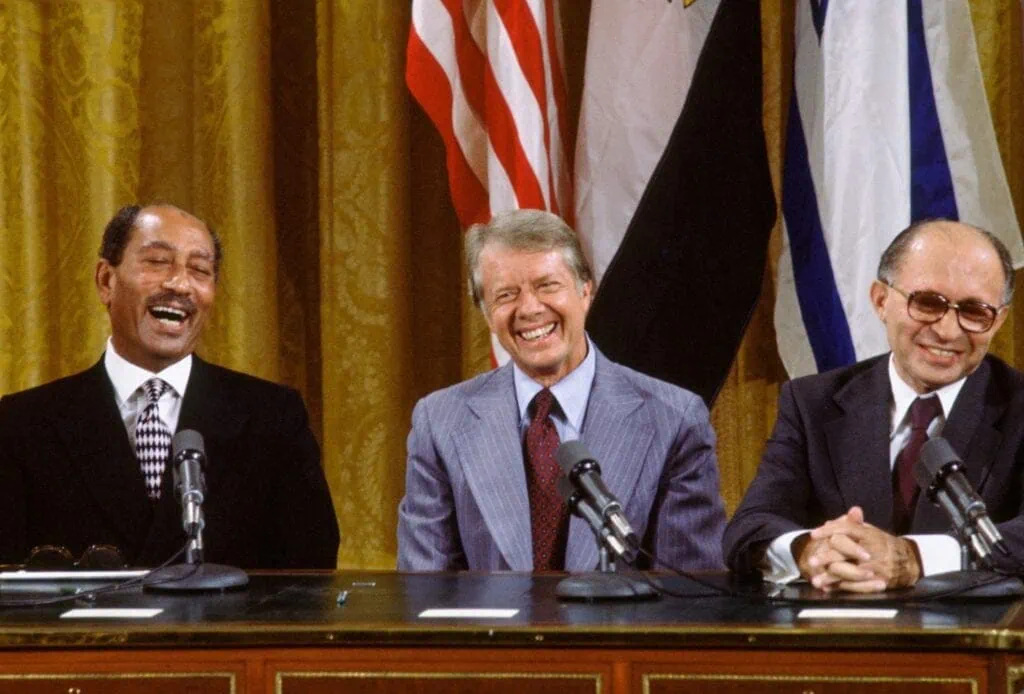
The most contentious issue remained Israeli settlements in Sinai Peninsula. Begin initially refused to commit to dismantling Yamit and other settlements, arguing that such decisions required Knesset approval. Carter applied sustained pressure on the Israeli prime minister, threatening to blame Begin publicly if negotiations collapsed over the settlement issue.
Congressional and Knesset Approval
Carter faced his own domestic challenges in securing Congressional support for the substantial economic assistance packages required to implement the accords. Israel would receive compensation for military installations abandoned in Sinai, while Egypt required economic aid to offset potential Arab economic retaliation.
The Israeli Knesset debated the accords intensively, with opposition members arguing that territorial concessions threatened national security. Begin used his considerable political skills and Begin’s personal credibility to secure parliamentary approval, but the vote highlighted deep divisions within Israeli society about territorial compromise.
Arab World Reaction: Isolation and Condemnation
The Camp David Accords triggered immediate and severe Arab criticism of Egypt and Sadat personally. The Arab League condemned the separate peace approach, arguing that it violated Arab solidarity principles and abandoned Palestinian national rights.
Arab states imposed economic sanctions on Egypt and moved to isolate Cairo diplomatically. The Arab League headquarters was relocated from Cairo to Tunis, symbolizing Egypt’s expulsion from pan-Arab institutions. Oil-rich Arab states withdrew financial support that had sustained Egypt’s economy since the 1973 war.

Palestinian reactions proved equally critical. The PLO rejected the autonomy framework as inadequate and accused Sadat of legitimizing Israeli occupation of Palestinian territories. Palestinian leaders argued that any peace process excluding their direct participation could not address fundamental Palestinian national aspirations.
Long-term Regional Consequences
Despite Arab criticism, the Camp David Accords established important precedents for future Arab-Israeli peace efforts. The principle of land for peace became a cornerstone of subsequent negotiations, including the 1991 Madrid Peace Conference and the 1993 Oslo Accords.
The success of Egyptian-Israeli normalization also demonstrated that former enemies could develop cooperative relationships. Trade, tourism, and security cooperation between Egypt and Israel expanded significantly following treaty implementation, creating constituencies for continued peace in both countries.
The Peace Treaty: March 1979 Implementation
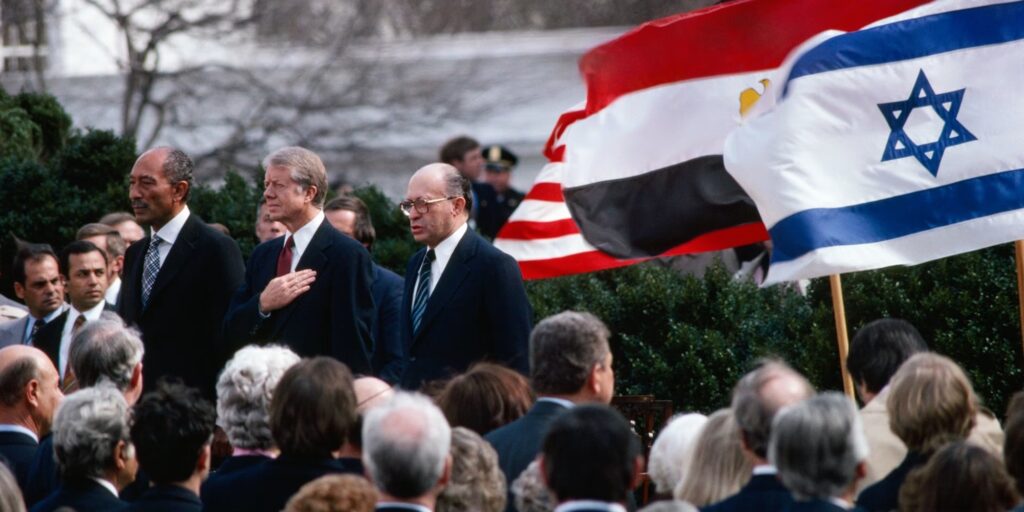
The Egypt-Israel Peace Treaty signed on March 26, 1979, represented the culmination of the Camp David process. Witnessed by President Carter on the White House lawn, the ceremony marked the first peace agreement between Israel and an Arab state.
Treaty provisions addressed detailed territorial arrangements, including a phased Israeli withdrawal from Sinai over three years. International observers would monitor compliance, and both countries committed to resolving disputes through diplomatic channels rather than military force.
The Palestinian autonomy negotiations, however, proceeded slowly and without significant progress. Fundamental disagreements about the scope of Palestinian self-governance and Israeli security requirements prevented meaningful implementation of this aspect of the Camp David framework.
Security cooperation between Egyptian and Israeli military forces developed gradually but substantially. Joint exercises, intelligence sharing, and coordinated responses to regional threats became routine aspects of the bilateral relationship, contributing significantly to regional stability.
Legacy and Lasting Impact: Four Decades
The Camp David Accords created what observers later termed a “cold peace” between Egypt and Israel. While the treaty prevented further Egyptian-Israeli military conflicts, popular Egyptian attitudes toward Israel remained largely negative throughout the following decades.
Economic cooperation expanded significantly, with natural gas agreements and tourism exchanges creating shared interests in maintaining peaceful relations. Israeli tourists visited Egypt regularly, and trade relationships developed despite periodic political tensions. These practical connections helped maintain stability even during regional crises.
The Palestinian dimension of the Camp David framework remained largely unfulfilled. Subsequent peace efforts, including the Oslo process and various American initiatives, drew inspiration from Camp David principles while attempting to address its limitations. The concept of interim arrangements and graduated implementation became standard elements of peace process design.
Influence on Future Negotiations
Camp David’s emphasis on direct leader-to-leader negotiations influenced subsequent diplomatic efforts throughout the Middle East. The Madrid Conference, Oslo negotiations, and various Arab-Israeli initiatives adopted similar approaches emphasizing personal relationships between key decision-makers.
The economic assistance model developed for Camp David also became a template for supporting peace agreements. American aid packages for Egypt and Israel, totaling billions of dollars annually, demonstrated the international community’s willingness to invest substantially in peace process success.
Security arrangements pioneered in the Egypt-Israel treaty, including international monitoring and phased implementation, were incorporated into later agreements. The Camp David experience proved that former enemies could develop sophisticated cooperation mechanisms given appropriate incentives and guarantees.
Frequently Asked Questions
The accords were signed on September 17, 1978, after thirteen days of intensive negotiations.
President Jimmy Carter, Egyptian President Anwar Sadat, and Israeli Prime Minister Menachem Begin.
Israel agreed to withdraw completely from the Sinai Peninsula, including dismantling settlements and military installations.
Arab League members condemned Egypt’s separate peace, imposing economic sanctions and diplomatic isolation.
The Palestinian autonomy framework was never successfully implemented due to fundamental disagreements.
No, they established peace between Egypt and Israel but did not resolve broader tensions.
President Carter served as active mediator and provided substantial economic assistance.
Israel returned the entire Sinai Peninsula, approximately 60,000 square kilometers.
They maintain peaceful diplomatic relations characterized as “cold peace” due to limited popular support.
Demilitarized zones monitored by international forces, primarily UN peacekeepers, were established.
Yes, Sadat was assassinated in 1981 by Islamic extremists partly motivated by opposition.
The accords established precedents for land-for-peace exchanges and international support for negotiations.




Design Your Custom Tour
Explore Egypt your way by selecting only the attractions you want to visit