

Abu al-Abbas al-Mursi Mosque – Alexandria’s Most Beautiful Mosque
Few mosques capture the soul of Islamic Alexandria like this architectural marvel.
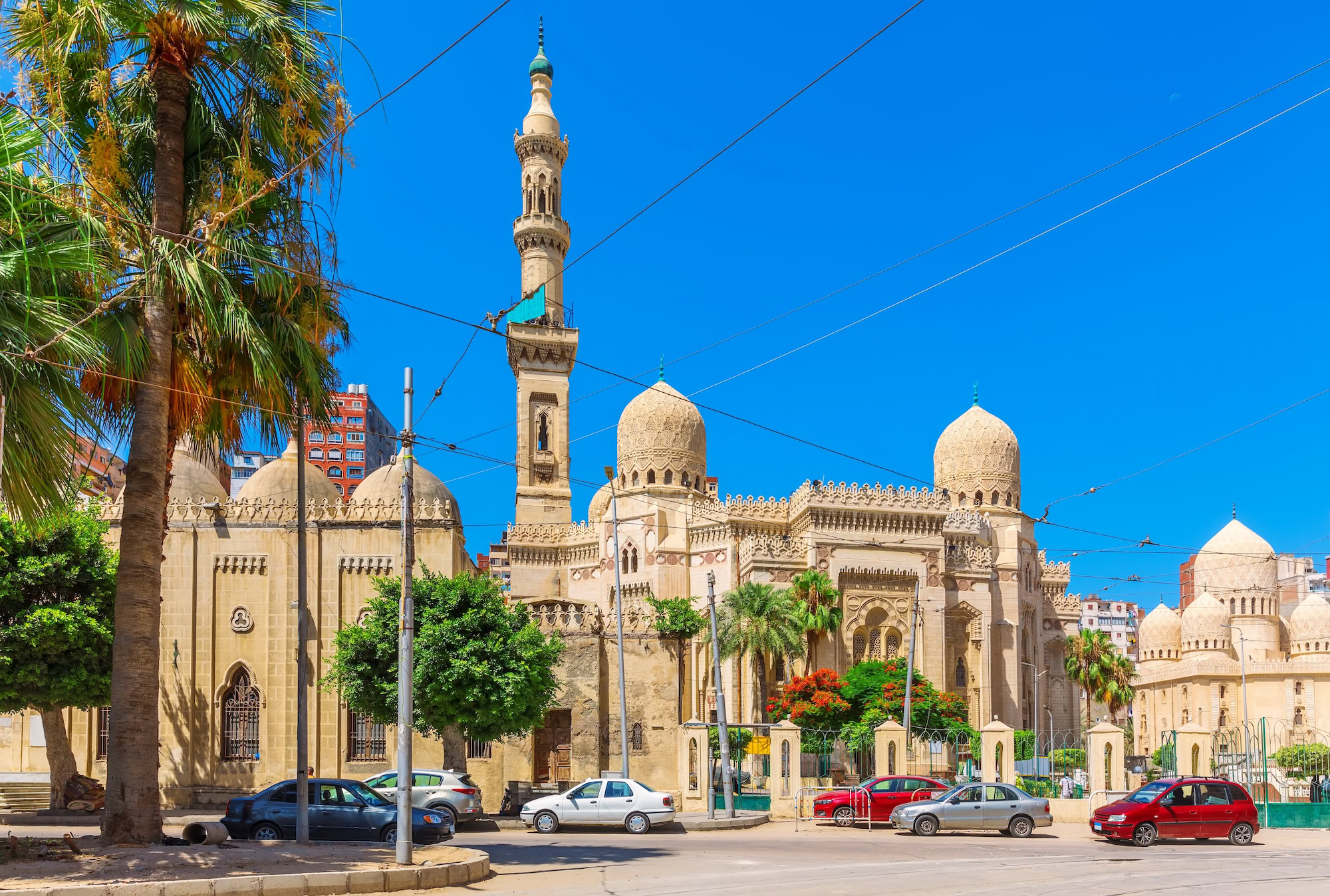
Built over the tomb of a 13th-century Andalusian saint, the Abu al-Abbas al-Mursi Mosque stands as Alexandria’s most beloved religious landmark. This isn’t just another tourist attraction – it’s a living piece of history where centuries of devotion, architectural evolution, and cultural fusion create an experience that resonates with believers and visitors alike. The mosque’s story begins with a Spanish scholar who fled Christian persecution, eventually becoming one of Egypt’s most venerated Sufi saints.
Today, we invite you to discover why this sacred site continues to draw pilgrims from across the Islamic world while welcoming curious travelers seeking authentic cultural encounters in modern Alexandria.
The Saint Behind the Sanctuary
Abu al-Abbas al-Mursi arrived in Alexandria as a refugee from medieval Spain. Born in 1219 in Andalusia to a wealthy merchant family, he witnessed the Christian reconquest that pushed Muslim communities southward. Rather than abandon his faith, he chose exile.
His journey led him first to Tunisia in 1242, where he studied under the renowned Sufi master Sheikh El-Shazly. The relationship deepened beyond teacher and student – Abu al-Abbas eventually married the sheikh’s daughter, cementing bonds that would shape Alexandria’s spiritual landscape for centuries.
A Scholar’s New Home
When Abu al-Abbas reached Alexandria’s shores, he brought more than just religious knowledge. His background in Andalusian Islamic scholarship, combined with his teacher’s mystical traditions, created a unique synthesis that appealed to Alexandria’s diverse Muslim community. He spent 43 years in the city, establishing himself as a beloved spiritual guide while raising three children.
Building a Legacy
The saint’s influence extended beyond religious circles. Local merchants and scholars gathered around him, drawn by his reputation for honesty in business dealings and deep spiritual insight. This network of followers would later fund the construction of his mausoleum, transforming a simple burial site into Alexandria’s grandest mosque.

Architectural Evolution Through the Ages
The mosque you see today represents seven centuries of continuous development. The original structure, completed in 1307 shortly after the saint’s death in 1286, was a modest mausoleum commissioned by a wealthy trader named Sheikh Zein El Din al-Qattan.
Built primarily of local stone, this early tomb attracted enough pilgrims to warrant expansion within two centuries. The 1477 renovation added prayer halls and a proper minaret, establishing the site as Alexandria’s premier place of worship. But the transformation that created today’s magnificent structure came much later.
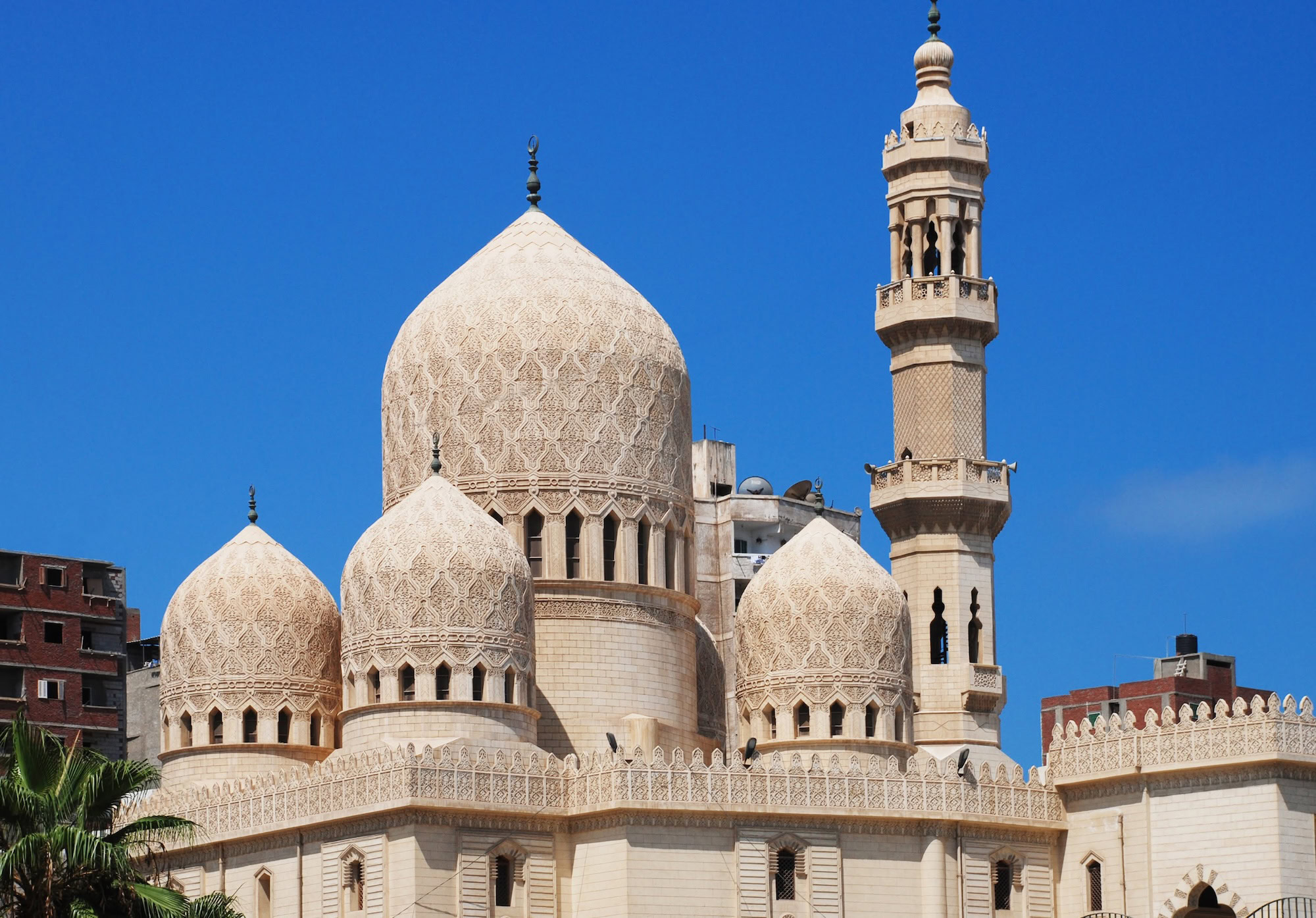
Between 1934 and 1943, under King Farouq I’s patronage, Italian architect Mario Rossi redesigned the entire complex in the Neo-Mamluk style. Rossi’s vision combined traditional Islamic architectural elements with modern construction techniques, creating a building that honored the past while serving contemporary needs. The project expanded the mosque to cover 43,200 square meters (nearly 11 acres), making it one of Egypt’s largest religious complexes.
The Towering Minaret
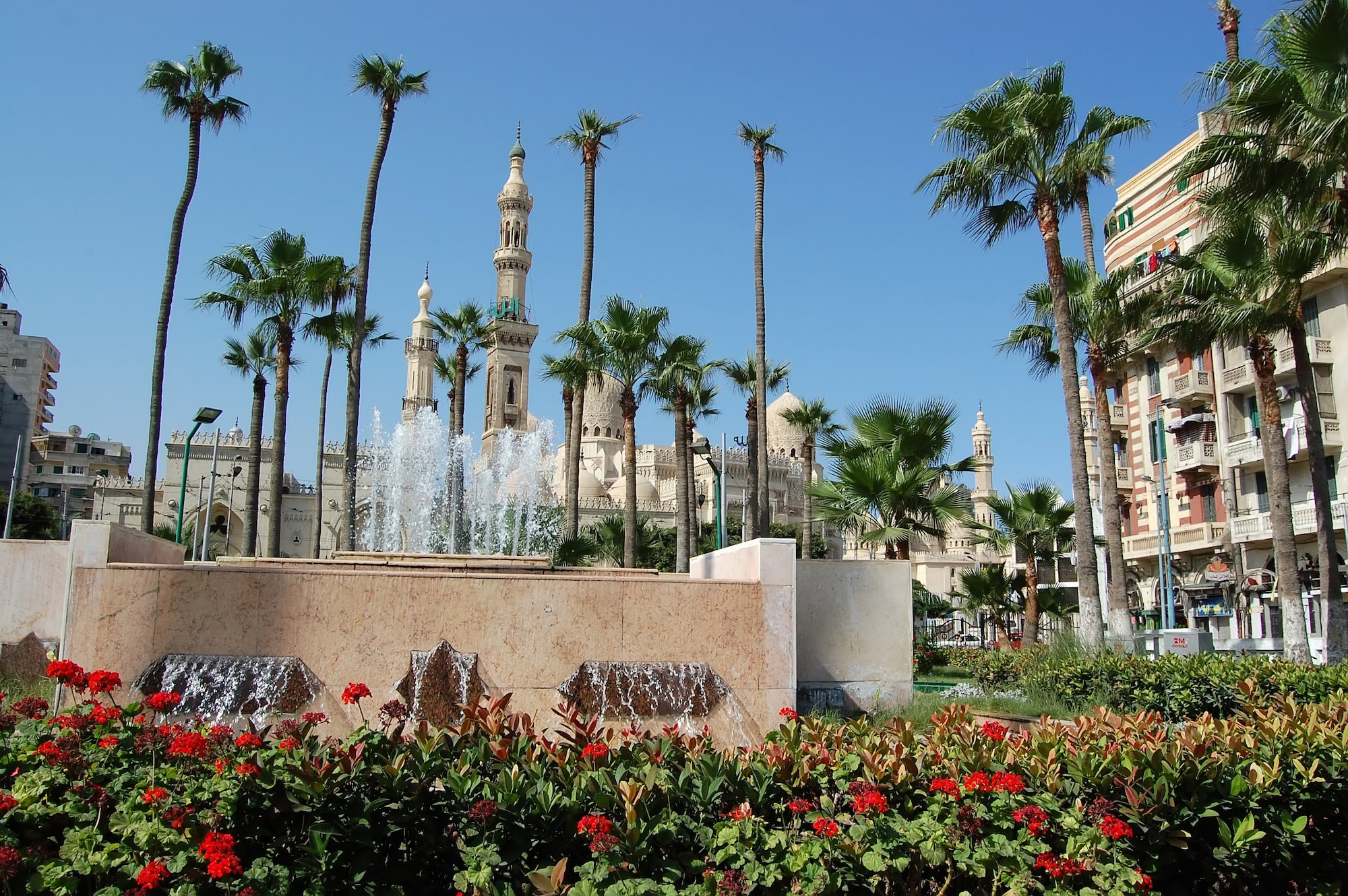
Rising 73 meters (240 feet) above Alexandria’s Eastern Harbor, the mosque’s minaret dominates the city’s skyline. This isn’t merely impressive height – the minaret’s octagonal design reflects Moroccan-Andalusian influences, a deliberate tribute to the saint’s Spanish origins. During construction, engineers used artificial stone reinforced with modern materials, ensuring stability against Mediterranean winds while maintaining architectural authenticity.
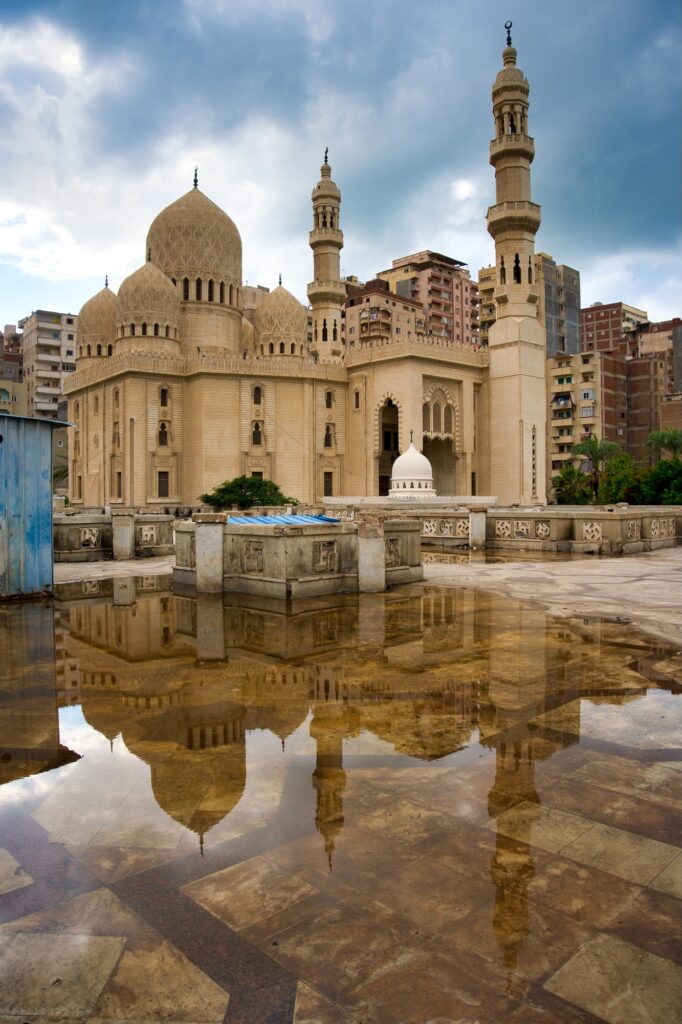
The minaret serves both practical and symbolic functions. Five times daily, the call to prayer echoes across Alexandria’s bustling waterfront. But it also acts as a lighthouse for maritime traffic, continuing Alexandria’s ancient tradition of guiding ships to safe harbor.
Inside the Sacred Spaces
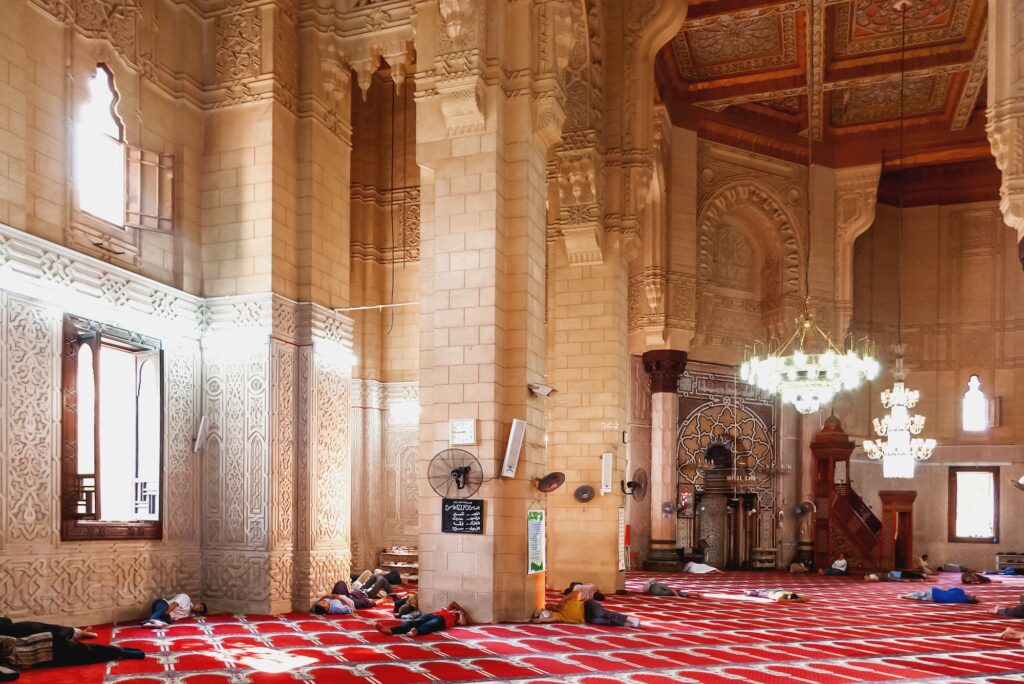
Step through the mosque’s main entrance and you’ll encounter an interior that balances grandeur with spiritual intimacy. White marble floors stretch across prayer halls that can accommodate thousands of worshippers, while intricate mosaics cover walls and columns in patterns that seem to dance in the filtered sunlight.
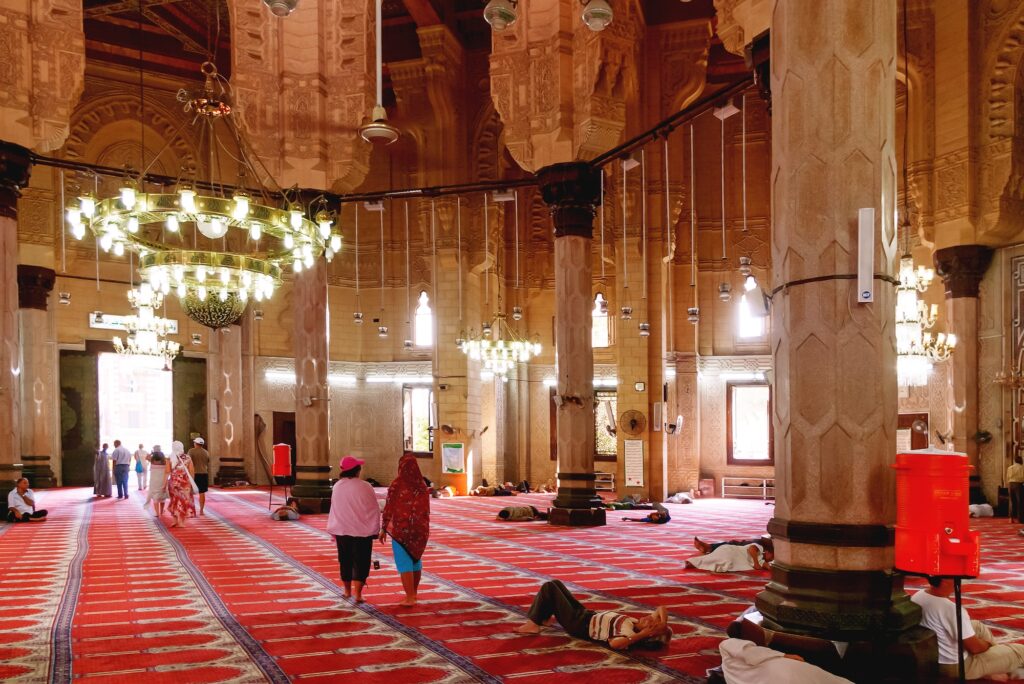
The mihrab, carved from walnut wood by master craftsmen, faces toward Mecca with mathematical precision. Above it, Quranic verses rendered in French gold calligraphy remind visitors of Islam’s core teachings. The minbar, constructed from imported teak, showcases the kind of detailed woodwork that made medieval Islamic artisans legendary.
Five Domes of Devotion
Each of the mosque’s five domes tells part of the architectural story. The central dome, positioned directly above Abu al-Abbas’s tomb, incorporates geometric patterns that represent the infinite nature of divine creation. Smaller domes cover subsidiary prayer spaces, their interiors decorated with arabesques that blend Andalusian and Egyptian motifs.
Natural light filters through carefully positioned windows, creating an atmosphere that changes throughout the day. Morning prayers benefit from eastern illumination, while evening worship takes place in the warm glow of western light. This wasn’t accidental – Islamic architectural tradition emphasizes the spiritual significance of natural lighting patterns.
The Sacred Tomb
At the mosque’s heart lies the mausoleum that started it all. Abu al-Abbas’s tomb, covered in green cloth embroidered with Quranic verses, attracts pilgrims who come to pray for intercession or simply to pay respects to Alexandria’s patron saint. The tomb chamber’s intimate scale contrasts dramatically with the mosque’s grand prayer halls, creating a sense of personal connection with the sacred.

Experiencing the Mosque Today
We encourage respectful visits that honor both the site’s religious significance and your curiosity about Islamic culture. The mosque welcomes non-Muslim visitors outside prayer times, typically between 9:00 am (09:00) and 11:00 am (11:00), then again from 1:00 pm (13:00) to 3:00 pm (15:00), and after evening prayers around 8:00 pm (20:00).
Practical Considerations
Conservative dress is essential – long sleeves, long pants or skirts, and head coverings for women. The mosque provides shoe storage near the entrance, and visitors should remain quiet and respectful throughout their stay. Photography of the interior is generally permitted, but ask permission before photographing people at prayer.
The mosque sits in Alexandria’s historic Anfoushi neighborhood, within walking distance of the Citadel of Qaitbay and the famous Corniche waterfront. This proximity makes it easy to combine your visit with other Alexandria attractions, creating a full day of cultural exploration.
Guided Understanding
Our private guides, with decades of experience in Alexandria’s Islamic heritage, provide context that brings the mosque’s history to life. They explain architectural details, share stories of the saint’s life, and help visitors understand the continuing role of Sufi traditions in modern Egyptian Islam. This personalized approach ensures you leave with genuine understanding rather than just photos.
The Sufi Connection
Abu al-Abbas belonged to the Shadhali order, one of Islam’s most influential Sufi movements. Sufism, often called Islamic mysticism, emphasizes direct personal experience of the divine through prayer, meditation, and spiritual discipline. This tradition shaped not only the saint’s life but also the mosque’s continuing religious function.
Today, the mosque hosts regular dhikr sessions – rhythmic prayers and chanting that create states of spiritual ecstasy among participants. These gatherings, typically held on Thursday evenings, offer outsiders glimpses into Islamic mystical practices that have survived since medieval times. While non-Muslims cannot participate directly, respectful observation from designated areas provides insight into this living tradition.
Pilgrimage Destination
The mosque receives pilgrims from across North Africa and the Middle East, particularly during Islamic holidays and the saint’s annual commemoration. These visitors come seeking spiritual blessings, healing, or simply to fulfill vows made during difficult times. The constant flow of pilgrims maintains the mosque’s role as a active center of faith rather than merely a historical monument.
Alexandria’s Islamic Heritage
Understanding the Abu al-Abbas al-Mursi Mosque requires appreciating its place within Alexandria’s broader Islamic history. When Arab forces conquered the city in 641 CE, they transformed a predominantly Christian Byzantine port into one of Islam’s great learning centers. The mosque represents the culmination of this transformation – a building that celebrates both Alexandria’s Islamic identity and its connections to the broader Muslim world.
The Neo-Mamluk architectural style chosen for the 20th-century renovation wasn’t arbitrary. It deliberately evoked the Mamluk period (1250-1517 CE), when Alexandria flourished as a major Mediterranean trading hub. By incorporating these historical references, the mosque’s designers created visual continuity with Alexandria’s golden age while serving contemporary religious needs.
Modern Significance
Beyond its historical importance, the mosque plays vital roles in modern Alexandria. It serves as the city’s unofficial Islamic center, hosting religious education programs, community events, and charitable activities. During Ramadan, the mosque distributes free meals to the poor, continuing traditions of Islamic social responsibility that date back centuries.
The building also symbolizes Alexandria’s cultural diversity. In a city where Coptic Christians, secular Egyptians, and observant Muslims share neighborhoods and workplaces, the mosque stands as a reminder that religious differences can coexist peacefully when mutual respect prevails.
Planning Your Visit
We recommend allocating at least two hours for a thorough exploration of the mosque and its surroundings. This timing allows for careful observation of architectural details, quiet contemplation in prayer spaces, and conversation with local worshippers who are often happy to share their perspectives on the mosque’s significance.
Best Times to Visit
Early morning visits offer the advantage of softer light and fewer crowds. The mosque’s white marble surfaces and intricate decorations photograph beautifully in the gentle illumination that filters through the complex during the first hours after sunrise. Late afternoon provides different atmospheric qualities, with warm light that emphasizes the building’s geometric patterns.
Combining Attractions
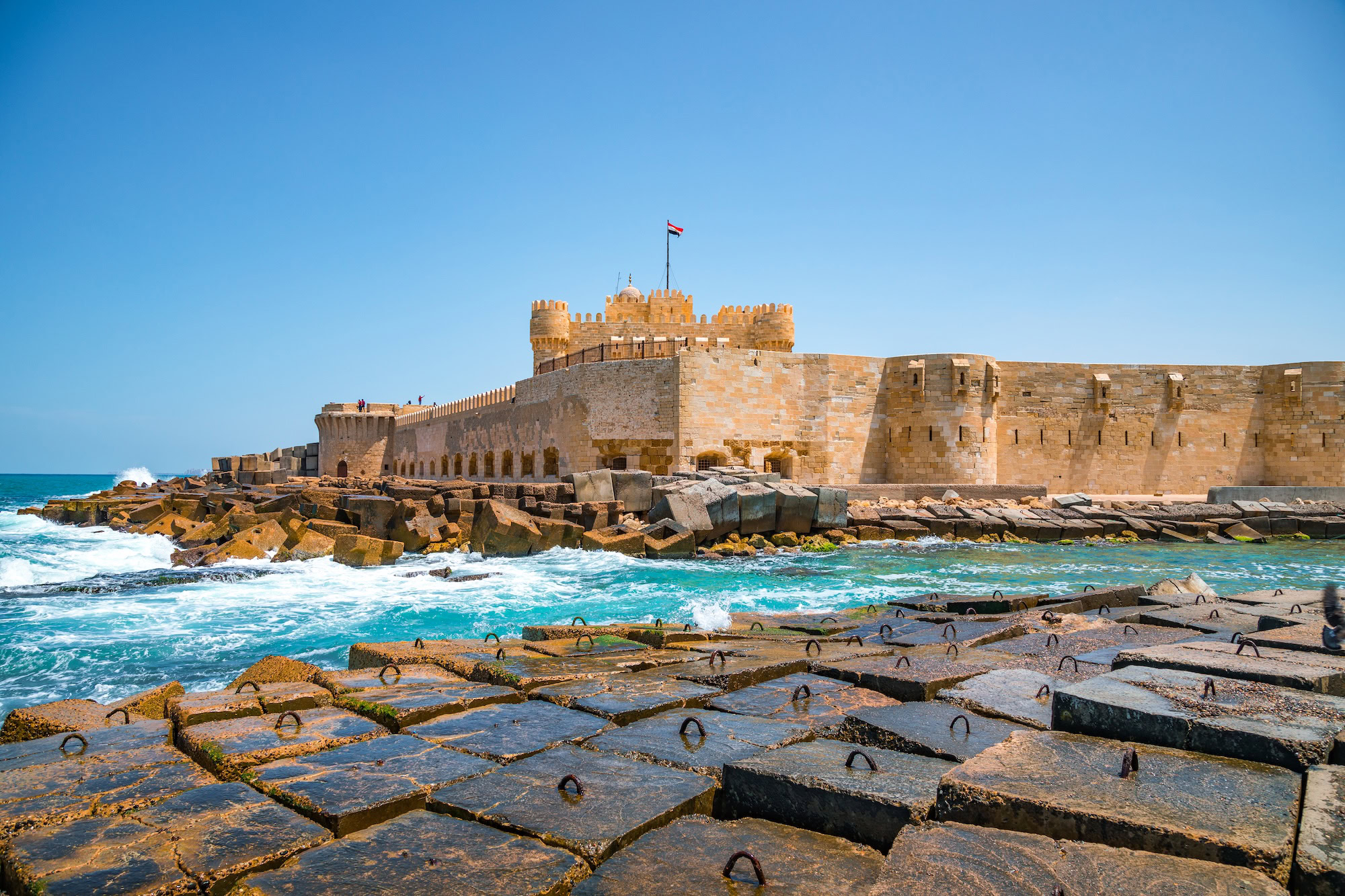
The mosque’s location in the Anfoushi district makes it an ideal starting point for exploring Alexandria’s Islamic heritage. The nearby Citadel of Qaitbay, built on the site of the ancient Lighthouse of Alexandria, offers complementary historical perspectives. Both sites demonstrate how Alexandria has continuously reinvented itself while maintaining connections to its past.
Our tailored Alexandria itineraries naturally incorporate the Abu al-Abbas al-Mursi Mosque into broader explorations of the city’s cultural layers. With our private drivers and modern vehicles, you can move efficiently between religious sites, ancient ruins, and contemporary attractions while our expert guides provide the historical context that transforms sightseeing into genuine understanding.
Frequently Asked Questions
Can non-Muslims enter the Abu al-Abbas al-Mursi Mosque?
Yes, respectful non-Muslim visitors are welcome outside prayer times, typically between 9:00 am-11:00 am and 1:00 pm-3:00 pm.
What is the proper dress code for visiting the mosque?
Conservative clothing is required: long sleeves, long pants or skirts, and head coverings for women.
How tall is the mosque’s minaret?
The minaret rises 73 meters making it one of Alexandria’s most recognizable landmarks visible from the Eastern Harbor.
Who was Abu al-Abbas al-Mursi?
A 13th-century Andalusian Sufi saint who fled Christian Spain, studied in Tunisia, and spent 43 years teaching in Alexandria.
When was the current mosque structure built?
The present Neo-Mamluk building was constructed between 1934-1943 under King Farouq I, though the original mausoleum dates to 1307.
Is photography allowed inside the mosque?
Interior photography is generally permitted, but ask permission before photographing people at prayer and maintain respectful behavior.
How large is the mosque complex?
The mosque covers 43,200 square meters making it one of Egypt’s largest religious complexes.
What architectural style is the mosque?
Neo-Mamluk style designed by Italian architect Mario Rossi, incorporating Moroccan-Andalusian elements that honor the saint’s Spanish origins.
Are guided tours available?
Yes, our private guides specialize in Alexandria’s Islamic heritage and provide detailed historical context during personalized visits.
What other attractions are nearby?
The Citadel of Qaitbay, Alexandria’s Corniche waterfront, and the historic Anfoushi neighborhood are all within walking distance.
When do prayer times occur?
Prayer times vary by season but include dawn, midday, afternoon, sunset, and evening prayers, with specific times posted.
What makes this mosque significant for Sufi Islam?
It houses the tomb of a major Sufi saint and continues hosting dhikr sessions, maintaining living connections to mystical traditions.
Design Your Custom Tour
Explore Egypt your way by selecting only the attractions you want to visit