

Agdal Gardens – More than 500 Hectors of Tranquility
Hidden beyond the bustling medina walls lies Morocco’s most ambitious medieval garden project.
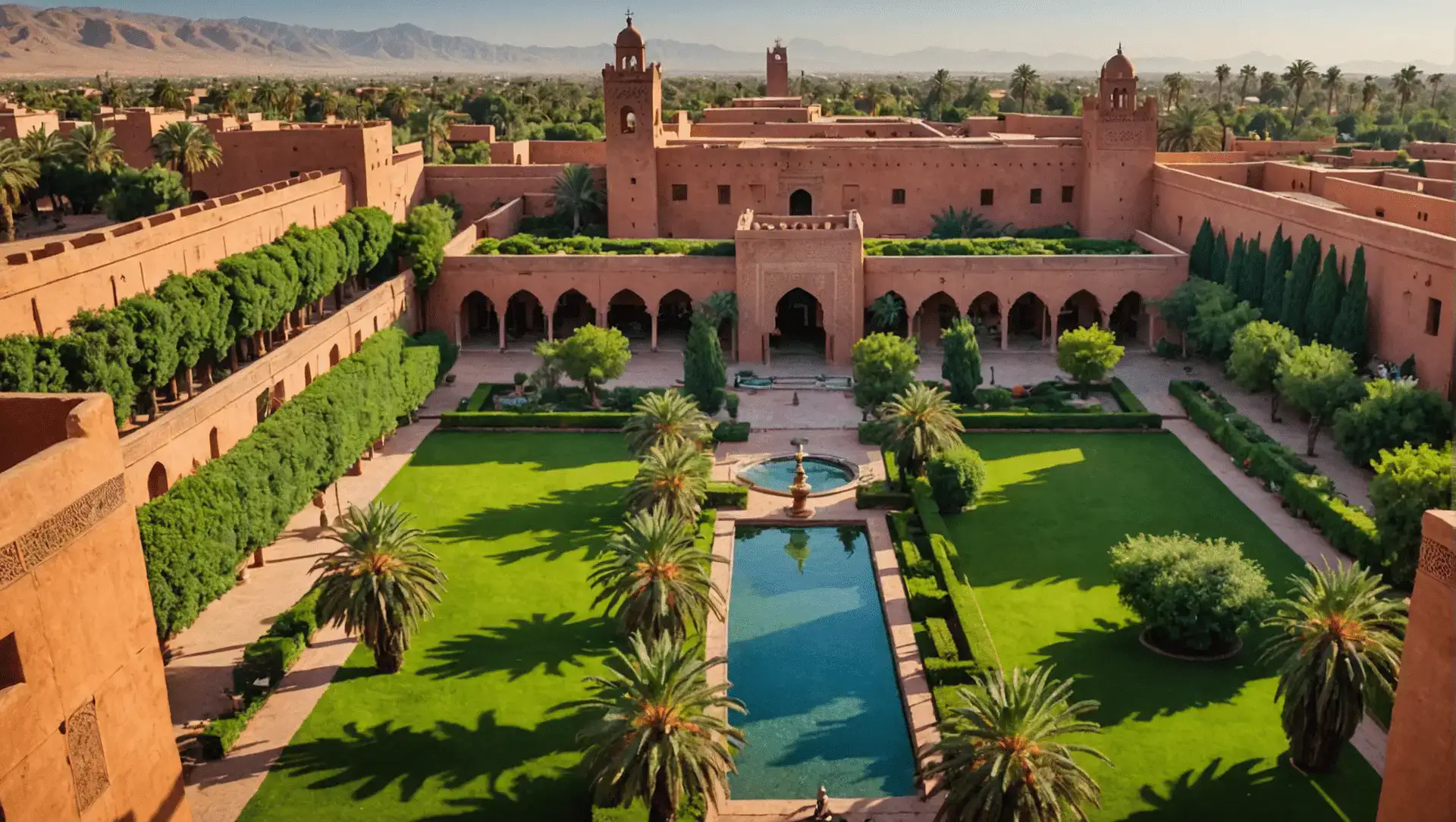
Dating back to the 12th-century Almohad dynasty, Agdal Gardens represents nearly nine centuries of Moroccan royal heritage, spanning over 500 hectares of olive groves, orchards, and historic water systems. Established in 1157 by Abd al-Mu’min, this UNESCO World Heritage Site combines agricultural function with advanced hydraulic engineering that still operates today.
Agdal Gardens can be included in our Egypt and Morocco travel packages, where Morocco’s imperial landscapes are combined with its cultural landmarks and Egypt’s ancient wonders for a rich and immersive travel experience.
From the Dar El Hana pavilion, visitors can enjoy views of the Atlas Mountains, while the traditional khettara irrigation channels reveal the ingenuity behind sustaining such a vast landscape for centuries.
With the right context, a walk through Agdal becomes more than a peaceful escape—it becomes a journey into Morocco’s royal past and environmental innovation.
The Royal Heritage Behind Morocco’s Largest Historic Garden
The Almohad caliph Abd al-Mu’min conceived Agdal Gardens in 1157 as both a productive agricultural estate and a pleasure retreat for the royal court. The name itself derives from the Berber term meaning “walled meadow,” reflecting the garden’s dual purpose as enclosed royal grounds along the wadi banks south of Marrakech.
From Almohad Innovation to Saadian Renaissance
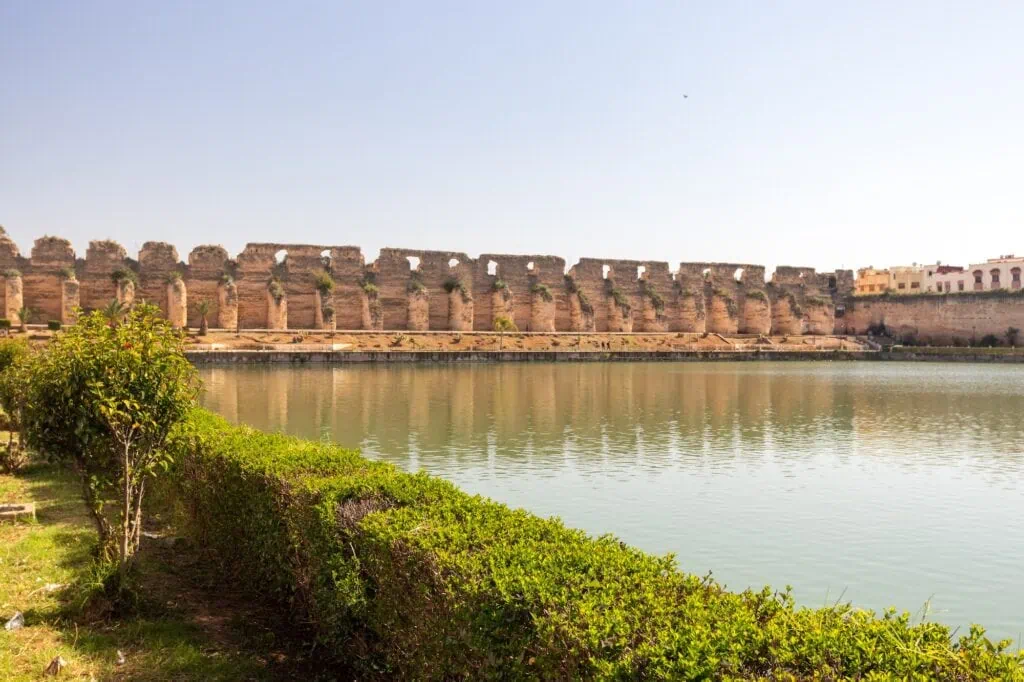
Under successive dynasties, Agdal evolved far beyond its original scope. The Saadian rulers of the 16th and 17th centuries, particularly Ahmad al-Mansur, expanded the gardens with new palace complexes and refined the irrigation systems. Archaeological evidence reveals mills, sugar factories, and gunpowder facilities that once operated within the garden walls, transforming this space into an industrial as well as agricultural hub.
Alaouite Dynasty Preservation
The current Alaouite royal family, ruling since the 17th century, has maintained Agdal’s essential character while adapting it for modern use. Dar el-Beida palace serves as a contemporary royal residence, demonstrating the site’s continued relevance to Morocco’s monarchy. This seamless transition from medieval caliph retreat to modern royal estate illustrates the garden’s enduring importance in Moroccan political and cultural life.
UNESCO Recognition and Cultural Landscape Values
In 1985, UNESCO designated Agdal Gardens as part of Marrakech’s World Heritage Site, acknowledging its significance as a paradigmatic cultural landscape. The designation follows principles established in the Florence Charter of 1982, recognizing gardens that demonstrate exceptional interaction between human culture and natural environment over extended periods.
Architectural Marvels Within the Garden Walls
Two monumental structures anchor Agdal’s architectural landscape, each representing different eras of royal building traditions.
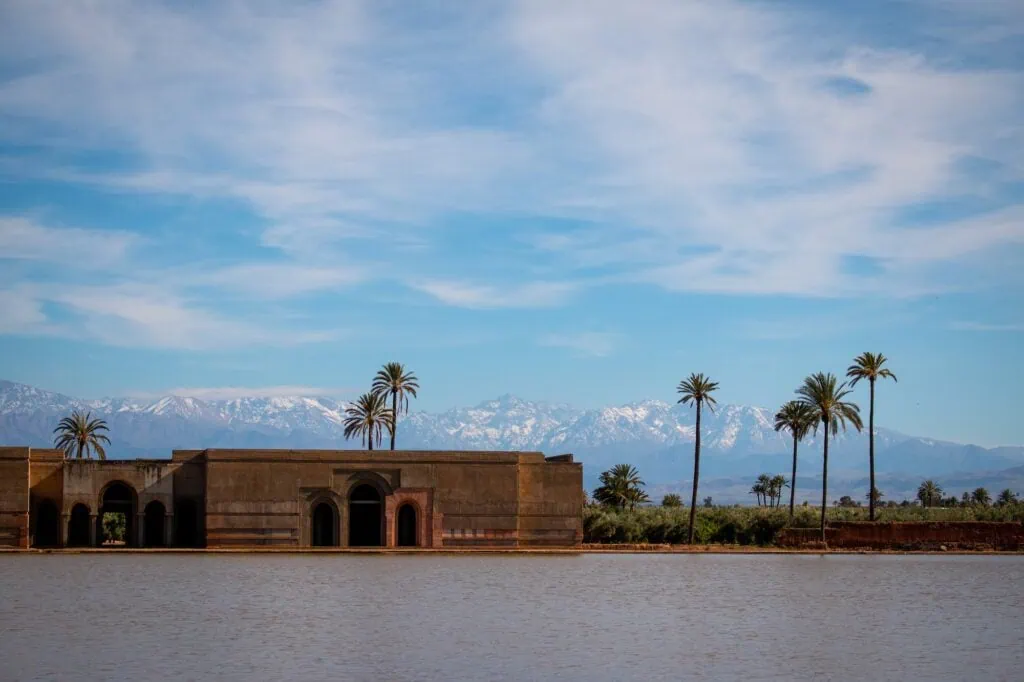
Dar al-Hana pavilion commands the garden’s highest elevation, offering sweeping views across the olive groves toward the High Atlas Mountains. Originally constructed as a summer retreat, this pavilion features traditional Moroccan architectural elements including horseshoe arches, intricate tilework, and carved cedar ceilings. The elevated terrace provides the garden’s best vantage point for photography, particularly during golden hour when the Atlas peaks catch the setting sun. Dar al-Bayda palace, meaning “White House,” represents later Alaouite architectural preferences with its more austere facade and geometric garden layouts. The palace complex includes stables, a boathouse, and service buildings that supported the royal household during extended stays.
Between these major structures, smaller pavilions and utility buildings dot the landscape, many dating to different construction periods. Archaeological surveys have revealed foundation remains of Saadian-era mills and workshops, providing glimpses into the garden’s former industrial functions. The contrast between ornate pleasure pavilions and functional agricultural buildings reflects Agdal’s unique dual character as both royal retreat and working estate.
The Engineering Marvel of Agdal’s Water Systems
Agdal’s survival across nine centuries depends entirely on its sophisticated hydraulic infrastructure, representing one of North Africa’s most impressive examples of traditional water management.
Khettara Underground Channels
The garden’s primary water source flows through an extensive khettara system—underground channels that transport water from the Atlas Mountain foothills across 15 kilometers (9.3 miles) of desert terrain. These channels, similar to Persian qanats, maintain consistent water flow through gravity-fed distribution networks that require minimal maintenance. Master engineers designed the khettara gradients with mathematical precision, ensuring optimal flow rates while preventing erosion or blockages.
Surface Distribution Through Seguias
Once khettara water reaches the garden perimeter, an intricate network of seguias (surface irrigation channels) distributes water throughout the 500-hectare estate. These channels follow contour lines, directing water to specific garden zones based on crop water requirements and seasonal growing cycles. Adobe walls and stone barriers control water flow, while wooden gates allow gardeners to redirect irrigation as needed.
The Dar al-Hana Reservoir System
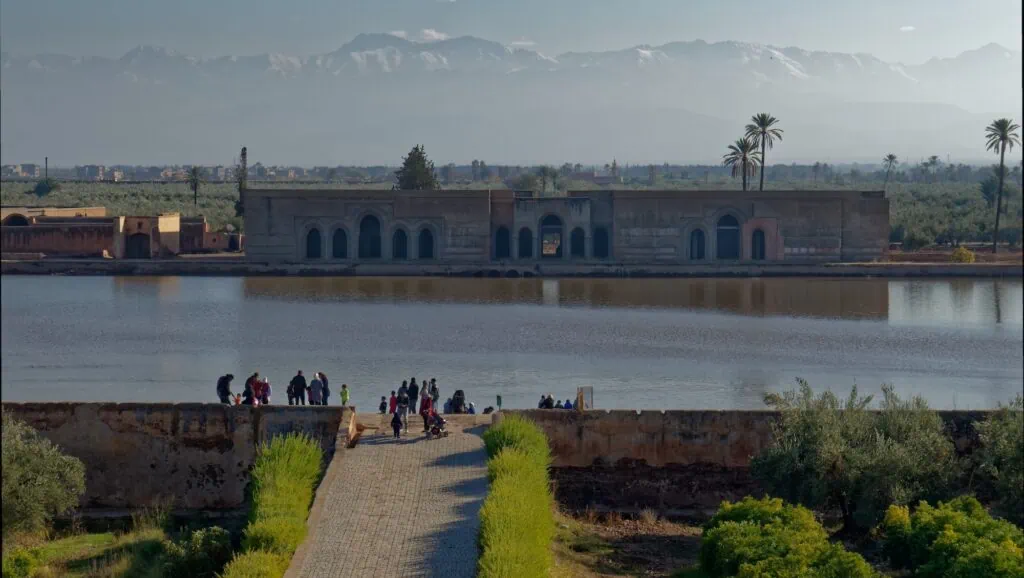
At the garden’s heart sits the massive Dar al-Hana reservoir, engineered to store water during peak flow periods and release it during dry seasons. This reservoir, along with smaller collection pools throughout the estate, ensures year-round water security for the gardens’ extensive agricultural operations. The reservoir walls, built from local stone and traditional mortar, have withstood centuries of seasonal flooding and drought cycles.
Modern hydrological studies reveal that Agdal’s water systems continue functioning with remarkable efficiency, requiring only periodic maintenance to clear sediment buildup and repair weather damage to channel walls.
What Grows in Morocco’s Royal Agricultural Estate
Agdal Gardens operates as a productive agricultural landscape, maintaining food production traditions established over eight centuries ago. The estate’s botanical collections reflect both practical farming needs and royal aesthetic preferences, creating a unique blend of utility and beauty.
Olive groves dominate the garden’s eastern sections, with some trees dating back several centuries. These ancient specimens produce high-quality olives for both oil production and table use, following traditional cultivation methods passed down through generations of royal gardeners. The olive harvest typically occurs between October and December, when the estate’s agricultural workers continue age-old picking and pressing techniques.
Citrus orchards occupy the garden’s more sheltered areas, protected from desert winds by strategic tree placement and earthwork barriers. Orange, lemon, and grapefruit trees thrive in the microclimate created by the irrigation systems and windbreak plantings. Pomegranate trees, symbols of fertility and prosperity in Moroccan culture, grow alongside fig and apricot trees throughout the garden’s interior courtyards.
Modern botanical surveys have catalogued over 300 plant species within the garden walls, including many varieties rare to the Marrakech region. The Med-O-Med restoration project, involving international botanical experts, works to preserve heirloom fruit varieties and traditional Moroccan garden plants that might otherwise disappear from cultivation.
Seasonal plantings include vegetables and herbs used in royal kitchens, maintaining the garden’s role as a supplier of fresh produce for palace use. These crops rotate according to traditional Islamic agricultural calendars, demonstrating the integration of religious practice with farming cycles that has characterized Moroccan agriculture for over a millennium.
Planning Your Visit to Agdal Gardens
Understanding Agdal’s unique access schedule and practical considerations ensures a rewarding experience at this remarkable historical site.
Limited Opening Schedule
Agdal Gardens opens to the public only on Fridays and Sundays from 7:30 am to 5:00 pm (07:30 to 17:00). This restricted schedule reflects the site’s continued use as royal property and its need for ongoing agricultural maintenance. We recommend planning your Marrakech itinerary around these specific opening days, as the gardens remain completely closed to visitors during the rest of the week.
Arrival during morning hours offers the best experience, with cooler temperatures, better lighting for photography, and fewer crowds. The gardens can become quite warm during midday hours, particularly in summer months when temperatures may exceed 35°C (95°F).
Getting There and What to Expect
The gardens are located approximately 3 kilometers (1.9 miles) south of Marrakech’s main square, Jemaa el-Fnaa. Walking from the medina center requires 45-60 minutes through residential neighborhoods and can be challenging due to limited signage. We recommend taking a taxi or arranging private transportation, particularly during hot weather or if you plan to visit multiple sites in one day.
Entrance to Agdal Gardens is free of charge, making it one of Marrakech’s most accessible major attractions. However, visitors should bring water, sun protection, and comfortable walking shoes, as the site offers limited shade and covers extensive ground. The garden’s paths are generally well-maintained but can be uneven in places.
Managing Expectations
Unlike the manicured formal gardens found in European palaces, Agdal maintains a more rustic, agricultural character. Visitors expecting elaborate floral displays or pristine landscaping may find the olive groves and working irrigation channels less impressive than other Marrakech attractions like Majorelle Garden or Menara Gardens.
The site’s historical significance and engineering marvels become more apparent with some background knowledge, which is why we recommend reading about the gardens’ history before visiting or arranging a guided tour that can highlight features easily missed by casual observers.
Conservation Efforts and Modern Restoration
The ongoing Med-O-Med project represents one of Morocco’s most ambitious cultural heritage restoration initiatives, bringing together international experts to preserve Agdal Gardens for future generations.
This multidisciplinary effort combines archaeological research, botanical conservation, architectural restoration, and tourism development planning. Scientific teams from universities across Europe and North Africa collaborate with Moroccan specialists to document and preserve the gardens’ complex layered history.
Archaeological work focuses on uncovering and stabilizing industrial remains from the Saadian period, including mill foundations and workshop areas that reveal the gardens’ former economic importance. These excavations provide new insights into medieval Moroccan technology and trade networks.
Botanical conservation efforts aim to preserve heritage fruit varieties and traditional Moroccan garden plants. Researchers work with elderly gardeners to document cultivation techniques and plant varieties that risk disappearing as agricultural practices modernize.
The restoration project also addresses infrastructure needs, including channel maintenance, path improvement, and visitor facility development, ensuring the gardens remain accessible while preserving their historical authenticity.
How Agdal Gardens Compare to Other Marrakech Attractions
Within Marrakech’s garden landscape, Agdal occupies a unique position as the city’s largest and most historically significant green space, yet it attracts far fewer visitors than more famous alternatives.
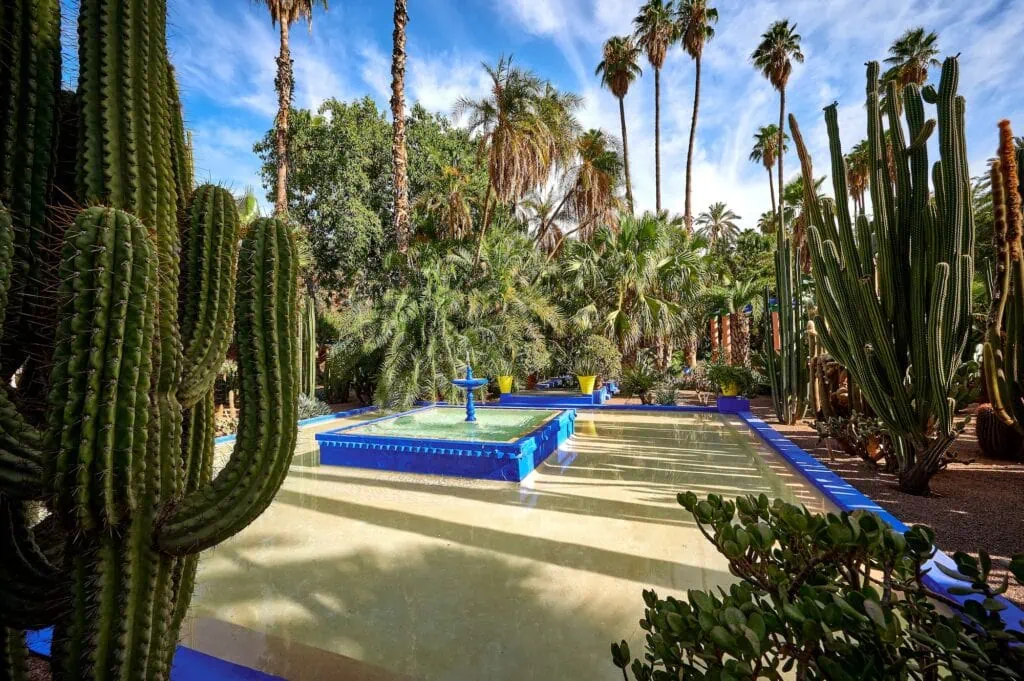
Majorelle Garden, with its vibrant blue villa and exotic plant collections, offers a completely different experience focused on 20th-century artistic vision and contemporary botanical display. Visitors seeking Instagram-worthy photography and cultivated beauty often prefer Majorelle’s intimate, designed spaces over Agdal’s sprawling agricultural landscape.
Menara Gardens, featuring its iconic pavilion reflected in a large olive grove pool, provides a middle ground between formal garden design and agricultural function. However, Menara’s 12th-century origins and smaller scale cannot match Agdal’s historical scope or engineering complexity.
What sets Agdal apart is its authentic working character and unparalleled historical continuity. This is not a museum garden maintained for tourist viewing, but a living agricultural estate that continues fulfilling its original royal and productive functions after nine centuries of operation.
For travelers interested in understanding Morocco’s imperial history, traditional agriculture, or Islamic garden design, Agdal provides insights unavailable at Marrakech’s more tourist-oriented attractions. The experience requires more patience and imagination but offers deeper cultural understanding.
Seasonal Considerations for Garden Visits
Different times of year reveal distinct aspects of Agdal Gardens’ character, from agricultural cycles to weather patterns that dramatically affect the visitor experience.
Spring months (March through May) showcase the gardens at their most vibrant, with fruit trees in bloom and irrigation channels running at full capacity. Temperatures remain comfortable for extended walking, typically ranging from 20-28°C (68-82°F), making this the ideal period for photography and leisurely exploration.
Summer visits (June through August) require significant heat preparation, as temperatures can exceed 40°C (104°F) during midday hours. However, summer also offers unique insights into the gardens’ water management systems, as the irrigation networks work at maximum efficiency to maintain plant health during the hottest months.
Autumn (September through November) brings harvest seasons for olives and citrus fruits, providing opportunities to observe traditional agricultural practices still employed by the gardens’ workers. Morning visits during this period often coincide with harvesting activities, offering glimpses into the estate’s continued productive function.
Winter months (December through February) present the gardens in their most austere beauty, with bare fruit trees revealing the underlying architectural structure of the irrigation systems and pathways. While temperatures remain mild (10-20°C or 50-68°F), reduced vegetation allows clearer views of the gardens’ engineering features and historical ruins.
Frequently Asked Questions
The gardens open only on Fridays and Sundays from 7:30 am to 5:00 pm.
Admission is completely free, making it one of Marrakech’s most accessible major attractions.
Allow 2-3 hours for thorough exploration including walking paths and visiting palace areas.
We recommend taxi or private transport due to distance and limited signage.
The gardens have minimal visitor facilities, so bring water and snacks.
Early morning (8:00-10:00 am) offers the best light for Atlas Mountain views.
Agdal focuses on historical heritage across 500 hectares while Majorelle offers artistic design.
Limited shade under olive trees exists, making sun protection essential for comfort.
Yes, the khettara channels function daily with water flow visible during morning hours.
Private guides can be arranged through tour operators in Marrakech for enhanced experience.
Pack water, sun protection, comfortable walking shoes, and snacks for extended exploration.
World Heritage designation preserves authentic working character rather than creating static museums.
Design Your Custom Tour
Explore Egypt & Morocco your way by selecting only the attractions you want to visit