

Aqmar Mosque – The Oldest Surviving Example of Small Mosques
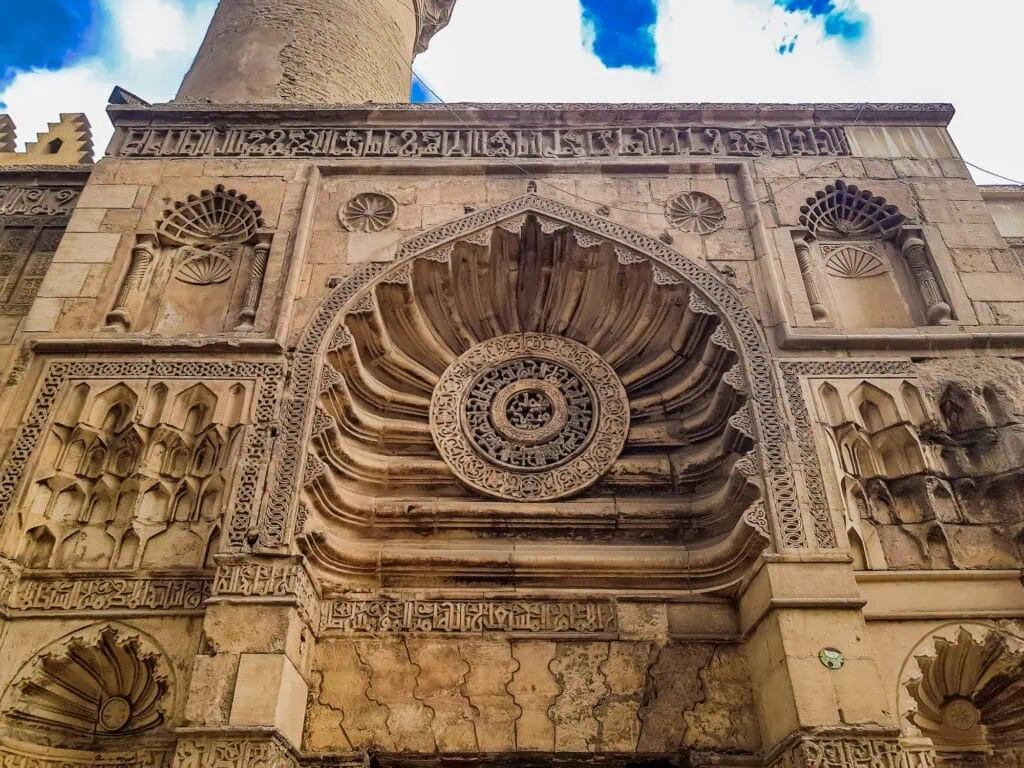
The Aqmar Mosque stands as Cairo’s earliest example of ornate facade decoration.
Built in 1125 CE during the Fatimid period, this remarkable monument introduced revolutionary architectural concepts to Islamic Cairo that would influence mosque design for centuries. Vizier al-Ma’mun al-Bata’ihi commissioned this groundbreaking structure under Caliph al-Amir’s reign, creating what scholars recognize as a pivotal moment in Egyptian Islamic architecture. The mosque’s innovative approach to street alignment and decorative stonework established new standards for urban mosque construction.
Located on the prestigious al-Mu’izz Street in the heart of Islamic Cairo, this architectural gem continues to inspire visitors and researchers alike. We’ll explore how this modest-sized mosque achieved such monumental influence in the world of Islamic architecture.
Fatimid Innovation in Mosque Design
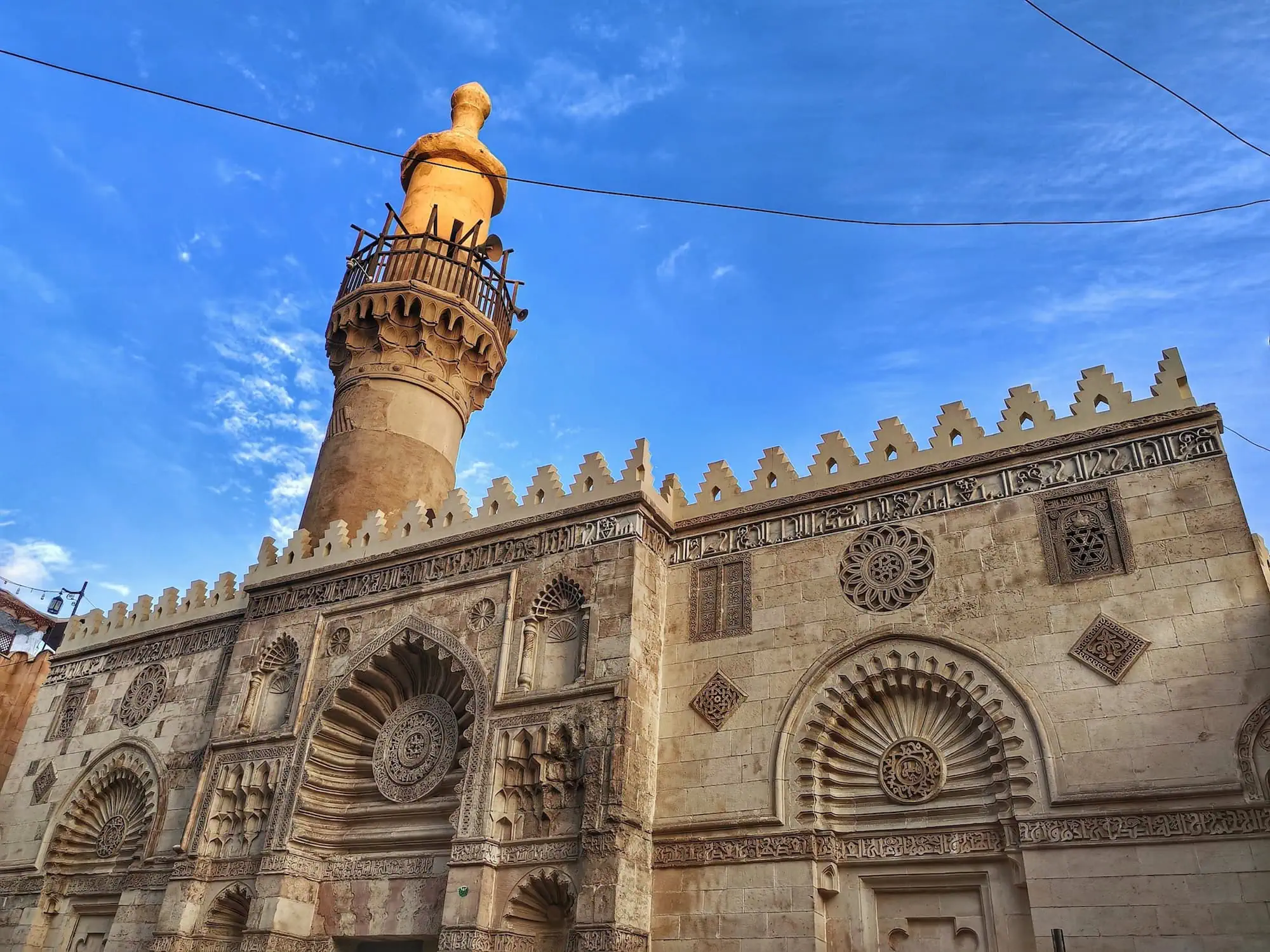
The Aqmar Mosque revolutionized mosque architecture through several groundbreaking design elements. Most significantly, it was the first mosque in Cairo to feature an elaborately decorated stone facade, breaking from the tradition of plain exterior walls.
The Revolutionary Facade Design
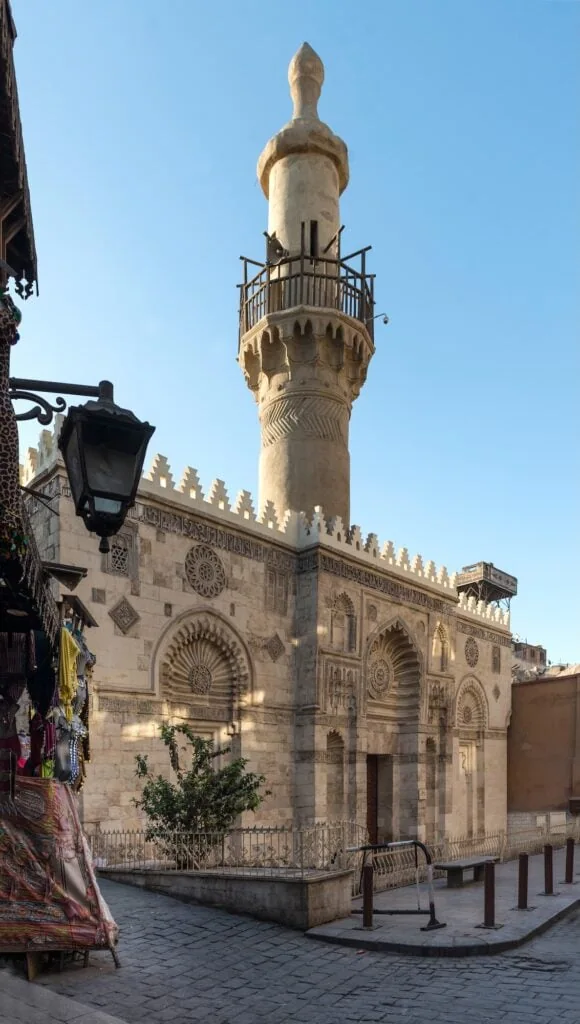
The mosque’s facade showcases intricate stone carving techniques that were unprecedented in Egyptian mosque architecture. Floriated Kufic script adorns the entrance, creating elegant calligraphic patterns that blend religious text with artistic beauty. These decorative elements include complex geometric patterns and muqarnas – the honeycomb-like decorative vaulting that became a signature element of Islamic architecture.
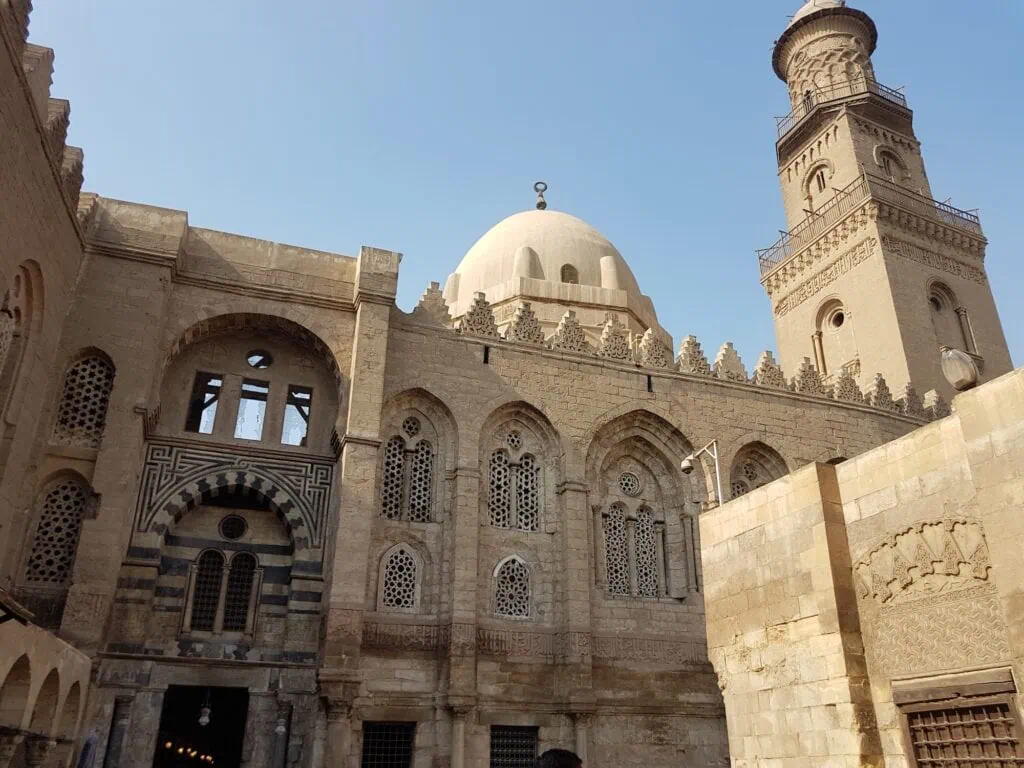
The stonework demonstrates remarkable craftsmanship, with each carved element serving both aesthetic and symbolic purposes. Inscriptions reference the mosque’s founding date and commissioners, preserving historical information within the decorative scheme.
Street Alignment Innovation
Perhaps even more revolutionary was the mosque’s approach to urban planning. The Aqmar Mosque was the first in Cairo to adjust its floor plan to accommodate both proper qibla orientation toward Mecca and alignment with the existing street pattern. This innovation solved a persistent challenge in Islamic urban architecture – maintaining religious requirements while fitting harmoniously into city layouts.
The architects achieved this through a clever angled entrance that redirects visitors from the street-facing facade toward the properly oriented prayer hall. This design concept influenced countless later mosques throughout the Islamic world.
Historical Context and Patronage
Vizier al-Ma’mun al-Bata’ihi’s decision to commission the Aqmar Mosque reflected the Fatimid dynasty’s commitment to architectural innovation and religious expression.
During the early 12th century, the Fatimid caliphate sought to demonstrate its cultural sophistication through monumental architecture. The choice of al-Mu’izz Street as the location emphasized the mosque’s importance – this thoroughfare served as medieval Cairo’s primary ceremonial avenue. Caliph al-Amir’s support for the project demonstrated royal backing for architectural experimentation.
The mosque’s construction utilized both traditional and innovative building techniques. Brick formed the primary structural material, while carefully carved stone created the decorative facade. This combination allowed builders to achieve both structural integrity and artistic excellence within reasonable construction timelines.
The Builder’s Legacy
Al-Ma’mun al-Bata’ihi chose to memorialize his patronage through prominent inscriptions. These texts, carved in floriated Kufic script, provide crucial historical documentation about Fatimid building practices and political relationships. The inscriptions also demonstrate the high level of calligraphic artistry achieved by 12th-century craftsmen.
Architectural Significance in Islamic Cairo
The mosque earned the nickname “Moonlit Mosque” due to its pale stone facade that seems to glow in evening light. This poetic name reflects the building’s visual impact on medieval Cairo’s streetscape.
As Islamic Cairo’s first mosque with elaborate facade decoration, the Aqmar Mosque established precedents that influenced hundreds of later buildings. The decorative program proved that religious architecture could be both spiritually meaningful and artistically sophisticated. Subsequent mosque builders throughout Egypt and beyond adopted similar approaches to exterior ornamentation.
The building’s modest size – significantly smaller than earlier congregational mosques – also introduced new concepts about neighborhood religious architecture. Rather than serving as a major congregational facility, the Aqmar Mosque functioned as a local prayer space with enhanced aesthetic appeal.
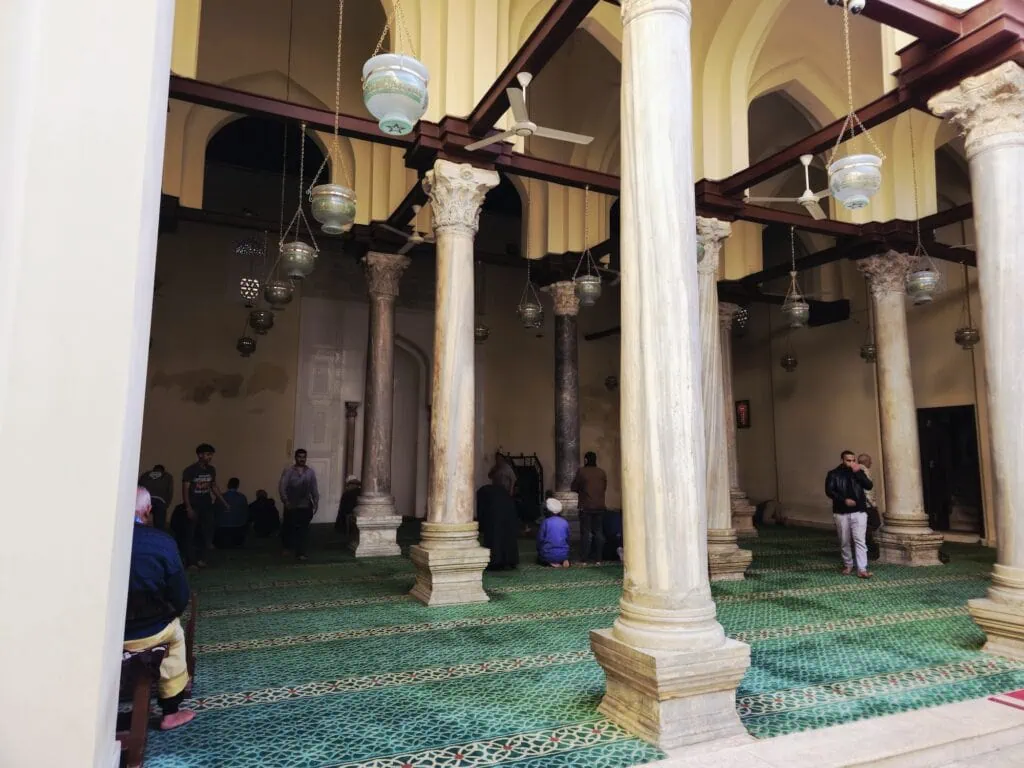
The hypostyle interior layout follows traditional patterns while incorporating the innovative entrance alignment system. This combination of familiar and revolutionary elements helped the mosque gain acceptance among religious authorities while advancing architectural possibilities.
Scholars consider the Aqmar Mosque a crucial link between early Islamic architecture and later Mamluk developments. The decorative techniques pioneered here appear in countless later buildings throughout Islamic Cairo, creating a visual vocabulary that defines the historic district’s character.
Restoration and Modern Recognition
The Aqmar Mosque underwent significant restoration during the Mamluk period under Amir Yalbugha al-Salimi. These 14th-century renovations preserved the original Fatimid decorative scheme while adding new architectural elements that reflected contemporary building practices.
Modern conservation efforts have focused on protecting the mosque’s unique stone facade from urban pollution and weathering. The building’s location on busy al-Mu’izz Street exposes it to significant environmental challenges that require ongoing maintenance attention. Recent restoration work has carefully cleaned the stone surfaces while preserving original carved details.
Archaeological investigations have revealed construction techniques and building phases that weren’t apparent from surface observation. These studies confirm the mosque’s pioneering role in Egyptian architectural development and provide insights into Fatimid building practices.
The mosque’s recognition as a UNESCO World Heritage Site component emphasizes its global architectural significance. International preservation standards now guide maintenance decisions, ensuring that future generations can appreciate this remarkable building’s contributions to Islamic architecture.
We offer specialized tours of Islamic Cairo that include detailed exploration of the Aqmar Mosque’s architectural innovations. Our expert guides provide in-depth analysis of the building’s decorative programs and historical context, helping visitors understand its pivotal role in mosque design evolution.
Planning Your Visit to Aqmar Mosque
The mosque is located on al-Mu’izz Street, easily accessible during most Islamic Cairo walking tours. Visitors can examine the facade decoration up close, though interior access may be limited due to ongoing preservation work.
Best Viewing Times
Early morning light highlights the facade’s stone carving details most effectively. The pale limestone creates subtle shadow patterns that emphasize the three-dimensional quality of the decorative elements. Late afternoon visits offer different lighting conditions that can reveal carved details not apparent at other times.
Photography is generally permitted for the exterior facade, though visitors should respect any posted restrictions. The narrow street width requires careful positioning to capture the full facade in photographs.
Combining Your Visit
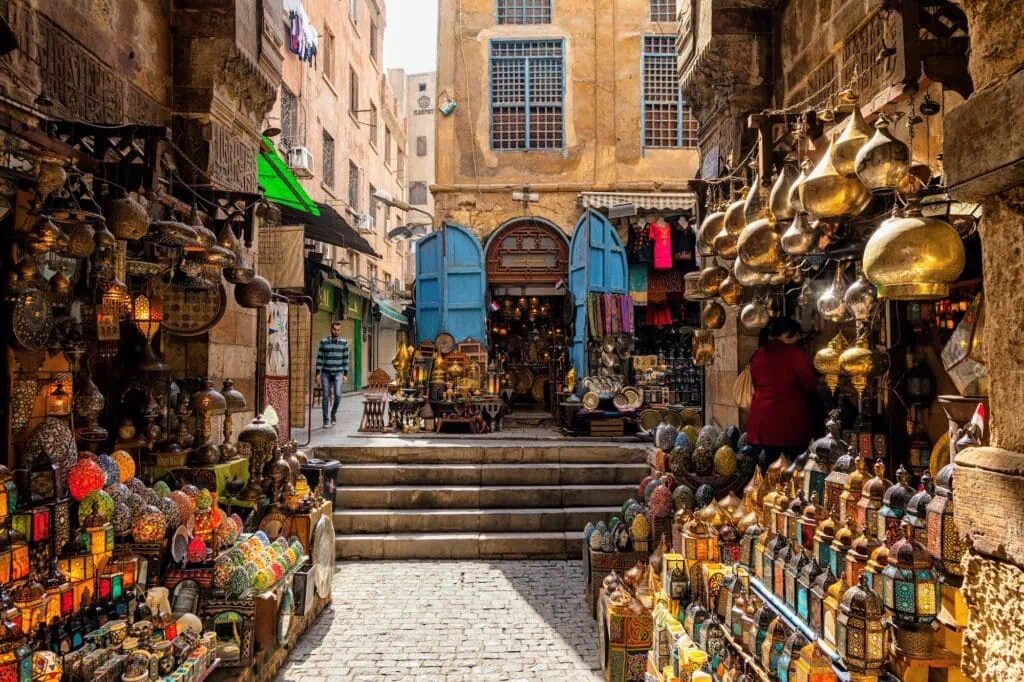
The Aqmar Mosque works perfectly as part of a comprehensive Islamic Cairo exploration. Al-Mu’izz Street features numerous other historic mosques, madrasas, and monuments within walking distance. Many visitors combine the mosque with nearby attractions like the al-Azhar Mosque and the historic Khan el-Khalili bazaar.
We design custom itineraries that place the Aqmar Mosque within proper architectural and historical context. Our private guides can explain the building’s innovations while connecting them to broader patterns in Islamic architecture development.
The Mosque’s Influence on Islamic Architecture
Understanding the Aqmar Mosque requires appreciating its role in architectural evolution. The building bridged traditional Islamic design principles with urban planning realities, creating solutions that became standard practice throughout the medieval Islamic world.
The facade decoration program established templates for integrating calligraphy, geometric patterns, and muqarnas into cohesive design schemes. Later architects adapted these techniques to buildings of all scales, from neighborhood mosques to royal complexes. The visual vocabulary pioneered at the Aqmar Mosque appears in Islamic architecture across North Africa, the Middle East, and beyond.
Construction techniques developed for the mosque also influenced later building practices. The combination of structural brick and decorative stone facing became a preferred method for achieving both economy and beauty in religious architecture.
The mosque’s success in reconciling religious orientation with urban planning constraints provided a model for countless later projects. Cities throughout the Islamic world faced similar challenges, and architects regularly returned to the Aqmar Mosque’s solutions for inspiration.
Frequently Asked Questions
When was the Aqmar Mosque built?
The mosque was constructed in 1125 CE during the Fatimid period.
Who commissioned the Aqmar Mosque?
Vizier al-Ma’mun al-Bata’ihi commissioned the mosque as demonstrated by historical inscriptions.
What makes the Aqmar Mosque architecturally significant?
It was Cairo’s first mosque with elaborate facade decoration and street alignment solutions.
Where is the Aqmar Mosque located in Cairo?
The mosque stands on al-Mu’izz Street in Islamic Cairo’s heart.
Why is it called the “Moonlit Mosque”?
The pale stone facade creates a luminous appearance, especially in evening light.
Can visitors enter the mosque interior?
Interior access varies due to conservation work, but the facade remains accessible.
What architectural innovations did the mosque introduce?
It pioneered decorated stone facades and floor plan street alignment in Cairo.
How does it relate to other Islamic Cairo monuments?
It established decorative precedents that influenced hundreds of later historic district buildings.
What restoration work has been completed?
Mamluk-period renovations preserved the building, while modern conservation protects the facade.
How can I include the Aqmar Mosque in my Cairo visit?
We offer specialized Islamic architecture tours providing expert interpretation of the mosque’s innovations.

Design Your Custom Tour
Explore Egypt your way by selecting only the attractions you want to visit