

Church of St. Barbara – A Resting Place for the Holy Family
Few places bridge ancient spirituality and architectural mastery quite like this remarkable sanctuary.
Nestled within the historic walls of Old Cairo, the Coptic Church of Saint Barbara stands as one of Egypt’s most significant religious monuments, drawing thousands of visitors who seek both spiritual connection and cultural understanding. Dating back to the 5th or 6th century AD, this ancient basilica has weathered centuries of change while preserving its sacred role as a cornerstone of Egyptian Christianity. The church’s strategic location within the Babylon Fortress area places it at the heart of Coptic Cairo, surrounded by other historic treasures that collectively tell the story of Egypt’s rich Christian heritage.
We’ve witnessed countless travelers discover unexpected depths of meaning within these ancient walls, where every marble column and carefully preserved relic speaks to a living tradition that has endured for over fifteen centuries.
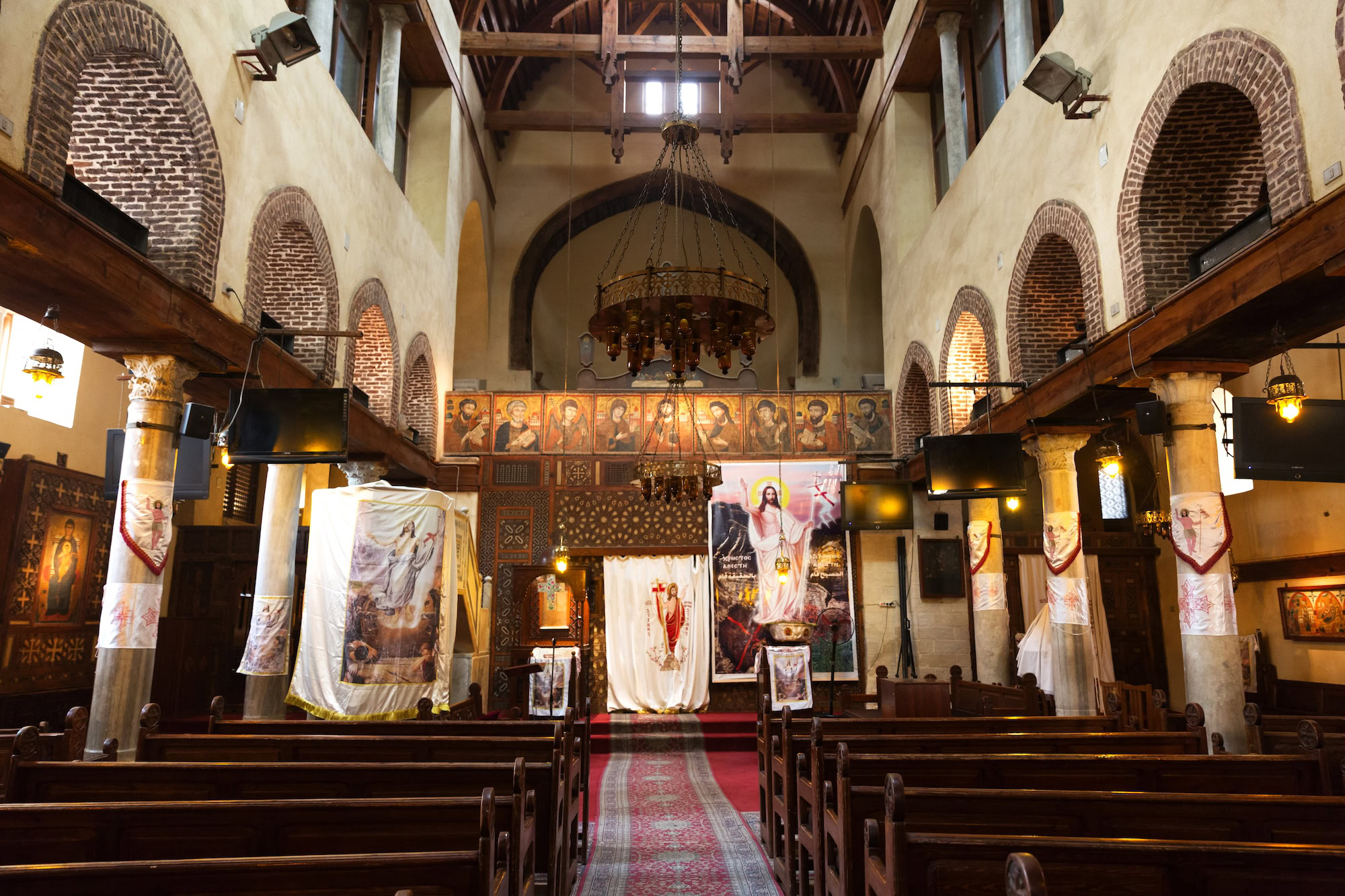
A Sacred Legacy Within Ancient Walls
The church’s foundation rests on layers of history that stretch back to Roman times. Archaeological evidence suggests the current structure occupies a site that has hosted Christian worship since the earliest days of Egyptian Christianity, making it one of the oldest continuously active churches in the region.
The Fortress Connection
Built within the protective embrace of the Babylon Fortress, Saint Barbara Church shares its foundations with one of Cairo’s most strategically important ancient sites. The Roman fortification provided security for early Christian communities during periods of persecution, creating a sanctuary where faith could flourish despite external pressures. This positioning within the fortress walls connects the church directly to Egypt’s transition from Roman rule to Christian prominence, offering visitors a tangible link to pivotal moments in religious history.
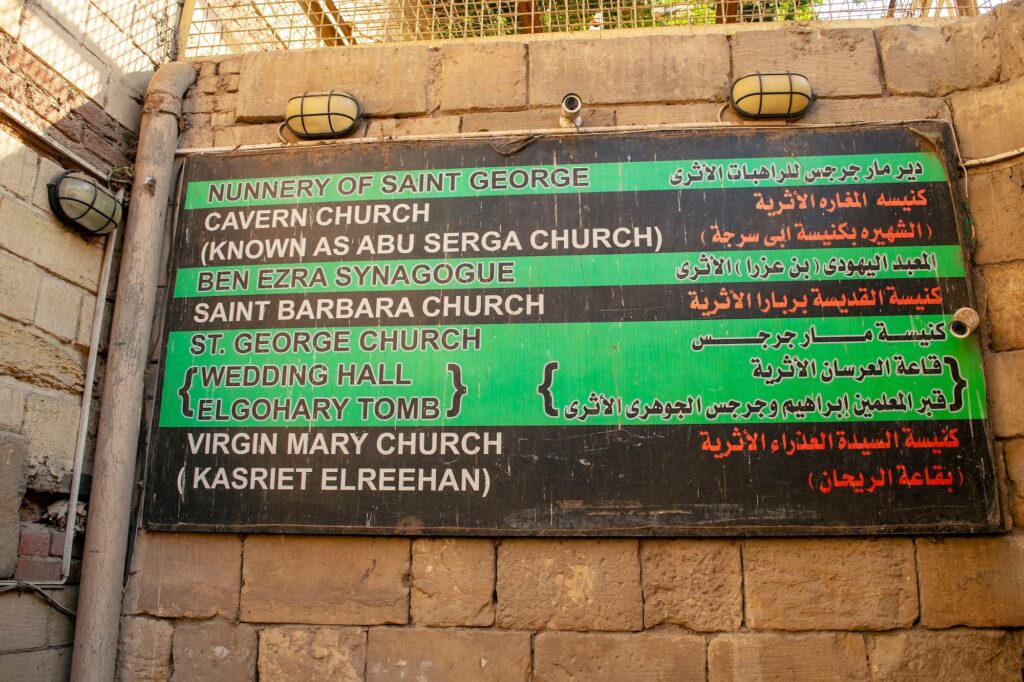
The fortress walls themselves tell stories of conquest and faith, having sheltered Christian communities through Byzantine rule and into the Islamic period, demonstrating remarkable continuity of worship across changing empires.
Architectural Evolution Through Time
Saint Barbara’s basilican structure reflects the sophisticated understanding of sacred architecture that characterized early Christian builders in Egypt. The tripartite sanctuary, with its distinctive three-part division, follows ancient liturgical traditions while incorporating uniquely Egyptian elements that distinguish it from contemporary churches elsewhere in the Christian world.
Multiple reconstructions over the centuries have layered architectural influences, creating a building that reads like a timeline of Egyptian Christian craftsmanship. The most extensive renovation between 1910 and 1922 carefully preserved original elements while strengthening the structure for modern worshippers.
The Relics of Saint Barbara
Central to the church’s spiritual significance are the precious relics of Saint Barbara herself, martyred in the 3rd century for her Christian faith. These remains, housed within the church since ancient times, continue to draw pilgrims from across the Orthodox world who come to pray and seek blessing from this beloved saint.
The presence of these relics transforms the church from a historical monument into a living center of devotion, where centuries-old traditions of prayer and veneration continue uninterrupted.
Discovering Architectural Treasures
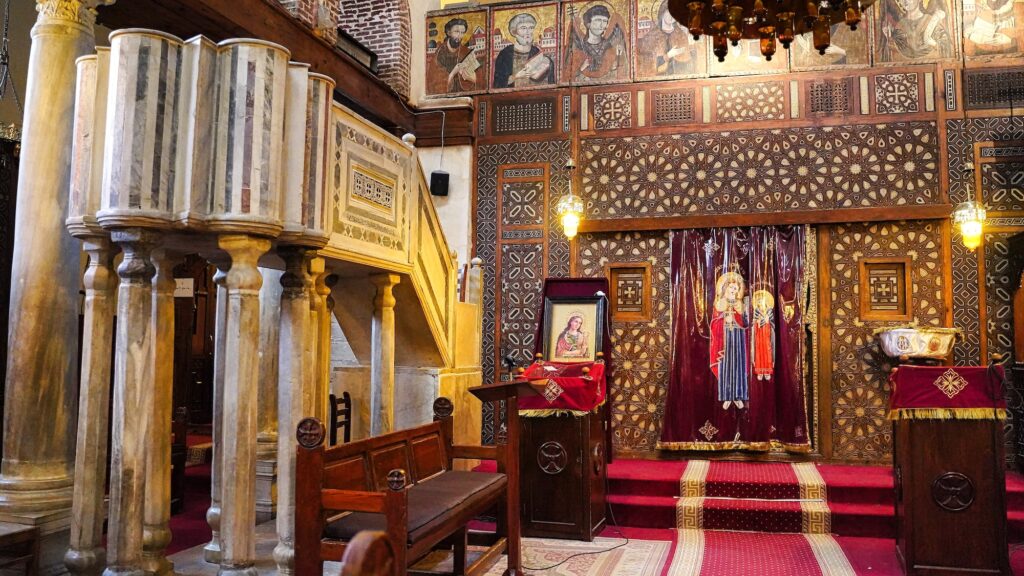
Walking through Saint Barbara Church reveals layer upon layer of artistic achievement spanning fifteen centuries. The domed apse rises majestically above the altar area, its seven marble steps creating a dramatic ascent decorated with alternating bands of black, white, and red marble that catch and reflect the soft light filtering through ancient windows.
Each decorative element serves both aesthetic and spiritual purposes. The marble work demonstrates the high level of craftsmanship available to church builders in medieval Cairo, while the color symbolism carries deep theological meaning for Orthodox worshippers. Black represents the earth and human mortality, white symbolizes divine purity, and red speaks to the sacrifice of Christ and the martyrs.
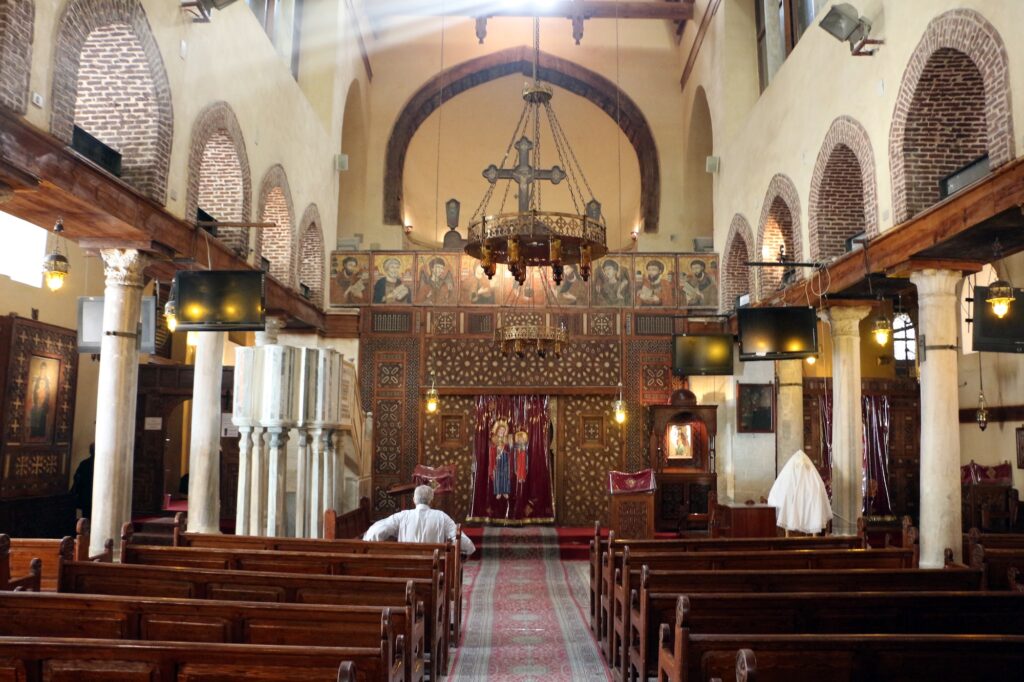
The church’s interior spaces flow naturally from the narthex through the nave to the sanctuary, following traditional Orthodox liturgical requirements while accommodating the unique constraints of its fortress setting. Ancient wooden screens, carved with intricate geometric patterns, separate different areas of worship while maintaining visual connection throughout the sacred space.
Preserved Medieval Elements
Despite multiple renovations, significant portions of the church retain their medieval character. Stone capitals carved with Coptic motifs crown columns that have supported worshippers’ prayers for over a millennium. The altar area preserves ancient liturgical arrangements that continue to serve modern Orthodox services, maintaining an unbroken chain of worship practice.
Original frescoes, though faded by time, still reveal glimpses of medieval artistic vision where biblical scenes come alive through distinctively Egyptian interpretations of Christian iconography.
The Holy Family Tradition
Beyond its architectural significance, Saint Barbara Church holds special meaning within Coptic tradition as one of the documented resting places of the Holy Family during their flight into Egypt. According to ancient accounts preserved by the Coptic Orthodox Church, Mary, Joseph, and the infant Jesus sought shelter in this area during their escape from King Herod’s persecution.
This tradition transforms a visit to Saint Barbara into a pilgrimage experience, connecting modern travelers with one of Christianity’s most foundational stories. The church’s location within Old Cairo places it along the traditional route followed by the Holy Family, creating a spiritual geography that spans the ancient city.
Pilgrims often spend quiet moments in prayer within the church, reflecting on the courage required of the young family as they sought safety in a foreign land. The continuity of worship at this site for over fifteen centuries creates a powerful sense of connection across time, where modern prayers join an unbroken chain of devotion stretching back to the earliest Christian communities in Egypt.
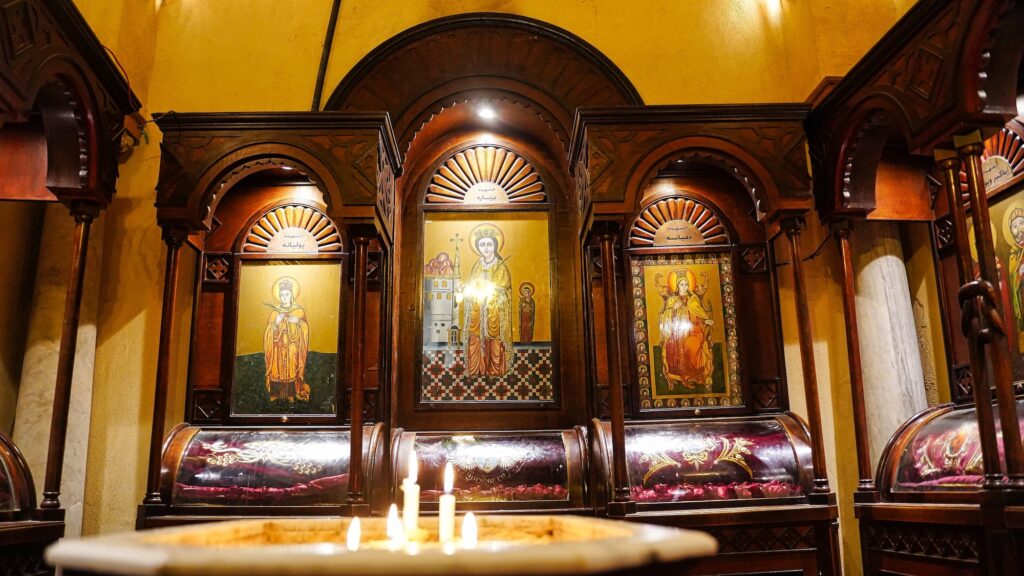
Many visitors describe experiencing a profound sense of peace within the church walls, as if the accumulated prayers of countless generations have sanctified the very stones. This spiritual atmosphere draws people of all backgrounds who seek moments of reflection away from Cairo’s bustling streets.
Local tradition maintains that the Holy Family’s presence blessed this location permanently, making it a source of healing and comfort for all who approach with sincere hearts. Whether or not visitors share this particular faith perspective, most acknowledge the palpable sense of reverence that permeates the sacred space.
Planning Your Visit to Saint Barbara
Accessing Old Cairo’s Sacred Heart
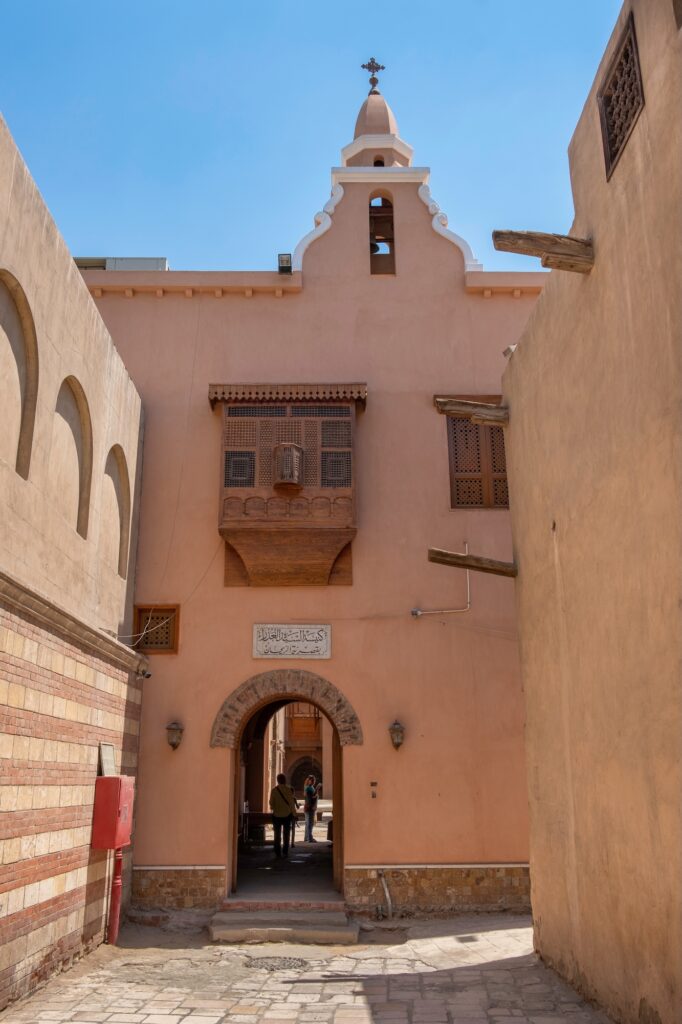
Saint Barbara Church sits within walking distance of Cairo’s Coptic Museum and the famous Hanging Church, making it an essential stop on any exploration of religious Cairo. The church opens daily for visitors, though prayer times and liturgical services take precedence over tourism, creating opportunities to witness living Orthodox tradition in action.
We recommend allowing at least 45 minutes for a meaningful visit, though many travelers find themselves staying longer as they absorb the profound atmosphere of this ancient sanctuary. Early morning visits often provide the most peaceful experience, when soft light illuminates the marble work and fewer crowds allow for quiet contemplation.
What to Expect During Your Visit
The church welcomes visitors respectfully dressed and prepared to observe ongoing religious activities. Photography policies vary depending on service schedules, so inquire with church personnel upon arrival. Many visitors appreciate the opportunity to speak with local church members who often share personal insights about the church’s role in contemporary Coptic life.
Guided tours of Coptic Cairo frequently include Saint Barbara Church as a highlight, providing historical context that enriches the experience significantly. These tours typically last 5 hours and range from $43 per person, offering comprehensive exploration of the area’s interconnected religious sites.
Combining Saint Barbara with Other Sacred Sites
The church’s location within the Coptic quarter creates natural opportunities to visit multiple historic churches in a single day. Abu Serga Church, with its ancient crypt, lies just minutes away, while the Coptic Museum provides scholarly context for the religious traditions encountered throughout the area.
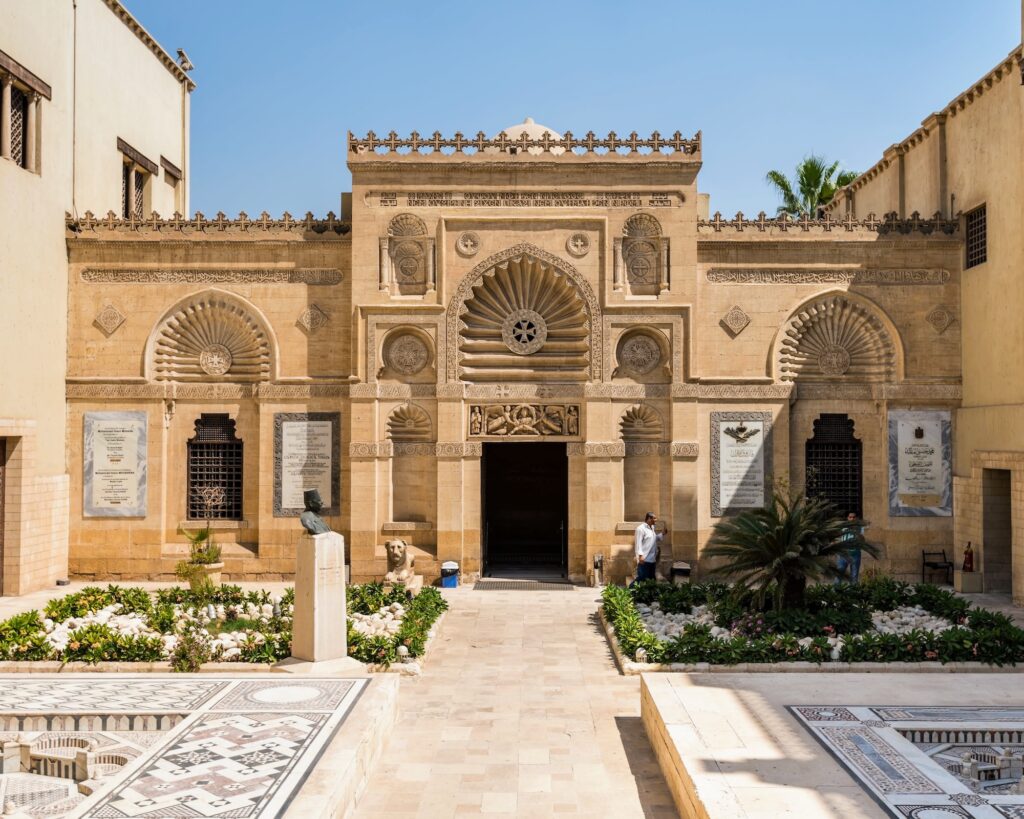
Many visitors choose half-day tours that combine several churches, allowing for comparative appreciation of different architectural styles and historical periods represented in this remarkable neighborhood. Private guides can tailor these experiences to focus on particular interests, whether architectural, historical, or spiritual.
Understanding Coptic Orthodox Heritage
Saint Barbara Church serves as a window into Egypt’s vibrant Coptic Orthodox community, which traces its roots directly to the apostle Mark’s mission to Alexandria in the first century. This living tradition continues to thrive throughout Egypt, maintaining ancient liturgical practices while adapting to contemporary challenges.
The Coptic Language and Liturgy
Services at Saint Barbara incorporate both Arabic and Coptic languages, preserving the ancient tongue that represents the final evolution of the Egyptian language spoken by the pharaohs. Hearing Coptic chanted within these ancient walls creates a direct connection to Egypt’s pre-Islamic heritage, demonstrating remarkable cultural continuity across millennia.
The liturgical traditions observed here follow patterns established by the early church fathers, with particular devotion to the Desert Fathers who established Egyptian monasticism. These practices continue virtually unchanged, offering visitors glimpse into worship styles that would be recognizable to Christians from the earliest centuries.
Community Life and Modern Challenges
Today’s Coptic community around Saint Barbara maintains strong connections to their ancestral faith while fully participating in modern Egyptian society. The church serves not only as a place of worship but as a community center where traditions pass from generation to generation through religious education, cultural celebrations, and charitable activities.
Visitors often observe the warmth with which church members welcome newcomers, reflecting the hospitality that characterizes Egyptian culture broadly while demonstrating the particular openness that marks authentic religious communities worldwide.
Frequently Asked Questions
When is the best time to visit Saint Barbara Church?
Early mornings between 9:00 am and 11:00 am offer the most peaceful experience with optimal lighting.
How long should I plan for my visit?
Allow 45 minutes to 1 hour for a thorough visit, though many stay longer for contemplation.
Is photography allowed inside the church?
Photography policies vary depending on service schedules. Always ask permission from church personnel first.
What dress code should visitors follow?
Modest dress is required, with covered shoulders and knees. Head coverings are welcomed but optional.
Can I attend a service at Saint Barbara Church?
Services welcome respectful visitors, though liturgies are conducted primarily in Arabic and Coptic languages.
How much does it cost to visit the church?
Entry to the church is free, though donations are appreciated for maintenance and community programs.
Is Saint Barbara Church accessible for visitors with mobility limitations?
The ancient structure has accessibility challenges including steps and uneven floors. Contact the church in advance.
What other sites should I visit nearby?
The Coptic Museum, Hanging Church, Abu Serga Church, and Ben Ezra Synagogue are all within walking distance.
Do I need a guide to appreciate the church fully?
While self-guided visits are possible, knowledgeable guides significantly enhance understanding of the site’s significance.
Are there any special religious celebrations I might witness?
Coptic Christmas, Easter celebrations, and Saint Barbara’s feast day feature special liturgies and community gatherings.
Design Your Custom Tour
Explore Egypt your way by selecting only the attractions you want to visit