

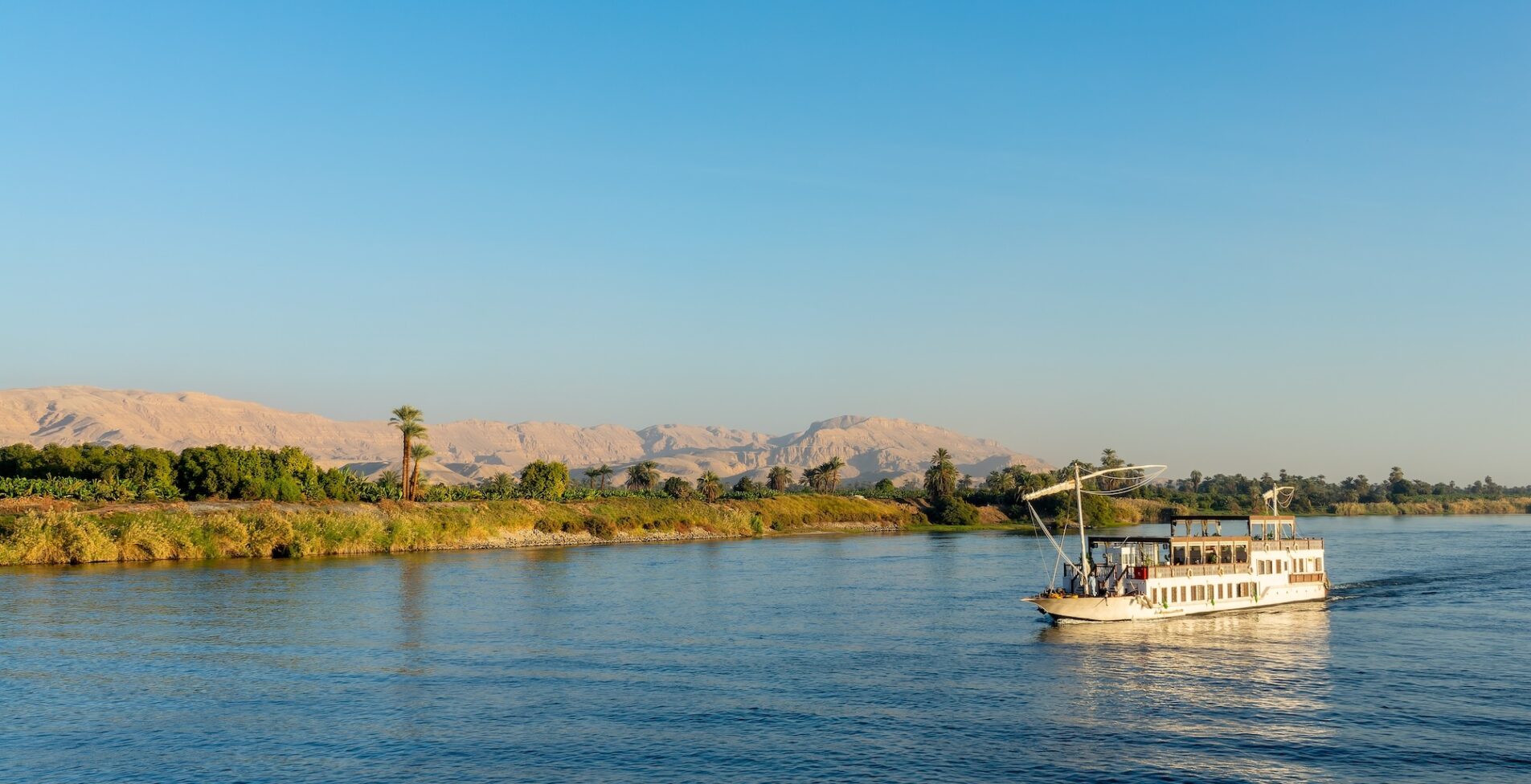
Sail the Nile in Pure Serenity
Dahabiya Nile Cruises
Egypt’s quietest way to travel: a traditional sailing boat, 8 to 16 guests, and no engine at all. Our Dahabiya Nile Cruises cover nine vessels on the Nile and Lake Nasser, from 4-day sails to full round trips, each with an Egyptologist aboard and quiet moorings along the way.
Browse the fleet below, or tell us your dates and we will match the boat to you.
The Dahabiya Experience
Experience Egypt at a gentler pace—intimate sailing, quiet moments, and beautifully unhurried travel.
Slow Sailing on the Nile: How Dahabiya Cruises Differ From Everything Else
8–16 guests. No engine. Quieter river stretches that 150-passenger ships cannot reach. The way the Nile was meant to be experienced.
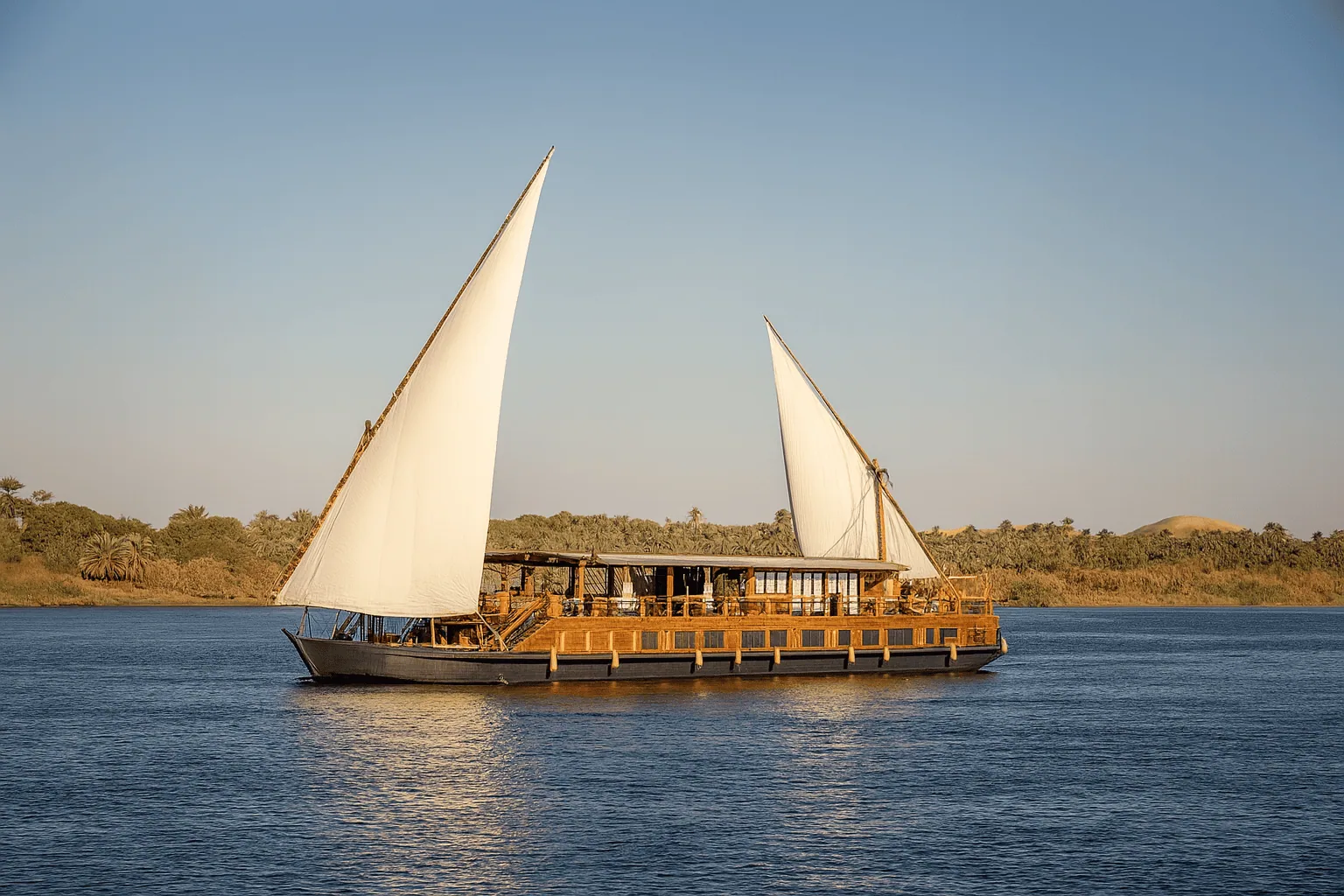
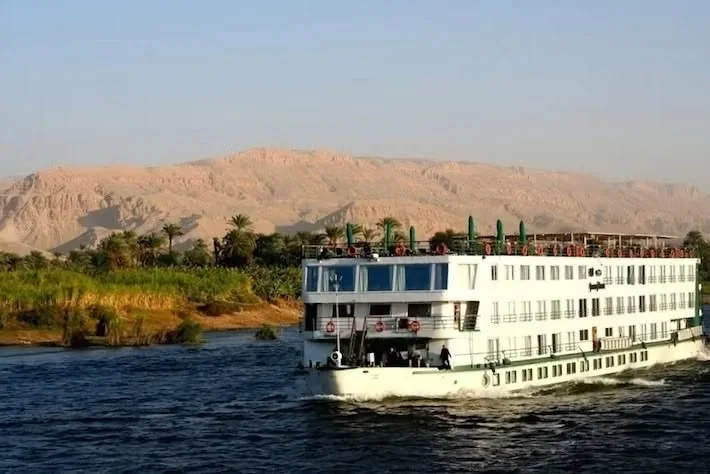
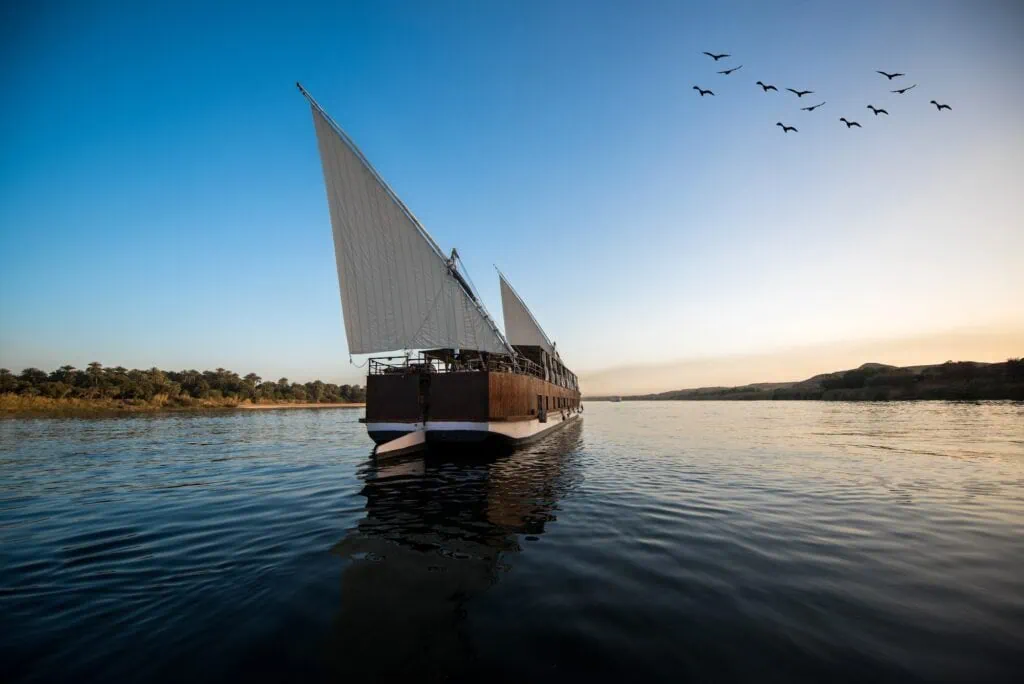
A dahabiya is not a smaller version of a Nile cruise ship. It is a different category of vessel and a different category of experience. Where a 5-star Luxury Nile Cruise carries 50 to 150 guests on a refined, motorised ship with pools and entertainment, a dahabiya carries just 8 to 16 guests on a traditional twin-mast sailing vessel powered by wind. The pace is slower, the river stretches are quieter, the guest count is lower, and the experience is fundamentally more intimate.
We’ve been crafting Egypt journeys since 1955, and dahabiya cruises sit at the most personal end of our Nile offering. This page exists to help you understand exactly what a dahabiya cruise is, how it fits into a complete Egypt itinerary, what to expect on board, and how to choose between sailing routes and vessels.
Table of Contents
The Heritage Behind Dahabiya Sailing
Dahabiyas have sailed the Nile since pharaonic times. The name itself comes from the Arabic dahab (gold), a reference to the gilded vessels once reserved for Egyptian royalty and visiting dignitaries. By the 19th century, dahabiyas were the preferred way for European travelers to explore Upper Egypt. Florence Nightingale, Gustave Flaubert, and the early generations of British and French Egyptologists all sailed the Nile this way, decades before motorised cruise ships existed.
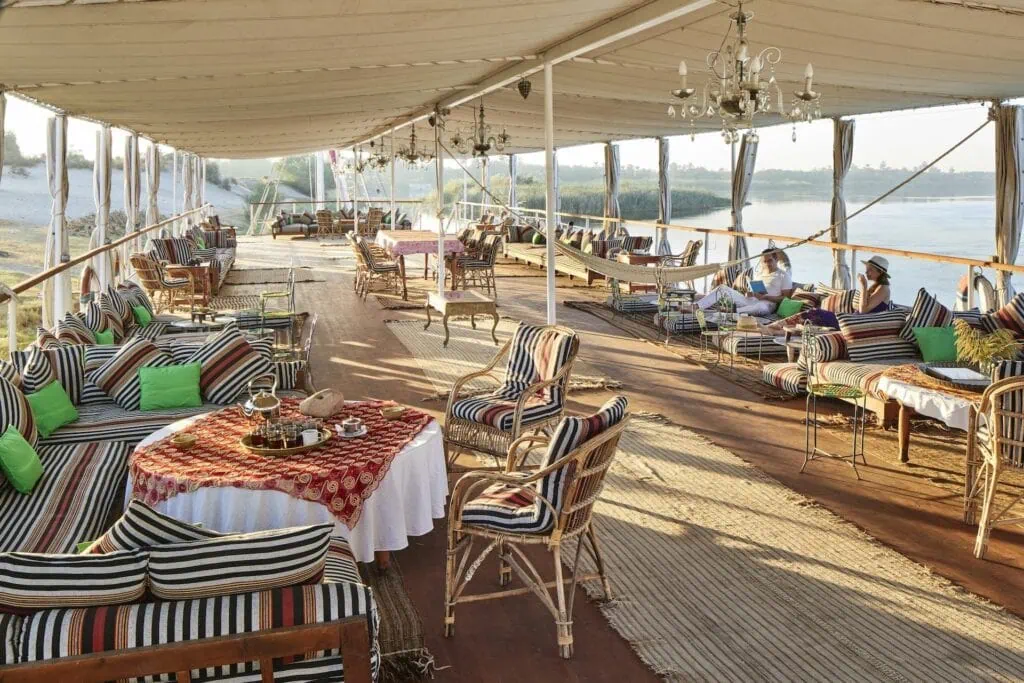
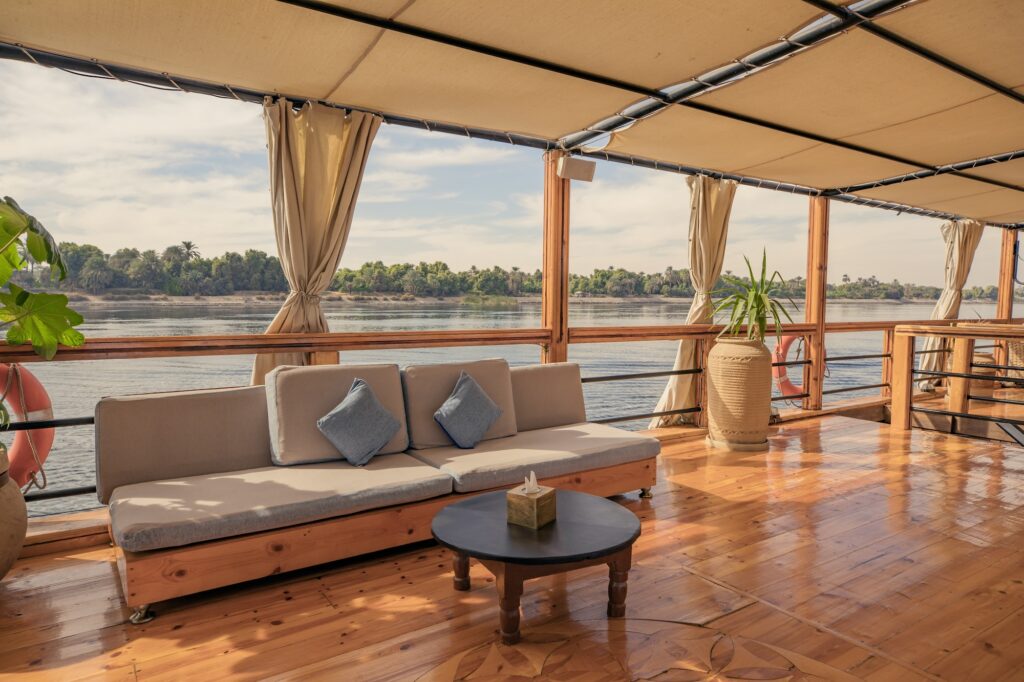
Modern Dahabiya Nile cruises preserve the original design language: long, low wooden hulls, two tall lateen-rigged masts, and shallow drafts that allow access to islands and channels closed to larger vessels. What’s changed is the comfort. Today’s Dahabiya Nile cruises combine traditional sailing with private en-suite cabins, air conditioning, gourmet kitchens, sun decks, and shaded lounges. The experience is unmistakably traditional, but the standards are contemporary.
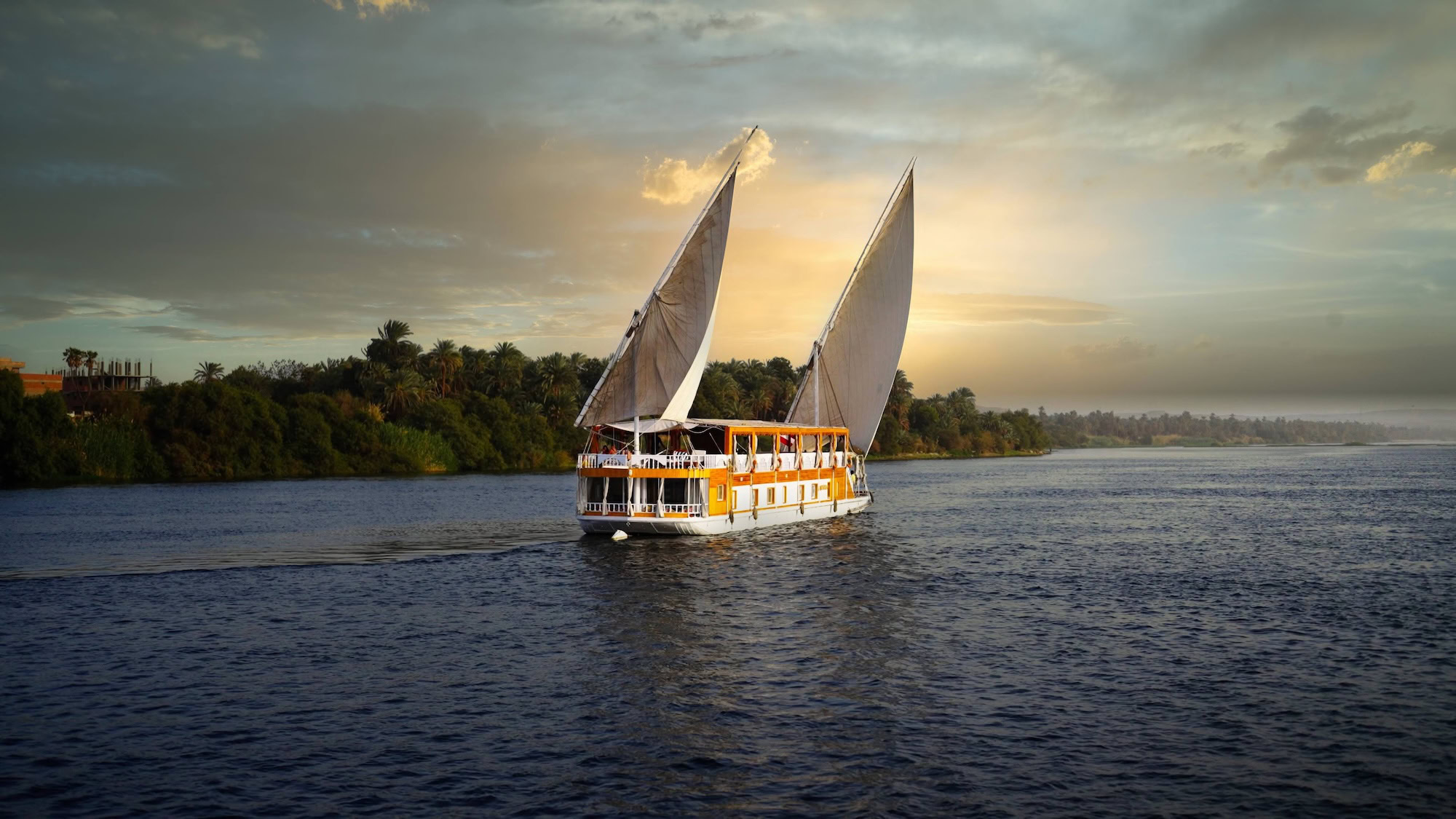
How Dahabiyas Differ From Standard Nile Cruises
The choice between a dahabiya and a Luxury Nile Cruise comes down to four practical differences.
Capacity. Dahabiya Nile cruises carry 8 to 16 guests. Luxury Nile Cruises carry 50 to 150. The difference shapes everything else about the experience: meal seating, evening atmosphere, deck space per person, and how a shore excursion actually feels.
Propulsion. Dahabiyas sail under wind power, with twin lateen sails. Larger cruise ships use diesel engines. The result is silence on a dahabiya’s sun deck — water against the hull and wind in the rigging, no engine vibration, no exhaust.
Routing access. Dahabiya Nile cruises reach river stretches that Luxury Nile Cruises cannot. Quiet anchorages, small islands, riverside villages, sandbar swimming spots, and minor temples that the larger ships sail past. This is the single biggest experiential difference.
Pace. Dahabiya Nile cruises sail slower and stop more often. A typical day involves long stretches of sailing interspersed with land excursions, lunches under shade trees on the riverbank, and evenings anchored in quiet coves. Luxury Nile Cruises follow a more compressed schedule.
Both products are excellent. Most travelers who sail a dahabiya have already taken at least one regular Nile cruise and want a different second experience. Others go straight to a dahabiya for their first Egypt trip because they value privacy and slowness over amenities. Either approach works.
How a Dahabiya Cruise Fits Into a Complete Egypt Tour
A dahabiya cruise is the slowest, most intimate part of an Egypt trip — but on its own it doesn’t cover the country. Most travelers pair it with several days in Cairo at the start, and many also extend into other parts of Upper Egypt or beyond.
A typical dahabiya itinerary structure:
- 3 to 4 days in Cairo to start: the Pyramids of Giza, the Sphinx, the Grand Egyptian Museum (now fully open and home to the complete Tutankhamun collection — golden mask, inner shrines, and 5,000+ items displayed together for the first time in history), Khan El Khalili, Coptic Cairo
- 3 to 7 nights on the dahabiya between Luxor or Esna and Aswan
- Optional add-ons at the end: Abu Simbel, the Red Sea (Hurghada or Sharm El Sheikh), Alexandria, or a multi-country extension to Jordan, Dubai, Morocco, Turkey, Greece, or Saudi Arabia
The dahabiya is the heart of the trip, not the entirety. We build the itinerary around your dates, pace, and interests, with private guide and driver throughout the land portion.
Sailing Routes: Esna–Aswan, Luxor–Aswan, or Variations
Dahabiya Nile cruises sail between Upper Egypt’s two main cruise hubs, Luxor in the north and Aswan in the south, but the specific route varies by vessel.
Esna–Aswan is the most common dahabiya route. Esna is a riverside town about an hour south of Luxor by road, beyond the Esna Lock. By starting south of the lock, the dahabiya can sail uninterrupted through quieter river stretches past Esna Temple, El-Kab, Edfu, Kom Ombo, and Gebel el-Silsila before reaching Aswan. Most dahabiyas in our fleet sail this route.
Luxor–Aswan is the full Upper Egypt route, with lock passage at Esna built into the schedule. Some dahabiyas sail this, particularly on longer 6- or 7-night itineraries. The advantage is starting and ending at major cities; the trade-off is the lock passage, which adds a few hours.
Reverse direction (Aswan to Luxor or Esna) is also available on most vessels. Both directions visit the same temples; the difference is which city your trip ends in.
When you book through us, your Travel Concierge will match the route to the vessel you’ve chosen and the broader itinerary. The route question is rarely the deciding factor in choosing a dahabiya, but it’s worth understanding.
Onboard Life
The day-to-day rhythm aboard a dahabiya is what most travelers remember most. A typical day:
Morning. Coffee or tea on deck at sunrise. Breakfast served on the open deck if weather allows. Mid-morning excursion to a temple or village, returning to the boat for lunch.
Afternoon. Long stretches of sailing under wind power, with a tow boat assisting when winds are light. Sun deck time, reading, photography, naps in shaded lounges, and quiet anchorages between sites.
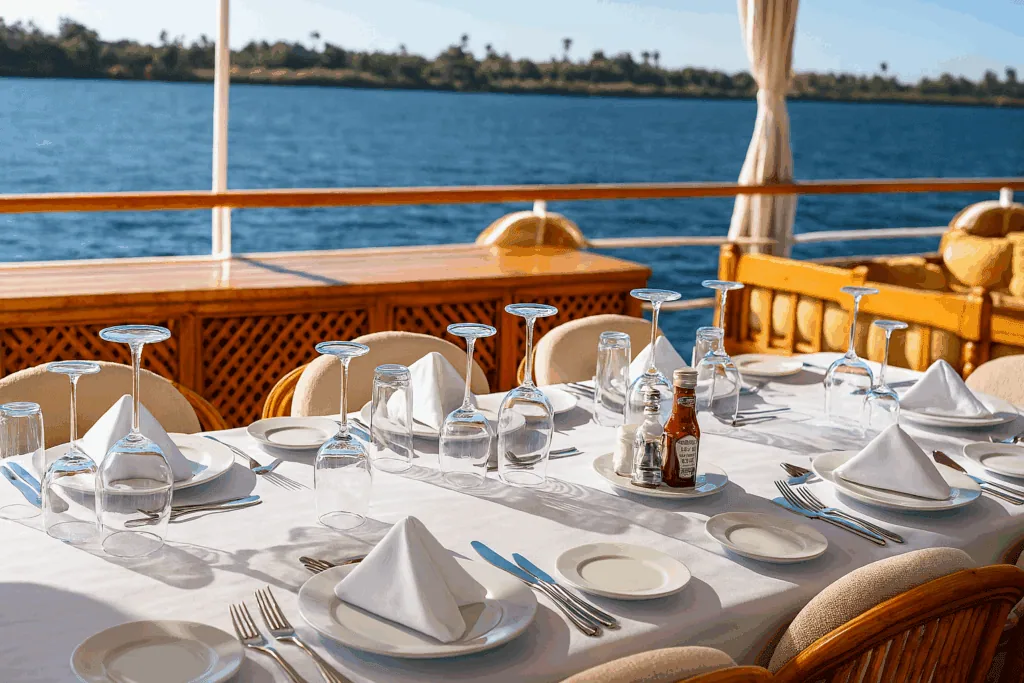
Evening. Anchoring in a quiet cove. Dinner under stars, often on the open deck. Traditional Egyptian musicians sometimes come aboard for evening performances. Quiet conversation, no entertainment programmes, no nightclubs.
Cabin standards. Every dahabiya we work with has private en-suite cabins with air conditioning, double or twin beds, panoramic windows or French balconies, and traditional wooden furnishings. Cabin sizes vary by vessel — larger dahabiyas typically have more spacious cabins; smaller ones prioritise sailing character over space. Suites are available on most vessels for travelers wanting extra room.
Food. Dahabiya kitchens emphasise fresh, locally-sourced ingredients. Vegetables, fruit, herbs, and bread are typically purchased at riverside village markets during the cruise. Meals are full board, with vegetarian, vegan, gluten-free, halal, kosher, and most other dietary needs accommodated with advance notice.
Guides and the Private vs Small-Group Question
Every dahabiya Nile cruise we run includes an Egyptologist guide aboard for the duration of the cruise. The guide leads all temple and village excursions, provides historical context, and is available throughout for questions.
A note on private vs small-group, since this is where some operators over-promise: with only 8 to 16 guests on board, dahabiya shore excursions are essentially private in feel. You’re touring with the same small group you’ve been sailing with — typically your own party plus a handful of others. This is fundamentally different from a Luxury Nile Cruise, where shore excursions run as small group experiences (around 12 guests per Egyptologist) shared with fellow ship passengers from a 50-to-150-guest vessel.
For travelers wanting truly private excursions on a dahabiya (your party alone with the guide), we can arrange dedicated guides on most itineraries at additional cost. Your land-based touring in Cairo, Luxor, and Aswan city is fully private throughout — just your party plus your Egyptologist and driver.
Whatever your language, you’ll be matched with an Egyptologist guide who speaks it — English, Italian, Spanish, Portuguese, German, French, and others available on request.
Sites You’ll Visit
The standard temple sequence on a dahabiya cruise between Luxor or Esna and Aswan:
- Esna Temple (the Temple of Khnum, partially excavated, with one of the most beautifully painted ceilings in Egypt)
- El-Kab (rock-cut tombs of provincial governors, less visited than the Valley of the Kings)
- Edfu (the Temple of Horus, one of the best-preserved temples in Egypt)
- Gebel el-Silsila (sandstone quarries with chapels and inscriptions, reachable mostly by smaller vessels)
- Kom Ombo (the dual temple to Sobek and Haroeris, on the riverbank)
- Aswan area sites (Philae Temple, the High Dam, the Unfinished Obelisk)
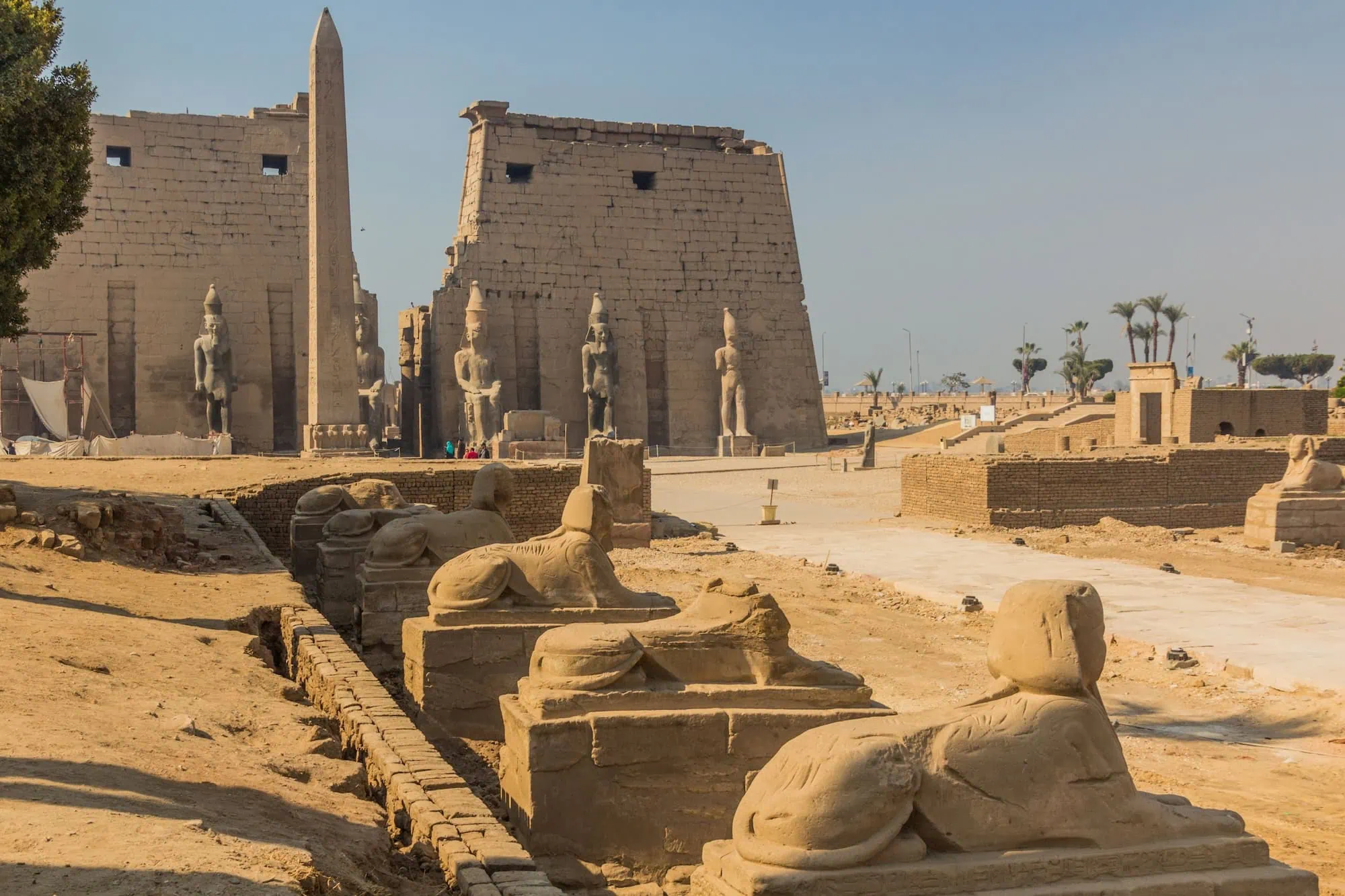
Luxor’s main sites — Karnak, Luxor Temple, the Valley of the Kings, Hatshepsut’s Mortuary Temple at Deir el-Bahari — are typically covered as land excursions before or after the cruise, depending on whether you start in Luxor or Esna.
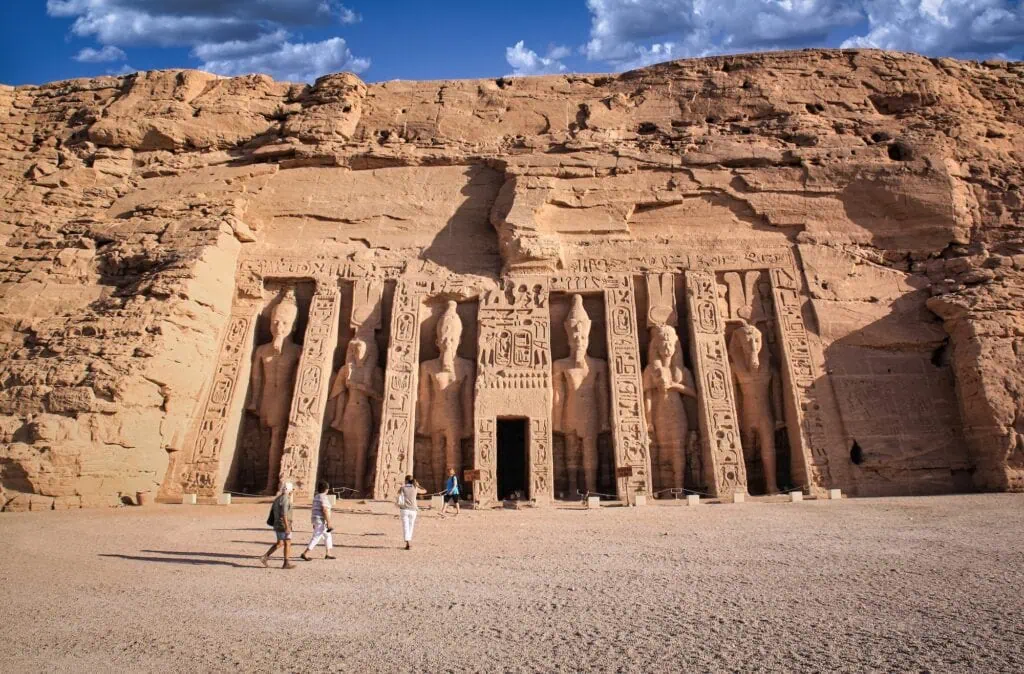
Abu Simbel is an optional add-on, available as a flight day from Aswan, a small-group road convoy, or a Lake Nasser cruise extension (covered in the FAQ below).
Best Time to Sail
October through April offers ideal sailing conditions, with daytime temperatures of 20–25°C (68–77°F) and cool, comfortable evenings. Wind conditions on the Nile are reliably good for dahabiya sailing throughout this period. Summer months (May–September) can exceed 35°C (95°F), which is genuinely tough on the open deck even with shade — most travelers avoid this window for dahabiya cruises specifically, though Luxury Nile Cruises with full air conditioning manage summer better.
The peak weeks within the high season are Christmas/New Year and Easter. Pricing reflects demand, and dahabiya inventory is genuinely limited (each vessel only has 8–16 cabins, and there are far fewer dahabiyas than Luxury Nile Cruises in operation). For peak weeks, book six months out. For shoulder season (October–November and March–April), three to four months is the comfortable window.
Choosing a Dahabiya
We work with multiple dahabiyas across different price points and styles. The right choice depends on three questions:
How many guests do you want around you? Smaller dahabiyas (8 guests, sometimes called sandals in the trade) are the most intimate — almost private feel. Medium dahabiyas (12 guests) balance intimacy with social opportunity. Larger dahabiyas (16 guests) have more deck space and amenities but feel slightly less personal.
What level of finish do you want in the cabins? Dahabiya cabins range from comfortable traditional (4-star equivalent) to genuinely luxurious (5-star equivalent, with marble bathrooms and king-sized beds). Both ends of the spectrum offer the same fundamental dahabiya experience; the difference is in the cabin itself, not the sailing.
What sailing length suits you? Standard dahabiya itineraries are 3, 4, or 5 nights. Longer 6 or 7-night options are available on some vessels and cover more sites.
Each tour itinerary on the site lists the specific dahabiya included. Your Travel Concierge will help match the vessel to your preferences during planning.
Sustainable Sailing on the Nile
Dahabiya Nile cruises are inherently lower-impact than motorised cruise ships — wind propulsion eliminates fuel consumption during sailing, smaller passenger numbers mean lower per-trip resource use, and the slow pace allows more food sourcing from riverside villages.
Beyond that baseline, individual dahabiyas vary in their additional sustainability practices. Some vessels in our fleet use solar panels for onboard electricity; some have eliminated single-use plastics; some source nearly all their food from local farmers and fishermen along the route. Practices and certifications vary vessel by vessel — your Travel Concierge can confirm what’s specifically true of any dahabiya you’re considering.
How the Planning Process Actually Works
Dahabiya bookings have three specific moving parts that benefit from real planning attention. First, vessel availability is genuinely tight — dahabiya capacity across all operators is a fraction of what Luxury Nile Cruises offer, and the most popular boats book up six months ahead in peak season. Second, the Cairo–Luxor or Cairo–Aswan flight needs to align with your sailing date. Third, optional add-ons (Abu Simbel, multi-country extensions) need to be modelled into the trip pacing without overwhelming what’s meant to be a slow experience.
Your Travel Concierge builds a first-draft itinerary based on one conversation: your dates, who’s travelling, vessel preferences, sailing length, and what you want included before and after the cruise. The first draft typically lands in your inbox within 1 to 12 hours.
What follows is the back-and-forth, and it’s the part that matters most. We swap dahabiyas, change cabin categories, adjust the Cairo time, layer in or pull out Abu Simbel, model multi-country extensions, and rework the trip until every piece sits right. Most travelers go through two to four rounds of revisions before booking, though some take significantly more until every detail is locked. There’s no pressure to commit at any stage. The itinerary is finalised only when you’re 100% satisfied and ready to confirm.
Ready to Step Aboard a Dahabiya?
Cairo and the Pyramids, then the slow drift between Esna or Luxor and Aswan: Edfu, Kom Ombo, Philae, the riverside villages, the quiet anchorages, the sun deck under sail. Add Abu Simbel, the Red Sea, or a multi-country extension if your time allows.
Tell us your dates, who’s travelling, and what matters most, and your dedicated Travel Concierge will have a tailor-made dahabiya itinerary back in your inbox within 1 to 12 hours. We’ve been crafting Egypt journeys since 1955, with TripAdvisor Travelers’ Choice 2020 through 2026 in our pocket.
Frequently Asked Questions
Dahabiya Nile cruises carry 8 to 16 guests on traditional twin-mast sailing vessels powered by wind. Luxury Nile Cruises carry 50 to 150 guests on motorised 5-star ships with pools, entertainment programmes, and full amenities.
The dahabiya experience is slower, quieter, and more intimate — sailing under wind power, anchoring in quiet coves, accessing river stretches the larger ships cannot reach.
The Luxury Nile Cruise experience is more conventional — refined dining, evening entertainment, social atmosphere, more amenities. Both are excellent; the choice depends on what you want from the cruise.
Standard Dahabiya Nile cruises run 3, 4, or 5 nights between Luxor or Esna and Aswan. Longer 6 or 7-night options are available on some vessels and cover additional sites at a more relaxed pace.
Most Dahabiya Nile cruises sail between Esna and Aswan. Esna is about an hour south of Luxor by road, and starting south of the Esna Lock allows the vessel to sail uninterrupted past Edfu, Kom Ombo, El-Kab, and Gebel el-Silsila.
Some dahabiyas sail the full Luxor–Aswan route, including the Esna Lock passage. Both directions are available depending on the vessel and itinerary.
With only 8 to 16 guests on board, dahabiya shore excursions are essentially private in feel — you’re touring with the same small group you’ve been sailing with.
For travelers wanting truly private excursions (your party alone with the guide), we can arrange dedicated guides at additional cost on most itineraries.
Your land-based touring in Cairo, Luxor, and Aswan city is fully private throughout: just your party plus your Egyptologist and driver.
Yes, both work well. The smaller scale and slower pace suit older travelers who appreciate a less intensive experience.
For families, Dahabiya Nile cruises work best with kids 10 and up — the slower pace and lack of onboard entertainment are not ideal for younger children. For families with younger kids, a Luxury Nile Cruise with pools and more amenities is usually a better fit.
Standard inclusions: all meals on the cruise (full board), accommodations on board, all guided excursions to temples and sites with your onboard Egyptologist, transfers from Luxor or Aswan airports, and 24/7 support throughout.
When booked as part of a complete Egypt tour with us, the package also typically includes: domestic flights between Cairo and Luxor or Aswan, Cairo accommodations, private guide and driver throughout the land portion, airport meet-and-greet, and entrance fees to standard sites.
Not included: international flights to/from your home country, tipping, optional add-ons (interior pyramid access, Abu Simbel, balloon flights, special access tombs), and personal expenses.
Each tour itinerary on the site lists the precise inclusions and exclusions for that specific package — those are the authoritative reference, and your Travel Concierge will confirm everything in your final itinerary.
Yes. There are three options.
Flight from Aswan (45 minutes each way) is the fastest, ideal if your time is tight. Adds 1 day.
Small-group road convoy from Aswan (3-hour drive each way through the Western Desert, departing pre-dawn, runs as a small-group format rather than private) is the cost-effective option. Adds 1 day.
Lake Nasser cruise extension (3 or 4 nights from Aswan to Abu Simbel and back, taking in the relocated Nubian temples along the way) is the most immersive. Adds 3 to 4 days.
Your Travel Concierge will recommend the right option based on your budget and broader itinerary.
October through April offers ideal sailing conditions, with daytime temperatures of 20–25°C (68–77°F) and reliable wind for sailing.
Summer months (May–September) can exceed 35°C (95°F), which is tough on the open deck even with shade. Most travelers avoid summer for Dahabiya Nile cruises specifically, though Luxury Nile Cruises with full air conditioning handle summer better.
For shoulder season (October–November and March–April), three to four months in advance is the comfortable window.
For peak weeks (Christmas/New Year and Easter), six months is more realistic — dahabiya inventory is genuinely limited, and the most popular Dahabiya Nile cruises book up early.
Mornings are quiet — coffee on deck at sunrise, breakfast served outside if weather allows, mid-morning temple excursion. Afternoons are mostly sailing under wind power, with sun deck time, optional swimming from anchored sandbars, and shaded lounge time. Evenings involve anchoring in quiet coves, dinner under stars, and sometimes traditional Egyptian musicians coming aboard.
There’s no entertainment programme, no nightclub, no pool with bar service. The pace is the point.
Yes. Dahabiya kitchens emphasise fresh, locally-sourced ingredients (vegetables, fruit, herbs purchased from riverside villages during the cruise), and they handle vegetarian, vegan, gluten-free, halal, kosher, and most other dietary needs with advance notice.
Whatever your language, you’ll be matched with an Egyptologist guide who speaks it — English, Italian, Spanish, Portuguese, German, French, and others available on request.
Most travelers, including U.S., U.K., E.U., Canadian, Australian, and many Latin American nationalities, can obtain a 30-day Egypt tourist visa on arrival at Cairo Airport for $25 USD, or apply for an e-visa online before departure. Always verify current regulations for your specific nationality before travel, and our Travel Concierge can provide complete documentation guidance.
Limited. Most dahabiyas offer WiFi in common areas, but connectivity is intermittent and often slow — the vessels sail through stretches with poor mobile signal coverage. Many travelers use the disconnection as part of the experience; if reliable connectivity matters for work, mention it during planning so we can recommend vessels with the strongest setups.
Lightweight, breathable layers for 20–25°C days plus a light jacket for cool evenings on the open deck. Comfortable walking shoes for temple visits, modest clothing for village stops and religious sites, sun protection (the Nile sun is strong even in winter), swimwear if you plan to swim from sandbar anchorages, and a small daypack for excursions.
Dahabiya Nile cruises are inherently lower-impact than motorised cruise ships — wind propulsion eliminates fuel during sailing, smaller passenger numbers mean lower per-trip resource use, and food is largely sourced from local communities along the route.
Beyond that, individual Dahabiya Nile cruises vary in their additional practices (solar panels, single-use plastic policies, certifications). Your Travel Concierge can confirm specifics for any vessel you’re considering.
Design Your Custom Tour
Explore Egypt your way by selecting only the attractions you want to visit