

Dahshur Pyramids – An Amazing Ancient Egyptian Royal Necropolis
Most travelers rush to Giza, completely missing one of Egypt’s most remarkable archaeological treasures.
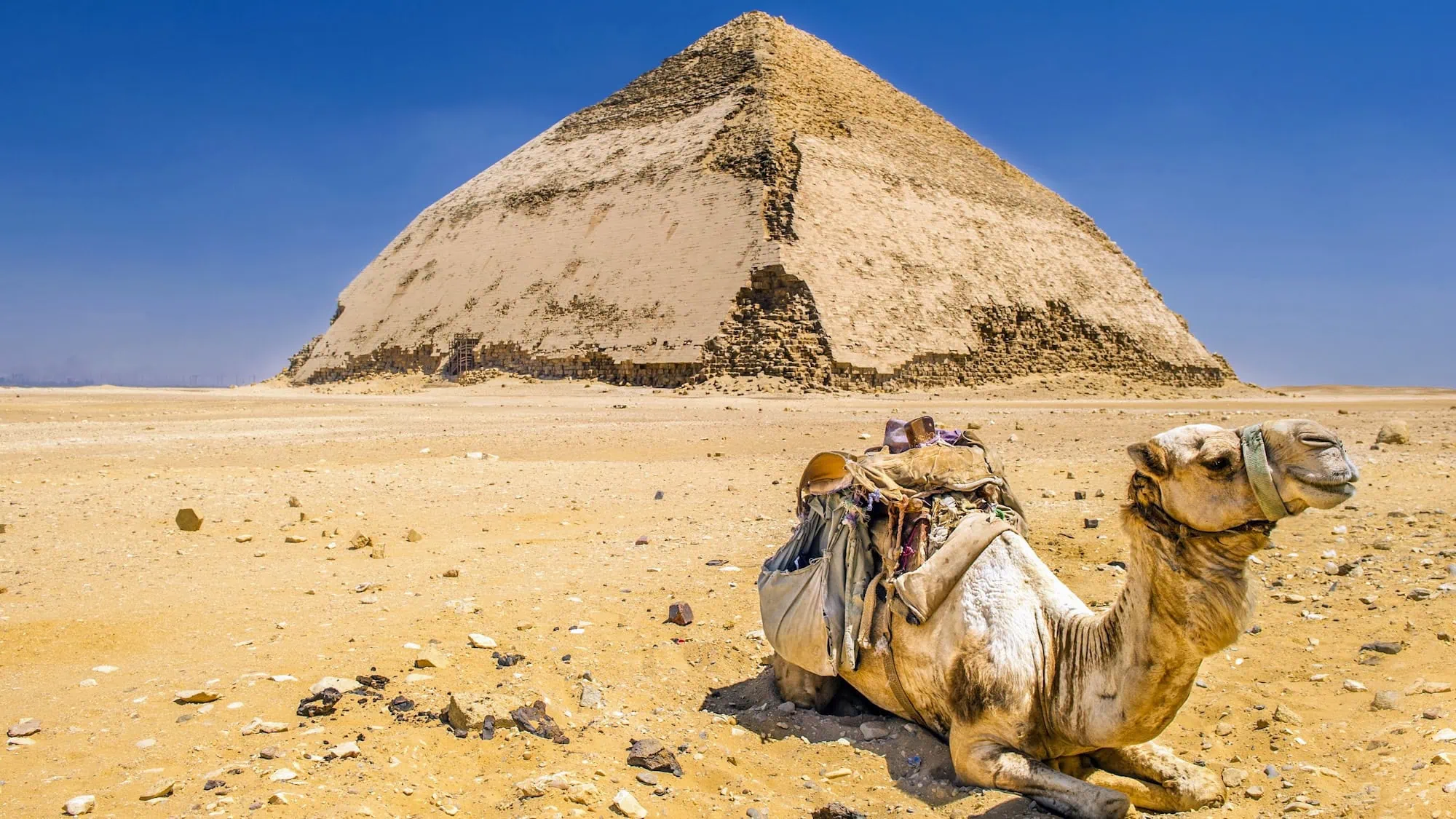
Just 40 kilometers (25 miles) south of Cairo, the Dahshur pyramids represent a pivotal moment in ancient Egyptian history – the experimental phase that made the Great Pyramid possible. Here at this UNESCO World Heritage site, Pharaoh Sneferu’s ambitious building projects during the Old Kingdom period resulted in two extraordinary structures: the world-famous Bent Pyramid and the impressive Red Pyramid. These monuments showcase the evolution from step-sided pyramids to the smooth-sided masterpieces we know today. Unlike the crowded atmosphere at Giza, Dahshur offers visitors authentic pyramid exploration with minimal crowds and the rare opportunity to actually enter ancient burial chambers.
We’ve spent decades guiding travelers through Egypt’s most significant archaeological sites, and Dahshur consistently ranks among our guests’ most memorable experiences. The complex provides unparalleled insight into pyramid construction techniques while delivering the adventure that many seek in Egypt’s Western Desert.
Table of Contents
The Revolutionary Pyramids That Changed History
Sneferu’s reign marked the golden age of pyramid construction experimentation. The pharaoh’s ambitious vision required pushing architectural boundaries far beyond anything attempted during previous dynasties.
The Bent Pyramid: Engineering Marvel or Ancient Mistake?
Standing 104 meters (341 feet) tall, the Bent Pyramid presents one of archaeology’s most fascinating puzzles. Construction began with steep 54-degree angle sides, but halfway up, ancient engineers dramatically reduced the angle to 43 degrees. This sudden change created the distinctive “bent” appearance that gives the pyramid its modern name.
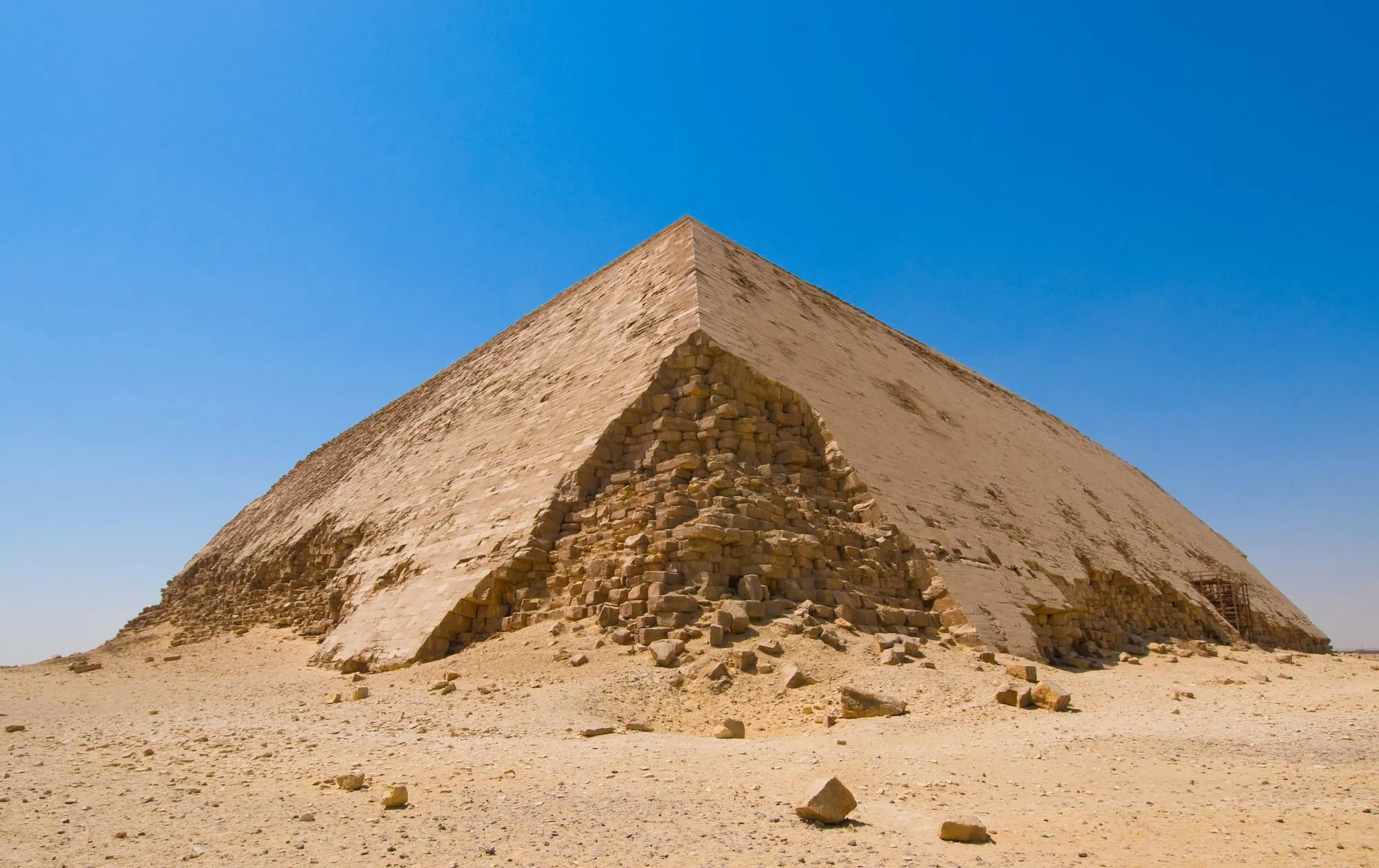
Recent structural analysis reveals the angle change wasn’t due to mathematical error, but rather a calculated response to foundation settling and internal stress concerns. The pyramid’s unique dual-angle design actually demonstrates sophisticated engineering knowledge rather than ancient incompetence.
The monument retains its original polished limestone casing stones – making it the only pyramid in Egypt where visitors can see how these structures originally appeared. Sunlight reflecting off these surfaces would have created a brilliant beacon visible for miles across the Nile Valley.
The Red Pyramid: Perfection Achieved
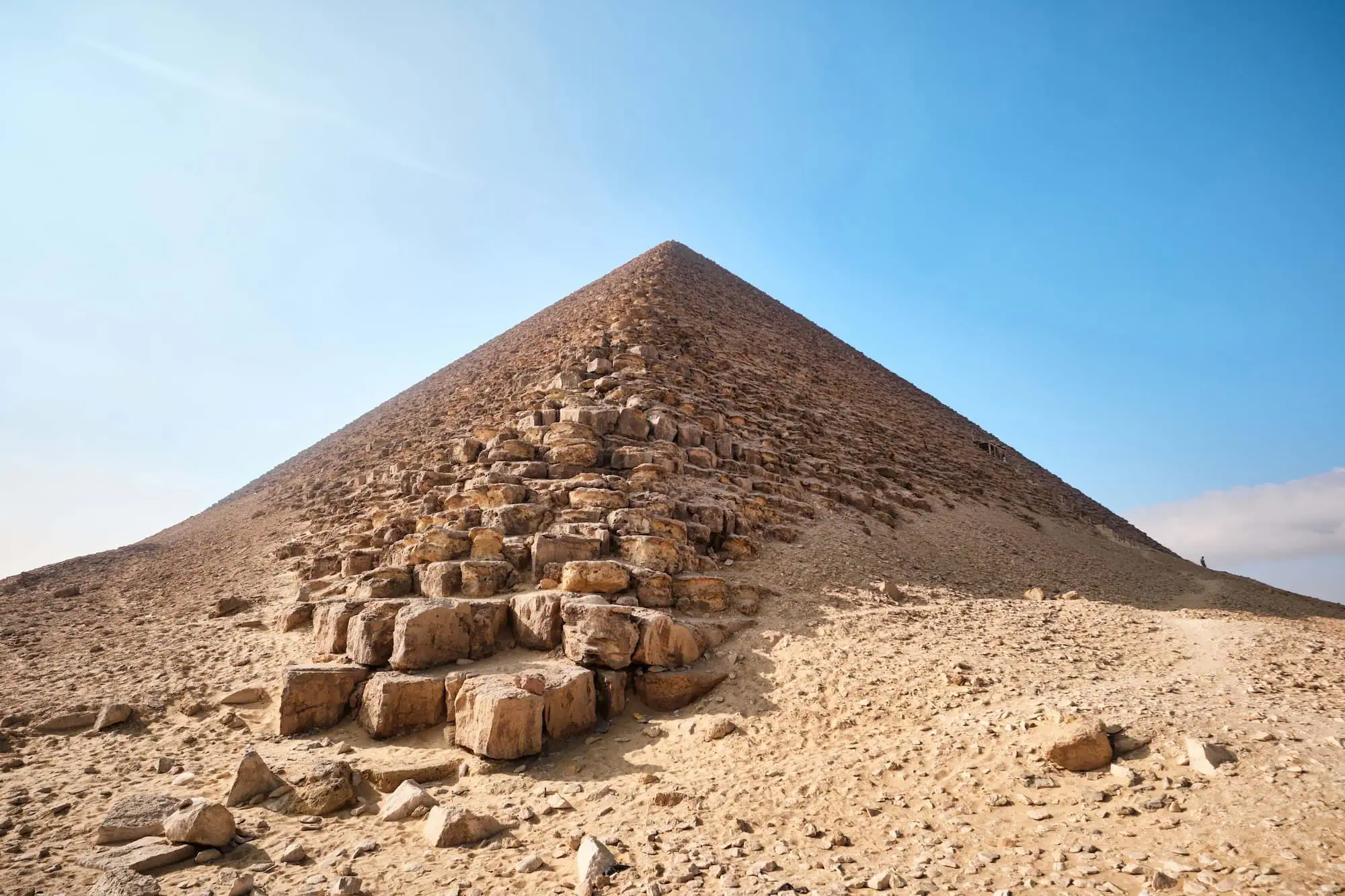
Sneferu’s second attempt at Dahshur proved completely successful. The Red Pyramid, built with lessons learned from the Bent Pyramid’s challenges, rises 105 meters (344 feet) with perfectly consistent 43-degree angles throughout its construction.
Named for the reddish limestone blocks used in its core, this pyramid served as Sneferu’s actual burial place. Archaeological evidence confirms the pharaoh was interred here, making it Egypt’s first true smooth-sided pyramid to successfully house a royal burial.
The internal chamber system demonstrates remarkable architectural sophistication. Three chambers connected by narrow passages create a complex that rivals any pyramid built during subsequent dynasties. Modern visitors can explore these chambers, experiencing the same spaces that held royal burial goods over 4,500 years ago.
Architectural Innovation That Enabled Giza
These Dahshur experiments provided crucial knowledge for the Giza pyramid builders. The mathematical calculations, structural solutions, and construction techniques developed here directly influenced the design of the Great Pyramid.
Engineering teams working at Dahshur solved critical problems related to pyramid geometry, internal chamber construction, and foundation stability. Without these innovations, the architectural achievements at Giza would have been impossible.
Exploring Dahshur’s Burial Chambers
The pyramids at Dahshur offer something Giza cannot – authentic access to ancient burial chambers with minimal tourist crowds.
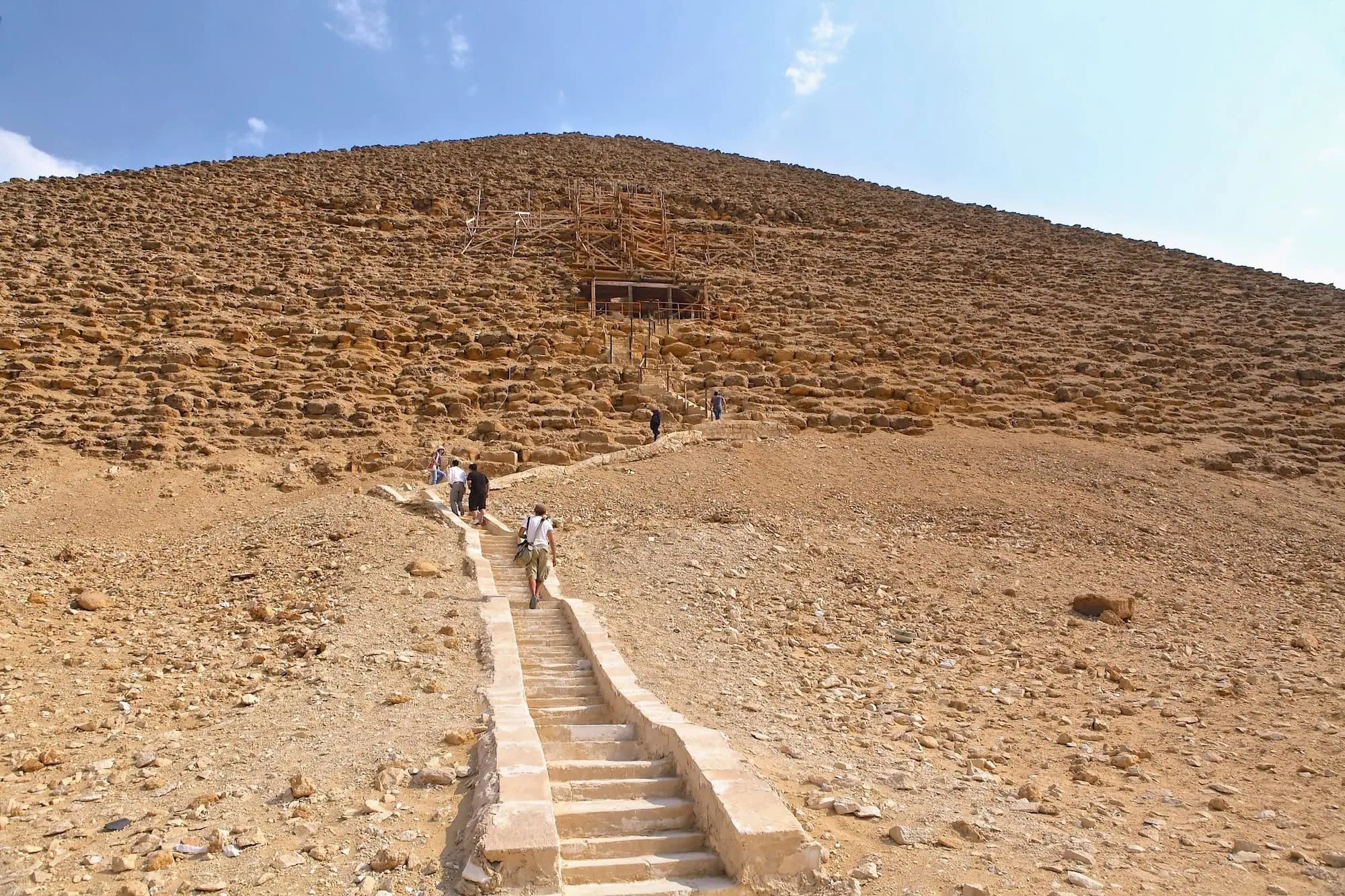
Both the Bent Pyramid and Red Pyramid allow visitors inside their internal chamber systems. The experience requires physical effort but rewards adventurous travelers with genuine archaeological exploration. Entering these chambers means descending narrow passages, often requiring visitors to crawl or walk in crouched positions.
The Red Pyramid’s entrance passage slopes downward at a steep angle for approximately 60 meters (197 feet). The journey leads through three connected chambers, each showcasing different aspects of ancient construction techniques. Chamber walls display tool marks left by ancient workers, providing tangible connections to the pyramid builders themselves.
Temperature inside the chambers remains constant year-round at approximately 20°C (68°F), providing relief from Egypt’s desert heat. However, the confined spaces and narrow passages can feel challenging for visitors with claustrophobia concerns.
Photography inside the chambers is permitted with standard tickets, unlike many other Egyptian monuments that require additional photography fees. This makes Dahshur particularly appealing for travelers wanting authentic pyramid interior documentation.
The Bent Pyramid’s interior presents an even more adventurous experience. Visitors enter through the original northern entrance, following passages that lead to chambers positioned at different levels within the structure. The complex internal layout reflects the experimental nature of this monument’s construction.
Planning Your Dahshur Adventure
Opening Hours
The site operates daily from 8:00 am (08:00) to 5:00 pm (17:00), with last entries accepted one hour before closing.
Separate tickets are required for entering the Red Pyramid and Bent Pyramid interiors. We recommend purchasing both tickets since the experience differs significantly between the two structures.
Best Times to Visit
Early morning visits between 8:00 am (08:00) and 10:00 am (10:00) provide the most comfortable experience. Desert temperatures rise significantly after 11:00 am (11:00), making chamber exploration more challenging during midday hours.
Winter months from November through February offer ideal weather conditions, with daytime temperatures ranging from 20°C to 25°C (68°F to 77°F). Summer visits remain possible but require careful timing and adequate hydration.
Transportation Options
Most visitors reach Dahshur by private vehicle from Cairo, a journey taking approximately 45 minutes depending on traffic conditions. Public transportation options exist but involve multiple connections and extended travel times.
We provide private transportation with professional drivers familiar with archaeological site access roads. Our vehicles feature modern air conditioning and comfortable seating, ensuring a pleasant journey through the Western Desert landscape.
Dahshur in Context: Memphis Necropolis Heritage
The Dahshur pyramid complex forms part of the broader Memphis necropolis, which includes Saqqara, Abusir, and other significant archaeological sites. This designation as a UNESCO World Heritage site recognizes the area’s exceptional universal value to human history.
Ancient Memphis served as Egypt’s capital during the Old Kingdom period, making the surrounding necropolis areas the primary burial ground for royal families and high officials. The concentration of pyramids, mastaba tombs, and other monuments in this region provides unparalleled insight into ancient Egyptian civilization.
Archaeological work at Dahshur continues revealing new discoveries. Recent excavations have uncovered additional pyramid structures, including the White Pyramid and Black Pyramid built during later dynasties. These findings demonstrate the site’s importance extended well beyond Sneferu’s reign.
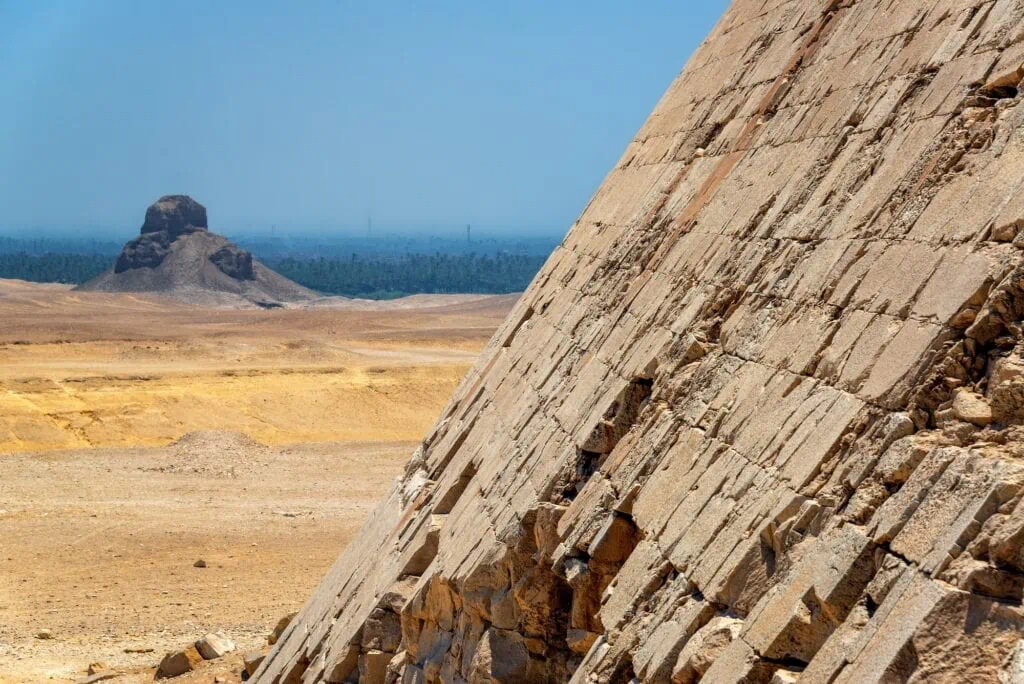
The complex relationship between different pyramid sites becomes clear when exploring Dahshur alongside Saqqara and Giza. Each location represents different phases of pyramid development, from Djoser’s Step Pyramid at Saqqara through Dahshur’s experimental phase to Giza’s perfected achievements.
Maximizing Your Egyptian Pyramid Experience
Combining Dahshur with Other Sites
We recommend combining Dahshur visits with Memphis and Saqqara to create comprehensive Memphis necropolis exploration. This combination provides complete perspective on pyramid evolution and ancient Egyptian royal burial practices.
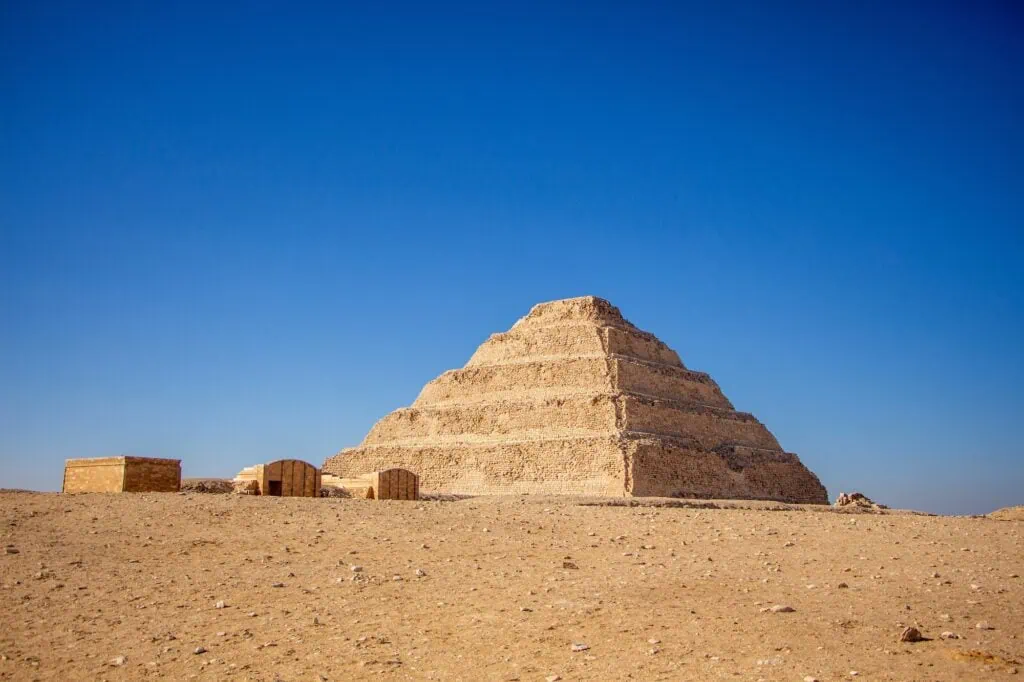
A typical full-day itinerary includes morning exploration of Dahshur’s pyramids, followed by Saqqara’s Step Pyramid complex and concluding with Memphis Museum’s outdoor sculpture garden. This progression follows chronological development of ancient Egyptian architecture.
Photography and Documentation
Dahshur offers exceptional photography opportunities without the crowds typical of more famous sites. The pyramids’ positions allow dramatic shots showcasing their scale against the desert landscape.
Golden hour lighting, occurring during the first hour after sunrise and final hour before sunset, provides optimal conditions for pyramid photography. The reddish limestone of the Red Pyramid appears particularly striking during these periods.
What Makes Our Dahshur Tours Special
Our private guides bring decades of Egyptological expertise to every Dahshur visit. Unlike large group tours that rush through basic information, we provide detailed explanations of construction techniques, historical context, and recent archaeological discoveries.
We limit our Dahshur tours to small groups, ensuring personalized attention and flexibility to spend additional time at areas that particularly interest you. Our guides adapt explanations to your specific interests, whether focusing on engineering aspects, historical significance, or archaeological methodologies.
Modern, air-conditioned vehicles ensure comfortable transportation between sites, while our customer support provides peace of mind throughout your Egyptian adventure. We handle all logistics, allowing you to focus completely on experiencing these remarkable monuments.
Discover The Evolution Of Pyramids At Dahshur
The Dahshur Pyramids reveal a fascinating chapter in Egypt’s history—where the iconic pyramid shape began to take form, surrounded by open desert and a sense of calm far from the crowds. With EgyptToursPlus, we seamlessly include Dahshur in a private journey that connects these early masterpieces with Egypt’s most celebrated sites.
You choose your travel dates, your pace, and the experiences that shape your route. From iconic pyramids to hidden gems and comfortable stays throughout, we tailor every detail around your preferences—ensuring a smooth, refined, and deeply personal travel experience from start to finish.
Frequently Asked Questions
Exploring the interiors of Dahshur’s pyramids requires moderate physical fitness because visitors must navigate steep wooden ramps, low tunnels, and narrow passageways with limited ventilation. Entering the Red Pyramid, for example, involves descending roughly 63 meters (207 feet) through a sloping corridor before reaching the internal chambers. Temperatures and humidity inside can feel noticeably higher than outside, especially during summer afternoons. Visitors with claustrophobia, knee problems, or respiratory conditions should consider remaining above ground and focusing on the exterior monuments instead.
Yes, Dahshur can technically be combined with the Giza Pyramids in one long day, but most travelers enjoy both sites more when they are visited separately. Dahshur sits about 40 km (25 miles) south of Giza and contains multiple accessible pyramids, including the Bent Pyramid and Red Pyramid, which deserve unhurried exploration. Combining both areas often creates a rushed itinerary with several hours spent in Cairo traffic. Travelers interested in entering pyramid interiors should strongly consider dedicating a full day to Dahshur alone.
Dahshur has limited visitor infrastructure compared with Giza, although basic restrooms and occasional small refreshment points are available near the entrance area. Travelers should not expect large cafes, extensive seating, or multiple food vendors inside the archaeological zone. Because the site covers open desert terrain with minimal shade, bringing water, sunscreen, and light snacks is strongly recommended, especially between May and September when temperatures regularly exceed 35°C (95°F). Most organized tours schedule meals separately in Cairo or Saqqara afterward.
Dahshur offers one of Egypt’s most authentic pyramid experiences because visitors can explore major Old Kingdom monuments with far fewer crowds than Giza or Saqqara. The site contains two of Pharaoh Sneferu’s most important pyramids, the Bent Pyramid and Red Pyramid, both dating to around 2600 BC and representing critical stages in pyramid engineering development. Unlike heavily commercialized tourist areas, Dahshur feels quieter and more archaeological in character. Travelers interested in photography and interior access often prefer Dahshur over more crowded pyramid complexes.
Visitors to Dahshur should wear breathable lightweight clothing, sturdy walking shoes with good traction, sunglasses, and a sun hat because the site involves walking across exposed desert terrain. Sand, uneven stone surfaces, and steep pyramid passageways make sandals or smooth-soled shoes impractical, particularly when descending inside the Red Pyramid. During winter mornings between December and February, temperatures can feel surprisingly cool before midday warming begins. Carrying sunscreen and at least 1 liter of water per person is highly recommended year-round.
Yes, standard photography is generally permitted inside Dahshur’s pyramids without requiring separate camera tickets, which differs from many major Egyptian archaeological sites. Visitors can usually photograph interior chambers and corridors using mobile phones or standard cameras, although flash photography may occasionally be discouraged in sensitive areas. Policies can change during conservation work or special inspections, so travelers should still follow instructions from on-site staff. Early morning visits provide the best interior and exterior lighting while avoiding harsh midday desert glare.
Booking a Dahshur tour at least one week in advance is recommended during Egypt’s peak travel season from October through April, especially for private guided experiences with transportation and licensed Egyptologists. While Dahshur itself rarely feels crowded, vehicle availability, qualified guides, and combined itineraries with Saqqara or Memphis can become limited during holidays and winter travel periods. Last-minute arrangements are often possible in quieter summer months. Travelers visiting during Christmas, Easter, or major school vacations should reserve even earlier.
Yes, pyramid interiors at Dahshur are not recommended for young children, pregnant visitors, or travelers with mobility, respiratory, or severe claustrophobia concerns because of the steep and confined internal passages. The descent into the Red Pyramid involves long sloping tunnels with low ceilings and minimal airflow, which can become physically demanding even for healthy adults. On-site staff may discourage entry for visitors who appear physically unprepared. Exterior exploration remains accessible and rewarding for travelers who choose not to enter the chambers.
The most effective way to experience Dahshur is through a broader Memphis necropolis itinerary combining Dahshur, Saqqara, and the ancient capital of Memphis in one full-day archaeological tour. Together, these sites document the evolution of Egyptian royal tomb architecture from early step pyramids to fully developed smooth-sided pyramids during the Old Kingdom. Distances between locations are relatively manageable by private vehicle, with Dahshur located south of Saqqara. Starting early in the morning helps maximize exploration time while avoiding Cairo traffic delays.
While informal local guides may occasionally be available near Dahshur’s entrance, arranging a qualified guide in advance provides a significantly more informative and organized experience. Dahshur lacks the large tourism infrastructure found at Giza, so on-site guide availability can be inconsistent, particularly during quieter weekdays. Professional Egyptologists explain the engineering differences between the Bent Pyramid and Red Pyramid and provide historical context often missed during self-guided visits. Pre-arranged transportation also simplifies navigation through the wider Memphis necropolis region.
Design Your Custom Tour
Explore Egypt your way by selecting only the attractions you want to visit