

Dana Biosphere Reserve – Jordan’s Largest Nature Reserve
Just one hour from Petra lies Jordan’s largest and most diverse protected wilderness.
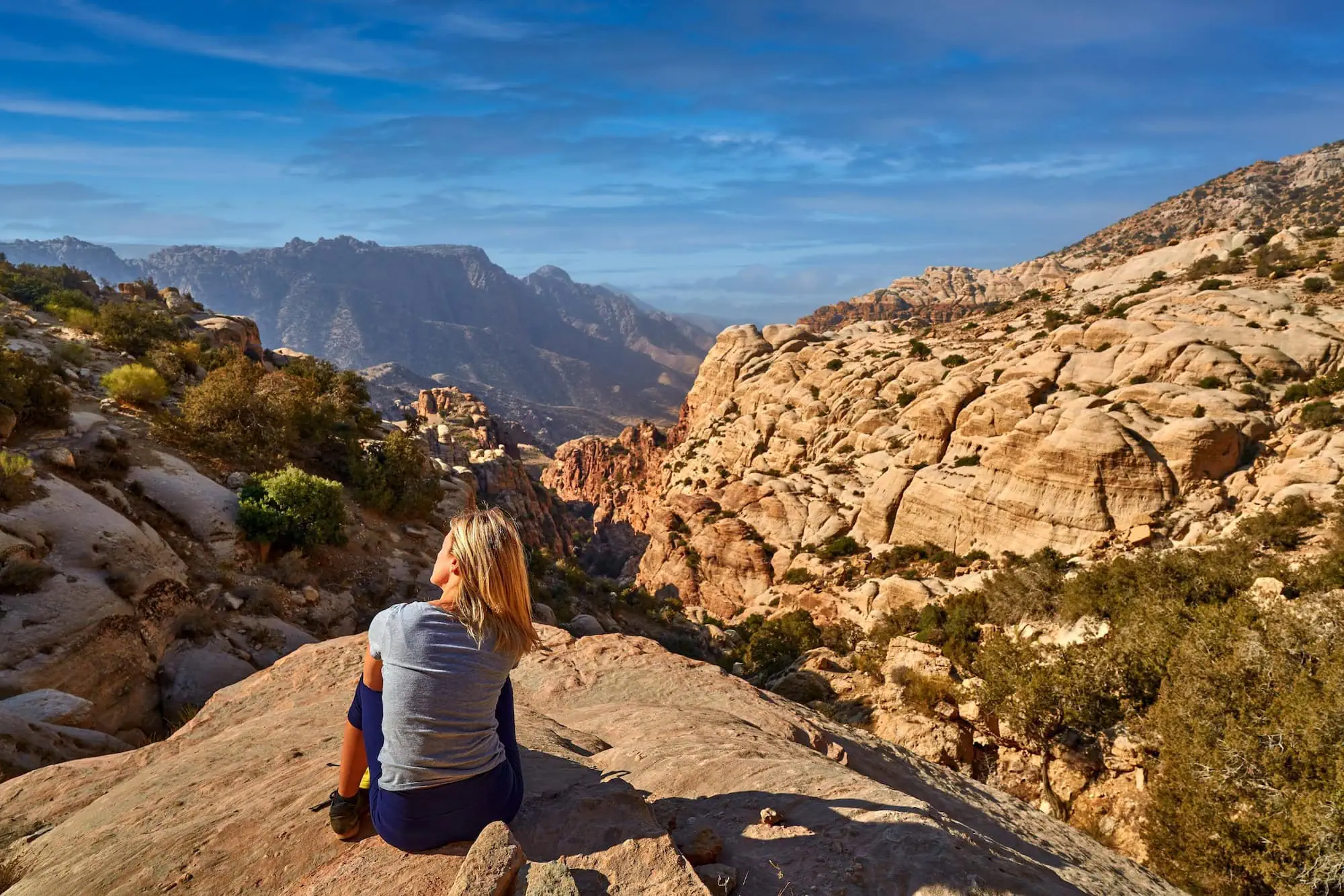
Dana Biosphere Reserve spans over 308 square kilometers (119 square miles) of striking landscapes, ranging from rugged sandstone mountains to deep desert valleys. Established in 1989 as Jordan’s first biosphere reserve, it protects four distinct ecological zones within a single area—making it one of the most biologically diverse regions in the Middle East. Nearly 500 animal species are found here, including several that are considered endangered.
The reserve’s dramatic elevation drop—from 1,500 meters (4,921 feet) at Dana Village down to sea level in Wadi Araba—creates a rare variety of habitats not seen elsewhere in the region. Exploring its trails offers a deeper perspective on Jordan’s natural environment and highlights a lesser-known side of the country beyond its famous archaeological sites.
To experience Dana Biosphere Reserve alongside Petra, Wadi Rum, and Egypt’s iconic landmarks, explore our Egypt and Jordan holiday packages.
Table of Contents
Geography and Biodiversity of Dana Reserve
The Great Rift Valley’s dramatic escarpment shapes Dana’s extraordinary landscape. Four bio-geographical zones converge here: Mediterranean woodlands crown the highlands, while Irano-Turanian steppes stretch across middle elevations. Saharo-Arabian desert dominates the eastern sections, and Sudanian penetration zones appear in the deepest wadis.
Flora Across Four Ecosystems
Over 800 plant species thrive within Dana’s boundaries. Mediterranean oak forests cluster around Dana Village, their canopy providing shelter for migratory birds. Wild pistachio and juniper trees anchor the Irano-Turanian zone, while desert broom and white saxaul adapt to harsh Saharo-Arabian conditions.
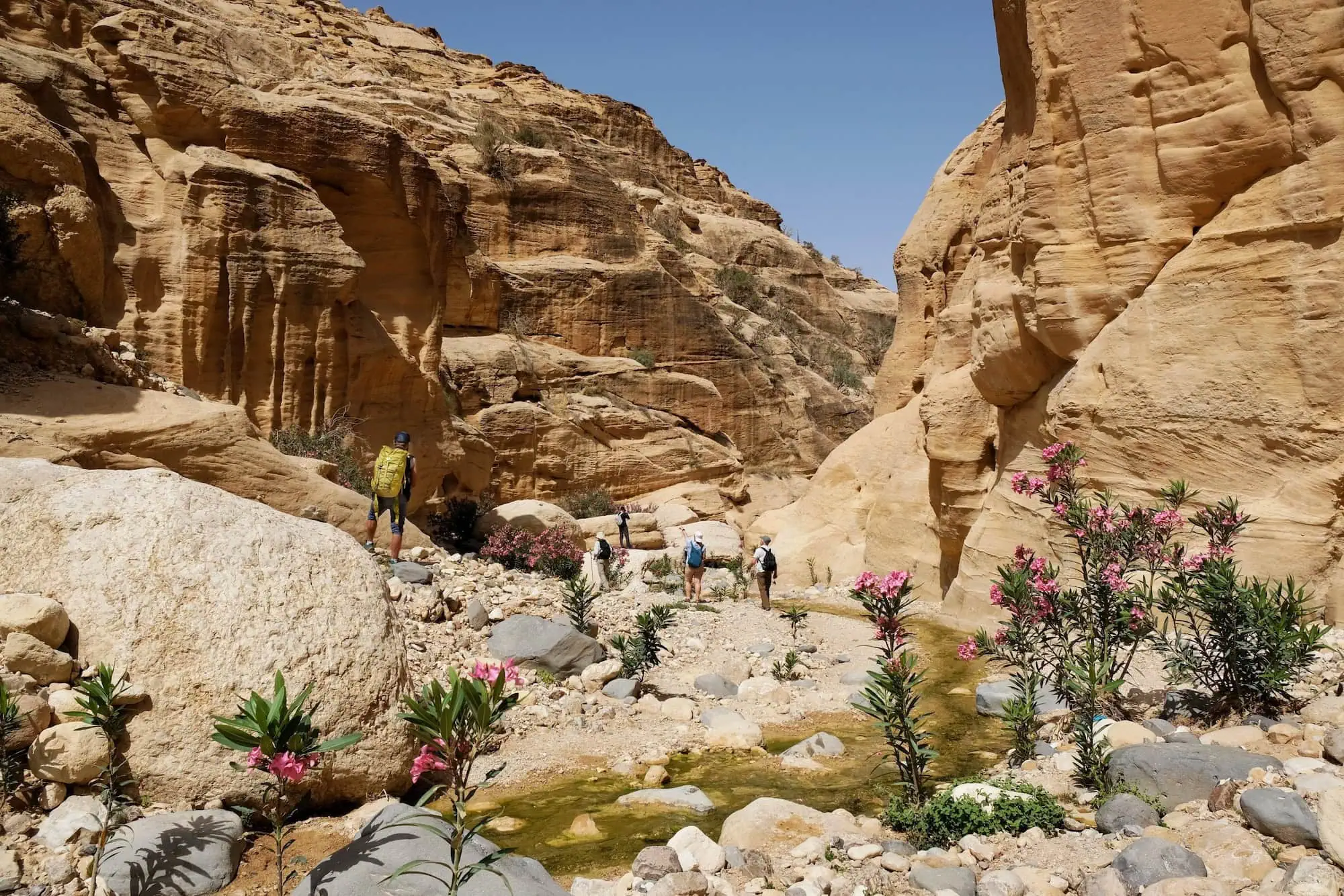
Spring transforms the reserve into a botanical wonderland. Wild orchids bloom along Wadi Dana Trail, and endemic Jordanian iris colors rocky outcrops purple. The rare Dana iris exists nowhere else on Earth, making this reserve a botanical treasure.
Wildlife Sanctuary Status
Twenty-five endangered species find refuge within Dana’s protection. Syrian serin populations remain stable here while declining elsewhere in their range. Sand cats prowl the eastern deserts, and Syrian wolves traverse mountain ridges under moonlight.
Nubian ibex represent Dana’s conservation success story. Once reduced to fewer than 50 individuals, careful management has restored their numbers to over 120. These agile mountain goats navigate vertical cliff faces with remarkable skill, often spotted from the King Hussein Lookout near Dana Village.
The Great Rift Valley Connection
Dana sits directly within the Great Rift Valley system, connecting African and Asian ecosystems. This geological position allows species from both continents to coexist. African elements include the Sand Cat and various desert-adapted reptiles, while Asian influences appear in highland bird communities and plant assemblages.
Dana Village and Cultural Heritage
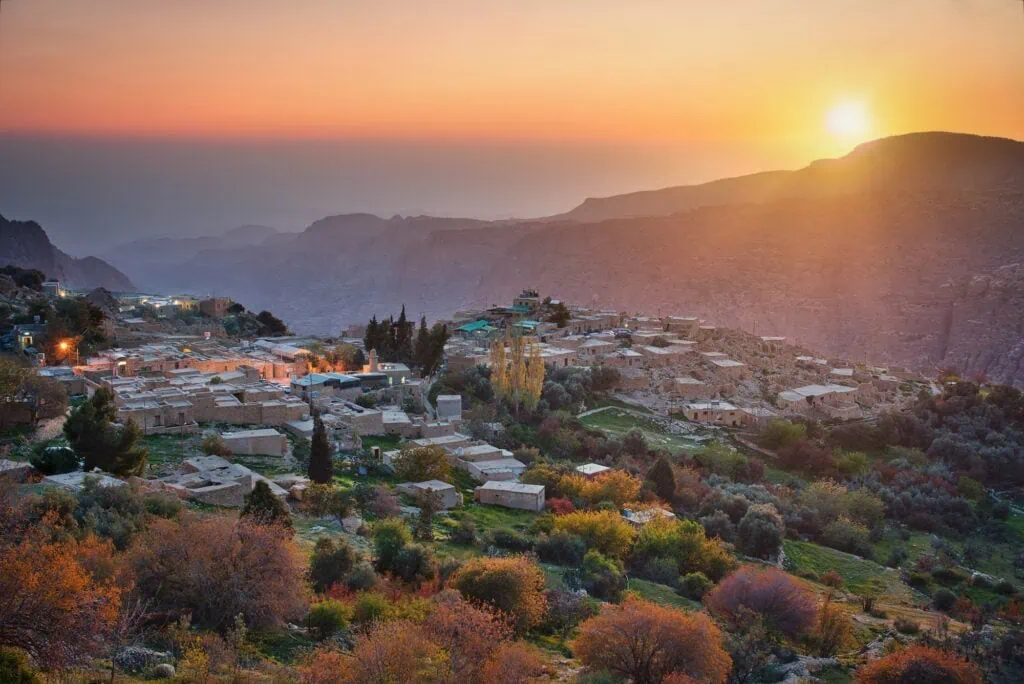
Stone houses built from local sandstone define Dana Village’s character. Families have inhabited these structures for generations, maintaining traditional architecture using techniques passed down through centuries.
Traditional Ata’ta Community Life
The Ata’ta people have called Dana home for over 400 years. Their traditional knowledge guides modern conservation efforts within the reserve. Local families still practice terraced agriculture, growing olives and almonds on narrow stone platforms carved into hillsides. Women in the village create intricate silver jewelry using techniques their grandmothers taught them, while men tend small flocks of goats adapted to the rocky terrain.
Village elders remember when copper mining provided the main livelihood. Ancient mine shafts still dot the landscape, evidence of Bronze Age extraction that supplied metal across the ancient Near East.
Dana Guesthouse Experience
We recommend staying at the Dana Guesthouse to fully appreciate the village atmosphere. Built into the hillside using traditional methods, the guesthouse offers authentic stone rooms with spectacular sunset views across Wadi Araba. Local cooks prepare meals using herbs gathered from the reserve and vegetables grown in village gardens.
Evening conversations with village residents reveal stories passed down through generations. These personal connections transform a simple nature visit into cultural immersion.
Hiking Trails and Adventure Activities
Dana offers Jordan’s most diverse hiking experiences, from gentle village walks to challenging multi-day wilderness treks.
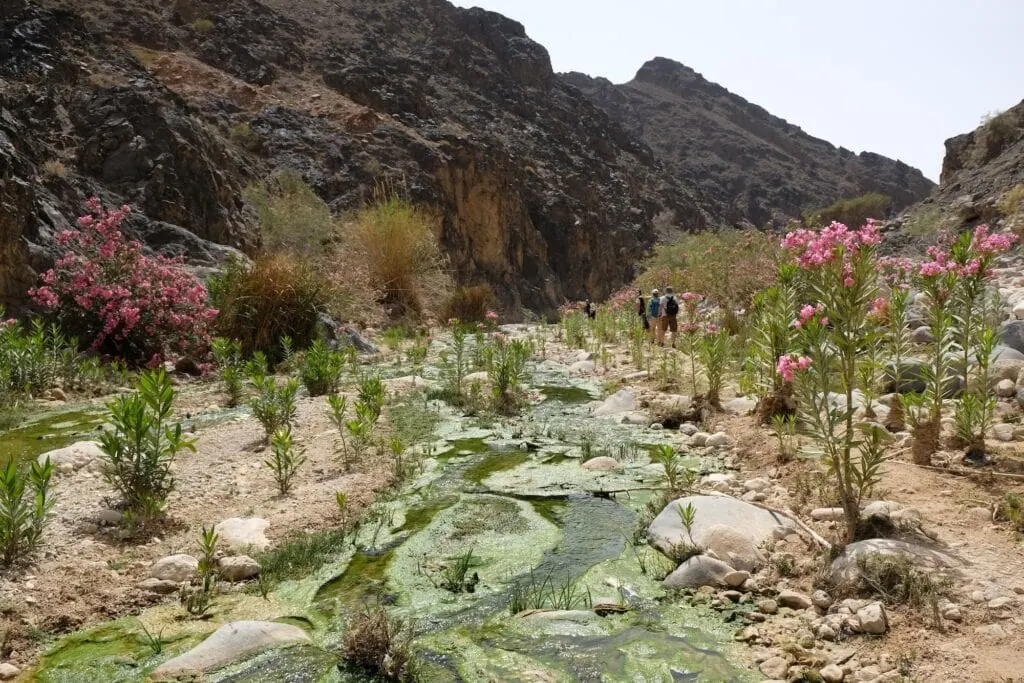
The Wadi Dana Trail descends 1,000 meters (3,280 feet) through all four bio-geographical zones. This 14-kilometer (8.7-mile) route begins in Mediterranean woodlands and ends in true desert environment at Feynan. Most hikers complete the descent in 4-5 hours, though photography stops extend the journey significantly.
Nawatef Trail and Cave Exploration
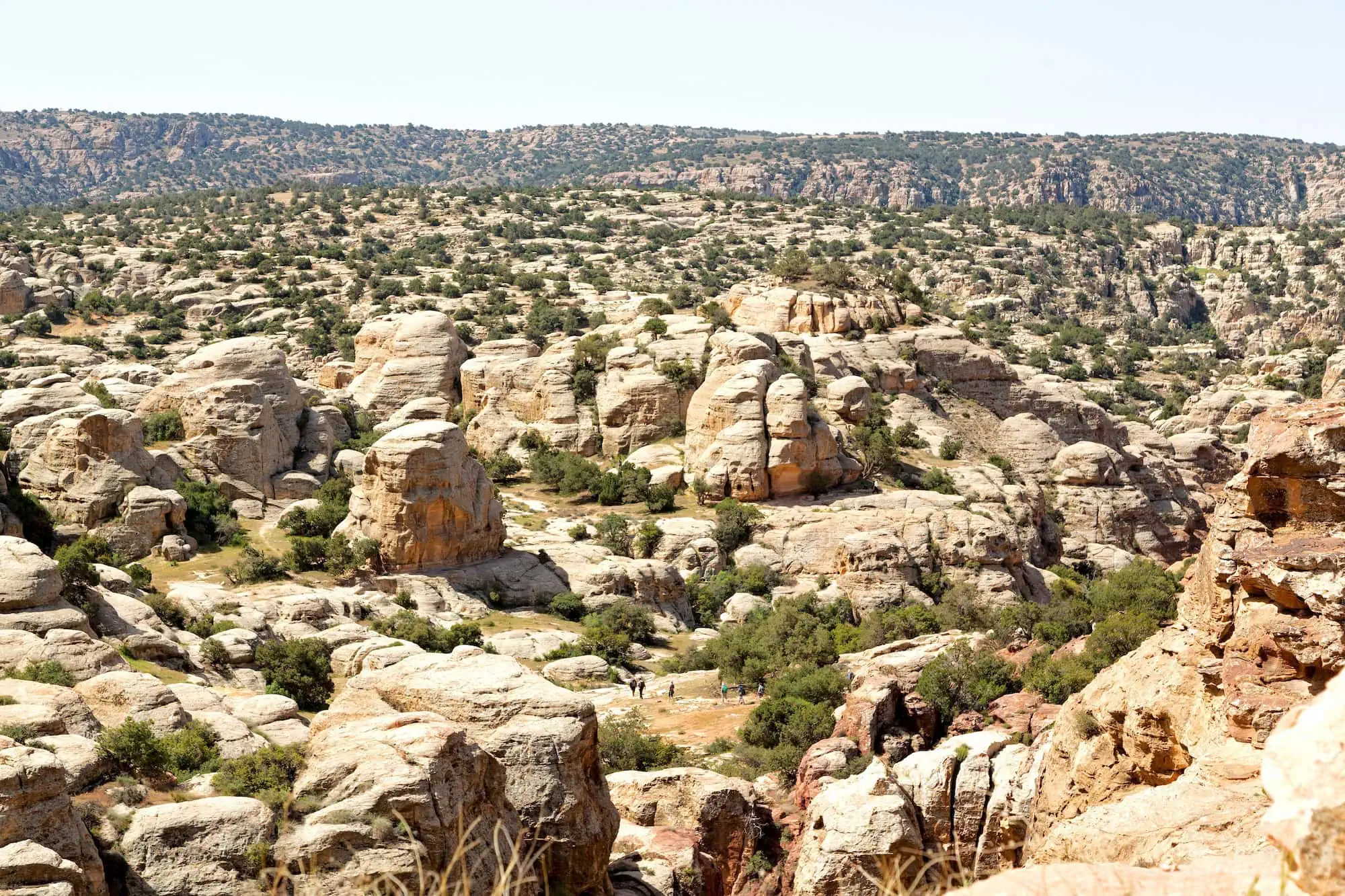
Shorter trails suit families and casual hikers. The Nawatef Trail creates a 3-kilometer (1.9-mile) loop from Dana Village, passing through olive groves and offering panoramic views across the Rift Valley. Spring wildflowers make this trail particularly rewarding between March and May.
Cave systems honeycomb the reserve’s limestone sections. The Caves Trail leads to several accessible caverns where ancient pottery fragments suggest historical human occupation. Guided tours reveal how these caves provided shelter for traders crossing the desert centuries ago.
Multi-Day Wilderness Trekking
Experienced hikers can attempt the full reserve crossing from Dana to Wadi Araba. This challenging 20-kilometer (12.4-mile) route requires overnight camping and carries serious navigation challenges. We strongly recommend joining organized treks with qualified local guides who know water sources and safe camping locations.
The Royal Society for Conservation of Nature manages all overnight activities within the reserve. Permits must be obtained in advance, and group sizes remain limited to protect sensitive ecosystems.
Wildlife Watching and Photography
Early morning hours provide optimal wildlife viewing conditions. Ibex herds often graze near Dana Village between 6:00 am (06:00) and 8:00 am (08:00) before seeking shade in rock crevices.
Birdwatching reaches peak activity during spring and autumn migrations. Over 190 bird species pass through Dana, including spectacular raptors like Bonelli’s eagles and Barbary falcons. The village lookout point offers excellent vantage for observing migration patterns across the Rift Valley corridor.
Photography enthusiasts should carry telephoto lenses for wildlife shots and wide-angle equipment for landscape compositions. The dramatic elevation changes create constantly shifting light conditions throughout the day.
Specialized Wildlife Programs
We arrange specialized wildlife tracking experiences with expert naturalist guides. These programs focus on specific species like the elusive caracal or rare reptiles found only in Dana’s unique habitat zones. Night walks reveal nocturnal species rarely seen during daylight hours, including various bat species and desert-adapted mammals.
Research stations within the reserve welcome serious wildlife photographers and researchers. Extended stays allow documentation of seasonal changes and animal behavior patterns impossible to observe during brief visits.
Planning Your Dana Biosphere Reserve Visit
Most visitors combine Dana with nearby Petra, located just 45 kilometers (28 miles) away. This proximity allows easy integration into broader Jordan itineraries.
Best Times to Visit
Spring months from March through May offer ideal conditions. Temperatures remain comfortable at 20-25°C (68-77°F), wildflowers bloom throughout the reserve, and wildlife activity peaks during breeding seasons. Autumn (September through November) provides similar conditions with fewer crowds.
Summer temperatures can exceed 35°C (95°F) in lower elevations, making hiking uncomfortable and potentially dangerous. Winter brings occasional snow to higher elevations, though lower trails remain accessible.
Transportation and Access
Private vehicles reach Dana Village via the Desert Highway and local roads. We provide private transportation from Amman (3.5 hours), Petra (1 hour), or other Jordan destinations. Public transportation options remain limited, making private arrangements essential for most visitors.
The main visitor center near Dana Village provides maps, permits, and current trail conditions. Staff speak English and Arabic, offering detailed guidance for all experience levels.
Accommodation Options
Three distinct accommodation styles serve different preferences. Dana Guesthouse in the village offers authentic cultural immersion with traditional stone rooms and local meals. Feynan Ecolodge at the reserve’s desert edge provides luxury eco-accommodation powered entirely by solar energy. Rumana Camp offers basic camping facilities for budget-conscious travelers seeking wilderness experiences.
We recommend booking accommodations well in advance, particularly during peak seasons. Limited capacity means popular dates fill months ahead of arrival.
Essential Packing List
Sturdy hiking boots prove essential for rocky terrain. Layer clothing to accommodate temperature variations between elevations. Carry at least 2 liters (0.5 gallons) of water per person for day hikes, and pack high-energy snacks for longer trails.
Sun protection becomes critical in desert sections. Wide-brimmed hats, sunscreen, and sunglasses prevent overexposure. Binoculars enhance wildlife viewing, while headlamps enable early morning starts and evening nature walks.
Conservation and Community Impact
The Royal Society for Conservation of Nature manages Dana through community-based conservation programs that employ local residents as guides, guards, and support staff. These initiatives provide sustainable income while protecting natural resources.
Traditional handicraft programs help preserve cultural skills while generating economic benefits. Village women create silver jewelry, embroidered textiles, and herbal products sold through the Wild Jordan Center network. Men work as nature guides, sharing traditional ecological knowledge with visitors.
Research programs within Dana contribute to broader Middle Eastern conservation efforts. Scientists study climate change impacts, species adaptation strategies, and ecosystem restoration techniques. This research informs conservation policy across Jordan and neighboring countries.
Sustainable Tourism Practices
Visitor numbers remain carefully controlled to prevent environmental damage. Trail capacity limits, camping restrictions, and seasonal closures protect sensitive areas during critical periods like breeding seasons or drought conditions.
We follow strict Leave No Trace principles during all Dana visits, ensuring our impact remains minimal. Waste removal, water conservation, and respect for wildlife viewing distances maintain the reserve’s pristine condition for future generations.
Frequently Asked Questions
Dana protects four distinct bio-geographical zones within a single reserve, creating unique biodiversity found nowhere else in Jordan.
Trail difficulty varies from easy village walks to challenging wilderness treks requiring advanced hiking experience and proper equipment.
Independent visits are possible for marked trails, but we recommend guides for wildlife viewing and cultural insights.
Nubian ibex, various bird species, and small mammals are commonly observed, while larger predators remain elusive but present.
Yes, shorter trails like Nawatef offer family-friendly options, though parents should supervise children on cliff-edge viewpoints.
Dana Village provides the most authentic experience, while Petra offers more accommodation options for day visits.
Reserve accommodations 2-3 months ahead for peak seasons, as limited capacity fills quickly.
General photography is permitted, but commercial shoots require special permits from RSCN authorities.
Binoculars, telephoto camera lens, quiet clothing, and patience for early morning or evening viewing sessions.
Wild camping requires permits and must follow designated camping areas to protect sensitive ecosystems.
Dana integrates perfectly with Petra visits and forms part of comprehensive Jordan nature and culture itineraries we arrange.
Ongoing programs focus on endangered species protection, habitat restoration, and community-based conservation initiatives.
Design Your Custom Tour
Explore Egypt and Jordan your way by selecting only the attractions you want to visit